Type · julia-domna-concordia-denarius
Current: Roman Empire, Julia Domna (Augusta, under Septimius Severus), AR denarius, 'Laodicea ad Mare' mint (so RIC; Severan eastern-mint attributions are debated), c. 196–202 AD (RIC IV 637)
Obverse: Draped bust of Julia Domna right, hair waved in ridges and coiled in a large bun at the back of the head
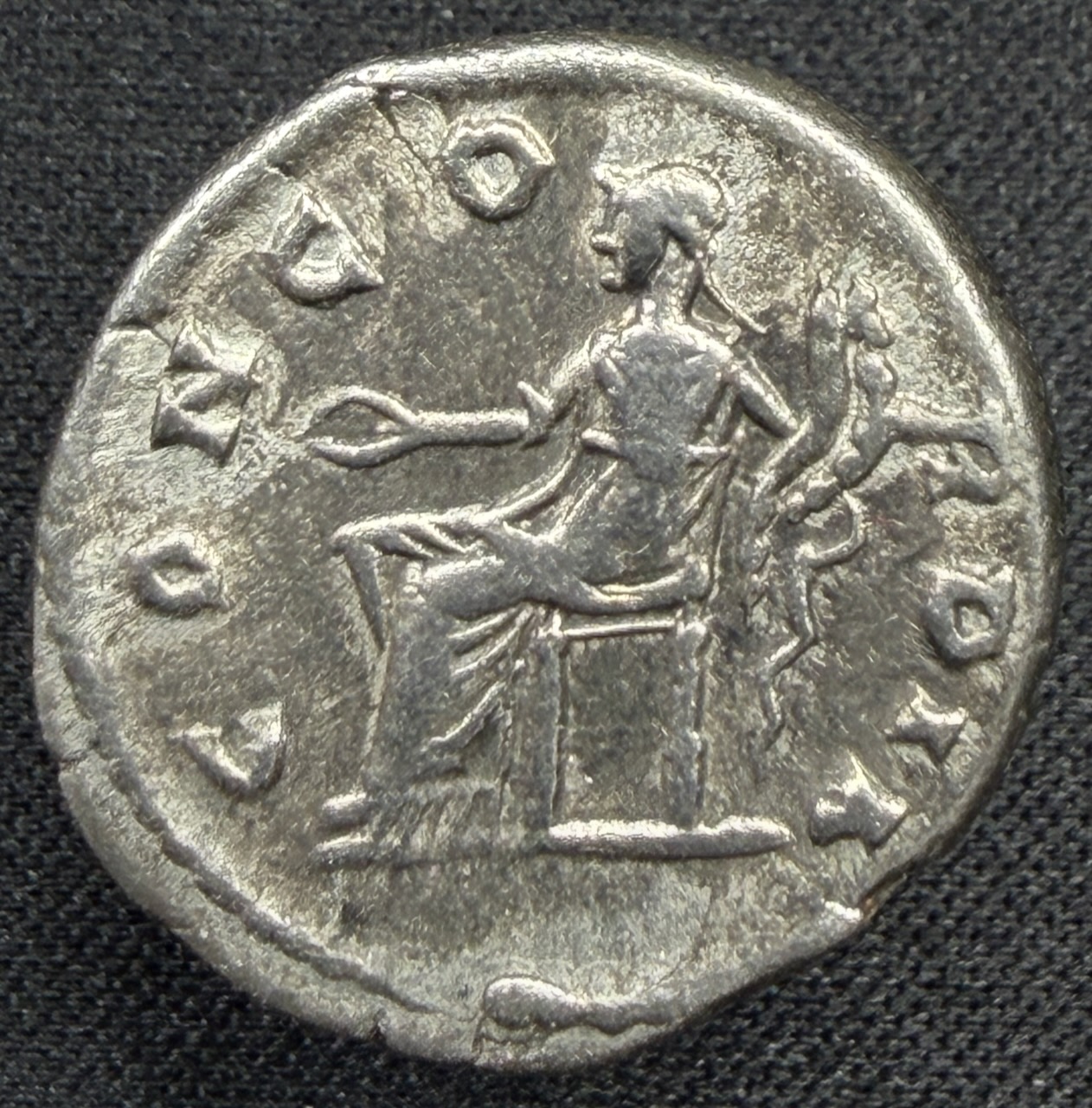
Reverse: Concordia seated left on throne, holding patera in extended right hand and double cornucopia in left arm
Primary reference: RIC IV 637
12 specimens in public collections (British Museum 5, ANS 4, Ashmolean 2, Freiburg 1); weights 2.58–3.8 g, median 3.14 g across 12 recorded; die axis most often 12h.
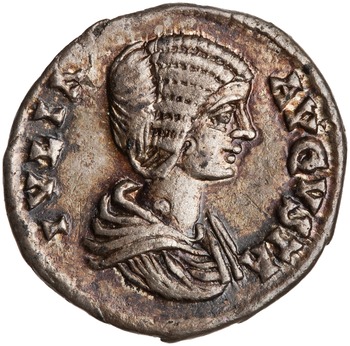
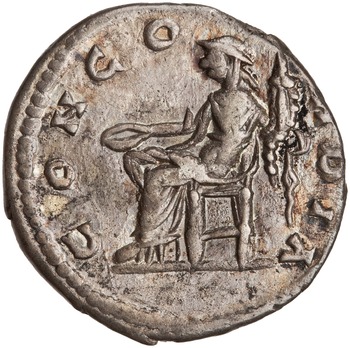
American Numismatic Society, 1909.78.60. CC BY-NC 4.0. https://numismatics.org/collection/1909.78.60
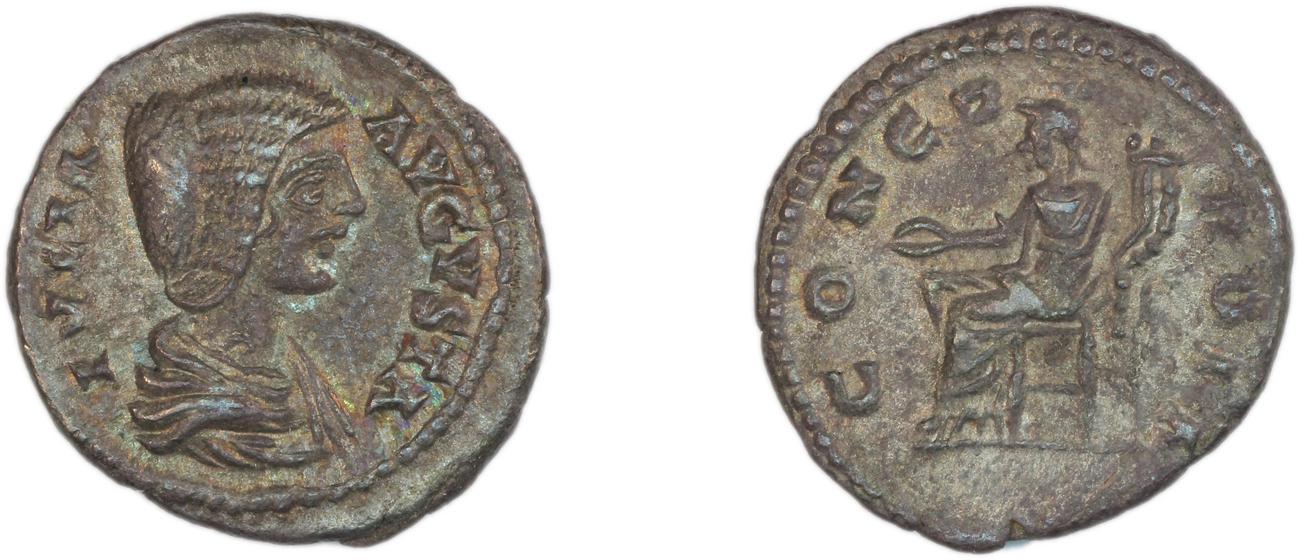
© The Trustees of the British Museum, 1853,0105.97. CC BY-NC-SA 4.0. https://www.britishmuseum.org/collection/object/C_1853-0105-97
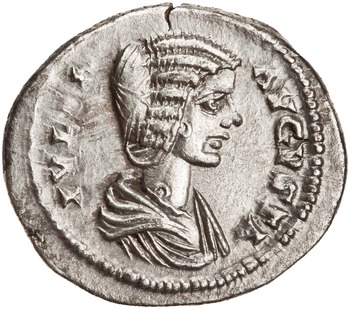
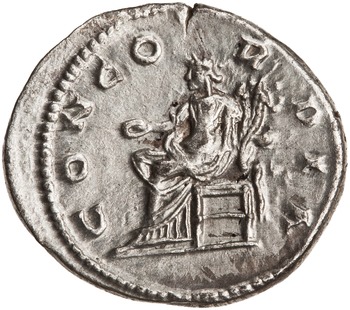
American Numismatic Society, 1944.100.51343. CC BY-NC 4.0. https://numismatics.org/collection/1944.100.51343
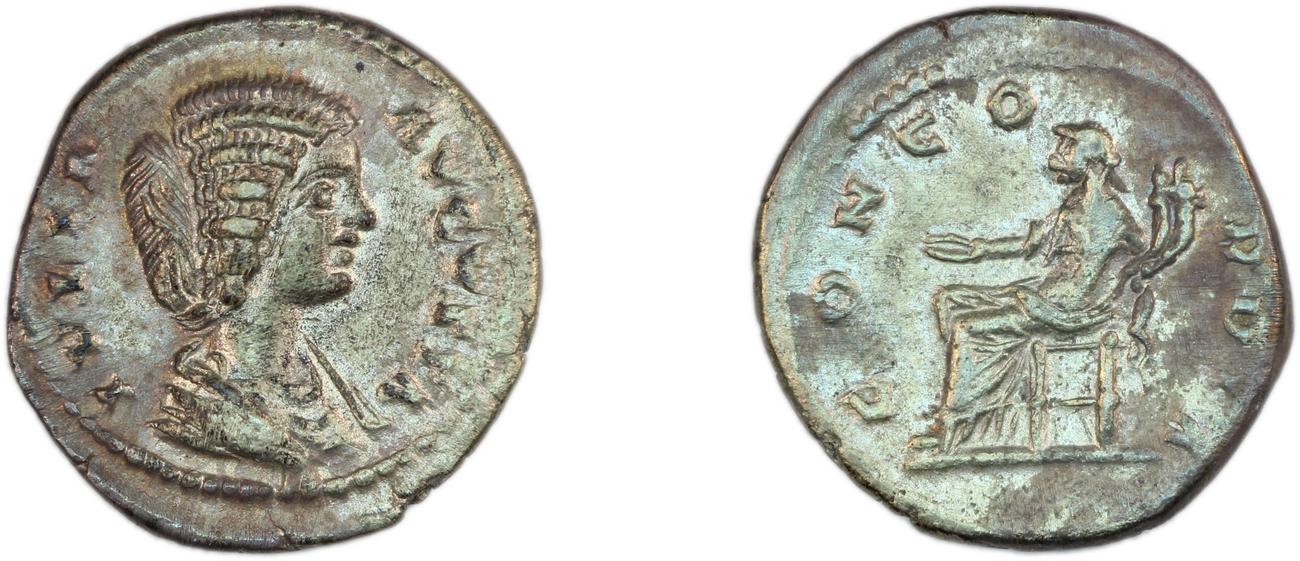
© The Trustees of the British Museum, 1898,0204.39. CC BY-NC-SA 4.0. https://www.britishmuseum.org/collection/object/C_1898-0204-39
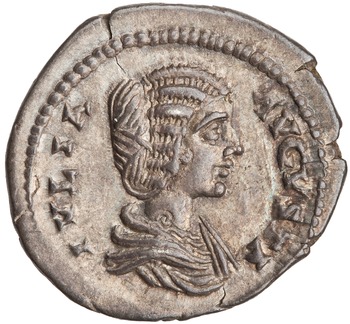
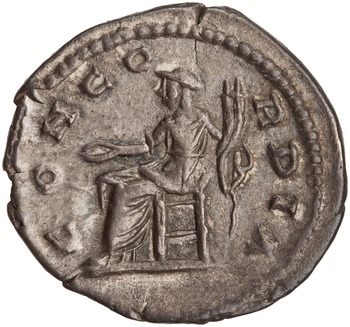
American Numismatic Society, 1948.19.1534. CC BY-NC 4.0. https://numismatics.org/collection/1948.19.1534
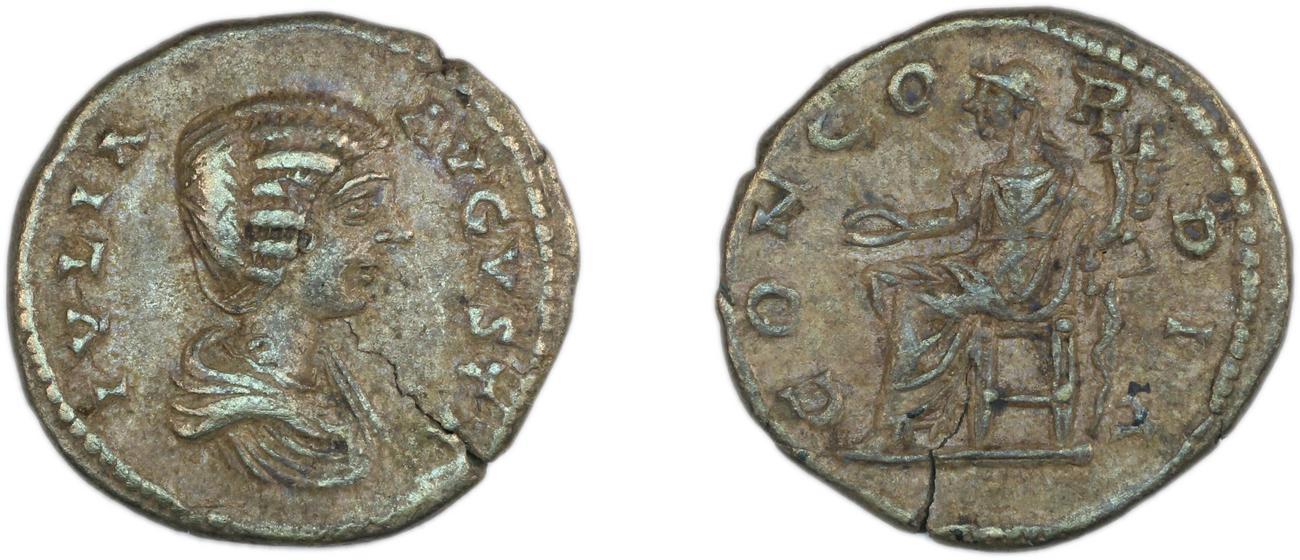
© The Trustees of the British Museum, 1898,0204.40. CC BY-NC-SA 4.0. https://www.britishmuseum.org/collection/object/C_1898-0204-40
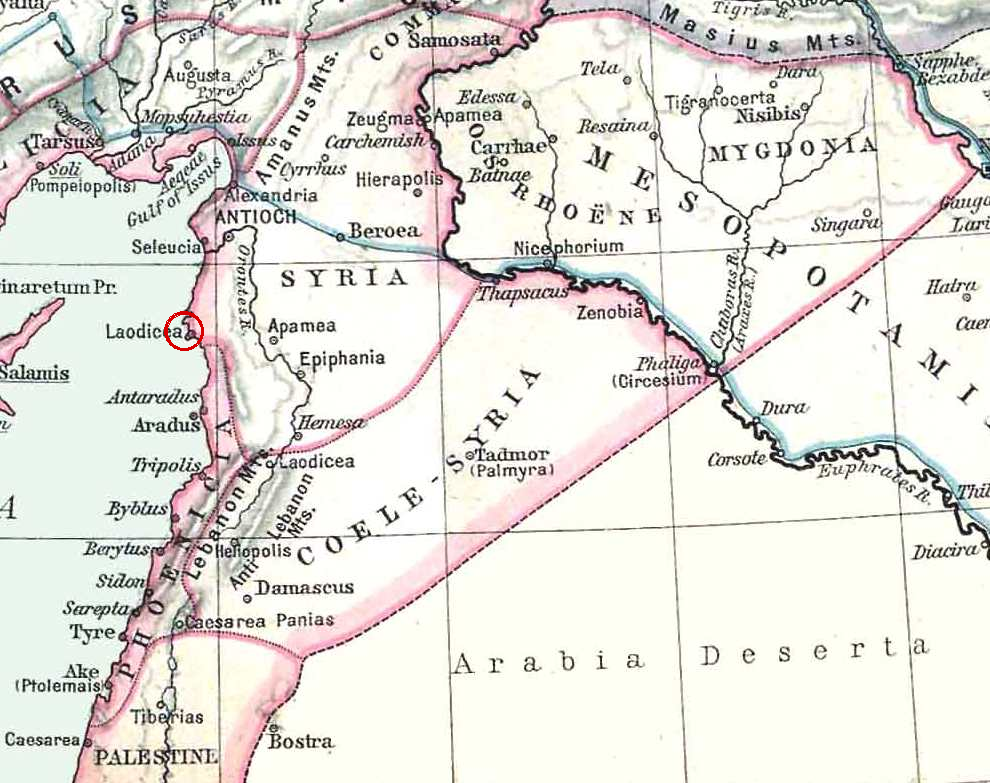
Northwestern Syria on W.R. Shepherd’s 1923 map of the Roman East: Laodicea ad Mare sits on the coast, circled in red, south of Antioch and the Orontes mouth. Rewarded by Severus for holding against Pescennius Niger, the port city was made a colonia and — by RIC’s conventional attribution — briefly hosted an imperial silver mint.
William R. Shepherd, “Reference Map of Asia Minor under the Greeks and Romans,” Historical Atlas (New York 1923) — public domain; detail of the Syrian coast. Red circle marking Laodicea ad Mare added.
Julia Domna is on the short list of the most consequential women ever to appear on Roman coinage. Daughter of the hereditary priest of Elagabal at Emesa in Syria, wife of Septimius Severus, mother of Caracalla and Geta, great-aunt of the dynasty’s last matriarch Julia Mamaea, she was Augusta for twenty-four years (193–217 AD), accompanied the armies (the Senate styled her mater castrorum, “mother of the camps,” in 195), patronized a circle of writers and philosophers, and died by suicide after her last son’s murder. Her coinage is correspondingly enormous — struck for her at Rome and, in the first years of the reign, at the eastern mints that had backed Severus’s bid for empire. This denarius, with its simple title IVLIA AVGVSTA and its seated Concordia, belongs to that eastern coinage of c. 196–202 AD.
Graphic: JSB Coins (CC0).
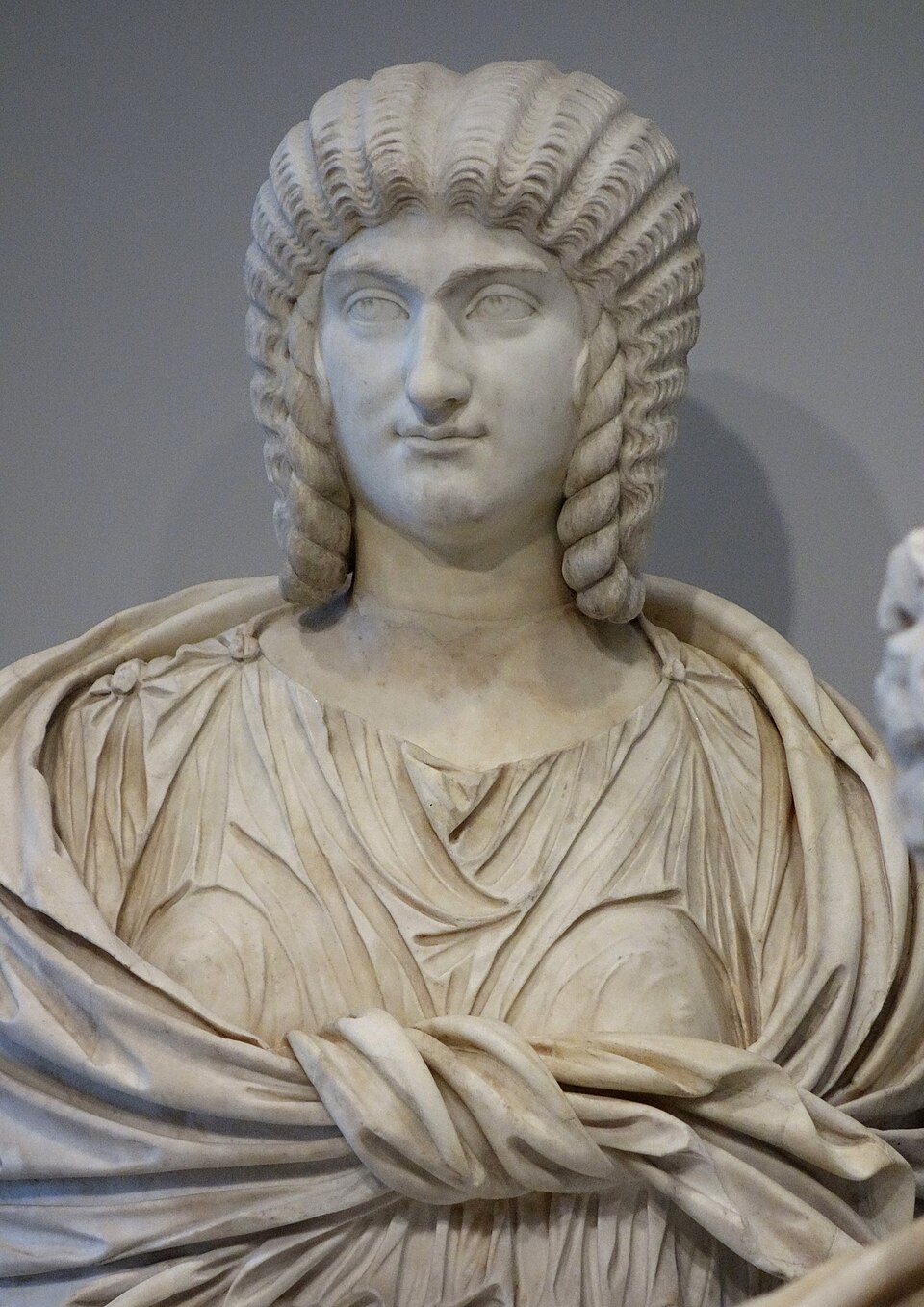
Photo: Mark Landon, Wikimedia Commons, licensed CC BY 4.0, reproduced unmodified.
Concordia — Harmony personified — sits enthroned with a libation bowl and a double cornucopia, the doubled horn promising redoubled plenty. On the money of an empress the goddess speaks first of concordia Augustorum, the harmony of the imperial marriage and household: a pointed message for a dynasty founded in civil war and advertised through its family portraits. The claim was aspirational — the deadly rivalry of Domna’s sons would make that plain a generation later — but that is precisely what the type is: state prayer rendered as small change. The seated-goddess formula itself was centuries old by Domna’s day; compare its Antonine ancestors in this collection’s Jupiter sestertius of Marcus Aurelius, struck for the dynasty into which Severus retroactively adopted himself.
RIC assigns this issue to Laodicea ad Mare, the great port of the Syrian tetrapolis south of Antioch — a city Severus had every reason to favor. In the civil war of 193–194, Antioch backed Severus’s rival Pescennius Niger while Laodicea held for Severus and suffered for it; the victor punished Antioch and rewarded Laodicea with metropolis rank and, in 198, colonial status. A grateful, newly promoted Laodicea housing an imperial silver mint makes historical sense, but it must be said plainly that the attribution is stylistic convention, not documented fact: RIC’s sorting of Severus’s eastern silver into ‘Emesa’ and ‘Laodicea’ mints has been challenged as resting on slender evidence (Bickford-Smith, RIN 96, 1994/5, arguing for a thorough reconsideration), and the true location of the workshops remains open. This catalogue keeps the conventional label with that caveat. For Syrian imperial coinage a century and a half earlier — from Antioch, the rival up the coast — see the collection’s eagle tetradrachm of Nero.
Domna’s eastern denarii document the moment the empire’s center of gravity lurched eastward: a Syrian empress, a Syrian usurpation put down, Syrian cities promoted and punished, and imperial silver struck in the province itself to pay the armies that decided it. The type also marks the arrival of the imperial women as a permanent, programmatic voice on the coinage — Domna’s output dwarfs that of any empress before her, and the virtues struck in her name (Concordia above all) became the standard vocabulary for empresses for the next century. That voice outlived her. It was her sister Julia Maesa who engineered the dynasty’s return in 218, and the collection’s Fides Exercitus denarius of Elagabalus is the silver of the grandson she put on the throne. Maesa’s own coin is now here as well: the Pudicitia denarius of Julia Maesa, struck at Rome in the last year of that grandson’s reign.
Attribution follows RIC IV.1 (Mattingly & Sydenham) no. 637 under Septimius Severus, assigned there to ‘Laodicea ad Mare’, c. 196–202 AD; also RSC 21 and Sear RCV 6577; the type record with museum specimens is on OCRE (numismatics.org/ocre, RIC IV Septimius Severus 637). On the debated organization of the Severan eastern mints, R.A. Bickford-Smith, ‘The imperial mints in the east for Septimius Severus: it is time to begin a thorough reconsideration’, Rivista Italiana di Numismatica 96 (1994/5). For Domna’s life and the title mater castrorum, Cassius Dio 75–79 and Herodian 3–4 (both now linked in the references — her death at Antioch, starving herself after Caracalla’s murder, is Dio 79.23); on Severus’s treatment of Antioch and Laodicea after the Niger war, Herodian 3.3 and 3.6.9.
RIC IV assigns this issue to a mint at Laodicea ad Mare on the Syrian coast, active for Severus from the mid-190s; the attribution rests on style and hoard groupings, not documentary evidence, and the organization of Severus's eastern mints ('Emesa', 'Laodicea') has been questioned in later scholarship (Bickford-Smith, RIN 96, 1994/5). This catalogue keeps RIC's conventional 'Laodicea ad Mare' label while noting the debate. The eastern-mint denarii of Domna are typically of slightly coarser style than Rome's, with tall narrow lettering, as here.
John's Ancient Coin Collection · Type · julia-domna-concordia-denarius
Image credits for this coin — photographs, maps and graphics used on this page
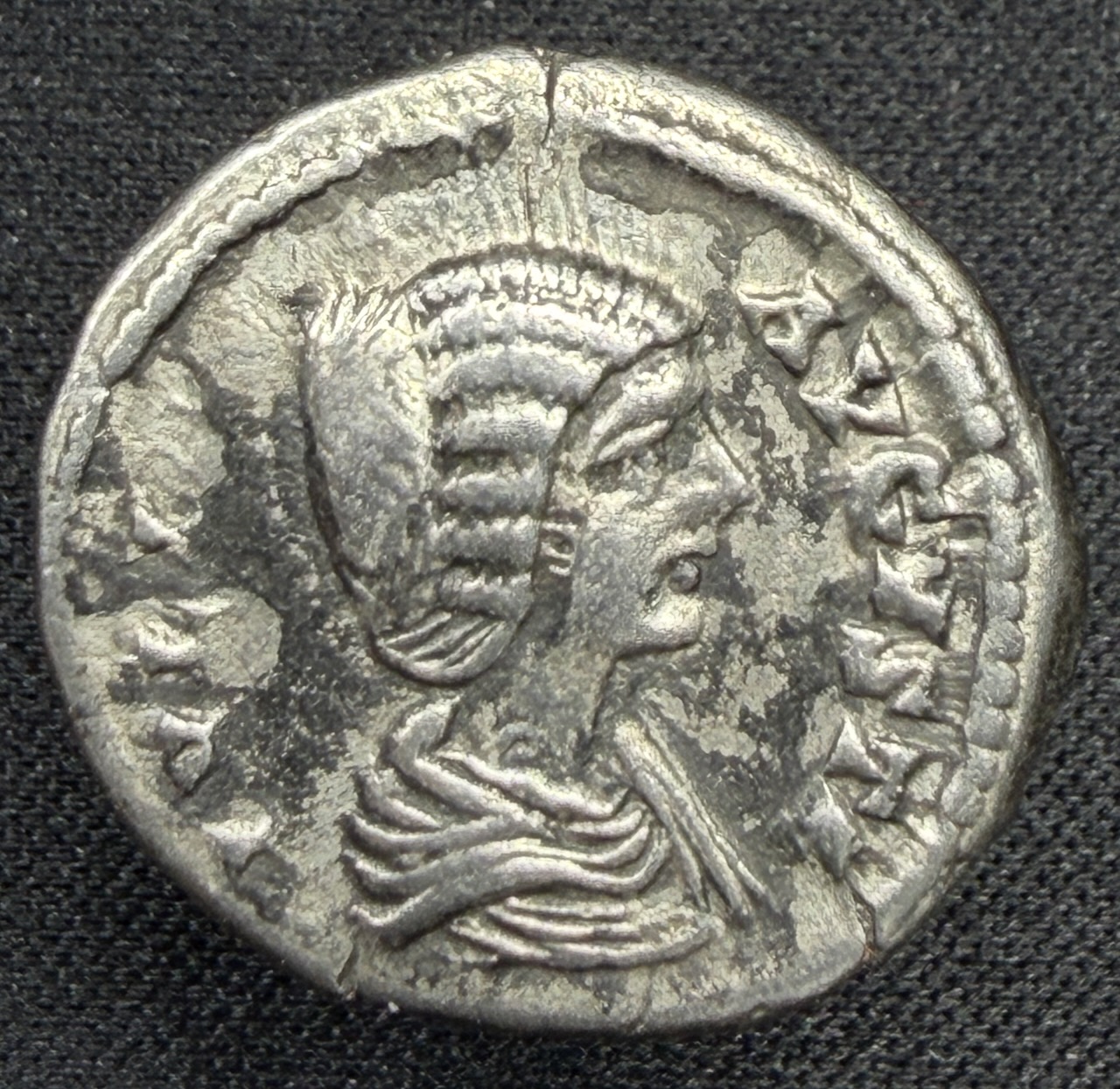
_02.jpg)