Type · antioch-nero-eagle-tetradrachm
Current: Roman Provincial, Syria, Seleucis and Pieria, Antioch. Nero, AD 54–68. AR tetradrachm, dated RY 9 and year 111 of the Caesarean Era (AD 62/3). RPC I 4185; Prieur 85; McAlee 261.
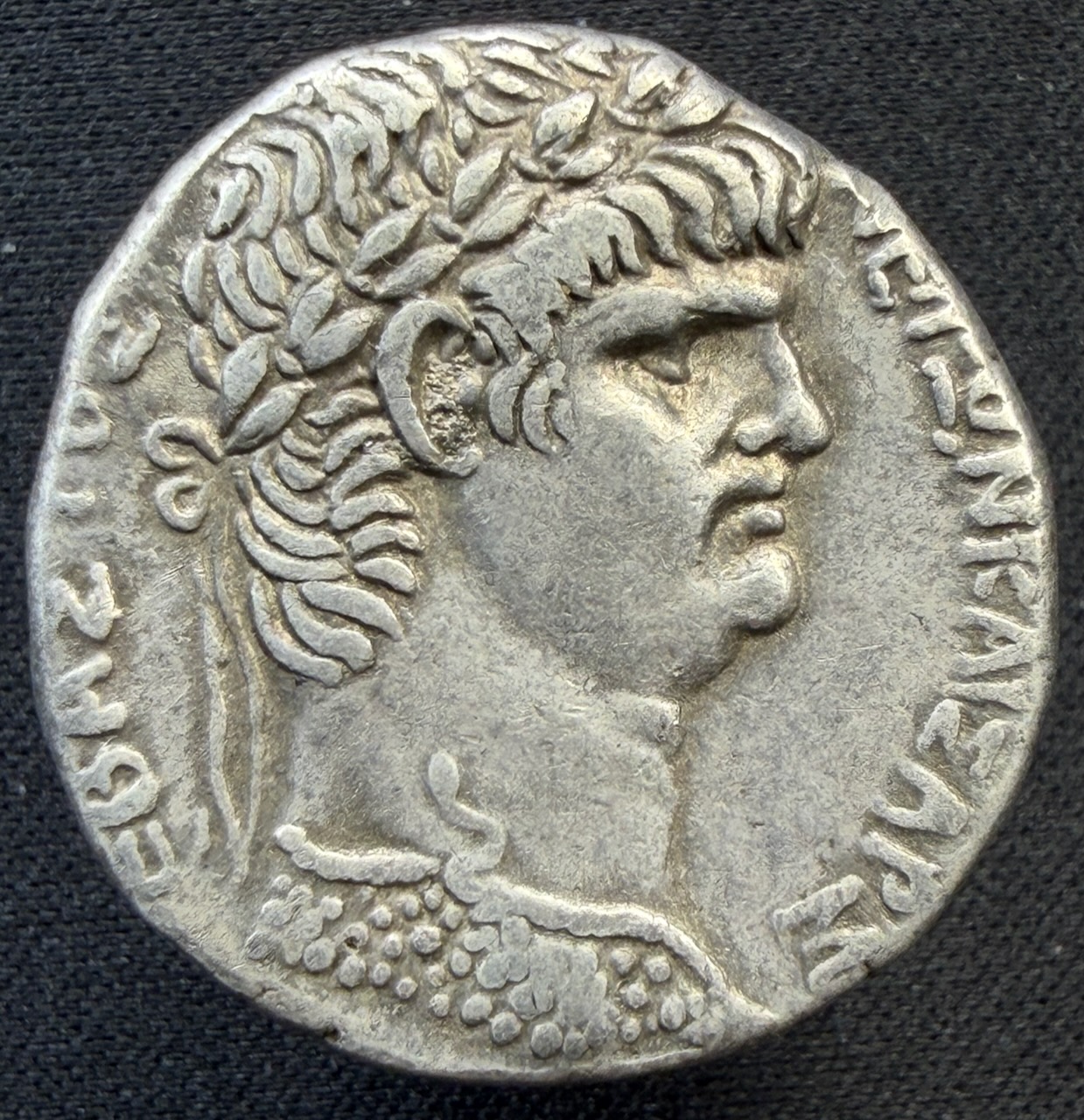
Obverse: Laureate bust of Nero right, wearing aegis over the shoulder
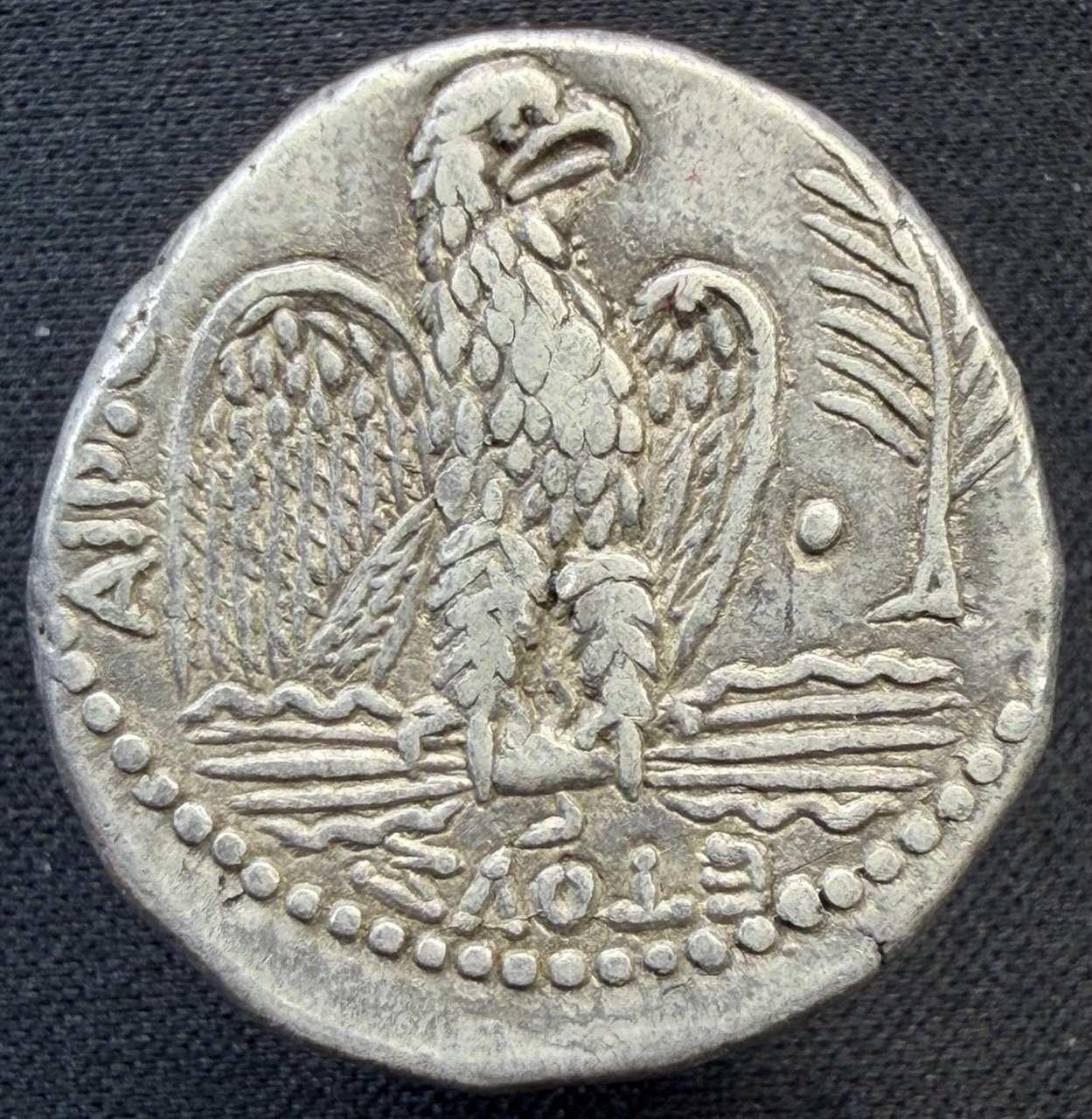
Reverse: Eagle standing right on thunderbolt, wings spread; palm frond to right; pellet between eagle and palm
Primary reference: RPC I 4185
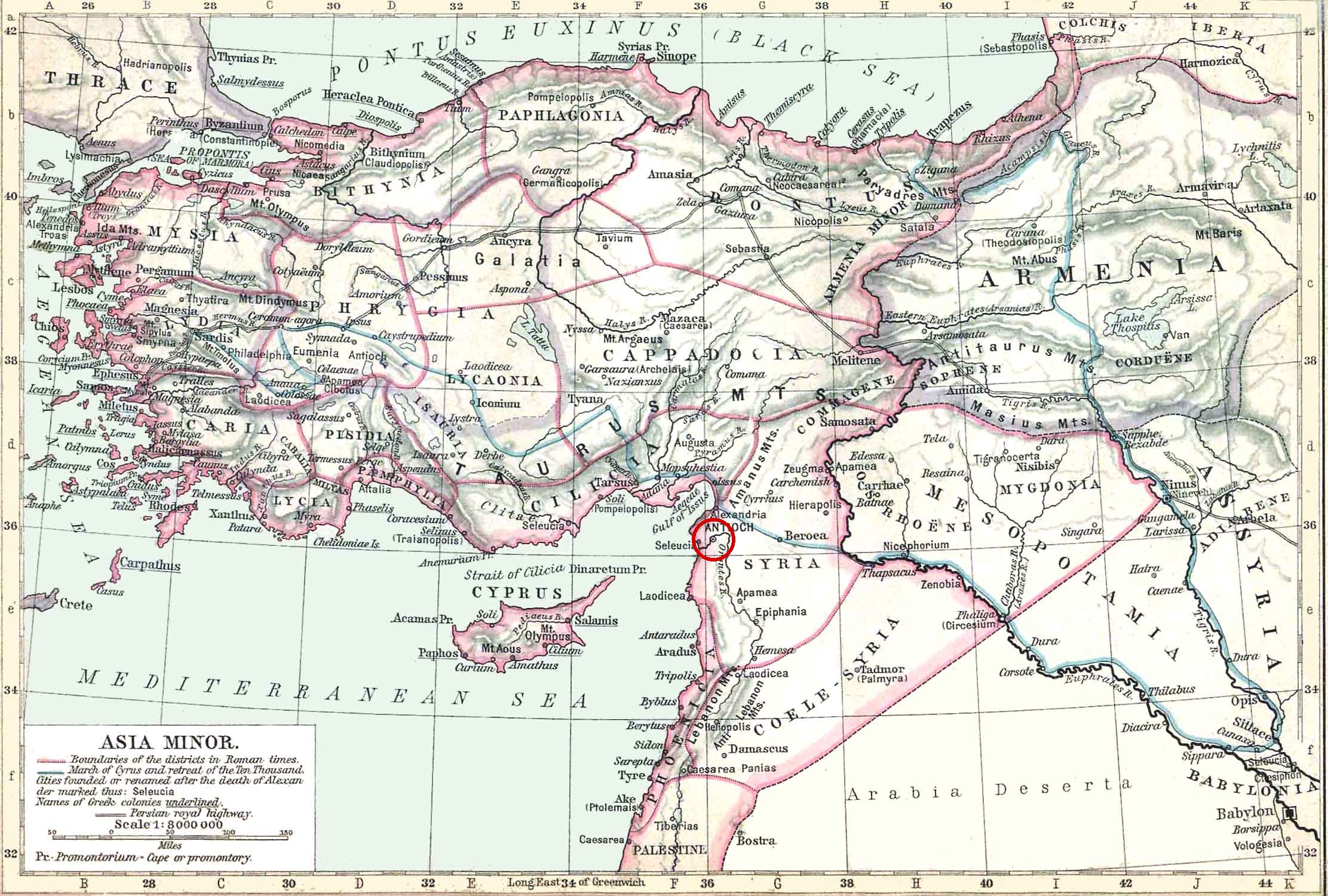
Asia Minor and the Roman East under the Greeks and Romans, from William R. Shepherd’s Historical Atlas (1923). Antioch — circled in red — lies in the lower right of the map, in the northwest corner of Syria where the Orontes river meets the Mediterranean — see the Syria detail inset below for a closer view. The map shows the Roman provincial organization of the East within which the Antioch mint struck this tetradrachm.
“Asia Minor under the Greeks and Romans” from William R. Shepherd, The Historical Atlas (1923), via Wikimedia Commons, File:Asia minor-Shepherd 1923.JPG (https://commons.wikimedia.org/wiki/File:Asia_minor-Shepherd_1923.JPG). Public domain (author died 1934). No attribution legally required; credited as a courtesy. Modified by JSB Coins: a red circle added to mark Antioch. The Syria inset is a crop of the same plate (File:Asia minor-Shepherd 1923 Syria.jpg), reproduced unmodified.
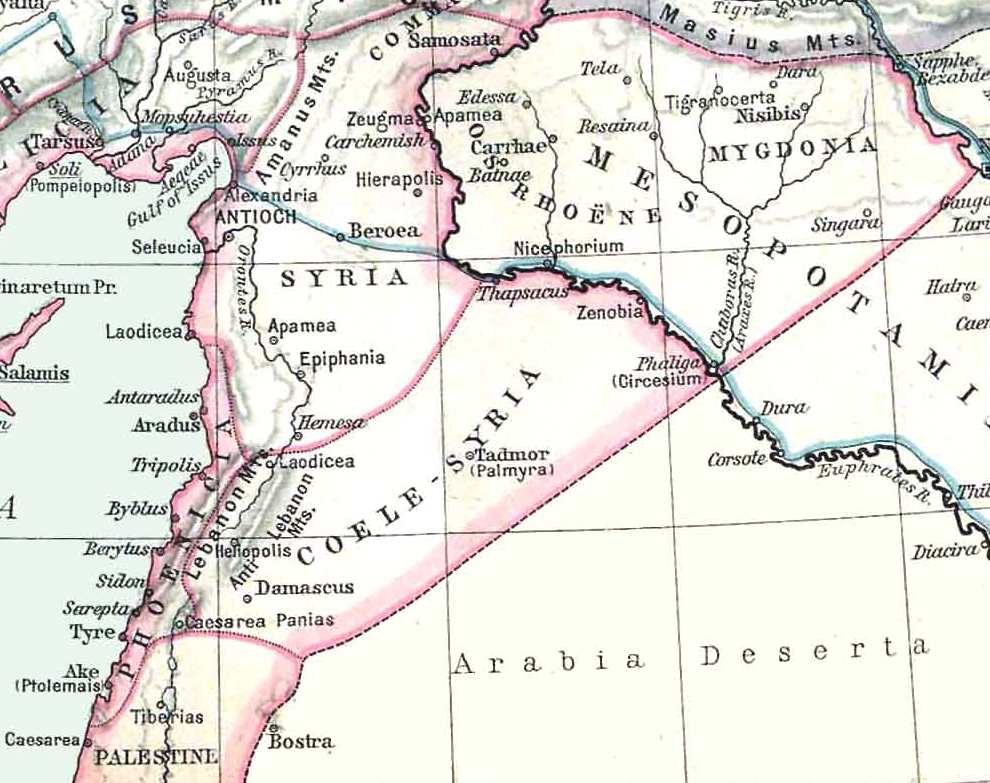
The Syria corner of the same Shepherd plate. Antioch — the mint of this tetradrachm — sits at top left, on the Orontes just inland from its port Seleucia (Seleucia Pieria, the pairing that gives the district its ancient name, “Seleucis and Pieria”). Laodicea, Apamea, and the great cities of the Phoenician coast, whose commerce this coinage served, lie to the south.
This tetradrachm is the everyday large silver of the Roman East, struck at Antioch on the Orontes — capital of the province of Syria and, after Rome and Alexandria, the third city of the empire. It carries the portrait of Nero with a Greek legend, an eagle of Zeus on the reverse, and two dating systems at once. Struck in AD 62/3, it belongs to the great Neronian issues that fixed the form of Syrian silver for the next two centuries.
Graphic: JSB Coins, 2026 (CC0).
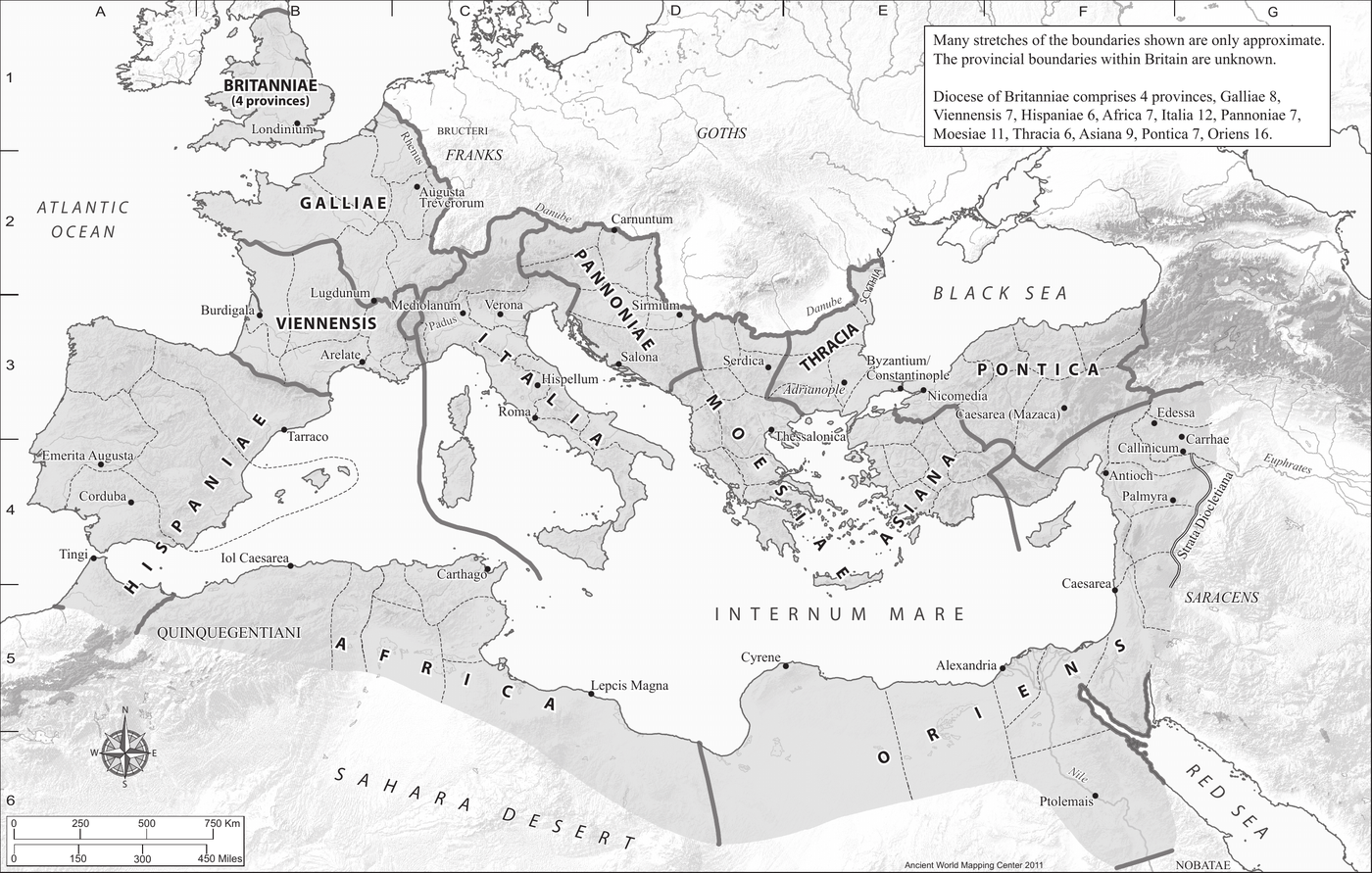
Ancient World Mapping Center, University of North Carolina at Chapel Hill (2011). Trimmed to the plate; licensed CC BY-SA 4.0, via Wikimedia Commons.
Antioch was founded around 300 BC by Seleukos I Nikator and served as the western capital of the Seleucid empire; when Pompey deposed the last Seleucids and organized Syria as a Roman province in 64 BC, the city passed seamlessly from royal capital to provincial one. Its mint never really stopped. Under Roman rule Syria kept its own silver — the tetradrachm, on a reduced local standard descended from the late Seleucid coinage — rather than adopting the denarius. Silver of this kind circulated within the Syrian region as what numismatists call a closed or regional currency system: tetradrachms dominate Syrian hoards while denarii are comparatively scarce there, and the exchange relationship between the two (three or four denarii to the tetradrachm are both defended) remains a debated question in the literature (Butcher, Coinage in Roman Syria).
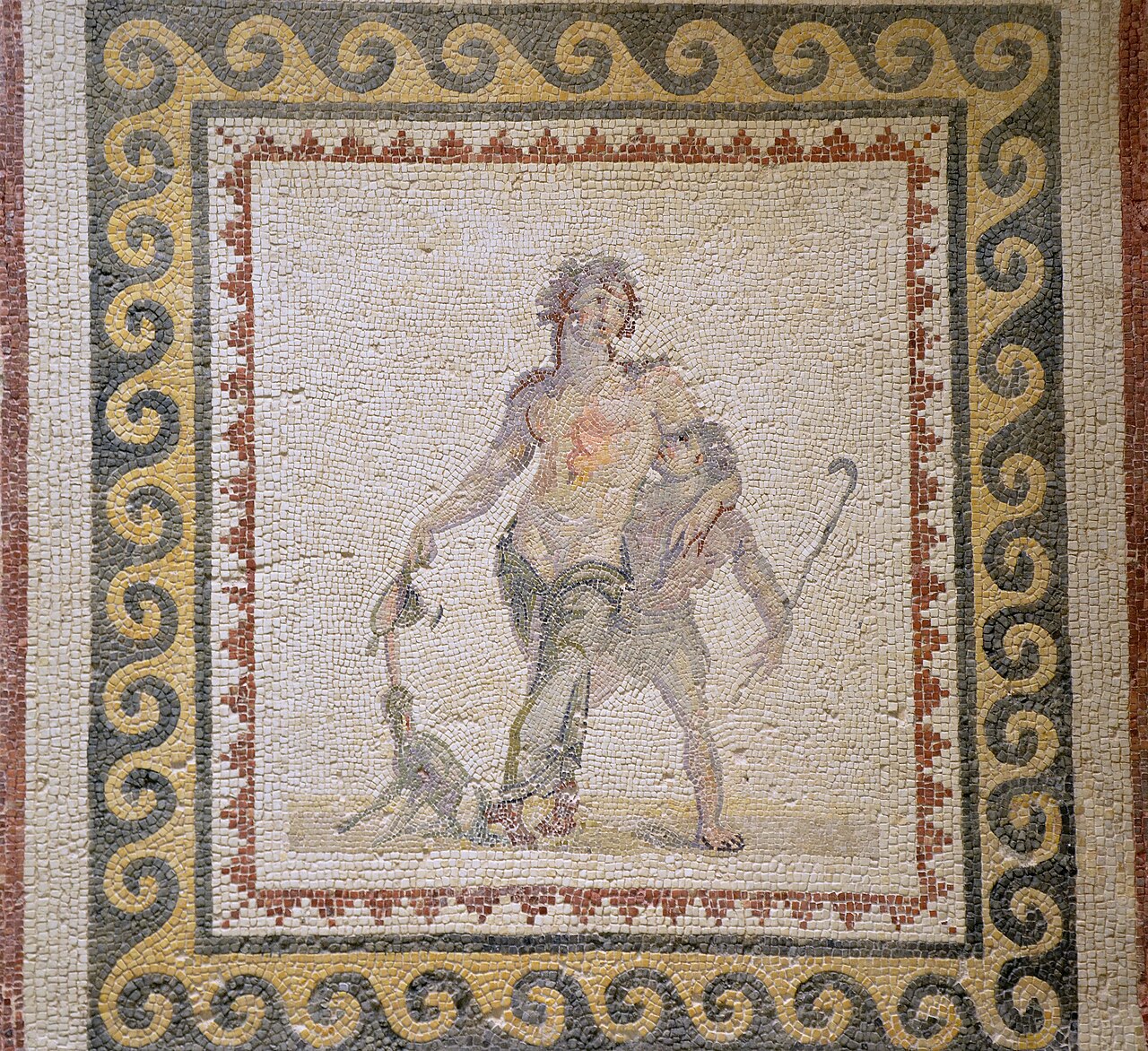
Photo: Carole Raddato, Wikimedia Commons, licensed CC BY-SA 2.0, reproduced unmodified.
The coin’s date, AD 62/3, falls at a hinge in Nero’s reign. In the East, Rome and Parthia were at war over the control of Armenia: the winter of AD 62 brought the humiliation of Caesennius Paetus’ army at Rhandeia, and in 63 Cn. Domitius Corbulo restored the Roman position, opening the settlement by which Tiridates would accept the Armenian crown from Nero’s hand (Tacitus, Annals 15). At Rome the same years mark the turn of the regime: the praetorian prefect Burrus died in 62, Seneca withdrew from court, and Nero divorced and executed Octavia. Antioch was the base for Rome’s eastern wars, and the heavy tetradrachm output of these years is often connected with military expenditure for the Armenian campaigns — a plausible suggestion repeated in the literature (McAlee) rather than a documented fact.
The obverse shows Nero laureate, with the aegis — the snake-fringed cloak of Zeus and Athena — over his shoulder, a divinizing flourish the provincial engravers gave the emperor’s portrait. The legend is Greek, ΝΕΡΩΝ ΚΑΙΣΑΡ ΣΕΒΑΣΤΟΣ, “Nero Caesar Augustus”: the emperor presented to his Greek-speaking subjects in their own language. The reverse eagle standing on a thunderbolt is the bird of Zeus, an emblem with deep numismatic roots in the Hellenistic East — it had been the badge of Ptolemaic coinage for three centuries and was familiar on late Seleucid silver. Its adoption on the Neronian tetradrachms proved definitive: the eagle became the standard reverse of Syrian and Phoenician tetradrachms down to the end of the coinage in the mid-third century AD. The palm frond beside it is a conventional token of victory; the pellet is a control mark distinguishing issues.
The reverse legend is a date, given two ways. ΕΤΟΥΣ ΑΙΡ is “year 111” of the Caesarean era of Antioch, the civic era the city adopted in gratitude to Julius Caesar, reckoned from 49 BC; the letter Θ that follows is Nero’s ninth regnal year. The two together fix the striking to AD 62/3. This dual dating — the city’s own era beside the emperor’s regnal count — is characteristic of Nero’s Antioch tetradrachms and lets the series be arranged year by year with unusual precision.
Metrologically these are substantial coins, around 15 g of silver, though not pure: metallurgical analysis has shown the Neronian Antioch issues to be significantly alloyed, and Butcher and Ponting have argued that their fineness moves broadly in step with Nero’s contemporary manipulation of the denarius standard at Rome — provincial and imperial silver managed as parts of one fiscal system (The Metallurgy of Roman Silver Coinage, 2014). The tetradrachm was the money of tax, trade, and army pay across Syria; it is also, incidentally, the silver of the Antioch in which the followers of Jesus were first called Christians (Acts 11:26), within living memory of this coin’s striking.
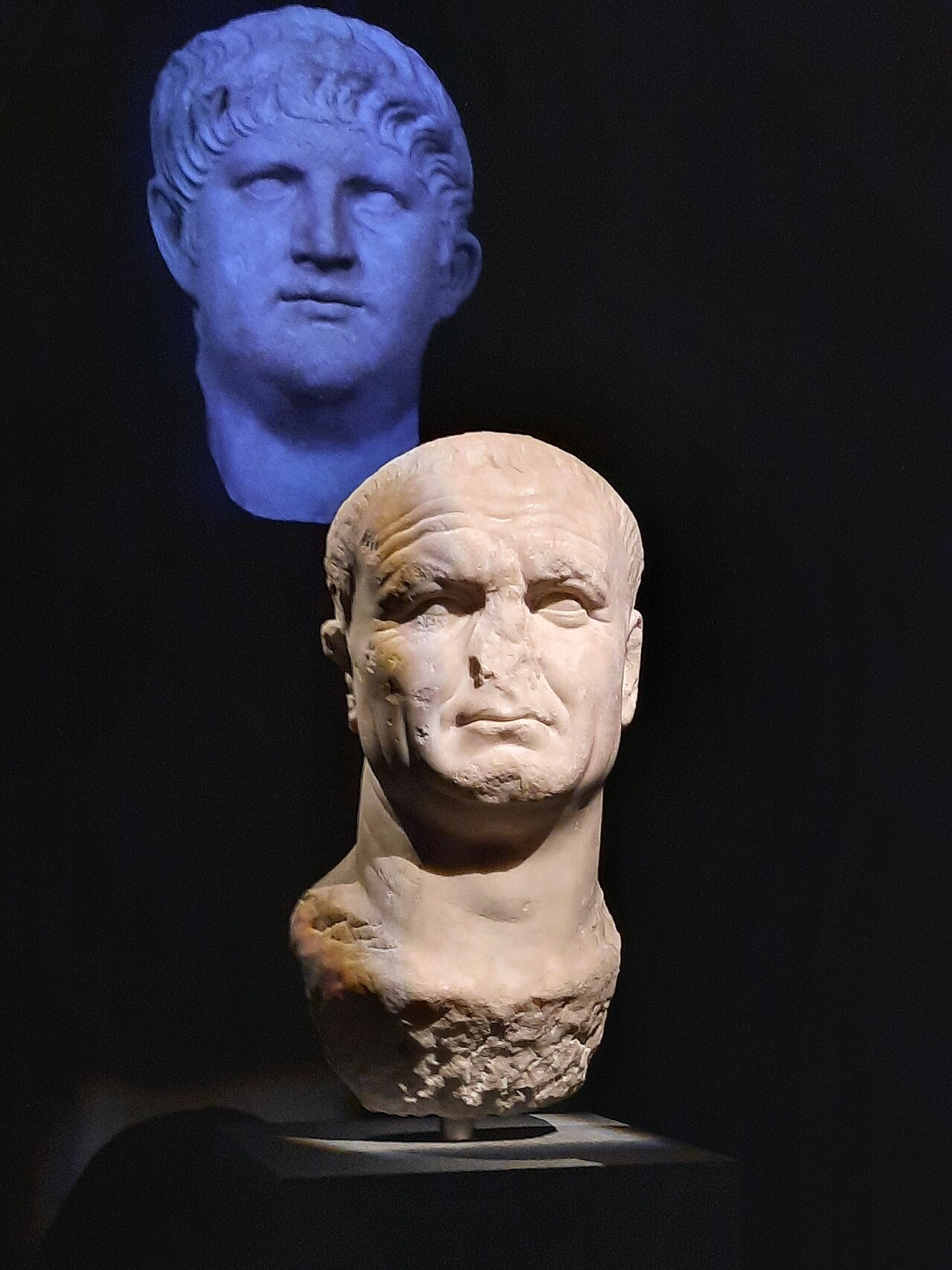
Photo: Jamie Heath, CC BY-SA 2.0 (Wikimedia Commons); reproduced unmodified.
The Neronian eagle tetradrachms stand at the junction of two coinages: behind them, the royal silver of the Seleucids; ahead of them, two centuries of Syro-Phoenician eagle tetradrachms that ended only in the empire-wide currency collapse of the third century. A dated example like this one — RY 9, Caesarean 111 — pins a single year of that long series to a dramatic moment: the year of Rhandeia, the year the Julio-Claudian regime hardened, the year Antioch’s mint was striking hard to pay for an eastern war. The denarius side of Rome’s Syrian money is in this collection too, a century and a half on: the Julia Domna denarius attributed to neighboring Laodicea ad Mare — the imperial mint system operating in this same Syrian world, striking Rome’s denomination beside the province’s eagles.
Attribution follows Roman Provincial Coinage I, no. 4185 (Burnett, Amandry, Ripollès, 1992; online at rpc.ashmus.ox.ac.uk), with Prieur 85 and McAlee 261 as the standard corpus references; the obverse/reverse readings and dating are as given there and on the dealer tag. Weight data (average 14.53 g across sixty-six Syrian tetradrachms) is Wruck’s, as reported in the numismatic literature. The closed character of Syrian silver circulation and the debated denarius tariff follow K. Butcher, Coinage in Roman Syria (2004); the fineness argument is K. Butcher and M. Ponting, The Metallurgy of Roman Silver Coinage (2014). The historical frame is Tacitus, Annals 13–15. The military-pay explanation for the large Neronian issues is a suggestion found in McAlee and elsewhere, not a documented fact, and is flagged as such above.
Silver tetradrachm of the provincial mint of Antioch, the 'closed' regional silver of Roman Syria. Dual-dated by Nero's regnal year (Θ = 9) and the Caesarean era of Antioch (ΑΙΡ = 111, reckoned from 49 BC), giving AD 62/3. Full weight for the Neronian issues runs c. 14.5–15.5 g (Wruck's sixty-six-coin average is 14.53 g); this type's aegis bust and eagle-on-thunderbolt reverse make it the direct ancestor of the standard Syro-Phoenician eagle tetradrachms struck into the third century AD.
John's Ancient Coin Collection · Type · antioch-nero-eagle-tetradrachm
Image credits for this coin — photographs, maps and graphics used on this page

_2nd-3rd_century_AD,_Hatay_Archaeology_Museum,_Antakya,_Turkey_(35806467460).jpg)
.jpg)