Type · elagabalus-fides-exercitvs-denarius
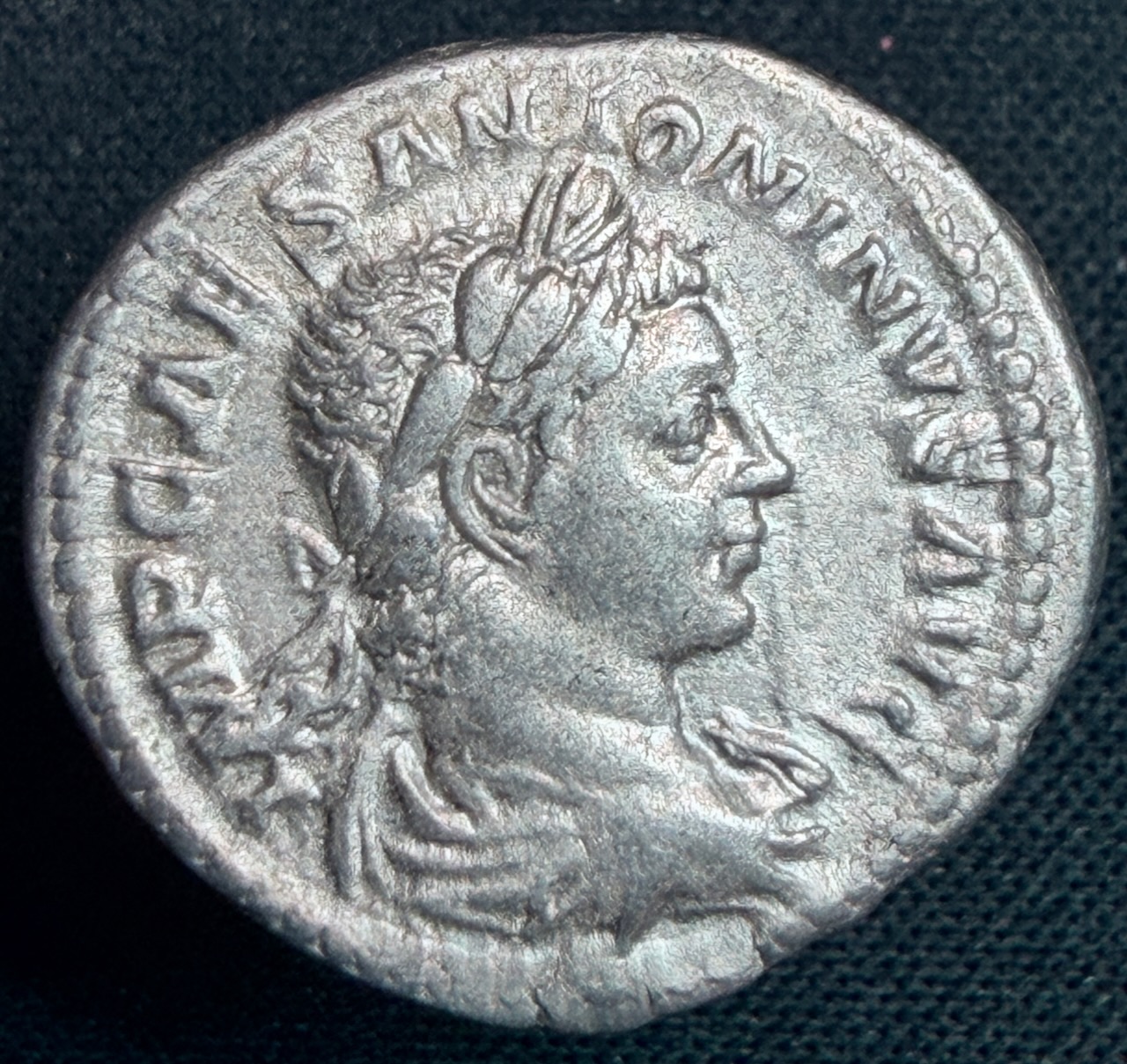
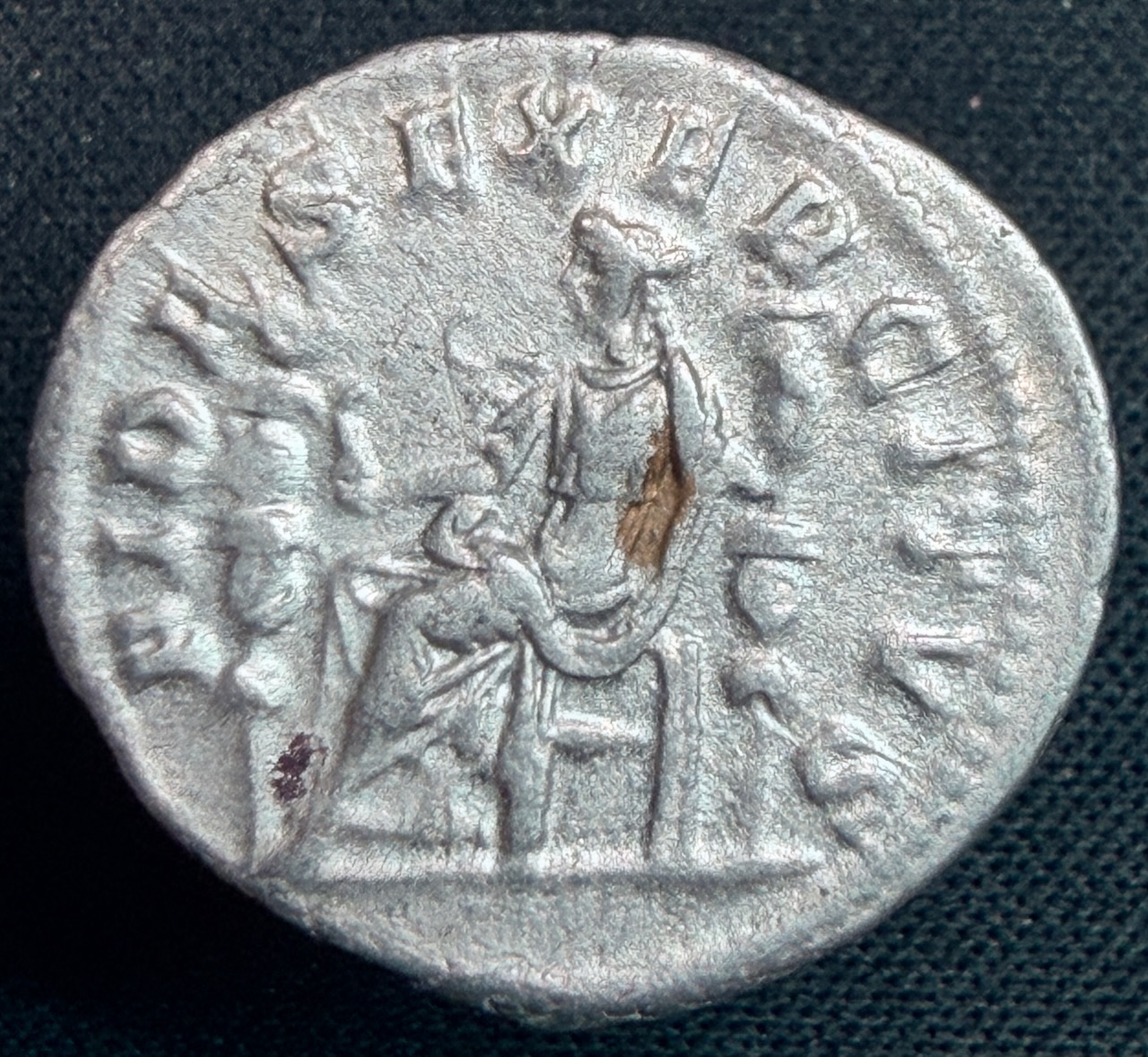
Current: Roman Imperial, Elagabalus, AR denarius, Rome, 218–219 AD (RIC IV 68)
Obverse: Laureate, draped bust of Elagabalus right
Reverse: Fides seated left, holding eagle (aquila) in right hand and standard in left; a second standard before her
Primary reference: RIC IV 68
15 specimens in public collections (ANS 5, Ashmolean 3, Goethe Uni Frankfurt Arch Wiss 2, Göttingen 2, Vienna 2); weights 2.25–3.51 g, median 3.01 g across 15 recorded; die axis most often 6h.
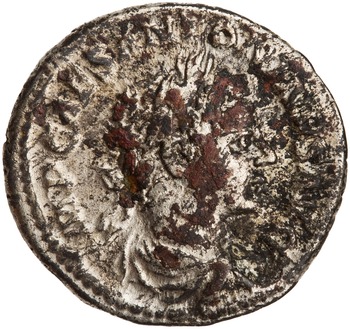
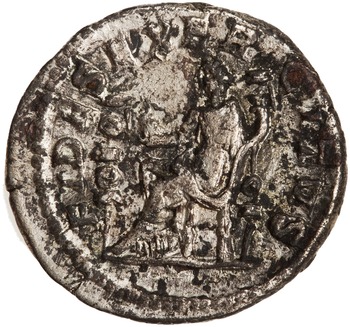
American Numismatic Society, 1923.151.57. CC BY-NC 4.0. https://numismatics.org/collection/1923.151.57
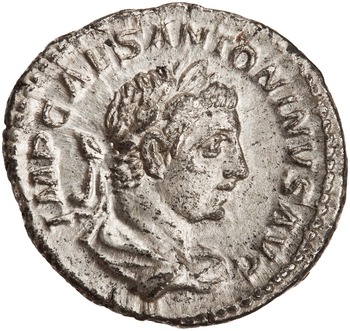
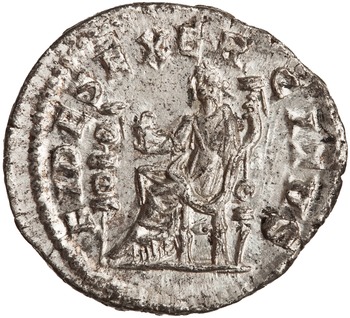
American Numismatic Society, 1944.100.51909. CC BY-NC 4.0. https://numismatics.org/collection/1944.100.51909
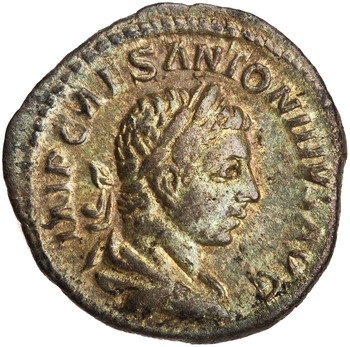
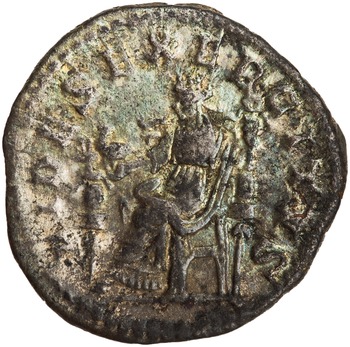
American Numismatic Society, 1948.19.1733. CC BY-NC 4.0. https://numismatics.org/collection/1948.19.1733
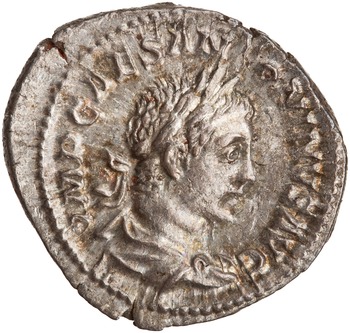
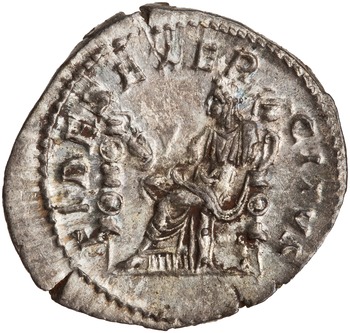
American Numismatic Society, 1987.26.213. CC BY-NC 4.0. https://numismatics.org/collection/1987.26.213
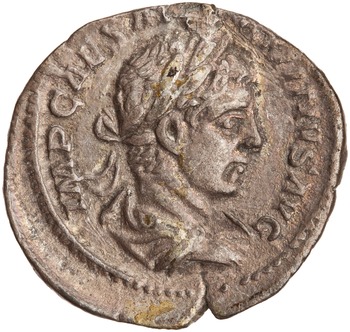
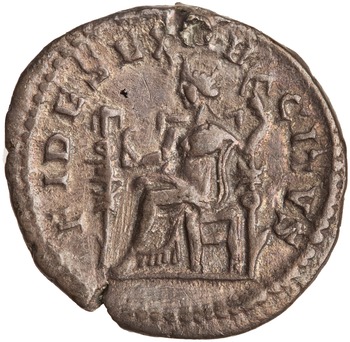
American Numismatic Society, 1995.11.1157. CC BY-NC 4.0. https://numismatics.org/collection/1995.11.1157
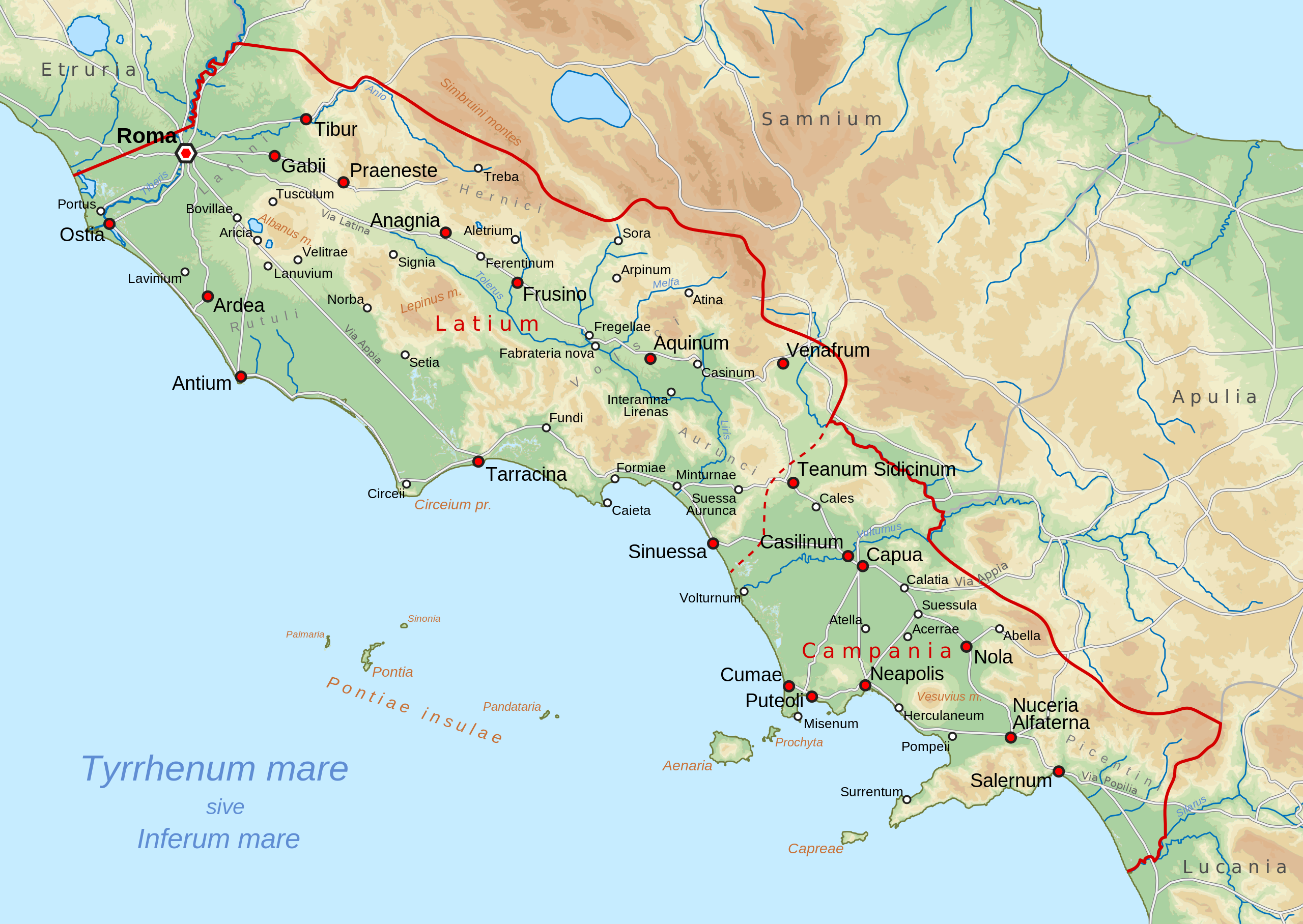
Regio I, Latium et Campania — the heartland of Roman Italy as organized under Augustus. Roma sits at the upper left, marked by the map’s hexagonal capital symbol and bold label. This denarius was struck in the city for an emperor Rome had not yet seen — Elagabalus did not reach the capital until the autumn of 219, a year after the mint began coining in his name.
“Map of Augustan Regio I Latium et Campania” by Tomisti (Wikimedia Commons), File:Regio I Latium et Campania map.svg, licensed CC BY-SA 4.0; cities and roads based on the Digital Atlas of the Roman Empire (DARE) and Pleiades; topographic base © OpenMapTiles, © OpenStreetMap contributors. Reproduced unmodified.
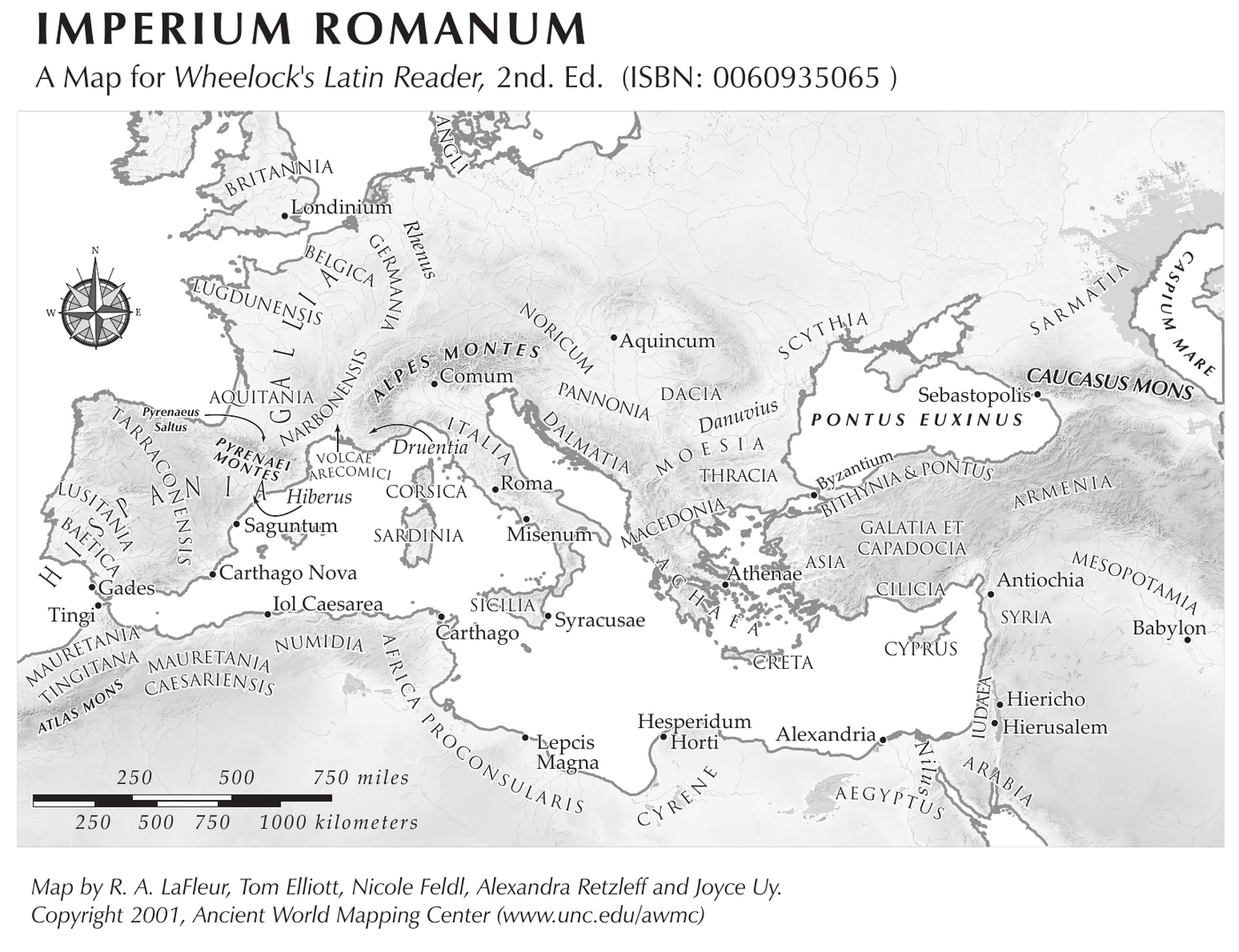
Roma sits at the center of Italia. Elagabalus came to it from Emesa in Syria, on the right of this map, brought west by the legions his grandmother had bought. FIDES EXERCITVS names the thing that carried him across the whole width of the empire — and that killed him four years later.
In the spring of 218 AD the Severan dynasty, seemingly finished after the murder of Caracalla, staged one of Roman history’s strangest comebacks. Caracalla’s aunt Julia Maesa — sister of Julia Domna — had been sent home to Syria by the new emperor Macrinus. There her fourteen-year-old grandson Varius Avitus Bassianus served as hereditary priest of the sun god Elagabal at Emesa, and the soldiers of Legio III Gallica, camped nearby and nostalgic for the free-spending Caracalla, were encouraged to believe the boy was Caracalla’s illegitimate son. On 16 May 218 the legion proclaimed him emperor under Caracalla’s official name — Marcus Aurelius Antoninus, the name on this coin’s obverse — and on 8 June 218 his scratch army defeated Macrinus outside Antioch. History remembers him instead by his god’s name: Elagabalus.
Graphic: JSB Coins (CC0).
FIDES EXERCITVS — “the Loyalty of the Army” — is as literal a reverse type as the Roman mint ever struck. The army’s loyalty, and nothing else, had made this emperor: not the Senate, not descent, not even his own ambition (Cassius Dio and Herodian agree the revolt was his grandmother’s project). Fides sits with a legionary eagle in her hand and standards about her, the personified good faith of the very legions that had just changed sides. The type belongs to the first Rome issues of 218–219, struck while the new court wintered at Nicomedia and processed toward a capital that had never seen its emperor — the mint proclaiming the army’s fidelity partly because everyone doubted it.
The four years that followed became ancient shorthand for misrule: the black stone of Emesa carried in procession into Rome, the sun god promoted over Jupiter, the emperor’s marriages (a Vestal Virgin among them) scandalizing the sources that survive. How much is fact and how much hostile caricature is a genuinely open question — Dio wrote under the regime that killed him, and modern treatments (Icks, The Crimes of Elagabalus, 2011) read much of the tradition as posthumous character assassination — but the political failure is not in doubt. The same military fides this coin advertises proved exactly as durable as the donatives that bought it: in March 222 the praetorians murdered Elagabalus and his mother, and the empire passed to his cousin Severus Alexander, whose careful regime — run in practice by his mother Julia Mamaea — spent years advertising its distance from everything Elagabalus had done.
What “supposedly” went on deserves the space, because the reign is one of the best case studies in antiquity of how to read hostile sources — and because parts of the lurid tradition are, surprisingly, corroborated by the coins themselves.
The god came first — literally. Elagabalus’s deity was not a statue but a baetyl: a great conical black stone, probably meteoric, that had been worshipped at Emesa for generations. The emperor brought it with him to Rome, built it a vast temple on the Palatine (the Elagabalium), and — this is the constitutional shock — placed his god above Jupiter, renaming him Sol Invictus Elagabal and requiring that his name precede all others in official prayers. Herodian, who may have seen it, describes the midsummer procession (5.6): the stone riding a chariot of six white horses through streets strewn with gold dust, no human hand touching the reins — because the emperor himself walked backwards before the chariot the whole way, holding the horses’ bridles, his eyes fixed on his god. Sacred objects of the old religion, the fire of Vesta and (Dio says) the Palladium among them, were transferred to the new temple so that no god might be worshipped except in Elagabal’s company. None of this is caricature: the emperor’s own late coinage titles him SACERDOS AMPLISSIMVS DEI SOLIS ELAGAB — “most exalted priest of the sun-god Elagabal” — and shows him sacrificing in Syrian priestly dress, with the famous “horn” (probably a dried bull’s pizzle worn as a priestly attribute) rising from his wreath. The religious revolution is fact, minted and dated.
Even the god had to marry. Dio (80.12) reports that Elagabalus arranged a wedding for the stone: first to Pallas — whose ancient image was hauled to the Palatine — and then, deciding a war-goddess was an unsuitable bride, to Urania, the “heavenly goddess” of Carthage, whose cult image and temple treasure were fetched from Africa for the ceremony. Urania (Dea Caelestis to the Romans) was the Romanized Tanit — the same grain-wreathed goddess of Carthage whose head is on this collection’s Punic bronzes, summoned four centuries after Carthage’s fall to wed a Syrian meteorite in Rome. The theology was perfectly serious: a sacred marriage of sun-god and heaven-goddess, with the whole empire invited to contribute wedding presents.
The marriages — and the Vestal. The emperor himself married five times in four years, to (in the usual reconstruction) Julia Paula, the Vestal Aquilia Severa, Annia Faustina, briefly someone unrecorded, and Severa again. As to how a teenager marries a Vestal Virgin: there was simply no one to stop him. The Vestals’ thirty-year vow of chastity was enforced by the pontifex maximus — and the emperor was the pontifex maximus, the chief priest of the very religion being violated; the traditional punishment for a Vestal who broke her vow (burial alive) could only be ordered by the man now sharing her bed. Elagabalus even offered a theological defense that Dio preserves with a straight face (80.9): a priest marrying a priestess was fitting, “that godlike children might spring” from the union of the sun’s high priest and Vesta’s virgin. Rome saw only double sacrilege. The dynastic mechanics are equally revealing: the first and third marriages (Paula, the impeccably Antonine-descended Annia Faustina) look like his grandmother Julia Maesa’s work — respectable alliances for an unrespectable emperor — while the Vestal, whom he married, was made to divorce, and married again, seems to have been the boy’s own choice, religious logic and all. Each wife appears on her own coinage as Augusta, so even this scandal is independently dated in silver.
The rest of the dossier, graded by source. From Dio, a contemporary (though writing under the regime that killed Elagabalus): the emperor “married” his Carian chariot-driver Hierocles and rejoiced in being called his wife and mistress; solicited in taverns and the palace in wigs and makeup; asked his physicians for what we would now call gender-affirming surgery (80.13–16 — a passage modern readers, unlike Dio, may find more poignant than damning); gave commands and priesthoods to dancers and athletes. From Herodian, more temperately: the painted face, the silks, the refusal to wear wool, the dancing at the altars. And from the Historia Augusta — written two centuries later and the least trustworthy book about Rome that survives — the banquet fantasias everyone remembers: guests smothered under falling rose petals, whoopee cushions, colored dinners, lions loosed among sleeping friends. The honest grading runs: the religious program, certain (coins, inscriptions); the marriages, certain (coins); the sexual material, contemporary but reported by enemies with every motive to embroider; the HA’s party pieces, almost certainly fiction embroidered on the tradition. That is exactly why Icks’s book is subtitled the way it is — the “crimes” are a construction with a solid core.
The end (March 222). Maesa, reading the omens, induced Elagabalus to adopt his cousin as Caesar in 221. When the emperor tried to undo it, the praetorians rioted; Dio (80.20) has him found hiding in a latrine in the camp, killed with his mother Soaemias in his arms, both beheaded, the bodies dragged through the streets — his ended in the Tiber, which earned him the posthumous street-name Tiberinus. The Senate decreed the erasure of his name, the stone of Emesa was sent home, and the damnatio was so effective that we do not even securely know what he was called in daily life. His coinage — too plentiful to destroy, like Geta’s — is again the survivor the erasers could not reach. The grandmother who bought him the throne in 218, and who four years later arranged for it to be taken from him, now has a coin of her own here: the Pudicitia denarius of Julia Maesa.
His silver is nonetheless respectable: struck on the debased Severan standard (roughly half fine — Butcher and Ponting, The Metallurgy of Roman Silver Coinage, 2014), but well engraved, the early portraits showing a full-cheeked boy not yet grown into the priestly image of the later issues.
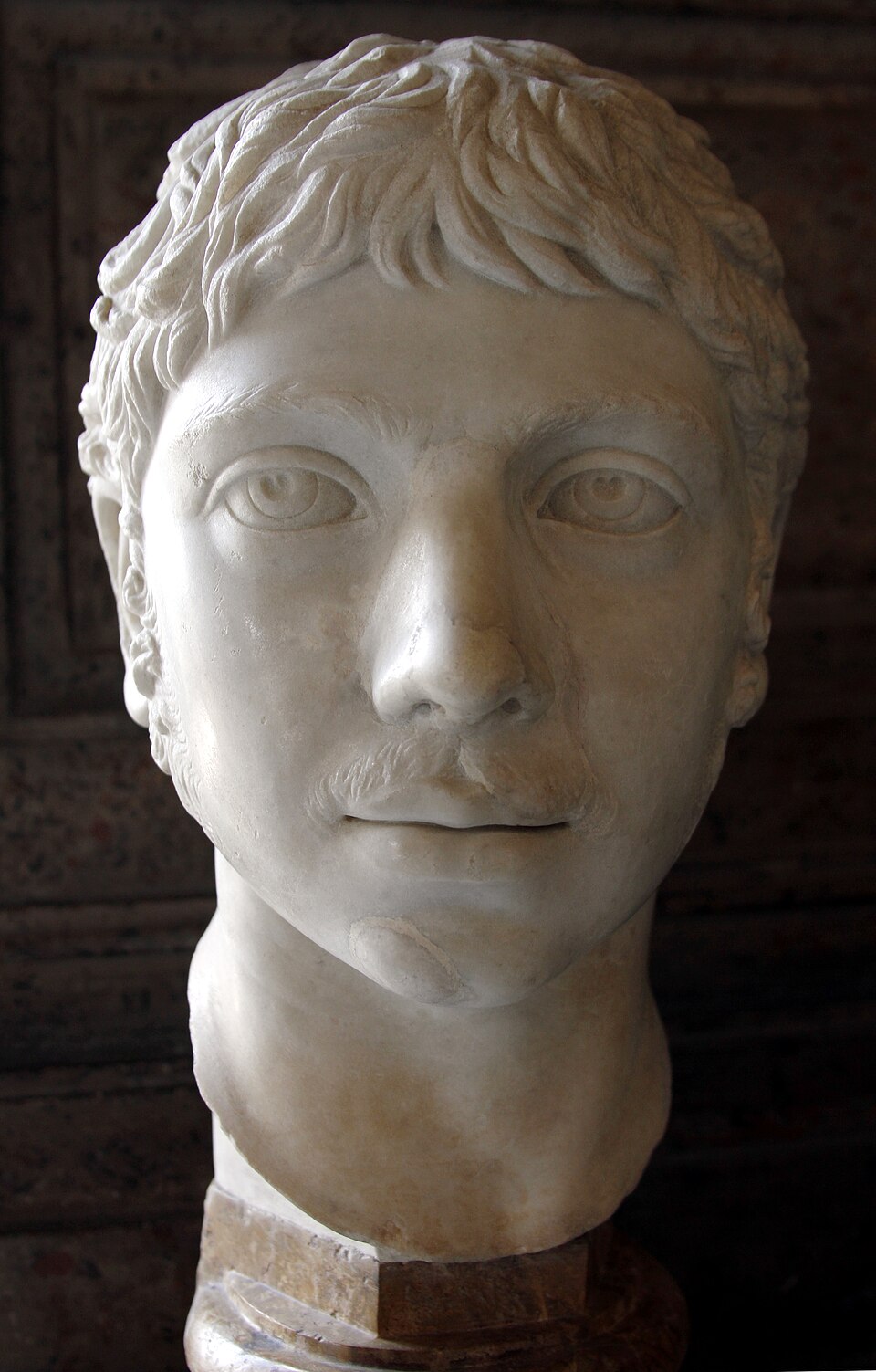
Photo: José Luiz Bernardes Ribeiro, Wikimedia Commons, licensed CC BY-SA 4.0, reproduced unmodified.
Attribution: RIC IV 68; RSC 30 (the reference on Zauche’s tag) — see the WildWinds Elagabalus index for the type, dated 218–219 AD at Rome. The revolt of 218 and the battle of Antioch: Cassius Dio 79.30–40; Herodian 5.3–4 — both linked in the references. The reign in detail: the god’s supremacy and the Vestal marriage, Dio 80.9–11; the god’s own marriages (Pallas, then Urania/Caelestis of Carthage), Dio 80.12; Hierocles and the surgery request, Dio 80.13–16; the procession, Herodian 5.6; the death in the camp, Dio 80.20. The Historia Augusta’s Life of Elagabalus supplies the banquet legends and should be enjoyed rather than believed. The SACERDOS DEI SOLIS ELAGAB coinage and the Augusta issues for Paula, Aquilia Severa, and Annia Faustina are the reign’s self-dated physical record. The reign and its historiography: Cassius Dio 80; Herodian 5.5–8; M. Icks, The Crimes of Elagabalus (2011). Silver standards: K. Butcher and M. Ponting, The Metallurgy of Roman Silver Coinage (2014).
The short IMP CAES ANTONINVS AVG obverse legend without the 'horn' bust marks the first Rome issues of 218–219, struck while the fourteen-year-old emperor was still making his slow way from Syria to the capital; the ANTONINVS PIVS AVG legends and horned busts belong to 220–222. A parallel antoninianus of the same Fides-seated type exists (RIC 72). Zauche's tag reads the pose as 'Fides std. l.' — the eagle and two standards make the type unmistakable even where the seat is unclear on a worn flan.
John's Ancient Coin Collection · Type · elagabalus-fides-exercitvs-denarius
Image credits for this coin — photographs, maps and graphics used on this page