Type · geta-vota-publica-denarius
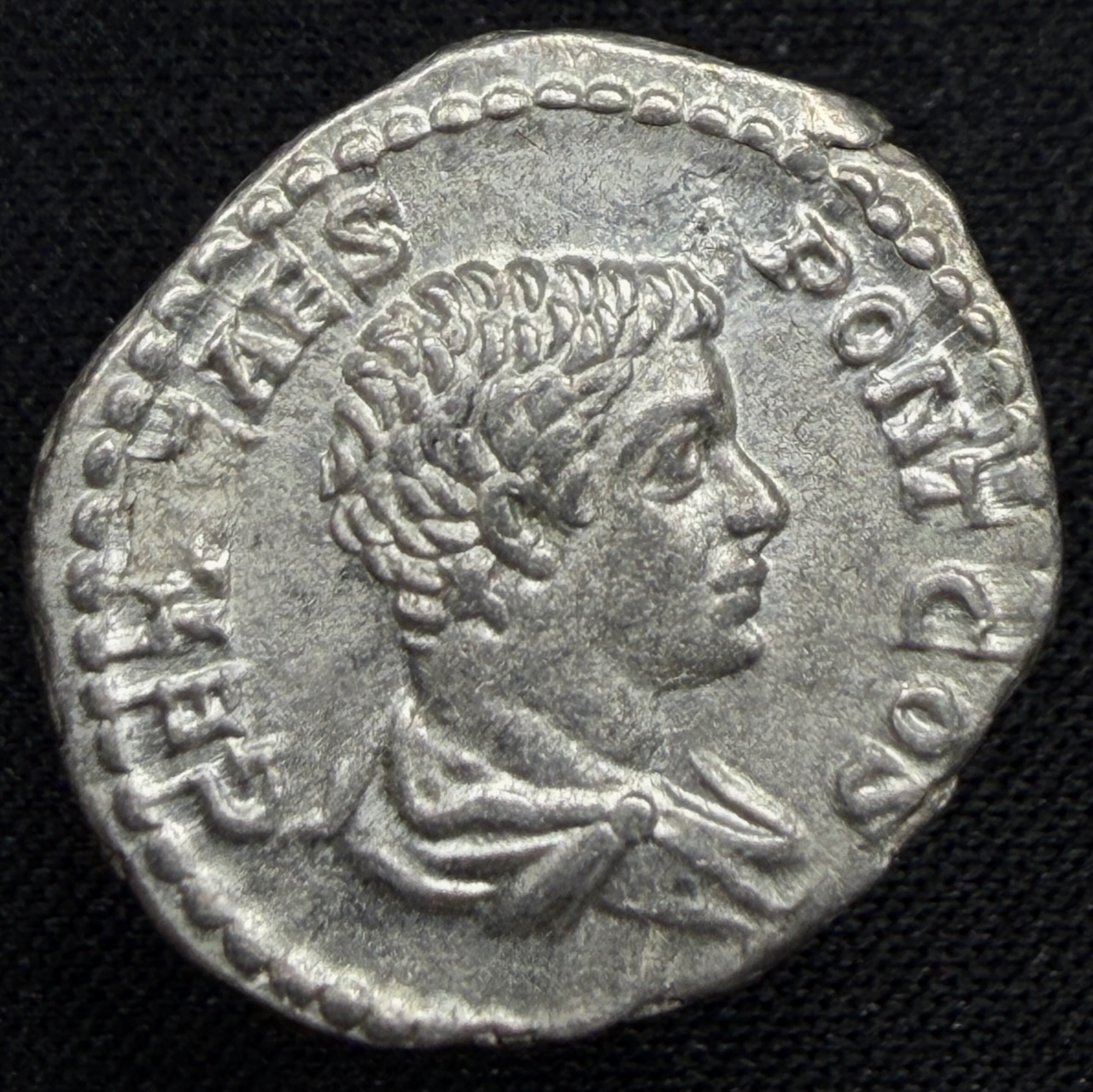
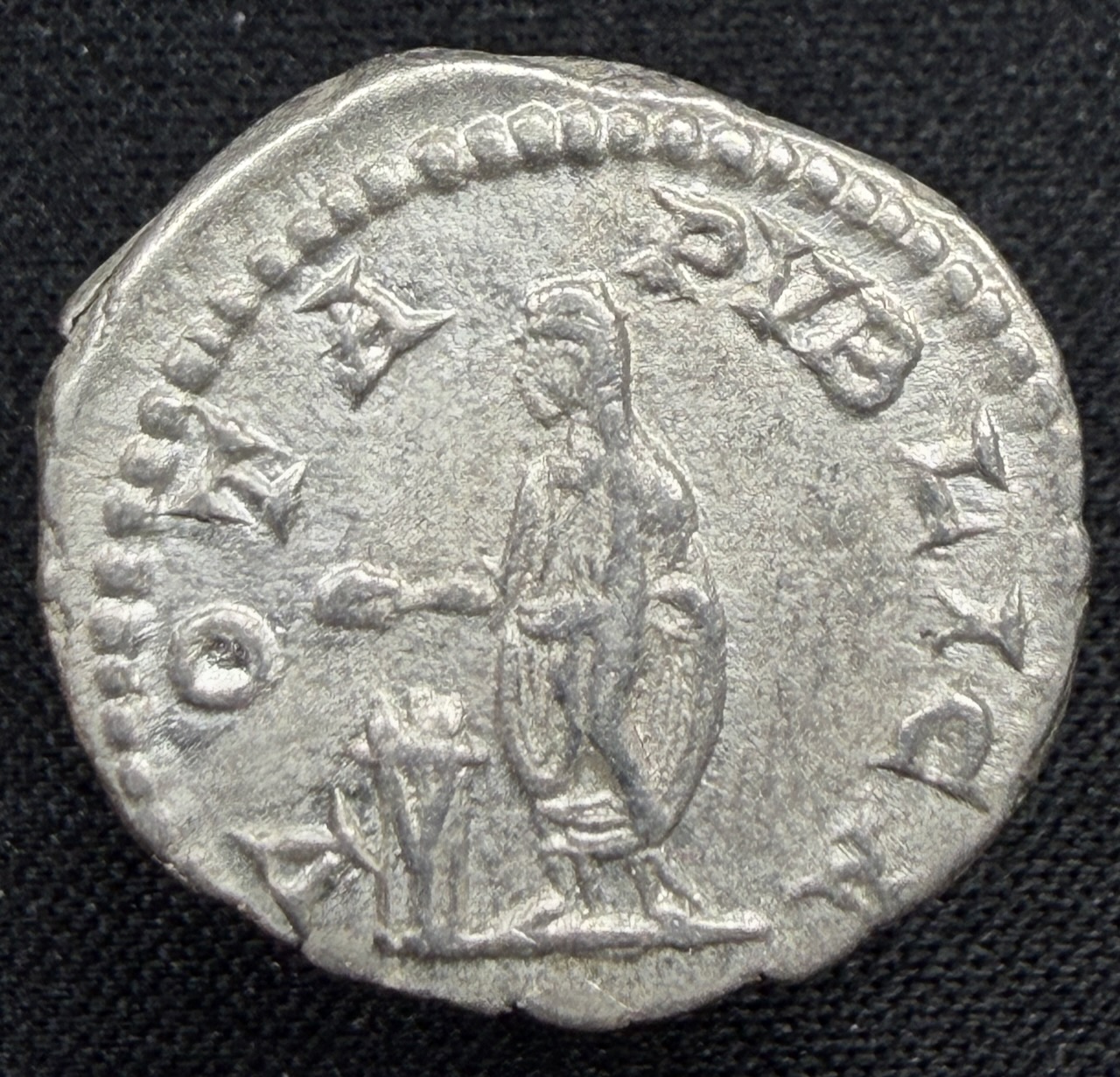
Current: Roman Imperial, Geta (as Caesar), AR denarius, Rome, c. 203–208 AD (RIC IV 38b)
Obverse: Bare-headed, draped bust of the young Geta right
Reverse: Geta, togate, standing left, sacrificing from a patera over a lighted tripod altar and holding a roll
Primary reference: RIC IV 38b
14 specimens in public collections (ANS 5, Ashmolean 3, British Museum 1, Göttingen 1, Uni Cologne I 1); 3 British finds recorded by the Portable Antiquities Scheme; weights 2.2–3.83 g, median 3.27 g across 16 recorded; die axis most often 6h.
This collection's specimen, at 3.44 g (my scale), is heavier than 62% of the recorded weights.
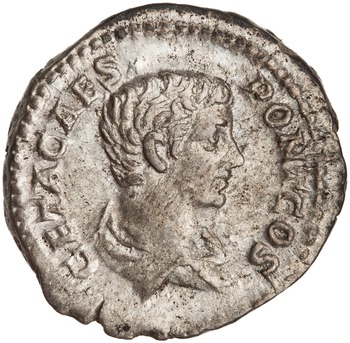
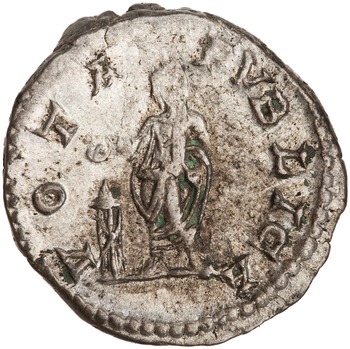
American Numismatic Society, 1935.117.585. CC BY-NC 4.0. https://numismatics.org/collection/1935.117.585
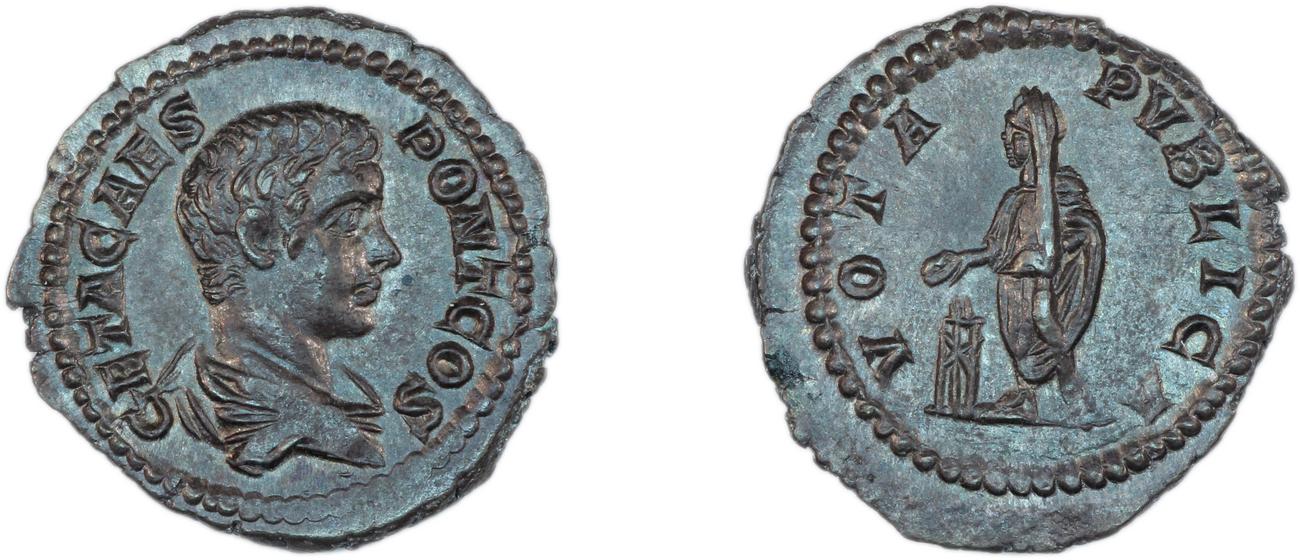
© The Trustees of the British Museum, R.15358. CC BY-NC-SA 4.0. https://www.britishmuseum.org/collection/object/C_R-15358
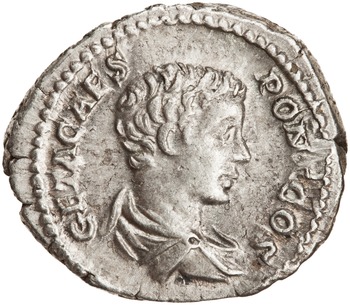
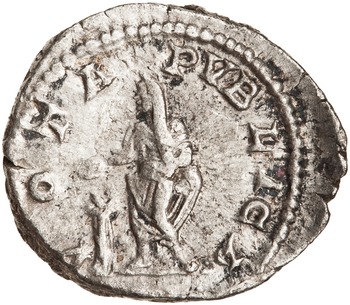
American Numismatic Society, 1944.100.51768. CC BY-NC 4.0. https://numismatics.org/collection/1944.100.51768
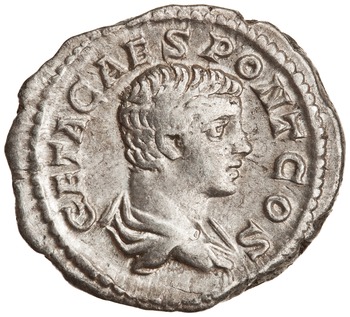
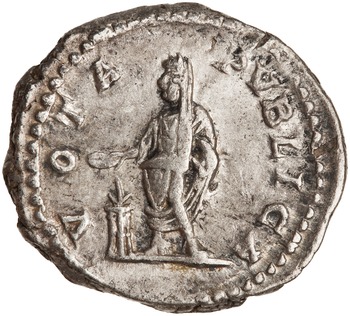
American Numismatic Society, 1944.100.51769. CC BY-NC 4.0. https://numismatics.org/collection/1944.100.51769
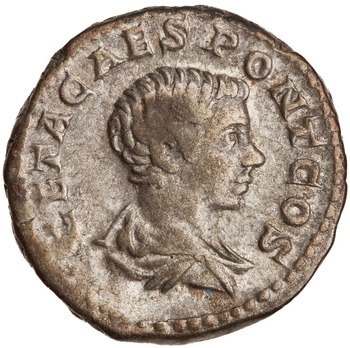
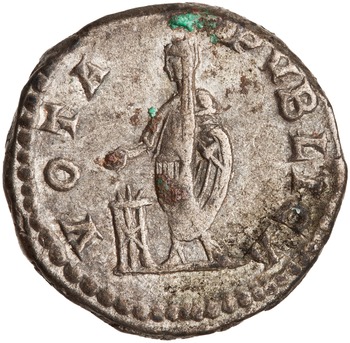
American Numismatic Society, 1948.19.1672. CC BY-NC 4.0. https://numismatics.org/collection/1948.19.1672
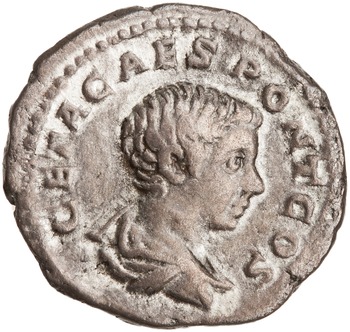
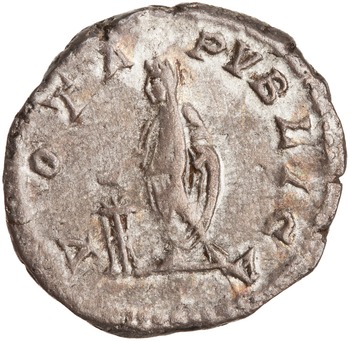
American Numismatic Society, 1995.11.1467. CC BY-NC 4.0. https://numismatics.org/collection/1995.11.1467
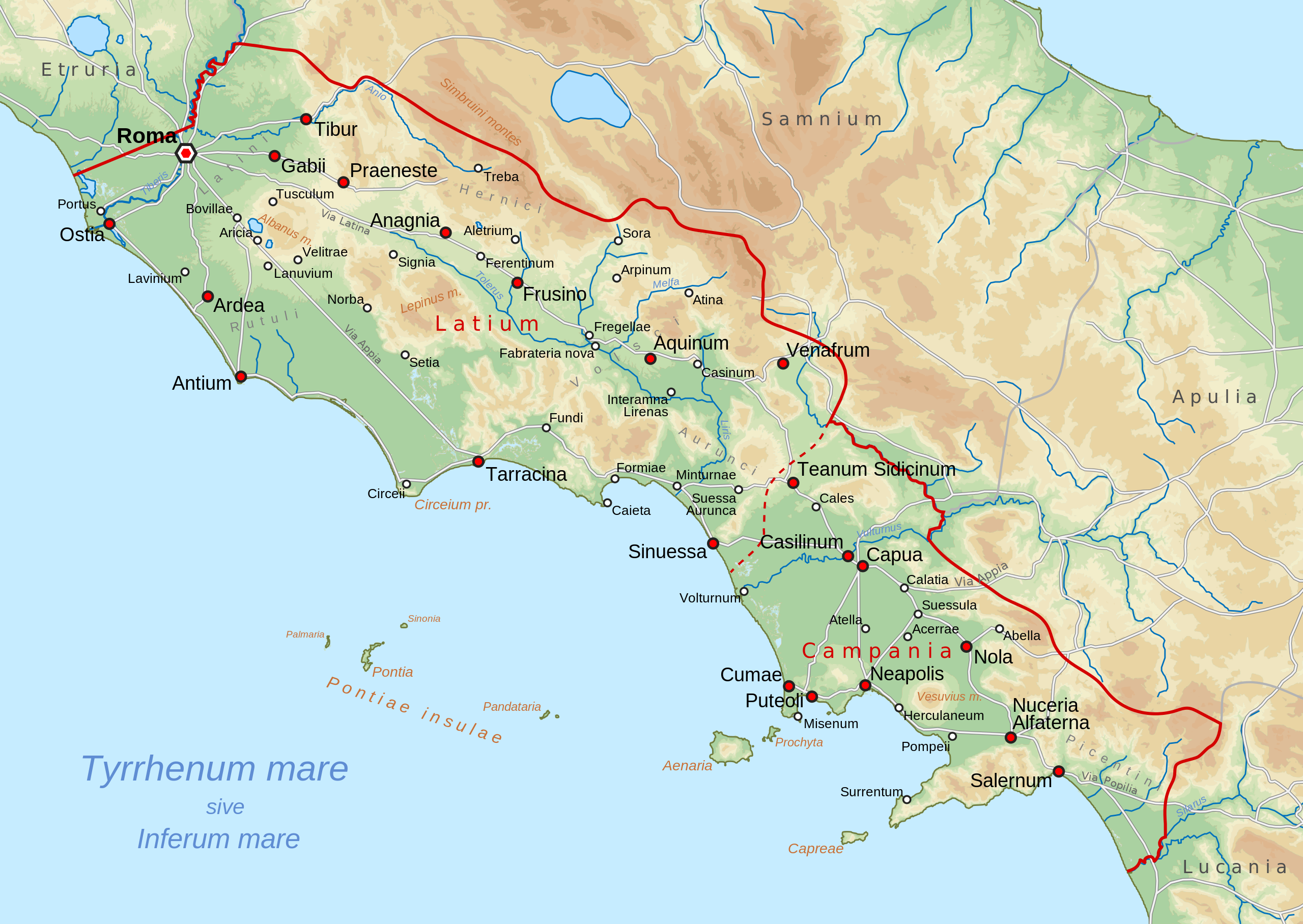
Regio I, Latium et Campania — the heartland of Roman Italy as organized under Augustus. Roma sits at the upper left, marked by the map’s hexagonal capital symbol and bold label. The whole Severan family — father, mother, and both rival sons — struck silver at the Rome mint in these years, each with their own portrait and program.
“Map of Augustan Regio I Latium et Campania” by Tomisti (Wikimedia Commons), File:Regio I Latium et Campania map.svg, licensed CC BY-SA 4.0; cities and roads based on the Digital Atlas of the Roman Empire (DARE) and Pleiades; topographic base © OpenMapTiles, © OpenStreetMap contributors. Reproduced unmodified.
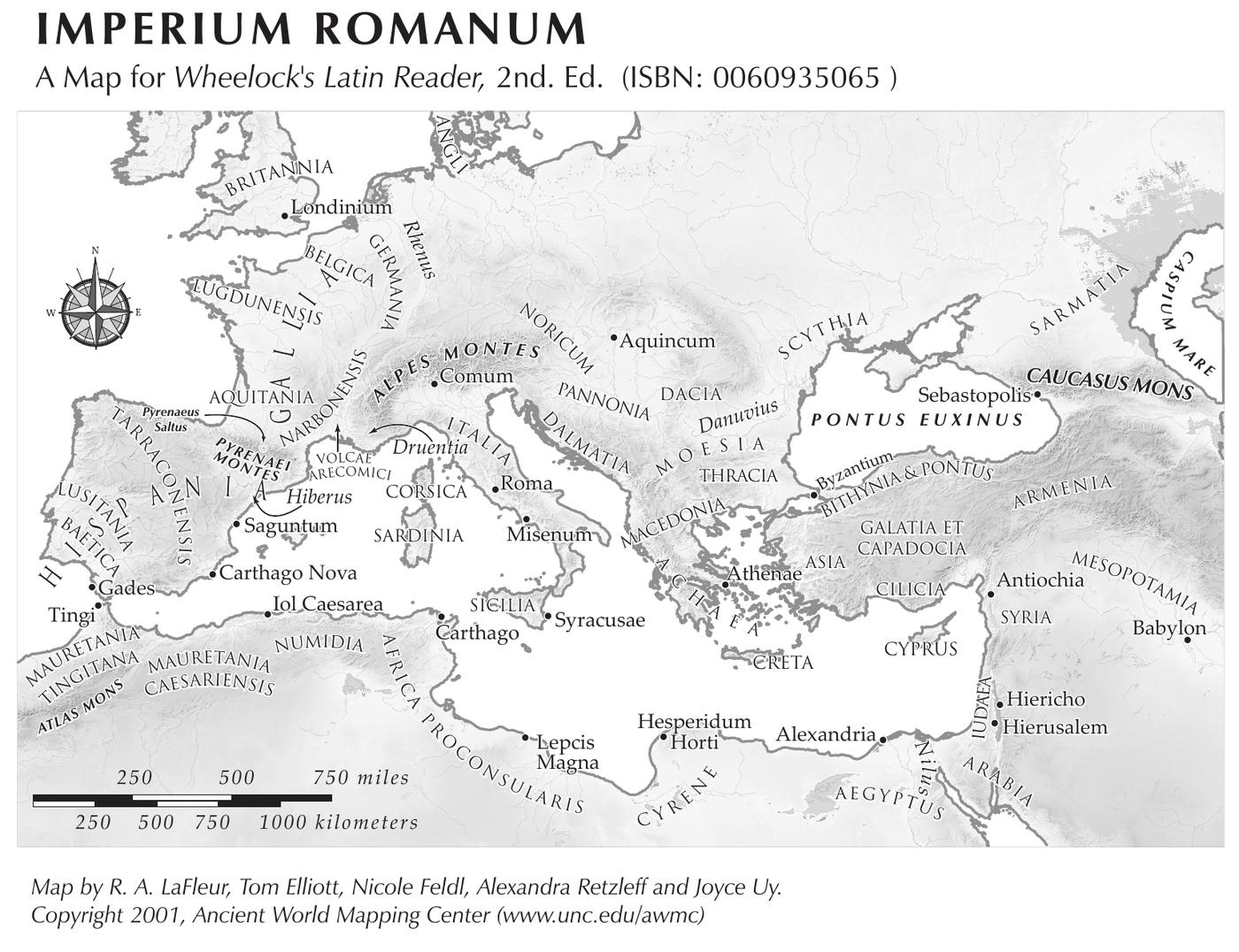
Roma sits at the center of Italia. Geta’s vows were taken for a dynasty that held everything on this map — and he was murdered by his brother in Rome within a year of the last of them.
Publius Septimius Geta was the younger son of Septimius Severus and Julia Domna, younger brother of Caracalla by eleven months, and the loser in one of Rome’s most notorious fratricides. This denarius shows him as the dynasty wanted him seen in the middle years of the reign: a modest, bare-headed boy-prince — the laurel was for his father and brother, who held the rank of Augustus while Geta remained Caesar — piously performing the vota publica, the solemn public vows for the safety of the state and the imperial house, patera over the flaming tripod.
Graphic: JSB Coins (CC0).
The piety was the point. Severus advertised his quarrelsome family as a college of harmonious rulers, and the coinage struck for each member carried complementary messages: the father’s gods of war and protection, the mother’s Concordia, the sons’ priesthoods and vows. The reality broke through in February 211, when Severus died at York. The brothers ruled jointly and murderously for ten months; in December Caracalla had Geta killed in their mother’s apartments — dying, the historians say, in Domna’s arms — and then erased him: the damnatio memoriae scraped Geta’s face from paintings and his name from inscriptions across the empire. His coinage, too plentiful to recall, is the survivor; portraits like this one are among the chief records of what the erased prince looked like.
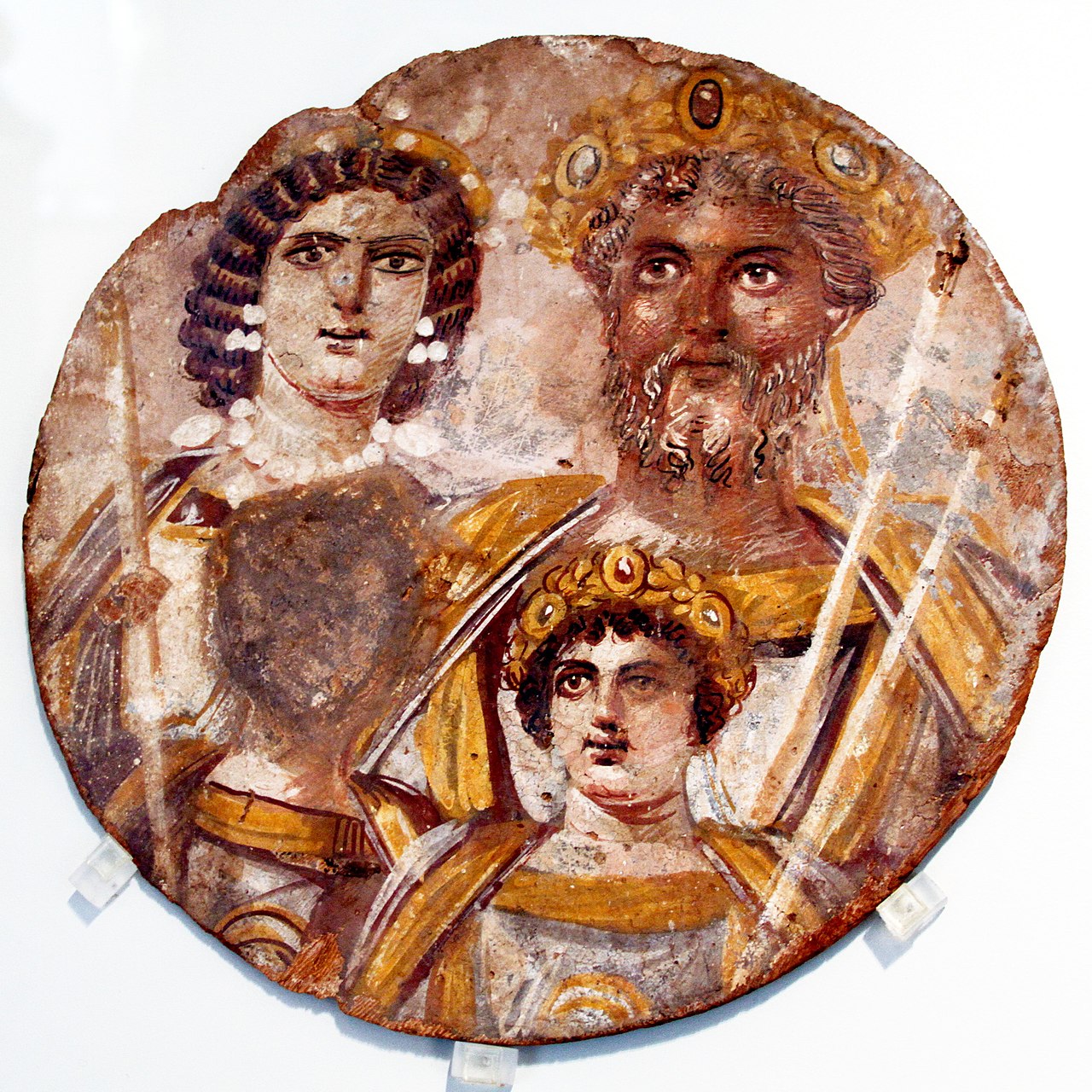
Photo: José Luiz Bernardes Ribeiro, Wikimedia Commons, licensed CC BY-SA 4.0, reproduced unmodified.
VOTA PVBLICA belongs to Geta’s Caesar-period silver at Rome (RIC 38b), with the PONT COS obverse that brackets the issue around his first consulship in 205 (catalogue datings run from c. 202 to 208 — the type is left with the wider range here). The sacrificing-emperor reverse was a stock image of dynastic religiosity — compare the same pose a generation later under the last Severans — and for a Caesar it made a specific claim: the boy already performs the state’s rites, a ruler in training. At normal Severan fineness (roughly half silver; Butcher and Ponting, The Metallurgy of Roman Silver Coinage, 2014), these denarii paid the same soldiers his father had enriched — the soldiers whose loyalty Caracalla would shortly purchase with a massive raise, funded by the next debasement. Geta’s erasure was not the last the dynasty attempted. The collection’s Fides Exercitus denarius of Elagabalus belongs to an emperor whose own damnatio was thorough enough that we no longer securely know what he was called in daily life — and whose coinage, like Geta’s, proved far too plentiful to erase.
Attribution: RIC IV 38b — see the WildWinds Geta index for the type and its dating spread; Zauche’s tag cites Sear 2023 (older edition). Geta’s murder and damnatio: Cassius Dio 78.2; Herodian 4.4 — both now linked in the references. The Severan Tondo (Berlin, Antikensammlung inv. 31329) is the standard illustration of the damnatio in action. Severan silver fineness: K. Butcher and M. Ponting, The Metallurgy of Roman Silver Coinage (2014).
Struck for Geta as Caesar with the PONT COS titulature (he was consul in 205, which anchors most datings; catalogue dates for the issue range c. 202–208 AD). The obverse shows the boyish bare-headed portrait used throughout his Caesarship — deliberately junior to the laureate heads of his father and brother. Zauche's tag gives Geta's dates as his Augustus years (209–212 by the old reckoning); the coin itself is earlier.
John's Ancient Coin Collection · Type · geta-vota-publica-denarius
Image credits for this coin — photographs, maps and graphics used on this page