Type · julia-mamaea-vesta-denarius
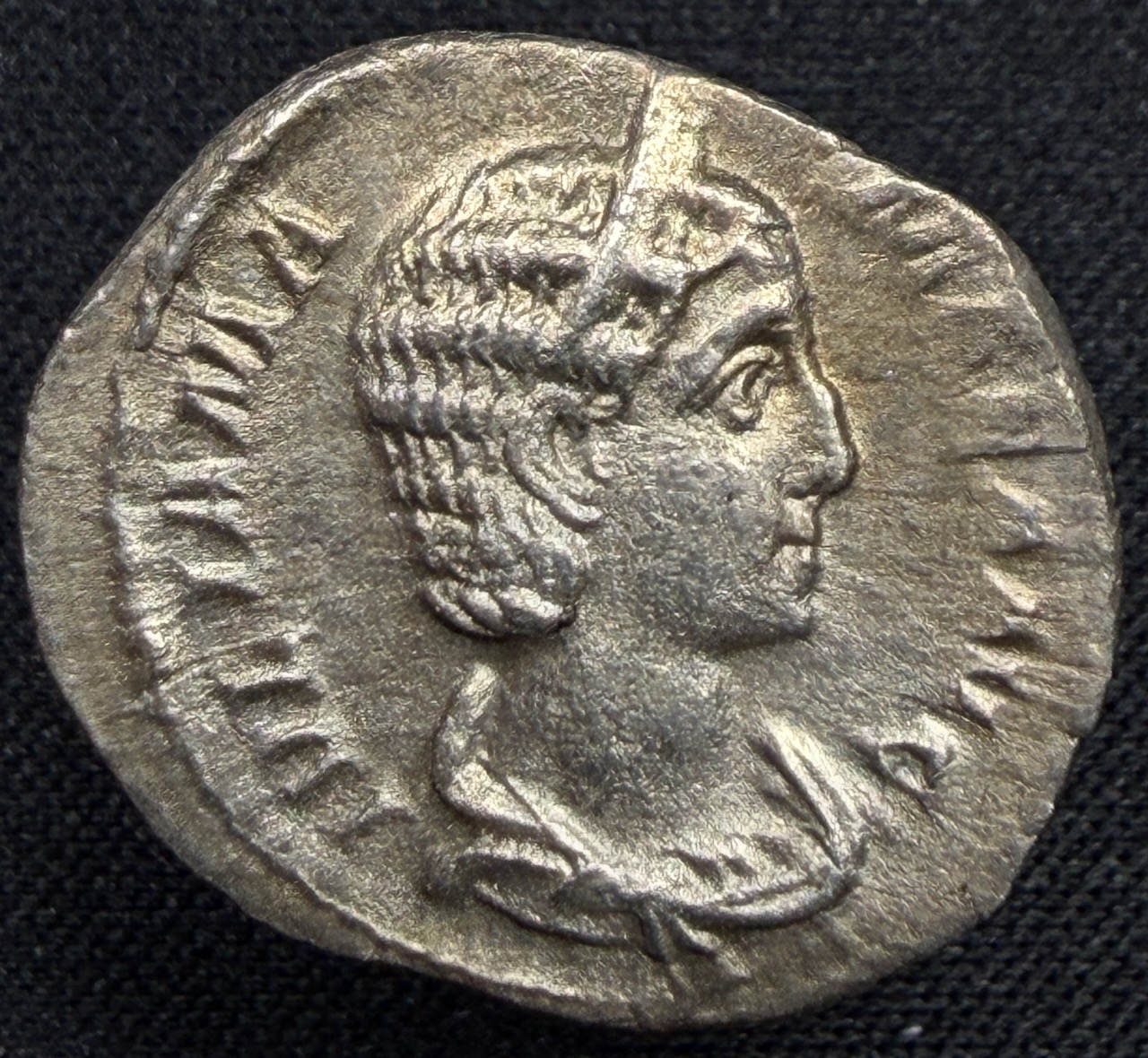
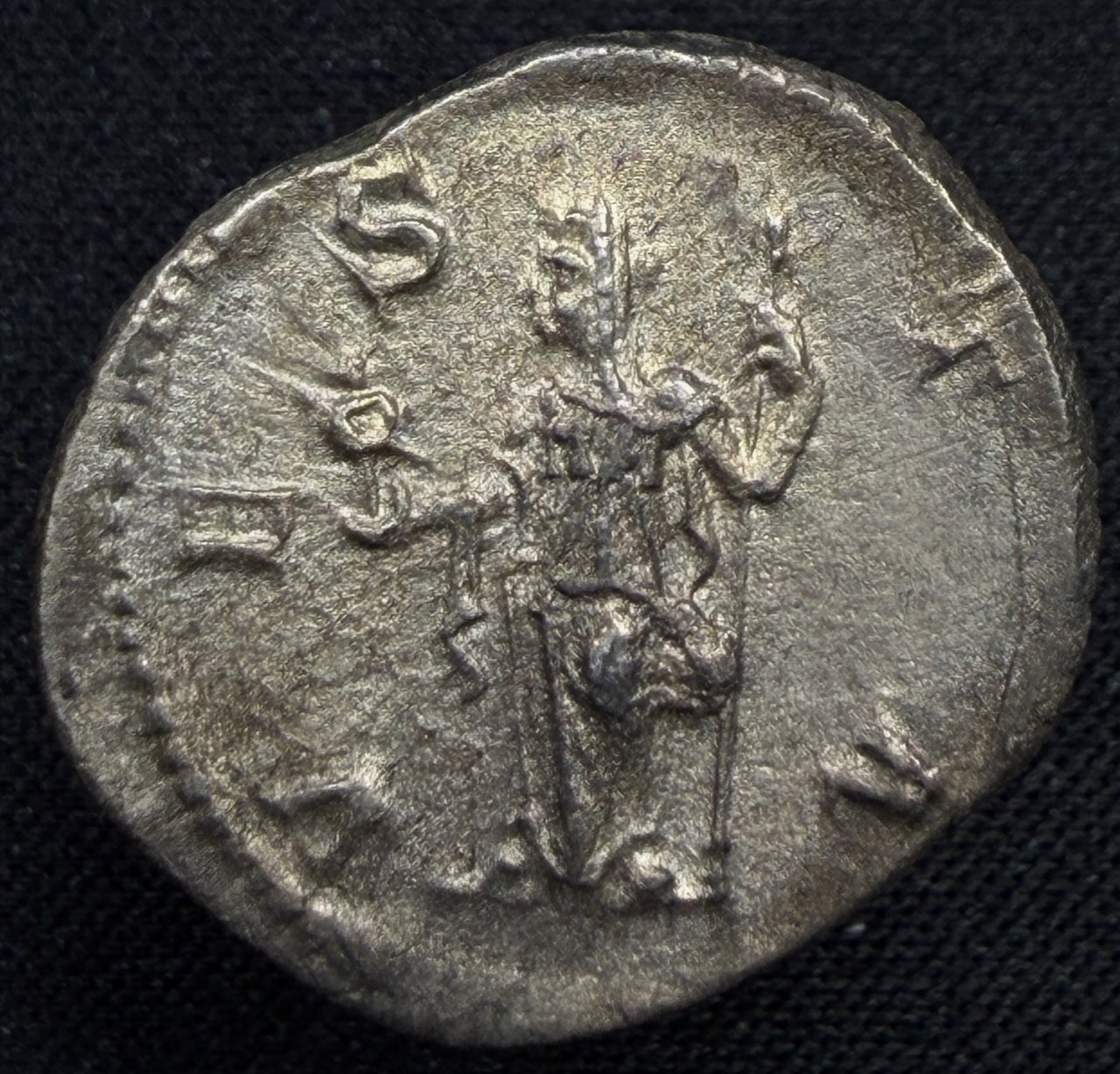
Current: Roman Imperial, Julia Mamaea (Augusta, under Severus Alexander), AR denarius, Rome, c. 226 AD (RIC IV 360)
Obverse: Diademed and draped bust of Julia Mamaea right
Reverse: Vesta standing left, holding palladium in right hand and transverse sceptre in left
Primary reference: RIC IV 360
52 specimens in public collections (ANS 9, British Museum 7, Göttingen 7, Vienna 6, Ashmolean 5); 9 British finds recorded by the Portable Antiquities Scheme; weights 1.54–3.78 g, median 2.92 g across 50 recorded; die axis most often 12h.
This collection's specimen, at 2.40 g (my scale), is heavier than 16% of the recorded weights.
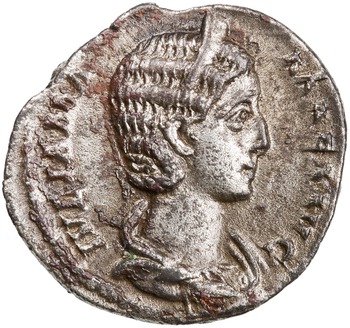
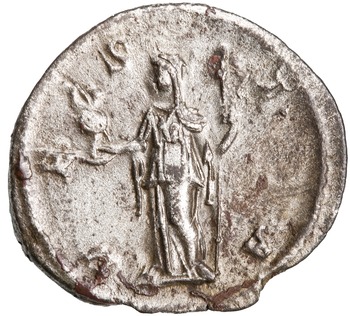
American Numismatic Society, 1923.150.189. CC BY-NC 4.0. https://numismatics.org/collection/1923.150.189
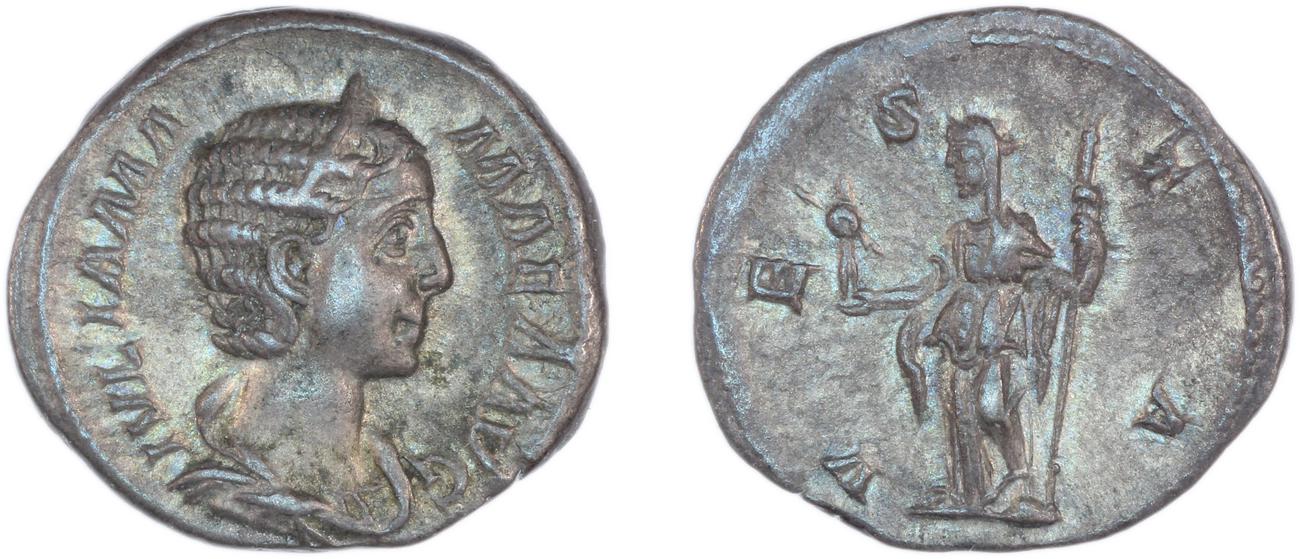
© The Trustees of the British Museum, 1844,0425.1655. CC BY-NC-SA 4.0. https://www.britishmuseum.org/collection/object/C_1844-0425-1655
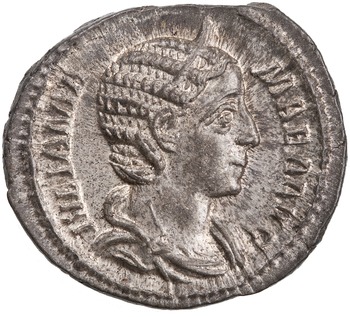
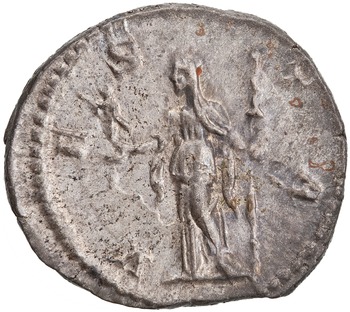
American Numismatic Society, 1935.117.728. CC BY-NC 4.0. https://numismatics.org/collection/1935.117.728
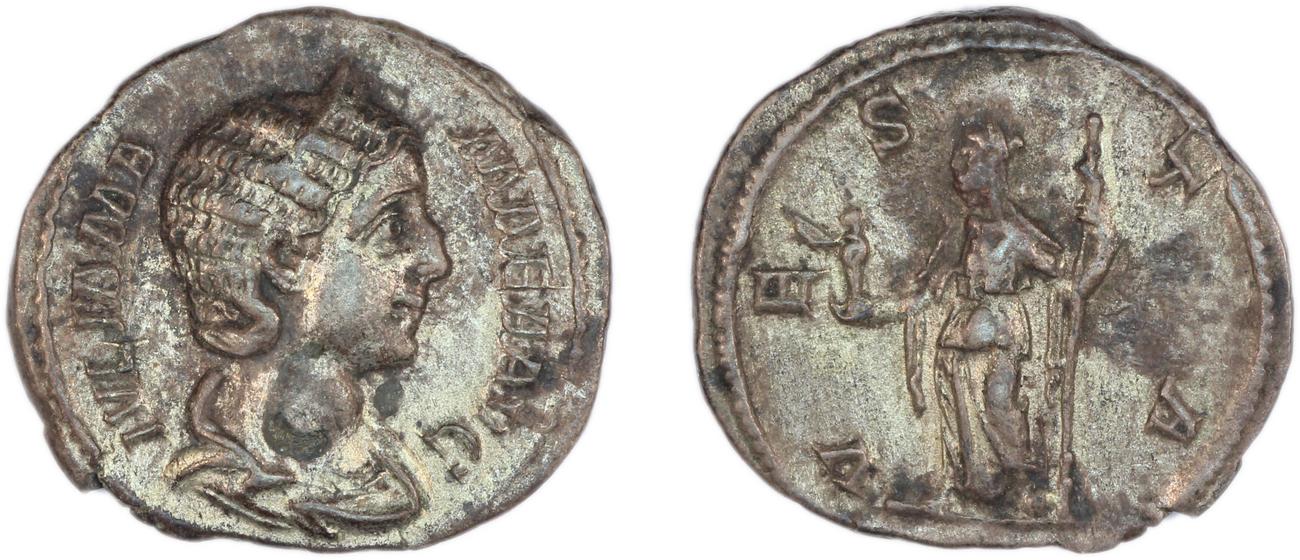
© The Trustees of the British Museum, 1860,0330.321. CC BY-NC-SA 4.0. https://www.britishmuseum.org/collection/object/C_1860-0330-321
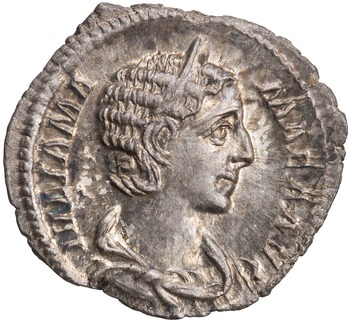
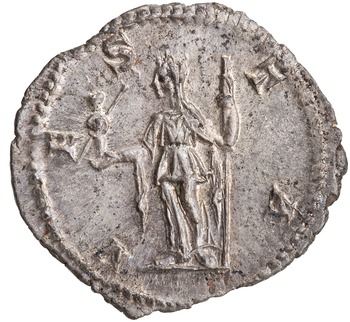
American Numismatic Society, 1935.117.729. CC BY-NC 4.0. https://numismatics.org/collection/1935.117.729
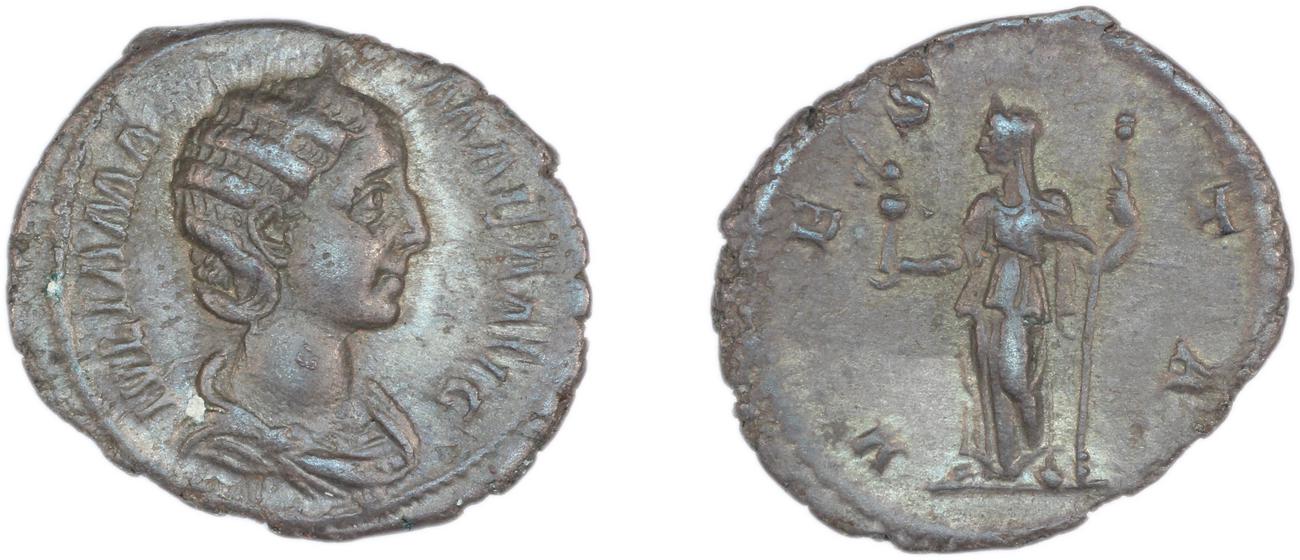
© The Trustees of the British Museum, 1924,0107.74. CC BY-NC-SA 4.0. https://www.britishmuseum.org/collection/object/C_1924-0107-74
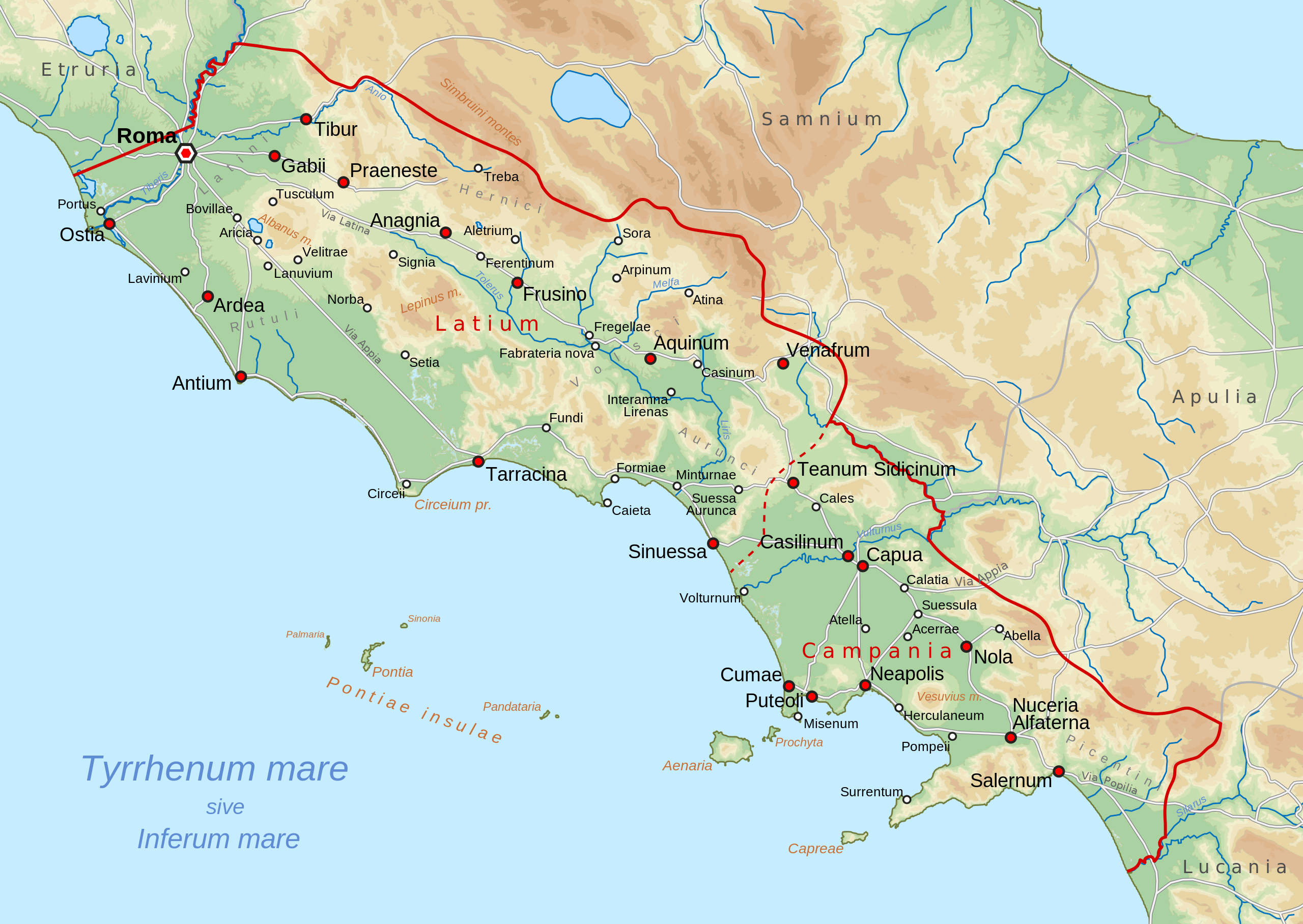
Regio I, Latium et Campania — the heartland of Roman Italy as organized under Augustus. Roma sits at the upper left, marked by the map’s hexagonal capital symbol and bold label. The last Severan silver, including this issue for the emperor’s mother, was struck in the city itself.
“Map of Augustan Regio I Latium et Campania” by Tomisti (Wikimedia Commons), File:Regio I Latium et Campania map.svg, licensed CC BY-SA 4.0; cities and roads based on the Digital Atlas of the Roman Empire (DARE) and Pleiades; topographic base © OpenMapTiles, © OpenStreetMap contributors. Reproduced unmodified.
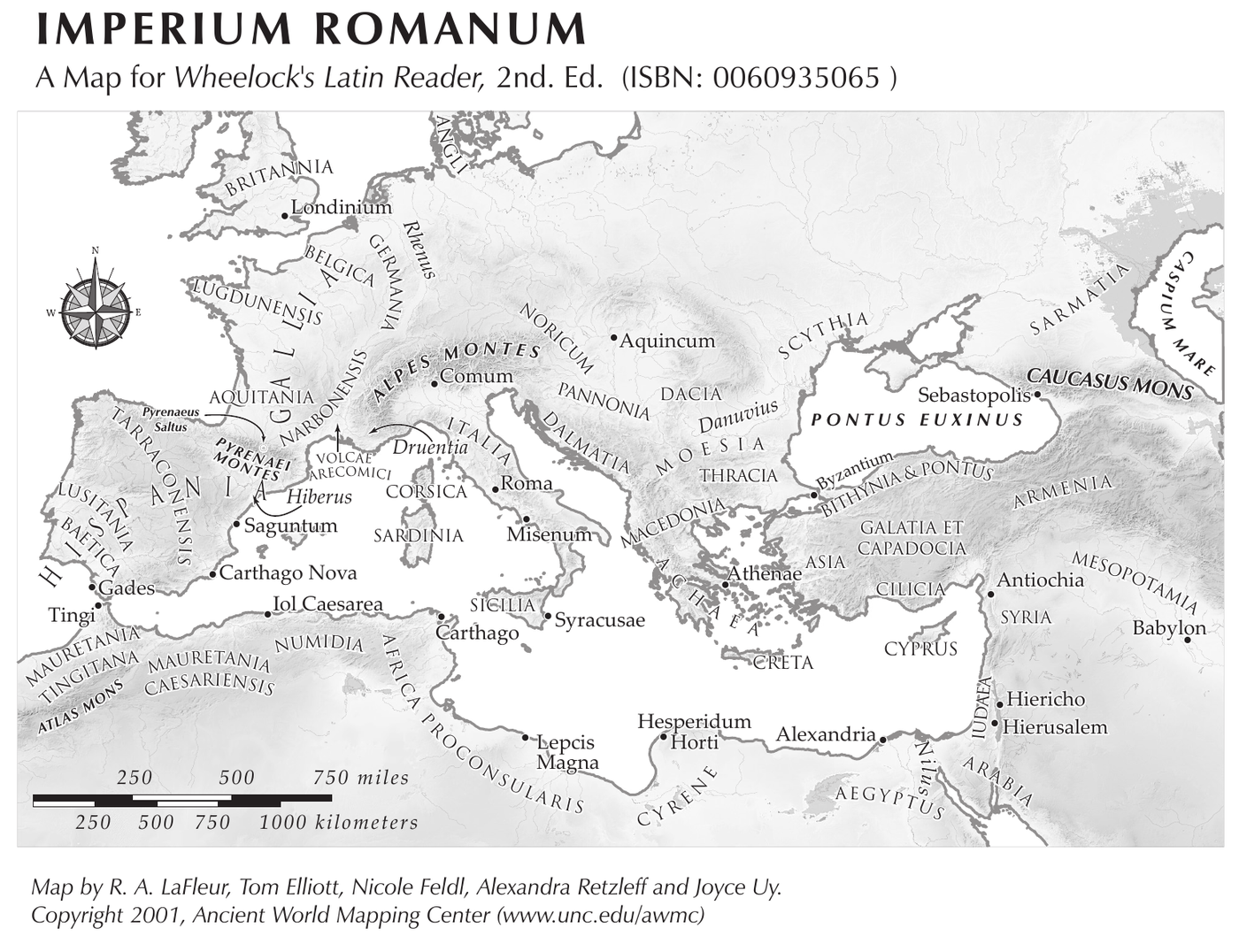
Roma sits at the center of Italia. Mamaea ruled through her son from Rome, having come, like the rest of her family, from Syria on the right of this map. She was killed with him on the Rhine frontier in 235.
Julia Mamaea was the niece of Julia Domna and the last of the formidable Syrian women who steered the Severan dynasty. When her teenage son Severus Alexander replaced the murdered Elagabalus in 222 AD, real authority settled on his mother and grandmother; the grandmother (Julia Maesa) soon died, and for thirteen years Mamaea was, by the nearly unanimous testimony of the sources, the effective governor of the Roman empire — Herodian describes her controlling the emperor’s council, his marriage, and his campaigns. Her coinage as Augusta is correspondingly abundant and deliberately traditional: where Elagabalus’ issues had scandalized Rome with his Syrian sun-cult, the money of Alexander’s reign advertises the safest of Roman pieties. Vesta, on this denarius of c. 226 AD, is the safest of them all.
Graphic: JSB Coins (CC0).
The reverse shows Vesta, goddess of the hearth, holding the palladium — the small archaic image of Pallas Athena that Aeneas was believed to have carried from burning Troy, kept in the temple of Vesta in the Forum as the guarantee of Rome’s permanence. The choice is pointed. Only a few years earlier Elagabalus had outraged opinion by intruding on the cult of Vesta (the sources allege he married a Vestal and meddled with the sacred objects); a coin pairing the new emperor’s mother with Vesta and the palladium restored, in miniature, the proper order of things: the empress as guardian of Roman continuity, chastity, and hearth. Empresses had long claimed Vesta as their particular patroness — the type runs from Julia Domna’s Vesta issues through Mamaea’s — and on this coin the message is dynastic repair.
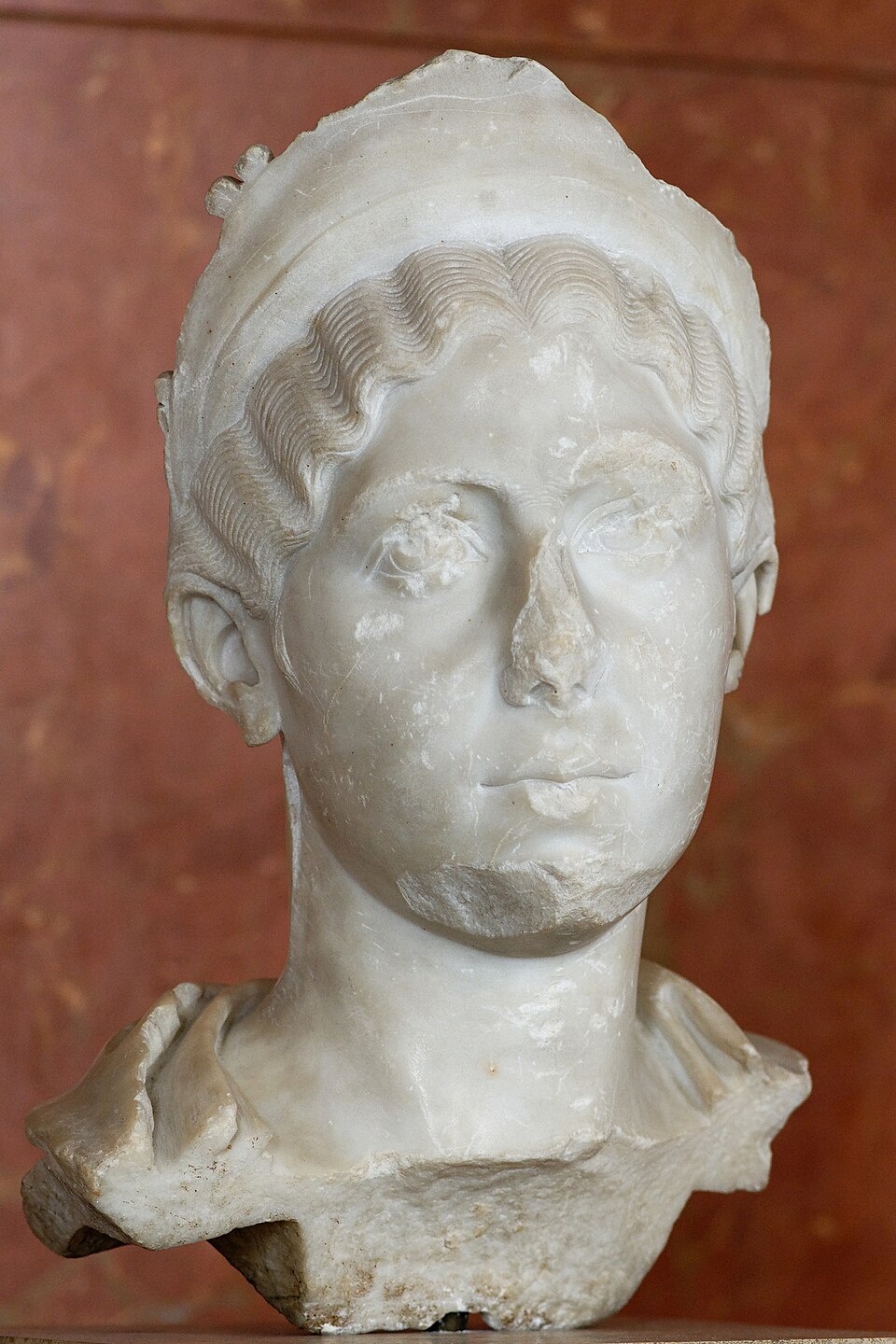
Photo: Marie-Lan Nguyen, Wikimedia Commons, licensed CC BY 2.5, reproduced unmodified.
It did not hold. In 235 AD, on the Rhine at Moguntiacum, soldiers who despised the regime’s cautious diplomacy (and, the sources say, its parsimony, blamed on Mamaea’s control of the treasury) proclaimed the giant Thracian officer Maximinus and killed Alexander and his mother in their tent. With them ended the Severan dynasty and began the half-century soldier-emperor anarchy of the third century. This quiet coin — a pious matron’s goddess on debased late-Severan silver — is nearly the last denarius of the old world; within a few years the denomination itself gave way to the antoninianus. The dynasty’s beginning is here as well: the Jupiter denarius of Septimius Severus, struck for the old soldier whose great-niece by marriage she was, at the other end of the Severan century. Mamaea’s own mother is here too - the Pudicitia denarius of Julia Maesa, the woman who made both of the emperors this branch of the family produced.
Attribution: RIC IV (Severus Alexander) 360; RSC 81; BMCRE 381, with the c. 226 AD dating from BMC; Zauche’s tag cites Sear 2314 (older edition). See the WildWinds Julia Mamaea index for paralleled examples. Historical frame: Herodian 6.1 (Mamaea’s regency); the deaths at Mainz: Herodian 6.8–9 — Herodian and Dio both now linked in the references. The Elagabalus–Vesta scandal: Cassius Dio 80.9; Historia Augusta, Elagabalus 6. On the palladium in the temple of Vesta: Livy 26.27; Ovid, Fasti 6.417 ff.
Struck at Rome under Severus Alexander for his mother; BMC/RIC place the VESTA palladium-and-sceptre issue c. 226 AD. Two Vesta types exist for Mamaea — this one with palladium and sceptre (RIC 360) and another with patera and sceptre (RIC 362); the palladium variety is the commoner. Denarii of this period run c. 2.3–3.2 g on the debased Severan standard.
John's Ancient Coin Collection · Type · julia-mamaea-vesta-denarius
Image credits for this coin — photographs, maps and graphics used on this page