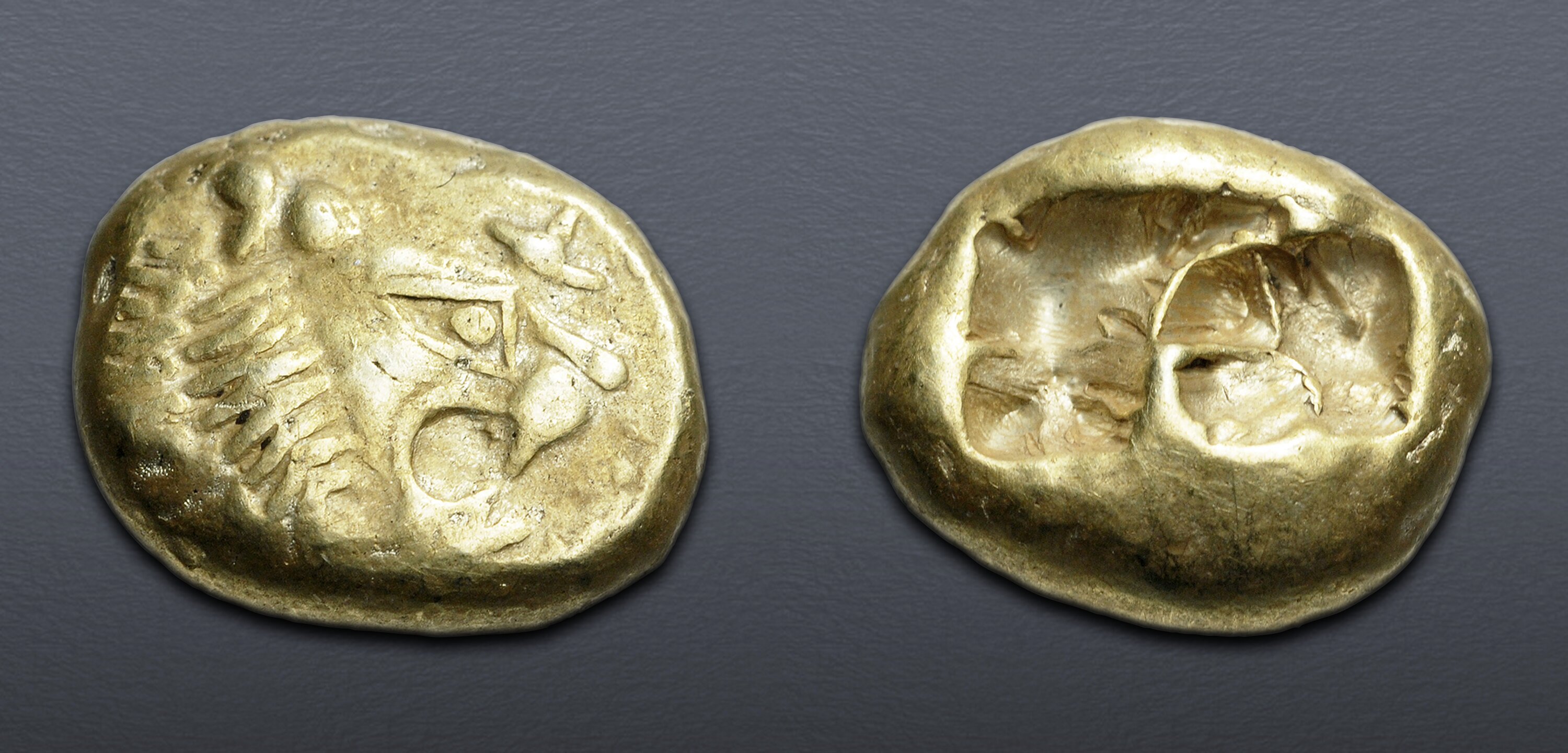
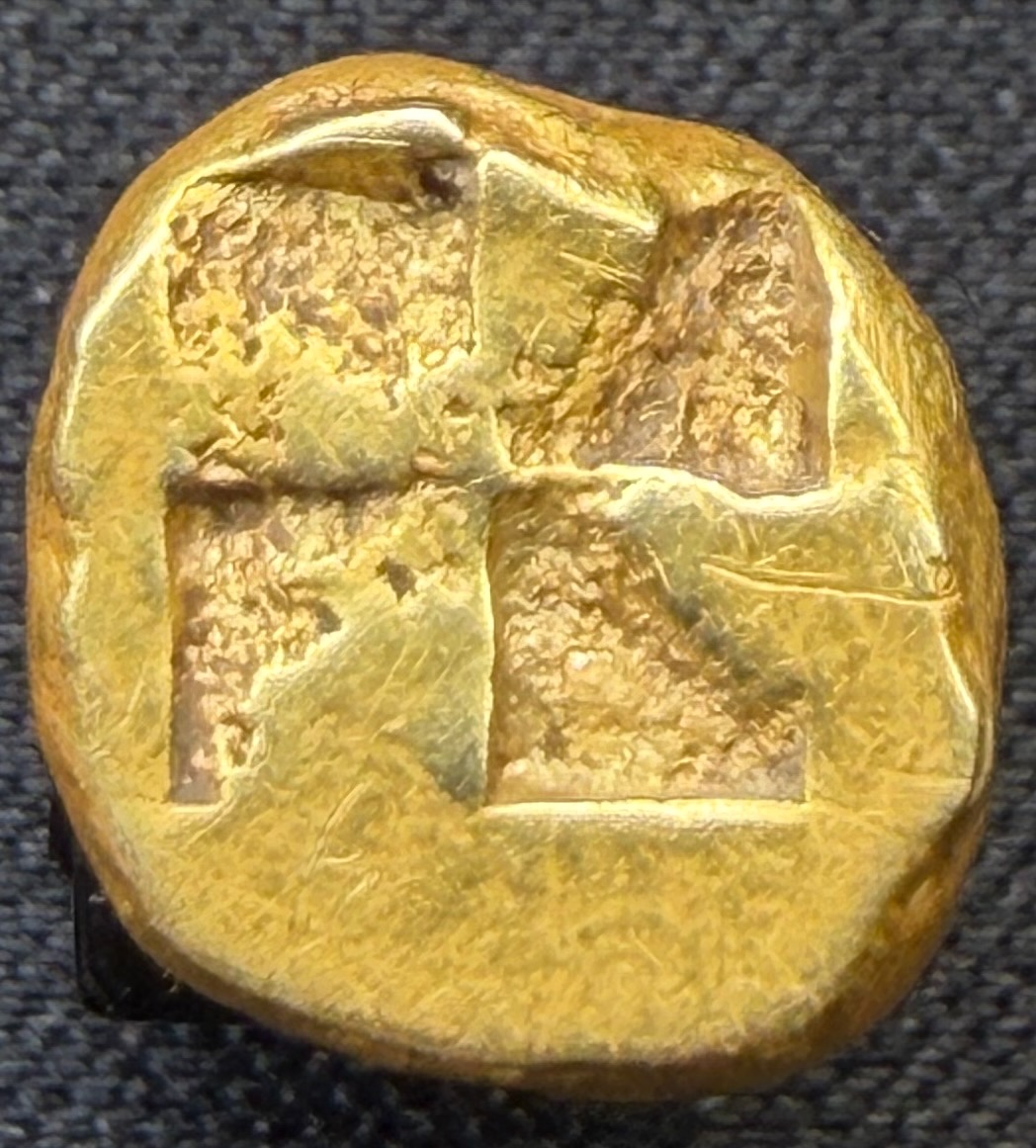
Obv: Head of a roaring lion right, with a four-rayed 'sun' or radiate boss on the forehead
Rev: Two incuse square punches, side by side
Ref: Weidauer Group XVI, 65
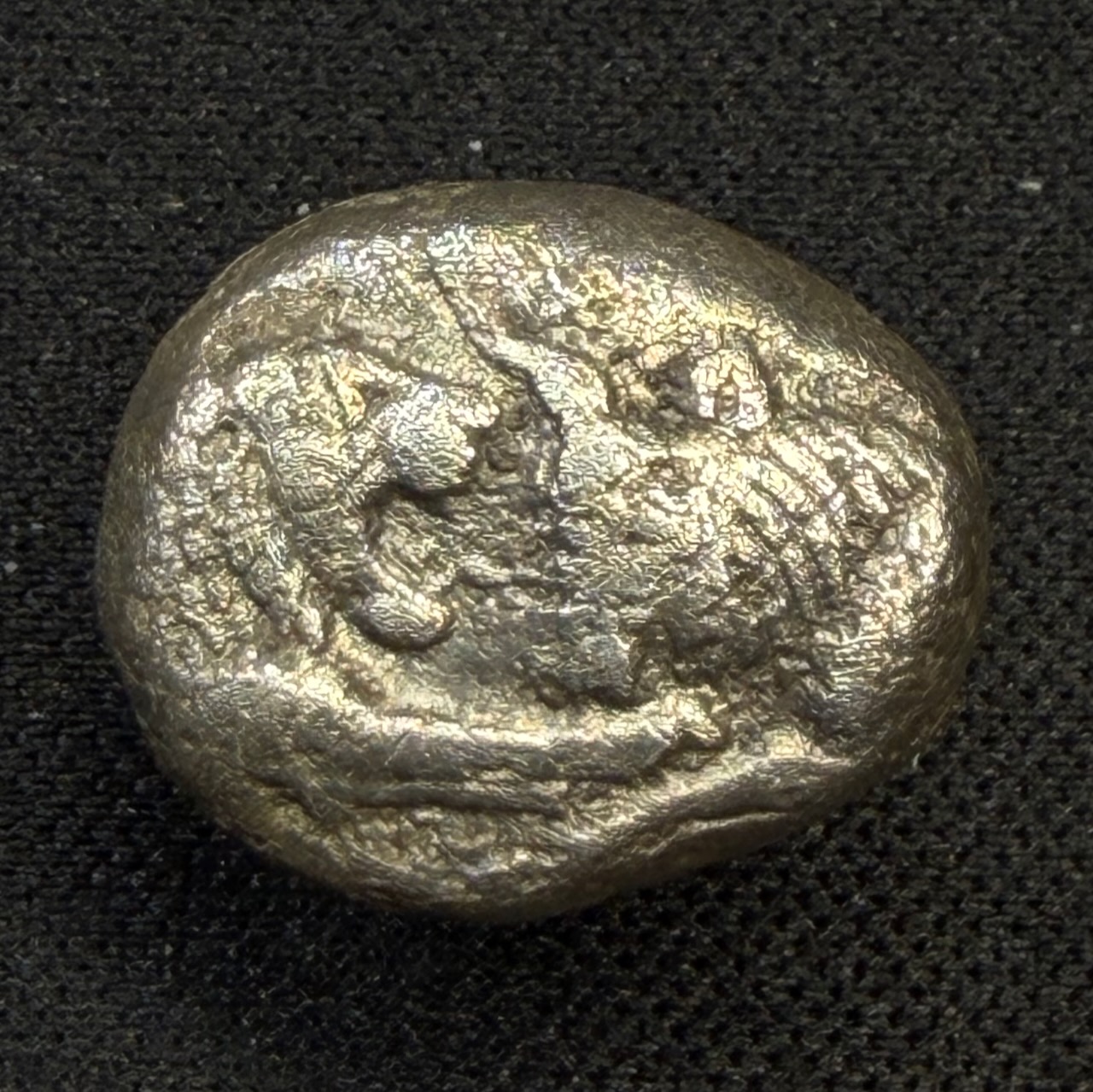
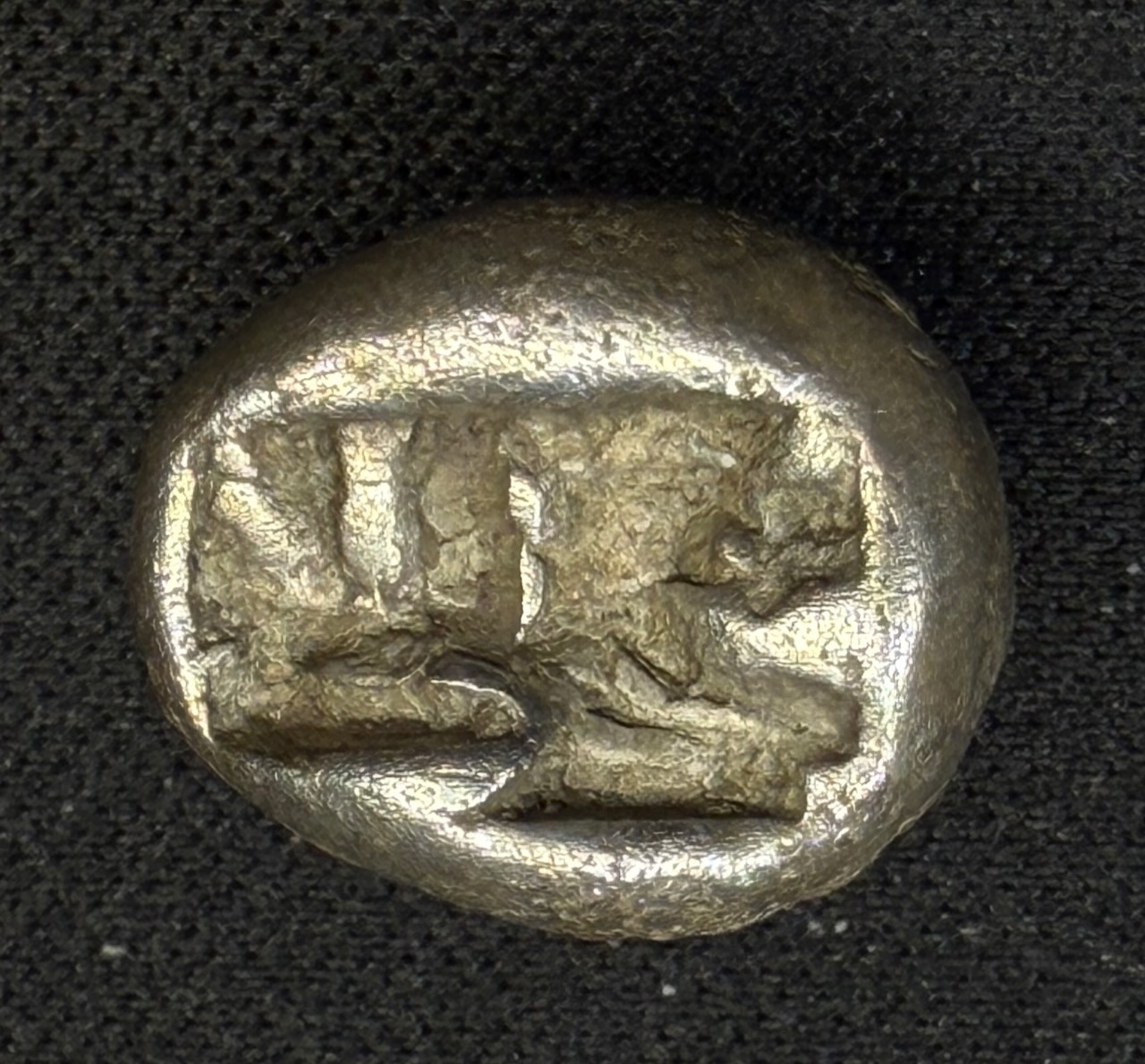
Obv: Confronted foreparts of a lion (on the left, head right) and a bull (on the right, head left), facing one another. Anepigraphic.
Rev: Two incuse (sunken) square punches of unequal size, side by side.
Ref: SNG Ashmolean 772
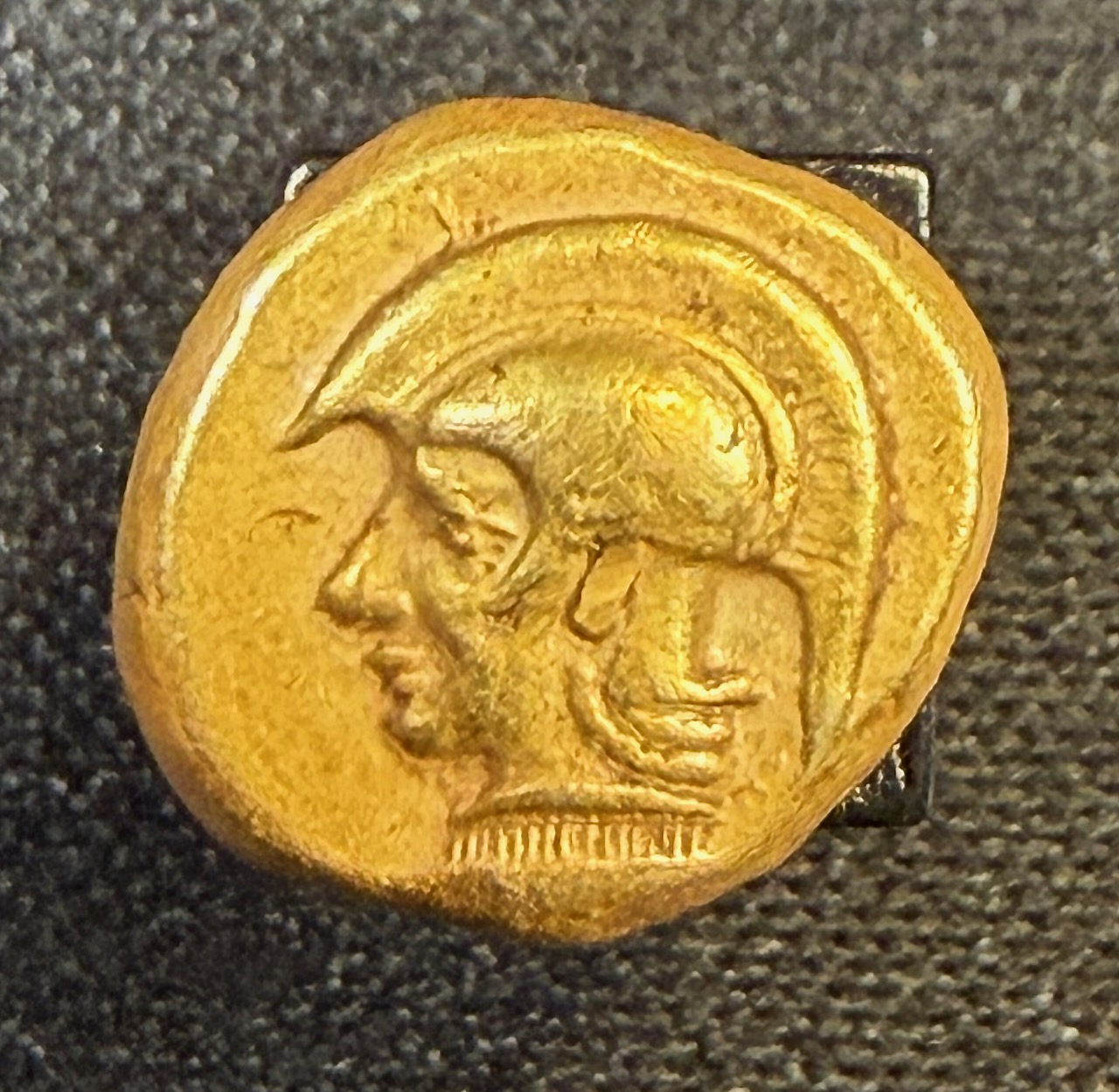
Obv: Head of Athena left, wearing crested helmet; below, tunny fish left — the civic badge of Kyzikos
Rev: Quadripartite incuse square of archaic 'mill-sail' form
Ref: Von Fritze I 67
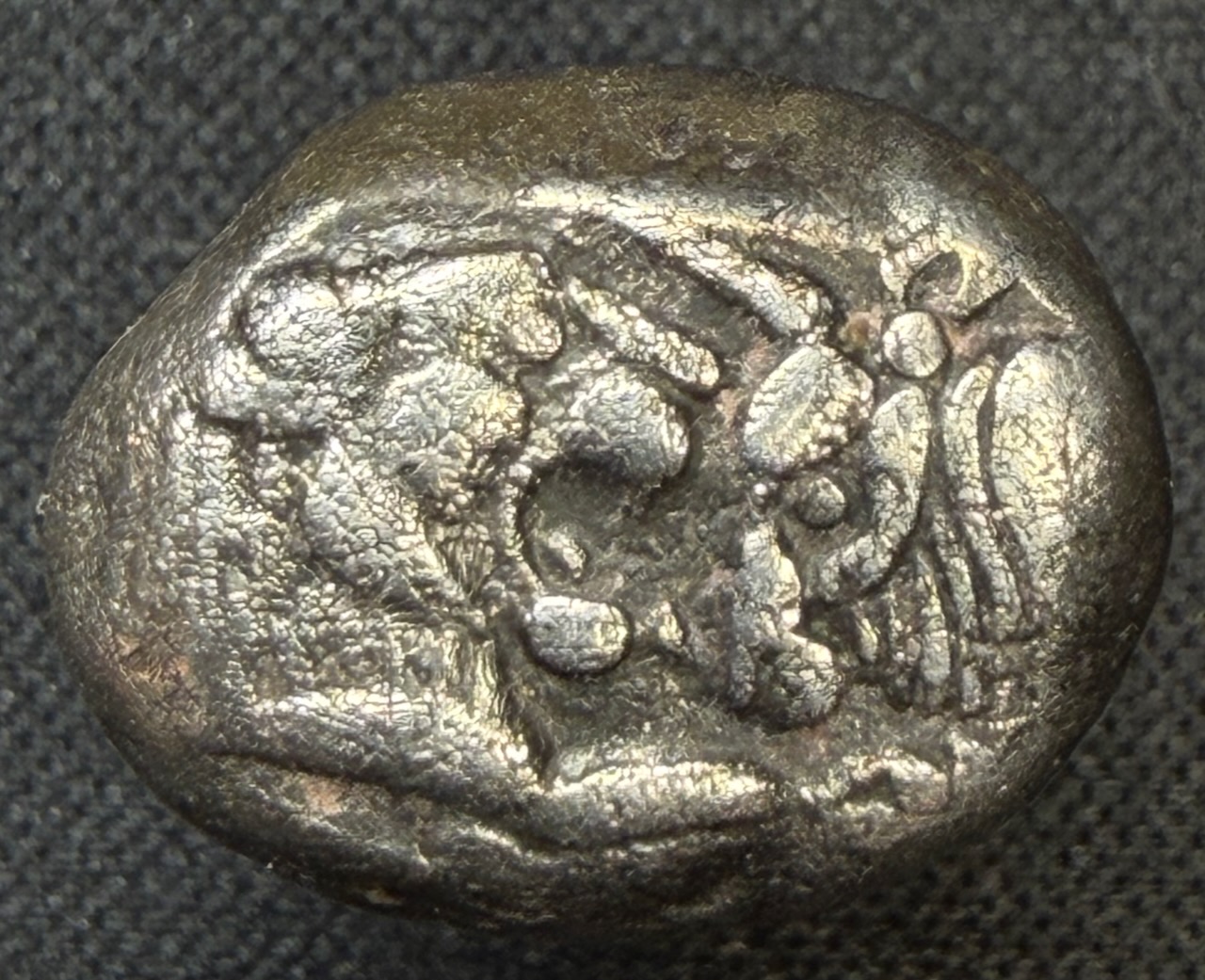
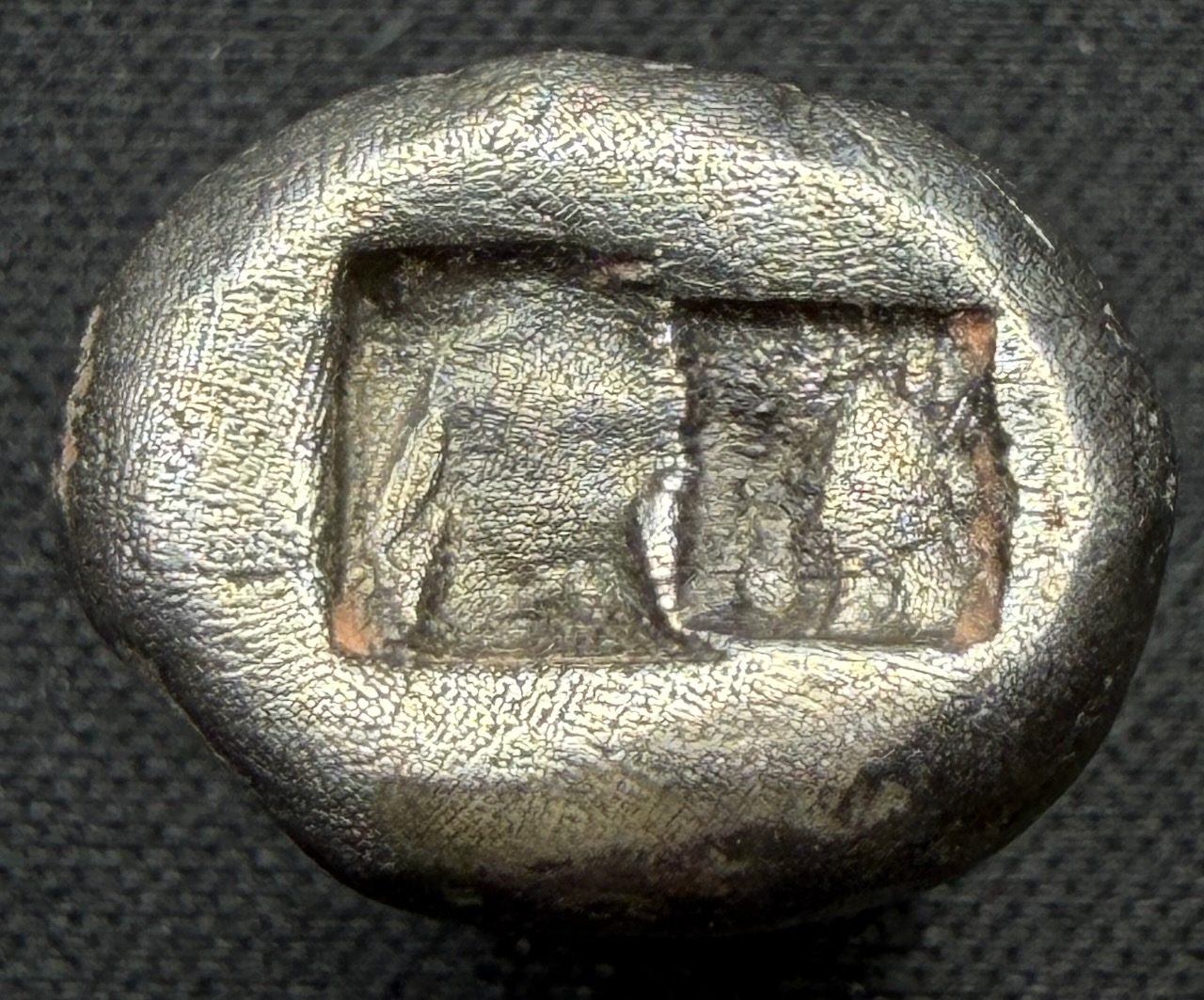
Obv: Confronted foreparts of a lion (on the left, head right) and a bull (on the right, head left), each with foreleg extended, facing one another. Anepigraphic.
Rev: Two incuse (sunken) square punches of unequal size, side by side.
Ref: Berk 22
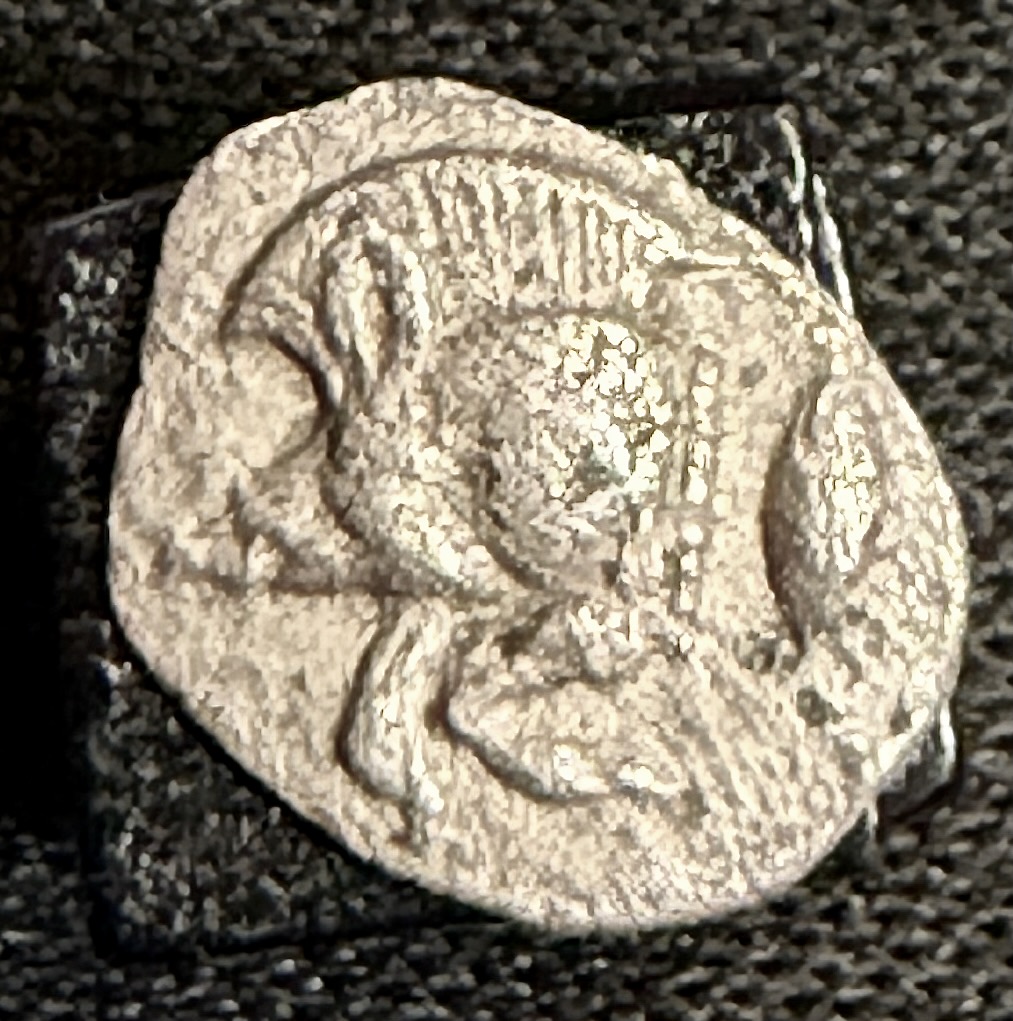
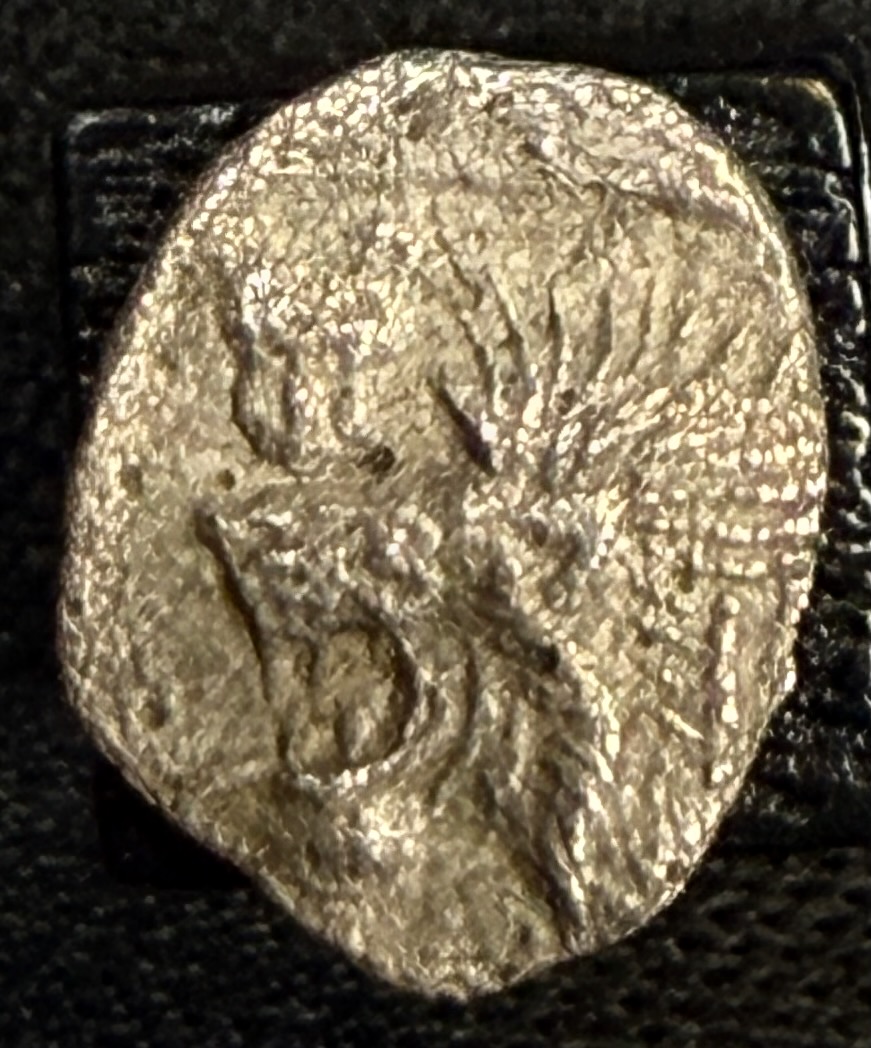
Obv: Forepart of running boar left, retrograde K on shoulder; tunny fish upward behind
Rev: Head of roaring lion left; small facing feline head (a lioness or panther) above; all in shallow incuse square
Ref: SNG France 378 (tag)
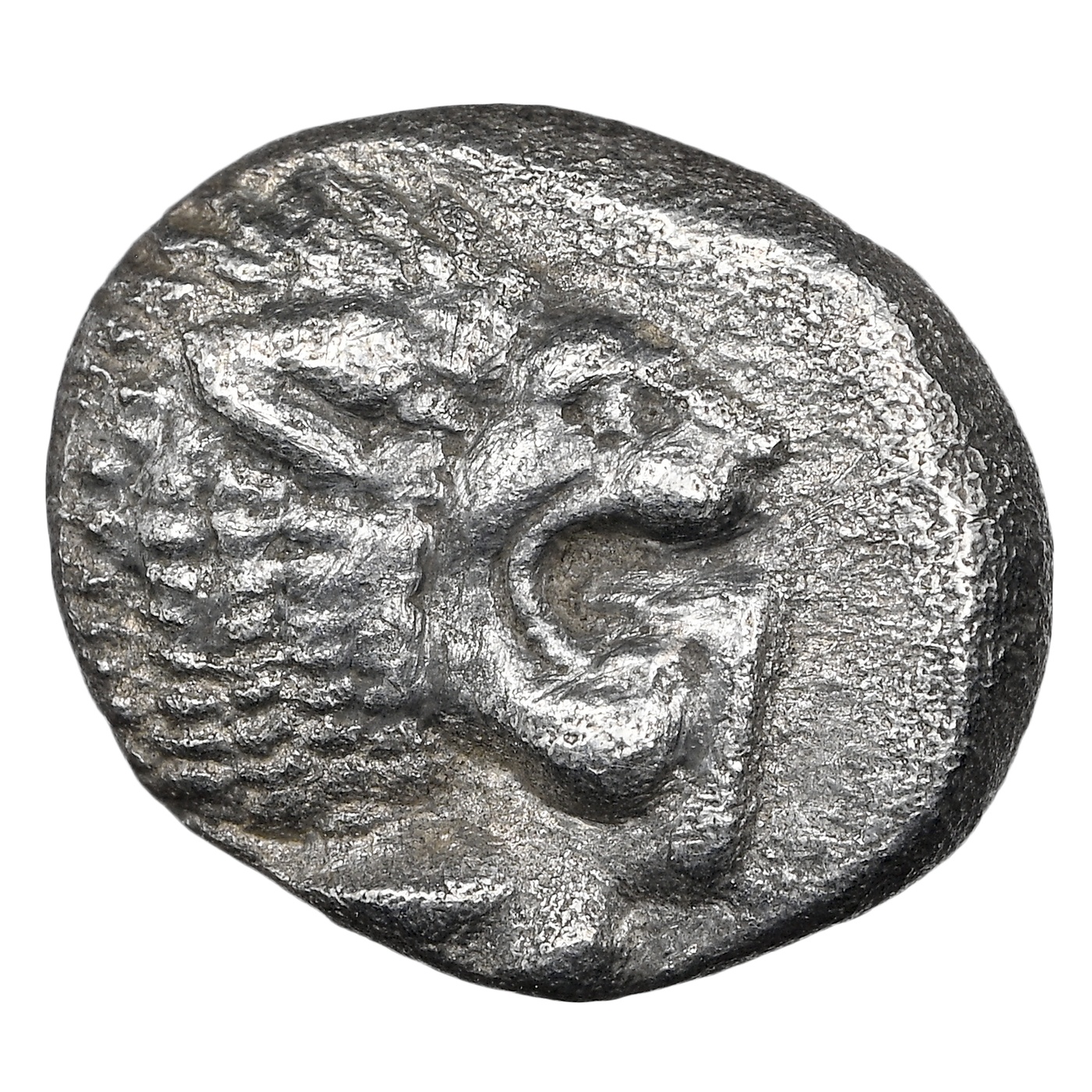
Obv: Forepart of a roaring lion to the left, the head turned back over the shoulder (reverted), mane rendered as rows of short strokes
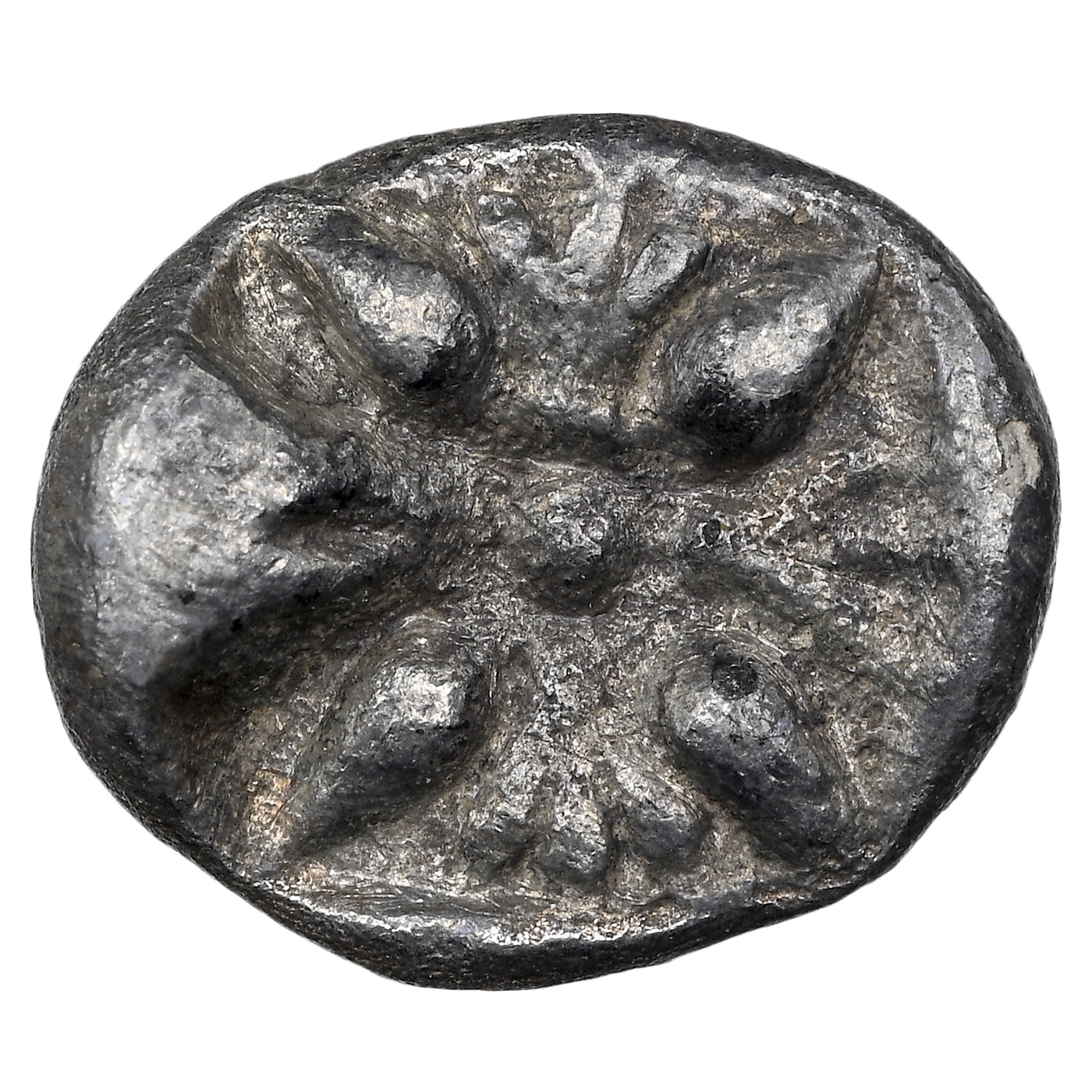
Rev: Stellate floral pattern — four large petal-shaped rays on the diagonals with smaller rays between them, around a central diamond enclosing a pellet — all within an incuse square
Ref: SNG Kayhan 462–475
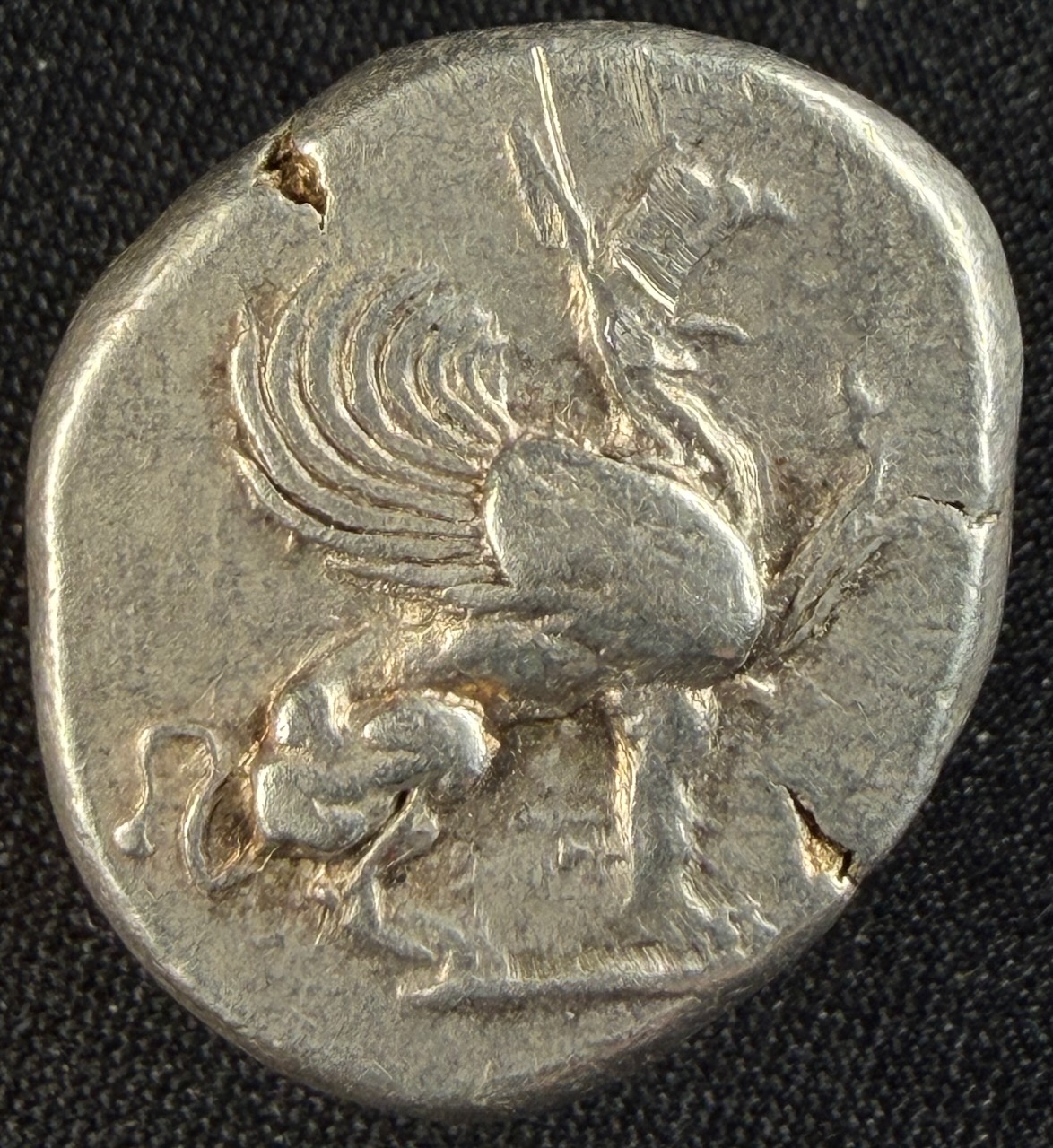
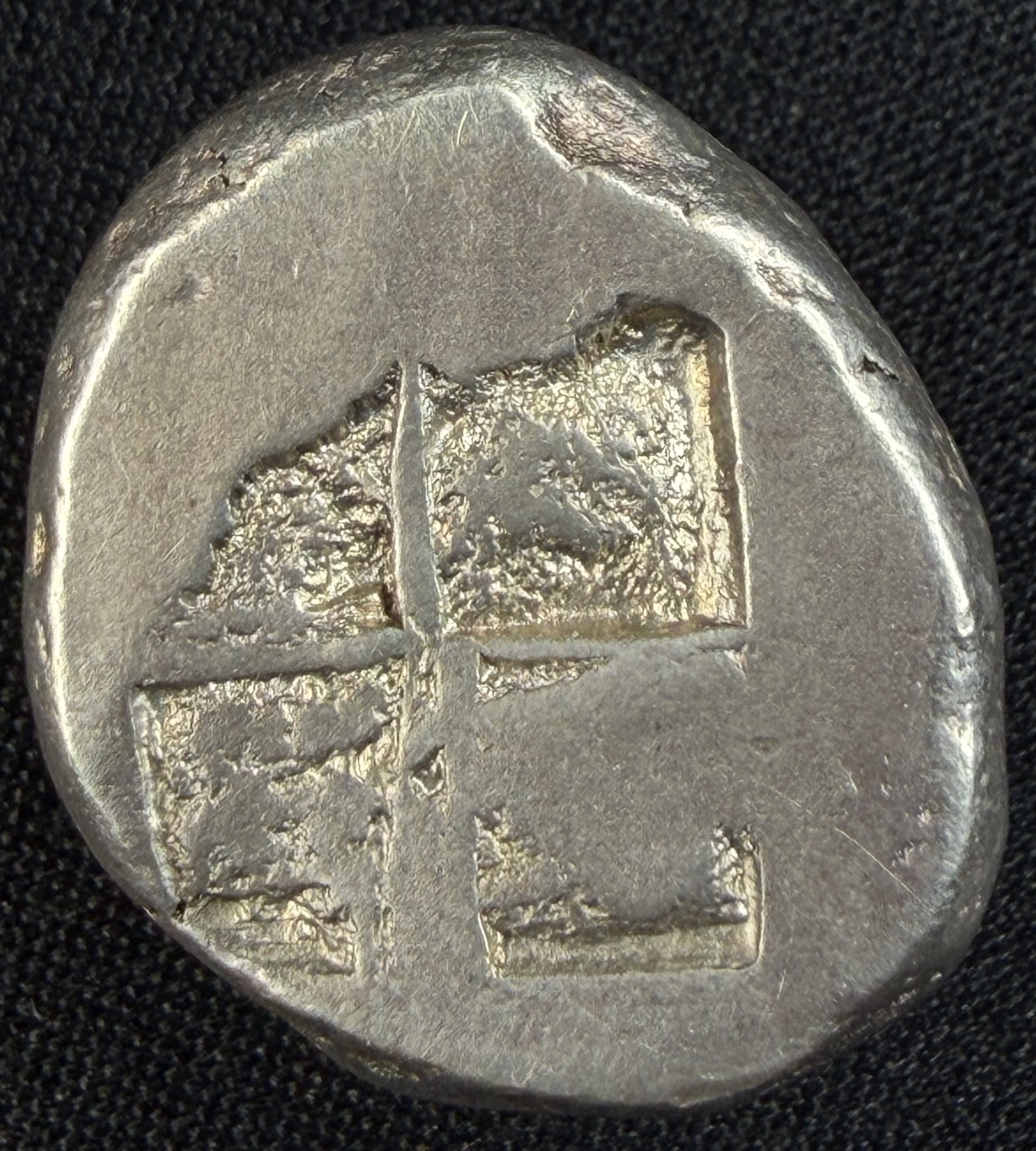
Obv: Griffin with curled wing seated right, head erect, raising the left forepaw
Rev: Quadripartite incuse square (rough/'mill-sail' punch)
Ref: SNG von Aulock 2252
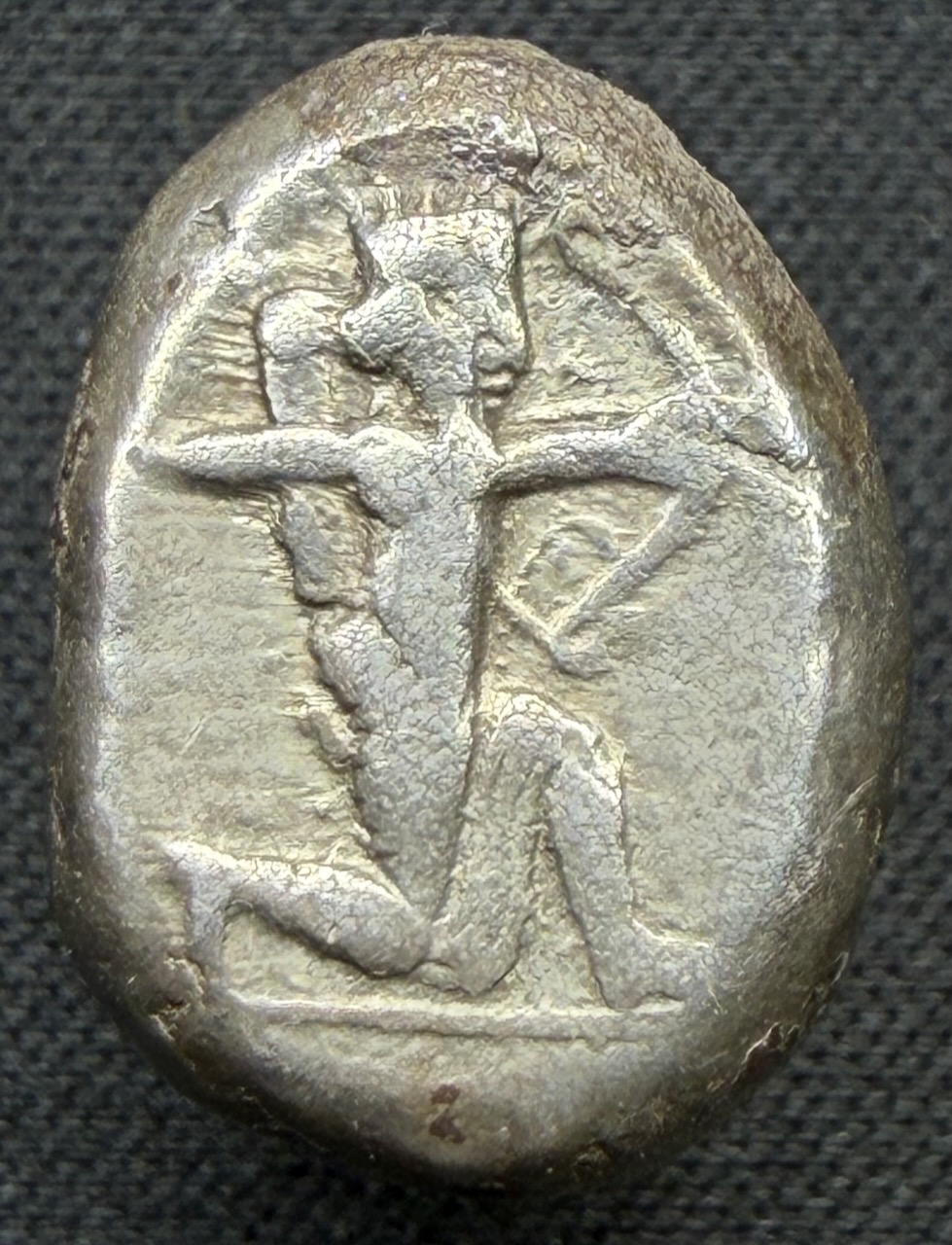
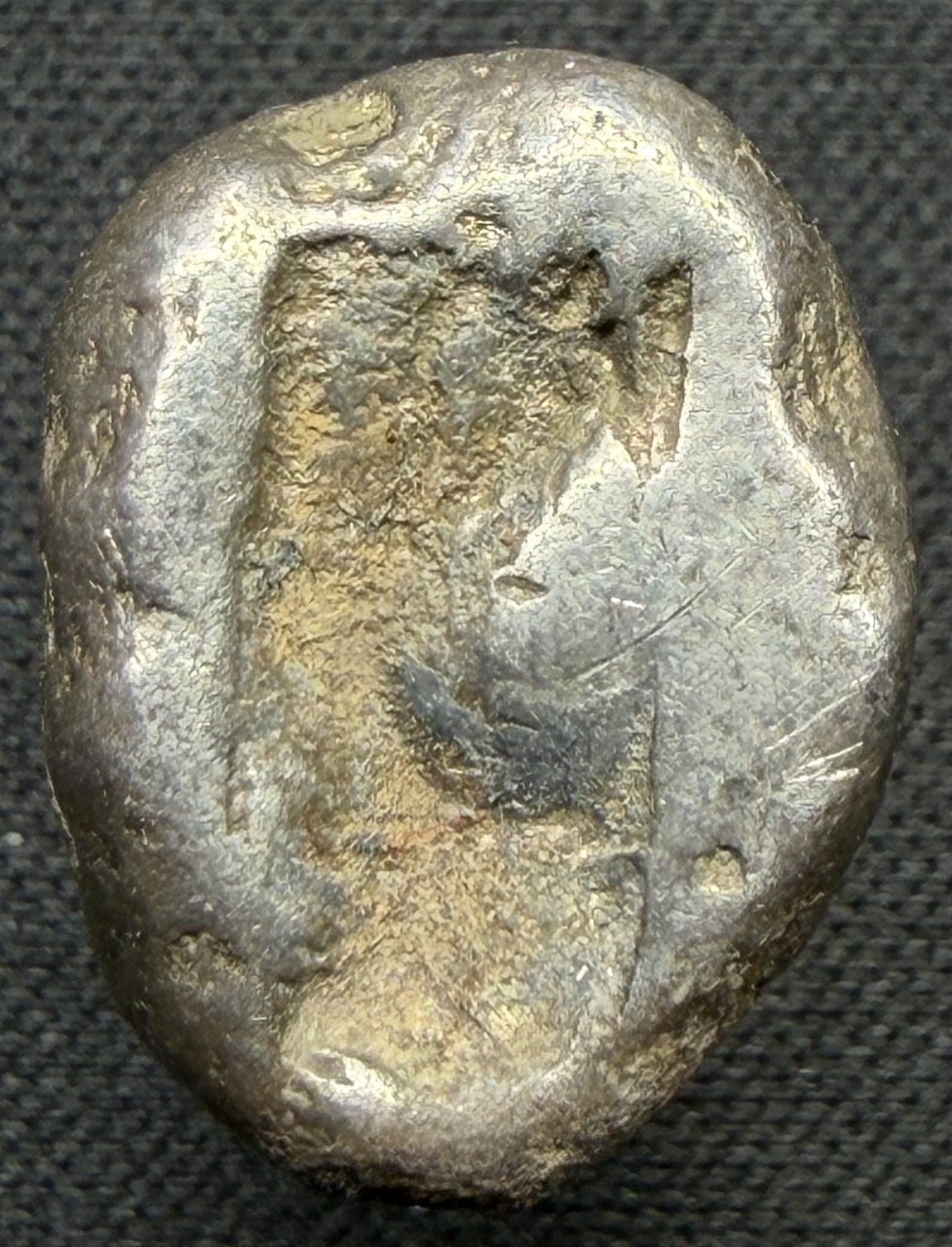
Obv: The Persian Great King (royal archer) in kneeling-running (Knielauf) stance right, wearing the kidaris and kandys, quiver over the shoulder, drawing a bow held in the extended left hand. Anepigraphic.
Rev: Irregular oblong incuse punch.
Ref: Carradice Type II (pl. XI, 12)
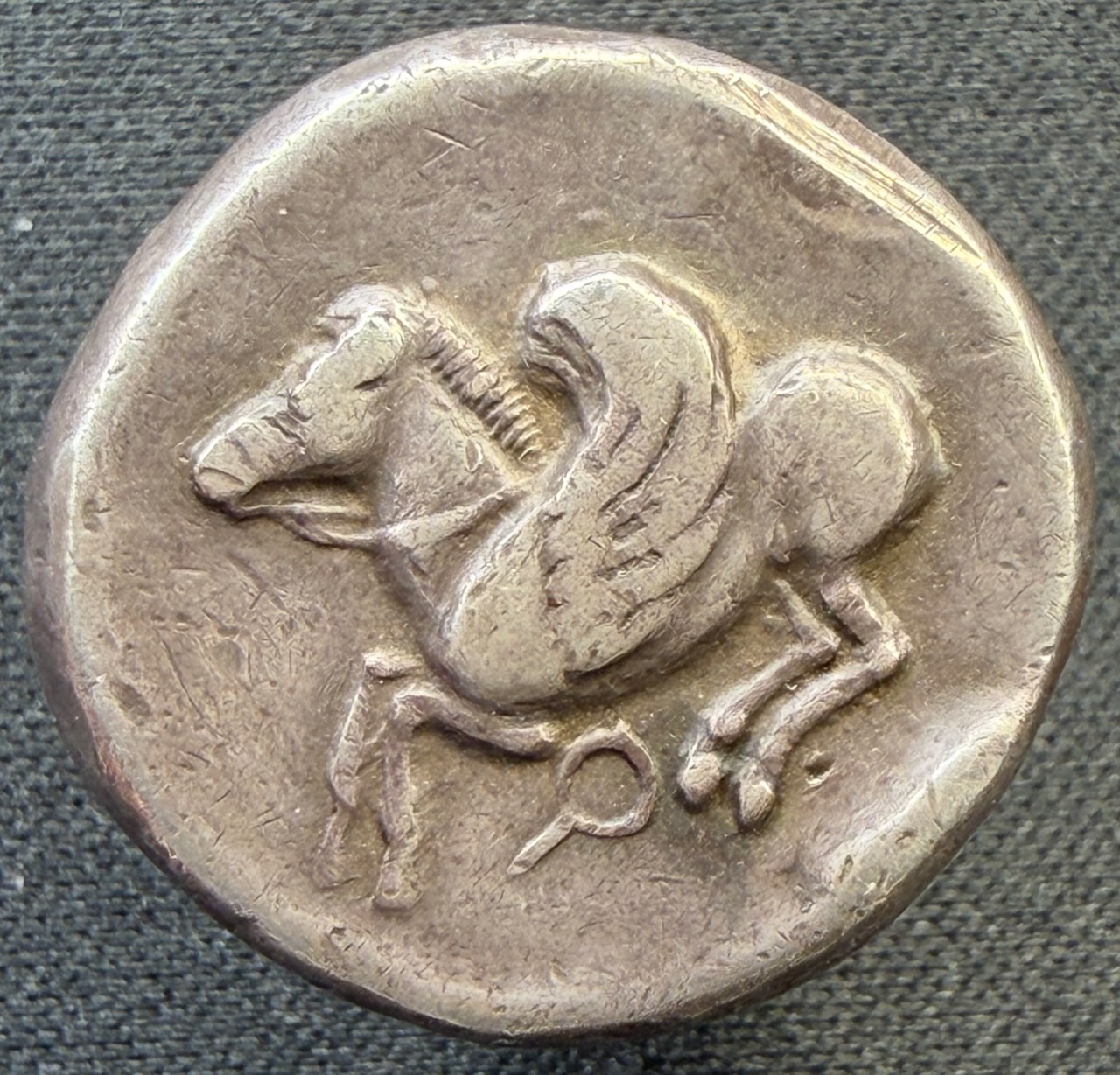
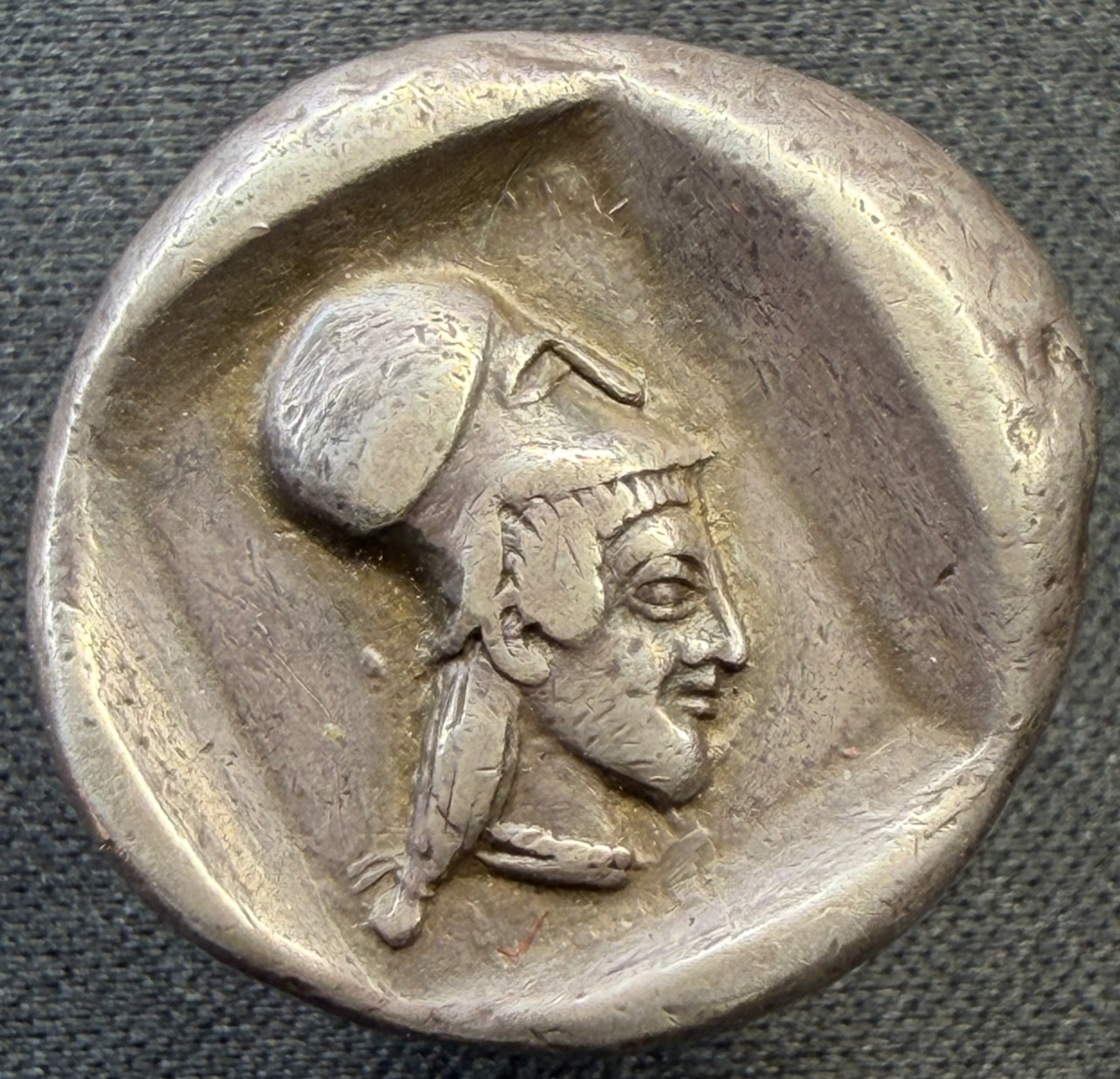
Obv: Pegasos with curled (archaic) wing flying left; below, koppa (Ϙ) — the archaic initial of Ϙόρινθος (Corinth)
Rev: Head of Athena right, wearing Corinthian helmet, hair falling in a queue behind; all within a shallow incuse square
Ref: Ravel Period II, 136 var. / Pegasi 68
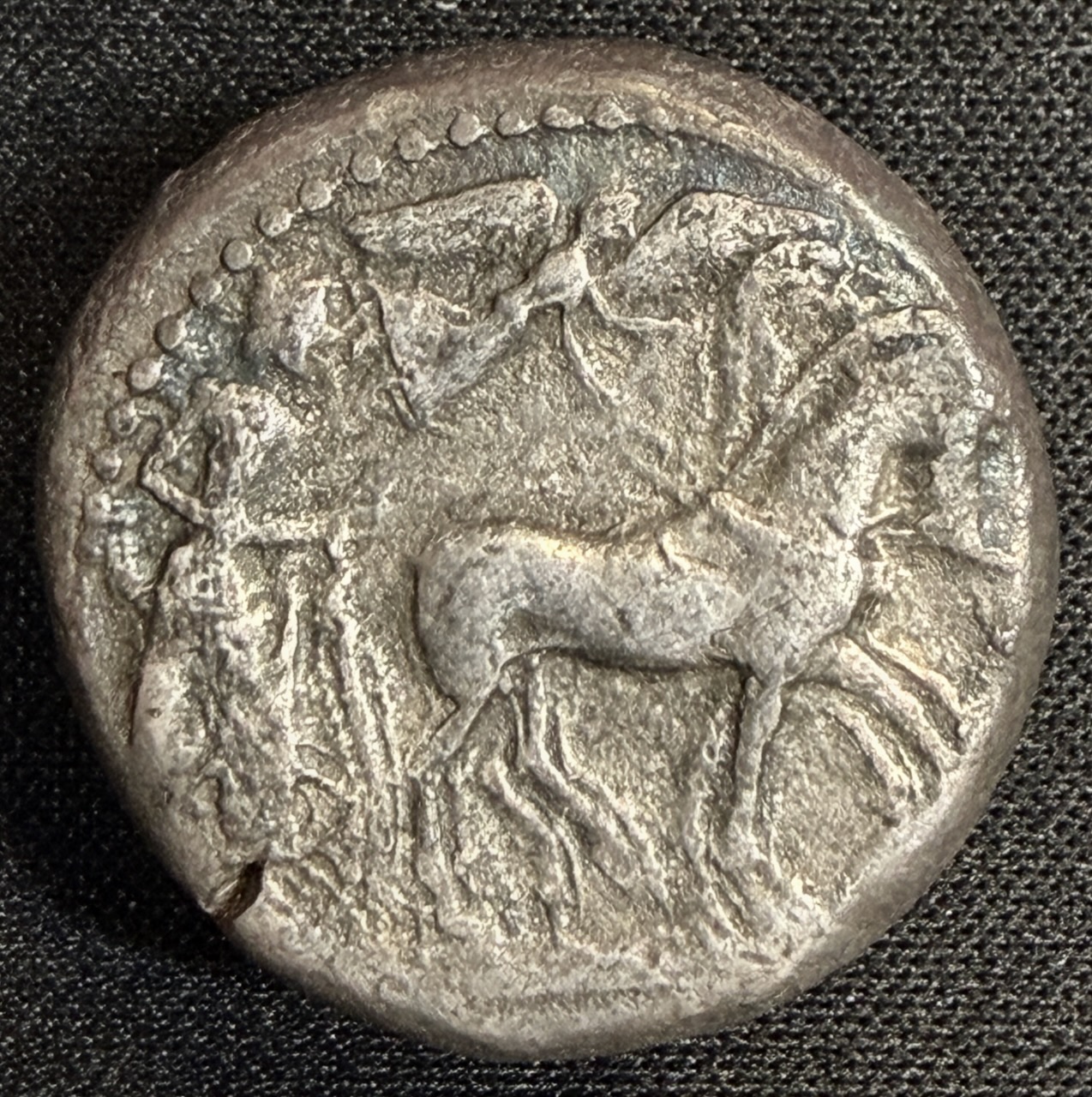
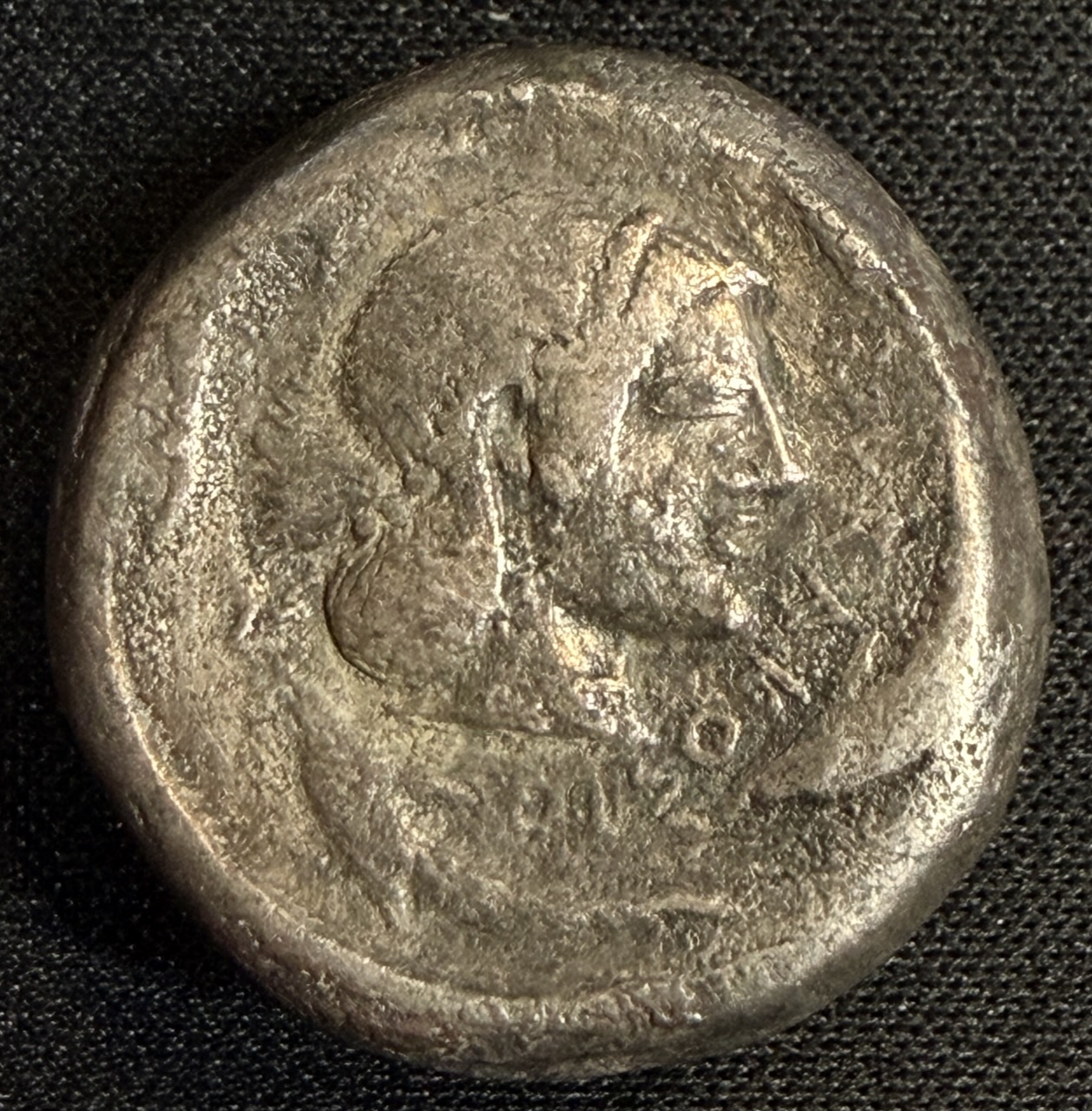
Obv: Charioteer, holding kentron and reins, driving slow quadriga right; above, Nike flying right, crowning the horses; border of dots
Rev: Head of Arethusa right, wearing taenia and pearl necklace, within a circle of four dolphins and the ethnic
Ref: cf. Boehringer, Die Münzen von Syrakus (series/die undetermined — open thread)
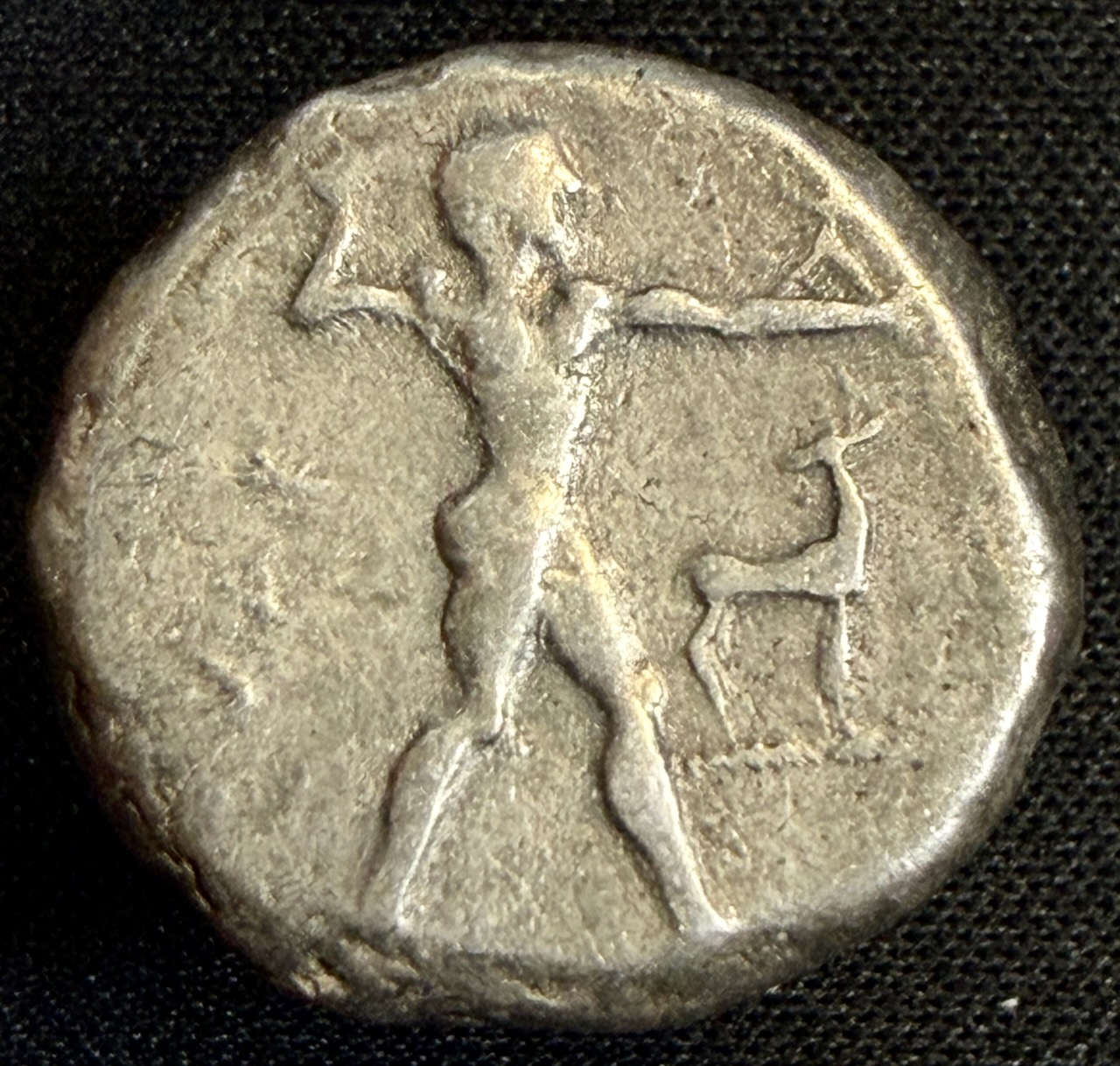
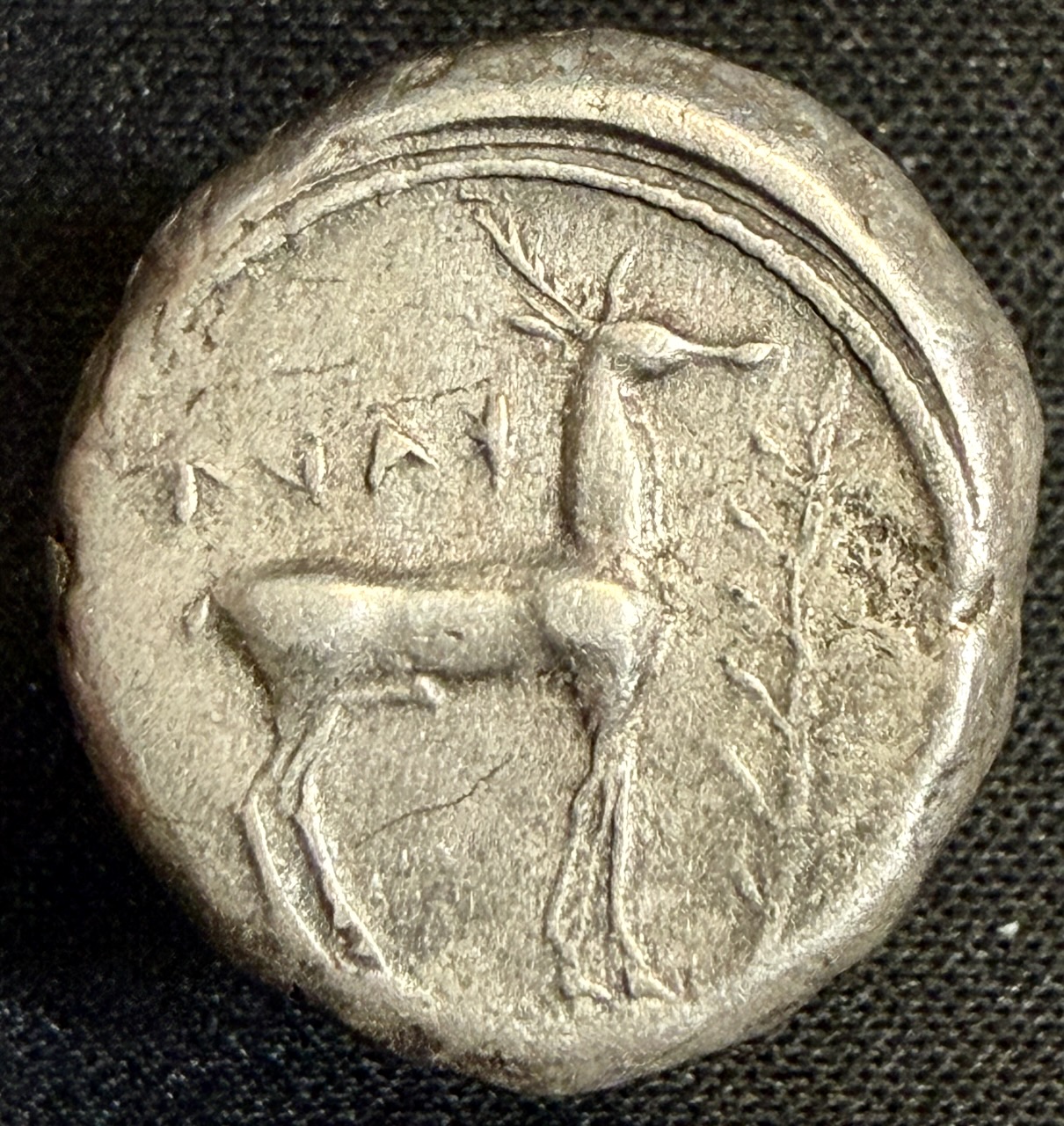
Obv: Apollo, nude, advancing right, laurel branch in raised right hand, small daimon running right on his extended left arm; in right field, stag standing right with head reverted
Rev: Stag standing right; laurel branch to right
Ref: Noe, Caulonia, Group F, 84
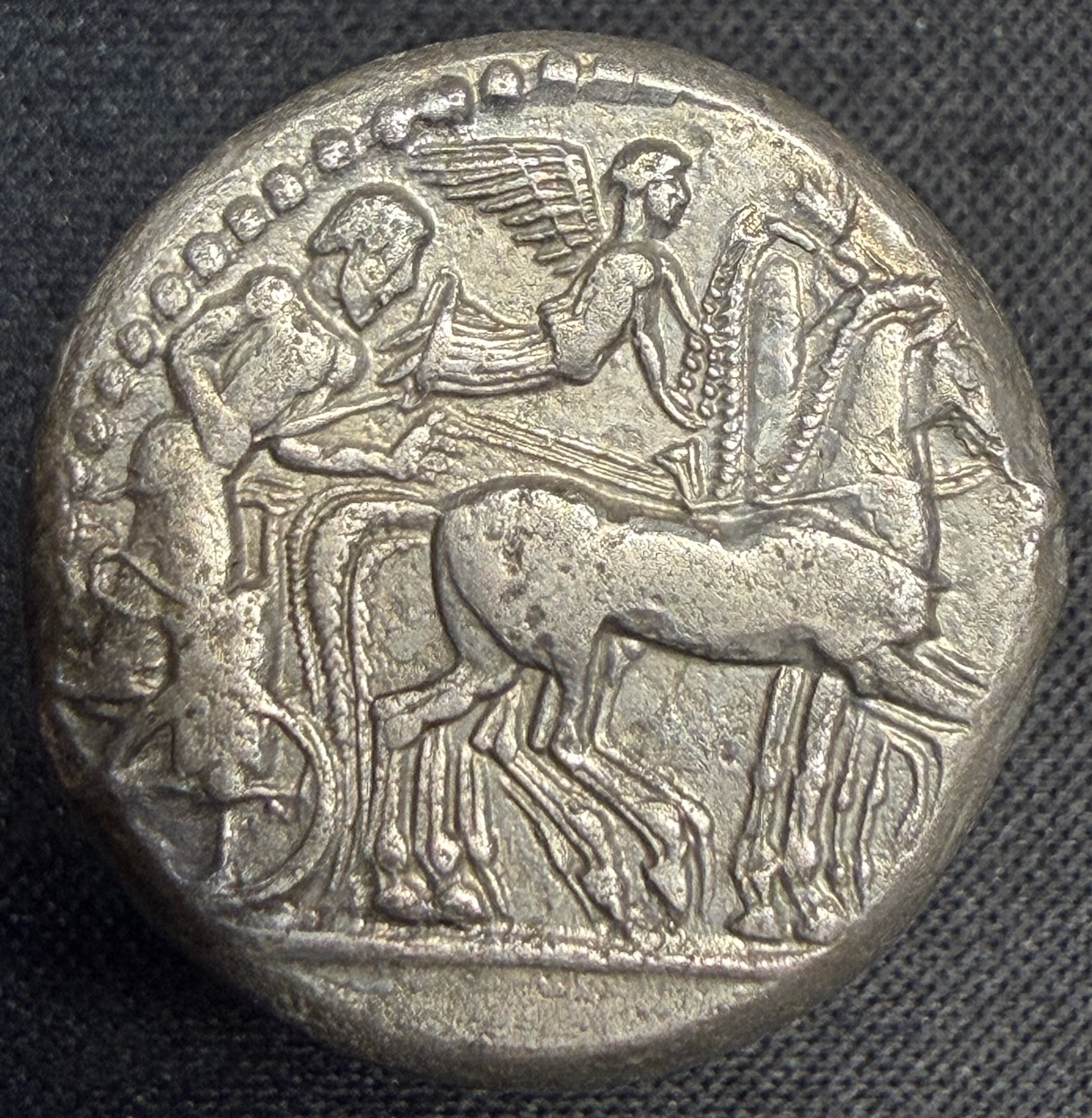
Obv: Charioteer driving walking quadriga right, holding kentron and reins; Nike flying right above, crowning the horses
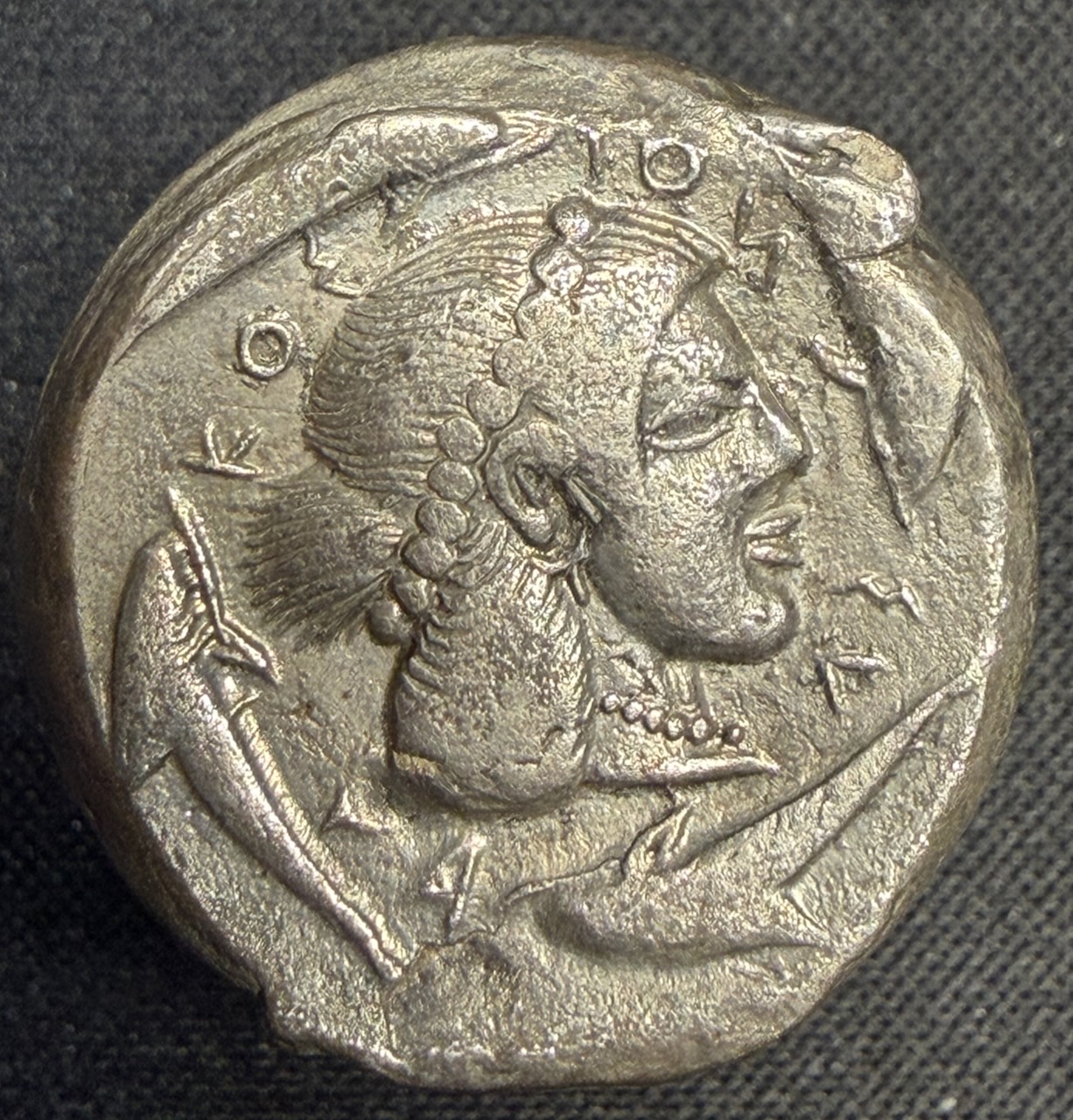
Rev: Head of Arethusa right, hair bound with beaded taenia (fillet), wearing necklace and earring; four dolphins swimming around; legend around
Ref: Boehringer 320 (V156/R214)
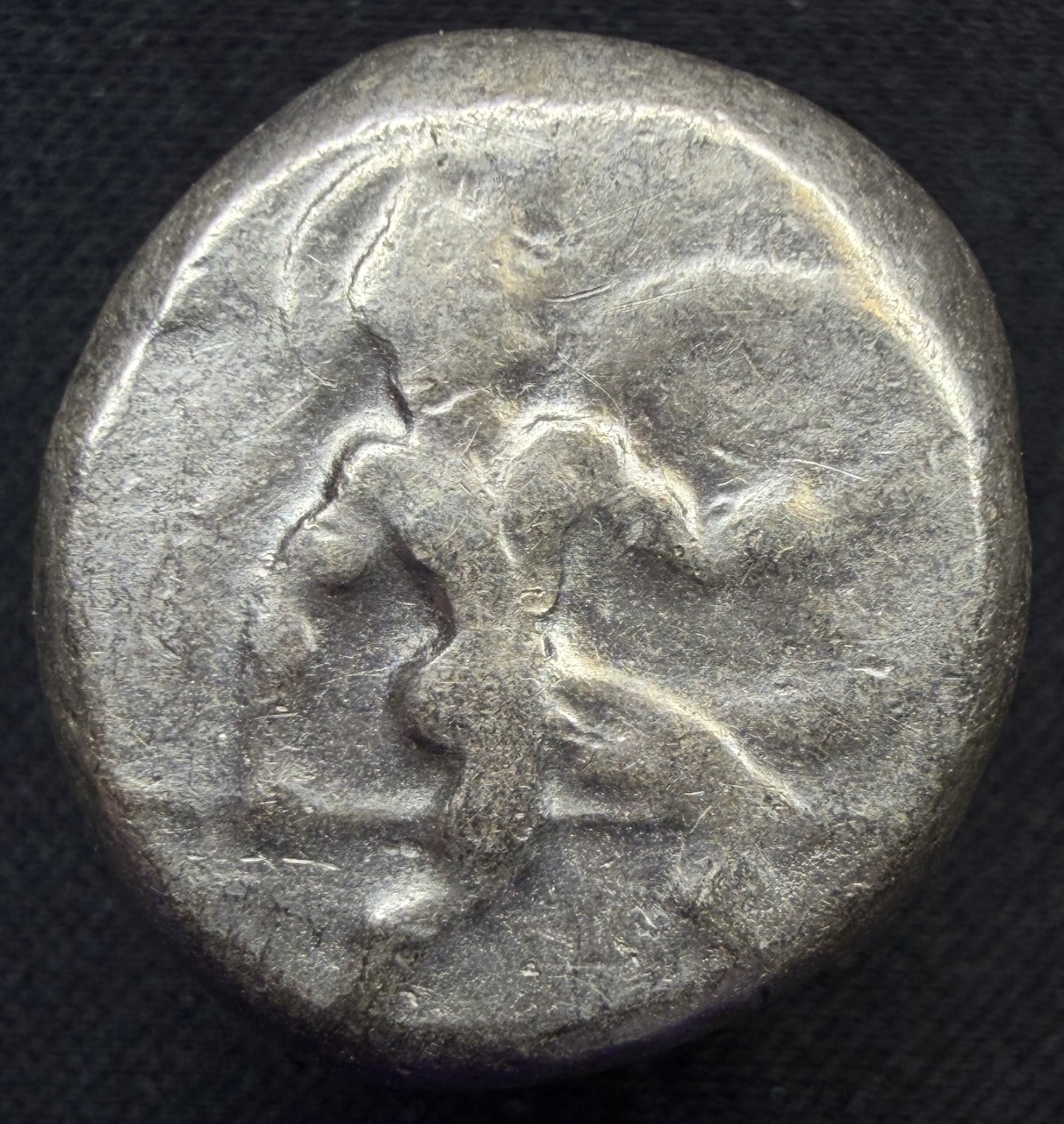
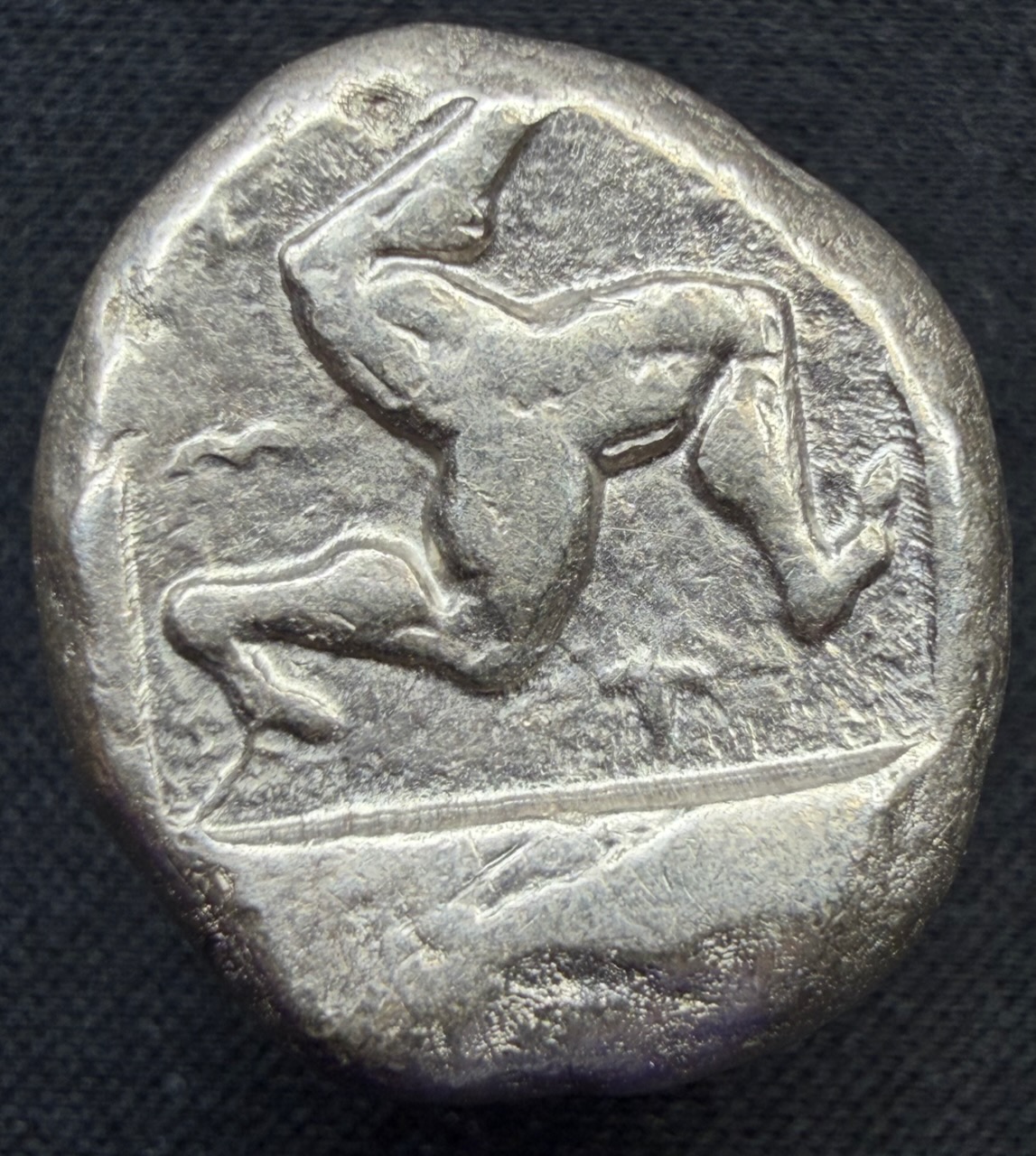
Obv: Nude hoplite warrior advancing right, holding a spear in his raised right hand and a round shield on his left arm. (On worn specimens the helmet and shield device are indistinct.)
Rev: Triskeles of three bent human legs revolving (running), joined at the center, within a dotted border / shallow incuse square; small symbol(s) in the field on some dies.
Ref: Sear (Greek) 5381–5382
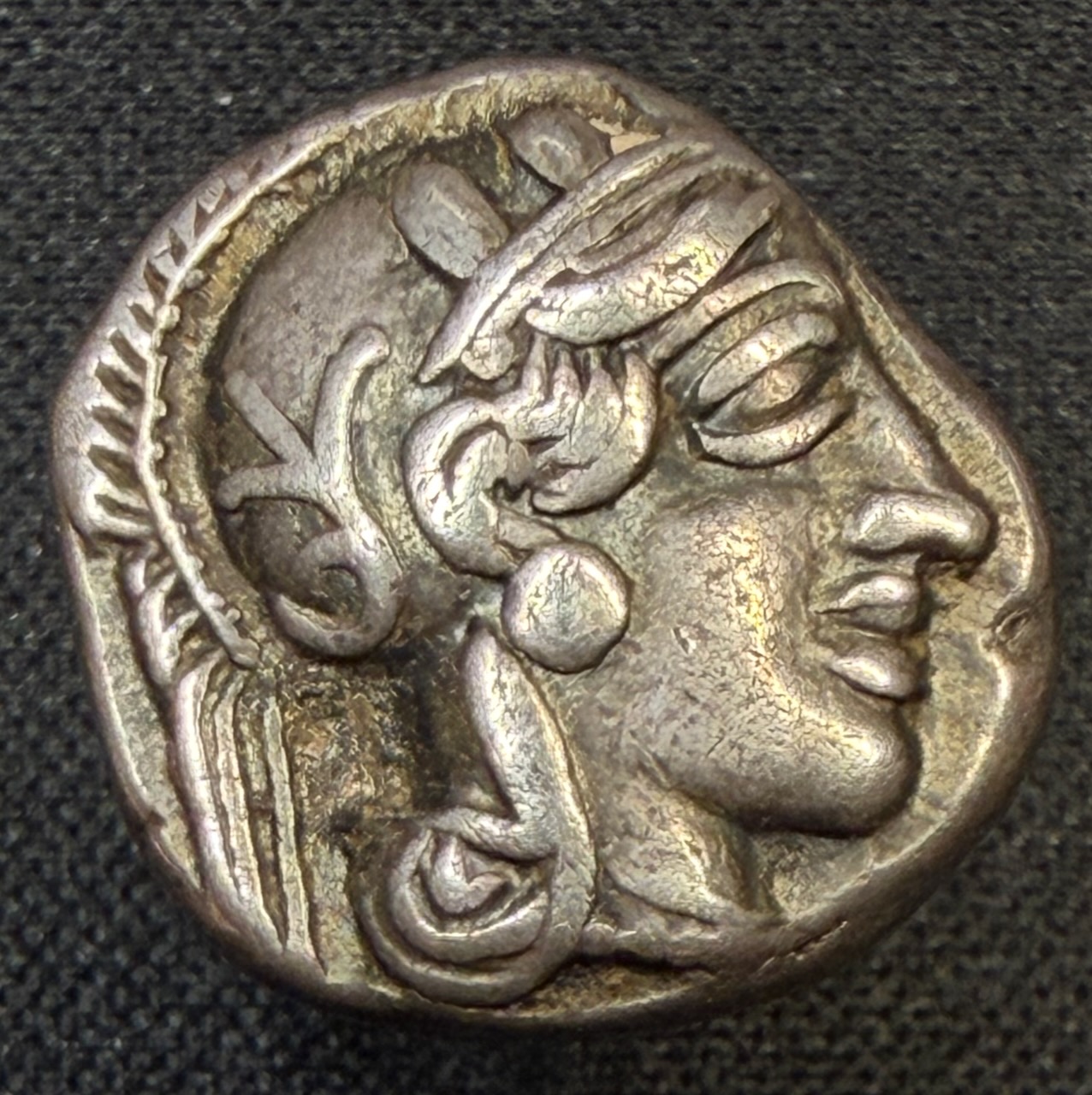
Obv: Head of Athena right, wearing crested Attic helmet ornamented with three olive leaves and spiral palmette, and disc earring
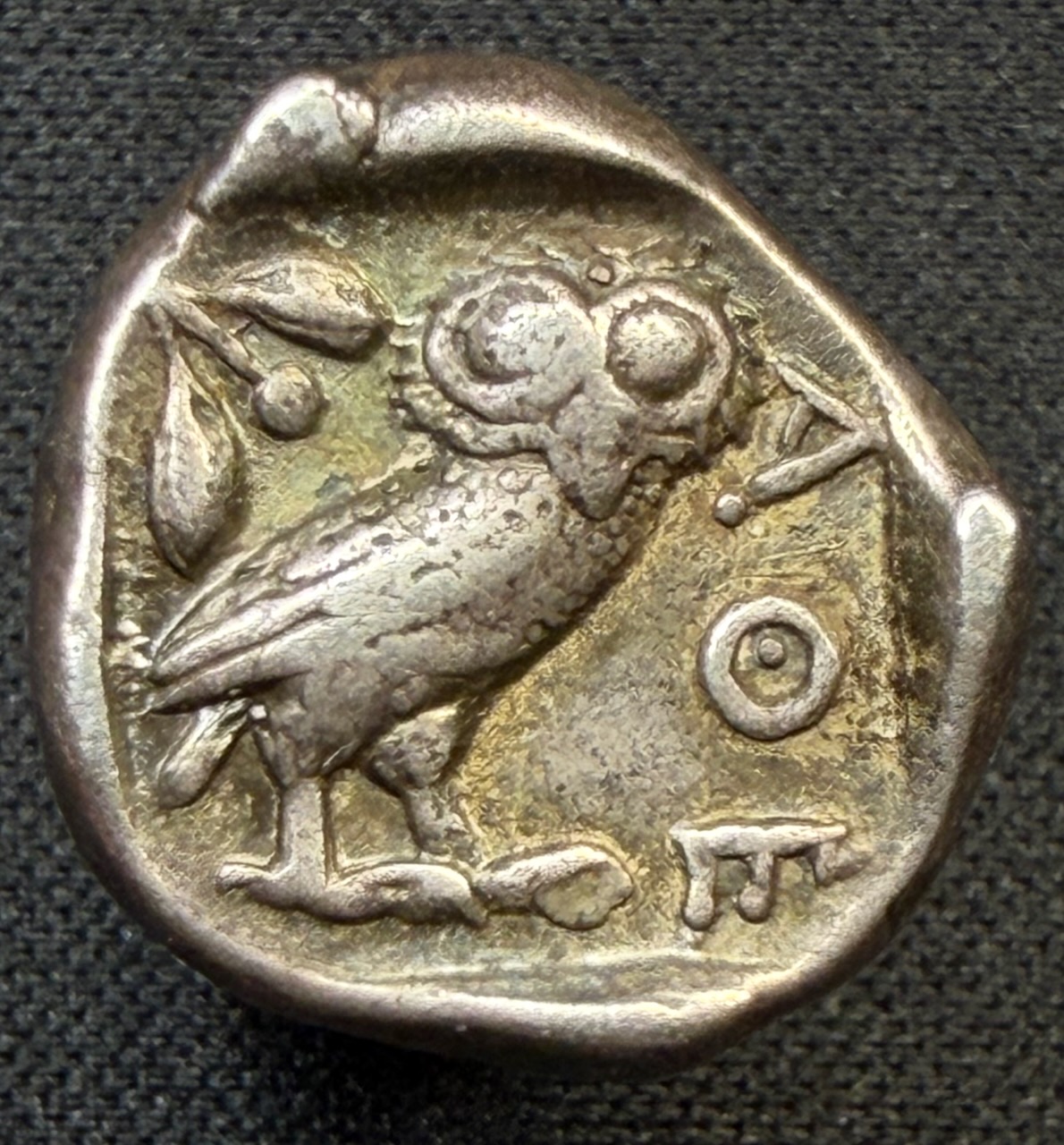
Rev: Owl standing right, head facing; olive sprig with berry in upper left field (no crescent on the drachm, unlike the tetradrachm); all within incuse square
Ref: HGC 4, 1631
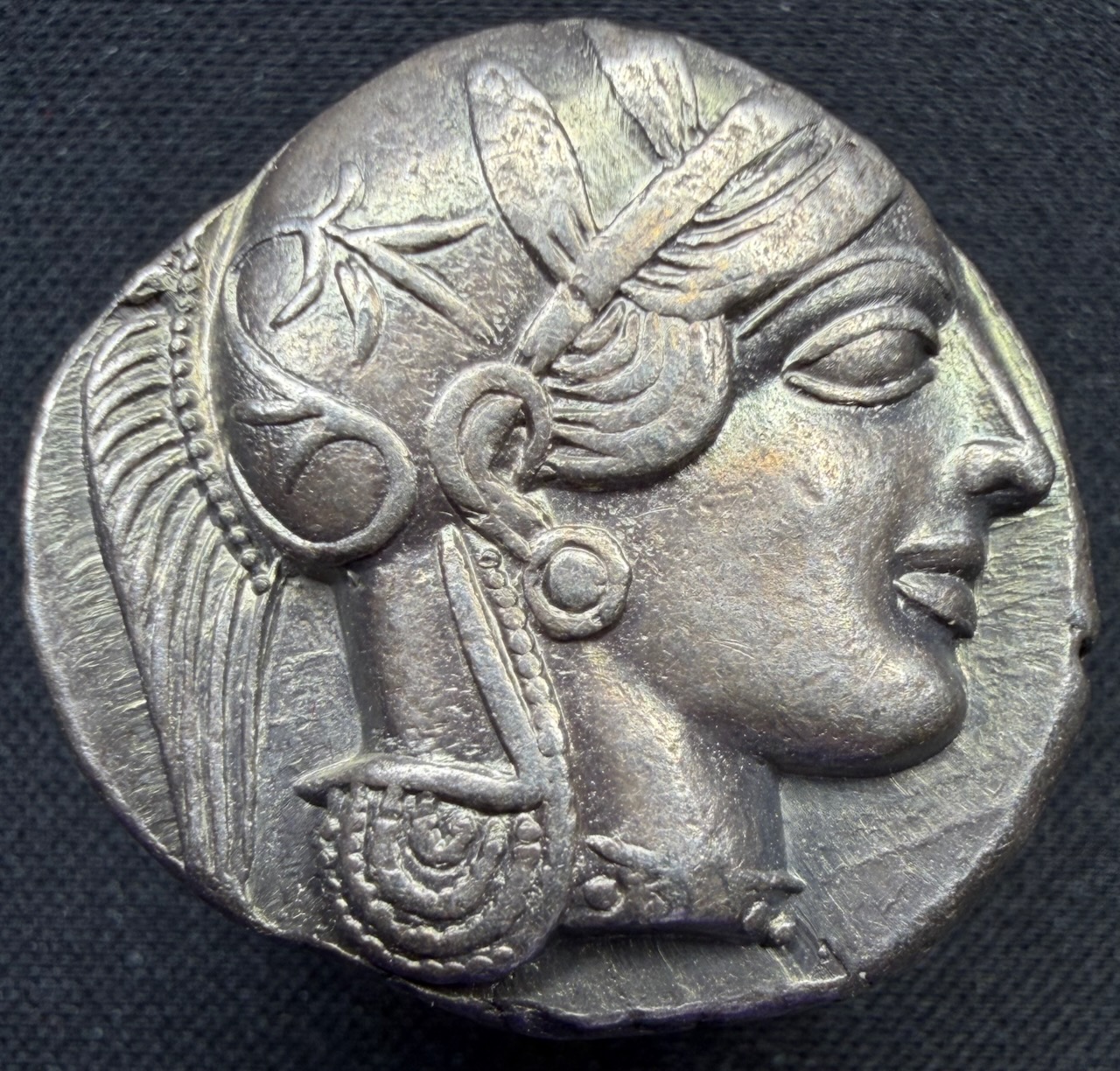
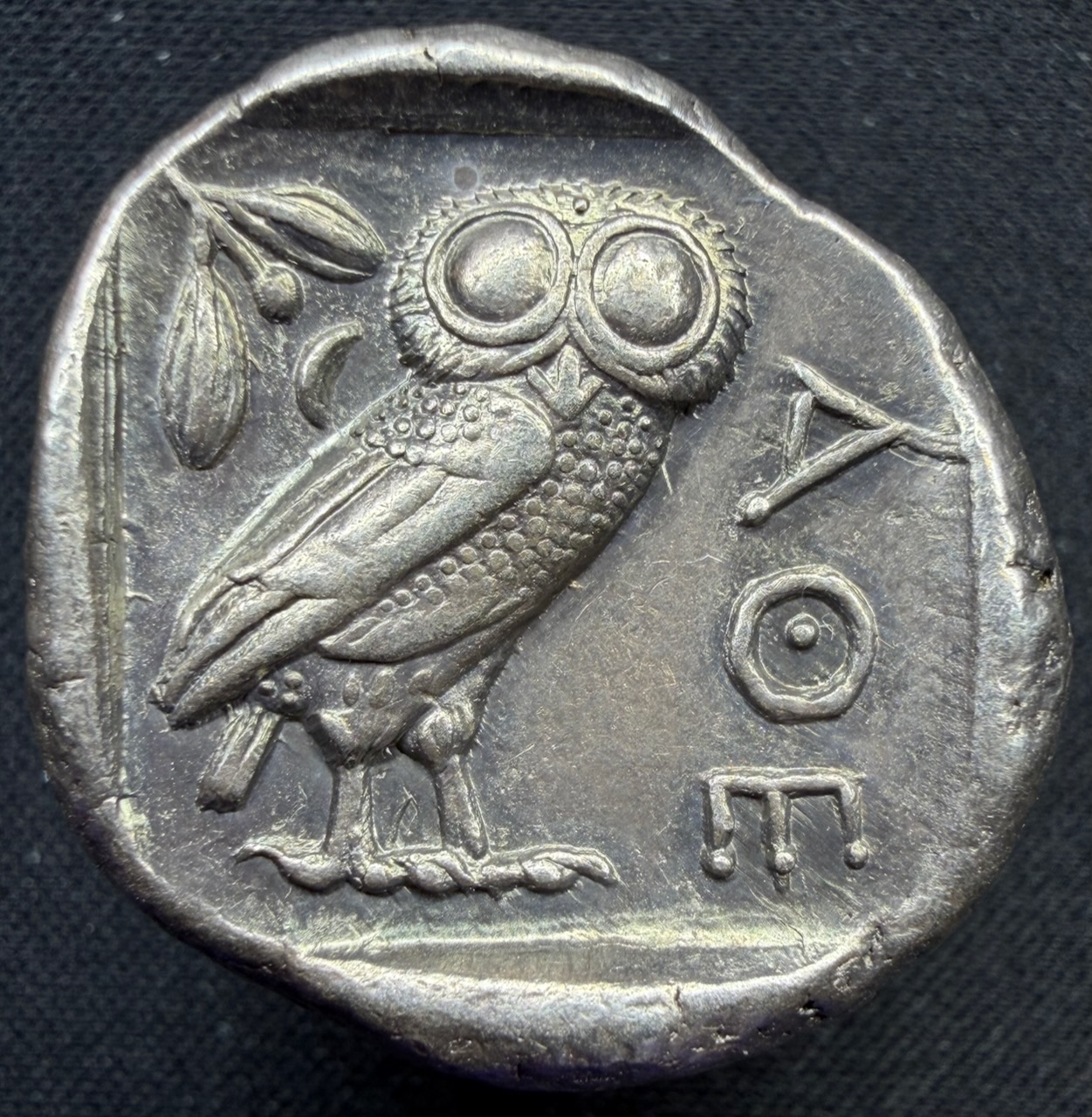
Obv: Head of Athena right, wearing a crested Attic helmet ornamented with three olive leaves over the visor and a palmette/spiral scroll on the bowl; round earring and beaded necklace. The eye is rendered frontally in the archaizing 'almond' convention retained on this coinage.
Rev: Owl standing right, head facing the viewer; to upper left an olive sprig with two leaves and a berry, and a crescent moon; all on a broad flan (the incuse square of the earlier issues is largely off-flan).
Ref: Kroll 8; SNG Copenhagen 31; Sear (Greek) 2526; HGC 4, 1597
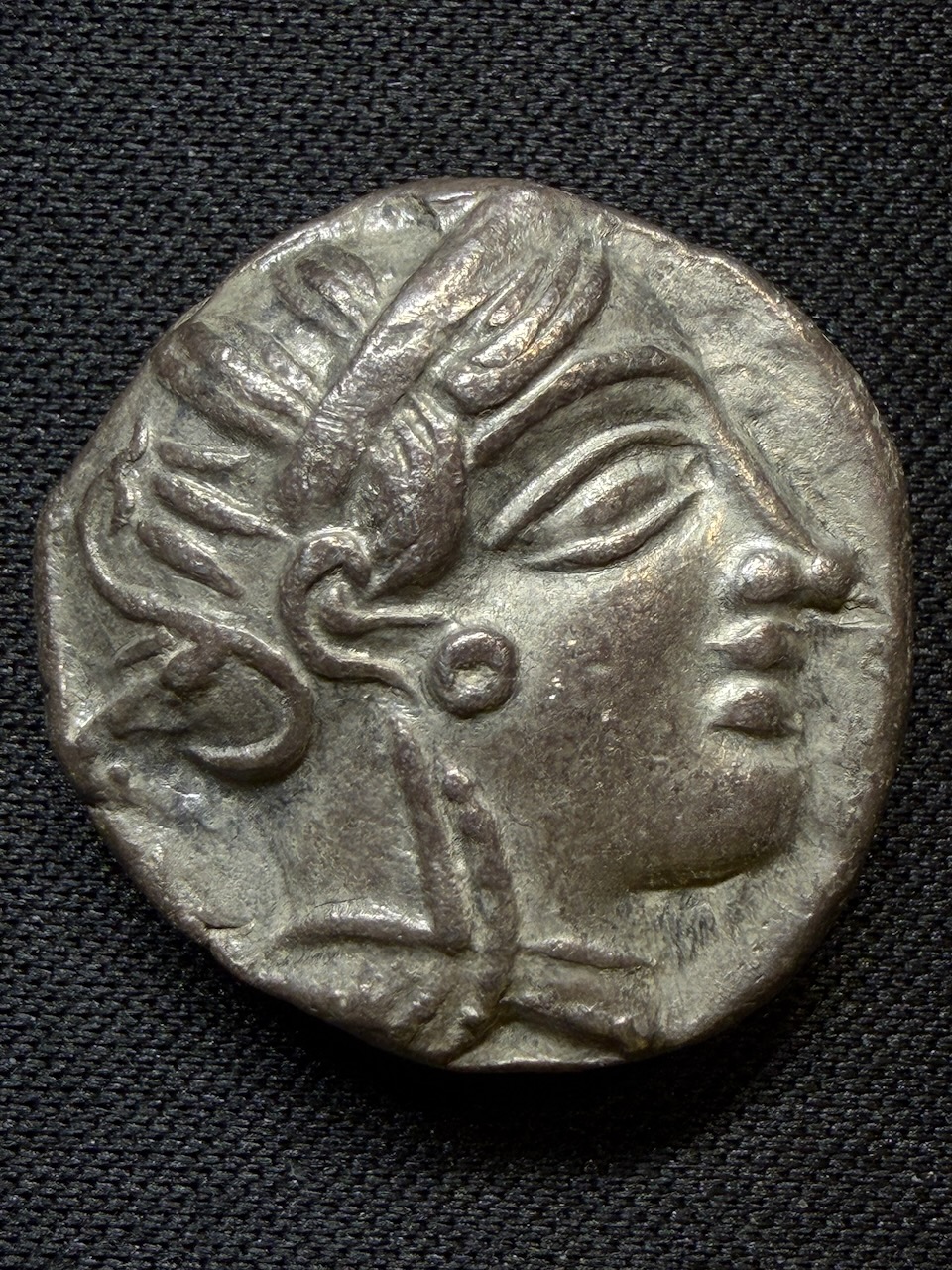
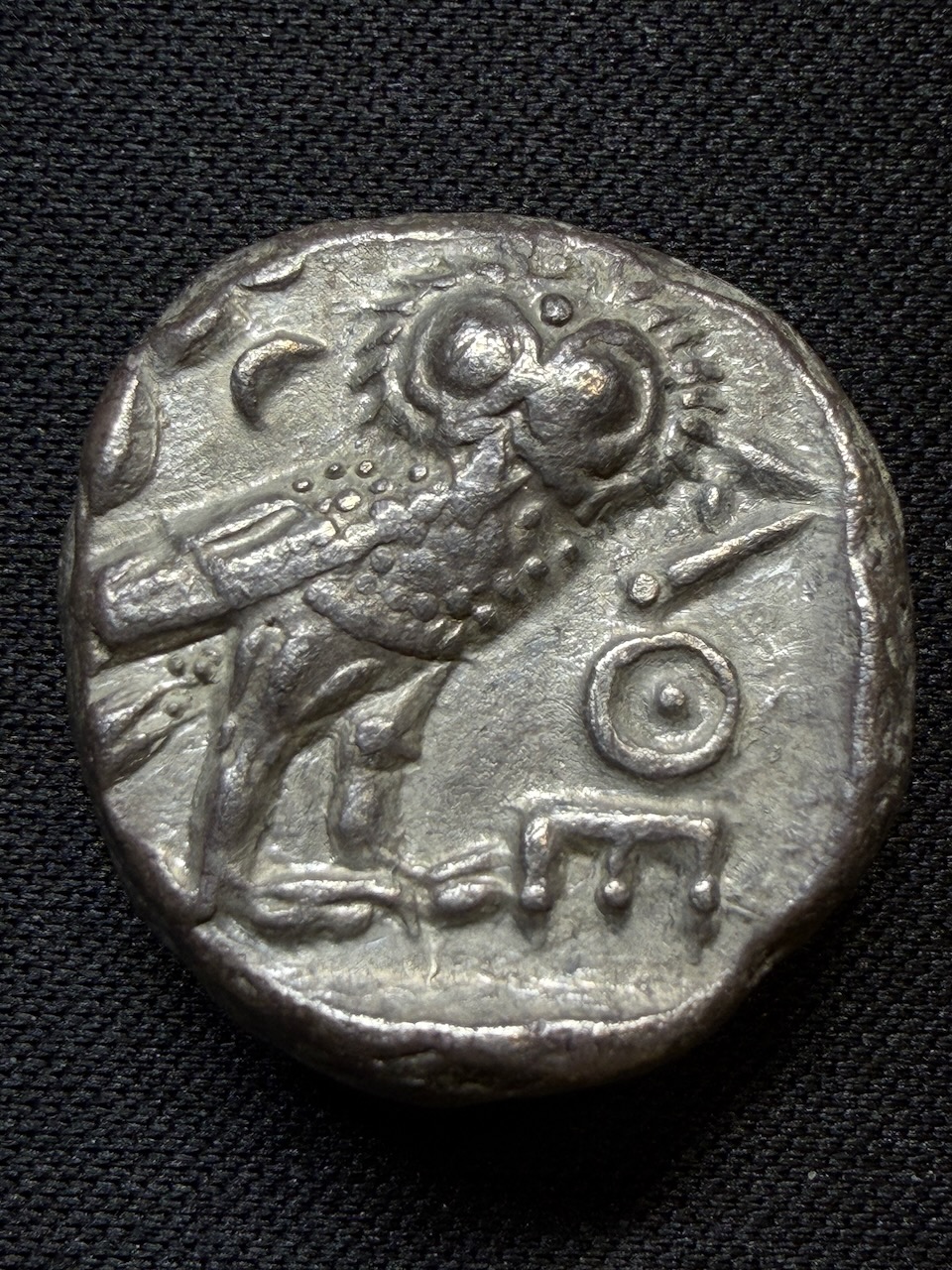
Obv: Head of Athena right, wearing crested Attic helmet; uraeus (Egyptian cobra) at neckline
Rev: Owl standing right, facing; olive sprig and crescent to upper left
Ref: Van Alfen, Mechanisms (RBN 157, 2011), Group III.A.1, Fig. 3 = Buttrey Type X
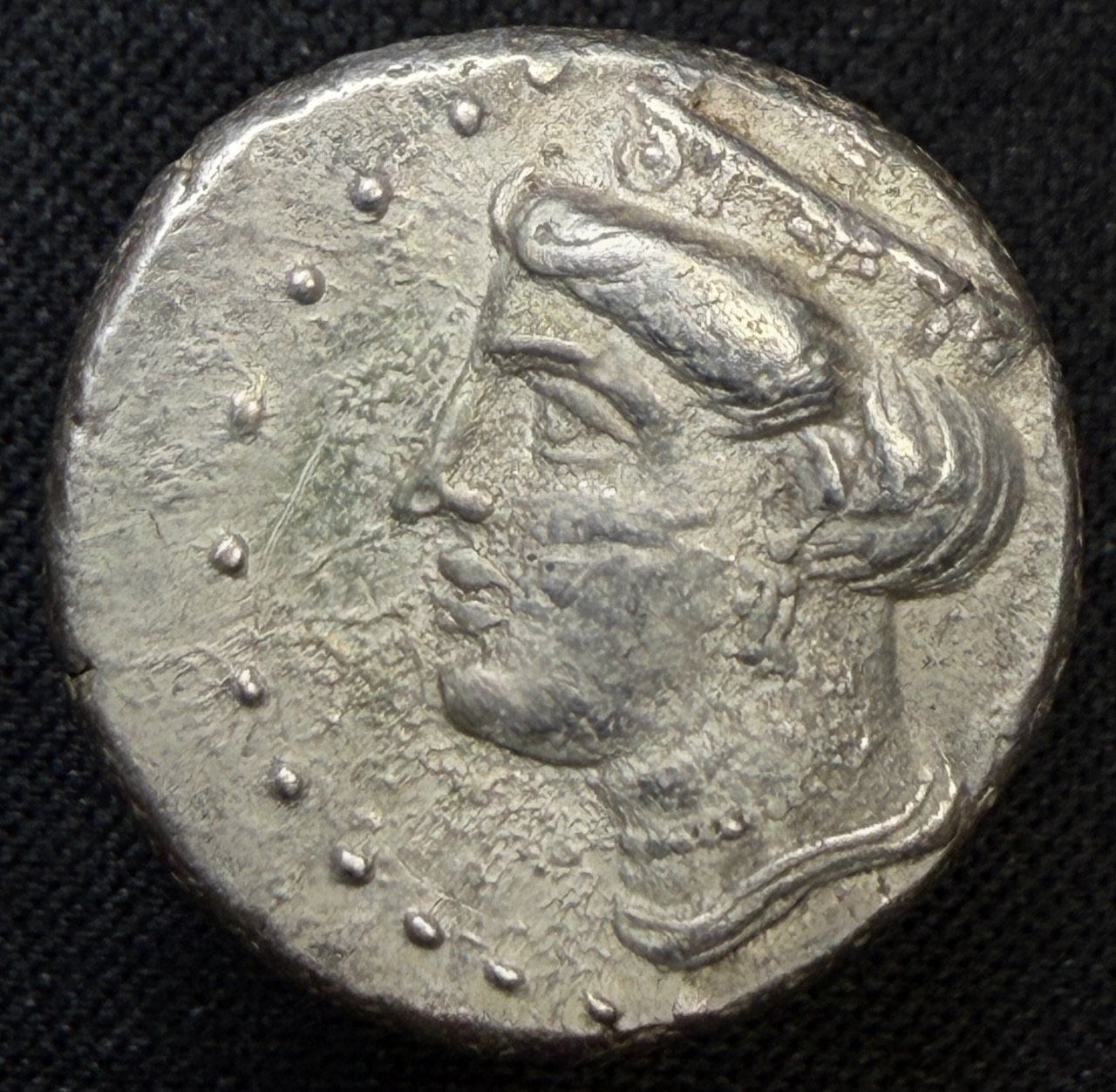
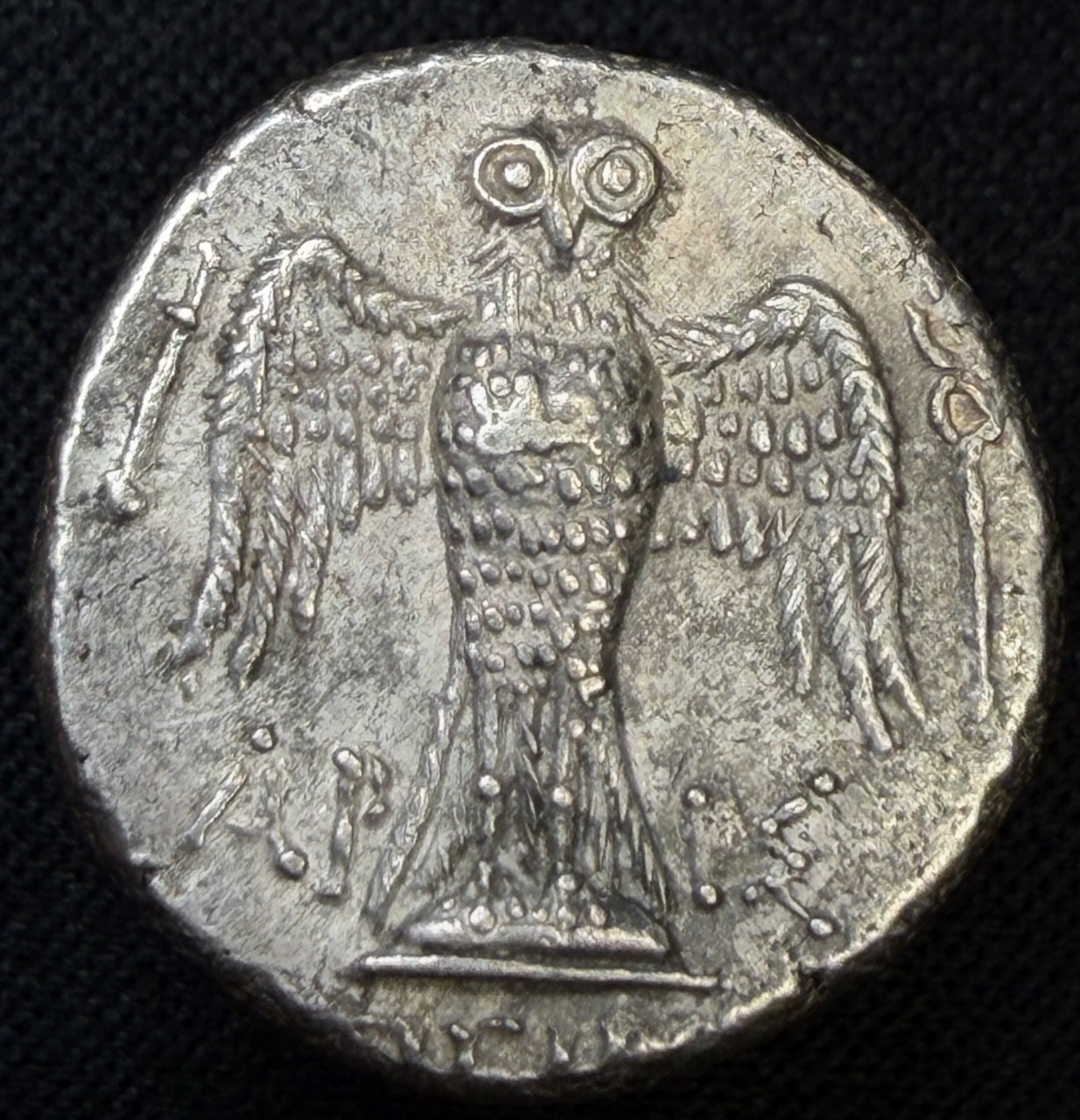
Obv: Head of Hera left, wearing ornamented stephane; dotted border
Rev: Owl standing facing on shield, wings spread; magistrate letters in lower fields; letter traces below the base line on some dies
Ref: SNG BM Black Sea 1053
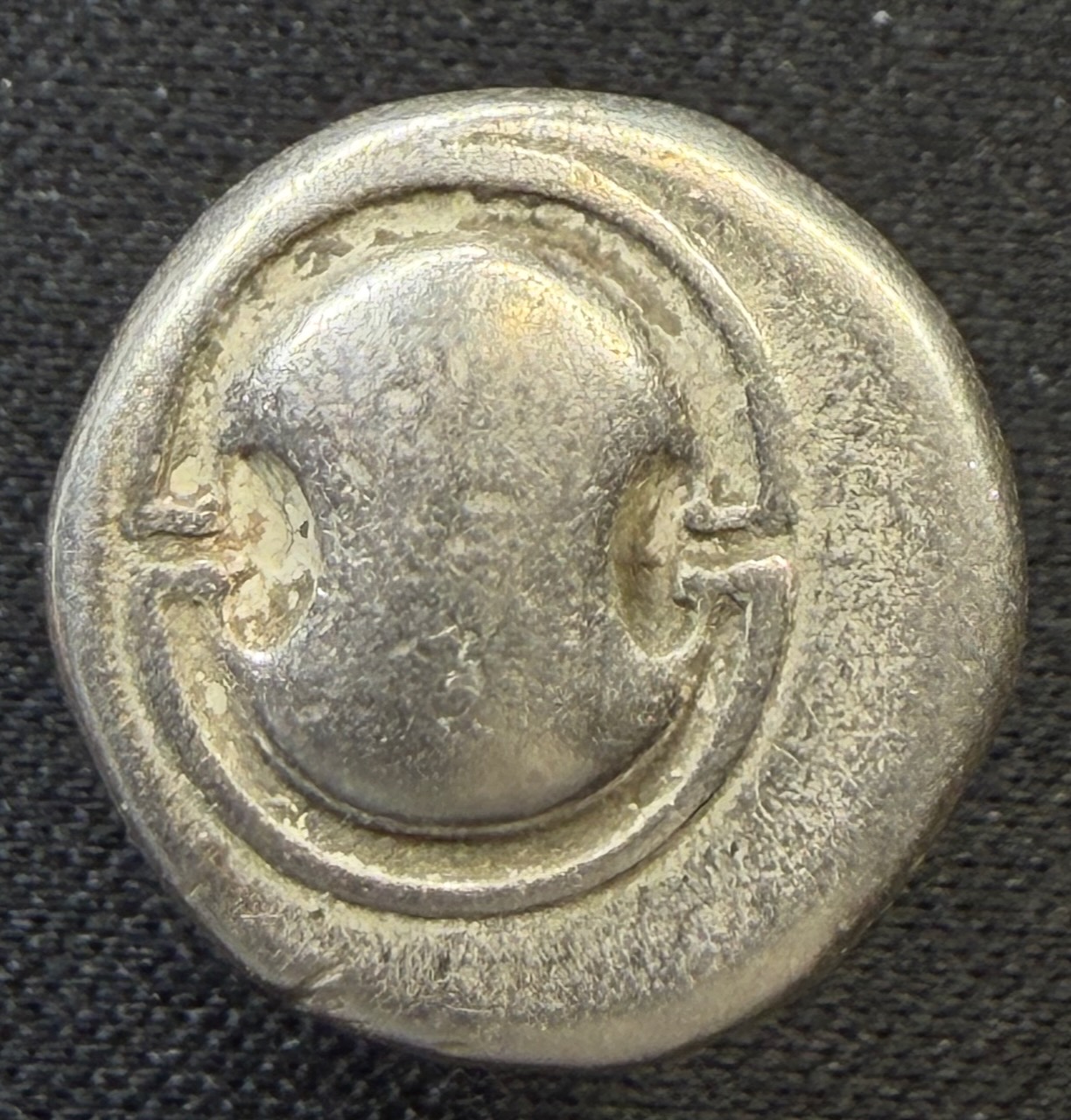
Obv: Boiotian shield — oval with rounded cut-outs at each side
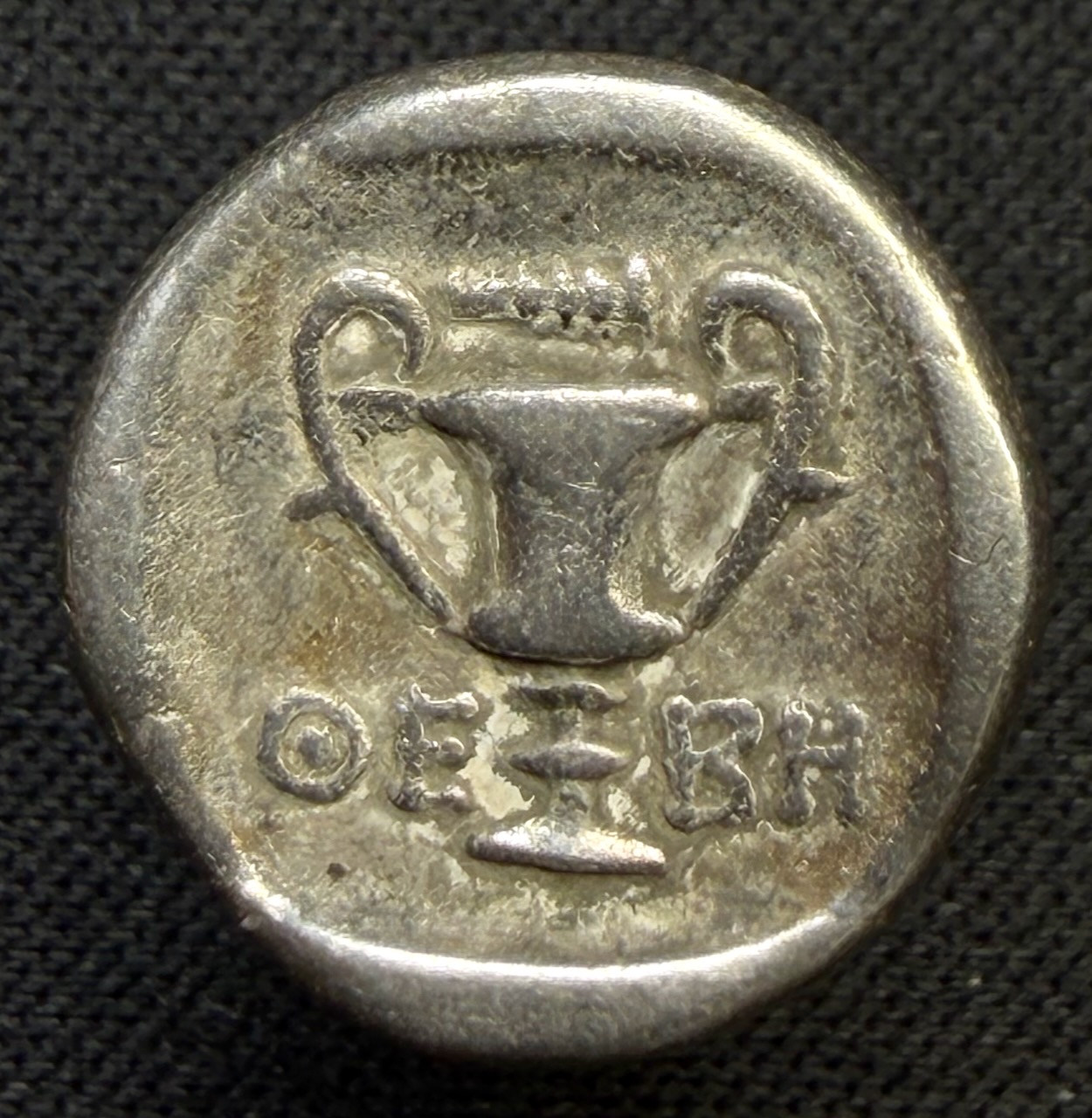
Rev: Kantharos (two-handled drinking cup); above, club right; all within shallow incuse square
Ref: BCD Boiotia 412
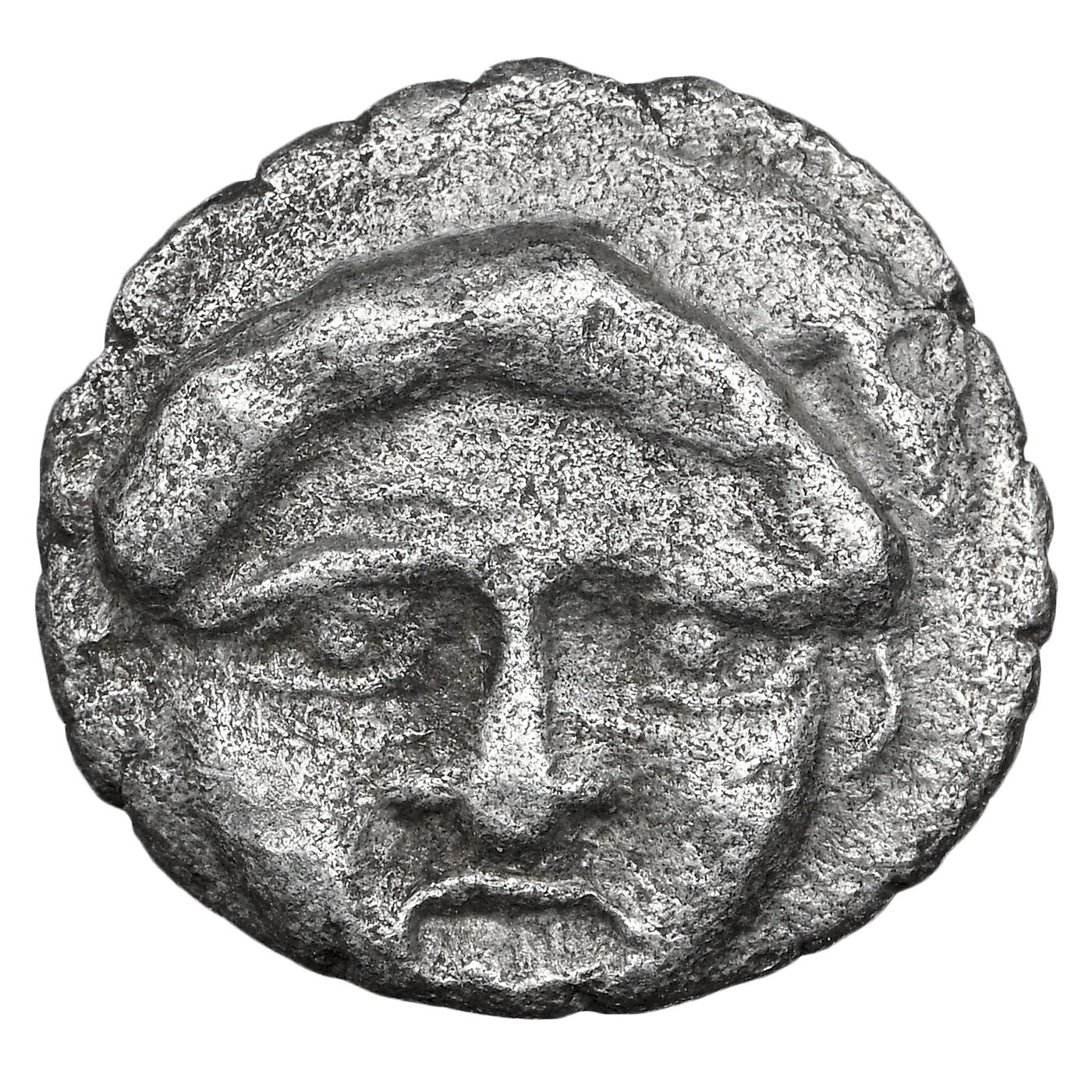
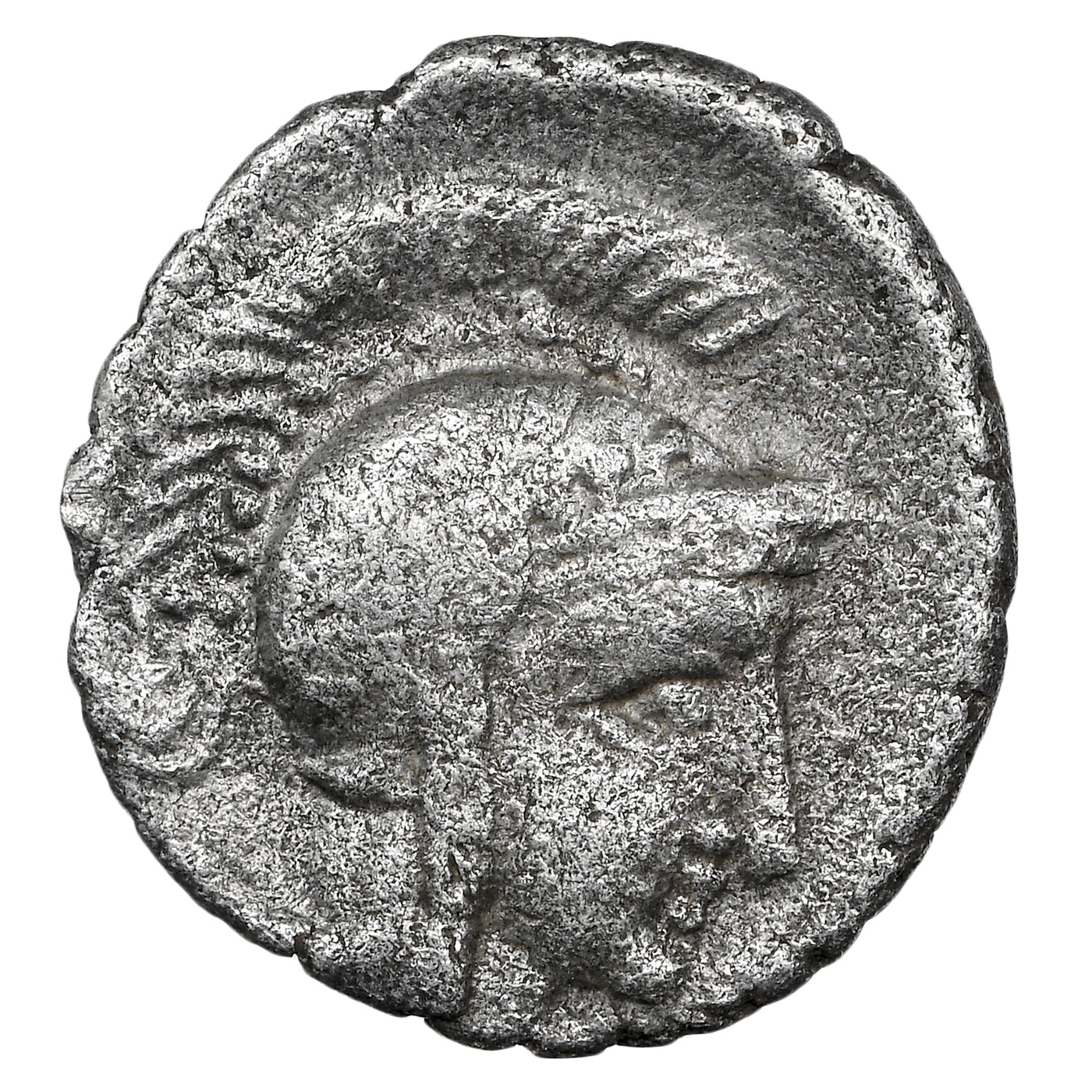
Obv: Facing gorgoneion — the Gorgon's head seen from the front, the tongue protruding between the teeth, the hair in a fringe of snakes or curls
Rev: Head of Athena right, wearing a crested Attic helmet; on many dies of the series an astragalos (knucklebone) behind the head, not visible on this collection's specimen
Ref: SNG France 3 (Pamphylie), 38
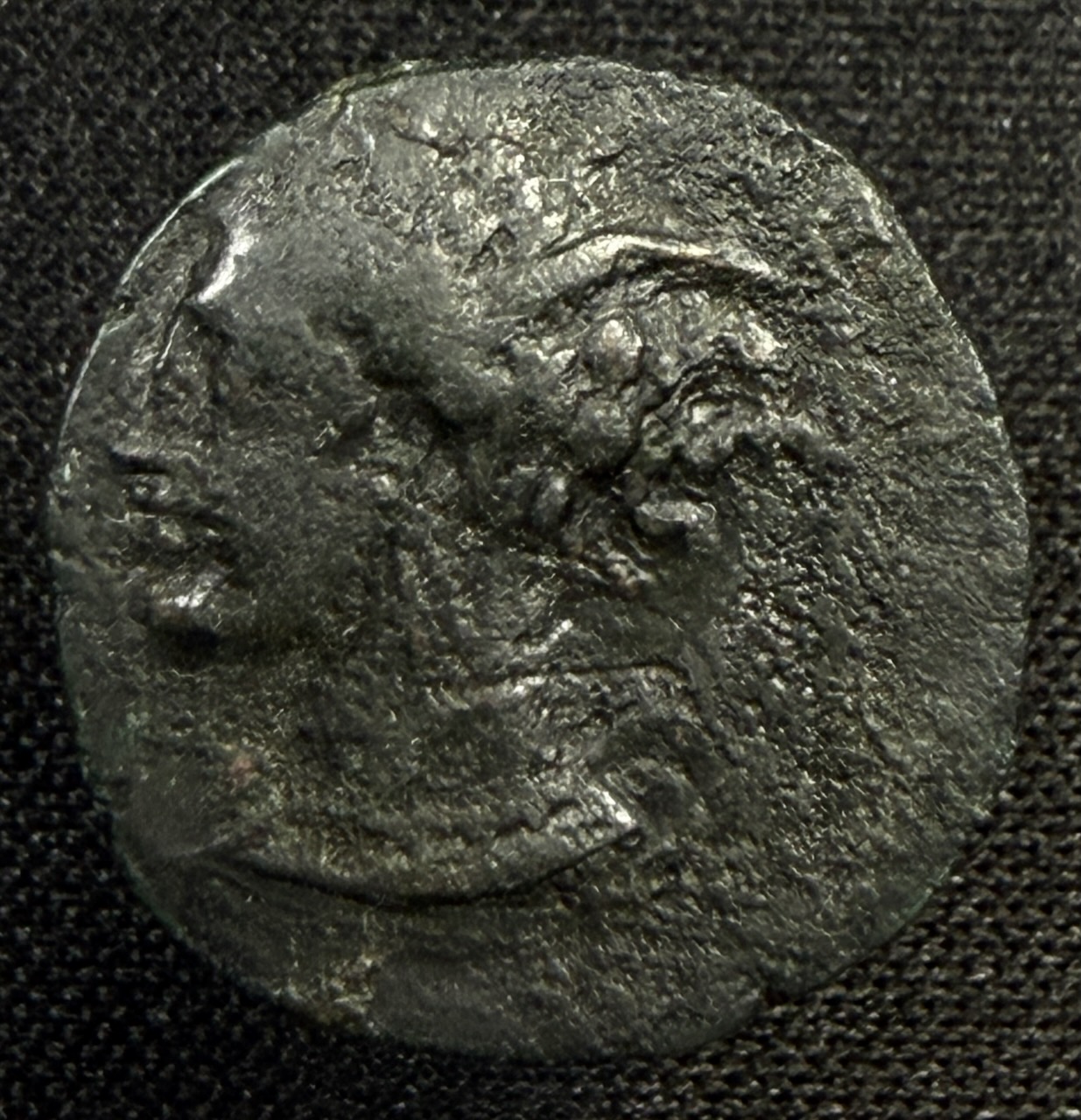
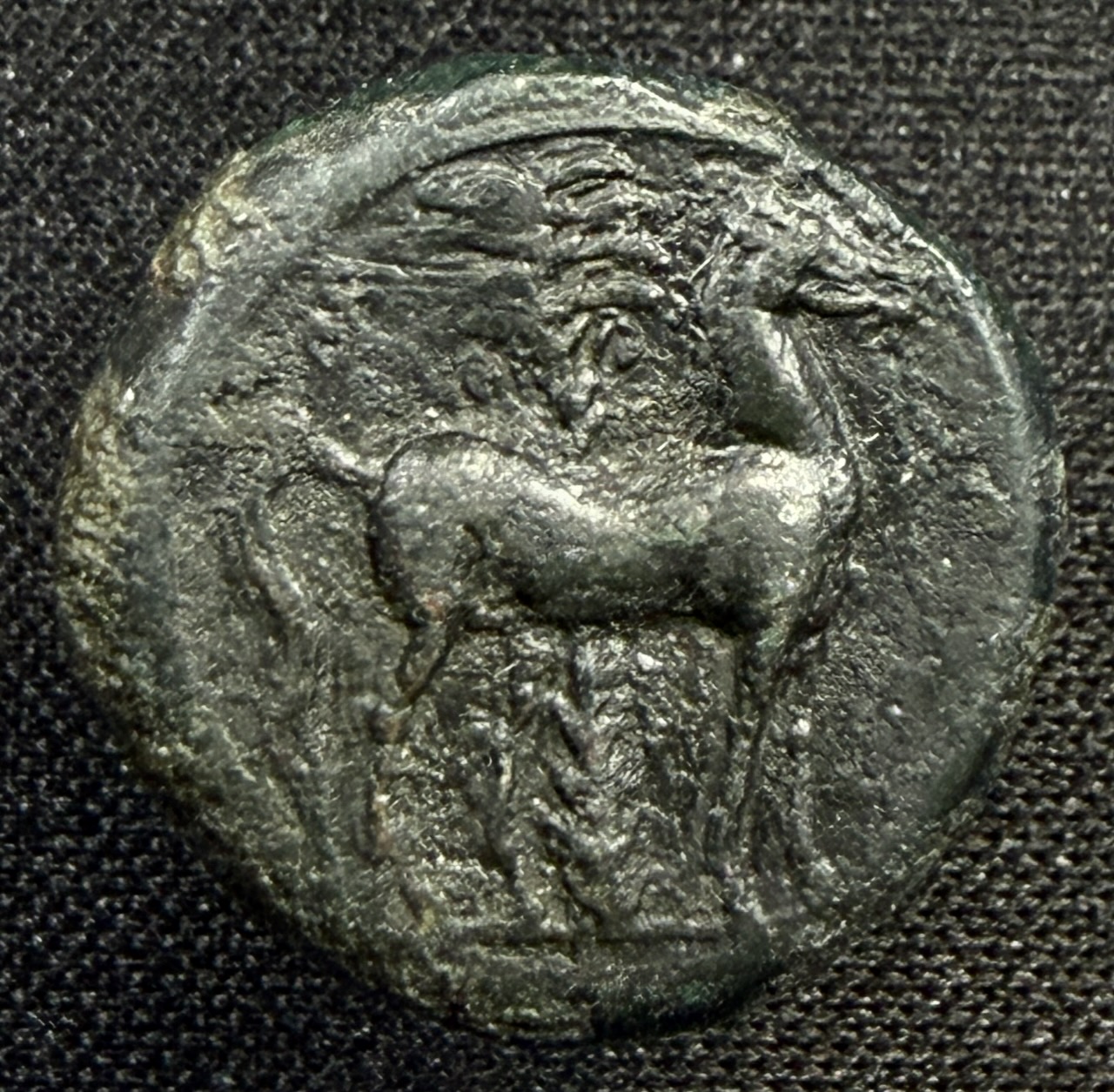
Obv: Head of Tanit (in the Persephone/Kore manner) left, wreathed with grain ears, wearing pendant earring and necklace
Rev: Horse standing right; date palm behind
Ref: SNG Copenhagen 111
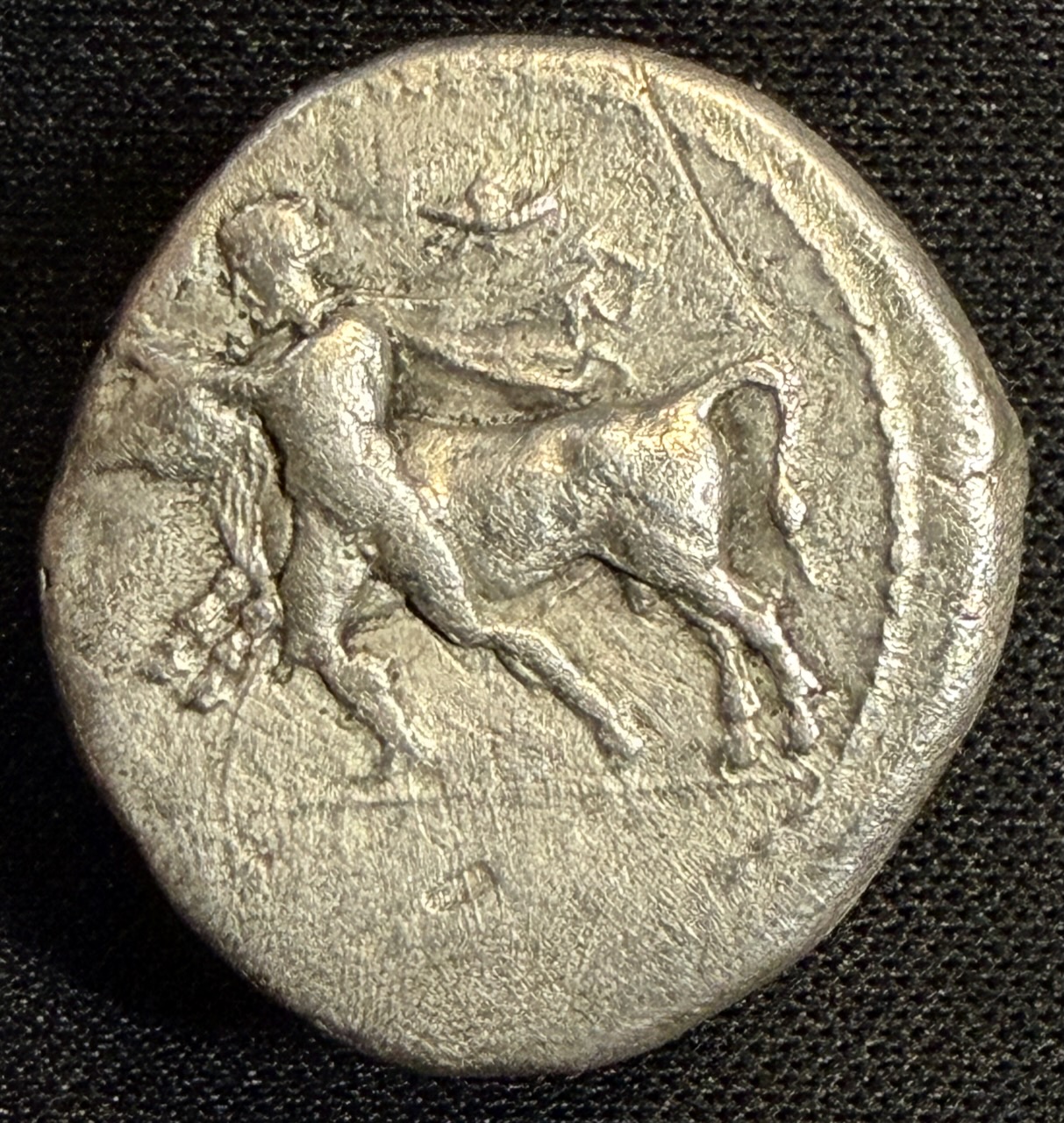
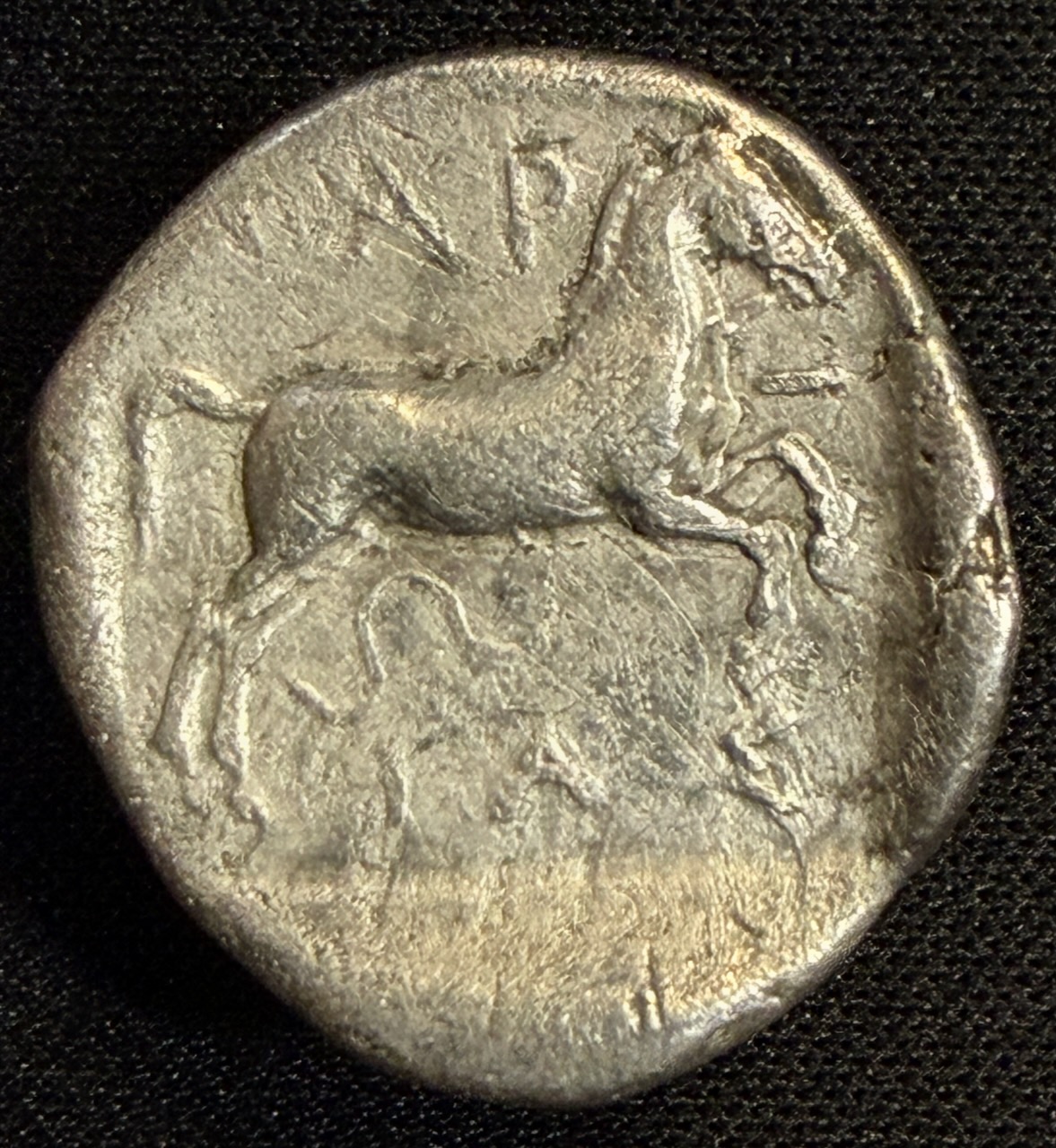
Obv: Thessalos to left, nude but for chlamys over his shoulders, his petasos attached to a cord around his neck and flying in the air behind him, restraining a bull leaping left by a band held in both hands around its forehead; all within a border of dots
Rev: Bridled horse with trailing rein prancing right, no ground line, all within a shallow incuse square
Ref: BCD Thessaly II 372.10
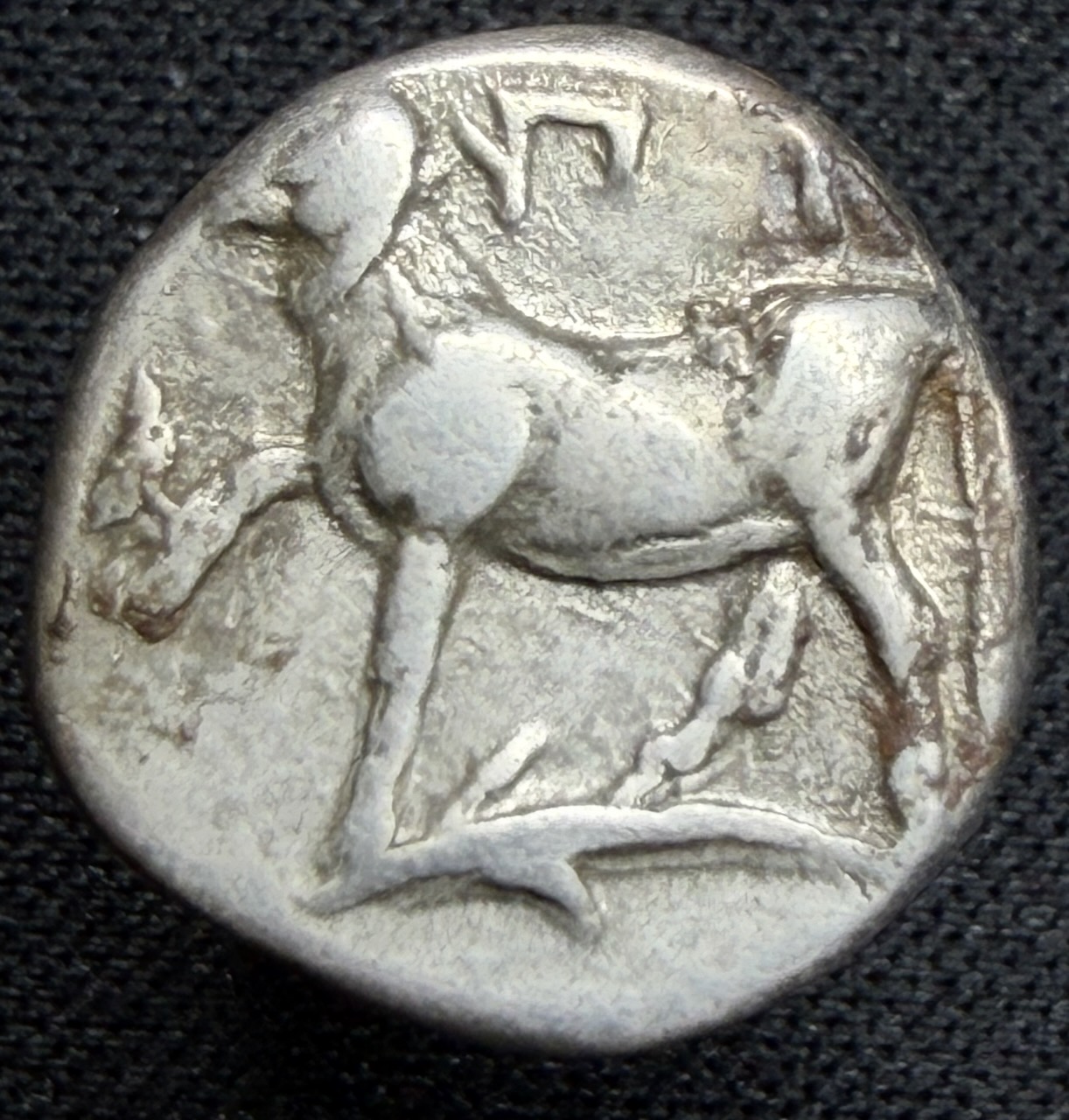
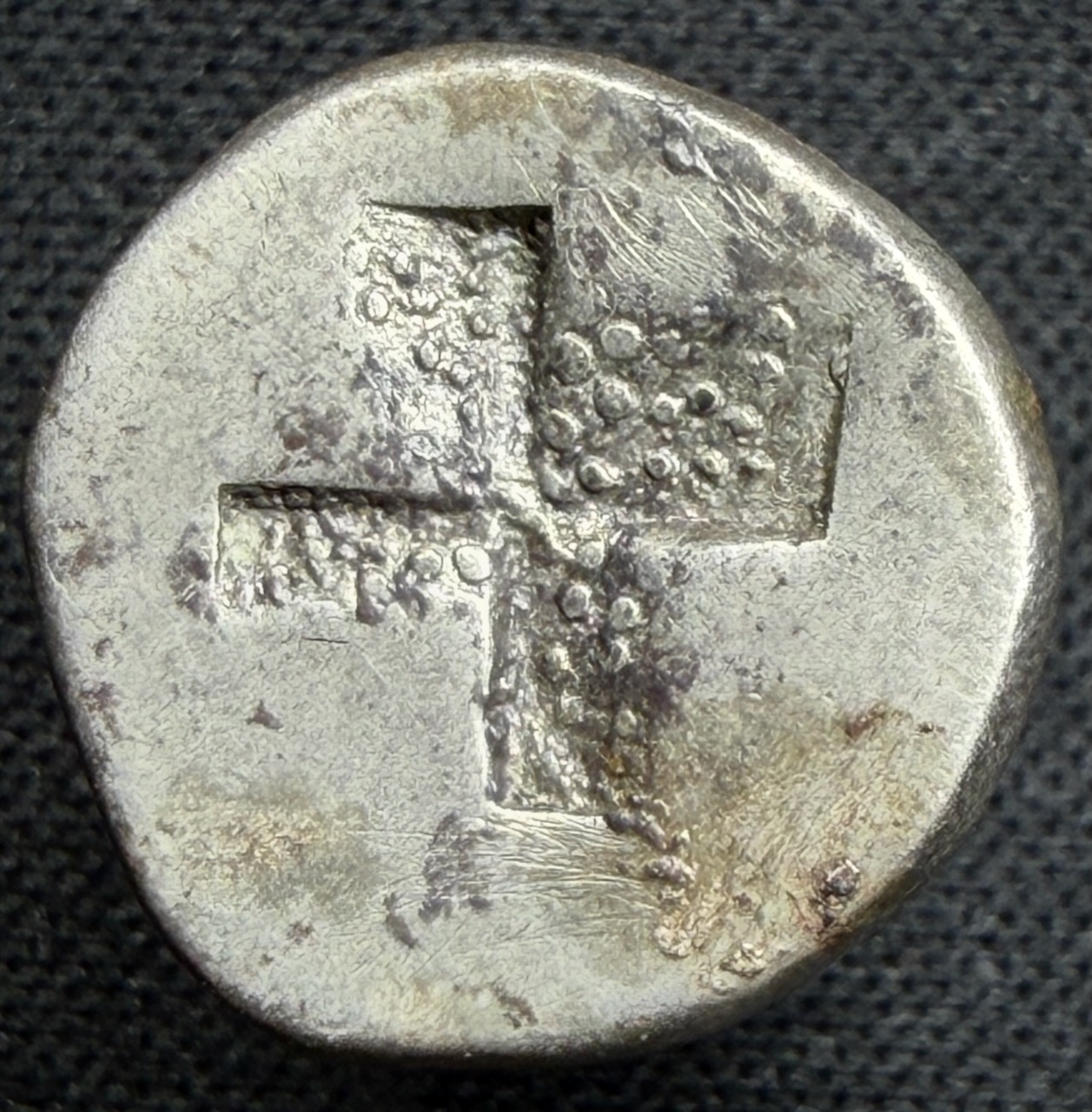
Obv: Bull (cow) standing left on a dolphin left, right foreleg raised; 'ΠΥ above (the initial letters of the city's name, with the archaic local form of beta)
Rev: Quadripartite incuse square of 'mill-sail' pattern, the sunken quarters stippled with granulation
Ref: SNG BM Black Sea 36 ff.
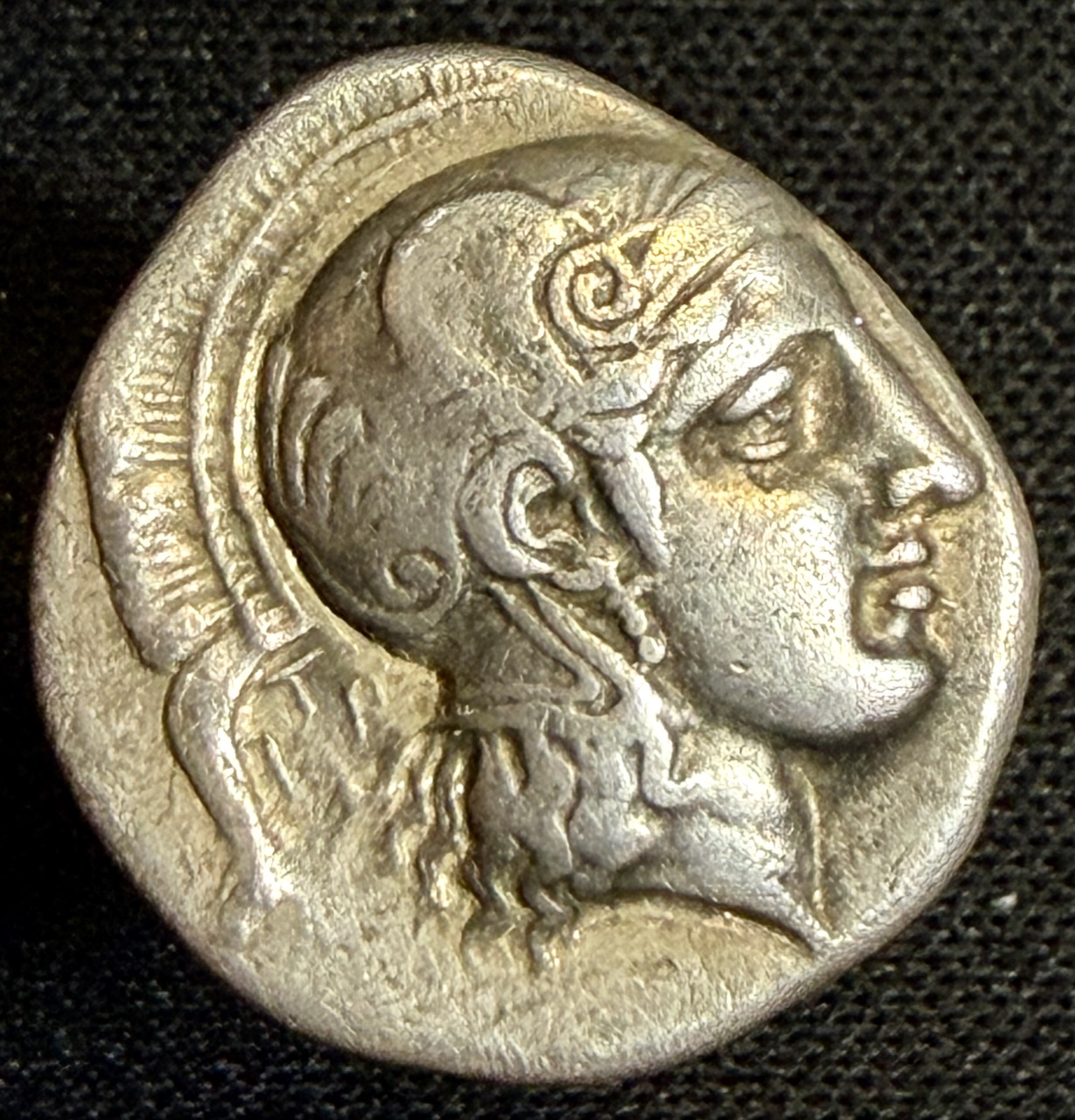
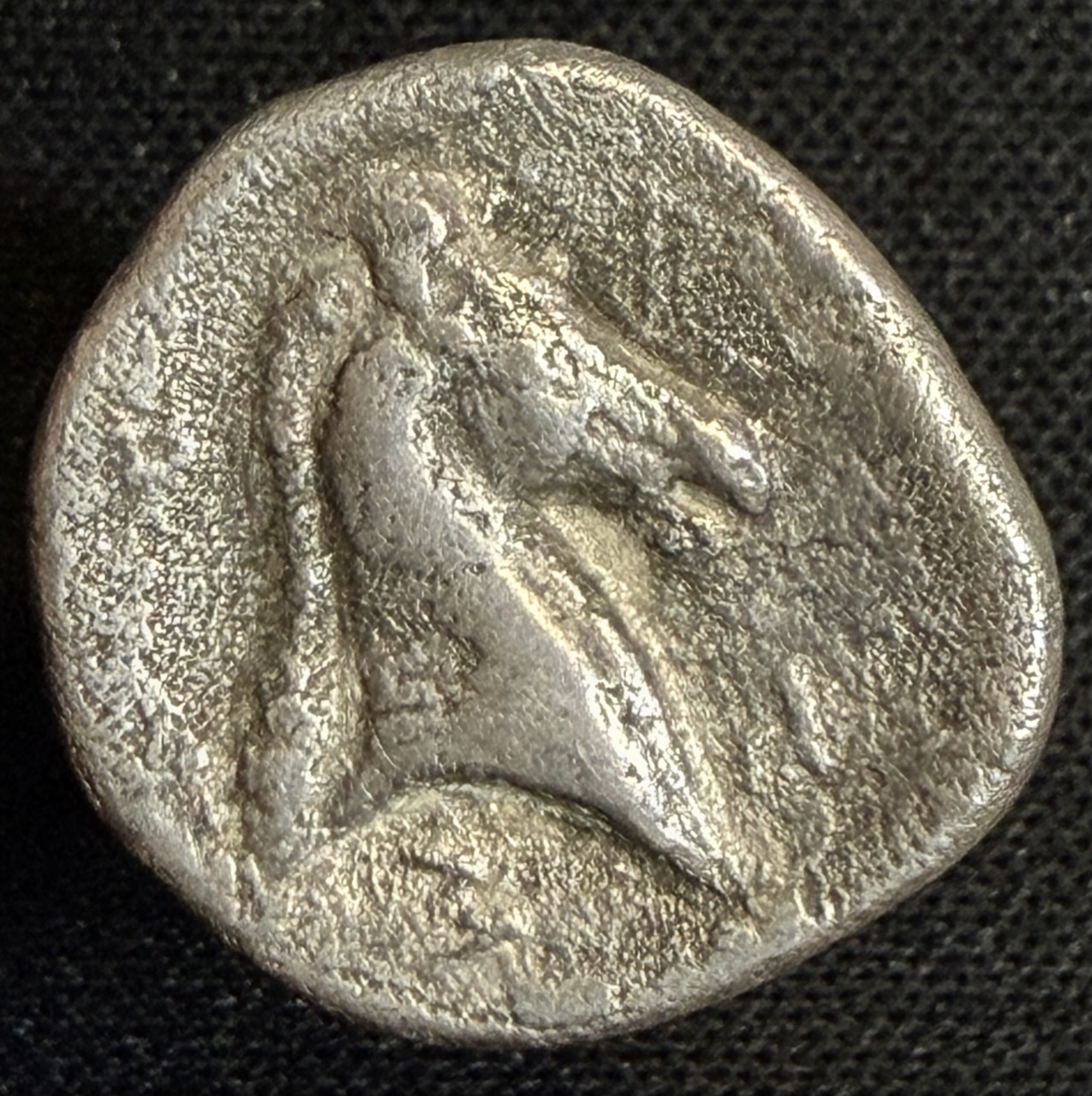
Obv: Head of Athena right, wearing pendant earring and crested Attic helmet with raised cheek flaps, adorned with scrolls, hair out from under the neck guard; T (the master engraver Telephantos) over ΙΠ (his apprentice?) behind neck
Rev: Horse's head and neck right, concave field
Ref: Lavva 126 (V58/R73)
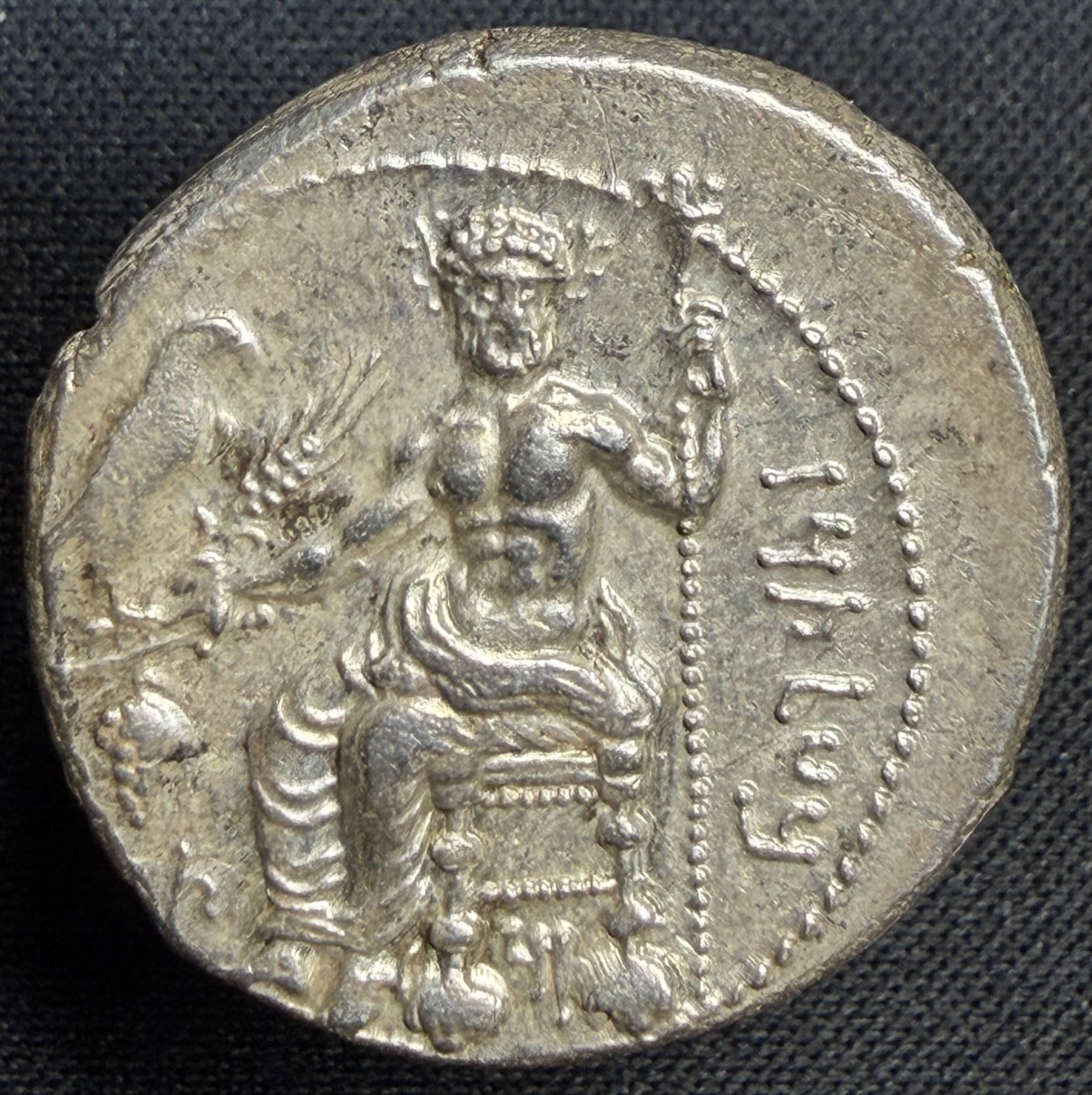
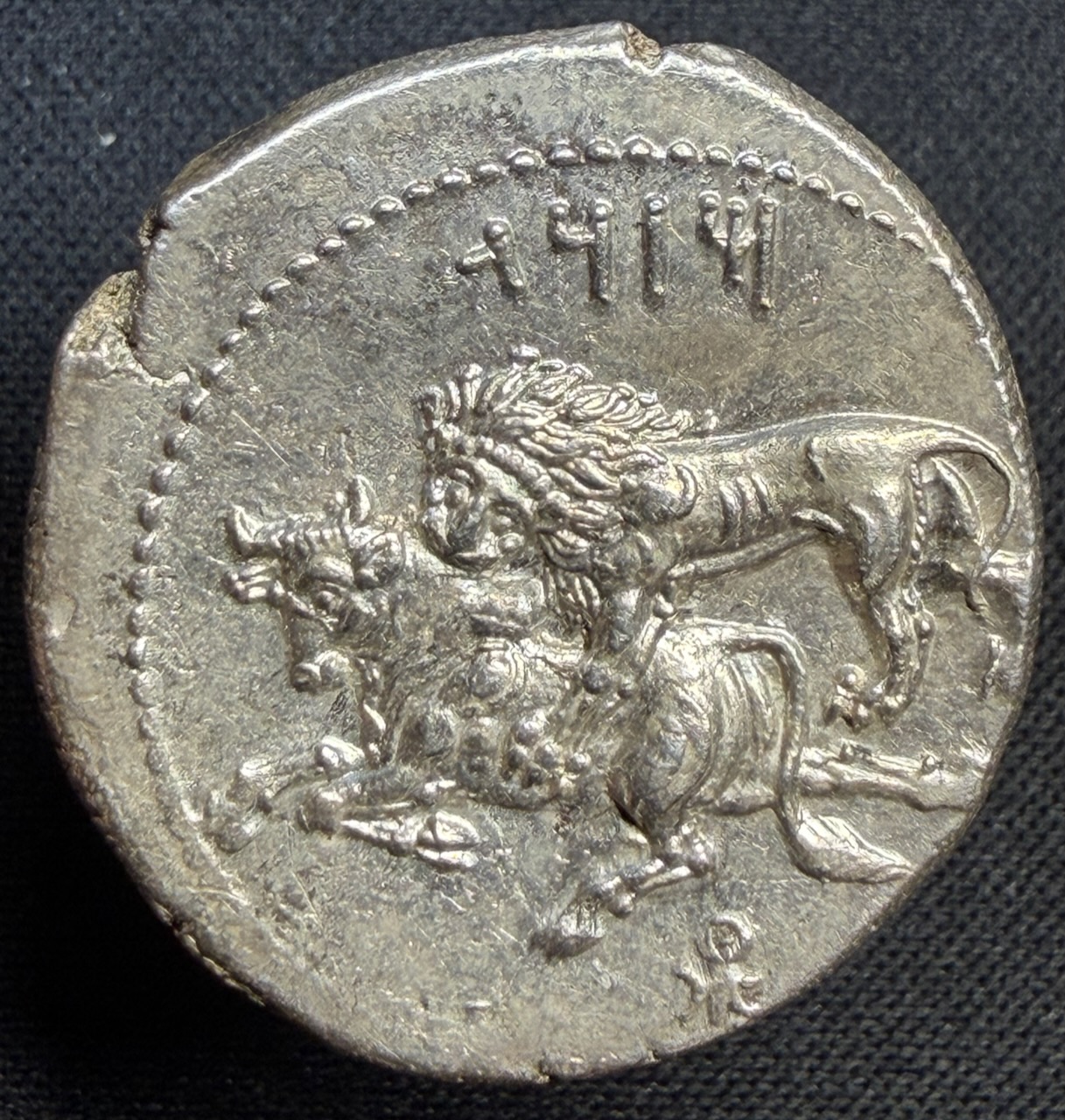
Obv: Baaltars (the Baal of Tarsos) enthroned left, torso facing, holding eagle, grain ear, and grape bunch in his extended right hand, lotus-headed sceptre in his left; Aramaic legend BʿLTRZ (Baaltars) downward to right; Aramaic letter(s) beside or below the throne on most dies
Rev: Lion attacking a bull to left, bringing it down from above; Aramaic legend MZDY (Mazday = Mazaios) above; monogram or symbol below on most dies
Ref: SNG Levante 106
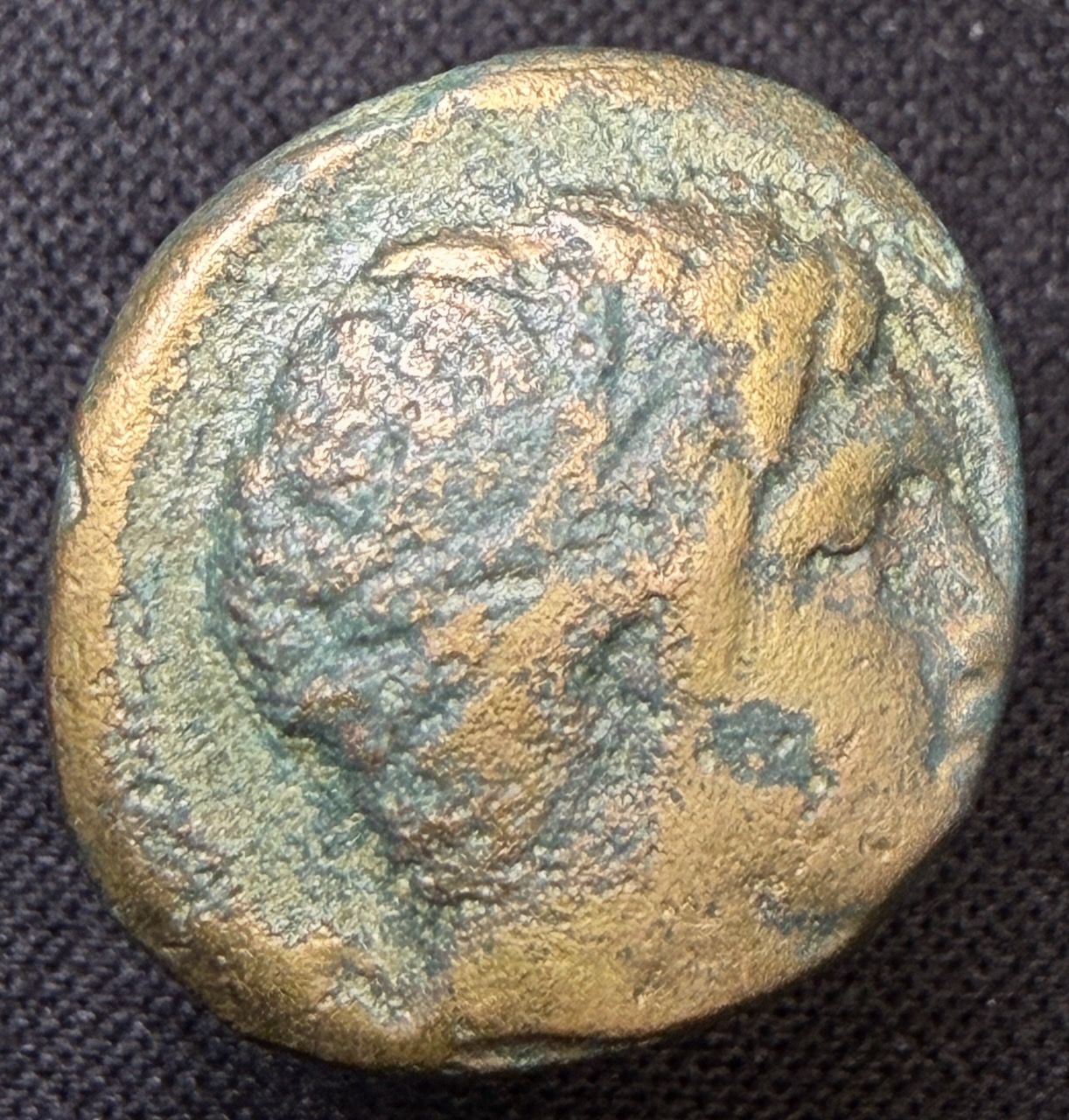
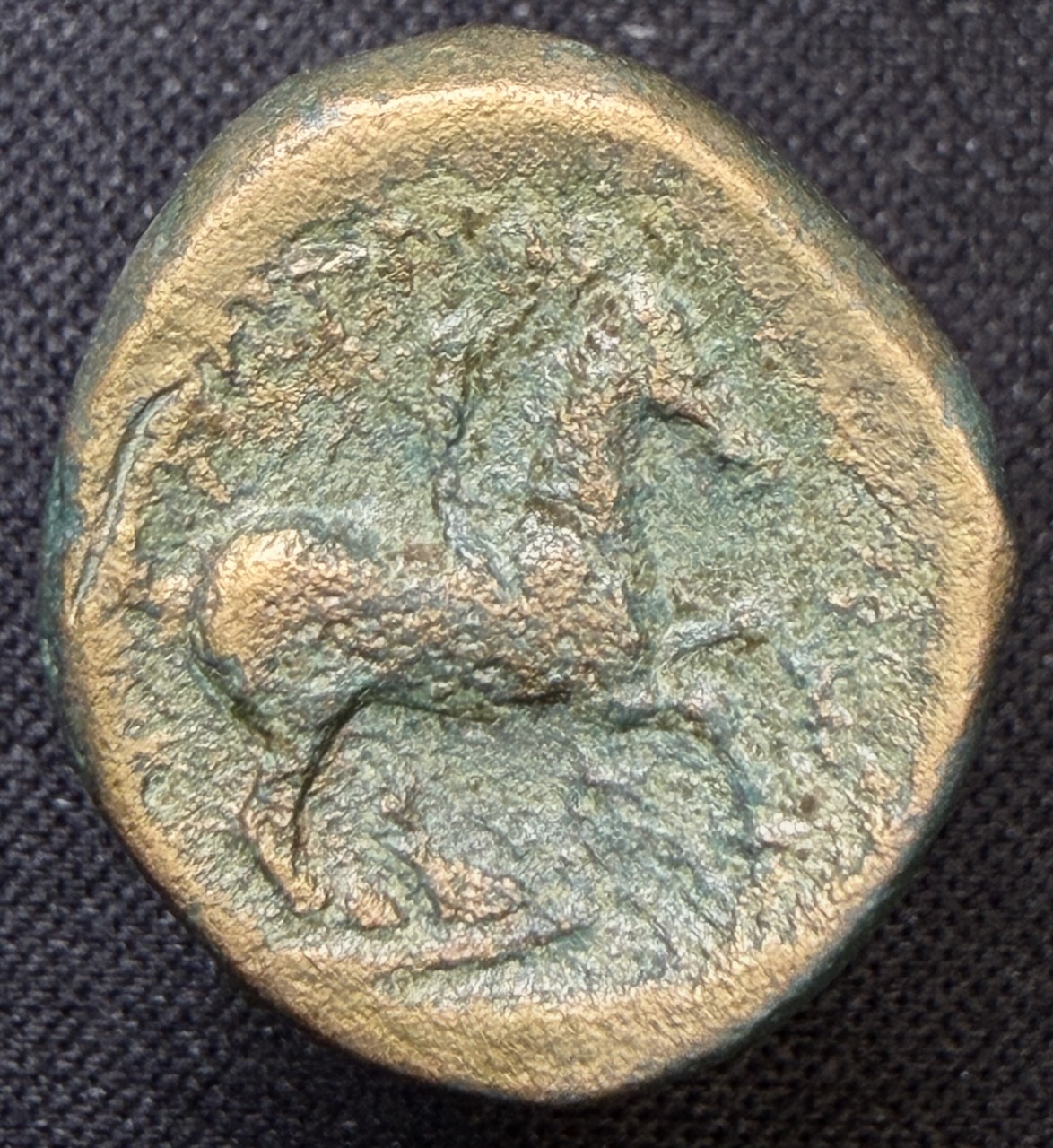
Obv: Head of young Apollo right, hair bound with taenia
Rev: Youth on horseback riding right; control symbol below on most dies (varies by issue: spearhead, monogram ligatures, and others)
Ref: Sear 6698
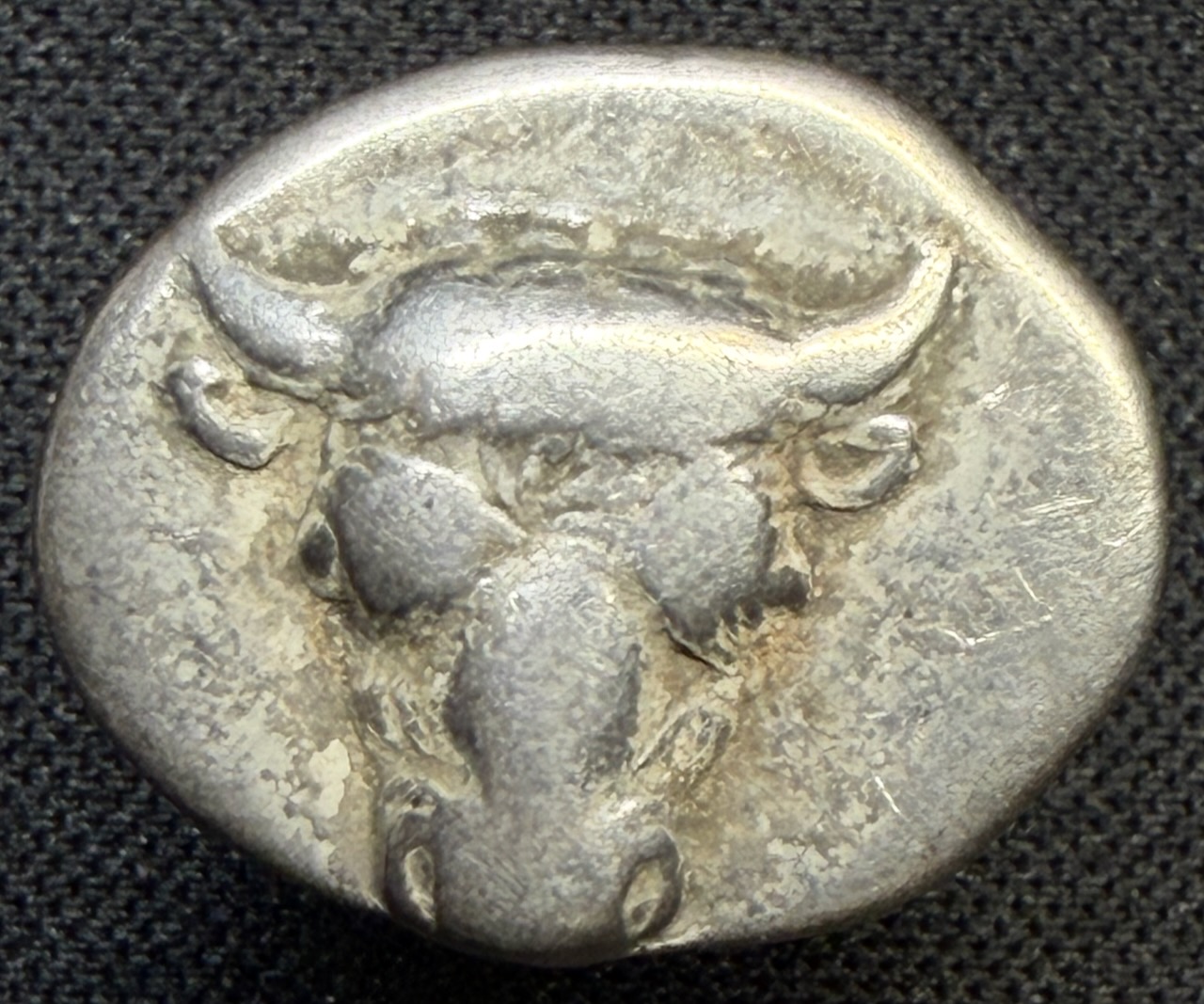
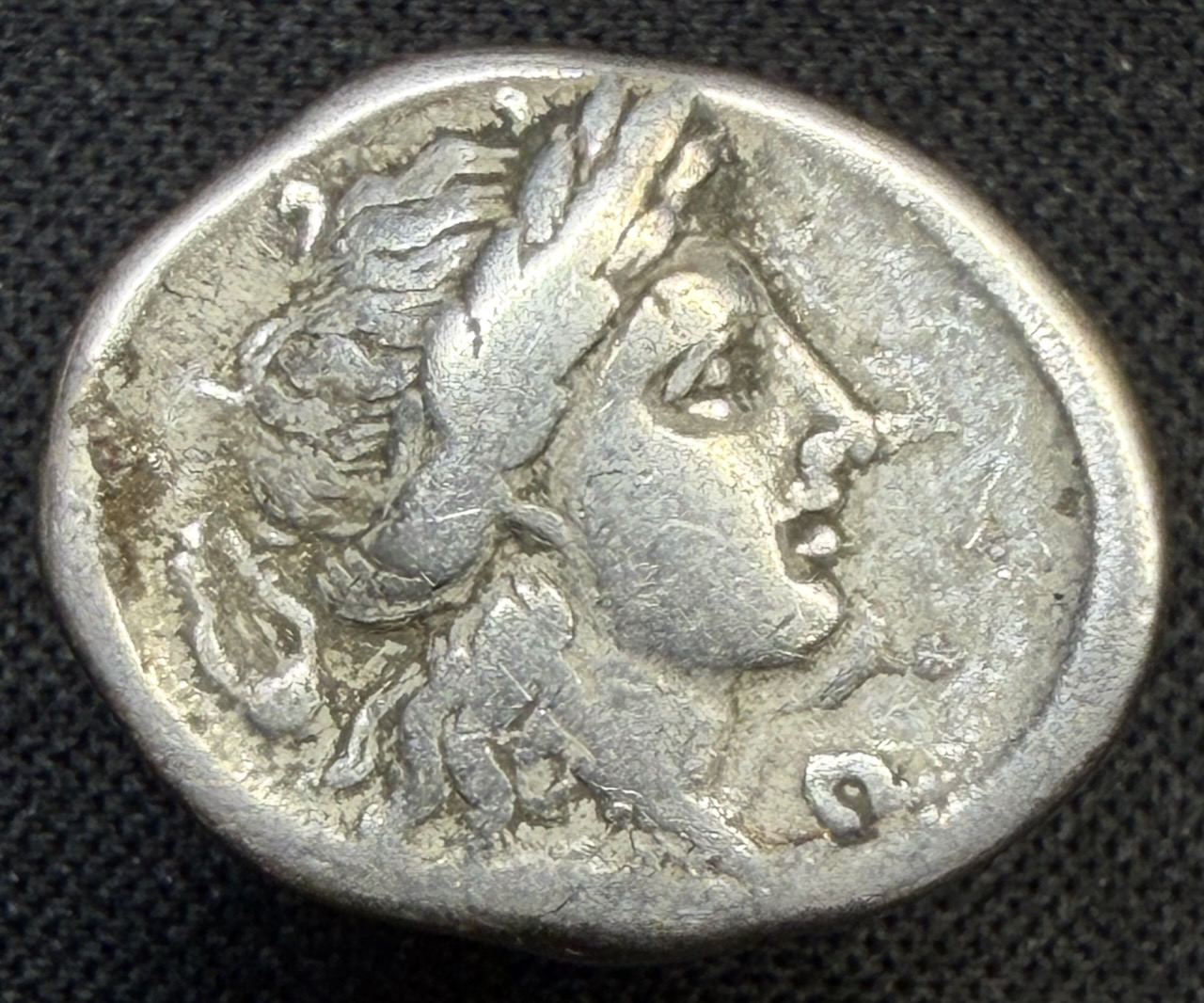
Obv: Head of bull facing, wearing fillets
Rev: Laureate head of Apollo right; chelys (tortoise-shell lyre) behind; letter traces in field (Φ-Ω on well-preserved examples)
Ref: HGC 4, 1048
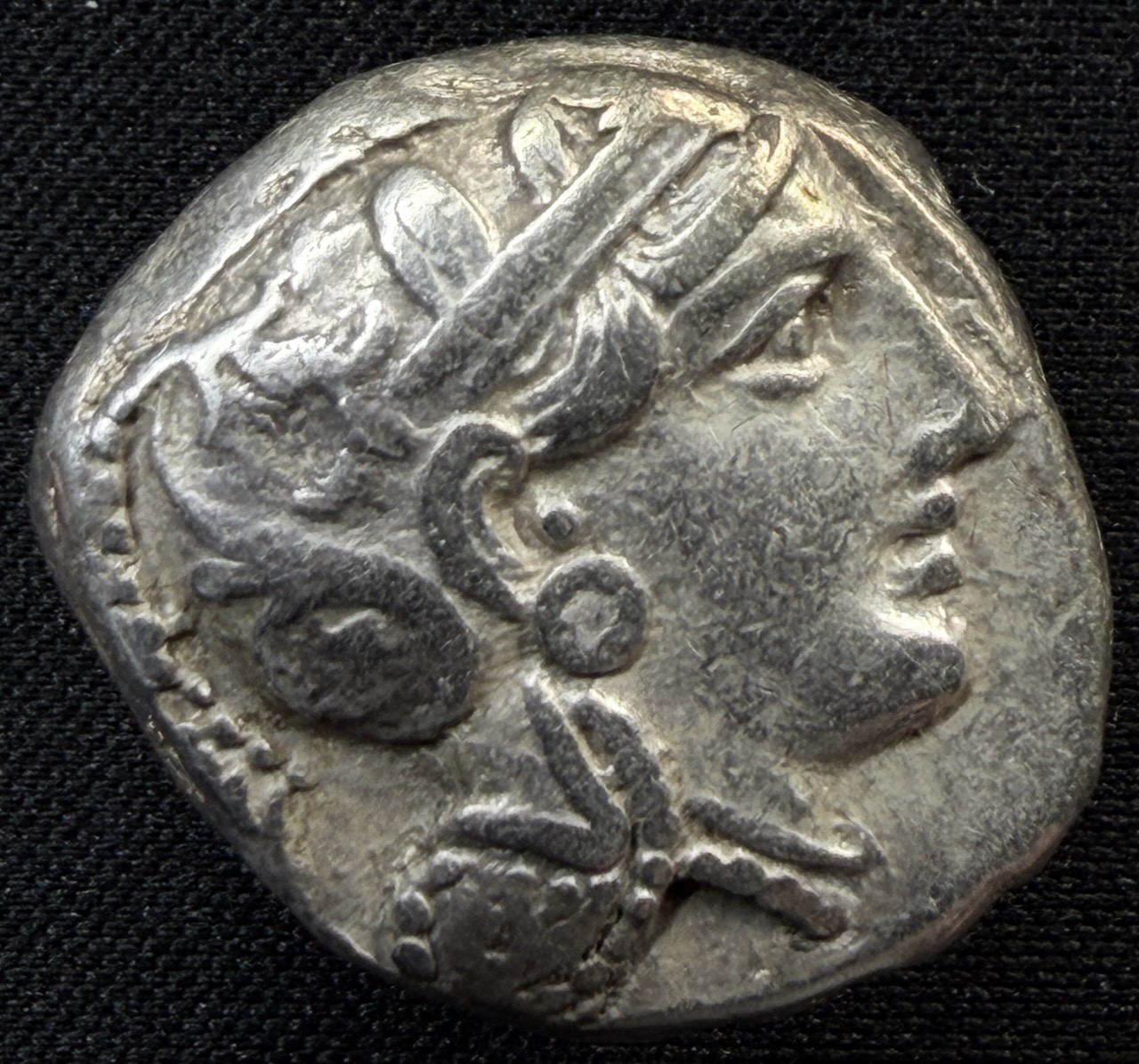
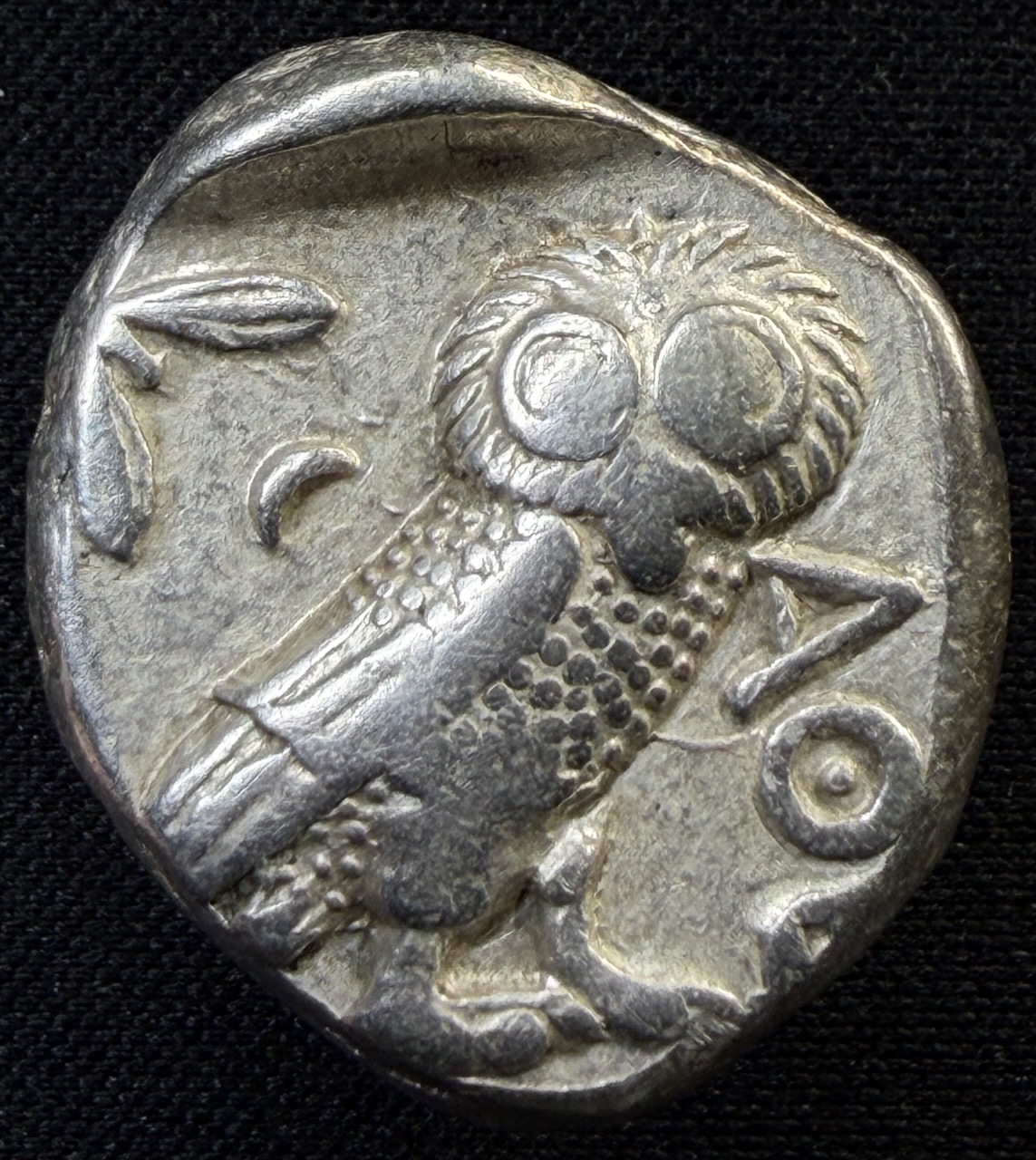
Obv: Head of Athena right, wearing a crested Attic helmet with three olive leaves over the visor and a floral palmette on the bowl whose fronds are configured like the Greek letter Π ('pi-style'); round earring and beaded necklace. The eye is now rendered in true profile, abandoning the archaizing frontal eye of the fifth-century owls.
Rev: Owl standing right, head facing the viewer; olive sprig and crescent to left; traces of the incuse square. Flans of this series are characteristically compact, thick, and irregular.
Ref: HGC 4, 1599
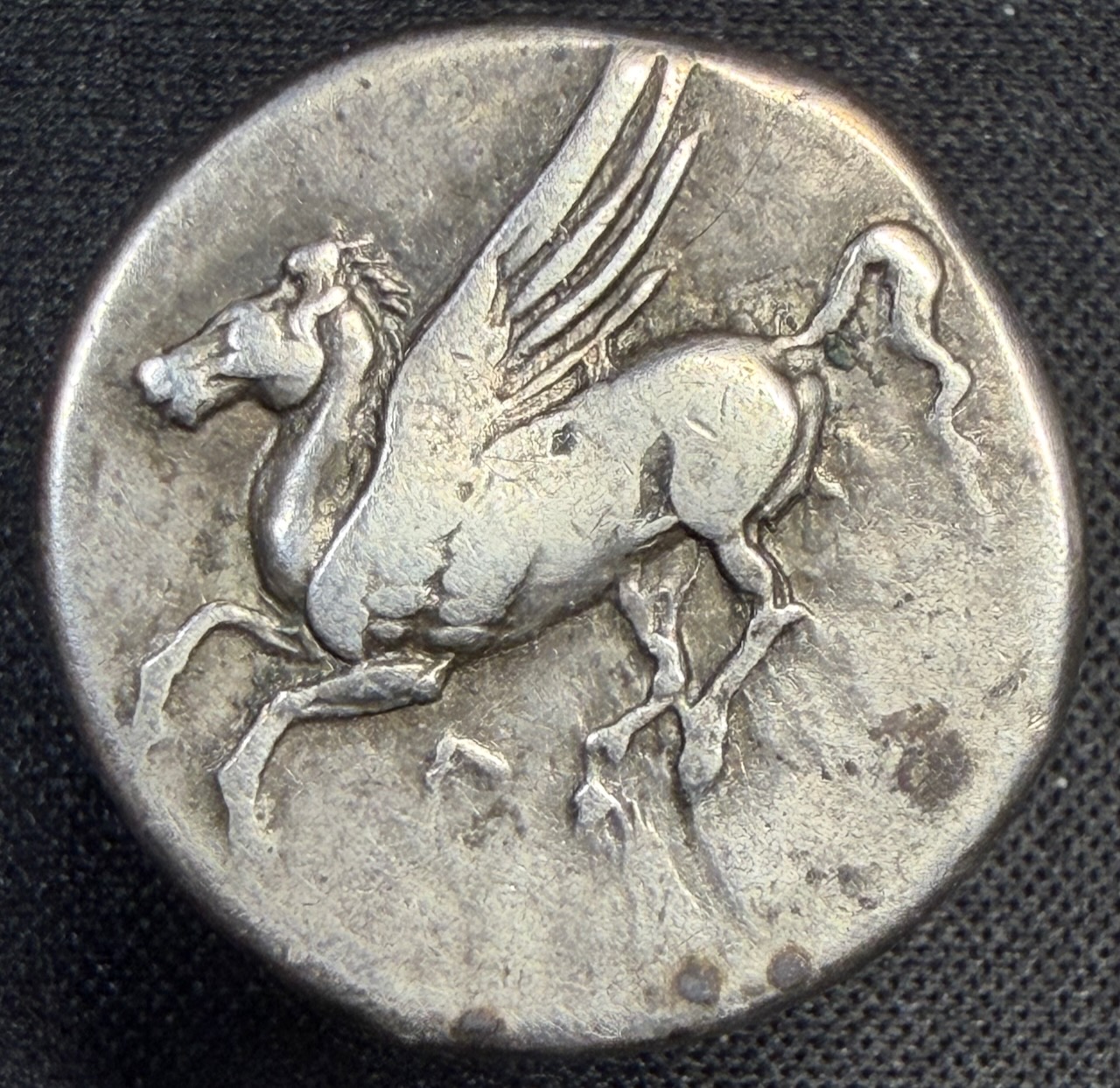
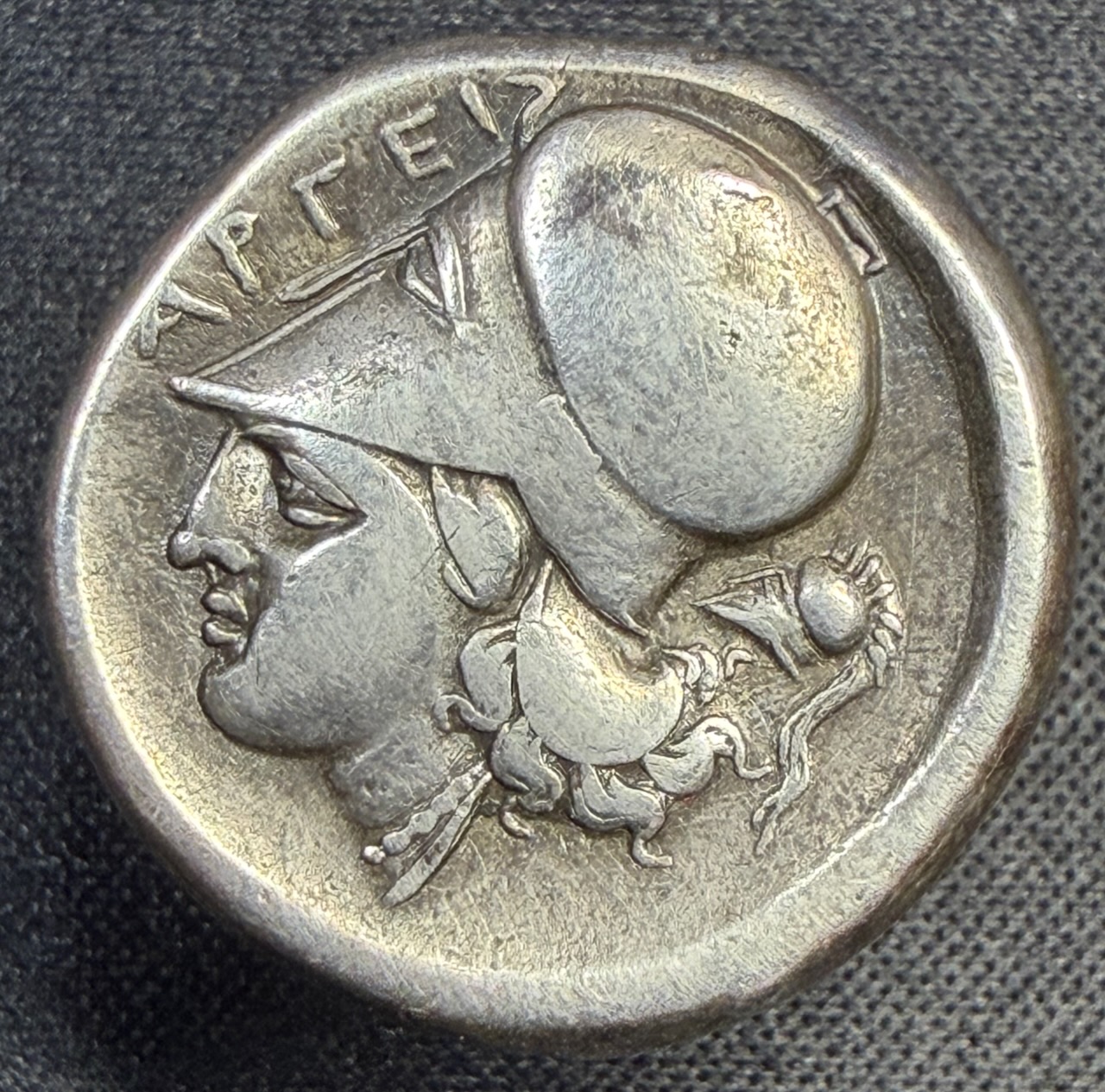
Obv: Pegasos with pointed wing flying left; below, A — the initial of Argos, in the position where Corinth's own staters carry the koppa
Rev: Head of Athena left, wearing Corinthian helmet; ΑΡΓΕΙ (abbreviating the ethnic) and symbol behind
Ref: Sear (Greek) 2258
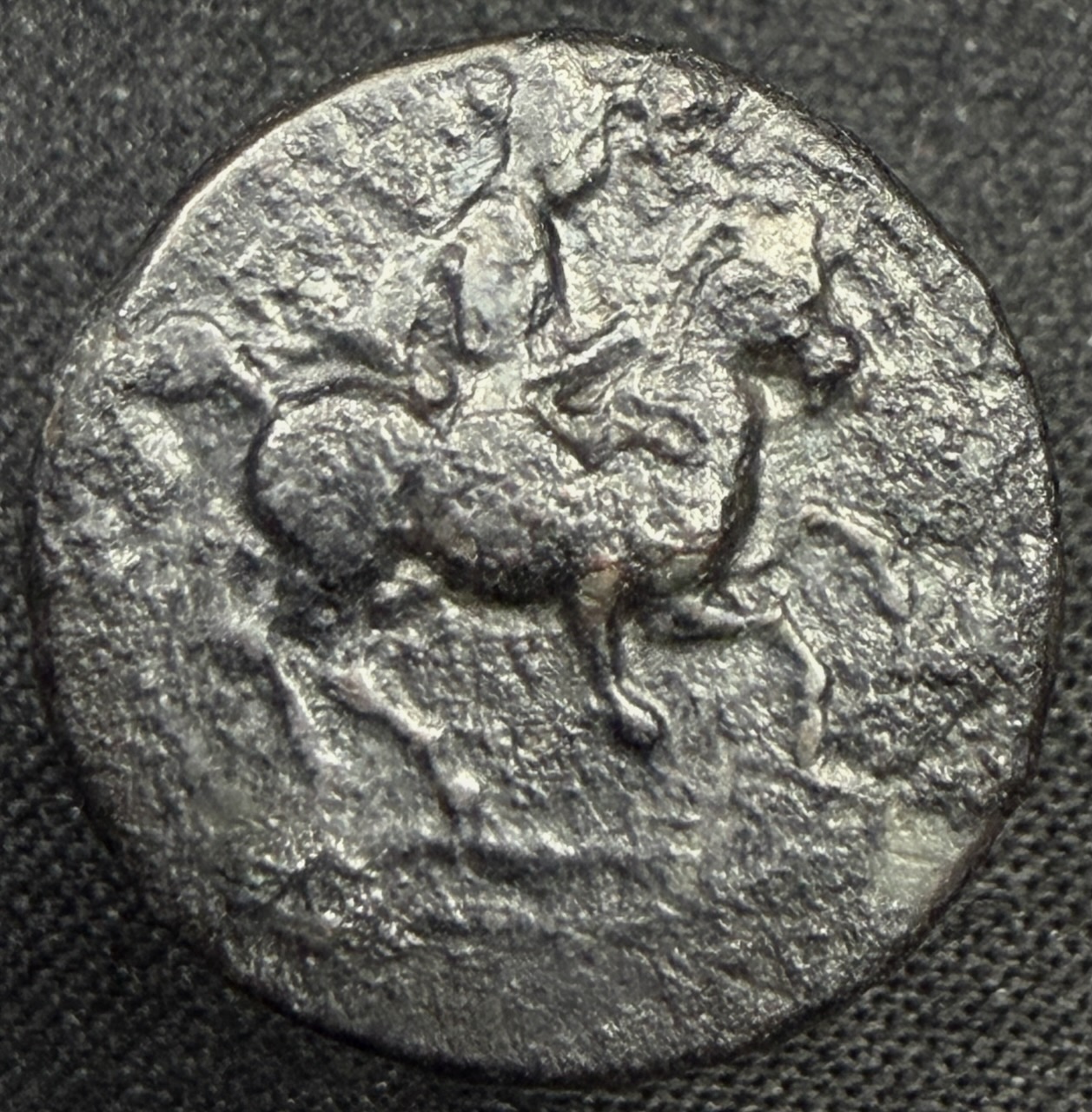
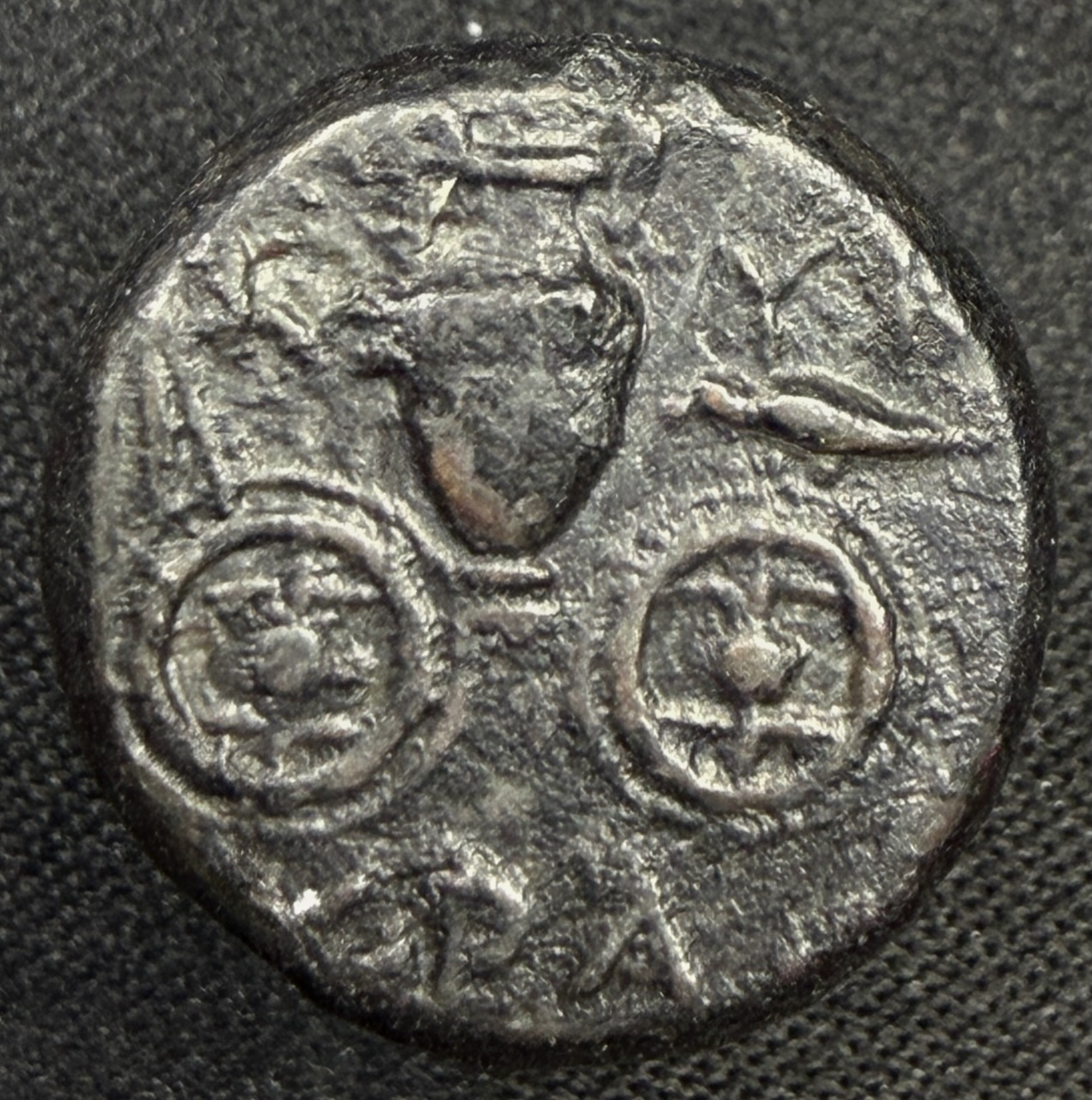
Obv: Thessalian horseman wearing chlamys and petasos galloping right
Rev: Hydria (water jug) on a two-wheeled cart; crow perched at the wheel; city ethnic around (ΚΡΑ visible below on this specimen)
Ref: HGC 4, 385
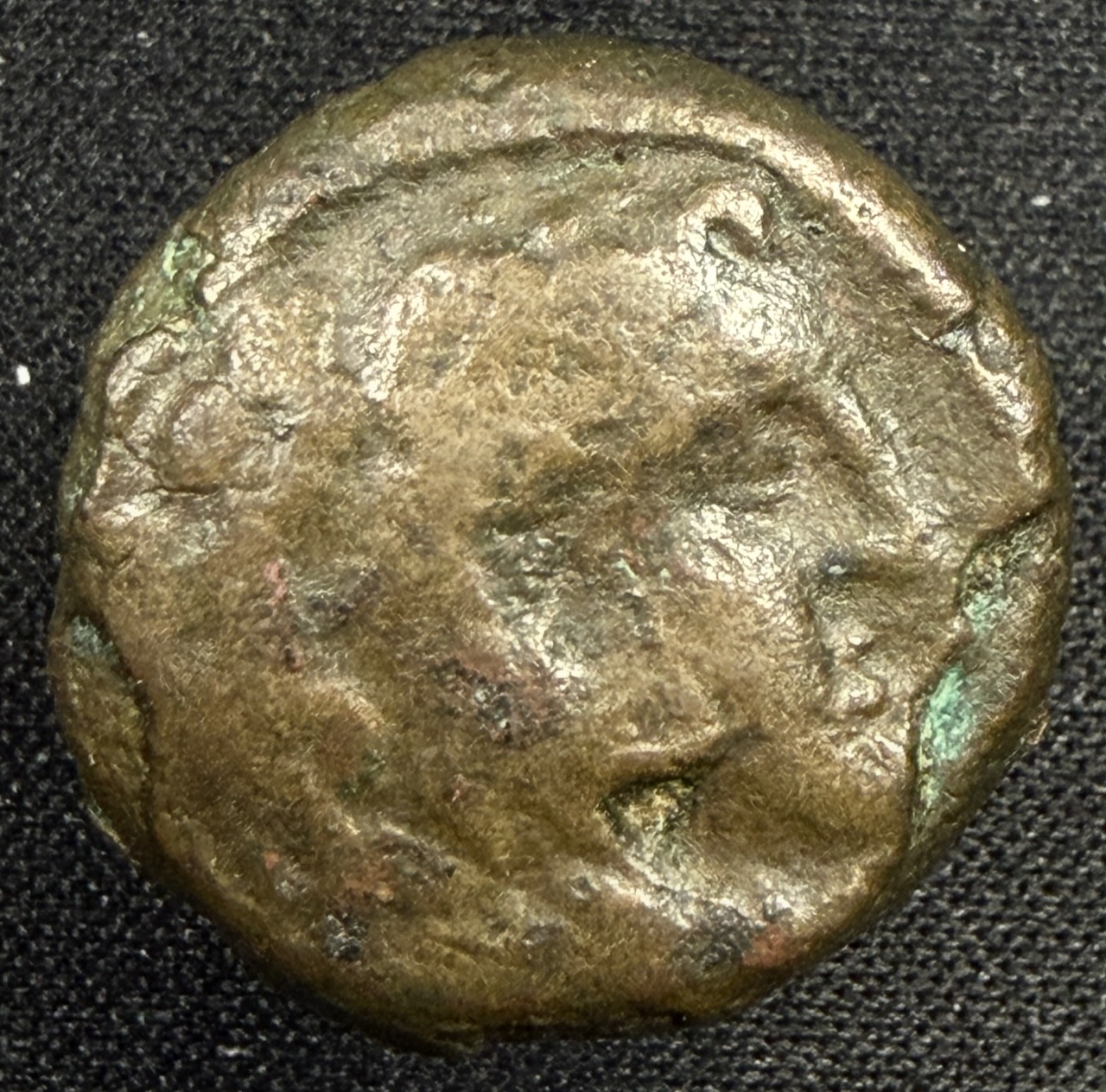
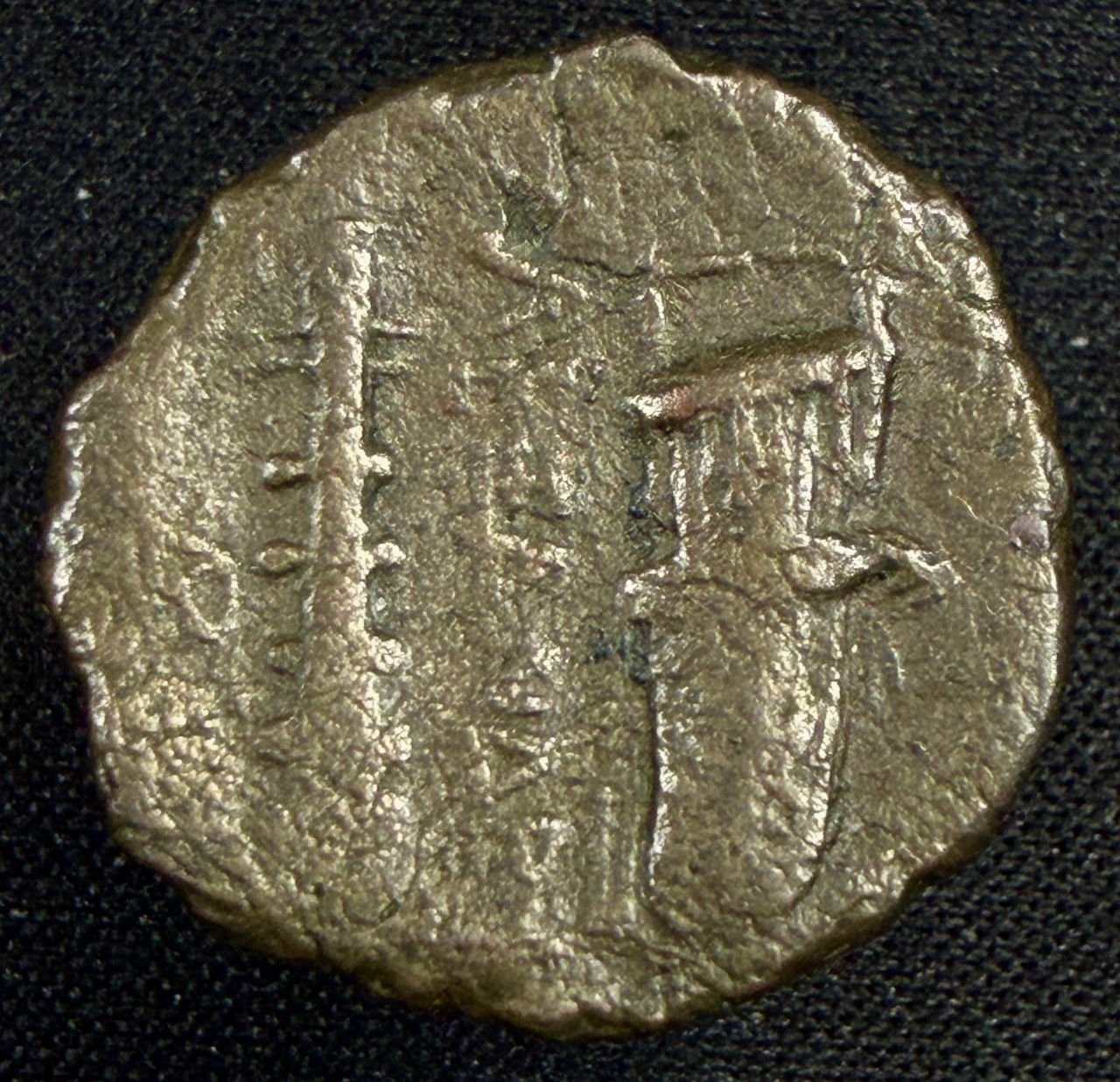
Obv: Head of Alexander as Herakles right, wearing lion skin headdress
Rev: Bow in bowcase (gorytos) above, club below; AP monogram below club
Ref: SNG Copenhagen 1055 type
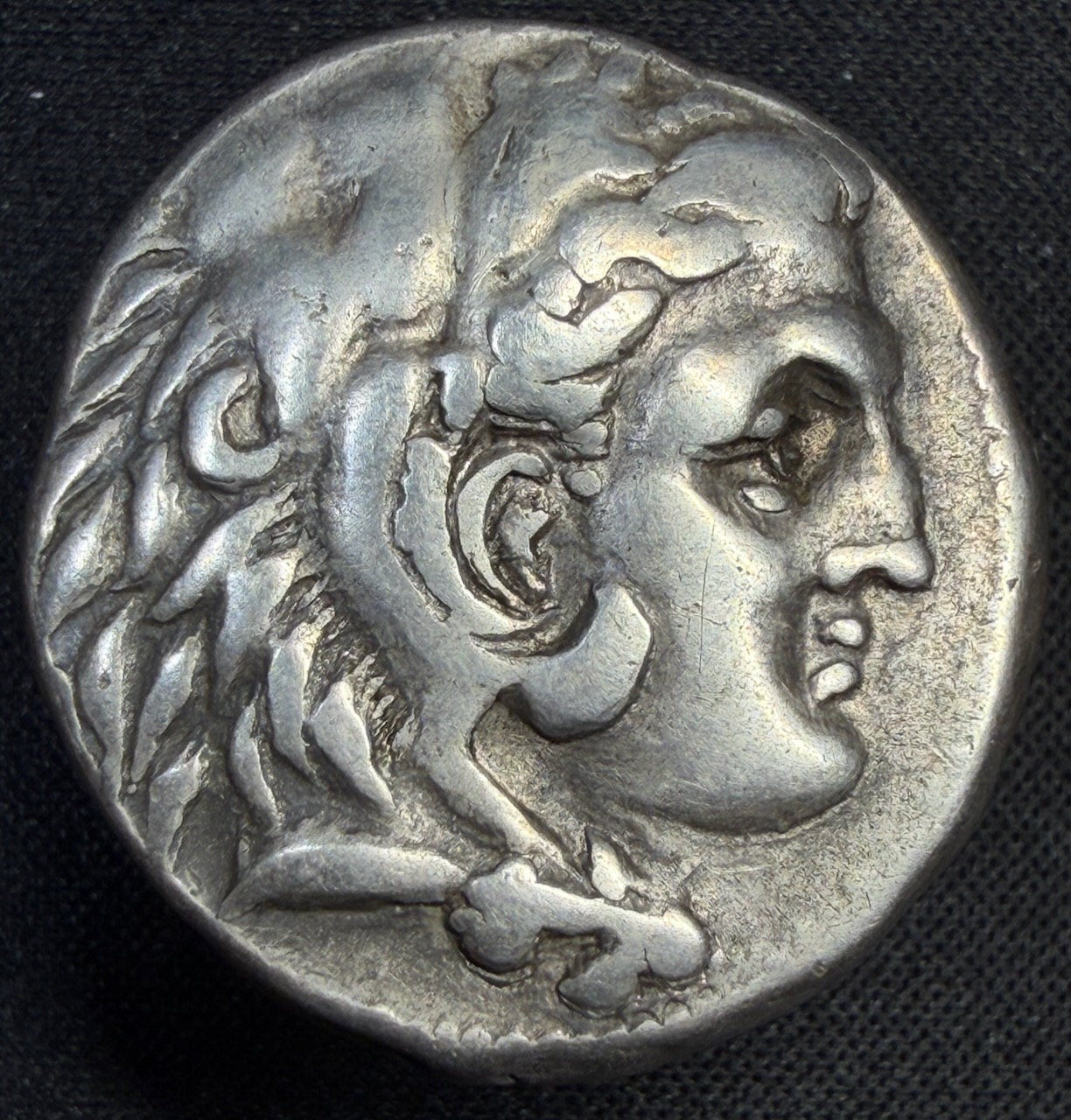
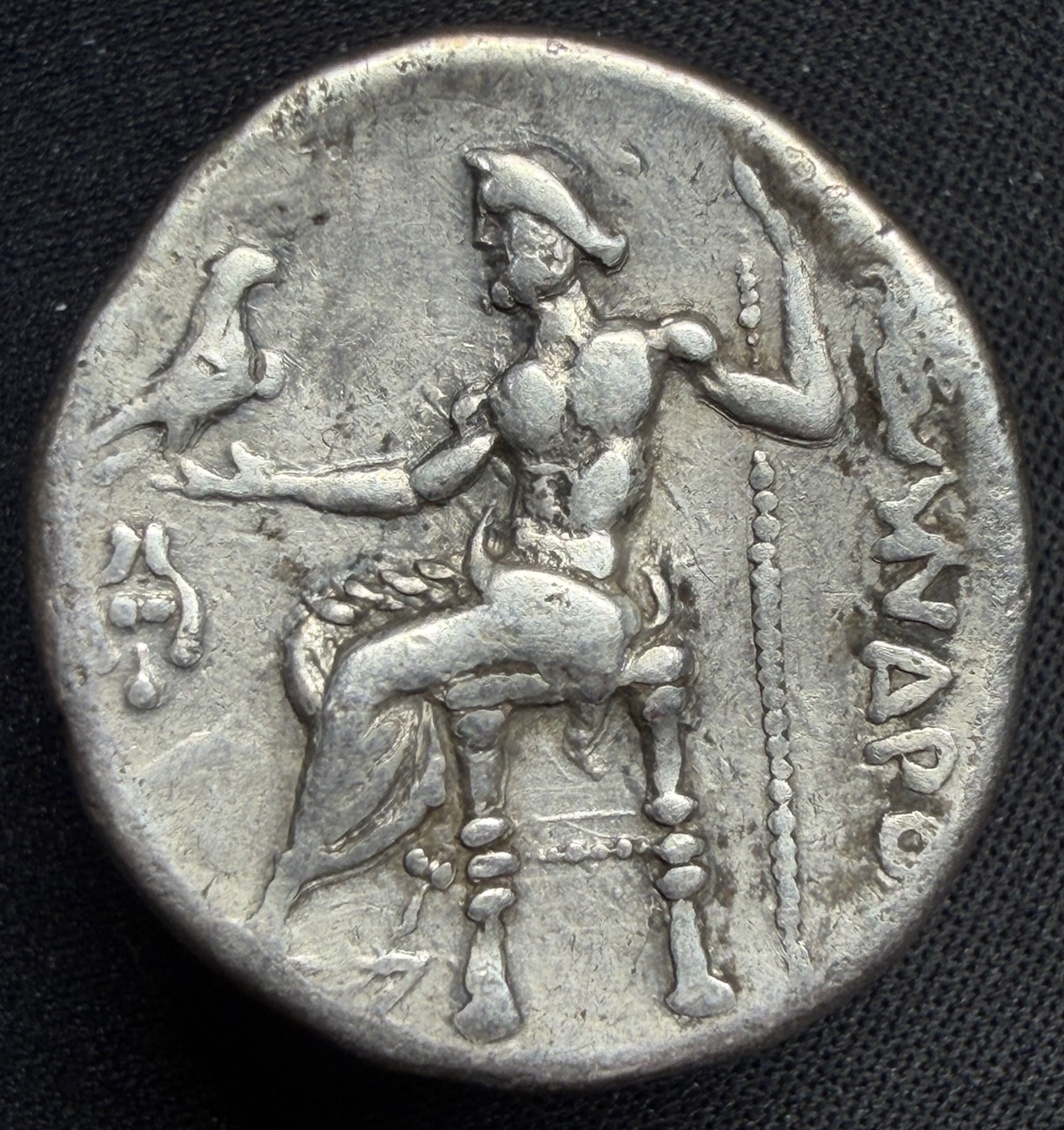
Obv: Head of young Herakles right, wearing the lion-skin headdress knotted at the neck
Rev: Zeus Aetophoros enthroned left, eagle on his outstretched right hand, sceptre in left; ΑΛΕΞΑΝΔΡΟΥ downward to right; monogram in left field
Ref: Price — (number cut off on the earlier printed tag; to be determined from the monogram)
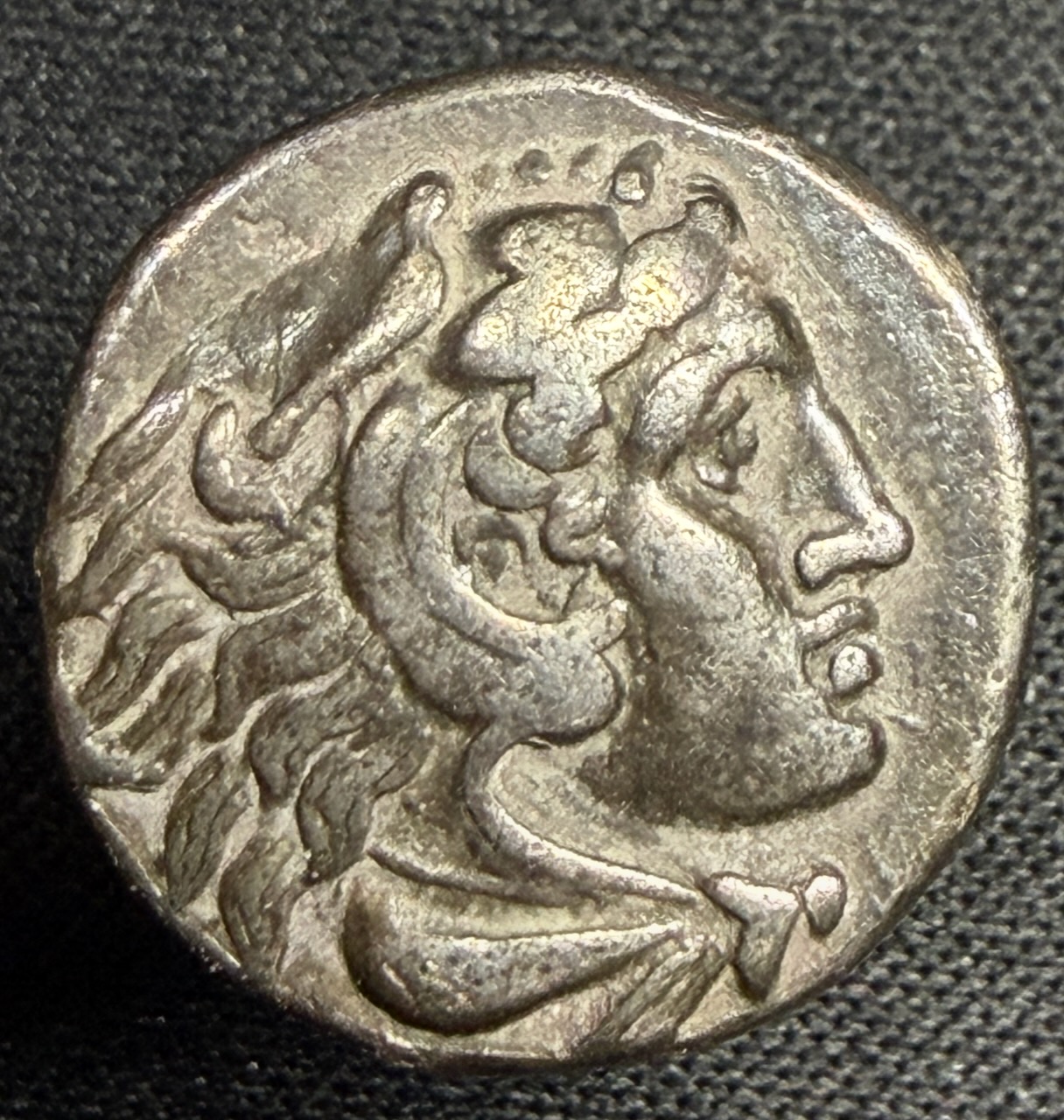
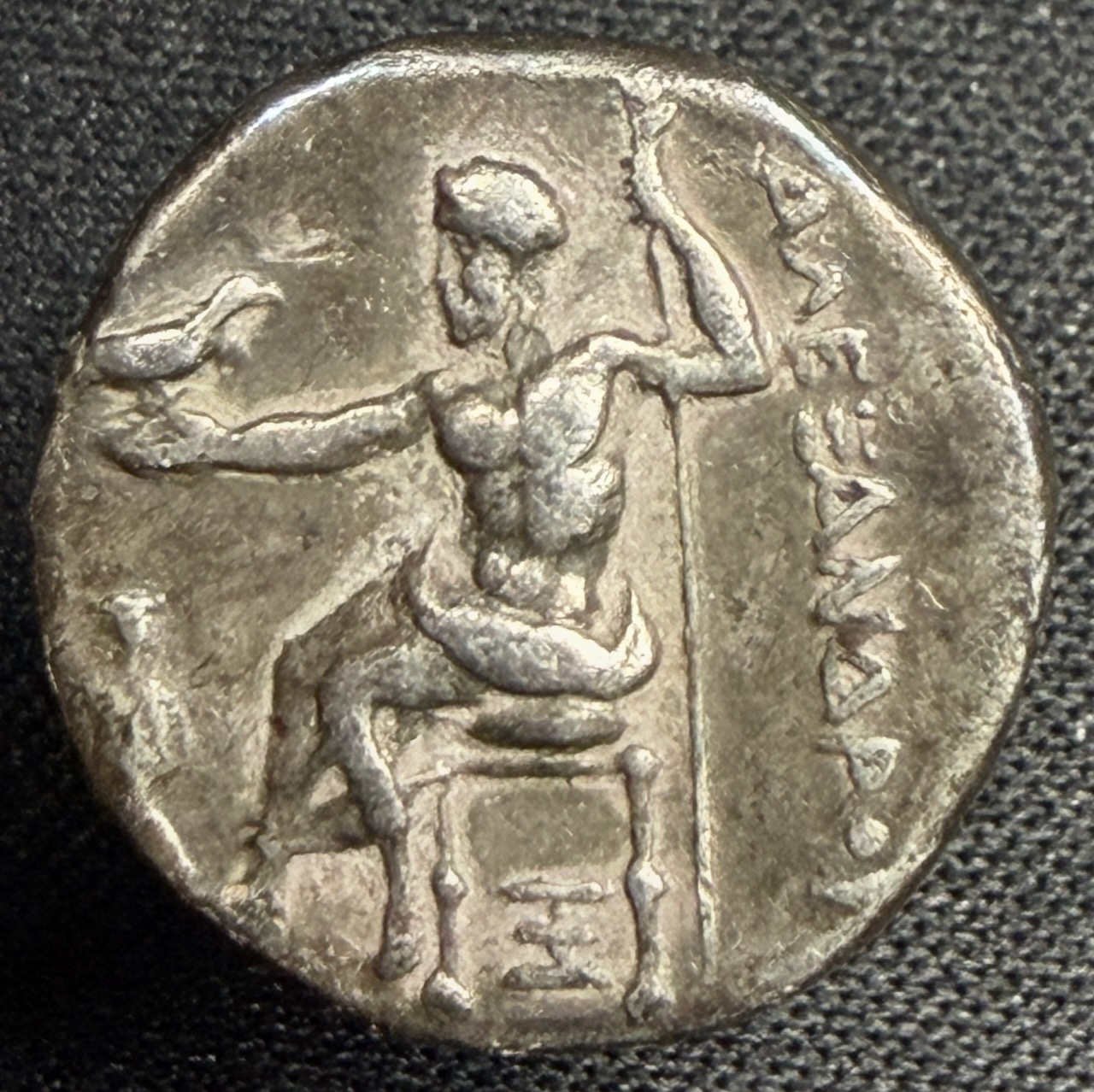
Obv: Head of young Herakles right, wearing lion-skin headdress
Rev: Zeus Aëtophoros enthroned left, eagle on outstretched right hand, long sceptre in left; in left field, a vertical symbol (probably a torch — see notes); barred monogram beneath the throne
Ref: Price — (to be determined from the left-field symbol and throne monogram)
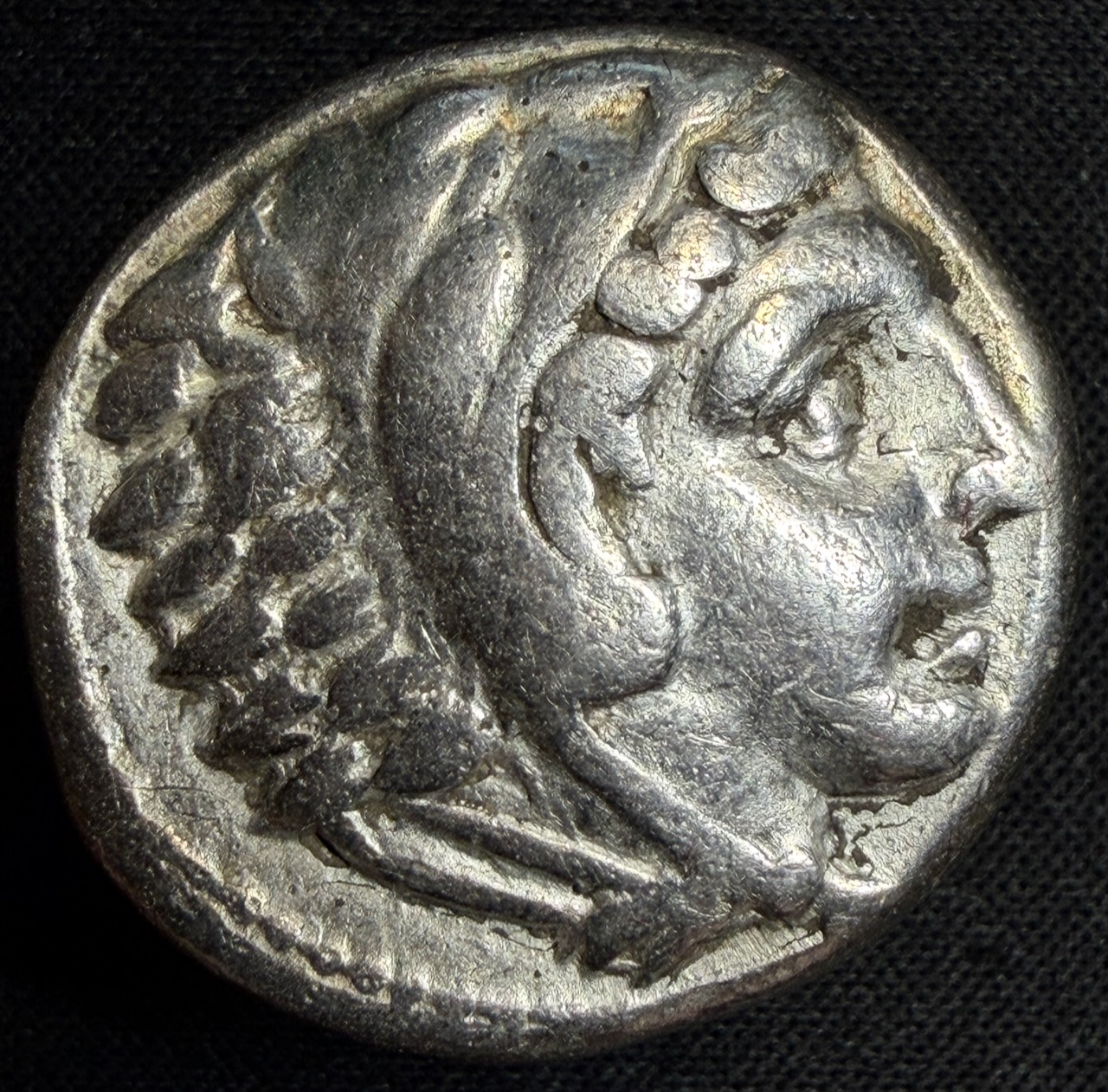
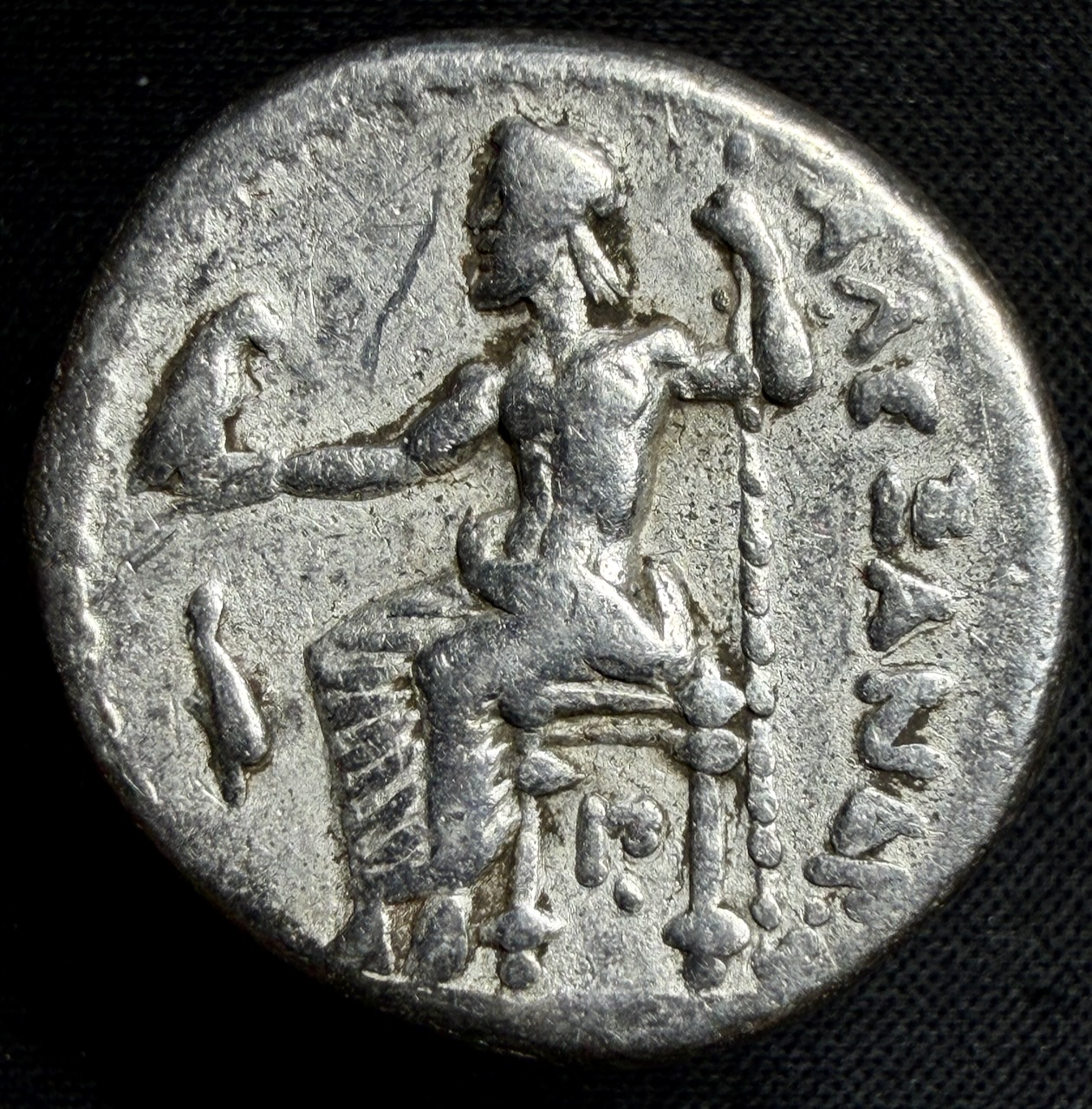
Obv: Head of young Herakles right, wearing the lion-skin headdress knotted at the neck
Rev: Zeus Aetophoros enthroned left, eagle on his outstretched right hand, sceptre in left; aplustre (ship's stern ornament) in left field; ΠΟ monogram below throne; ΑΛΕΞΑΝΔΡΟΥ downward to right
Ref: Price 129
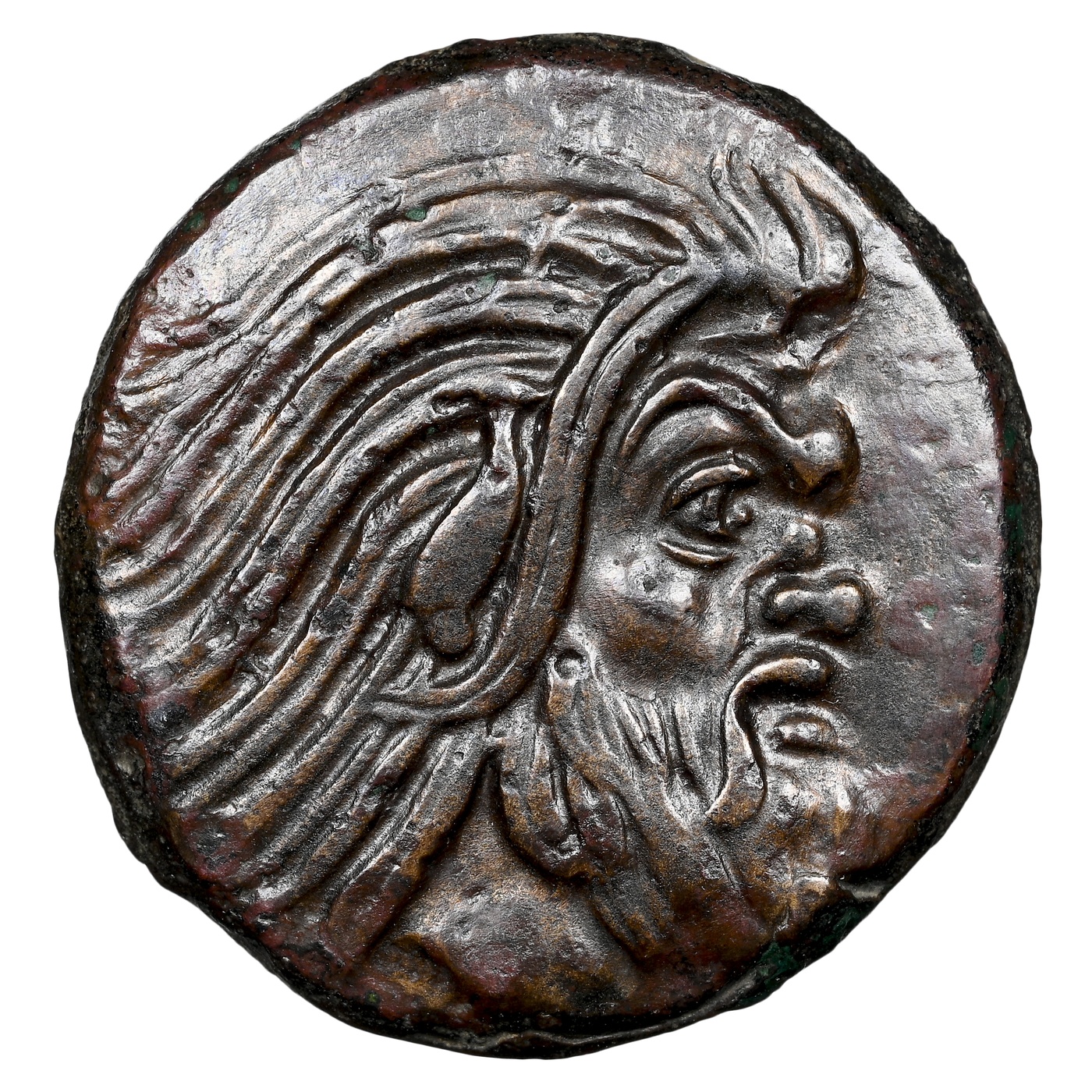
Obv: Head of bearded Pan right: the hair in long combed waves swept back from the brow, a small horn hidden in it and a pointed animal ear at the side; heavy brow, snub nose, open mouth, the beard in thick pointed locks. Traditionally called Pan; a strong school reads it as a satyr — see the essay.
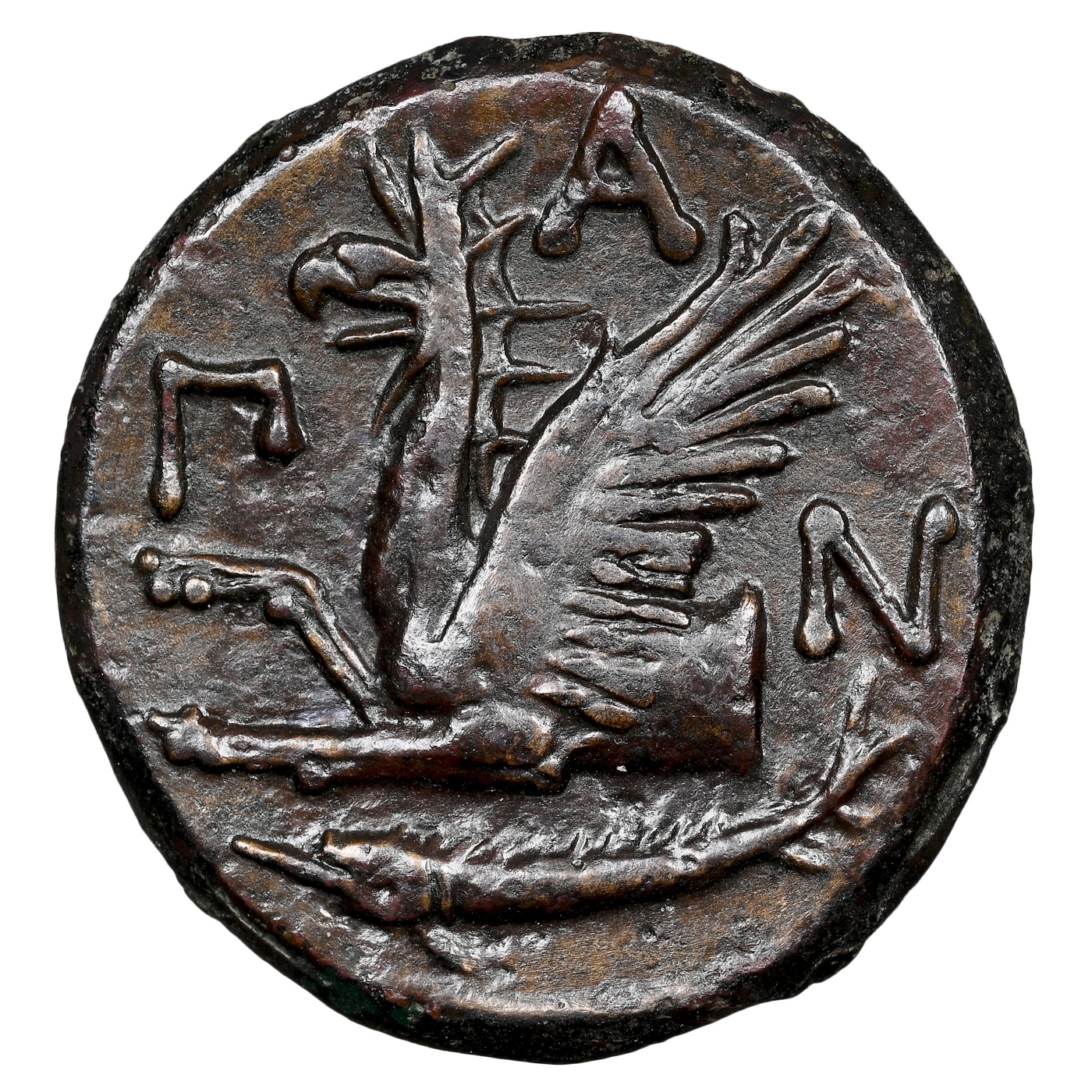
Rev: Forepart of a griffin to the left, the right forepaw raised, the wing spread upward in a fan of feathers, the beak open; below, a sturgeon swimming left. The letters Π, A and N stand one at each side of the design — Π left, A above, N right.
Ref: MacDonald 69
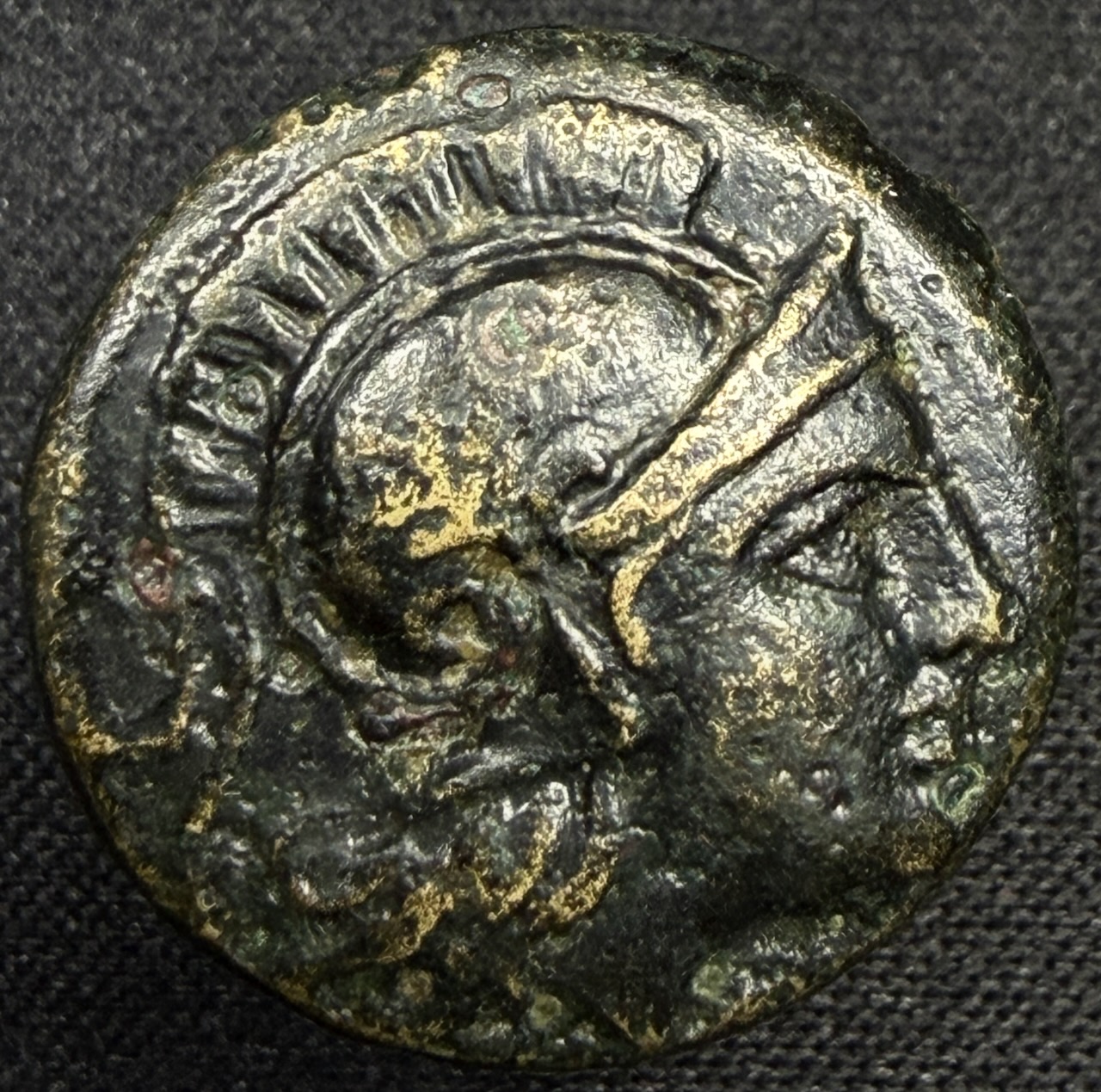
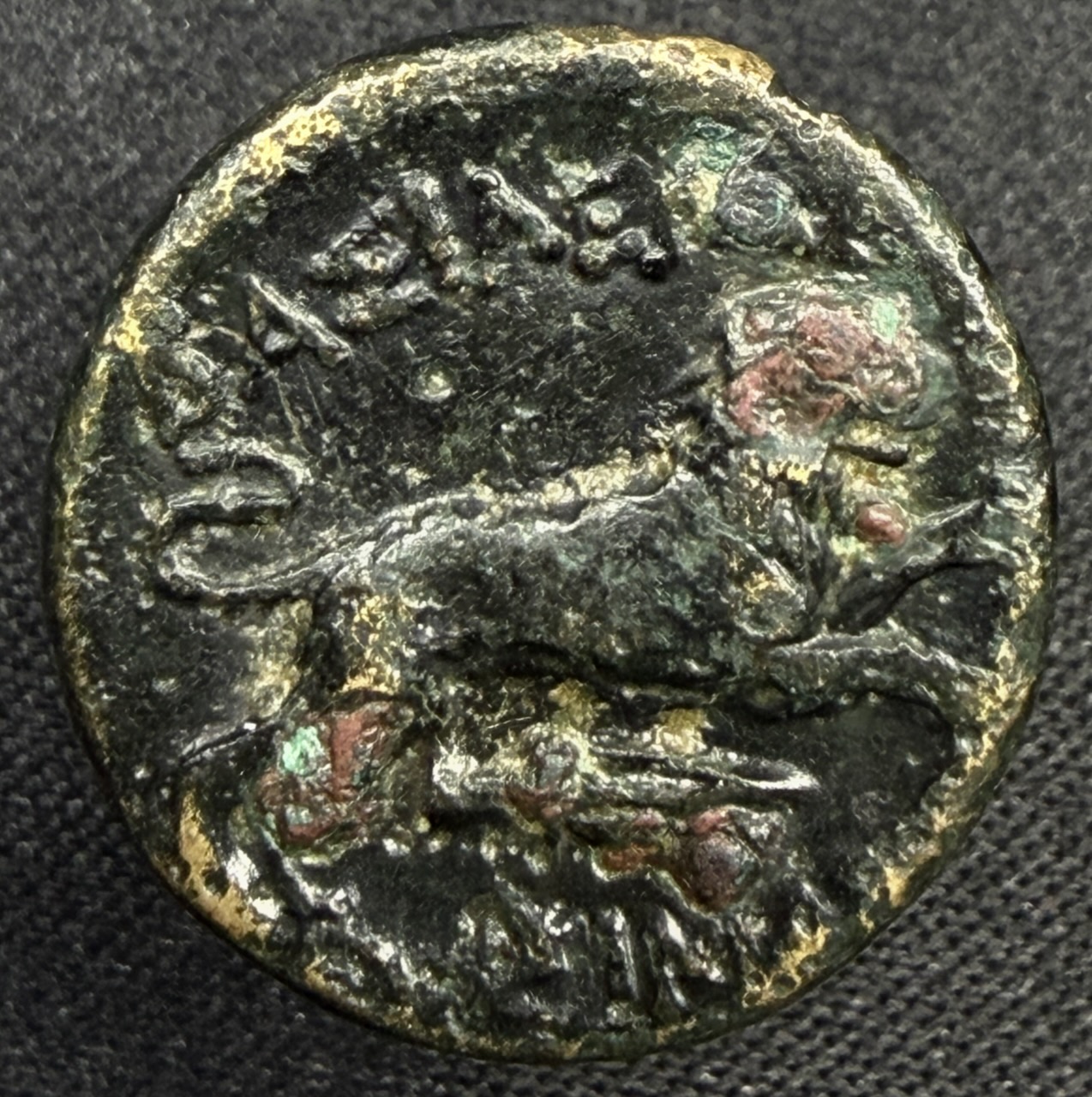
Obv: Head of Athena right, wearing crested Attic helmet
Rev: Lion running (leaping) right; spearhead below
Ref: SNG Copenhagen 1149
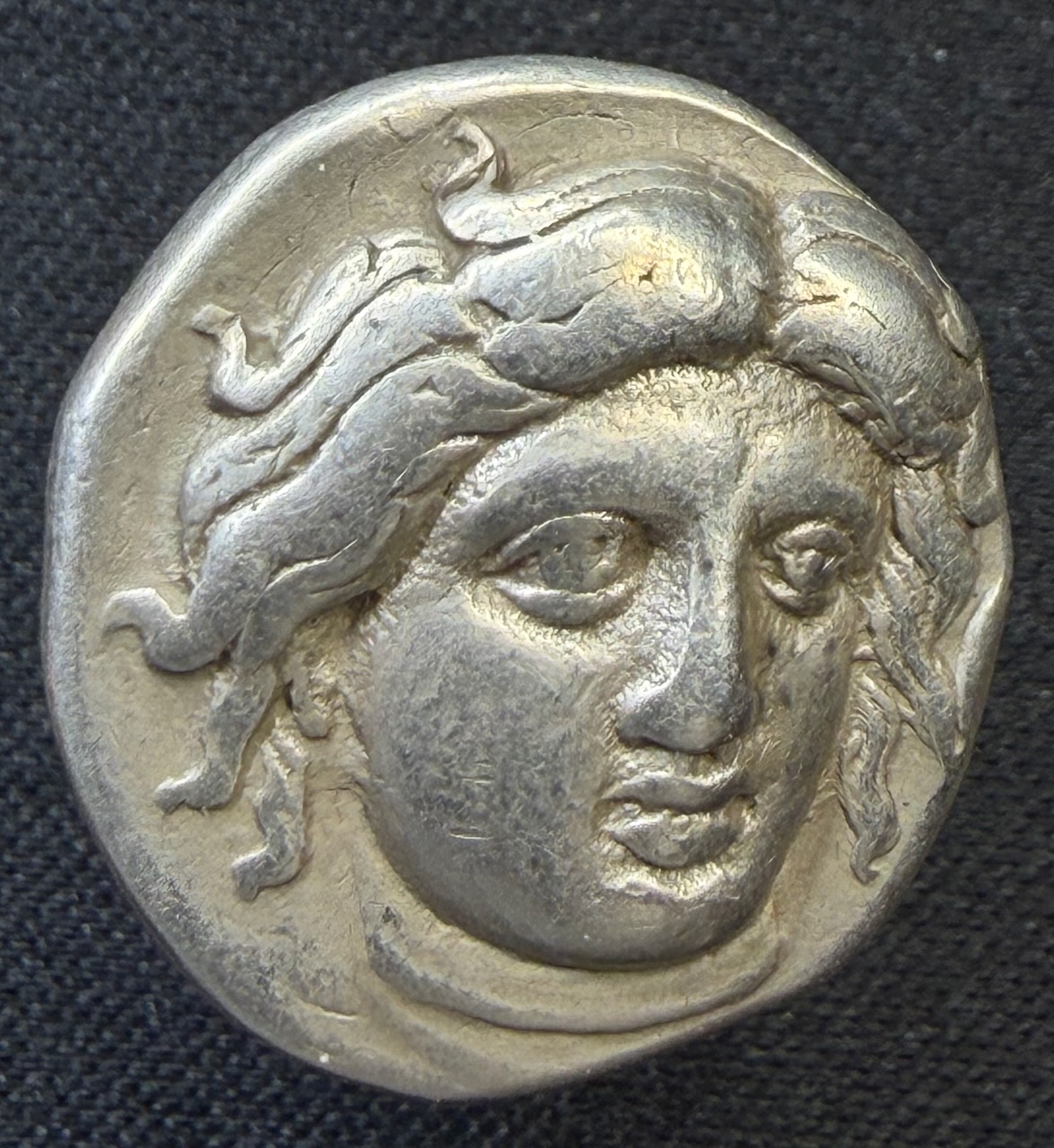
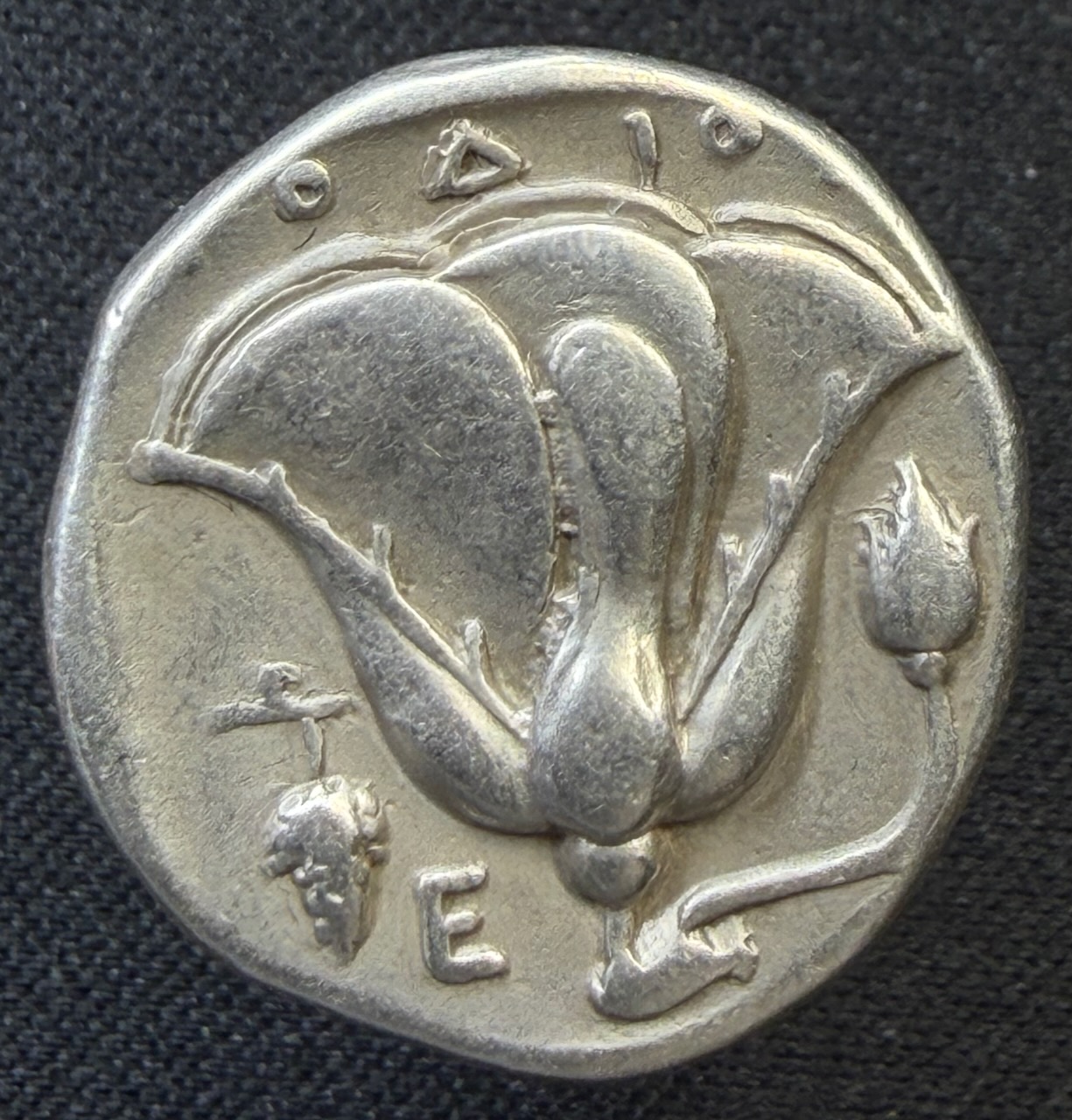
Obv: Head of Helios facing slightly right, hair loose and windblown
Rev: Rose with bud to right; to left, bunch of grapes on stalk above E; all in shallow incuse
Ref: Ashton 98
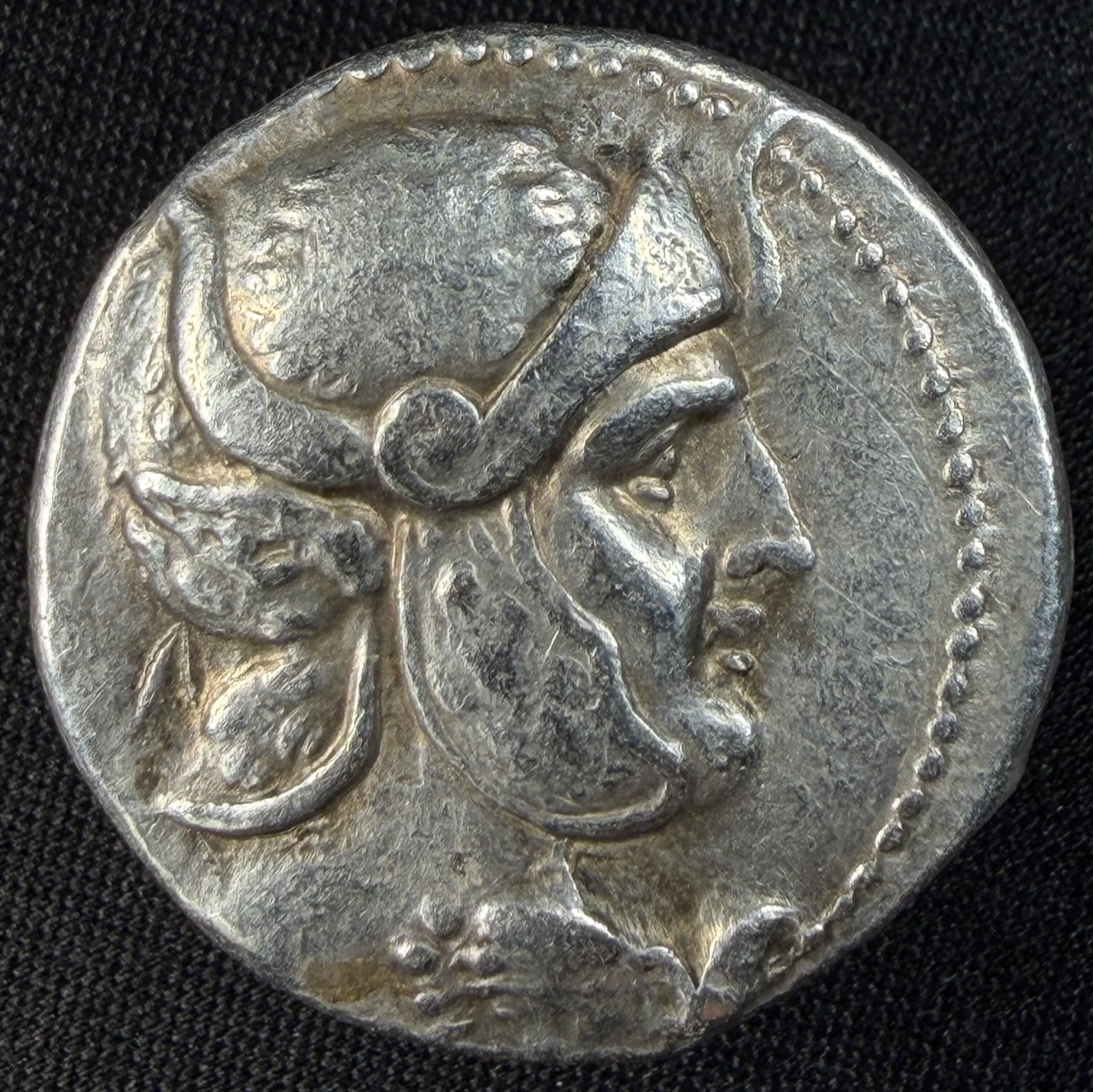
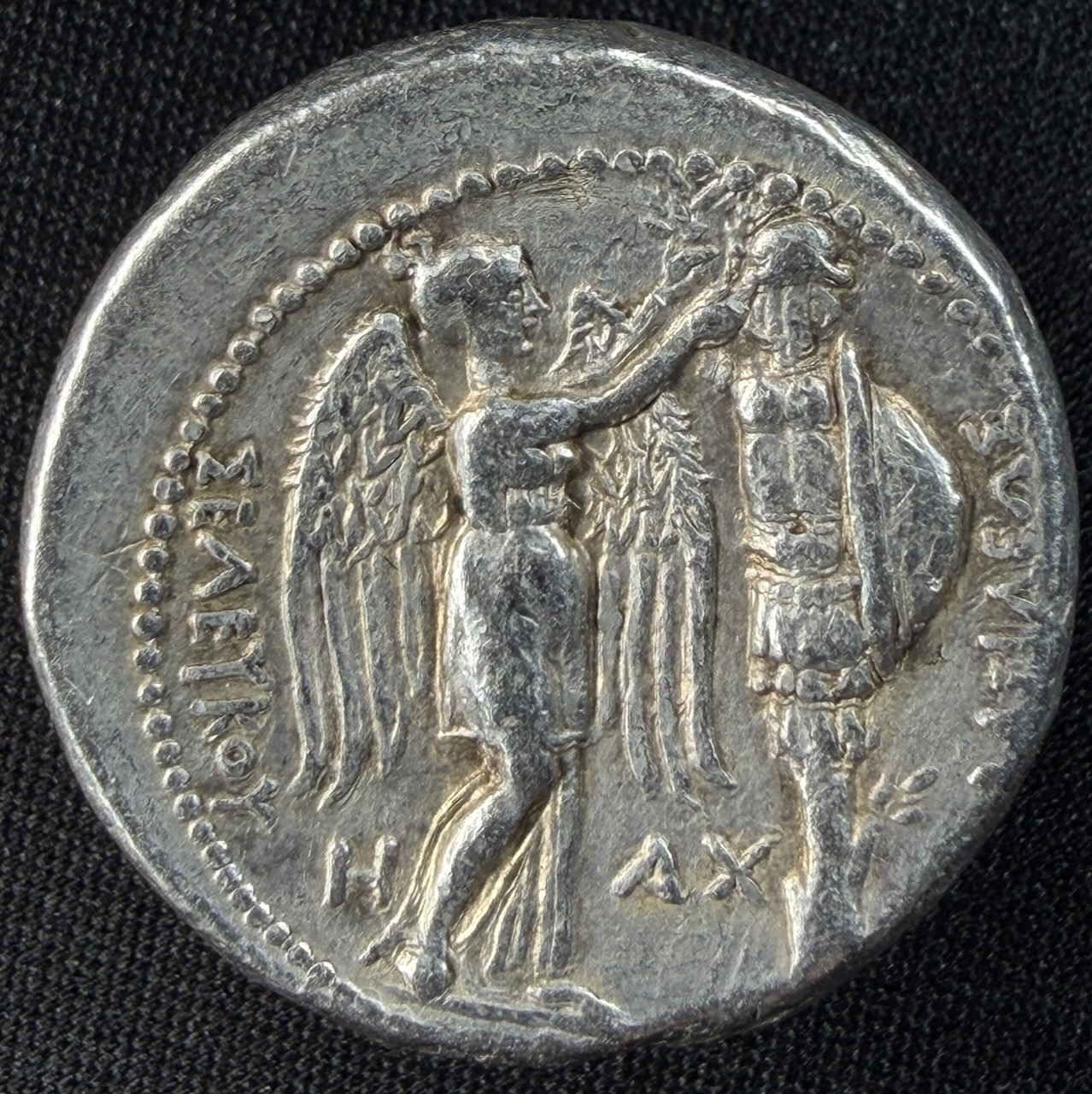
Obv: Head of a hero right, wearing a helmet covered with panther skin and adorned with the ear and horn of a bull; a panther skin is knotted at the throat. The figure's identity is debated (see notes).
Rev: Nike standing right, crowning a trophy of arms (helmet, cuirass, spears) with a wreath; control marks in field (typically a monogram below the wing and letters between Nike and the trophy).
Ref: SC 173.12; HGC 9, 20
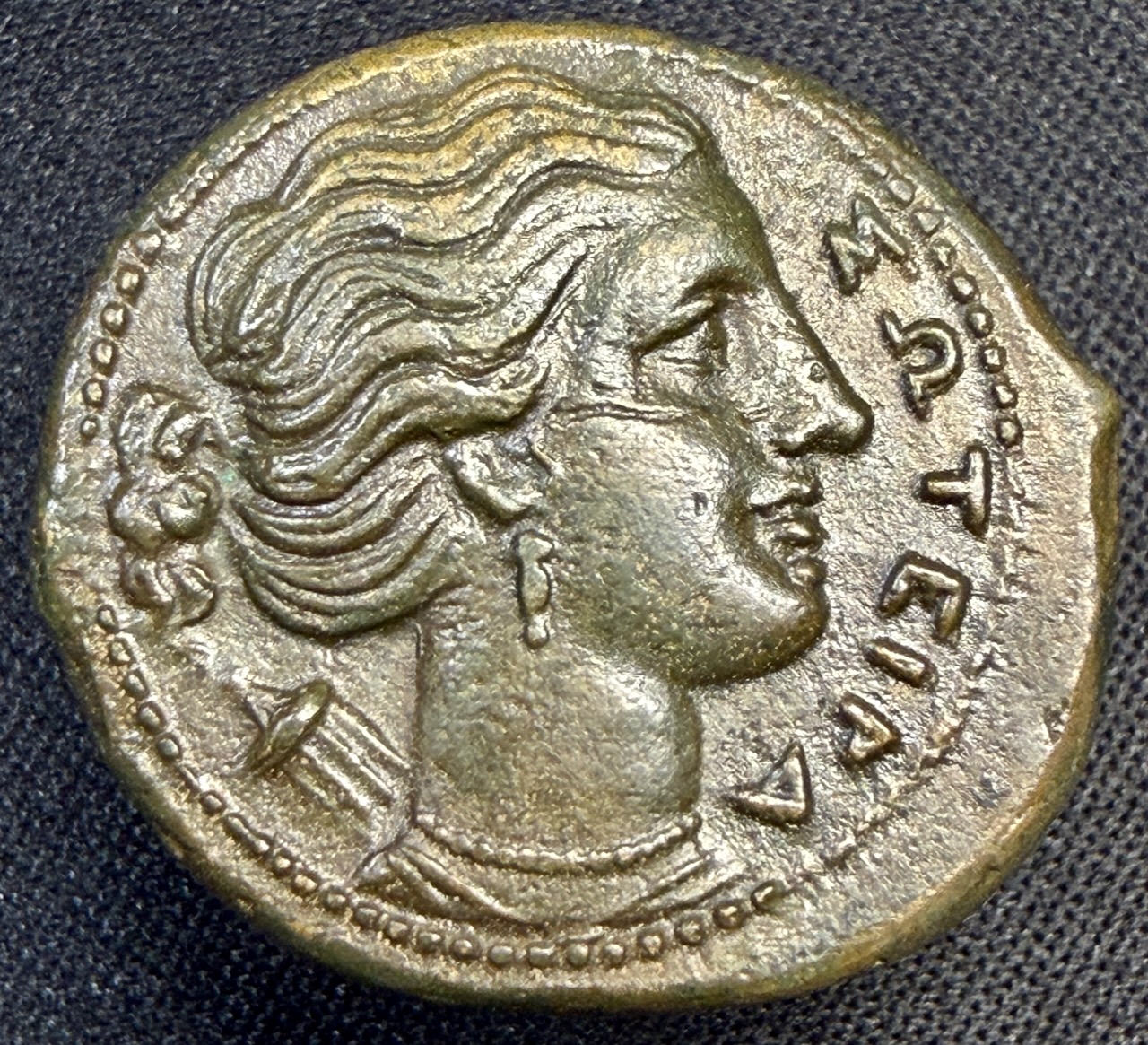
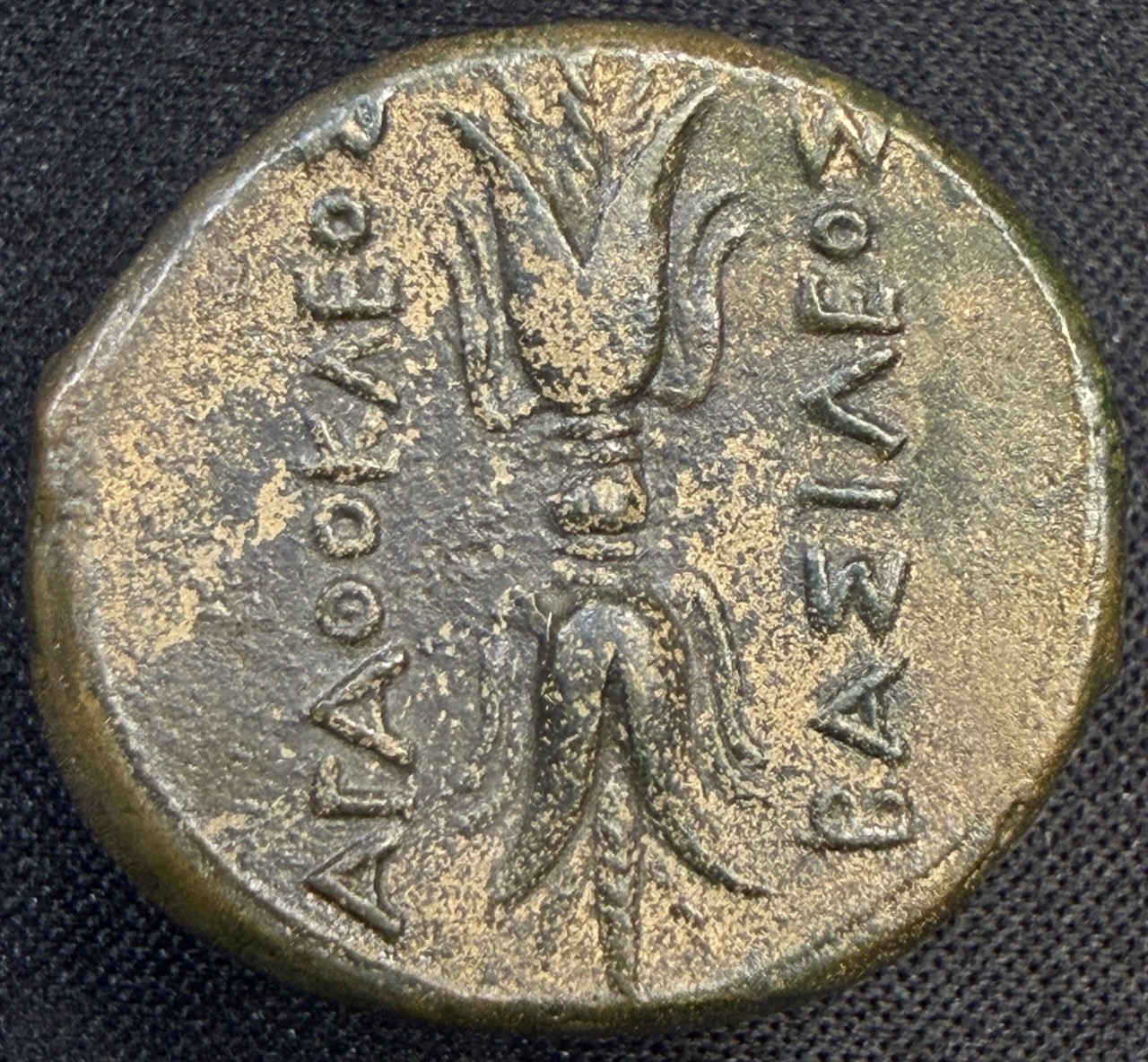
Obv: Draped bust of Artemis Soteira right, quiver over shoulder
Rev: Winged thunderbolt
Ref: CNS II 142
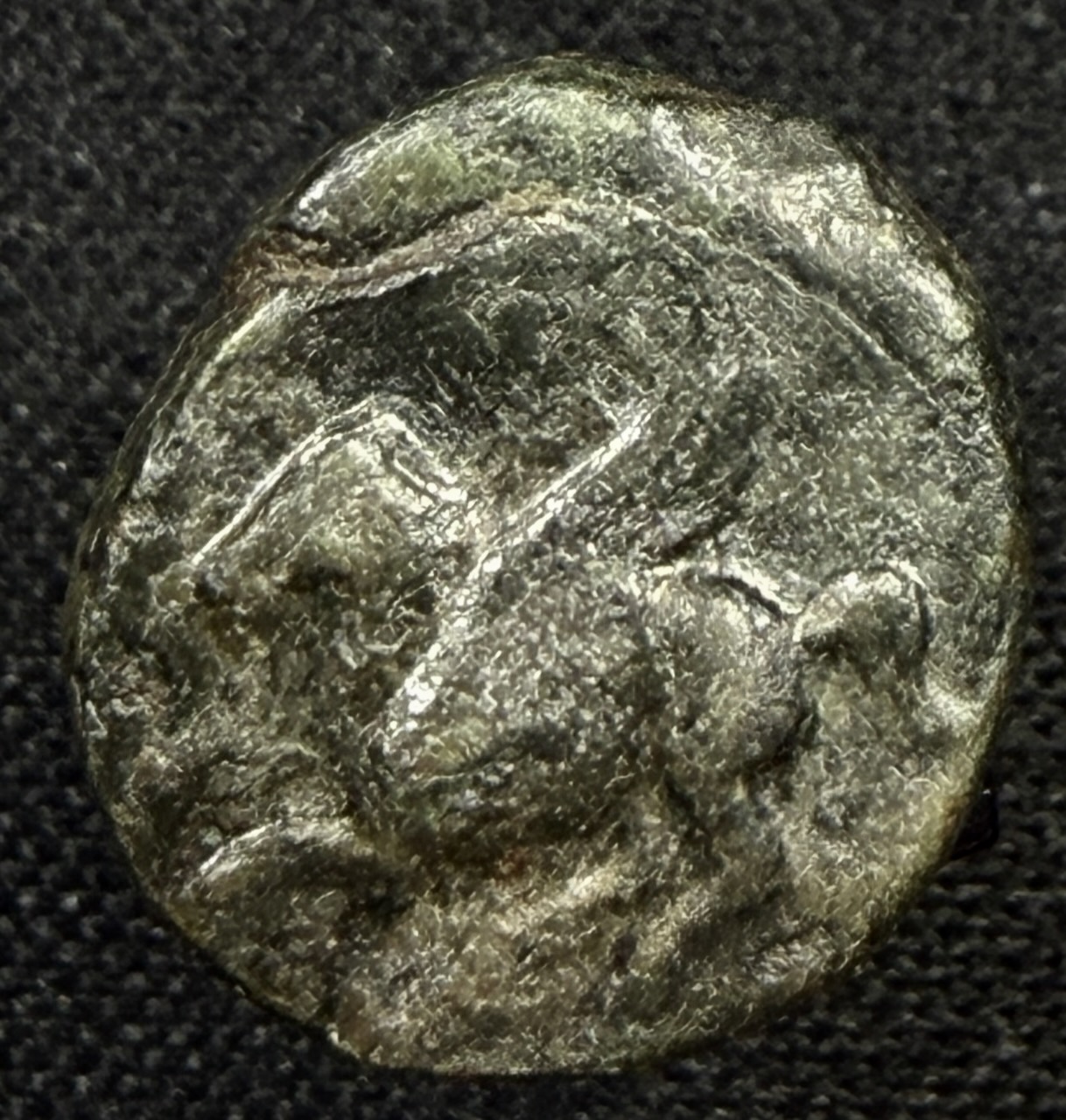
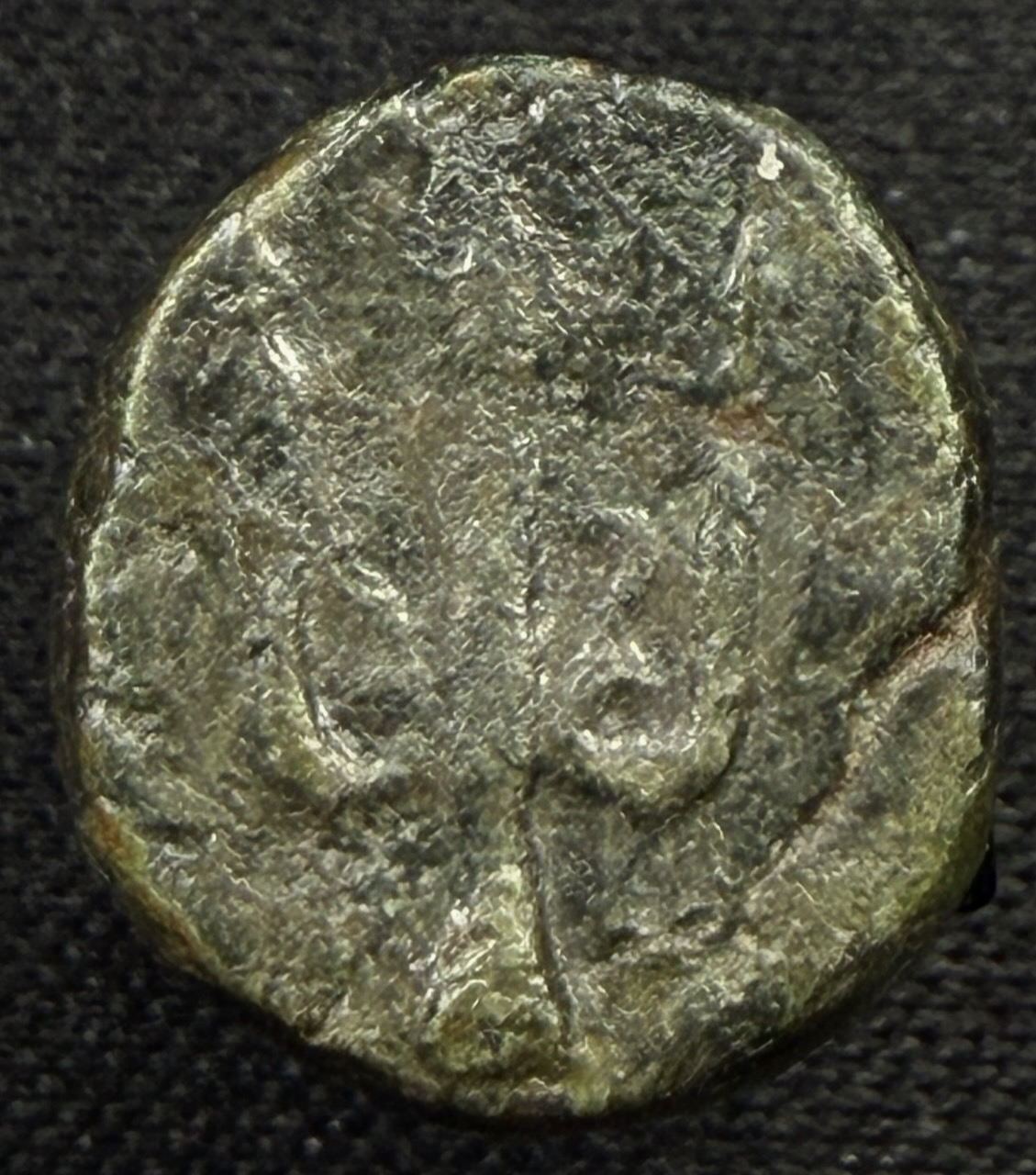
Obv: Pegasos flying left; koppa (Ϙ) below
Rev: Ornate trident head
Ref: SGCV I 2647
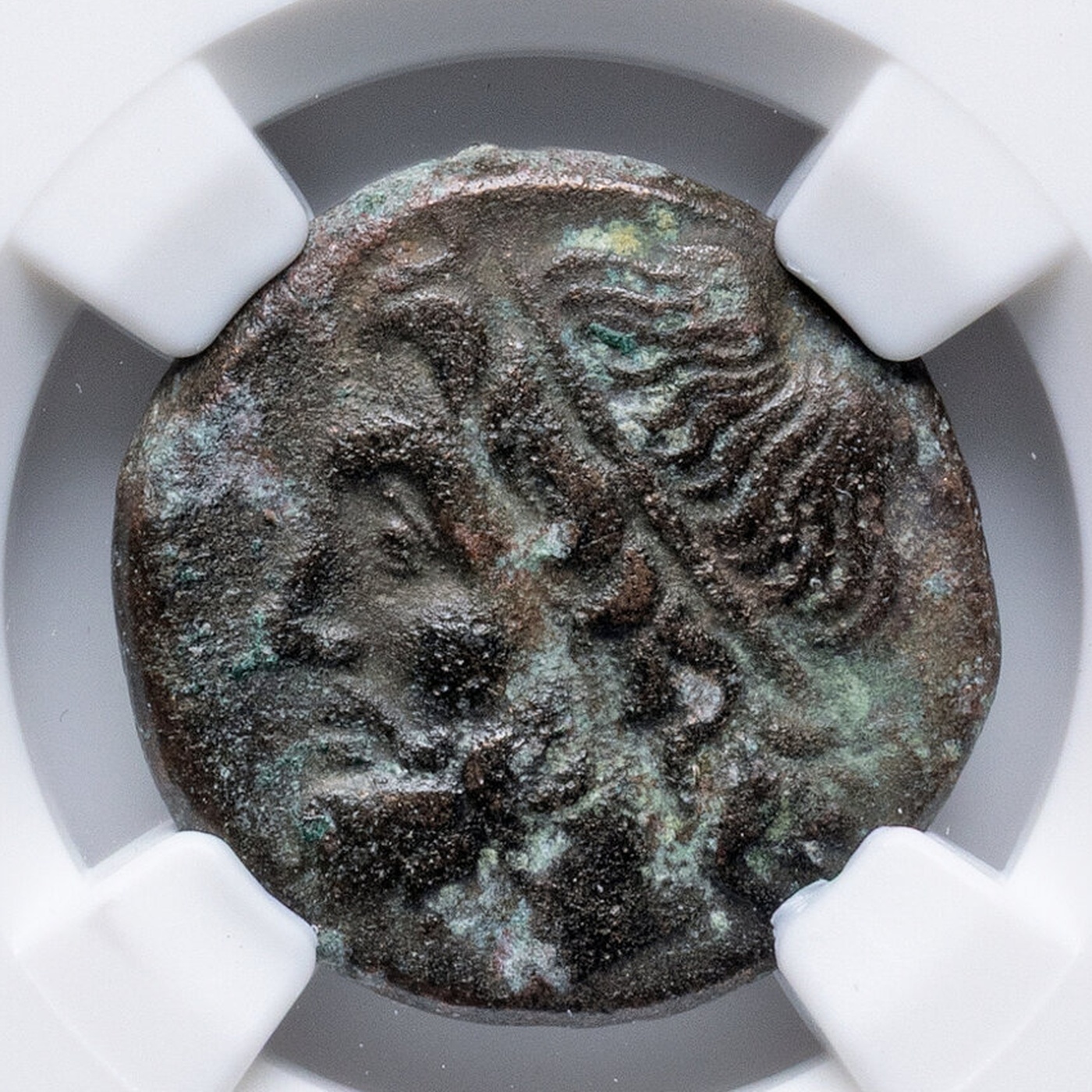
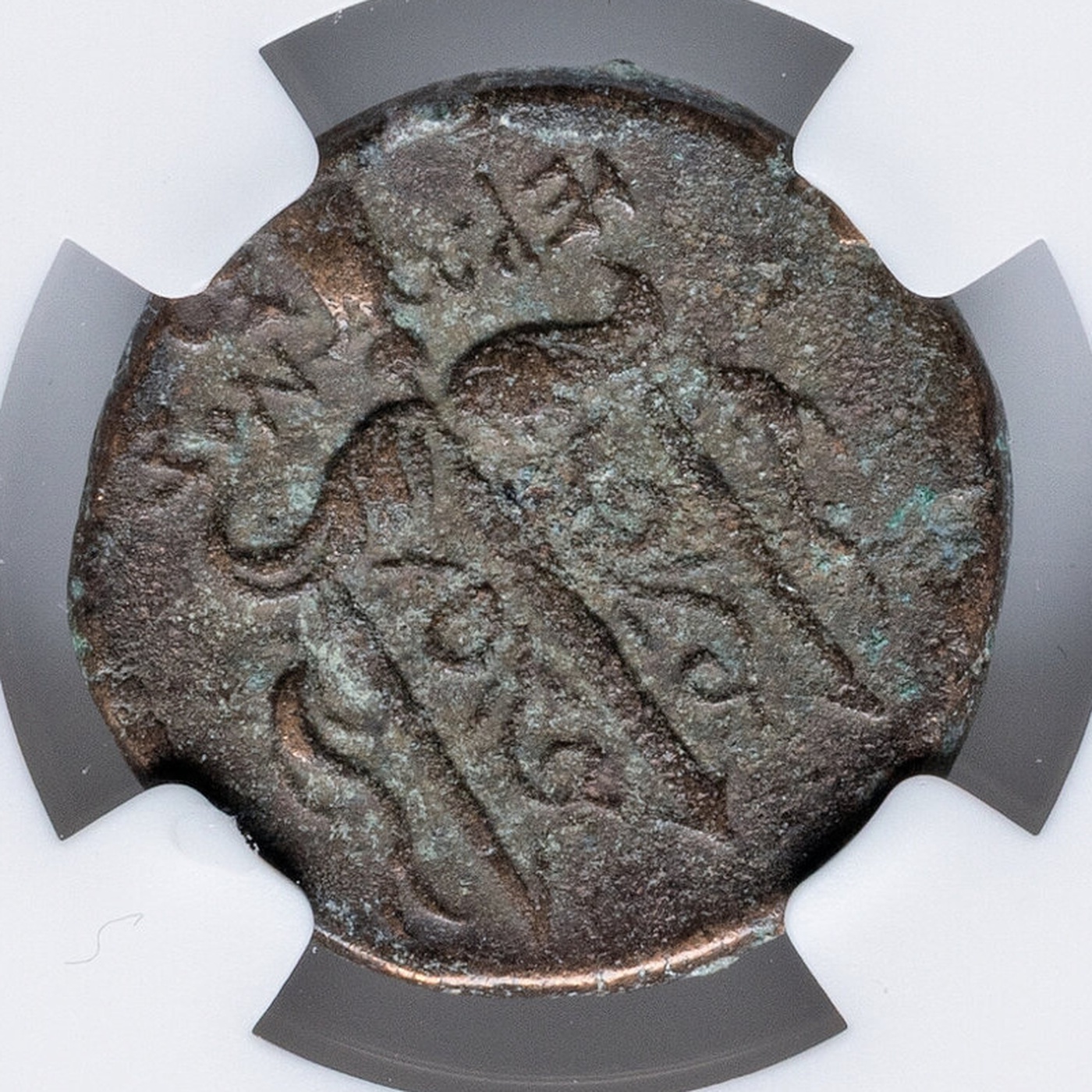
Obv: Head of Poseidon left, wearing a tainia (diadem), the hair and beard in loose curls
Rev: Ornamented trident head, the shaft between two dolphins swimming downward; control letters in the field on some dies
Ref: HGC 2, 1550
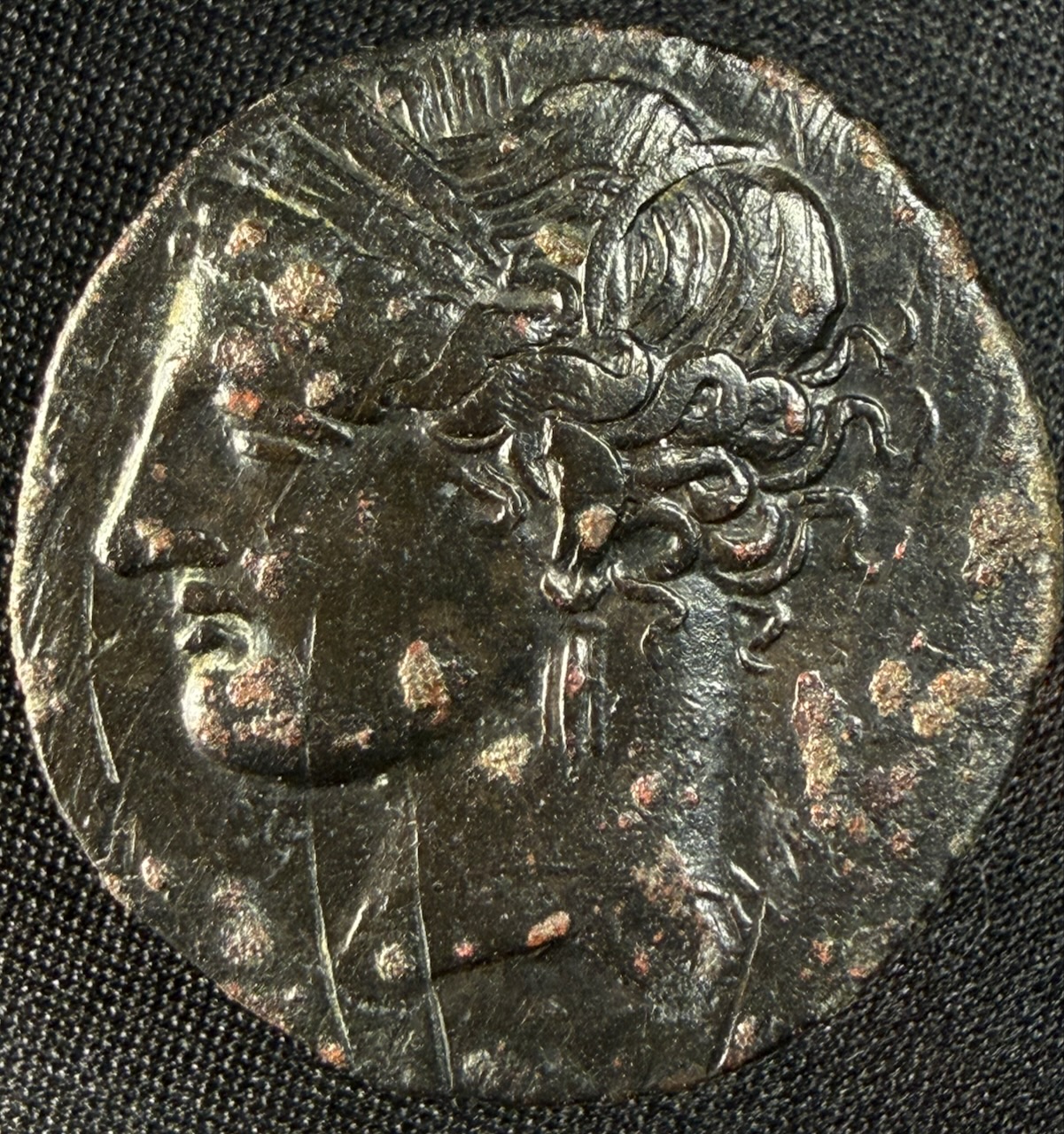
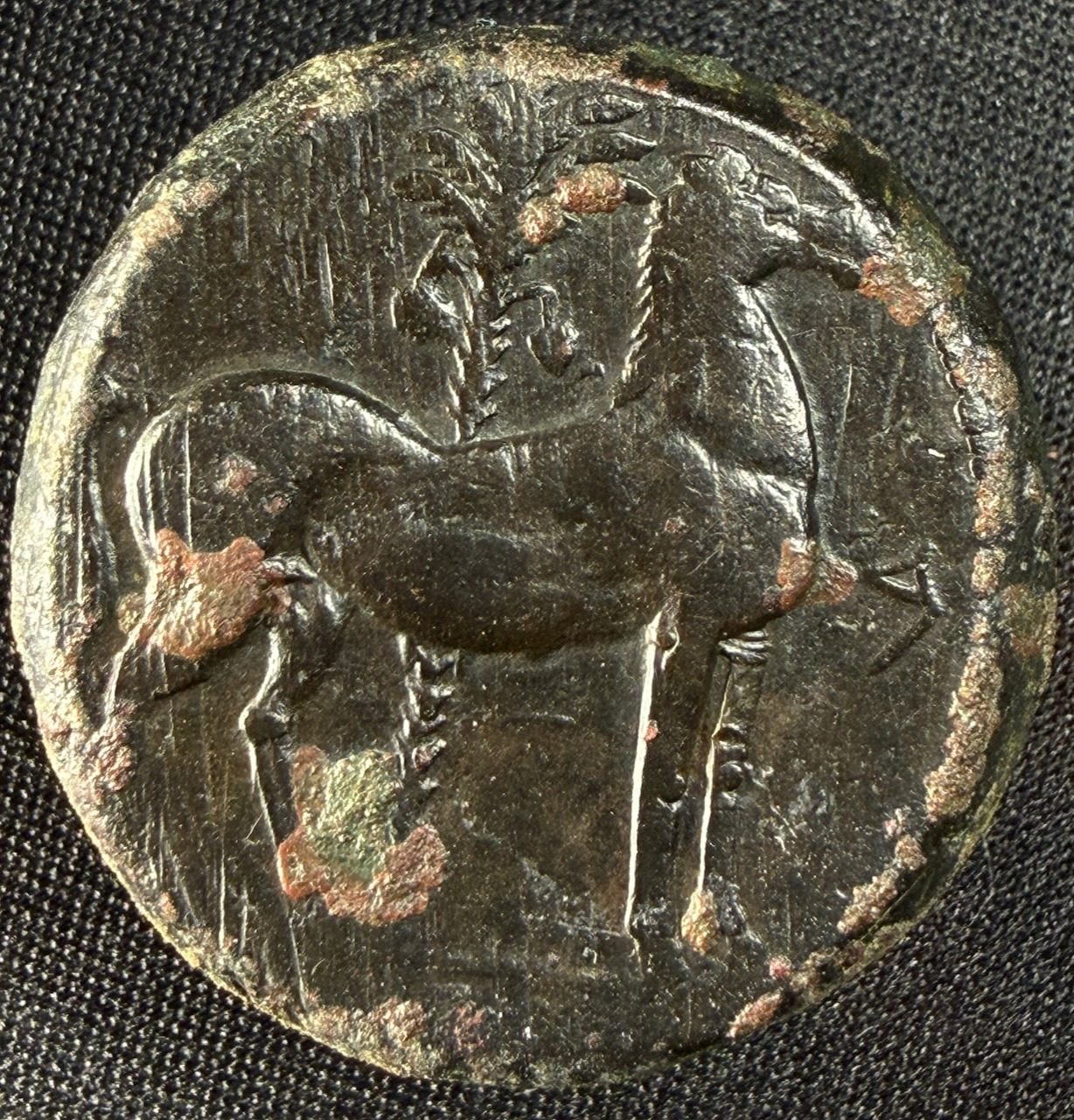
Obv: Head of Tanit (in the Persephone/Kore manner) left, wreathed with grain ears, wearing triple-pendant earring and pearl necklace
Rev: Horse standing right, head raised; date palm with fruit clusters behind; Punic control letter bet (𐤁) in the field
Ref: SNG Copenhagen 253–254 var.
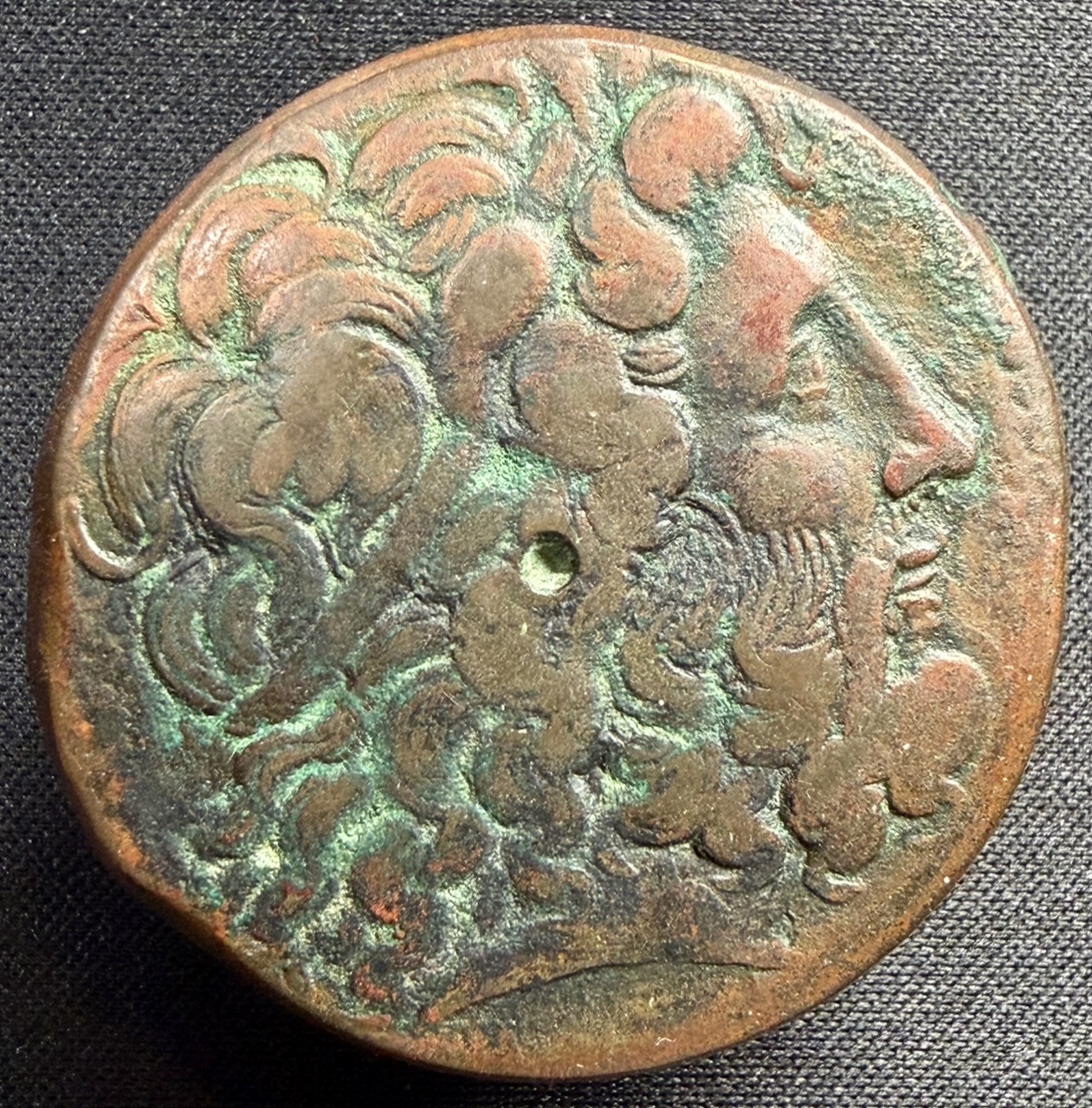
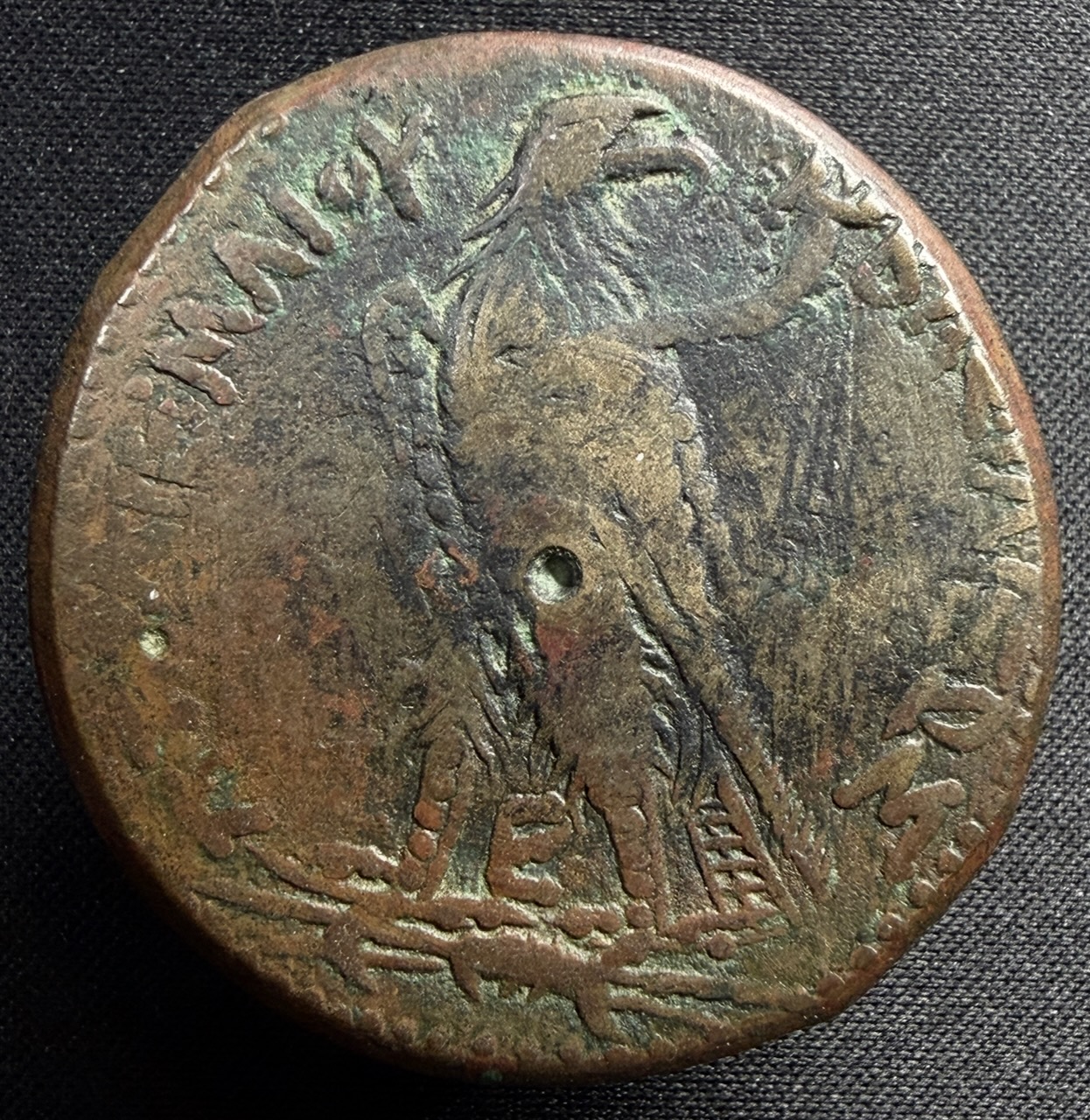
Obv: Head of Zeus-Ammon right, wearing taenia, ram's horn curling at the temple; centration dimple at center
Rev: Eagle standing half left on thunderbolt (fulmen), wings closed, head right; filleted cornucopia ascending behind from shoulder; monogram between legs (read as E on the tag, EP in Forum's current listing); centration dimple at center
Ref: Lorber CPE B371
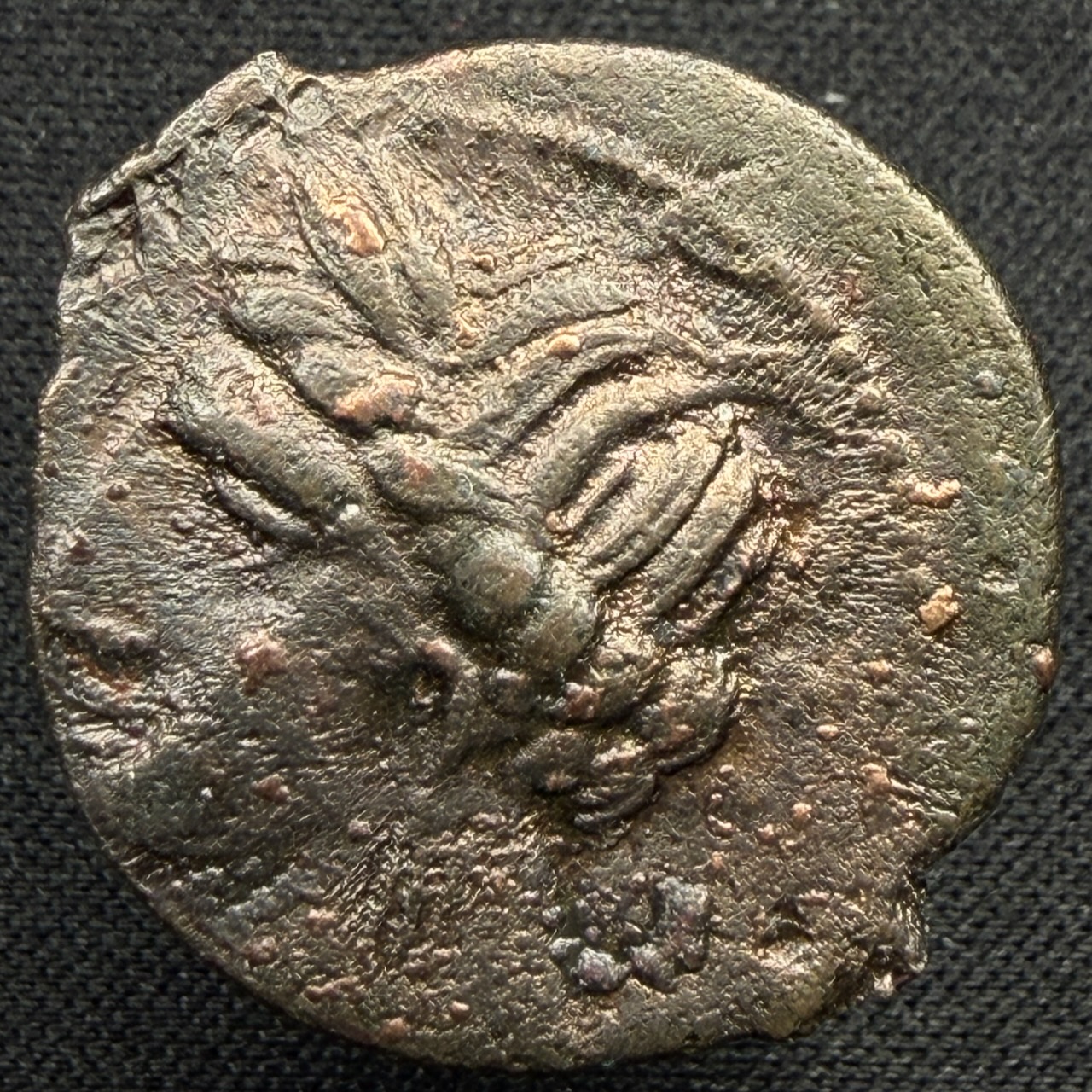
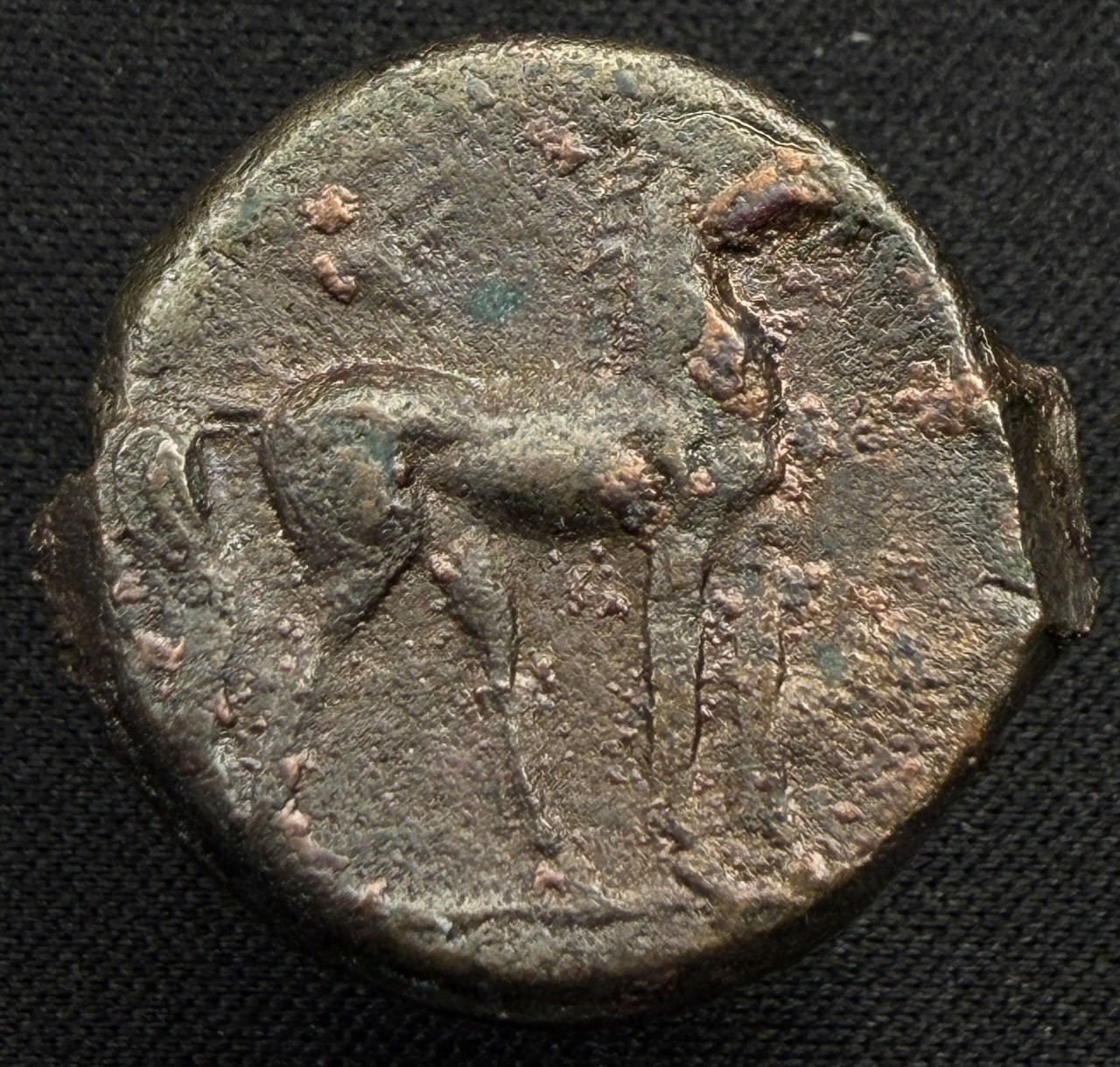
Obv: Head of Tanit left, wreathed in grain ears, wearing earring and necklace
Rev: Horse standing right on ground line, without palm tree
Ref: SNG Copenhagen 214
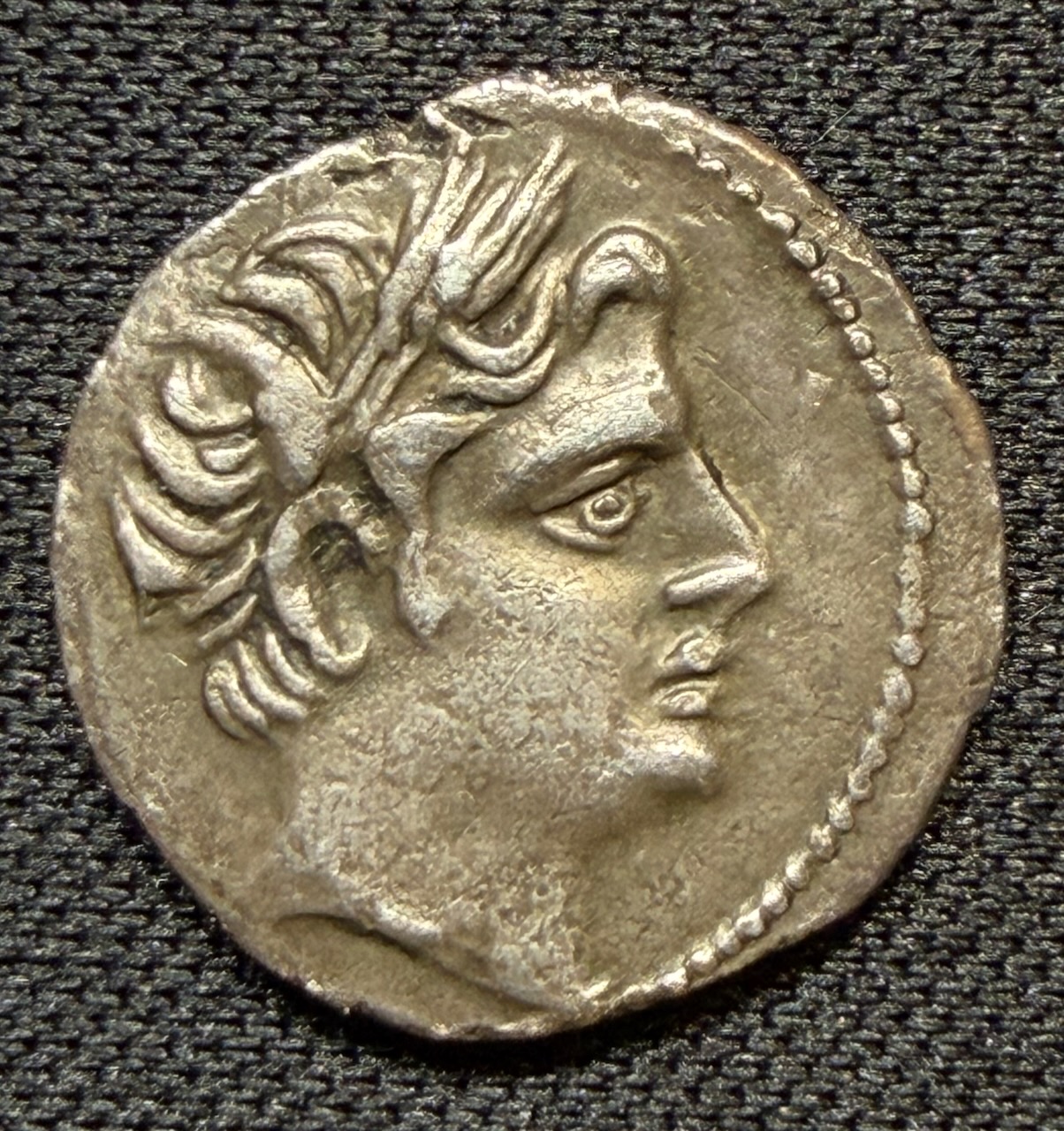
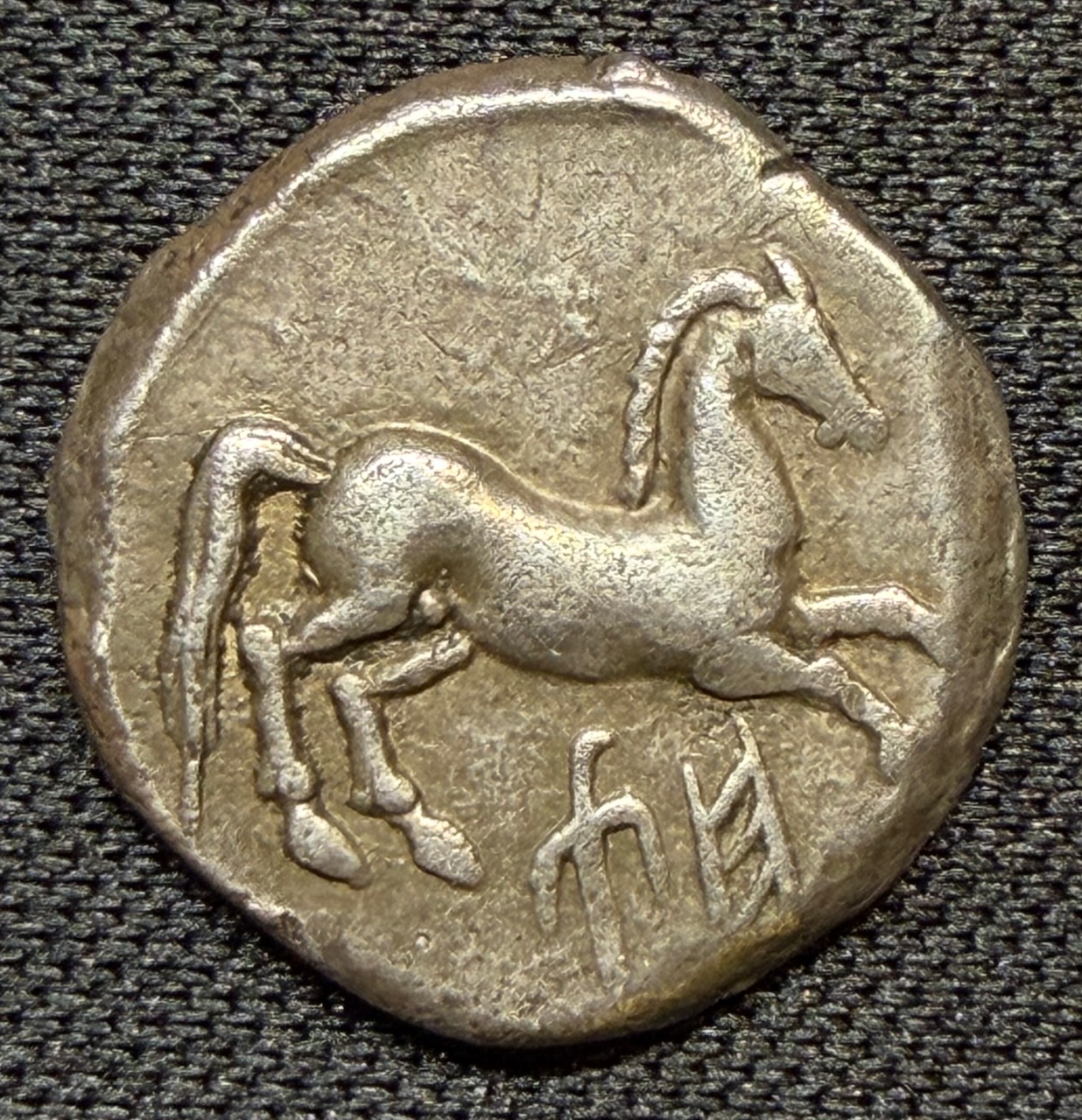
Obv: Wreathed head of Triptolemos right (grain wreath; deity of the Demeter/Kore cult of Akragas)
Rev: Free horse right, one foreleg raised; Punic letters ḥt in exergue
Ref: HGC 2, 173
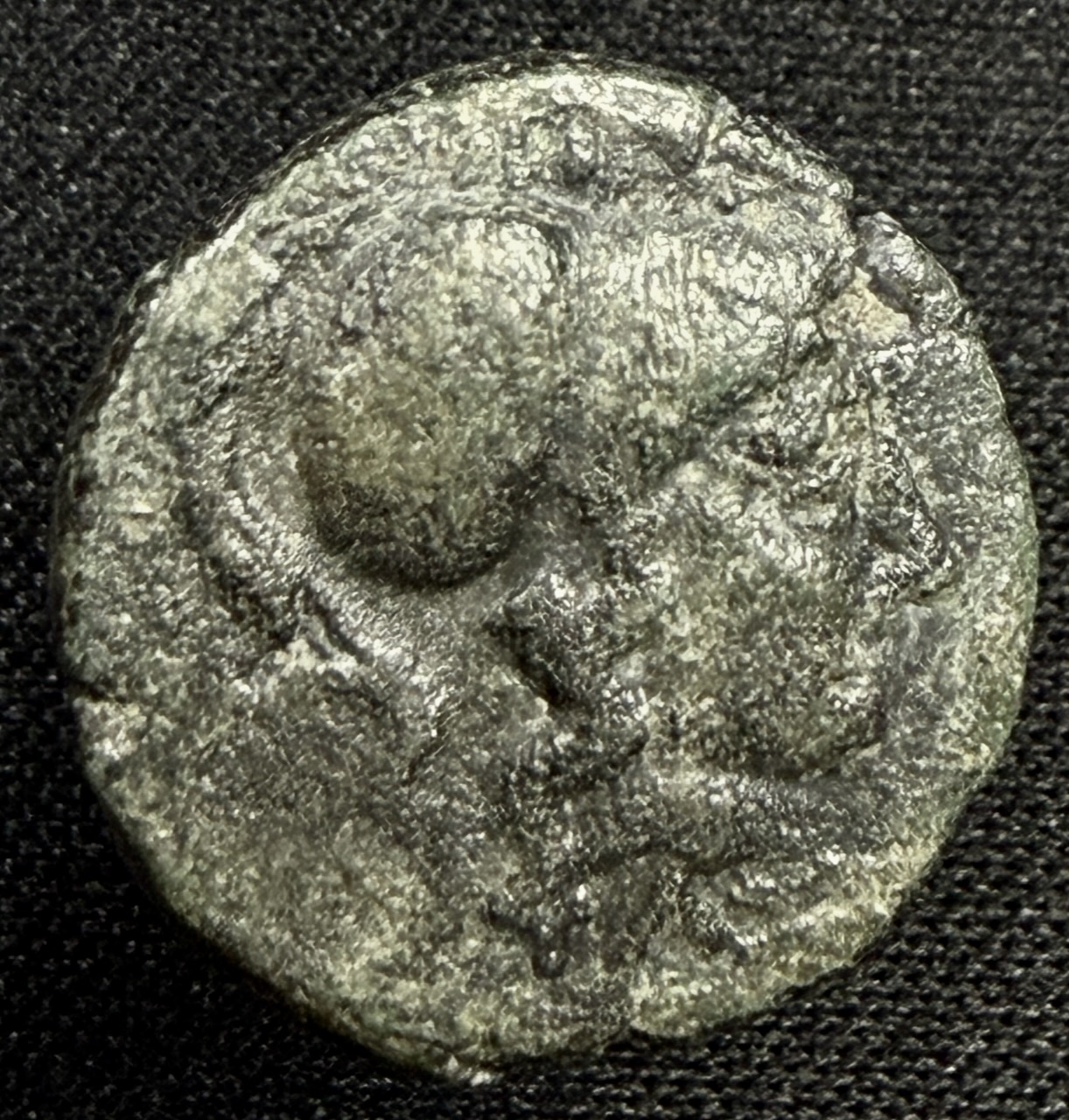
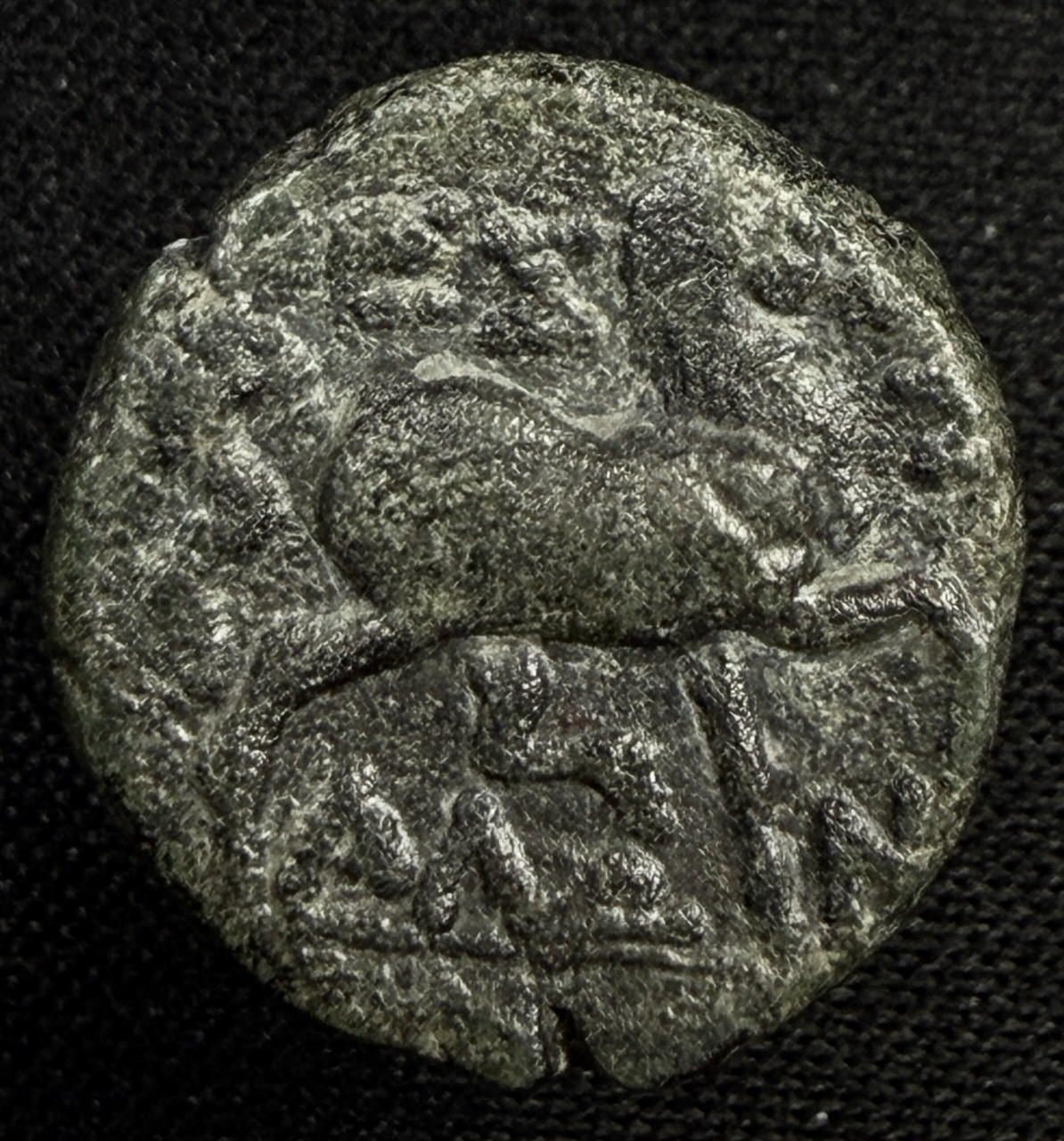
Obv: Head of Pallas Athena right, wearing crested helmet; magistrate's name above (not legible on this specimen)
Rev: Horse prancing right; ΘΕΣ above
Ref: BMC (Thessaly) 66
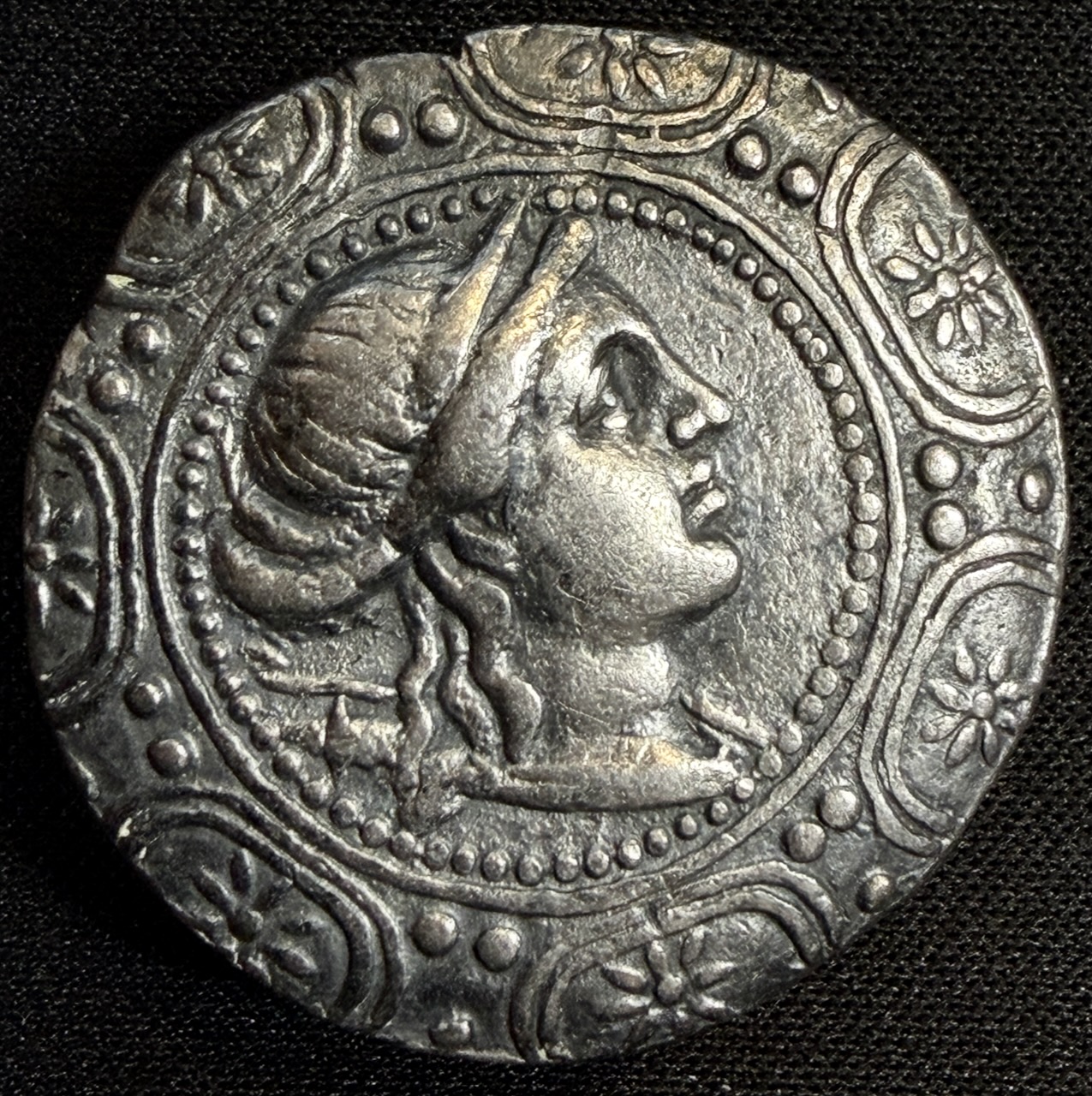
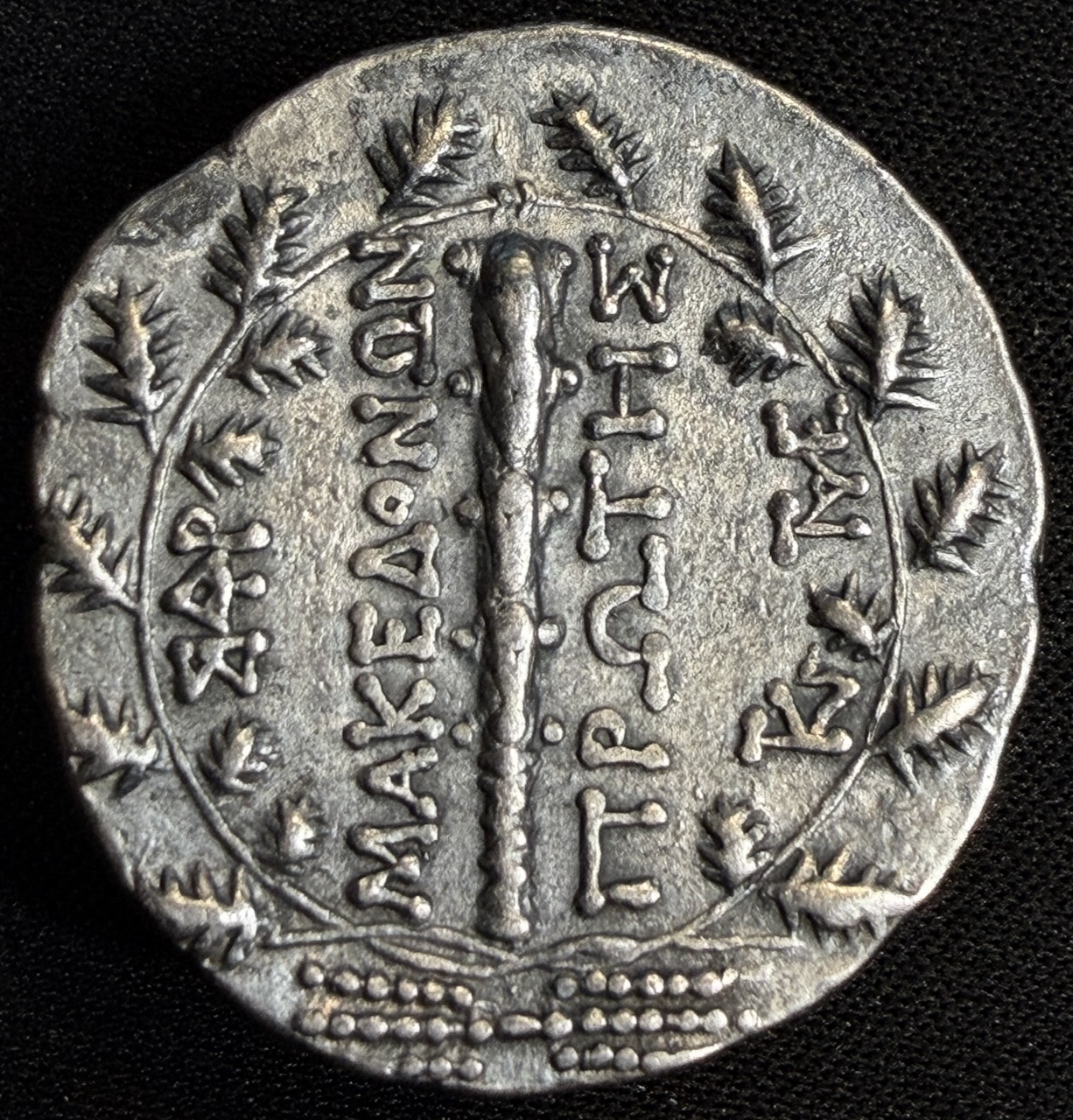
Obv: Diademed and draped bust of Artemis Tauropolos right, bow and quiver at her shoulder, at the center of a Macedonian shield ornamented with stars in double crescents
Rev: Club right; control-monograms in field (partially legible on this specimen); all within oak wreath; thunderbolt outside to left (standard for the issue; weak on this specimen)
Ref: HGC 3.1, 1103
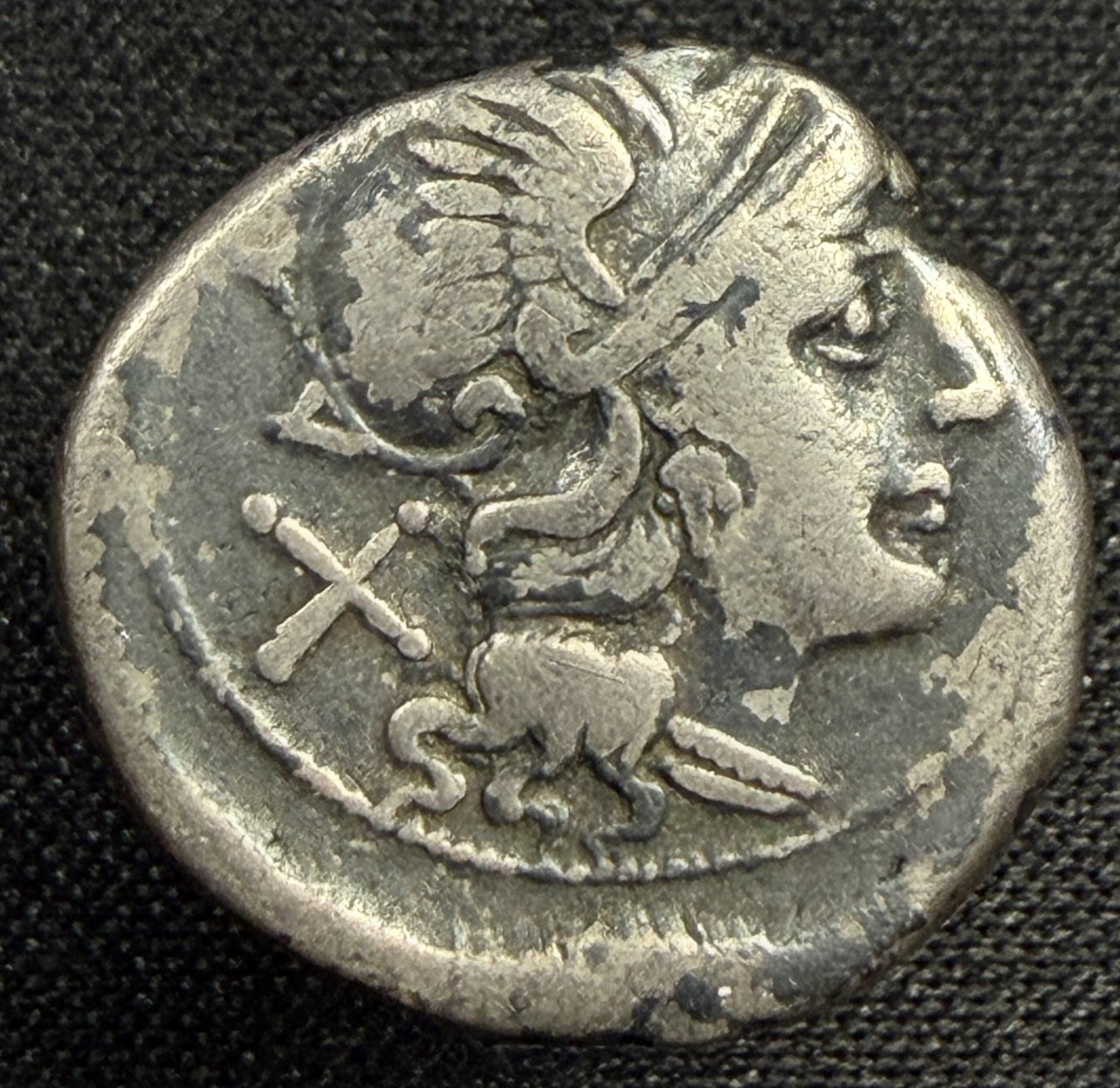
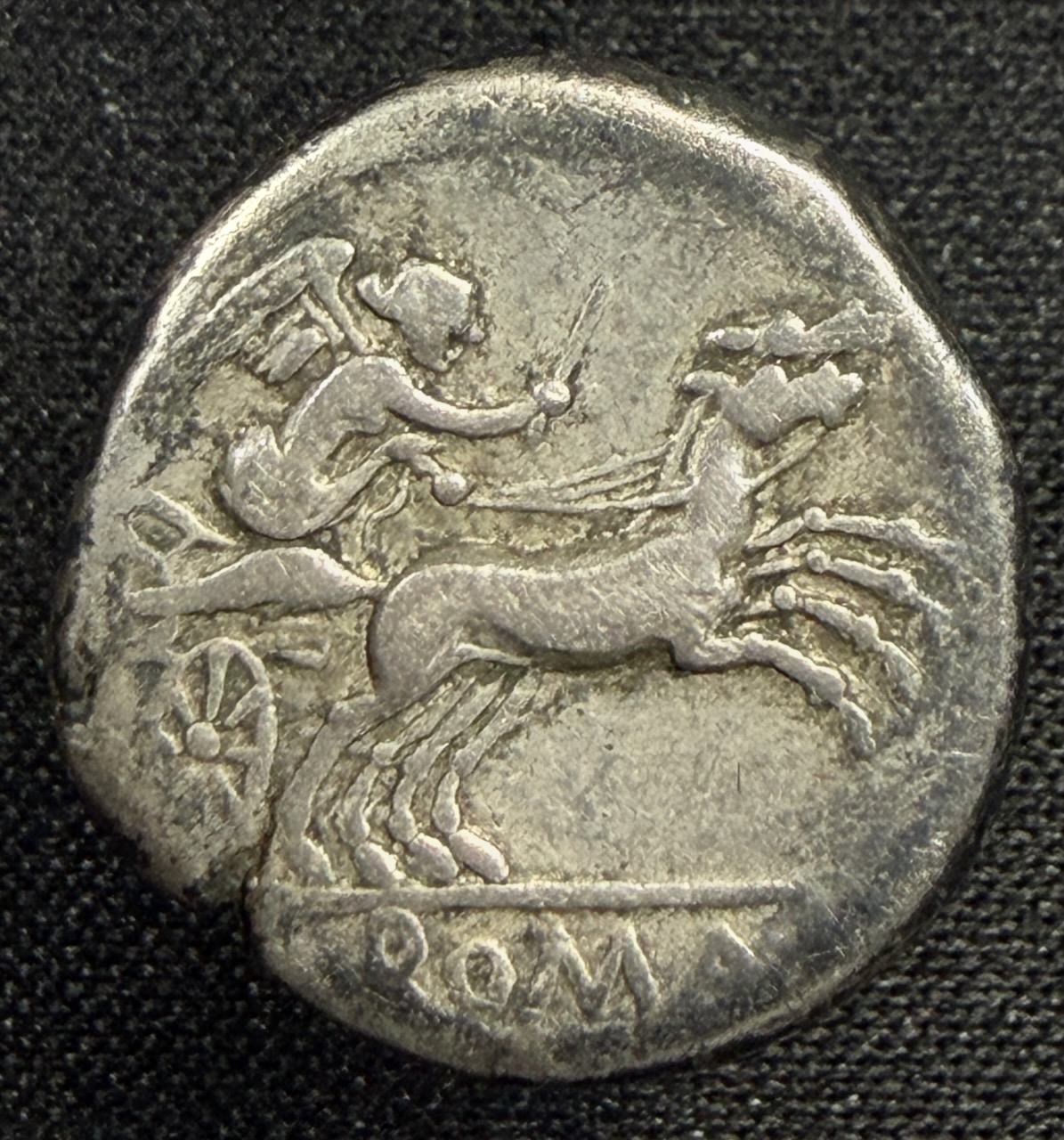
Obv: Head of Roma right in winged helmet; denomination mark X (= 10 asses) behind
Rev: Victory, holding whip and reins, driving galloping biga right; ROMA in exergue
Ref: Crawford 197/1b
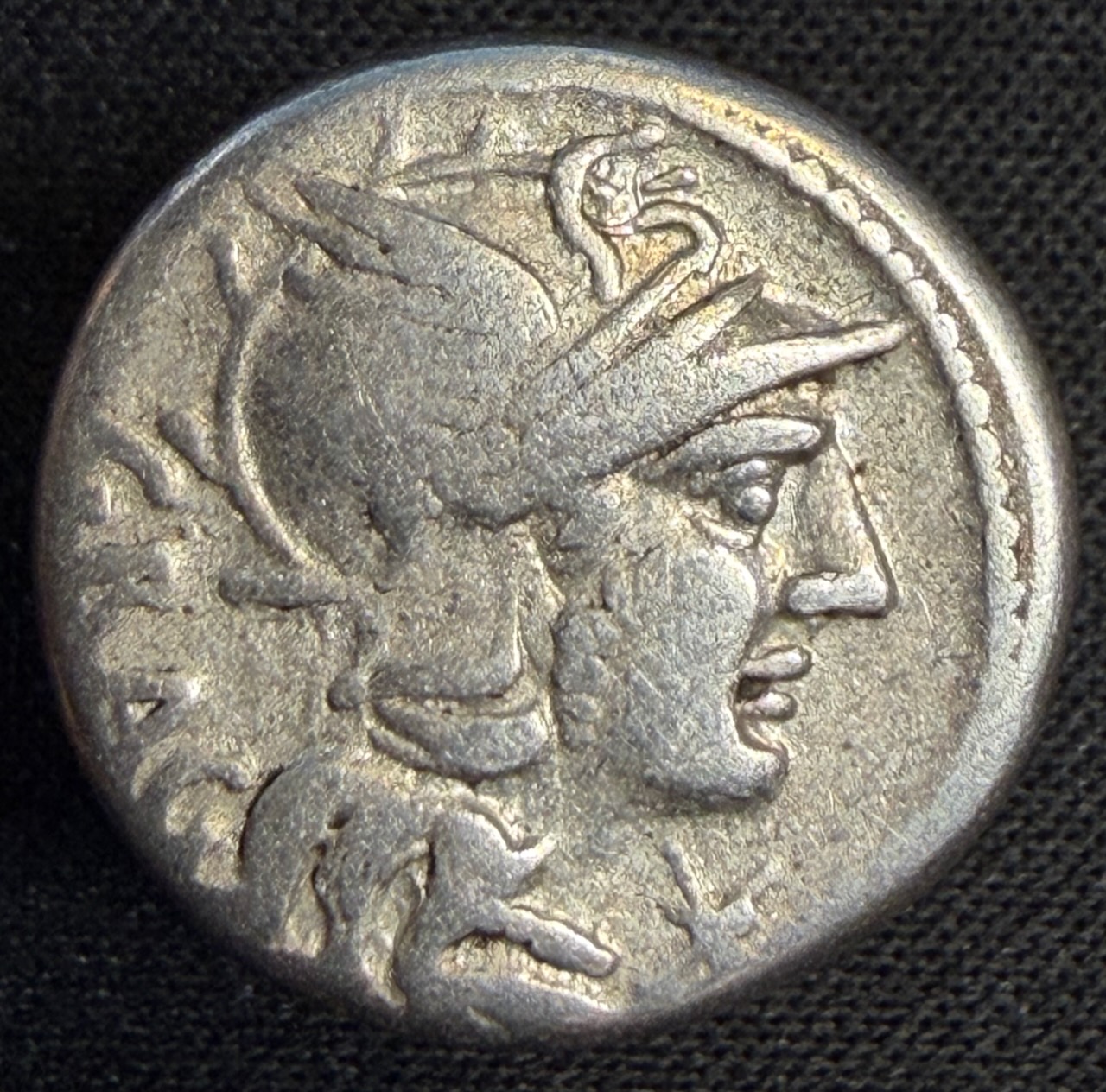
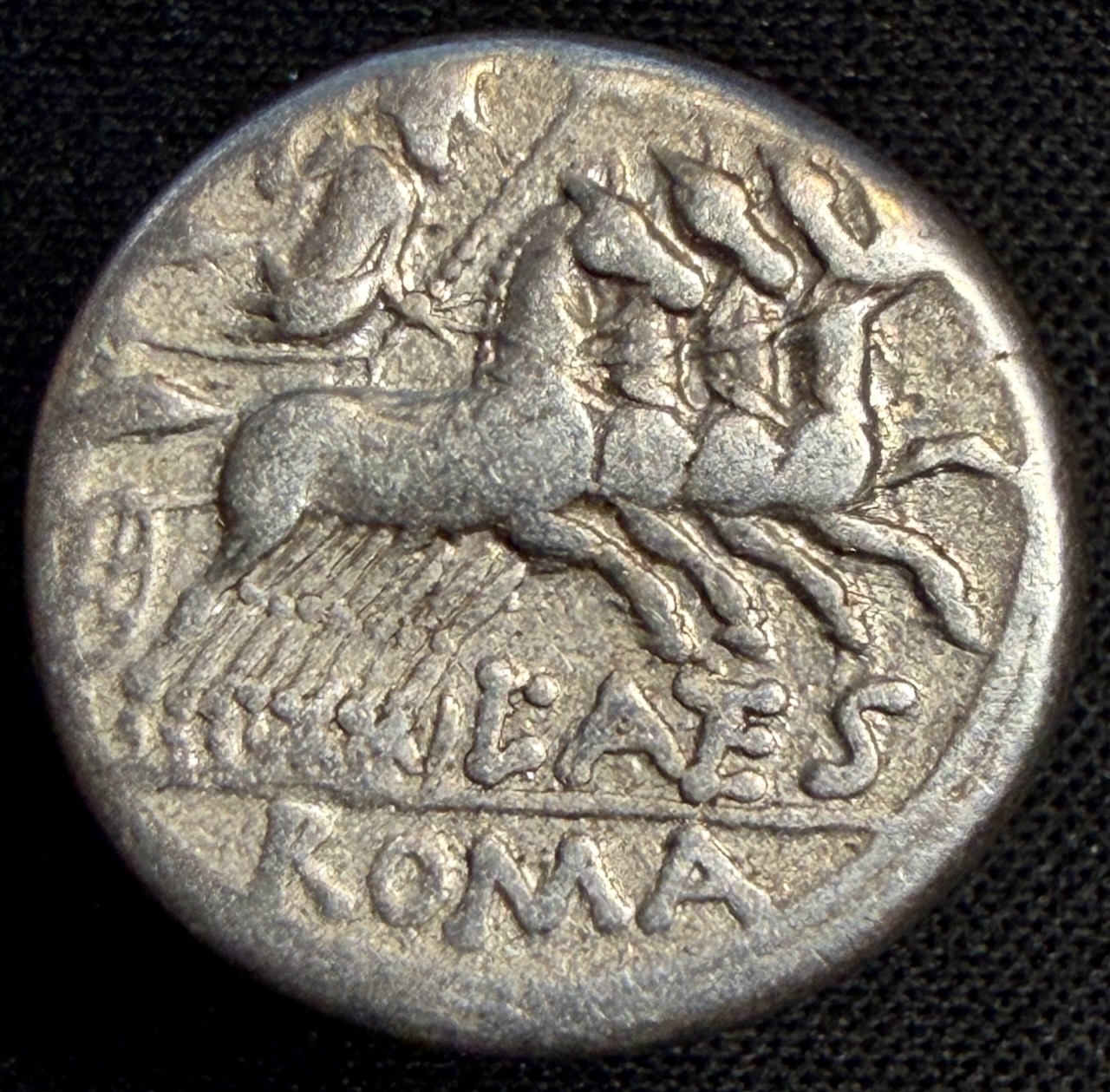
Obv: Helmeted head of Roma right; GRAG downward behind; ✱ (crossed X, the XVI-asses value mark) below chin
Rev: Jupiter in quadriga galloping right, holding sceptre and reins in left hand and hurling thunderbolt with right hand; L·ANTES below horses (ANTE in ligature — reads 'L·AES' at a glance); ROMA in linear frame in exergue
Ref: Crawford 238/1
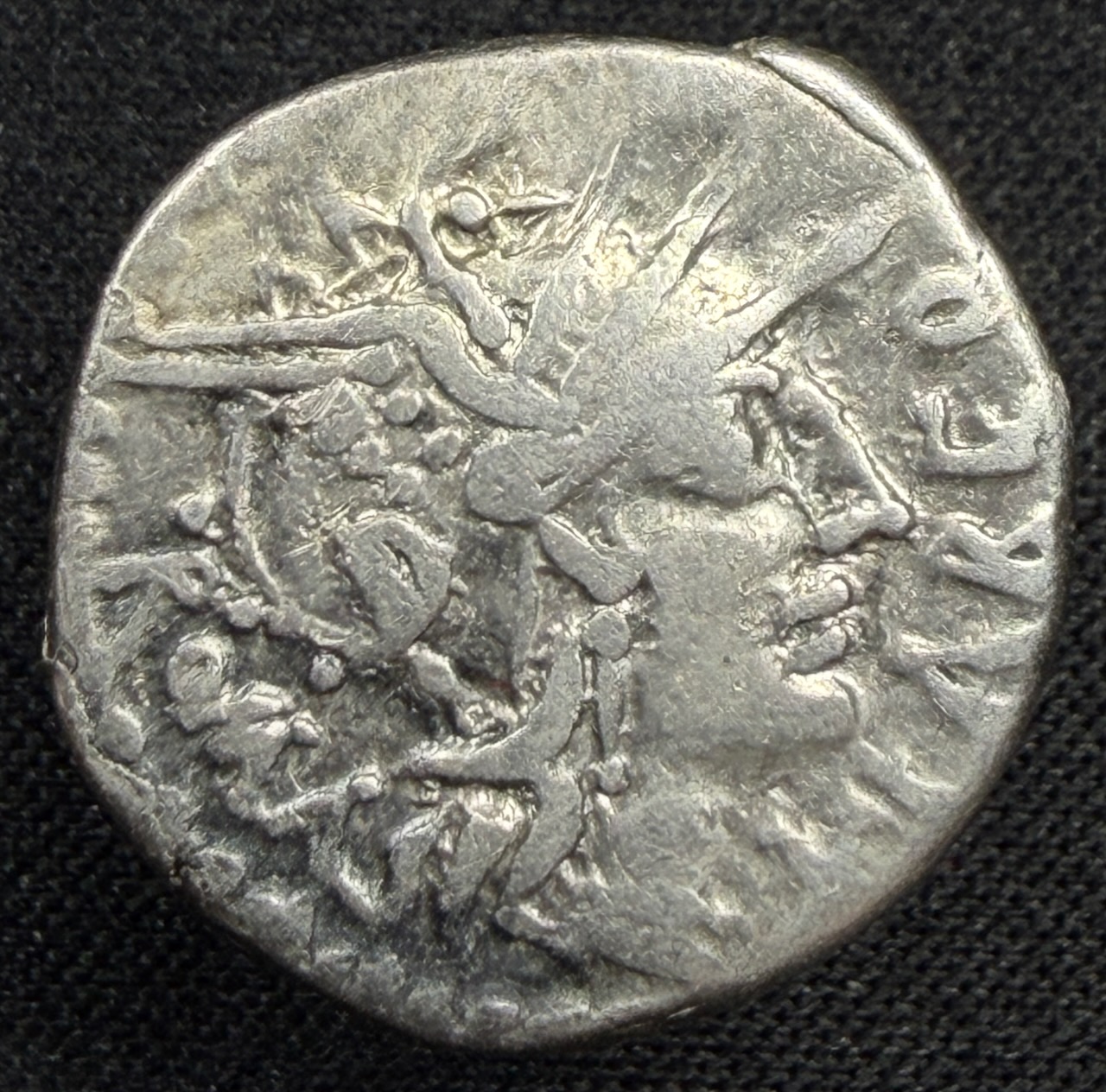
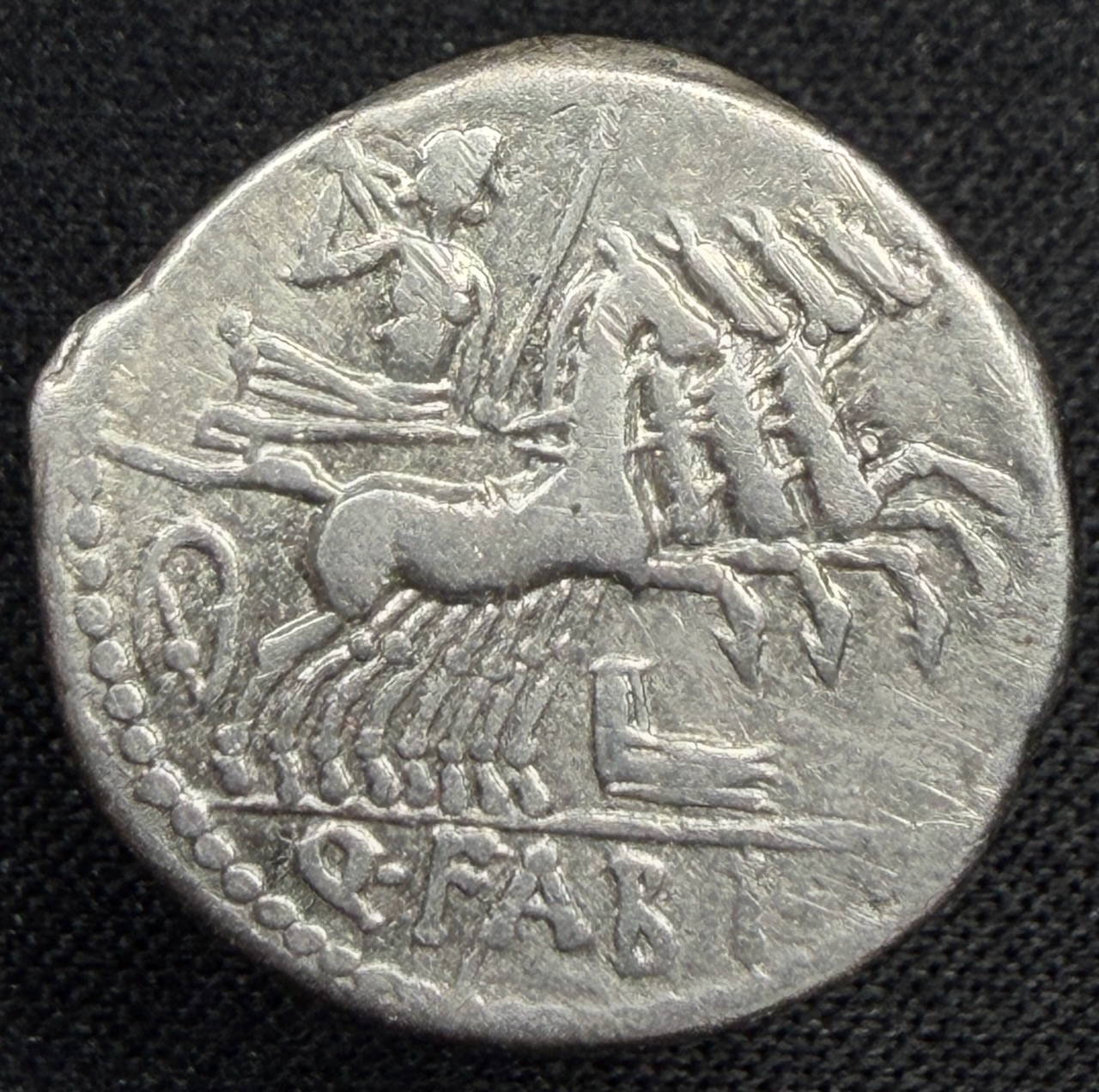
Obv: Helmeted head of Roma right; ROMA upward behind, LABEO downward before, X (mark of value) below chin
Rev: Jupiter in quadriga galloping right, holding sceptre and reins in left hand and hurling thunderbolt with right hand; below the horses, the beak (rostrum) of a warship; Q·FABI in exergue
Ref: Crawford 273/1
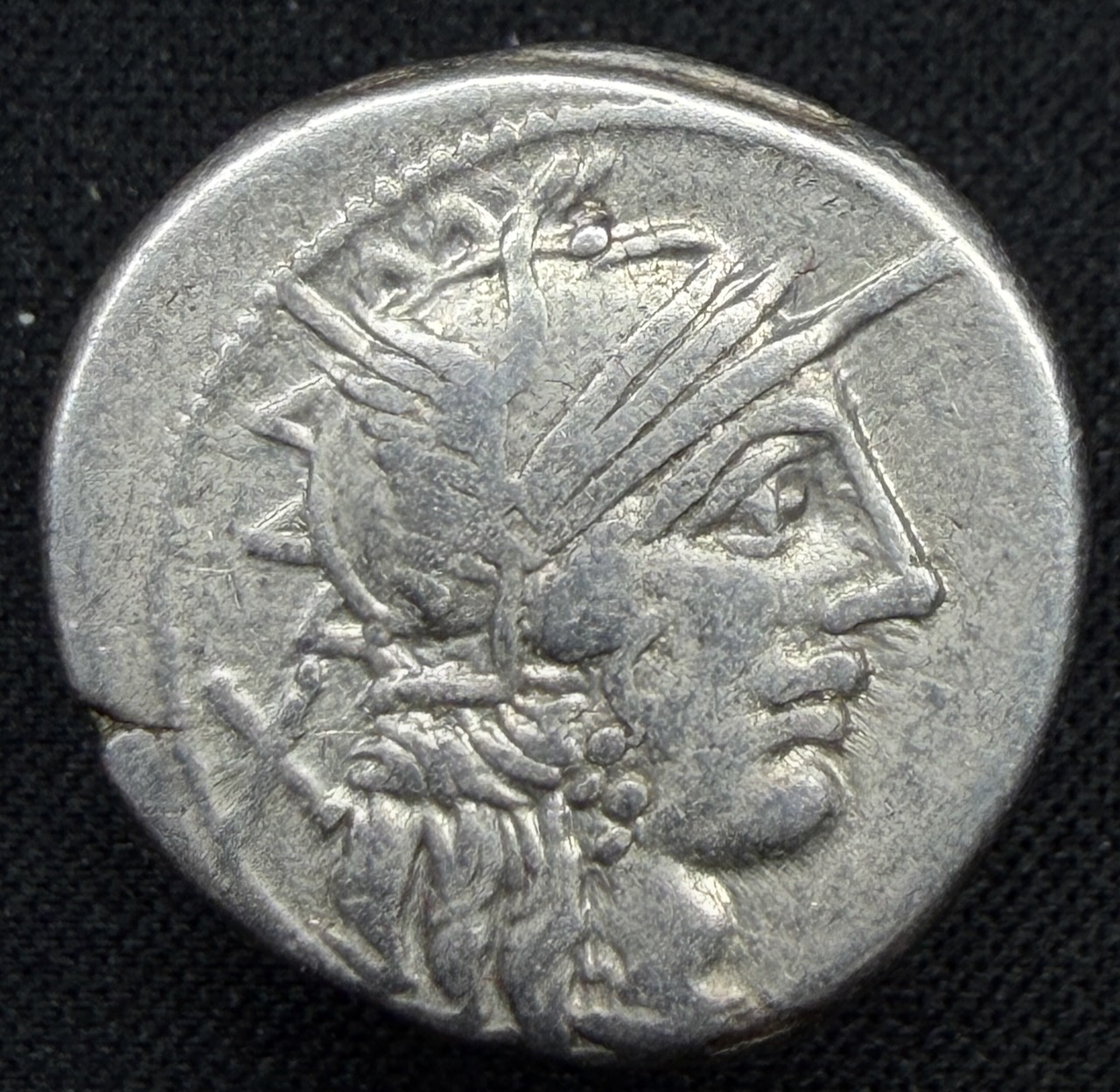
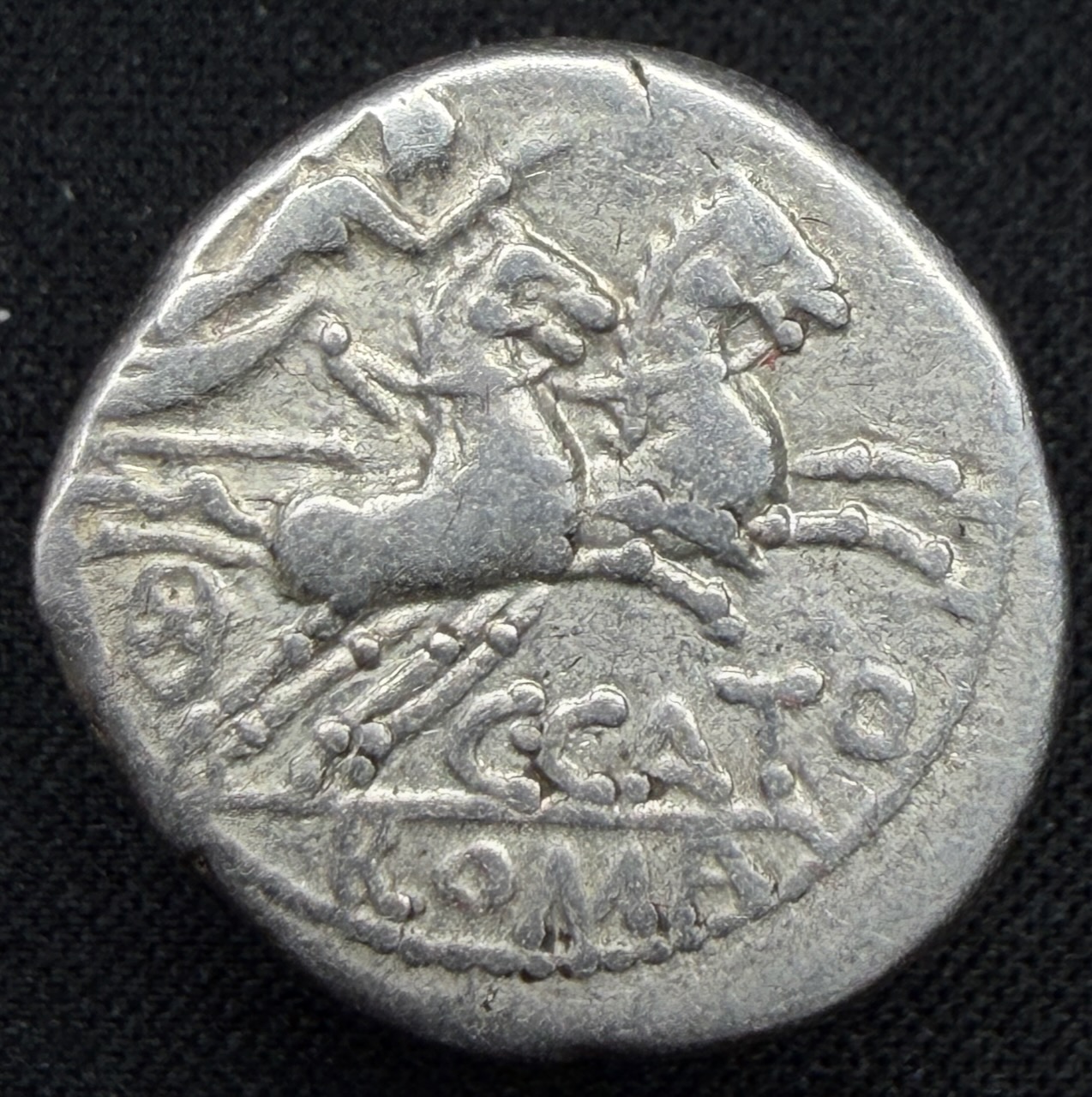
Obv: Helmeted head of Roma right; denomination mark X behind
Rev: Victory in biga right, holding reins and goad; C·CATO below horses, ROMA in exergue
Ref: Crawford 274/1
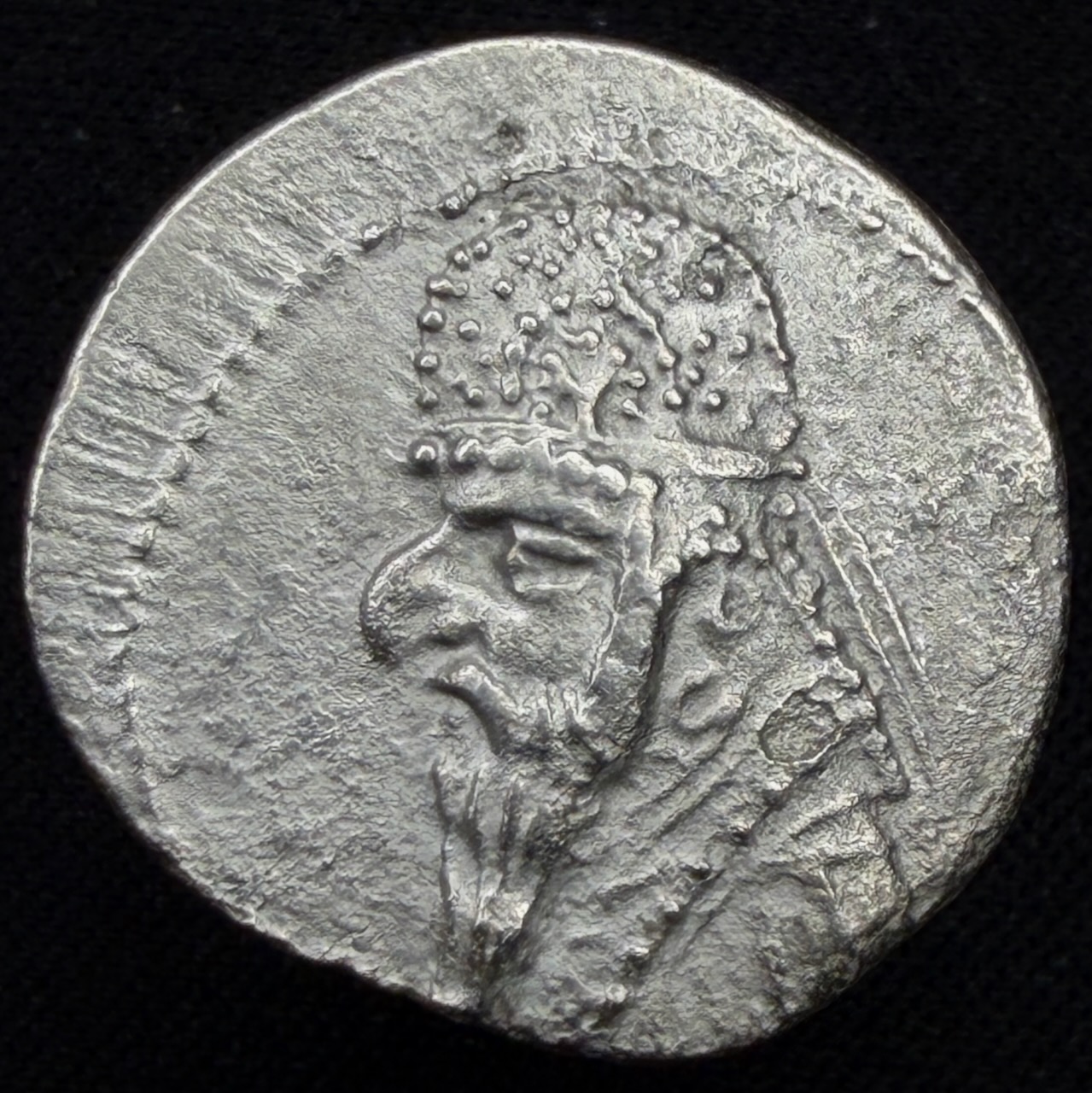
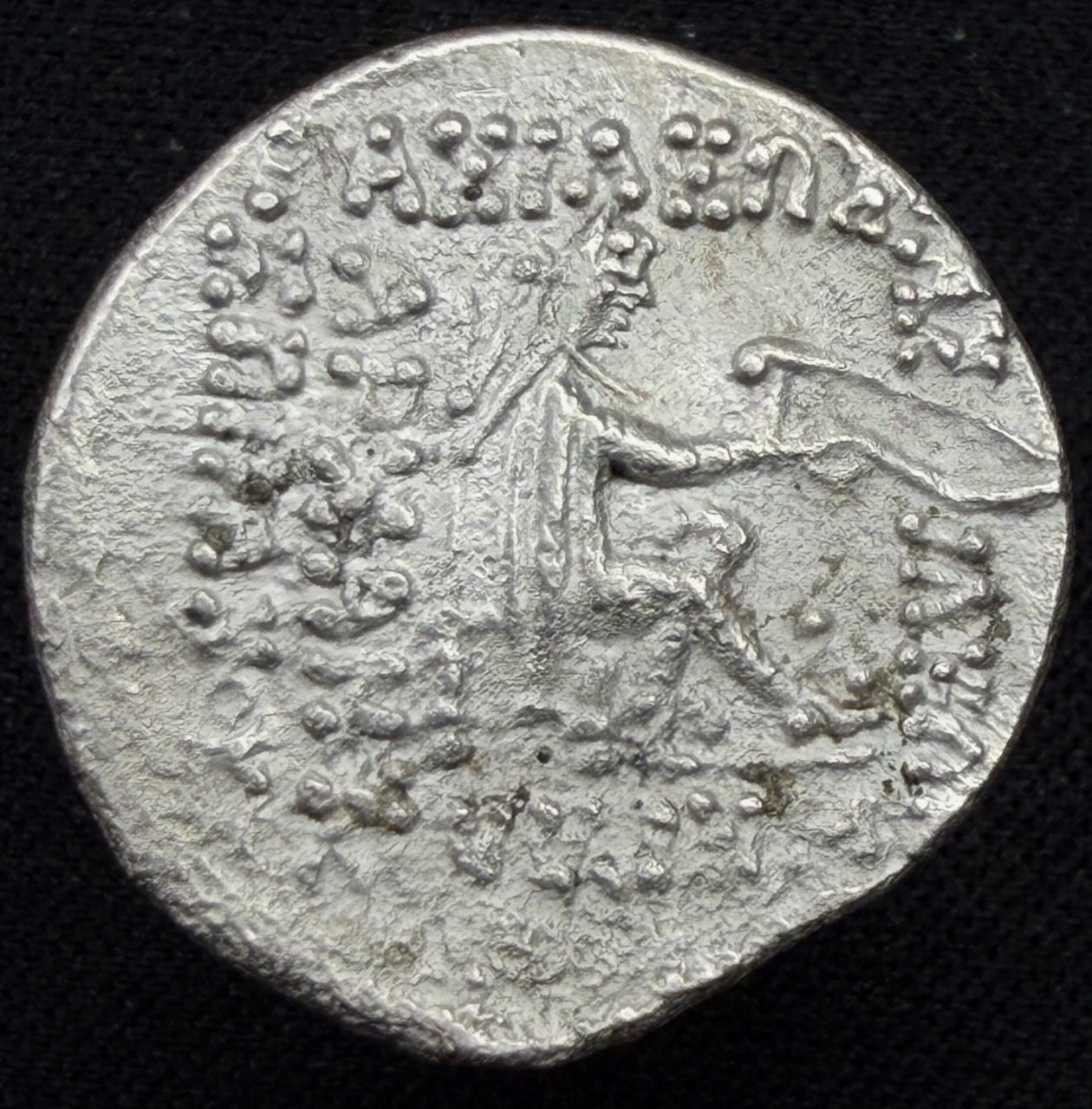
Obv: Long-bearded draped bust left wearing tall Parthian tiara ornamented with a star of pellets, pellet-decorated earflap, and diadem ties; border of pellets
Rev: Beardless archer (Arsakes I) wearing bashlyk and cloak seated right on throne, holding bow in right hand; five-line Greek legend
Ref: Shore 97
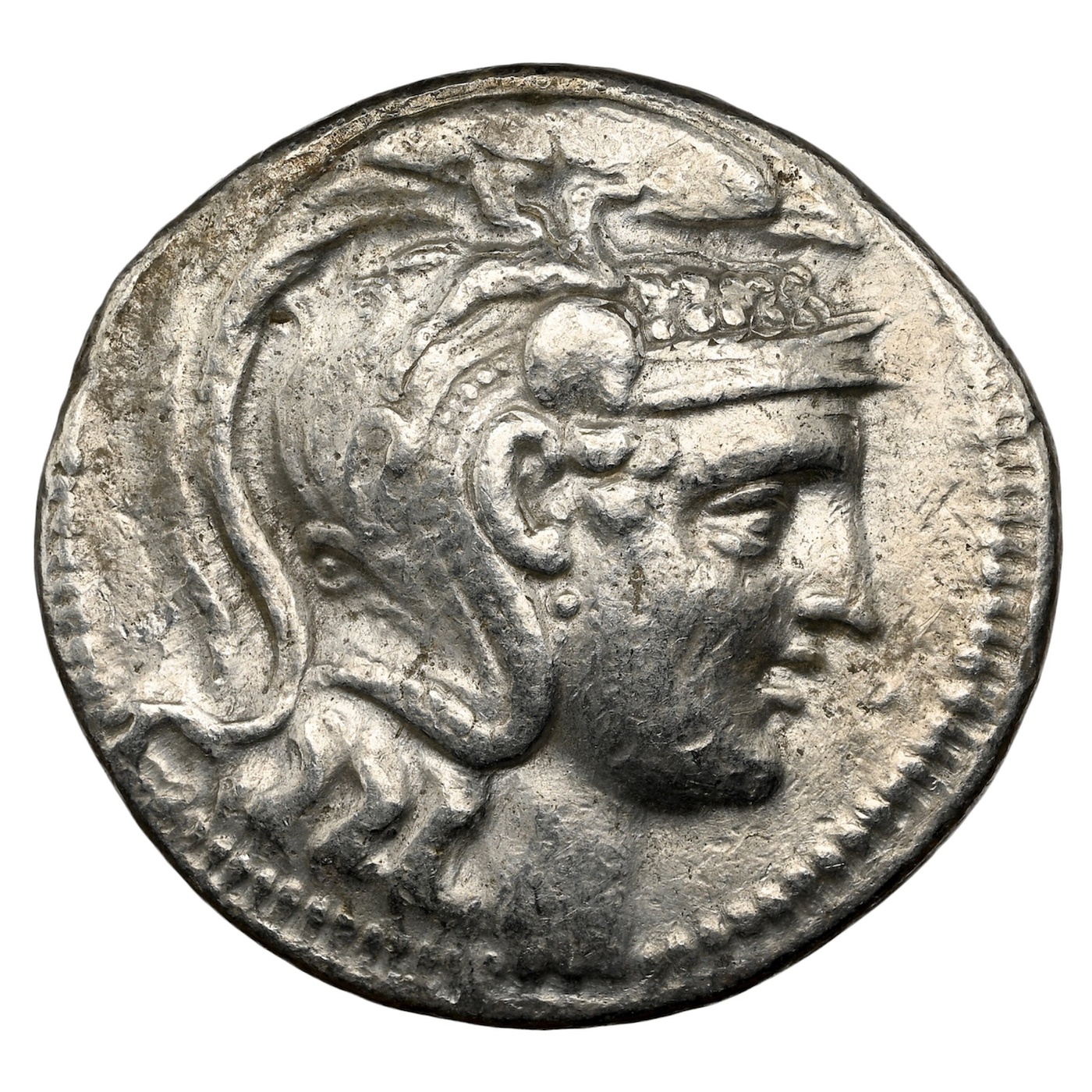
Obv: Head of Athena right, wearing a triple-crested Attic helmet: the bowl decorated with a vine scroll, a Pegasos above the raised cheek-piece, and the foreparts of four horses above the visor. The eye is in true profile and the modeling is full and Hellenistic — a head derived from Pheidias' cult statue in the Parthenon rather than from the archaizing face of the fifth-century owls.
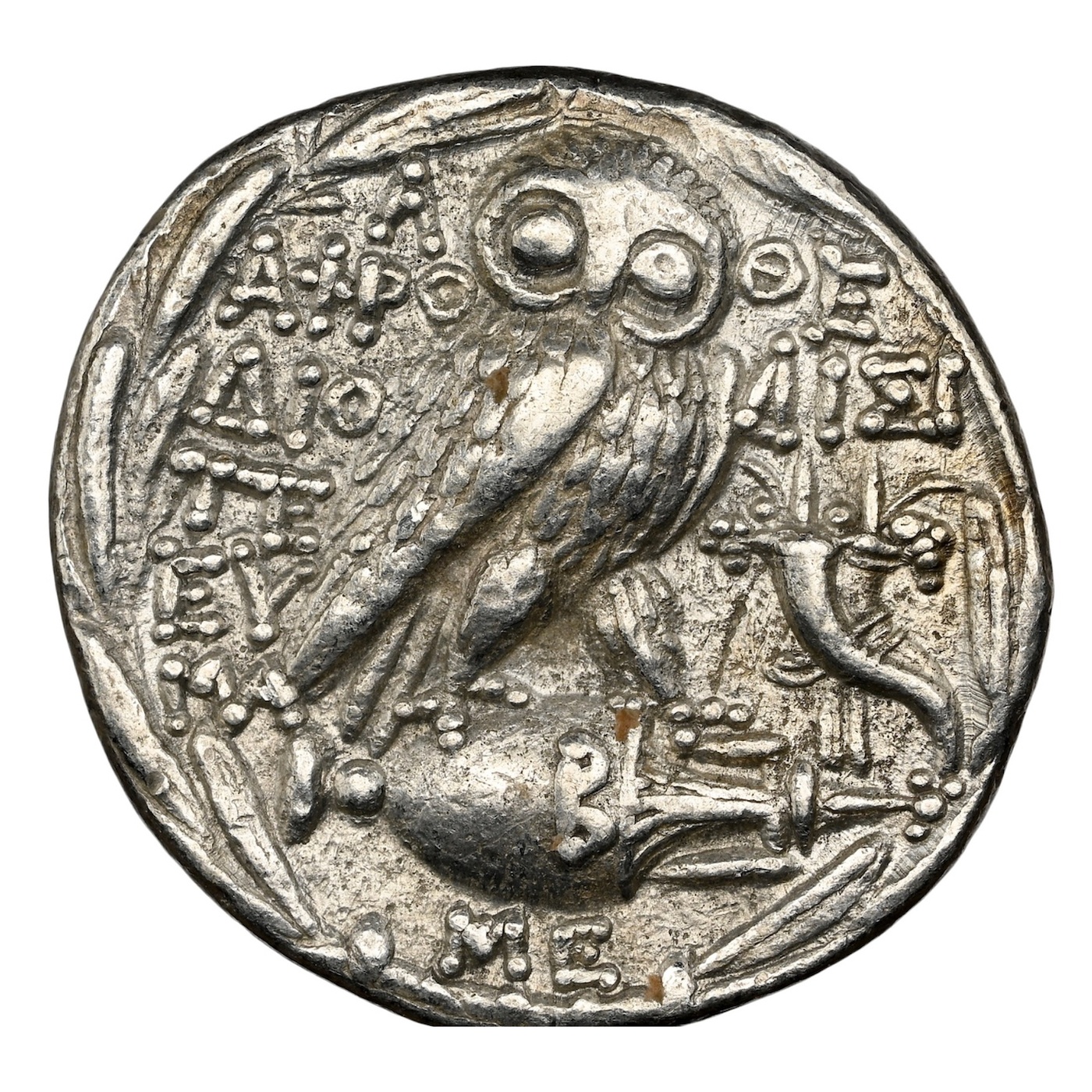
Rev: Owl standing facing on an overturned Panathenaic amphora, the whole within a closed olive wreath. Names in the fields: Α-ΘΕ across the top, then the two annual magistrates ΑΦΡΟ-ΔΙΣΙ and ΔΙΟ-ΓΕ, and below them the monthly official ΕΥ-ΜΑ. The letter Β on the amphora gives the month; a double cornucopia bound with fillets stands in the right field as the year's control symbol; ΜΕ appears in the exergue. The flan is broad and thin, the fabric of a Hellenistic stephanephoros rather than of a classical owl.
Ref: Thompson 545a; HGC 4, 1602
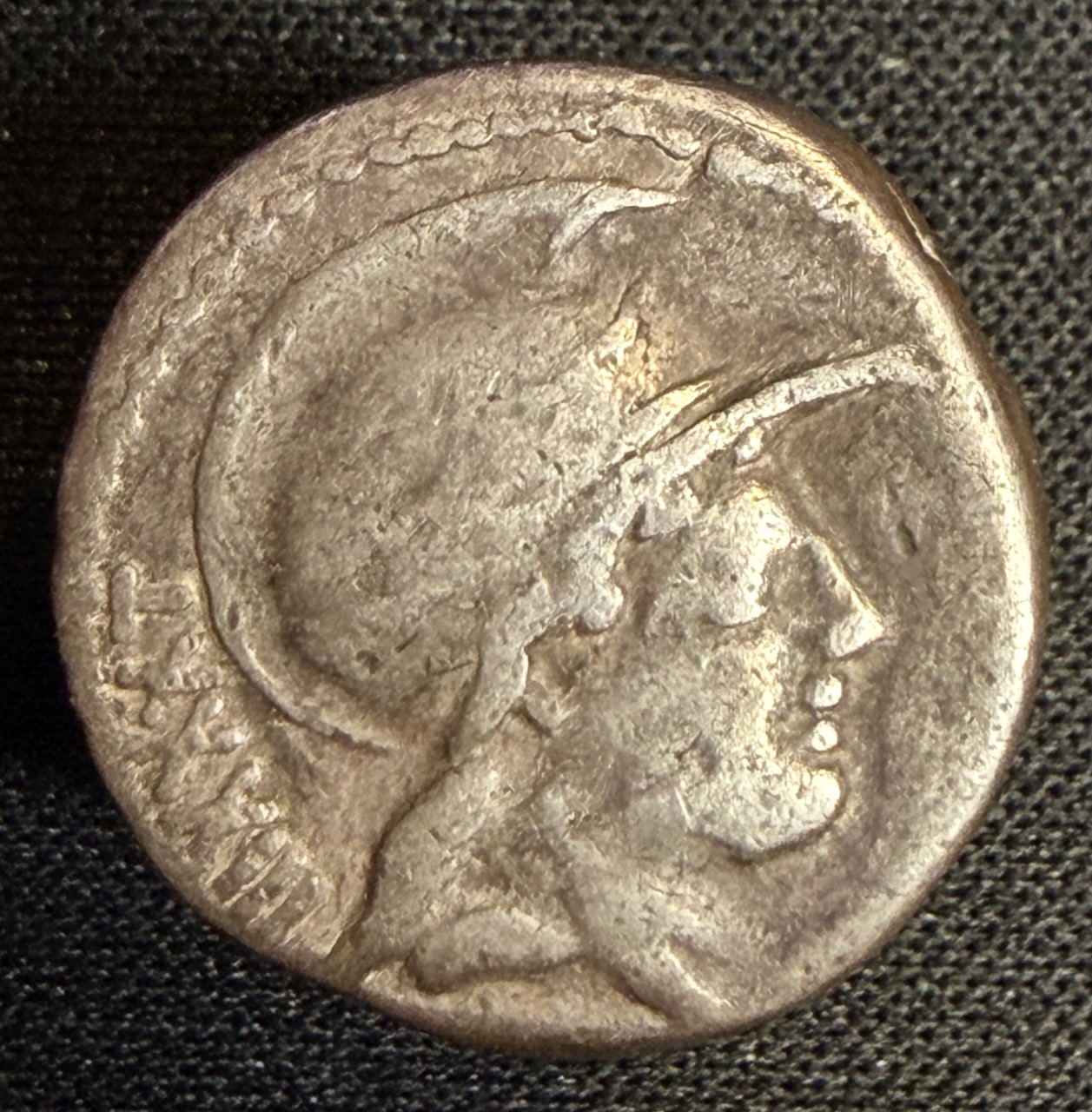
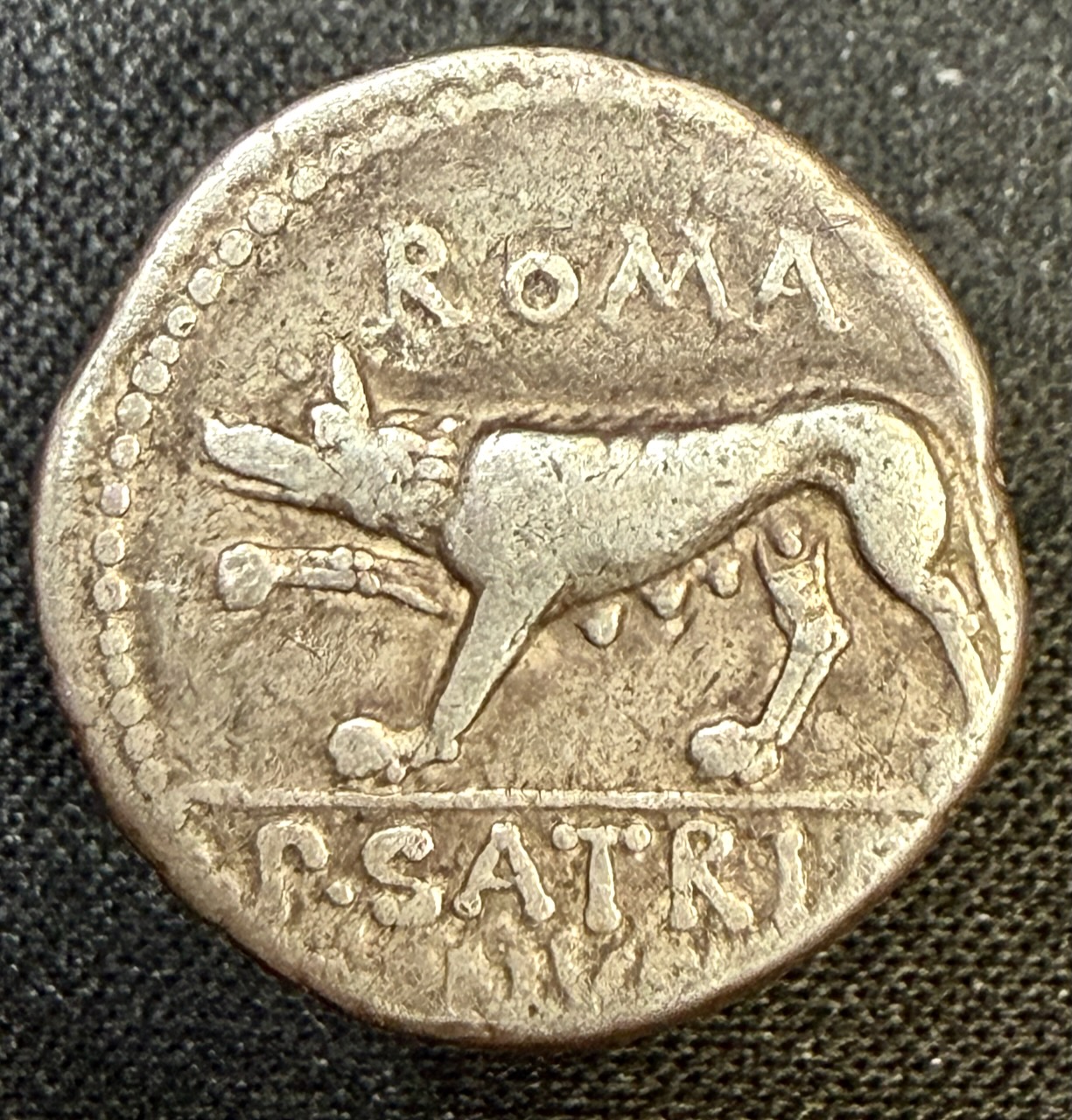
Obv: Helmeted head of Roma right; control numeral behind (LXXXIII on this specimen's die)
Rev: She-wolf standing left, right forepaw raised; ROMA above, moneyer's name in exergue
Ref: Crawford 388/1b
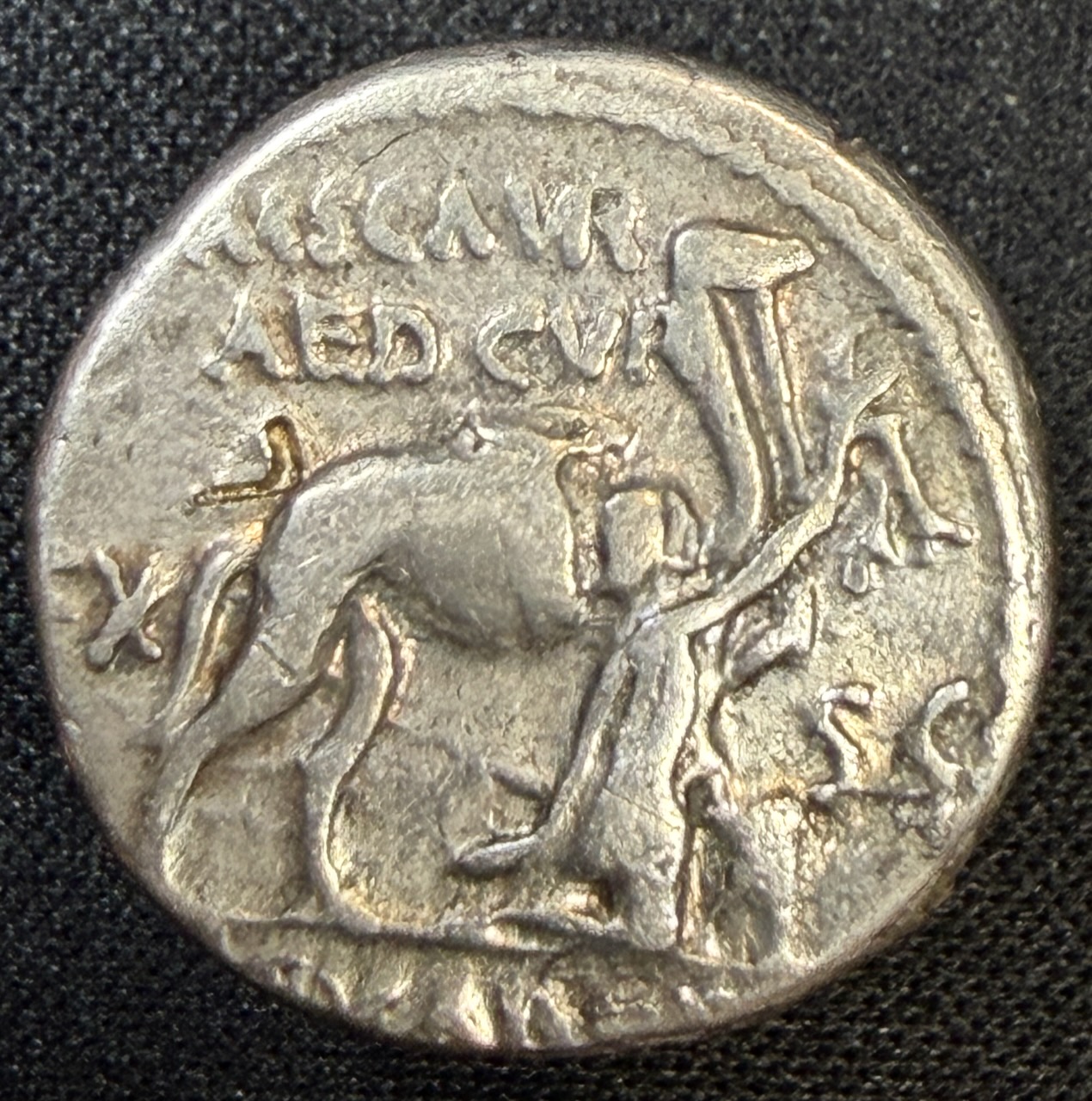
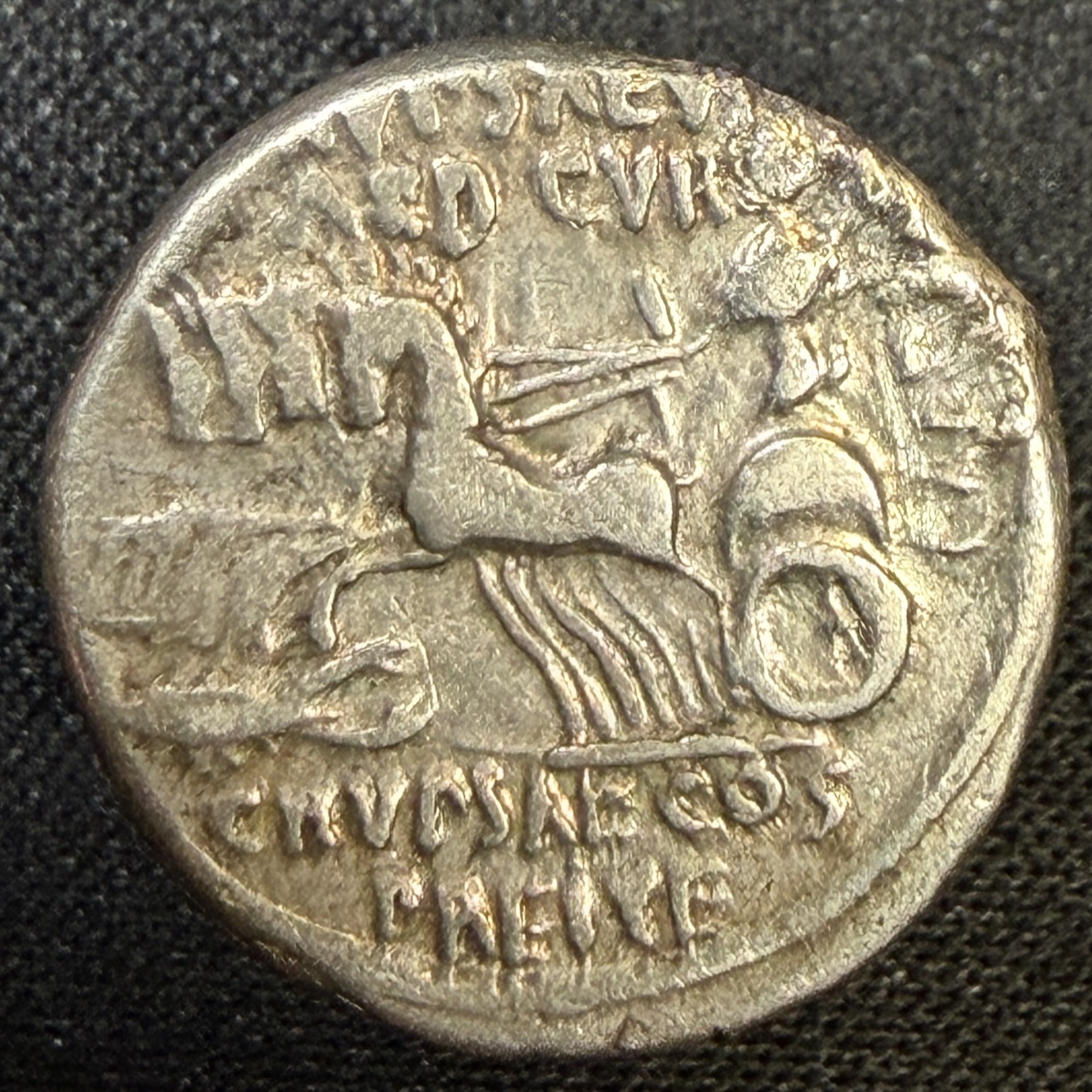
Obv: King Aretas III of Nabataea kneeling right beside his camel, extending an olive branch in supplication
Rev: Jupiter in quadriga left, brandishing thunderbolt; scorpion below the horses
Ref: Crawford 422/1b
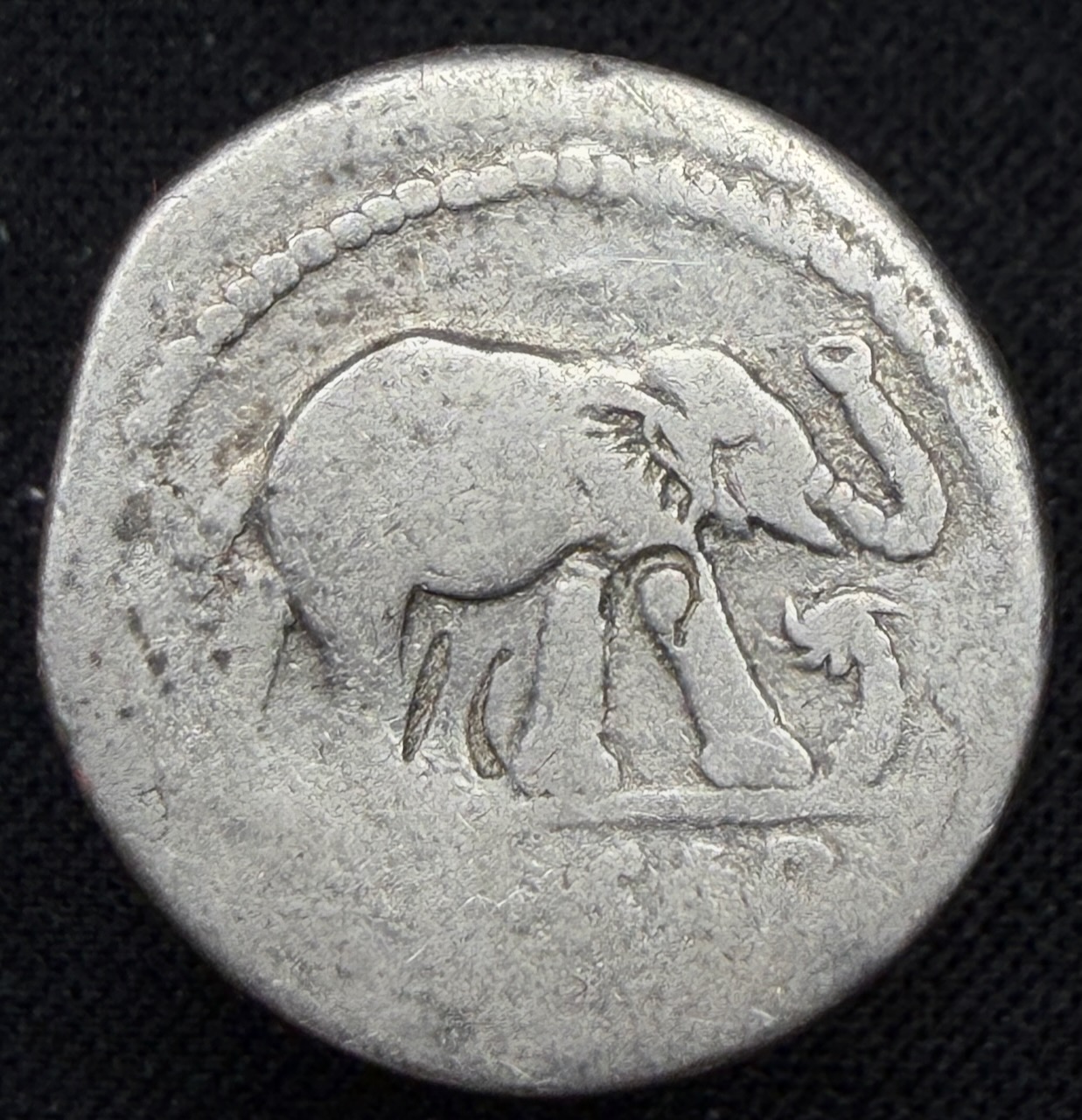
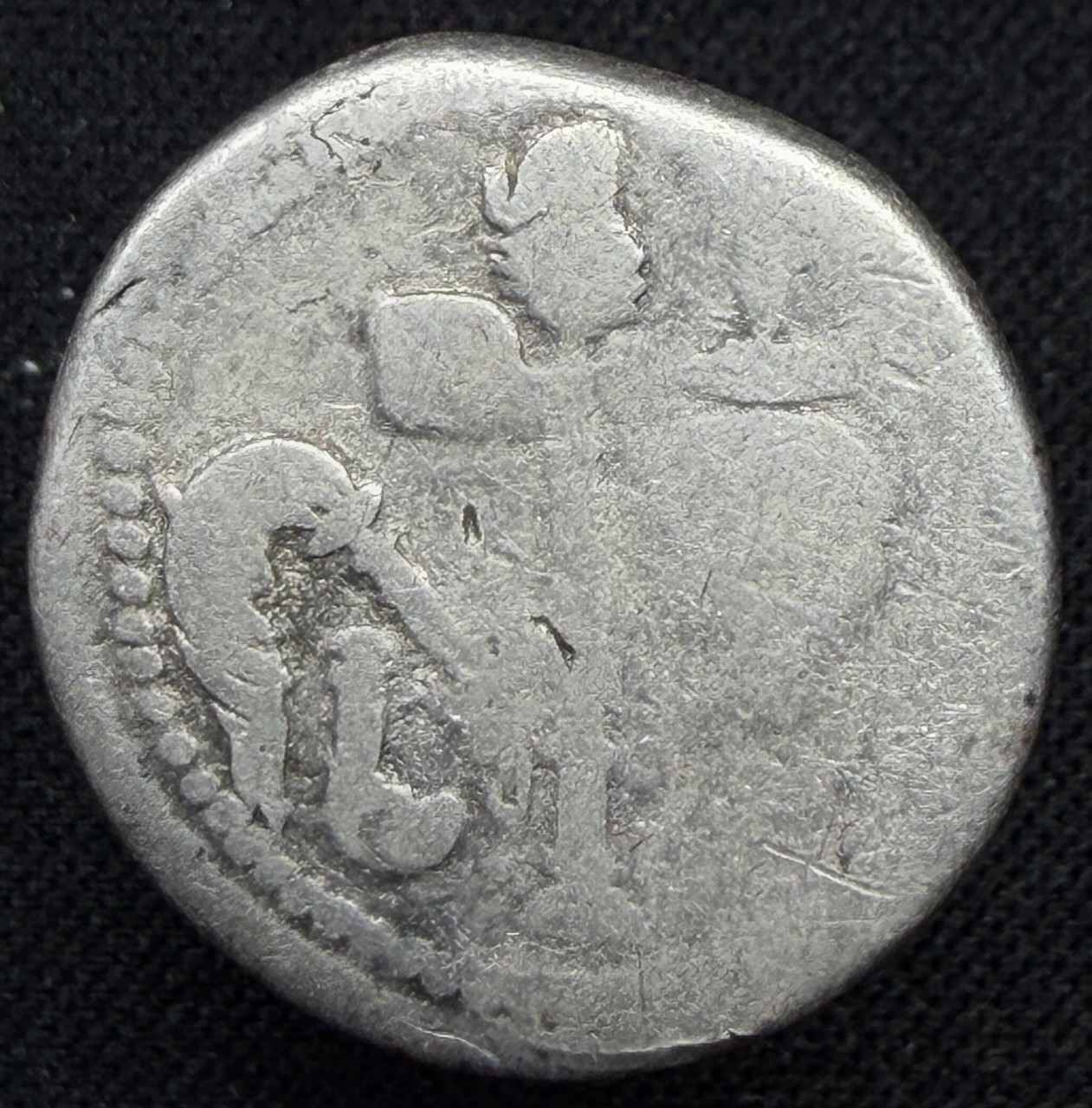
Obv: Elephant advancing right, trampling on a horned serpent (or dragon-headed Gallic war-trumpet, a carnyx); CAESAR in exergue
Rev: Priestly emblems: culullus (libation cup, or simpulum), aspergillum, sacena (pontifical sacrificial axe), and apex (spiked priestly cap — whose office it marks is debated; see Deeper dive)
Ref: Crawford 443/1
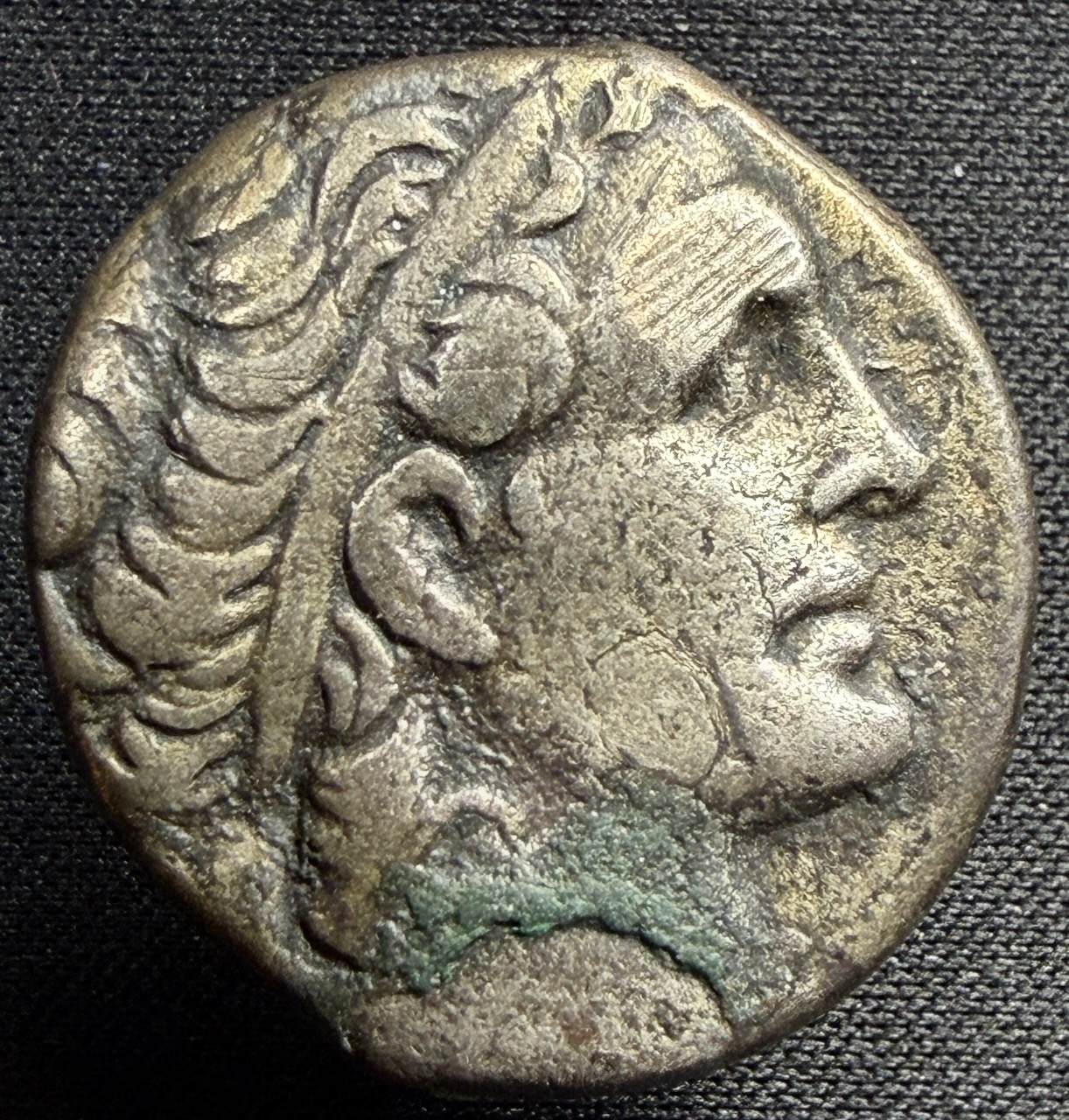
Obv: Diademed head right, wearing aegis — the standardized dynastic portrait of Ptolemy I retained on late Ptolemaic silver, not a portrait of the reigning queen
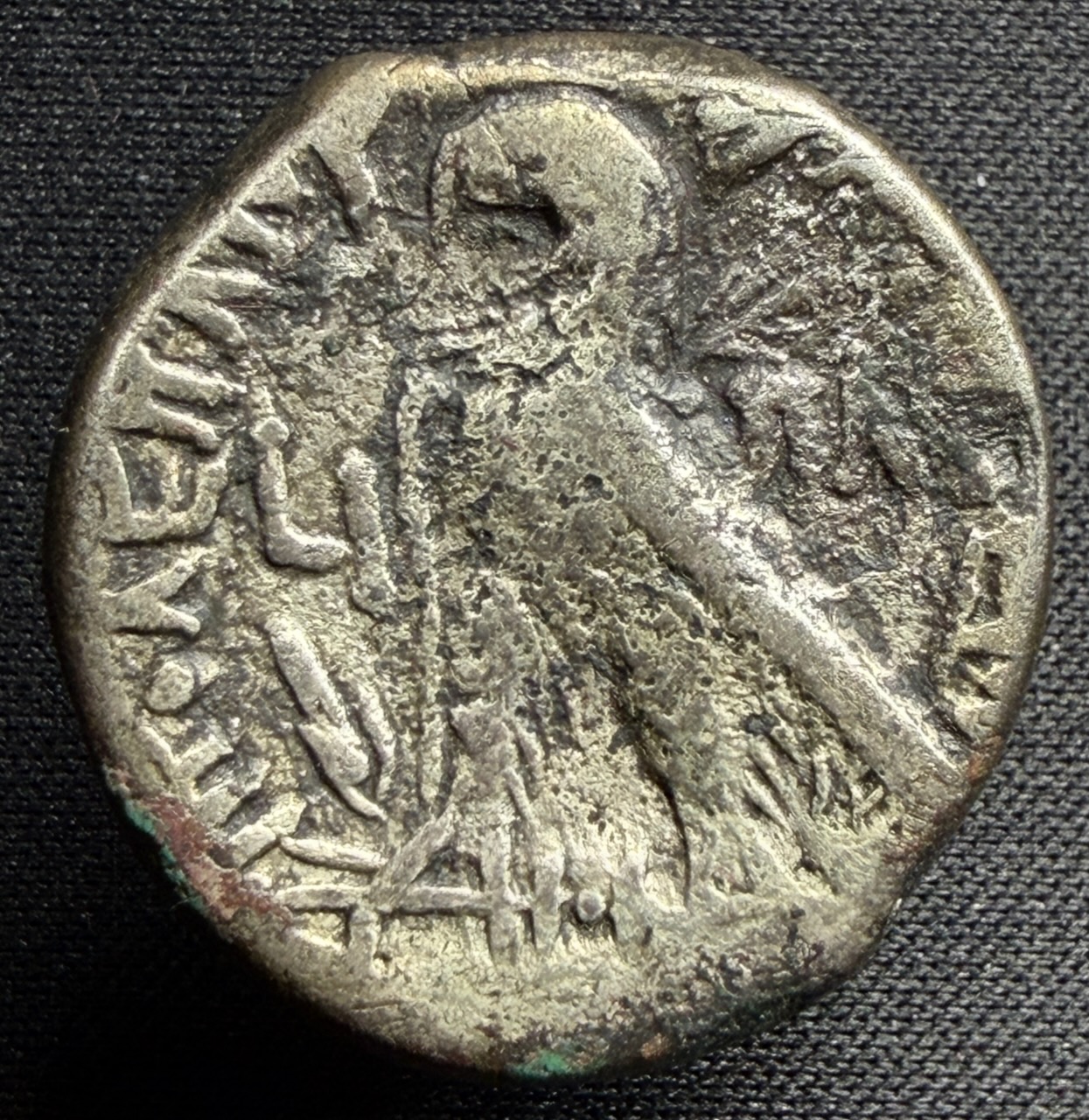
Rev: Eagle standing left on thunderbolt, wings closed; in left field, LI (regnal year 10) above the headdress of Isis; ΠΑ (mint of Paphos) in right field
Ref: Svoronos 1824 (as Ptolemy XIII)
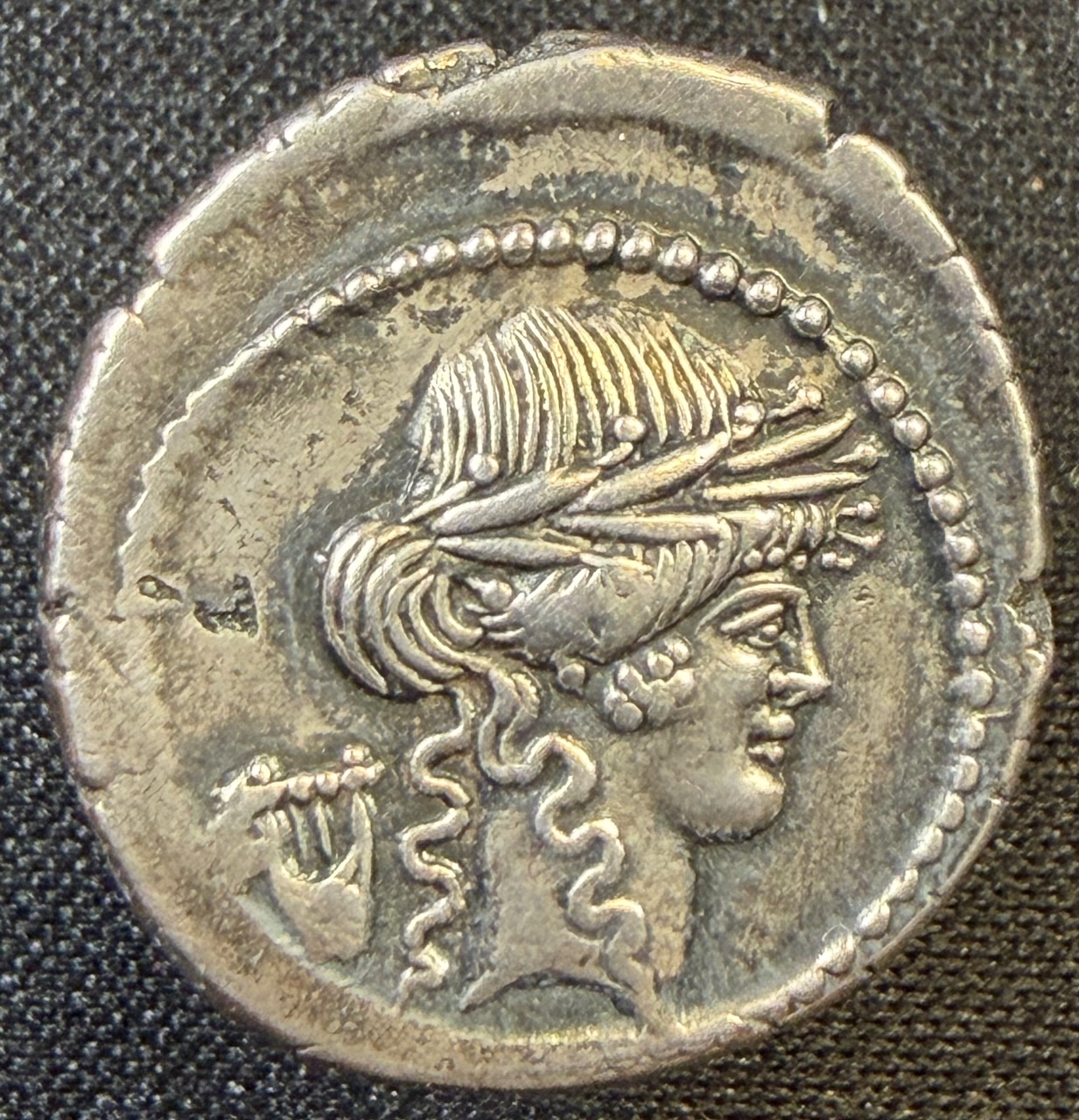
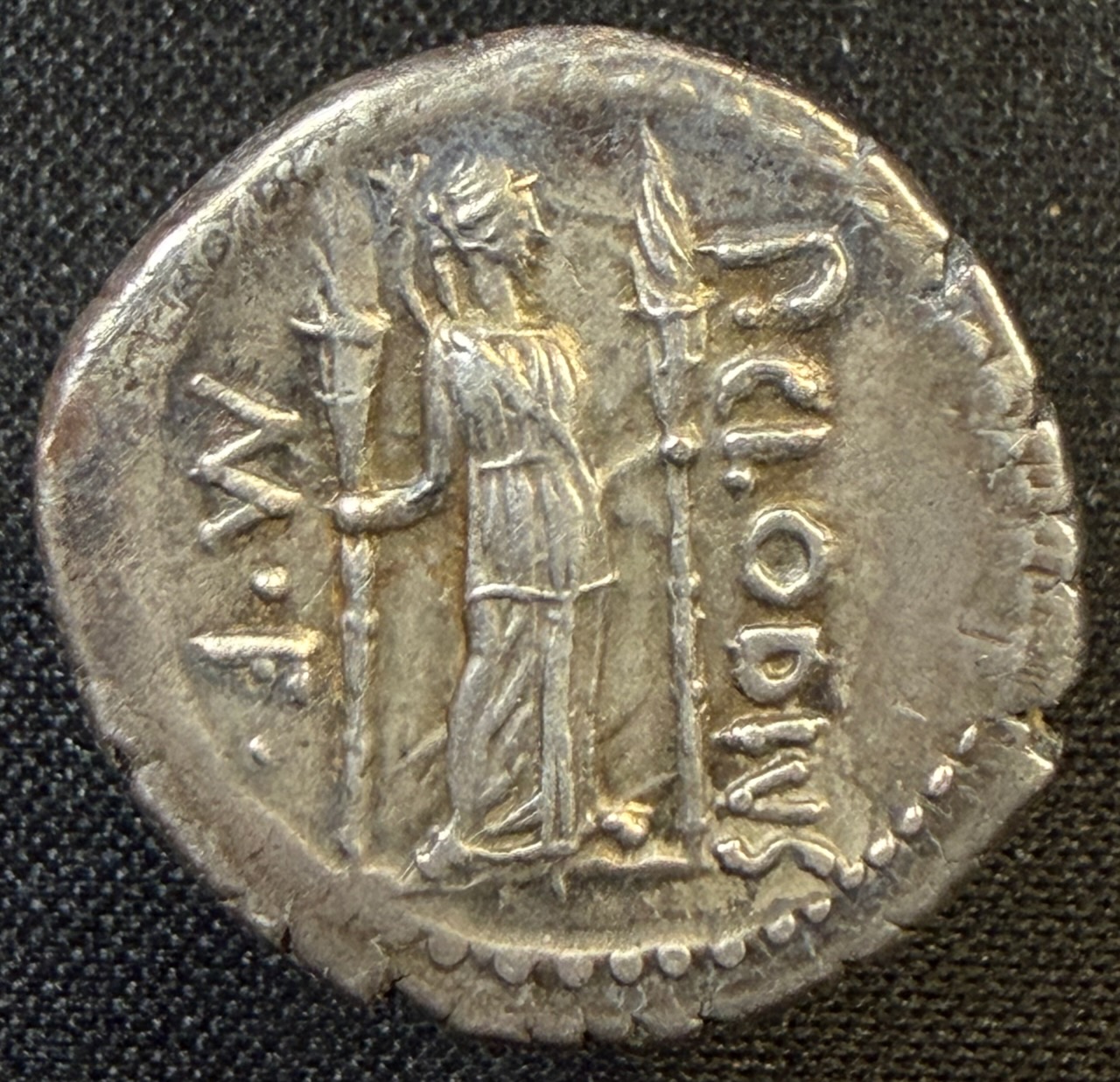
Obv: Laureate head of Apollo right; lyre behind
Rev: Diana Lucifera standing facing, bow and quiver over her shoulder, holding a lighted torch in each hand
Ref: Crawford 494/23
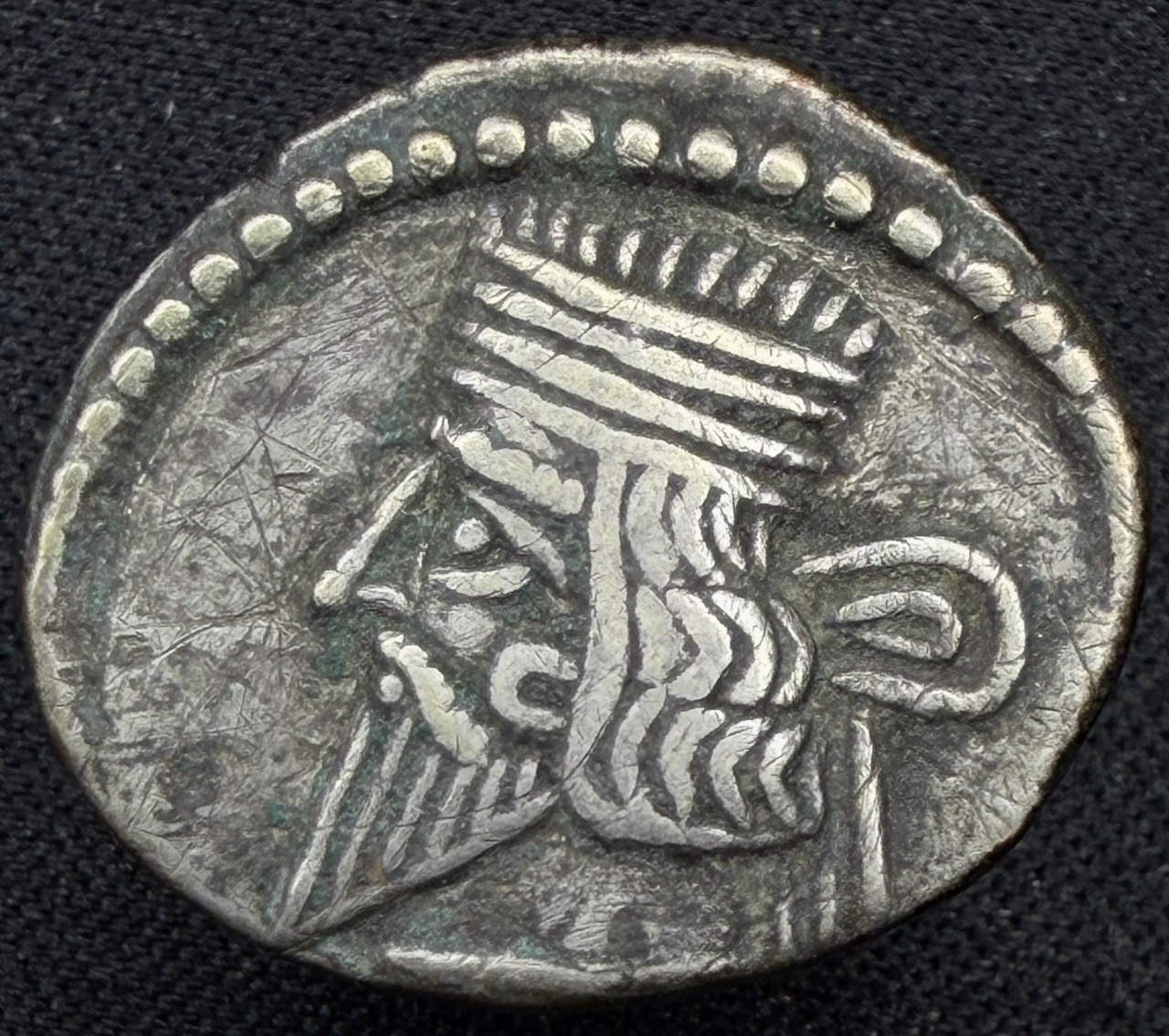
Obv: Diademed bust left with pointed beard and segmented necklet, wart on forehead; in front, star above crescent; behind, eagle flying left holding wreath (diadem); circular border of pellets
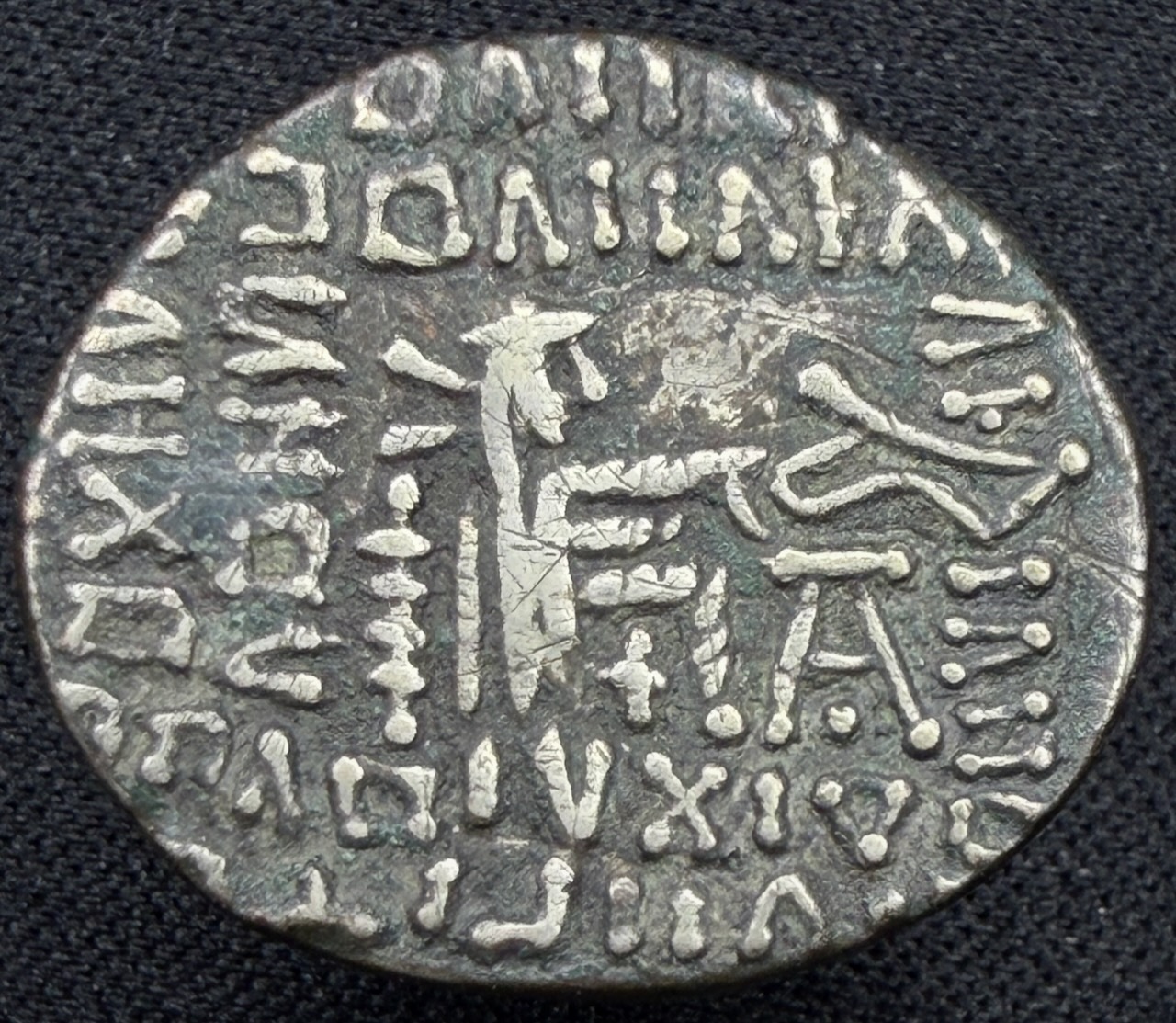
Rev: Beardless archer (Arsakes I) wearing bashlyk and cloak seated right on throne, holding bow in right hand; monogram below bow (Ekbatana mint); seven-line Greek legend
Ref: Sellwood 54.7
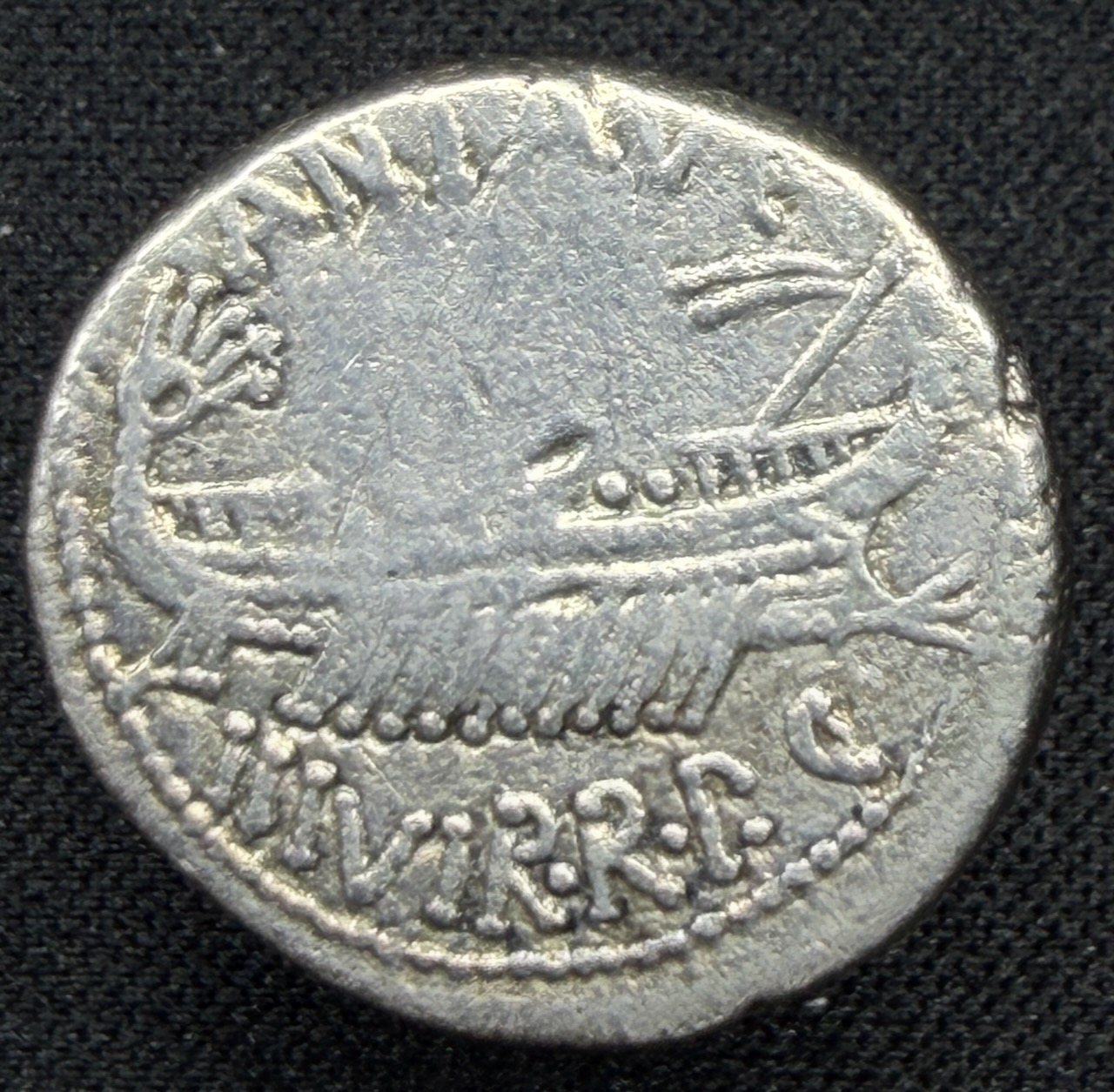
Obv: Praetorian galley right with rowers, mast with fluttering banners at prow
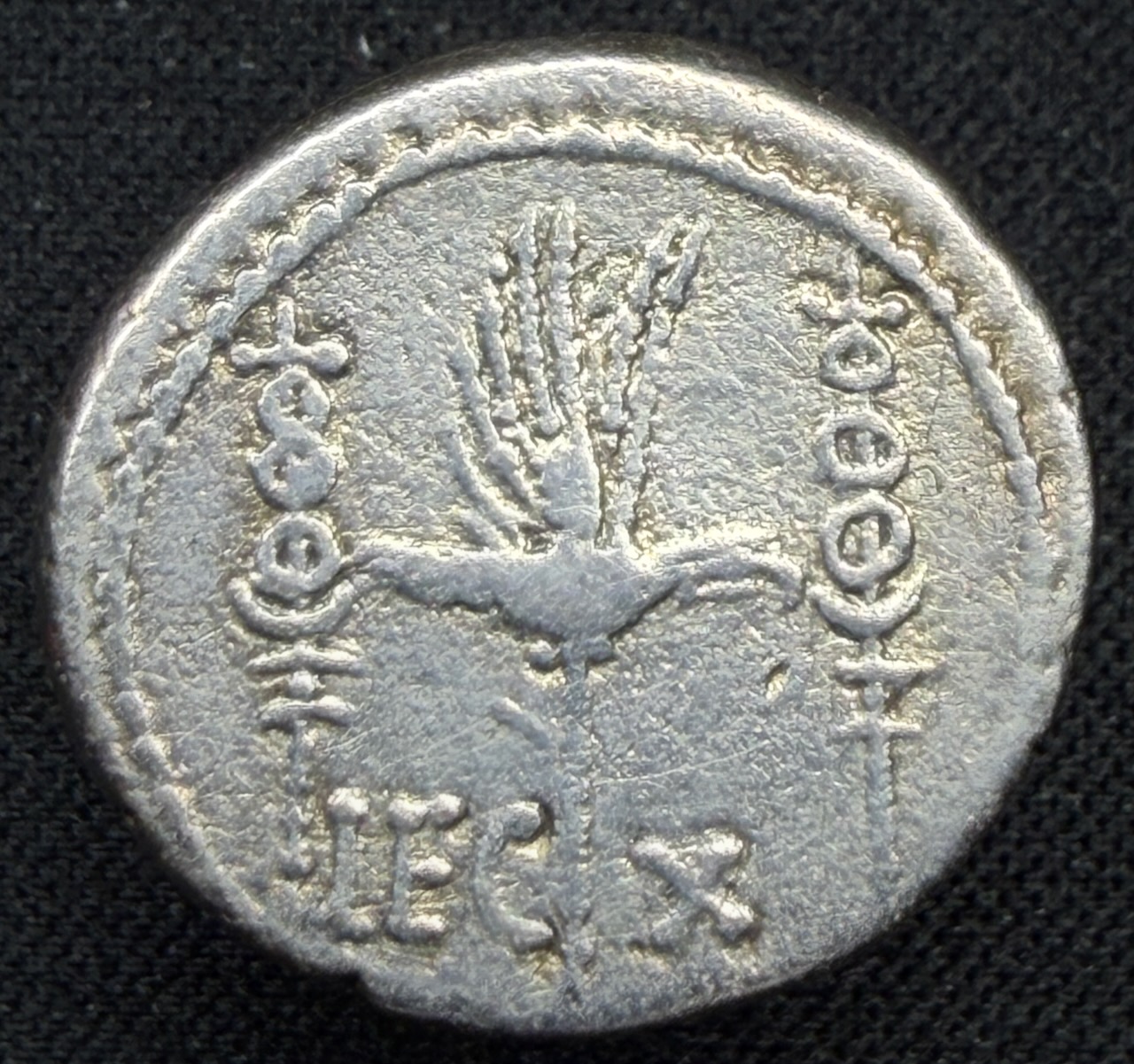
Rev: Legionary eagle (aquila) between two military standards (signa); LEG X below
Ref: Crawford 544/24
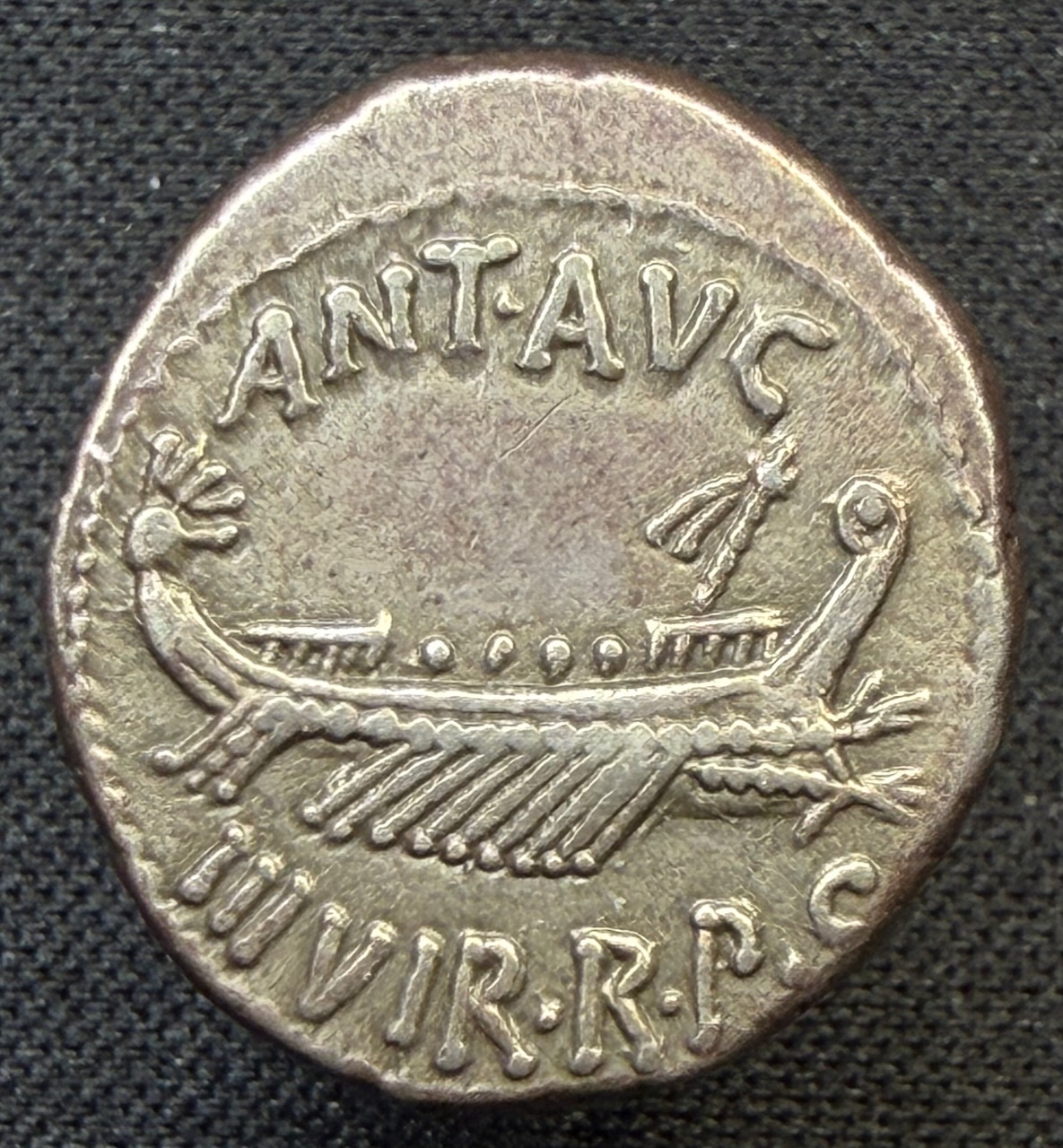
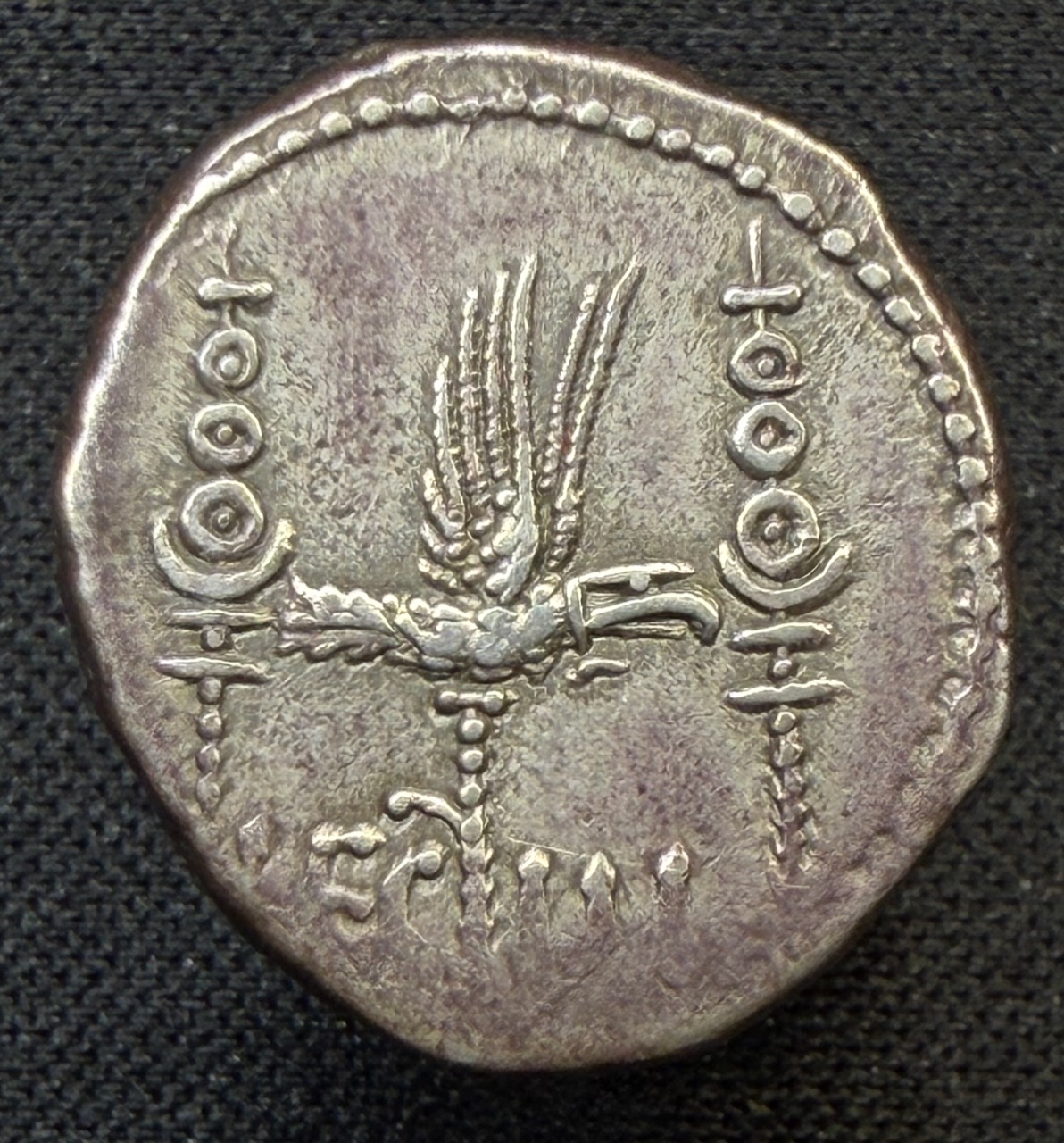
Obv: Praetorian galley right, with rowers, mast at prow with fillets; ANT AVG above, III VIR R P C below
Rev: Legionary eagle (aquila) between two military standards (signa); LEG III below
Ref: Crawford 544/15
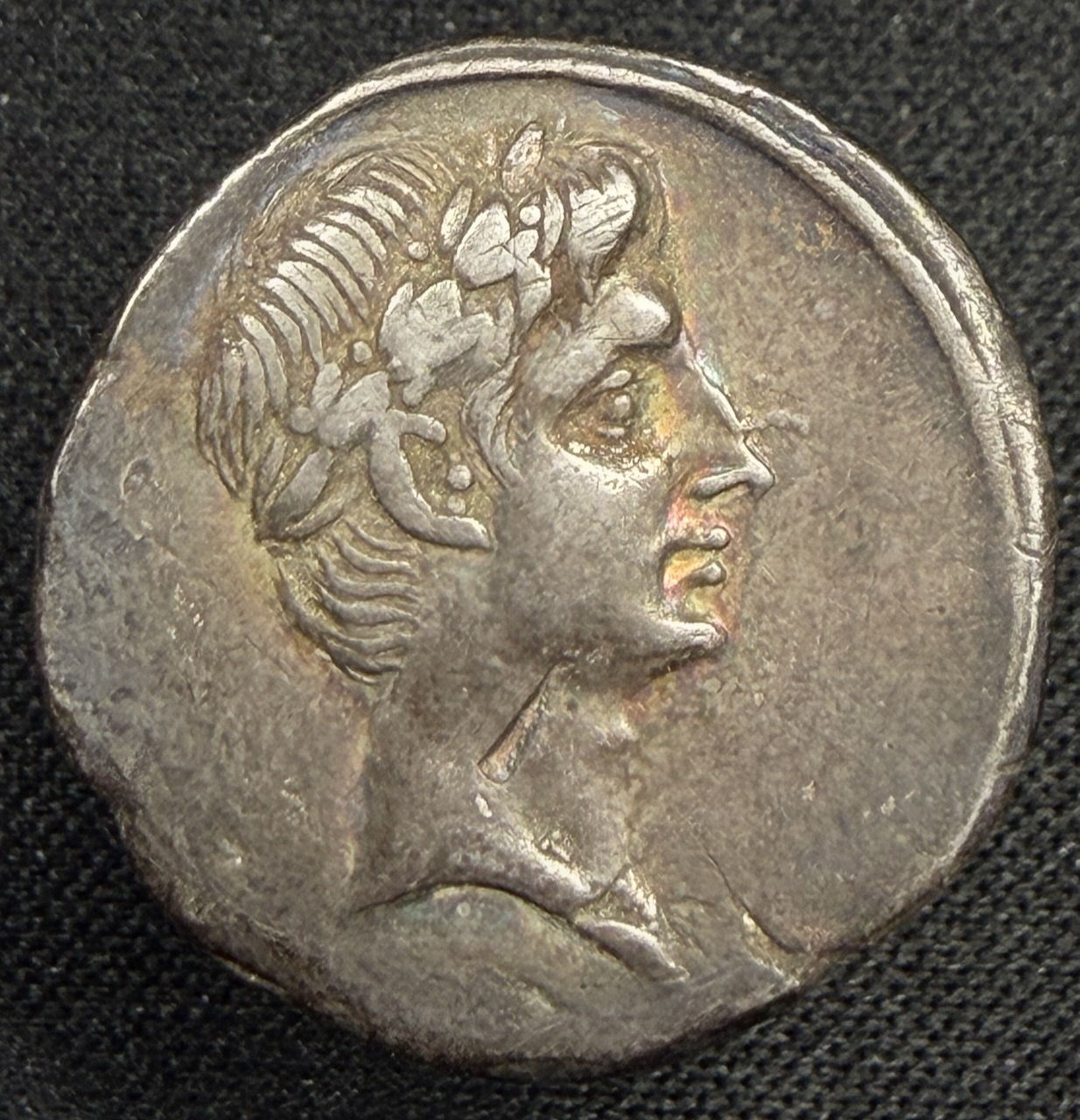
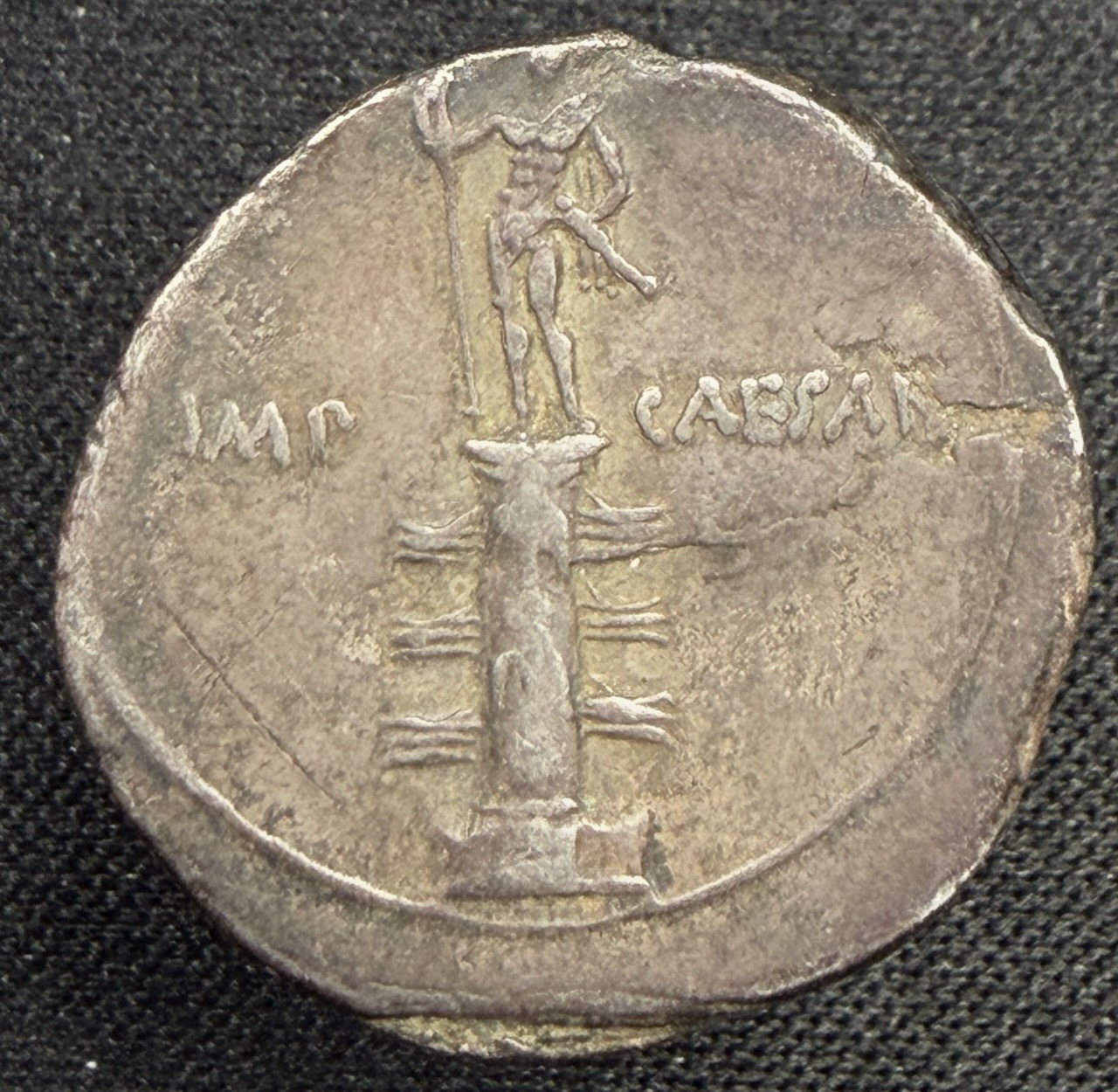
Obv: Laureate head of Octavian right (the idealized, Apollo-like portrait of the post-Actium series)
Rev: Statue of Octavian, nude but for a cloak over his shoulder, standing left on a rostral column (columna rostrata) fitted with ships' rams and anchors, holding a spear
Ref: RIC I 271
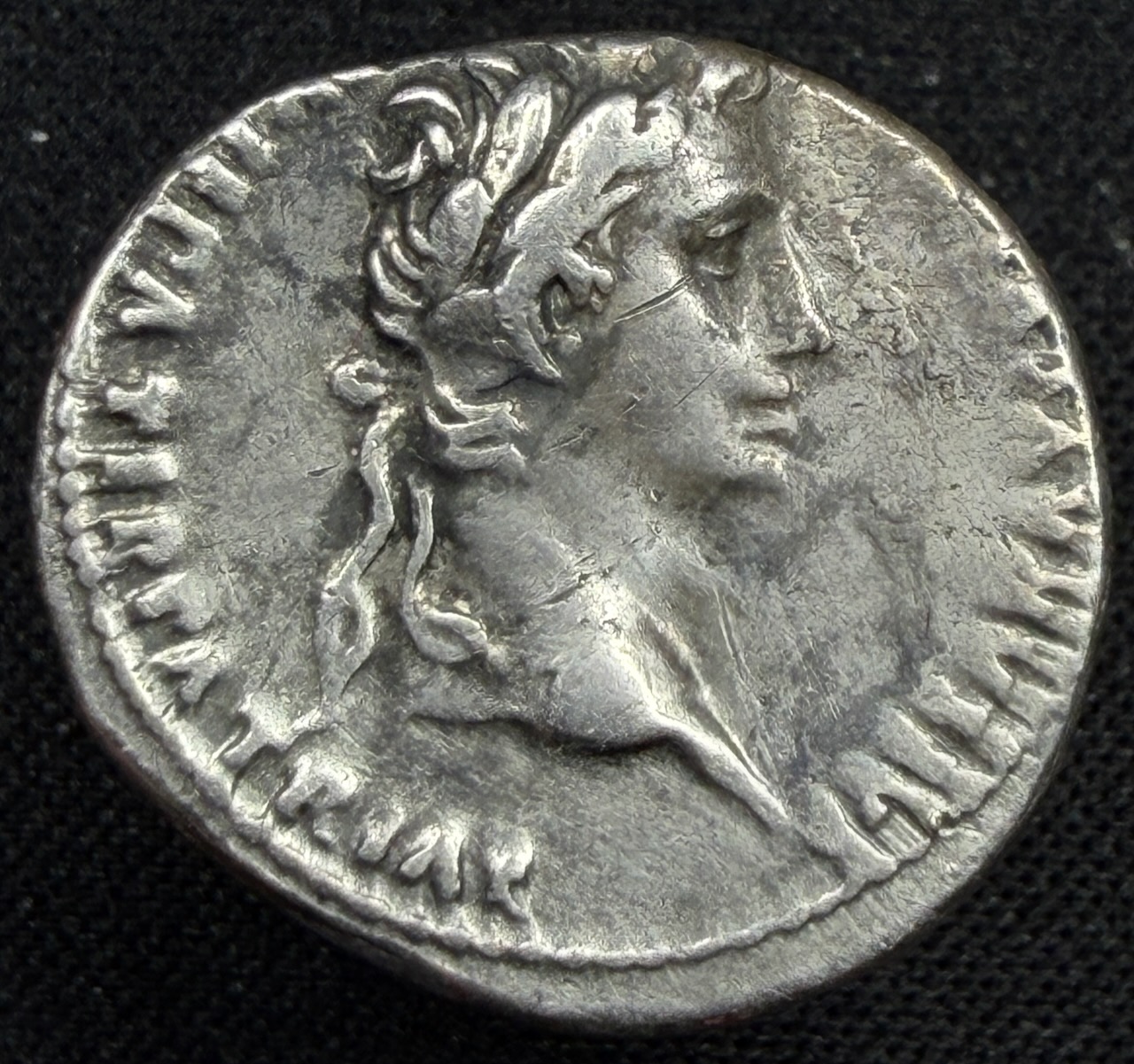
Obv: Laureate head of Augustus right
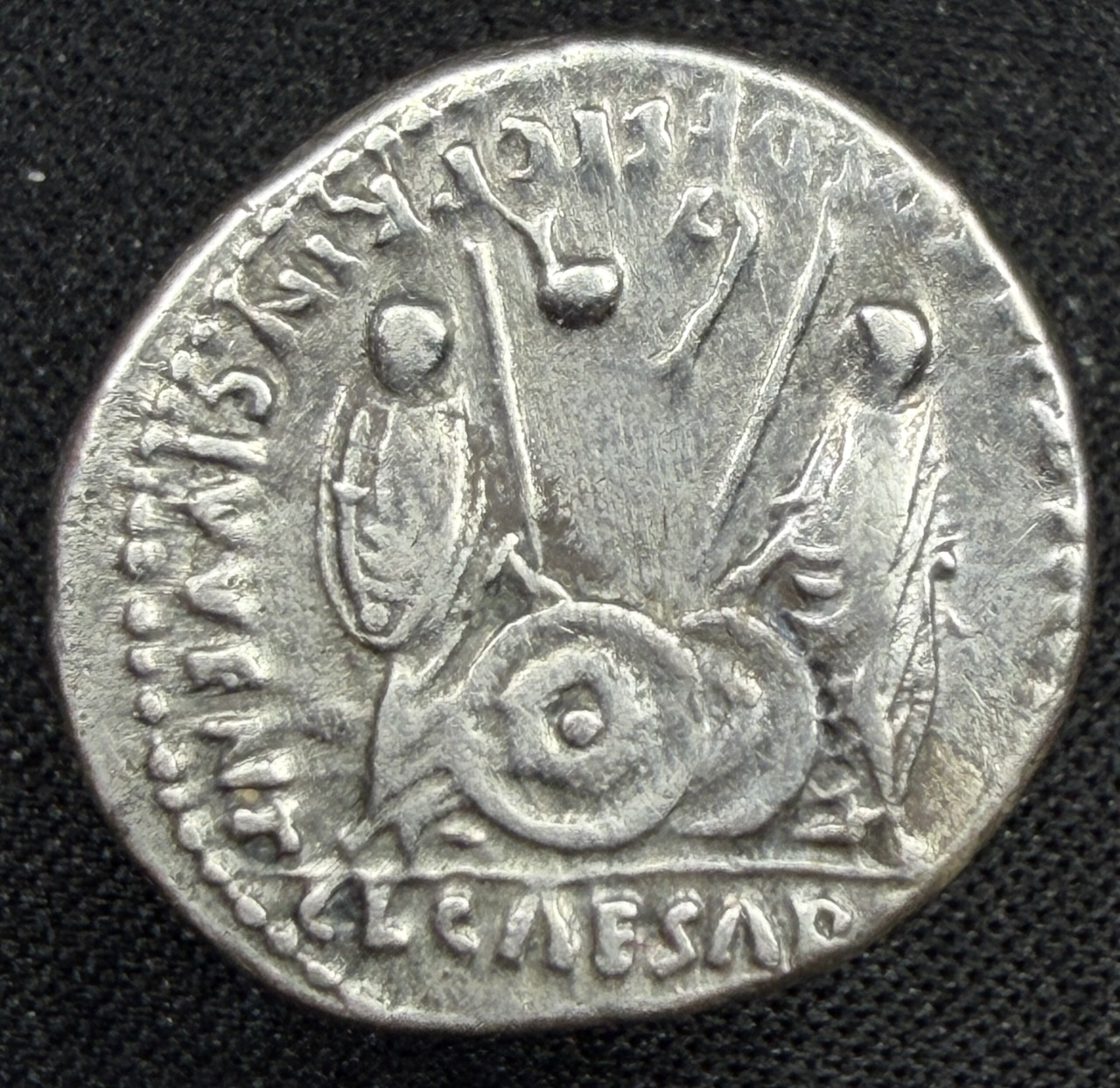
Rev: Gaius and Lucius Caesar standing facing, togate, each resting a hand on a round shield with a spear behind; above, simpulum and lituus turned inward
Ref: RIC I 207
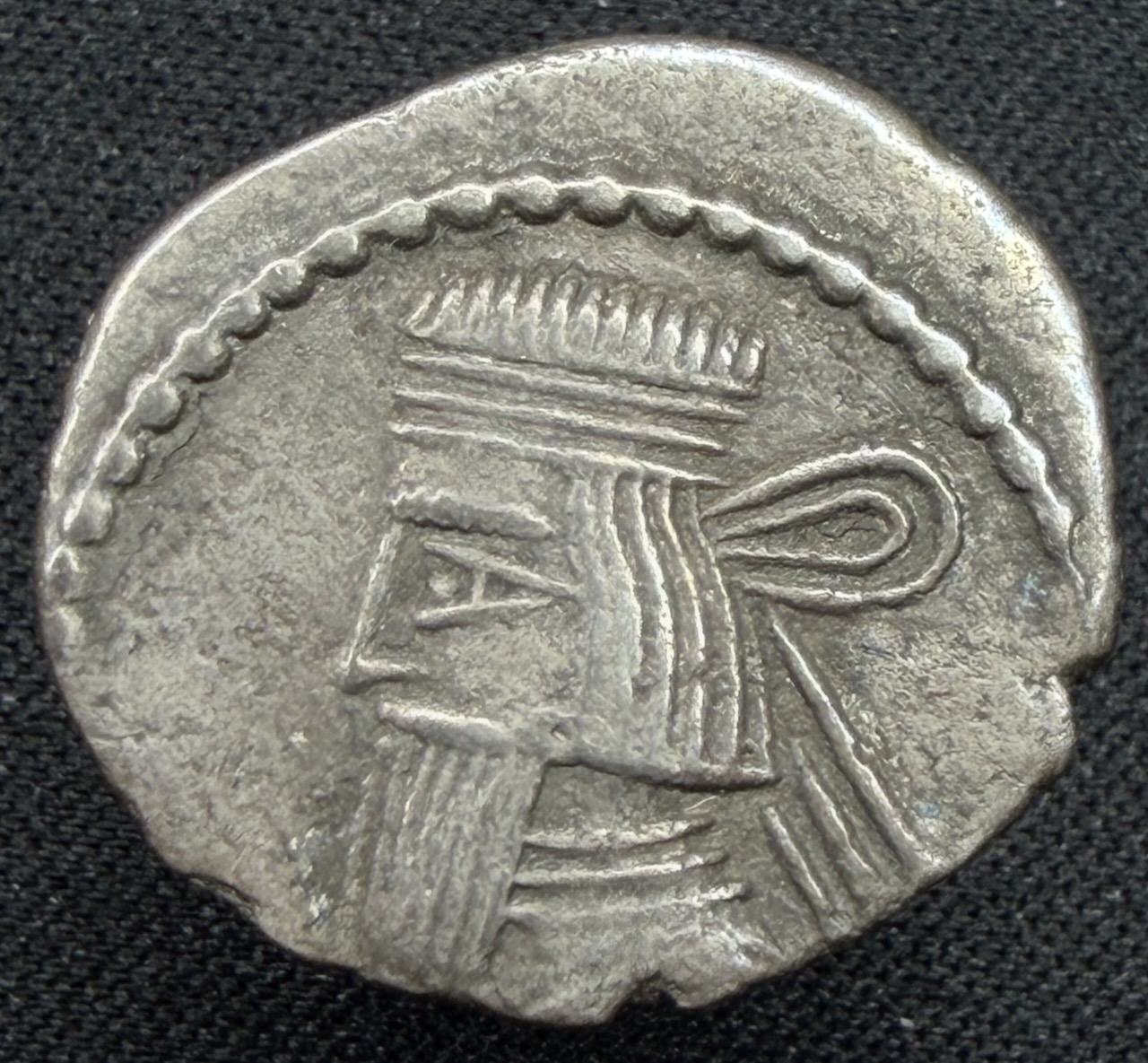
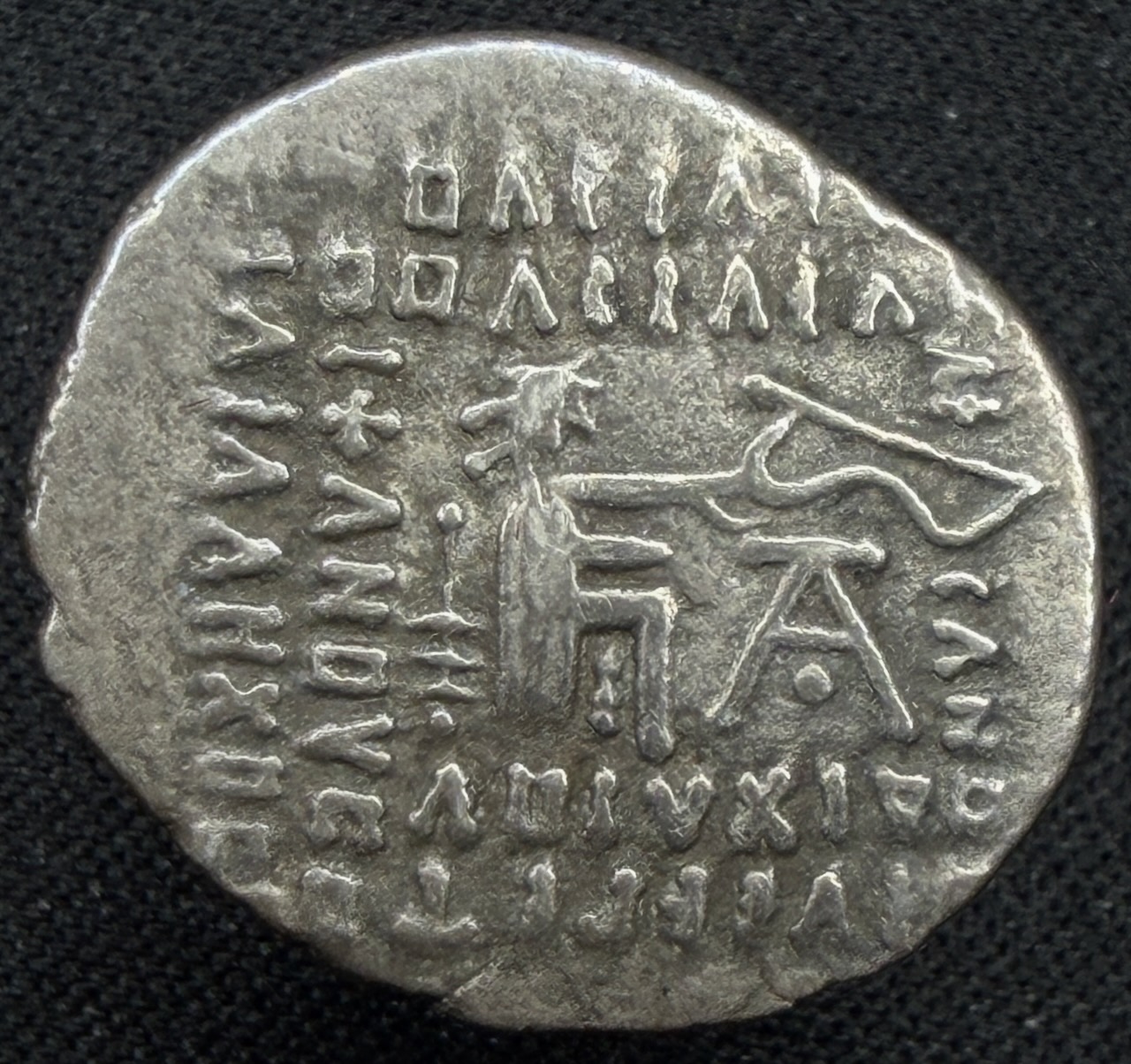
Obv: Diademed bust left with long square-cut beard, hair in vertical waves bunched behind, earring visible; diadem with loop and pendant ends; circular border of pellets
Rev: Beardless archer (Arsakes I) wearing bashlyk and cloak seated right on throne, holding bow in right hand; monogram below bow (Ekbatana mint); seven-line blundered Greek legend
Ref: Sellwood 63.6
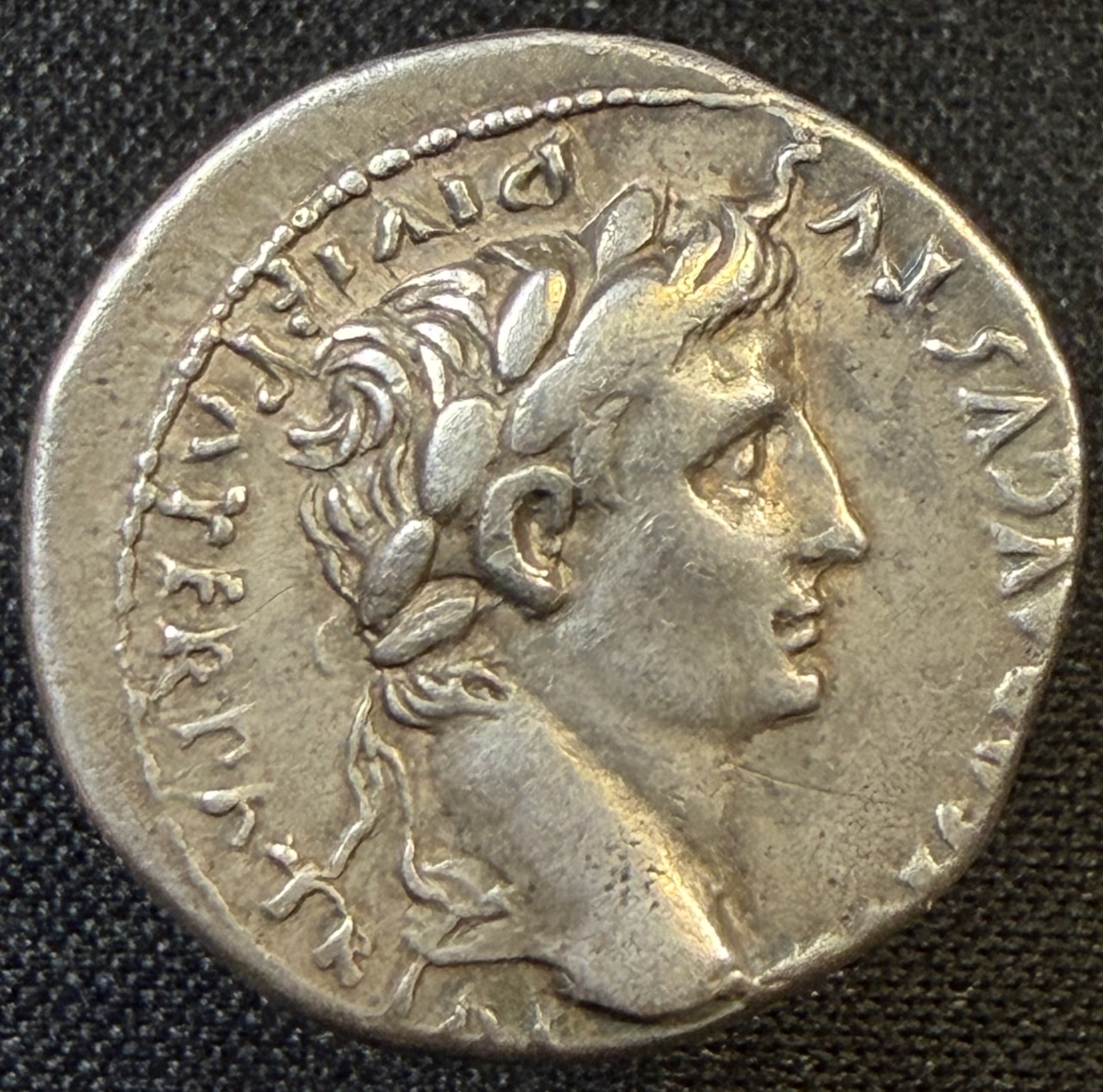
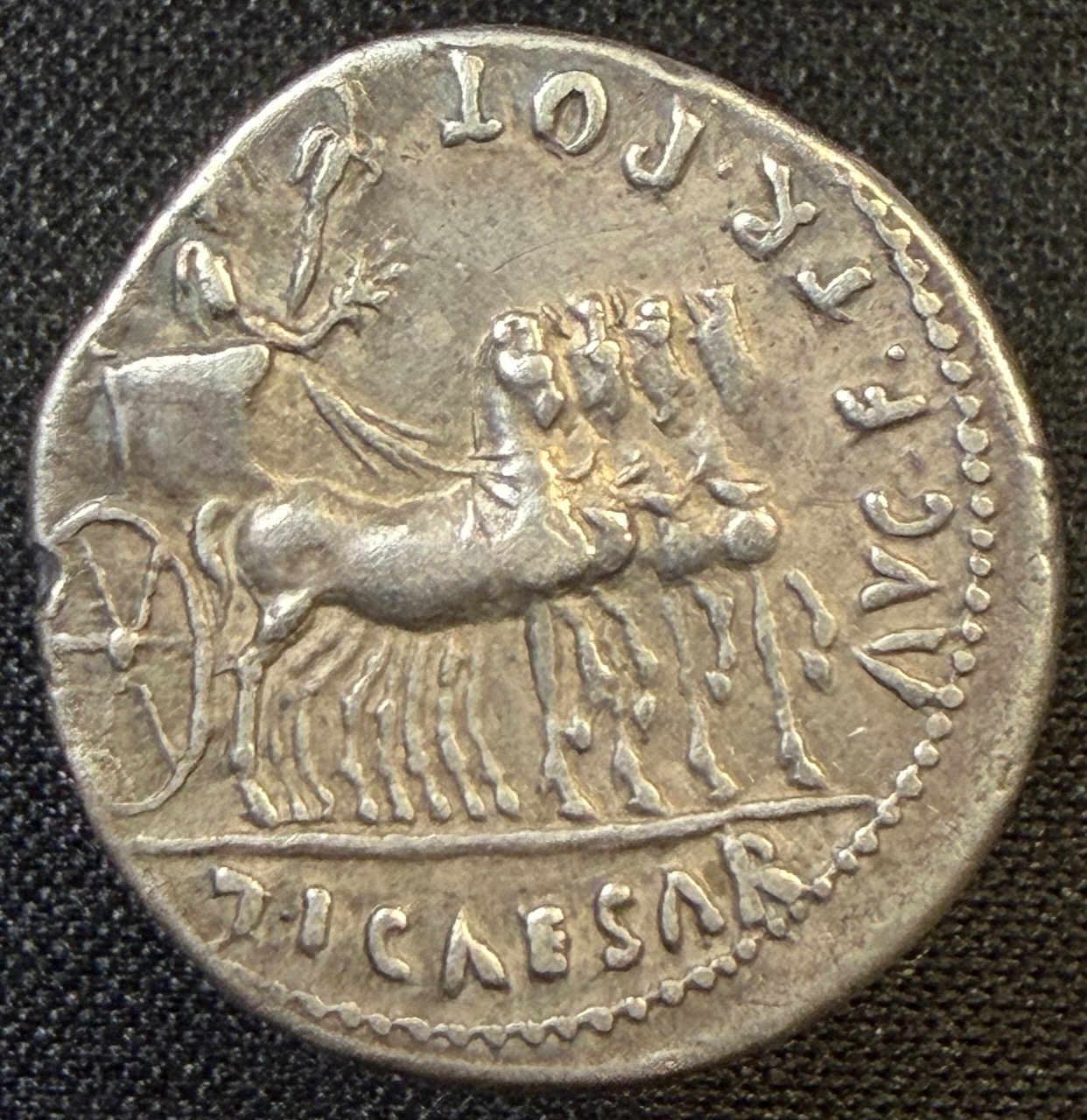
Obv: Laureate head of Augustus right
Rev: Tiberius standing in triumphal quadriga right, holding laurel branch and eagle-tipped sceptre; TI CAESAR in exergue
Ref: RIC I 222
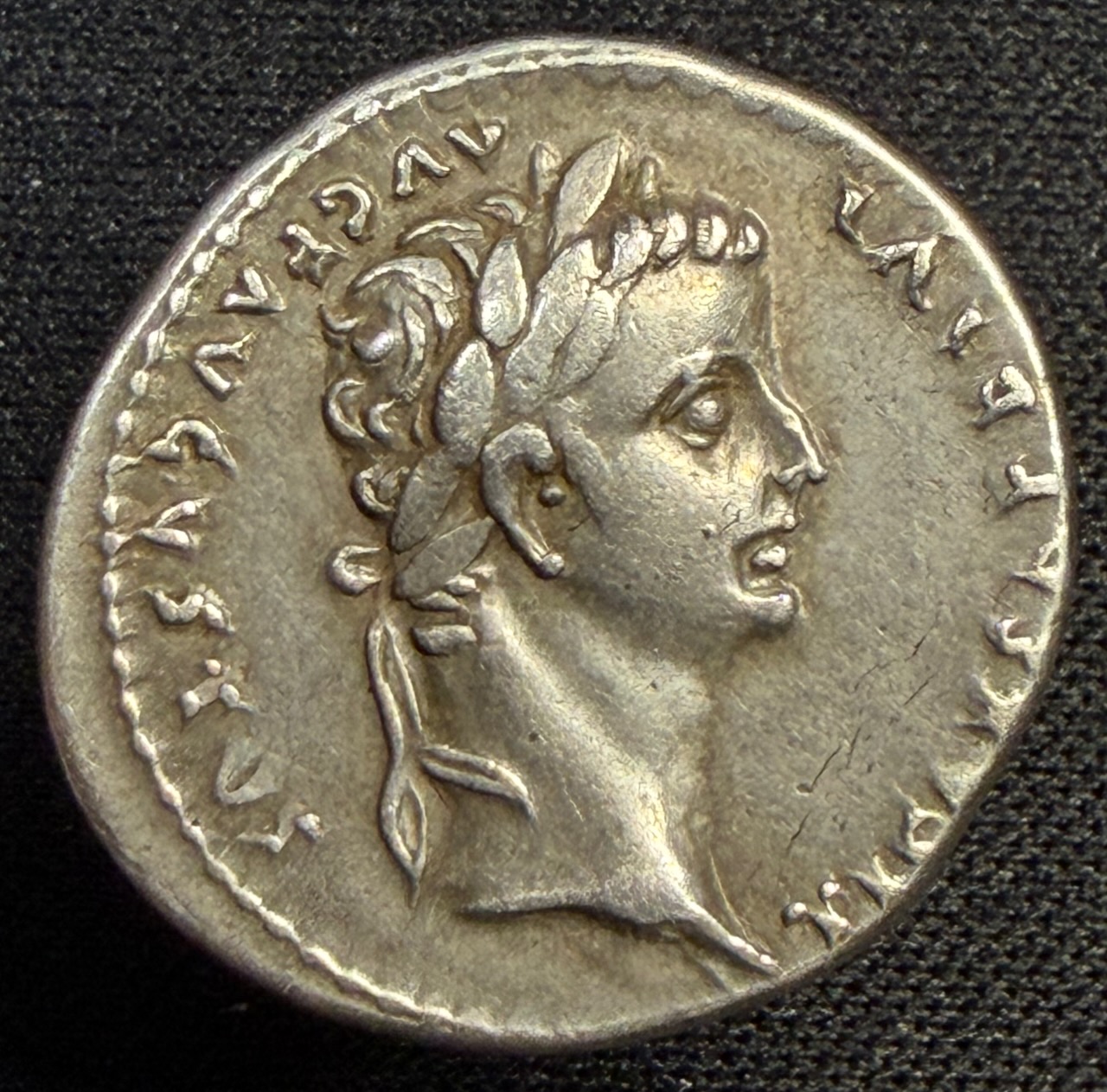
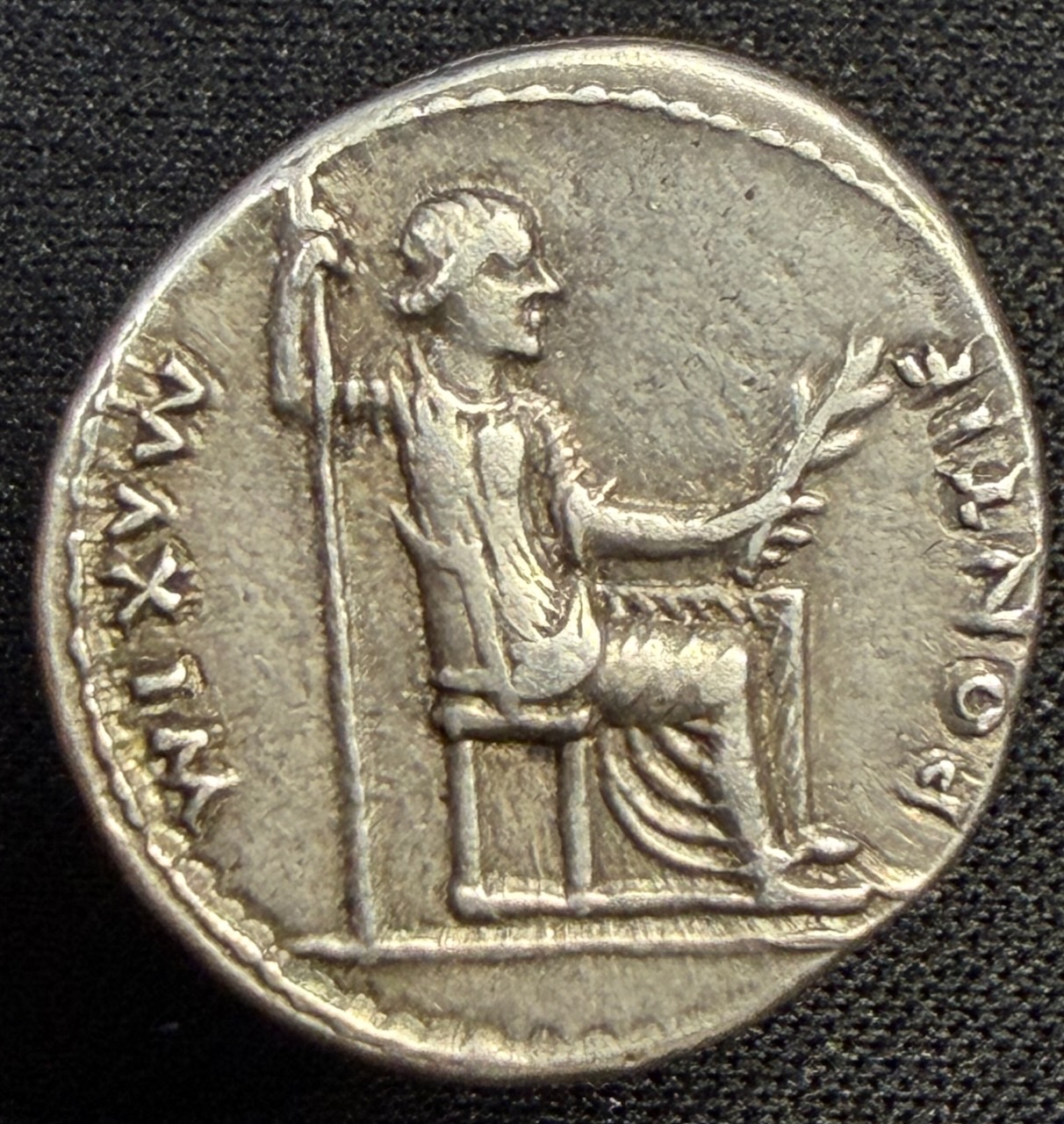
Obv: Laureate head of Tiberius right
Rev: Female figure (traditionally Livia as Pax), draped, seated right on chair with plain legs, holding long sceptre and olive branch; double line below chair
Ref: RIC I 26
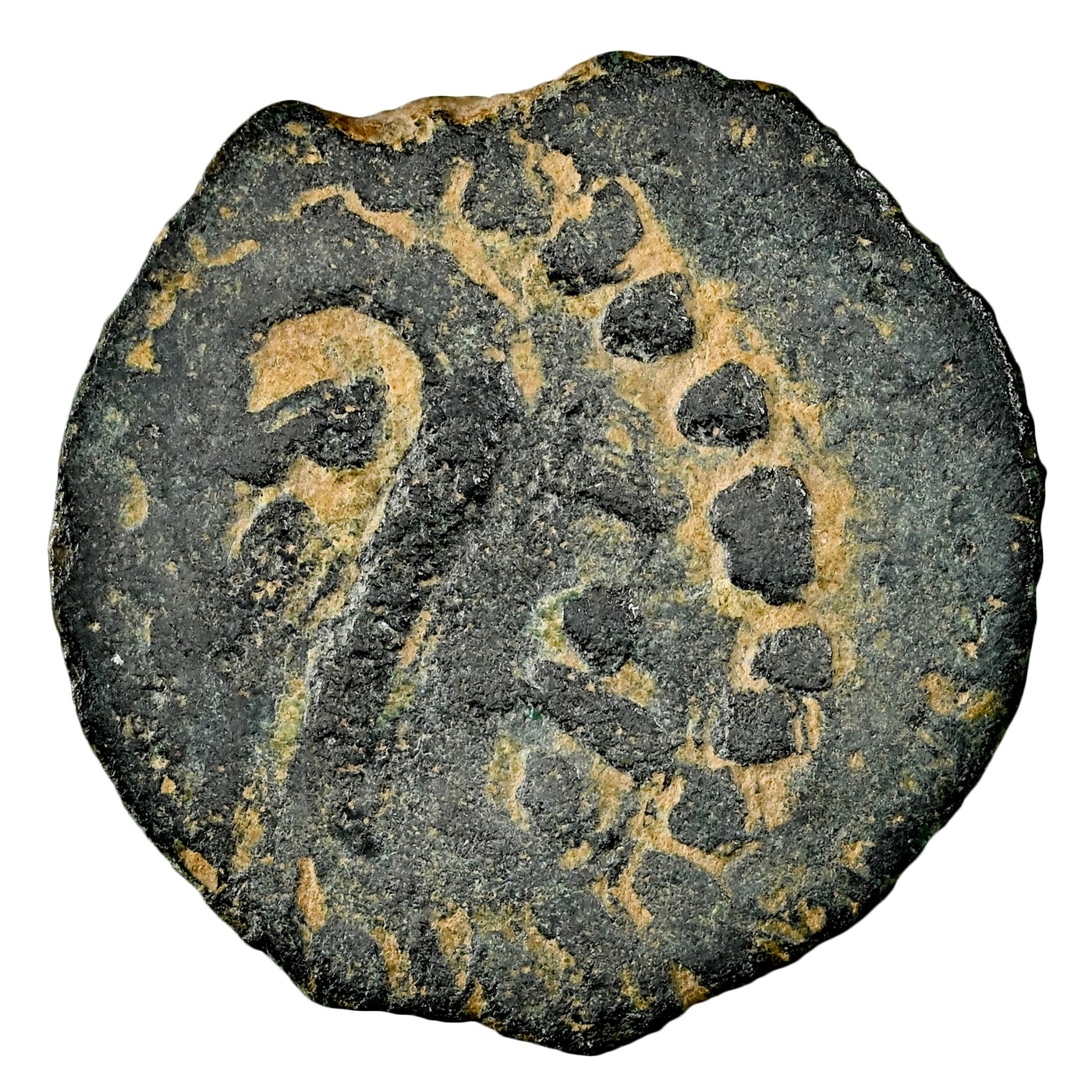
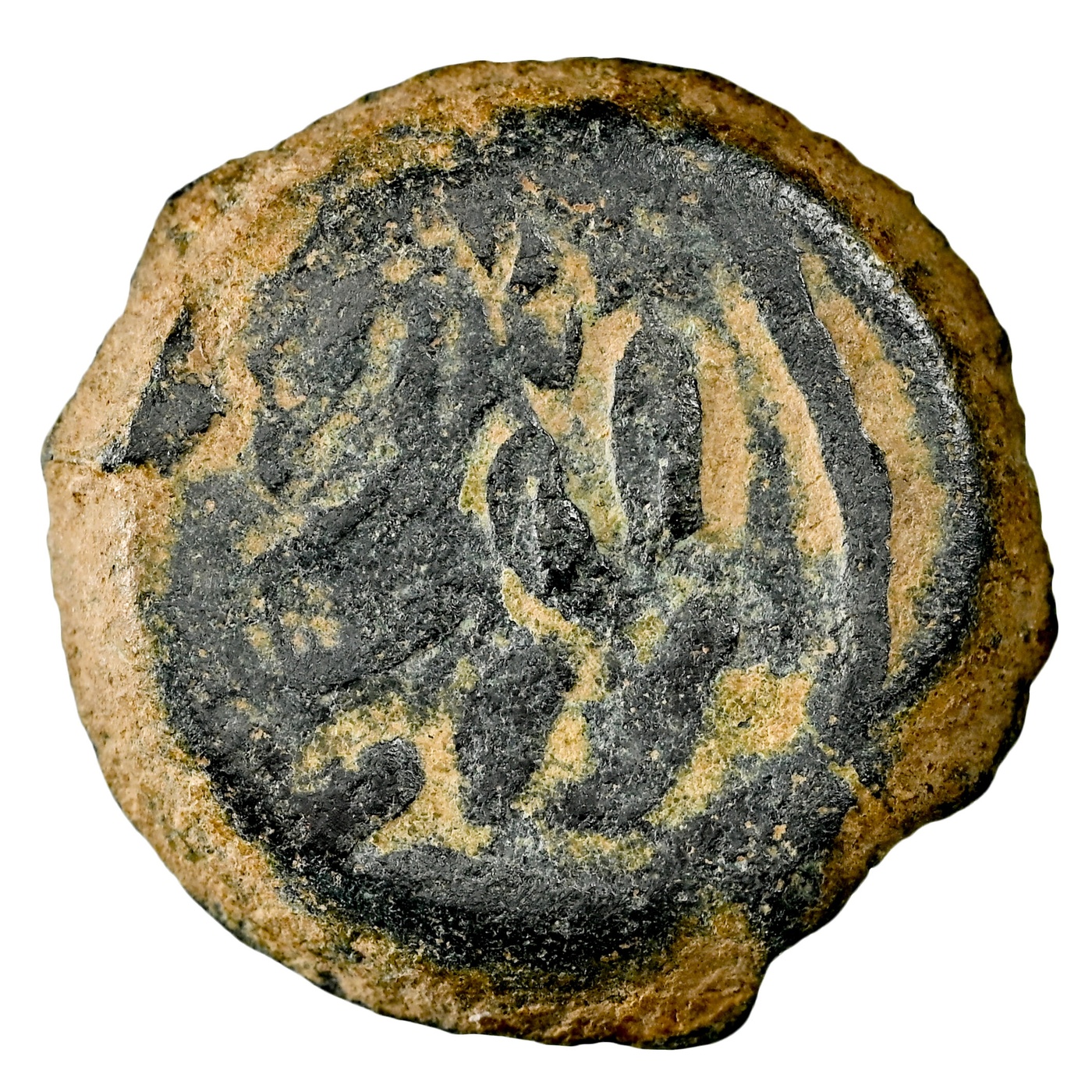
Obv: A lituus — the curved augural staff of a Roman priest — set upright with the crook to the right, the legend running around it.
Rev: The regnal date in Greek numerals inside a wreath tied at the foot.
Ref: GBC 6, 6371
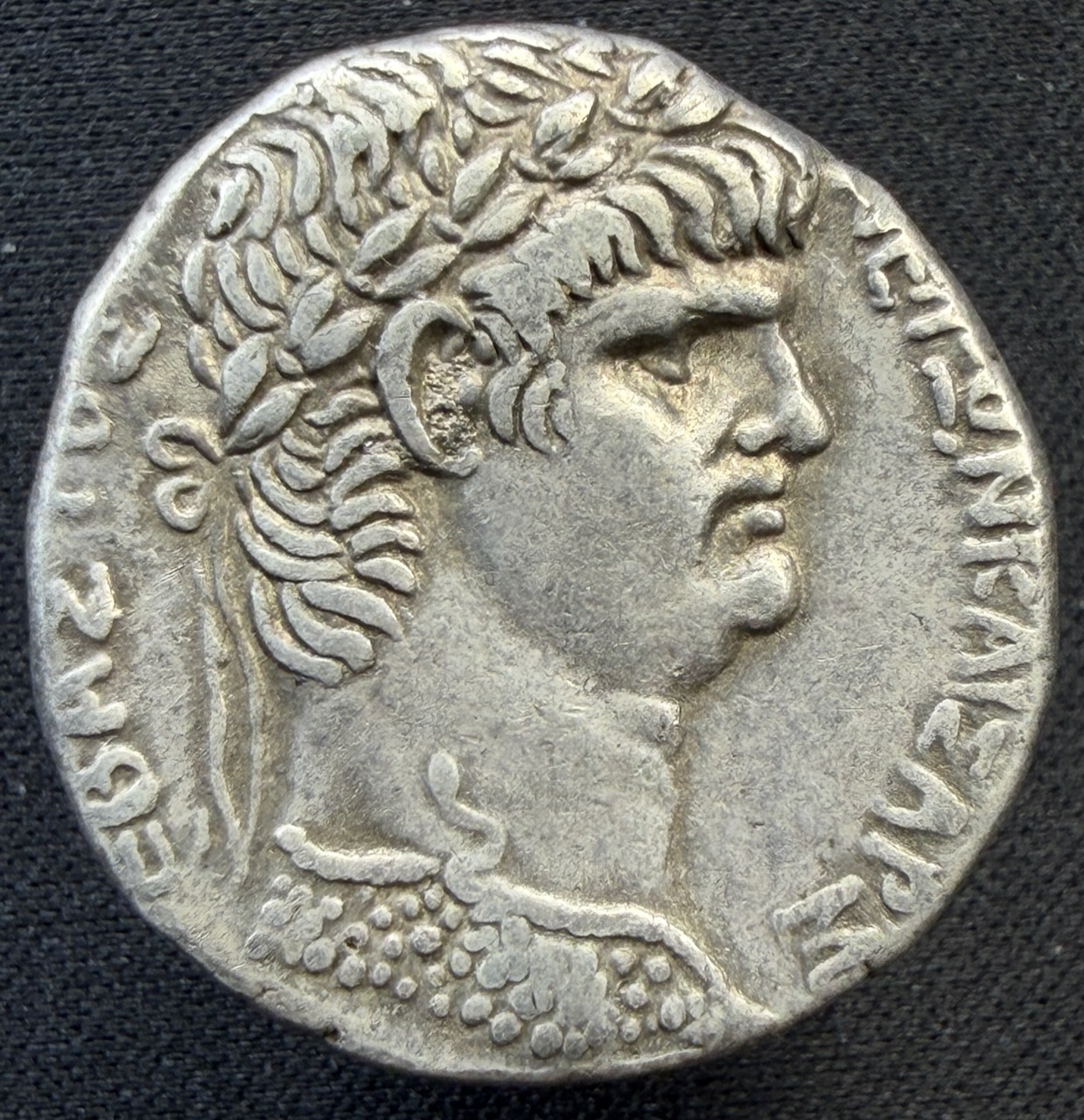
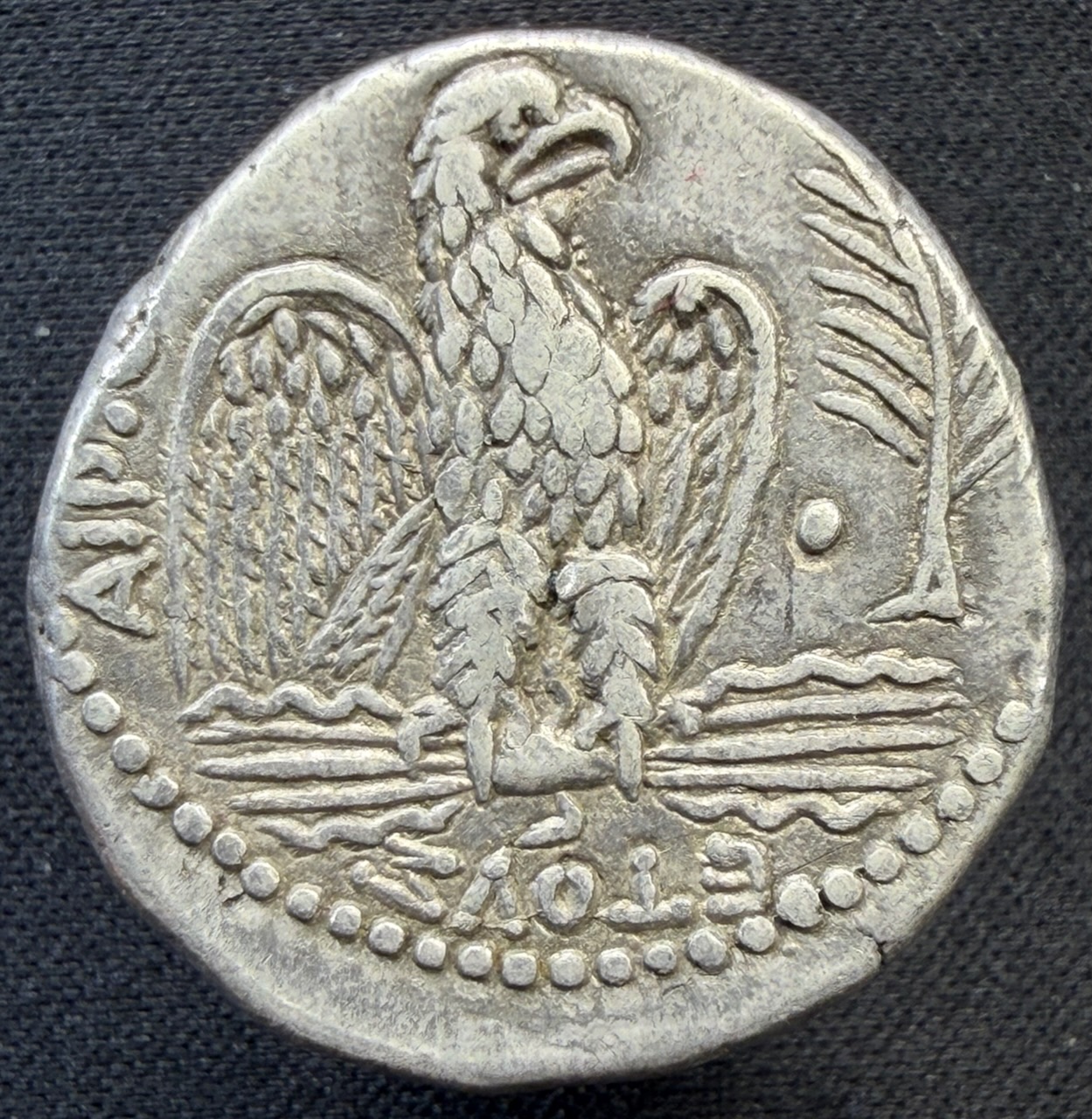
Obv: Laureate bust of Nero right, wearing aegis over the shoulder
Rev: Eagle standing right on thunderbolt, wings spread; palm frond to right; pellet between eagle and palm
Ref: RPC I 4185
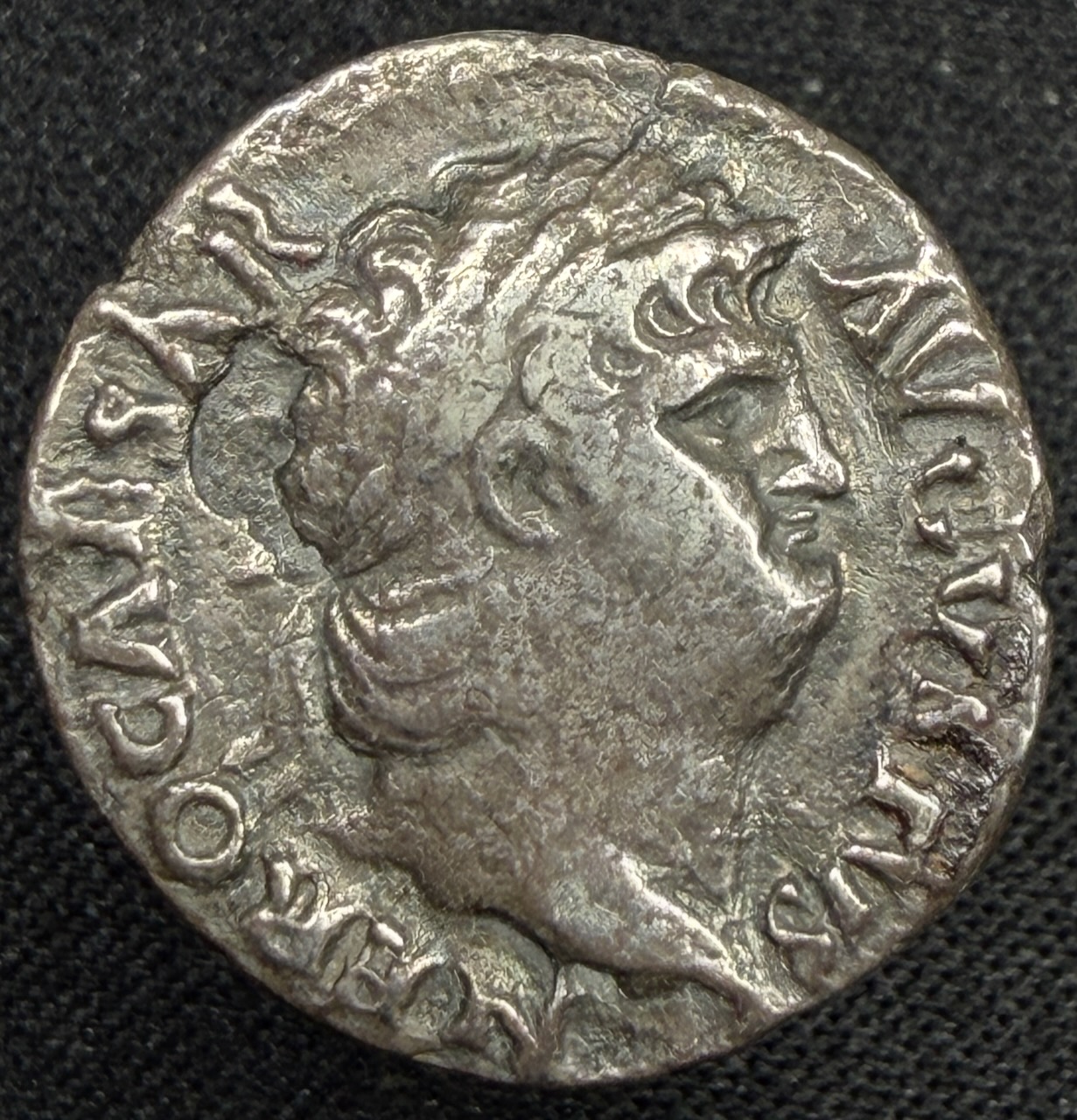
Obv: Laureate head of Nero right
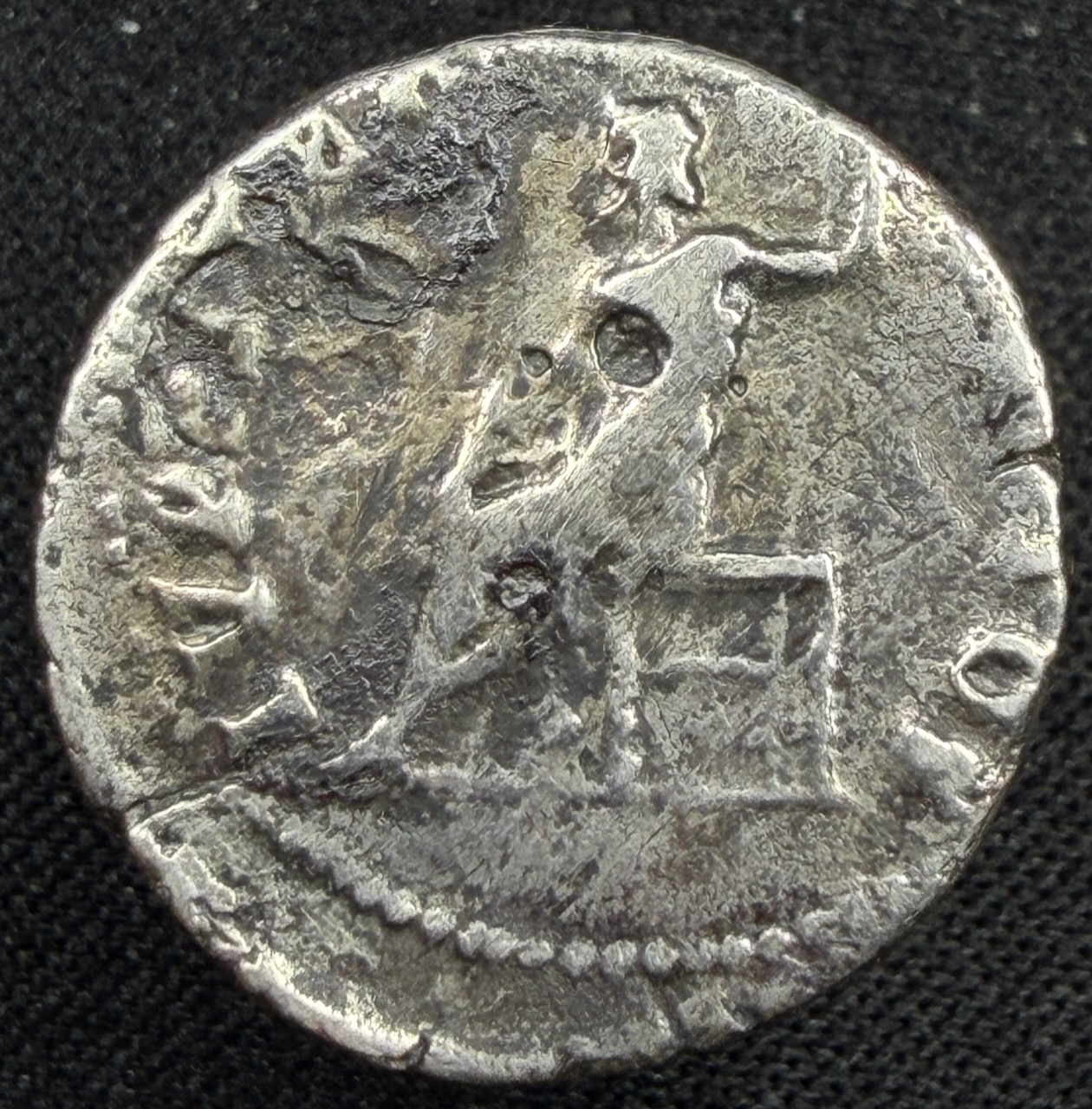
Rev: Jupiter seated left on throne, holding thunderbolt in right hand and long sceptre in left
Ref: RIC I 53
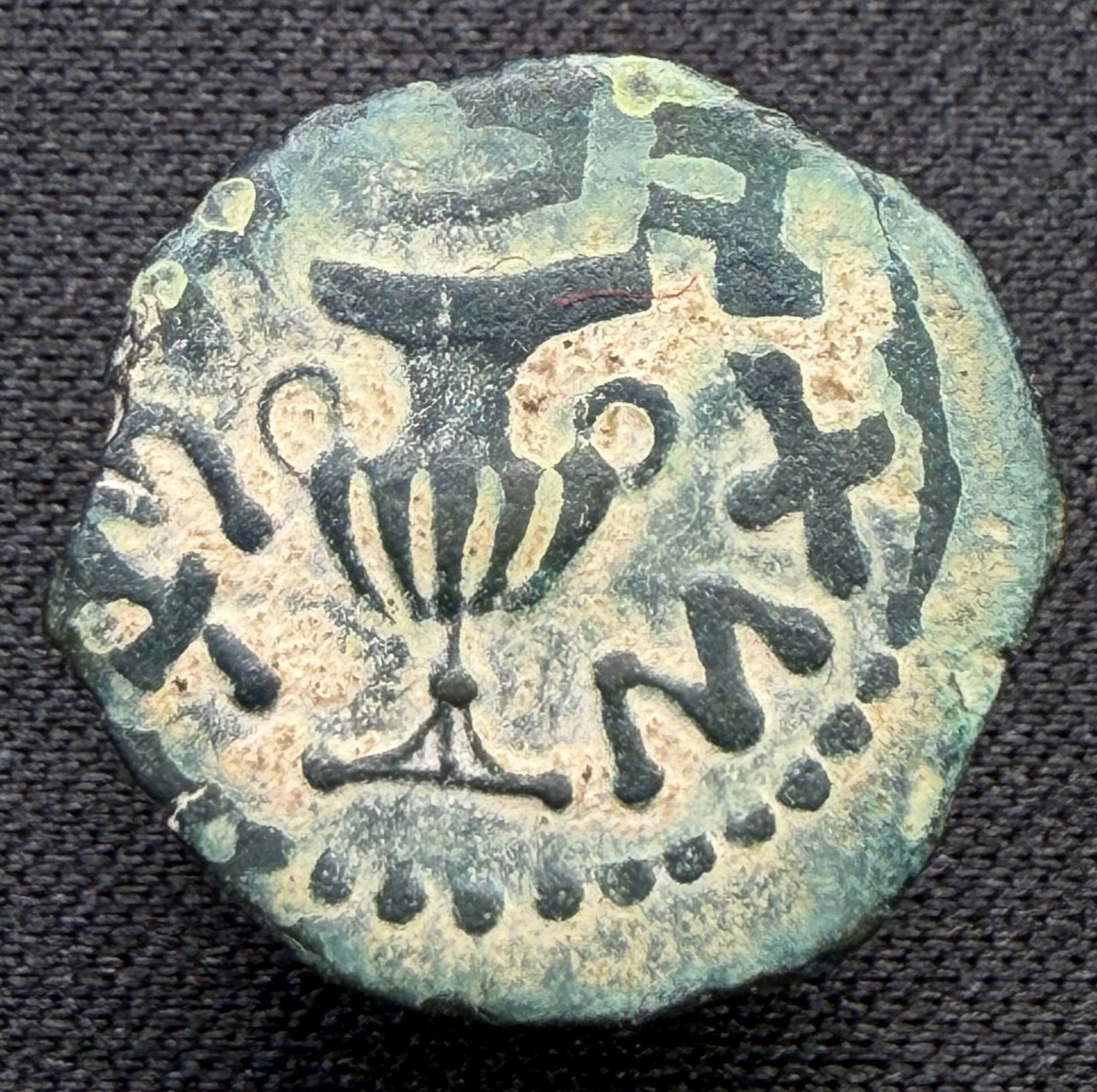
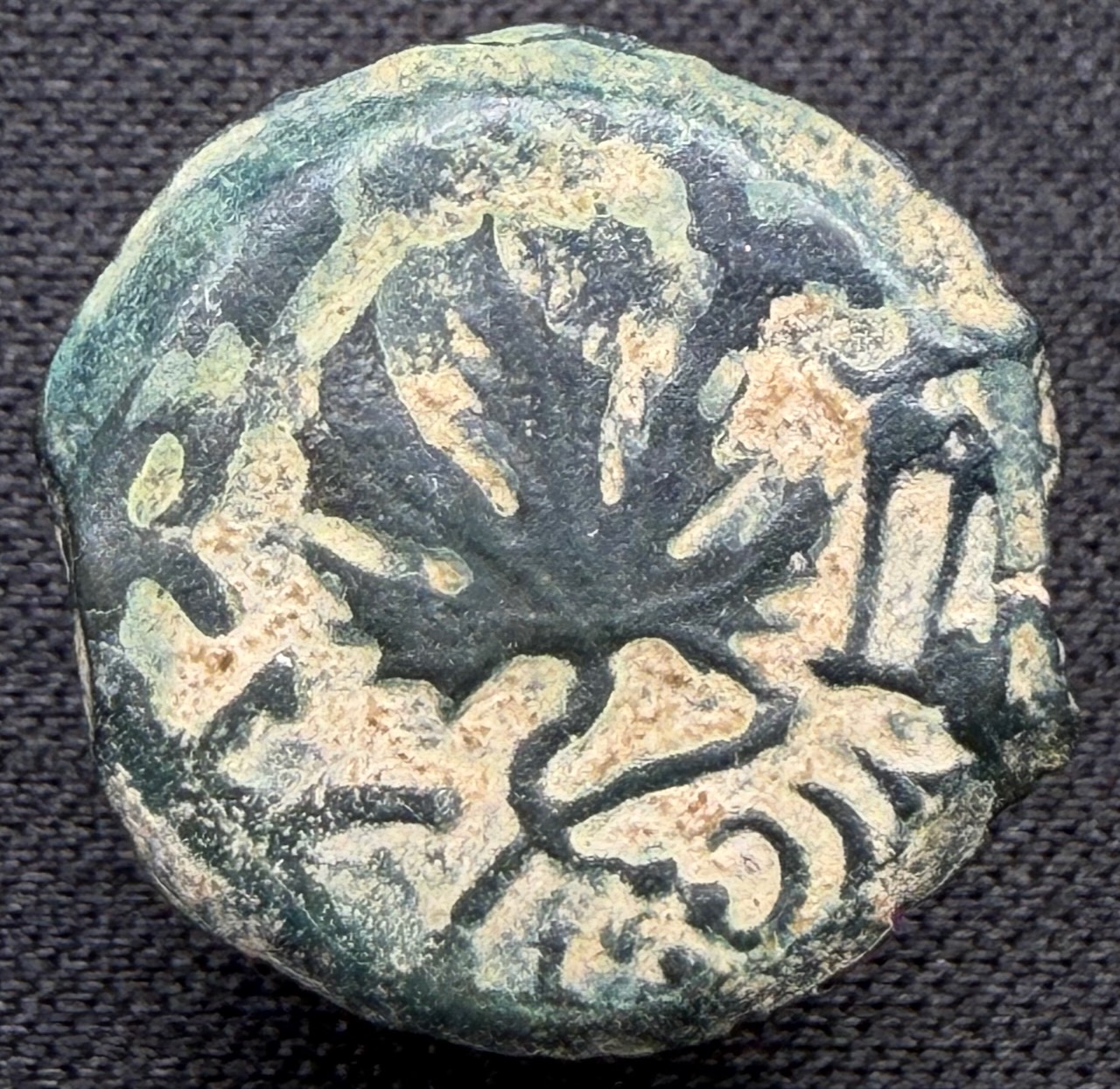
Obv: Amphora with a broad rim and two curved handles.
Rev: Vine leaf on a small branch with tendril.
Ref: Hendin 1360 (= 661 older ed.)
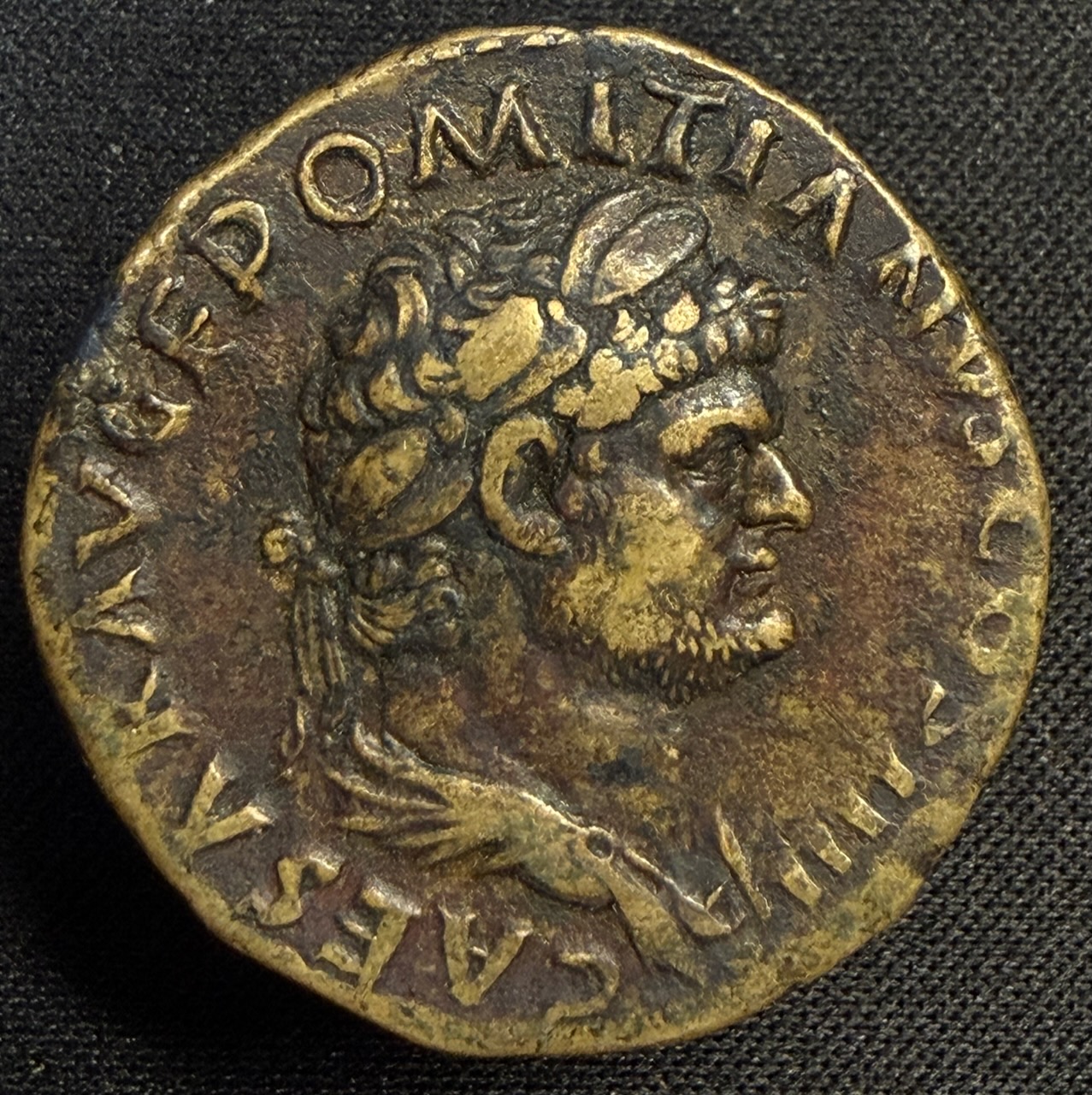
Obv: Laureate, draped bust of Domitian right
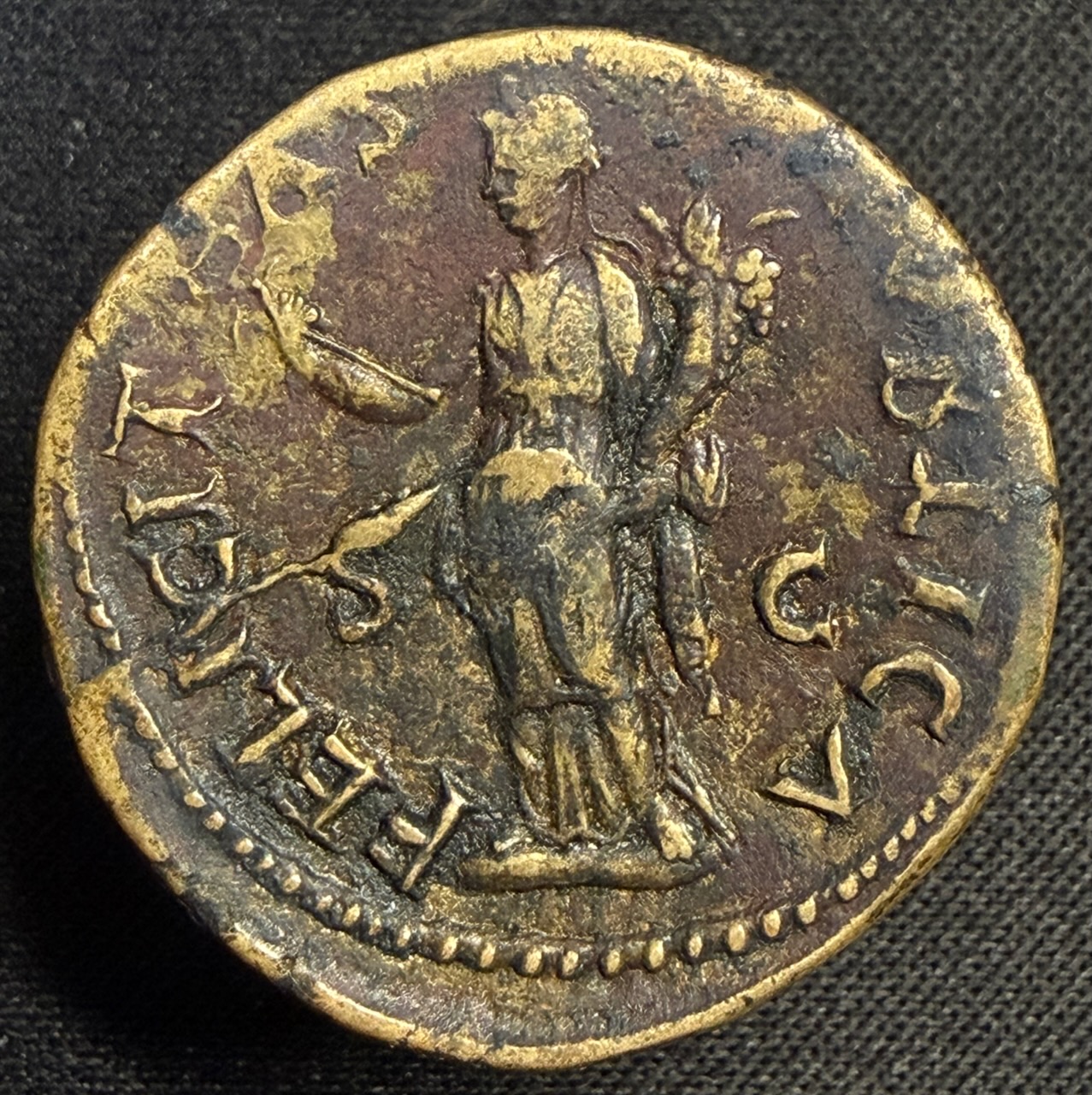
Rev: Felicitas standing left, holding winged caduceus and cornucopia
Ref: RIC II.1² (Vespasian) 927
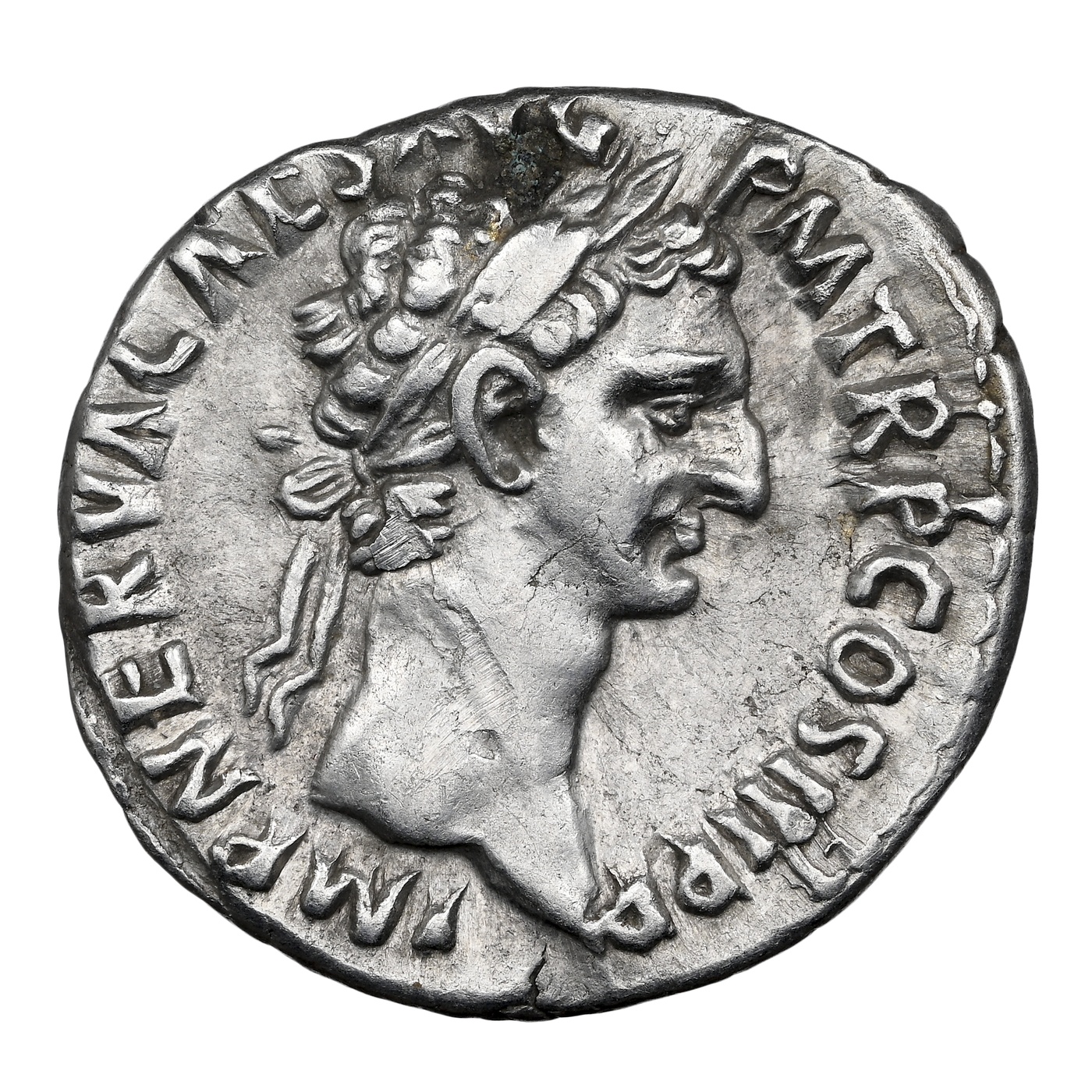
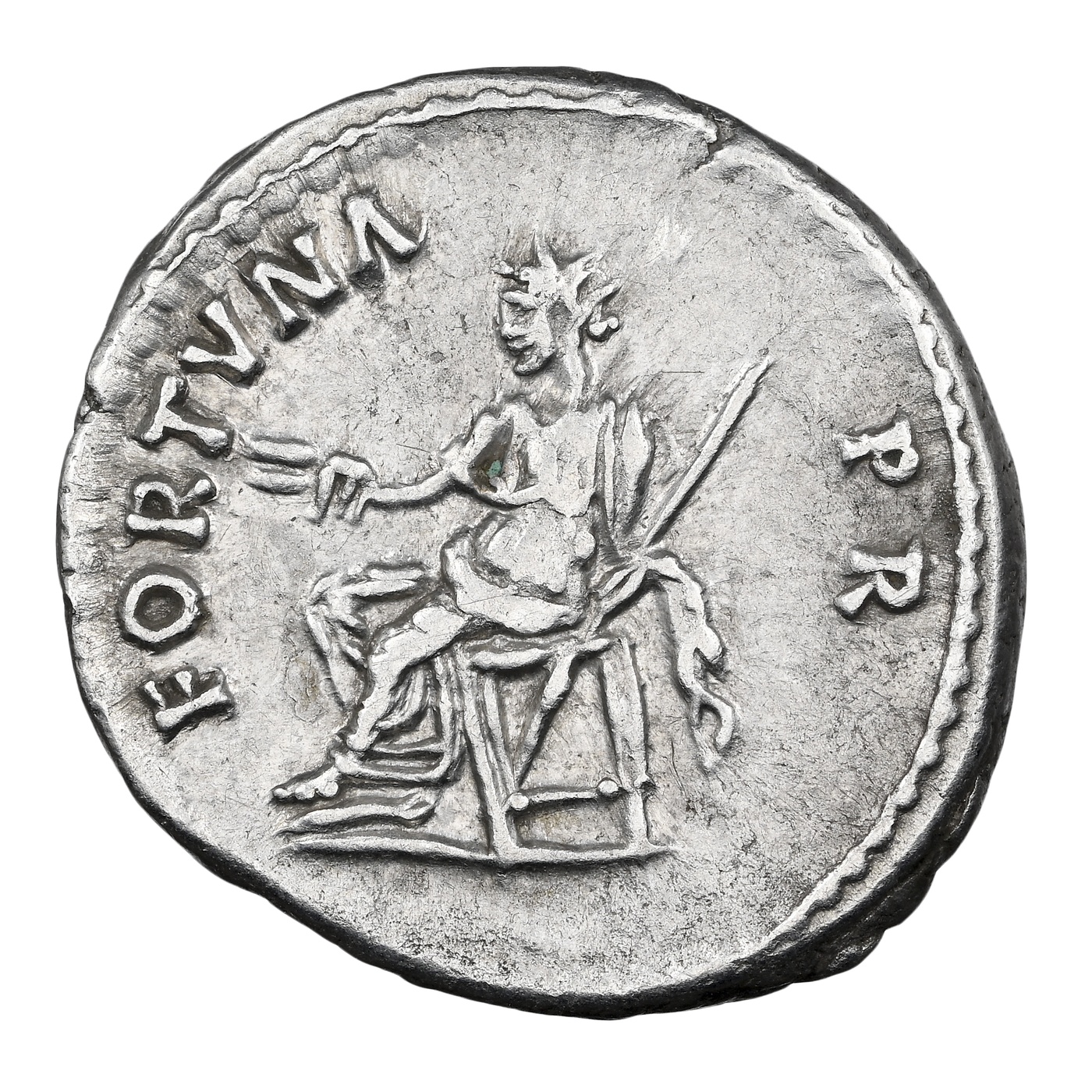
Obv: Laureate head of Nerva right
Rev: Fortuna seated left on a chair, holding two grain ears in her right hand and a transverse spear in her left
Ref: RIC II 17
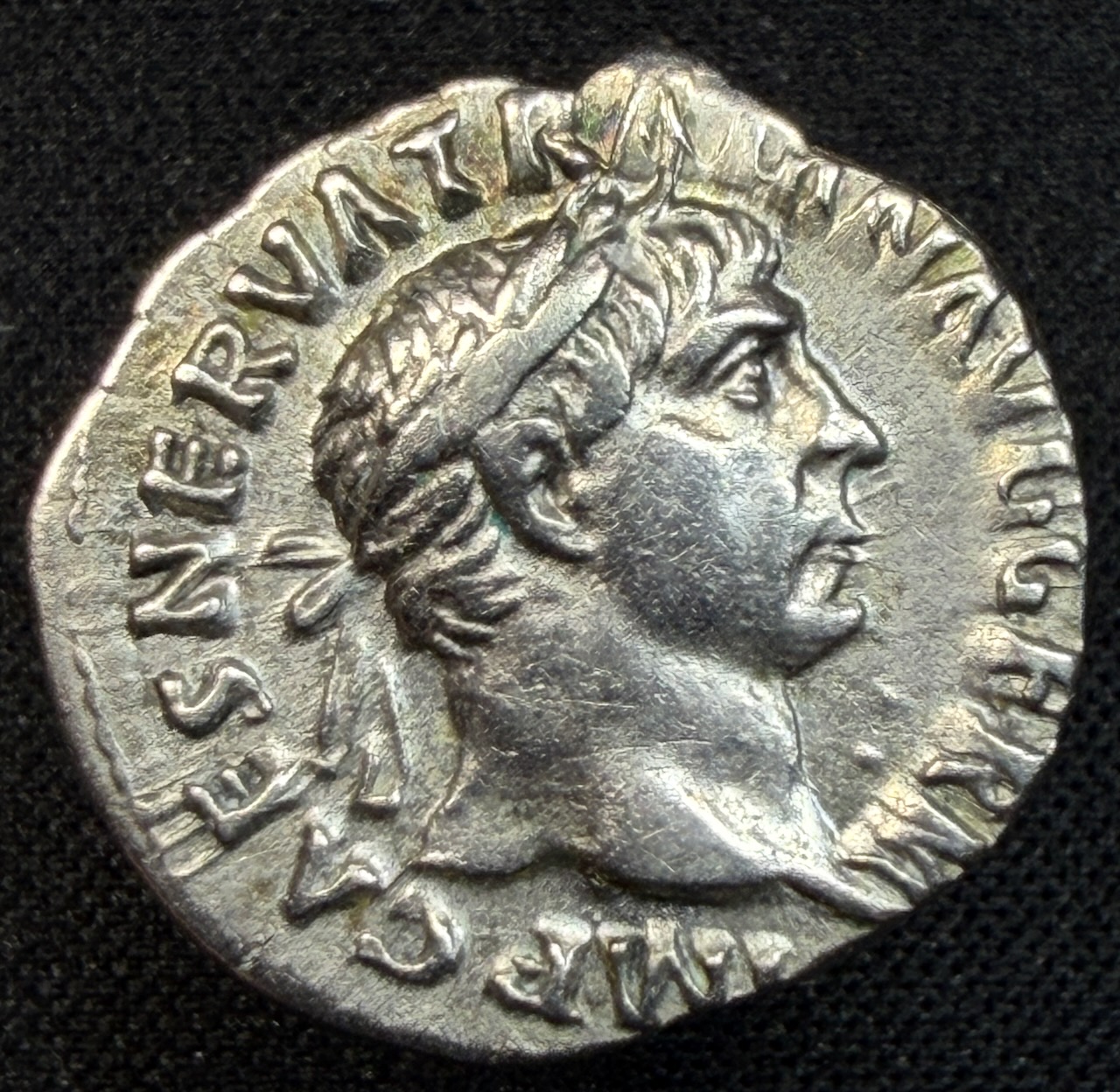
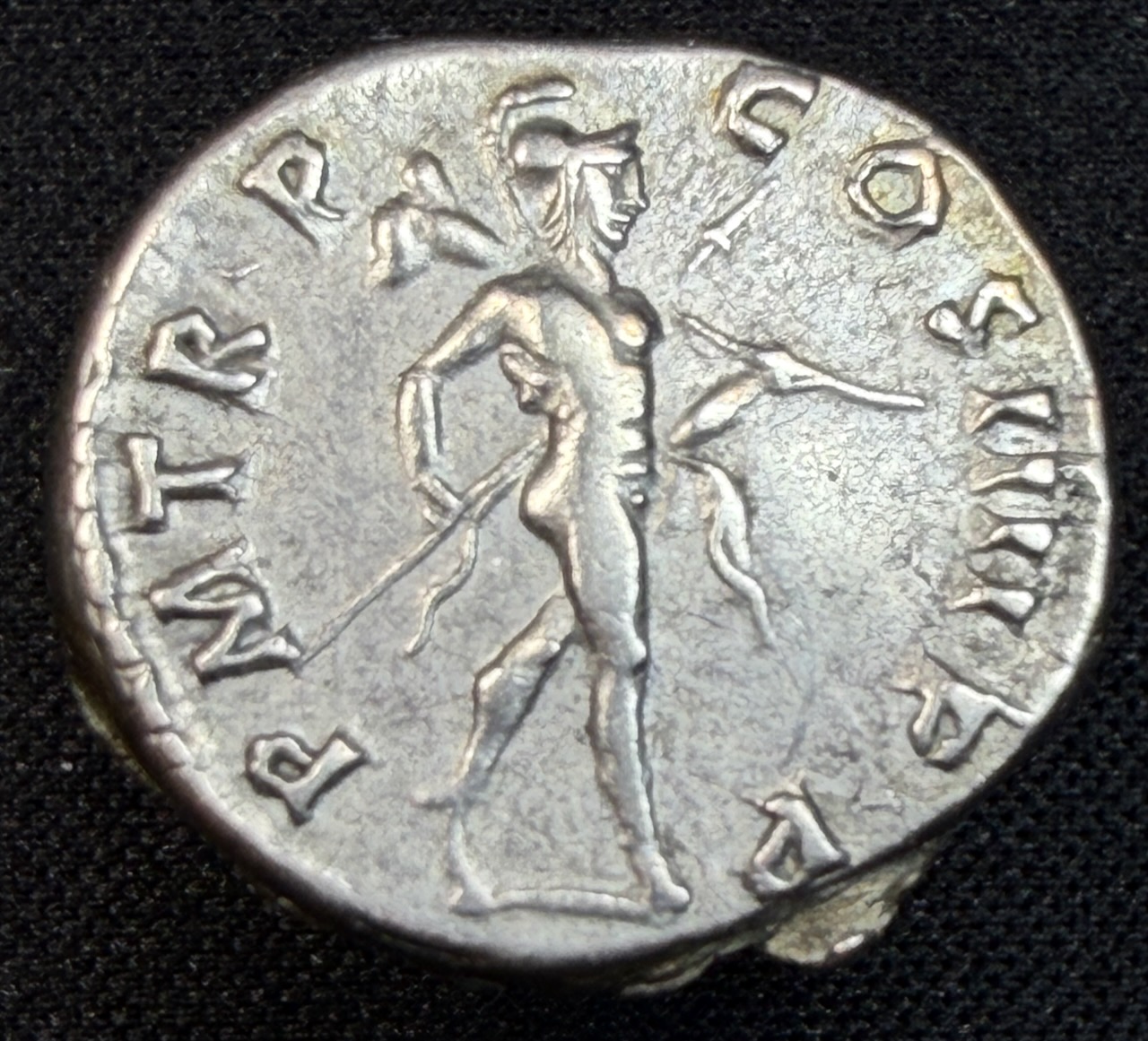
Obv: Laureate head of Trajan right
Rev: Mars advancing right, helmeted, nude but for cloak around waist, transverse spear in right hand, trophy of arms over left shoulder in left hand
Ref: RIC II 52
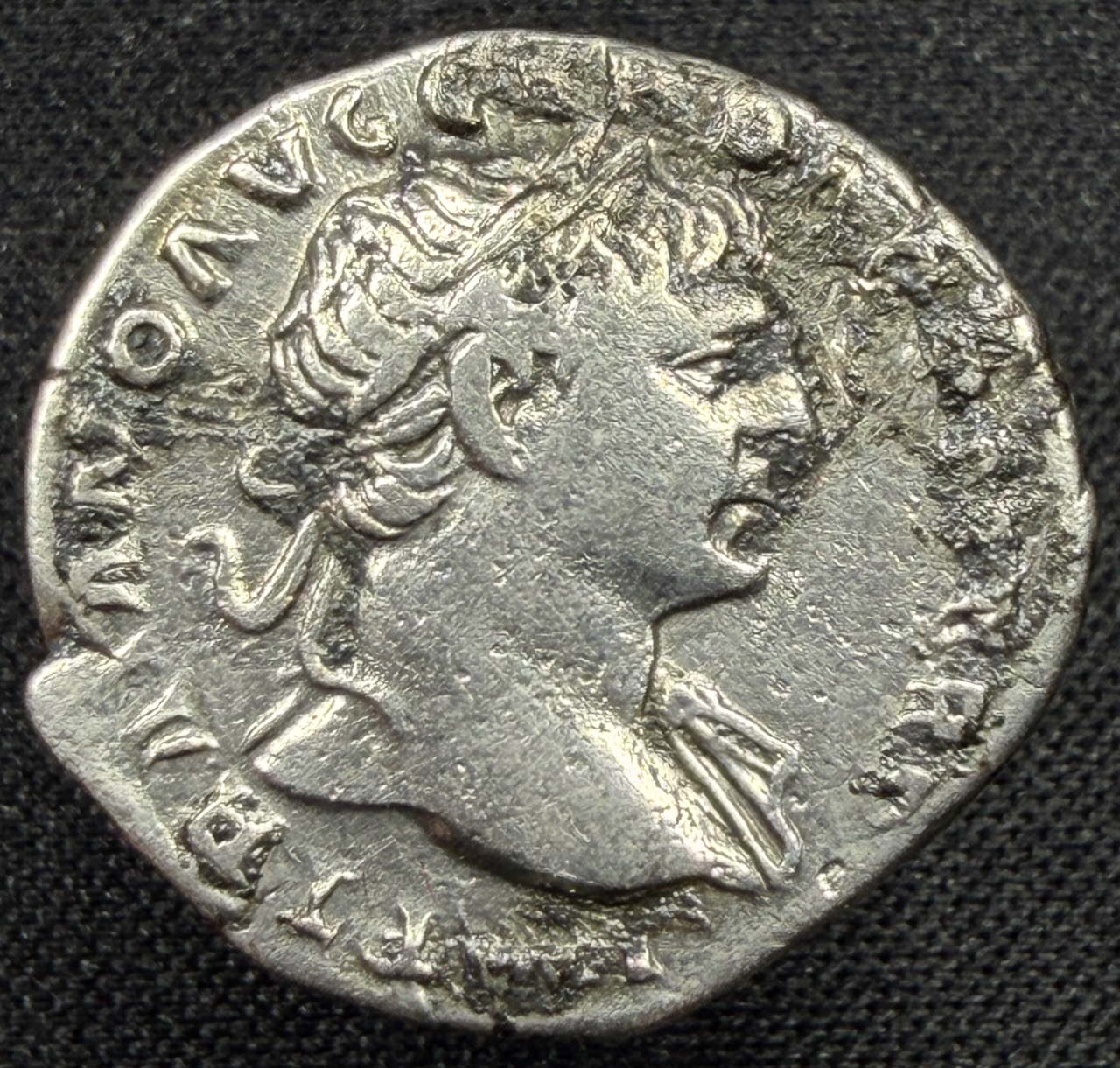
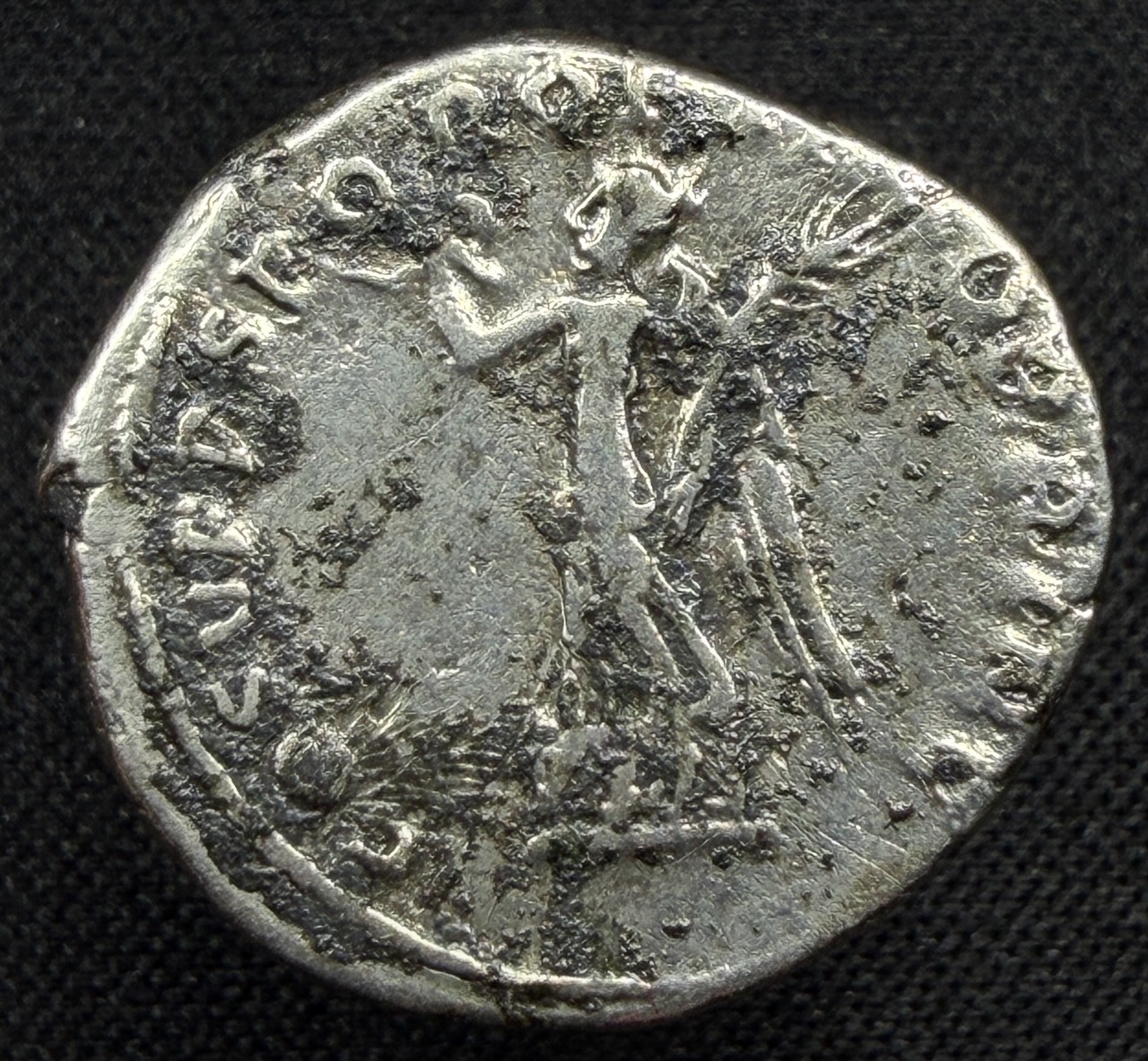
Obv: Laureate head of Trajan right, slight drapery on far shoulder
Rev: Victory standing left, holding wreath in extended right hand and palm in left
Ref: cf. RIC II 128
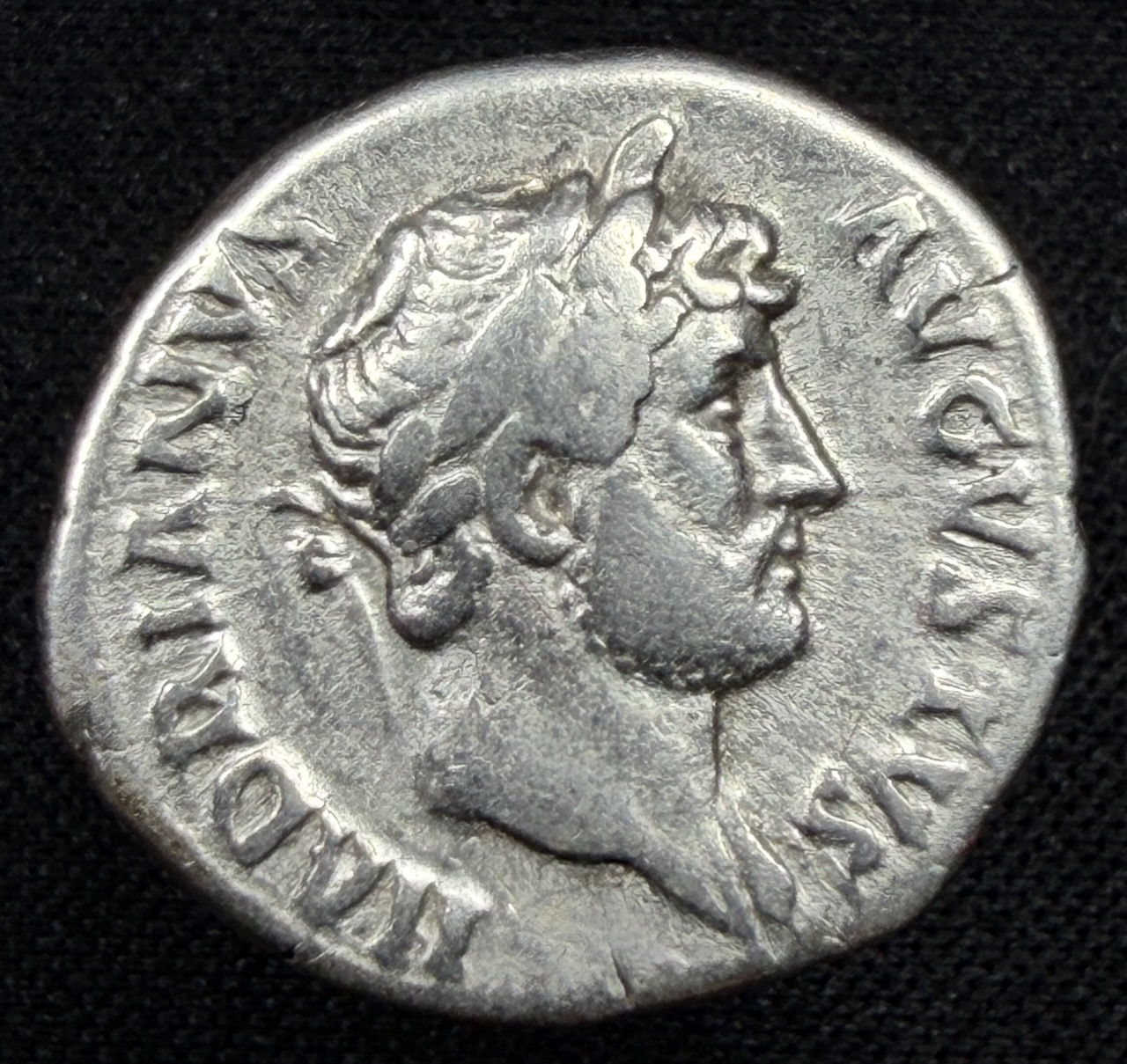
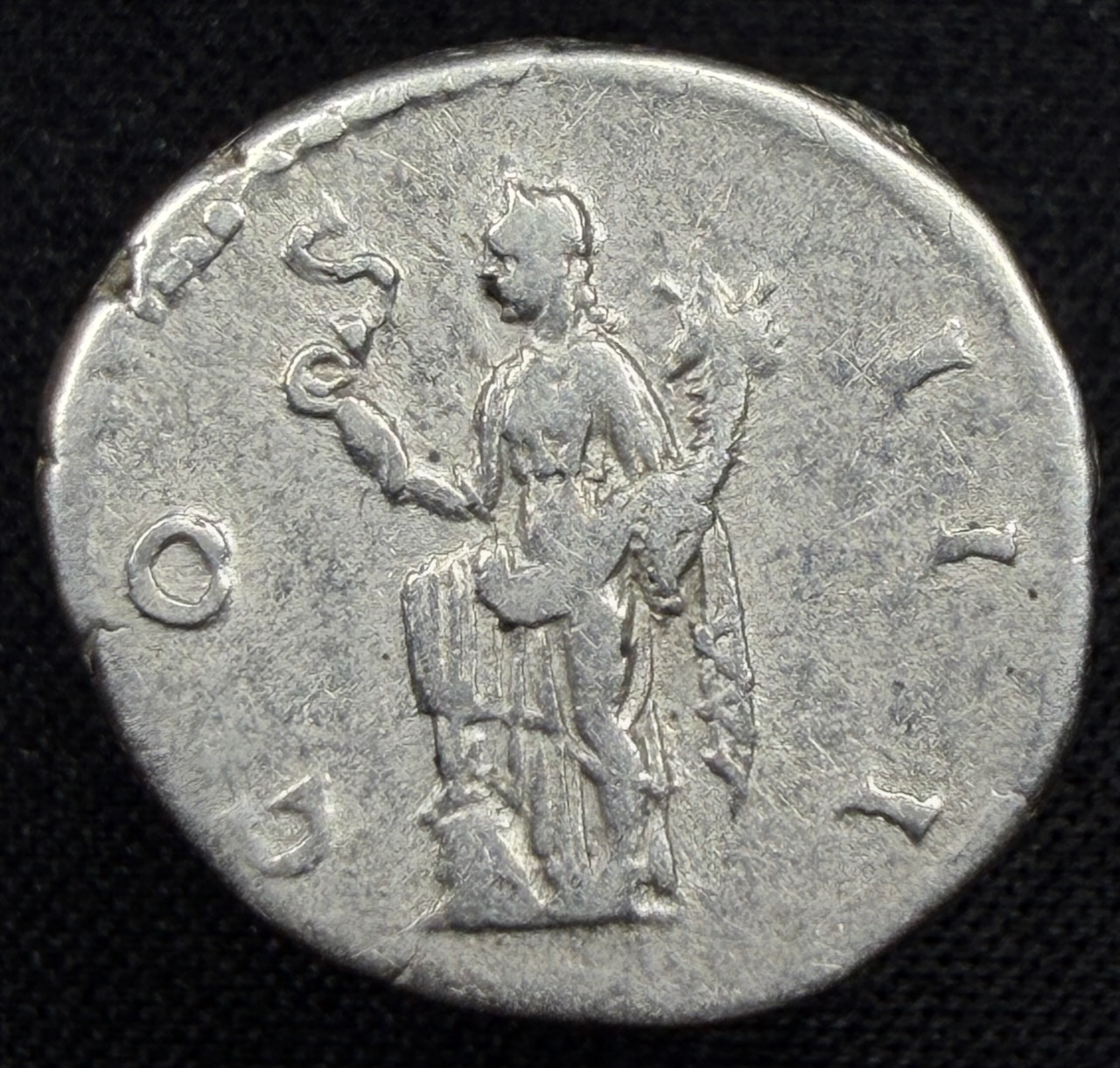
Obv: Laureate head of Hadrian right
Rev: Genius, naked to the waist, standing left, holding patera over a lighted and garlanded altar and cradling a cornucopia
Ref: RIC II 173
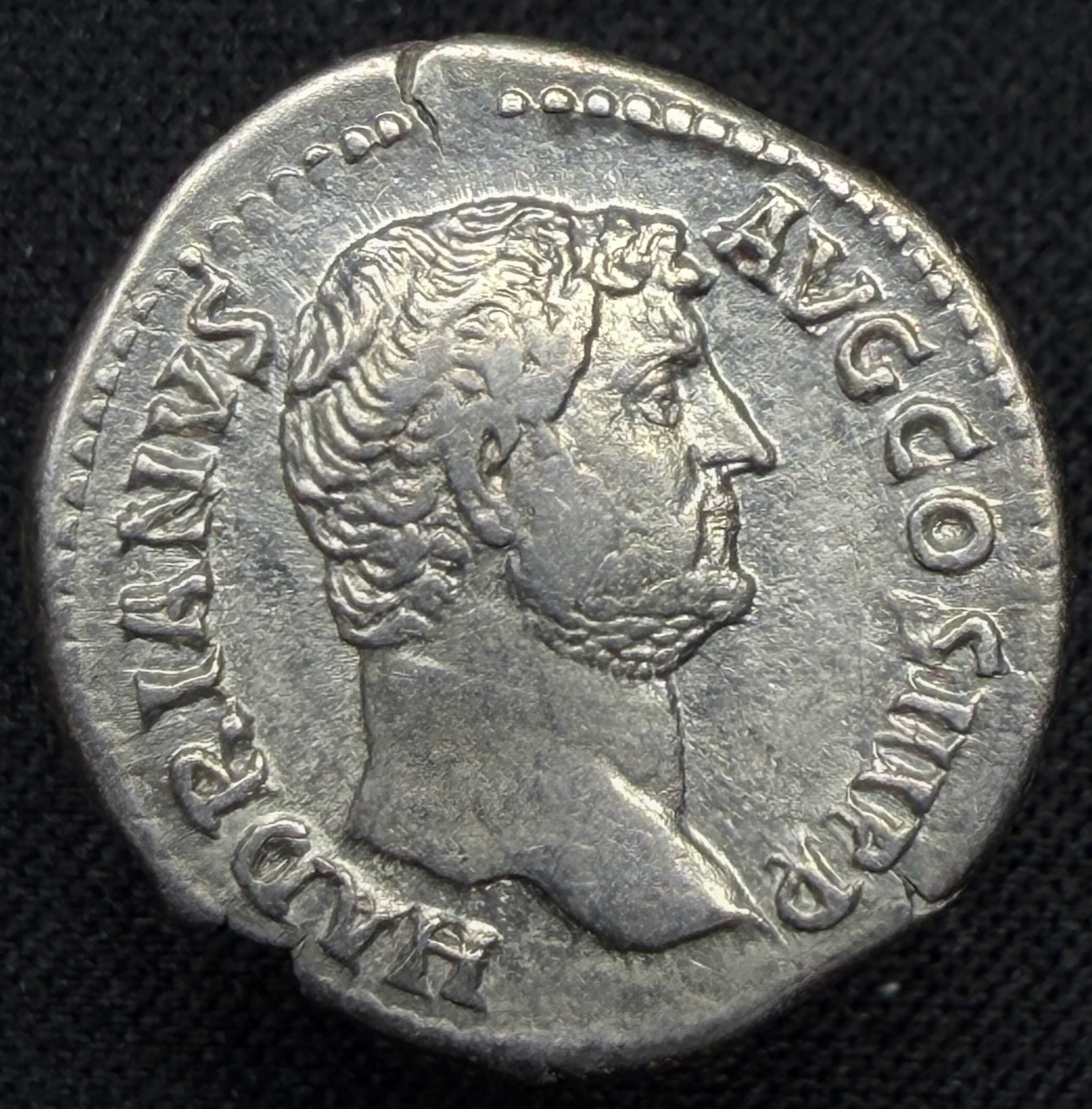
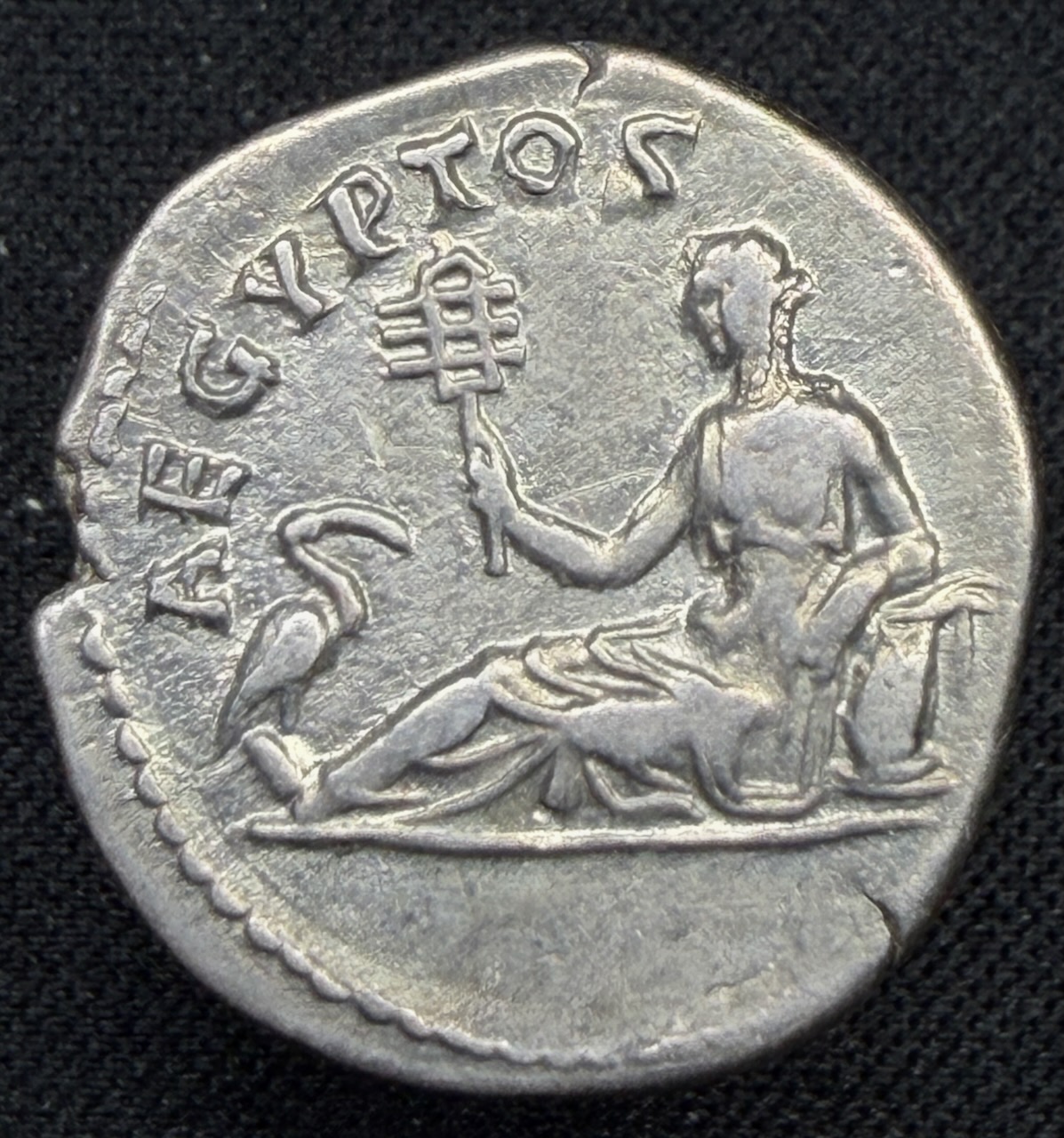
Obv: Bare head of Hadrian right
Rev: Egypt (Aegyptos) reclining left on the ground, holding sistrum in raised right hand, left elbow resting on basket entwined by a snake; ibis standing at her feet to left
Ref: RIC II 297
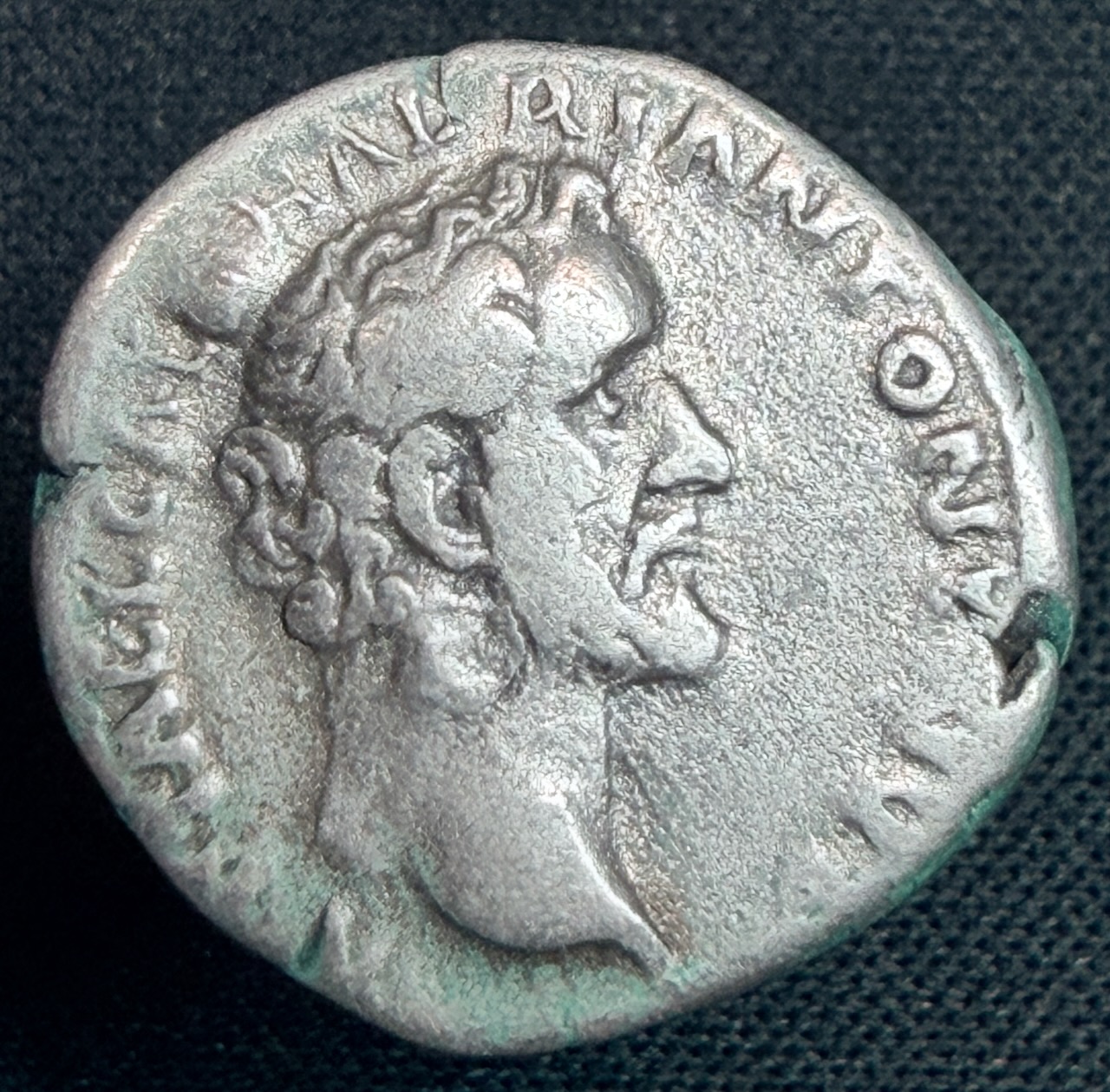
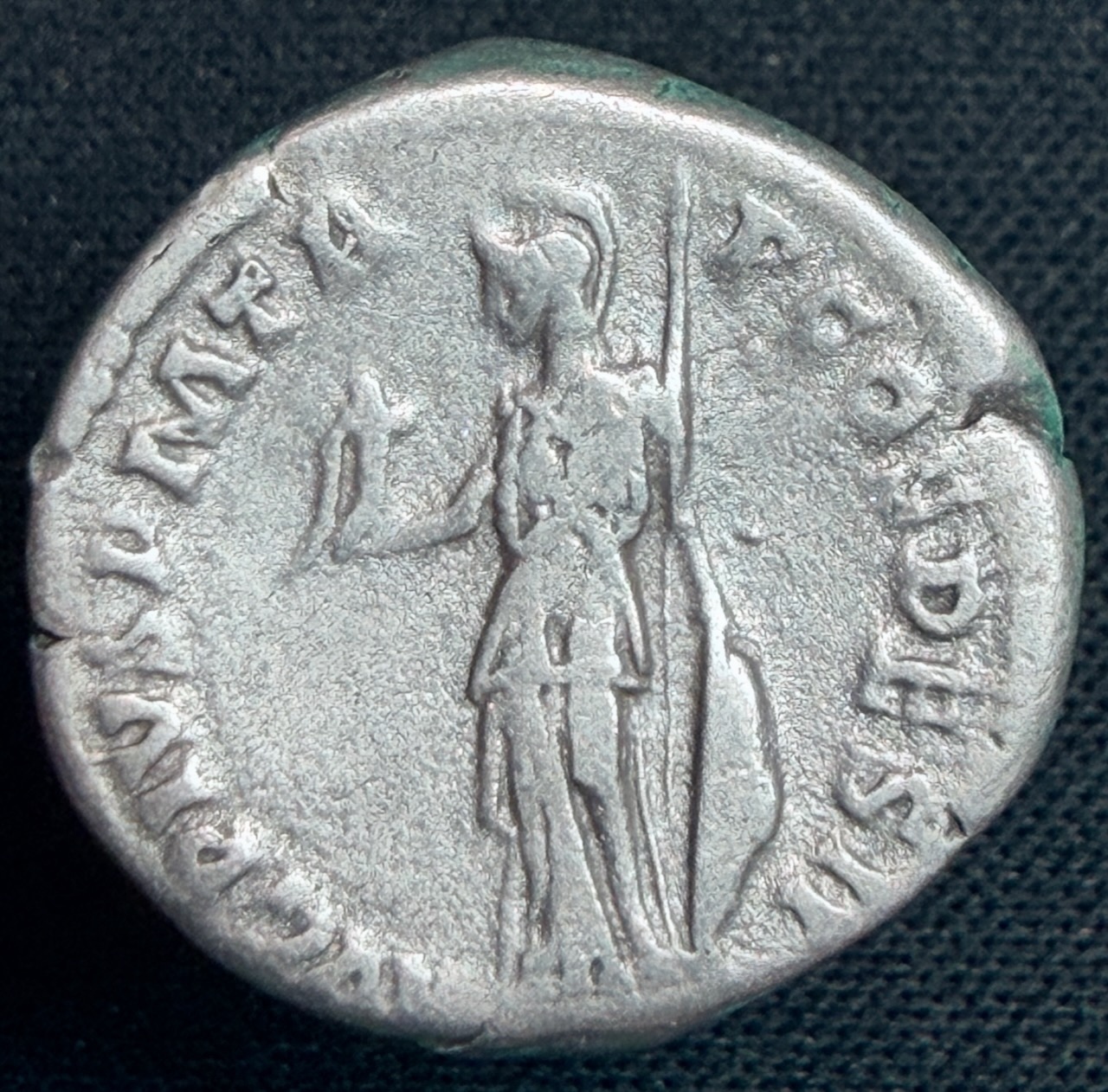
Obv: Bare head of Antoninus Pius right
Rev: Minerva standing left, holding Victory in extended right hand, left hand resting on shield, spear resting against left arm
Ref: RIC III 9
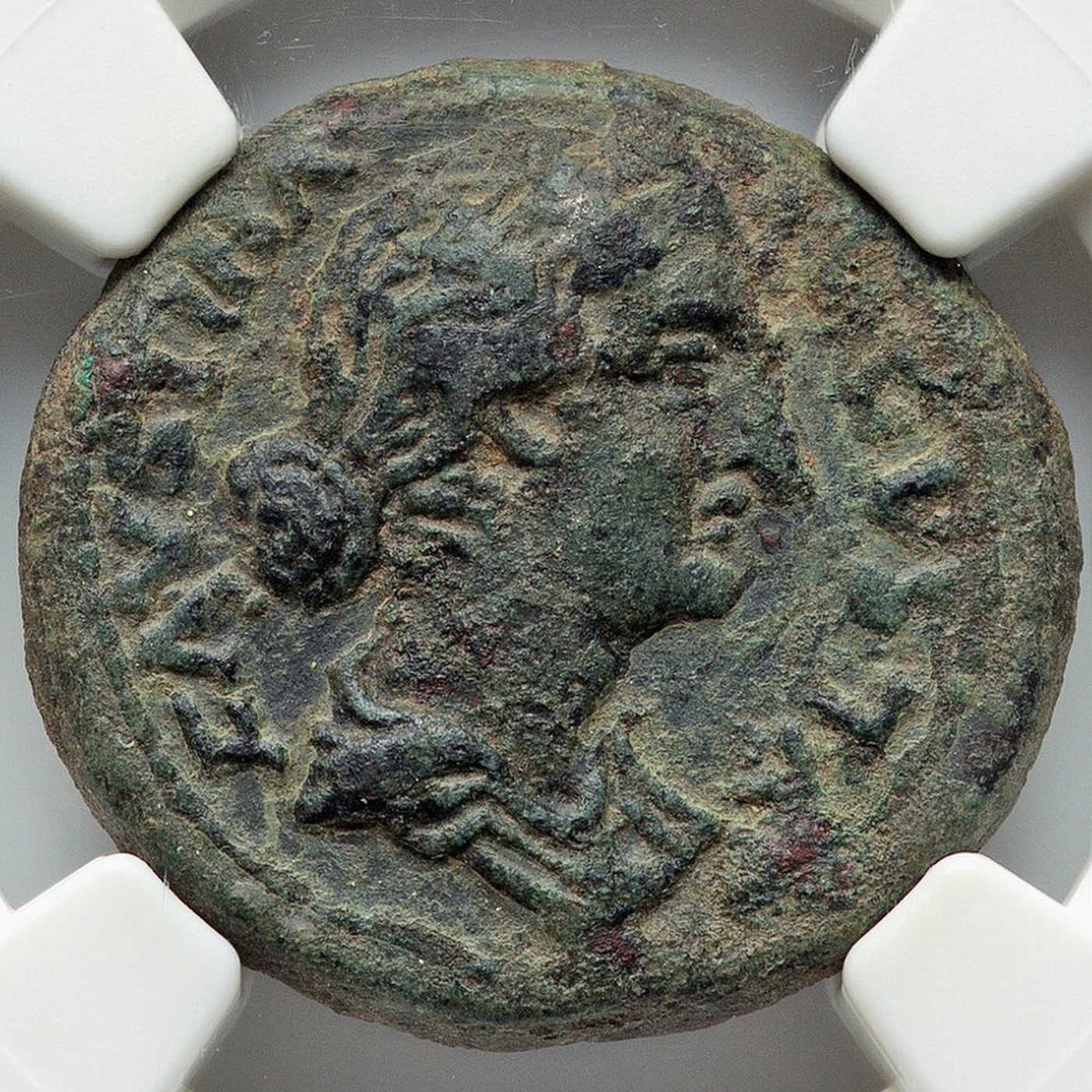
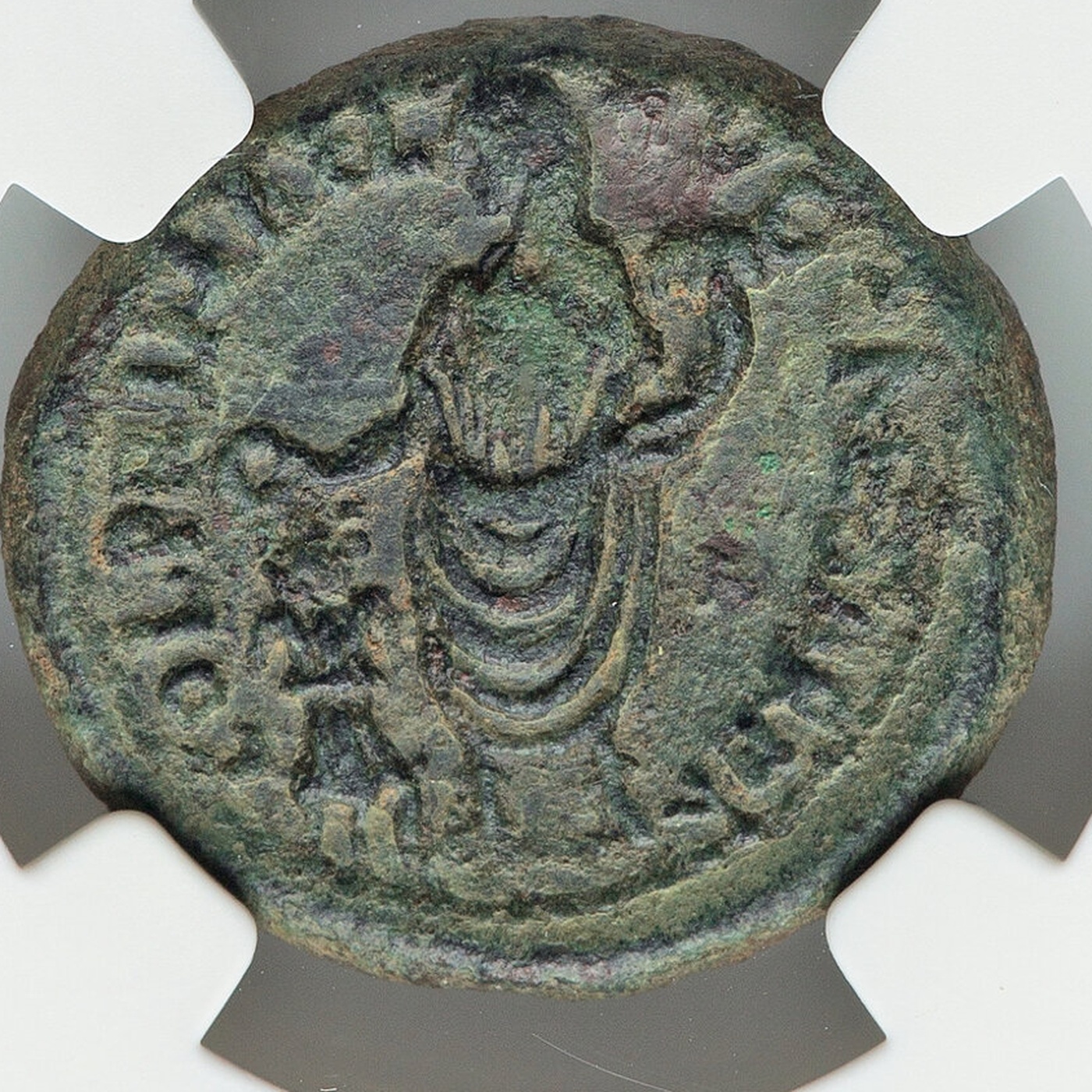
Obv: Draped bust of Faustina Junior right, seen from the front, the hair braided and coiled at the back of the head in a large chignon.
Rev: Genius — or the emperor; the cataloguing leaves the identification open — standing facing, head turned left, a cornucopia cradled in the left arm, pouring a libation from a patera held out in the right hand, over a thymiaterion (an incense altar) whose body is decorated with a bull's head.
Ref: RPC IV.3 online, temporary no. 6321
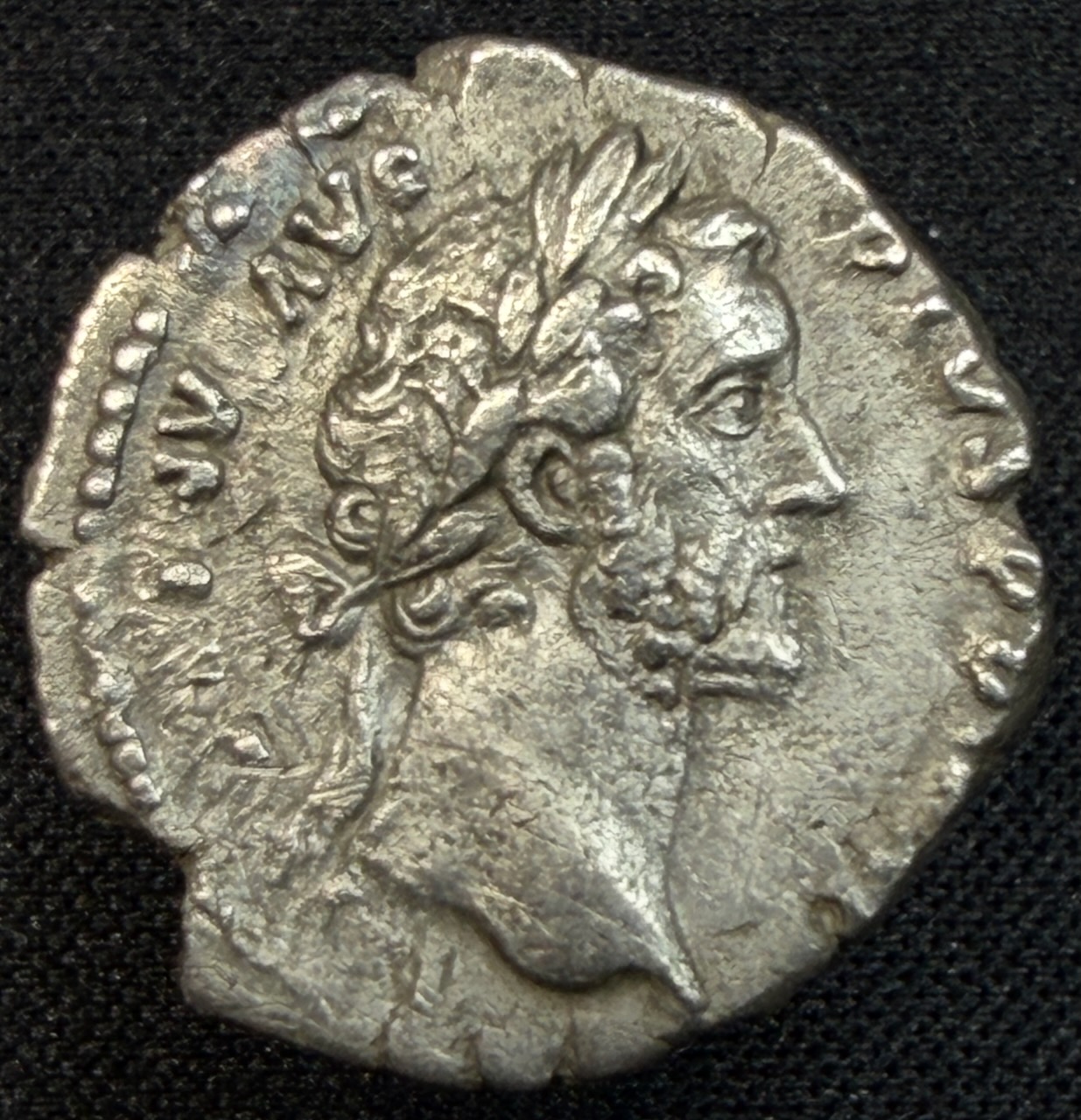
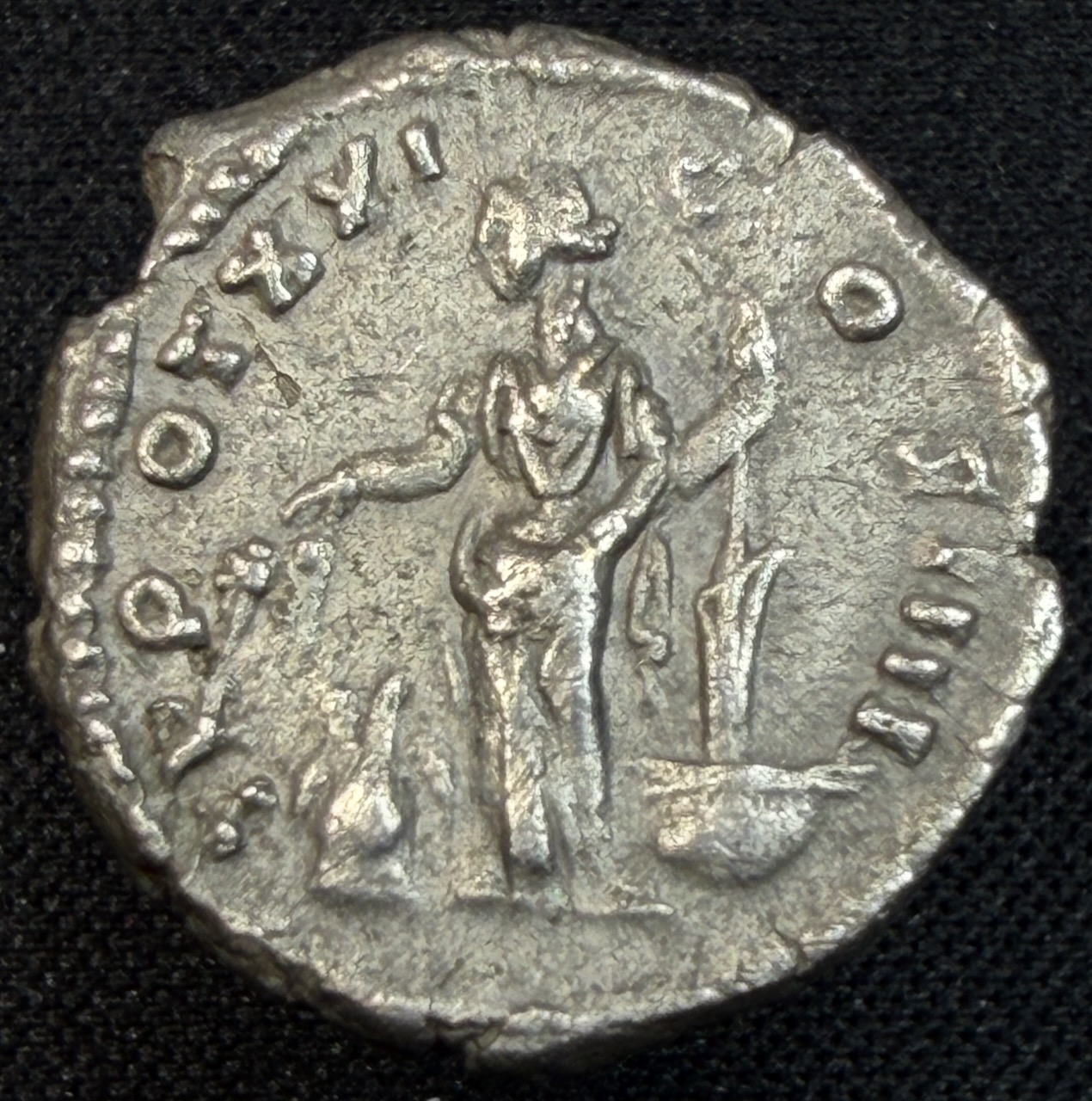
Obv: Laureate head of Antoninus Pius right
Rev: Annona standing left, heads of grain in right hand over modius at feet, rudder on prow in left
Ref: RIC III 274
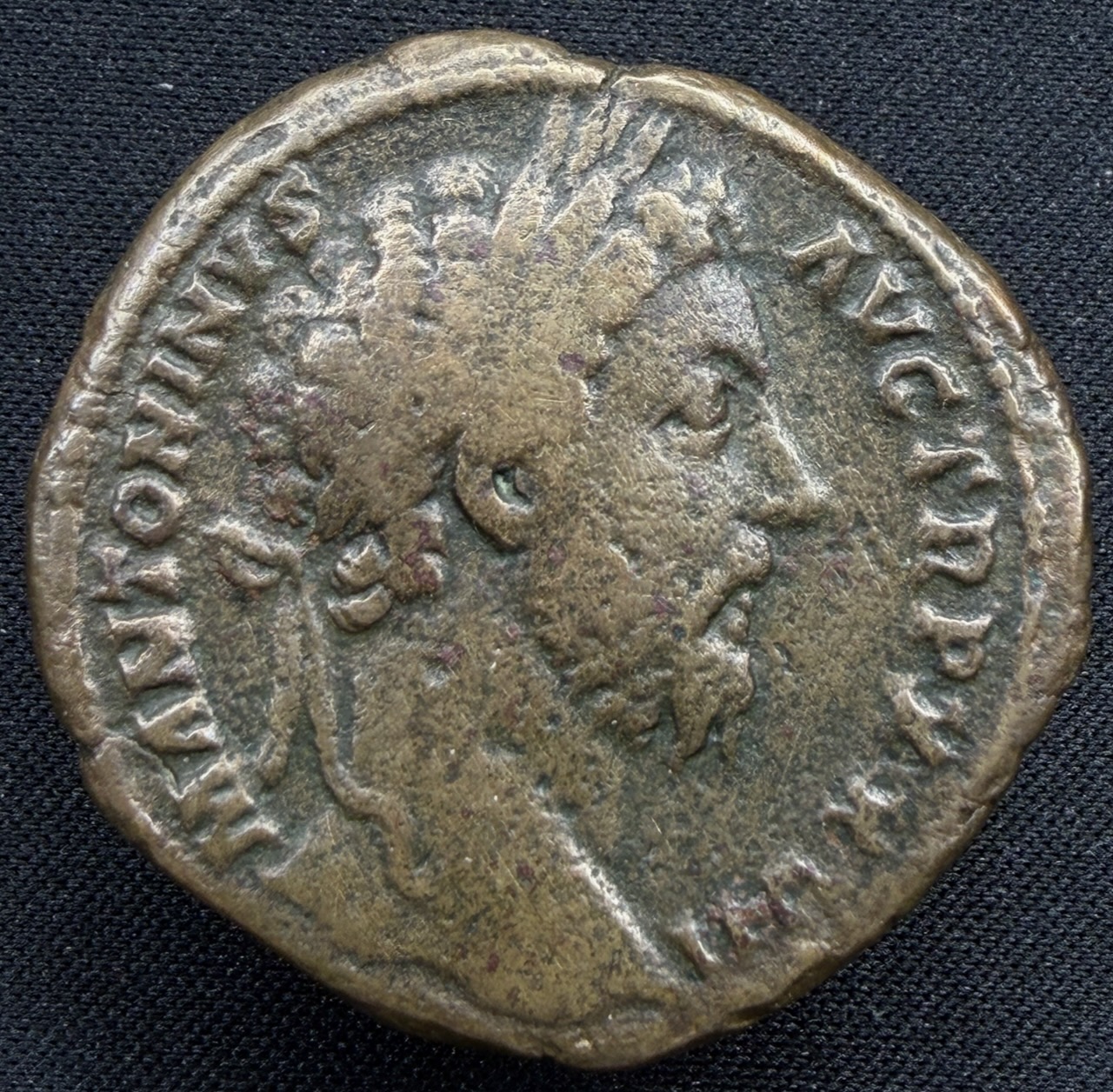
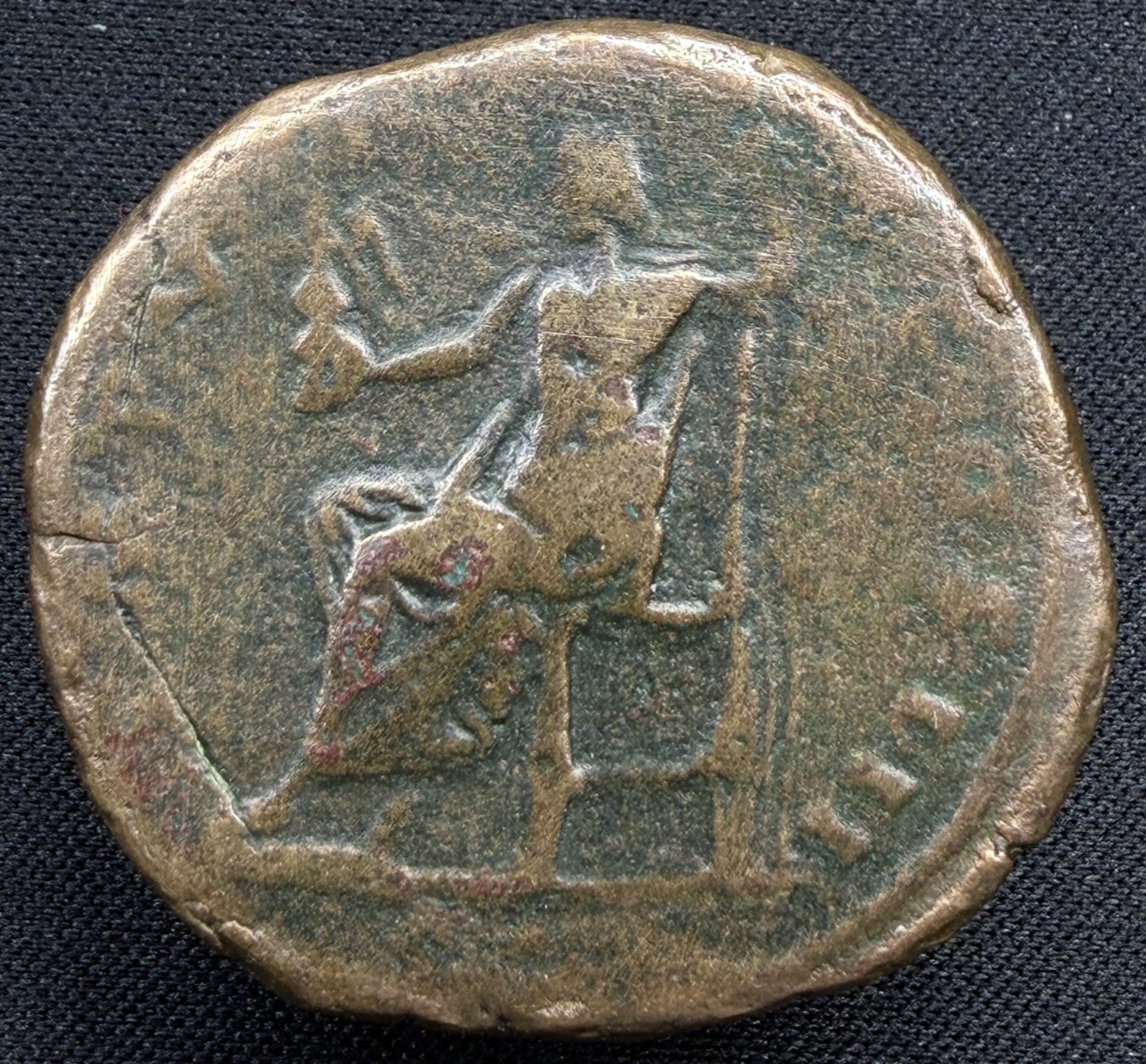
Obv: Laureate head of Marcus Aurelius right
Rev: Jupiter seated left on throne, holding Victory in extended right hand and long sceptre in left; S C in exergue
Ref: RIC III 1064
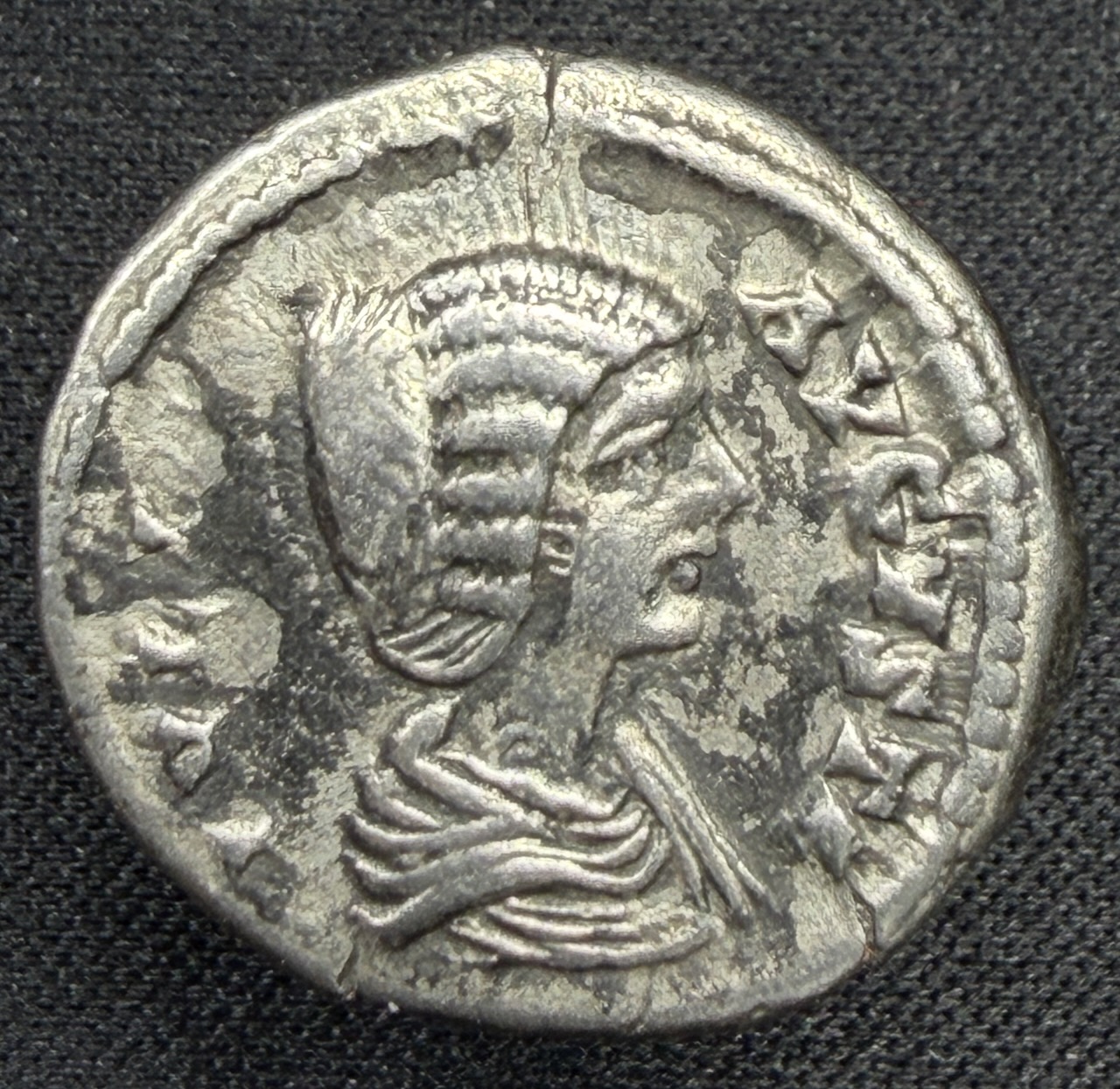
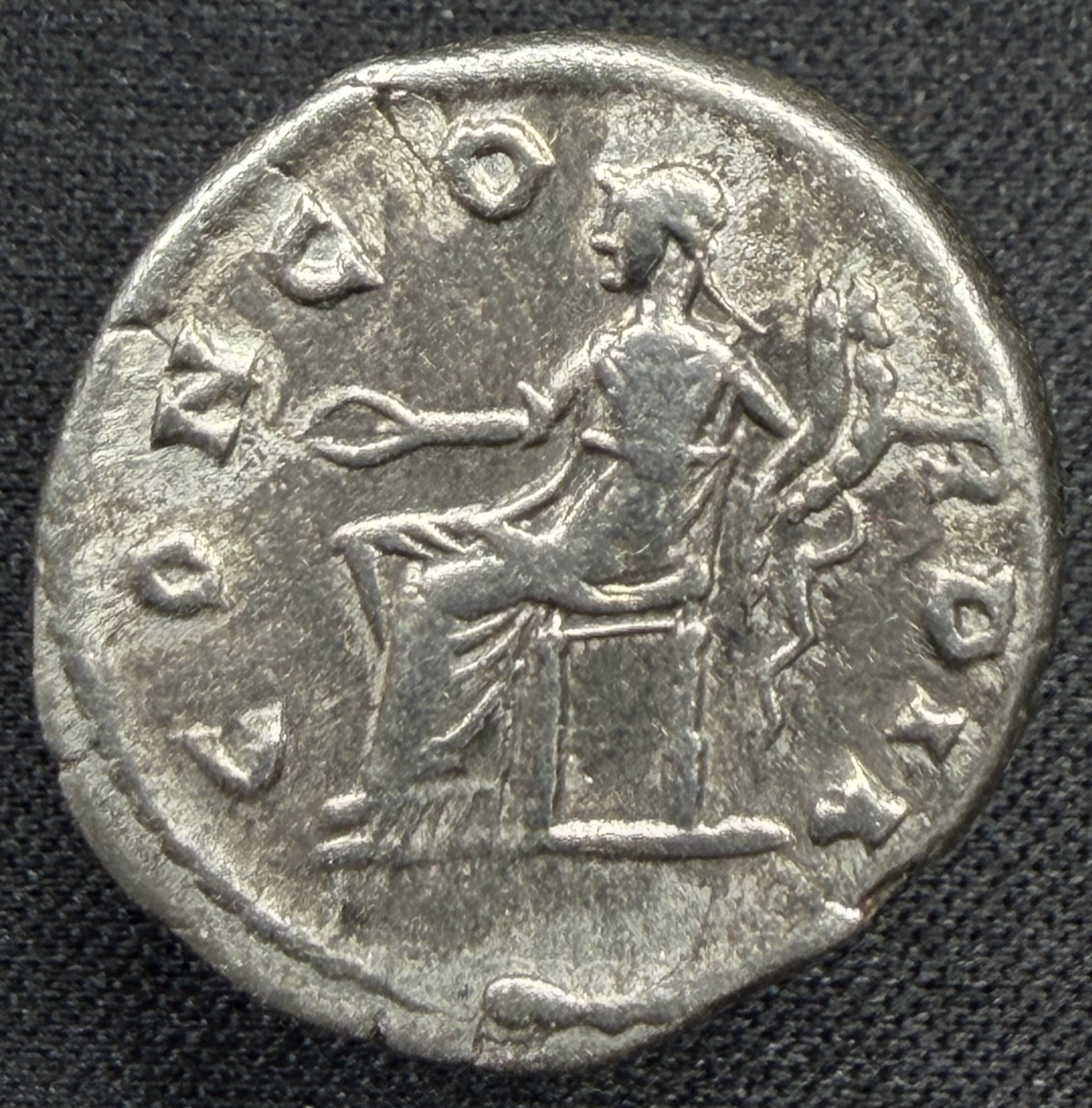
Obv: Draped bust of Julia Domna right, hair waved in ridges and coiled in a large bun at the back of the head
Rev: Concordia seated left on throne, holding patera in extended right hand and double cornucopia in left arm
Ref: RIC IV 637
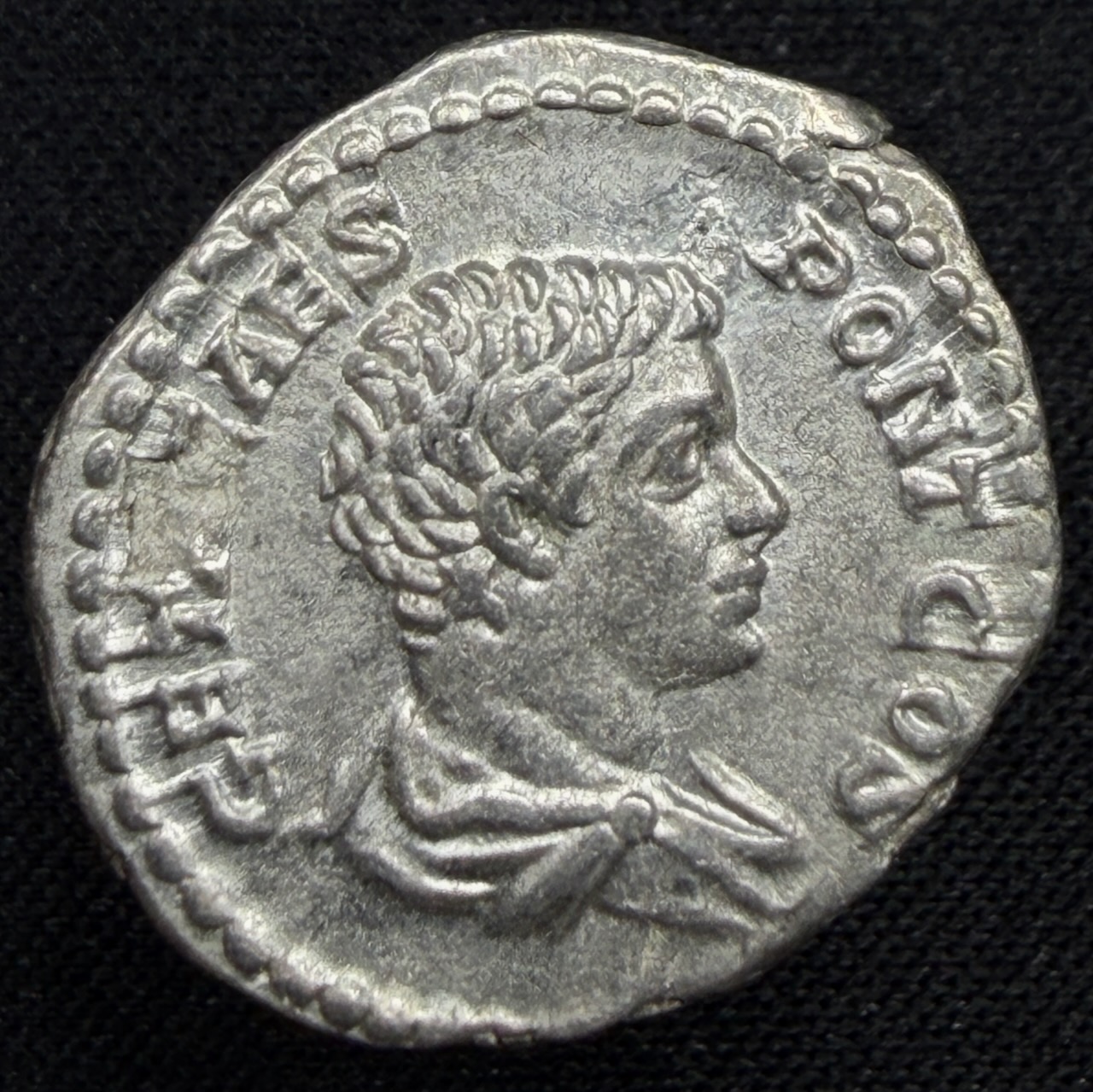
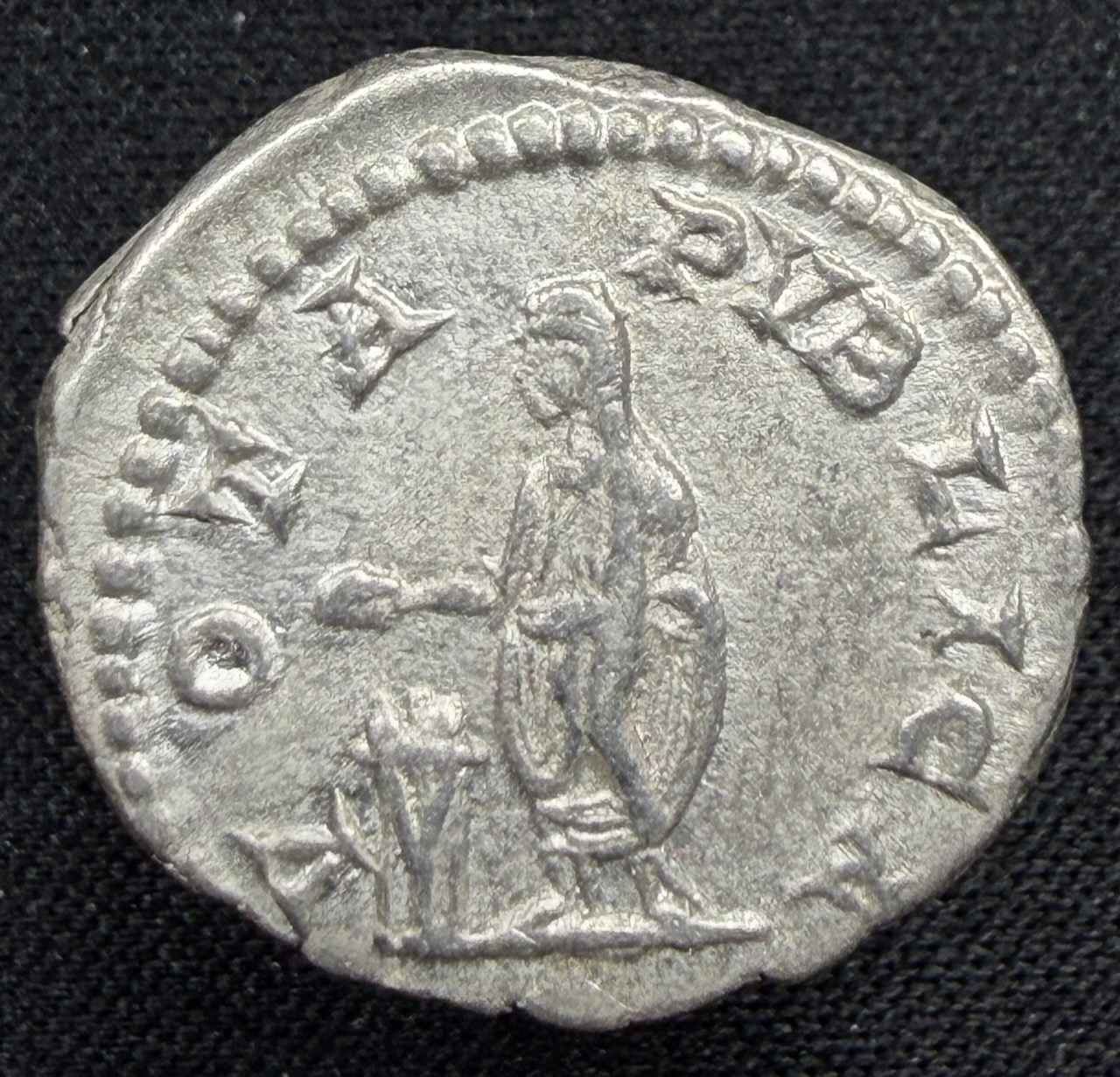
Obv: Bare-headed, draped bust of the young Geta right
Rev: Geta, togate, standing left, sacrificing from a patera over a lighted tripod altar and holding a roll
Ref: RIC IV 38b
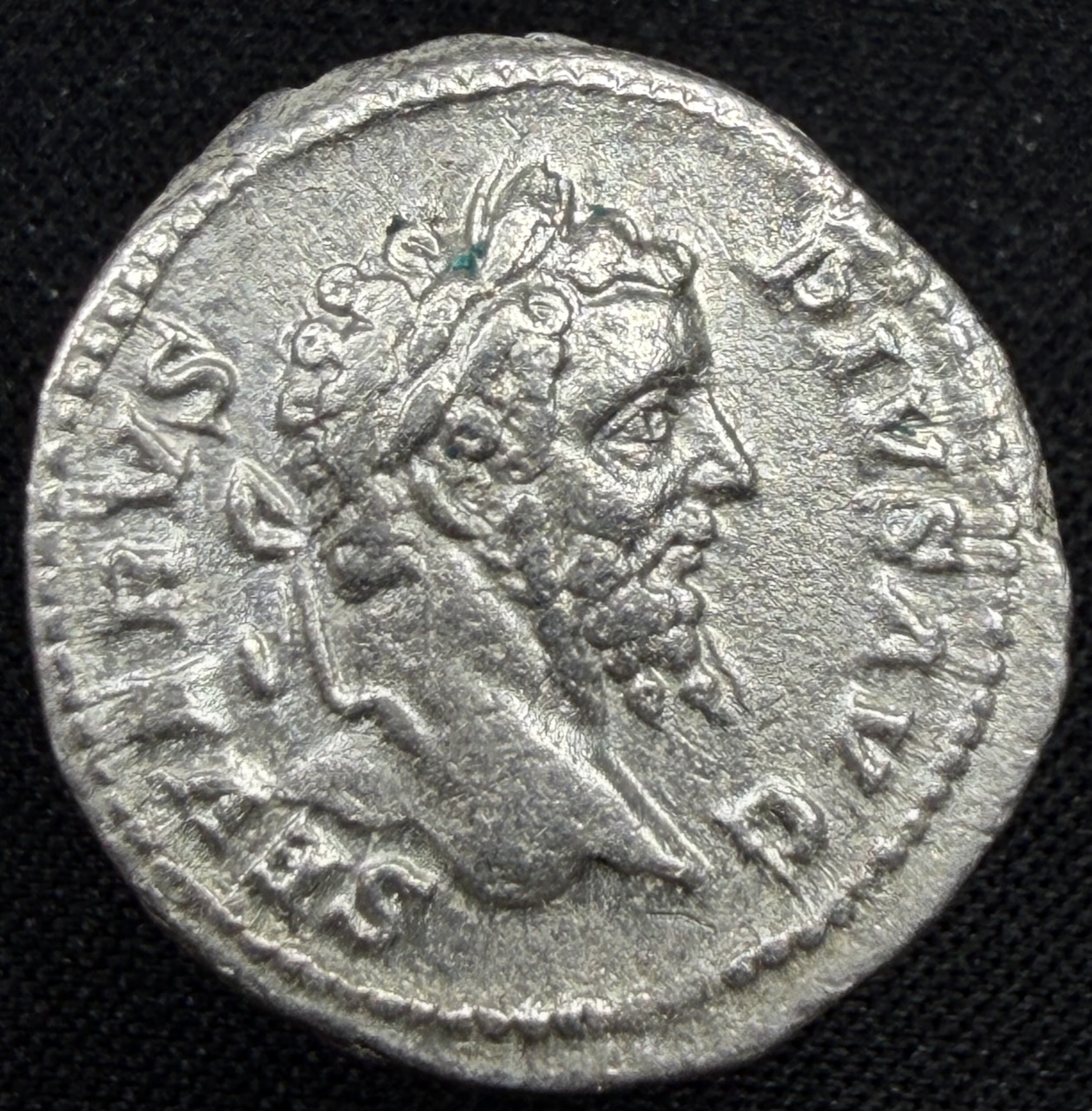
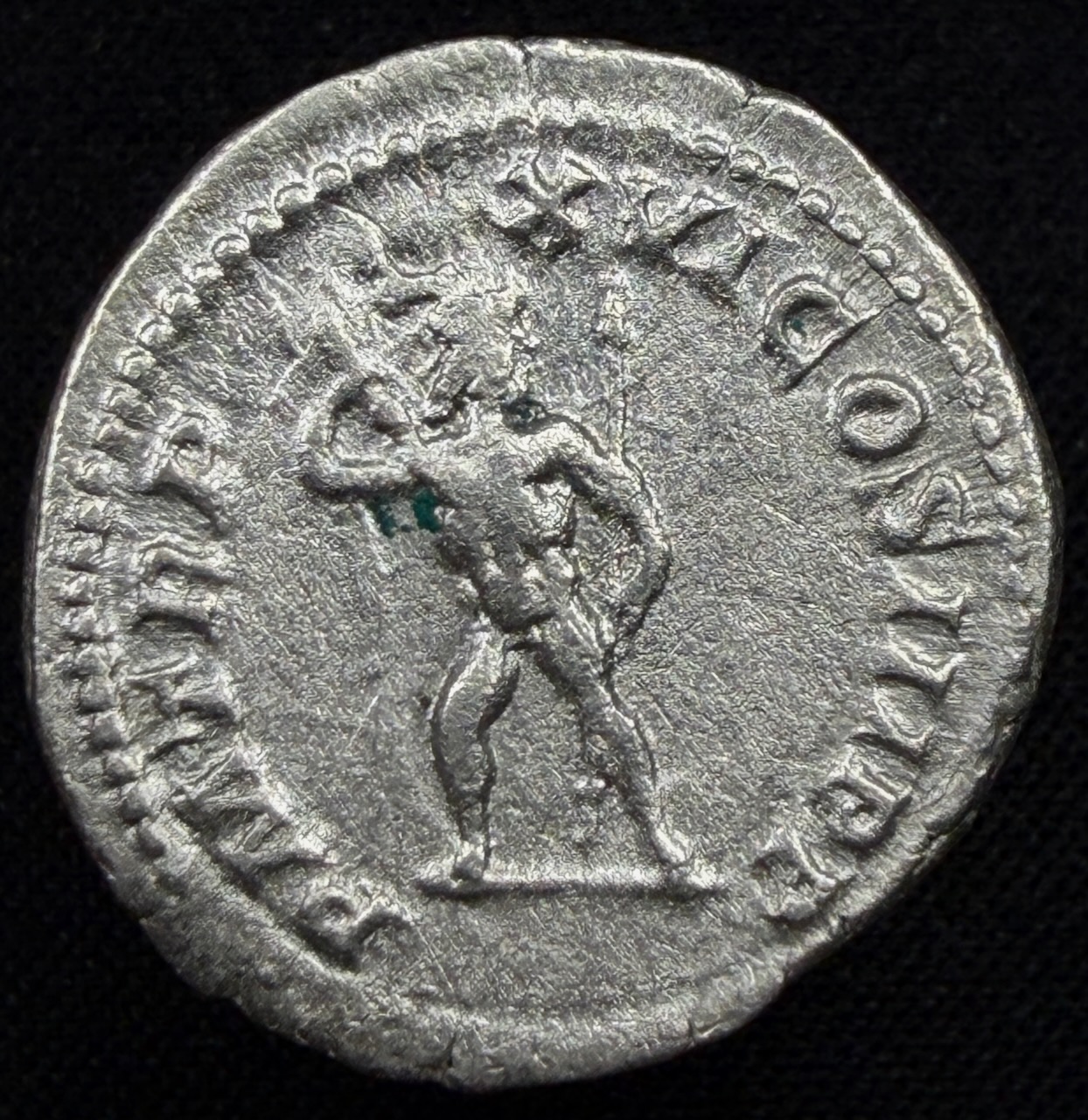
Obv: Laureate head of Septimius Severus right
Rev: Jupiter standing right, brandishing thunderbolt in raised right hand and holding sceptre in left
Ref: RIC IV 216
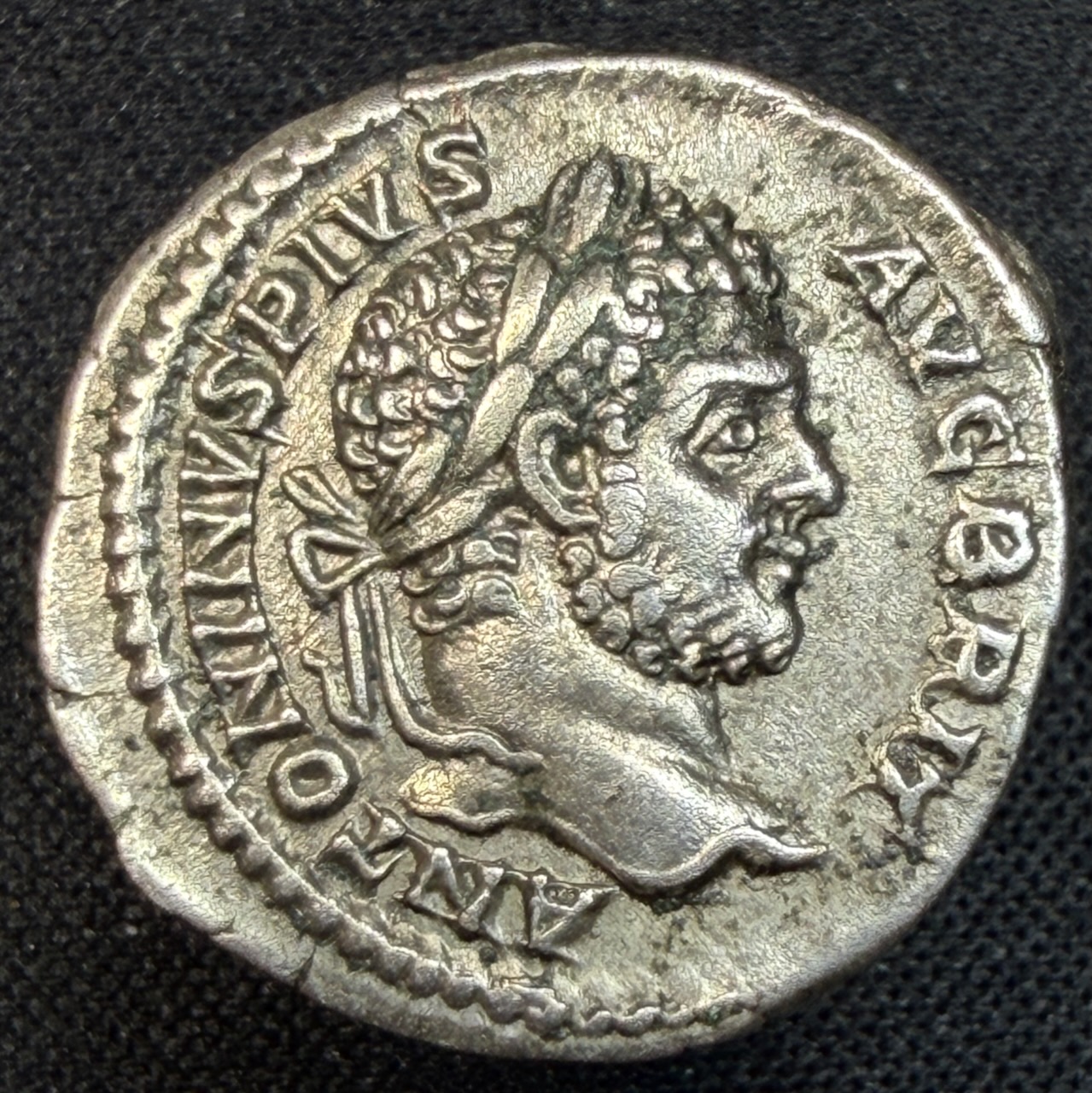
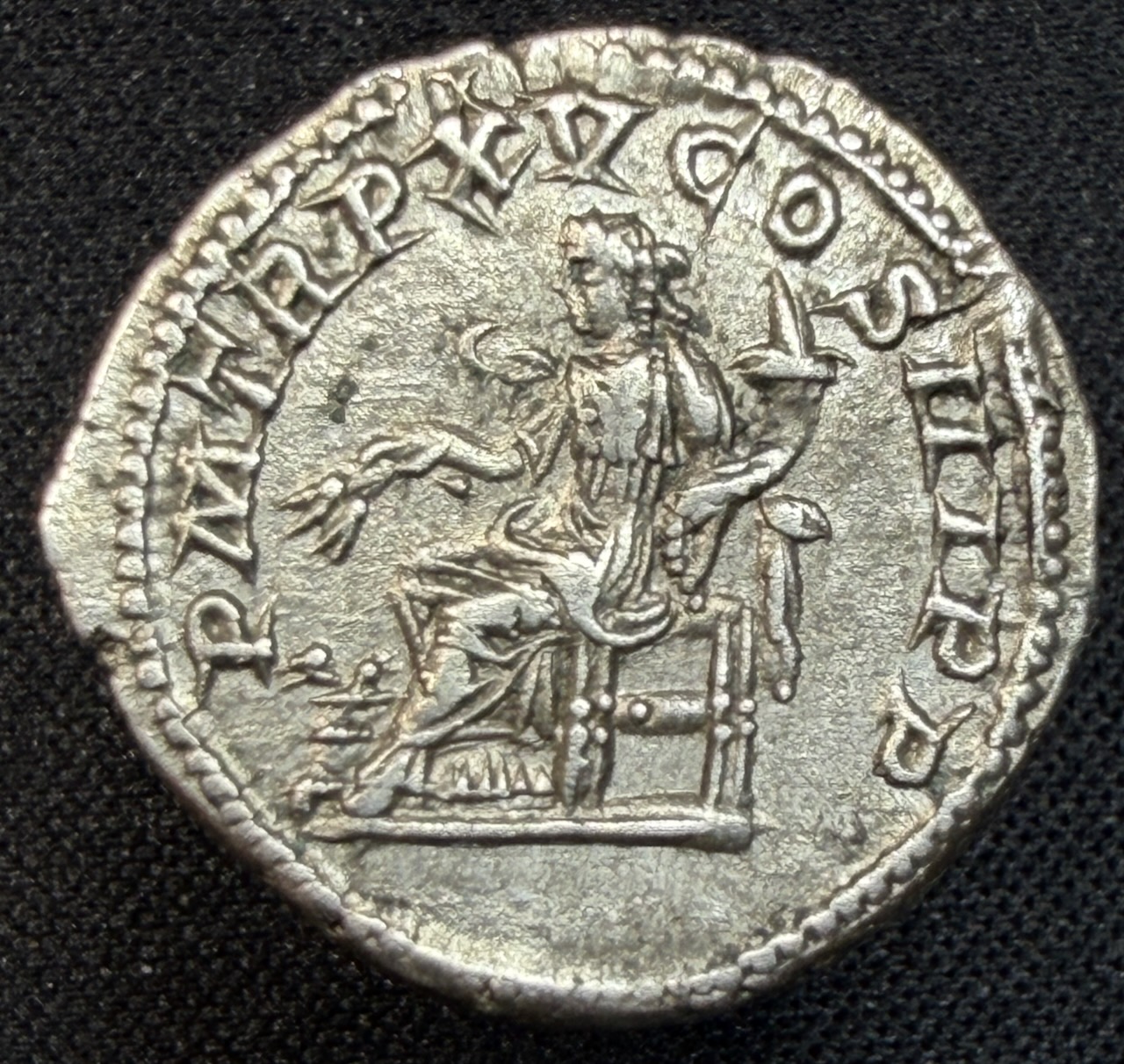
Obv: Laureate head of Caracalla right
Rev: Annona seated left, holding stalks of grain in right hand and cornucopia in left; modius at feet
Ref: RIC IV 195
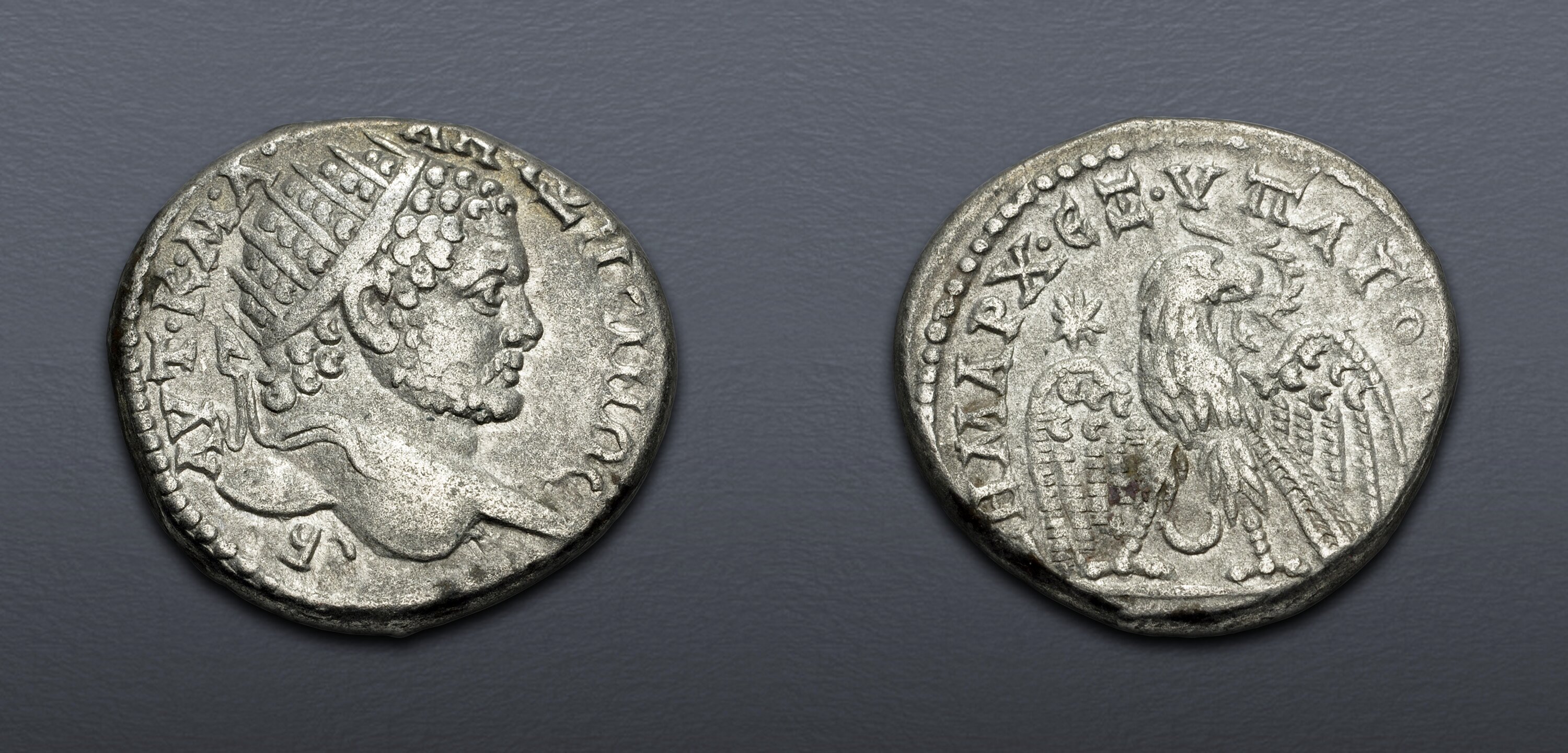
Obv: Radiate head of Caracalla right
Rev: Eagle standing facing, head and tail to right, wings displayed, a wreath in its beak; star in the upper left field; CRESCENT between the legs; two pellets in exergue
Ref: Prieur 830
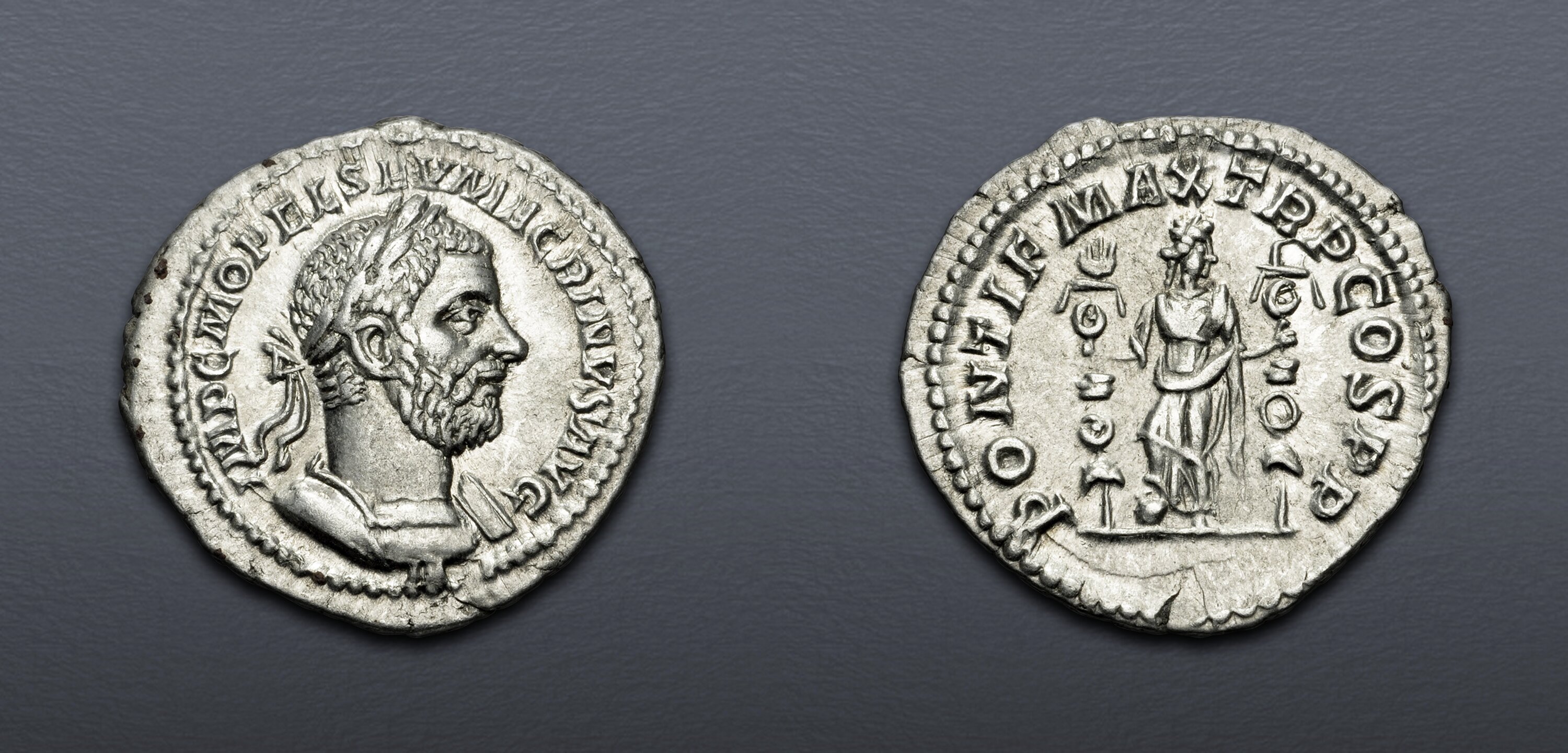
Obv: Laureate and cuirassed bust of Macrinus right
Rev: Fides standing right, her foot on a helmet, holding a signum (military standard) in each hand
Ref: RIC IV 22A
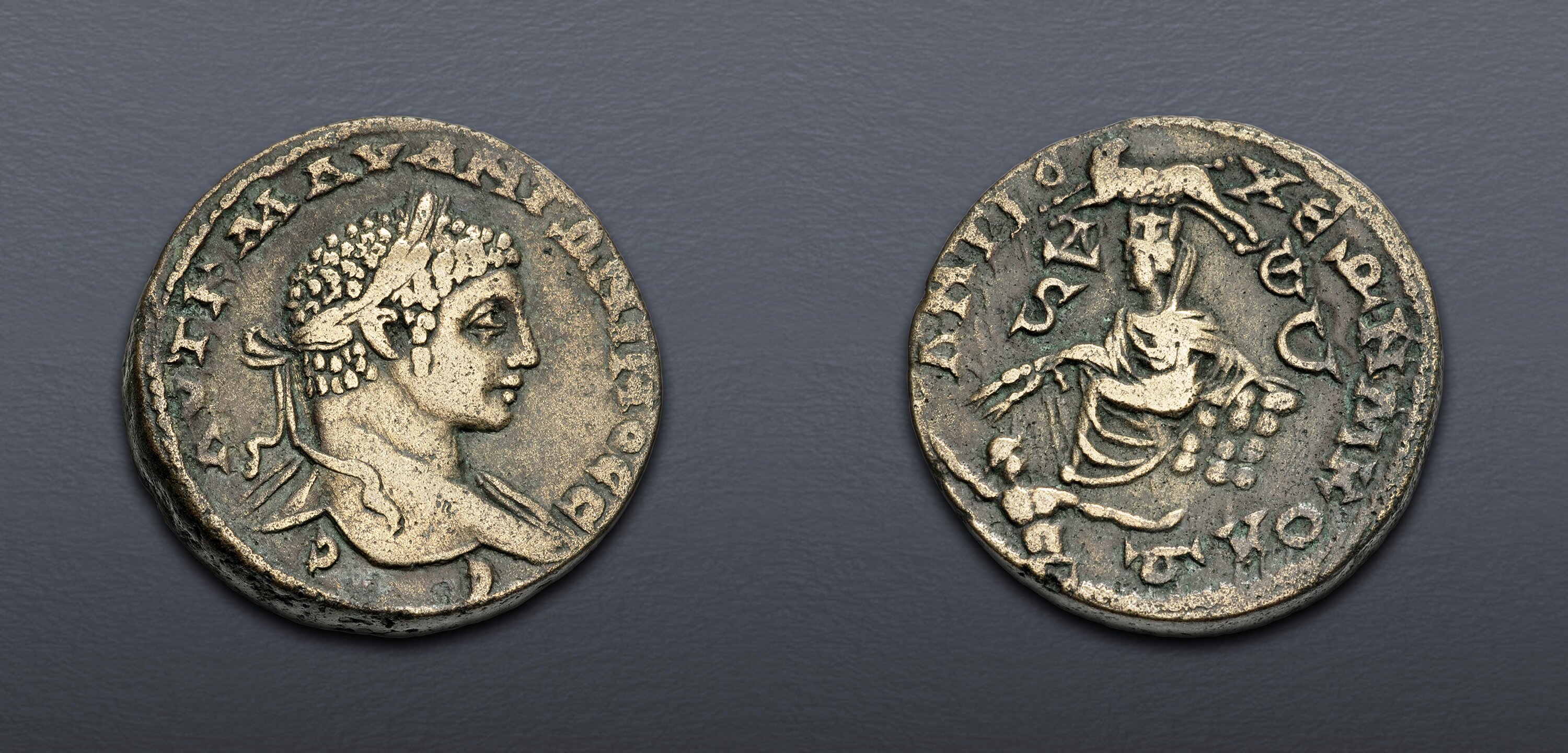
Obv: Laureate bust of Elagabalus right, drapery on the left shoulder
Rev: Tyche of Antioch seated left on rocks, turreted and veiled, holding grain ears; above, a ram leaping left with head turned back; below, the river-god Orontes swimming left
Ref: RPC VI Online 8008.1 (this coin)
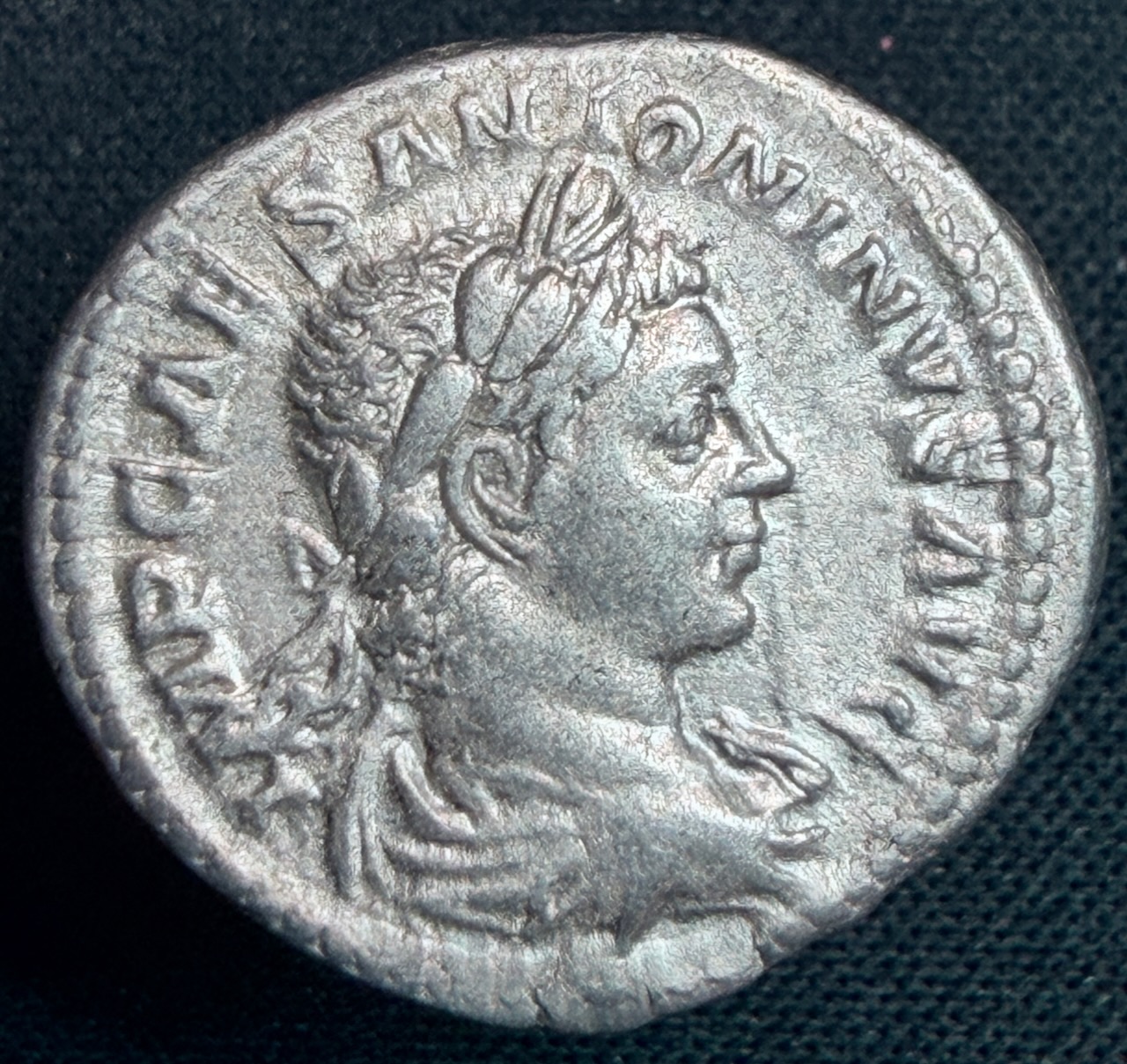
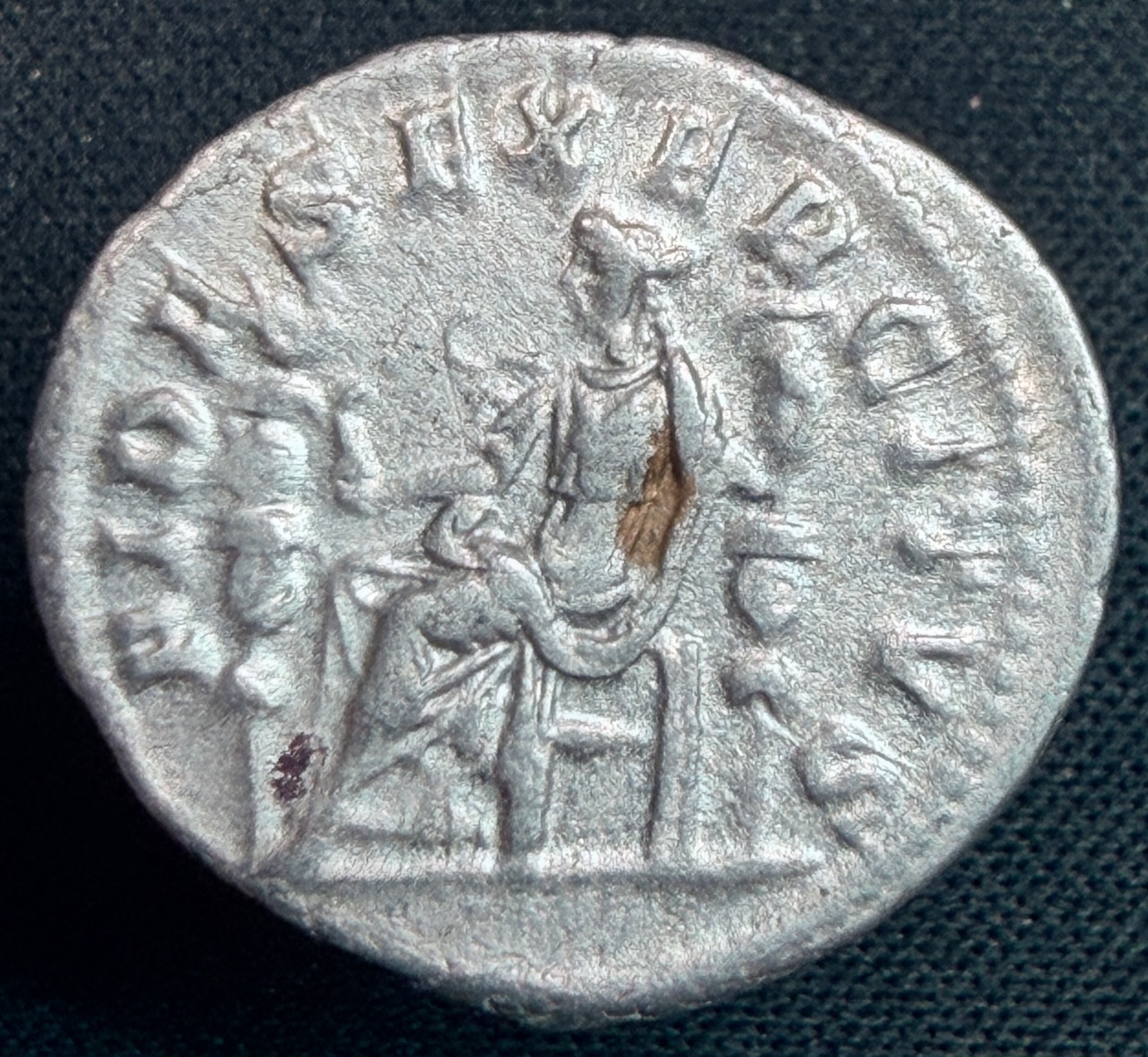
Obv: Laureate, draped bust of Elagabalus right
Rev: Fides seated left, holding eagle (aquila) in right hand and standard in left; a second standard before her
Ref: RIC IV 68
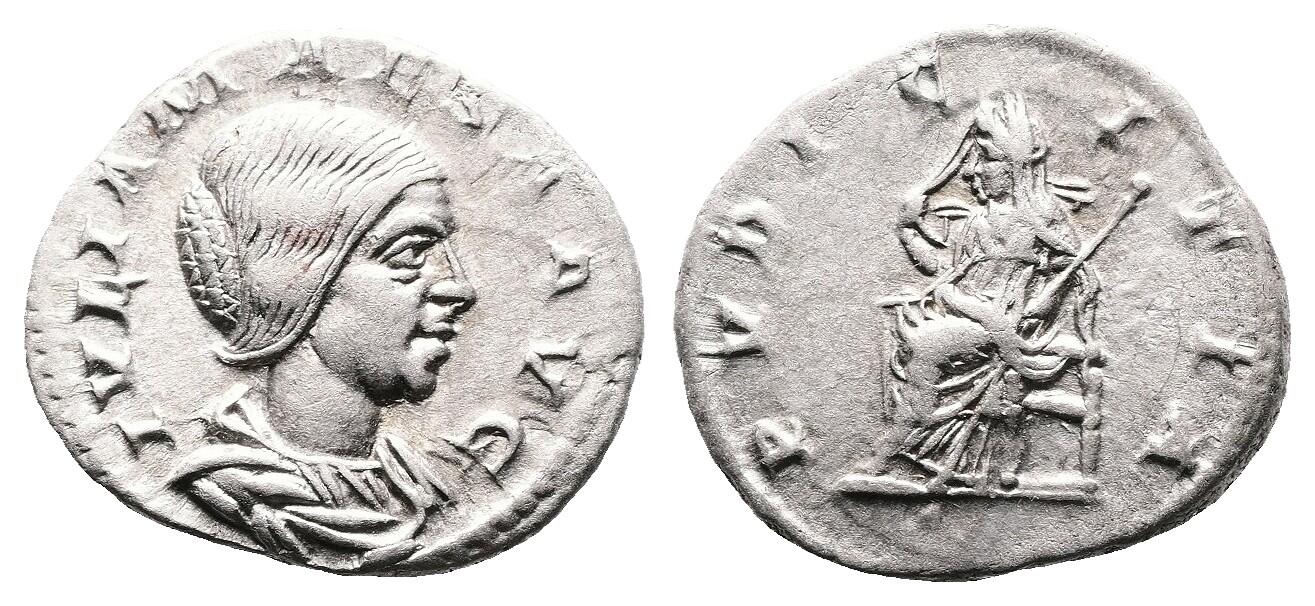
Obv: Draped bust of Julia Maesa right, hair waved and drawn back into a bun at the nape
Rev: Pudicitia seated left on a throne, raising her veil with her right hand and holding a long sceptre in her left; footstool below
Ref: RIC IV 268 (Elagabalus)
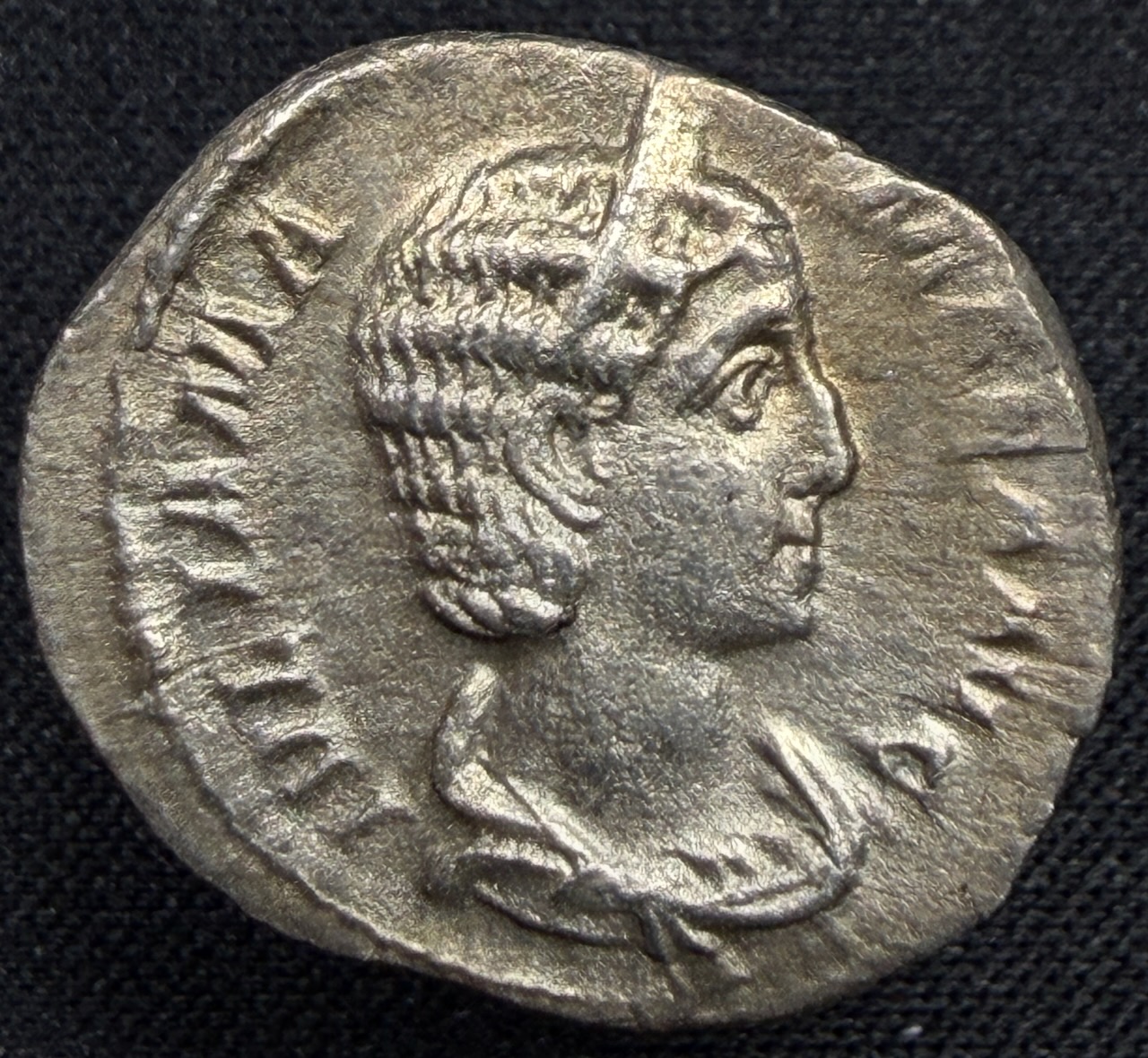
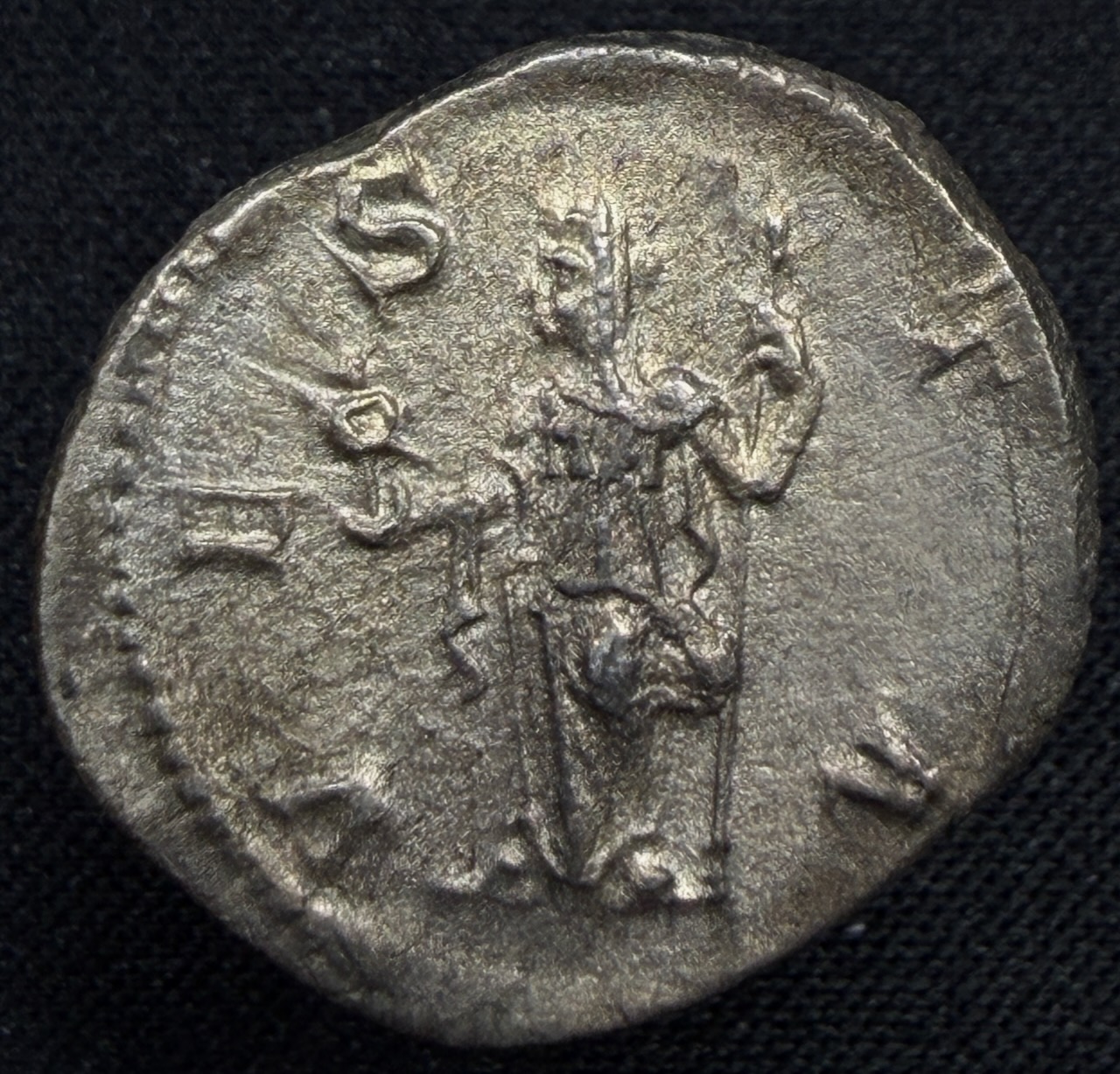
Obv: Diademed and draped bust of Julia Mamaea right
Rev: Vesta standing left, holding palladium in right hand and transverse sceptre in left
Ref: RIC IV 360
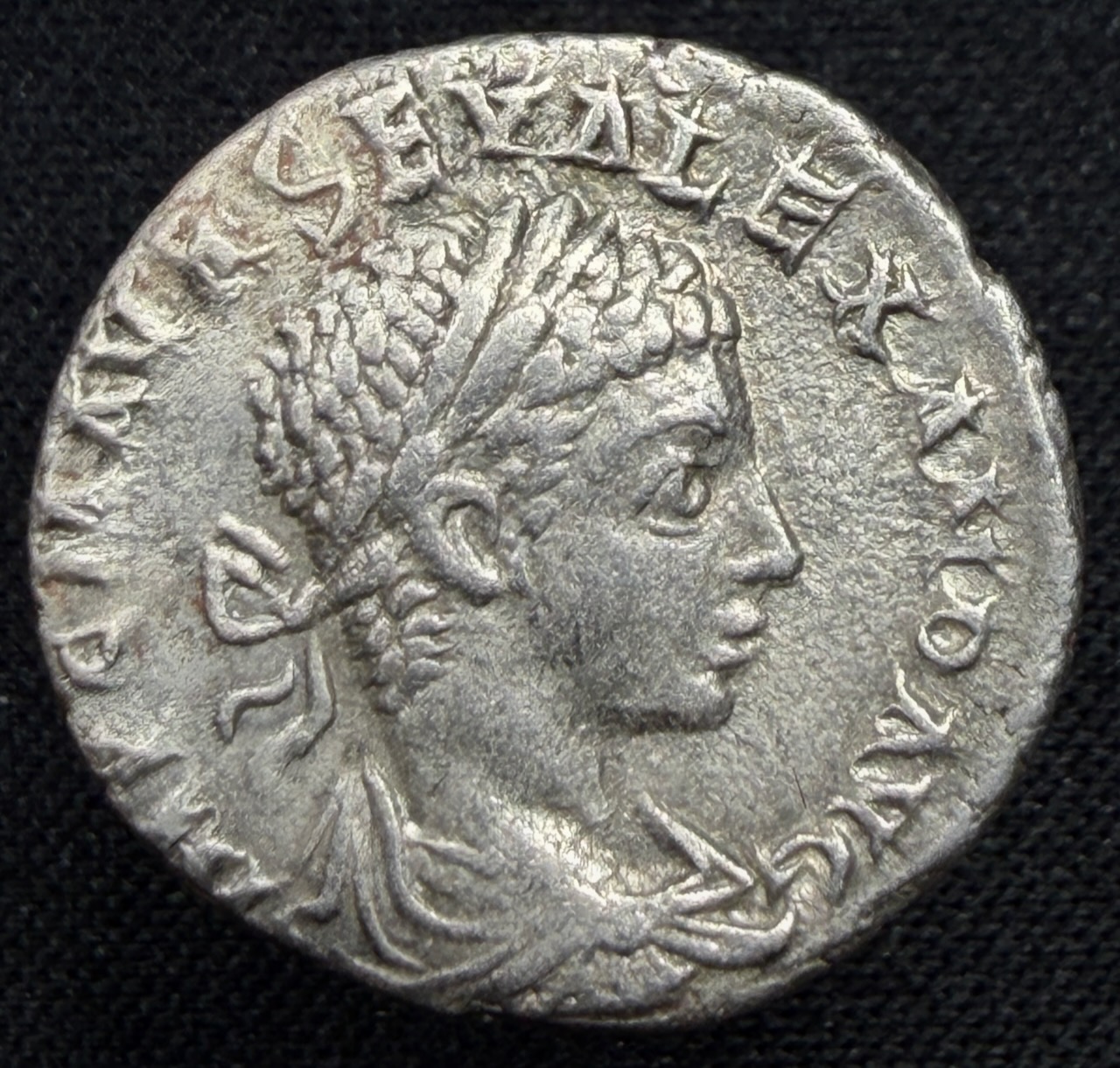
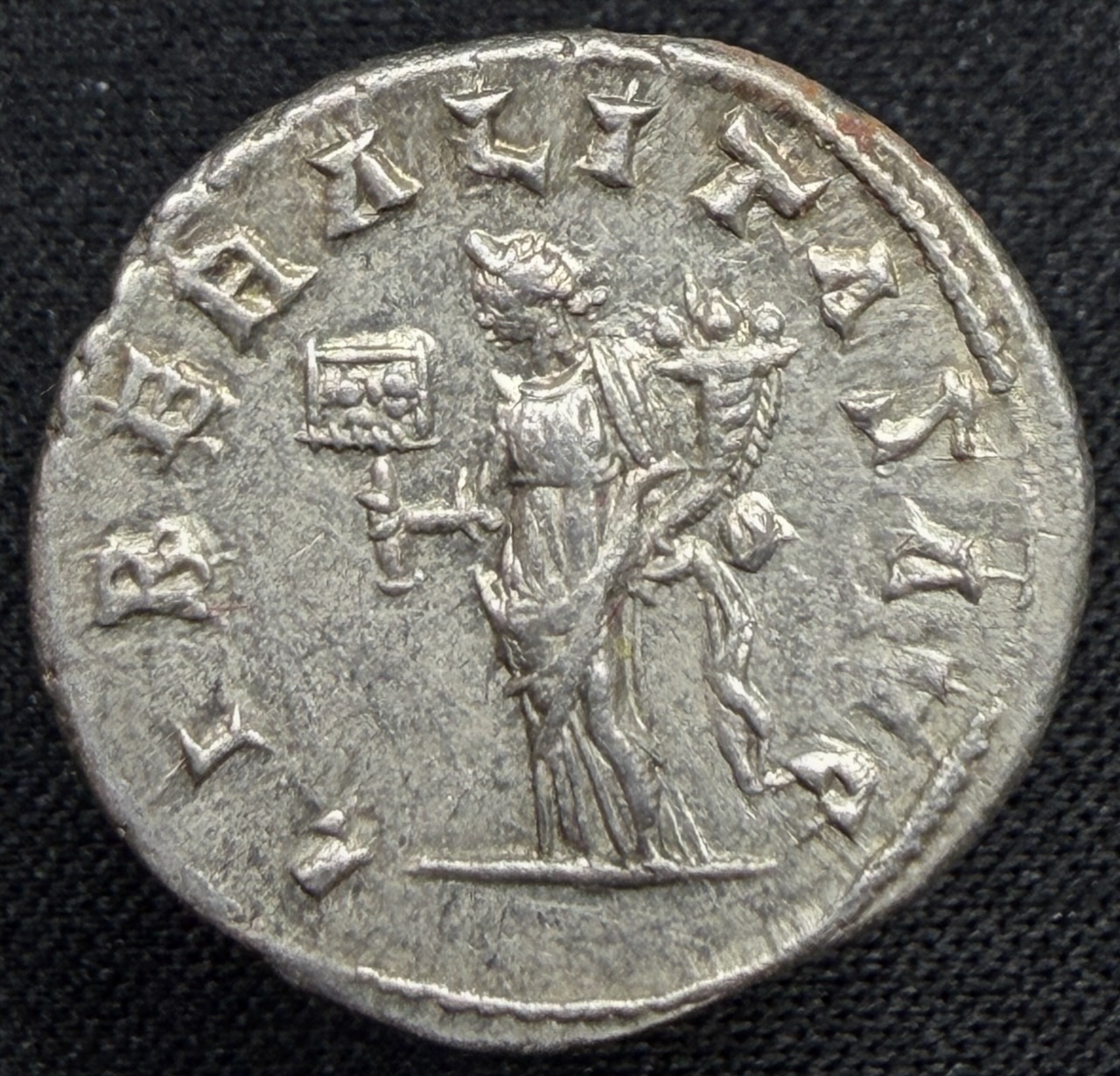
Obv: Laureate, draped and cuirassed bust of Severus Alexander right
Rev: Liberalitas standing left, holding abacus (counting board) in right hand and cornucopia in left
Ref: RIC IV 148
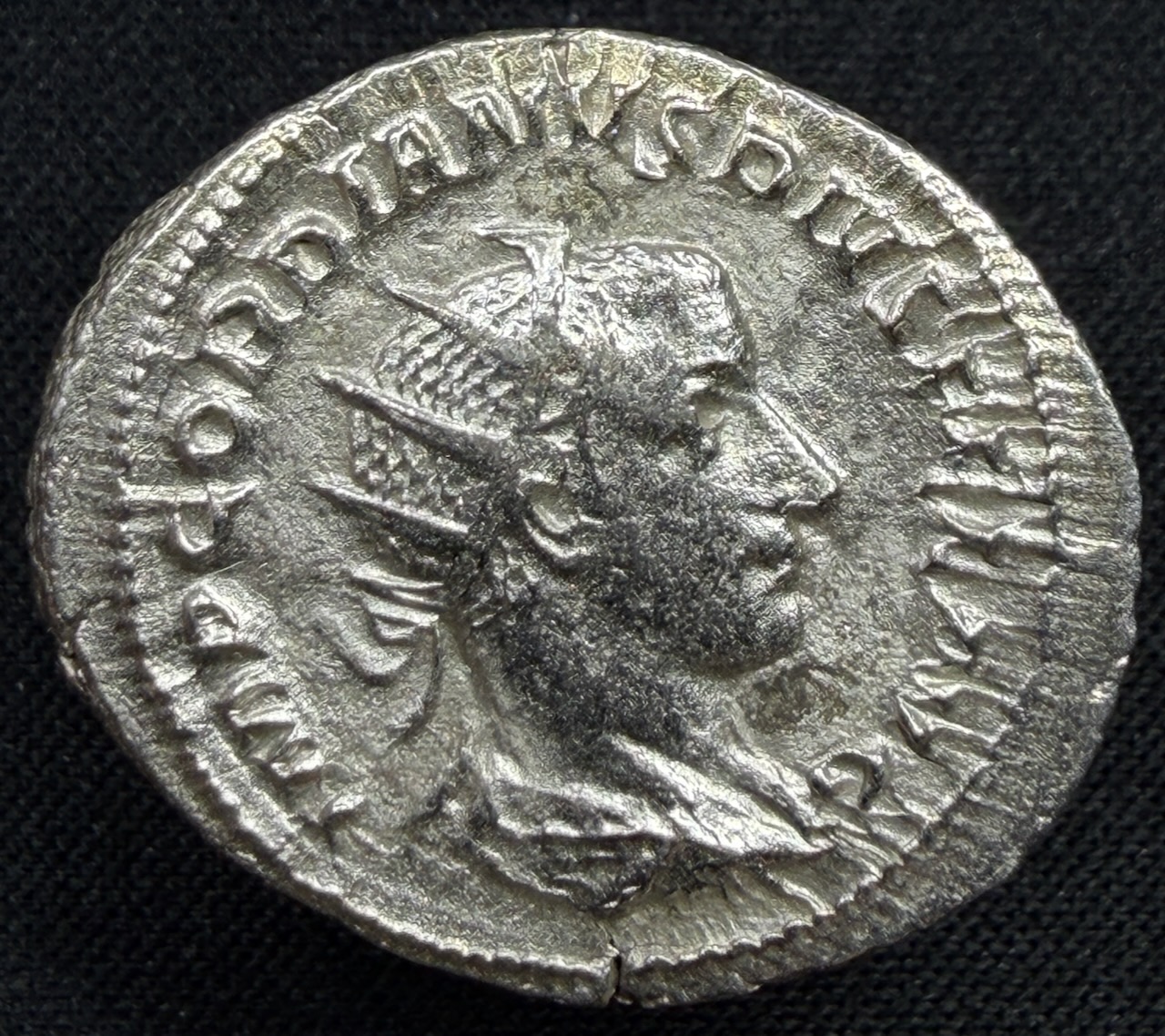
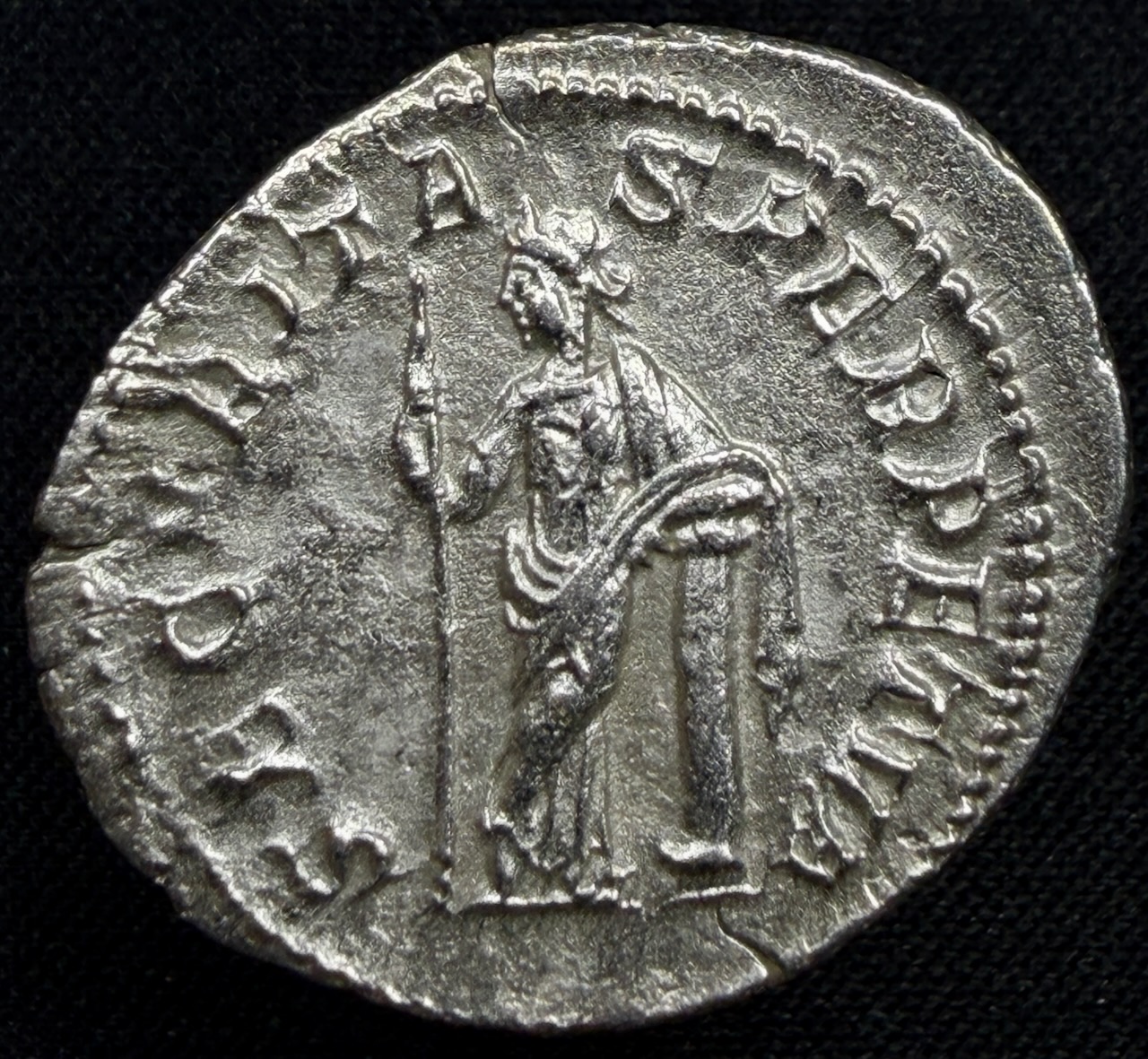
Obv: Radiate, draped and cuirassed bust of Gordian III right
Rev: Securitas standing left, legs crossed, holding sceptre and leaning on a column
Ref: RIC IV 153
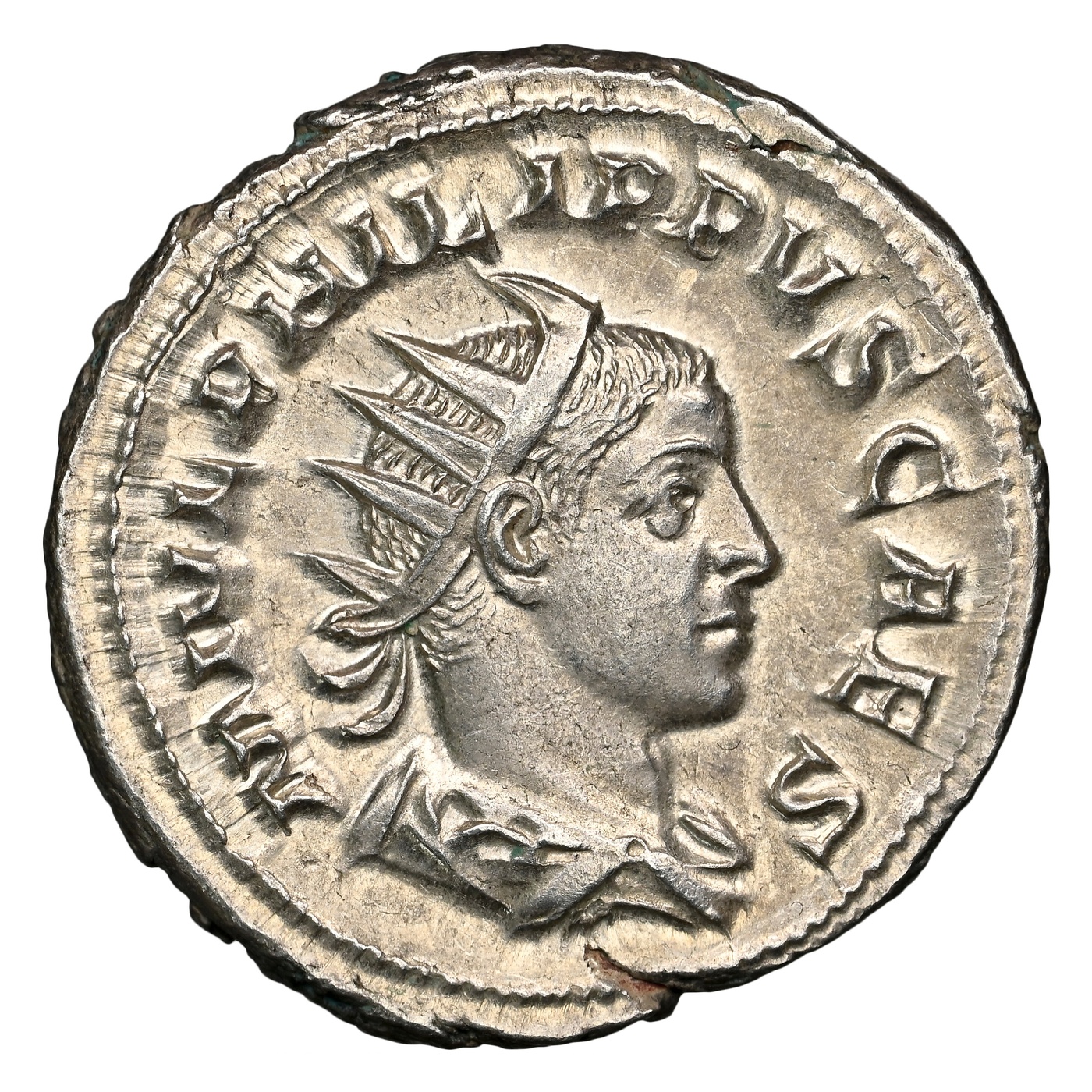
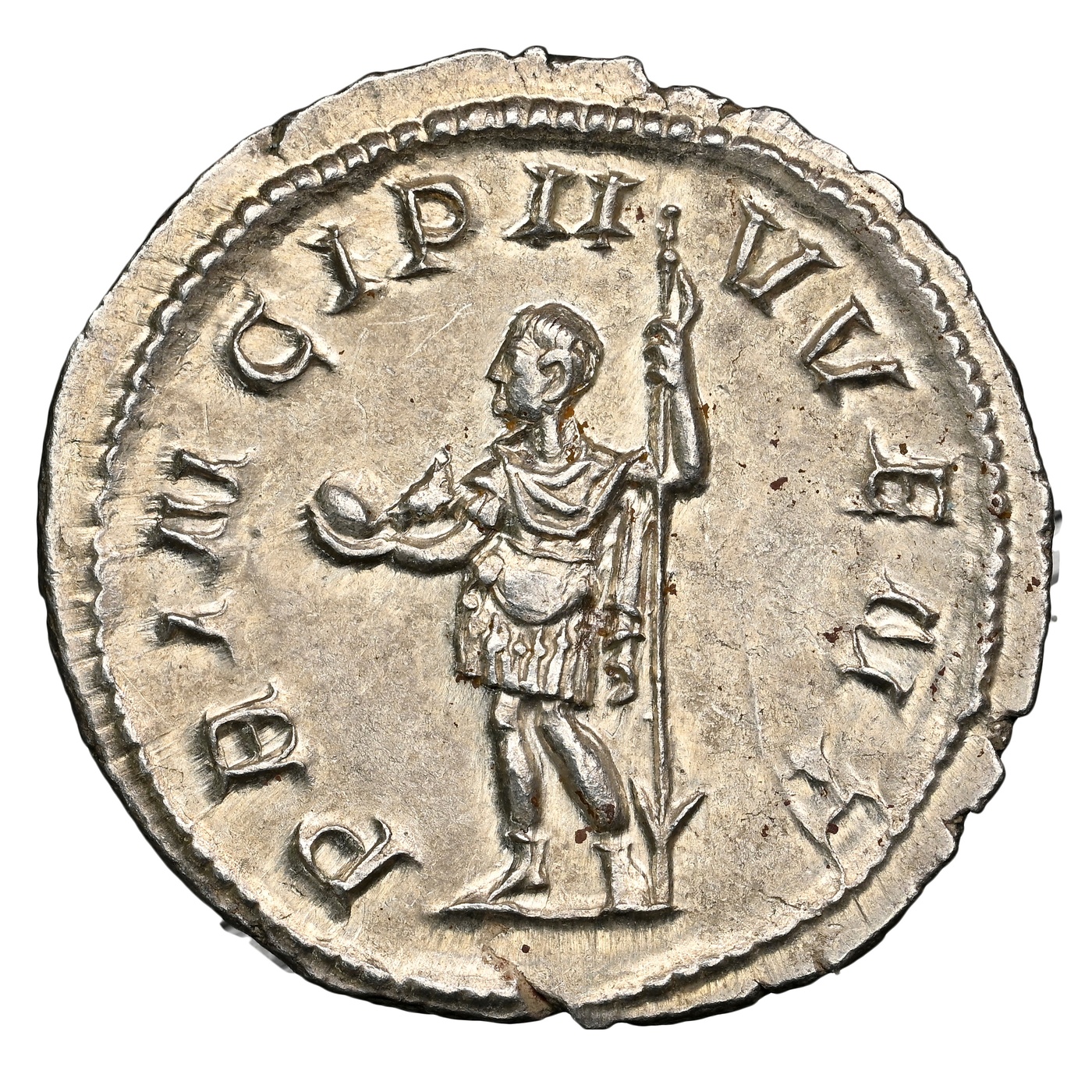
Obv: Radiate, draped and cuirassed bust of Philip II right, seen from behind
Rev: Philip II standing facing, head left, globe in outstretched right hand, grounded reversed spear in left
Ref: RIC IV.III (Philip I) 218d
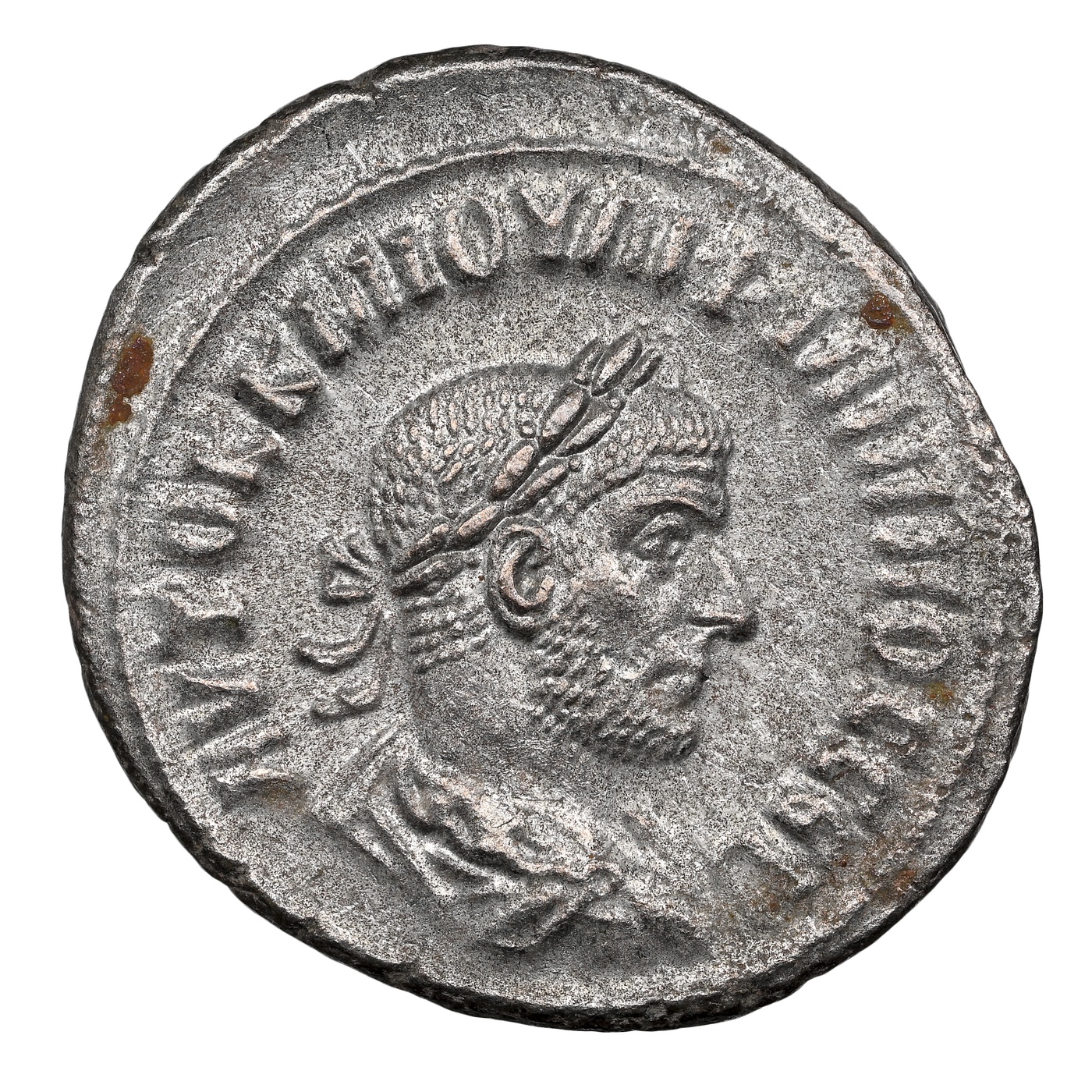
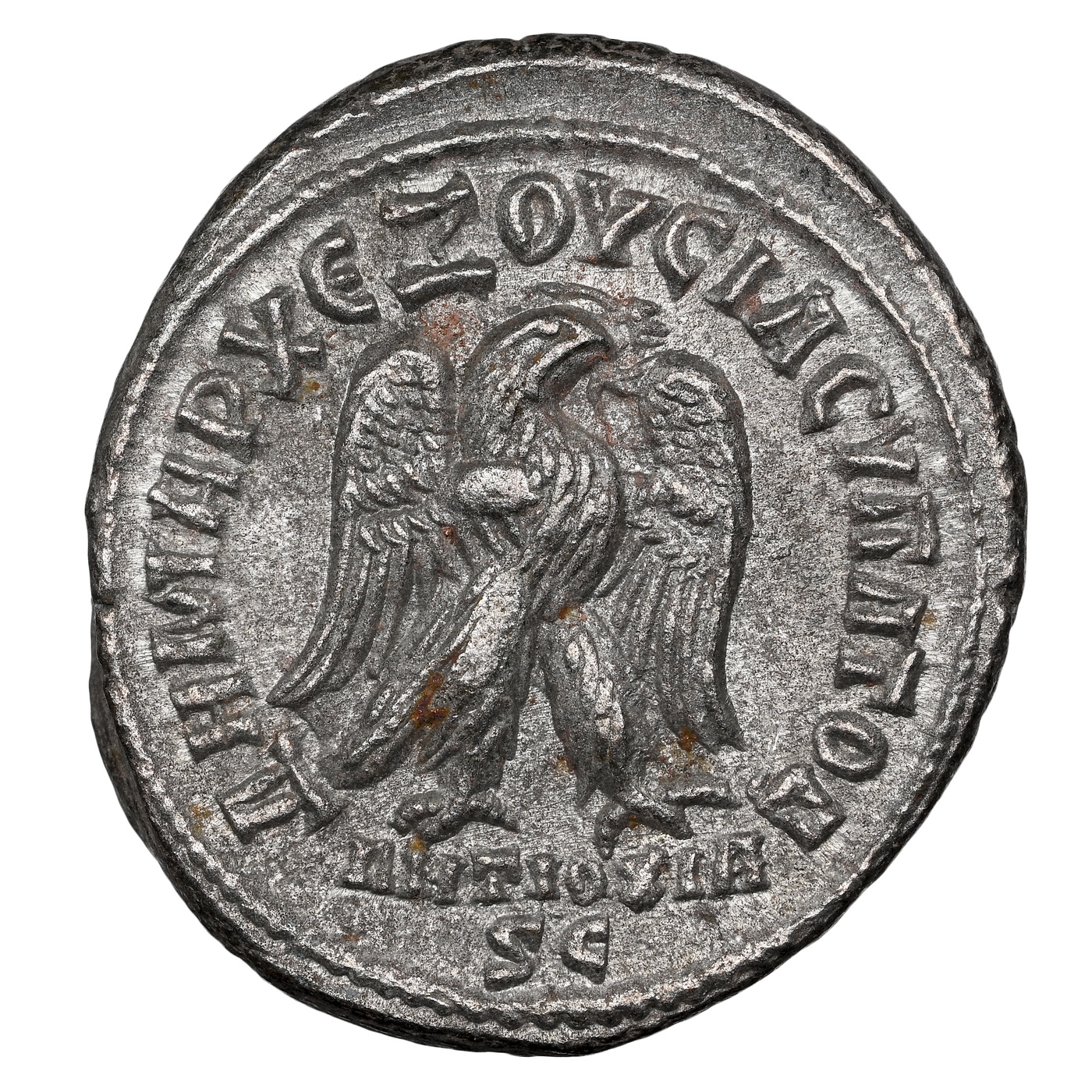
Obv: Laureate, draped and cuirassed bust of Philip I right, seen from behind
Rev: Eagle standing right on a ground line, wings spread, wreath in its beak; ANTIOXIA above S C in the exergue
Ref: Prieur 445
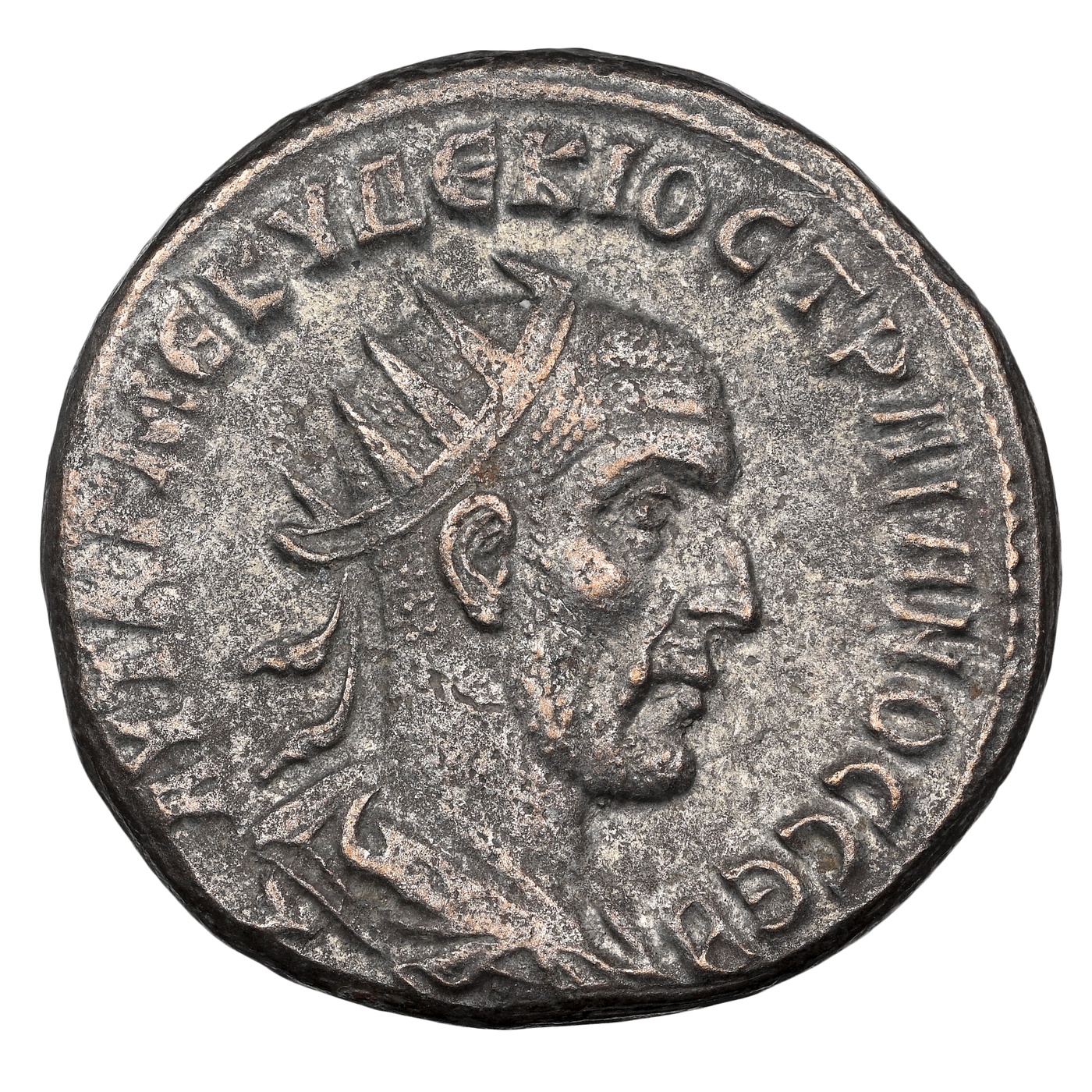
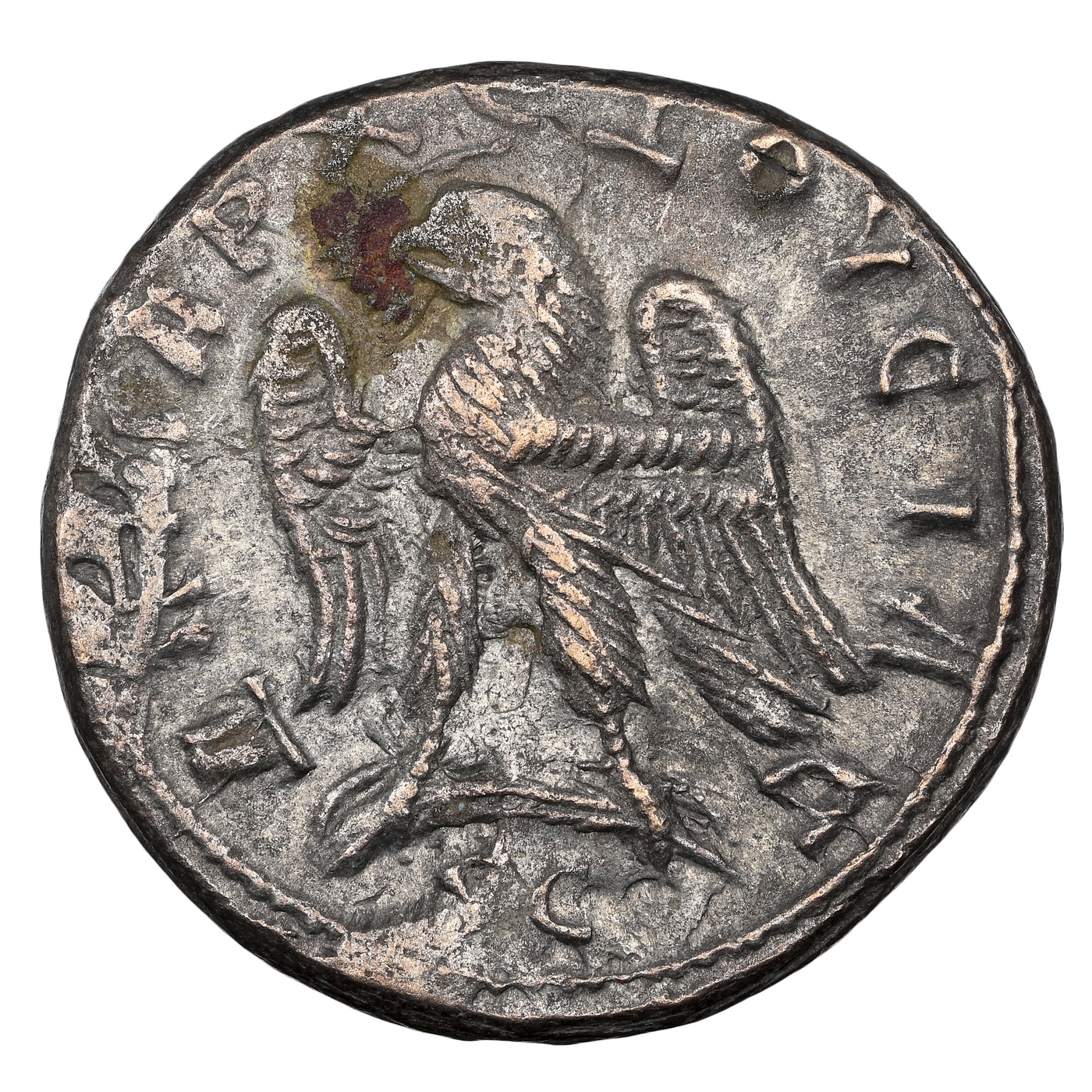
Obv: Radiate, draped and cuirassed bust of Trajan Decius right, seen from behind; the officina numeral Ϛ (6) below the bust
Rev: Eagle standing left on a palm branch, wings spread, wreath in its beak; S C below
Ref: Prieur 546
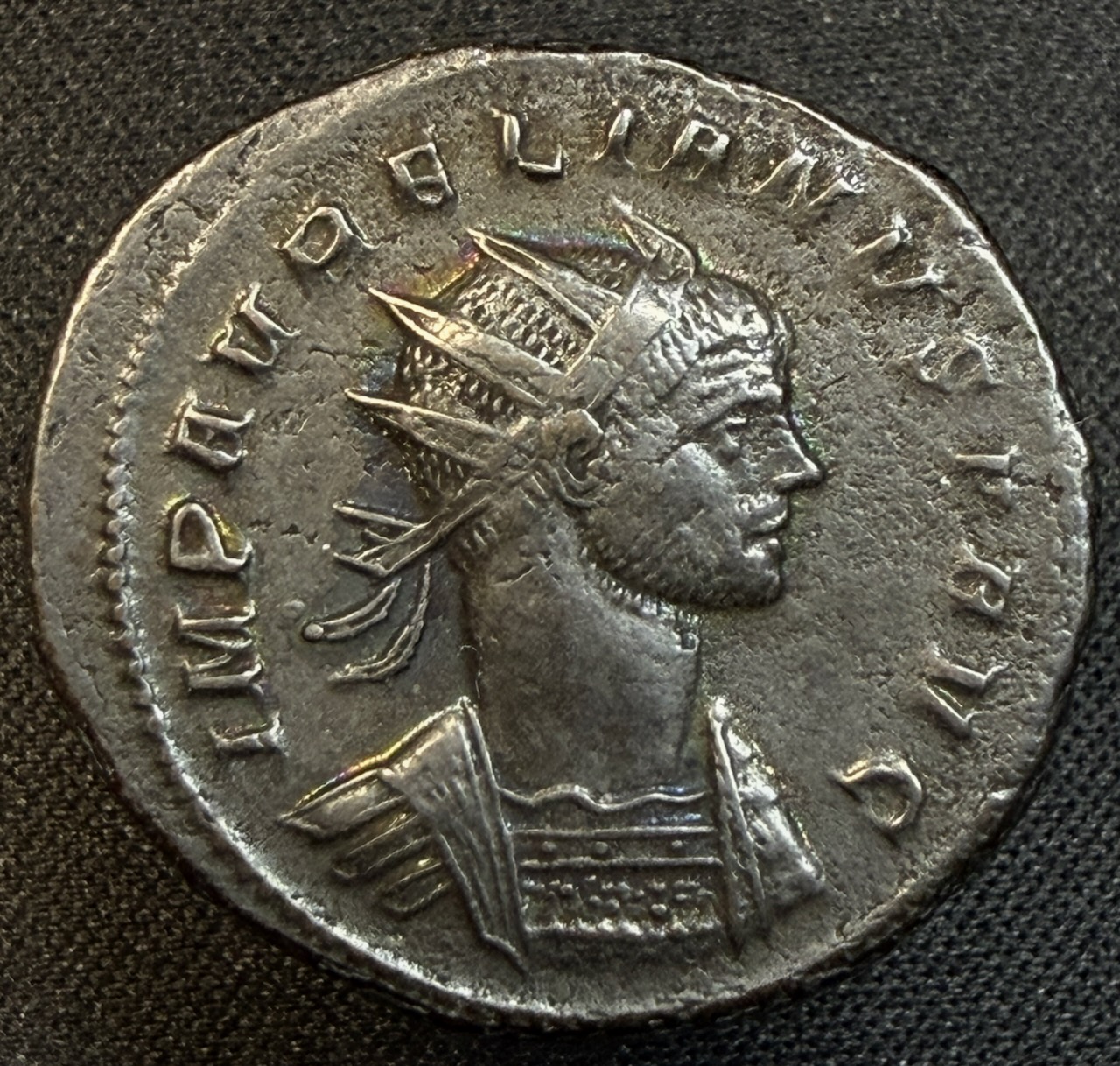
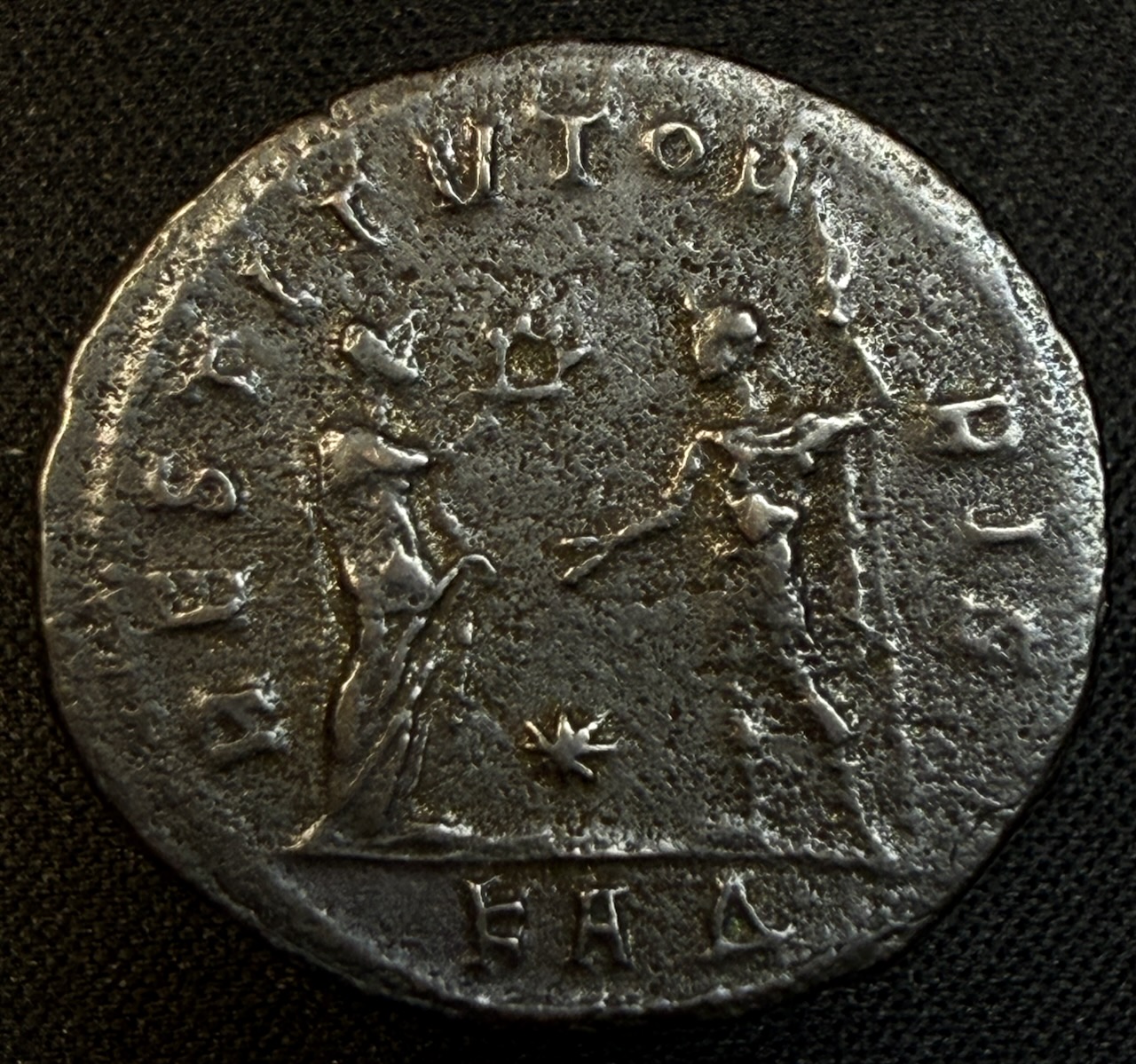
Obv: Radiate and cuirassed bust of Aurelian right
Rev: Female figure standing right, presenting wreath to Aurelian standing left in military dress, holding long sceptre in left hand; star between them; KA•Δ• in exergue
Ref: MER-RIC 2808
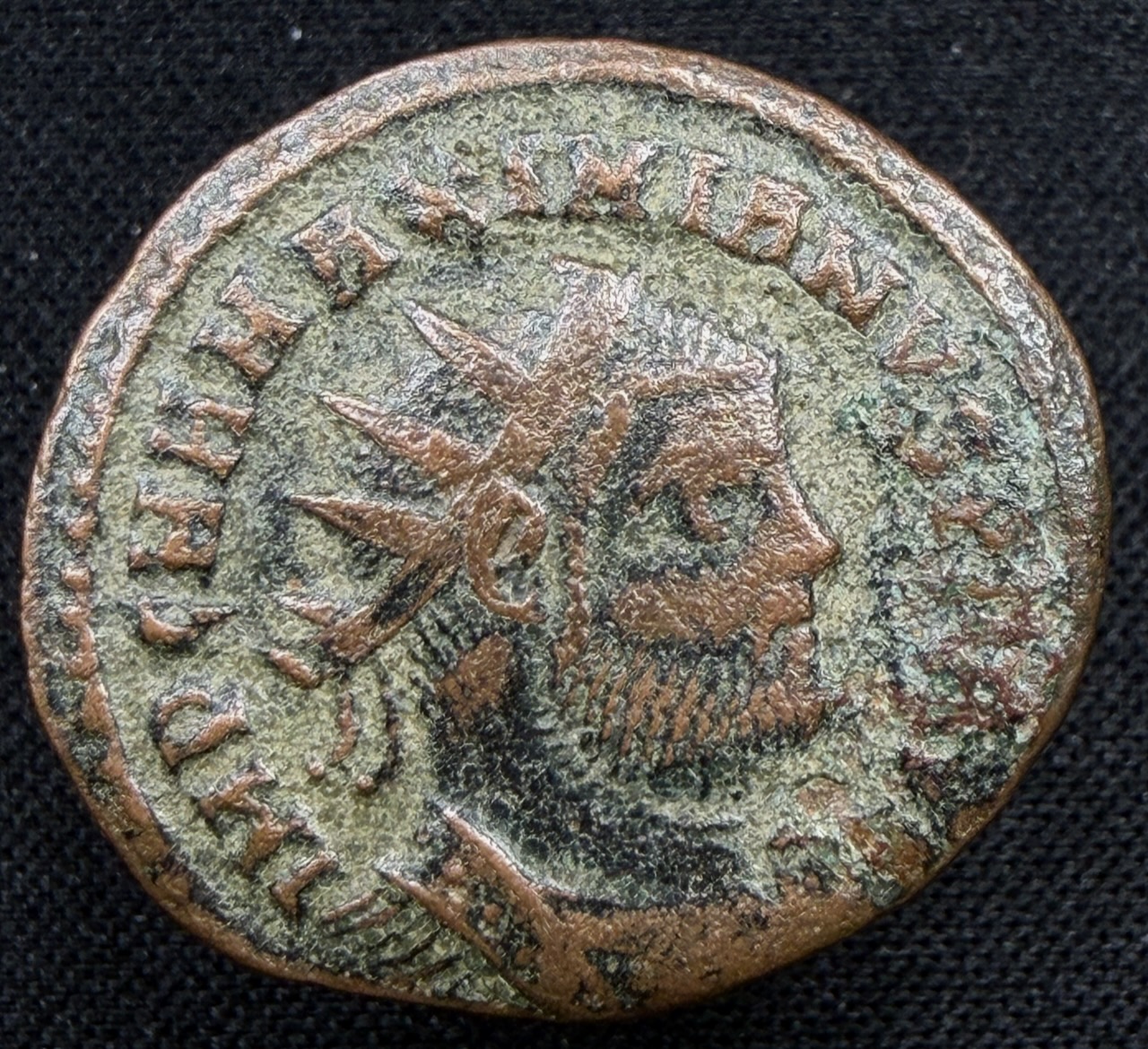
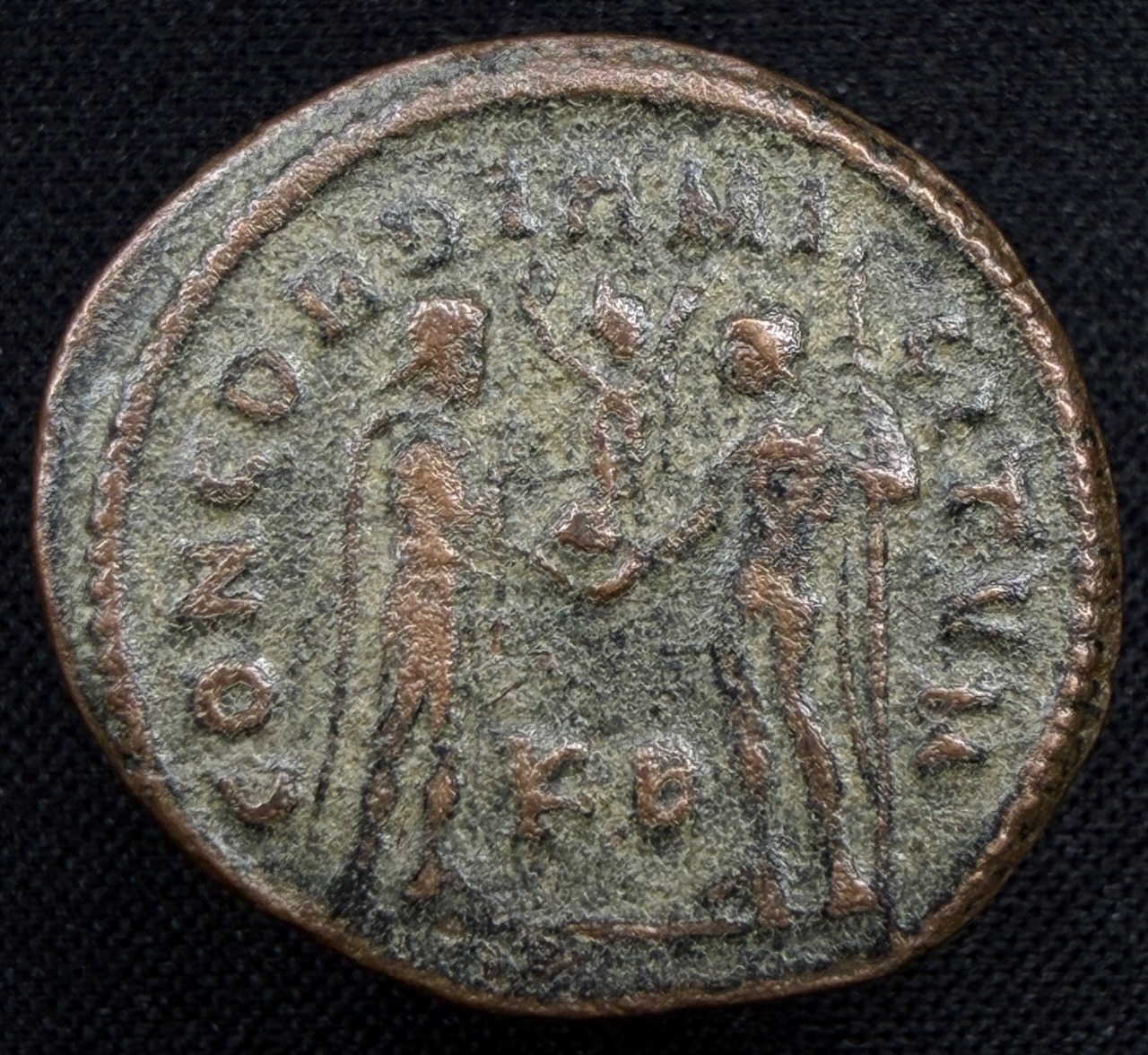
Obv: Radiate, draped and cuirassed bust of Maximianus right
Rev: Emperor standing right, receiving Victory on globe from Jupiter standing left, leaning on sceptre; mintmark KB between them
Ref: RIC VI Cyzicus 15b
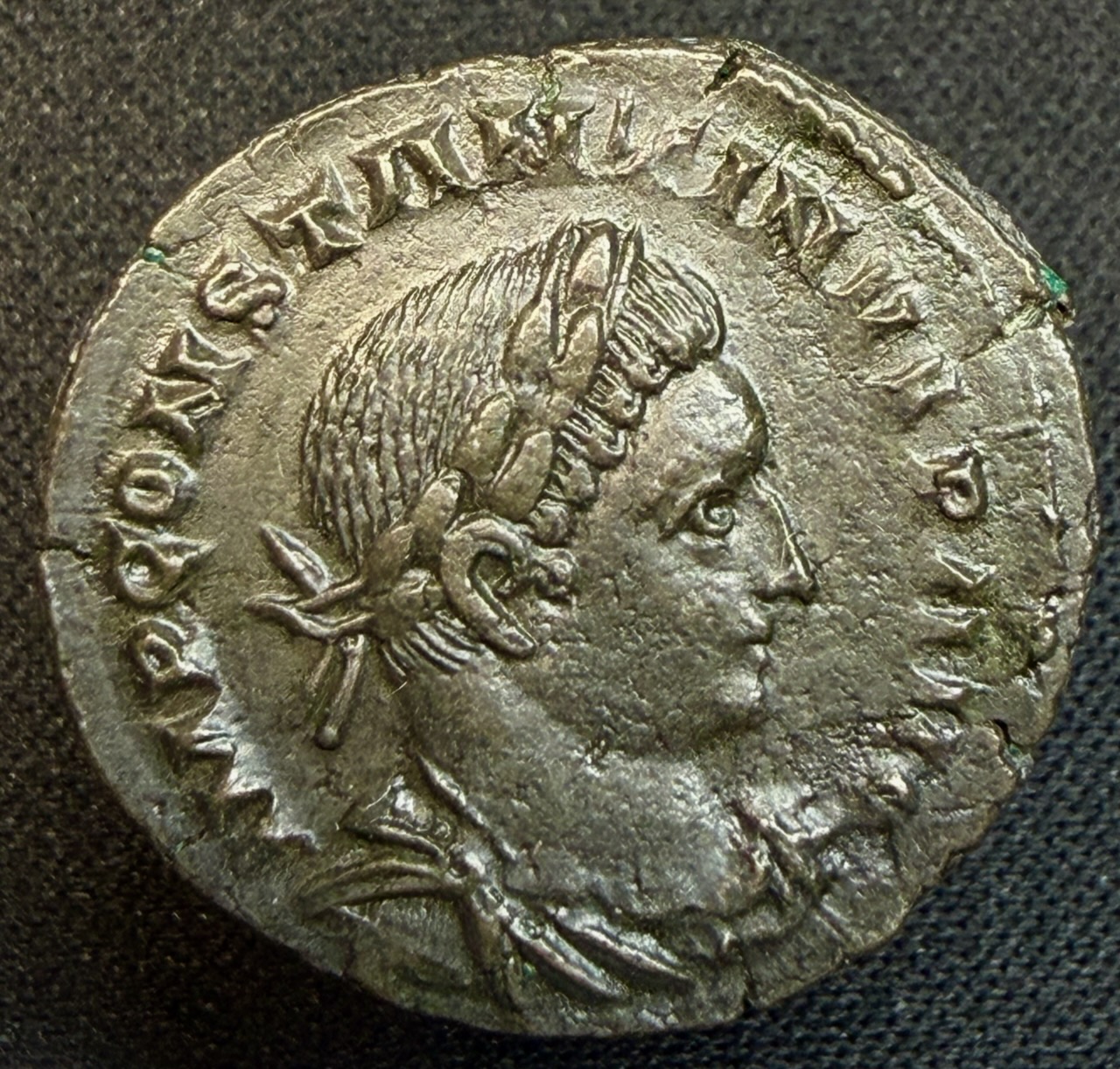
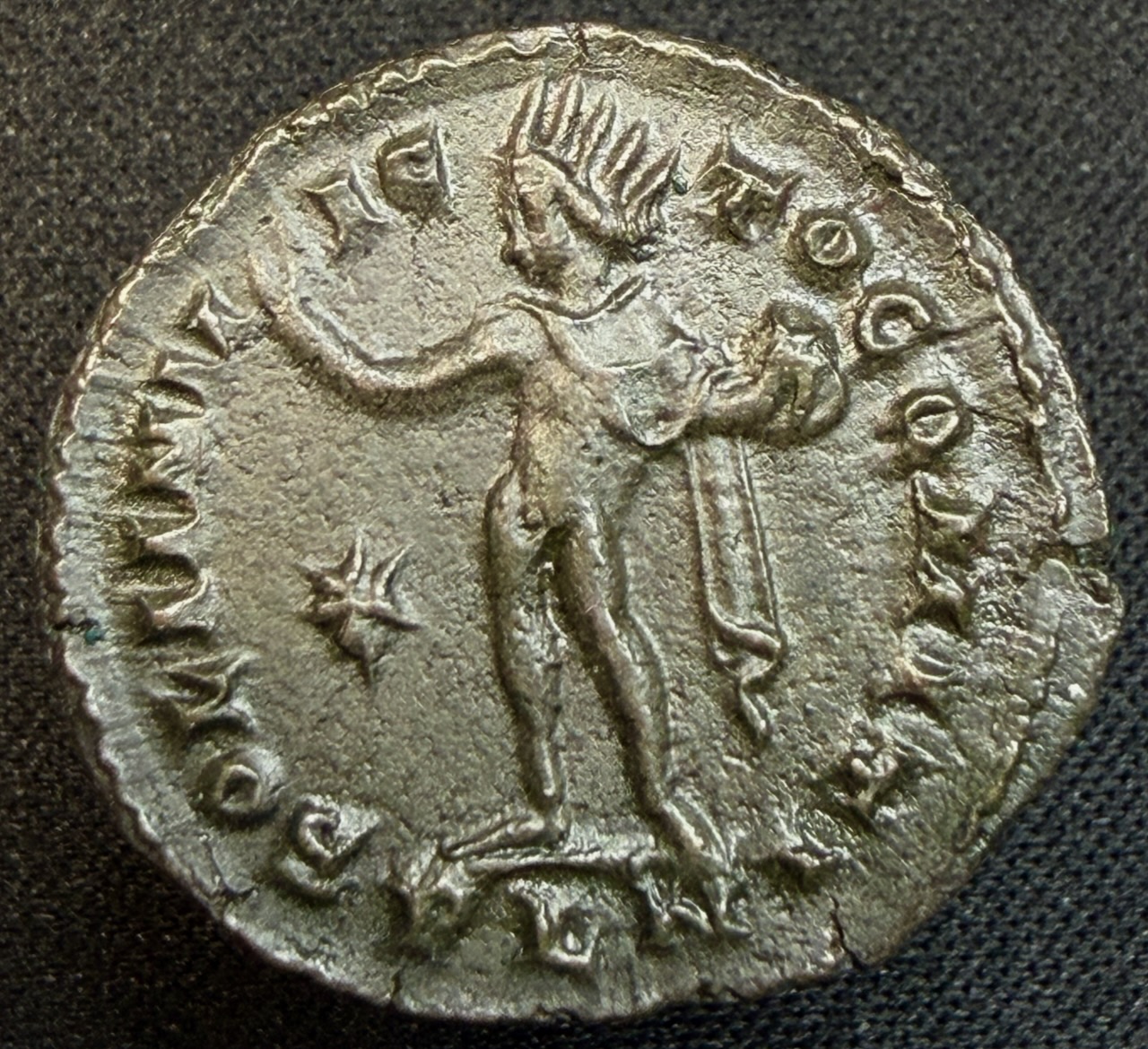
Obv: Laureate, draped and cuirassed bust of Constantine I right
Rev: Sol standing slightly left, radiate, nude but for chlamys over shoulders, raising right hand, globe in left hand; star in left field, PLN in exergue
Ref: RIC VI Londinium 279
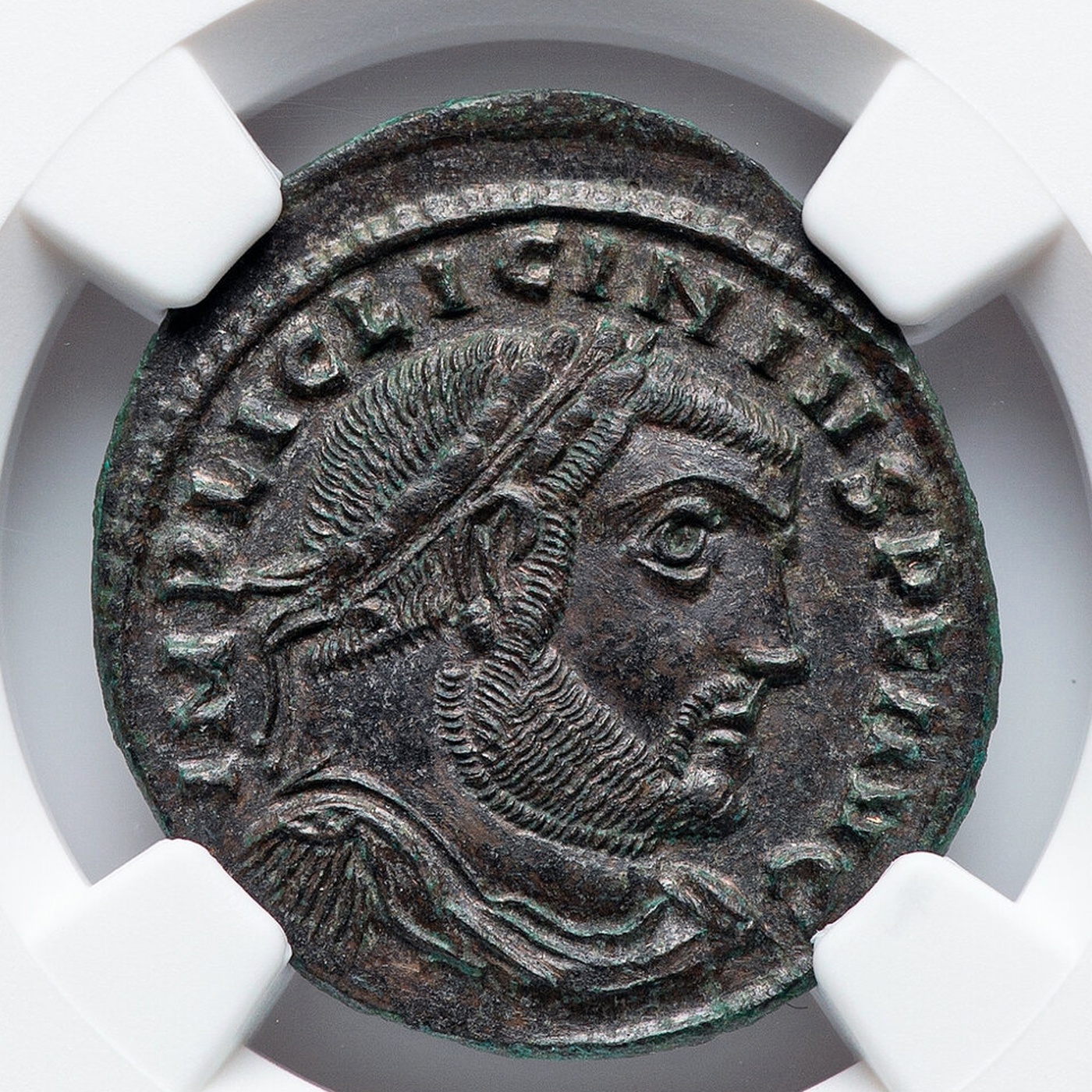
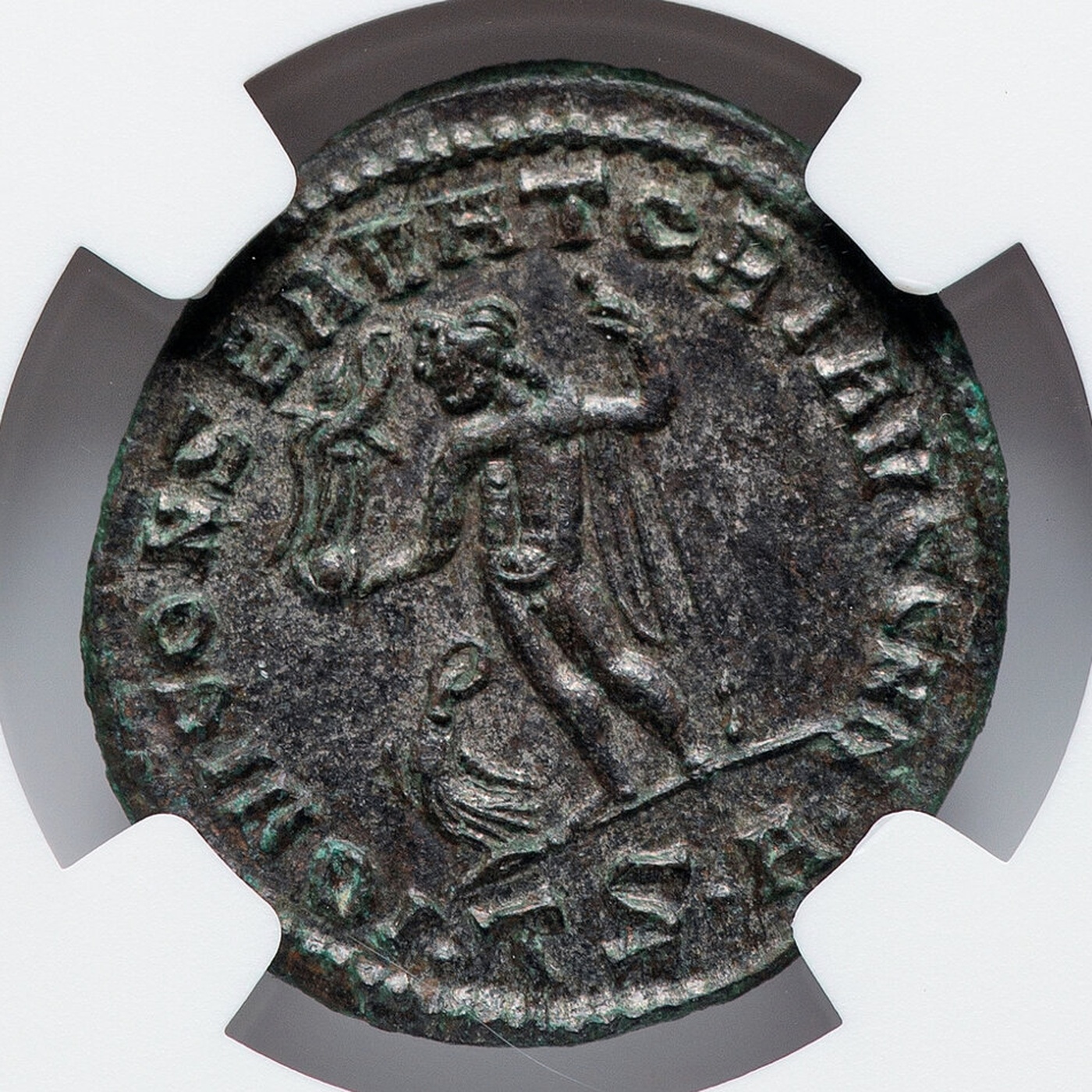
Obv: Laureate, draped and cuirassed bust of Licinius I right, seen from front
Rev: Jupiter standing facing, head left, nude save for a chlamys over the left shoulder, Victory on a globe in the outstretched right hand, grounded sceptre in the left; eagle standing left with head right, wreath in its beak, in the left field. Mintmark •TS•A• in exergue
Ref: RIC VI 60 (Thessalonica)
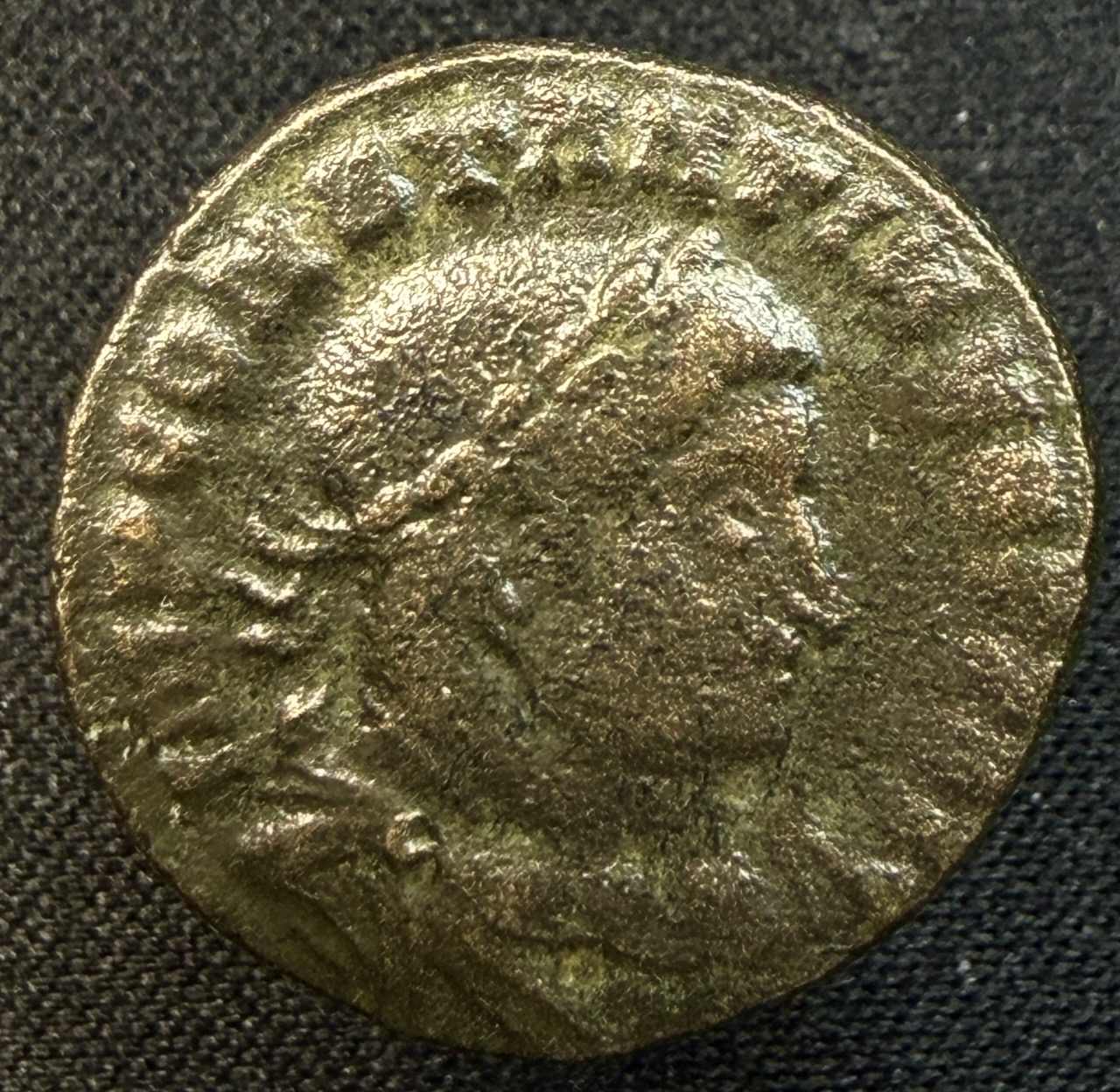
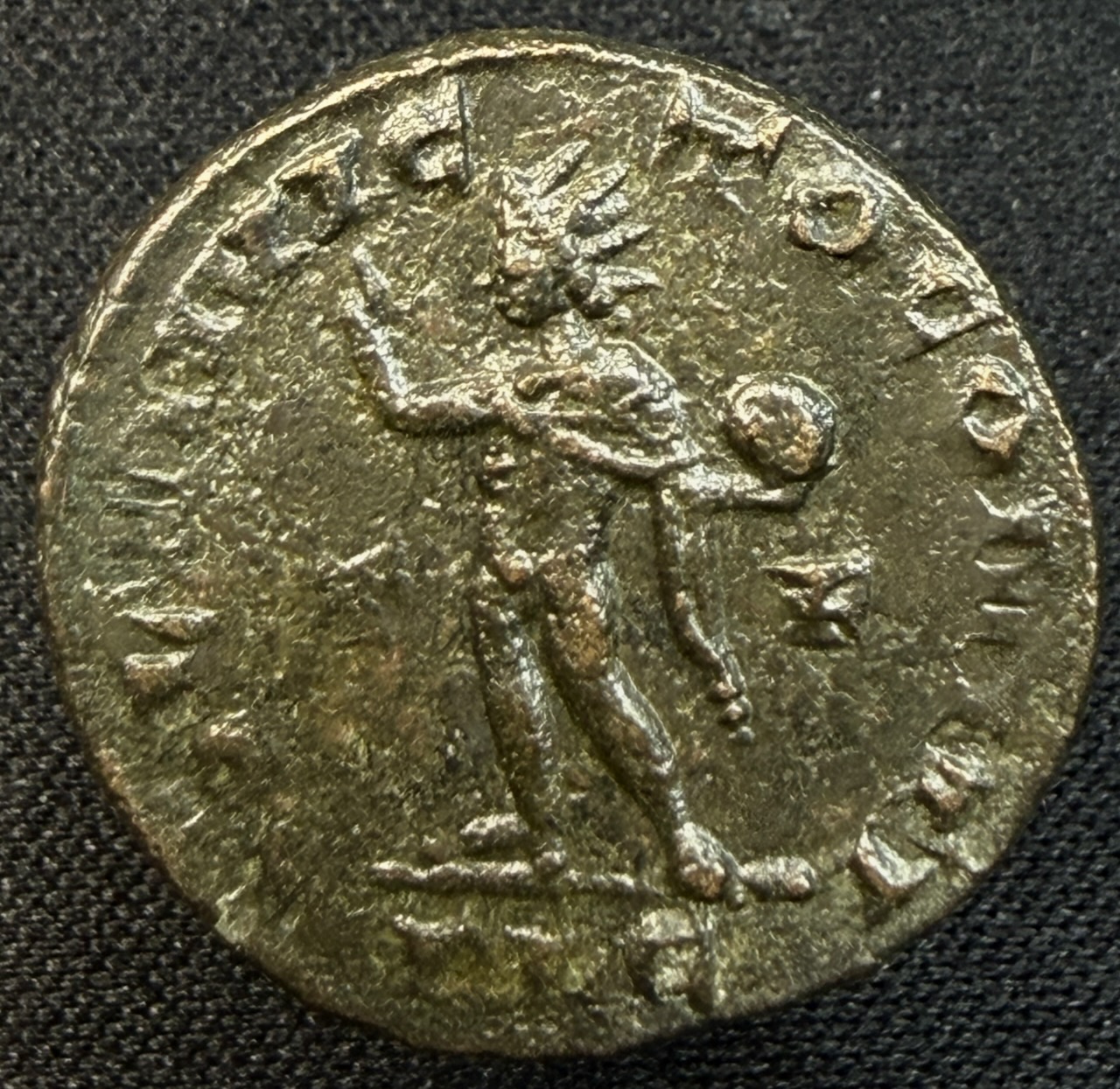
Obv: Laureate bust of Constantine I right (drapery/cuirass detail unclear from wear)
Rev: Sol standing left, radiate, chlamys over shoulder, raising right hand, globe in left hand; field mark at right (reading uncertain); mintmark in exergue (PLG-type, partly off flan)
Ref: Sear 3868 (older single-volume edition, per John's tag)
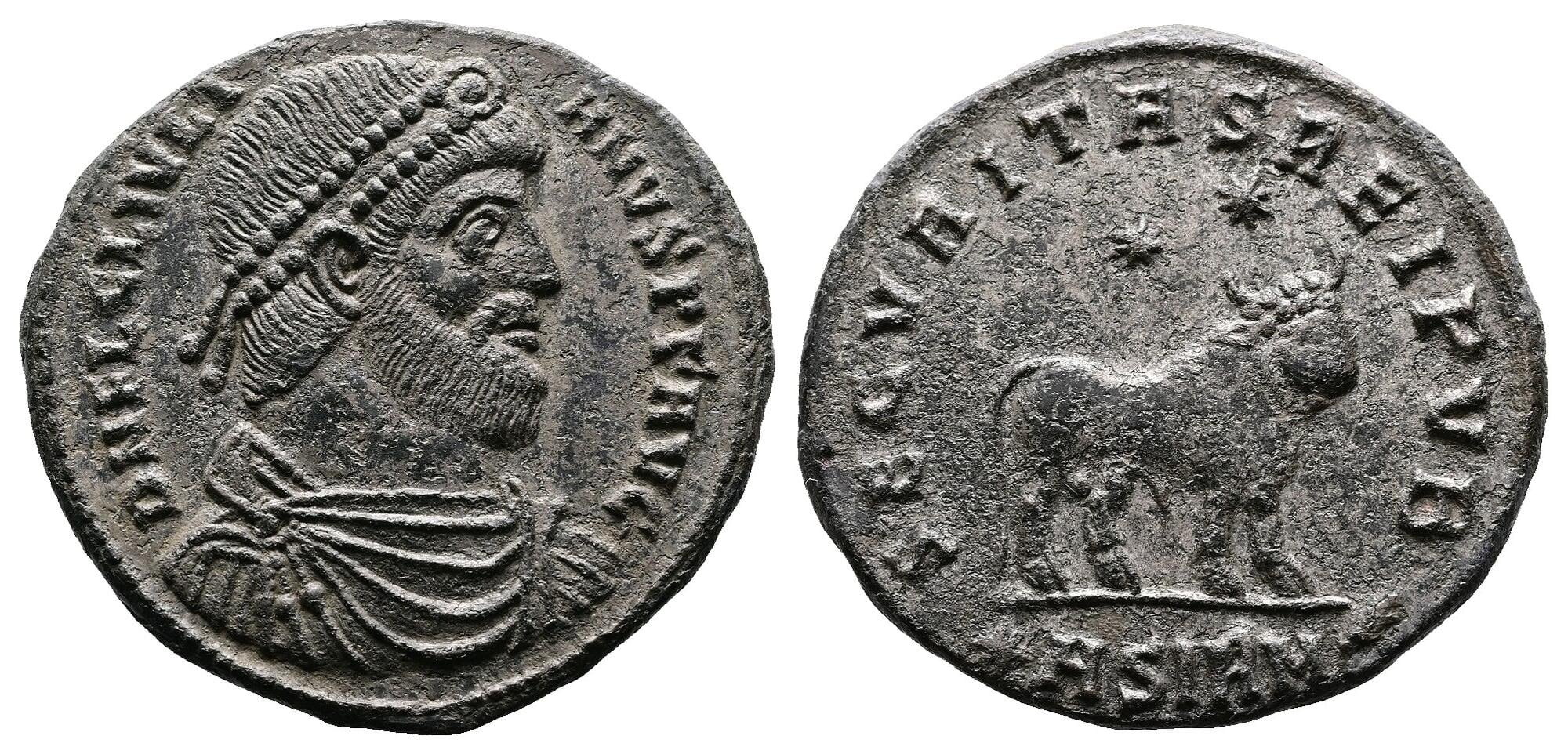
Obv: Pearl-diademed, draped and cuirassed bust of Julian right, with the full philosopher's beard
Rev: Bull standing right, two stars above; star, mintmark and palm branch in exergue
Ref: RIC VIII Sirmium 105
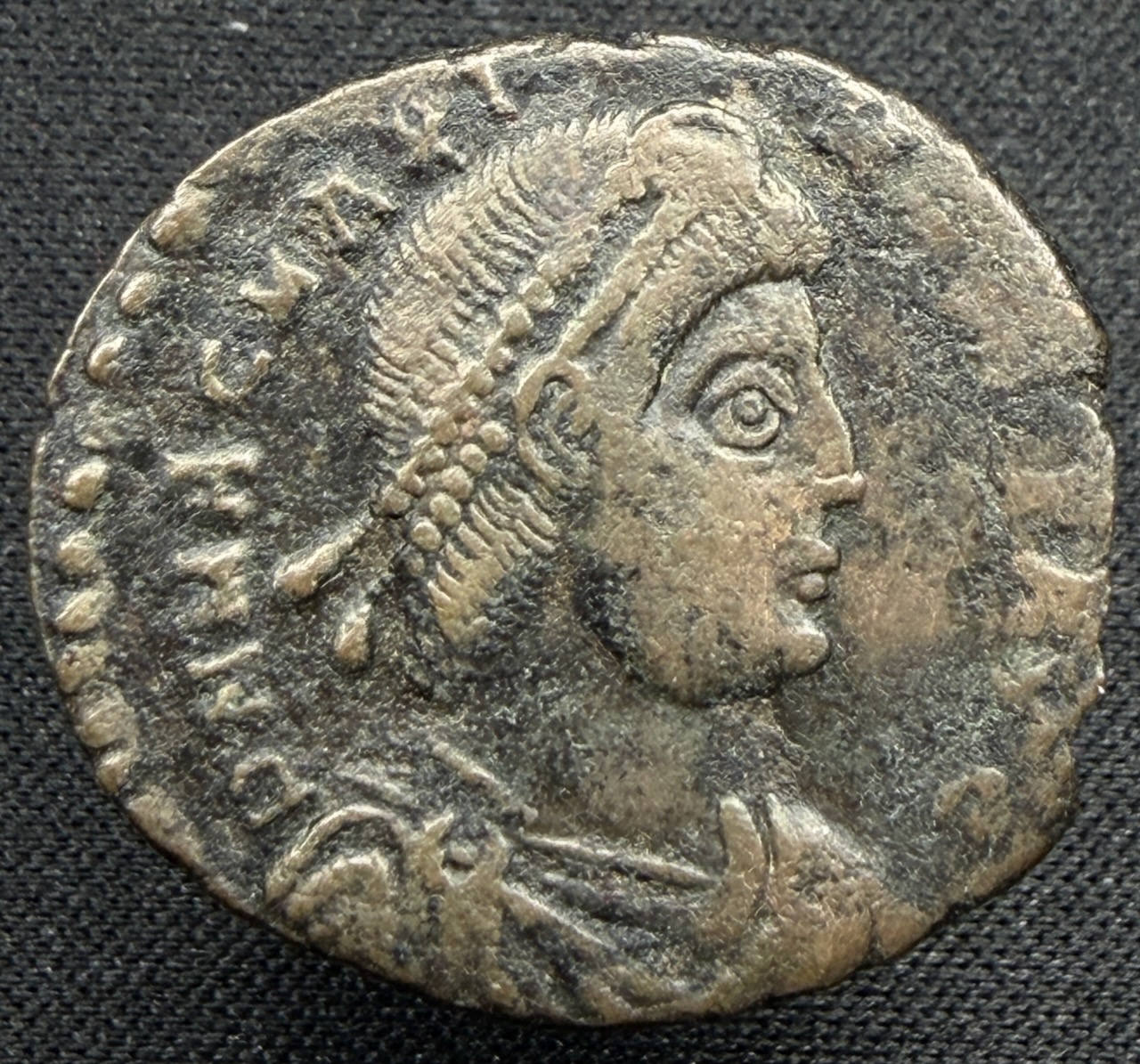
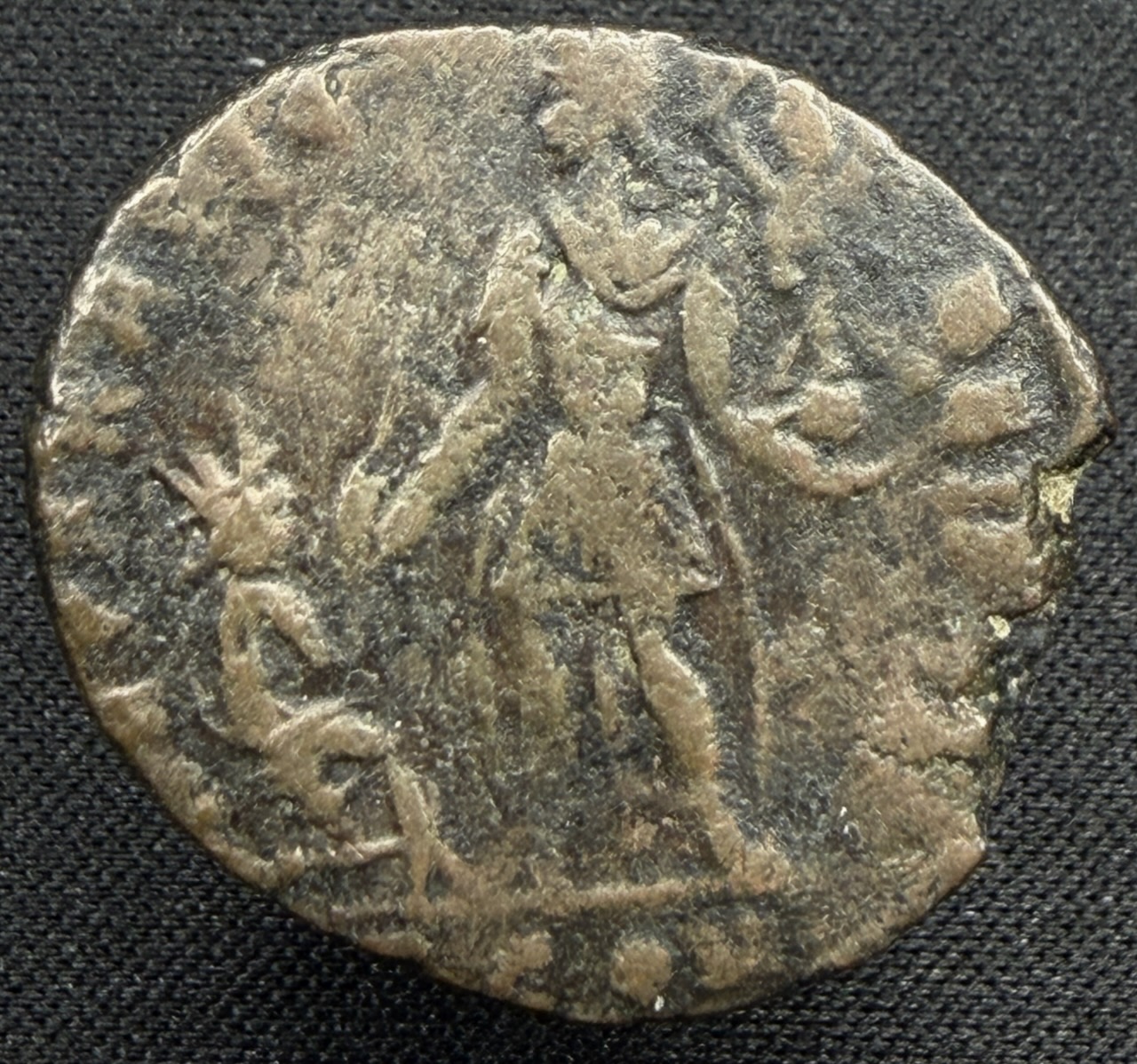
Obv: Pearl-diademed, draped and cuirassed bust right
Rev: Emperor standing left, holding Victory on globe in left hand and with right hand raising a kneeling, turreted woman (the Republic personified); PCON in exergue
Ref: RIC IX Arles 26a
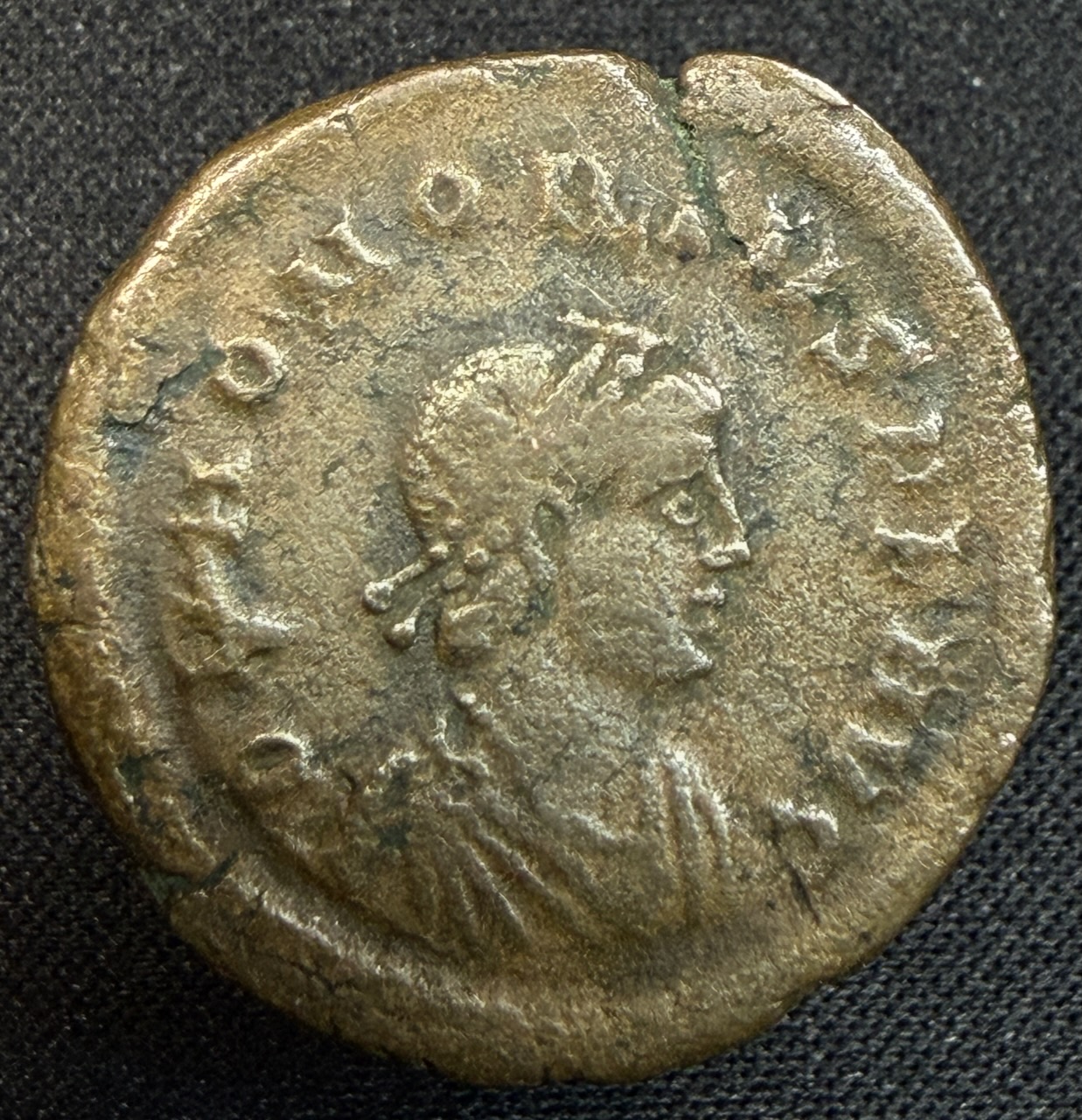
Obv: Pearl-diademed, draped and cuirassed bust of Honorius right
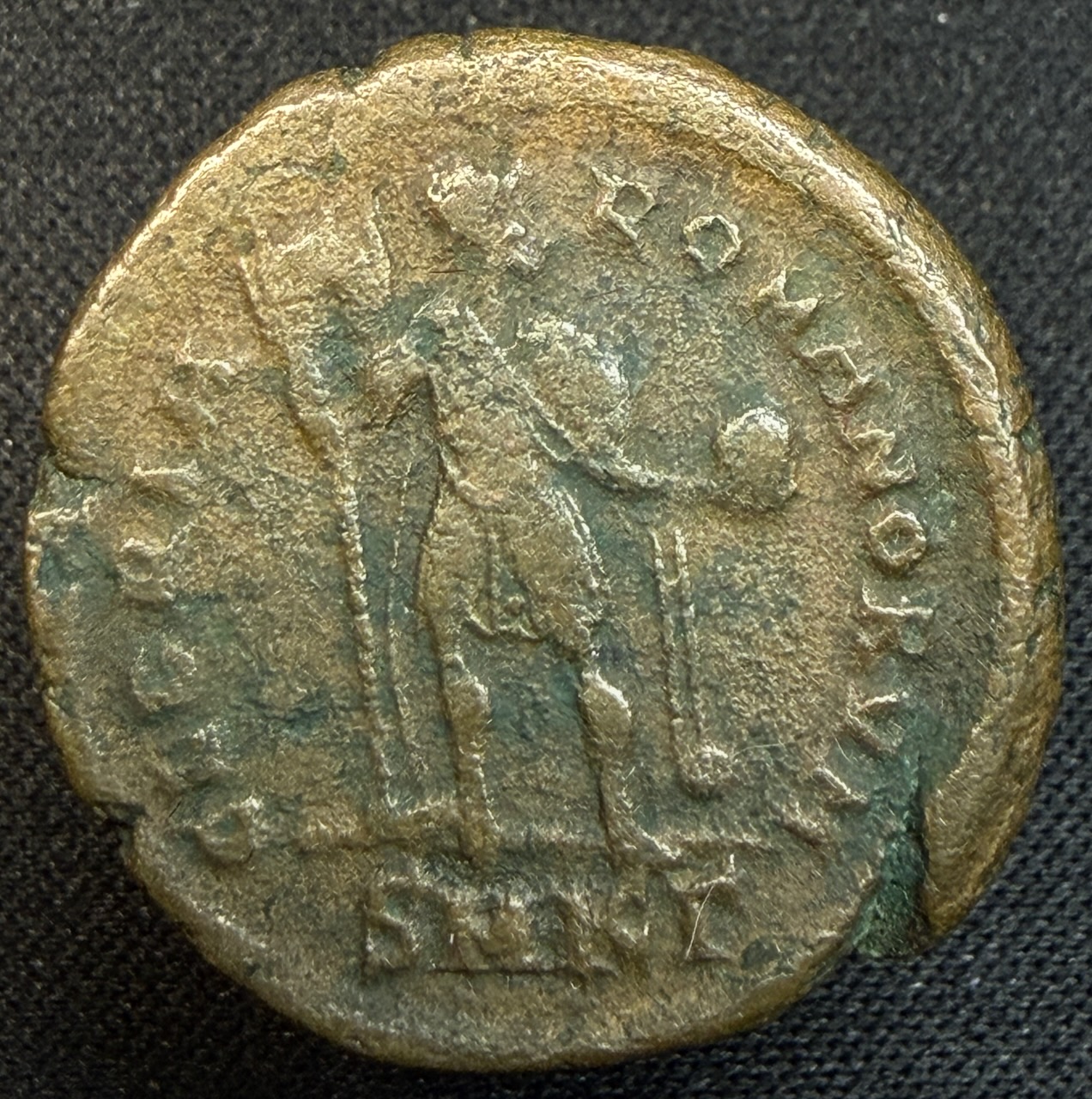
Rev: Emperor standing facing, head right, diademed, in military dress, standard in right hand, globe in left hand; SMKΓ in exergue
Ref: RIC IX Cyzicus 28(c)3