Type · syracuse-hieron-ii-poseidon-trident-litra
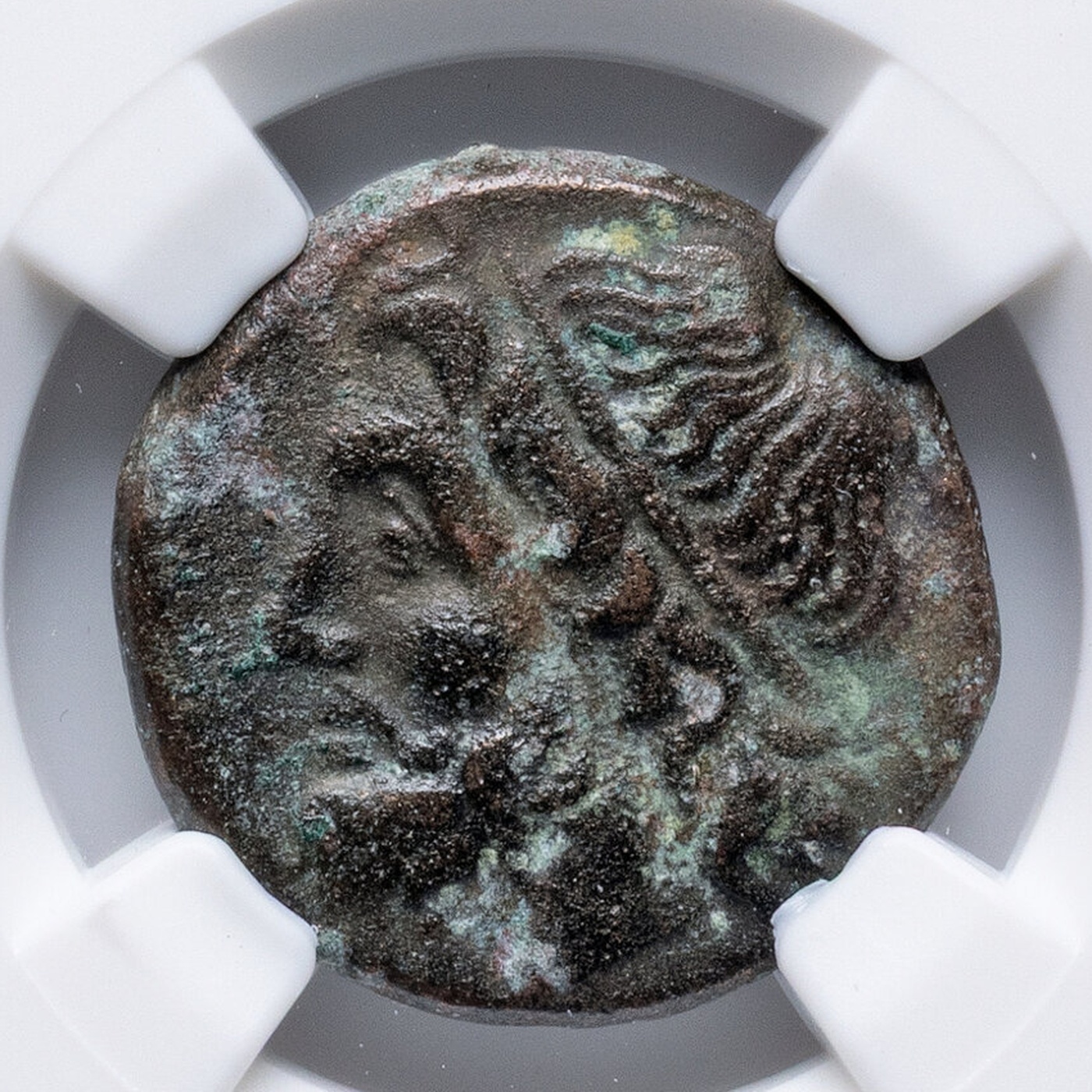
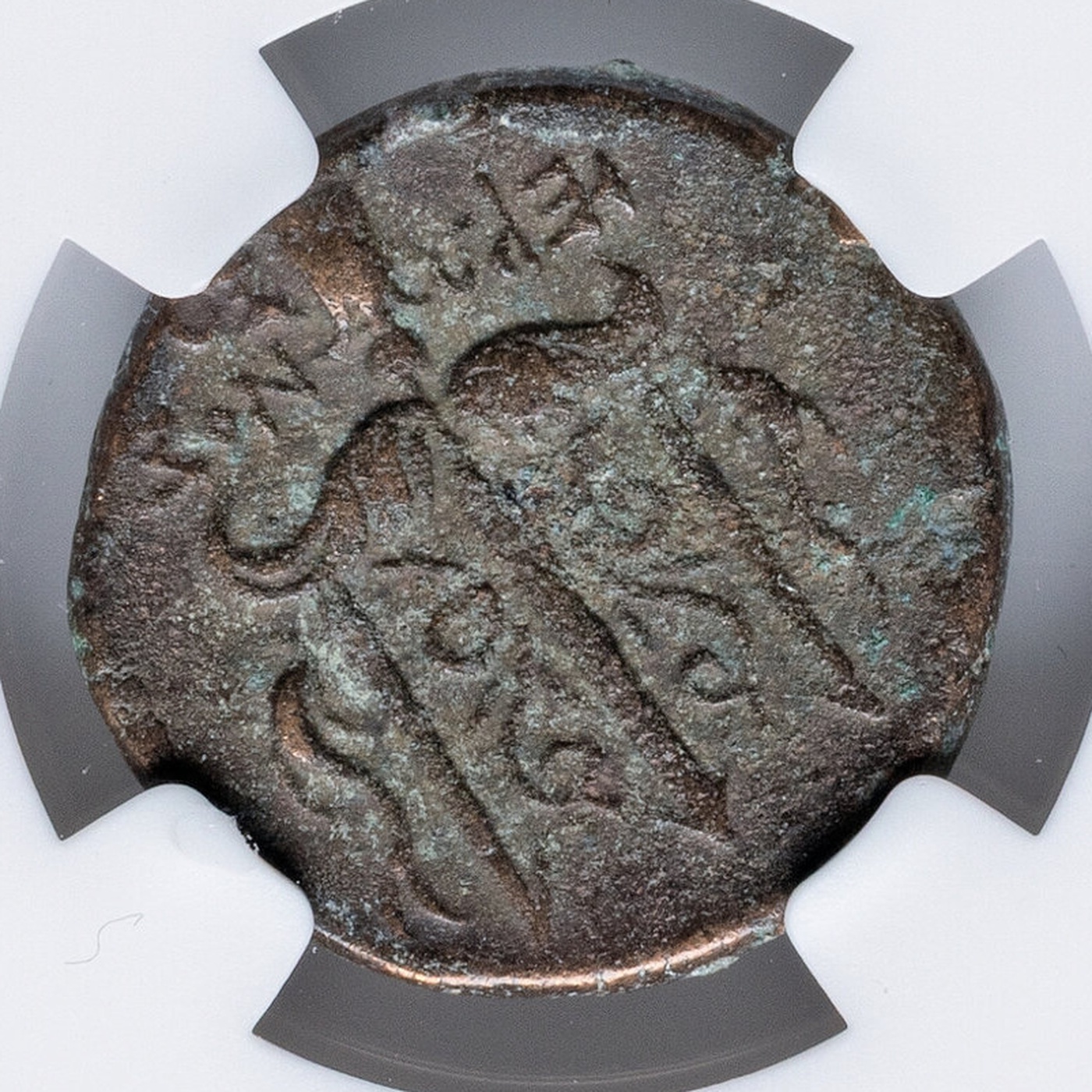
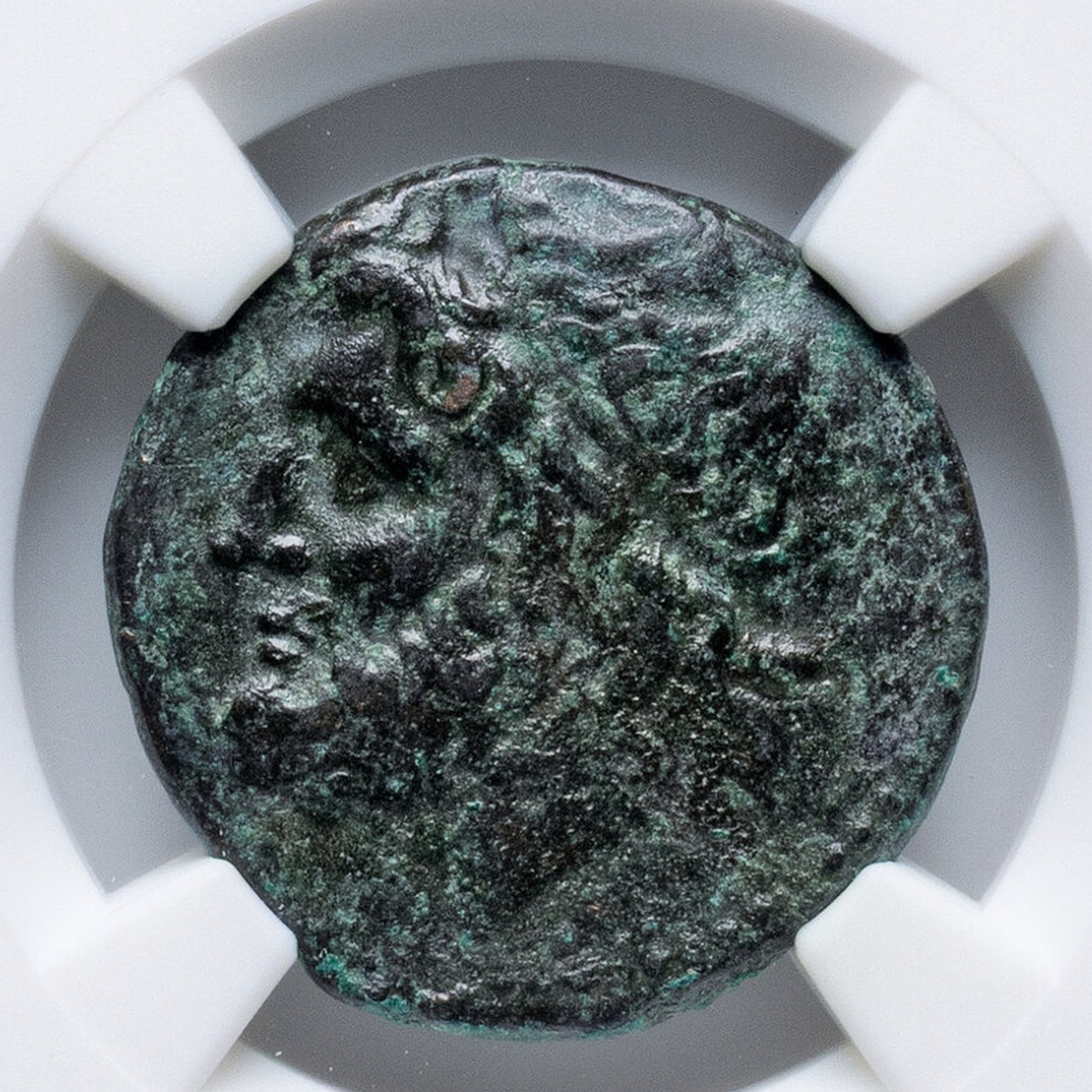
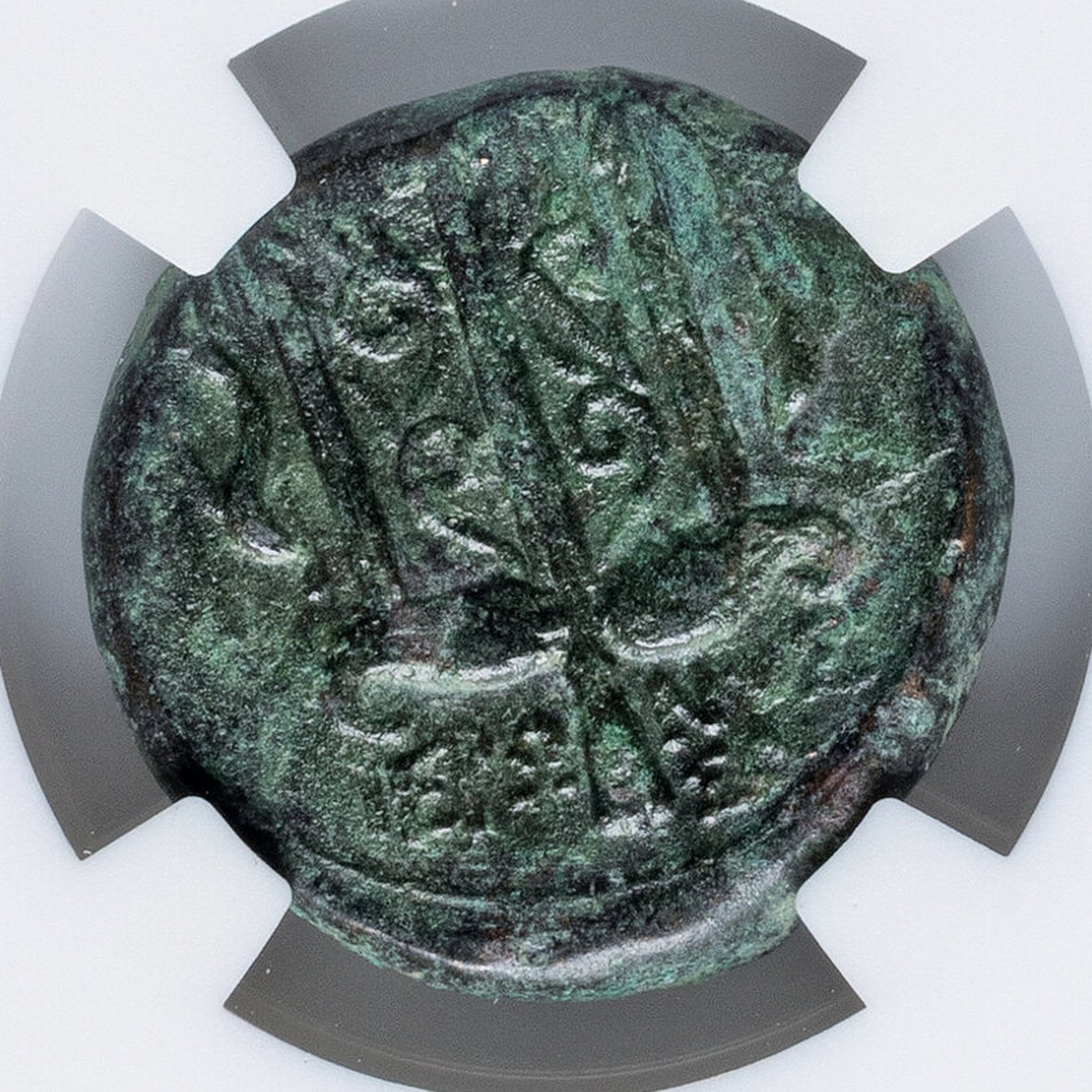
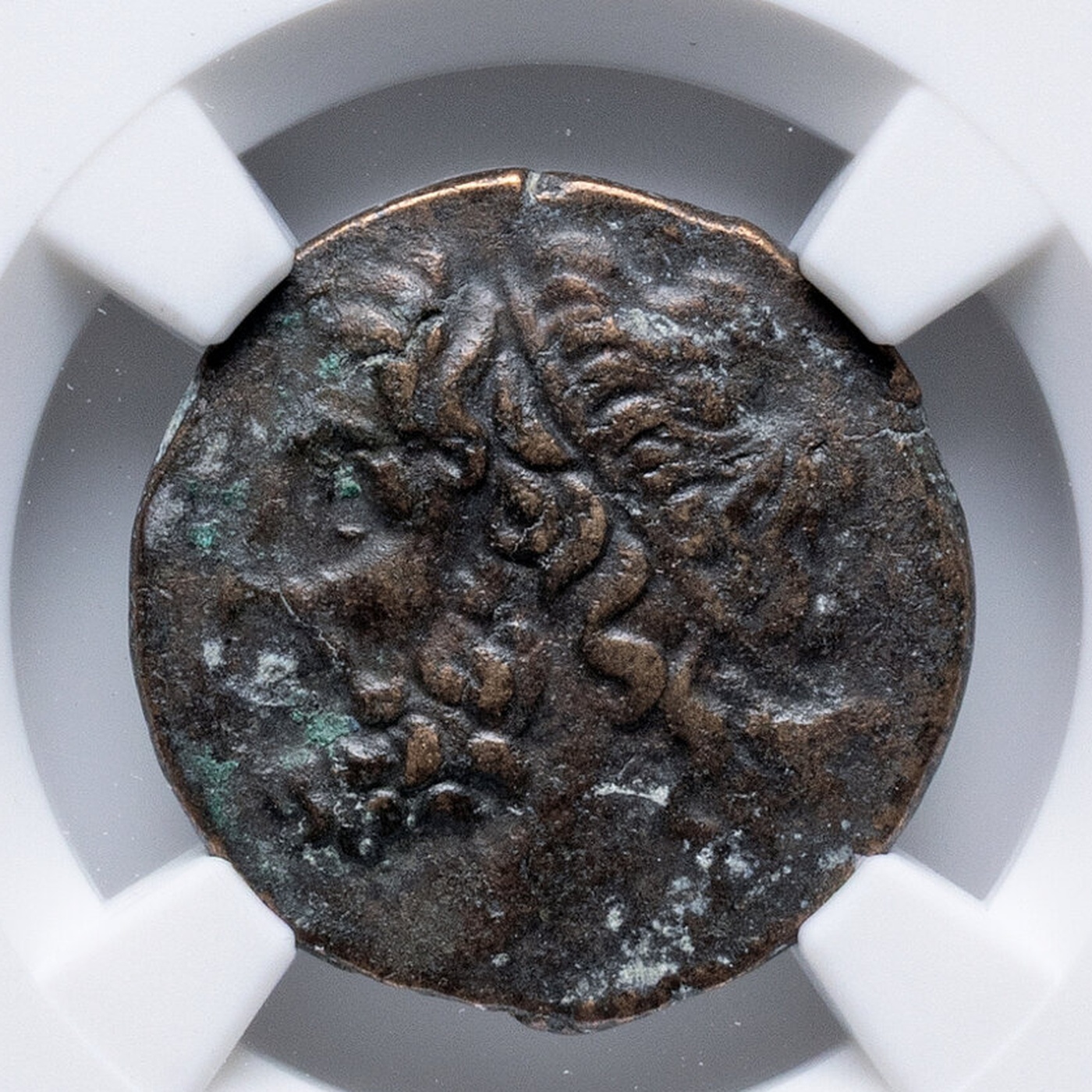
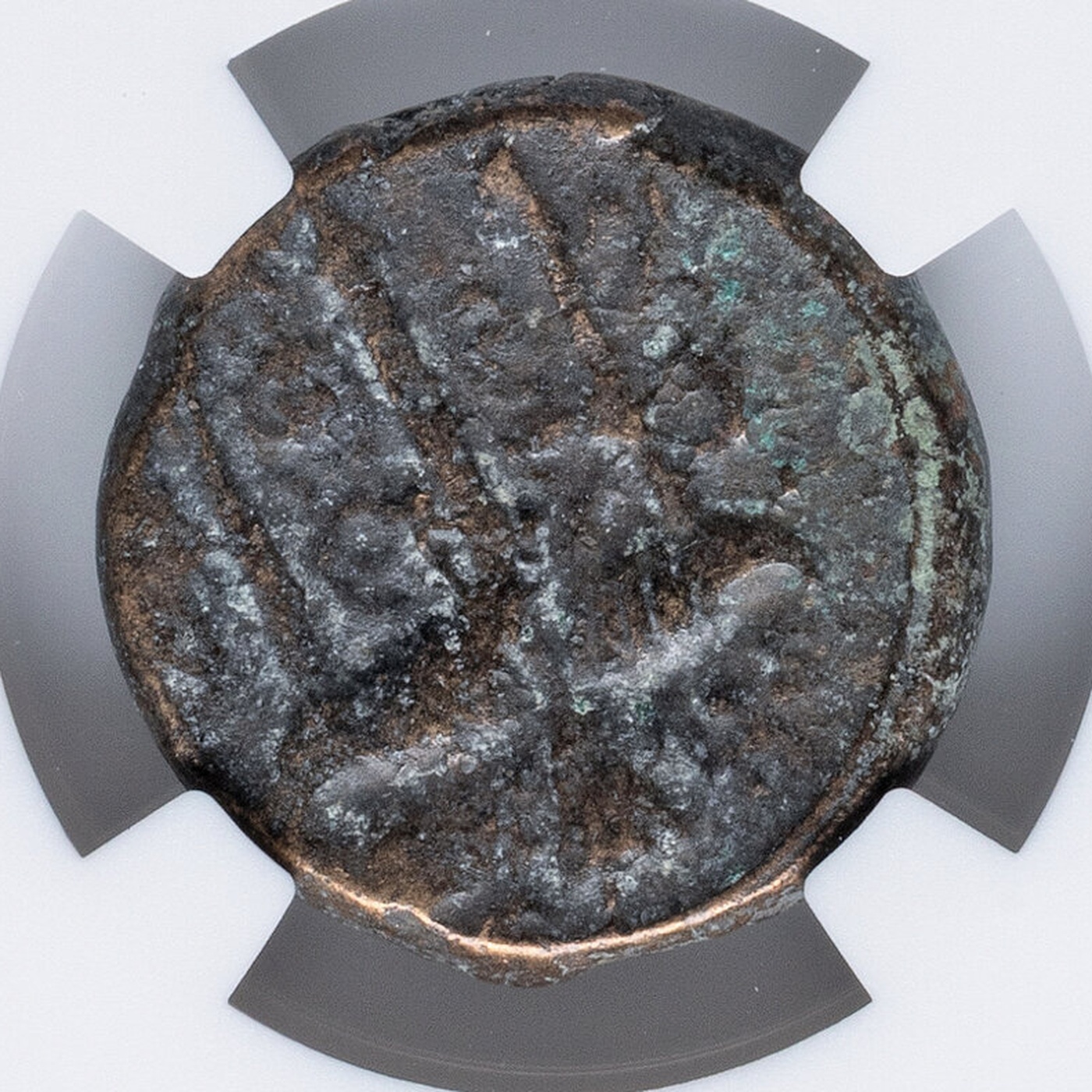
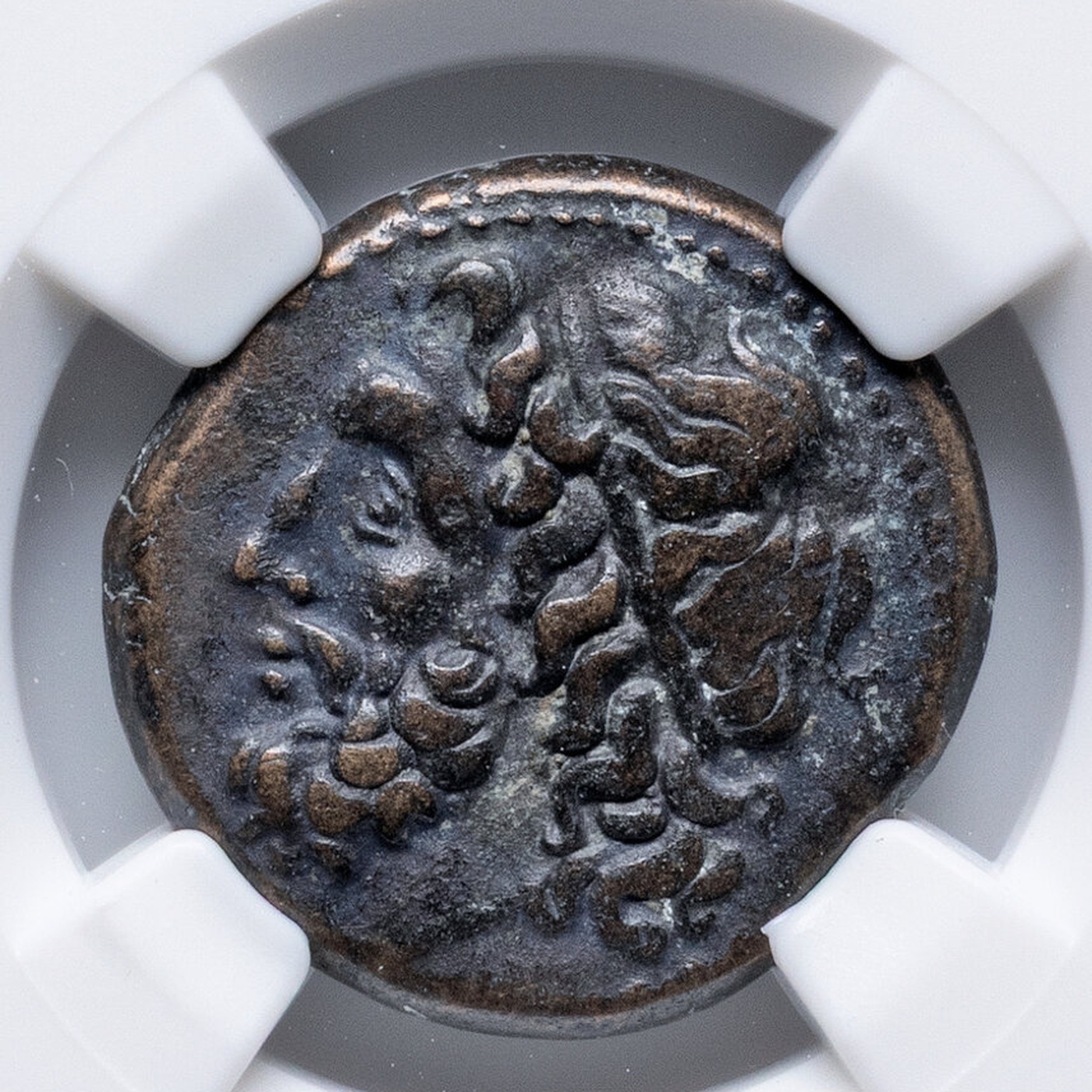
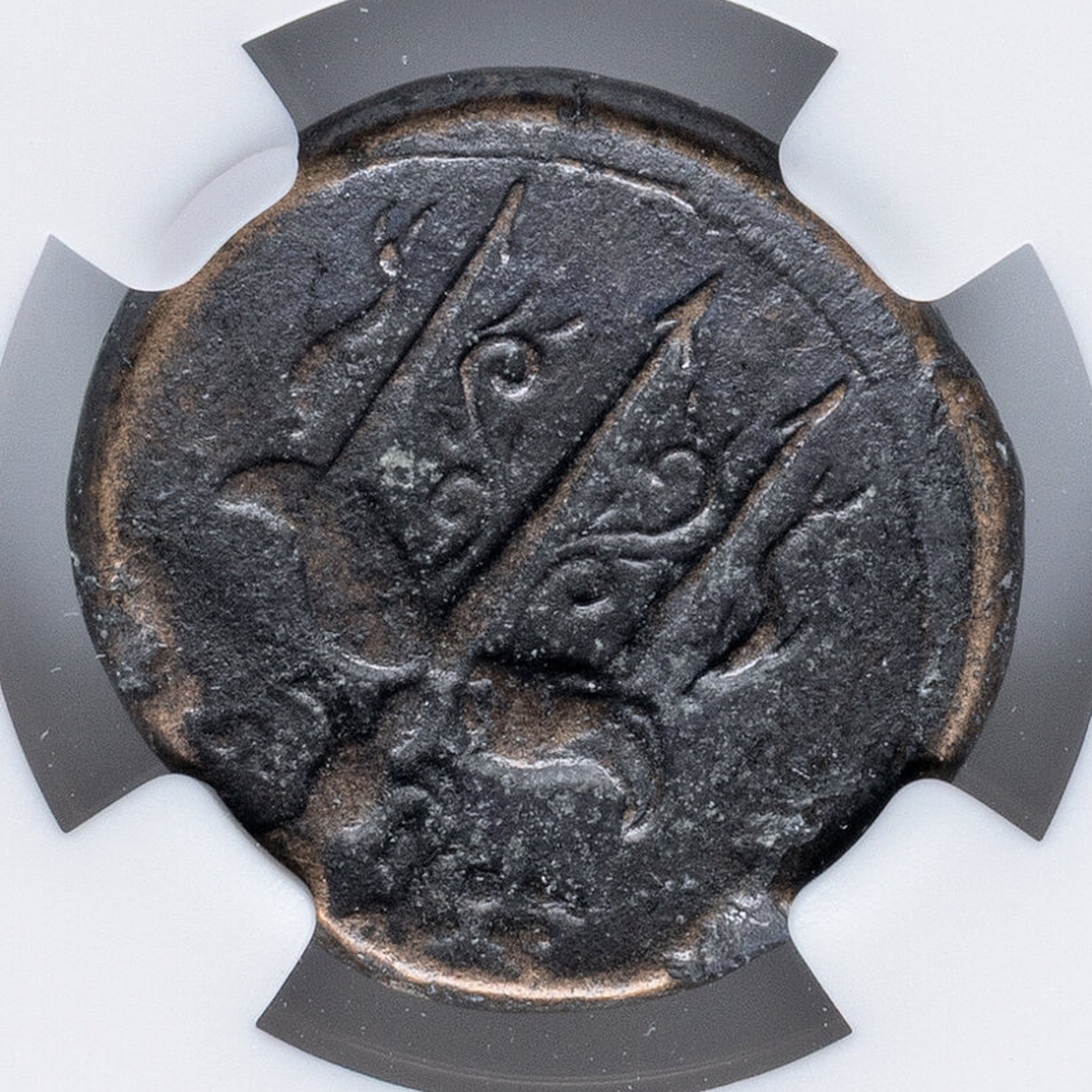
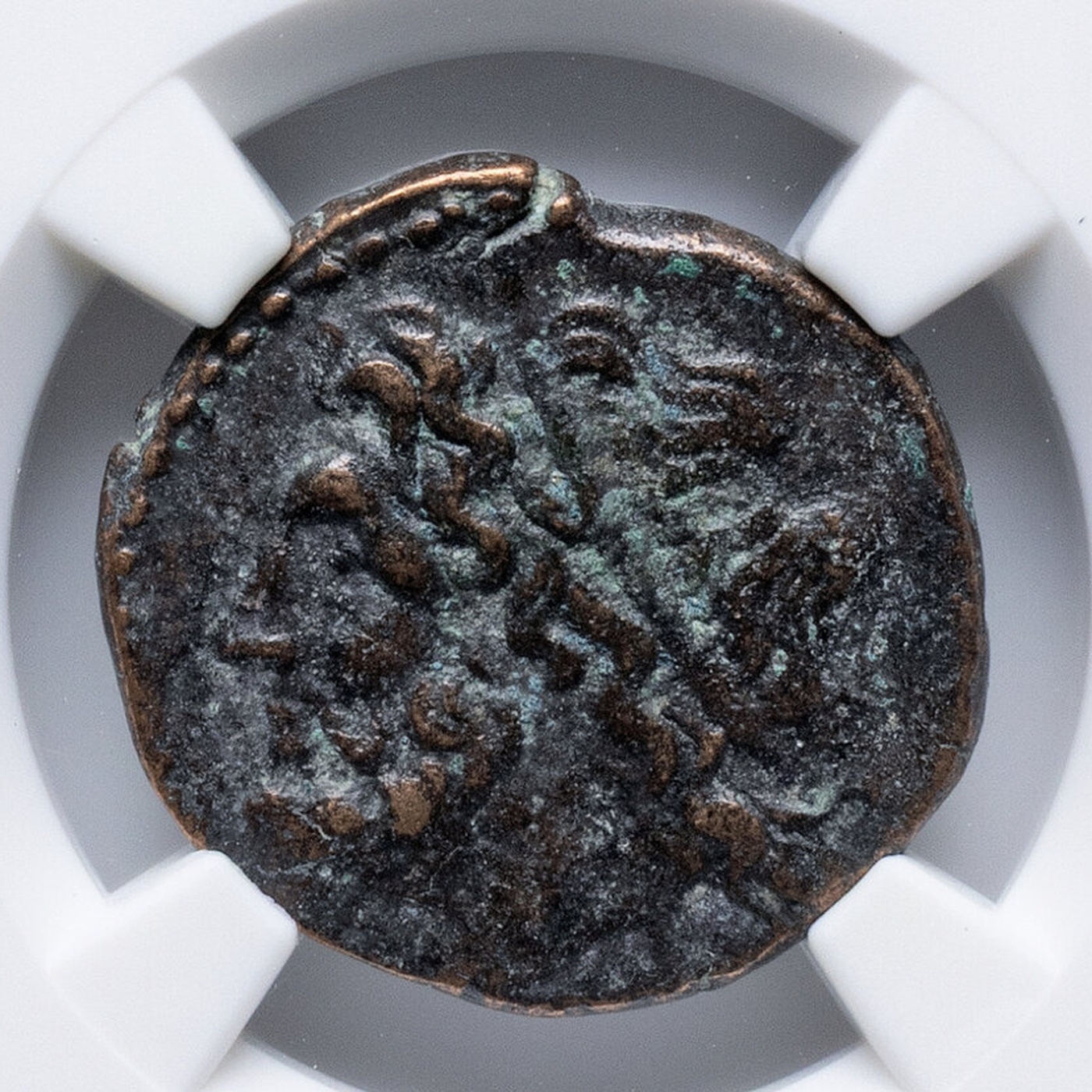
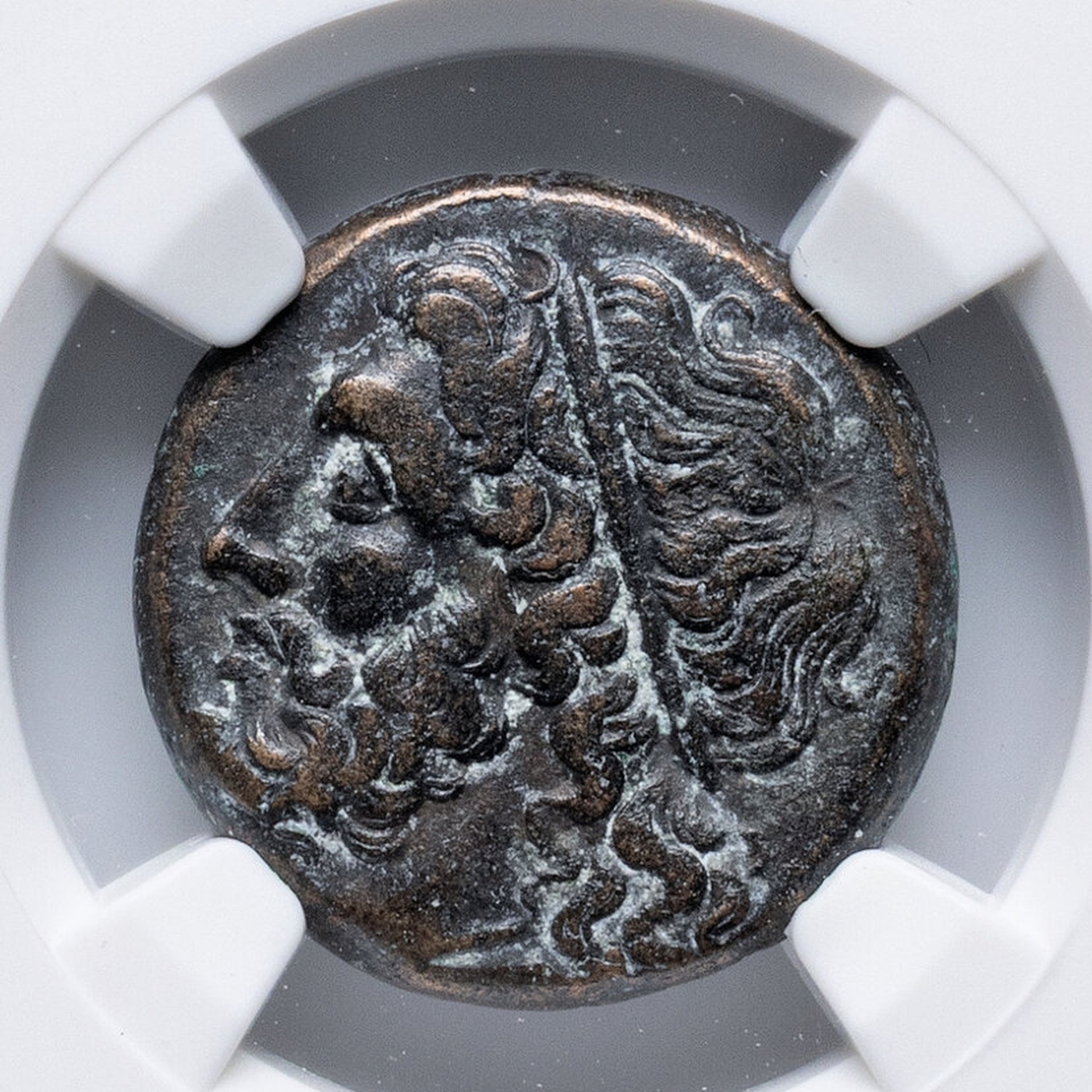
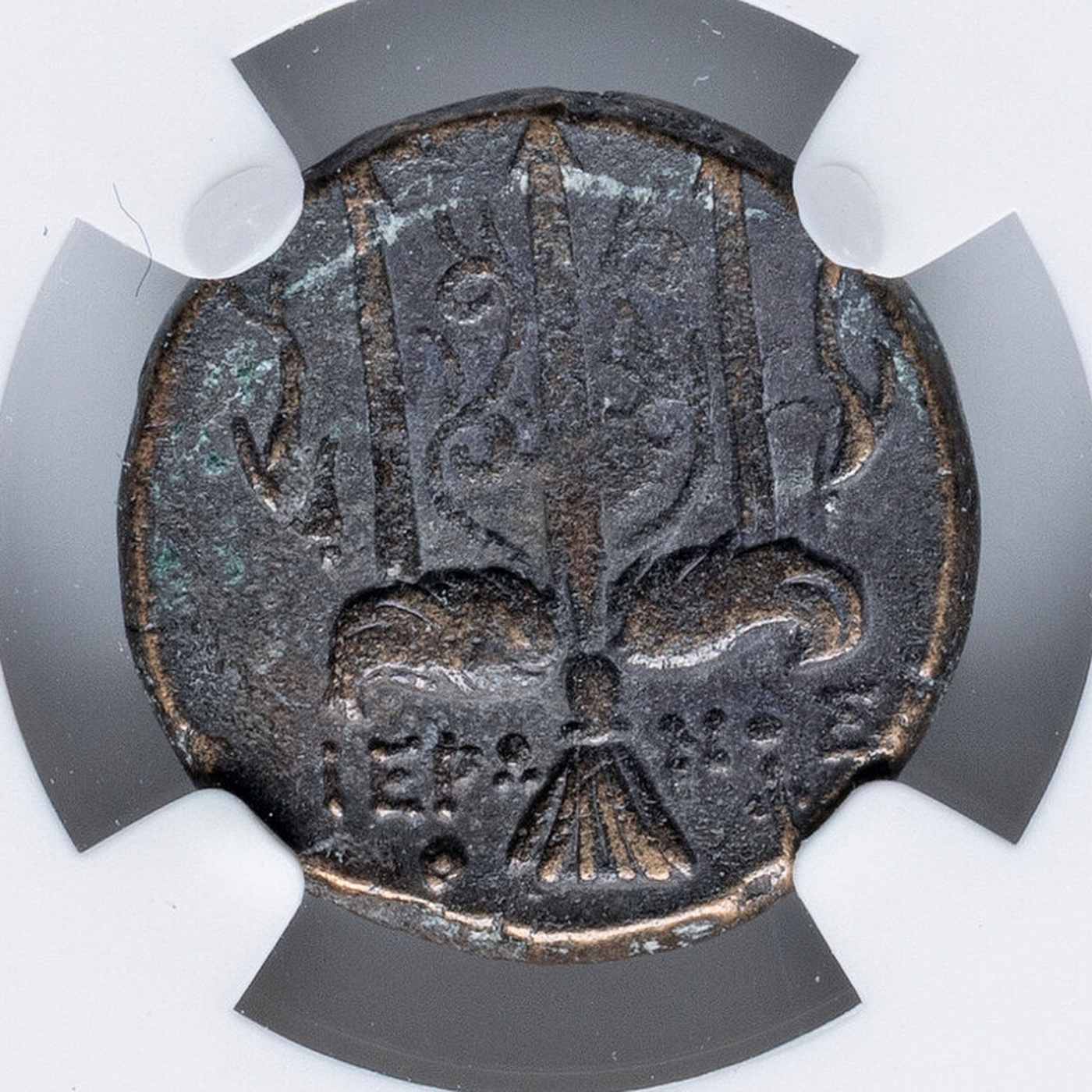
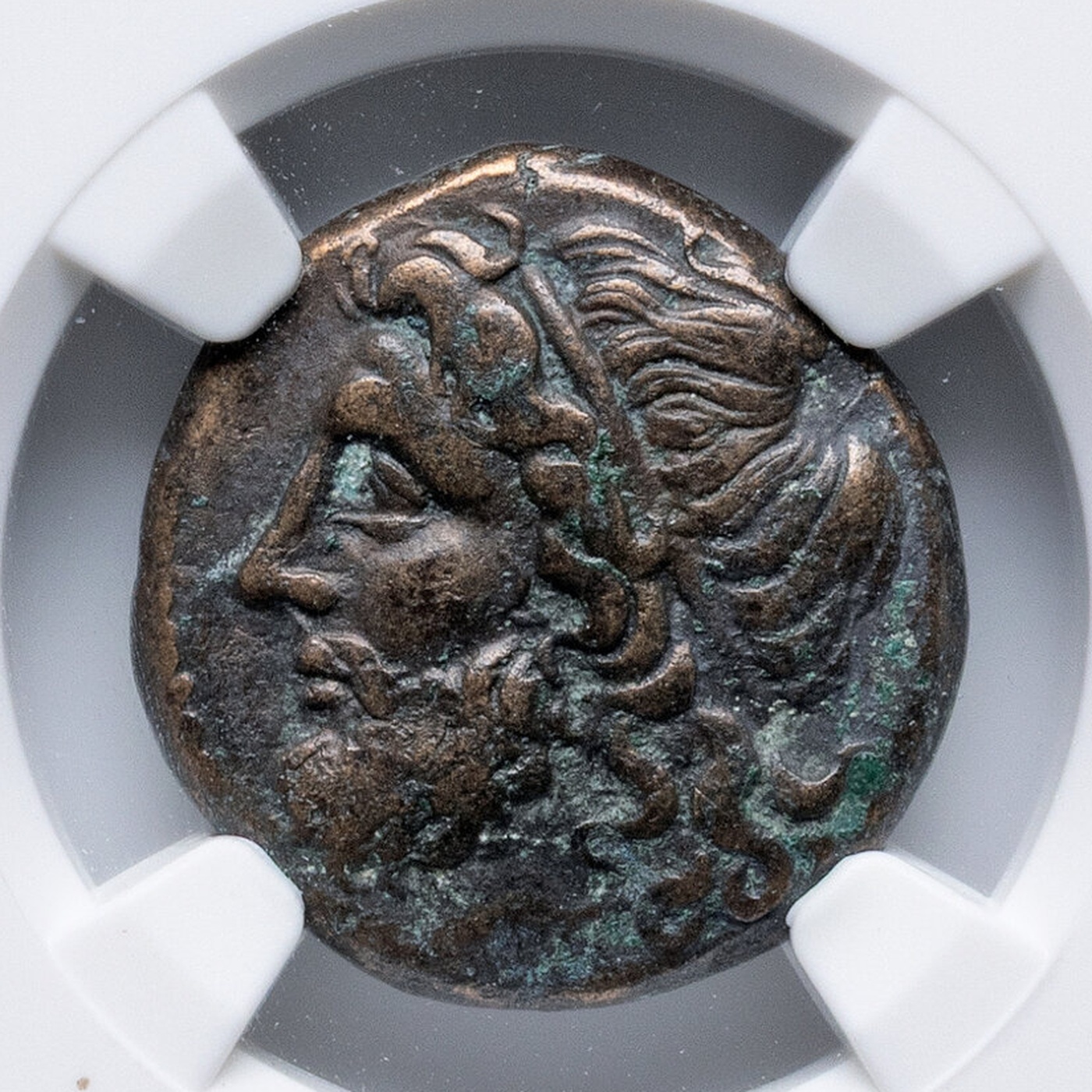
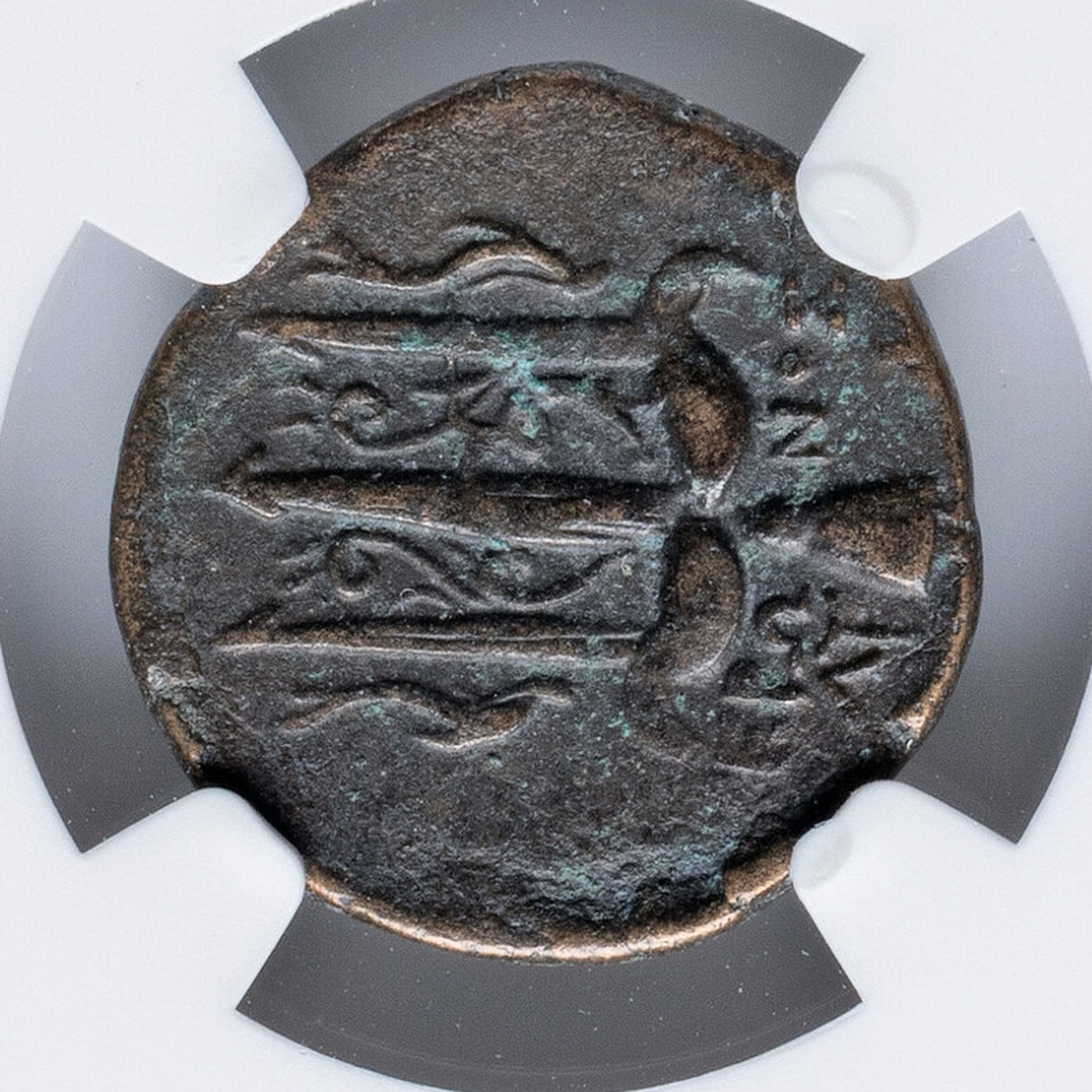
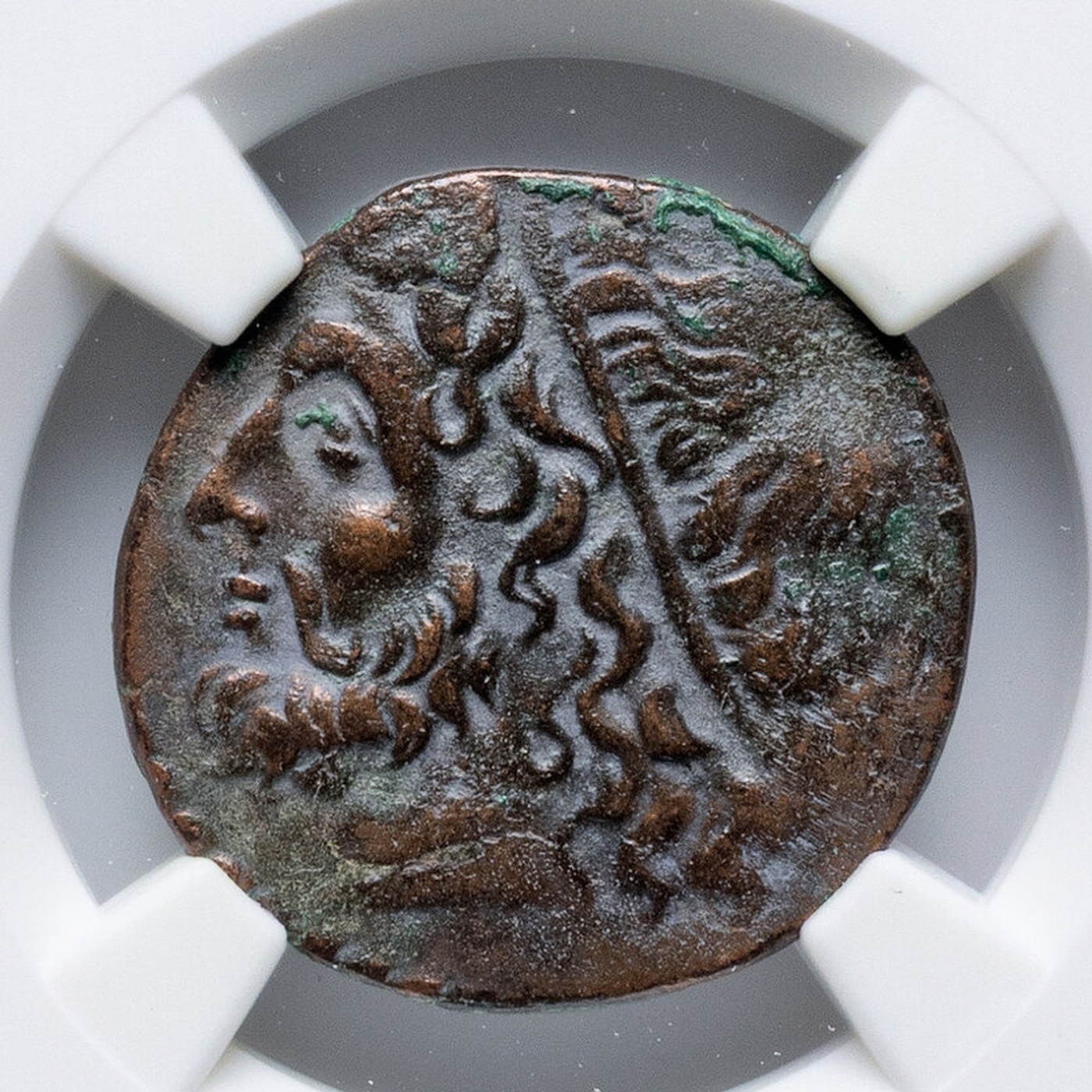
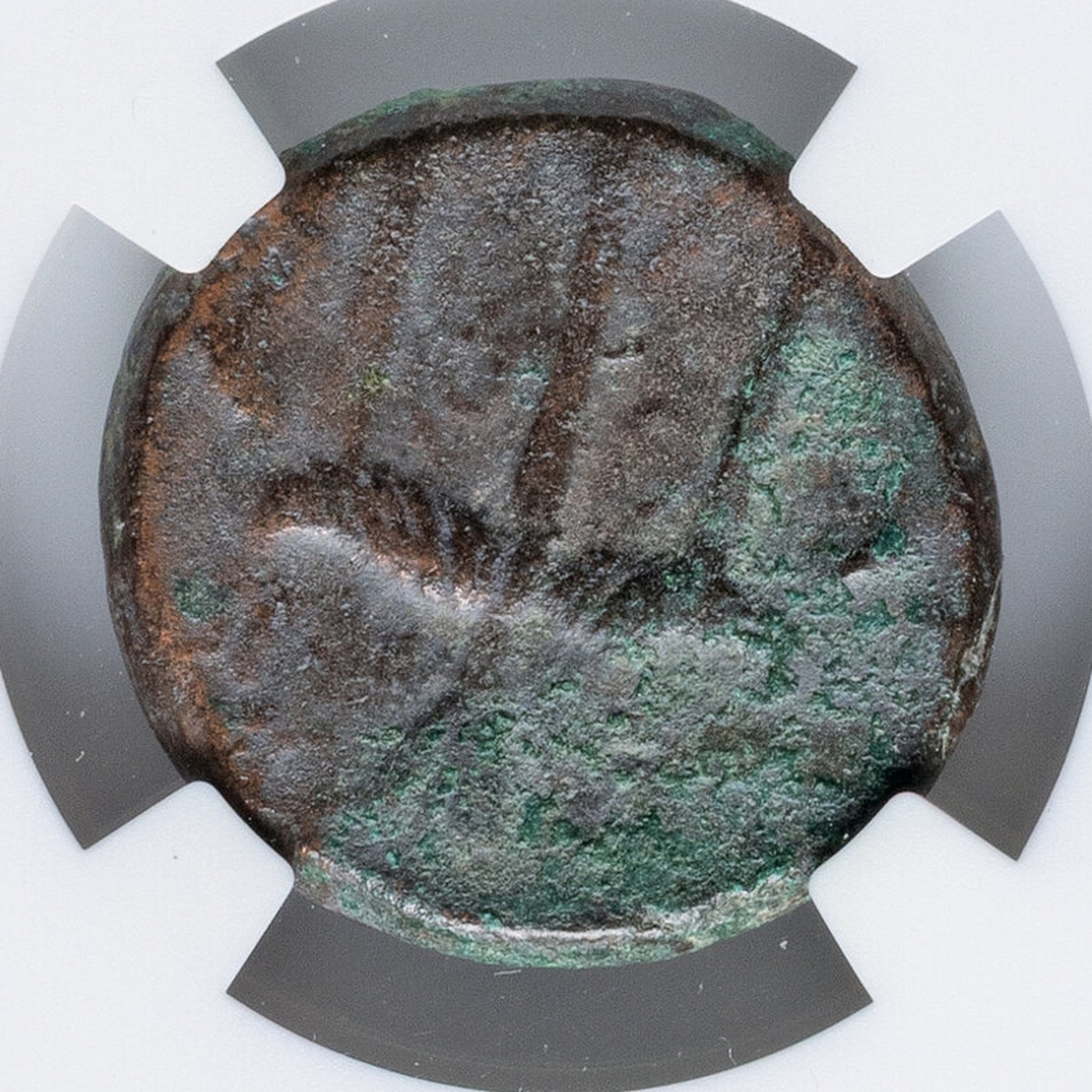
Current: Sicily, Syracuse. Hieron II, 275–215 BC (the standard dating of this bronze is c. 263–218 BC). Æ litra (the denomination the house, NGC and the trade use; the module is 18–20 mm). Diademed head of Poseidon left / ornamented trident head between two dolphins, ΙΕΡΩΝΟΣ. HGC 2, 1550; CNS II 197 (Calciati).
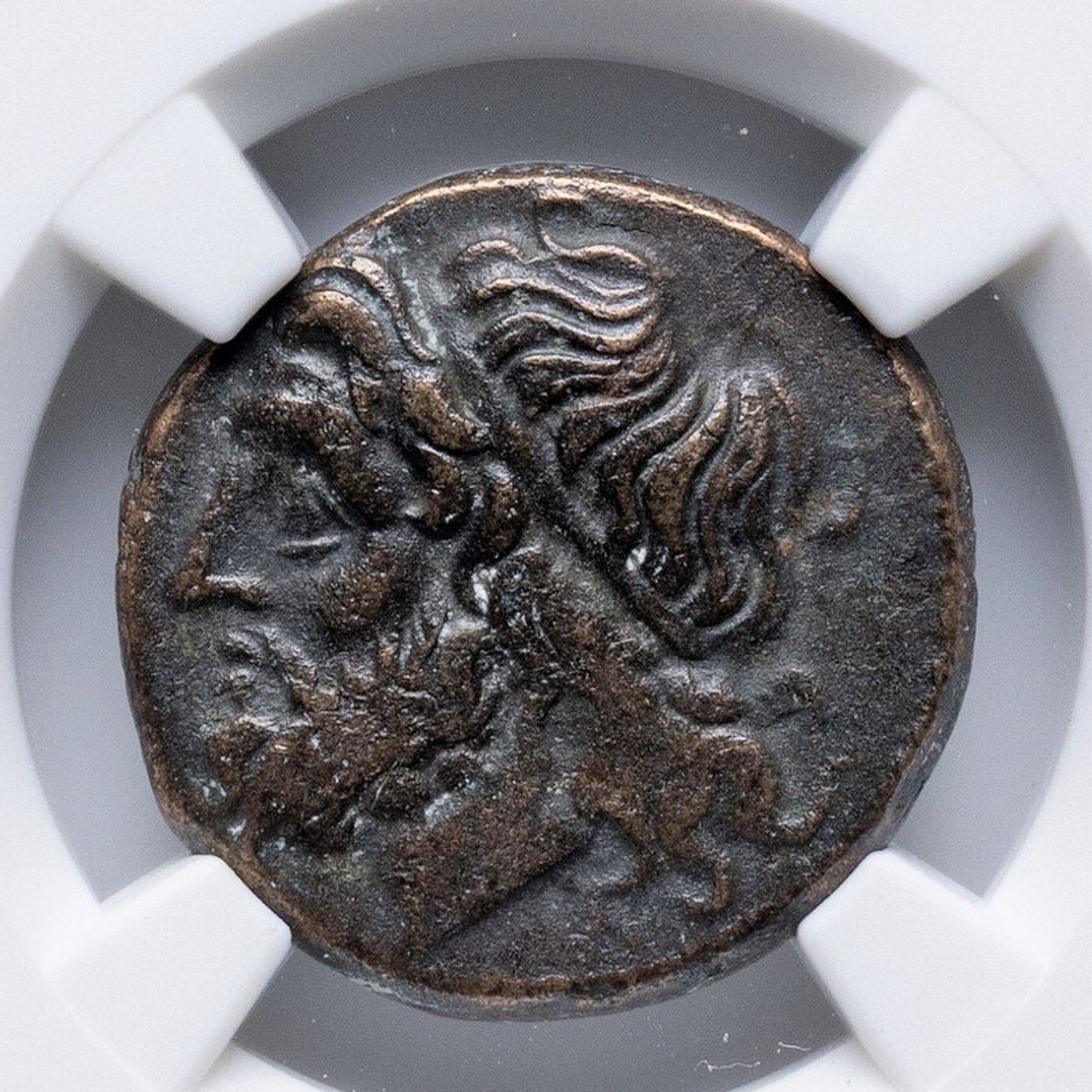
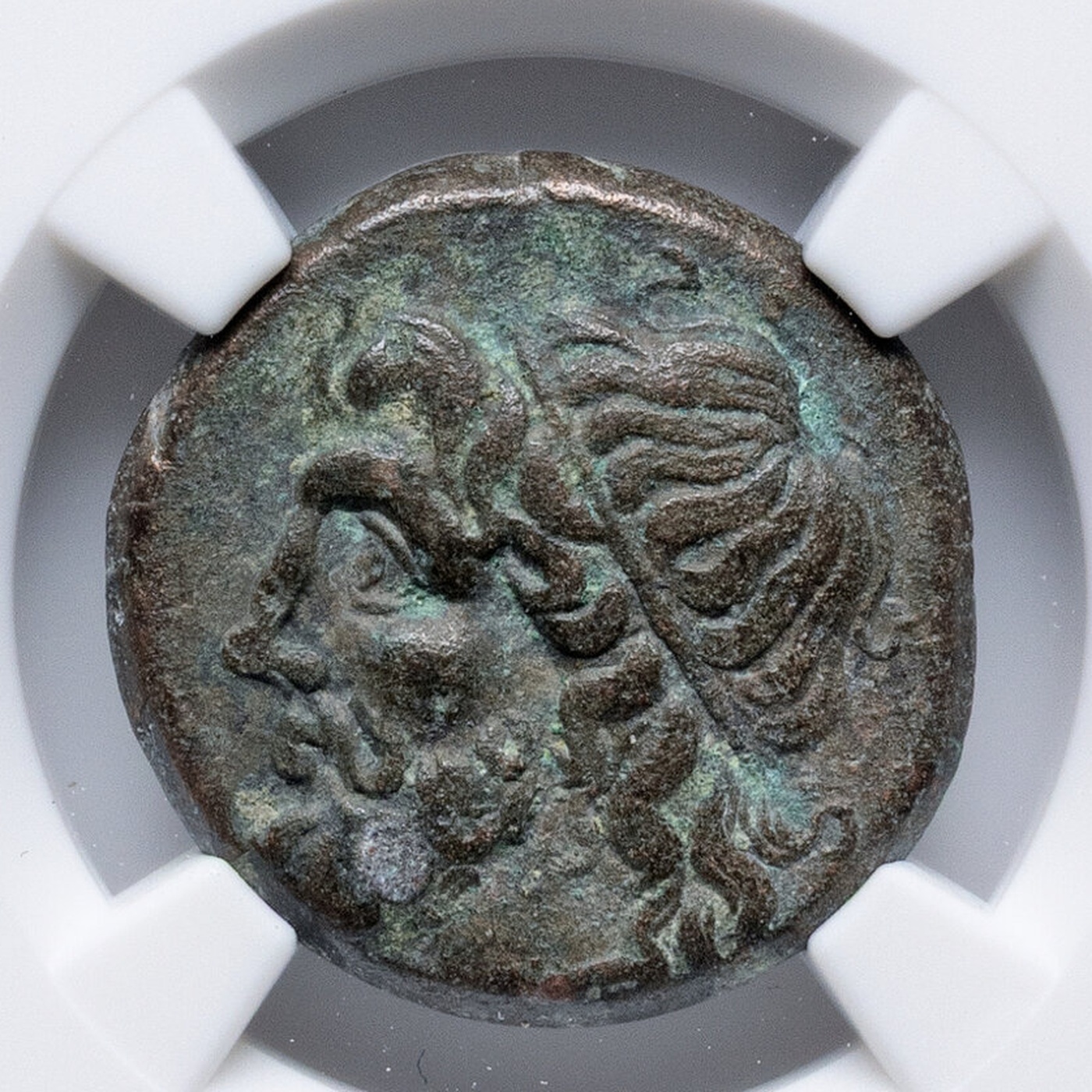
Obverse: Head of Poseidon left, wearing a tainia (diadem), the hair and beard in loose curls
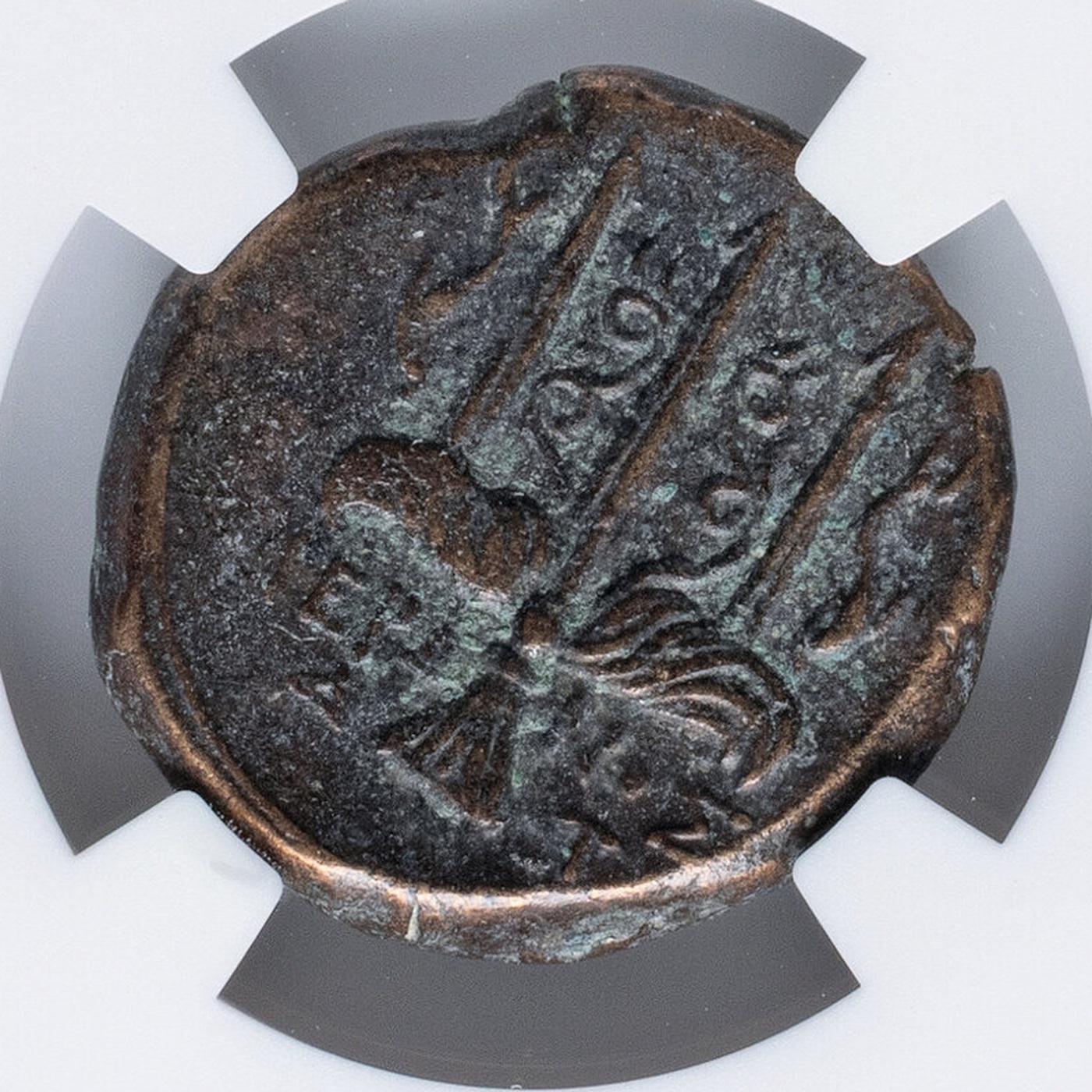
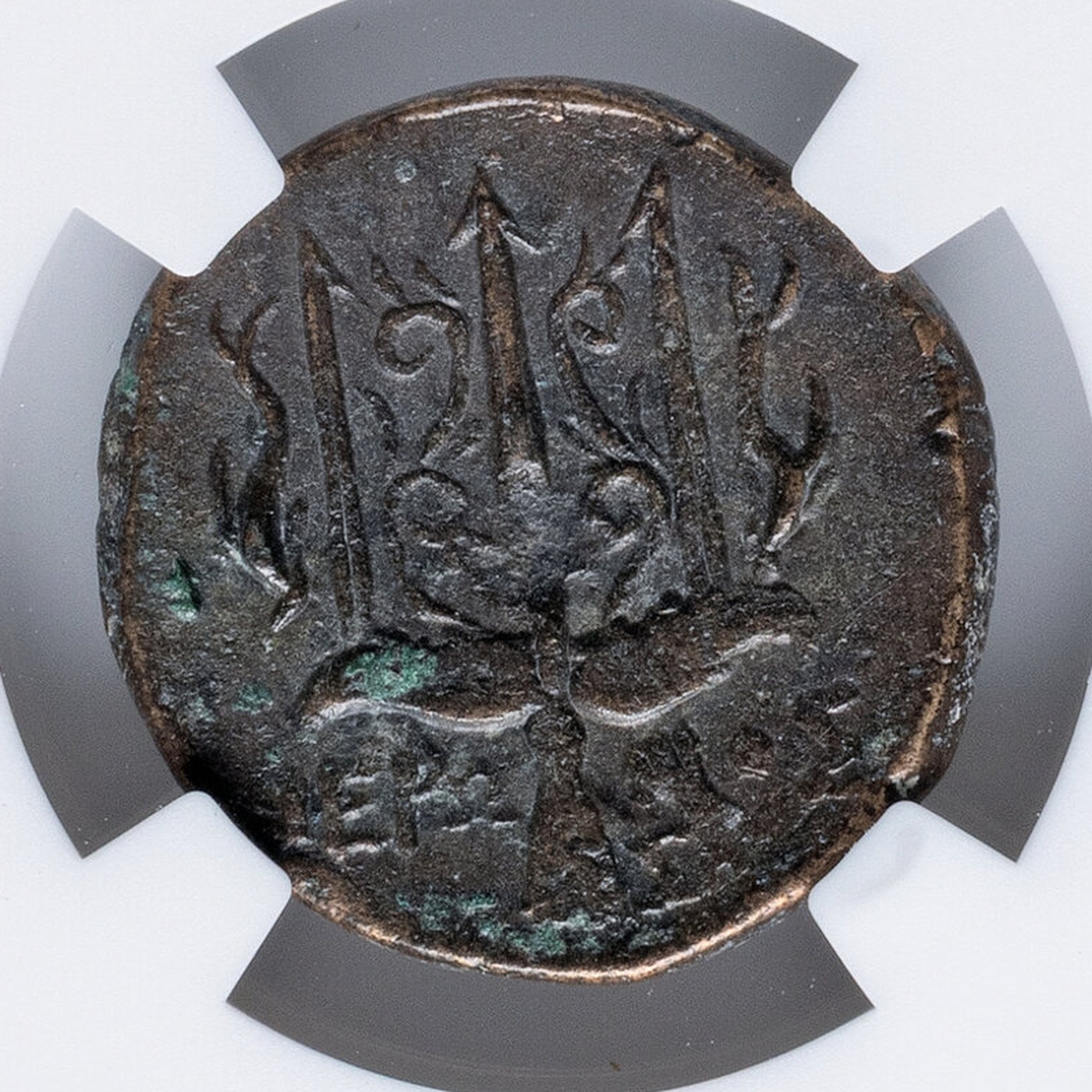
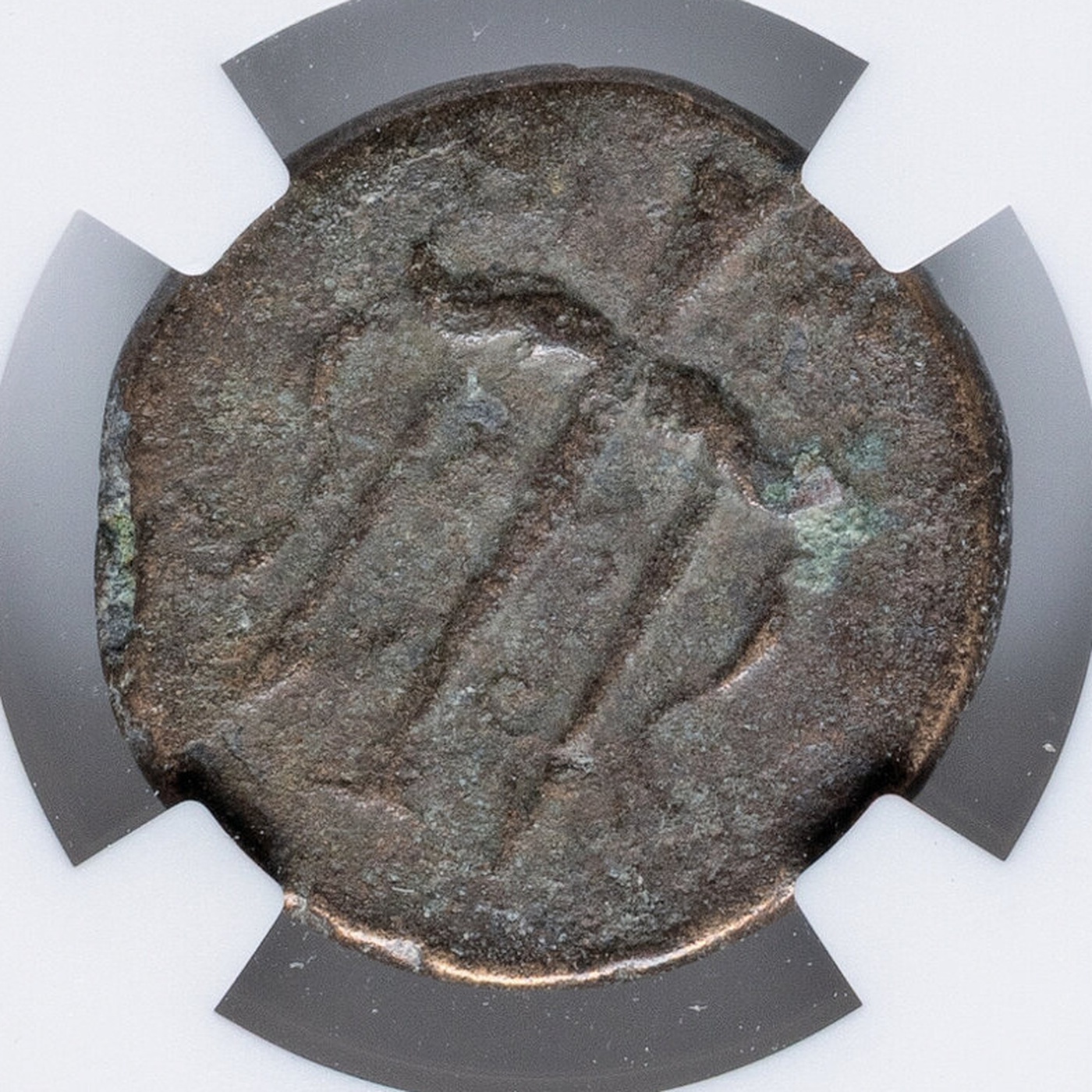
Reverse: Ornamented trident head, the shaft between two dolphins swimming downward; control letters in the field on some dies
Primary reference: HGC 2, 1550
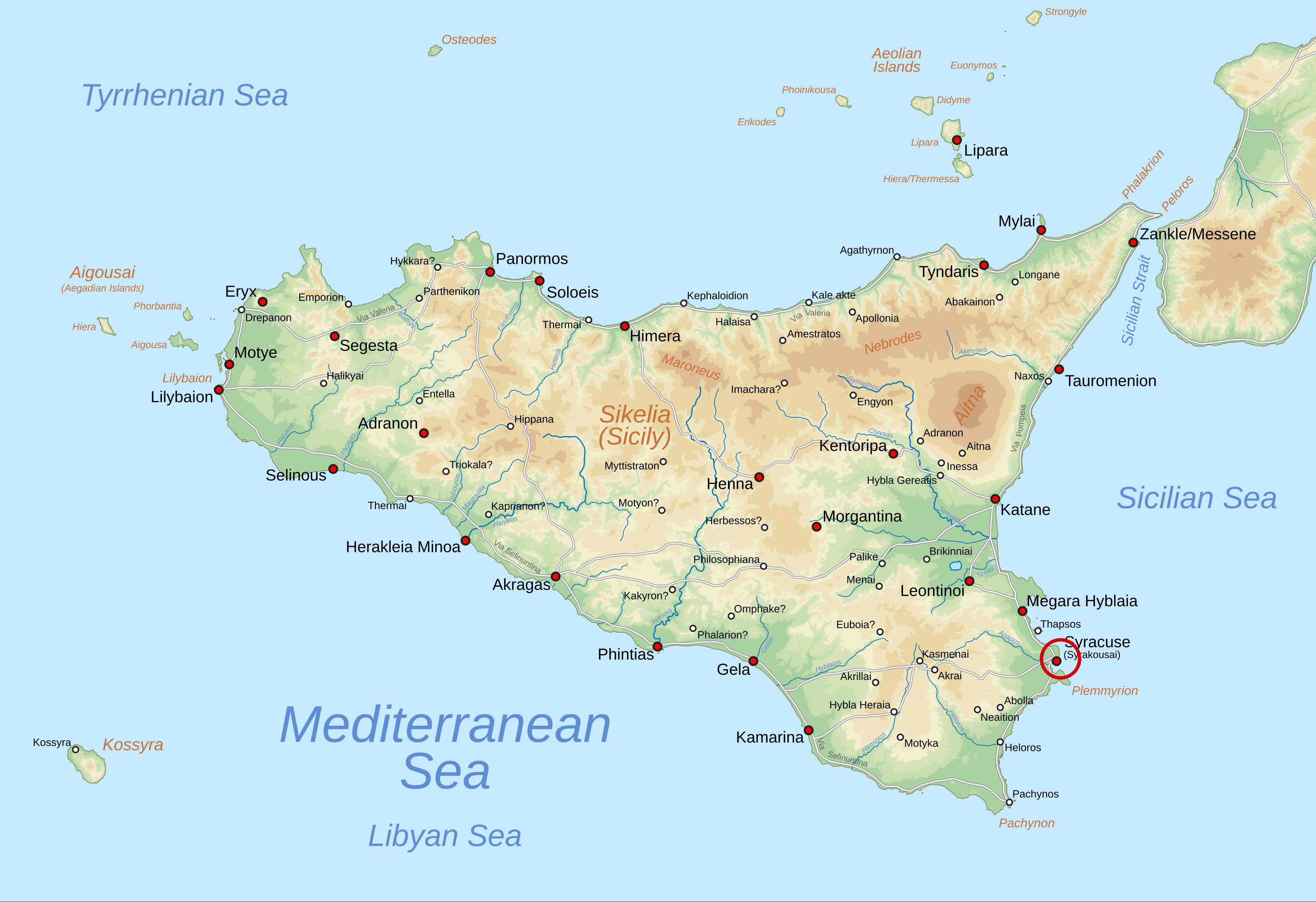
Ancient Sicily, with the Greek cities of the coasts and the native peoples of the interior. Syracuse (Syracusae) — circled in red — sits on the southeast coast. Hieron’s kingdom was the southeast corner of the island — Syracuse, Akrai, Leontinoi, Tauromenion — and the rest was Rome’s from 241 BC: the Carthaginian west, on this map, became the first Roman province. Messana, the Mamertines’ city and the cause of the war, is at the strait in the northeast corner.
“Map of ancient Sicily” by Tomisti (Wikimedia Commons), File:Ancient Sicily map en.svg, licensed CC BY-SA 4.0; cities and roads based on the Digital Atlas of the Roman Empire (DARE) and Pleiades; topographic base © OpenMapTiles, © OpenStreetMap contributors (https://commons.wikimedia.org/wiki/File:Ancient_Sicily_map_en.svg; license: https://creativecommons.org/licenses/by-sa/4.0/). Modified by JSB Coins: rasterized from SVG to PNG, and a red circle added to mark Syracuse (the same marked copy used for the collection’s other Syracusan types). This derivative is shared under the same CC BY-SA 4.0 license.
Hieron II ruled Syracuse for fifty-four years and, Polybius says, took the kingship “without killing, exiling, or injuring a single citizen” and kept it the same way (7.8). He was Rome’s ally for forty-eight of those years, through the whole of the First Punic War and the opening of the Second, and his death in 215 BC is the hinge on which the history of Roman Sicily turns. His bronze coinage was enormous, and this is its commonest type: the head of Poseidon in a diadem, and on the other side a trident with dolphins and the king’s name, ΙΕΡΩΝΟΣ. I bought ten of them in one lot — the first group lot I have bought — and they are catalogued here as ten specimens of one type, each with its own page, its own holder and its own faults.
Graphic: JSB Coins (CC0); dates follow Diodorus and standard chronologies.
Hieron came up through the army in the chaos after Agathokles — the collection’s Agathokles bronze is the coin of the generation before him — and was elected general by the Syracusans, married Philistis, the daughter of a leading citizen, and made his name against the Mamertines, the Campanian mercenaries who had seized Messana and were raiding the east of the island. After he beat them at the river Longanus he was proclaimed king on his return to Syracuse (Diod. 22.13; Polyb. 1.8–9). That was about 270 BC. Five years later the Mamertines, squeezed between Hieron and Carthage, appealed to Rome, and Rome came — and the First Punic War began at Messana with Hieron on the Carthaginian side. It lasted for him one campaign. In 263 the consuls marched on Syracuse; Hieron made terms, paid an indemnity, and became a friend and ally of the Roman people (Polyb. 1.16). He never wavered again. He fed the Roman armies through twenty-three years of war against Carthage, and when Hannibal crossed the Alps he was still sending grain and gold and a golden Victory to Rome in his nineties.
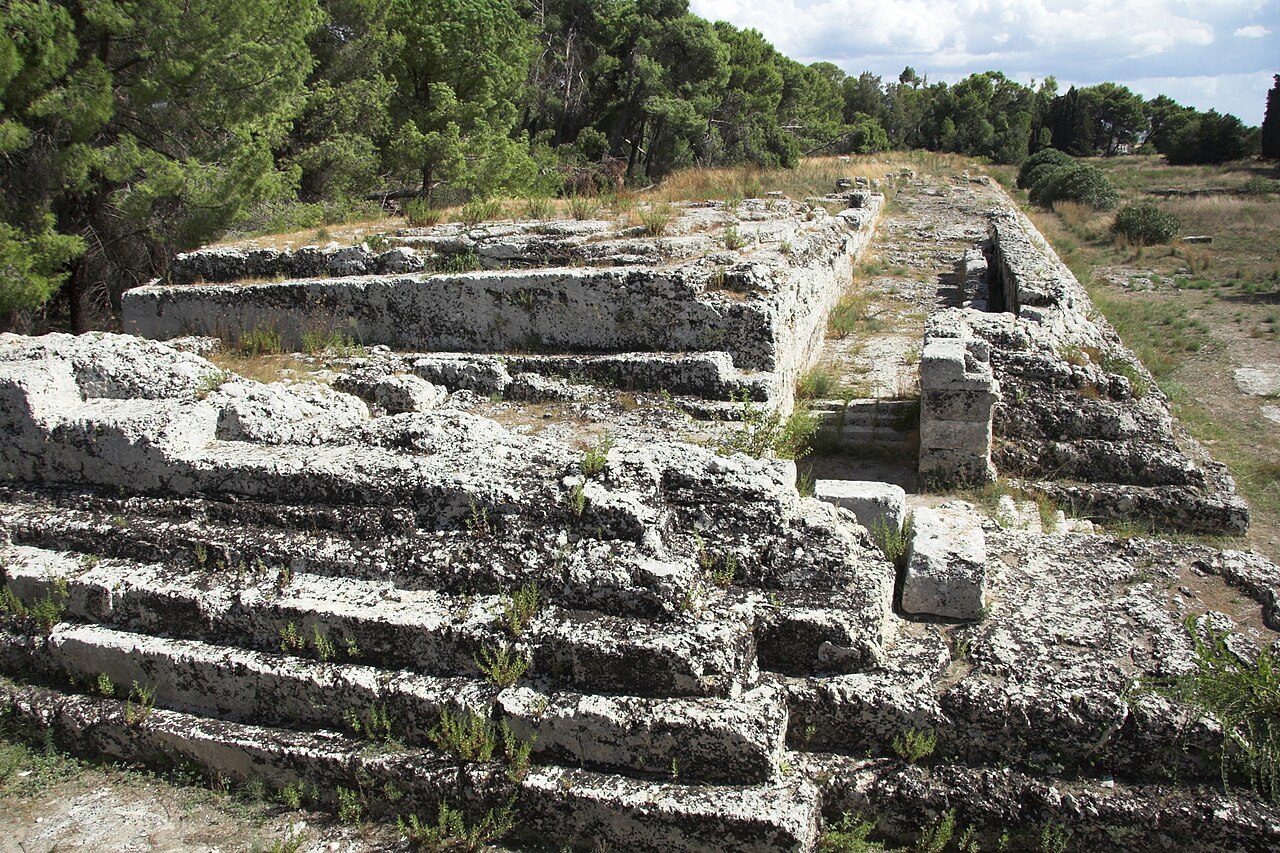
Photo: Zde, Wikimedia Commons, licensed CC BY-SA 4.0; reproduced unmodified.
What he did with the peace is why he is remembered kindly. The kingdom was small — the southeast of the island, Syracuse and a handful of towns — and he ran it with a tax system, the lex Hieronica, so sensible that the Romans kept it for their province, and a court that included Archimedes, who built him the great ship Syracusia and, for the siege that came after his death, the engines that Plutarch describes with such relish (Marc. 14–17). He rebuilt the theatre, raised the altar above, and struck a coinage whose silver carried his wife’s veiled head and whose bronze carried this Poseidon.
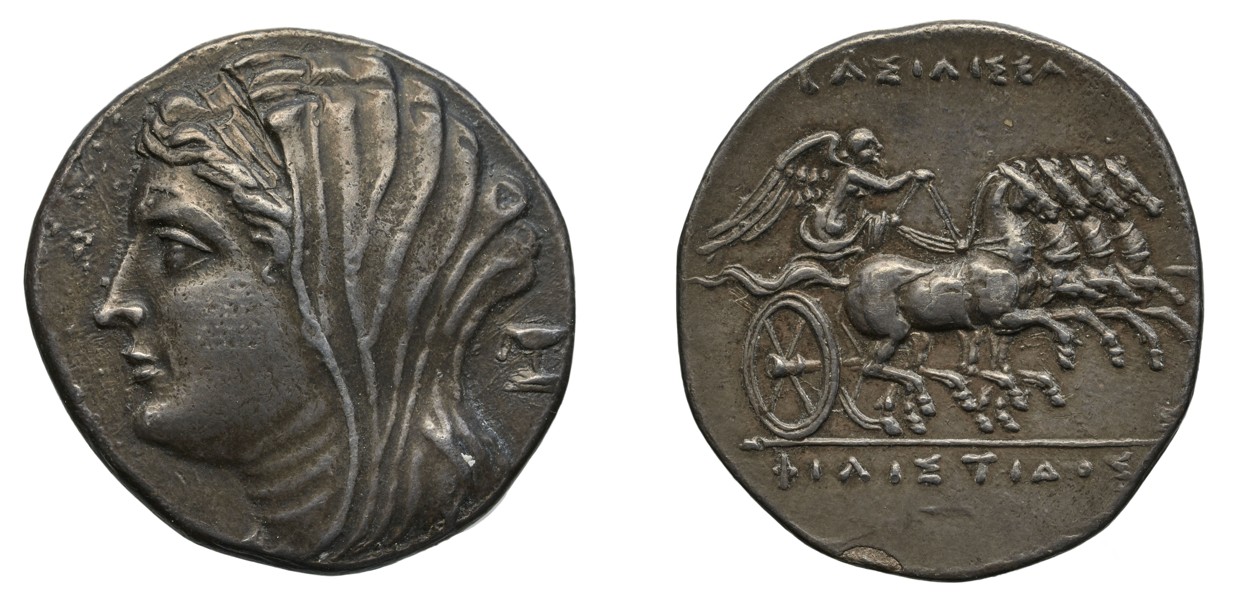
The types are the sea. Syracuse was a naval power and a harbour city, and Poseidon, diademed like a king, faces the trident on the other side, a weapon drawn as a piece of court metalwork — the tines sprouting ornamental volutes, the shaft between two dolphins diving head-down. The king’s name stands beside it in the genitive, ΙΕΡΩΝΟΣ, “of Hieron”: not the city’s name, the king’s, which is the Hellenistic habit and a change from the ΣΥΡΑΚΟΣΙΩΝ of the Deinomenid and Gelon-era silver at the far end of the Syracuse shelf. Control letters, differing from die to die, sit in the field on some coins; the specimen pages record what each shows. The coins were struck in huge numbers — they are the commonest Syracusan bronze in the trade — and their survival in quantity says something about a long reign and a working economy.
Hieron died in 215 BC, past ninety, with Hannibal loose in Italy after Cannae. His grandson Hieronymus, fifteen, listened to the Carthaginian party, made a treaty with Hannibal, and was murdered within a year; the city went over to Carthage, and Marcellus came (Livy 24.4–7, 24.21–33; Plut. Marc. 13). The siege of 213–212, Archimedes’s engines, the night assault on the Epipolai wall during the festival of Artemis, and the sack in which Archimedes died over his diagram are in Livy 25.23–31 and Plutarch (Marc. 14–19). The Roman headquarters in the west of the island then became Akragas, under Carthaginian garrison, and the collection’s Punic quarter-shekel of Akragas was struck there in the last years of the resistance, 213–211 BC. The Carthaginian bronzes of the First Punic War are the other side of the coin Hieron chose not to be on.
Ancient: Polybius 1.8–9, 1.16 and 7.8–9; Diodorus 22.13; Plutarch, Marcellus 13–19; Livy 24.4–7, 24.21–33 and 25.23–31 — all linked above in the standard English translations. Numismatic: HGC 2 (Hoover, Handbook of Coins of Sicily, 2012), no. 1550; R. Calciati, Corpus Nummorum Siculorum II (1986), Syracuse 197; SNG Copenhagen 854 and BMC Sicily 602 as commonly cited for the type — the books consulted by number, not in the hand.
TEN SPECIMENS, ONE TYPE. The ten coins under this page came as one Heritage lot (Select Auction 232638, lot 63109, 16 September 2026), each in its own NGC holder graded Choice VF with the pedigree line 'The Poseidon Collection' on the label. All ten are the same type, on dies that differ in the placement of the legend and control letters; no die study has been attempted here. DENOMINATION. 'Litra' is what the house, NGC and the trade call this 18–20 mm bronze, and the collection's vocabulary already flags the bronze litra as a debated denomination (see the Agathokles page); HGC 2 lists it as 1550 without committing to a name, and I keep the house's word with the caveat. DATE. NGC and the house give the reign, 275–215; the usual placing of the Poseidon/trident bronze is c. 263–218, i.e. after the treaty with Rome and before the last years — Calciati's and Hoover's arrangement, cited here from the trade's summaries rather than the books. NO WEIGHTS: none of the ten labels carries one, the lot description gave none, and all ten stay sealed. The published weights for the type run about 5.5–7 g.
John's Ancient Coin Collection · Type · syracuse-hieron-ii-poseidon-trident-litra
Where the mints are — every mint in the collection on a modern map
Image credits for this coin — photographs, maps and graphics used on this page


.jpg)
.jpg)