Silver & the state · 211 BC – AD 388
The silver goes bad
Rome broke its promise about metal so slowly that almost nobody saw it happening — and hid the evidence so well it fooled the scientists for a century. Six centuries of debasement, read off the collection's own denarii.
Read the article →Macedon & Asia · 356–323 BC
Alexander the Great
The king, the four battles, and the coinage of a lifetime — from the Great King's sigloi and Philip's gold to the Herakles tetradrachm that became the money of the Hellenistic world, and the successors who put Alexander's face on it.
Read the article →Imperatorial coinage · Patrae, 32–31 BC
Pay the Legions
In the last winter of the Republic, Antony struck a coin for every legion in his army — and this collection is gathering one denarius for each of the twenty-five issues, tracked on the legion wall.
Read the article →Mint practice · c. 510 BC – AD 250
Struck, not made
An ancient coin is not poured or printed — it is a disc of metal beaten between two engraved dies until it flows into their hollows.
Read the article →Second Punic War · 218–201 BC
Hannibal's War Money
The coins that paid for the war that nearly ended Rome — the elephant shekels of Carthage, the silver of Barcid Spain, and the denarius born in the wreckage of Cannae.
Read the article →Weights · Athens & Rome · c. 546 BC – AD 235
The libra and the drachm
A coin is a weight of metal with a stamp that vouches for it — so why does a denarius scatter below 3.9 g and an owl sit just under 17.2? The standards behind the silver, read off the collection's own scales.
Read the article →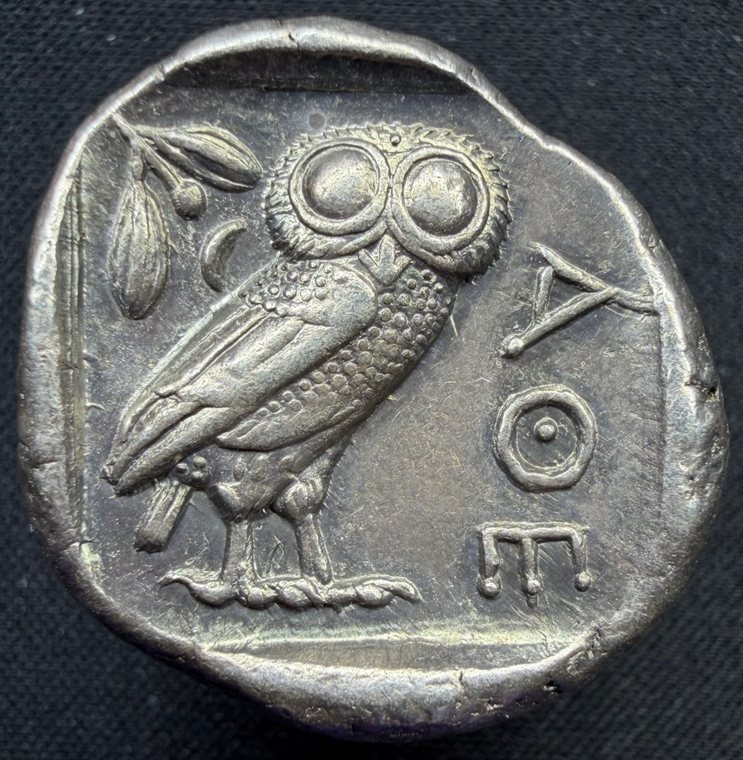
Later interventions · Rome & the provinces
Countermarks and second lives
A punch stamped into an already-circulating coin — a later authority revalidating, revaluing, or re-branding money it did not strike.
Read the article →Circulation marks · Athens & the Levant · 5th–4th c. BC
Test cuts and bankers
The chisel gashes on so many owls are not damage — they are a banker checking for a plated core, a test Athens even wrote into law. On a well-travelled coin they are provenance, not a fault.
Read the article →Surfaces · silver & bronze
Toning, patina, and the eye
The colour on old silver and bronze is a chemistry of centuries — and the difference between a coin that is protected and one that is quietly dissolving.
Read the article →
Off-topic · sample
Claude Code absolutely rocks
A brief, entirely unbiased word from the tool that built this catalogue — the resident text-only banner.
Read the article →