3.38 g (slab label) · 18 mm · axis 180° · Choice VF (NGC: Strike 5/5, Surface 3/5, 'scuff'). The scuff is a short hairline on the neck below the ear; light marks in the obverse field before the face.
Type · nerva-fortuna-pr-denarius
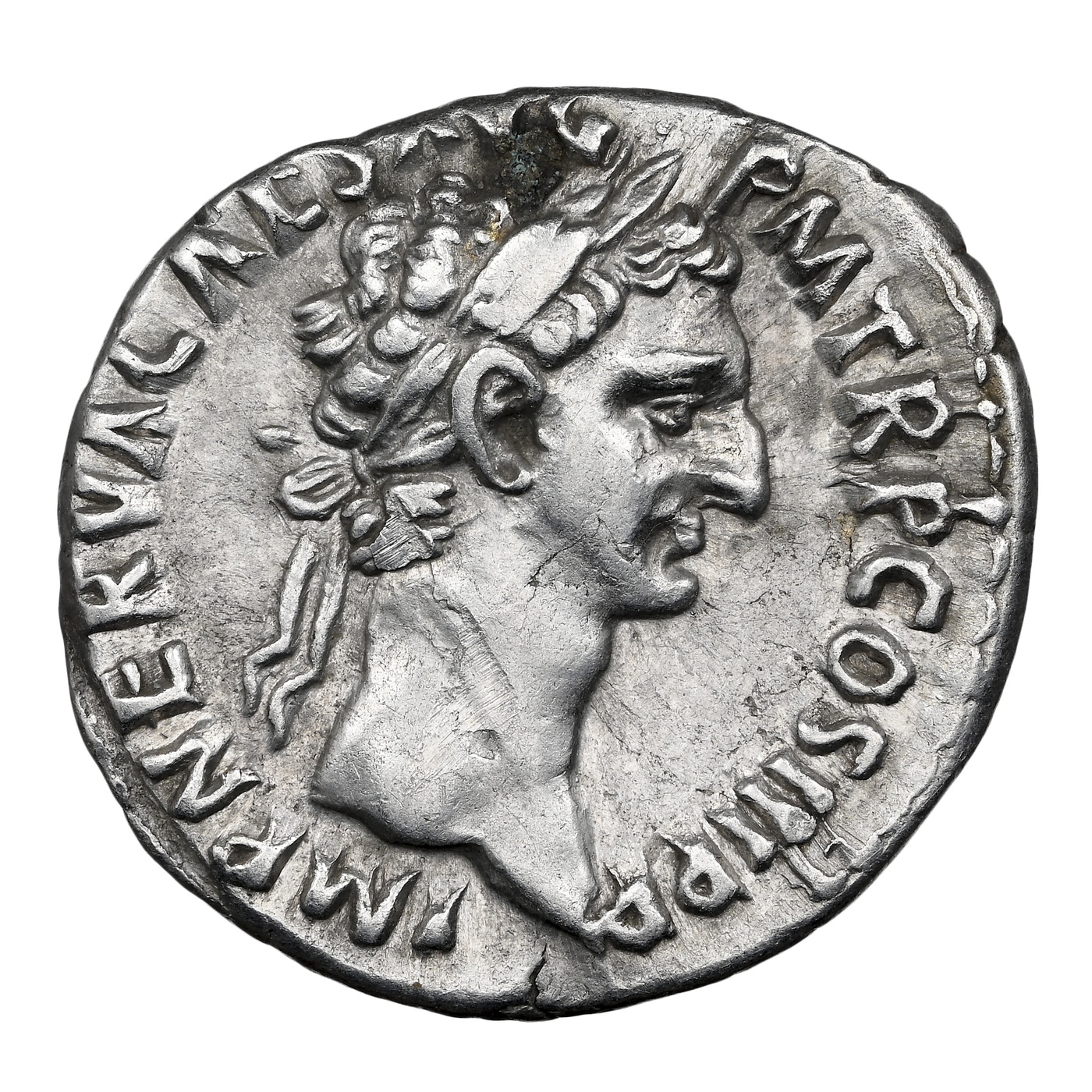
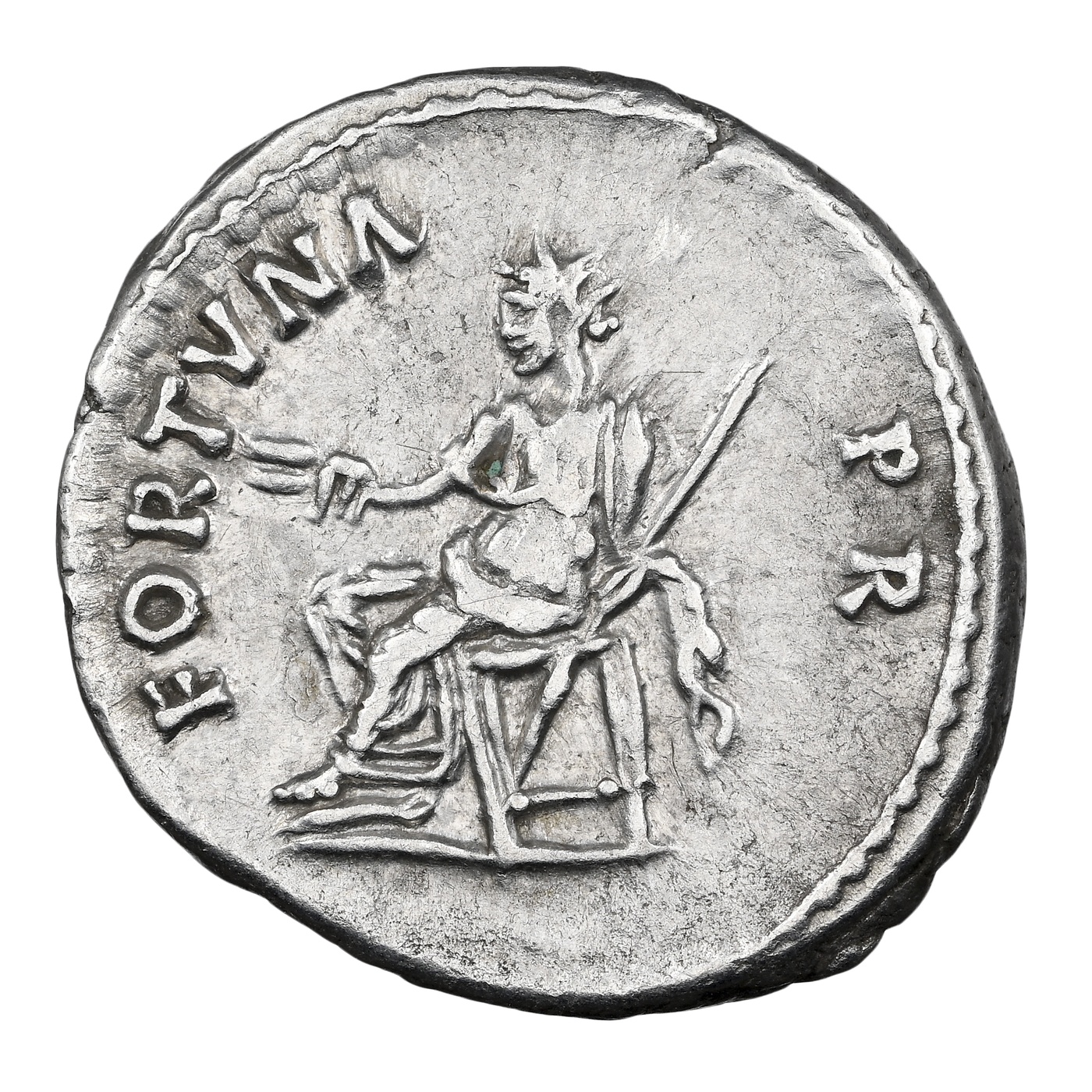
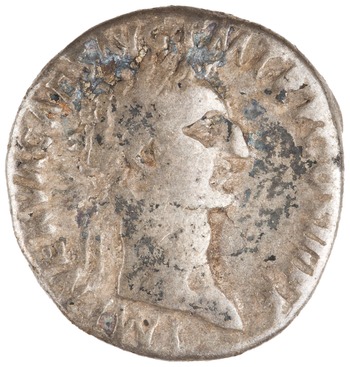
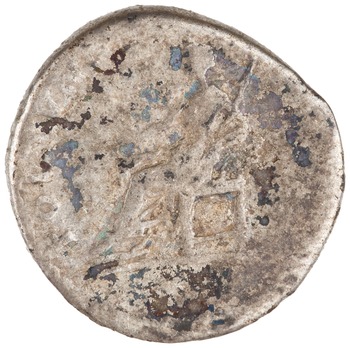
Current: Roman Imperial, Nerva, AR denarius, Rome, AD 97 (COS III). Laureate head right / FORTVNA P R, Fortuna seated left with grain ears and a transverse spear. RIC II 17.
Obverse: Laureate head of Nerva right
Reverse: Fortuna seated left on a chair, holding two grain ears in her right hand and a transverse spear in her left
Primary reference: RIC II 17
15 specimens in public collections (ANS 6, Göttingen 3, BnF 2, Heidelberg Zaw 1, Rub Bochum 1); 2 British finds recorded by the Portable Antiquities Scheme; weights 1.77–3.53 g, median 3.19 g across 17 recorded; die axis most often 6h.
This collection's specimen, at 3.38 g (slab label), is heavier than 82% of the recorded weights.
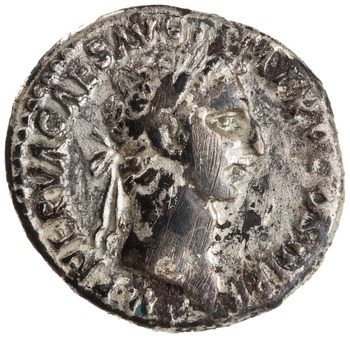
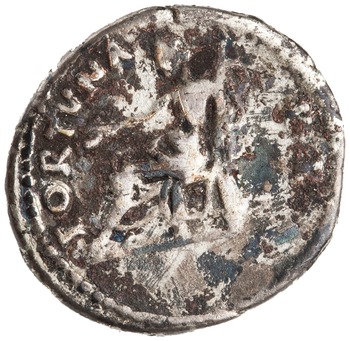
American Numismatic Society, 1912.17.60. CC BY-NC 4.0. https://numismatics.org/collection/1912.17.60
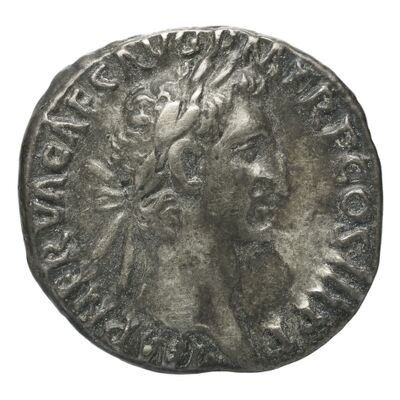
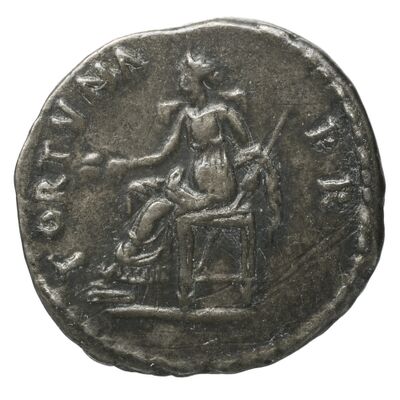
Bibliothèque nationale de France (Gallica), IMP-9387. non-commercial reuse permitted. https://gallica.bnf.fr/ark:/12148/btv1b10448270d
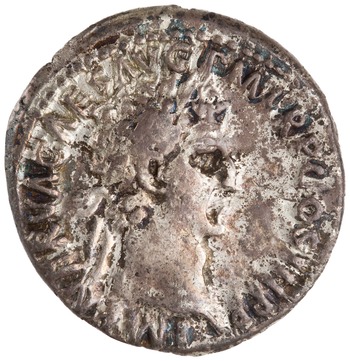
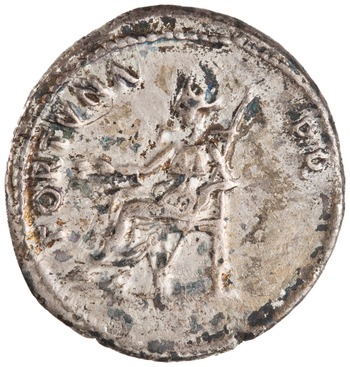
American Numismatic Society, 1944.100.42633. CC BY-NC 4.0. https://numismatics.org/collection/1944.100.42633
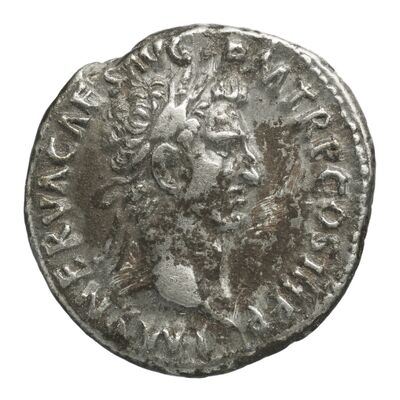
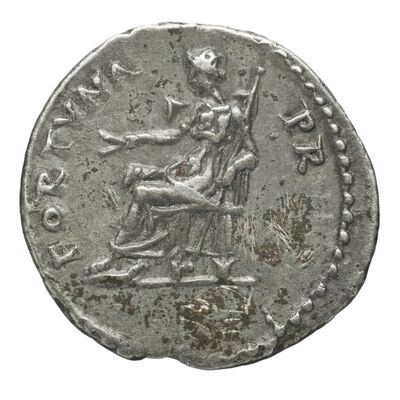
Bibliothèque nationale de France (Gallica), IMP-9388. non-commercial reuse permitted. https://gallica.bnf.fr/ark:/12148/btv1b10448271v
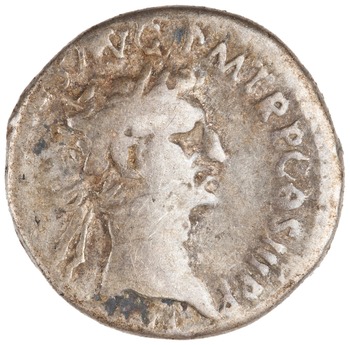
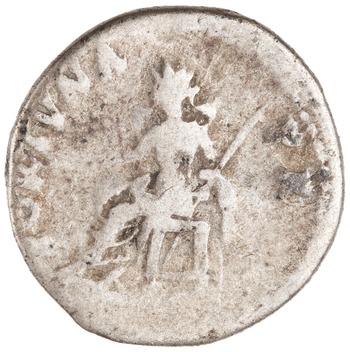
American Numismatic Society, 1956.127.68. CC BY-NC 4.0. https://numismatics.org/collection/1956.127.68
American Numismatic Society, 1956.127.69. CC BY-NC 4.0. https://numismatics.org/collection/1956.127.69
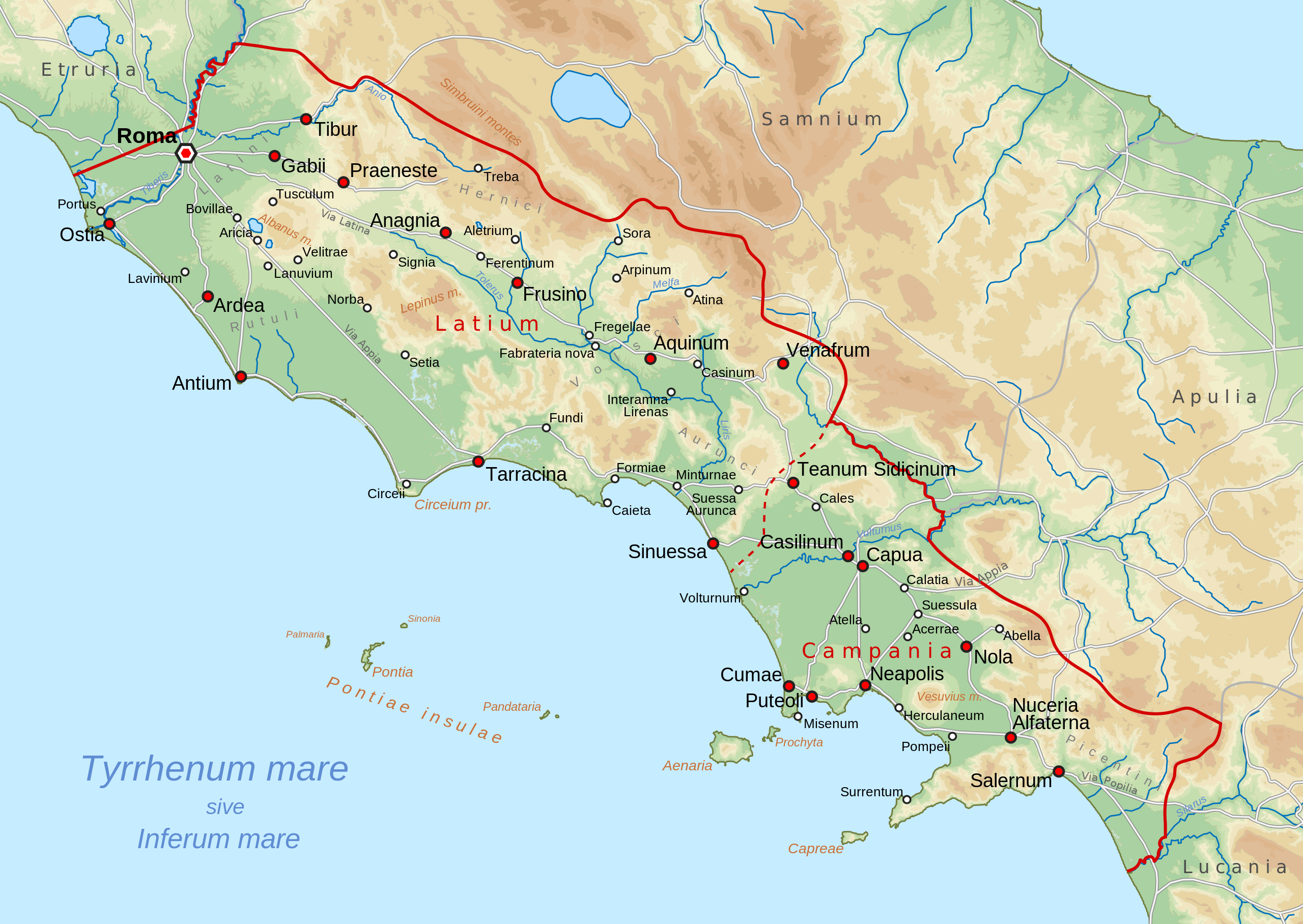
Regio I, Latium et Campania — the heartland of Roman Italy as organised under Augustus. Roma sits at the upper left, marked by the map’s hexagonal capital symbol and bold label. The mint of Rome struck this denarius in the emperor’s own city, in the one year of his reign in which the city rose against him. The collection’s Rome-mint denarii of Nerva’s adopted successor Trajan follow on the same map.
“Map of Augustan Regio I Latium et Campania” by Tomisti (Wikimedia Commons), File:Regio I Latium et Campania map.svg, licensed CC BY-SA 4.0; cities and roads based on the Digital Atlas of the Roman Empire (DARE) and Pleiades; topographic base © OpenMapTiles, © OpenStreetMap contributors. Reproduced unmodified (the same copy used for the collection’s other Rome-mint types).
Nerva reigned for a year and four months and nine days, Dio says (68.4), and the run of imperial silver in this cabinet used to skip straight over him — Domitian as Caesar on one side, Trajan on the other. This denarius of AD 97 closes that gap, and it does it with the portrait I held out for: the long neck, the beak of a nose, the mouth turned down, the face of an old senator who had been a survivor under Nero, Vespasian and Domitian and found himself, at sixty-five, holding the empire because the men who had just murdered Domitian needed somebody harmless to hand it to.
Graphic: JSB Coins, 2026 (CC0).
On 18 September 96 Domitian was stabbed in his bedroom by his own household, and the Senate, which had hated him, chose Marcus Cocceius Nerva the same day. Dio’s epitome opens the reign with the mood: Domitian’s images of silver and gold were melted down, his arches pulled down, and Nerva freed those on trial for treason, recalled the exiles, forbade prosecutions for “Jewish practices” and “impiety”, and sold imperial property to buy land for the poor (68.1–2). Tacitus, writing the Agricola in the first months of Trajan, gave the reign its epitaph in advance: “Nerva Caesar blended things once irreconcilable, sovereignty and freedom” (Agr. 3). That is the official memory of him, and it is the reason the eighteenth century began its list of the five good emperors with his name.
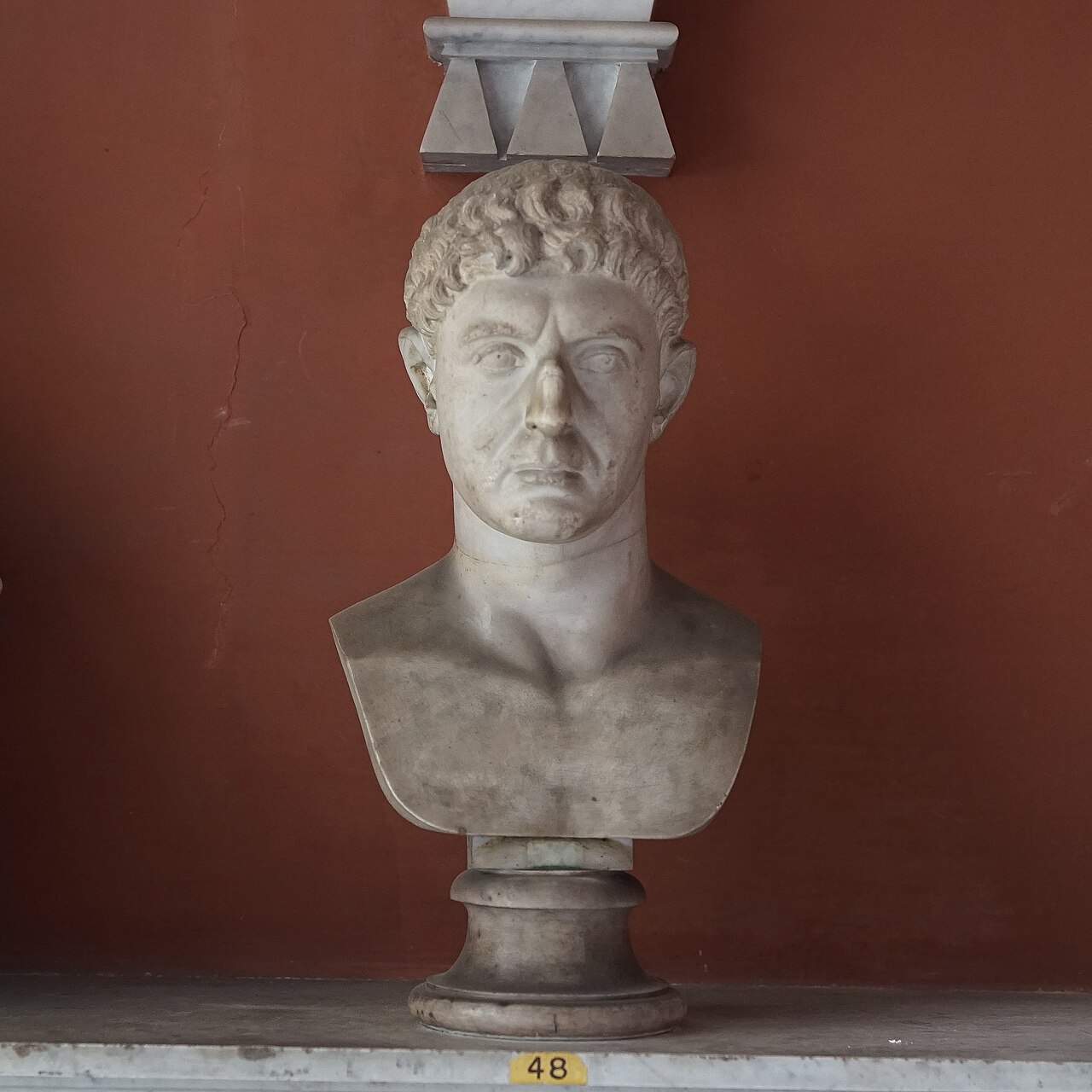
Photo: Fabrizio Garrisi, Wikimedia Commons, licensed CC BY-SA 4.0; reproduced unmodified.
The difficulty was the army, which had liked Domitian, and the Praetorians, who had been his. In 97 their prefect Casperius Aelianus led them into the palace and demanded Domitian’s murderers; Nerva, Dio says, bared his throat and offered it to them, and was ignored, and had to watch the men executed and then thank the guard for it in public (68.3). It was after that humiliation — within weeks, on the evidence of the coins — that he went up to the Capitol and announced, “I hereby adopt Marcus Ulpius Nerva Trajan” (68.3–4): the commander of the Rhine legions, the one man the soldiers would not mutiny against. The invention of the adoptive succession, the thing that gave Rome eighty years of competent emperors, was an old man’s answer to a mutiny. He died in January 98, of a fever brought on, the story goes, by shouting at a senator.
The reverse is one of the stock personifications of the reign, and the one with the best claim to be the reign’s own. FORTVNA P R — Fortuna populi Romani, the Fortune of the Roman People — sits with two ears of grain and a spear laid across her lap: the corn supply and the army, the two things a new emperor had to be seen to hold. Nerva’s coinage is unusually explicit about the corn: PLEBEI VRBANAE FRVMENTO CONSTITVTO on the sestertii records a grain distribution to the city plebs, and the Fortuna here is its companion. The type is RIC II 17, of AD 97, and belongs to the year of the mutiny and the adoption. Beside it the mint struck FORTVNA AVGVST (standing, RIC 16), LIBERTAS PVBLICA (RIC 19), AEQVITAS, and CONCORDIA EXERCITVVM with clasped hands over a standard — the harmony of the armies, which was the claim that the year proved false. The Nerva want card lists them; the card’s rule, that the reverse is not the point and the face is, is what bought this coin.
With this denarius the imperial silver runs unbroken from Nero through the Flavians — Domitian is here as Caesar on a dupondius — to Nerva, Trajan twice, Hadrian twice and Antoninus Pius. Nerva’s denarius is on the Flavian standard, about 3.3 g of good silver, and the laurel-wreathed head with the long neck is the last portrait in that run cut in the Flavian manner, before Trajan’s engravers changed the style.
Ancient: Cassius Dio 68.1–4 (Cary’s Loeb translation on LacusCurtius) and Tacitus, Agricola 3 (Church and Brodribb on Wikisource), both linked above; Pliny’s Panegyricus and Aurelius Victor for the fever, cited from memory of the standard editions and not linked. Numismatic: RIC II (Mattingly and Sydenham, 1926) Nerva 17; the type in the ANS database as ric.2.ner.17_denarius, which the reference block on this page draws on.
THE PORTRAIT IS THE POINT. Nerva's denarii are common and cheap and the reverses are stock personifications; what varies is the engraving of the head. The good dies model the man — the long neck, the great hooked nose, the thin mouth pulled down at the corners — and the poor ones give a generic bald head. The want card that this coin filled said to buy the face, and this is one of the good dies. THE REVERSE. FORTVNA P R, the Fortune of the Roman People, seated with grain ears and a spear, is RIC II 17 of AD 97 (the aureus is RIC 17 too, in the ANS database as ric.2.ner.17_aureus); the commoner FORTVNA AVGVST standing type is RIC 16. The grain ears are the corn supply, the spear the army — the two things a new emperor had to be seen to command. THE DATE. COS III in the legend places the coin in 97 — his third consulship in all (the second had been under Domitian in 90) and his first as emperor — the year of the Praetorian mutiny and Trajan's adoption; COS IIII marks the coins of January 98. THE WEIGHT of this collection's specimen, 3.38 g, is the NGC label's and the house's figure; the coin is sealed.
John's Ancient Coin Collection · Type · nerva-fortuna-pr-denarius
Where the mints are — every mint in the collection on a modern map
Image credits for this coin — photographs, maps and graphics used on this page
