Type · aspendos-gorgoneion-athena-obol
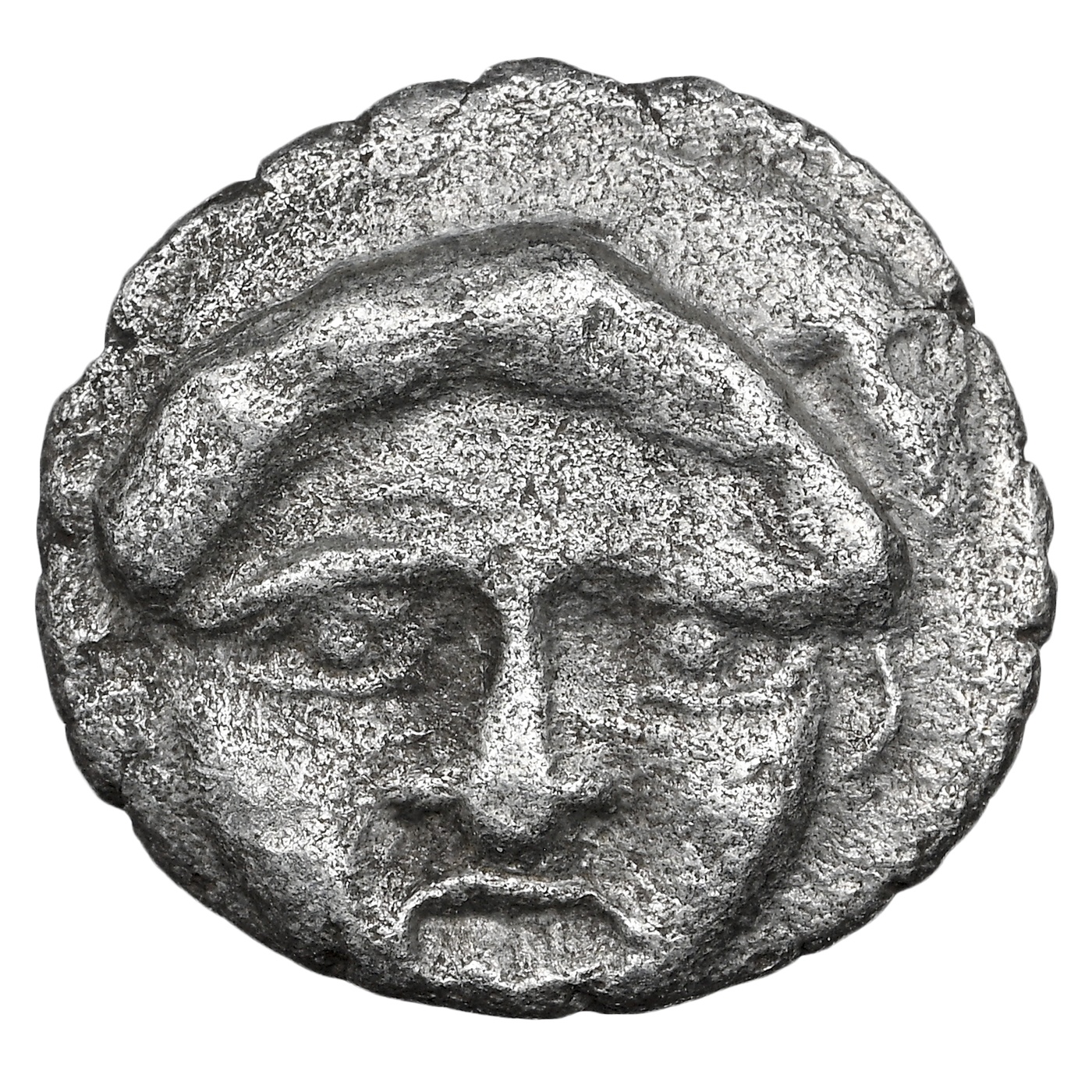
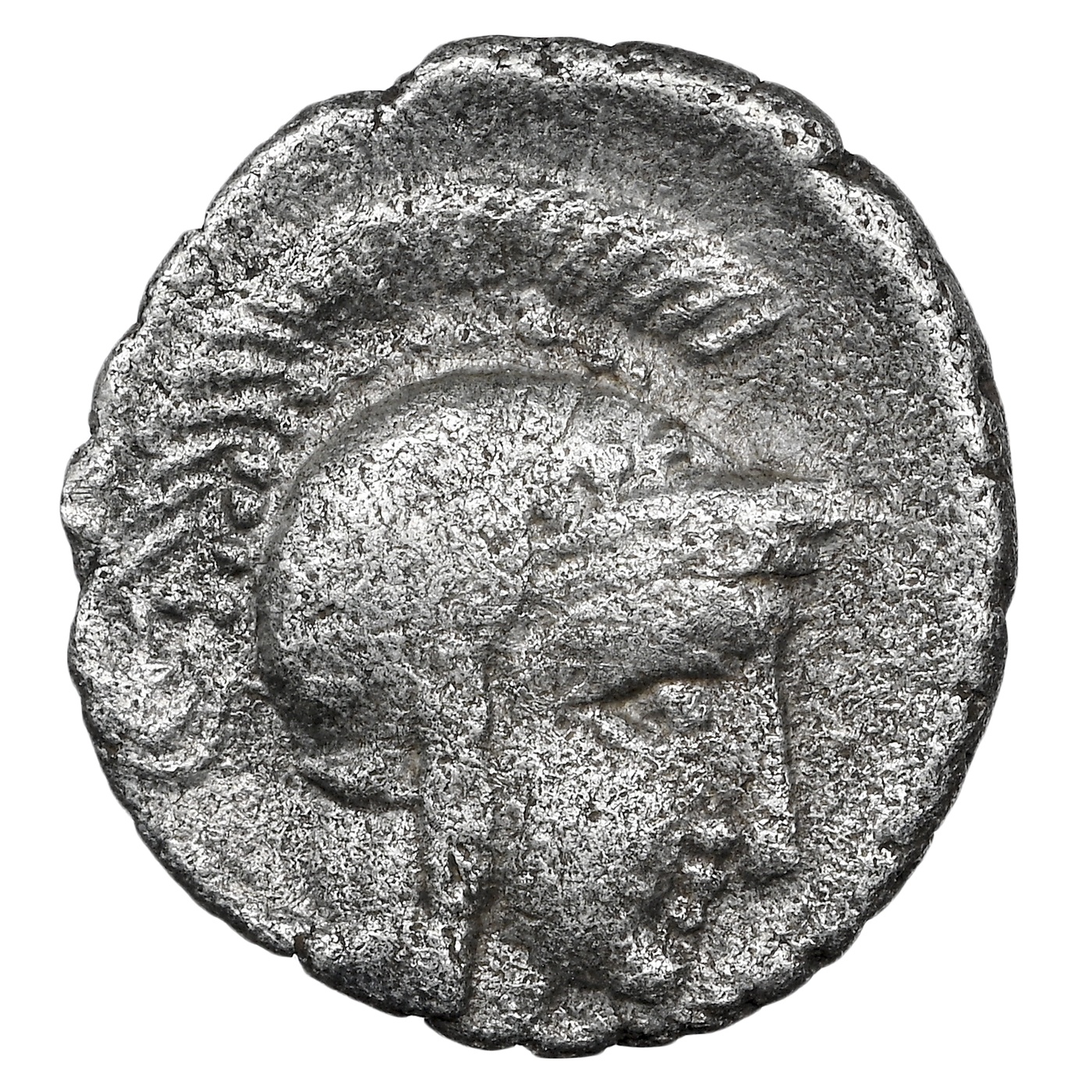
Current: Pamphylia, Aspendos (the house and NGC) — or Pisidia, Selge, to which the type is now generally given. AR obol, c. 4th century BC (the Selge series is usually placed c. 350–300 BC). Facing gorgoneion with protruding tongue / head of Athena right in a crested Attic helmet. SNG France 3 (Pamphylie), 38 (Aspendos); SNG Delepierre 2831 (Selge).
Obverse: Facing gorgoneion — the Gorgon's head seen from the front, the tongue protruding between the teeth, the hair in a fringe of snakes or curls
Reverse: Head of Athena right, wearing a crested Attic helmet; on many dies of the series an astragalos (knucklebone) behind the head, not visible on this collection's specimen
Primary reference: SNG France 3 (Pamphylie), 38
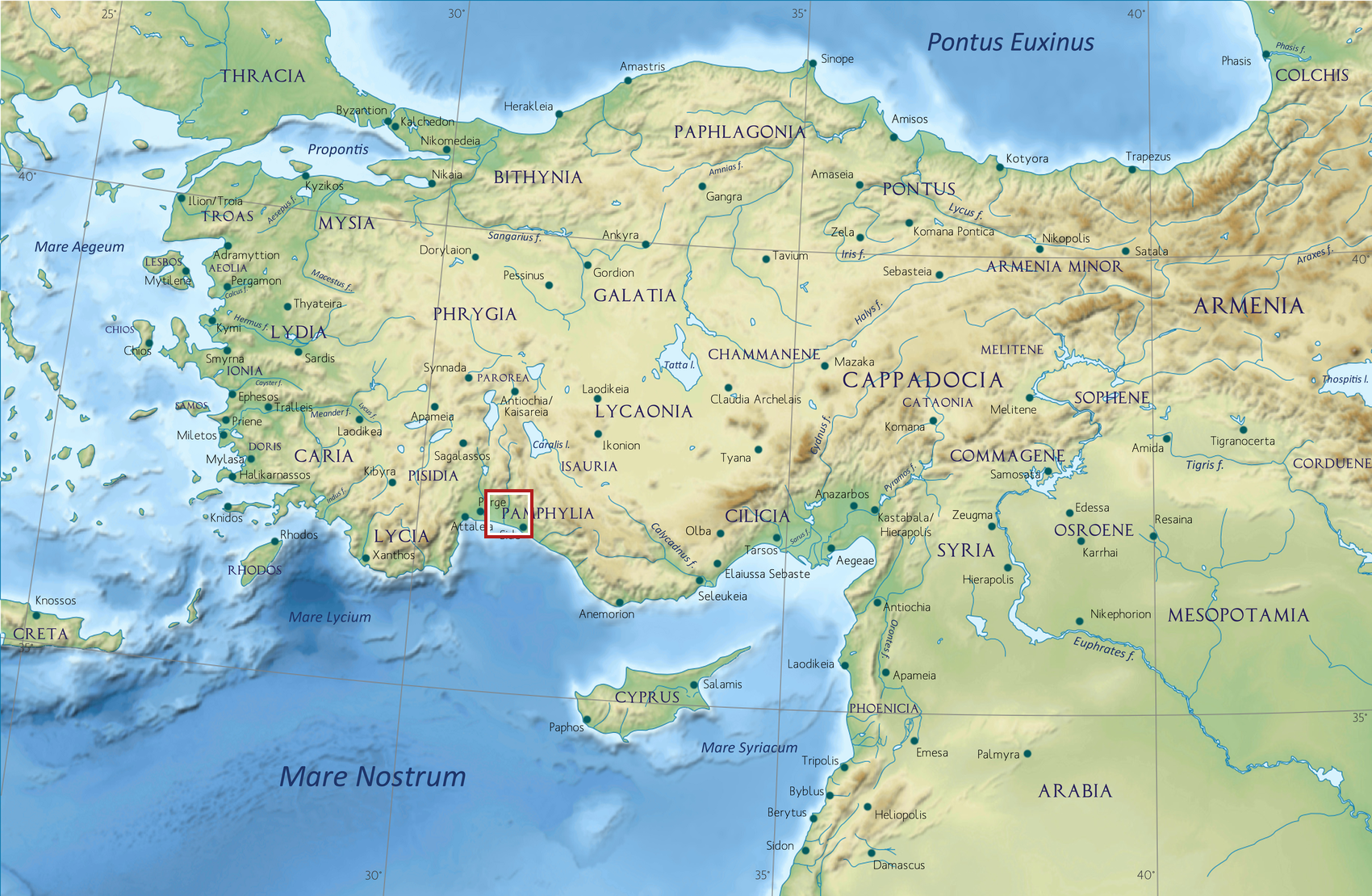
Asia Minor in the Greco-Roman period; Aspendos is indicated by the red square, in Pamphylia, the coastal plain on the south coast of Anatolia, set back from the sea on the river Eurymedon. Selge, the other candidate for this obol’s mint, lies upstream in the Pisidian mountains to the north, where the Eurymedon rises; it is not labelled on this base map. The same square marks the mint of the collection’s Aspendos warrior / triskeles stater.
The same marked copy of the base map used for the collection’s Aspendos stater (see that page for the plate’s source and licence); the red square marks Aspendos on the Eurymedon between Perge and Side. Reproduced from that copy unmodified.
The smallest silver of Pamphylia, and a coin with two cities claiming it. The face is a gorgoneion — the Gorgon’s head as the Greeks drew it on shields and temple roofs, staring straight out with its tongue stuck out between its teeth, the mask that turned the looker to stone — and on the other side is Athena, who wore that head on her aegis, in a crested Attic helmet. The holder says Aspendos; the numismatists mostly say Selge; the two cities were a river apart and struck coins so alike that the argument may never be settled. It is ten millimetres across, and it is the fraction beside the collection’s Aspendos stater, whichever city cut it.
Graphic: JSB Coins, 2026 (CC0).
Aspendos sits on a flat-topped hill above the Eurymedon, a few miles from the sea, in the plain the Greeks called Pamphylia — “the land of all tribes”, settled by Greeks after the Trojan War in the local telling, and speaking into the Hellenistic period a Greek dialect all its own. Its coinage was the largest in the region: the archaic and classical staters with the hoplite and the triskeles that this collection holds, and in the fourth century the famous wrestlers-and-slinger staters. Selge was different. Strabo puts the Pisidians “above Side and Aspendus” in the hills (12.7.1), and Selge above all of them: a Lacedaemonian foundation, he says, and before that Calchas’s, a city that once held twenty thousand men, with olives and vineyards and the finest styrax, at the head of the valleys where the Eurymedon and the Kestros rise (12.7.3). It was a mountain city that struck coins like a coastal one — its fourth-century staters copy the Aspendos wrestlers and slinger so exactly that the same engravers have been proposed — and its small silver, the gorgoneion and Athena obols, shares its types with Aspendos too. That is the whole problem. The older catalogues gave these obols to Aspendos; the newer ones give them to Selge, on the strength of the astragalos control mark that many carry, which is Selge’s badge. This coin shows no astragalos that I can find, and its holder says Aspendos, and the essay says Selge is likelier; the card leaves it there.
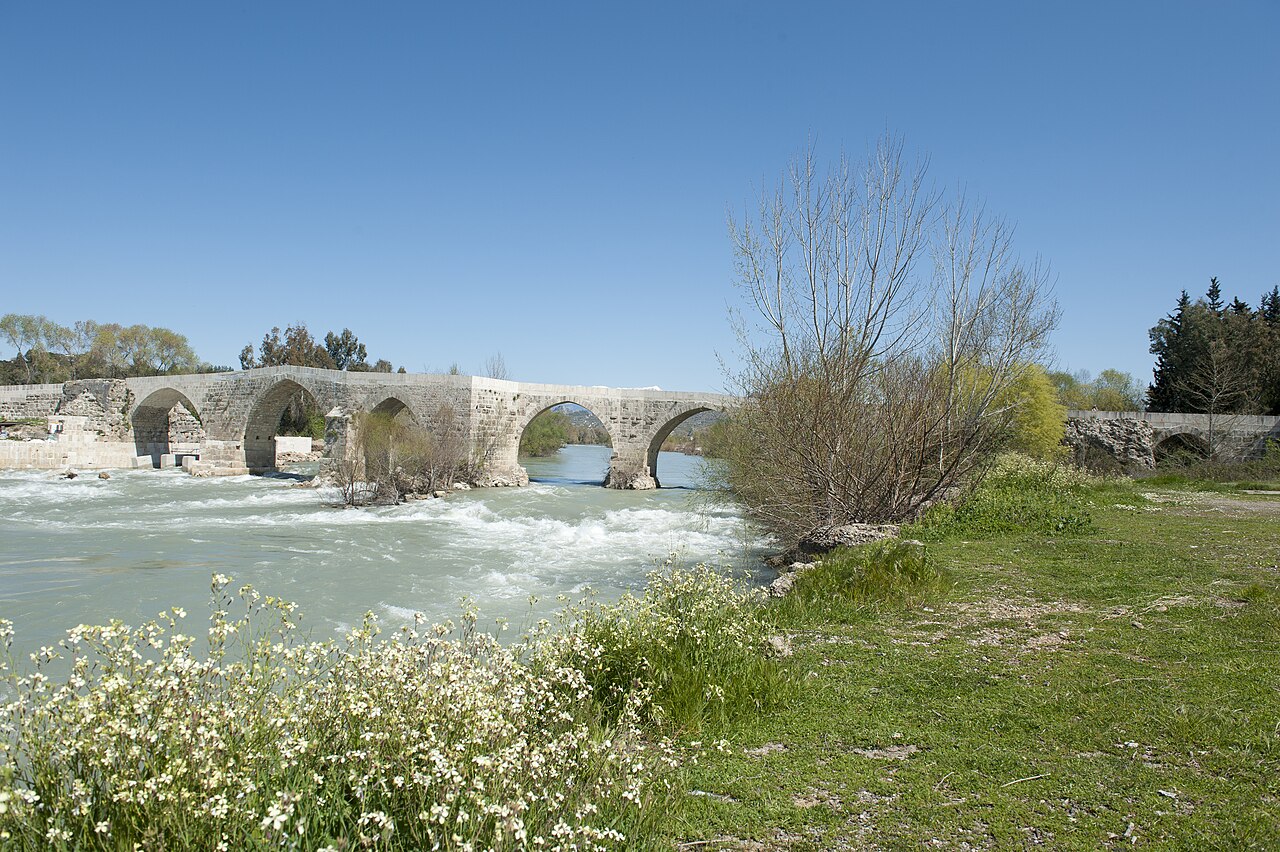
Photo: Dosseman, Wikimedia Commons, licensed CC BY-SA 4.0; reproduced unmodified.
The fourth century is the coin’s century, and its one dated event for both cities is Alexander. Arrian has him come down into Pamphylia in the winter of 334/3 BC: Aspendos sent envoys offering surrender if it were spared a garrison, agreed to pay fifty talents and the horses it bred for the Persian king, then refused when he had gone; he came back, camped under the hill, and doubled the terms (Anab. 1.26–27). Selge, the Pisidian city up the river, sent him envoys of its own and was made his friend (1.28). Whether the obols of this type belong before or after that winter the coins do not say.
The gorgoneion is the oldest apotropaic image in Greek art, and on a coin it does what it does on a shield: it guards. Athena is its owner — she wears the Gorgon’s head on her aegis — so the two faces of the obol are one device seen twice, the mask and the goddess who carries it. The pairing is common on small silver across southern Asia Minor in the fourth century, at Selge, Aspendos and Side, and the crested Attic helmet on this Athena is the Athenian type the whole Greek world borrowed. Compare the earlier Corinthian Athena in her Corinthian helmet, and the Athena of the owls, whose crested helmet is this one’s model.
Ancient: Strabo 12.7.1–3 (Jones’s Loeb translation on LacusCurtius) and Arrian, Anabasis 1.26–28 (Chinnock on Wikisource), linked above. Numismatic: the house’s references, SNG France 3 (Pamphylie) 38 and SNG Delepierre 2831; the Selge attribution as the trade now cites it (SNG France 3, Pisidie 1928–1934) — the plates not consulted; the CoinWeek survey of Pamphylian coinage linked above for the relation of the two cities’ coinages.
THE MINT IS CONTESTED, AND THE CARD SAYS SO IN ITS TITLE. The house catalogued this obol as Aspendos, citing SNG France 3 (Pamphylie) 38, and NGC's label reads PAMPHYLIA, ASPENDUS; but the same lot line adds SNG Delepierre 2831 (Selge), and the gorgoneion / Athena obols are today generally given to Selge in Pisidia, the city upstream on the Eurymedon whose fourth-century coinage copied Aspendos so closely that the same engravers have been suggested for both. The older SNG France numbers under Aspendos and the newer ones under Selge (1928–1934, as the trade cites them) describe the same type. I keep the house's attribution in the facets — Aspendos, Pamphylia — because that is what the holder says and what the collection's Aspendos stater sits beside, and I present Selge as the likelier answer in the essay. Nothing on the coin itself decides it; the astragalos behind Athena's head that many Selge dies carry is not visible on this specimen. THE DATE is the house's 'c. 4th century'; the Selge obols are placed c. 350–300 BC in the trade. NO WEIGHT: none on the label, none from the house; the coin is sealed. Persic-standard obols of this class weigh about a gram (cited from the trade's listings, not from a corpus).
John's Ancient Coin Collection · Type · aspendos-gorgoneion-athena-obol
Where the mints are — every mint in the collection on a modern map
Image credits for this coin — photographs, maps and graphics used on this page