Type · philip-ii-apollo-horseman-ae18
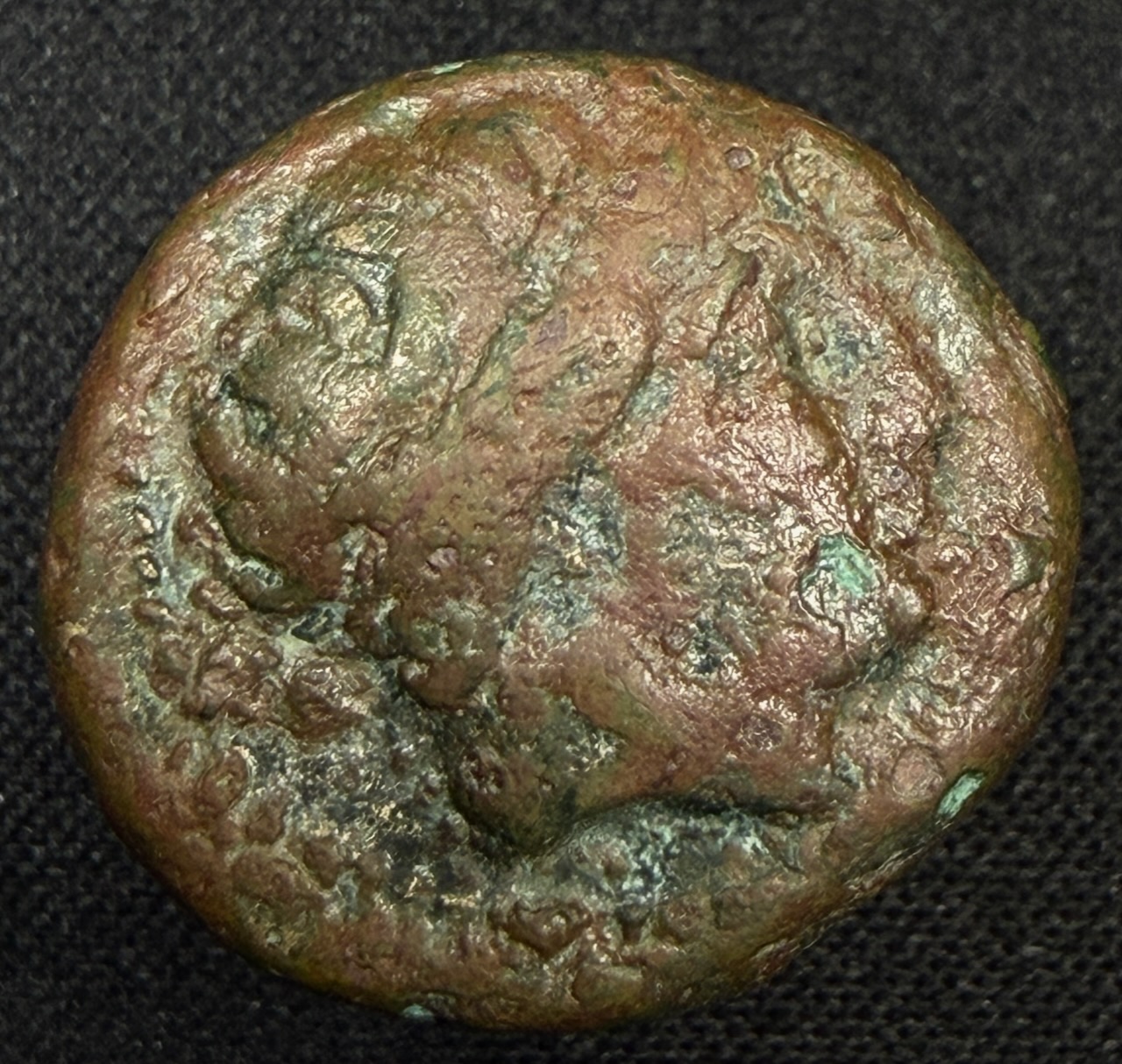
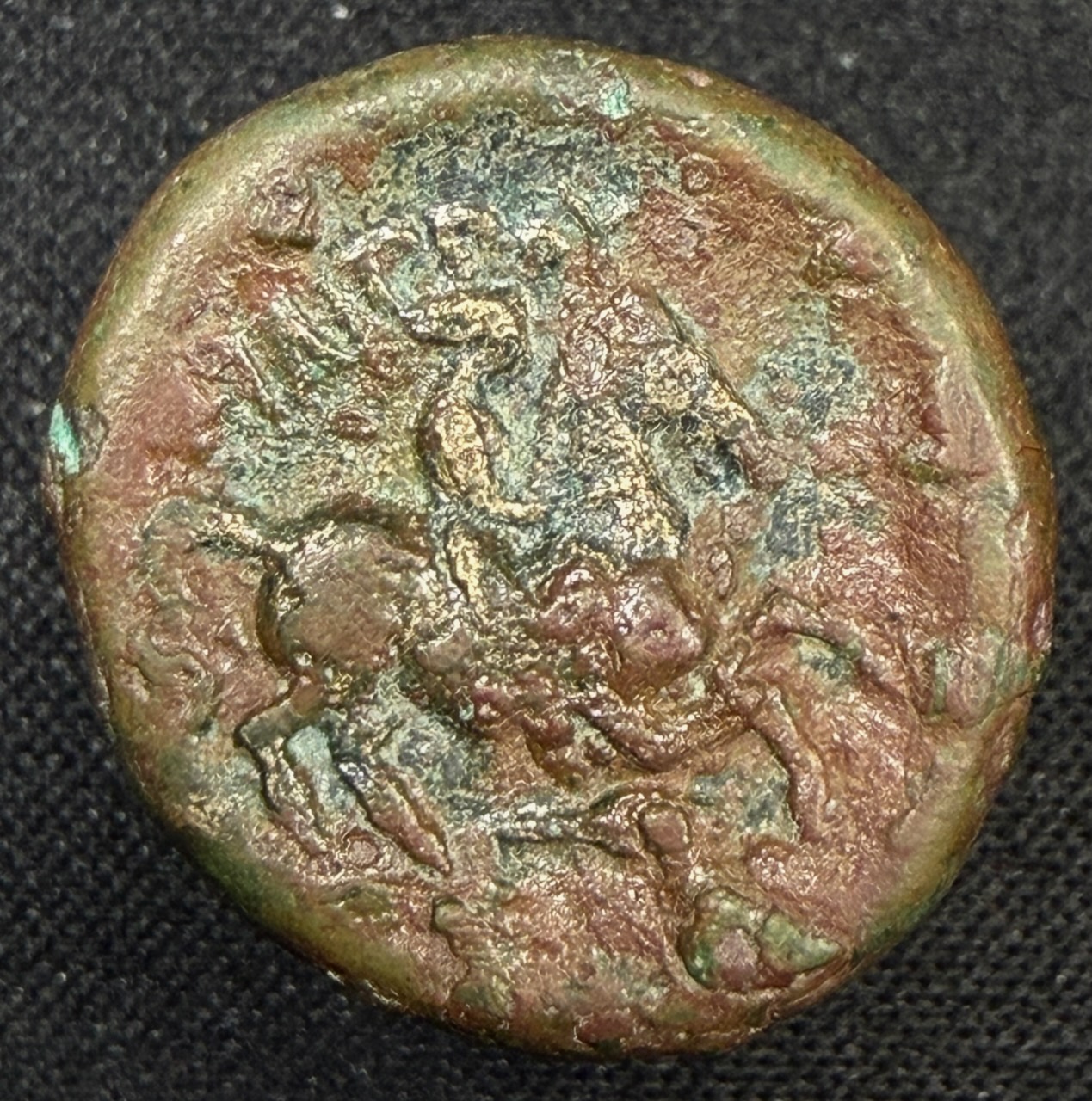
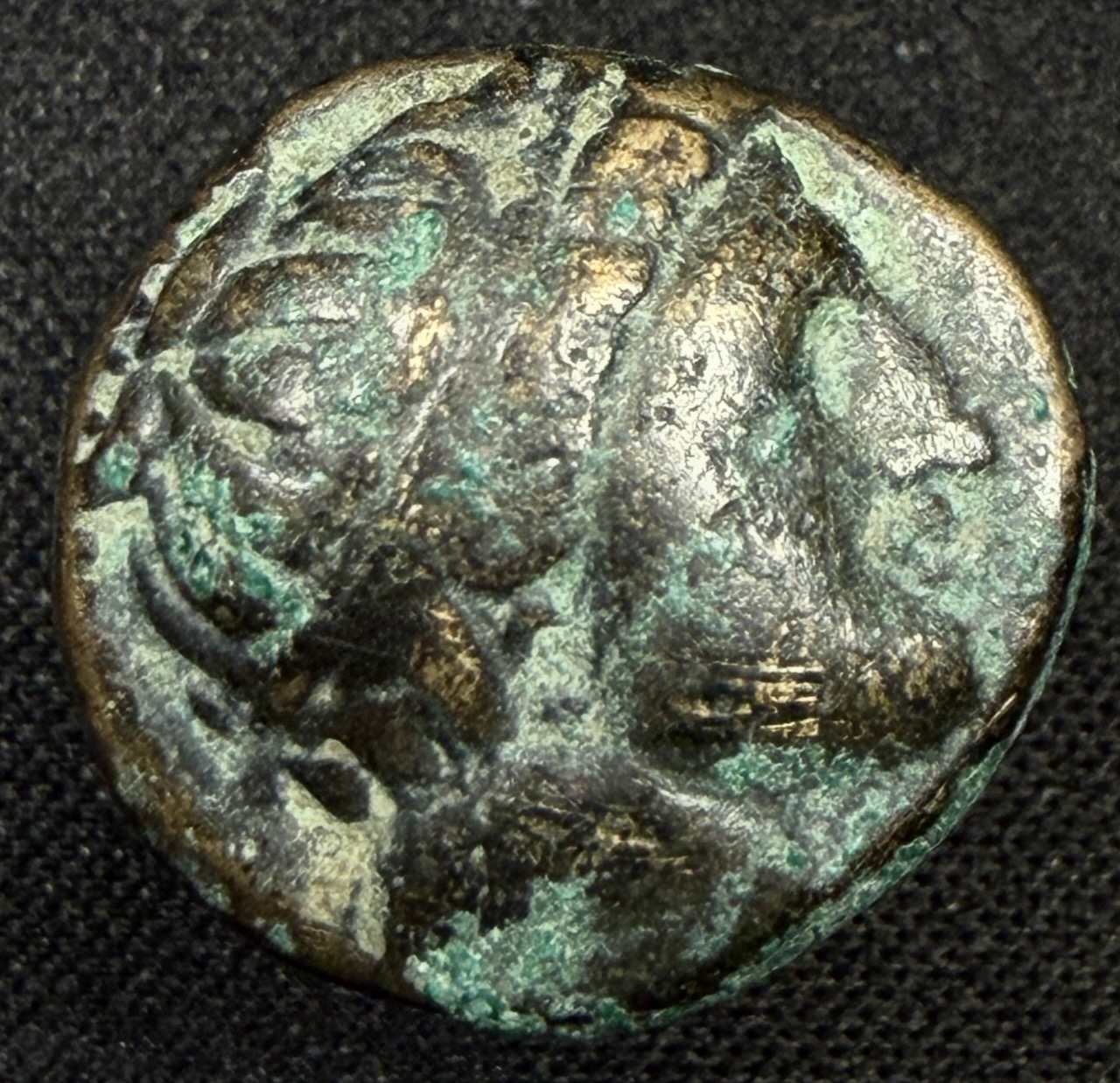
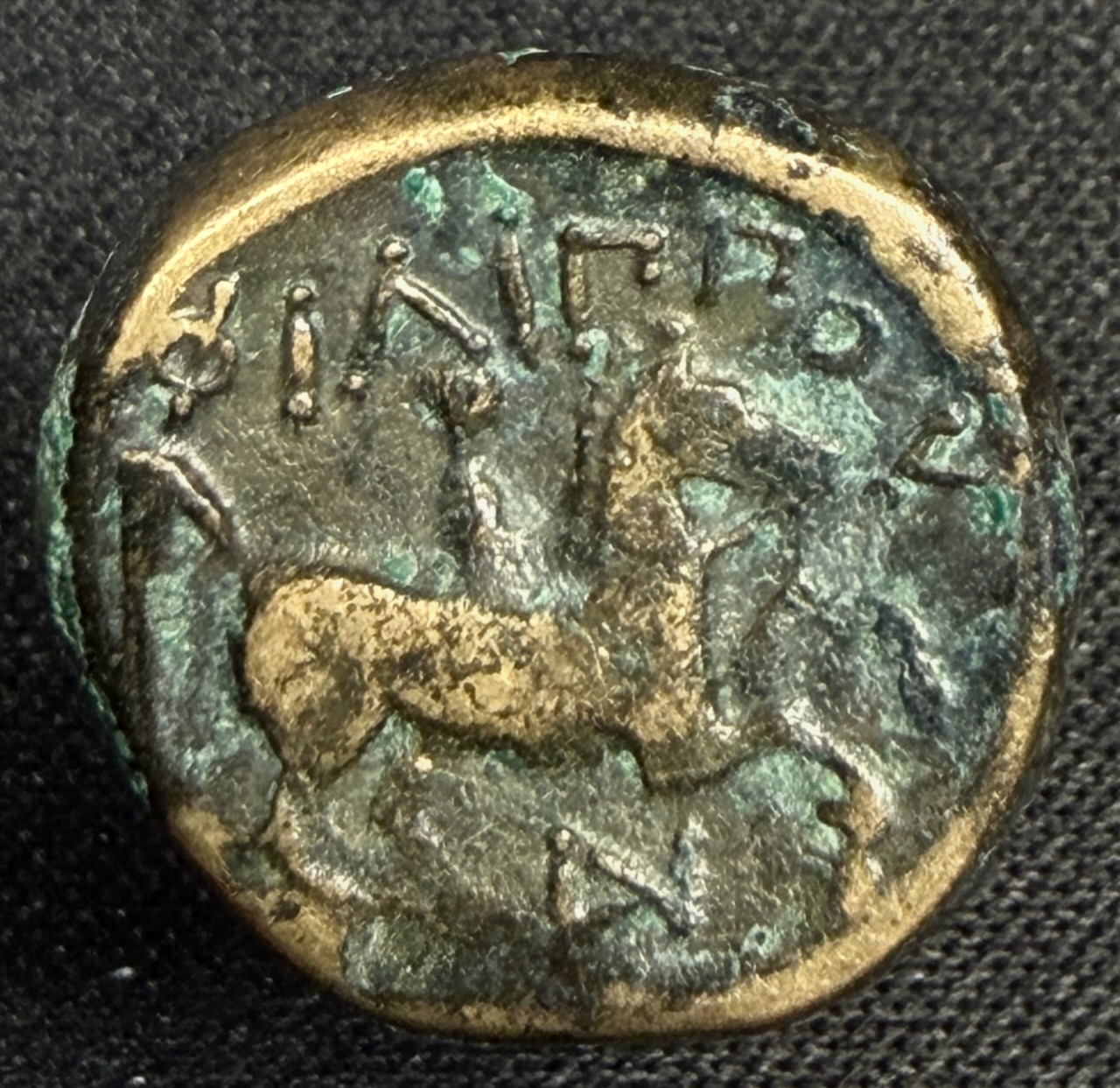
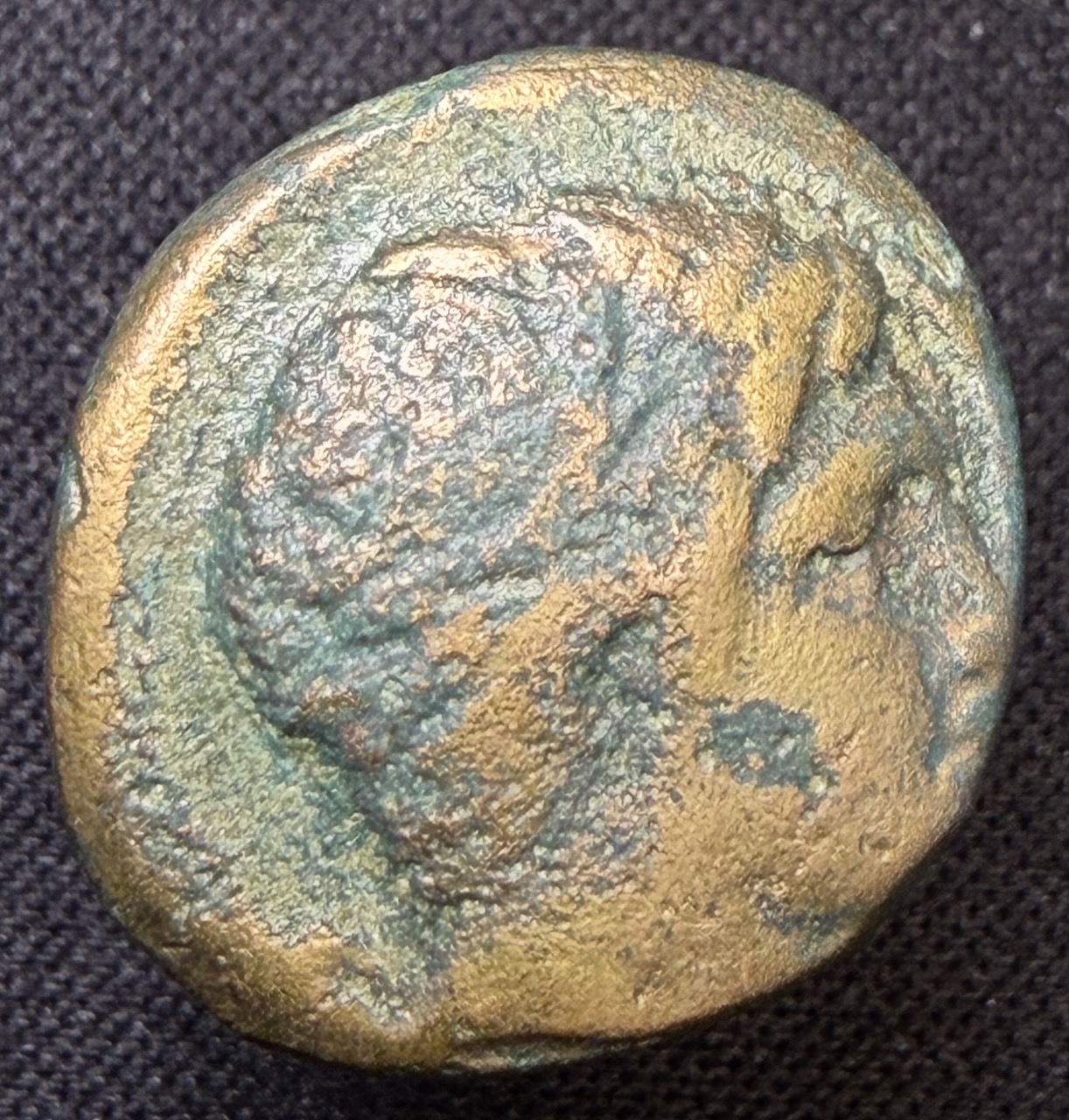
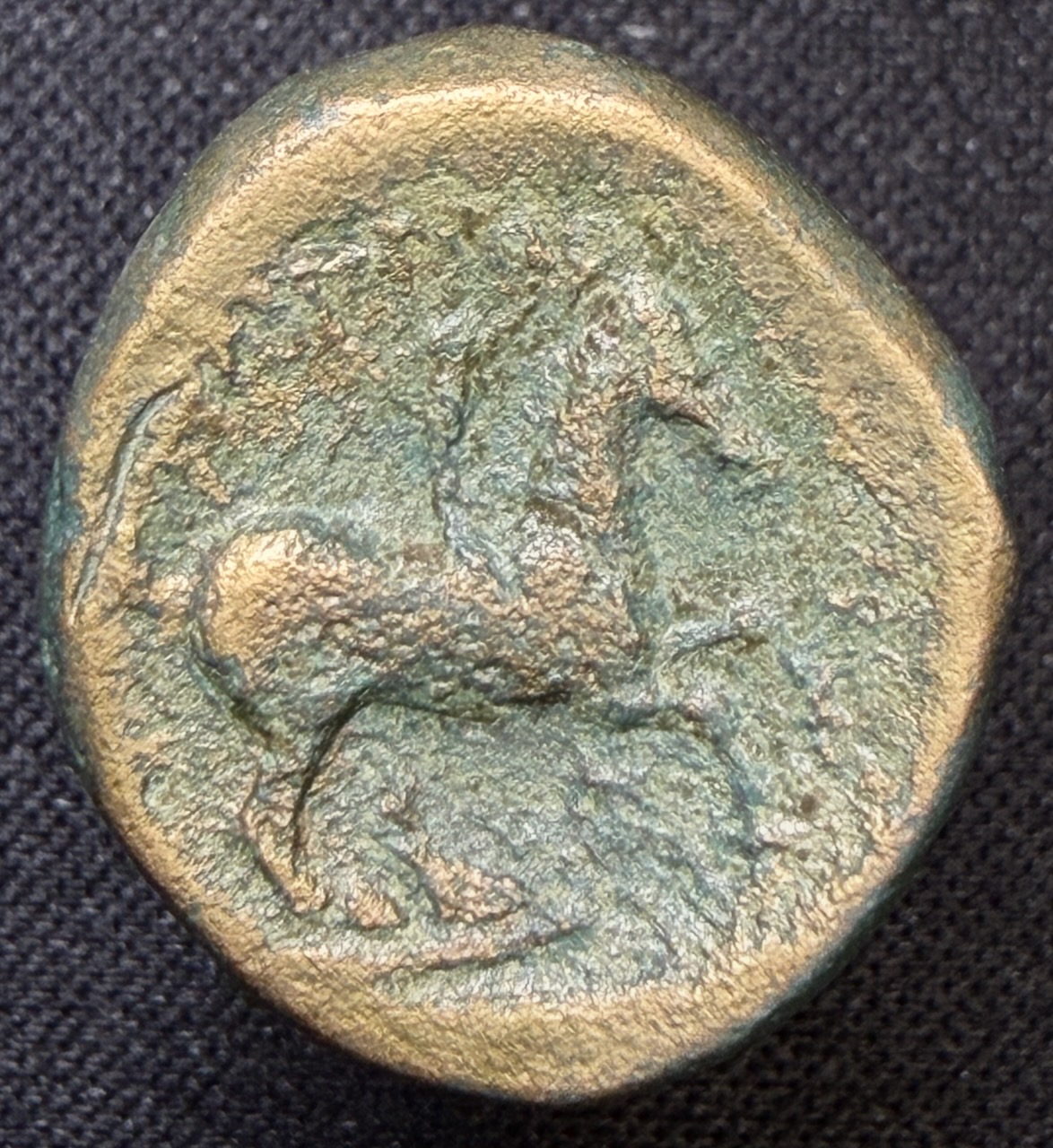
Current: Kingdom of Macedon, Philip II, AE unit (AE 18), uncertain Macedonian mint, 359–336 BC and posthumous. Head of Apollo right, wearing taenia / youth on horseback right (Sear 6698)
Obverse: Head of young Apollo right, hair bound with taenia
Reverse: Youth on horseback riding right; control symbol below on most dies (varies by issue: spearhead, monogram ligatures, and others)
Primary reference: Sear 6698
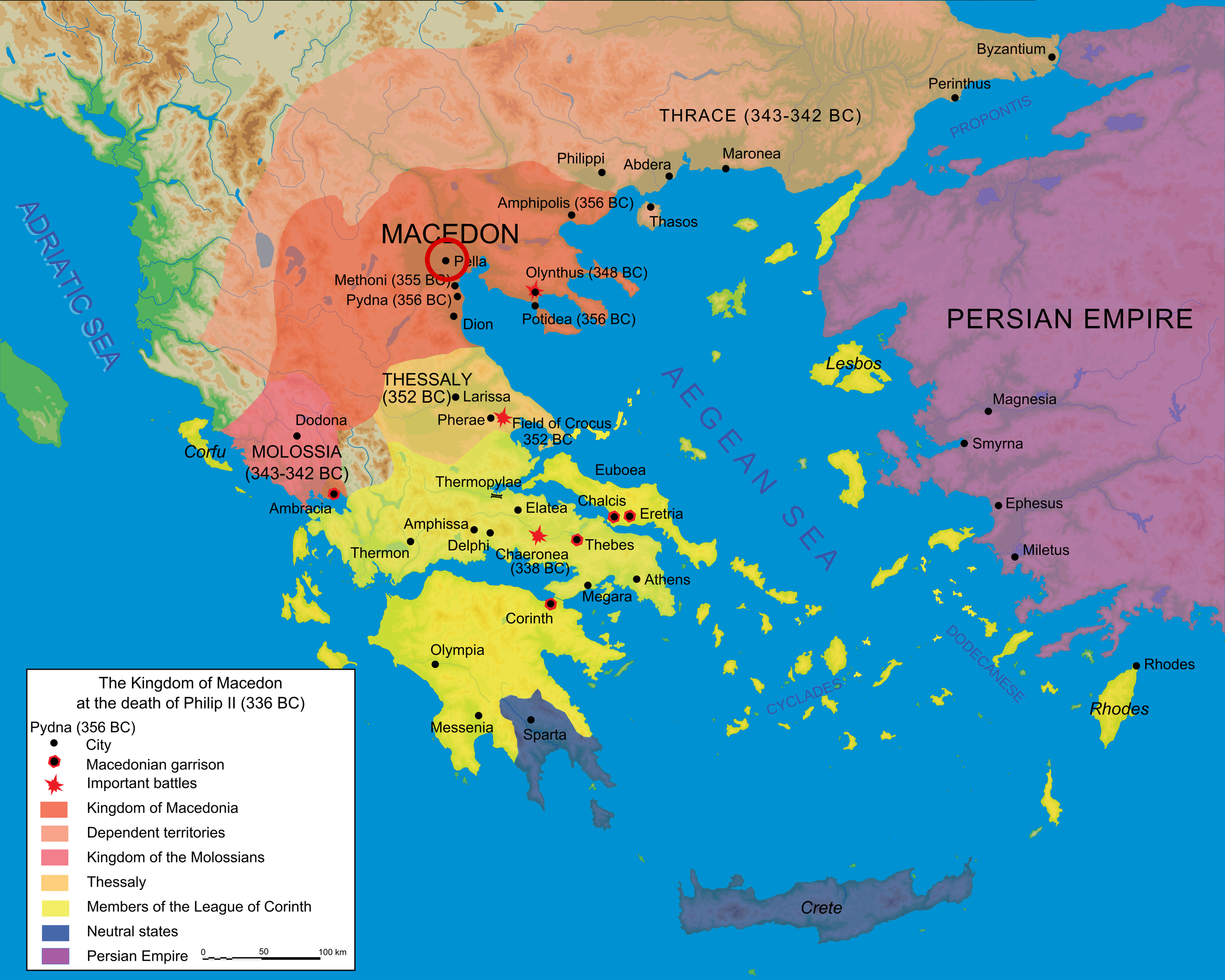
The kingdom of Macedon at the death of Philip II in 336 BC — the map is a portrait of exactly what this coin’s issuer built. Pella, the royal capital and this coin’s best-guess mint, is circled in red. The red zone is Macedon proper with its dependent territories shading outward (Thrace, Thessaly, Molossia dated by their year of subjection); the yellow states are the League of Corinth, Philip’s Greek settlement after Chaeronea (338 BC, battle-starred on the map).
“Map of the Kingdom of Macedon at the death of Philip II in 336 BC” by Marsyas (French original), Kordas (Spanish translation), and MinisterForBadTimes (English derivative), Wikimedia Commons, File:Map Macedonia 336 BC-en.svg, licensed CC BY-SA 3.0 (https://commons.wikimedia.org/wiki/File:Map_Macedonia_336_BC-en.svg; license: https://creativecommons.org/licenses/by-sa/3.0/); map data from R. Ginouvès et al., La Macédoine (Paris, 1992). Modified by JSB Coins: rendered to PNG at 2560 px, and a red circle added to mark Pella. This derivative is shared under the same CC BY-SA 3.0 license.
Philip II took a broken, half-barbarous kingdom on the Greek world’s northern edge and in twenty-three years (359–336 BC) made it the master of Greece. His money was part of the machine: gold philippeioi to buy politicians (“no fortress is impregnable,” he is supposed to have said, “if a mule loaded with gold can reach it”), fine silver tetradrachms for the army’s wages — and, in a real innovation for a Greek state, bronze small change struck on a royal scale, coins like this one, minted by the million so that soldiers, market-women, and garrison towns could make change without cutting up silver. Macedon under Philip was among the first kingdoms to put everyday transactions on royal token bronze, and the habit spread with his son’s empire — see this collection’s Herakles / club-and-bow unit of Alexander III, the direct continuation of this coinage system under the next reign.
Graphic: JSB Coins (CC0).
Both faces advertise the king’s proudest claims. The head of Apollo with his ribbon-band is no generic god: Philip had entered the Third Sacred War as Apollo’s avenger against the Phokians who had plundered Delphi — his soldiers wore laurel at the Battle of the Crocus Field in Thessaly, the victory that also made him master of Thessalian cities like Pharsalos — and he ended it in 346 BC holding Phokis’s two seats on the Amphiktyonic council. The god of Delphi on Macedonian money announces exactly that pious victory; the other side of the same war is in this collection as the Phokian triobol struck from Delphi’s melted treasure. The youth on horseback echoes the horse-race victory Philip won at the Olympic games of 356 BC (the year Alexander was born) and the cavalry that made the Macedonian army unbeatable — the ΦΙΛΙΠΠΟΥ legend around him puts the king’s name, not a city’s, on the coin.
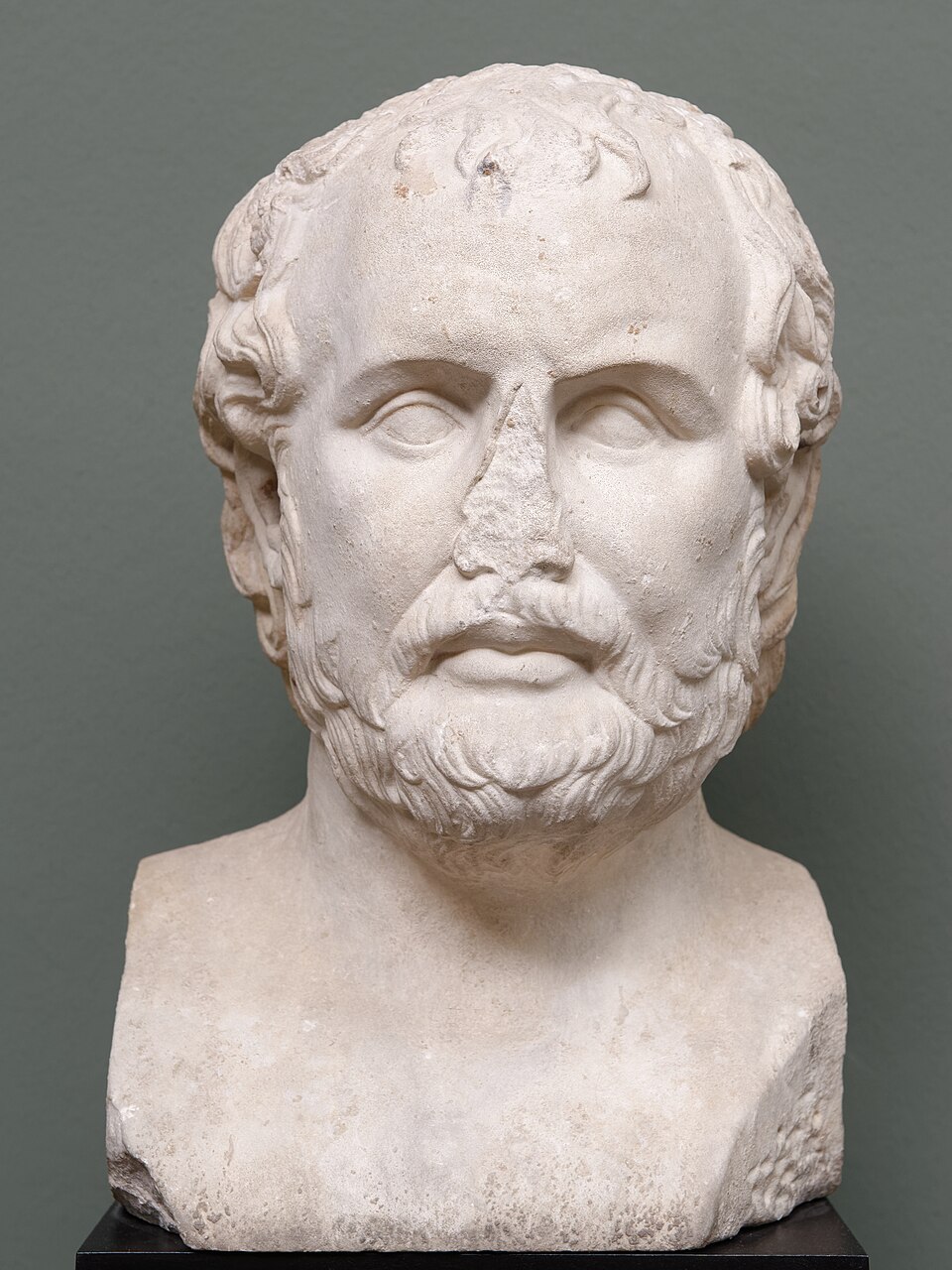
Photo: Jastrow, Wikimedia Commons, licensed CC BY 4.0, reproduced unmodified.
Chaeronea in 338 BC finished what the Sacred War began: the shield-bearing league of Thebes, Athens, and their allies broke against the Macedonian phalanx, the Theban Sacred Band died in its ranks under the young Alexander’s charge, and Philip organized the defeated into the League of Corinth with himself as hegemon — Greek federalism repurposed as an instrument of Macedonian rule. He had two years to enjoy it: at his daughter’s wedding at Aigai in 336 BC a bodyguard’s knife found him, and the kingdom passed to his son. The royal tombs excavated at Aigai (modern Vergina) from 1977 — unlooted, gold-furnished, one of them holding cremated male bones with a wounded eye socket that many (not all) scholars accept as Philip’s own — are the material counterpart of this coinage: the same court, in gold and ivory instead of bronze.
The bronzes did not stop with the assassin’s dagger in 336 BC: mints kept striking Philip-type bronze well into the reign of Alexander the Great and beyond, which is why catalogues date the series broadly and why mint attributions stay loose. The greatest silver mint of his son’s empire was likewise Philip’s own conquest: Amphipolis, taken in 357 BC — see the collection’s Amphipolis Alexander tetradrachm. A worn Apollo/horseman unit like this one is the commonest physical survivor of Philip’s Macedonia — the pocket change of the army that conquered Greece. The end of the kingdom Philip built is also in this collection: the First Meris tetradrachm, struck at Amphipolis after Rome abolished the monarchy in 167 BC. The pattern Philip set for royal small change outlasted his house in another direction too: the Athena and lion bronze of Lysimachos keeps the same head-of-a-deity obverse over a single animal reverse, struck by one of the generals who divided Alexander’s empire.
Attribution follows the Zauche tag’s S-6698 = David R. Sear, Greek Coins and Their Values, no. 6698 (Philip II AE, Apollo / youth on horseback). The bronze coinage’s scale, multiple mints, and posthumous continuation are treated in the standard handbooks of Macedonian coinage (Le Rider’s corpus of Philip’s coinage; Mørkholm, Early Hellenistic Coinage). For the Sacred War context, Chaeronea, and the assassination: Diodorus Book 16 and Plutarch, Alexander 3–10 (both linked in the references); the Methone eye-wound: Diodorus 16.34. The Vergina excavations and the debate over the occupant of Tomb II: M. Andronikos, Vergina: The Royal Tombs (1984), with the continuing bioarchaeological literature on both sides.
MINT IS A BEST GUESS (Pella): these bronzes name no mint, the mints and control-symbol sequences are not securely assigned, and more than one Macedonian mint struck them. Pella, the royal capital, is the conventional first candidate; Amphipolis is the other main contender. Philip II's fractional bronze — struck in enormous quantity at more than one Macedonian mint (the mints and the control-symbol sequences are not securely assigned; many issues continued posthumously under Alexander and the early successors). The collection now holds three specimens spanning different control-symbol issues: 001 (symbol illegible under the patina), 002 (spearhead right — SNG Alpha Bank 454; SNG ANS 850; SNG Cop 602), and 003 (AN/AI/AV ligature — SNG ANS 896; SNG Alpha Bank 396; SNG Cop 589). The tag reference S-6698 on specimen 001 is Sear's listing of the type.
John's Ancient Coin Collection · Type · philip-ii-apollo-horseman-ae18
Image credits for this coin — photographs, maps and graphics used on this page