Type · phokis-federal-bull-apollo-triobol
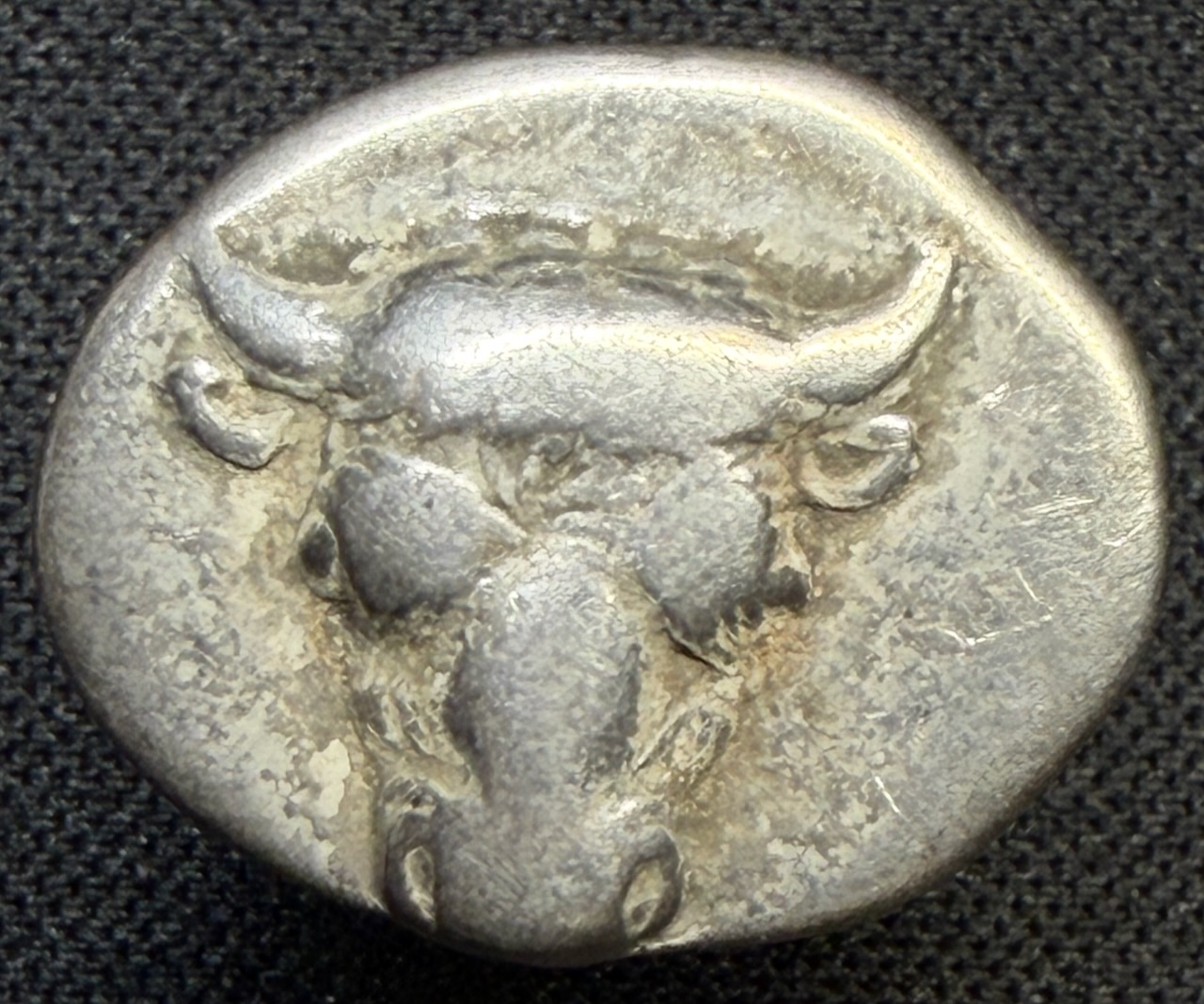
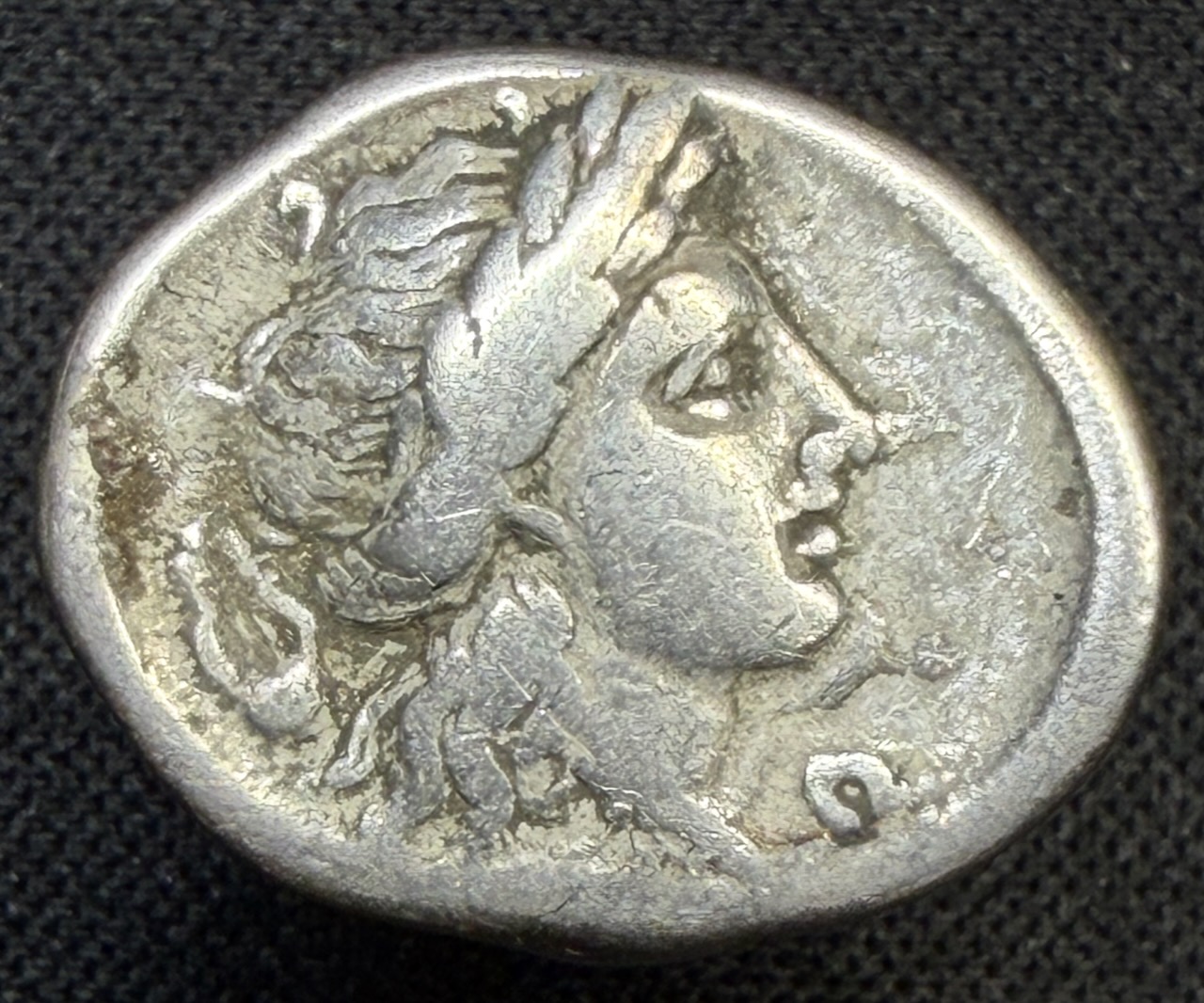
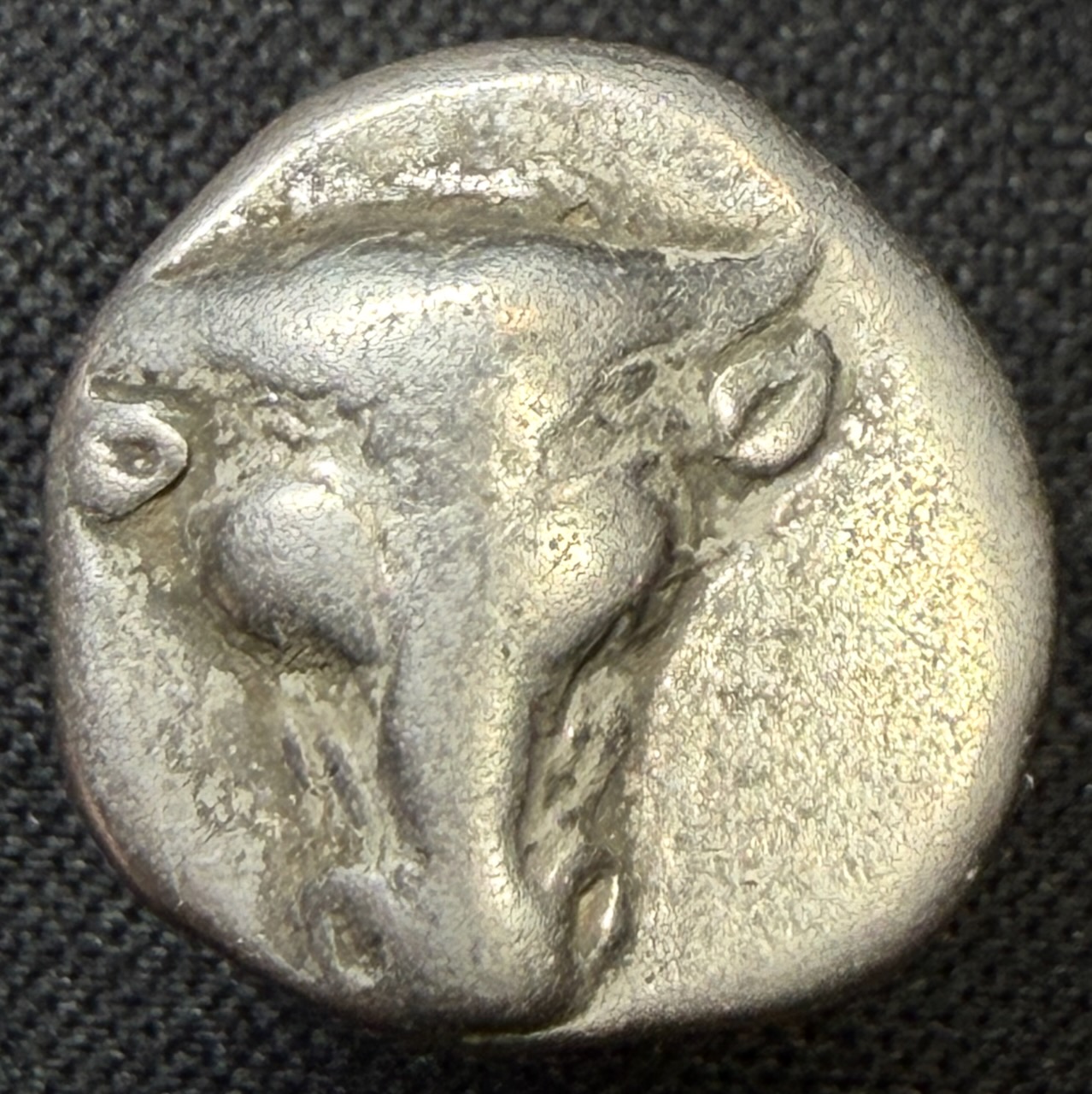
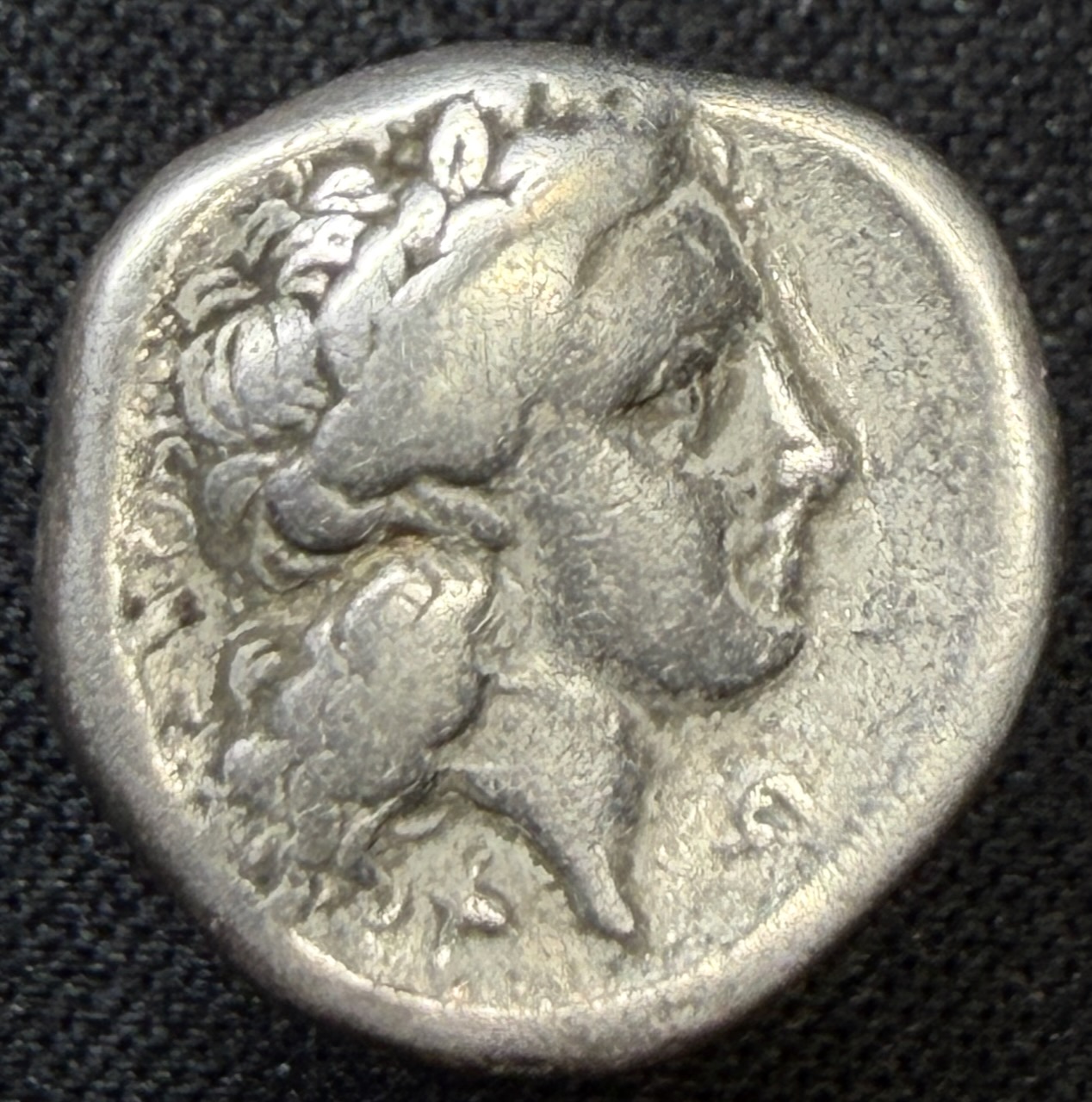
Current: Phokis, Federal Coinage (Third Sacred War), AR triobol (hemidrachm), c. 356–346 BC. Facing bull's head / laureate head of Apollo right, chelys behind (HGC 4, 1048; cf. Williams 293)
Obverse: Head of bull facing, wearing fillets
Reverse: Laureate head of Apollo right; chelys (tortoise-shell lyre) behind; letter traces in field (Φ-Ω on well-preserved examples)
Primary reference: HGC 4, 1048
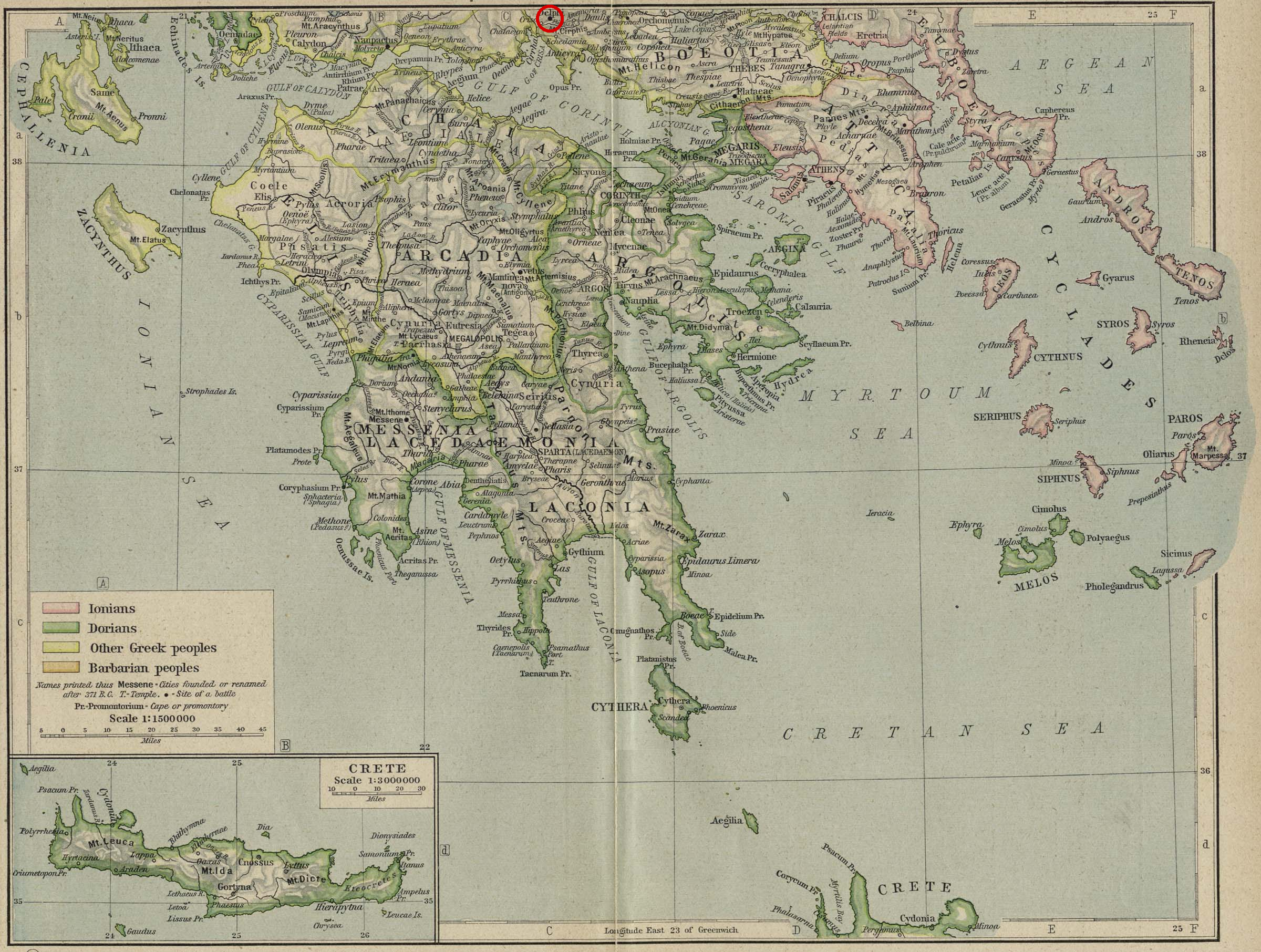
Central and southern Greece, with Delphi circled in red at the top of the sheet — the sanctuary the Phokians seized in 356 BC, and the most likely mint of the war coinage. Phokis is the small district around it, wedged between the Gulf of Corinth and the mountains; Boiotia and its hostile leader Thebes lie immediately to the east.
“Reference Map of Ancient Greece, Southern Part” by William R. Shepherd, Historical Atlas (Henry Holt & Co., 1923 and later printings), public domain; via Wikimedia Commons, File:Ancient greece so 1926.jpg (scan via the Perry-Castañeda Library, University of Texas). Red circle added to mark Delphi.
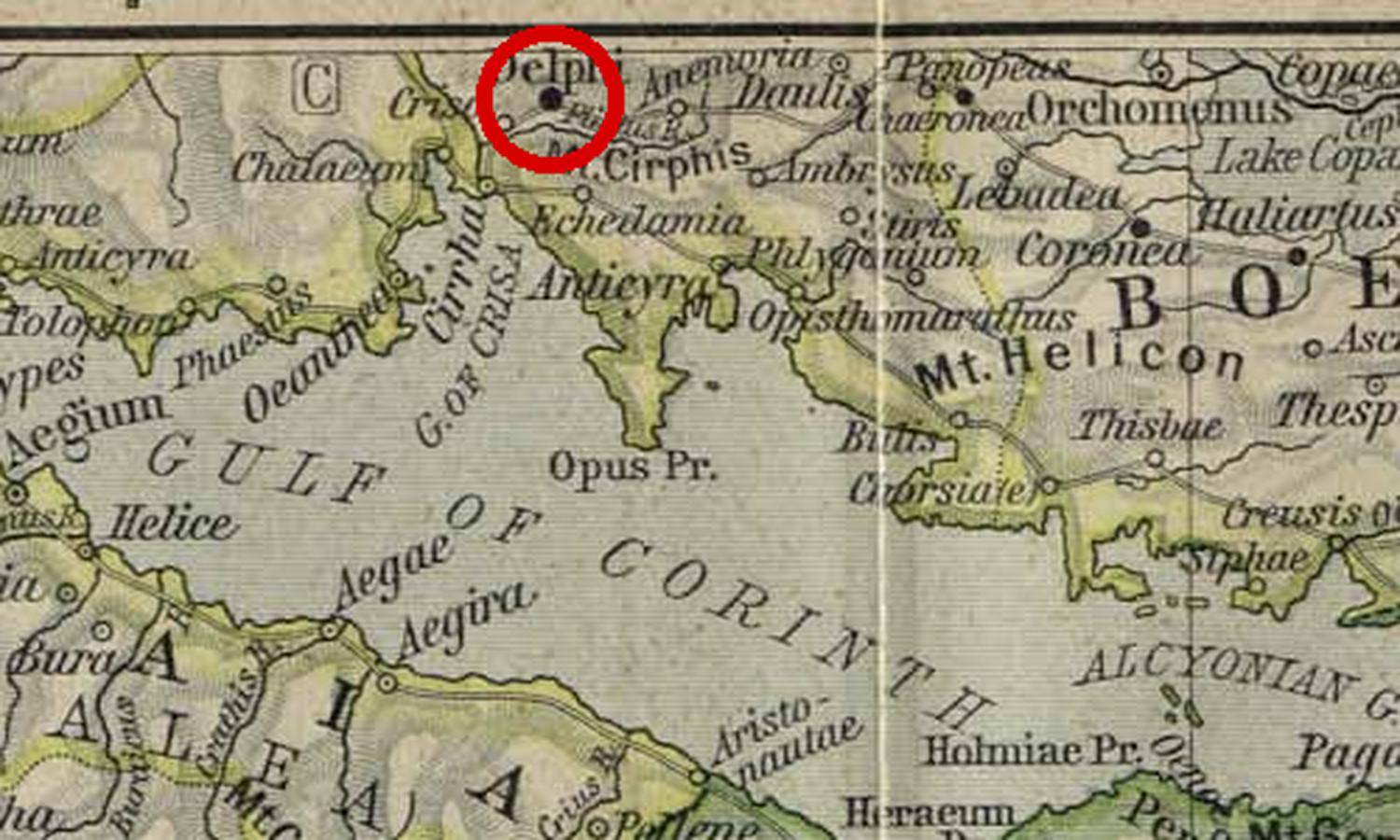
Detail: Delphi, circled, on its shelf under the cliffs above the Gulf of Crisa, with the Phokian towns — Crisa, Daulis, Ambrysus — around it. The sanctuary’s port at Cirrha and the sacred plain below were what the original Sacred Wars were fought over.
In 356 BC the Phokians — a small federation of hill towns squeezed between more powerful neighbors — did something audacious: under their general Philomelos they seized the sanctuary of Delphi, which lay inside Phokian territory but belonged to all of Greece. Condemned by the Amphiktyonic council at the urging of Thebes and its allies, they answered the declaration of a Sacred War in the most practical way available: they melted down the accumulated gold and silver dedications of Apollo’s temple and struck coinage with which to hire mercenaries — some ten thousand of them at the war’s height. This little triobol is a piece of that sacrilege, transformed. Diodorus (Book 16) records the successive Phokian commanders — Philomelos, Onomarchos, Phayllos, Phalaikos — working through the sacred treasures as the war ground on, and his inventory of what they melted (16.56) reaches back through three centuries of piety: among the dedications that went into the crucibles were, he says, those of Kroisos of Lydia — the golden bricks and bowls whose donation Herodotus describes, given by the king whose own coinage is in this collection as the Croeseid third-stater. A triobol like this one may carry atoms of the proverbially richest treasure in Greek history.
Graphic: JSB Coins (CC0).
The facing bull’s head had been the badge of Phokian federal silver since the early fifth century, when triobols of this same design (then paired with a head of Artemis) paid for the League’s affairs. The war coinage keeps the bull — sacrificial, filleted for the altar — but replaces Artemis with Apollo himself, laureate, as if the god endorsed the men spending his savings. Behind his head on this variety hangs a chelys, the tortoise-shell lyre that is Apollo’s instrument; other issues of the war show a laurel branch instead. The letters Φ-Ω, “of the Phokians,” flank the head on well-preserved examples.
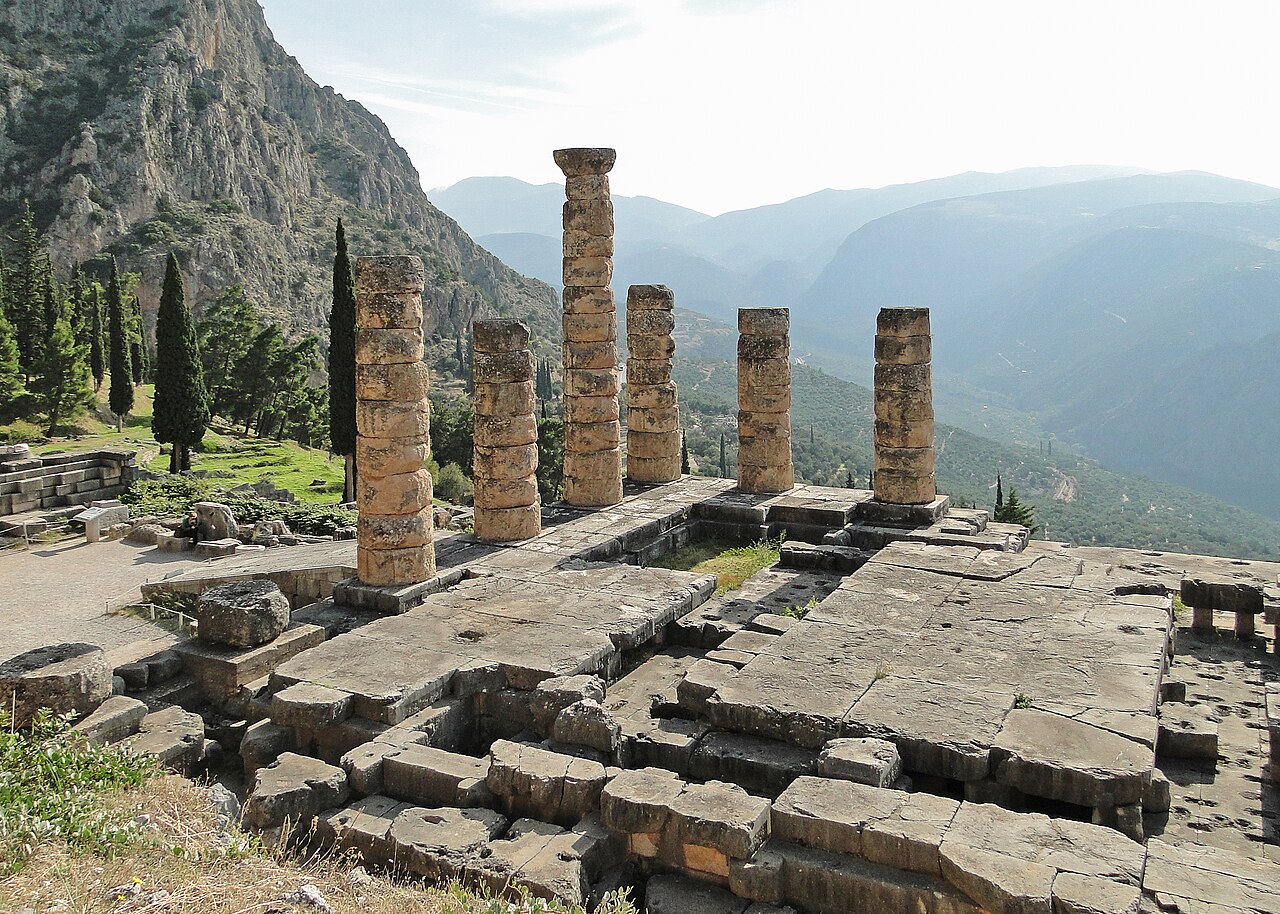
Photo: Bernard Gagnon, Wikimedia Commons, licensed CC BY-SA 4.0, reproduced unmodified.
The gamble nearly worked. Onomarchos fielded the largest Greek mercenary army of the age and twice defeated Philip II of Macedon — whose own coinage would carry Apollo’s head as the war’s victor — before falling to him at the Battle of the Crocus Field in 352 BC, fighting beside the Pheraean tyrants against the Thessalian cities — among them Pharsalos — that had called Philip in — where Philip’s soldiers, wearing laurel crowns as Apollo’s avengers, drowned or crucified the prisoners as temple-robbers. When the war ended in 346 BC, Phokis was expelled from the Amphiktyony, its cities broken up into villages, and the League saddled with an indemnity of sixty talents a year to repay the god. The coins themselves are the receipt: modern estimates put the treasure coined during the decade at something like ten thousand talents’ worth of bullion.
Attribution follows Oliver D. Hoover, Handbook of Coins of Northern and Central Greece (HGC 4), nos. 1046–1048, and Roderick T. Williams, The Silver Coinage of the Phokians (RNS SP 7, 1972); the American Numismatic Society holds a close parallel with the chelys, Williams 293 (ANS 1909.999.47; cited by number, as ANS deep links cannot currently be verified). The narrative of the Third Sacred War is Diodorus Siculus, Book 16 (linked in the references): the seizure and first coining under Philomelos at 16.24–30, the inventory of melted dedications — Kroisos’s among them — at 16.56, the settlement and indemnity at 16.60, and the grim catalogue of the plunderers’ ends at 16.61–64. The temple chronology follows the standard accounts of the fourth-century rebuilding.
MINT IS A BEST GUESS (Delphi): the coins name no mint; Delphi is the conventional attribution because the Phokian commanders coined the sanctuary's melted-down votive treasures on the spot, but this is inference, not epigraphy. The Third Sacred War triobols continue the federal facing bull's head obverse of the fifth-century series but replace Artemis with a laureate Apollo — a pointed claim, since the coinage was struck from the melted-down votive treasures of Apollo's own sanctuary at Delphi. Sub-varieties differ by the symbol behind Apollo's head: a laurel branch (HGC 4, 1046, under Philomelos, c. 357–354 BC) or a chelys lyre (HGC 4, 1048, usually placed c. 353–346 BC under his successors). On this specimen the symbol reads as a chelys (rounded soundbox with rising arms), but wear leaves a margin of doubt; the ANS parallel with the lyre is Williams 293 (ANS 1909.999.47, 2.76 g).
John's Ancient Coin Collection · Type · phokis-federal-bull-apollo-triobol
Image credits for this coin — photographs, maps and graphics used on this page