Type · alexander-iii-kolophon-tetradrachm
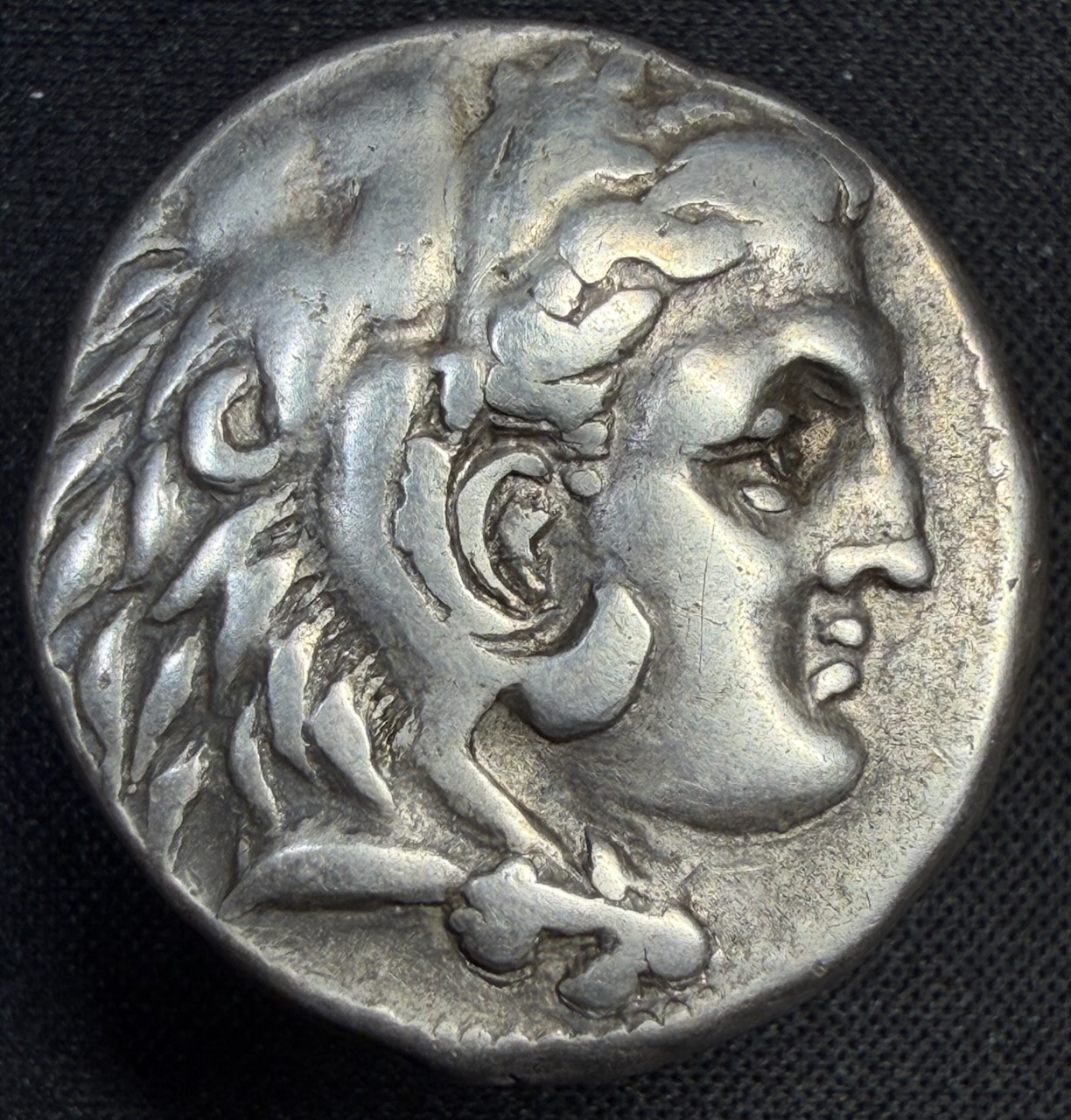
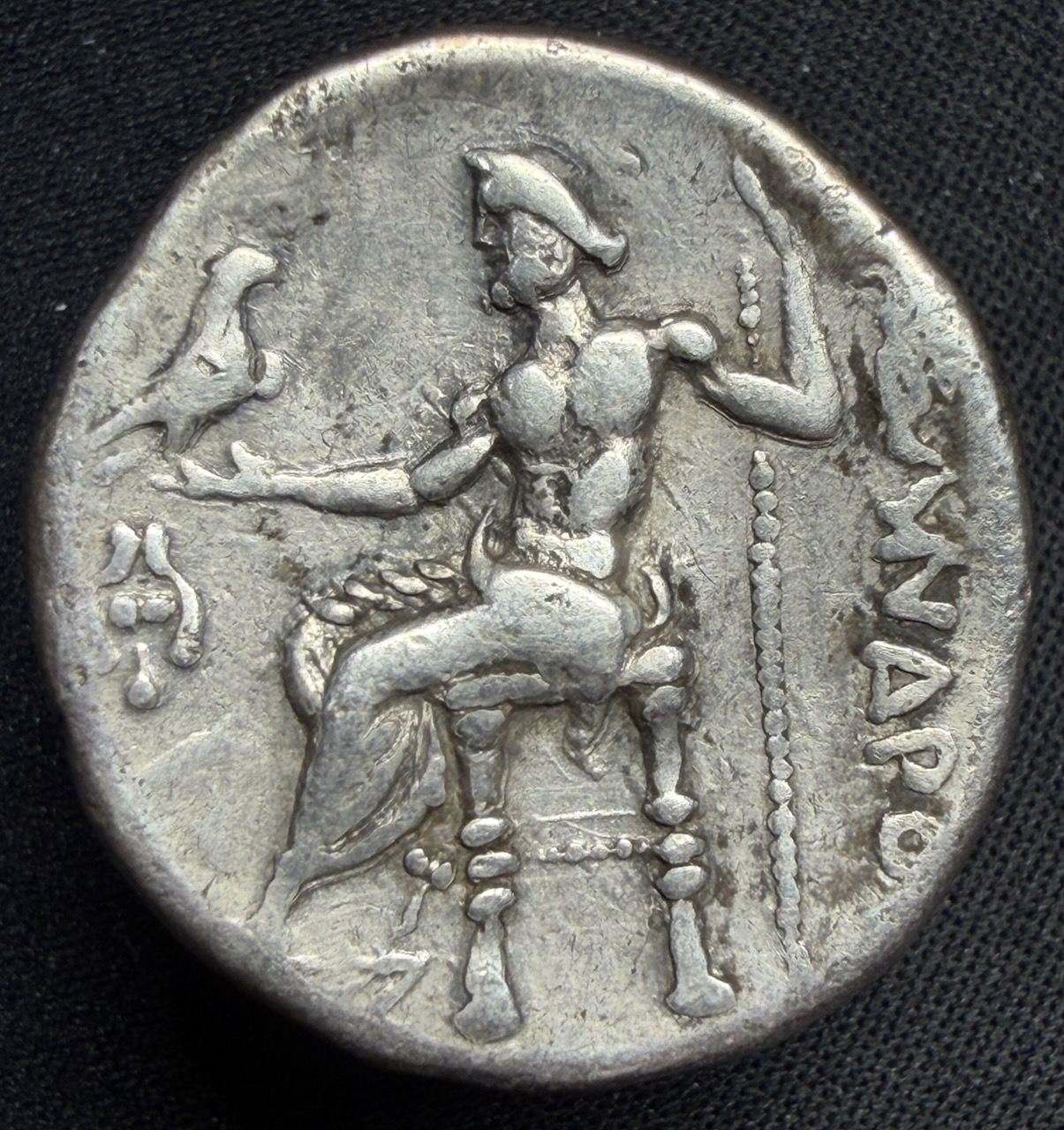
Current: Kings of Macedon, Alexander III 'the Great' (336–323 BC). AR tetradrachm, Kolophon mint (per the earlier dealer's printed tag; Price number to be fixed from the controls). Head of Herakles in lion skin / Zeus Aetophoros enthroned, ΑΛΕΞΑΝΔΡΟΥ. Sear 6717 var. (Zauche tag).
Obverse: Head of young Herakles right, wearing the lion-skin headdress knotted at the neck
Reverse: Zeus Aetophoros enthroned left, eagle on his outstretched right hand, sceptre in left; ΑΛΕΞΑΝΔΡΟΥ downward to right; monogram in left field
Primary reference: Price — (number cut off on the earlier printed tag; to be determined from the monogram)
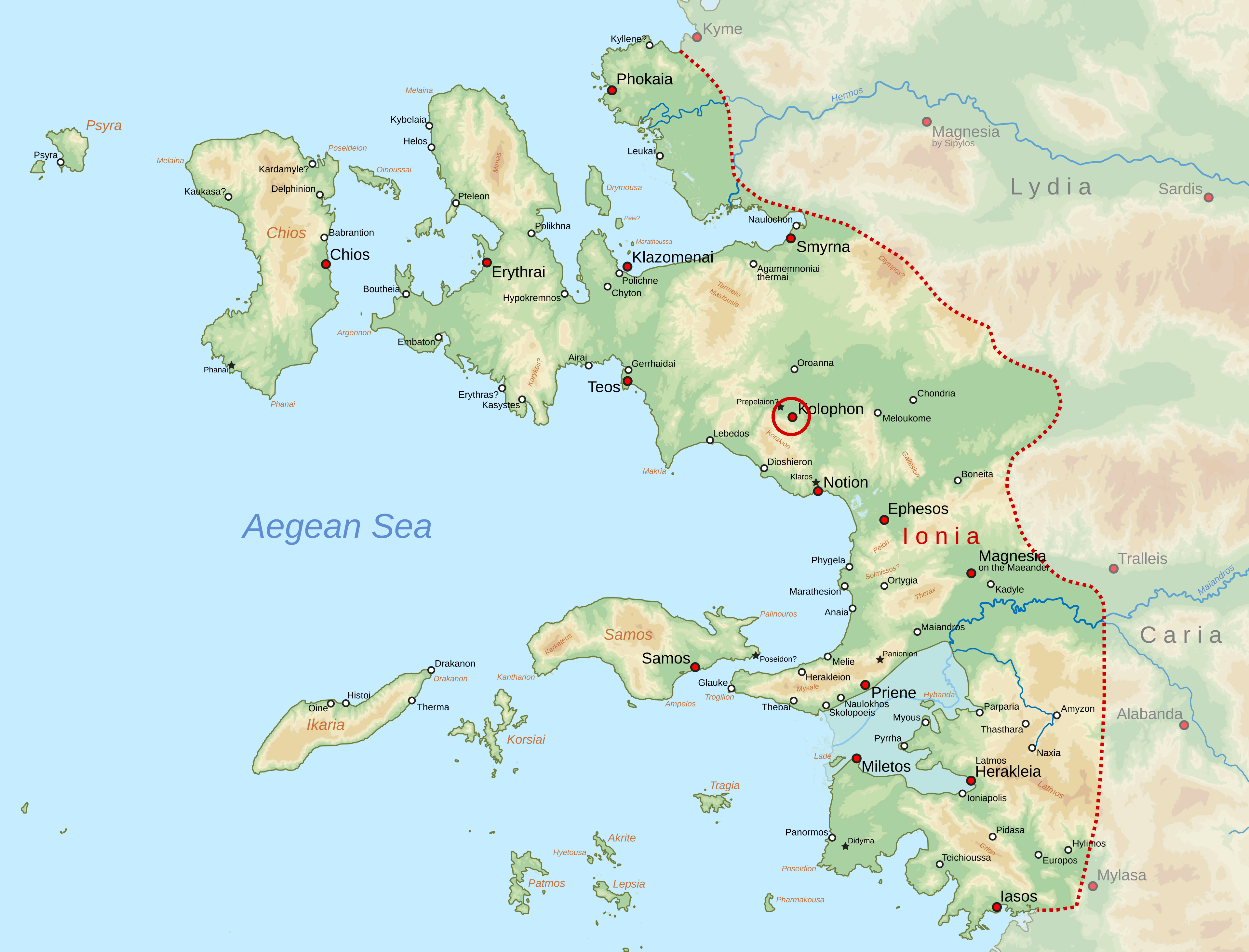
Ancient Ionia on the Aegean coast of Asia Minor. Kolophon — circled in red — lies a short way inland, between Lebedos and the oracle sanctuary of Klaros with its port town Notion; Teos, whose archaic griffin stater this collection also holds, sits on the coast just to the northwest, and Ephesos to the southeast. One of the twelve cities of the Ionian League, Kolophon became one of the busiest mints of Alexander’s imperial coinage in the 320s BC.
“Map of ancient Ionia” by Tomisti (Wikimedia Commons), File:Ancient Ionia map en.svg, licensed CC BY-SA 4.0; cities and roads based on the Digital Atlas of the Roman Empire (DARE) and Pleiades; topographic base © OpenMapTiles, © OpenStreetMap contributors (https://commons.wikimedia.org/wiki/File:Ancient_Ionia_map_en.svg; license: https://creativecommons.org/licenses/by-sa/4.0/). Modified by JSB Coins: rasterized from SVG to PNG, and a red circle added to mark Kolophon. This derivative is shared under the same CC BY-SA 4.0 license.
No coinage in history spread further faster than the silver of Alexander the Great. Struck to one standard, with one pair of images, at dozens of mints from Macedon to Babylon, the Alexander tetradrachm became the common currency of the eastern Mediterranean for two centuries — struck long after the conqueror’s death by his successors, by free cities, even by his enemies. The monetary machine behind it was his father’s invention: Philip II’s coinage, gold, silver, and mass-struck bronze, built the system Alexander scaled up to a world currency (the bronze arm of that system is in this collection too, as Alexander’s own club-and-bow unit). This example comes from Kolophon, an old Ionian city that became one of the empire’s busiest mints.
The obverse carries Herakles in the skin of the Nemean lion — the hero from whom the Macedonian royal house claimed descent, and, many have suspected since antiquity, a face that increasingly carried the features of Alexander himself; whether any individual die is a ‘portrait’ remains a subjective and debated question. The reverse enthrones Zeus Aetophoros — ‘eagle-bearer’ — with sceptre, and the simple genitive legend ΑΛΕΞΑΝΔΡΟΥ: “(coin) of Alexander.” The type’s ancestry is discussed on this collection’s Mazaios stater page: the seated, eagle-bearing god is strikingly close to the Baaltars of Tarsos, whose mint and engravers passed to Alexander in 333 BC, and a line of scholarship going back to E. T. Newell derives the Zeus from the satrapal image — though a shared older tradition remains possible and the question is not settled. Side by side, the two coins let a viewer judge the resemblance directly.
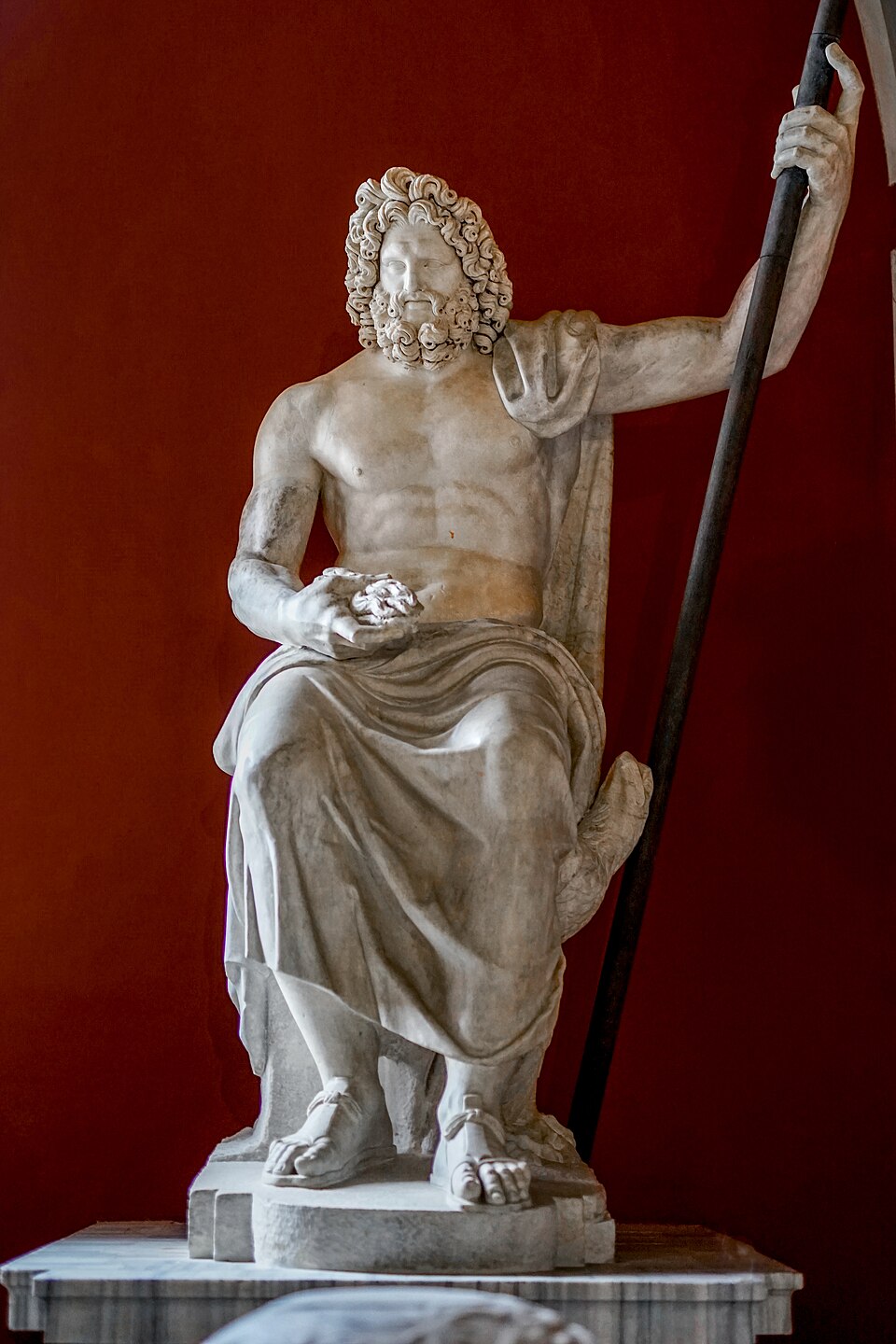
Photo: Fabrizio Garrisi, Wikimedia Commons, licensed CC BY-SA 4.0, reproduced unmodified.
Kolophon was one of the twelve cities of the Ionian League, set a little inland between Teos and Ephesos, and it was old and proud long before Macedon existed as a power. It stood among the seven cities that claimed Homer’s birth; the elegist Mimnermos and the philosopher-poet Xenophanes were both Kolophonians, and Xenophanes himself mocked his townsmen’s Lydian-taught luxury — a thousand citizens, he says, parading to the agora in purple robes. The city’s other boast was its cavalry, so famously decisive that “to add the Kolophon” became the Greek proverb for the finishing stroke (Strabo 14.1.28) — the origin, by a long detour through Renaissance printing, of the colophon at the end of a book. Even the city’s pine resin kept its name: colophony is still what violinists call their rosin. On the coast below lay the port of Notion and the great oracle sanctuary of Apollo at Klaros, whose god answered questions in verse for a millennium.
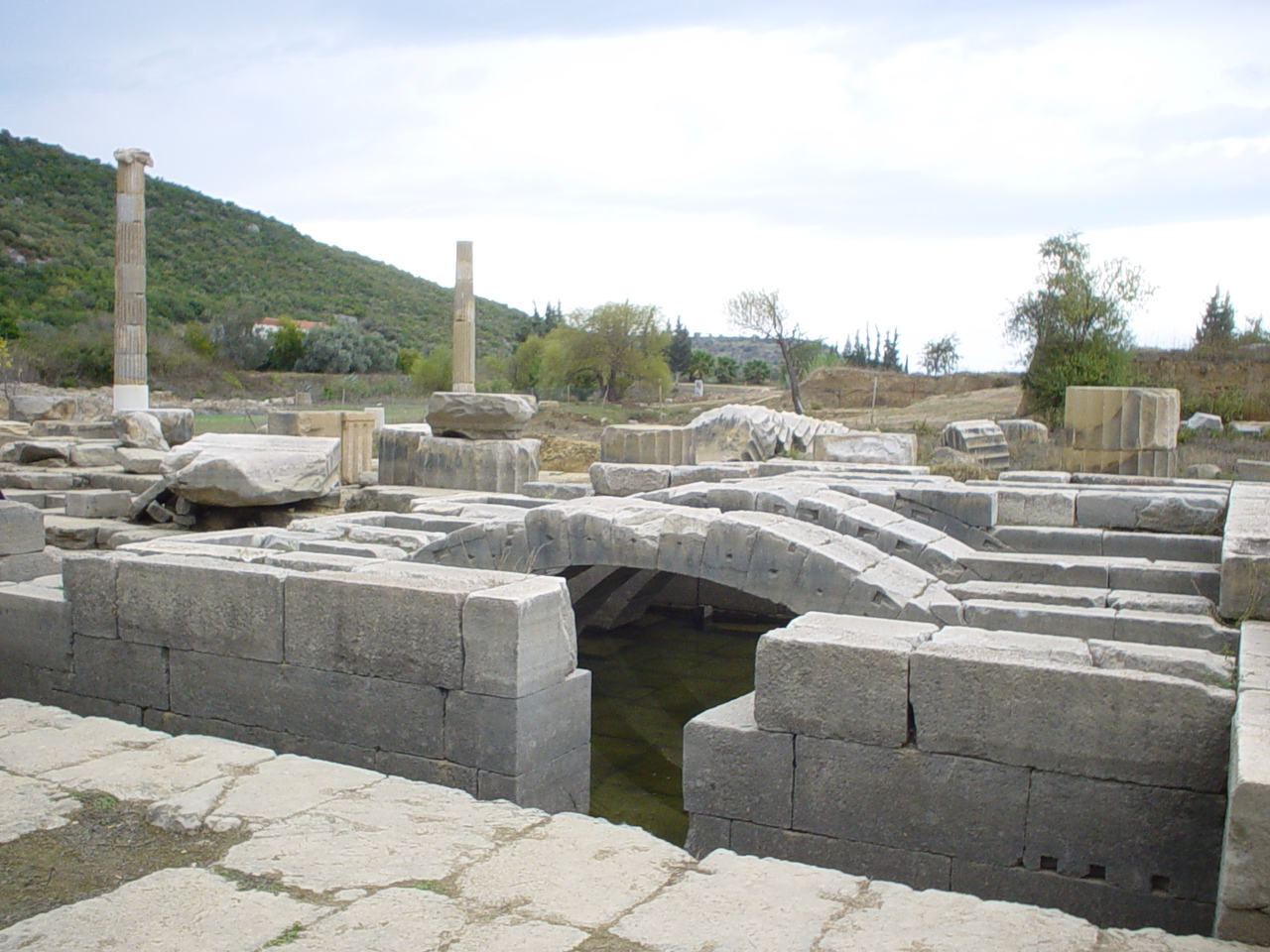
Photo by Wikimedia Commons user Monsieurdl, released into the public domain by the author; reproduced unmodified.
Liberated from Persian control by Alexander in 334 BC (Arrian 1.17–18), the city opened a royal mint in the mid-320s and became one of the principal sources of Alexander drachms — the everyday silver of western Asia Minor, represented in this collection by a drachm probably of Sardes — striking tetradrachms in smaller quantity alongside. After Alexander’s death the mint continued under the successors, striking in the dead king’s name and types as nearly all mints did: the Alexander coinage had become a currency, bigger than the man — a phenomenon this collection also documents from the system’s home mint, in the posthumous Amphipolis tetradrachm struck under the regents c. 320–317 BC.
The city’s own end came from one of the successors. Around 294 BC Lysimachos, rebuilding Ephesos as his showpiece Arsinoeia, forcibly transplanted the populations of Kolophon and Lebedos into it; the Kolophonians alone fought the resettlement, and Pausanias saw the common grave of their fallen on the road to Klaros (7.3.4). Old Kolophon never recovered its rank — which makes its brief turn as an imperial mint, the decade or two this coin comes from, the city’s last moment at the center of the Greek world’s affairs.
Both tags on this coin give Alexander’s regnal dates, 336–323 BC, the conventional bracket for the type. Whether this piece was struck in the king’s lifetime or shortly after depends on its position within the mint’s control-mark sequence — the monogram in the reverse’s left field — as arranged in Martin Price’s 1991 corpus. The earlier dealer’s printed tag evidently carried a Price number, but it is cut off at the edge (‘Pri’); identifying the monogram against Price’s Kolophon listings is this coin’s main open thread, and would fix both date and catalogue number.
The Alexander tetradrachm was the dollar of the Hellenistic world: Attic weight (17.2 g), reliable fineness, and an immense, mint-spanning volume that made it acceptable from Italy to India. The coinage financed Alexander’s campaigns out of the bullion of the Persian treasuries — Persepolis and Susa turned into coin — and after 323 BC it became the working currency of the successor kingdoms and the model for civic coinages for generations. A tetradrachm from an Ionian mint like Kolophon is a piece of that system near its western hub, struck within living memory of the conquest that created it. Not every state joined the system: just across the water, the merchant republic of Rhodes kept its own standard and its own sun-and-rose types — see this collection’s Rhodian didrachm of the Colossus era.
Between this collection’s Achaemenid silver (the siglos, the satrapal staters of Tarsos) and its Hellenistic issues (the Seleukos tetradrachm), the Alexander coinage is the hinge: the money that replaced the Persian system and fathered the Hellenistic ones. Every collection of ancient coins wants an Alexander tetradrachm at its center, and this one — from a scarcer tetradrachm mint, with a die-level question waiting to be answered — earns its place.
The open thread is concrete: match the reverse’s left-field monogram against Price’s Kolophon listings (the ANS’s PELLA database is the practical way to browse them — no deep link here, per the collection’s verified-links rule) and the truncated ‘Pri…’ on the printed tag becomes a number, a date, and an answer to the lifetime question. Margaret Thompson’s Alexander’s Drachm Mints volumes (ANS NS 16 and 19) are the model die studies for the neighboring Ionian drachm mints and the frame for understanding Kolophon’s role in that system. The NGC/CoinWeek survey linked in the references is the quick orientation; Arrian (linked) carries the campaign narrative; for the city itself, Strabo 14.1.28 and Pausanias 7.3 are the ancient guides.
The corpus is M. J. Price, The Coinage in the Name of Alexander the Great and Philip Arrhidaeus (1991); Kolophon’s Alexanders begin c. 325 BC, with drachms predominating (current dealer listings for the mint are overwhelmingly drachms, its tetradrachms scarcer); cf. M. Thompson, Alexander’s Drachm Mints I–II (ANS NS 16, 1983; NS 19, 1991) for the Ionian drachm system. The mint attribution and weight (16.97 g) are from the earlier dealer’s printed tag; Zauche’s tag adds Sear 6717 var. The Baaltars–Zeus relationship is presented as debated, per the discussion and sources on the Mazaios stater page (Newell’s Tarsos studies and later literature). Historical frame: Arrian, Anabasis 1.17–18 (Ionia liberated, 334 BC); Strabo 14.1.28 (the cavalry proverb); Xenophanes fr. 3 (the purple robes); Pausanias 7.3.4 (Lysimachos’ transplantation and the Kolophonians’ grave); on the coinage as currency, the standard handbooks (Price’s introduction; Mørkholm, Early Hellenistic Coinage).
Attic-standard tetradrachm (17.2 g standard; this coin 16.97 g per the printed tag). Kolophon in Ionia was one of the busiest mints of the early Alexander coinage, opened in the mid-320s BC; it struck drachms in very large volume and tetradrachms in smaller numbers, so a Kolophon tetradrachm is the scarcer denomination from this mint. The mint attribution rests on the earlier dealer's printed tag, whose Price citation is cut off mid-word ('Pri'); the left-field monogram on the reverse should identify the exact Price number and settle whether the issue is lifetime (to 323 BC) or early posthumous — both dealers' tags give the lifetime bracket 336–323 BC, which should be treated as conventional until the controls are checked.
John's Ancient Coin Collection · Type · alexander-iii-kolophon-tetradrachm
Image credits for this coin — photographs, maps and graphics used on this page