Type · antony-legionary-denarius-leg-iii
Current: Roman Imperatorial, Mark Antony, AR legionary denarius for Legio III, mint moving with Antony (Patrae?), autumn 32 – spring 31 BC (Crawford 544/15)
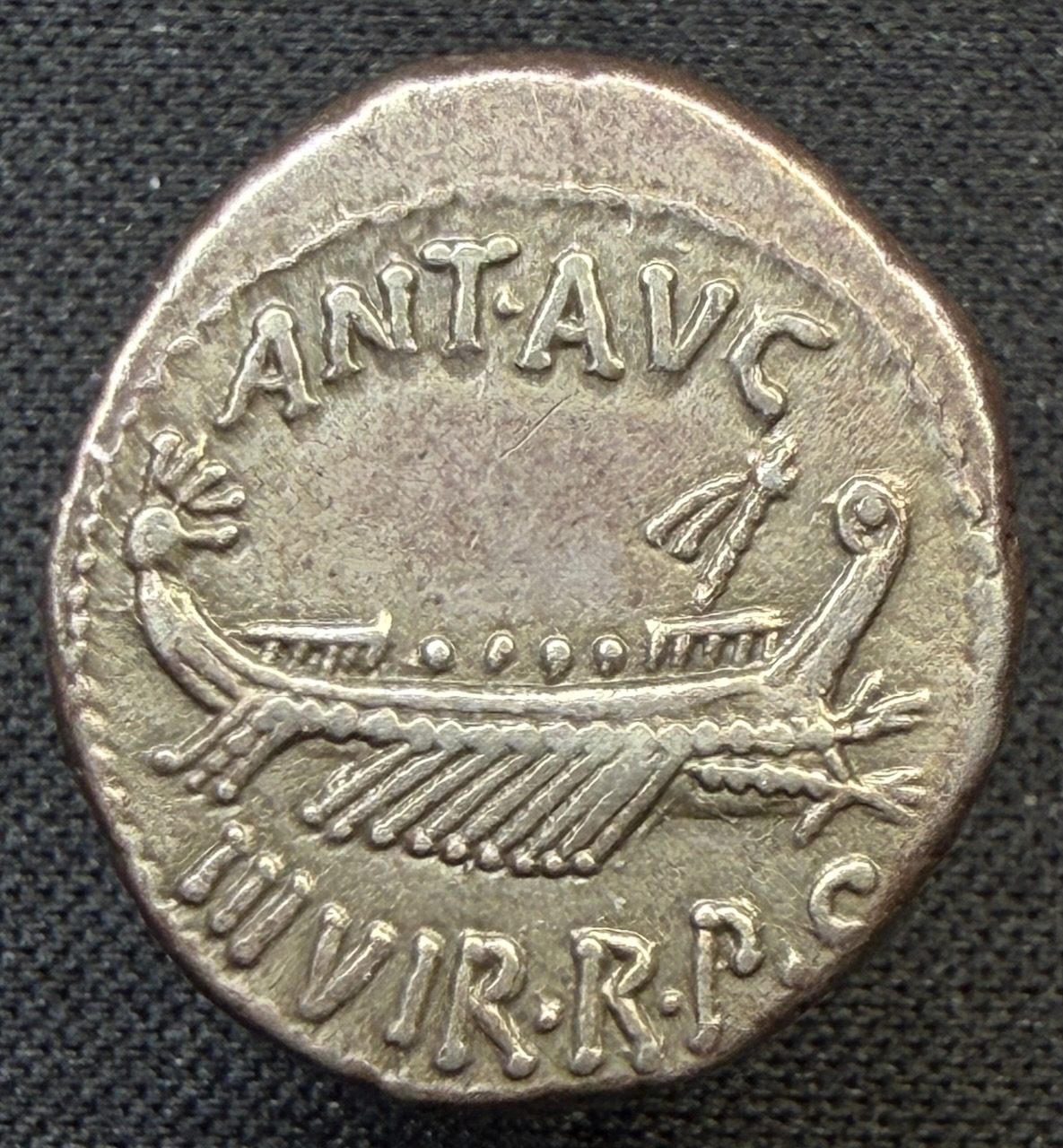
Obverse: Praetorian galley right, with rowers, mast at prow with fillets; ANT AVG above, III VIR R P C below
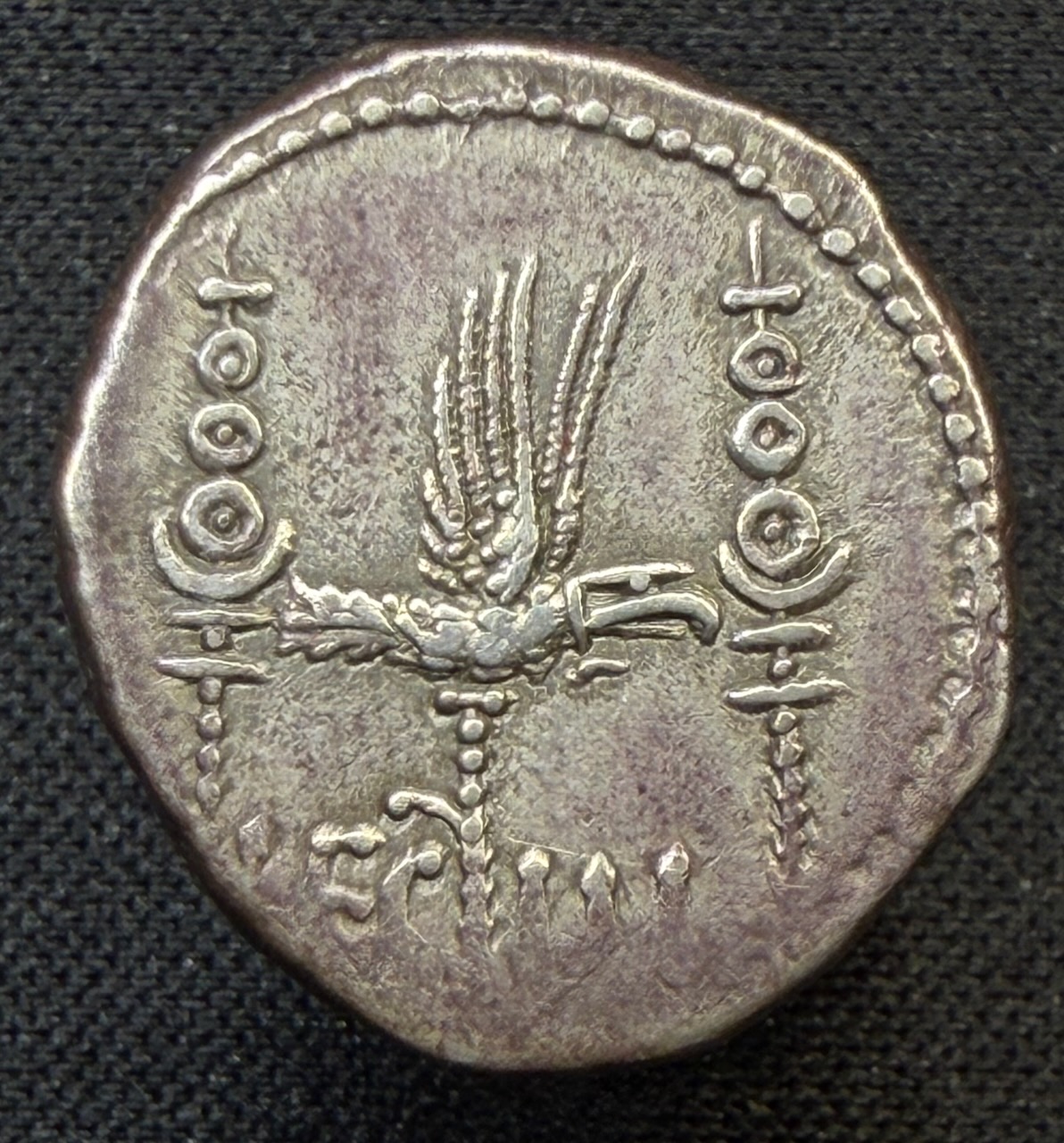
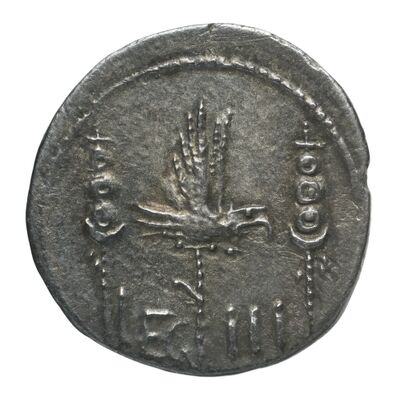
Reverse: Legionary eagle (aquila) between two military standards (signa); LEG III below
Primary reference: Crawford 544/15
66 specimens in public collections (BnF 15, ANS 6, DNB (Netherlands) 6, British Museum 5, Fitzwilliam 5); weights 2.49–3.99 g, median 3.41 g across 66 recorded; die axis most often 6h; recorded in hoards CHRR ACT, CHRR ALA, CHRR AQU, CHRR BAG, CHRR BDS, CHRR BEA, CHRR BOU, CHRR BRS and 19 more.
This collection's specimen, at 3.72 g (tag), is heavier than 77% of the recorded weights.
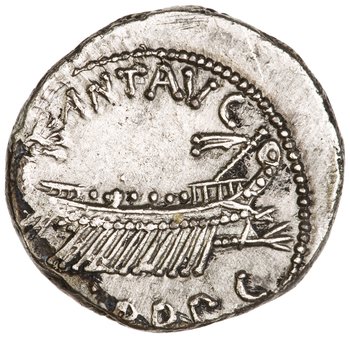
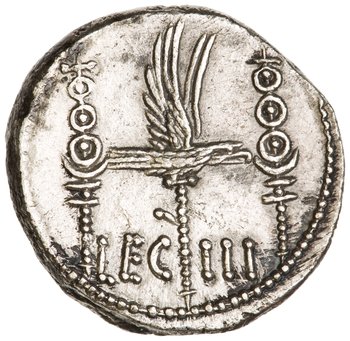
American Numismatic Society, 1944.100.6314. CC BY-NC 4.0. https://numismatics.org/collection/1944.100.6314
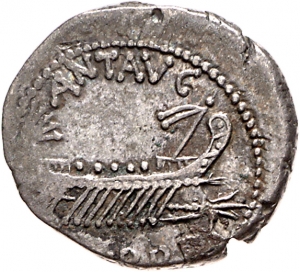
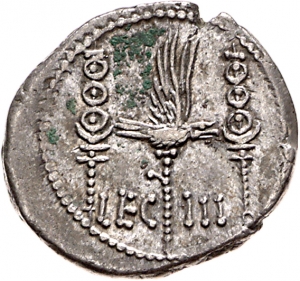
Münzkabinett, Staatliche Museen zu Berlin, 18215175. CC BY-NC-SA 4.0. https://ikmk.smb.museum/object?id=18215175
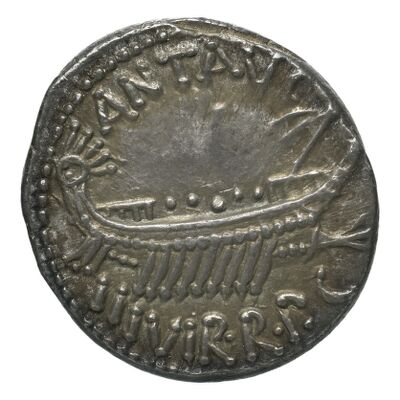
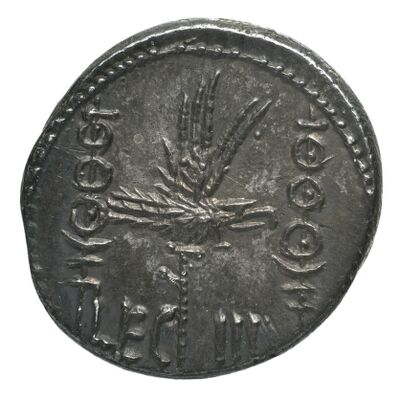
Bibliothèque nationale de France (Gallica), REP-20962. non-commercial reuse permitted. https://gallica.bnf.fr/ark:/12148/btv1b10453017w
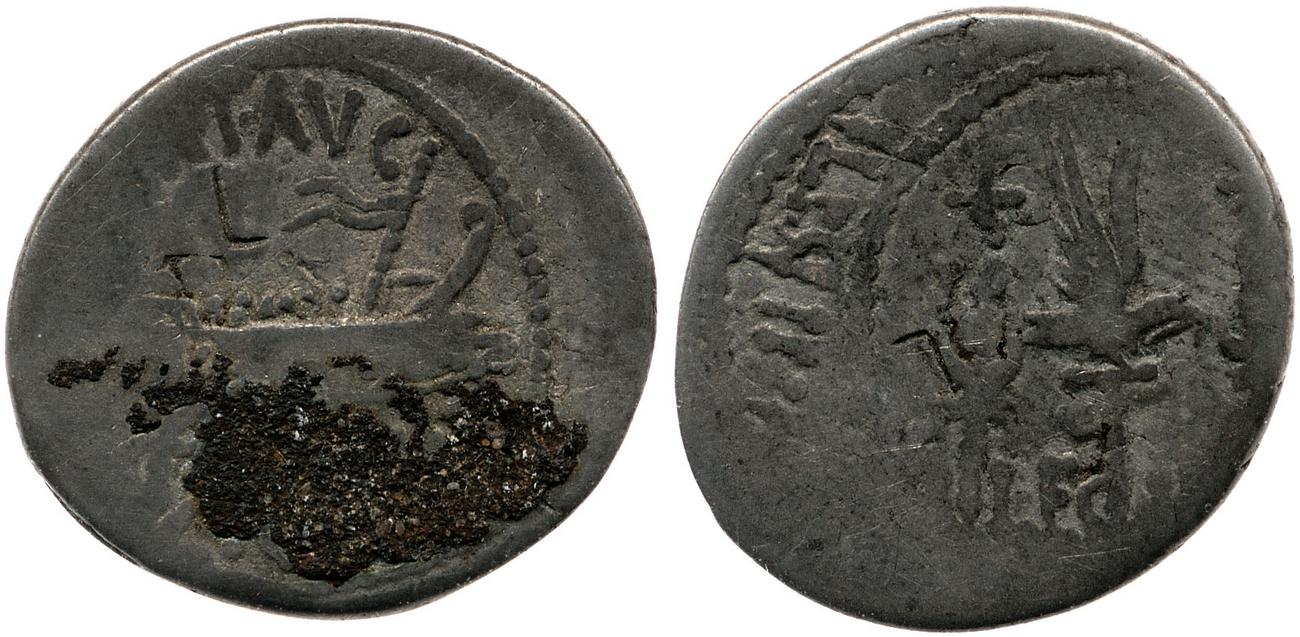
© The Trustees of the British Museum, 1981,0904.3. CC BY-NC-SA 4.0. https://www.britishmuseum.org/collection/object/C_1981-0904-3
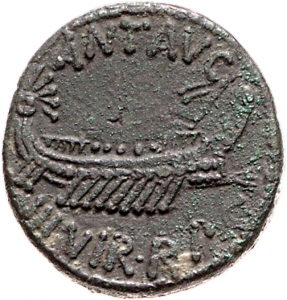
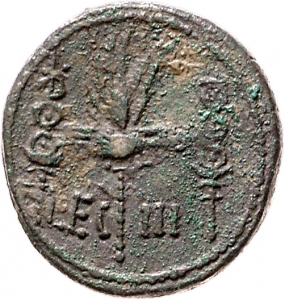
Münzkabinett, Staatliche Museen zu Berlin, 18215176. CC BY-NC-SA 4.0. https://ikmk.smb.museum/object?id=18215176
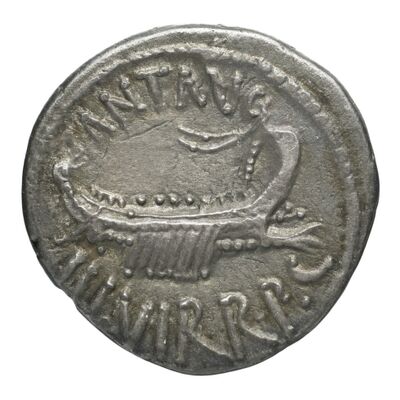
Bibliothèque nationale de France (Gallica), REP-20963. non-commercial reuse permitted. https://gallica.bnf.fr/ark:/12148/btv1b10453018b
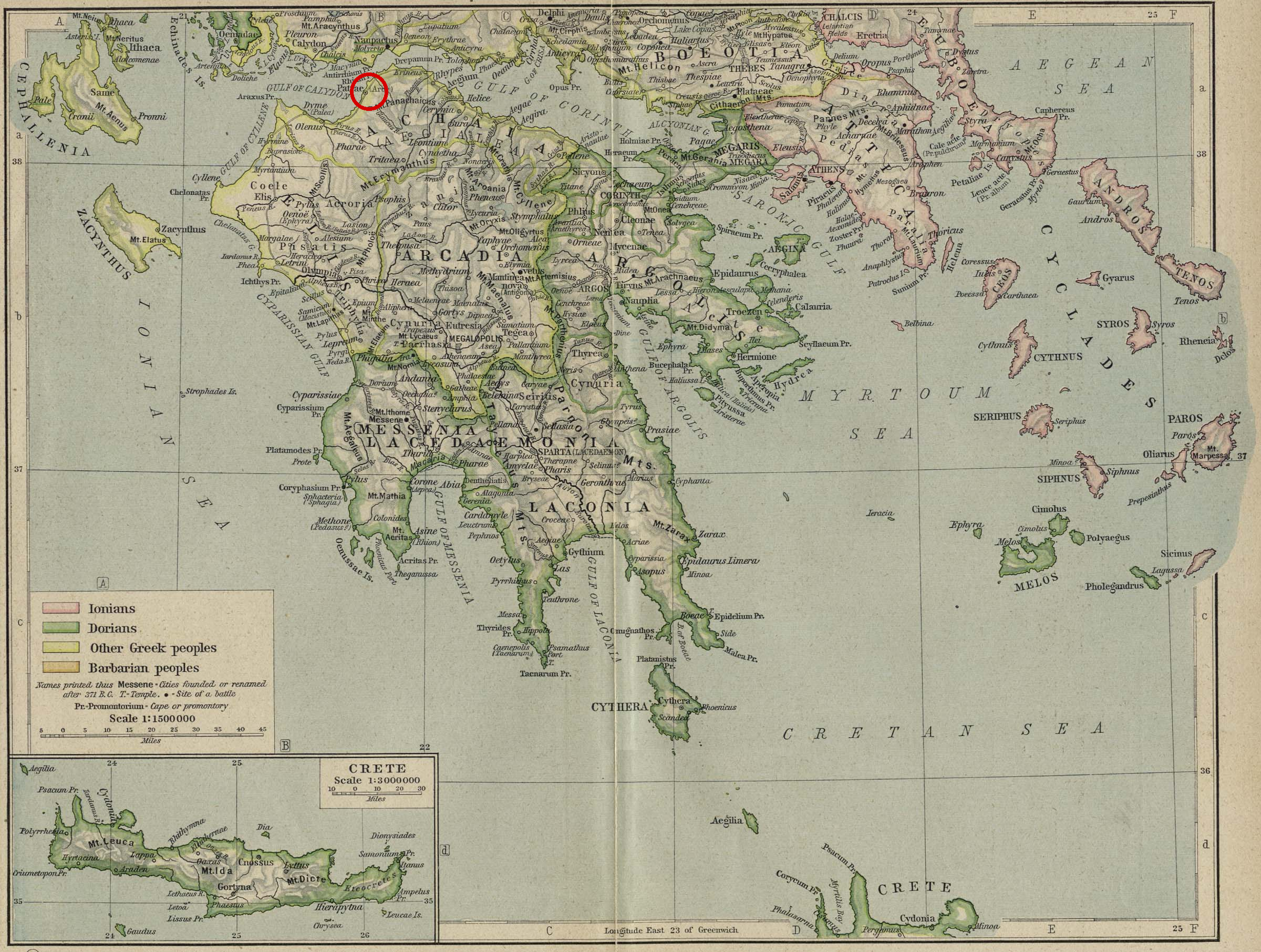
Southern Greece (Shepherd’s reference map of Ancient Greece, Southern Part). Patrae — circled in red at the upper left — sits where the Gulf of Corinth opens to the sea, the natural harbor for a fleet watching the western approaches: Antony’s winter headquarters of 32/31 BC and the conventional mint of the legionary series. Actium itself lies just off this sheet to the northwest, up the Ionian coast.
“Reference Map of Ancient Greece, Southern Part” by William R. Shepherd, Historical Atlas (Henry Holt & Co., 1923 and later printings), public domain; via Wikimedia Commons, File:Ancient greece so 1926.jpg (scan via the Perry-Castañeda Library, University of Texas). Red circle added to mark Patrae.
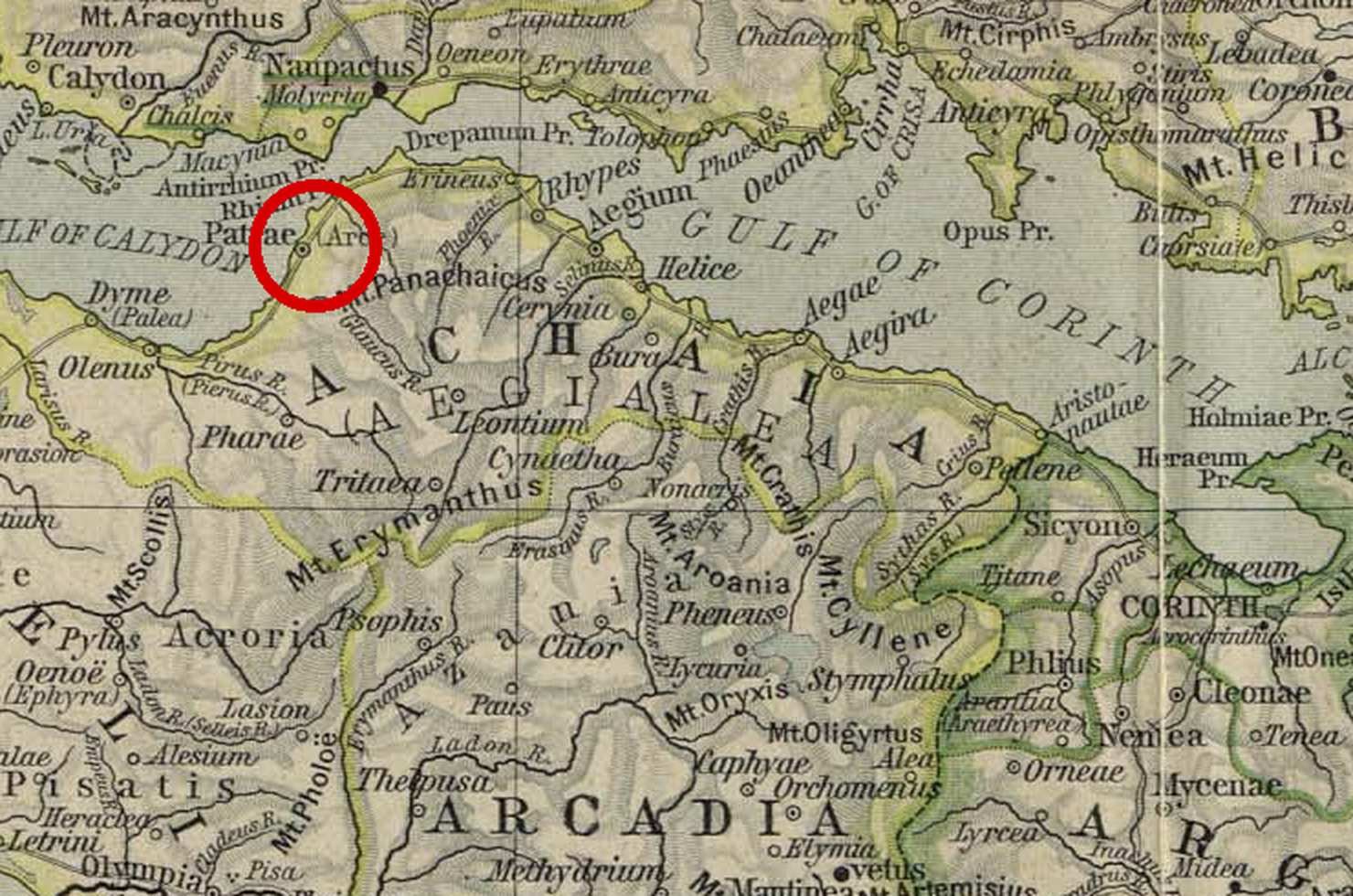
Detail: the Gulf of Corinth, with Patrae circled in red at the narrows opposite Naupactus, and the coast road running east past Sicyon to Corinth. From this shore Antony’s squadrons watched the gulf through the winter before Actium.
In the winter of 32/31 BC, Mark Antony’s world was concentrated at Patrae on the Gulf of Corinth: nineteen legions of land troops, five hundred warships crewed by tens of thousands, Cleopatra’s treasury to pay them, and a war with Octavian now formally declared. Paying that host required one of the largest coinages the ancient Mediterranean ever saw — the “legionary denarii,” struck through the autumn and winter in the name of each unit in turn: LEG II, LEG III, and onward past LEG XX, with issues too for the praetorian cohorts and the cohors speculatorum. This coin honors the Third Legion. Many of the men it paid were veterans of Antony’s other great gamble, the invasion of Parthia in 36 BC that Phraates IV turned into a starving retreat — the defeat that drove Antony back onto Cleopatra’s treasury and toward this war.
Graphic: JSB Coins, 2026 (CC0).
The war this coinage financed was declared with lawyer’s care. Through 32 BC the alliance of the triumvirs finished collapsing in public: Antony formally divorced Octavia, Octavian’s sister; two of Antony’s senior men, Plancus and Titius, defected and told Octavian where Antony’s will was deposited; and Octavian — illegally — took it from the Vestal Virgins and read it to the Senate, dwelling on the legacies to Cleopatra’s children and the instruction that Antony be buried beside her in Alexandria (Plutarch, Antony 58; Dio 50.3–4). The propaganda pay-off followed: war was declared not on Antony — no civil war, officially — but on Cleopatra alone, with Octavian himself performing the archaic fetial rite outside the temple of Bellona, and Italy swore a personal oath to him. The fiction cut both ways, and Antony’s coinage answers it: no queen, no Egypt, nothing but ships, eagles, standards, and the scrupulously Republican titles of a triumvir rei publicae constituendae. Both sides, in the last year of the Republic, claimed to be its only defender.
The types are the army and navy in miniature. The obverse galley — a praetorian flagship with its banked oars and filleted mast — is the fleet on which Antony’s strategy hung; the reverse gives the soldier’s most sacred objects, the legionary eagle between two standards, with the unit’s number beneath. Around the ship runs Antony’s political identity, pointedly Republican in form: ANT AVG, Antonius augur (the priesthood he held, not “Augustus”), and III VIR R P C, triumvir for the restoration of the Republic — a constitutional fiction maintained on the coinage even as the Republic’s last two dynasts brought their fleets to the same coast. Which Third Legion is meant — III Gallica, later of the eastern armies, or III Cyrenaica — the coin does not say, and scholarship has not settled. The collection holds a second coin of the series, the LEG X issue naming the successor of Caesar’s famous Tenth.
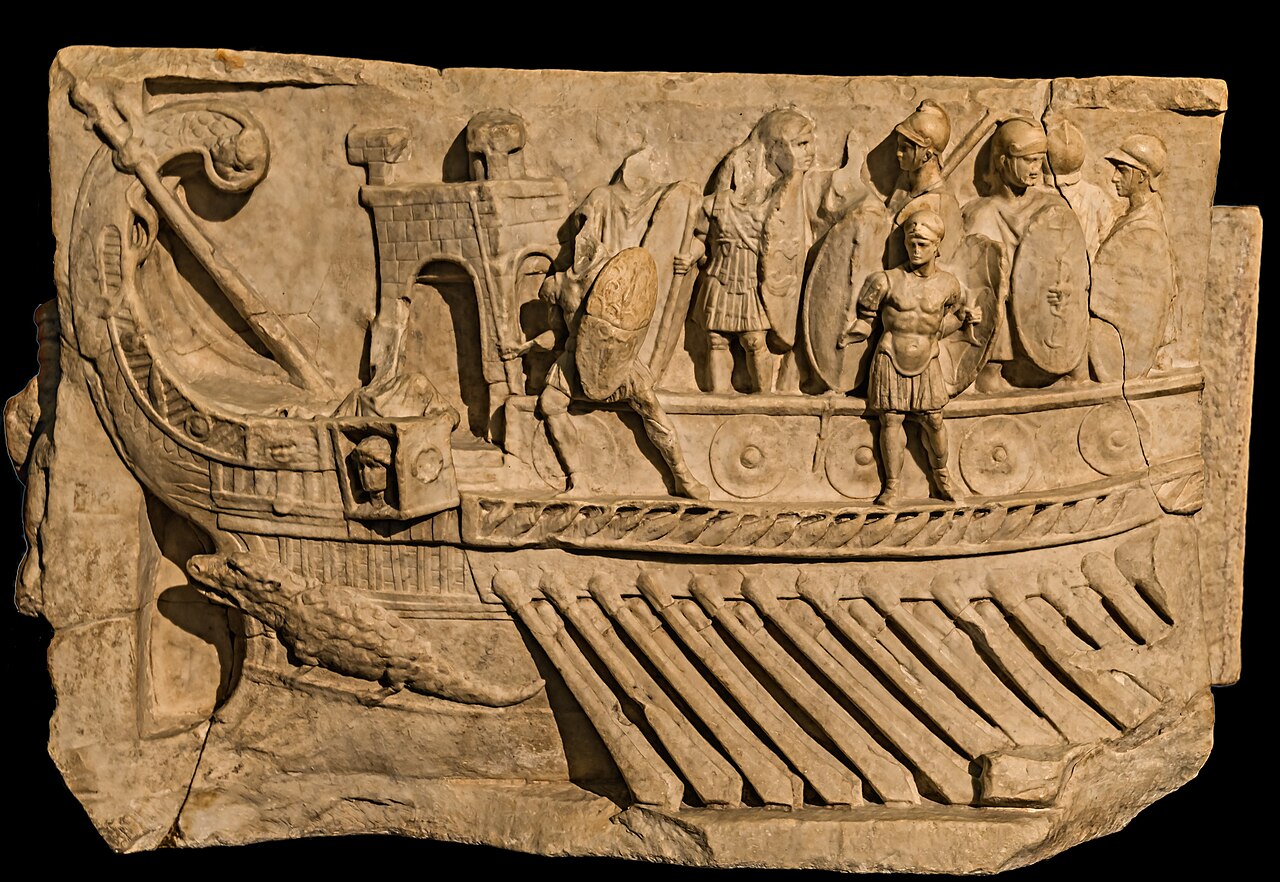
Photo: Rabax63, Wikimedia Commons, licensed CC BY-SA 4.0, reproduced unmodified.
The campaign the coin paid for went wrong before it was fought. Through the spring and summer of 31 BC Octavian’s admiral Agrippa picked off Antony’s supply stations — Methone first — while Octavian dug in north of the Ambracian Gulf, where Antony’s great fleet lay; malaria and hunger did the rest, and the rowing benches emptied faster than they could be filled. The defections turned from trickle to stream, none more wounding than Gnaeus Domitius Ahenobarbus, the most senior Republican in Antony’s camp, who went over to Octavian in a small boat — Antony, in one of his last grand gestures, sent the man’s baggage and servants after him (Plutarch, Antony 63). On 2 September 31 BC Antony led the fleet out to break the blockade: Cleopatra’s squadron, treasury aboard, ran the gap on the afternoon wind as planned, and Antony transferred to a lighter ship and followed with a handful of vessels — abandoning the rest. The fleet burned or surrendered; the nineteen legions ashore, this coin’s payroll, held together for a week and then gave up whole. Dio’s account of the battle (50.15–35) is rhetorical but complete; the sober version is that the Republic’s last war was decided as much by mosquitoes and desertion as by rams.
Crawford dates the series to autumn 32 – spring 31 BC, struck at a mint moving with Antony — conventionally placed at Patrae. The silver was visibly debased, a few percent below the standard of the day, and Gresham’s law did the rest: good denarii vanished into hoards while Antony’s legionary coins stayed out doing the work of money. They turn up worn nearly smooth in hoards deposited two and even three centuries later, and in 168/169 AD Marcus Aurelius and Lucius Verus struck a commemorative “restoration” of the LEG VI type — an emperor’s homage to a coinage still in living circulation from a war the empire’s founder had won against its issuer. Defeat at Actium in September 31 BC destroyed Antony; his money outlived every participant by centuries.
The legionary denarius is the sound of the Roman Republic ending: the last great coinage struck by a Roman commander against a Roman rival, naming the actual legions that fought the war everyone knew was coming. The coinage it answers to is Caesar’s own — the elephant denarius of 49 BC, struck at the opening of the wars that ended on this coin’s beach. In this collection it completes an Imperatorial arc — from the last generation of peacetime self-advertisement, the Scaurus & Hypsaeus camel denarius of 58 BC, through the moneyers’ issue of 42 BC struck for the Philippi campaign in which Antony triumphed, to this coin of the campaign he lost, to the victor’s answer — the rostral-column denarius of Octavian, naval mastery claimed in a statue — and finally to the quadriga denarius of Augustus, the victor’s mature coinage arranging the succession to the world Actium won him.
The collection’s project to gather one legionary denarius for every legion Antony named — twenty-five issues, tracked coin by coin — has its own page: Pay the Legions: the legion wall.
Attribution follows Michael H. Crawford, Roman Republican Coinage (Cambridge 1974), no. 544/15, confirmed against the ANS’s Coinage of the Roman Republic Online record (galley obverse ANT AVG / III VIR R P C; aquila between signa, LEG III). The campaign and Patrae headquarters: Plutarch, Antony 56–68; Cassius Dio 50. The debasement and long circulation of the series, and the Marcus Aurelius–Verus restoration issue of 168/169 AD, are discussed in the standard literature on the legionary coinage. This specimen’s provenance: Tom Cederlind at NYINC, January 2009; the Andrew McCabe collection (his printed “Ahala” collection ticket accompanies the coin); Michael Bezayiff.
MINT IS A BEST GUESS (Patrae): conventionally Antony's winter headquarters of 32/31 BC, but Crawford prints the series as struck at a mint moving with Antony, and the question remains open. Part of the enormous legionary series (Crawford 544) struck for the Actium campaign, honoring each of Antony's legions and cohorts in turn — LEG III here. AVG on the obverse abbreviates Antony's augurate (AVGVR), not 'Augustus'. Which Third Legion is meant (III Gallica and III Cyrenaica both existed) is likewise not settled by the coin. The silver of the series is noticeably debased, which kept these denarii in circulation for centuries — worn examples occur in hoards into the third century AD.
John's Ancient Coin Collection · Type · antony-legionary-denarius-leg-iii
Image credits for this coin — photographs, maps and graphics used on this page