Type · octavian-rostral-column-denarius
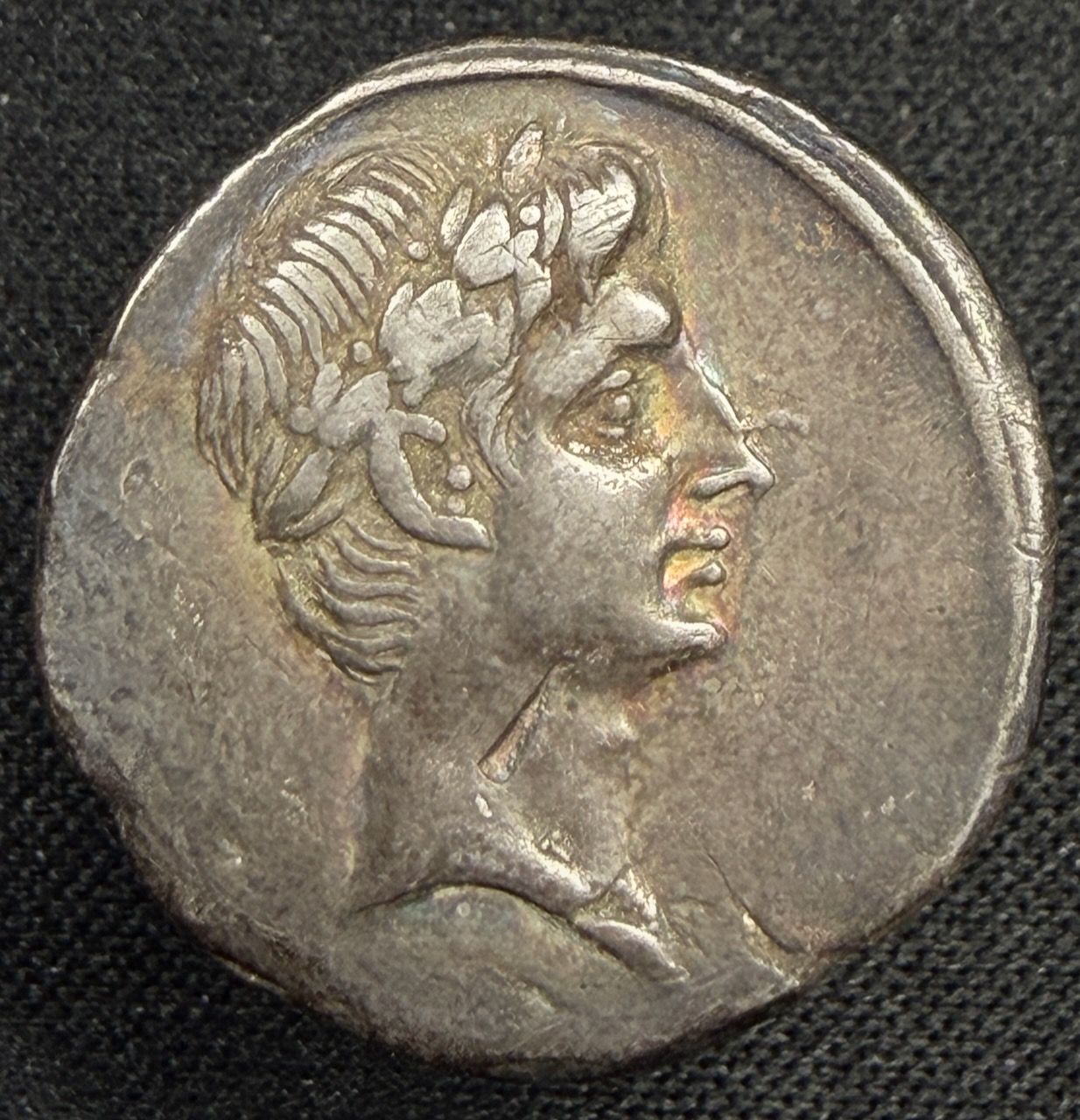
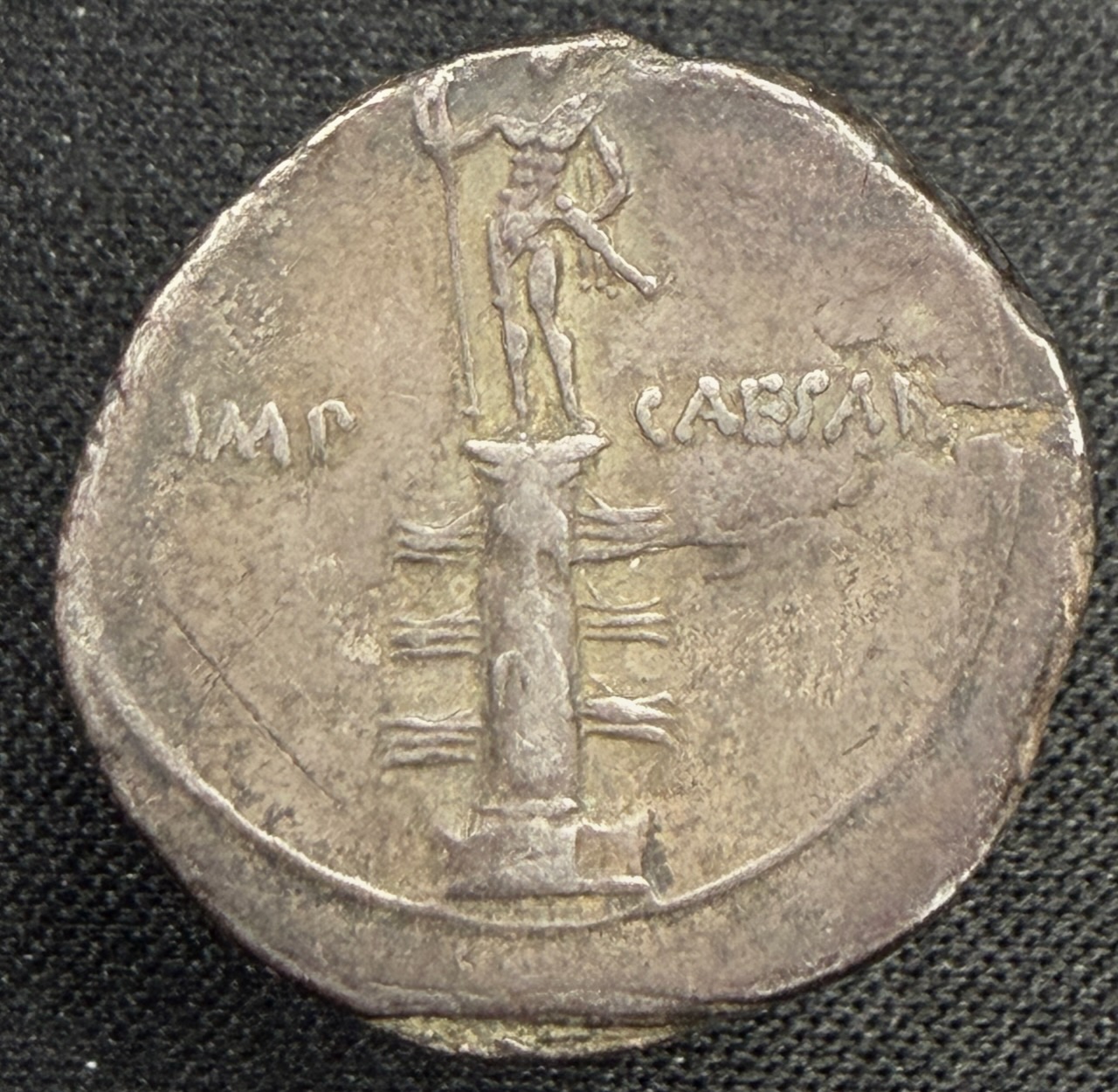
Current: Roman Imperatorial, Octavian, AR denarius, uncertain Italian mint (Rome?), autumn 30 – summer 29 BC (RIC I 271)
Obverse: Laureate head of Octavian right (the idealized, Apollo-like portrait of the post-Actium series)
Reverse: Statue of Octavian, nude but for a cloak over his shoulder, standing left on a rostral column (columna rostrata) fitted with ships' rams and anchors, holding a spear
Primary reference: RIC I 271
33 specimens in public collections (British Museum 7, ANS 6, Ashmolean 5, BnF 4, Berlin 4); 3 British finds recorded by the Portable Antiquities Scheme; weights 2.44–4.1 g, median 3.68 g across 35 recorded; die axis most often 9h; recorded in hoards CHRR ALL, CHRR AQU, CHRR BAG, CHRR BEA, CHRR BOU, CHRR BRZ, CHRR CDA, CHRR CDS and 9 more.
This collection's specimen, at 3.73 g (tag), is heavier than 63% of the recorded weights.
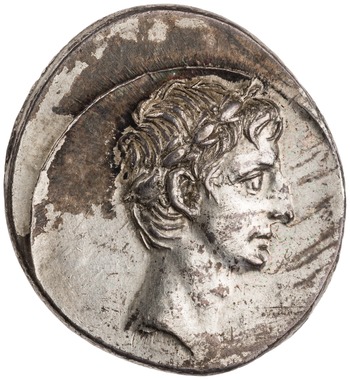
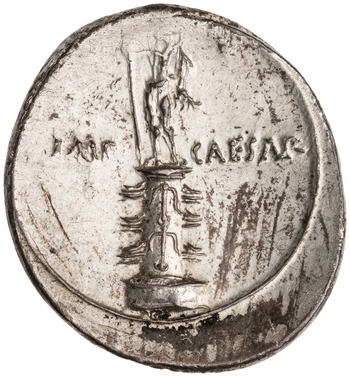
American Numismatic Society, 1937.158.447. CC BY-NC 4.0. https://numismatics.org/collection/1937.158.447
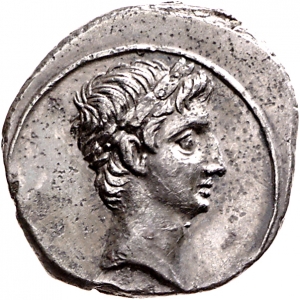
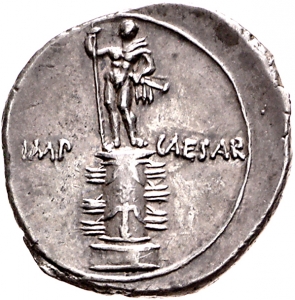
Münzkabinett, Staatliche Museen zu Berlin, 18202362. CC BY-NC-SA 4.0. https://ikmk.smb.museum/object?id=18202362
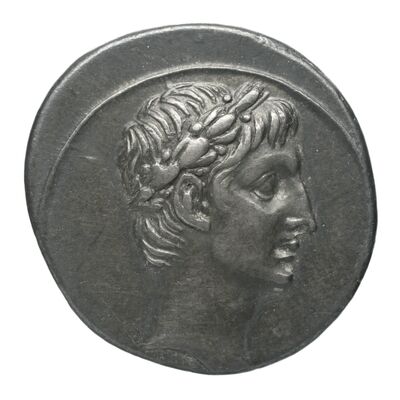
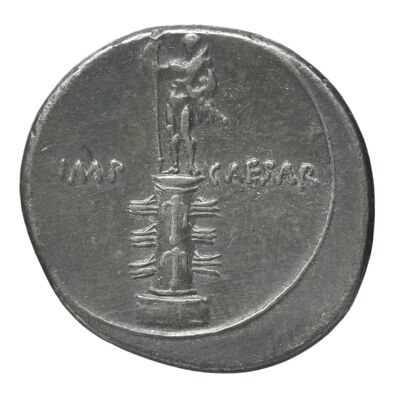
Bibliothèque nationale de France (Gallica), IMP-3668. non-commercial reuse permitted. https://gallica.bnf.fr/ark:/12148/btv1b10442555w
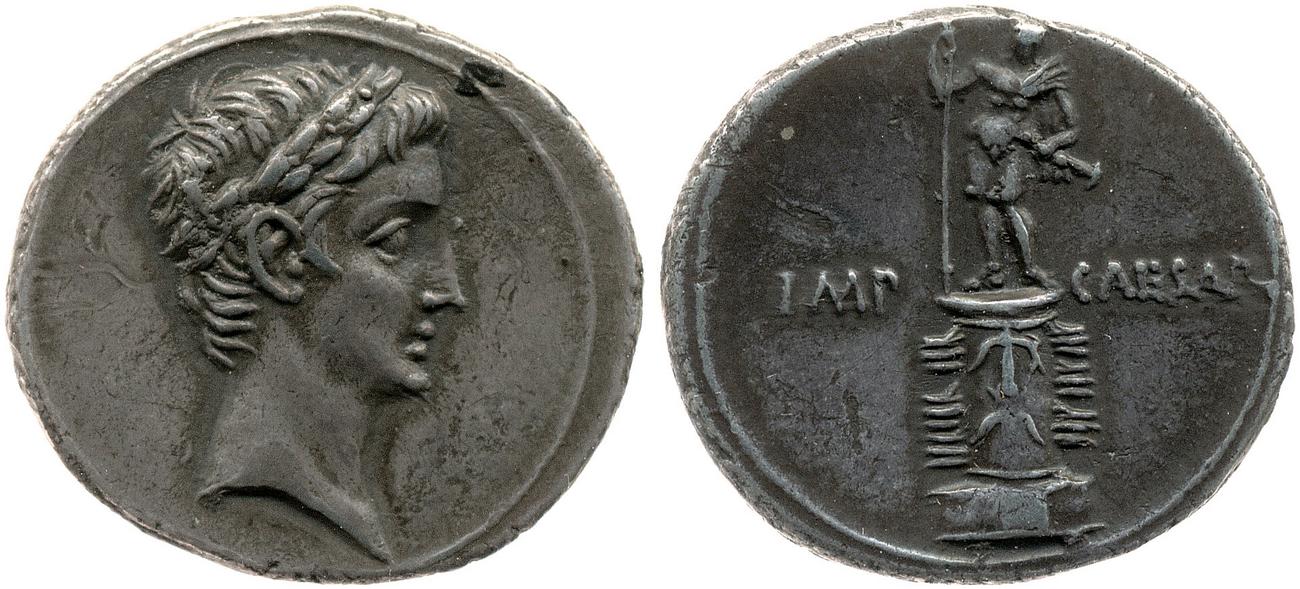
© The Trustees of the British Museum, 1866,1201.4181. CC BY-NC-SA 4.0. https://www.britishmuseum.org/collection/object/C_1866-1201-4181
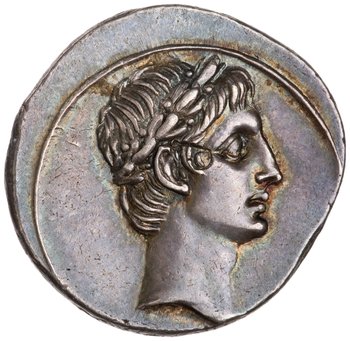
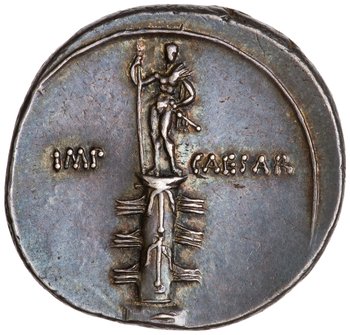
American Numismatic Society, 1937.158.448. CC BY-NC 4.0. https://numismatics.org/collection/1937.158.448
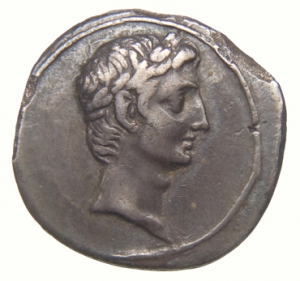
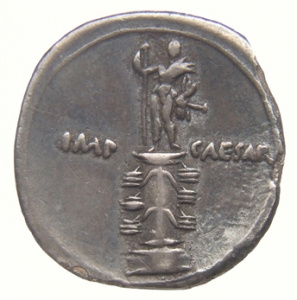
Münzkabinett, Staatliche Museen zu Berlin, 18207253. CC BY-NC-SA 4.0. https://ikmk.smb.museum/object?id=18207253
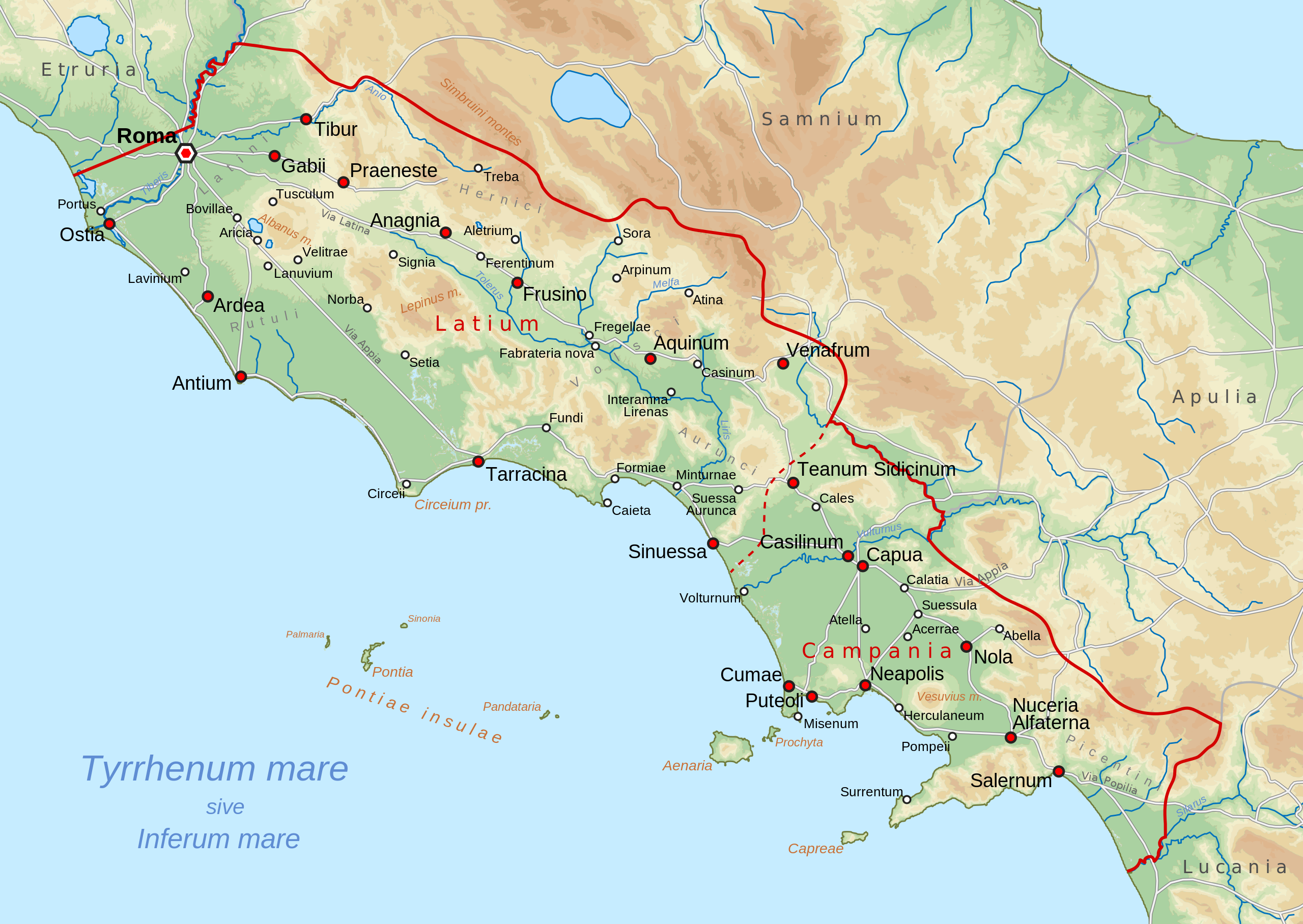
Regio I, Latium et Campania — the heartland of Roman Italy as organized under Augustus within a few years of this coin. Roma sits at the upper left, marked by the map’s hexagonal capital symbol and bold label. The rostral column with Octavian’s statue stood in the Forum; the mint of this series is an uncertain Italian one, probably Rome itself.
“Map of Augustan Regio I Latium et Campania” by Tomisti (Wikimedia Commons), File:Regio I Latium et Campania map.svg, licensed CC BY-SA 4.0; cities and roads based on the Digital Atlas of the Roman Empire (DARE) and Pleiades; topographic base © OpenMapTiles, © OpenStreetMap contributors. Rasterized from SVG to PNG; otherwise reproduced unmodified (Roma already carries the base map’s capital marker).
This denarius belongs to the most consequential coin series of the Roman revolution: the IMP CAESAR / CAESAR DIVI F issues struck in Italy in the months around Octavian’s victory at Actium (September 31 BC) and his conquest of Egypt (August 30 BC). Sear places this type in autumn 30 – summer 29 BC (CRI 423); RIC spreads the group across 29–27 BC. Either way it was made for the greatest demobilization in Roman history — tens of legions to be paid off and settled — and made by a man who was, for the moment, simply Imperator Caesar: the two words split across the reverse field are the whole legend, and the whole claim. Within two or three years the Senate would add a third word, Augustus, and the coinage of the Empire proper would begin — see the collection’s Augustus & Tiberius quadriga denarius from the other end of the reign.
Graphic: JSB Coins, 2026 (CC0).
The reverse shows not Octavian but a statue of him — nude in the heroic Greek manner, cloak over the shoulder, spear in hand — standing on a column studded with the bronze rams (rostra) of warships, with anchors among the fittings. Honorific columnae rostratae were Rome’s oldest naval monument, going back to C. Duilius’s column for the victory over Carthage at Mylae in 260 BC. A moneyer had already worked the same emblem in miniature: the denarius of Q. Fabius Labeo of 124 BC slips an ancestral ship’s beak under Jupiter’s horses as a family boast. Here the beak has become a monument, and the boast is the state’s. Appian (Civil Wars 5.130) records that after Agrippa destroyed Sextus Pompeius’s fleet at Naulochus in 36 BC, Octavian was honored with a gilded statue atop a rostral column in the Forum, inscribed to the restorer of “peace, long disturbed, on land and sea” — and that monument is the usual identification of the coin’s reverse. Since the series itself celebrates Actium, some scholars prefer to read the image more broadly, as naval victory summed up in one emblem; the sources do not settle it. What the type unmistakably does is advertise mastery of the sea — the same claim his rival made from the opposite shore with the fleet-and-legions coinage of Antony’s legionary denarii.
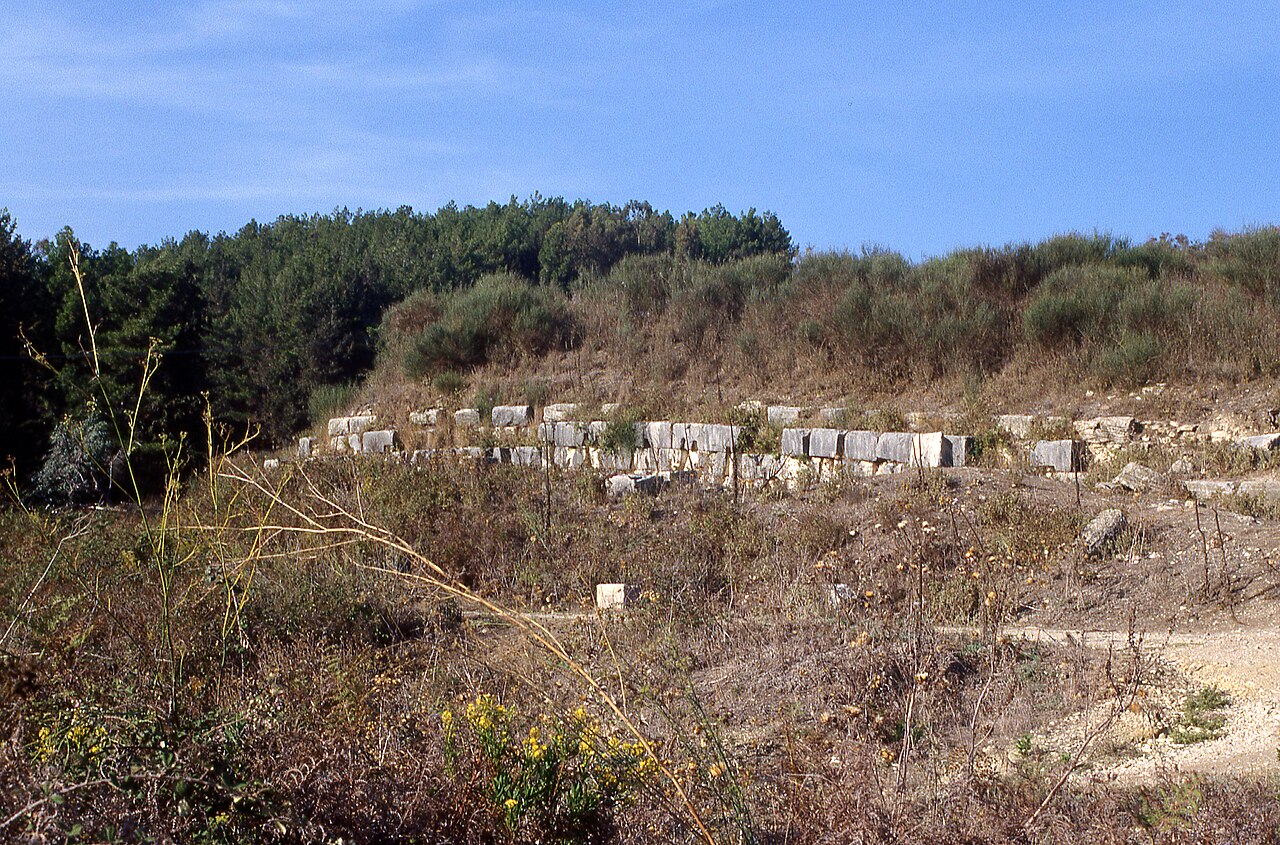
Photo: Mark Landon, CC BY 4.0 (Wikimedia Commons); reproduced unmodified.
The portrait side carries no legend at all — a remarkable confidence, letting the idealized features answer for themselves. The head is laureate, the wreath of the triumphator, and the styling is deliberately Apolline: Octavian cultivated Apollo, to whom he credited Actium and whose great Palatine temple he dedicated in 28 BC, and the smooth, youthful, long-necked portraits of this series assimilate the young Caesar to the god without quite saying so. Numismatists have long debated how far the assimilation goes on individual dies (some catalogues describe the head outright as Apollo with Octavian’s features); this catalogue follows the mainstream reading of a laureate Octavian in Apolline style. The dynasty he founded is traced onward in this collection through the Tribute Penny of Tiberius; its founding moment, Caesar’s crossing into civil war, is present in the elephant denarius of Julius Caesar; and the Rome mint’s last Republican moneyers appear in the Apollo & Diana denarius of P. Clodius Turrinus of 42 BC.
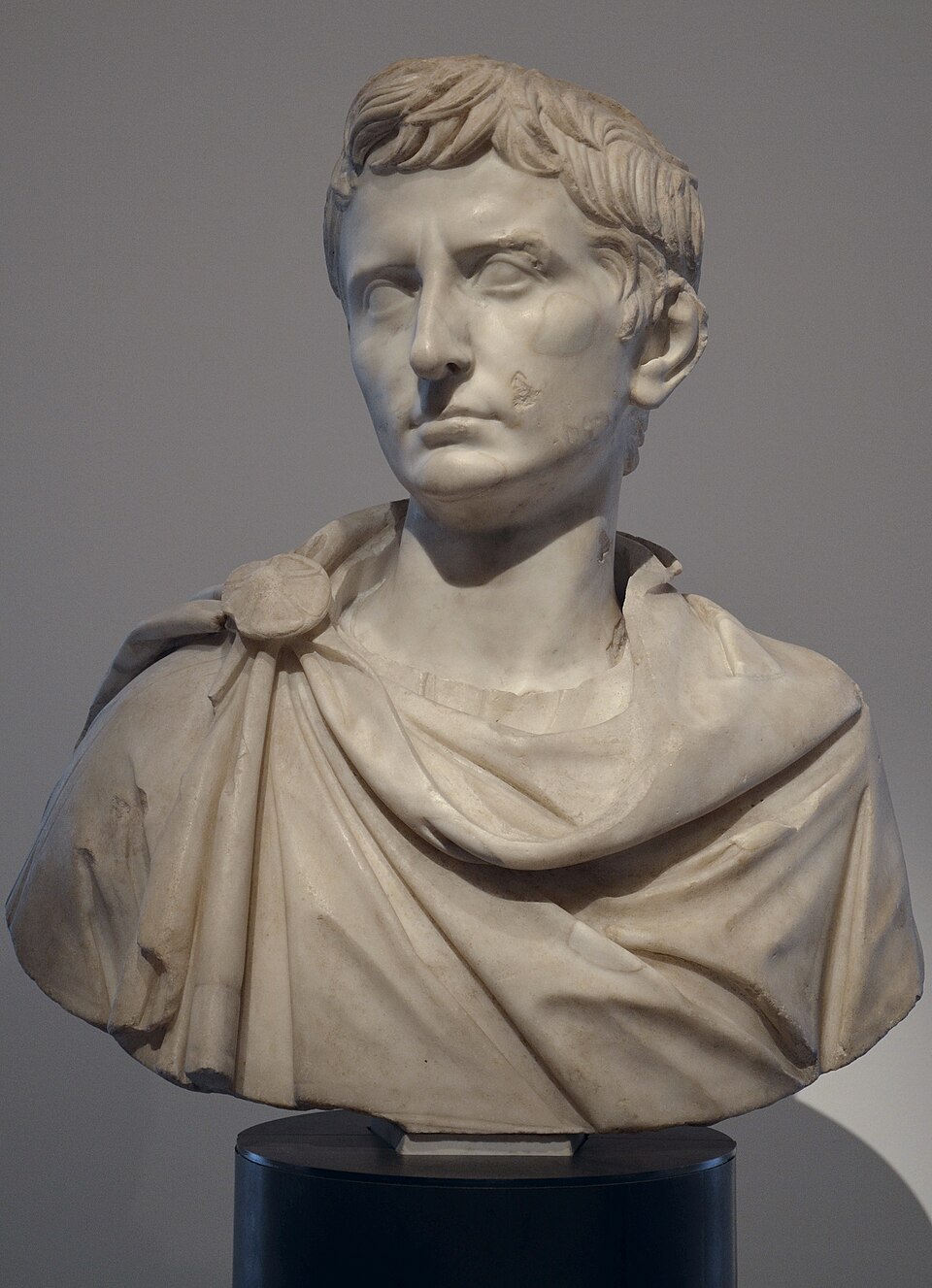
Photo: Carole Raddato (Following Hadrian), Wikimedia Commons, licensed CC BY-SA 2.0, reproduced unmodified.
The IMP CAESAR series is where Roman coinage crosses from Republic to Empire: no moneyer’s name, no SC, no god on the reverse — instead the victor’s own statue, his own (implied) face, and a two-word name that was becoming a title. This rostral-column type in particular is a primary document for a lost monument of the Roman Forum, one of the images through which Octavian converted naval victory in a civil war into the permanent-looking authority that, in 27 BC, was renamed Augustus.
Attribution follows RIC I (revised) 271 and Sear, The History and Coinage of the Roman Imperators (CRI) 423; the type is also RSC 124, BMC 633, and Sear RCV 1559. The rostral column and gilded statue voted after Naulochus are recorded by Appian, Civil Wars 5.130; on Duilius’s column, Pliny, Natural History 34.20. On the Apolline styling of Octavian’s post-Actium portraiture, see P. Zanker, The Power of Images in the Age of Augustus (Ann Arbor 1988), on the victory monuments and portrait types of the period.
Part of the celebrated IMP CAESAR / CAESAR DIVI F victory series struck in Italy in the months around and after Actium, before Octavian took the name Augustus in January 27 BC. The date is given as autumn 30 – summer 29 BC by Sear (CRI 423) and more broadly as 29–27 BC by RIC; both agree the mint is an uncertain Italian one, probably Rome. The reverse monument is usually identified with the honorific column voted to Octavian after the defeat of Sextus Pompeius at Naulochus in 36 BC — Appian (Civil Wars 5.130) records a gilded statue of Octavian on a column decorated with ships' beaks set up in the Forum — though, given the series' post-Actium date, some read it as a general emblem of naval victory embracing Actium itself; the question is left open here.
John's Ancient Coin Collection · Type · octavian-rostral-column-denarius
Image credits for this coin — photographs, maps and graphics used on this page