Type · clodius-turrinus-apollo-diana-denarius
Current: Roman Imperatorial, P. Clodius M.f. Turrinus (moneyer), AR denarius, Rome, 42 BC (Crawford 494/23)
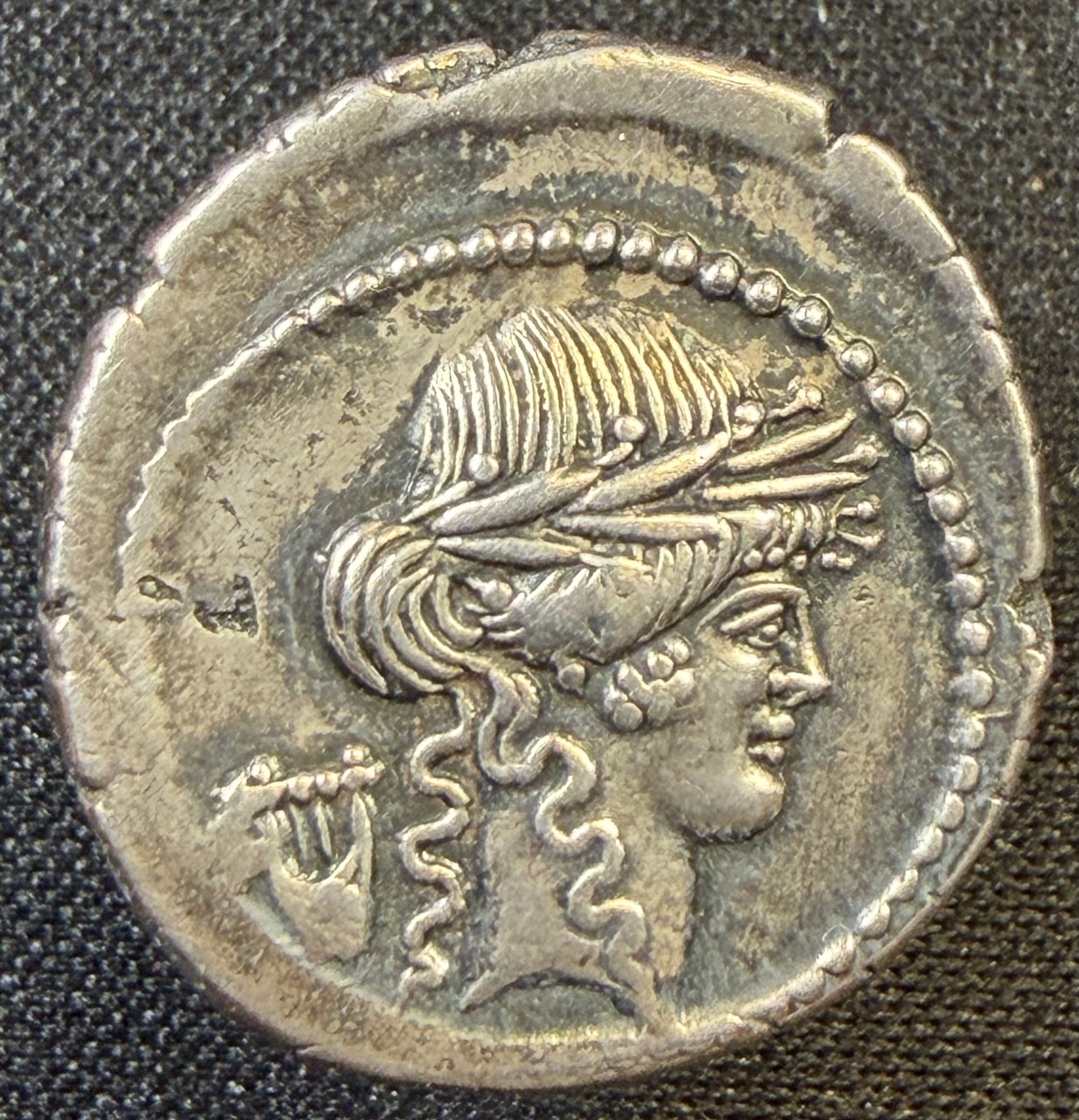
Obverse: Laureate head of Apollo right; lyre behind
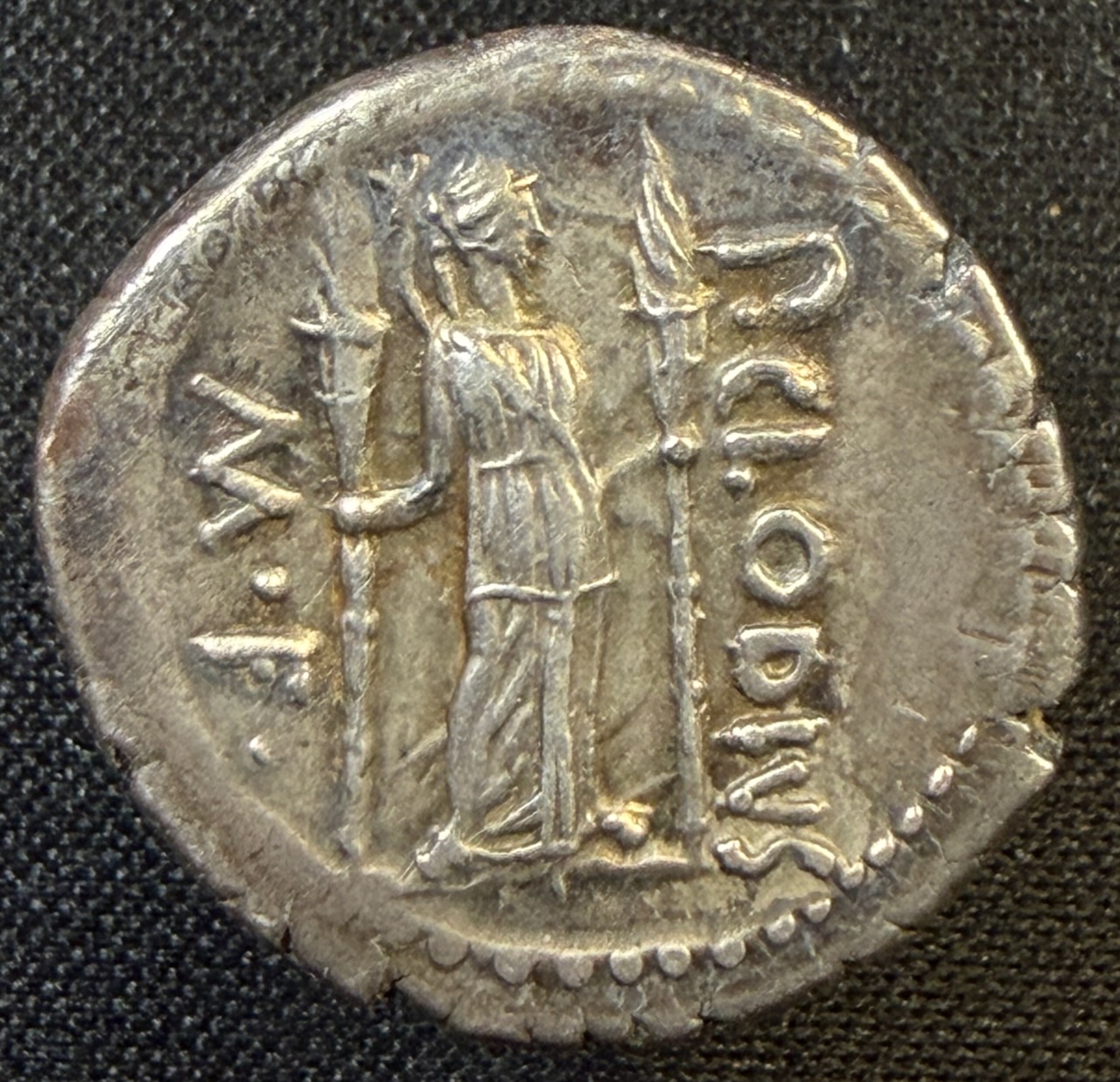
Reverse: Diana Lucifera standing facing, bow and quiver over her shoulder, holding a lighted torch in each hand
Primary reference: Crawford 494/23
118 specimens in public collections (BnF 23, ANS 22, British Museum 17, Fitzwilliam 13, Göttingen 5); 4 sale records in the Schaefer RRDP archive; weights 2.22–4.25 g, median 3.76 g across 113 recorded; die axis most often 12h; recorded in hoards CHRR 1PO, CHRR AGG, CHRR AGN, CHRR ALA, CHRR ALL, CHRR ALV, CHRR AQU, CHRR ARB and 84 more.
This collection's specimen, at 3.83 g (tag), is heavier than 59% of the recorded weights.
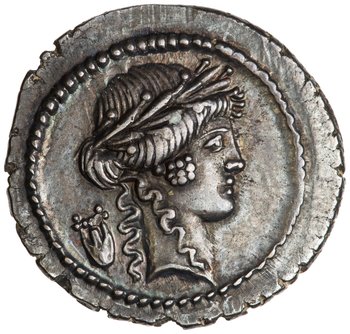
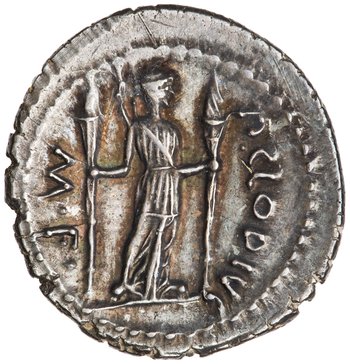
American Numismatic Society, 1935.117.28. CC BY-NC 4.0. https://numismatics.org/collection/1935.117.28
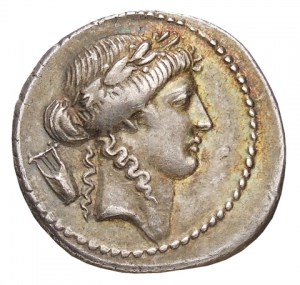
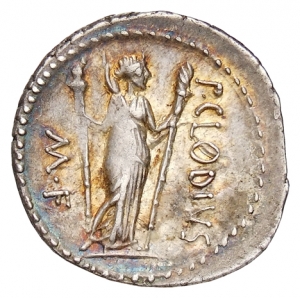
Münzkabinett, Staatliche Museen zu Berlin, 18233496. CC BY-NC-SA 4.0. https://ikmk.smb.museum/object?id=18233496
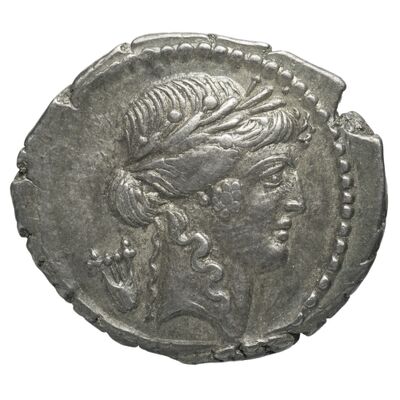
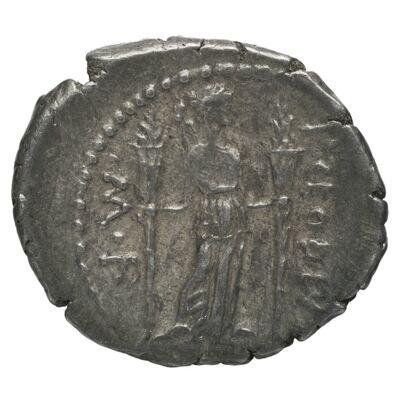
Bibliothèque nationale de France (Gallica), REP-21772. non-commercial reuse permitted. https://gallica.bnf.fr/ark:/12148/btv1b10453827b
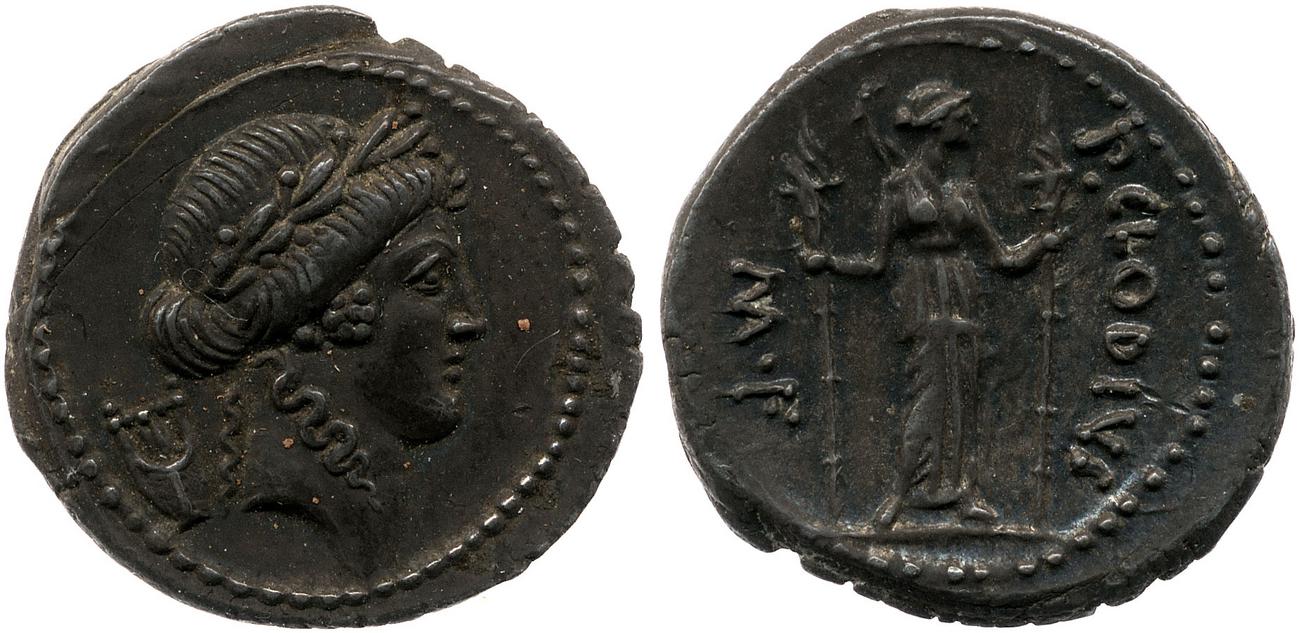
© The Trustees of the British Museum, 1845,0125.1. CC BY-NC-SA 4.0. https://www.britishmuseum.org/collection/object/C_1845-0125-1
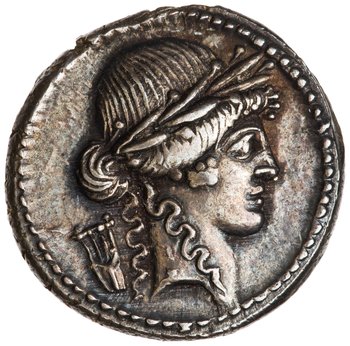
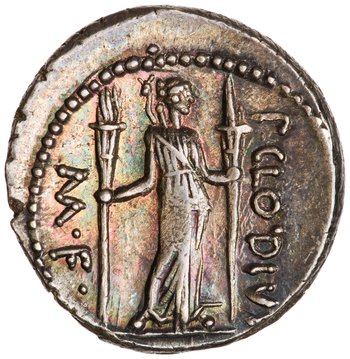
American Numismatic Society, 1941.131.323. CC BY-NC 4.0. https://numismatics.org/collection/1941.131.323
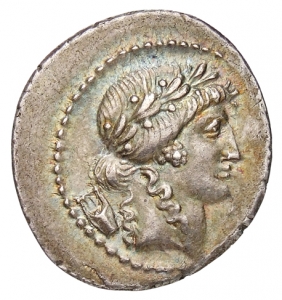
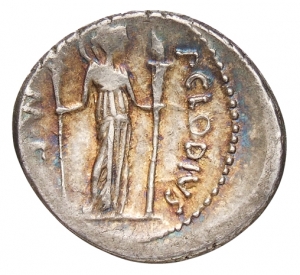
Münzkabinett, Staatliche Museen zu Berlin, 18233497. CC BY-NC-SA 4.0. https://ikmk.smb.museum/object?id=18233497
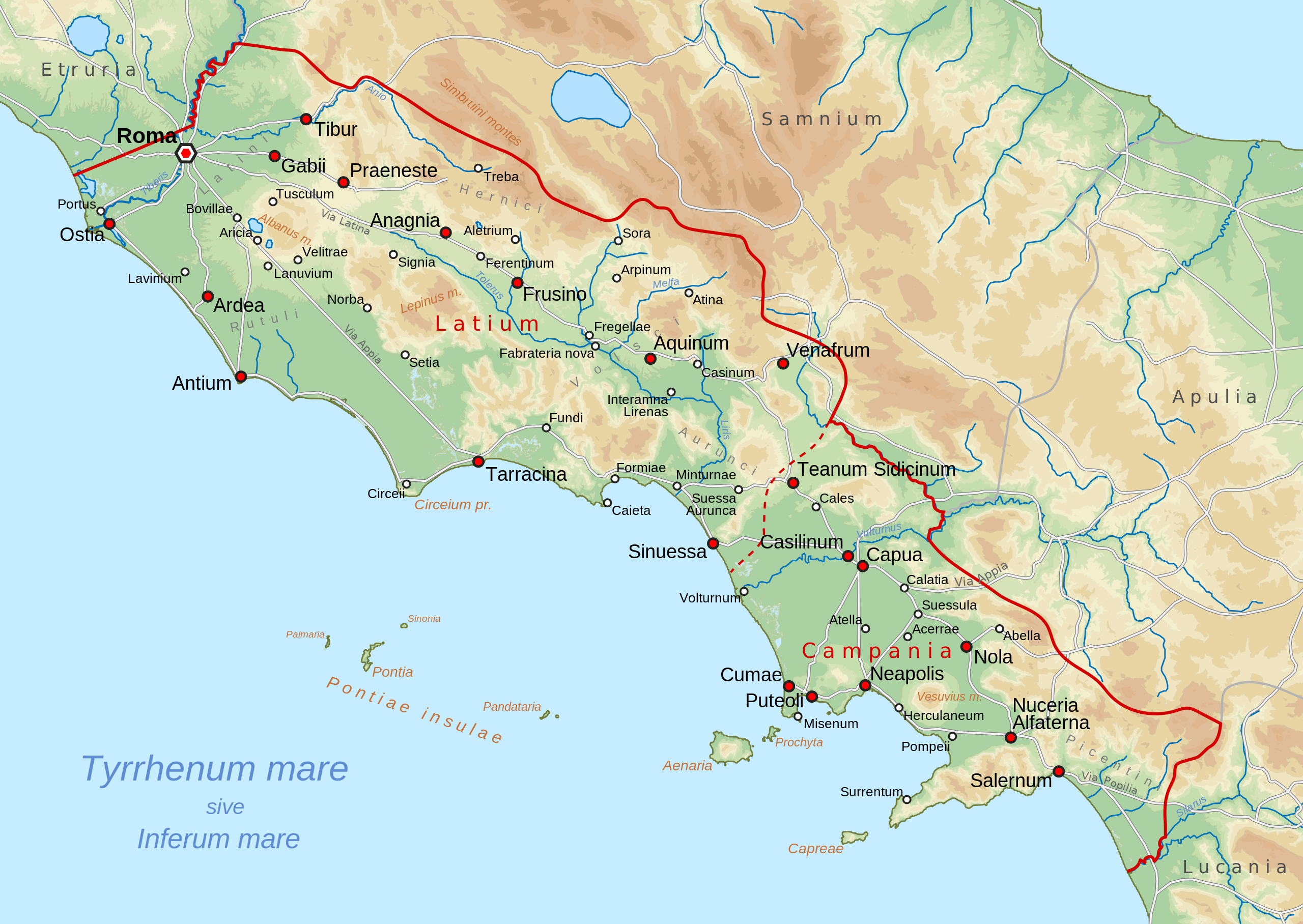
Regio I, Latium et Campania — the heartland of Roman Italy as organized under Augustus, a generation after this coin. Roma sits at the upper left, marked by the map’s hexagonal capital symbol and bold label, with Ostia at the Tiber’s mouth below and the Via Appia running southeast toward Capua. The mint of the Republic stood on the Capitoline beside the temple of Juno Moneta — the goddess whose epithet gave “money” its name.
“Map of Augustan Regio I Latium et Campania” by Tomisti (Wikimedia Commons), File:Regio I Latium et Campania map.svg, licensed CC BY-SA 4.0; cities and roads based on the Digital Atlas of the Roman Empire (DARE) and Pleiades; topographic base © OpenMapTiles, © OpenStreetMap contributors. Rasterized from SVG to PNG; otherwise reproduced unmodified (Roma already carries the base map’s capital marker).
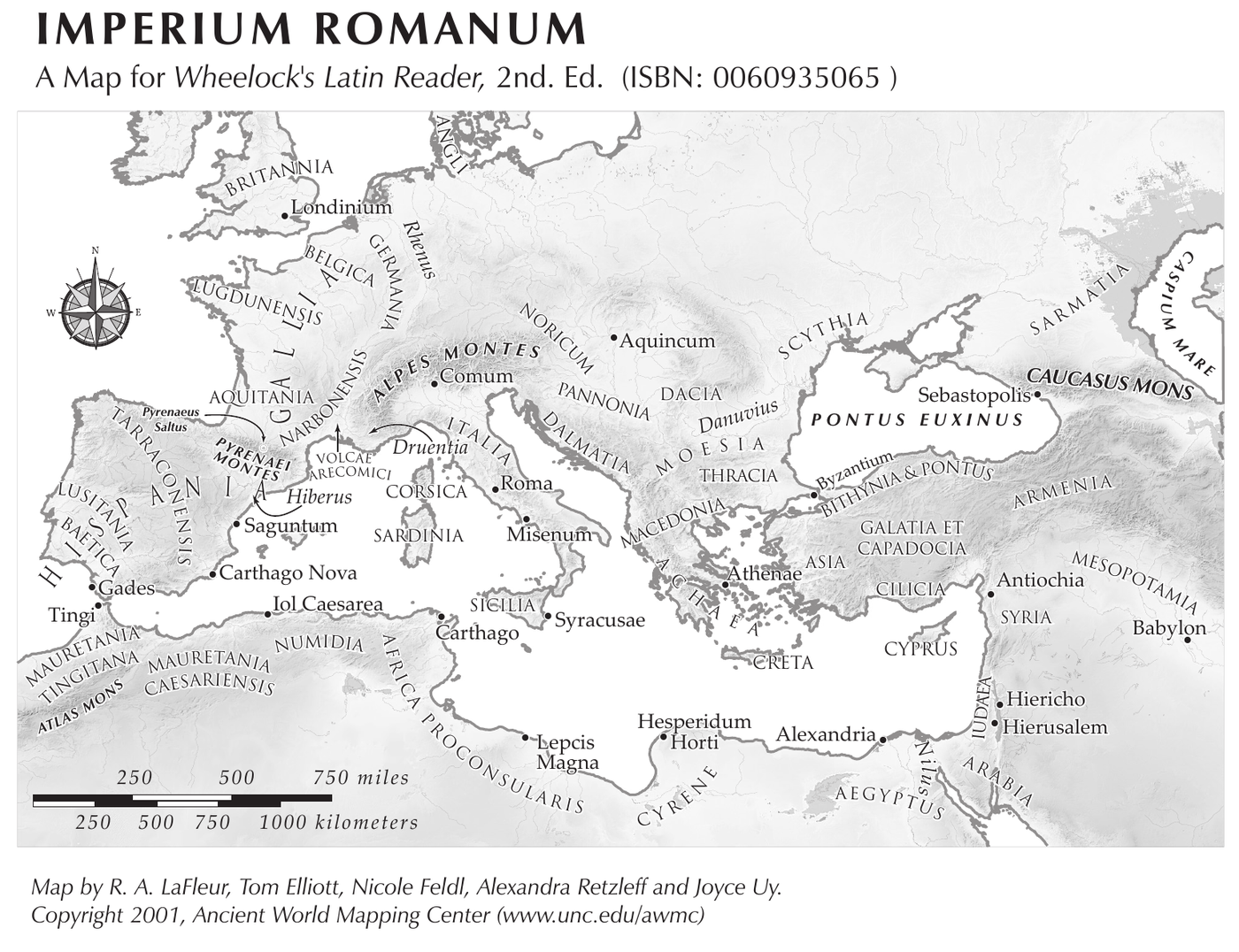
Roma sits at the center of Italia. Struck in 42 BC, the year the Republic ended at Philippi in Macedonia, on the road east from the Adriatic. The moneyers went on striking at Rome while the decision was taken four hundred miles away.
This denarius was struck at Rome in 42 BC, one of the most consequential years in Roman history: the year the Triumvirs Antony, Octavian, and Lepidus avenged Caesar at Philippi and extinguished the Republican cause of Brutus and Cassius. The city mint worked at extraordinary pace to pay for it. Crawford’s issue 494 — the output of the year’s moneyer college, to which Publius Clodius, son of Marcus, surnamed Turrinus, belonged — spans gold and silver, portrait heads of the living Triumvirs (a novelty pioneered only two years earlier) alongside traditional divine types like this one. A single year’s coinage thus straddles two worlds: the old moneyer’s privilege of choosing gods and family themes, and the new reality of dynasts’ faces on the money.
Graphic: JSB Coins, 2026 (CC0).
Clodius’s choice of types pairs the divine twins of Delos: Apollo laureate with his lyre on the obverse, and on the reverse his sister Diana in her aspect as Lucifera, the light-bringer, a torch blazing in each hand, her bow and quiver slung at her shoulder. The twins carried rich associations — light, prophecy, and order — that had obvious appeal amid civil war, and Apolline types had long precedent in the Republican series. Whether Clodius intended a specific family allusion (the ludi Apollinares connection claimed by some moneyers’ families) or a broader appeal to divine favor is not settled by the sources; Crawford (RRC, on 494) discusses the year’s types as a group without tying this pairing to a documented family claim, and it is safest to leave the moneyer’s precise motive open.
P. Clodius M.f. Turrinus is otherwise little known — his career survives principally through this coinage, which is among the more common and more handsome silver issues of the year. The moneyers of 42 BC (L. Livineius Regulus, P. Clodius, L. Mussidius Longus, and C. Vibius Varus) were the last colleges to sign the silver of a nominally functioning Republic in any quantity; within a decade the mint of Rome fell largely silent as coinage followed the warlords and their armies — culminating in Antony’s legionary denarii struck in camp for the Actium campaign. For the moneyer’s office in its untroubled prime, a century earlier, see the collection’s denarius of L. Antestius Gragulus of 136 BC. A denarius like this one would very plausibly have ended up in a legionary’s pay chest in the Philippi campaign season.

Photo: Carole Raddato, CC BY-SA 2.0 (Wikimedia Commons); reproduced unmodified.
The issue sits at the hinge between Republic and Empire. On this coin the old iconographic language still holds — gods, not generals — even as sibling issues of the same emission carry the faces of Antony and Octavian. Set beside the collection’s Augustus & Tiberius quadriga denarius of 13–14 AD, it bookends the transformation: from a moneyer’s Apollo struck to fund the Triumvirs’ war, to an emperor’s dynastic advertisement struck at the end of the first reign, a little over half a century later. The hinge between them is in the collection as well: the rostral-column denarius of Octavian, struck after Actium with no moneyer, no god, and no name but Imperator Caesar.
Attribution, date, and mint follow Michael H. Crawford, Roman Republican Coinage (Cambridge 1974), no. 494/23; the type is also Sydenham 1117 and RSC Claudia 15. The events of 42 BC and the Philippi campaign are narrated by Appian (Civil Wars 4, linked in the references) and Cassius Dio (47). This specimen is NGC-certified (Ch XF, cert. 4933921-009) and comes from the Richard Basler collection via Michael Bezayiff (see specimen record).
Part of the very large Rome-mint emission of 42 BC (Crawford 494), struck by the moneyer college of that year while the Triumvirs were financing the Philippi campaign; the series includes both portrait issues for the Triumvirs and deity types such as this one. The paired twins Apollo (with lyre) and Diana as Lucifera ('light-bringer', with her two torches) form a deliberate obverse/reverse unit.
John's Ancient Coin Collection · Type · clodius-turrinus-apollo-diana-denarius
Image credits for this coin — photographs, maps and graphics used on this page
.jpg)