Type · scaurus-aretas-camel-denarius
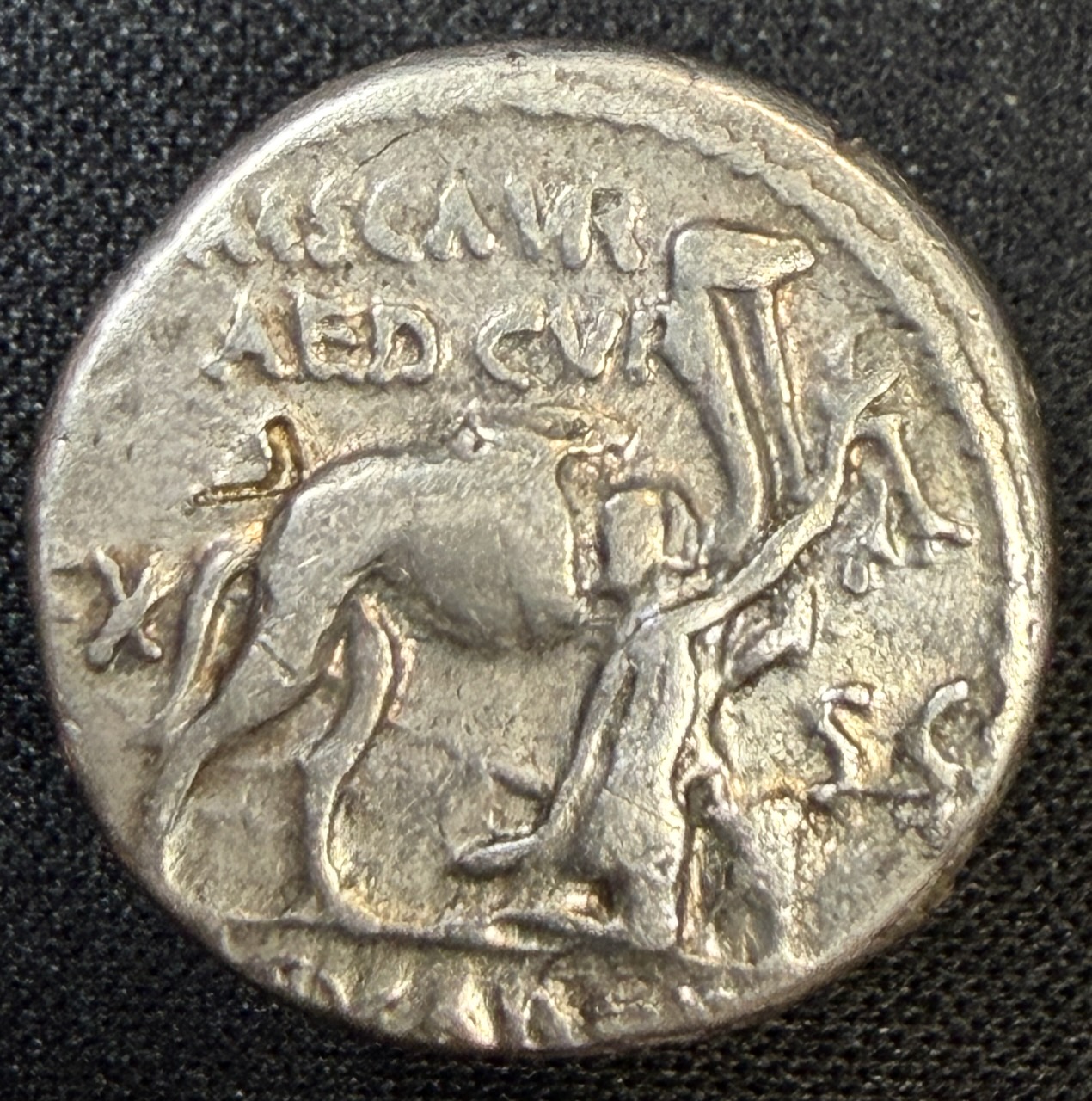
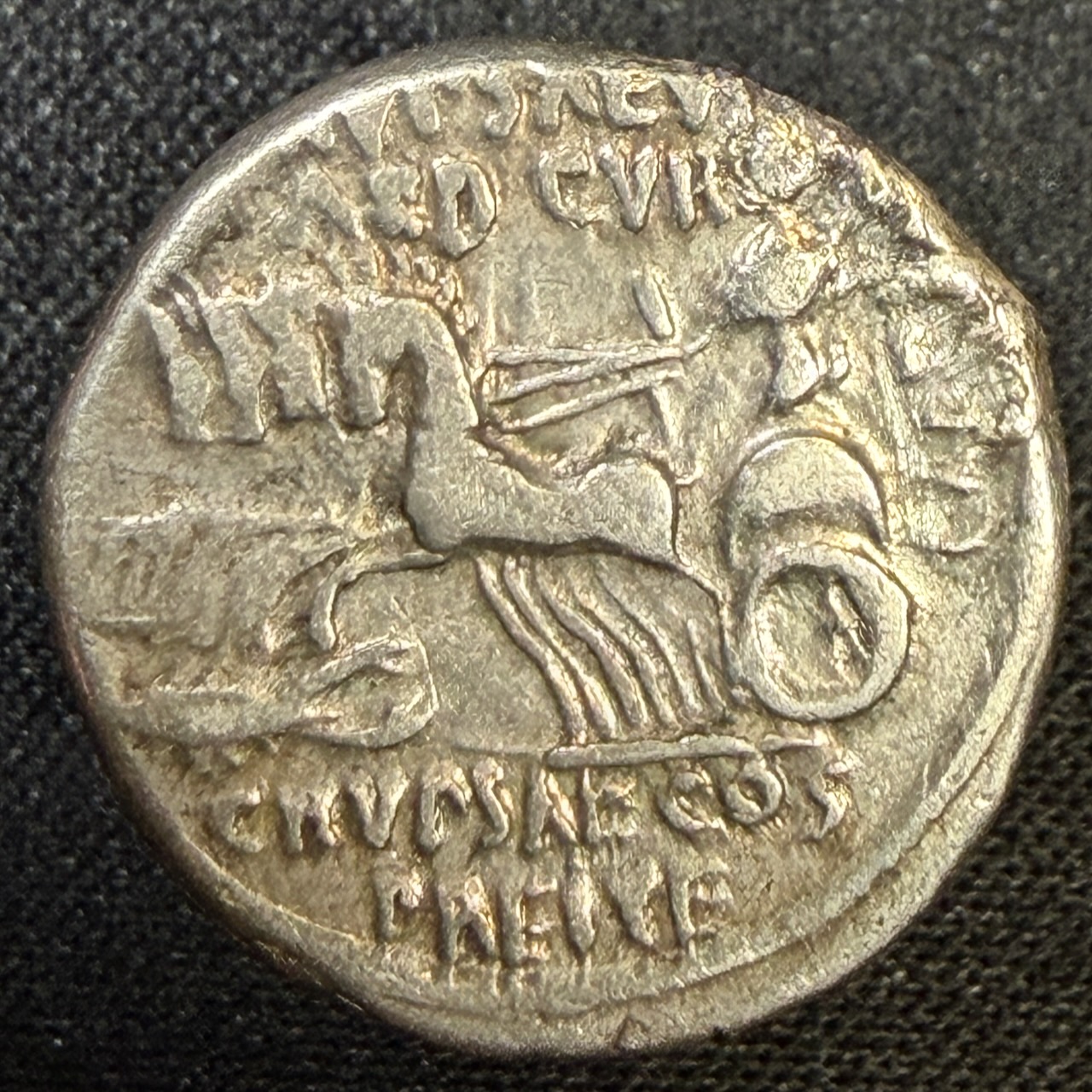
Current: Roman Republic, M. Aemilius Scaurus and P. Plautius Hypsaeus, curule aediles, AR denarius, Rome, 58 BC. King Aretas kneeling beside camel / Jupiter in quadriga, scorpion below (Crawford 422/1b)
Obverse: King Aretas III of Nabataea kneeling right beside his camel, extending an olive branch in supplication
Reverse: Jupiter in quadriga left, brandishing thunderbolt; scorpion below the horses
Primary reference: Crawford 422/1b
125 specimens in public collections (British Museum 28, ANS 25, Fitzwilliam 14, DNB (Netherlands) 10, BnF 7); weights 2.62–4.46 g, median 3.87 g across 123 recorded; die axis most often 6h; recorded in hoards CHRR 1PO, CHRR AGN, CHRR ALA, CHRR ALL, CHRR ALV, CHRR AN1, CHRR ANA, CHRR AQU and 90 more.
This collection's specimen, at 3.97 g (tag), is heavier than 76% of the recorded weights.
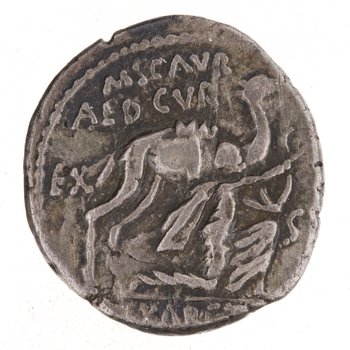
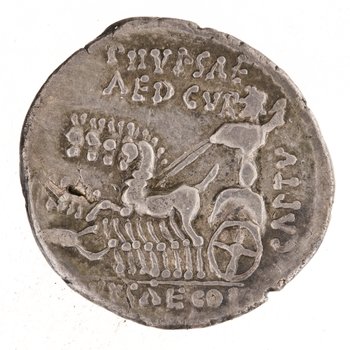
American Numismatic Society, 1908.89.11. CC BY-NC 4.0. https://numismatics.org/collection/1908.89.11
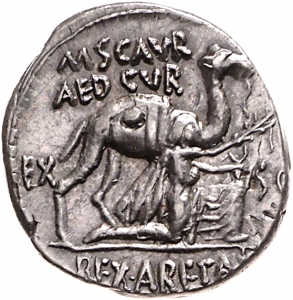
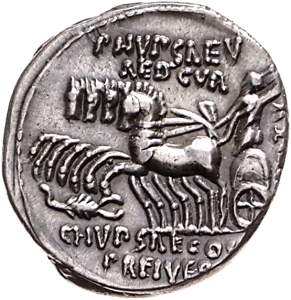
Münzkabinett, Staatliche Museen zu Berlin, 18201838. CC BY-NC-SA 4.0. https://ikmk.smb.museum/object?id=18201838
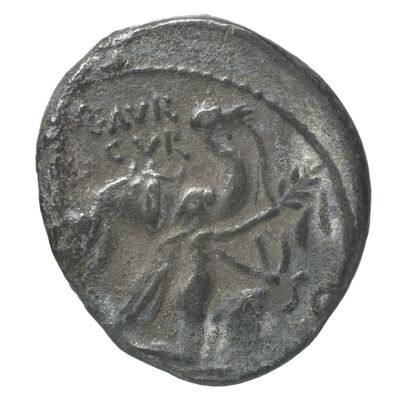
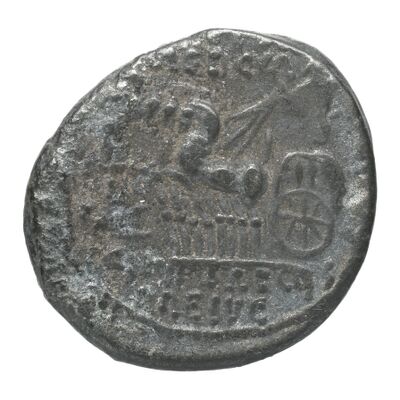
Bibliothèque nationale de France (Gallica), REP-22669. non-commercial reuse permitted. https://gallica.bnf.fr/ark:/12148/btv1b10454724z
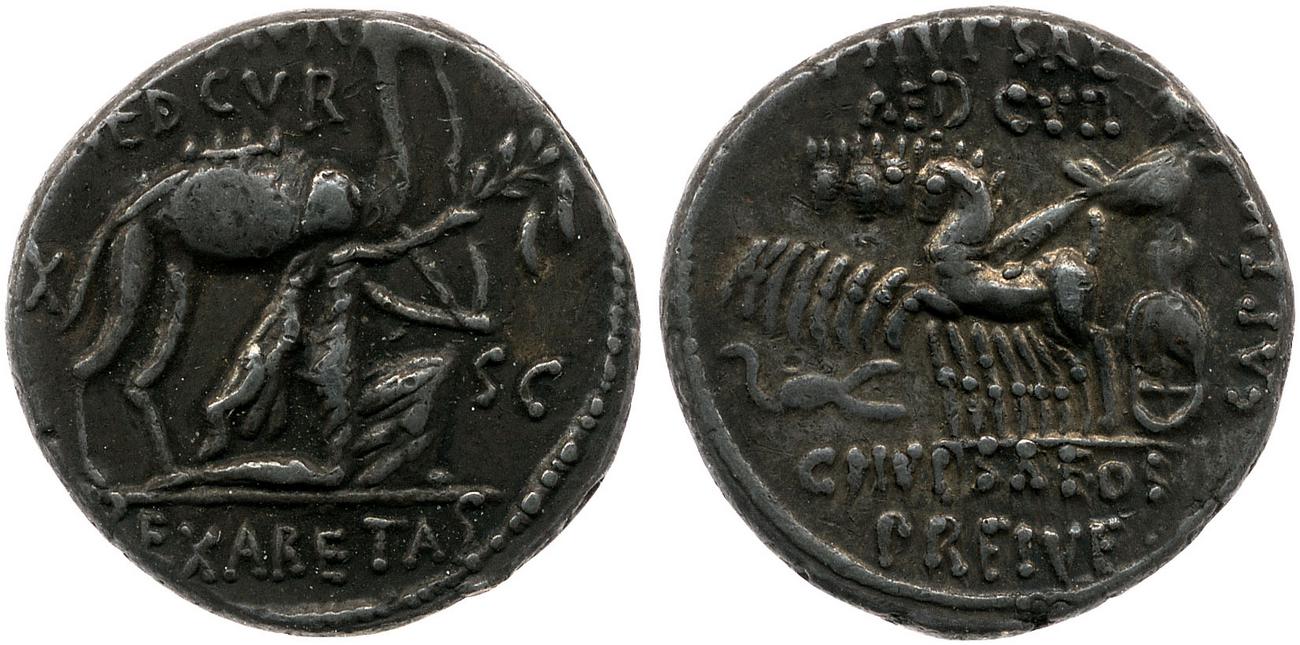
© The Trustees of the British Museum, 1843,0116.958. CC BY-NC-SA 4.0. https://www.britishmuseum.org/collection/object/C_1843-0116-958
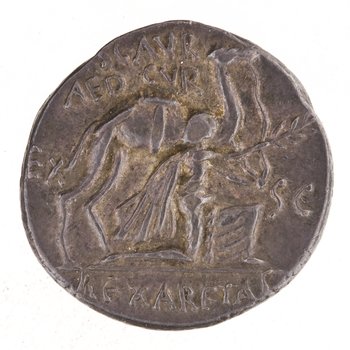
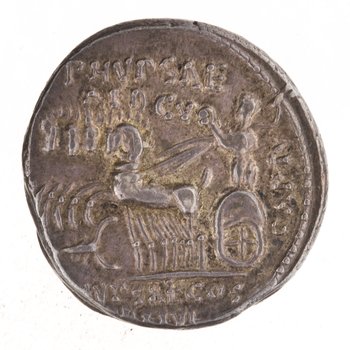
American Numismatic Society, 1922.40.1. CC BY-NC 4.0. https://numismatics.org/collection/1922.40.1
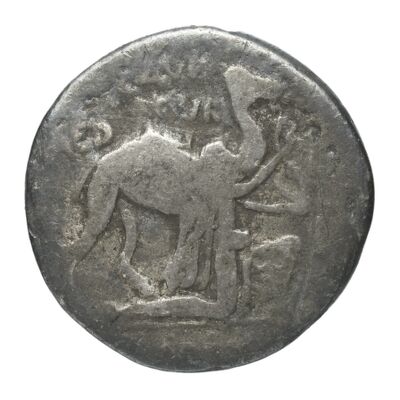
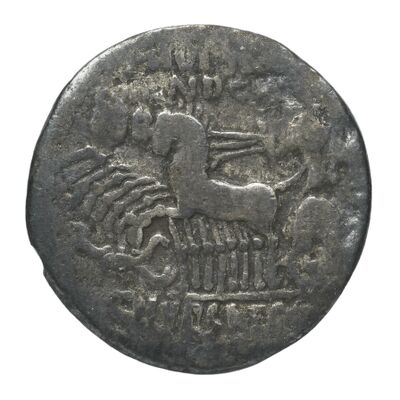
Bibliothèque nationale de France (Gallica), REP-22670. non-commercial reuse permitted. https://gallica.bnf.fr/ark:/12148/btv1b10454725d
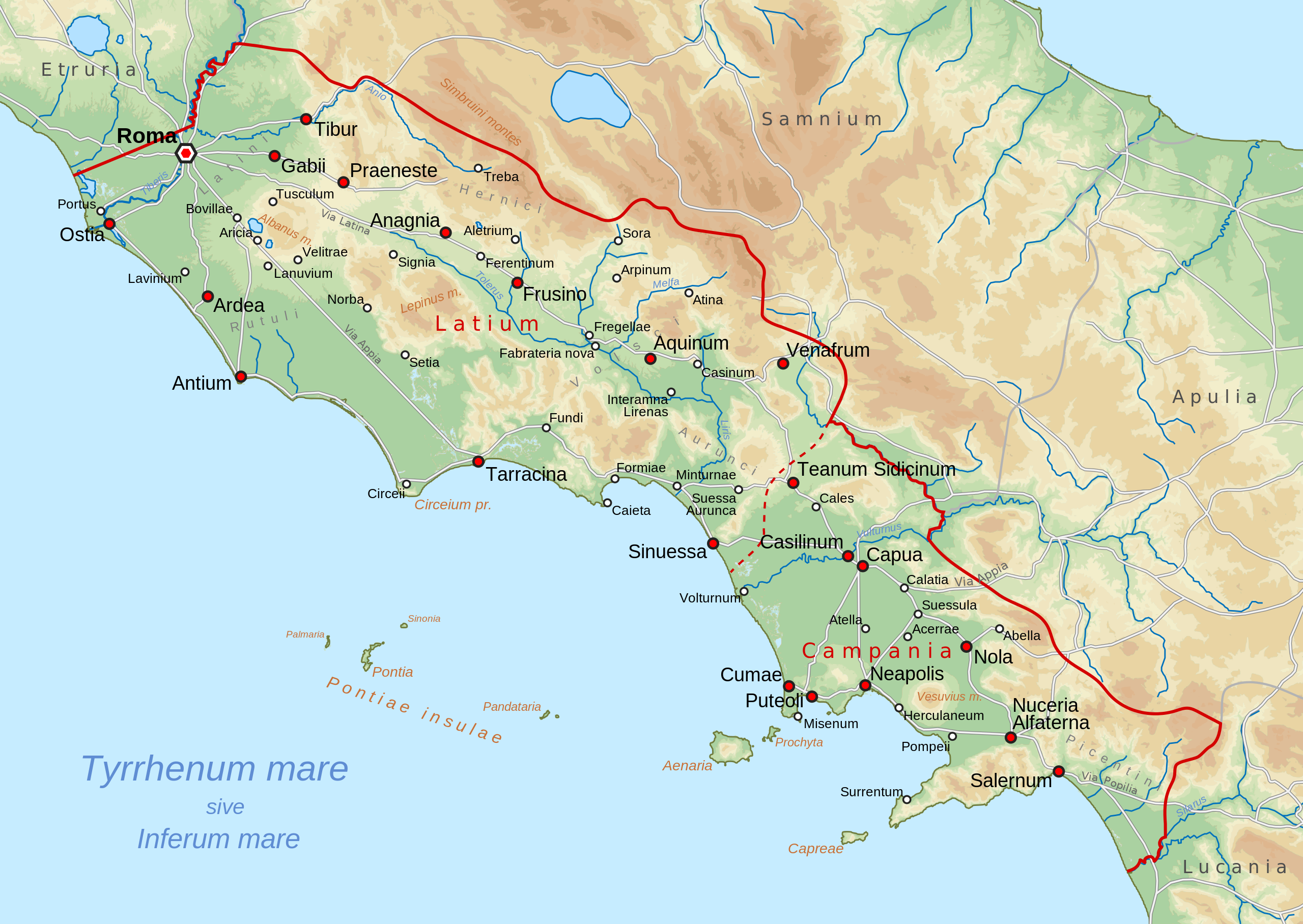
Regio I, Latium et Campania — the heartland of Roman Italy as organized under Augustus, half a century after this coin. Roma sits at the upper left, marked by the map’s hexagonal capital symbol and bold label. The Republican mint stood on the Capitoline beside the temple of Juno Moneta; the events the obverse commemorates took place two thousand miles east, before the walls of Petra.
“Map of Augustan Regio I Latium et Campania” by Tomisti (Wikimedia Commons), File:Regio I Latium et Campania map.svg, licensed CC BY-SA 4.0; cities and roads based on the Digital Atlas of the Roman Empire (DARE) and Pleiades; topographic base © OpenMapTiles, © OpenStreetMap contributors. Rasterized from SVG to PNG; otherwise reproduced unmodified (Roma already carries the base map’s capital marker).
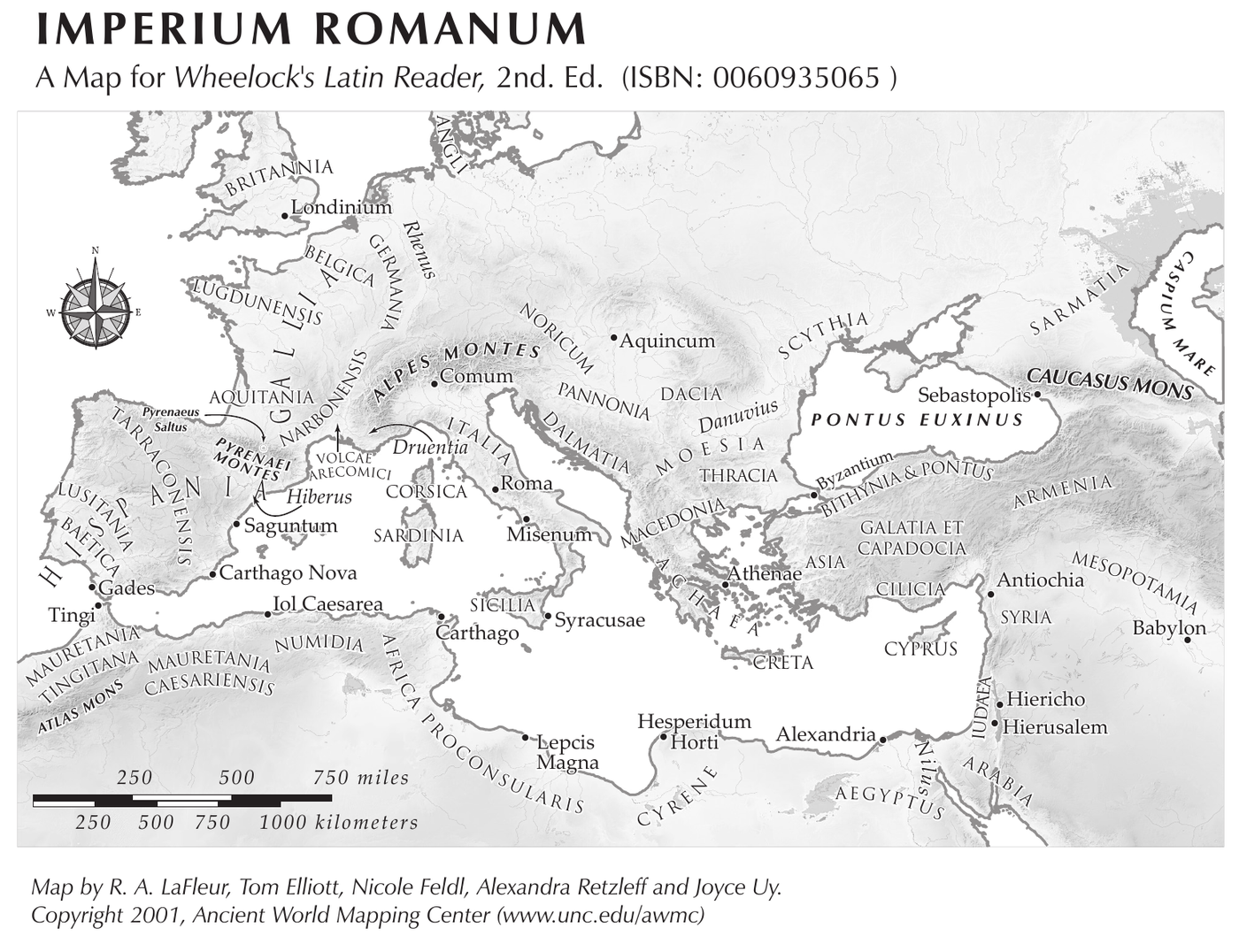
Roma sits at the center of Italia. The reverse shows Aretas of Nabataea kneeling. His kingdom lay south-east of Hierusalem, on the far right of this map, in the Arabia that the caravan routes crossed — which is what Scaurus was really doing there in 62 BC, and what he was advertising in Rome four years later.
No Roman coin before this one had ever shown its maker’s own résumé. In 62 BC, Marcus Aemilius Scaurus — Pompey’s lieutenant, left in charge of Syria after the conquest of the East — marched on Petra, the rock-cut capital of Aretas III, king of the Nabataean Arabs. Josephus tells the story: the campaign bogged down in the desert, and Scaurus settled for a negotiated submission, withdrawing after Aretas paid 300 talents of silver. Four years later, as curule aedile at Rome, Scaurus put that settlement on the coinage — improved. The obverse shows Aretas kneeling beside his camel, olive branch extended, above the blunt caption REX ARETAS: a paid withdrawal recast as a king’s surrender, broadcast on millions of denarii. Crawford flags it as the first instance of a moneyer publicizing an event from his own career on Roman coinage.
Graphic: JSB Coins, 2026 (CC0).
The issue was struck EX S·C — by special decree of the Senate — to fund the games of the aedileship of 58 BC, which Scaurus shared with Publius Plautius Hypsaeus. Each magistrate took a side of the coin. Hypsaeus, having no eastern victory of his own, reached back generations in the traditional manner: his reverse shows Jupiter in a quadriga hurling his thunderbolt, with CAPTVM (“captured”) and the claim that his ancestor C. Hypsaeus as consul took Privernum — a war of the fourth century BC. On this variety (Crawford 422/1b) a small scorpion crawls beneath the horses as a control symbol; variety 1a lacks it. The pairing makes the coin a small essay in Roman political advertising: the new style (my own deeds, this decade) on one face, the old style (my ancestor’s deeds, three centuries back) on the other. The same Jupiter-in-quadriga formula appears on this collection’s much earlier L. Antestius Gragulus denarius of 136 BC.
What Scaurus actually marched against is worth seeing. Petra, the Nabataean capital, sits hidden in a sandstone canyon system south of the Dead Sea, reachable through a slot gorge a few meters wide — a city that grew fabulously rich brokering the incense and spice caravans from southern Arabia to the Mediterranean, and that spent the profits carving temples and tombs with Hellenistic facades directly out of the rose-colored cliffs. The kneeling king and the camel on the obverse are Rome’s cartoon of that world: the desert trader brought to heel. The reality was tougher. Scaurus’ column struggled in country whose wells the Nabataeans controlled, and the 300 talents were as much his exit as Aretas’ submission. Petra’s kingdom went on minting its own coins and running the caravans for another century and a half, until Trajan finally annexed it in AD 106 — outlasting, as it happened, the Roman Republic that had put its king on his knees in silver.
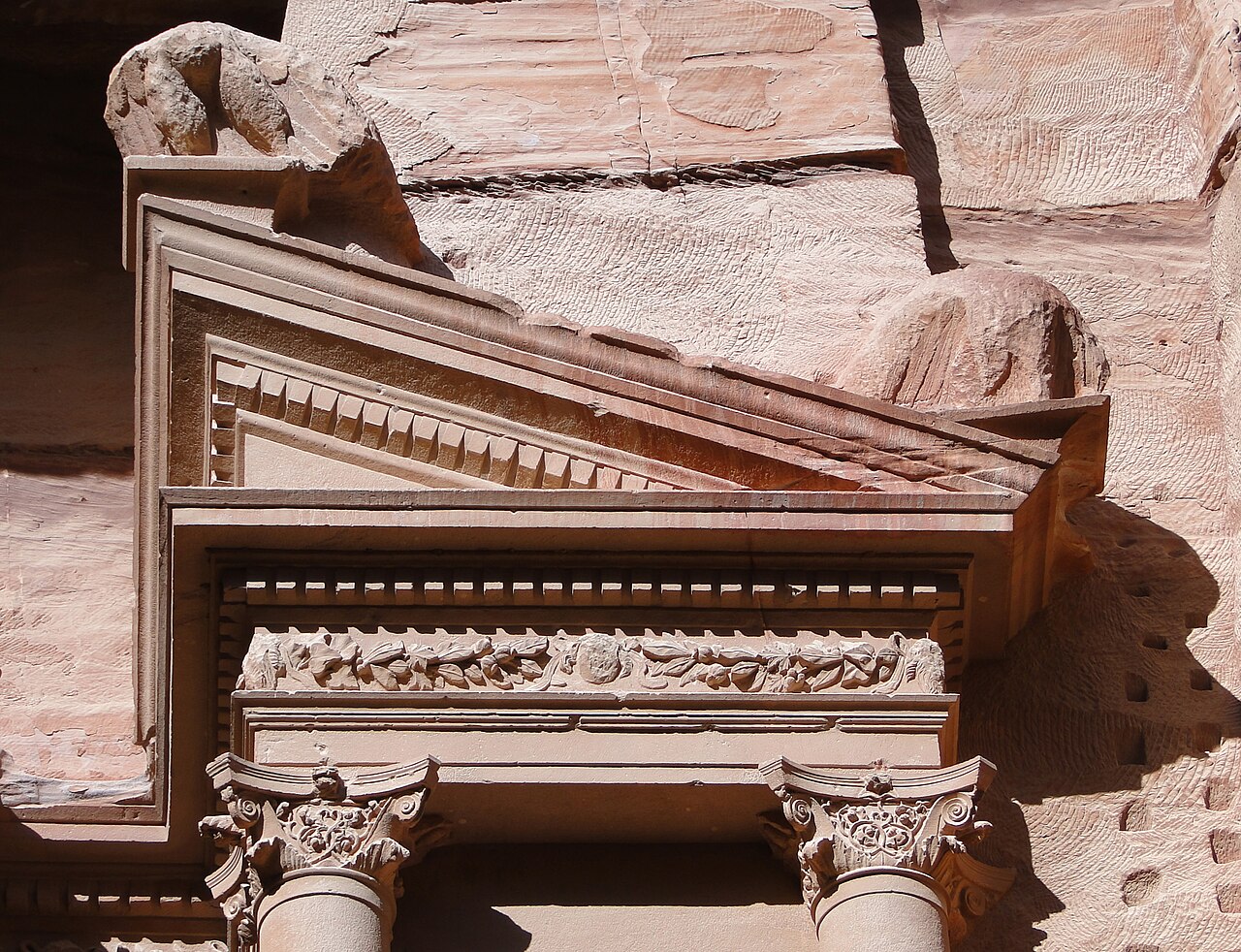
Photo: Bernard Gagnon, CC BY-SA 3.0 (Wikimedia Commons); reproduced unmodified.
Everyone on this coin came to a hard end. Scaurus’s aedilician games — with their temporary theater for 80,000 and imported wild beasts — bankrupted him into notoriety; prosecuted for extortion and then bribery, he died in exile. Hypsaeus, defeated for the consulship of 52 BC, was condemned in the violence that followed Clodius’s murder. Aretas III died about 62 BC, but his kingdom outlasted them all: Nabataea stayed independent, camel caravans and all, until Trajan annexed it in 106 AD. And Scaurus’s stepfather’s world was ending too — the year this coin was struck, 58 BC, was the year Caesar crossed into Gaul. In this collection the Republic’s next act is visible in the P. Satrienus wolf denarius struck a generation earlier, and the Antony legionary denarius struck a generation later, when the coinage had passed from aediles’ boasts to warlords’ payrolls. Two more rungs of the same ladder are in the collection: the denarius of Q. Fabius Labeo, whose rostrum claims an ancestor’s naval command, and the Victory biga denarius of M. Porcius Cato, a young moneyer putting the family name into every purse in Italy.
Attribution: Michael H. Crawford, Roman Republican Coinage (1974), no. 422/1b (scorpion variety), with Sydenham 913 and RSC/Babelon Aemilia 8 (the reference on the Zauche tag). The Nabataean campaign and the 300-talent settlement: Josephus, Antiquities 14.80–81 (Book 14 linked in the references; cf. Jewish War 1.159); Scaurus’s games and fall: Cicero (Pro Scauro), Pliny, Natural History 36.113–115. Crawford’s note on the issue as the first self-referential moneyer’s type is at RRC 422.
Crawford 422/1 divides by the reverse control symbol: 1a lacks it, 1b carries a scorpion below Jupiter's horses (present on this specimen). Struck EX S C — by special senatorial decree — to fund the aediles' games of 58 BC, and a famously large issue. Crawford notes it as the first Roman coinage on which a moneyer advertises an event of his own career (Scaurus's Nabataean settlement of 62 BC) rather than an ancestor's. The Zauche tag dates the issue 56 BC, an older dating; Crawford's 58 BC (the aedileship) is standard. Old-style flat 'Bactrian-looking' camel engraving is normal for the issue; the animal is the Arabian dromedary of Nabataea.
John's Ancient Coin Collection · Type · scaurus-aretas-camel-denarius
Image credits for this coin — photographs, maps and graphics used on this page