Type · antony-legionary-denarius-leg-x
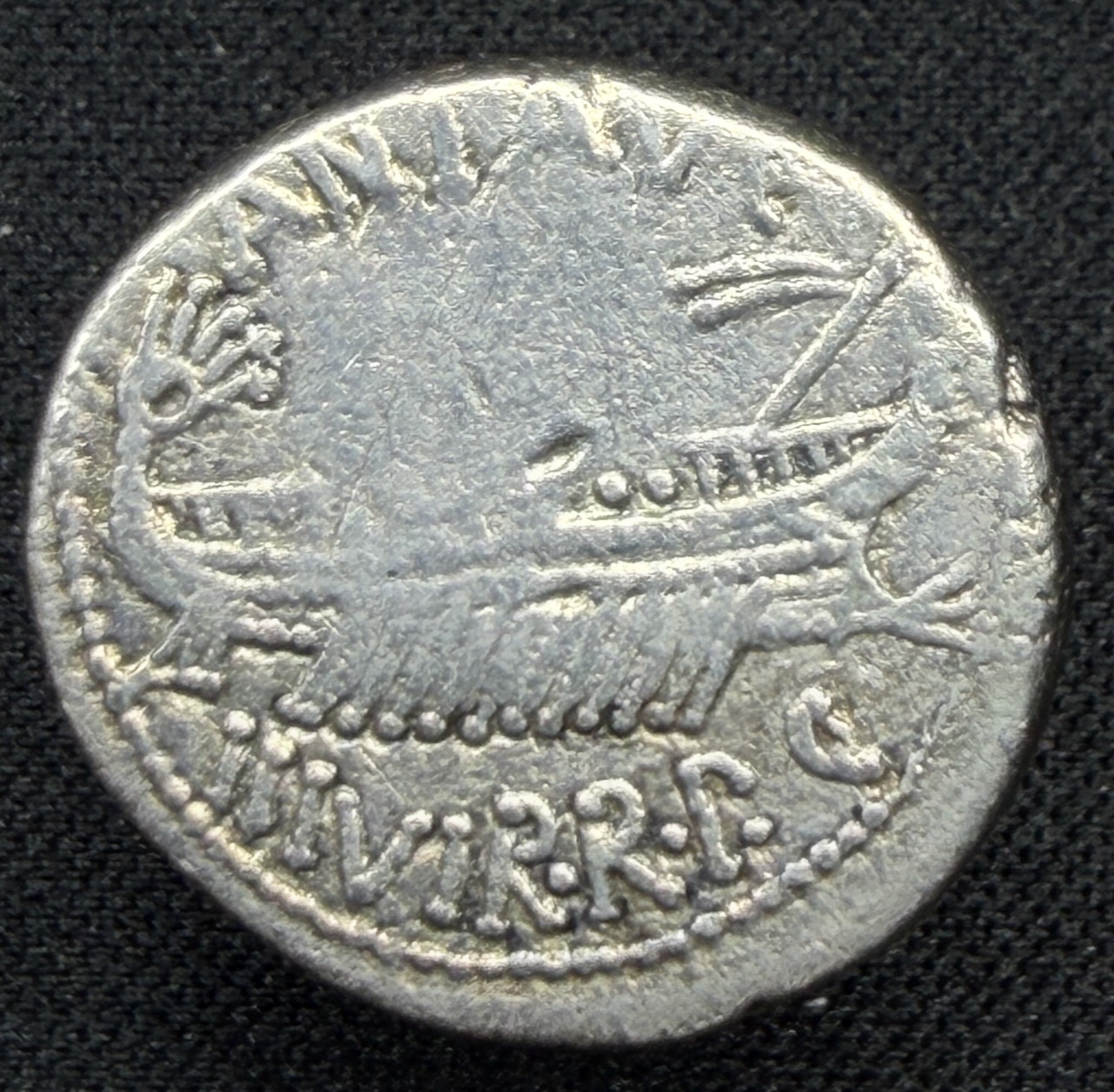
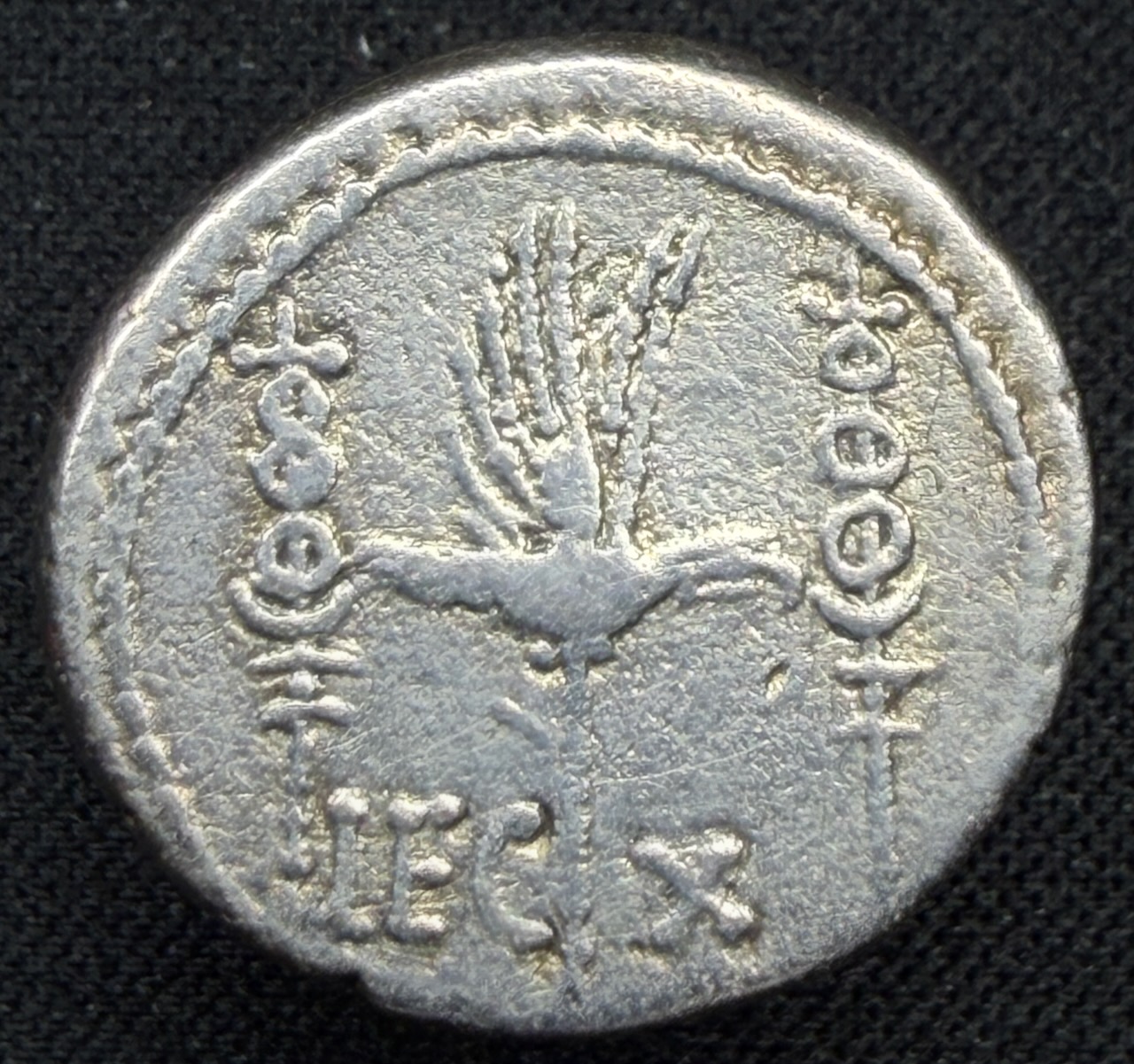
Current: Roman Imperatorial, Mark Antony, AR legionary denarius for Legio X, mint moving with Antony (conventionally Patrae), autumn 32 – spring 31 BC (Crawford 544/24)
Obverse: Praetorian galley right with rowers, mast with fluttering banners at prow
Reverse: Legionary eagle (aquila) between two military standards (signa); LEG X below
Primary reference: Crawford 544/24
46 specimens in public collections (BnF 13, Fitzwilliam 6, British Museum 5, Berlin 4, Vienna 3); weights 2.65–4.01 g, median 3.415 g across 46 recorded; die axis most often 6h; recorded in hoards CHRR ACT, CHRR AQU, CHRR BAG, CHRR BDS, CHRR BEA, CHRR CDA, CHRR CDS, CHRR CLV and 10 more.
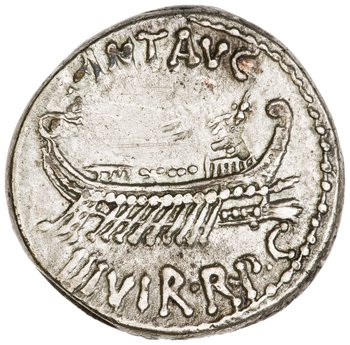
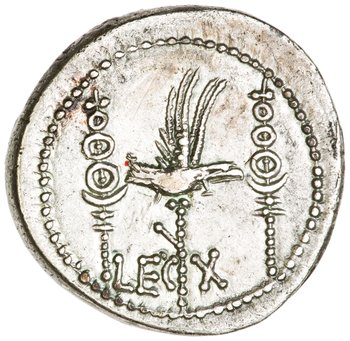
American Numismatic Society, 1944.100.6325. CC BY-NC 4.0. https://numismatics.org/collection/1944.100.6325
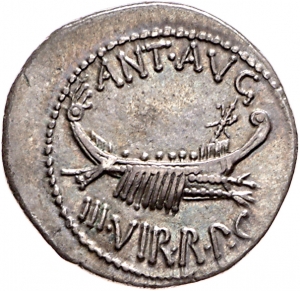
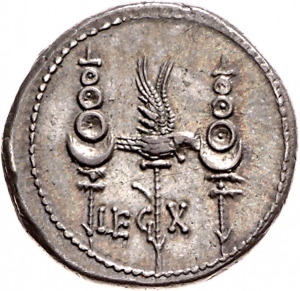
Münzkabinett, Staatliche Museen zu Berlin, 18215217. CC BY-NC-SA 4.0. https://ikmk.smb.museum/object?id=18215217
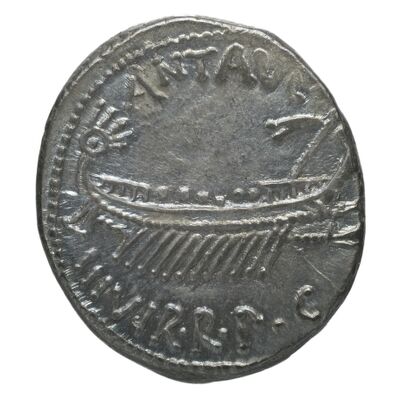
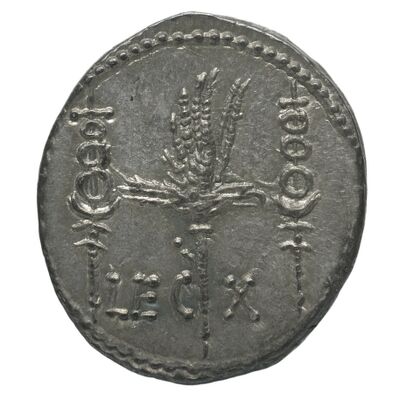
Bibliothèque nationale de France (Gallica), REP-21008. non-commercial reuse permitted. https://gallica.bnf.fr/ark:/12148/btv1b104530635
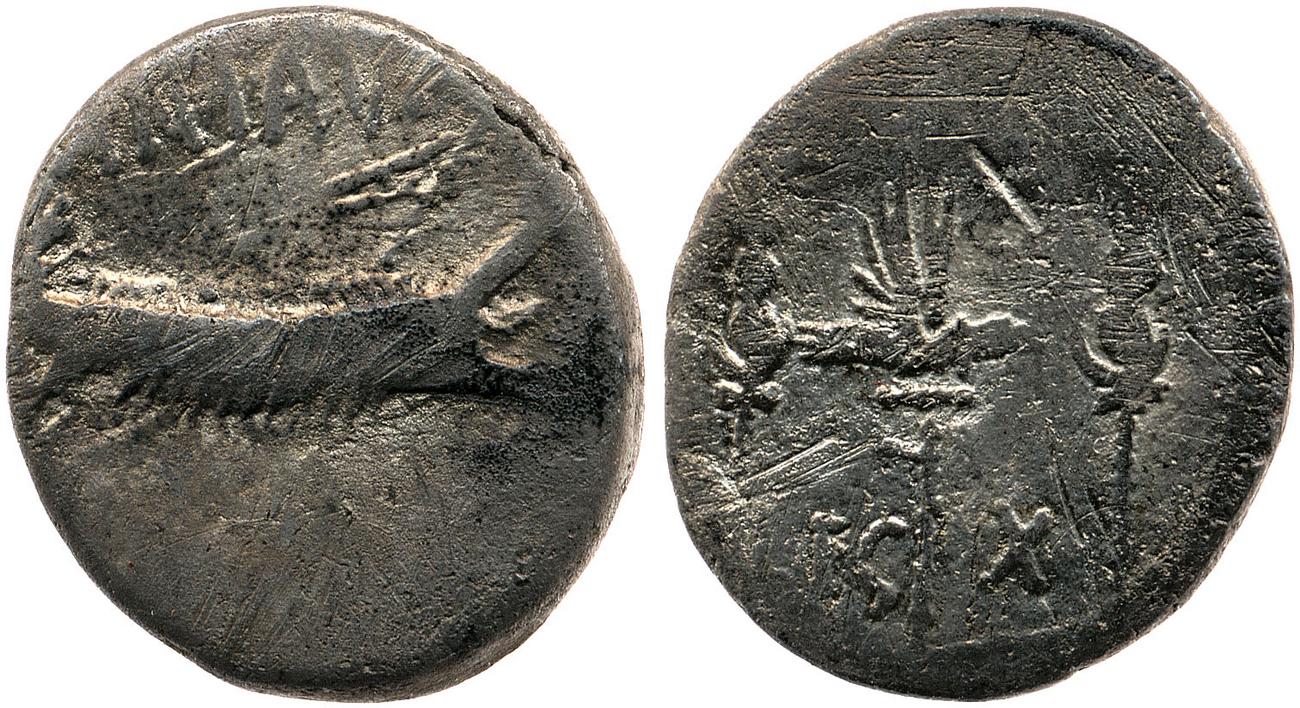
© The Trustees of the British Museum, 1978,0108.195. CC BY-NC-SA 4.0. https://www.britishmuseum.org/collection/object/C_1978-0108-195
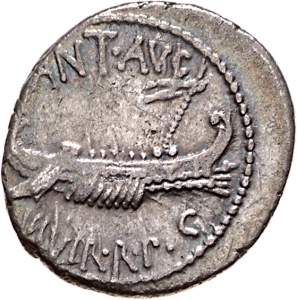
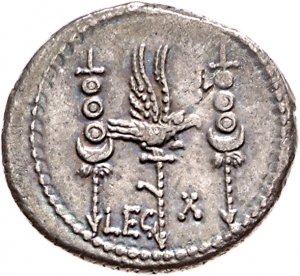
Münzkabinett, Staatliche Museen zu Berlin, 18215218. CC BY-NC-SA 4.0. https://ikmk.smb.museum/object?id=18215218
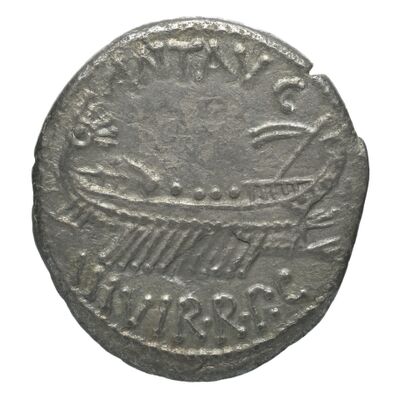
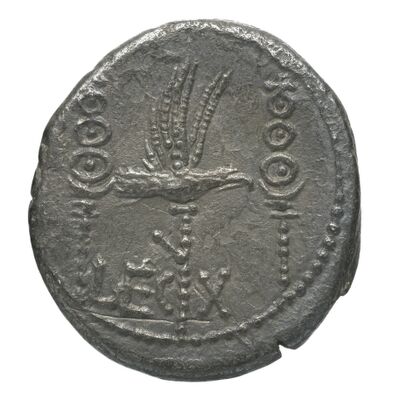
Bibliothèque nationale de France (Gallica), REP-21009. non-commercial reuse permitted. https://gallica.bnf.fr/ark:/12148/btv1b10453064m
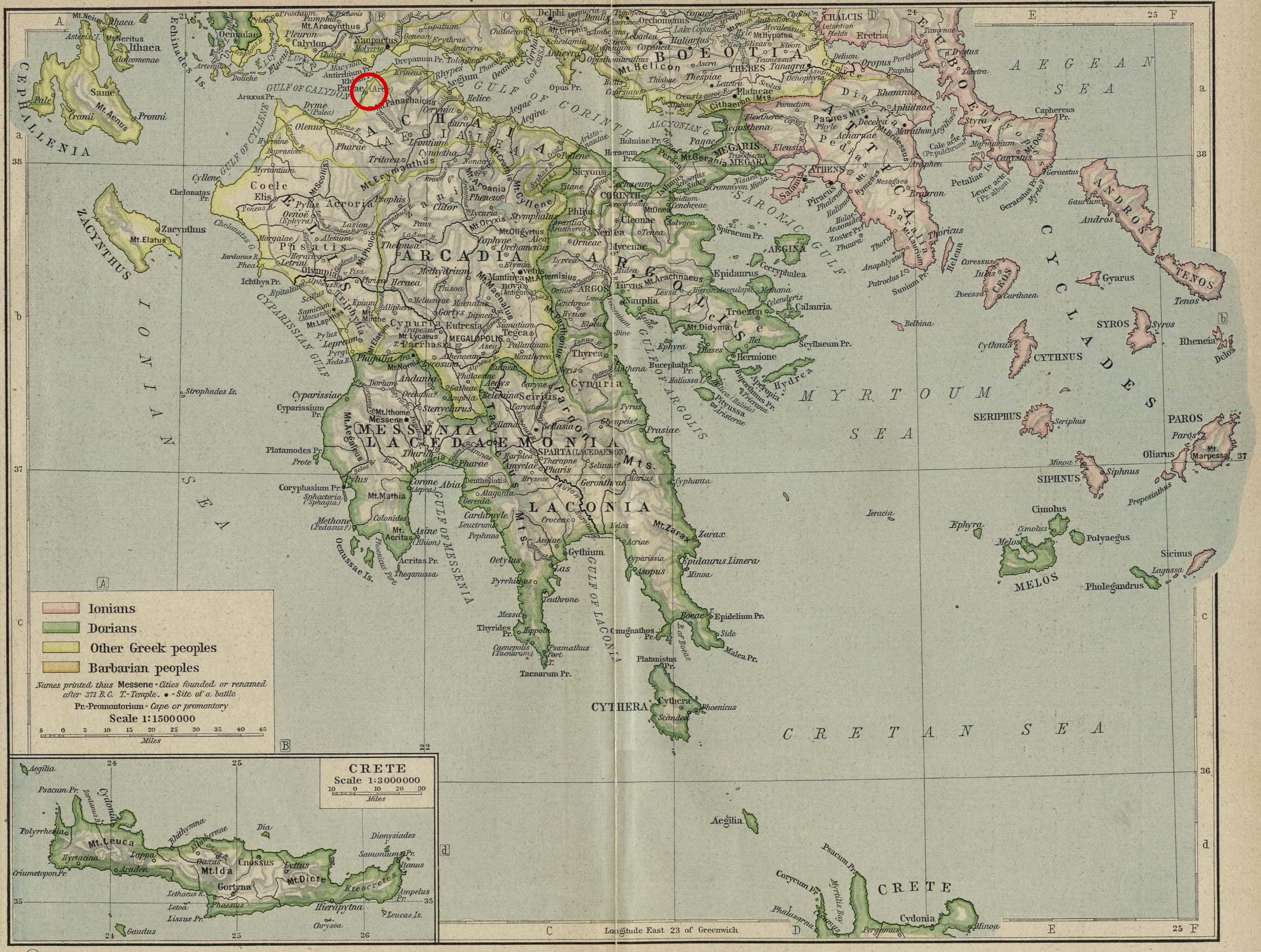
Southern Greece (Shepherd’s reference map of Ancient Greece, Southern Part). Patrae — circled in red at the upper left — sits where the Gulf of Corinth opens to the sea: Antony’s winter headquarters of 32/31 BC and the conventional mint of the legionary series. Actium lies just off this sheet to the northwest.
“Reference Map of Ancient Greece, Southern Part” by William R. Shepherd, Historical Atlas (Henry Holt & Co., 1923 and later printings), public domain; via Wikimedia Commons, File:Ancient greece so 1926.jpg (scan via the Perry-Castañeda Library, University of Texas). Red circle added to mark Patrae (same derivative as used on the LEG III page).
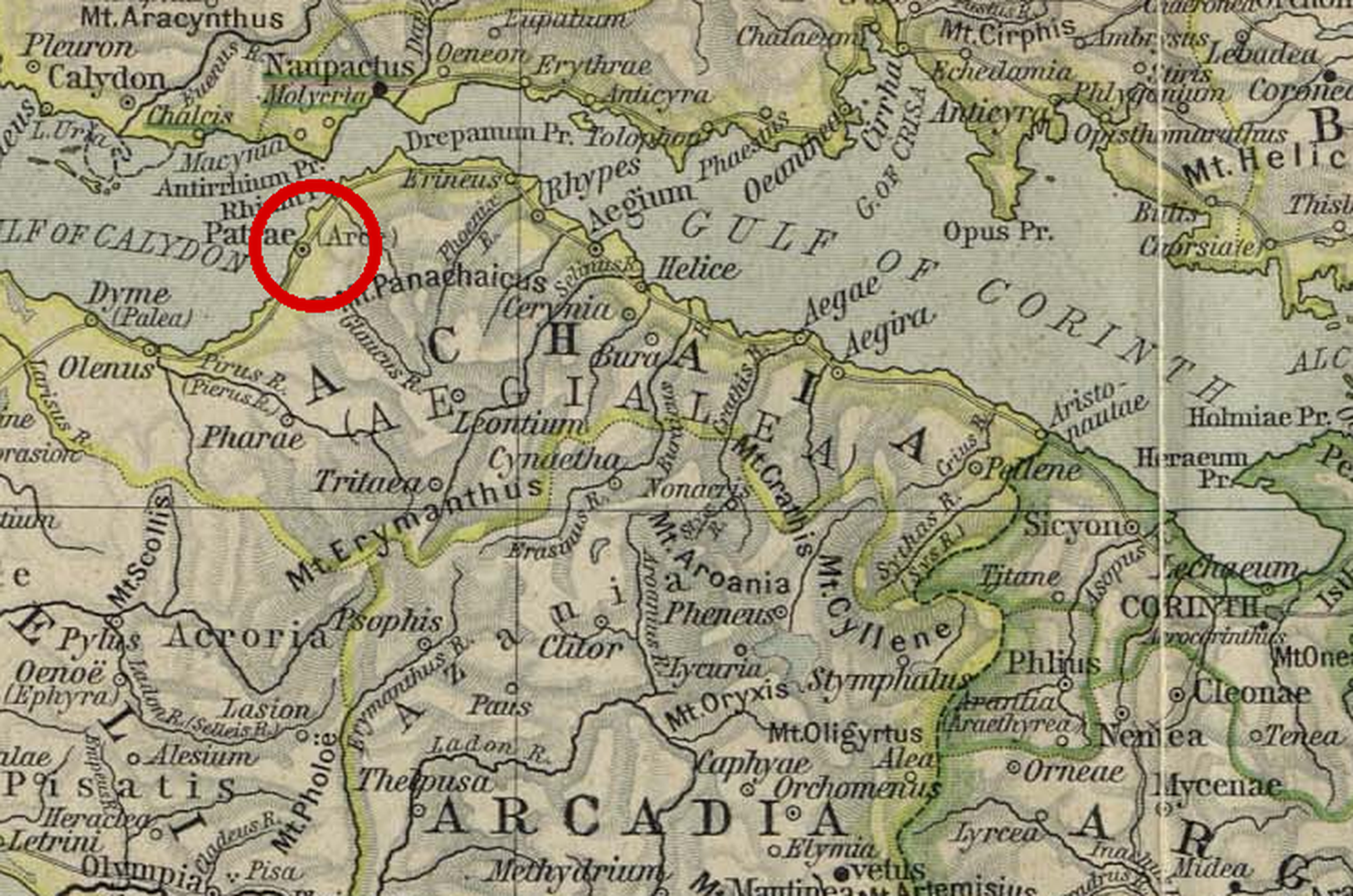
Detail: the Gulf of Corinth, with Patrae circled in red at the narrows opposite Naupactus. From this shore Antony’s squadrons watched the gulf through the winter before Actium.
This is a second coin in the collection from the greatest coinage of the Roman civil wars: Mark Antony’s legionary denarii, struck in the winter of 32/31 BC at his headquarters camp — conventionally Patrae on the Gulf of Corinth — to pay the army and fleet gathered for the showdown with Octavian at Actium. The series ran through every unit in turn, LEG II past LEG XX and beyond; the full context, types and monetary story are given on the collection’s LEG III page. This piece names the Tenth.
Graphic: JSB Coins, 2026 (CC0).
No number in the Roman army carried more freight. Legio X was Caesar’s favorite — the legion of the Gallic wars, the one he famously said he would make his bodyguard, the mutineers of 47 BC whom he shamed by addressing them as Quirites (“civilians”) instead of soldiers (Suetonius, Julius 70). The Tenth serving Antony in 31 BC is usually identified as Legio X Gemina, refounded from Caesarian veterans, who had fought at Philippi; Octavian would resettle its men after Actium, and a Legio X Gemina remained on the empire’s rosters for centuries. The identification is conventional rather than certain — as with the Third, more than one formation bore the number, and the coin says only LEG X. Either way, the man this legion’s veterans remembered was Caesar, whose own money is in this collection too: the elephant denarius he struck at the start of the civil wars in 49 BC, when the Tenth was the sharpest weapon he had.
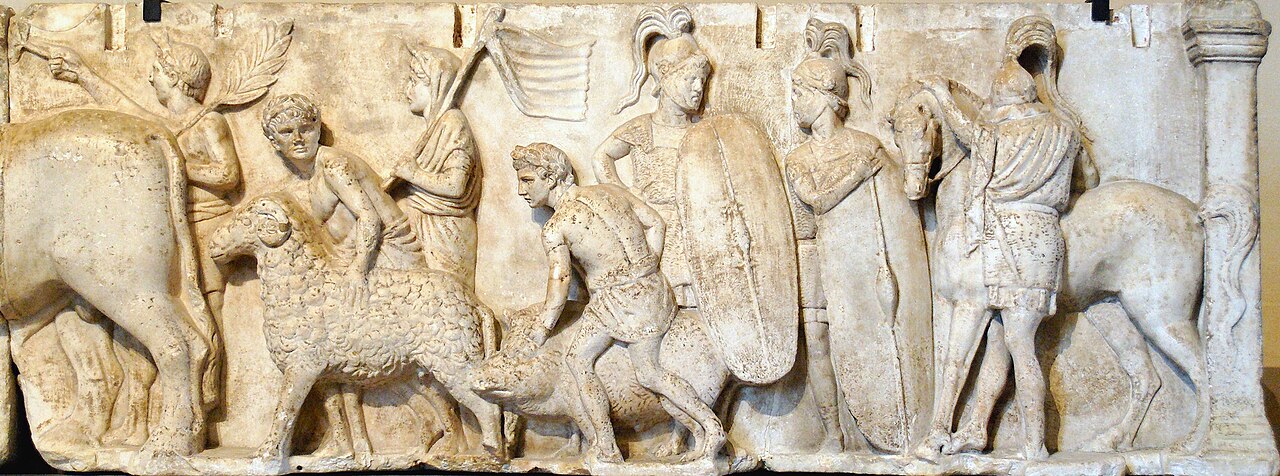
Photo by Jastrow, Wikimedia Commons, released into the public domain by the photographer; reproduced unmodified.
The coin’s find-story has a closing symmetry. After the surrender of Antony’s legions, Octavian discharged and resettled the men — Antony’s veterans pointedly scattered into colonies where they could do no harm — and when Augustus refounded Patrae itself as a Roman colony (Colonia Aroe Augusta Patrensis), the settlers included veterans of the Tenth: the legion whose pay was minted in this camp came back, a decade on, to draw its pension there (Pausanias 7.18 describes the colony’s foundation). Rome’s Tenth legions marched on for centuries — a Legio X Gemina was still on the Danube rosters in late antiquity — but the LEG X of this denarius, Antony’s Tenth, ended its history where its money began.
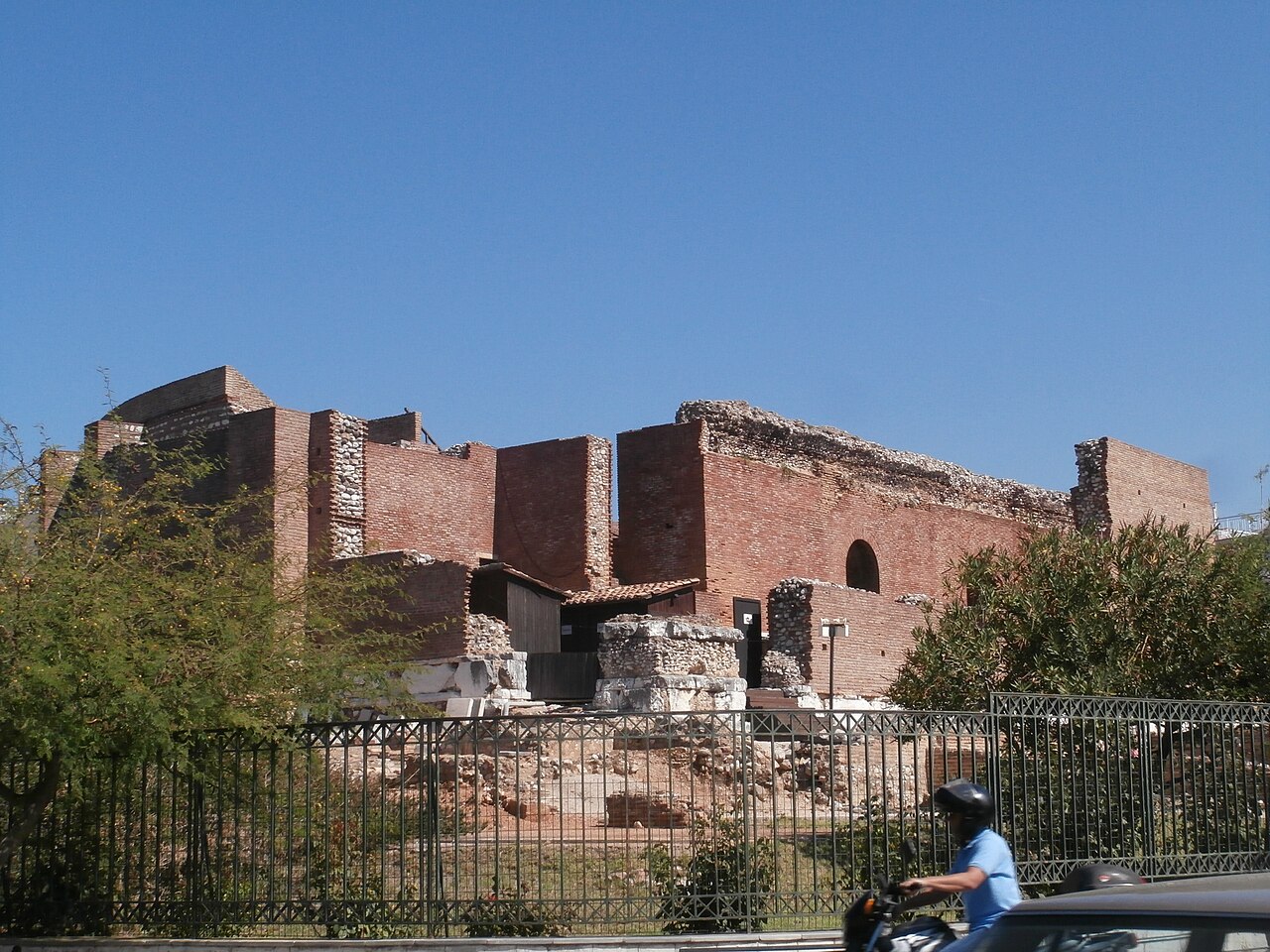
Photo: C messier, Wikimedia Commons, licensed CC BY-SA 4.0, reproduced unmodified.
Everything material about the coin matches its LEG III sibling: the galley obverse with Antony’s carefully Republican titles, the aquila between standards, the silver a shade below standard — which kept these coins circulating (bad money staying out while good money hid) for two and three centuries, into hoards of the Severan age. Actium destroyed the army this coin paid; the coin itself outlived everyone involved.
The collection’s project to gather one legionary denarius for every legion Antony named — twenty-five issues, tracked coin by coin — has its own page: Pay the Legions: the legion wall.
Attribution: M. H. Crawford, Roman Republican Coinage (1975), 544/24; Sear, CRI 354; Sydenham 1228; per-legion concordance and the Legio X Gemina identification per the RRC 544 series survey (see references) and standard auction cataloguing (e.g. York Coins, “Legio X Gemina”). On the Tenth’s Caesarian history: Caesar, BG 1.40–42; Suetonius, Divus Iulius 70. Fuller discussion of the series’ date, mint and debasement is sourced on the LEG III page.
Same series as the collection's LEG III denarius (Crawford 544/15): slightly debased silver struck at a mint moving with Antony, conventionally placed at Patrae, to pay the fleet and legions before Actium. LEG X is usually identified with Legio X Gemina, the successor of Caesar's famous Tenth; as with the Third, more than one legion bore the number and the coin itself does not distinguish.
John's Ancient Coin Collection · Type · antony-legionary-denarius-leg-x
Image credits for this coin — photographs, maps and graphics used on this page