Type · gordian-iii-securitas-antoninianus
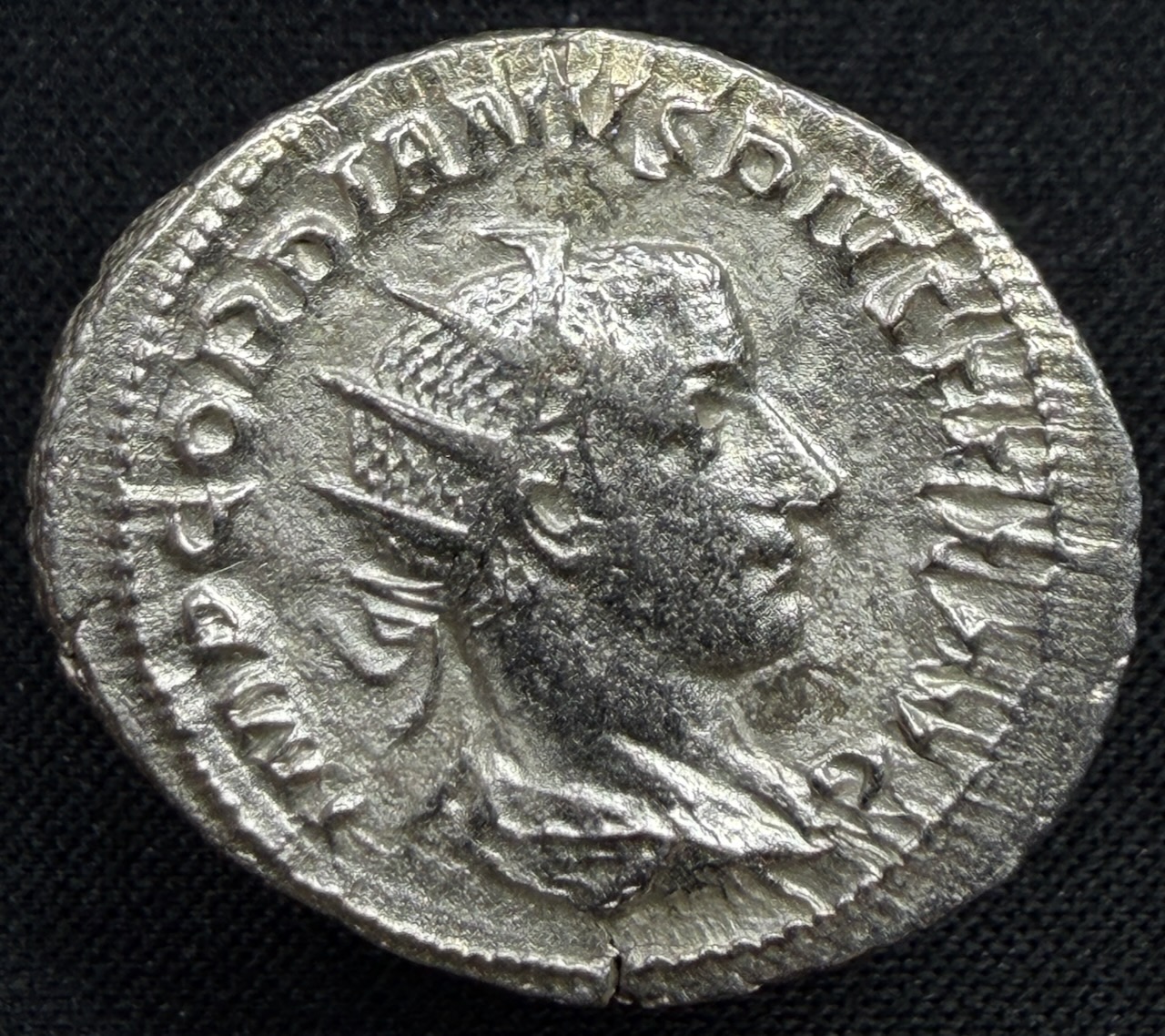
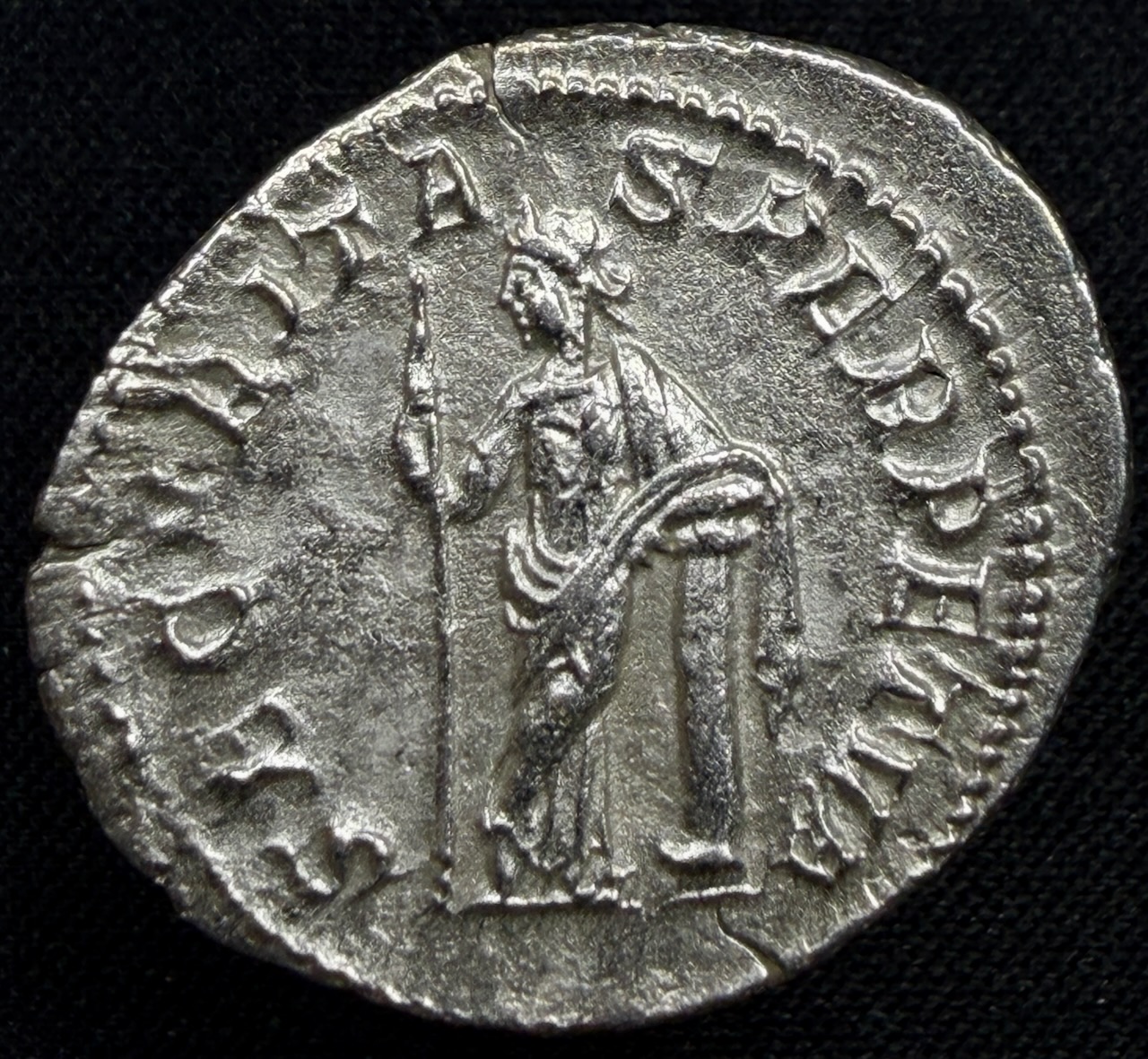
Current: Roman Imperial, Gordian III, AR antoninianus, Rome, 243–244 AD (RIC IV 153)
Obverse: Radiate, draped and cuirassed bust of Gordian III right
Reverse: Securitas standing left, legs crossed, holding sceptre and leaning on a column
Primary reference: RIC IV 153
31 specimens in public collections (British Museum 14, ANS 4, Ashmolean 3, Göttingen 3, MFA Boston 2); 2 British finds recorded by the Portable Antiquities Scheme; weights 3.31–5.21 g, median 4.34 g across 32 recorded; die axis most often 6h.
This collection's specimen, at 3.80 g (my scale), is heavier than 22% of the recorded weights.
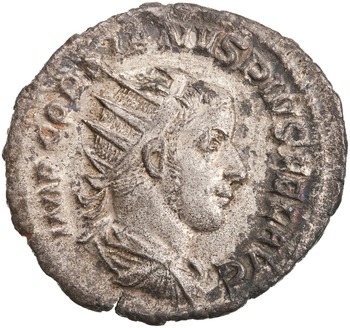
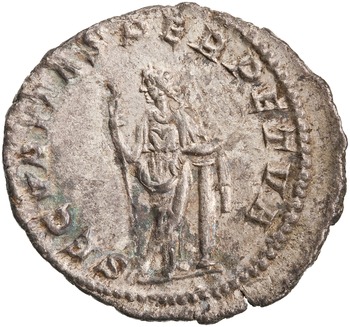
American Numismatic Society, 1944.100.19928. CC BY-NC 4.0. https://numismatics.org/collection/1944.100.19928
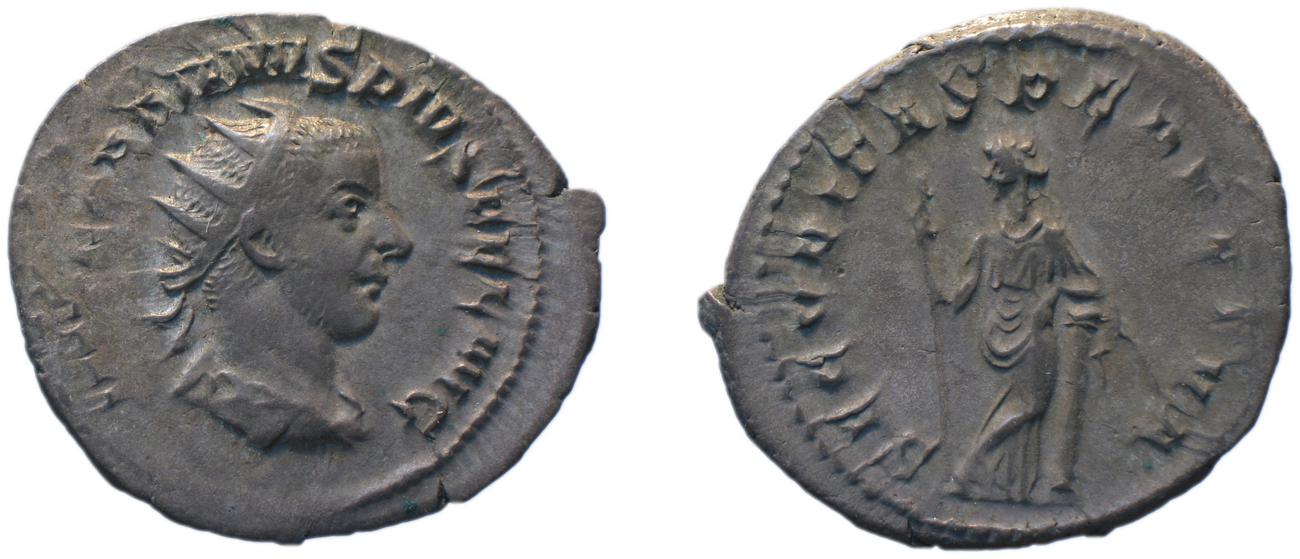
© The Trustees of the British Museum, 1924,0107.150. CC BY-NC-SA 4.0. https://www.britishmuseum.org/collection/object/C_1924-0107-150
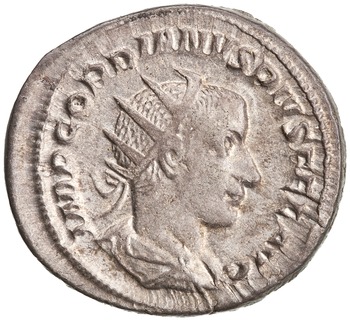
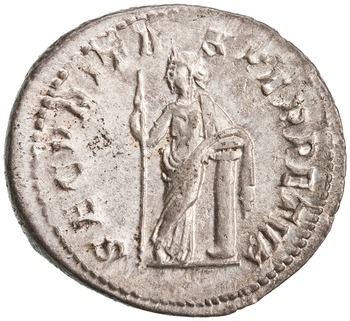
American Numismatic Society, 1944.100.19929. CC BY-NC 4.0. https://numismatics.org/collection/1944.100.19929
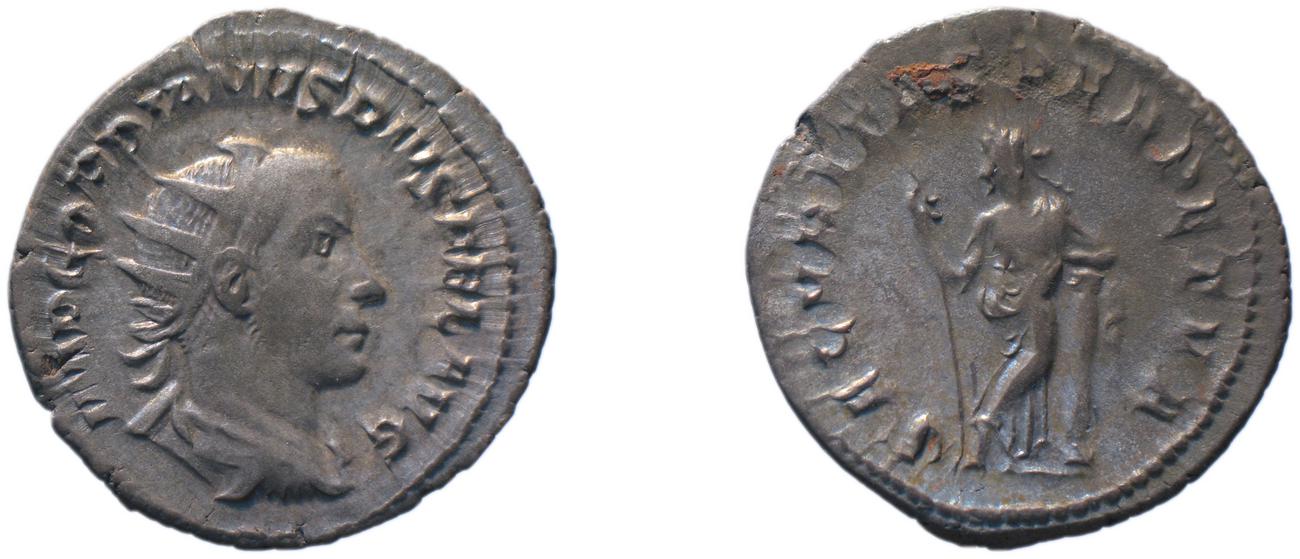
© The Trustees of the British Museum, 1924,0107.151. CC BY-NC-SA 4.0. https://www.britishmuseum.org/collection/object/C_1924-0107-151
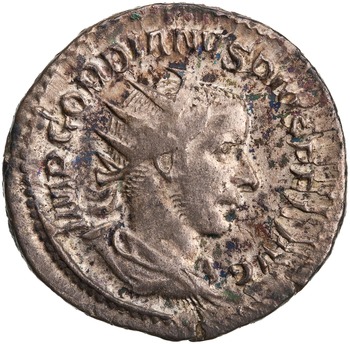
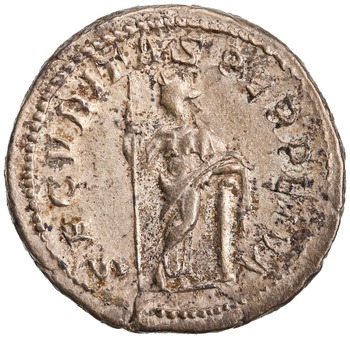
American Numismatic Society, 1948.19.729. CC BY-NC 4.0. https://numismatics.org/collection/1948.19.729
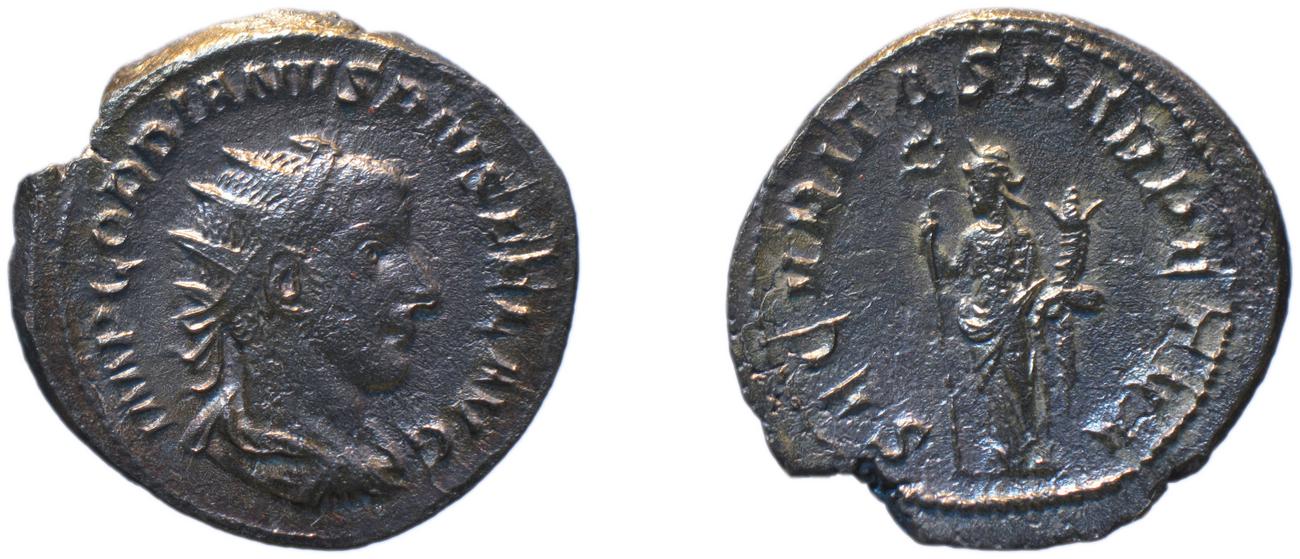
© The Trustees of the British Museum, 1937,0406.520. CC BY-NC-SA 4.0. https://www.britishmuseum.org/collection/object/C_1937-0406-520
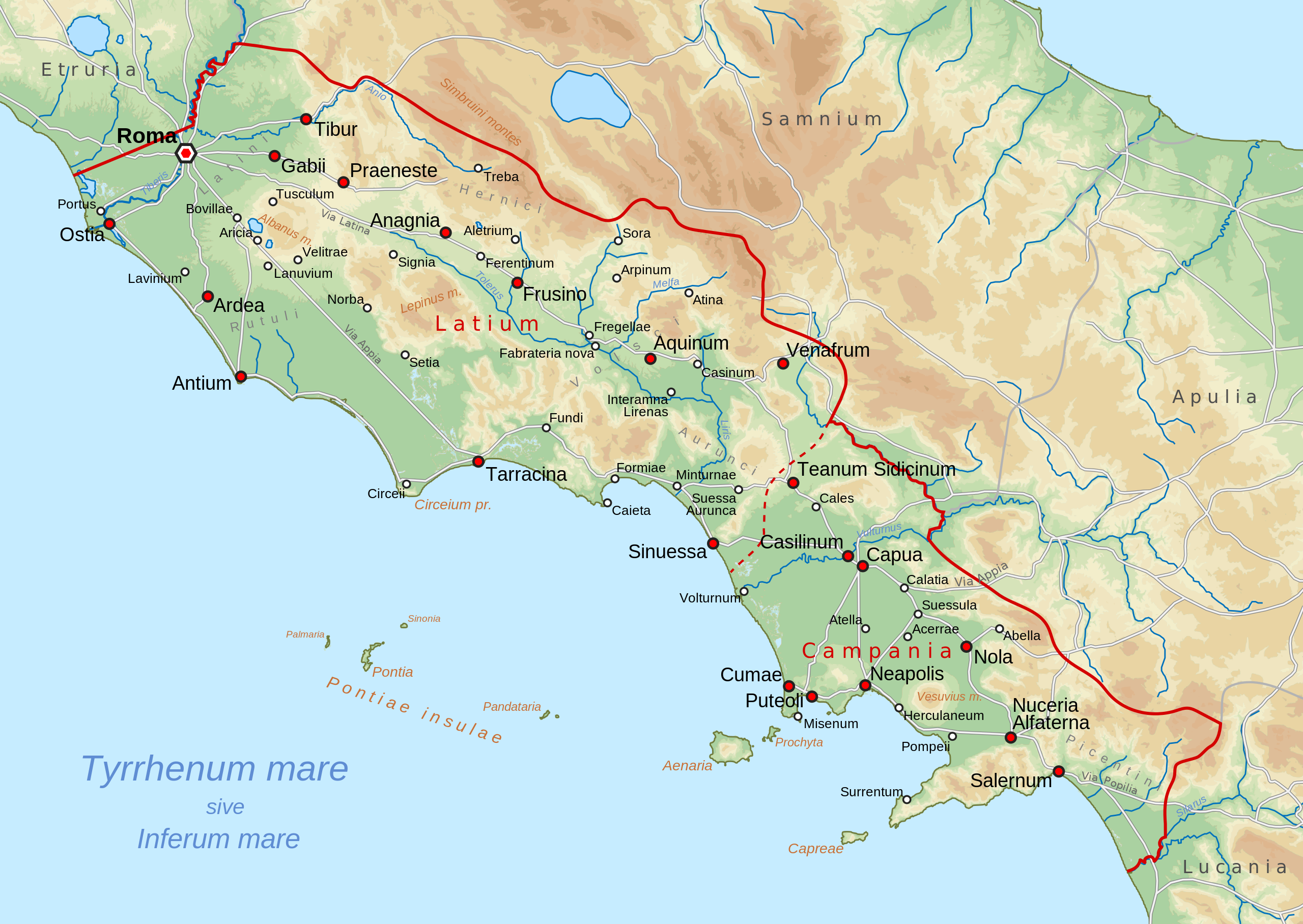
Regio I, Latium et Campania — the heartland of Roman Italy as organized under Augustus. Roma sits at the upper left, marked by the map’s hexagonal capital symbol and bold label. Gordian’s antoniniani were struck in the city while the young emperor himself marched east against Persia — the campaign from which he never returned.
“Map of Augustan Regio I Latium et Campania” by Tomisti (Wikimedia Commons), File:Regio I Latium et Campania map.svg, licensed CC BY-SA 4.0; cities and roads based on the Digital Atlas of the Roman Empire (DARE) and Pleiades; topographic base © OpenMapTiles, © OpenStreetMap contributors. Reproduced unmodified.
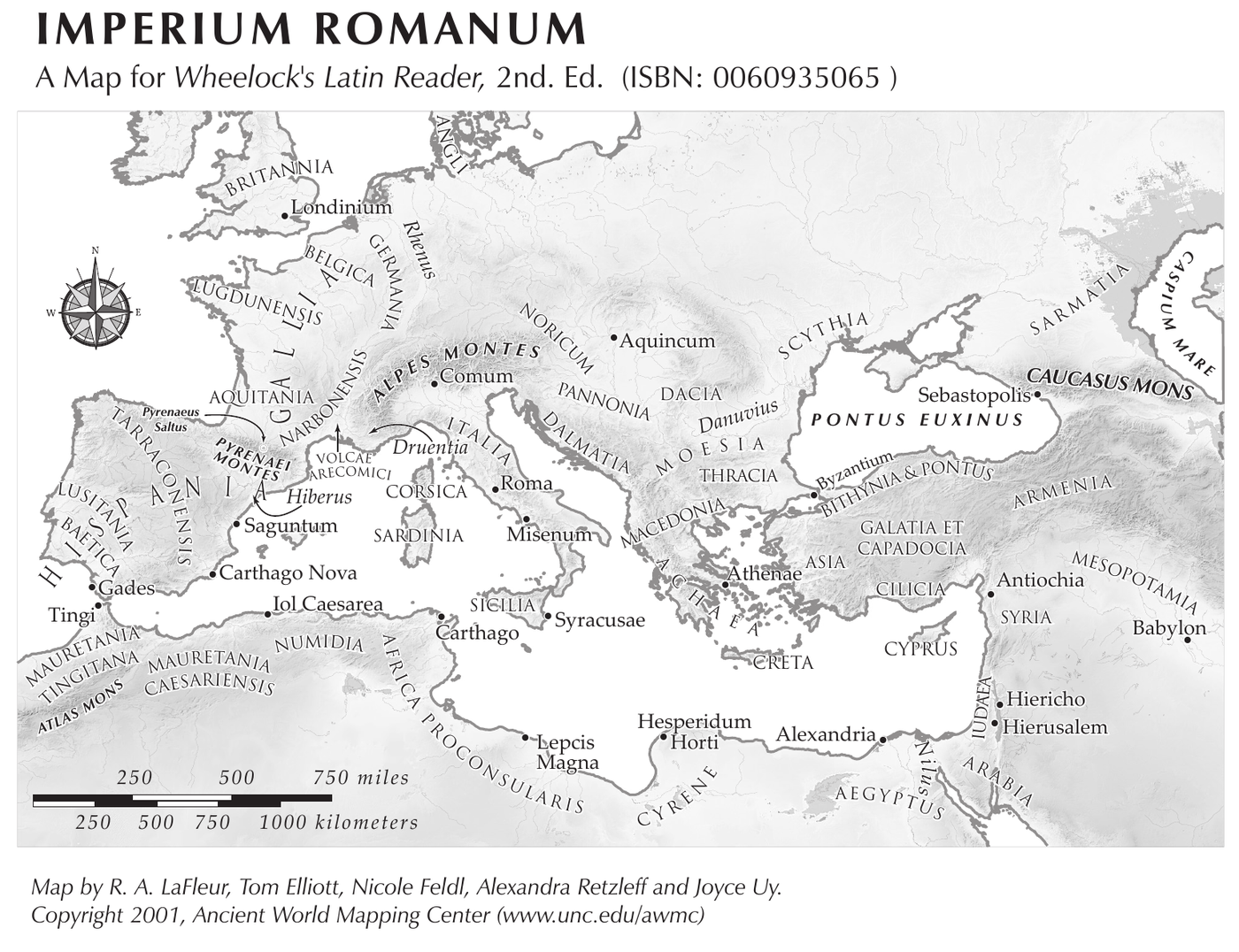
Roma sits at the center of Italia. Struck in AD 243–244, while Gordian was campaigning against Persia beyond Mesopotamia, on the right edge of this map. He died there, and SECVRITAS PERPETVA turned out to be the least accurate legend of the century.
Gordian III was about thirteen when the Senate’s chaotic year of six emperors (238 AD) ended with him alone on the throne — grandson of the elderly African rebel Gordian I, raised to Caesar to appease a Roman mob, and made Augustus when his short-lived seniors Balbinus and Pupienus were murdered by the praetorians. The empire this boy inherited was three years past the end of the Severan dynasty and fully inside the storm historians call the Crisis of the Third Century: frontier wars on the Rhine, Danube, and Euphrates, armies that made and unmade emperors, and a currency sliding toward billon.
Graphic: JSB Coins, 2026 (CC0).
A coin legend like SECVRITAS PERPETVA — “everlasting security,” the goddess of freedom-from-care lounging against her column, legs crossed, utterly relaxed — is best read against that background, as aspiration rather than description. Securitas at ease was a message the government most needed to send precisely when it was least true. This issue of 243–244 AD accompanied the empire’s great eastern effort: Gordian and his capable praetorian prefect (and father-in-law) Timesitheus had marched against Shapur I of Persia in 242, retaken Antioch’s approaches, and won at Rhesaina. Then Timesitheus died of illness; the new prefect was Philip the Arab; and in early 244, near Ctesiphon, Gordian died — by battle wound, illness, or Philip’s intrigue, depending on the source (the Persian version, carved at Naqsh-e Rustam, claims Shapur killed him in battle; the Roman tradition blames Philip). He was nineteen. Philip made peace, paid Persia handsomely, and took the throne.
This is the collection’s first antoninianus — the radiate “double denarius” that Caracalla introduced in 215 AD at about 1.5 denarii worth of silver, and that returned for good in 238. Under Gordian it displaced the denarius as the standard silver denomination almost completely; the old denomination (compare the denarii of Severus Alexander struck barely a decade earlier) survived only in token quantities. The radiate crown on the emperor’s head is the denomination’s badge — sun-god iconography doing duty as a mark of value — and the fabric, broader and thinner than a denarius on visibly baser metal, is the third-century monetary story made tangible: more coins, less silver, “perpetual security” promised on both. Thirty years further down that slope, Aurelian’s reformed antoninianus would try to arrest exactly this coin’s decline.
Gordian’s is one of the most recognizable portraits of the century precisely because it is a boy’s. The Louvre bust (Ma 1063) shows the same head as the coins: the close-cropped military haircut of the soldier-emperor fashion sitting oddly on a teenager’s smooth face, the expression serious to the point of anxiety. Sculptors and die-cutters alike were solving the same problem — presenting a child as the guarantee of “perpetual security” to armies that murdered emperors on suspicion of weakness. For six years the presentation worked; the radiate portrait on this antoninianus and the marble in Paris are its two surviving instruments. The denomination itself has both ends in this collection. The Annona denarius of Caracalla belongs to the reign that introduced the antoninianus in 215 as an overweight “double denarius”; the post-reform radiate fraction of Maximianus shows what survived of it half a century after this coin, when the crown had become a shape on a token rather than a promise of silver.
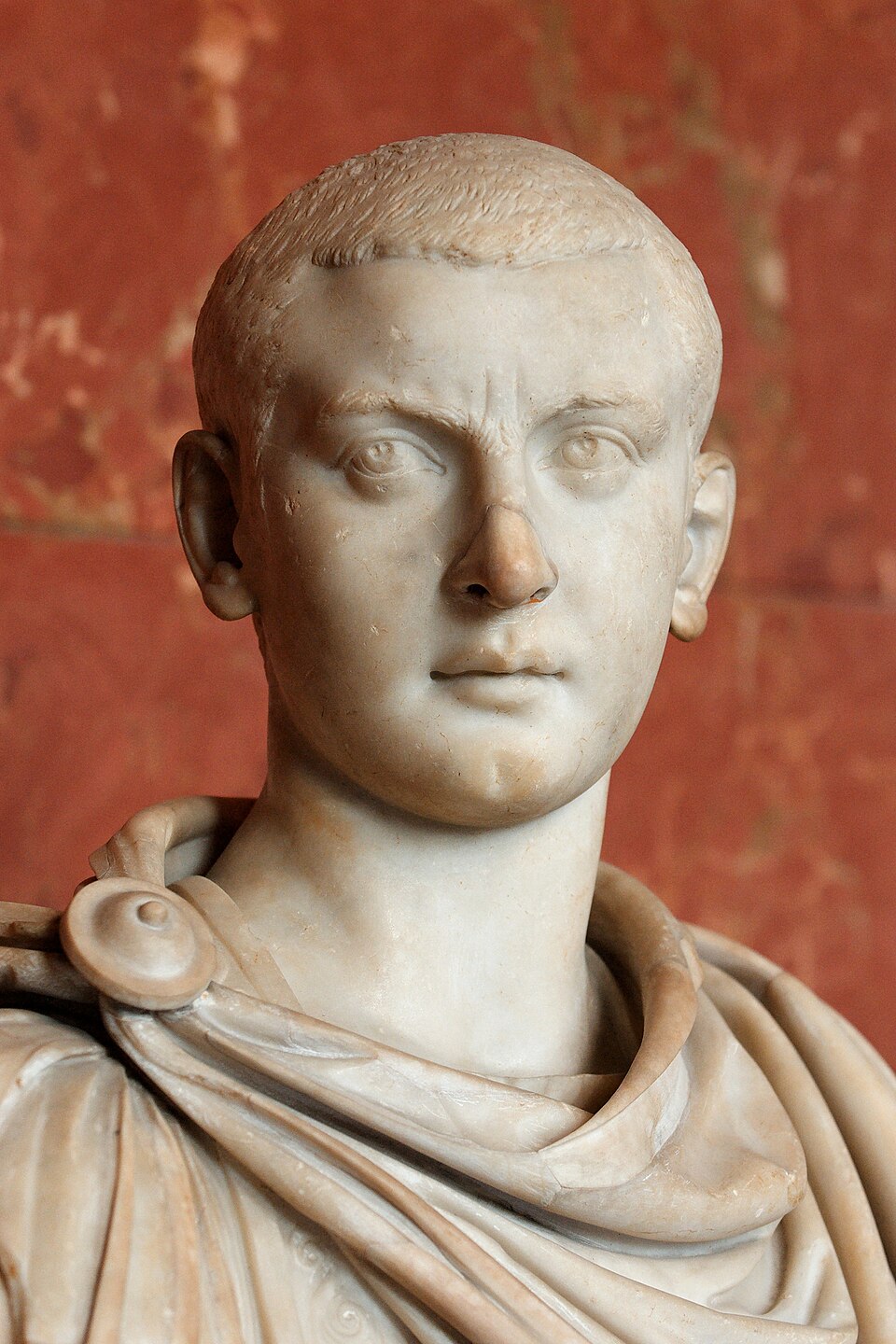
Photo: Marie-Lan Nguyen, public domain (Wikimedia Commons); reproduced unmodified.
Attribution: RIC IV 153; RSC 336; the OCRE record gives legends, the 243–244 AD dating, and paralleled specimens; Zauche’s tag cites Sear 2462 (older edition). Gordian’s rise and the eastern campaign: Historia Augusta, Gordiani tres, and Zosimus 1.17–19 (both linked in the references); Shapur’s account: Res Gestae Divi Saporis (the trilingual inscription at Naqsh-e Rustam). On the antoninianus and its metal, K. Butcher and M. Ponting, The Metallurgy of Roman Silver Coinage (2014) and the introduction to RIC IV.3.
The full-legend SECVRITAS PERPETVA issue (RIC 153) belongs to Gordian's last Rome issues, 243–244 AD, during the Persian campaign; the abbreviated SECVRIT PERP variety (RIC 151) is a separate, related issue. The antoninianus — the radiate double-denarius introduced by Caracalla in 215 AD and revived under Balbinus and Pupienus in 238 — became the workhorse silver of Gordian's reign; his antoniniani run c. 4.0–4.7 g at roughly 45% fine.
John's Ancient Coin Collection · Type · gordian-iii-securitas-antoninianus
Image credits for this coin — photographs, maps and graphics used on this page