Type · antioch-elagabalus-tyche-octassarion
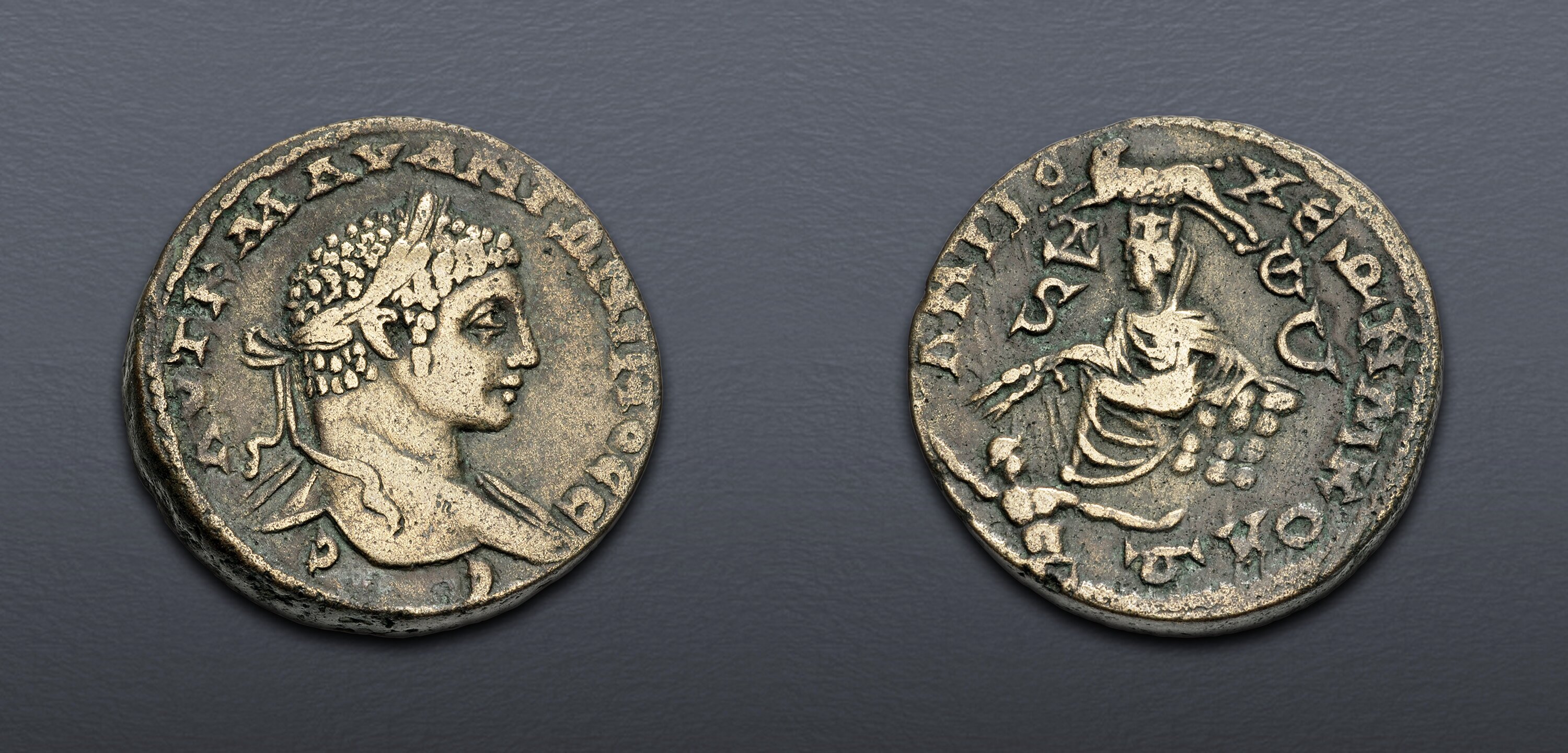
Current: Roman Provincial, Seleucis and Pieria, Antioch, Elagabalus, Æ octassarion, AD 218–222 (RPC VI Online 8008; McAlee 803)
Obverse: Laureate bust of Elagabalus right, drapery on the left shoulder
Reverse: Tyche of Antioch seated left on rocks, turreted and veiled, holding grain ears; above, a ram leaping left with head turned back; below, the river-god Orontes swimming left
Primary reference: RPC VI Online 8008.1 (this coin)
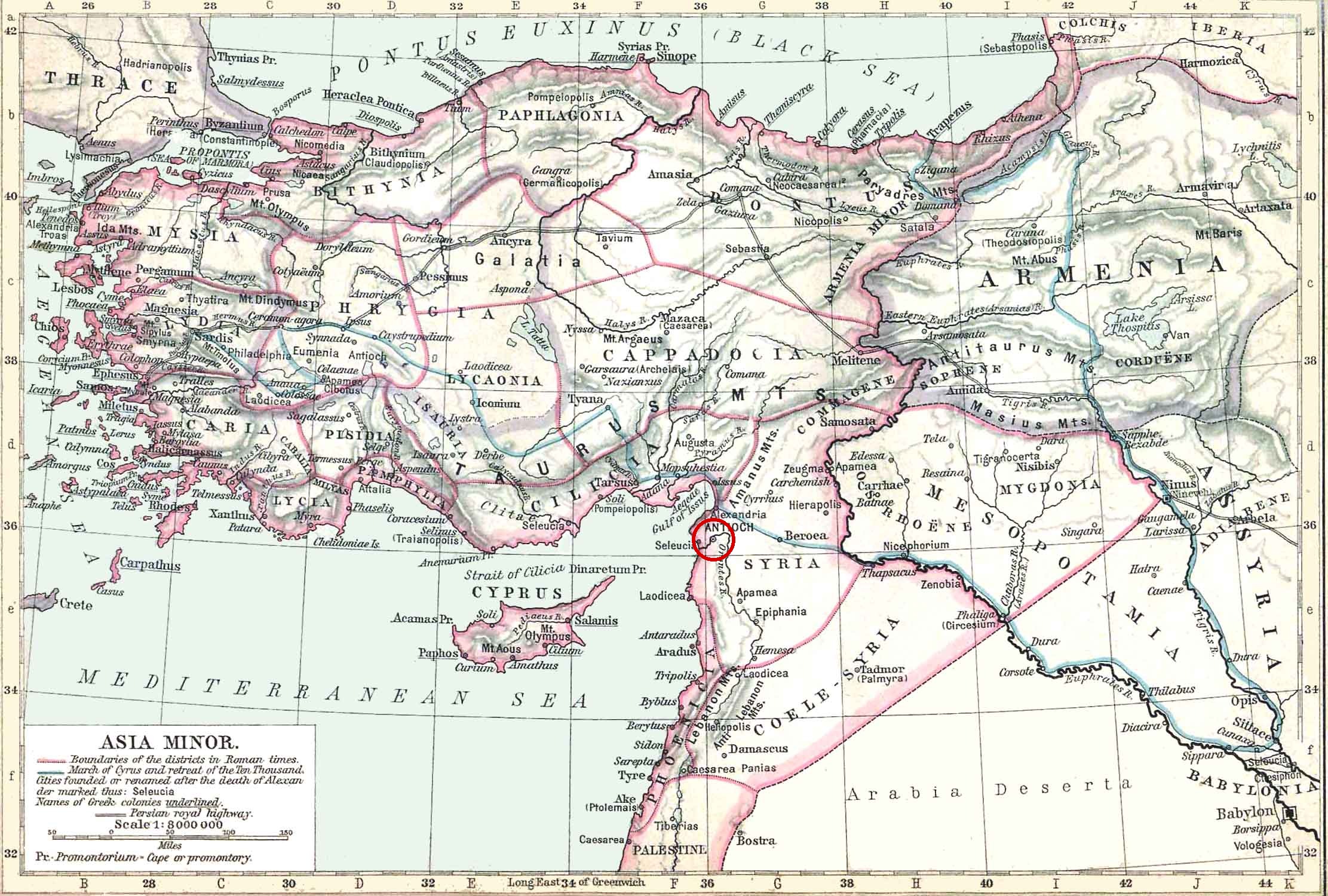
Asia Minor and the Roman East, from William R. Shepherd’s Historical Atlas (1923). Antioch — circled in red — lies in the lower right, in the northwest corner of Syria where the Orontes reaches the sea. The river on this map is the river swimming at Tyche’s feet on the coin. The same base plate serves the collection’s Nero eagle tetradrachm of Antioch, struck in the same city a century and a half earlier.
“Asia Minor under the Greeks and Romans” from William R. Shepherd, The Historical Atlas (1923), via Wikimedia Commons, File:Asia minor-Shepherd 1923.JPG (https://commons.wikimedia.org/wiki/File:Asia_minor-Shepherd_1923.JPG). Public domain (author died 1934). No attribution legally required; credited as a courtesy. Modified by JSB Coins: a red circle added to mark Antioch. The Syria inset is a crop of the same plate (File:Asia minor-Shepherd 1923 Syria.jpg), reproduced unmodified.
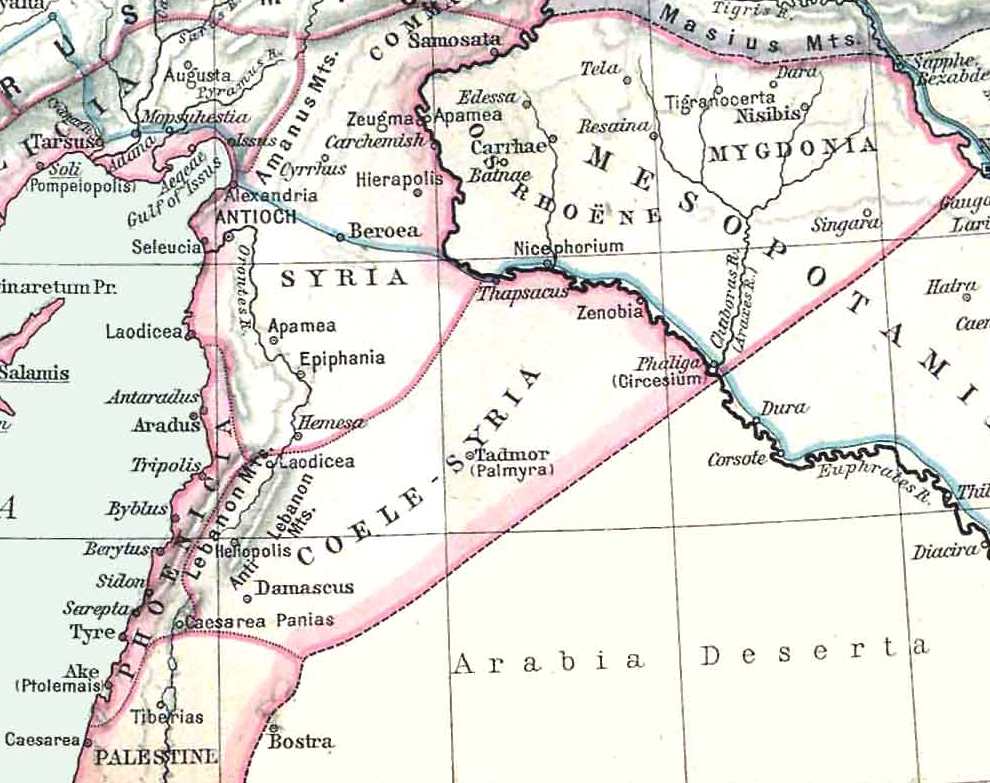
The Syria corner of the same plate. Antioch sits at top left, on the Orontes just inland from its port Seleucia Pieria — the pairing that gives the district the name it carries in this coin’s attribution, “Seleucis and Pieria.”
Most of what this collection holds of the Severans is imperial silver struck at Rome — the dynasty as it wished to be seen from the capital. This is the other thing: a big provincial bronze from Antioch, 33 mm across and 24 grams in the hand, made by a Syrian city for its own use, carrying its own goddess rather than the emperor’s virtues.
And it is a coin the reference works themselves point at. RPC VI Online 8008.1 is this specimen — the corpus entry for the variety is illustrated by this piece, and RPC records the bust type from only three examples.
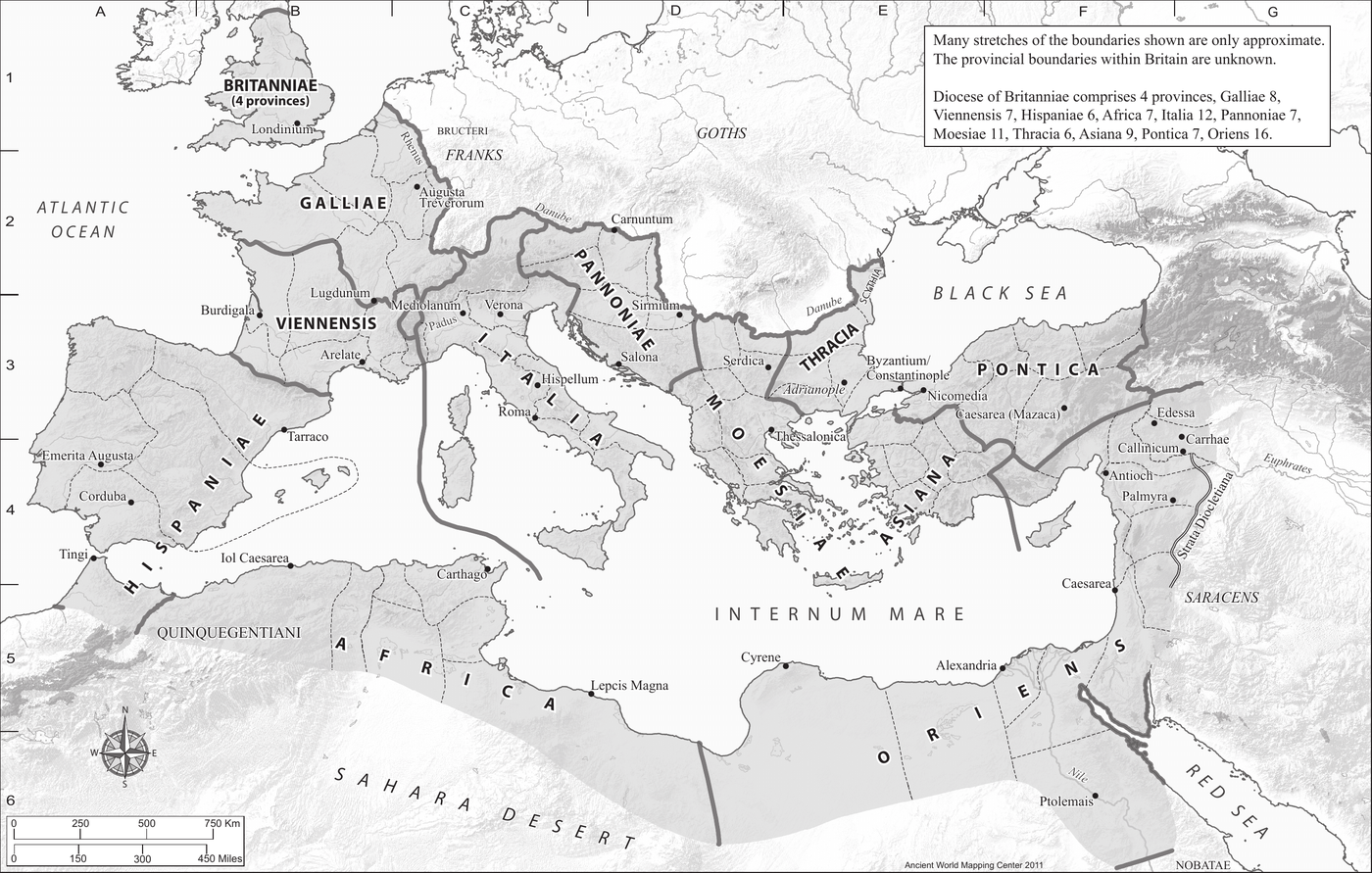
Ancient World Mapping Center, University of North Carolina at Chapel Hill (2011). Trimmed to the plate; licensed CC BY-SA 4.0, via Wikimedia Commons.
Around 300 BC, when Seleukos I founded Antioch, he commissioned a bronze group from Eutychides of Sikyon, a pupil of Lysippos. It showed the city personified: a woman seated on a rock, wearing a mural crown — a turreted city wall worn as a headdress — with a young man swimming out from beneath her feet. She is Tyche, Fortune; he is the Orontes, the river Antioch stands on.
The bronze is gone. What survives is Roman marble copies, the best of them in the Vatican, and coins. A provincial bronze like this one is not an illustration of the statue; for a lost work it is part of the primary evidence for what the statue looked like. Every detail on this reverse — the rocks, the veil over the mural crown, the grain ears, the swimmer below — is a die-engraver in Antioch copying something he could walk past.
The composition was enormously influential. Seated, turreted city-goddesses spread across the Greek East and into Roman art generally; the Tyche of Antioch is one of the most-copied sculptures of antiquity, and almost nobody has seen it.
The ram above her is not ornament. Aries was held to be the sign under which Antioch was founded, and it runs on the city’s coinage for three hundred years — a civic horoscope, struck into the money.
Graphic: JSB Coins, 2026 (CC0).
The denomination is worth pausing on. An octassarion is eight assaria — the provincial bronze denomination descended from the Roman as — and it was the largest bronze Antioch struck. At 33 mm and 24 g this is not small change; it is the sort of coin that makes a noise on a table.
Roman provincial bronze is often treated as the poor relation of imperial silver. It is the opposite in one important way: imperial denarii were struck for the empire, provincial bronzes were struck by cities for themselves. The choice of what to put on the reverse was local. Antioch chose its own founding goddess and its own river and its own star sign, and kept choosing them, under emperor after emperor.
Elagabalus came to the throne in 218, aged about fourteen, and this coin belongs to the whole of his short reign. He was Syrian on his mother’s side, and the family — Julia Maesa his grandmother, Julia Soaemias his mother — came from Emesa, up the Orontes from Antioch, where his other role was hereditary priest of the god Elagabal, a black conical stone.
So this is a coin of a Syrian emperor struck in the great Syrian city, and it sits in the middle of a group the collection has been assembling: his grandmother Maesa; his imperial denarius, the FIDES EXERCITVS type; his cousin Caracalla; and the man who briefly took the throne between them, Macrinus — whom Maesa’s money destroyed to put this boy in his place.
Antioch also connects backwards. The collection’s Nero eagle tetradrachm was struck in this same city a century and a half earlier, and the Carrhae tetradrachm of Caracalla belongs to the same Syro-Mesopotamian world of provincial silver a few years before this bronze.
RPC VI Online 8008 for the type and for the record that this is specimen .1 of three; McAlee, The Coins of Roman Antioch (2007), 803(a) — the standard corpus, cited here from the auction attribution rather than consulted directly. The identification of the reverse with Eutychides’ group is standard and long established; the surviving Vatican marble is the usual comparandum. Libanius’ Antiochikos is the fullest ancient account of the city and its river.
THE DENOMINATION IS THE STARTING POINT: an octassarion is eight assaria, the largest bronze Antioch struck, and at 33 mm and about 24 g it is a substantial object rather than small change. THE REVERSE IS A STATUE. The seated, turreted, veiled Tyche with her foot on the shoulder of the swimming river-god reproduces the bronze group made about 300 BC by Eutychides of Sikyon, a pupil of Lysippos, for the newly founded Seleukid capital. The original is lost; it is known from Roman marble copies (the best in the Vatican) and from coins of this kind, which makes provincial bronzes like this one primary evidence for a vanished masterpiece. THE RAM is not decoration: Aries is the zodiacal sign under which Antioch was held to have been founded, and it appears on the city's coinage for three centuries. RPC records the bust variety — laureate WITH drapery on the left shoulder — from only three specimens, and RPC VI 8008.1 is this coin.
John's Ancient Coin Collection · Type · antioch-elagabalus-tyche-octassarion
Image credits for this coin — photographs, maps and graphics used on this page