On the 2nd of August, 216 BC, on a dusty plain beside the Aufidus river in Apulia, a Carthaginian army of perhaps fifty thousand men destroyed the largest army Rome had ever put into the field. By nightfall something on the order of fifty thousand Romans lay dead — more men than the United States lost in the whole of the Vietnam War, killed in a single afternoon with edged weapons. Cannae remains the textbook example of the double envelopment, still taught at staff colleges, and the reason the name of its architect — Hannibal Barca — has meant military genius for two thousand two hundred years.
This is a coin catalogue, not a battle history, and coins were not struck to mark battles. But a war is an economic event before it is anything else, and the coinage of these years survives as its ledger. You cannot hold a coin struck to commemorate Cannae. You can hold the silver that paid the soldiers who fought there, minted within a year or two of the battle, and that is nearly as close as antiquity allows.
The war in a paragraph
Carthage and Rome had already fought once, over Sicily, in the First Punic War (264–241 BC) — a naval grind that Carthage lost, surrendering Sicily and a crushing indemnity. Hannibal's father, Hamilcar Barca, rebuilt Carthaginian power not at home but in Spain, whose silver mines could fund an army independent of the merchant aristocracy back in Carthage. The boy Hannibal is said to have sworn on an altar never to be a friend to Rome. In 218 BC, from that Spanish base, he did the thing no one expected: he marched an army — and its war elephants — over the Alps and into Italy.
Three catastrophes followed for Rome, each larger than the last: the Trebia (218), Lake Trasimene (217), and Cannae (216). After Cannae, Rome's southern allies began to defect, Capua opened its gates, and Syracuse in Sicily went over to Carthage. And yet Rome did not sue for peace. It raised new legions, refused to give Hannibal the pitched battle he needed, and slowly strangled his position in Italy while carrying the war to Spain. In 202 BC, at Zama in Africa, Scipio — who had learned Hannibal's own lesson — beat him at last. Carthage kept its city and lost everything else.
The battle: how fifty thousand died in an afternoon
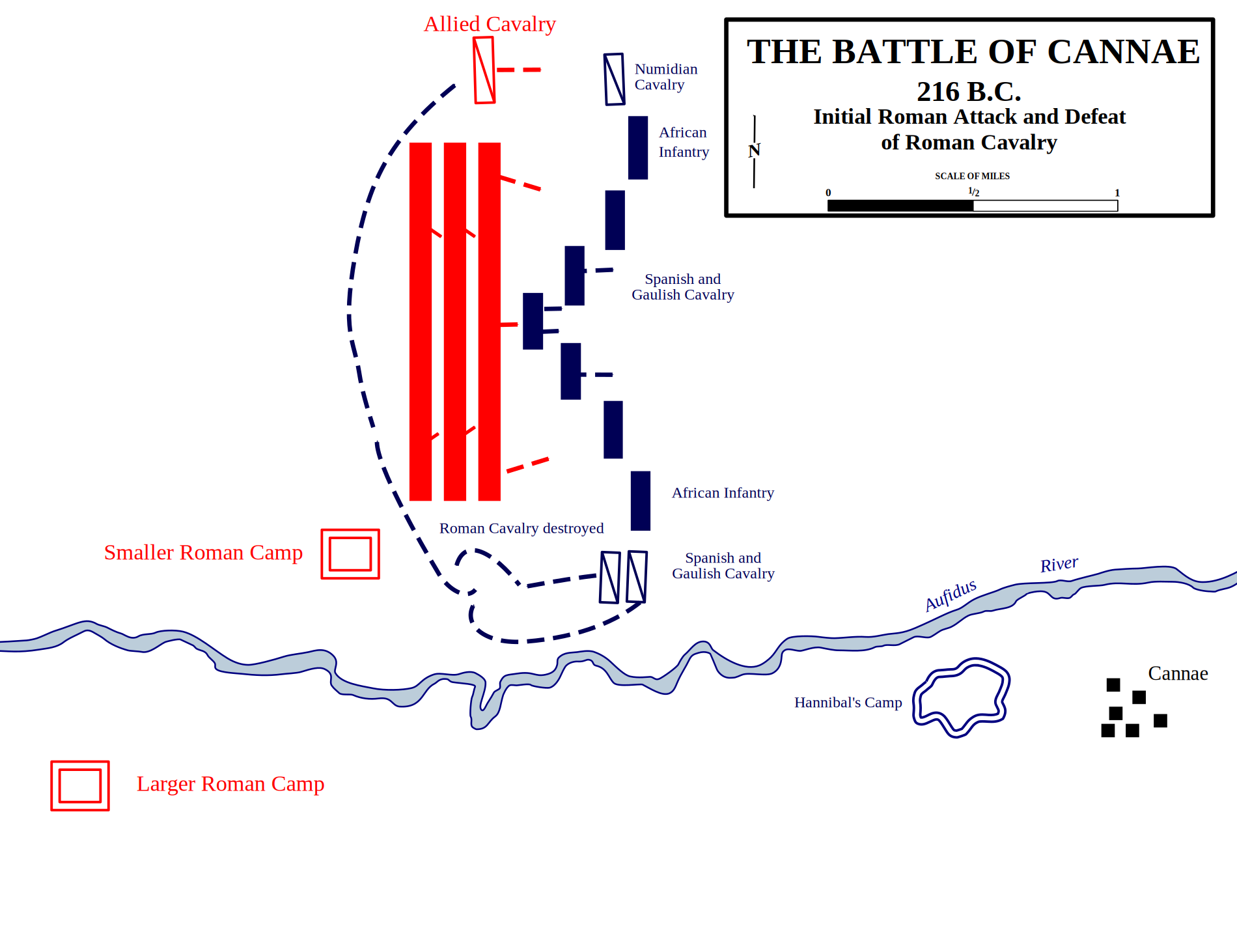
Image source & licence
Map: Dept. of History, United States Military Academy (cartographer Frank Martini); vector version by Wikimedia user Hogweard. Public domain (work of the U.S. Federal Government).
The Roman plan was blunt: form up deeper than usual and drive through the Carthaginian centre by sheer mass. Hannibal invited exactly that. He pushed his Spanish and Gallic infantry forward in a convex bow, knowing they would give ground, and stationed his veteran African infantry — re-equipped with arms stripped from the Roman dead at Trasimene — on the flanks, facing inward. As the Romans pressed in, the bow inverted into a sack. Then Hannibal's superb Numidian and Spanish cavalry, having swept the Roman horse from the field, closed the mouth of the sack from behind.
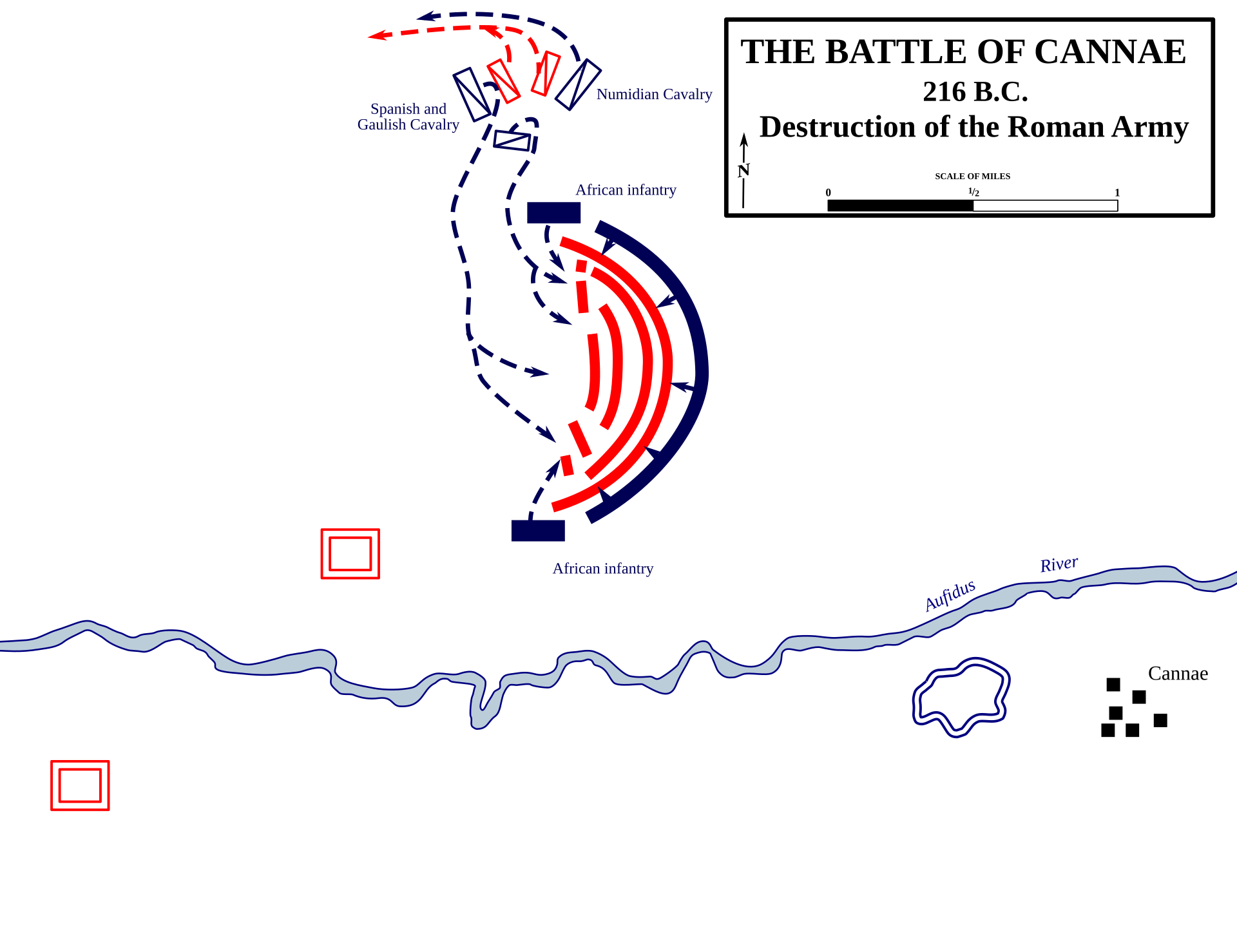
Image source & licence
Map: Dept. of History, United States Military Academy (cartographer Frank Martini); vector version by Wikimedia user Hogweard. Public domain (work of the U.S. Federal Government).
The elephants
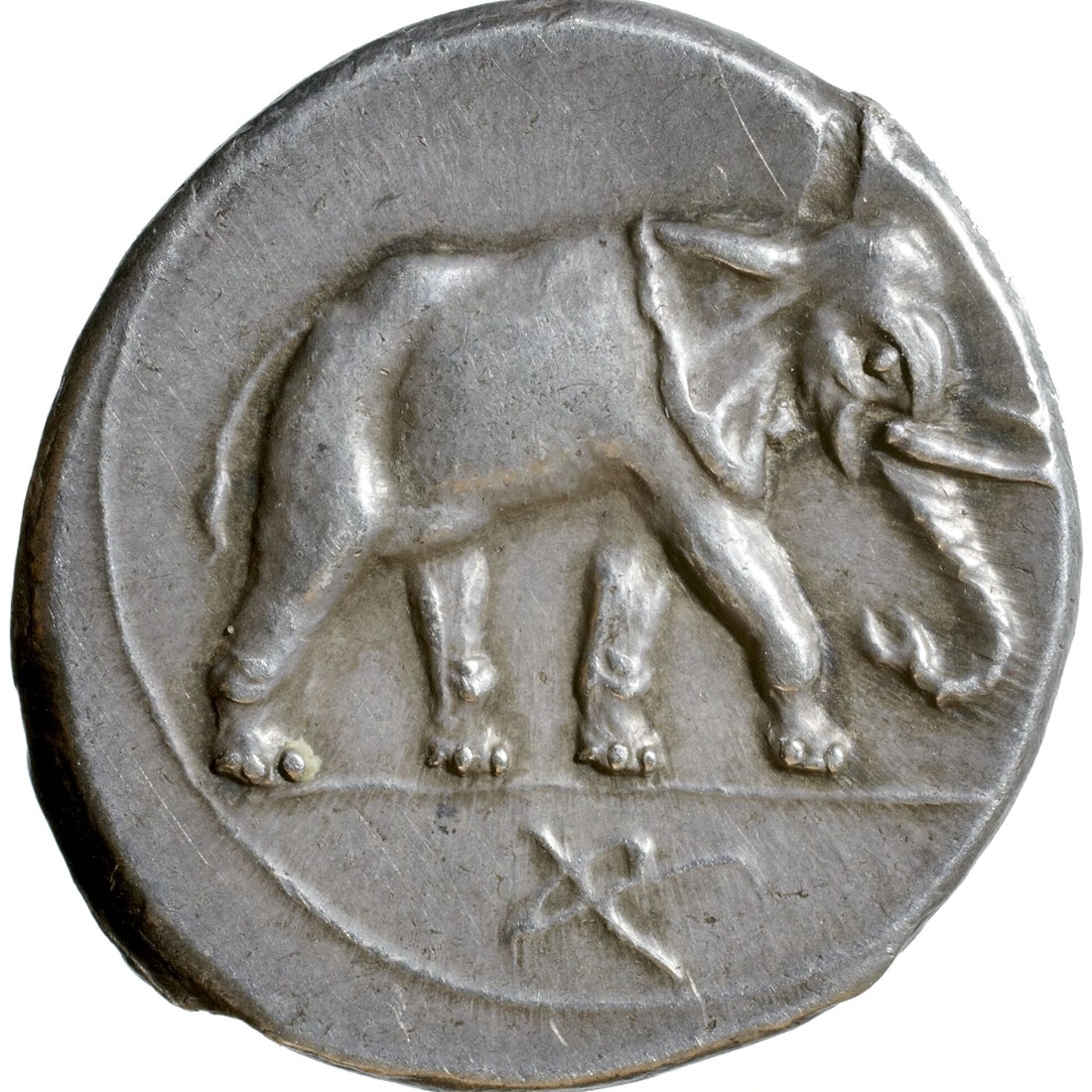
Nothing fixes Hannibal in the imagination like the elephants that crossed the Alps with him — and, fittingly, the elephant is the one image on which his war left a permanent numismatic mark. Carthage put the African war elephant on its silver during exactly these years, and it is the single most collectable image of the whole conflict.
Most of the elephants that reached Italy were not the great African bush elephant but the smaller North African forest elephant (now extinct), with the occasional imported Indian animal — Hannibal's favourite mount, a beast named Surus ("the Syrian"), was probably Indian. Almost all of them died in the first Italian winter after crossing the Alps; the elephant was a terror weapon of limited supply, and the coins outlasted the animals by two millennia.
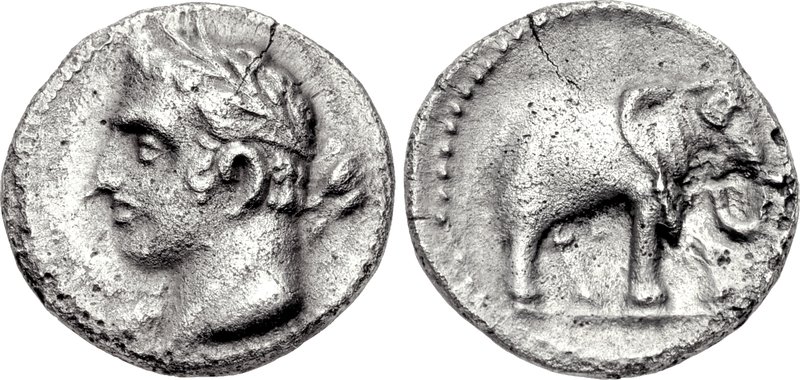
Image source & licence
Coin: Classical Numismatic Group (CNG). Public domain, via Wikimedia Commons. Cropped/resized for this page.
The reference coinage — a collector's map of the war
Below are the coin types that document the Second Punic War, on both sides — the ones a collection can realistically pursue, flagged for what this collection already holds, what is chaseable, and what is a museum piece. Full weights and references are given so each can be recognised in a sale.
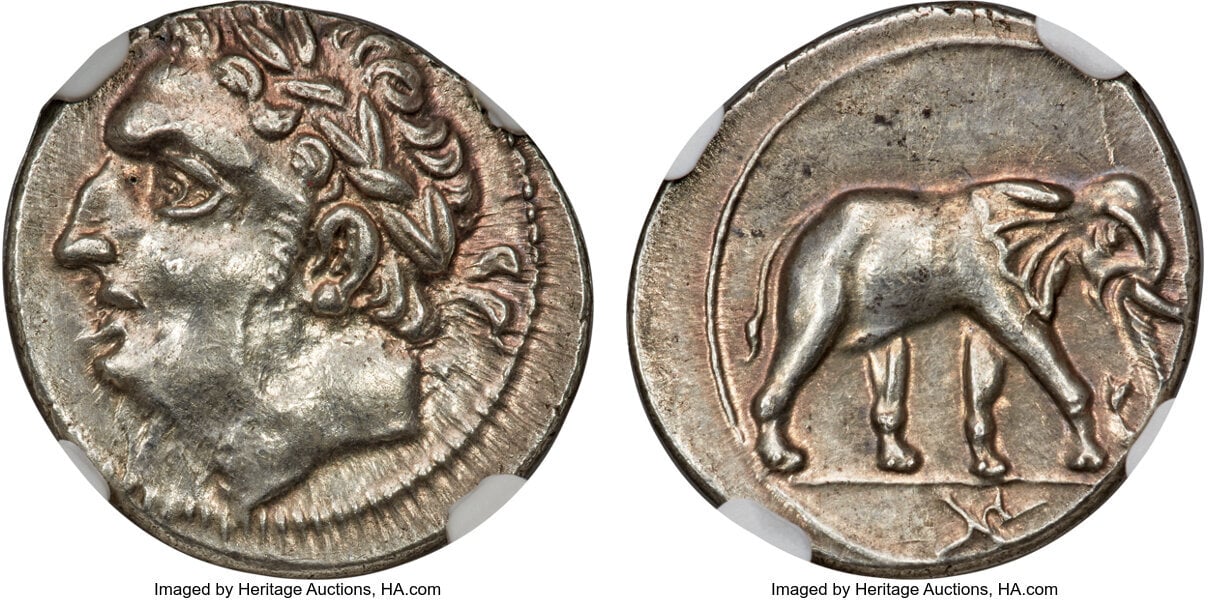
The war coin. Laureate male head (Melqart — or a Barcid?) / an African war elephant advancing right, Punic aleph in the exergue. Struck during the war itself, on the reduced Siculo-Punic standard.
SNG Copenhagen 383 · Burnett, SNR 62 (1983) · Robinson, Essays Mattingly 8b
→ Heritage ANA 3135, lot 30005 (NGC AU; ex Best Coll.; closes 1–5 Sep 2026)
The affordable way into the elephant iconography: same Herakles-Melqart obverse, same advancing elephant, at a quarter the size (~1.7 g). Struck from the silver of the Spanish mines that funded the whole war.
MHC 47 · CNH 15 · SNG BM Spain 102
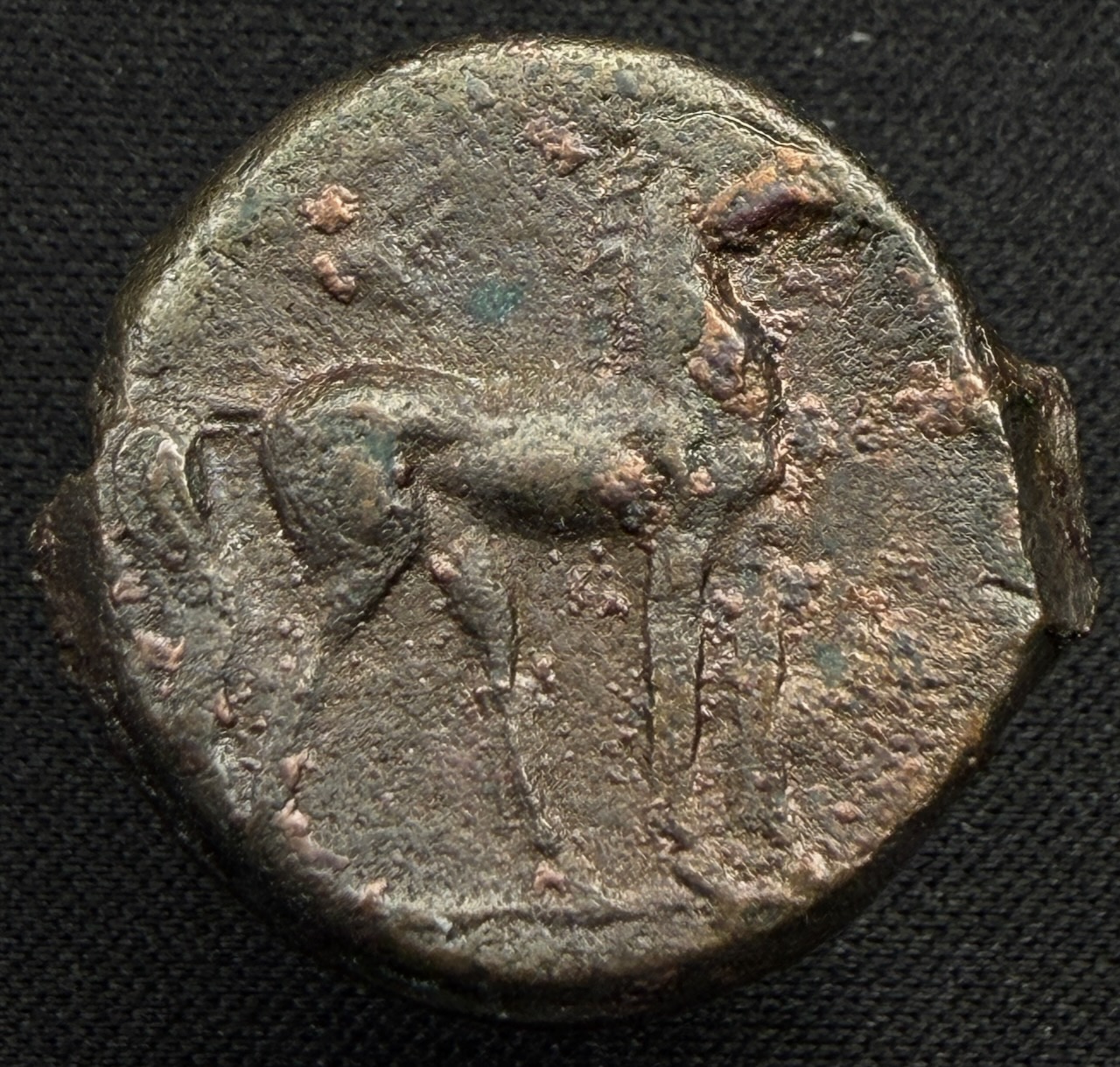
The everyday war money: the goddess Tanit and the standing horse, Carthage's civic badge, struck in quantity to pay and provision. This is a coin of Hannibal's war years, held here.
SNG Copenhagen 214 · see the type page →
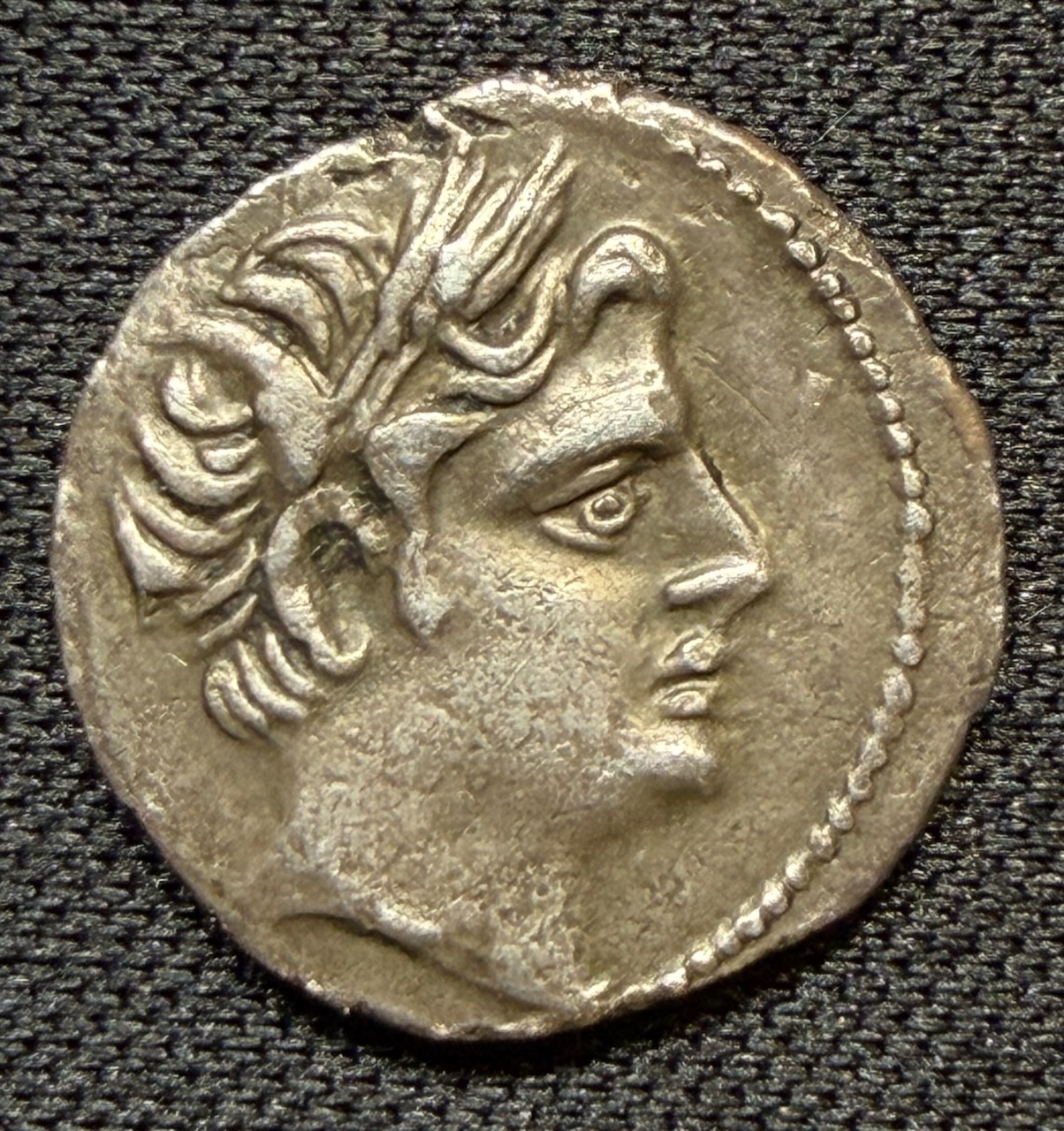
Struck by the Carthaginian military administration on captured Sicily, in the same years as the elephant half-shekel — the war reaching the collection's own shelves.
HGC 2, 173 · see the type page →
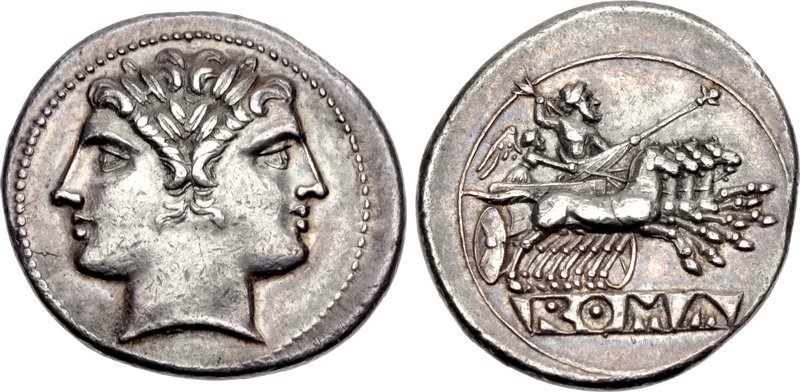
The coin Rome went to war on. A janiform young head (the Dioscuri, most think, not Janus) / Jupiter and Victory in a fast quadriga, ROMA below. Its silver was quietly debased as the war drained the treasury — a metal record of the crisis.
Crawford RRC 28/3 · Sydenham 64
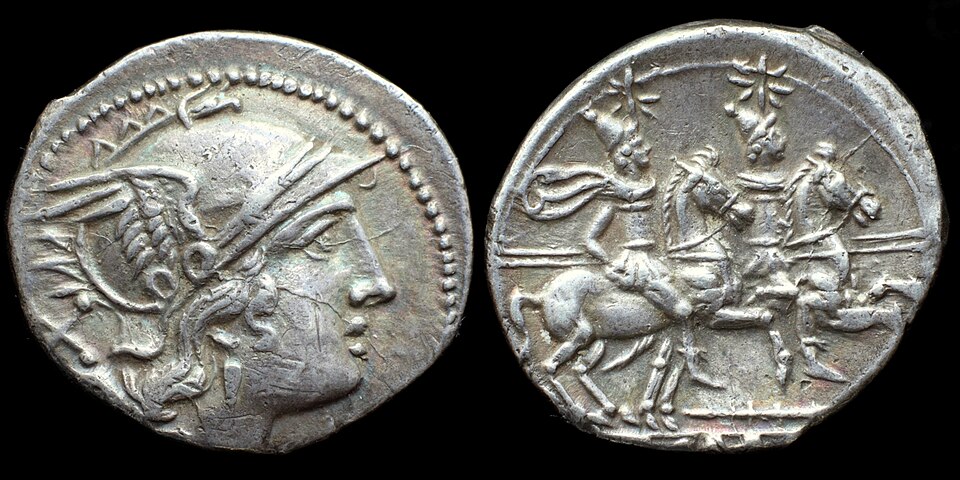
Out of the war's wreckage, Rome scrapped the quadrigatus and created the coin that would run the Mediterranean for four centuries: helmeted Roma / the Dioscuri charging, ROMA in exergue, mark of value X (= ten asses).
Crawford RRC 44/5 (the type) · coin shown: an anonymous Second Punic War denarius of the same design, Crawford 78/1, Sicilian mint
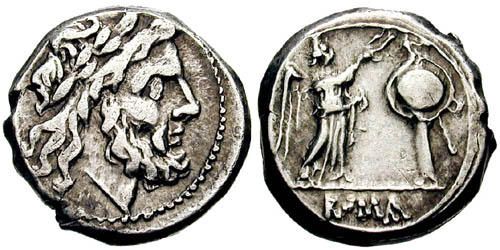
Launched alongside the denarius for trade with the Greek south: laureate Jupiter / Victory crowning a trophy, ROMA below. Struck on a lighter standard and in less pure silver — a war-economy coin aimed outward.
Crawford RRC 44/1 · Sydenham 83
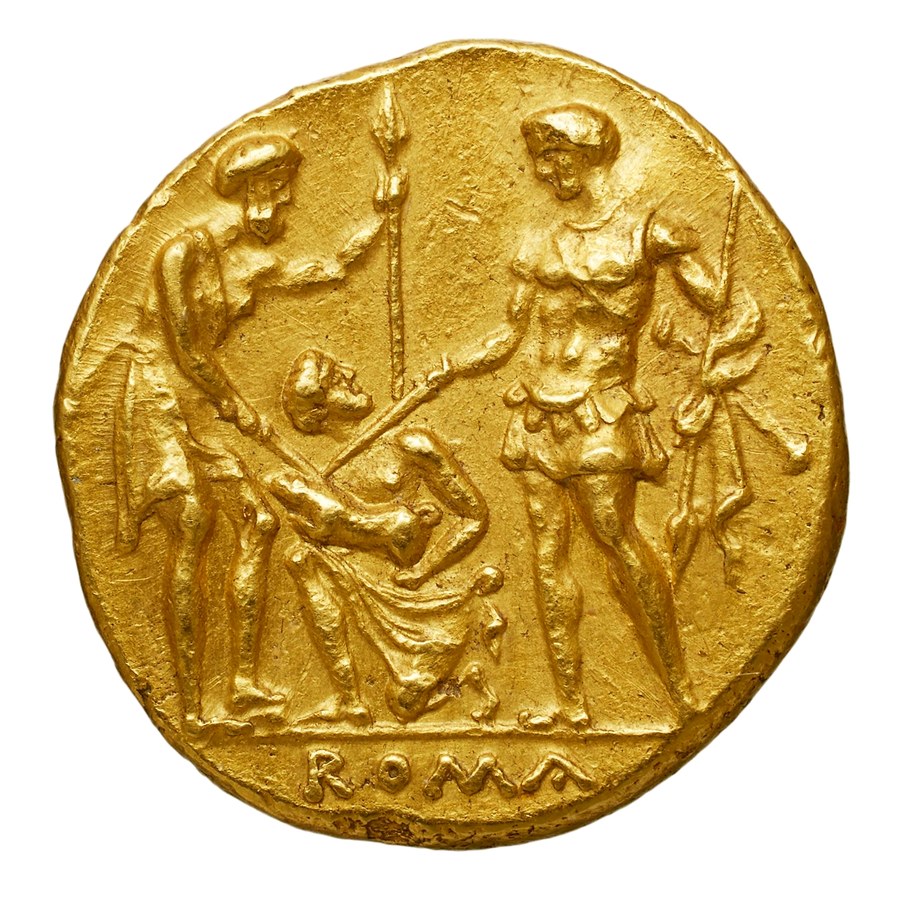
Rome struck gold for almost the first time to survive this war: the janiform head / two soldiers swearing an oath over a kneeling man holding a pig — a treaty ritual. A great rarity, listed here for the record rather than the want list.
Crawford RRC 28/1–2 · and the later Mars / eagle gold, RRC 44/2–4
Reference-coin image credits & licences
Hero coin (elephant reverse): Punic Sicily (Akragas?) silver shekel, 213–210 BC, Bibliothèque nationale de France, via Wikimedia Commons (file page), public domain; cropped to the flan by JSB Coins.
,_Sicile_-_btv1b8483584m_(2_of_2).jpg)
Elephant half-shekel (live card): Heritage Auctions / NGC, lot 30005, via NumisBids — shown for reference to a live auction lot.
Barcid quarter-shekel: Classical Numismatic Group (CNG), public domain, via Wikimedia Commons. Cropped/resized.
Quadrigatus: Classical Numismatic Group (CNG), CC BY-SA 2.5, via Wikimedia Commons. Resized.
Anonymous denarius (Cr 78/1): Johny Sysel, CC BY 4.0, via Wikimedia Commons. Resized.
Victoriatus: Classical Numismatic Group (CNG), CC BY-SA 3.0, via Wikimedia Commons. Resized.
Oath stater (gold): Bibliothèque nationale de France (Gallica, digital ID btv1b104534036), public domain, via Wikimedia Commons (File:Statere ROMA BnF-Gallica revers.jpg). Resized.
Owned coins (Carthage shekel, Akragas quarter-shekel) photographed by the collection.
At a glance
| Coin | Who & when | Types | Reference |
|---|---|---|---|
| Silver half-shekel | Carthage/Sicily, 213–210 BC | Melqart(?) / elephant | SNG Cop. 383 |
| Silver quarter-shekel | Barcid Spain, 237–209 BC | Melqart / elephant | MHC 47; SNG BM Spain 102 |
| Æ shekel (held) | Carthage, c. 221–210 BC | Tanit / horse | SNG Cop. 214 |
| AR quarter-shekel (held) | Punic Akragas, c. 213–211 BC | Punic Sicily | HGC 2, 173 |
| Quadrigatus | Rome, c. 225–212 BC | Dioscuri / quadriga | RRC 28/3 |
| Denarius (first) | Rome, c. 211 BC | Roma / Dioscuri | RRC 44/5 |
| Victoriatus | Rome, c. 211 BC | Jupiter / Victory & trophy | RRC 44/1 |
| Gold oath staters | Rome, 218–211 BC | Dioscuri / oath scene | RRC 28/1–2 |
Sources
Polybius, Histories III (the near-contemporary account of the war and of Cannae); Livy, Ab Urbe Condita XXI–XXX. For the coinage: G. K. Jenkins & R. B. Lewis, Carthaginian Gold and Electrum Coins (1963); E. S. G. Robinson, "Punic Coins of Spain," in Essays… Mattingly (1956); A. Burnett, "The Coinage of Rome and Magna Graecia," SNR 62 (1983); L. Villaronga, Corpus Nummum Hispaniae (CNH); and M. H. Crawford, Roman Republican Coinage (RRC, 1974) for the Roman series. Auction attribution for the live elephant half-shekel follows Heritage / NGC as cited on the lot.