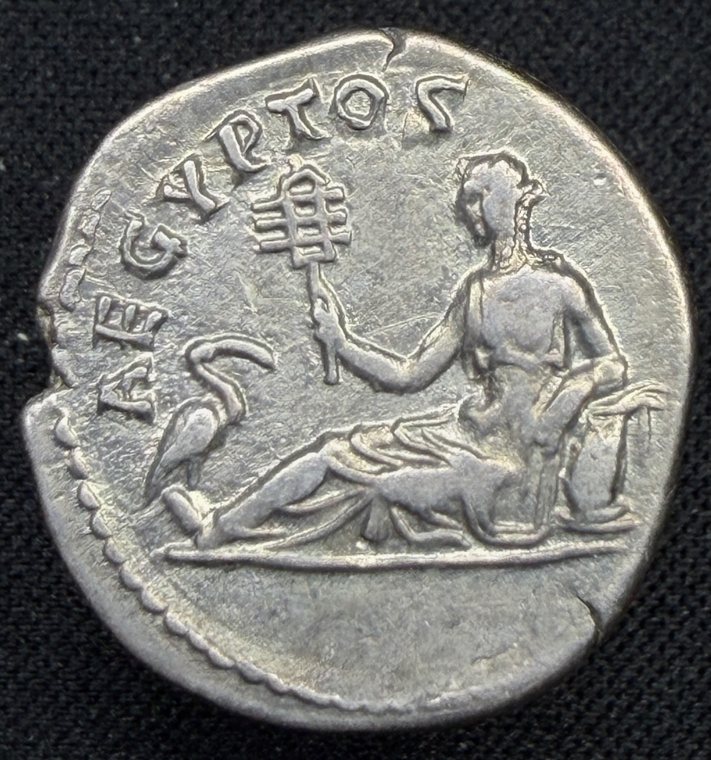
Two coins of identical type can look nothing alike. One is bright, hard, and grey; another glows blue and gold at the rim; a bronze is deep green, or chestnut, or crusted with a powder that is slowly eating it alive. All of that is surface chemistry — and learning to read it is learning to tell a coin that has aged well from one that is in trouble.
The surface you see first
An uncirculated ancient coin does not exist. Every one has spent two thousand years reacting with its environment — buried in soil, hoarded in a pot, handled, boxed, breathed on — and its surface is a thin layer of new compounds grown over the original metal. On silver that layer is called toning; on copper and bronze it is a patina. Both are, chemically, corrosion.
That word sounds like a problem, and sometimes it is. But most of the time the layer is stable, protective, and beautiful — it seals the metal against further attack and gives the coin the colour collectors prize. The whole art is distinguishing the corrosion that protects and pleases from the corrosion that destroys. The eye lands on the surface first for a reason: the surface is telling you the coin's whole later history.
Silver: the chemistry of toning
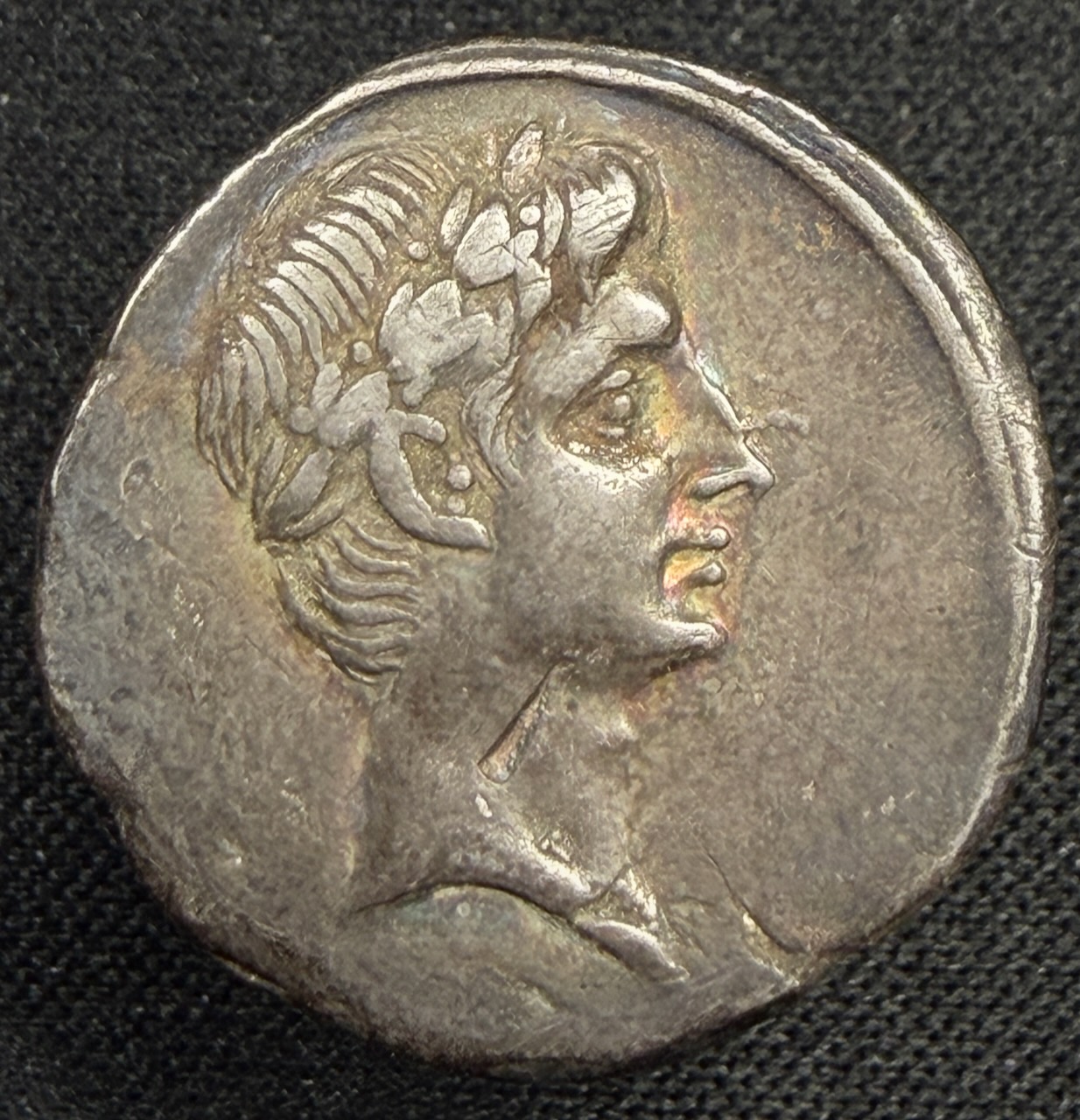
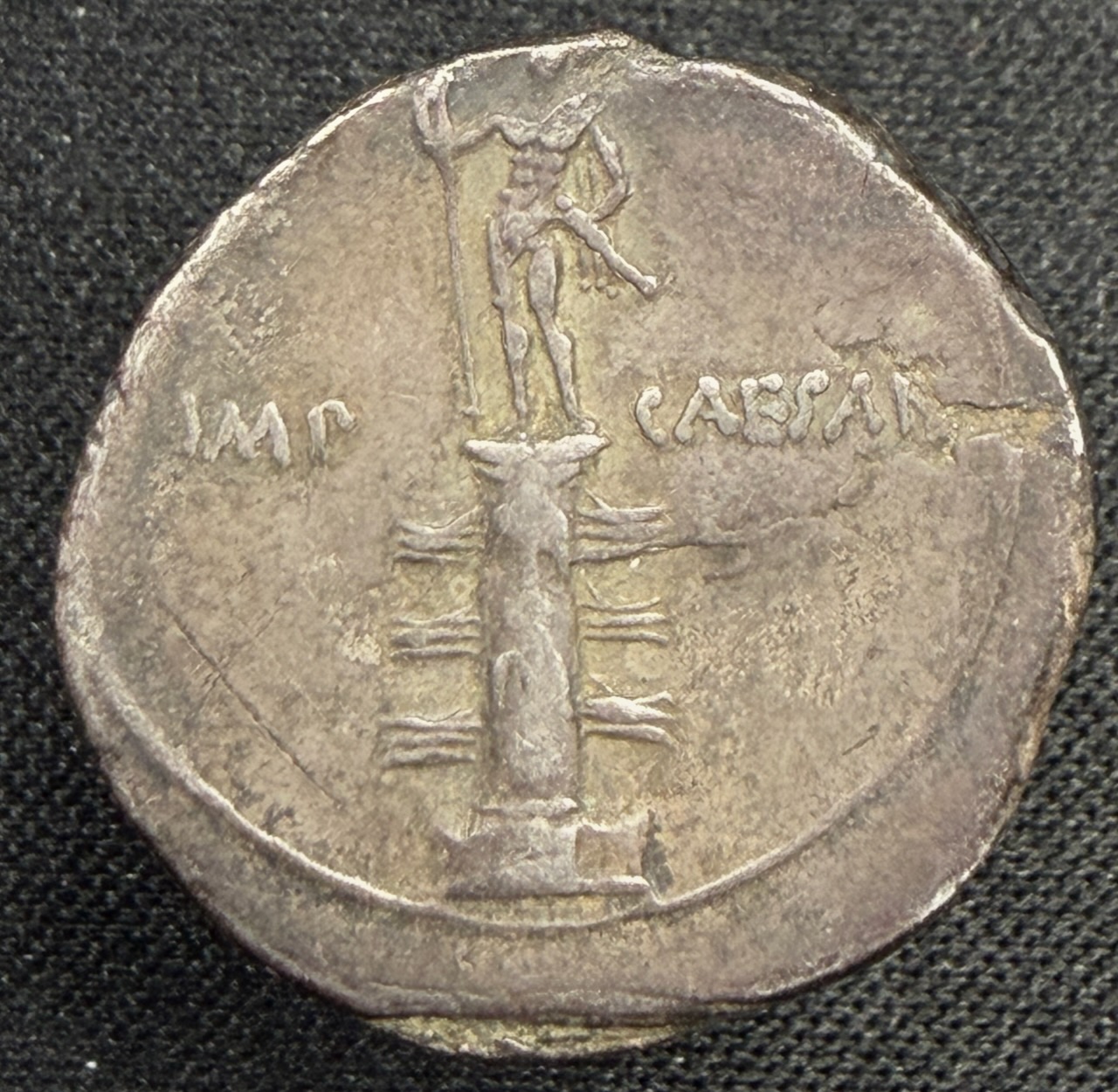
Silver tarnishes by reacting with sulphur. Traces of sulphur compounds — in the air, in paper, in the felt and oak of a coin cabinet, even on a fingertip — convert the surface to silver sulphide, Ag₂S. Thick, it is the black you scrub off grandmother's cutlery. But grown slowly and kept very thin, it does something remarkable: it turns to colour.
The rainbow on a beautifully toned coin is not pigment. It is thin-film interference — the same physics as oil on water or a soap bubble. Light reflects off both the top of the sulphide film and the silver beneath it, and the two reflections interfere. Which colours survive depends on the film's thickness, so as the tone deepens over decades the surface marches through the spectrum: pale gold, then rose and magenta, then blue, then green, and finally, when the film is thick, back to grey and black. A single coin can show the whole sequence, thin at the rim and deep in the fields.
Bronze: the chemistry of patina
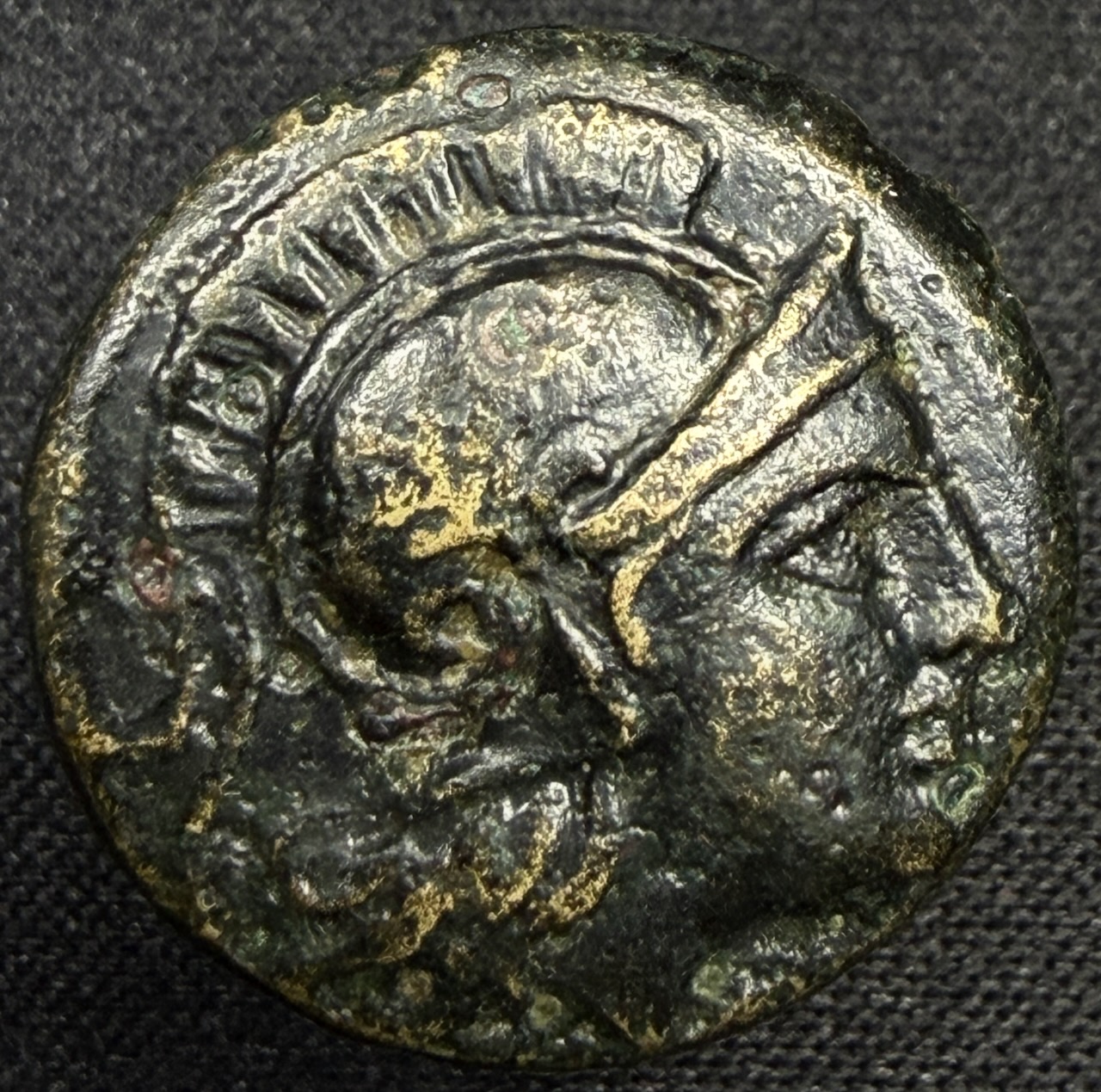
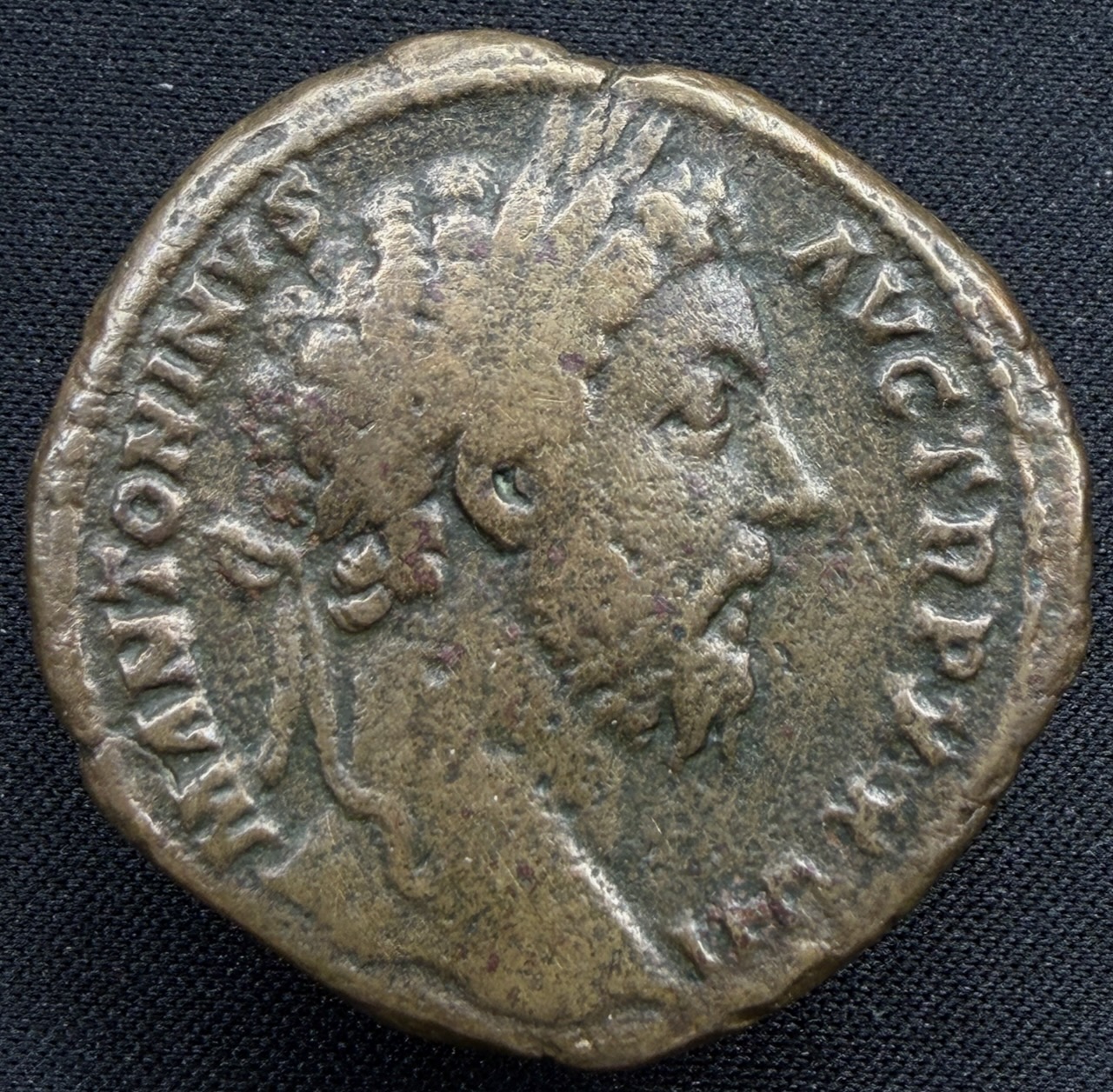
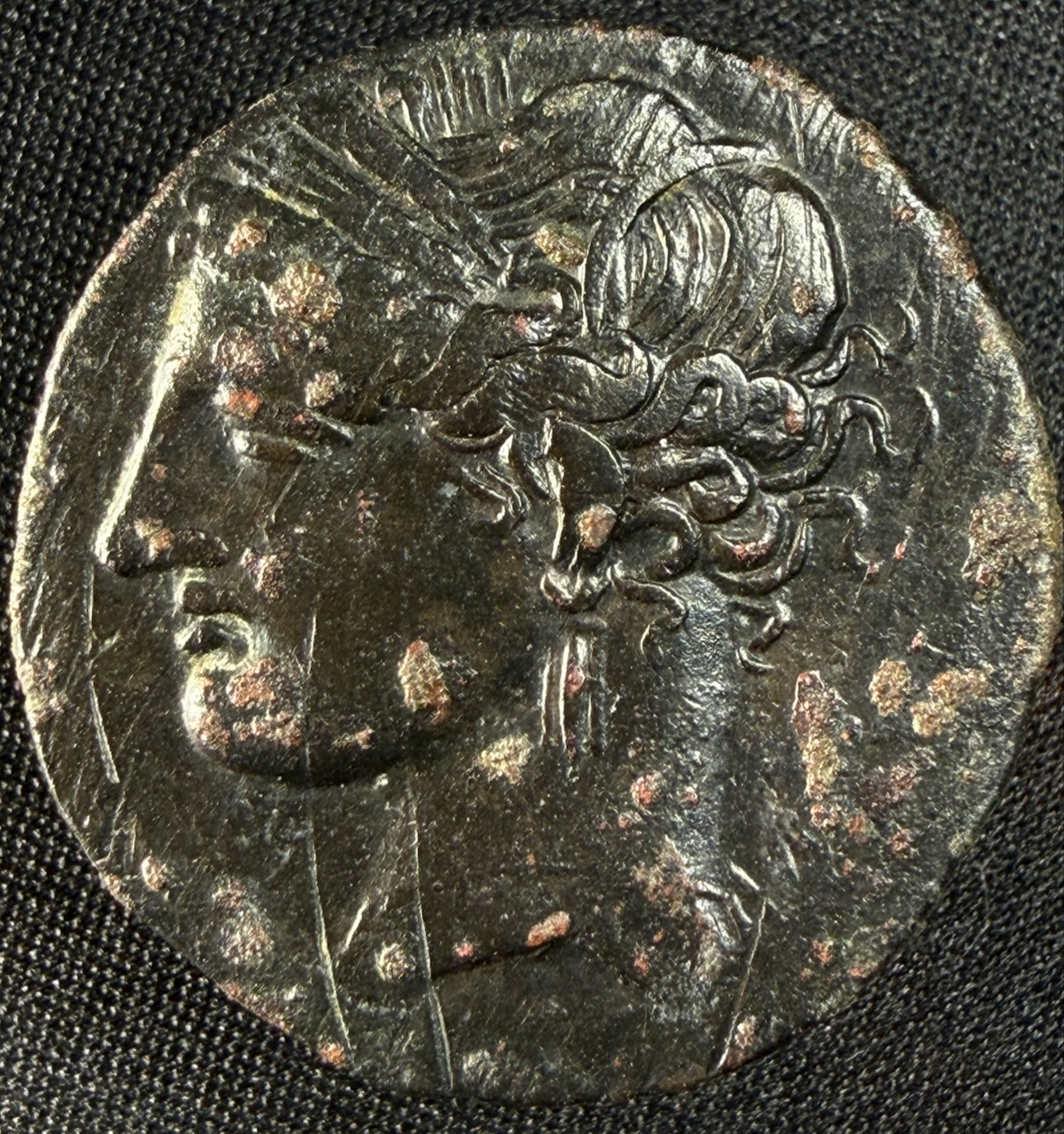
Copper and its alloys corrode into a richer palette, because copper forms many coloured compounds. Buried, a bronze coin first grows a layer of cuprite — copper(I) oxide, Cu₂O, a deep red-brown — directly on the metal. Cuprite is the hero of the story: it forms early, it preserves the original surface detail underneath it, and it acts as a foundation for everything above.
Over the red cuprite grow the copper carbonates: malachite, the familiar bright green, and sometimes azurite, a blue. Sulphur and other elements in the soil add browns, blacks and blue-greens. Together these build the hard, smooth, even skin that collectors call a noble or stable patina — a sealed corrosion layer that has reached equilibrium and now protects the metal it grew from. A good bronze patina is not dirt to be removed; it is the coin's armour, and its beauty.
When the surface turns against the coin
Not all corrosion comes to rest. The one every collector of bronzes fears is bronze disease — and it is genuinely a disease, in that it spreads and consumes. Its cause is chloride. When a buried bronze has picked up chloride salts, they form a copper-chloride mineral, nantokite (CuCl), hidden underneath the patina. Expose that to humidity and oxygen and it reacts into bulkier hydrated chlorides that erupt through the surface as a powdery, bright blue-green. The reaction feeds on the metal and can continue, the conservators warn, “until the original metal of the artifact is gone, leaving only a heap of blue dust.”
This is the crucial distinction the eye must learn. A stable patina is hard, smooth, and one with the coin. Bronze disease is powdery, pale, and sits in active spots that spread — and unlike a noble patina it must be treated, not admired. The two can look superficially similar to a beginner; telling waxy green malachite from powdery green bronze disease is one of the first real skills in collecting bronze.
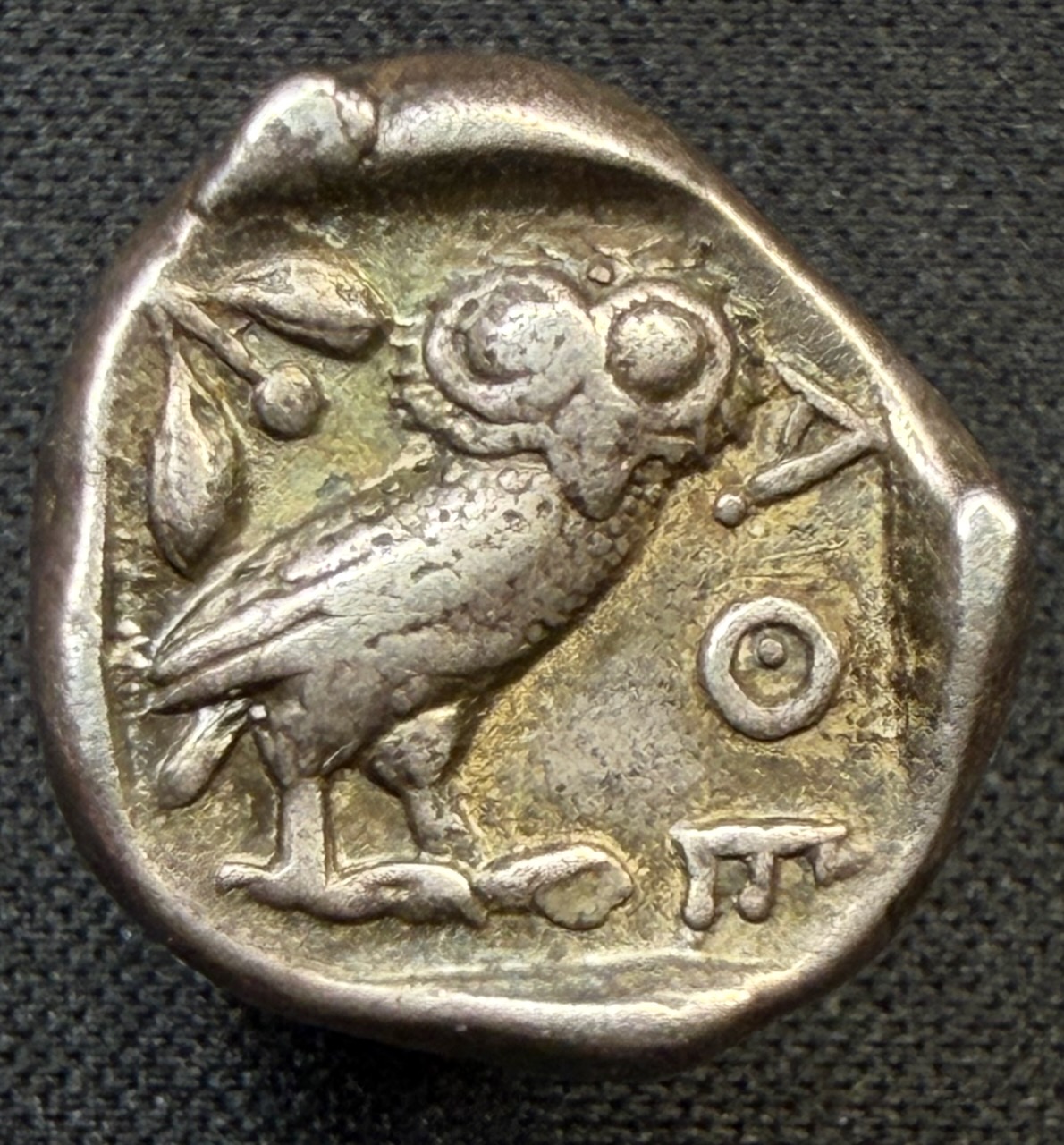
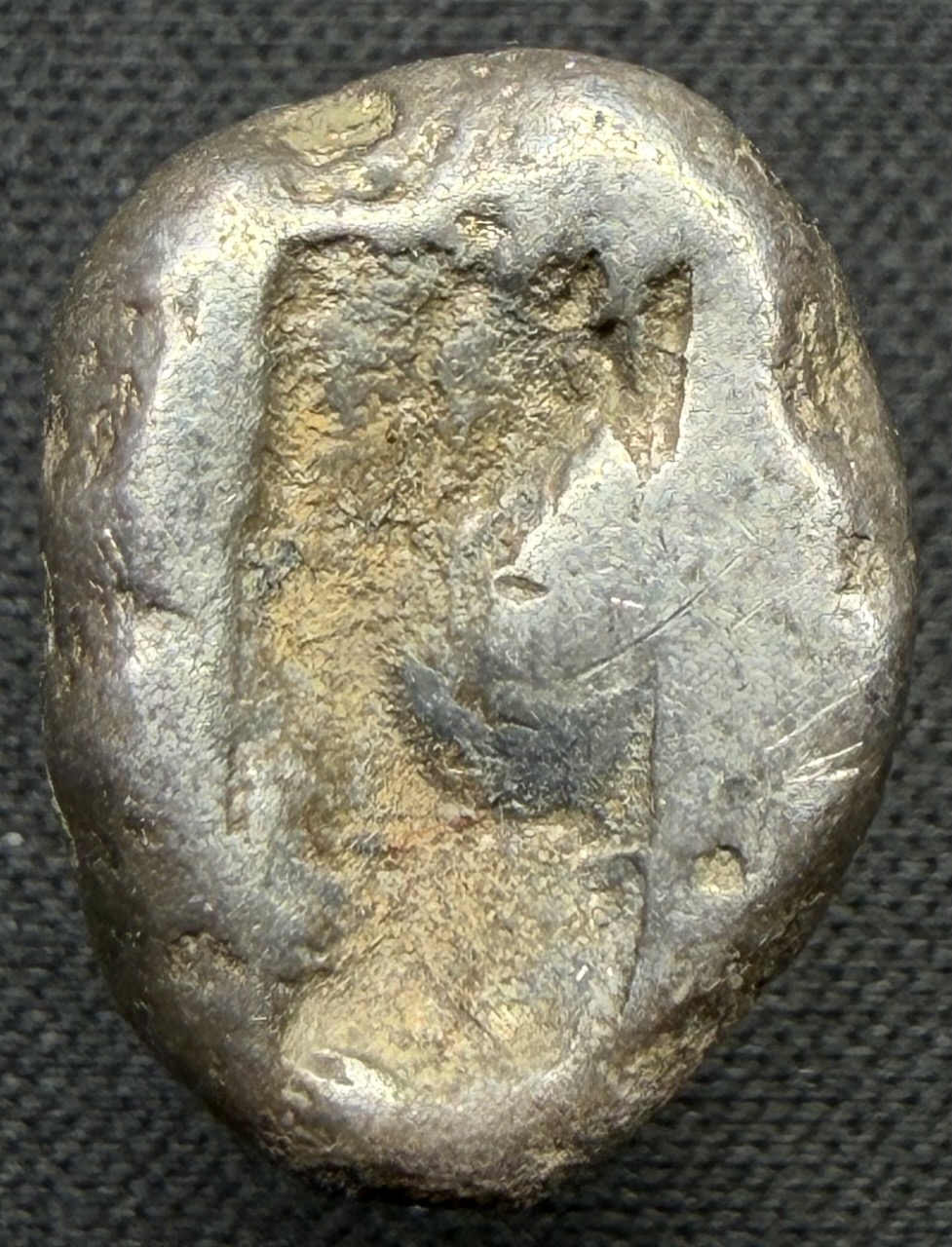
Silver has a milder cousin. Long-buried silver can grow horn silver — silver chloride, a waxy grey-violet crust. The collection's Achaemenid siglos wears exactly this: a brown horn-silver deposit filling the incuse punch, a small chemical fossil of two and a half thousand years underground.
The eye and the market
All of this chemistry ends at a human judgement: does it please the eye? The market rewards original, undisturbed surfaces above everything. A silver coin with attractive cabinet toning or a bronze with a smooth even patina commands a premium, because the surface is both beautiful and a guarantee of authenticity — a genuine centuries-old patina is extraordinarily hard to fake, and a die crack or a fine detail preserved under it cannot be reproduced by a caster.
Which is why the first rule a new collector learns is the hardest to obey: do not clean ancient coins. Stripping a coin to bright metal destroys the surface, the protection, and most of the value in a single afternoon; harshly cleaned coins look raw and are marked down hard. Artificial toning — colour forced with chemicals or heat — is a related trap: it can fool the eye briefly but is penalised sharply once detected, because the hobby prizes what happened slowly and honestly over what was manufactured to sell.
There is exactly one exception, and it is the one that proves the rule: active bronze disease must be treated, because doing nothing means losing the coin. Arresting spreading chloride corrosion is conservation; stripping a stable, noble patina is vandalism. Knowing which is which — corrosion that protects versus corrosion that consumes — is the whole of the skill, and it begins with the eye.
| Surface | Metal | Chemistry | Desirable? |
|---|---|---|---|
| Iridescent / cabinet tone | Silver | Ultra-thin Ag₂S; thin-film interference | Highly — the prized result of slow toning |
| Deep grey / charcoal tone | Silver | Thicker Ag₂S | Yes, if even and hard — “old cabinet” look |
| Horn silver | Silver | Silver chloride, AgCl (chlorargyrite) | Tolerated in small amounts; a burial fossil |
| Red / brown patina | Bronze | Cuprite, Cu₂O (seals the metal) | Yes — stable and protective |
| Green patina | Bronze | Malachite (carbonate); azurite blue | Yes, if hard and smooth |
| Powdery pale green | Bronze | Bronze disease — active chloride (nantokite) | No — must be treated; it spreads |
| Bright, raw metal | Either | Patina stripped by cleaning | No — surface and value lost |
Judgements of surface are partly science and partly taste, and the two do not always agree:
- Natural or artificial? Distinguishing genuine slow toning from chemically forced colour can defeat even experienced eyes, and grading services and dealers regularly disagree on what is “market acceptable.” There is no bright line.
- Malachite or bronze disease? Stable green and active green can look alike; certainty sometimes needs a chloride test or microscopy, not the naked eye. Cataloguers occasionally call it wrong in both directions.
- When is cleaning justified? “Never clean a coin” is the right default and the wrong absolute: arresting active bronze disease is necessary conservation. The hard cases sit between obvious preservation and obvious vandalism.
- Eye appeal is subjective. One collector's magnificent rainbow is another's distracting tarnish; the premium the market pays for toning is real but not stable, and taste shifts.
Coin images are of specimens in this collection. Surface descriptions follow each coin's catalogue entry. Dating elsewhere on the site is BC/AD.
The chemistry here follows the works below; links were checked live. Book references without a link are standard print scholarship.
Chemistry & conservation
- Aliza Taft, “Bronze Disease: Even Metal Gets Sick” — Cardiff University Conservation A conservator's clear account of copper corrosion: cuprite, malachite and azurite forming the stable patina, and the chloride mineral nantokite driving active bronze disease that “can continue until … only a heap of blue dust” remains. The source of the distinction at the heart of section IV.
- Patina — Wikipedia An overview of metal patina: the oxide, carbonate, sulphide and sulphate compounds that colour copper and bronze, verdigris, and the collecting principle that a repatinated piece is worth less than one with its original surface but more than a stripped one.
- Toning (coin) — Wikipedia Coin-specific: toning as silver sulphide, why rainbow toning can raise a coin's value while spotty toning lowers it, cabinet and bag toning, and the caution that artificial toning “will reduce … value when detected.”
- David A. Scott, Copper and Bronze in Art: Corrosion, Colorants, Conservation The standard technical reference on copper-alloy corrosion products and their treatment — the book behind the conservation practice summarised here.