Type · rhodes-helios-rose-didrachm
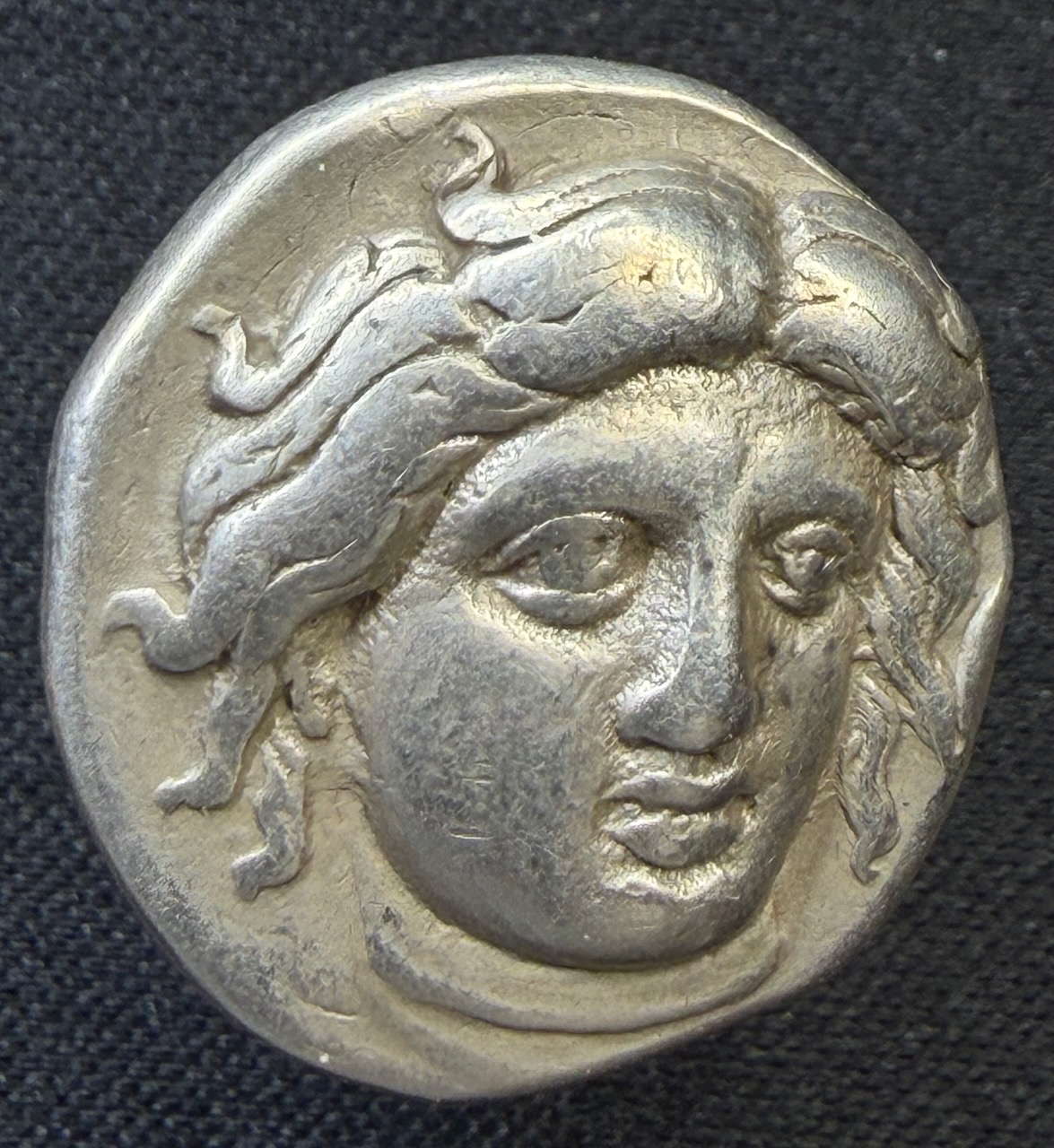
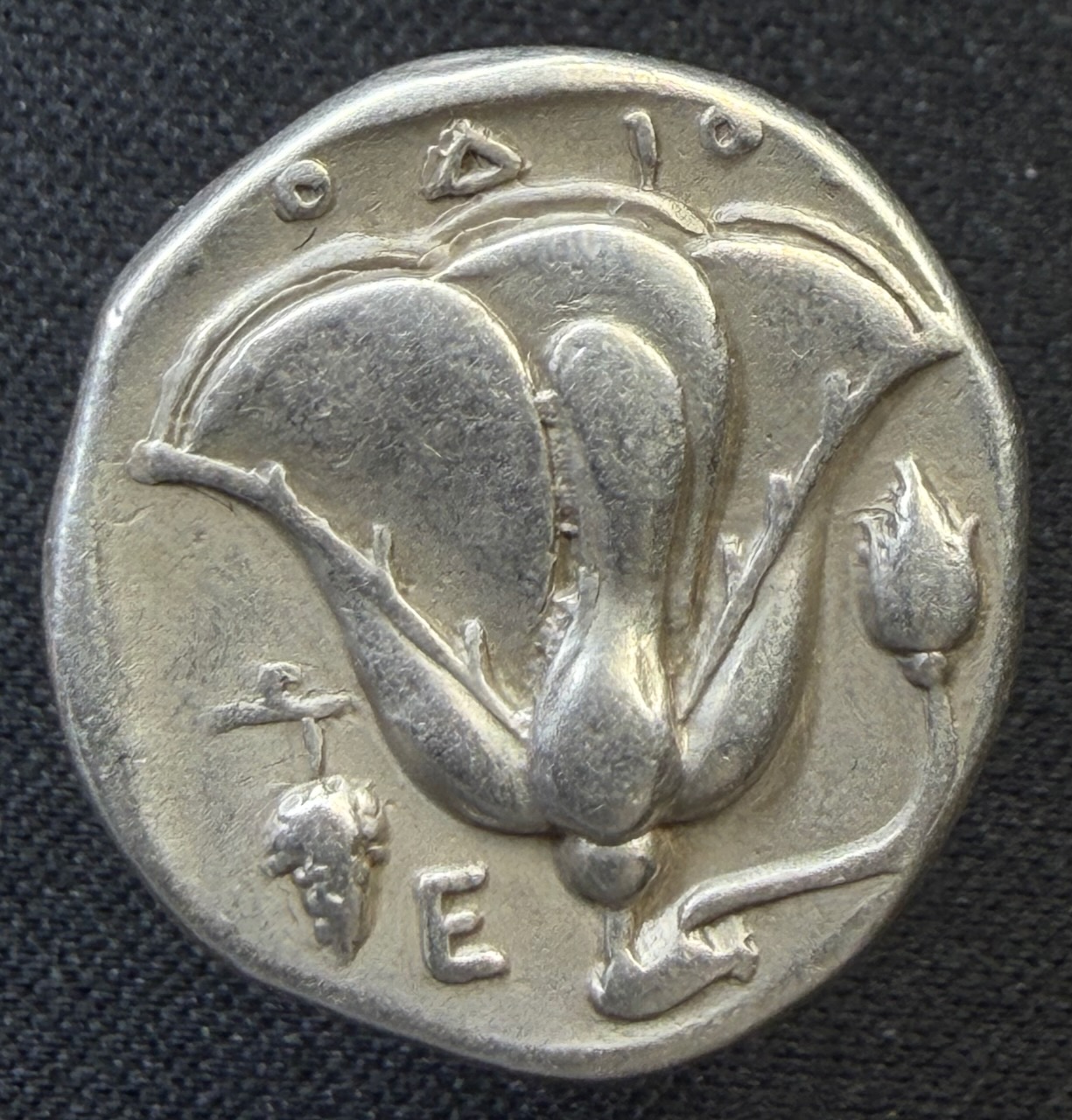
Current: Islands off Caria, Rhodes, AR didrachm, c. 305–275 BC. Head of Helios facing slightly right / rose with bud, grape bunch and E to left, ΡΟΔΙΟΝ above (Ashton 98; SNG Keckman 440; HGC 6, 1433)
Obverse: Head of Helios facing slightly right, hair loose and windblown
Reverse: Rose with bud to right; to left, bunch of grapes on stalk above E; all in shallow incuse
Primary reference: Ashton 98
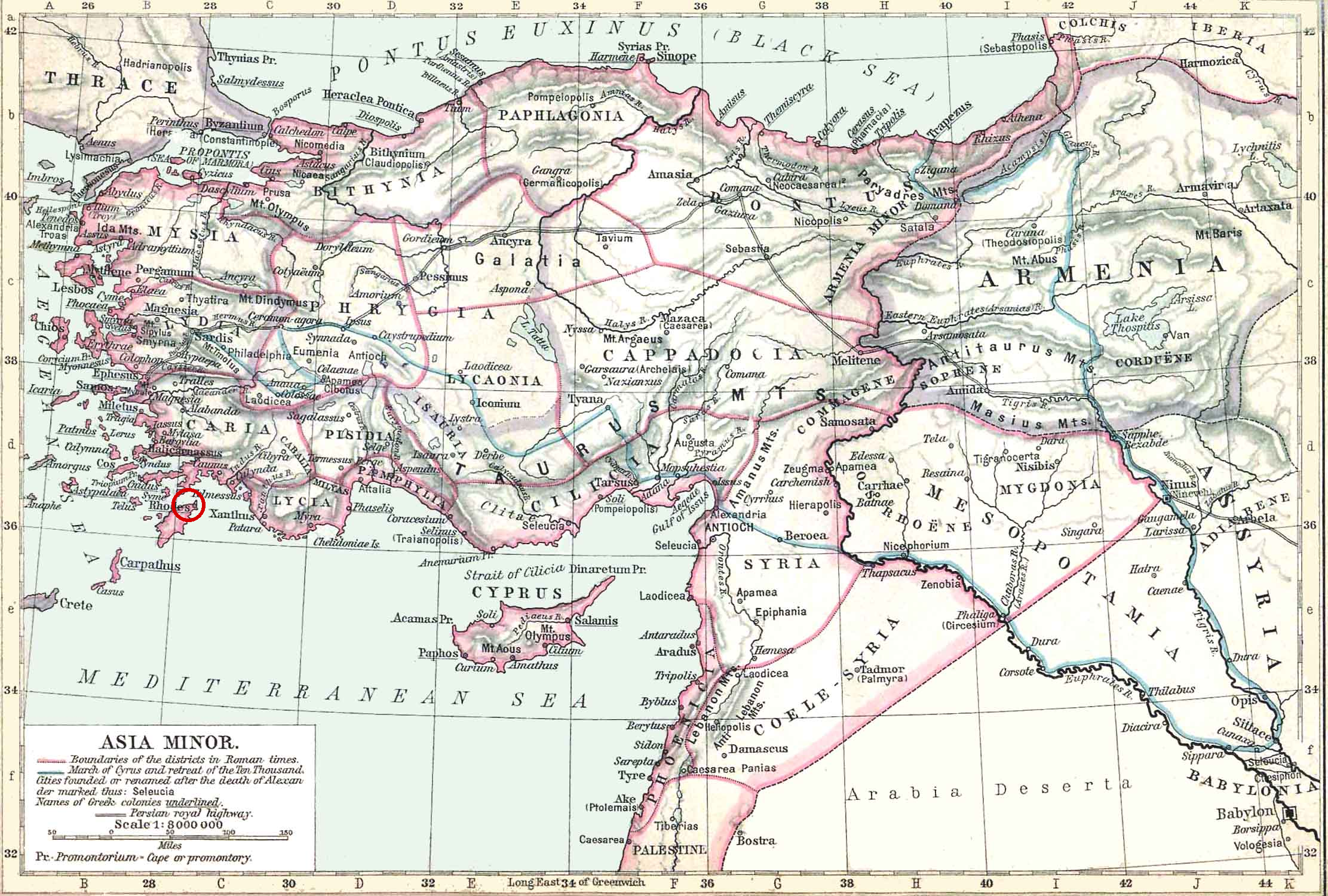
Asia Minor and the eastern Mediterranean, with the city of Rhodes circled in red at the northern tip of its island, off the Carian coast. The position explains the coin: every sea lane between the Aegean, Egypt, and the Levant passed the Rhodian harbors.
“Asia Minor under the Greeks and Romans” from William R. Shepherd, The Historical Atlas (1923), via Wikimedia Commons, File:Asia minor-Shepherd 1923.JPG (https://commons.wikimedia.org/wiki/File:Asia_minor-Shepherd_1923.JPG). Public domain (author died 1934); credited as a courtesy. Modified by JSB Coins: a red circle added to mark the city of Rhodes.
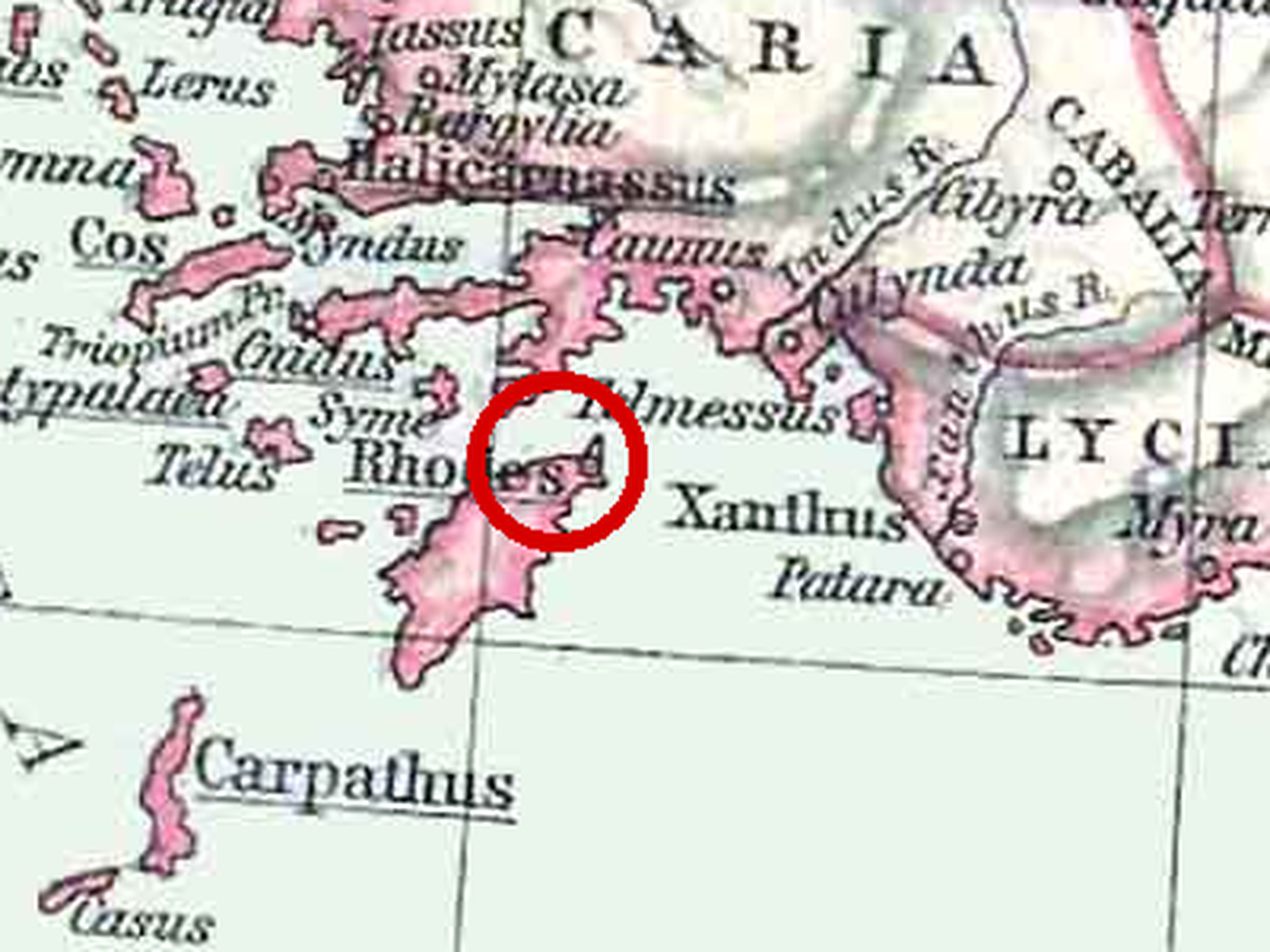
Detail: the island of Rhodes and the Carian shore, with the city of Rhodes circled at the island’s northeast point — the new capital founded by the three old towns in 408 BC, facing the mainland across the strait. Cos, Cnidus, and Halicarnassus, its trading neighbors and rivals, line the coast to the northwest.
In 408 BC the three old cities of the island of Rhodes — Lindos, Ialysos, and Kamiros — merged to found a single new capital at the island’s northern tip, and the new state chose its coin types once and for all: Helios, the sun god who owned the island in myth, and the rose (rhodon) that pronounces its name. Few Greek coinages are so perfectly matched to their city, and none kept a design longer — the sun-and-rose formula ran for over two centuries.
Graphic: JSB Coins, 2026 (CC0).
This didrachm belongs to the decades just after the most famous event in Rhodian history. In 305–304 BC Demetrios Poliorketes — son of Antigonos, the most relentless of the successors of Alexander (whose tetradrachm coinage appears elsewhere in this collection) — besieged the city for a year with the greatest siege train of the age, and failed. The Rhodians sold his abandoned machinery and, tradition says, used the proceeds to raise the Colossus: a hundred-foot bronze Helios by Chares of Lindos, finished around 280 BC and counted among the Seven Wonders. The god on this coin’s obverse, hair streaming as if in the sea wind, is the same god the Colossus portrayed — struck while the statue was rising over the harbor.
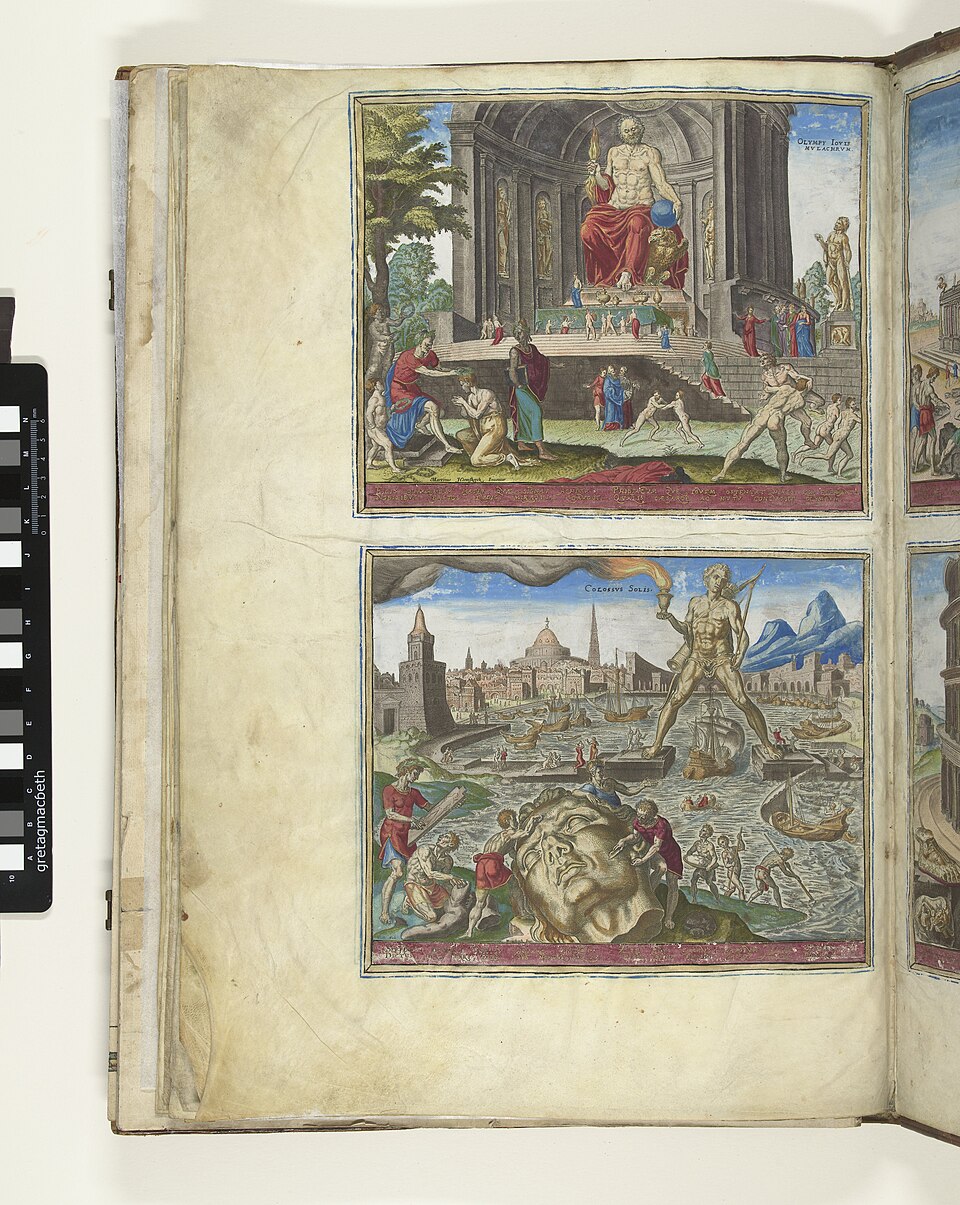
Print: Rijksmuseum, Amsterdam, CC0; reproduced unmodified. Print: Rijksmuseum, Amsterdam, CC0; reproduced unmodified.
The windblown, slightly-turned facing head is a bravura piece of die-cutting in the tradition begun by the facing Arethusa of Syracuse, and Rhodian engravers made it their signature. On the reverse the rose grows a single bud; the field marks — here a bunch of grapes above the letter E — distinguish the issue within the series (Ashton 98). Rhodes struck on its own reduced standard, the didrachm of about 6.8 g, and its silver followed its merchant fleet: Rhodes in these years was becoming the clearinghouse of eastern Mediterranean trade, its maritime law so respected that Rome later adopted it. That position did not survive the Roman settlement of 167/6 BC, which took Delos from Rhodes, handed it to Athens and made it a free port: the Rhodian envoy Astymedes told the Senate that harbour dues once farmed for a million drachmas a year were now fetching a hundred and fifty thousand (Polybius 30.31). The trade — and the silver — went to Athens, which is the economic engine behind the collection’s New Style tetradrachm.
Attribution and arrangement follow R. H. J. Ashton, “The Coinage of Rhodes 408–c. 190 BC” (in Money and its Uses in the Ancient Greek World, Oxford 2001), no. 98, with concordances SNG Keckman 440 — the reference on the earlier dealer’s tag — and Oliver D. Hoover, Handbook of Coins of the Islands (HGC 6), no. 1433. The siege and the Colossus: Diodorus 20.81–88 (linked in the references) and Pliny, Natural History 34.41 — who adds that even the fallen fragments excited wonder.
Didrachm of the Rhodian (reduced Chian) standard, c. 6.8 g — the workhorse silver of early Hellenistic Rhodes. The grape-bunch-and-E issue is Ashton 98 (= SNG Keckman 440, the Keckman collection's example; HGC 6, 1433). The facing Helios head, introduced with the city's coinage and refined in this period, descends from the late-classical fashion for facing heads begun by Kimon's Arethusa at Syracuse; the rose (rhodon) is a canting badge — the flower says the city's name.
John's Ancient Coin Collection · Type · rhodes-helios-rose-didrachm
Image credits for this coin — photographs, maps and graphics used on this page