Type · fabius-labeo-denarius
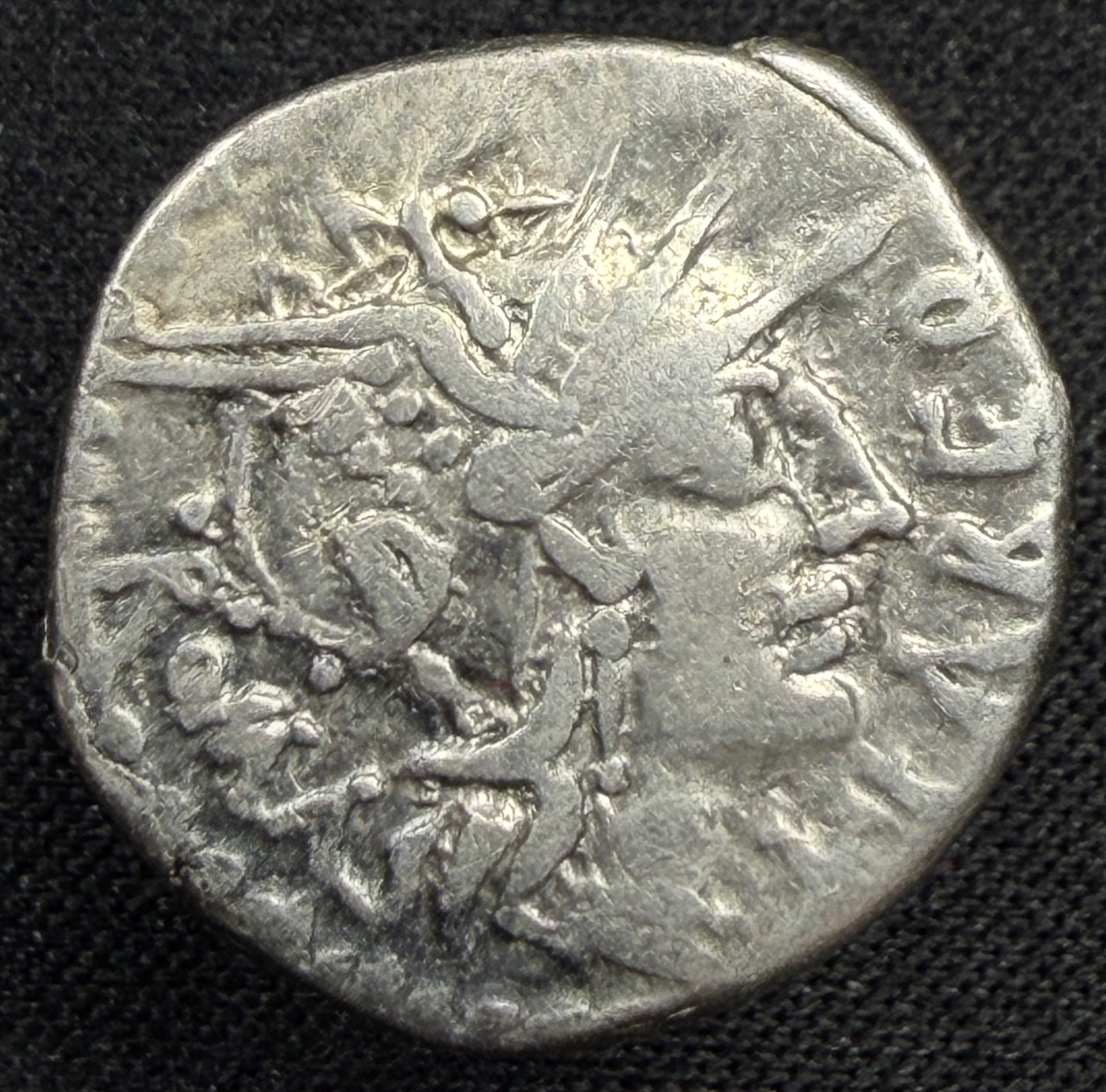
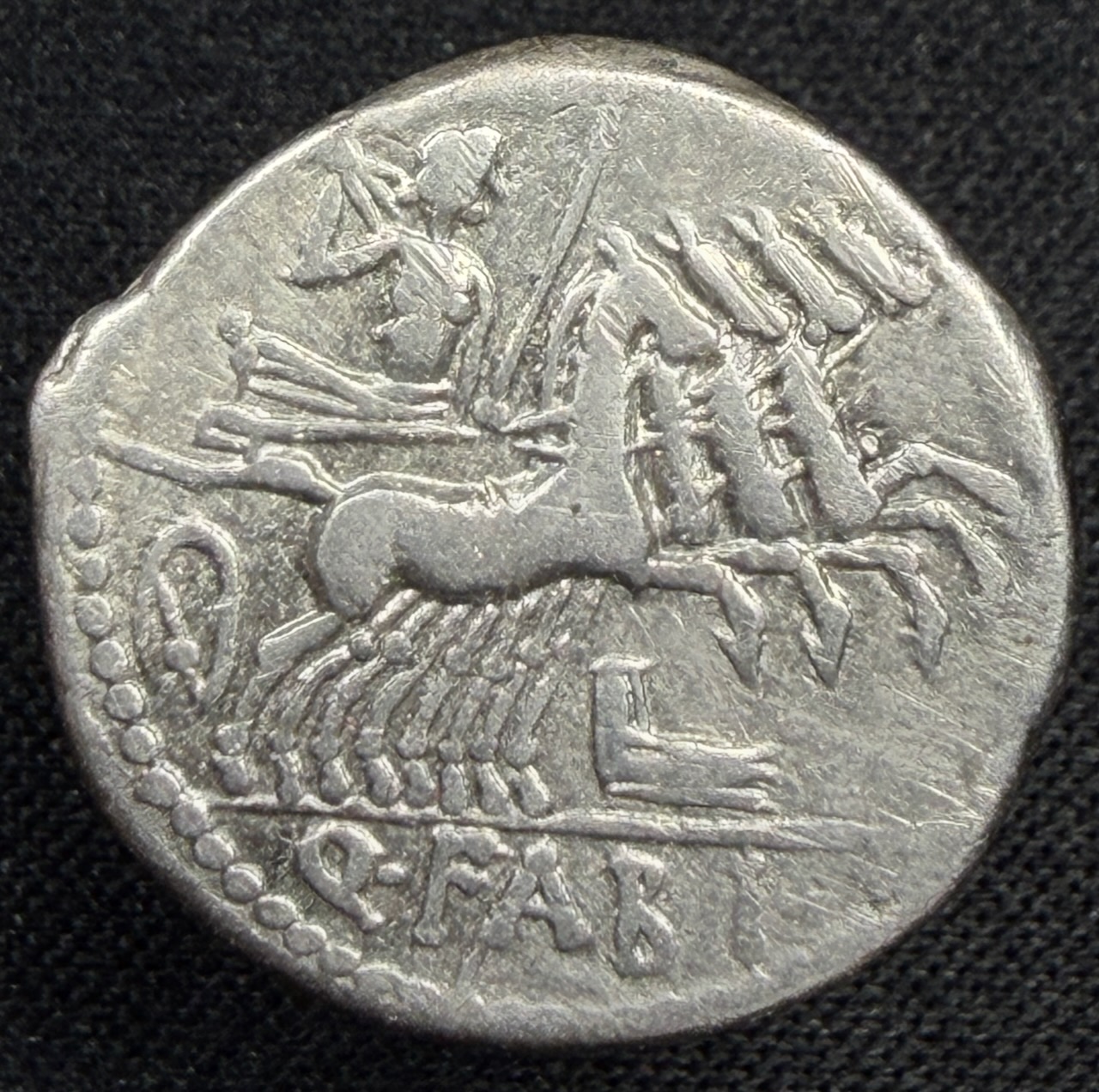
Current: Roman Republic, Q. Fabius Labeo (moneyer), AR denarius, Rome, 124 BC (Crawford 273/1)
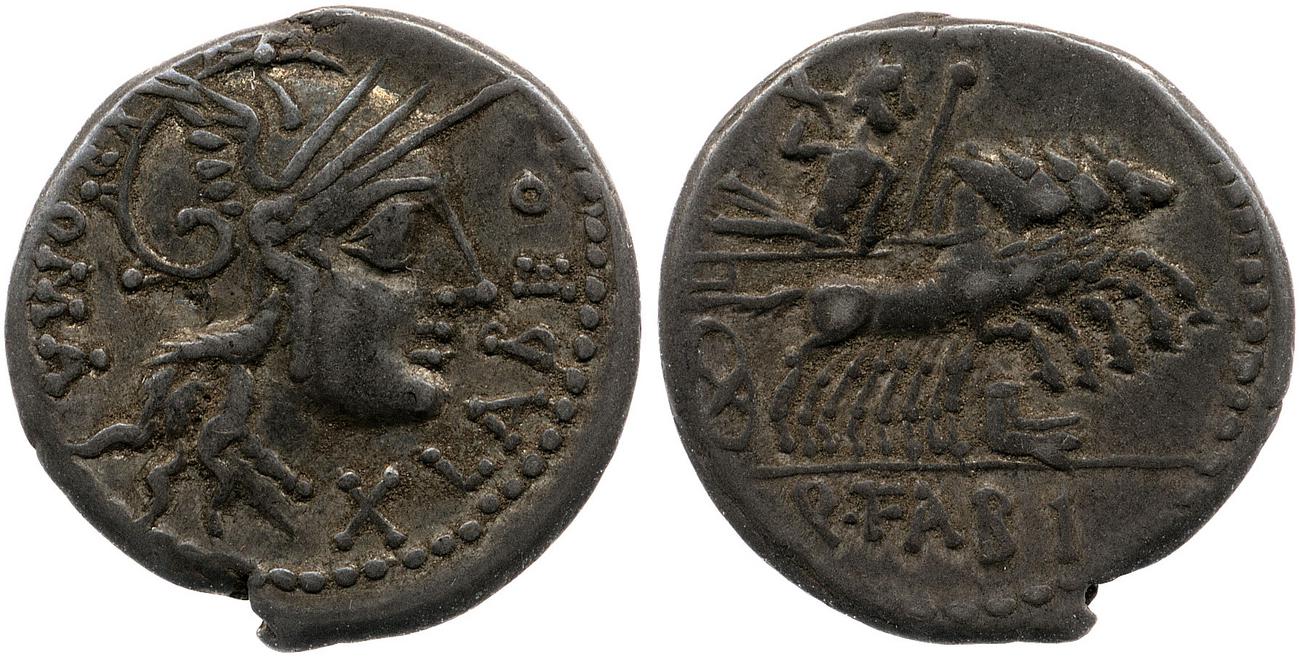
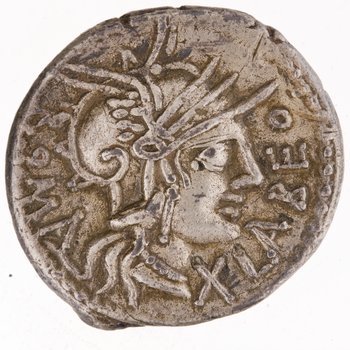
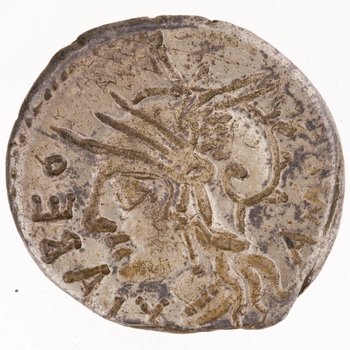
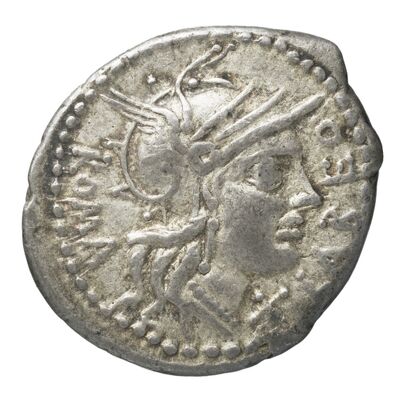
Obverse: Helmeted head of Roma right; ROMA upward behind, LABEO downward before, X (mark of value) below chin
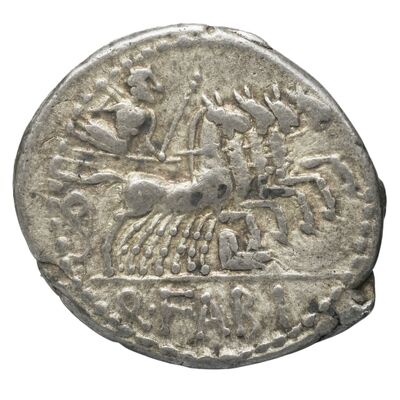
Reverse: Jupiter in quadriga galloping right, holding sceptre and reins in left hand and hurling thunderbolt with right hand; below the horses, the beak (rostrum) of a warship; Q·FABI in exergue
Primary reference: Crawford 273/1
83 specimens in public collections (ANS 14, British Museum 13, BnF 12, Fitzwilliam 12, Göttingen 6); weights 2.72–7.06 g, median 3.835 g across 82 recorded; die axis most often 12h; recorded in hoards CHRR 1PO, CHRR ADM, CHRR ADR, CHRR AGN, CHRR ALA, CHRR ALM, CHRR ALS, CHRR ALV and 208 more.
This collection's specimen, at 3.81 g (tag), is heavier than 37% of the recorded weights.
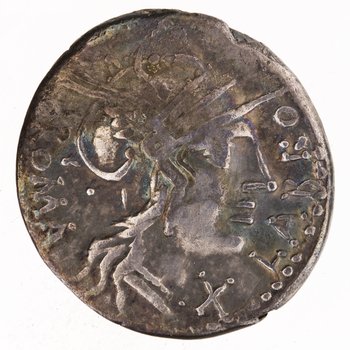
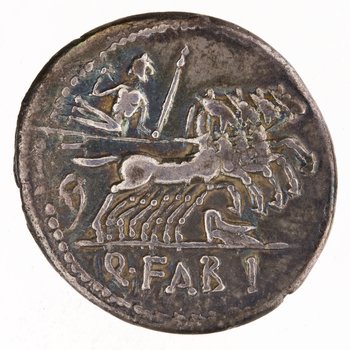
American Numismatic Society, 1010.1.10. CC BY-NC 4.0. https://numismatics.org/collection/1010.1.10
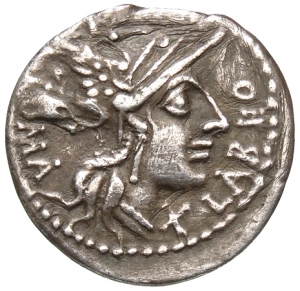
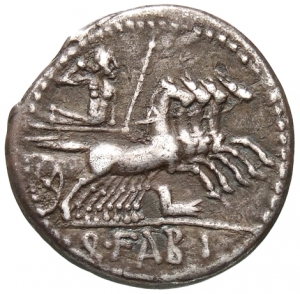
Münzkabinett, Staatliche Museen zu Berlin, 18217337. CC BY-NC-SA 4.0. https://ikmk.smb.museum/object?id=18217337
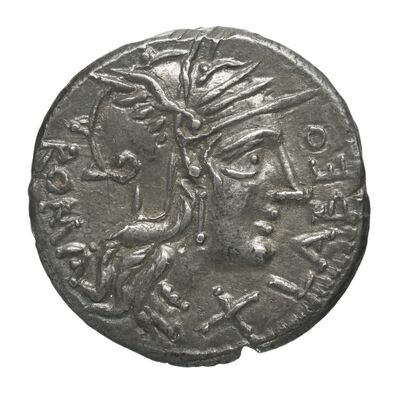
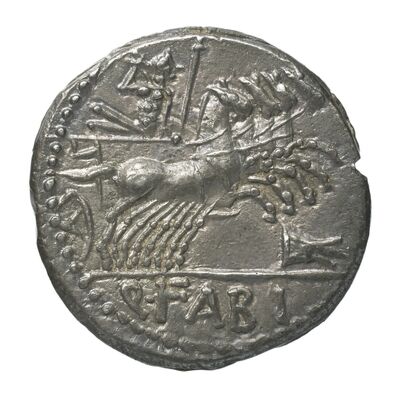
Bibliothèque nationale de France (Gallica), REP-11074. non-commercial reuse permitted. https://gallica.bnf.fr/ark:/12148/btv1b104335620
© The Trustees of the British Museum, 1929,0907.1. CC BY-NC-SA 4.0. https://www.britishmuseum.org/collection/object/C_1929-0907-1
American Numismatic Society, 1893.5.21. CC BY-NC 4.0. https://numismatics.org/collection/1893.5.21
Bibliothèque nationale de France (Gallica), REP-11075. non-commercial reuse permitted. https://gallica.bnf.fr/ark:/12148/btv1b10433563f
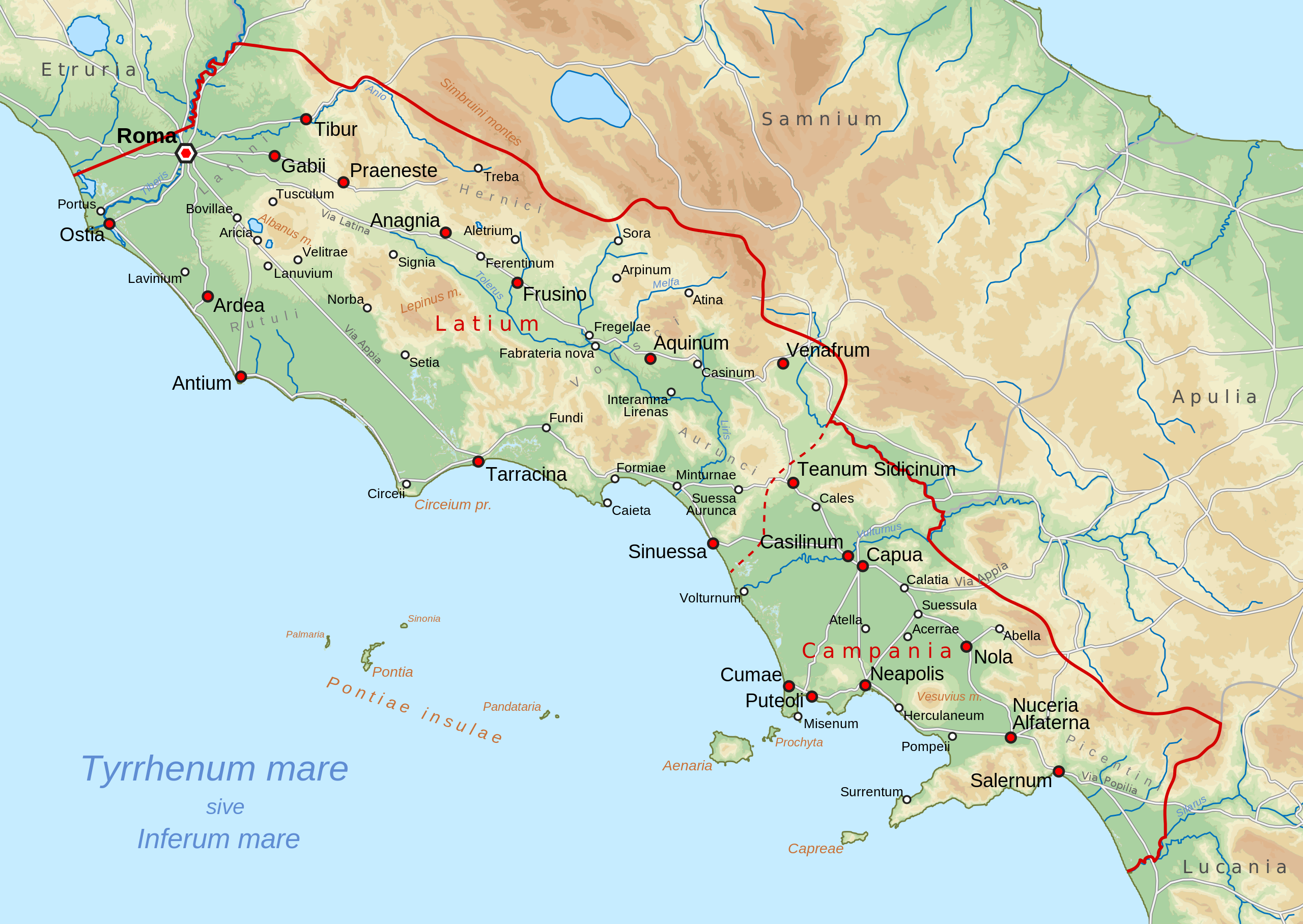
Regio I, Latium et Campania — the heartland of Roman Italy as organized under Augustus, a century after this coin. Roma sits at the upper left, marked by the map’s hexagonal capital symbol and bold label. The Republican mint stood on the Capitoline beside the temple of Juno Moneta.
“Map of Augustan Regio I Latium et Campania” by Tomisti (Wikimedia Commons), File:Regio I Latium et Campania map.svg, licensed CC BY-SA 4.0; cities and roads based on the Digital Atlas of the Roman Empire (DARE) and Pleiades; topographic base © OpenMapTiles, © OpenStreetMap contributors. Rasterized from SVG to PNG; otherwise reproduced unmodified (Roma already carries the base map’s capital marker).
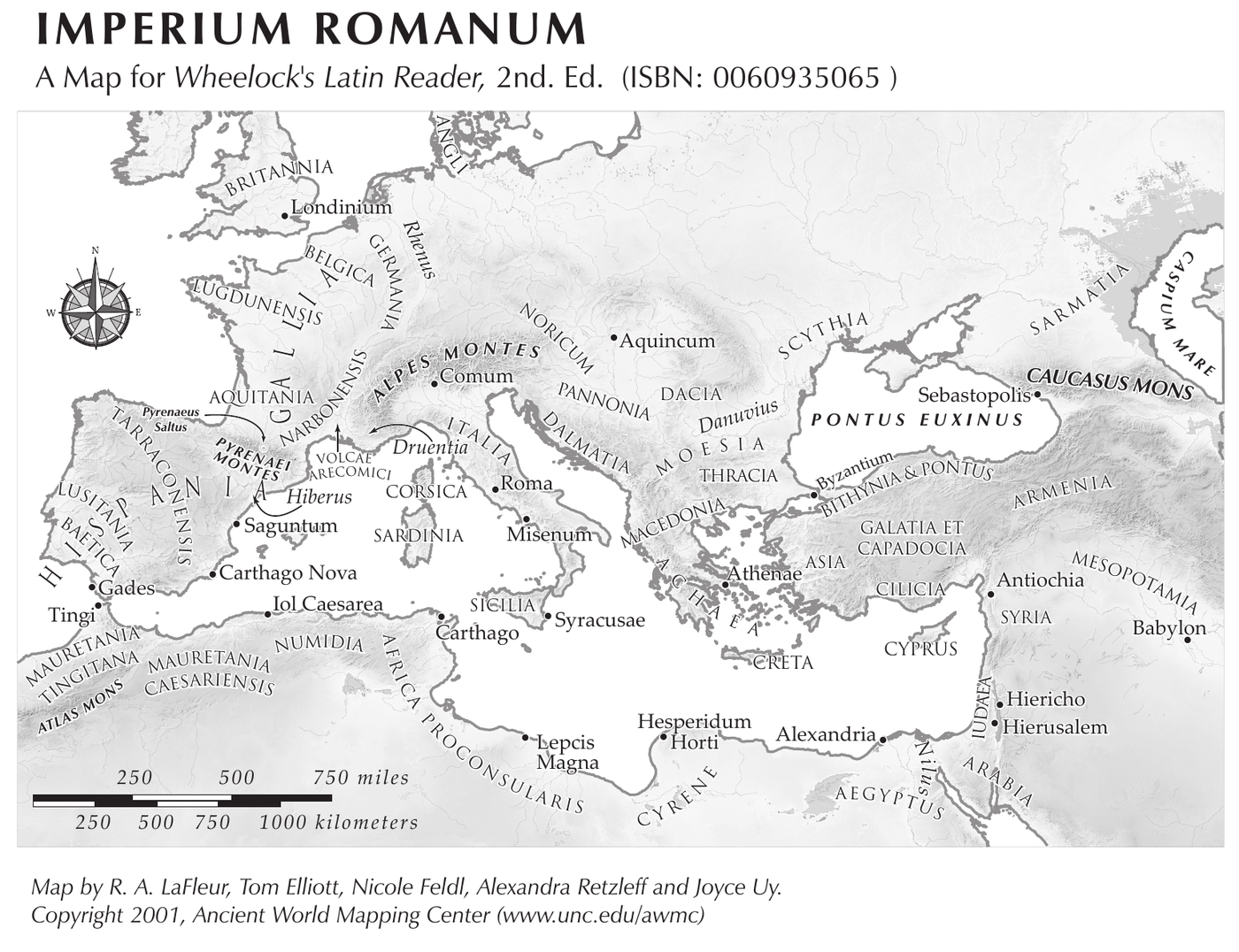
Roma sits at the center of Italia. Struck in 124 BC, the year before Rome pushed into southern Gaul and made Narbonensis — the land corridor between Italia and the Spains, and the reason the province was worth taking.
At a glance this is the same coin the Rome mint had been striking for a generation: Roma’s helmeted head, Jupiter’s galloping quadriga, the moneyer’s name below — compare the collection’s denarius of L. Antestius Gragulus of 136 BC, its near-twin from twelve years earlier. But beneath Jupiter’s horses Quintus Fabius Labeo planted something new to the formula: the bronze beak of a warship. That small rostrum turns a civic type into a family boast, and it makes this denarius a textbook document of the change that came over Republican coinage in the 120s BC, when moneyers began using the state’s money to advertise their ancestors.
Graphic: JSB Coins, 2026 (CC0).
The boast was specific. The moneyer’s ancestor and namesake, Q. Fabius Labeo, praetor in 189 BC, commanded the Roman fleet in the war against Antiochos III the Great, operating off Crete and the Asian coast in the aftermath of Magnesia, and returned to celebrate a naval triumph (Livy 37.60; the Fasti Triumphales record the triumph in 188 BC). He went on to the consulship of 183 BC. Two generations later, his descendant at the mint — otherwise unknown to history, like most moneyers — reached for the family’s proudest emblem. Crawford (RRC, on 273/1) reads the rostrum exactly so: an allusion to the ancestral naval command. The same strategy, grander and later, appears in this collection on the Scaurus & Hypsaeus camel denarius of 58 BC — where a moneyer’s own deeds share the coin with an ancestor’s — and on the she-wolf denarius of P. Satrienus; the road ends at the outright personal coinage of the dynasts, like the rostral-column denarius of Octavian, where naval victory is claimed not by a moneyer’s allusion but by the victor’s own statue.
The thing beneath Jupiter’s horses was no abstraction. The rostrum was the warship’s main armament: a massive casting of bronze fitted over the bow timbers at the waterline, built to stave in an enemy hull at ramming speed. One complete great ram survives from antiquity — the Athlit ram, hauled from the seabed off the Israeli coast in 1980 and now in the National Maritime Museum, Haifa: some 465 kilograms of cast bronze from a Hellenistic warship of the second century BC, close kin to the fleets Labeo’s ancestor commanded in exactly those waters’ wider war. Rome had made the captured beak its trophy of sea-power since 338 BC, when the prows of Antium’s ships were mounted on the Forum’s speaker’s platform — the Rostra, which gave every later “rostrum” its name. On the coin the emblem works the same way: a beak nailed up beneath Jupiter’s chariot, a family’s sea-victory hung on the state’s design.
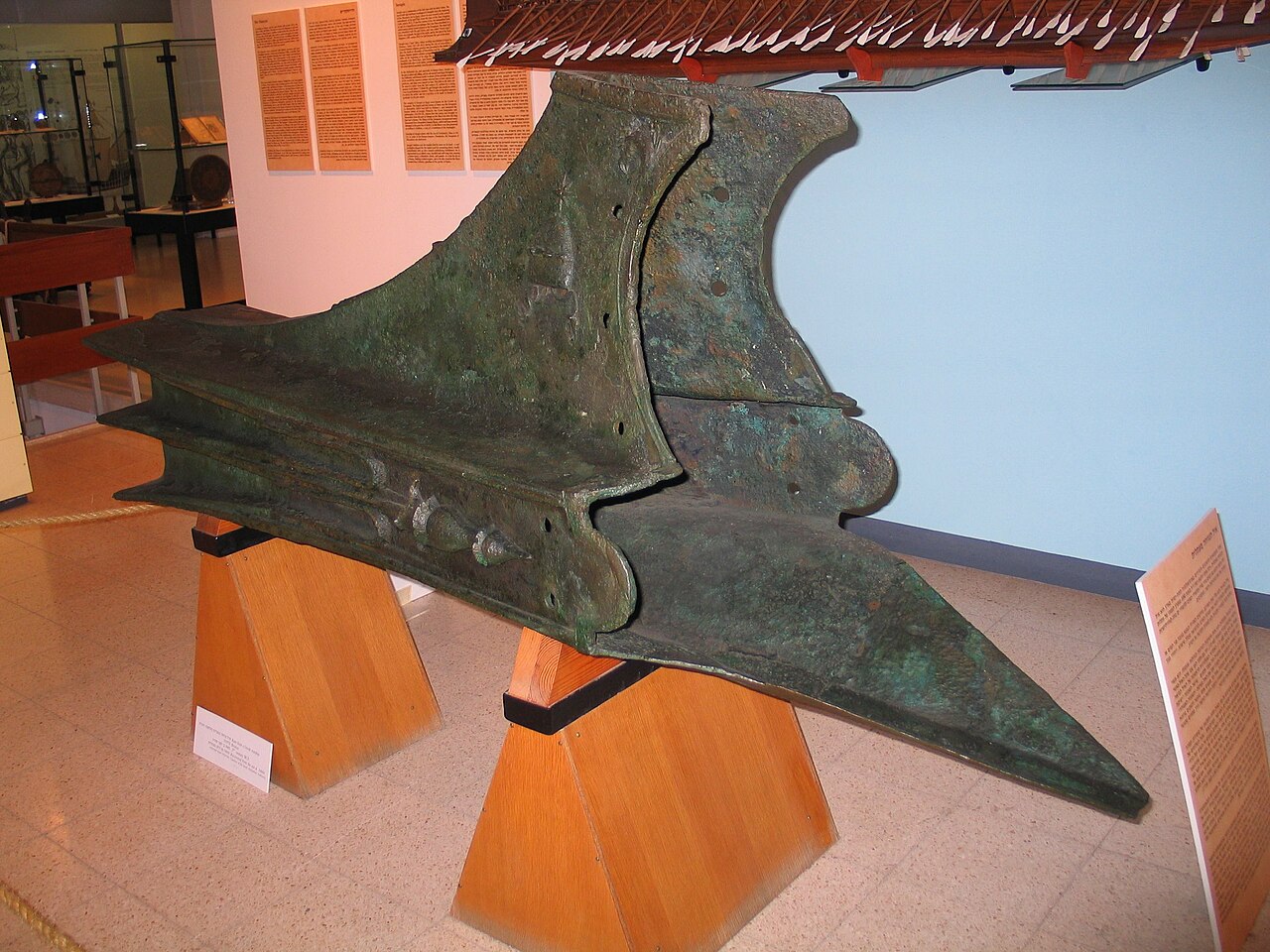
Photo: Bukvoed, CC BY 3.0 (Wikimedia Commons); reproduced unmodified.
The obverse keeps the old grammar — Roma helmeted, the X of the retariffed sixteen-as denarius below her chin, ROMA behind and the cognomen LABEO before. The reverse names him properly in the exergue: Q·FABI. Jupiter rides with sceptre and reins gathered in one hand, thunderbolt drawn back in the other, exactly as on the Gragulus issue; only the rostrum below the horses distinguishes the die at arm’s length. The type is common enough that it must have been a substantial emission — Rome in 124 BC was two years into the tribunates of the Gracchi era, with the storm over the Italian question gathering; the mint’s routine, this coin says, still ran on ancestors and gods.
Crawford 273/1 sits precisely on the hinge between the anonymous civic denarius and the self-advertising coinage of the late Republic. The formula is still Jupiter’s; the footnote below the horses is already the family’s. Within a decade reverses would abandon the chariot altogether for scenes of family history, and the mint of the Republic would never again speak with a single civic voice.
Attribution, date, and mint follow Michael H. Crawford, Roman Republican Coinage (Cambridge 1974), no. 273/1, dated 124 BC; also Sydenham 532, RSC Fabia 1, and Sear RCV 148. The type record and comparison specimens are on Coinage of the Roman Republic Online, RRC 273/1 (numismatics.org/crro). For the ancestor’s naval command against Antiochos III and his triumph, Livy 37.47 and 37.60 (Book 37 linked in the references) and the Fasti Triumphales (188 BC); Crawford’s note on 273/1 makes the connection to the reverse’s rostrum. The Athlit ram: National Maritime Museum, Haifa; the Rostra of 338 BC: Livy 8.14.
The reverse repeats the standard Jupiter-in-quadriga formula of the mid-century denarius but slips a ship's beak (rostrum) beneath the horses — a family advertisement. The moneyer's ancestor and namesake Q. Fabius Labeo (consul 183 BC) commanded the Roman fleet against Antiochos III in 189 BC and celebrated a naval triumph (Livy 37.60; triumph recorded in the Fasti Triumphales for 188 BC); Crawford (RRC, on 273/1) reads the rostrum as an allusion to that command. The X below Roma's chin is the mark of value — by the 120s BC restored to a plain X, now understood as sixteen asses after the retariffing advertised a generation earlier by the crossed-XVI monogram.
John's Ancient Coin Collection · Type · fabius-labeo-denarius
Image credits for this coin — photographs, maps and graphics used on this page