Type · lydia-croeseid-siglos-lion-bull
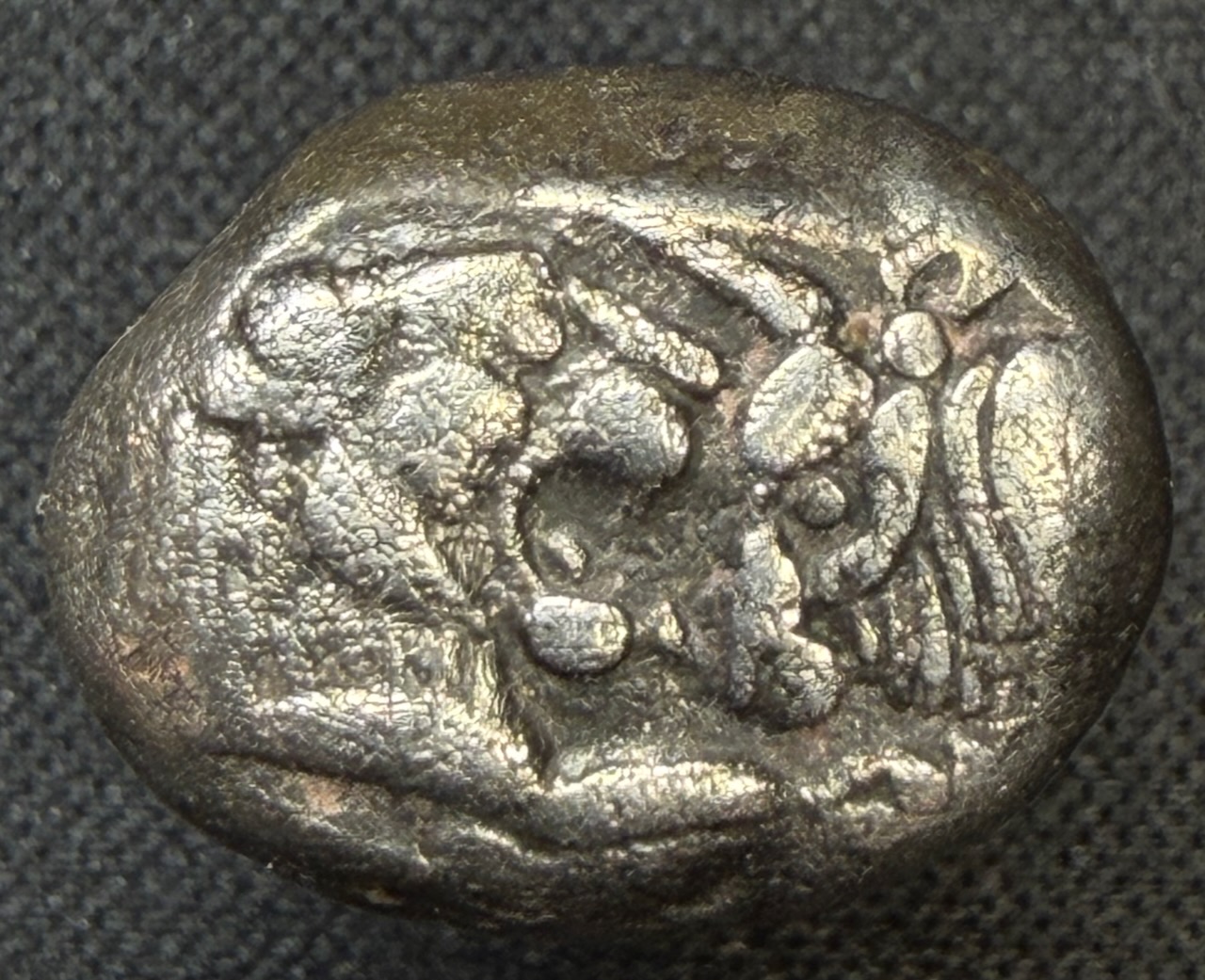
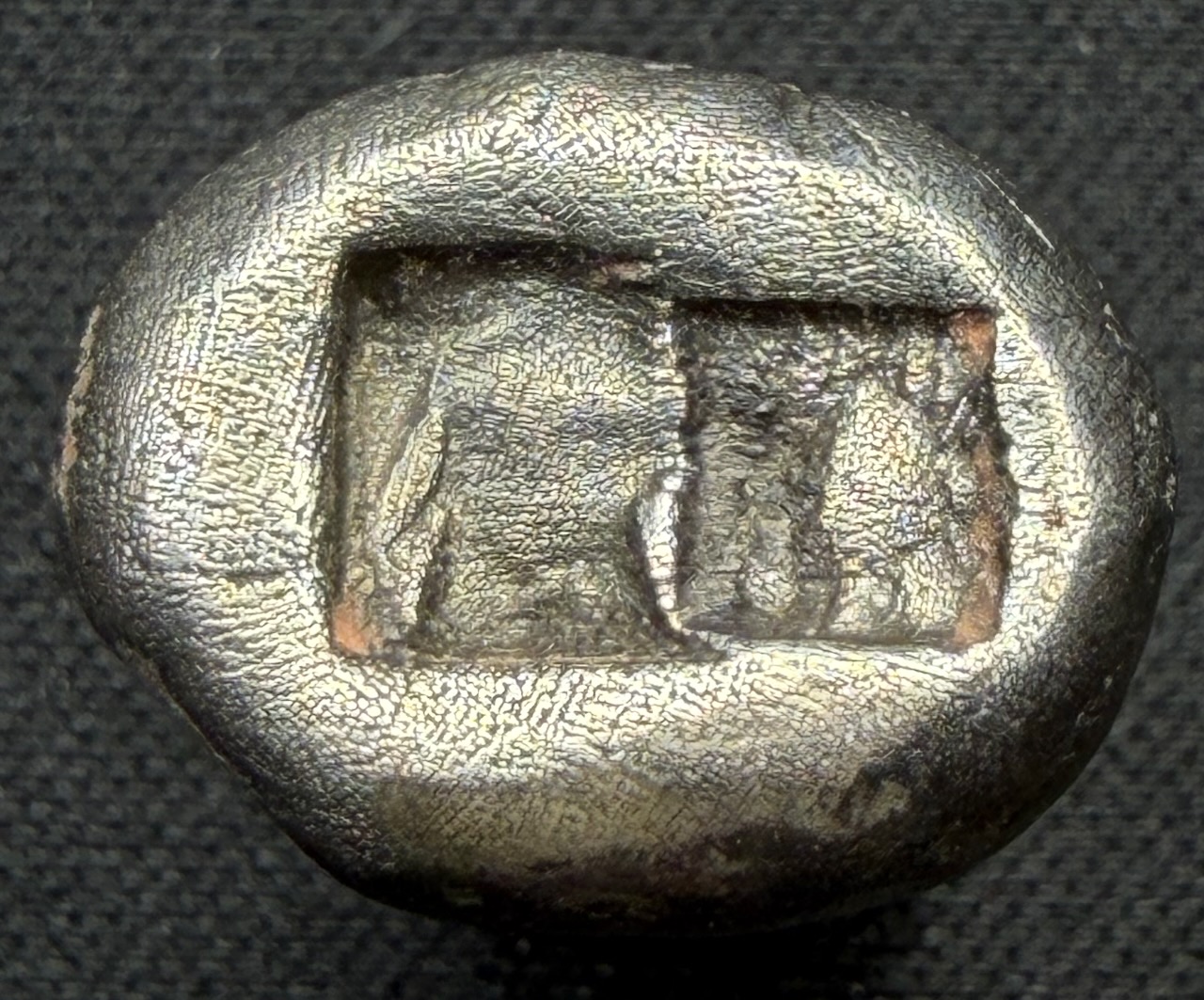
Current: Lydia, Sardes, Persian period (temp. Cyrus – Darius I), AR siglos (half-stater), c. 550–520 BC, struck 'in the types of Kroisos'. Confronted foreparts of lion and bull / two incuse squares. Type as SNG Kayhan 1018 = Rosen 662 (stater/double-siglos of the same design).
Obverse: Confronted foreparts of a lion (on the left, head right) and a bull (on the right, head left), each with foreleg extended, facing one another. Anepigraphic.
Reverse: Two incuse (sunken) square punches of unequal size, side by side.
Primary reference: Berk 22
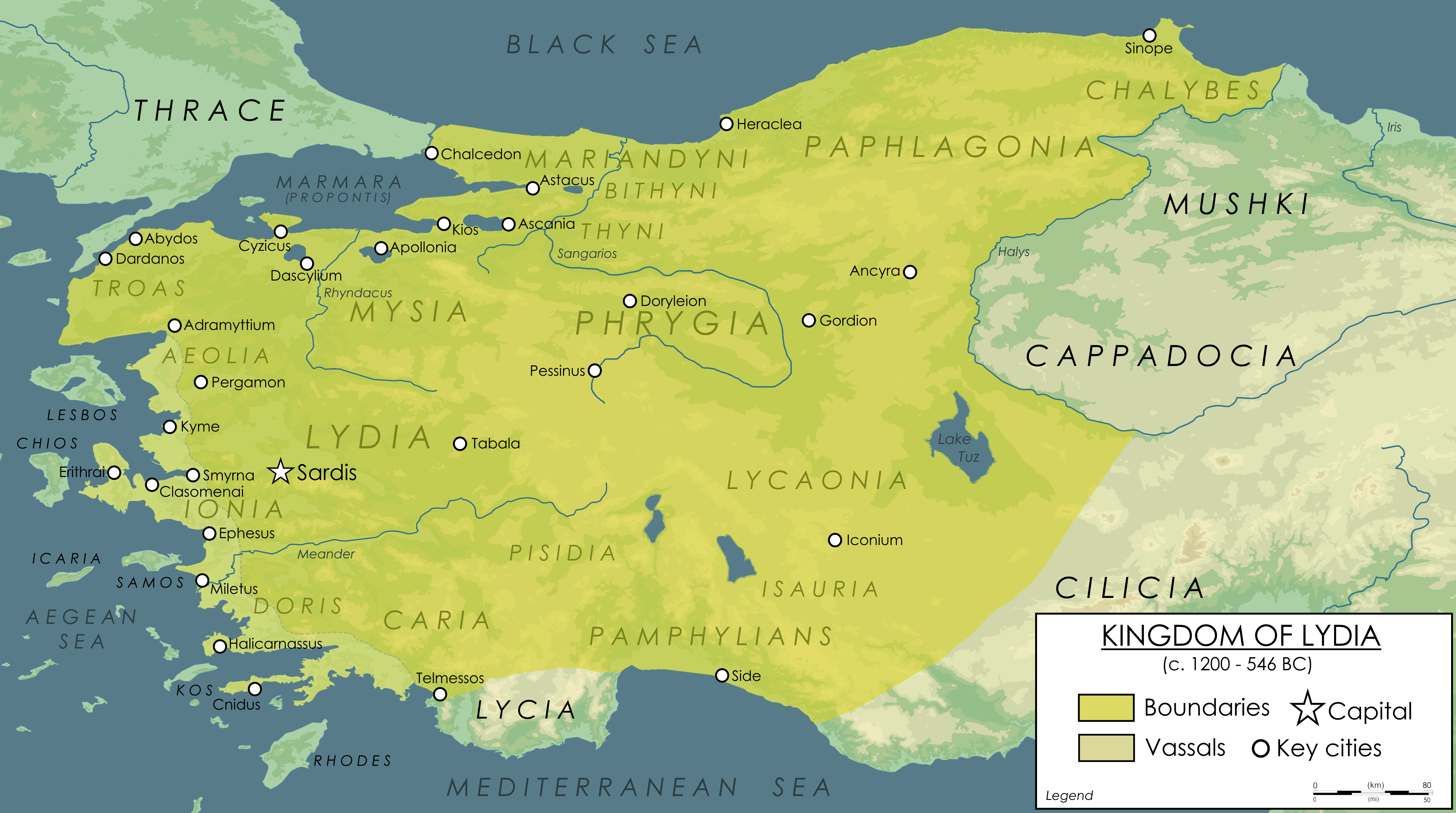
The Kingdom of Lydia at its greatest extent under Kroisos (Croesus), controlling western Asia Minor as far east as the River Halys. Sardes — the capital and the mint that struck this coin — is marked by the capital star (see the map’s legend). This is the realm whose bimetallic gold-and-silver “Croeseid” coinage the siglos belongs to; within a generation of Kroisos’s fall to Cyrus (546 BC) the same lion-and-bull types were still being struck at Sardes under Persian rule.
Main map (Kingdom of Lydia): “Kingdom of Lydia at its Greatest Extent” by Ennomus (Wikimedia Commons), File:Kingdom of Lydia.png, licensed CC BY-SA 4.0 (https://commons.wikimedia.org/wiki/File:Kingdom_of_Lydia.png; license: https://creativecommons.org/licenses/by-sa/4.0/). Reproduced unmodified.
Second map (Achaemenid satrapies): “Map of Achaemenid Imperial Satraps (English Version)” by M.r ebrahim zadeh (Wikimedia Commons), File:Map of Achaemenid Imperial Satraps (English Version).png — released by the author into the public domain and additionally licensed CC BY-SA 4.0 (https://commons.wikimedia.org/wiki/File:Map_of_Achaemenid_Imperial_Satraps_(English_Version).png; license: https://creativecommons.org/licenses/by-sa/4.0/). The base map was compiled from Atlas Antiquus (Justus Perthes, 1909) and the “Achaemenid Satrapies” article in Encyclopaedia Iranica. Modified by JSB Coins: a red square has been added to mark the position of Sardes. This derivative is shared under CC BY-SA 4.0.
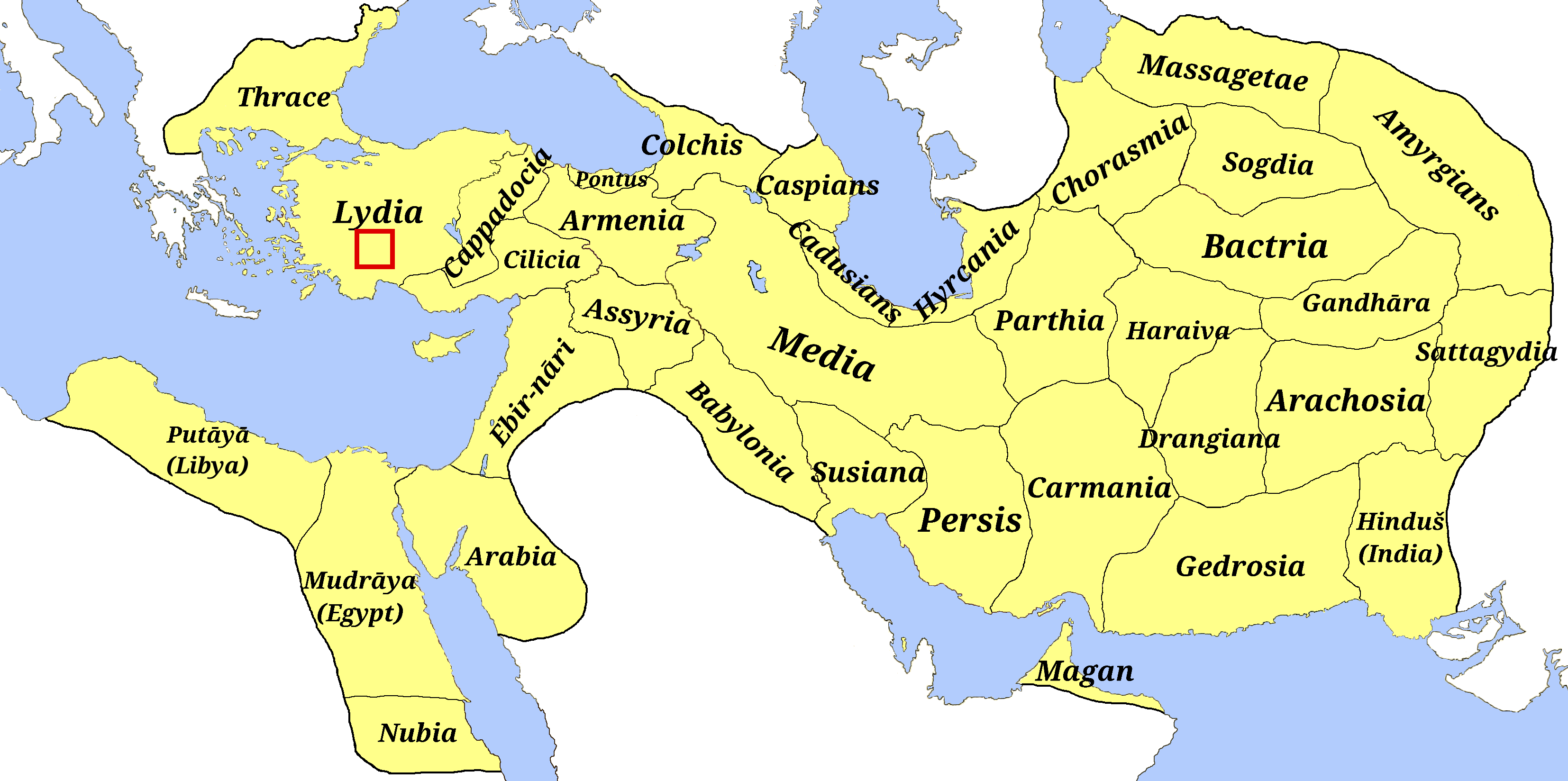
And the world that inherited this coinage — the Achaemenid (Persian) Empire as its network of imperial satrapies. Lydia (Old Persian Sparda) sits at the far western edge; the red square marks Sardes, the old Lydian capital where the Persians kept striking these lion-and-bull types for a generation after Kroisos’s fall, until Darius I replaced them with the daric and siglos.
This silver siglos belongs to the “Croeseid” coinage—the bimetallic gold-and-silver money struck at Sardes in Lydia that carries the confronted foreparts of a lion and a bull. It is among the very earliest true coinages, and it stands at the hinge between the Lydian kingdom that invented coined money and the Persian empire that inherited it.
Graphic: JSB Coins (CC0).
Lydia, in western Asia Minor, produced the world’s first coins—lumps of electrum stamped by the state—in the late seventh and early sixth centuries BC. The tradition was unanimous already in antiquity: the poet Xenophanes, within a century of the fact, credited the invention to the Lydians, and the earliest datable finds — 93 electrum pieces excavated in 1904–5 in the foundation deposits of the Temple of Artemis at Ephesus — bear the tradition out. The raw material was local: electrum, the natural gold-silver alloy, panned from the Pactolus, the stream that runs down from Mt. Tmolus through the middle of Sardes. King Kroisos (Croesus, r. c. 561–546 BC), proverbial for his wealth, took the decisive next step: he replaced the variable-value electrum with a bimetallic system of pure gold and pure silver coins on fixed standards, all bearing a single type, the facing foreparts of a lion and a bull, struck at Sardes. This was, in effect, the first true gold-and-silver currency — a ladder of interlocking denominations in which twenty of these silver sigloi (c. 5.35 g) bought one gold stater (c. 8.06 g). The reform rested on a piece of industrial chemistry whose workshop archaeologists have actually found: at the Pactolus North sector of Sardes, excavation uncovered a sixth-century refinery where electrum was parted into pure gold and pure silver by cementation — the metal beaten thin and cooked in sealed pots with salt until the silver leached out (Ramage and Craddock, King Croesus’ Gold, 2000). Without that parting technology there could be no bimetallic coinage; the little furnaces by the Pactolus are, in a real sense, where money in the modern sense was made possible.
Kroisos’s reign ended when Cyrus the Great of Persia captured Sardes (traditionally 546 BC) and absorbed Lydia into the Achaemenid empire. Crucially, the Persians did not abolish the coinage they found: they kept striking gold and silver at Sardes in the established Croeseid types for another generation, until Darius I introduced the imperial daric and siglos (the royal-archer coinage) around 515 BC. This specimen is attributed to that continuation—the posthumous Croeseid silver of the early Persian period, temp. Cyrus to Darius I—rather than to Kroisos’s own lifetime.
That attribution comes with an honest caveat. Because the coins carry no inscription, the issues of Kroisos himself cannot be cleanly separated from the Persian-period continuation; scholars assign specimens to one phase or the other on grounds of style, fabric, weight standard and hoard context, and the boundary is debated. The dealer places this coin in the Persian period (c. 550–520 BC); a Kroisos-era origin cannot be strictly excluded, and the date of the final transition to the daric/siglos (commonly c. 515 BC, following Le Rider) is itself not fixed with certainty.
The obverse pairs a lion and a bull, foreparts confronted. The lion had long been the royal emblem of Lydia, appearing on the earlier electrum coinage, and the bull is its powerful counterpart; beyond that, the meaning of the pairing is not securely known. It has been read variously as an assertion of royal power, as a heraldic or apotropaic device, and (more speculatively) as carrying astronomical or seasonal symbolism. Kroll’s survey for the Sardis Expedition offers the two most economical readings: a traditional Near Eastern lion-bull combat motif adopted as the royal badge of Kroisos — or, attractively for a coin, the two beasts as emblems of the two metals themselves, gold and silver locked face to face. These interpretations remain conjectural, and the type is best described rather than decoded. The motif itself, at any rate, had a long Persian future: a century after this coin, the palace staircases of Persepolis were carved with the same combat of lion and bull, on a monumental scale, at the heart of the empire that had inherited the Lydian mint.
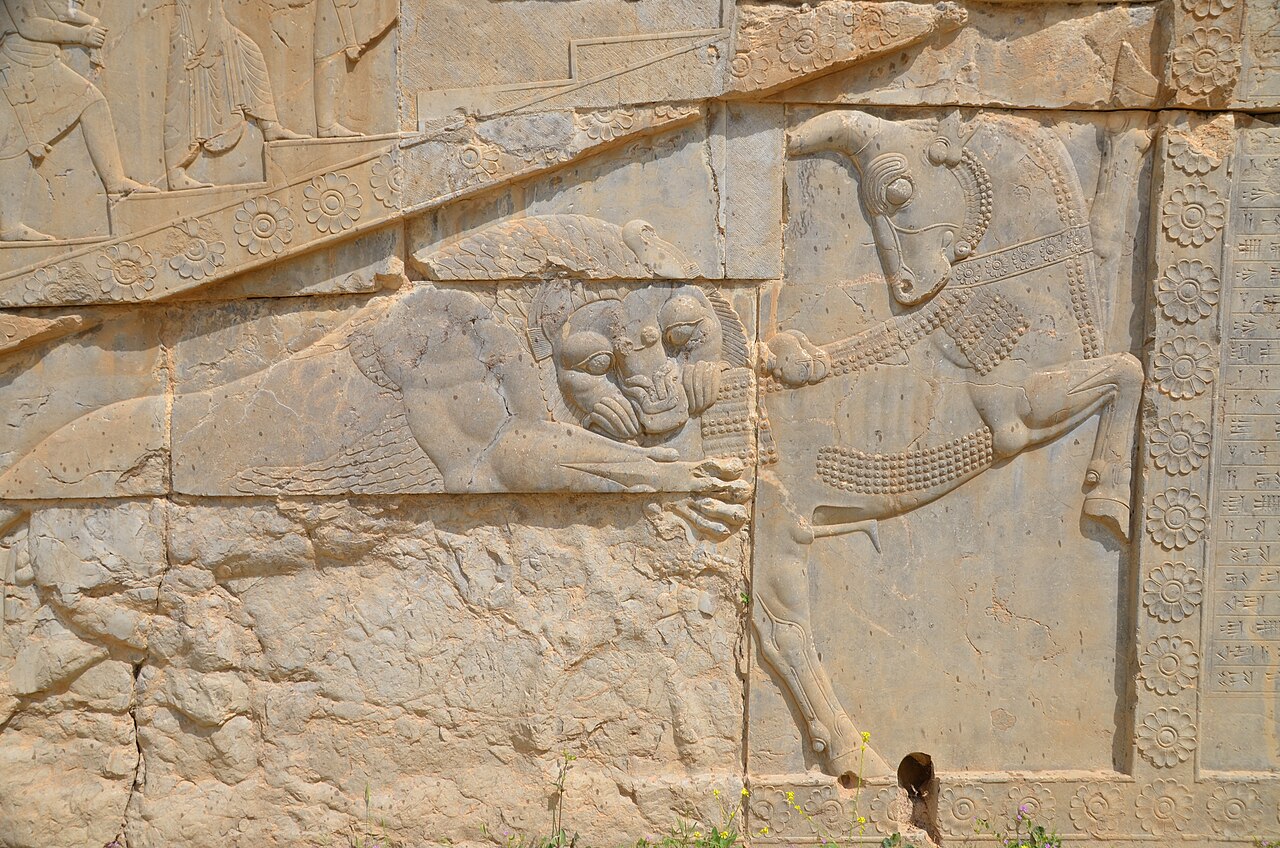
Photo: Carole Raddato, Wikimedia Commons, licensed CC BY-SA 2.0, reproduced unmodified.
The same heraldry in stone, a century on: lion and bull on the southern staircase of the Palace of Darius at Persepolis. Whatever the pairing meant at Sardes, the Persians found it worth keeping — on their palaces as on their inherited coinage. The reverse bears no image at all—only two incuse punches of unequal size, the marks of the anvil dies, an archaic feature typical of the earliest coinages.
The Croeseid silver functioned as the regional currency of Lydia and western Anatolia, in denominations from the stater (double-siglos) down through the siglos (half-stater) and smaller fractions — the collection also holds a Croeseid third-stater, attributed by its dealer to Kroisos’s own reign: the other side of the same chronological debate. Its deeper significance is as a model: the bimetallic system Kroisos created and the Persians maintained at Sardes was the direct ancestor of the Achaemenid imperial coinage. When Darius I struck his darics and sigloi, he was building on the Lydian mint, standards and traditions embodied in exactly this type. (The collection’s Achaemenid “royal archer” siglos is the coin that replaced this one at Sardes; two centuries on, the same mint was striking silver for a new empire — the collection’s drachm of Alexander, probably a Sardes issue, is that chapter.)
Graphic: JSB Coins, 2026 (CC0).
Few objects sit so precisely at the origins of money. The Croeseid is effectively the first bimetallic gold-and-silver coinage, the product of the kingdom that invented coinage, and—struck on into the Persian period—the bridge from Lydian to Achaemenid imperial money. A lion-and-bull siglos is a small piece of that founding moment.
Background on the Croeseid system, the Lydian-to-Persian transition at Sardes, and the c. 515 BC changeover to the daric/siglos follows Georges Le Rider, La naissance de la monnaie (2001), and John H. Kroll’s essay “The Coins of Sardis” (Archaeological Exploration of Sardis). The Ephesus Artemision deposit, the Xenophanes attribution, the 20:1 siglos-to-stater relation, and the reading of the coinage after 546 as Kroisos’s “in name only” follow Kroll’s Sardis essay (linked in the references); the Pactolus North refinery and the cementation process: A. Ramage and P. Craddock, King Croesus’ Gold (2000). The fall of Sardes and Herodotus’s verdict on the Lydian invention: Herodotus 1.84–94 (Book I linked in the references). The type is catalogued as SNG Kayhan 1018 = Rosen 662 (the stater/double-siglos of the same design); the siglos (half-stater, c. 5.35 g) shares the type. The difficulty of separating Kroisos’s own issues from the Persian-period continuation is a standard and unresolved point in the literature. The dealer-tag reference “Berk 22” could not be confirmed and is recorded as-is (see the specimen’s open threads).
Silver of the bimetallic 'Croeseid' system introduced by Kroisos (Croesus) of Lydia and continued at Sardes under early Persian rule. The confronted lion-and-bull type runs across denominations: stater / double-siglos (c. 10.7 g), siglos / half-stater (c. 5.35 g, this coin), and thirds/sixths/twelfths. The coins are anepigraphic, so attribution to Kroisos himself versus the posthumous Persian-period continuation rests on style, weight standard and hoard evidence rather than legends — a genuinely uncertain distinction.
John's Ancient Coin Collection · Type · lydia-croeseid-siglos-lion-bull
Image credits for this coin — photographs, maps and graphics used on this page

.png)
.jpg)