Image source & licence
Image: Classical Numismatic Group, from the auction listing. To be replaced by the owner’s own photographs when the coin arrives.
Specimen · lydia-electrum-trite-lion-sardes-001
Auction photograph — the coin has not yet been photographed in hand.
Image: Classical Numismatic Group, from the auction listing. To be replaced by the owner’s own photographs when the coin arrives.
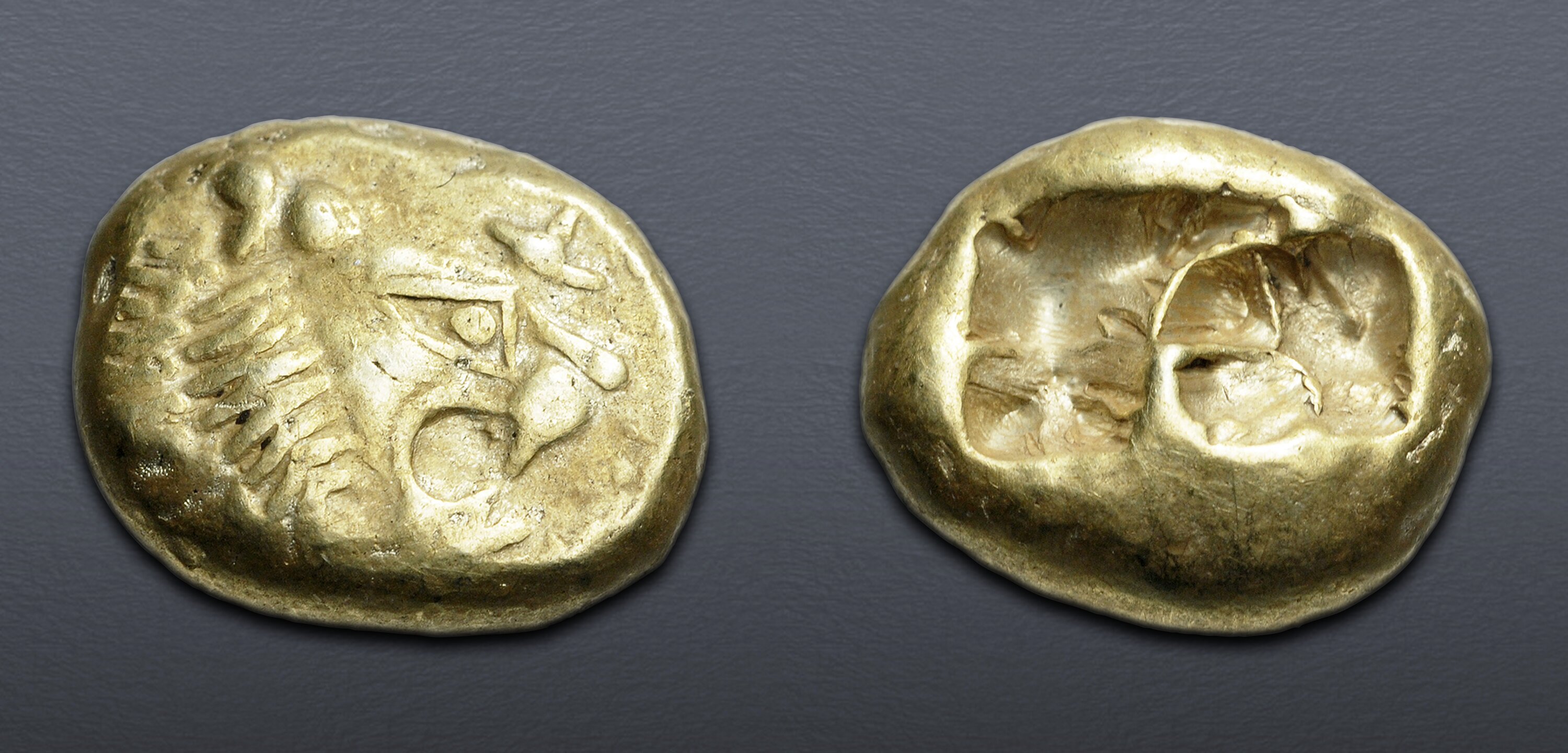
Attribution: Asia Minor (Lydia). Sardes. Kings of Lydia — the Lydian royal chronology of this period is not secure (see notes). Late 640s – early 6th century BC (the bracket is wide because the dating is genuinely disputed). EL. trite (third-stater).
Obverse: Head of a roaring lion right, with a four-rayed 'sun' or radiate boss on the forehead
Reverse: Two incuse square punches, side by side
Weight: 4.79 g (tag) (4.79 g from CNG's cataloguing; in hand (arrival confirmed by John 2026-09-05) but NOT YET RE-WEIGHED — John weighs it the weekend of 6-7 September 2026. This is FULL WEIGHT for a Lydo-Milesian trite (standard c. 4.7 g) and slightly over it — on early electrum that is the single most reassuring number on the ticket, since a light trite means wear, clipping or a problem.) · 13 mm Reference: Weidauer Group XVI, 65
John's Ancient Coin Collection · Specimen · lydia-electrum-trite-lion-sardes-001
Image credits for this coin — photographs, maps and graphics used on this page