Type · hadrian-aegyptos-denarius
Current: Roman Imperial, Hadrian, AR denarius, Rome, c. 130–133 AD, 'travel series' (RIC II 297 [bare head]; RIC II.3 1482)
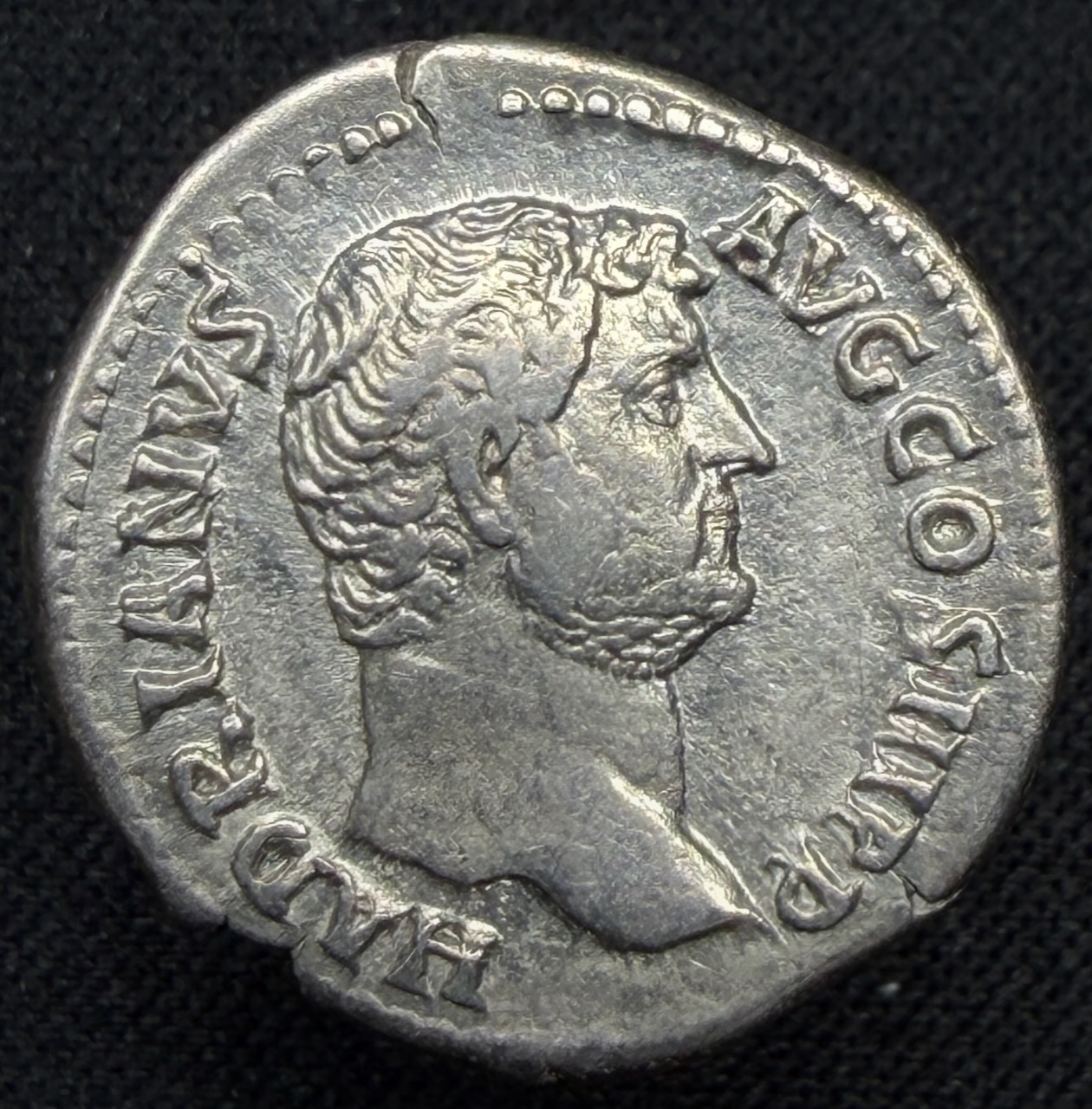
Obverse: Bare head of Hadrian right
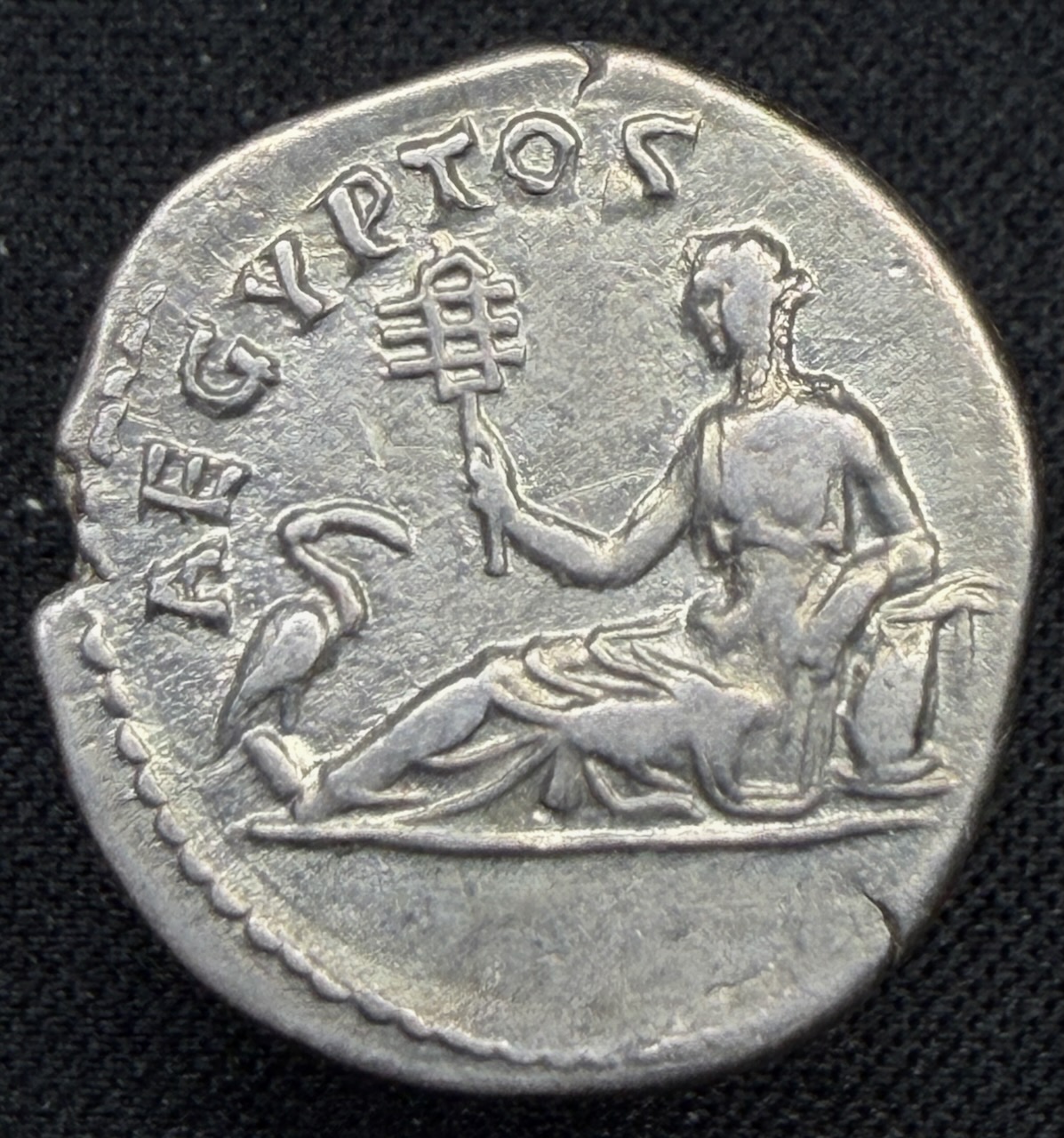
Reverse: Egypt (Aegyptos) reclining left on the ground, holding sistrum in raised right hand, left elbow resting on basket entwined by a snake; ibis standing at her feet to left
Primary reference: RIC II 297
18 specimens in public collections (British Museum 6, ANS 4, Goethe Uni Frankfurt Arch Wiss 4, BnF 1, Mk Mainz 1); weights 2.78–3.55 g, median 3.205 g across 18 recorded; die axis most often 6h.
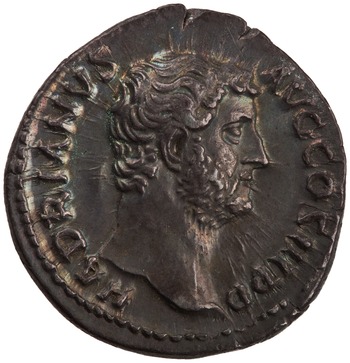
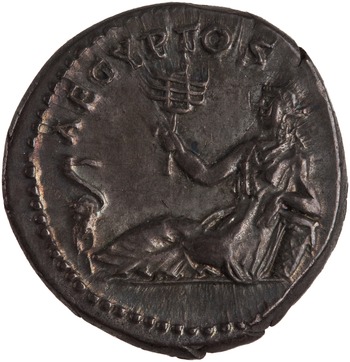
American Numismatic Society, 1956.127.1818. CC BY-NC 4.0. https://numismatics.org/collection/1956.127.1818
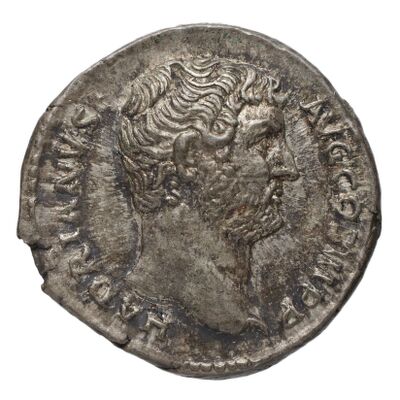
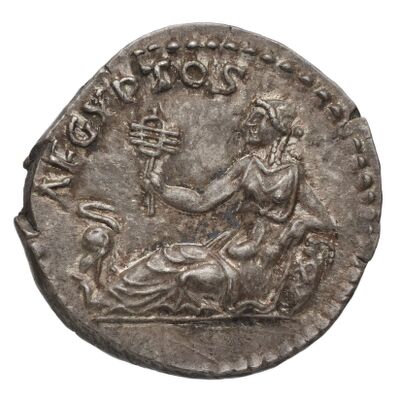
Bibliothèque nationale de France (Gallica), IMP-179. non-commercial reuse permitted. https://gallica.bnf.fr/ark:/12148/btv1b10427629x
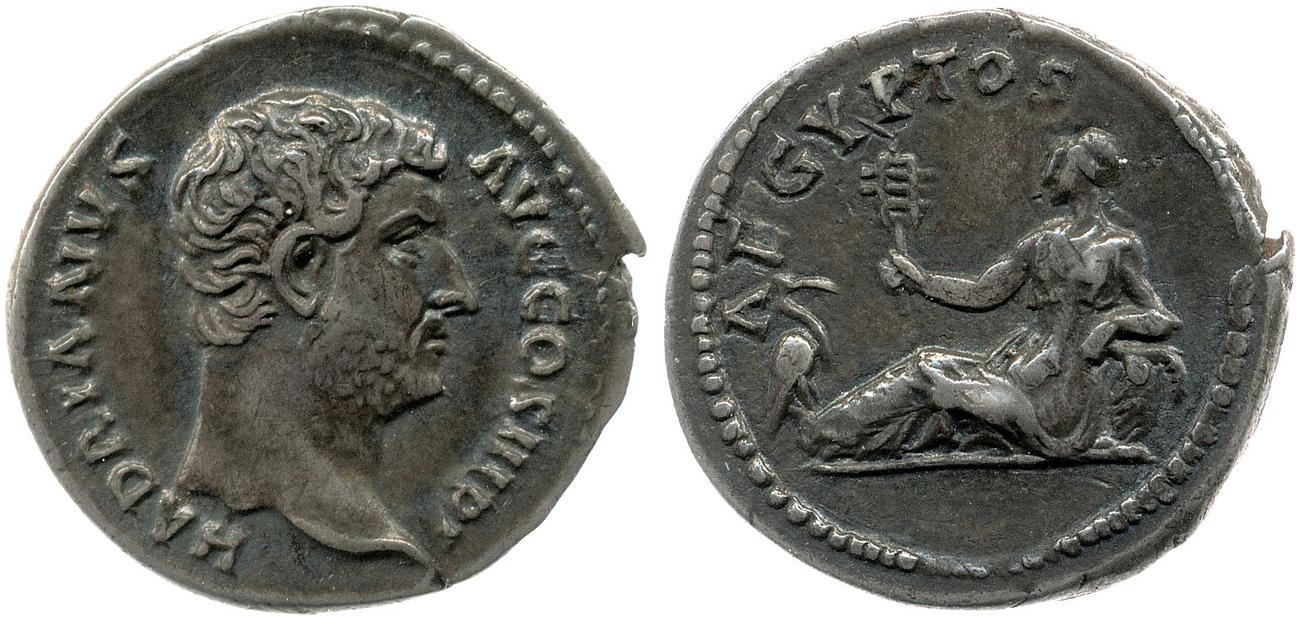
© The Trustees of the British Museum, 1843,1024.338. CC BY-NC-SA 4.0. https://www.britishmuseum.org/collection/object/C_1843-1024-338
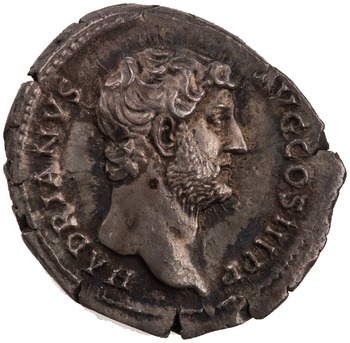
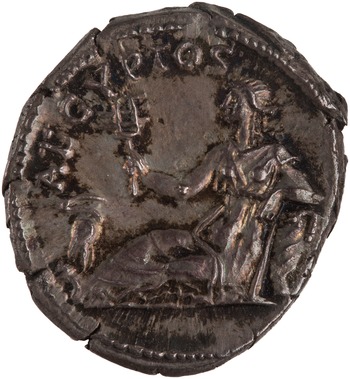
American Numismatic Society, 1956.127.1819. CC BY-NC 4.0. https://numismatics.org/collection/1956.127.1819
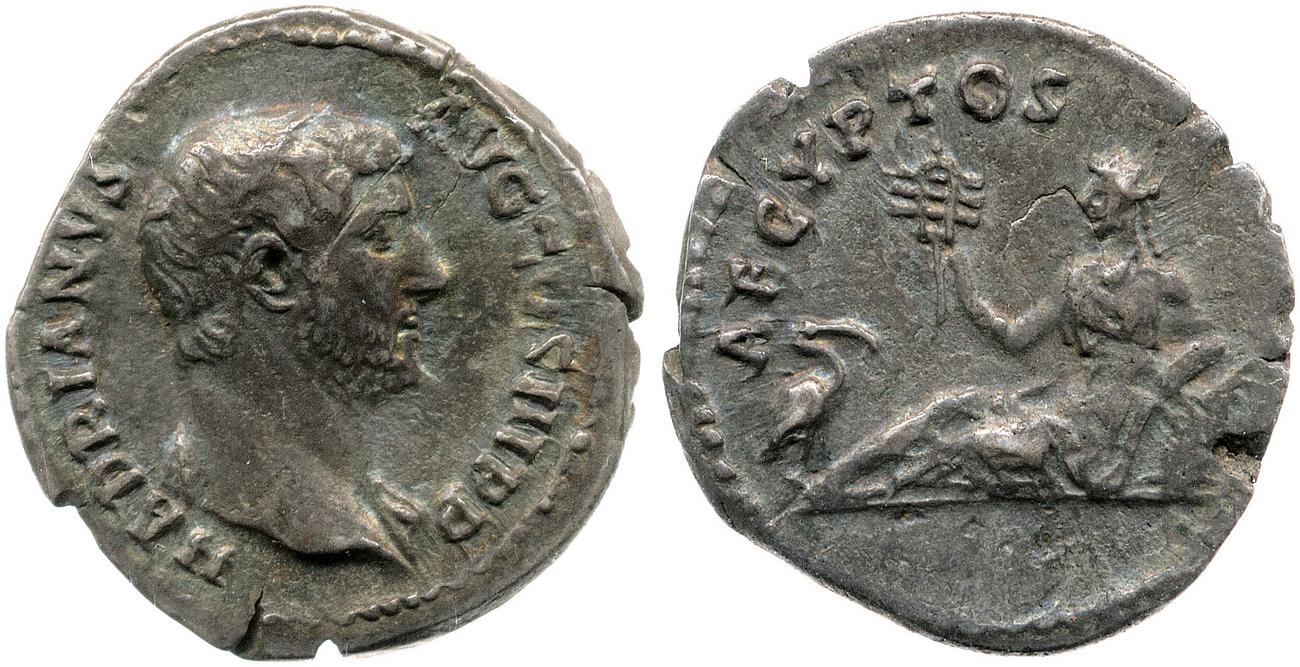
© The Trustees of the British Museum, 1912,0710.83. CC BY-NC-SA 4.0. https://www.britishmuseum.org/collection/object/C_1912-0710-83
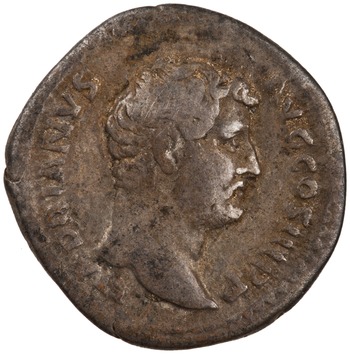
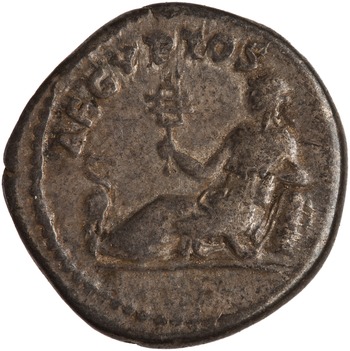
American Numismatic Society, 1957.172.1659. CC BY-NC 4.0. https://numismatics.org/collection/1957.172.1659
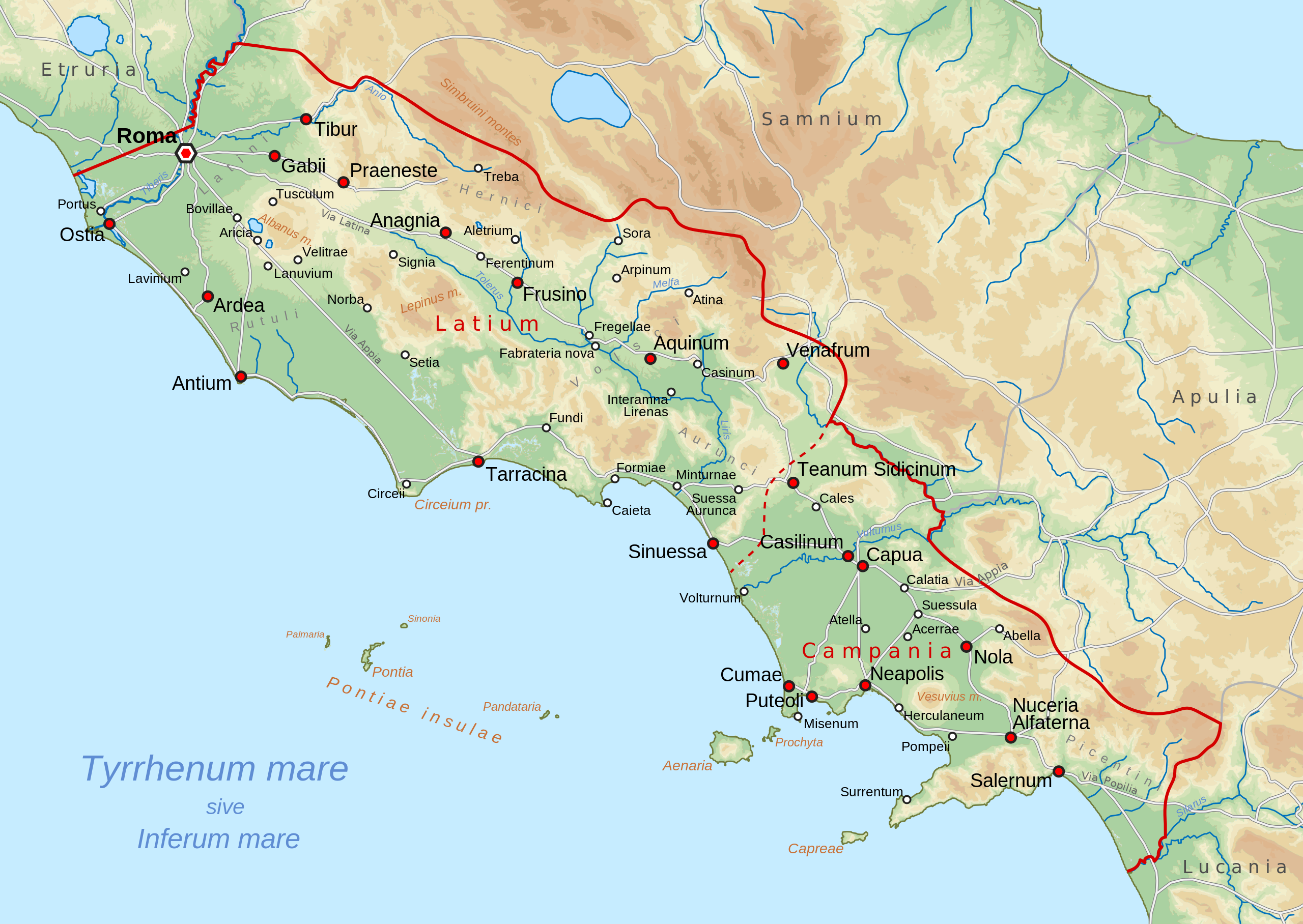
Regio I, Latium et Campania — the heartland of Roman Italy as organized under Augustus. Roma sits at the upper left, marked by the map’s hexagonal capital symbol and bold label. The travel-series denarii were struck at the Rome mint even as their types toured the provinces.
“Map of Augustan Regio I Latium et Campania” by Tomisti (Wikimedia Commons), File:Regio I Latium et Campania map.svg, licensed CC BY-SA 4.0; cities and roads based on the Digital Atlas of the Roman Empire (DARE) and Pleiades; topographic base © OpenMapTiles, © OpenStreetMap contributors. Rasterized from SVG to PNG; otherwise reproduced unmodified (Roma already carries the base map’s capital marker).
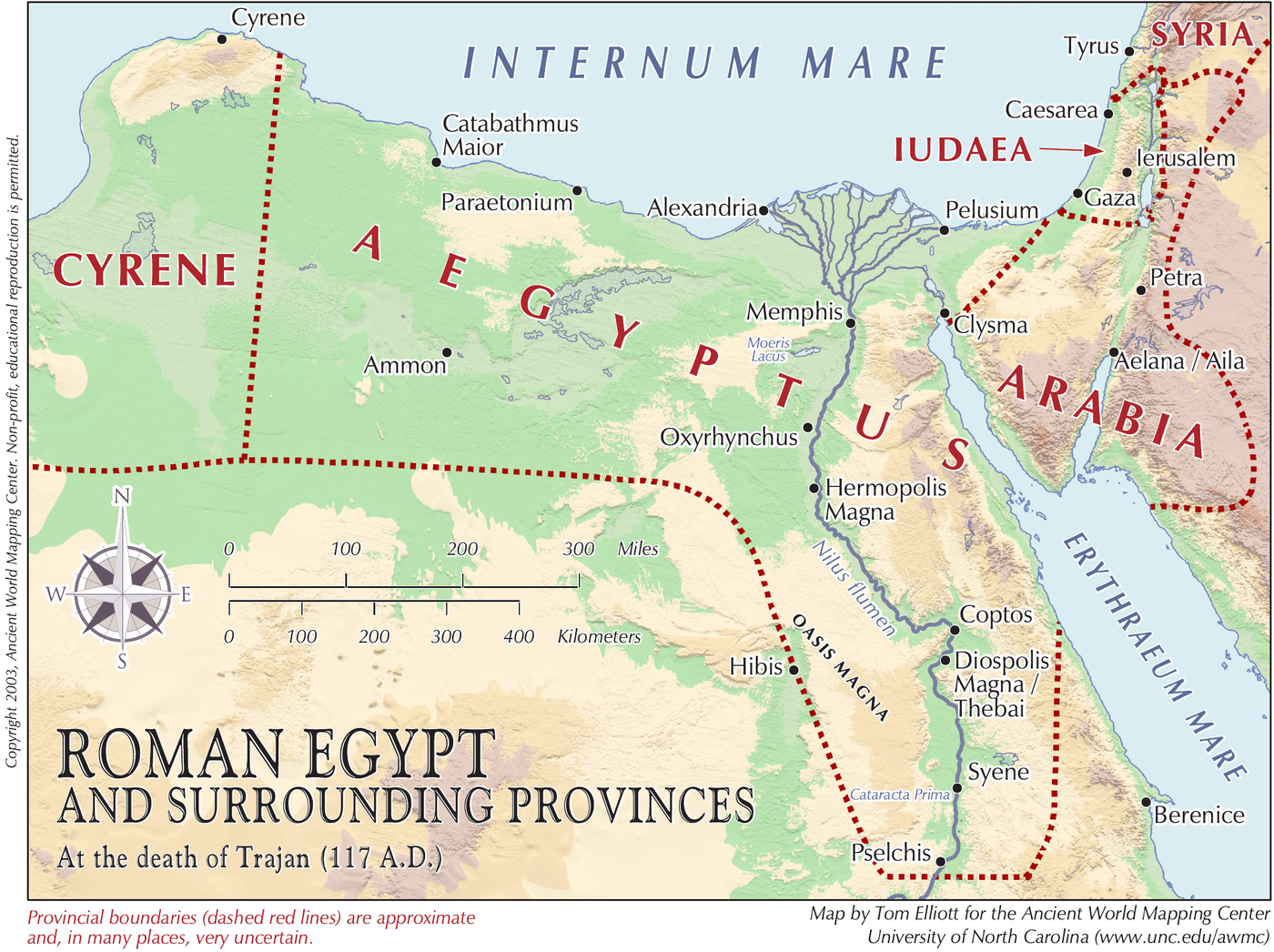
This denarius was struck at Rome, but its reverse is this — AEGYPTOS, the province reclining with a sistrum and an ibis. The map shows what Hadrian’s traveling coinage was personifying at very nearly the right moment: Roman Egypt as it stood at the death of Trajan in AD 117, a dozen years before the province series was struck. Alexandria and Memphis are on the Nile; the dotted lines are provincial boundaries, approximate.
No emperor knew his empire the way Hadrian did. He spent more than half his reign traveling it — Gaul, Britain (where he left the Wall), Spain, Africa, Greece, Asia, Egypt — and near the end of the journeys the mint of Rome issued the famous “travel series”: a gazetteer in silver, each coin naming and personifying a province. This denarius is Egypt’s. A graceful female figure reclines on the ground in the pose Greek art gave to river-gods and geographic personifications, shaking the sistrum of Isis, her elbow on a snake-twined basket of the harvest, a Nile ibis standing at her feet: the whole province compressed into three religious and riverine attributes.
Graphic: JSB Coins (CC0).
Hadrian toured Egypt in 130 AD, sailing up the Nile with the empress Sabina and his young favorite Antinous — who drowned in the river that autumn, was deified on the spot, and gave his name to the new city of Antinoopolis. The travel series struck at Rome in the following years (c. 130–133) remembers the itinerary officially: alongside AEGYPTOS came Africa, Hispania, Germania, Nilus and the rest, some as simple personifications, others in adventus or restitutor scenes. Egypt had been the emperors’ private treasure-chest since Augustus took it from Cleopatra — senators could not even enter without leave — and its grain fed Rome; but the coin shows none of that machinery, only the picturesque Egypt of Isis-worship that fascinated the Roman imagination. Coined money itself had come to Egypt half a millennium earlier in the form of Greek silver, a story this collection tells with its pharaonic imitation owl.
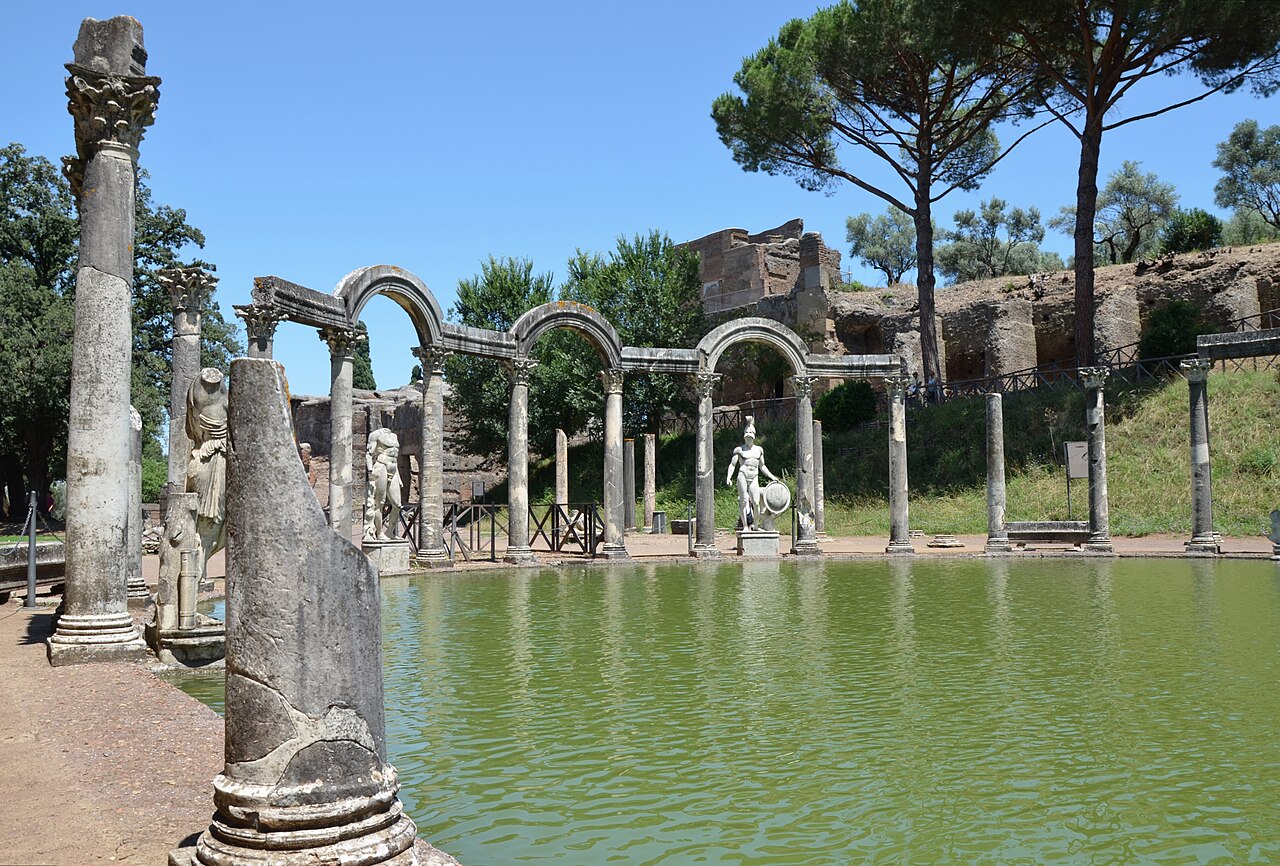
Photo: Carole Raddato, Wikimedia Commons, licensed CC BY-SA 2.0, reproduced unmodified.
The travel-series AEGYPTOS denarius comes with laureate and bare-headed obverse portraits; this type is the bare-head variety (old RIC II 297; recatalogued as RIC II.3 1482 in the 2019 revision), with the short late titulature HADRIANVS AVG COS III P P that brackets the issue c. 130–133 AD (the plain COS III formula had served Hadrian’s silver since the mid-120s — compare this collection’s earlier Genius COS III denarius). The bare head itself is a Hadrianic signature — a deliberately civilian, philhellenic image, worn instead of the laurel on much of the late coinage — and it outlived him: the first silver of his successor, the accession Minerva denarius of Antoninus Pius, keeps the bare head and Hadrian’s own name together on one obverse. At the reign’s other end stands the coinage Hadrian inherited: the collection’s Victory denarius of Trajan, struck on the standard whose machinery Hadrian kept running after he gave up his predecessor’s eastern conquests.
Attribution: RIC II 297 (Mattingly & Sydenham) for the traditional number, with the bare-head variety now RIC II, Part 3 (2nd ed., Abdy & Mittag, 2019) Hadrian 1482, per the ANS Online Coins of the Roman Empire record; cross-references RSC 99 and Sear RCV 3382 (laureate var.). Dealer cataloguing of the type (Wildwinds s3382; vcoins travel-series listings) confirms the reverse reading. Narrative history: Historia Augusta, Hadrian 14, and Cassius Dio 69.11 (Antinous) — both now linked in the references; on the travel series generally, the introductions to RIC II.3. The Canopus and the villa’s Egyptianizing program: the standard guides to Hadrian’s Villa (a UNESCO site since 1999).
The 'travel series' (c. 130–133 AD) personifies the provinces Hadrian visited; AEGYPTOS commemorates the Egyptian journey of 130 AD, the one on which Antinous drowned in the Nile. This is the bare-head obverse variety (old RIC II 297 group; RIC II.3 1482); laureate-head examples also exist (Sear 3382 = RSC 97). The sistrum links Egypt to the Isis cult, the ibis to the Nile — Rome's image of Egypt is entirely religious and riverine, with no hint of the province's fiscal weight as the empire's granary.
John's Ancient Coin Collection · Type · hadrian-aegyptos-denarius
Image credits for this coin — photographs, maps and graphics used on this page
.jpg)