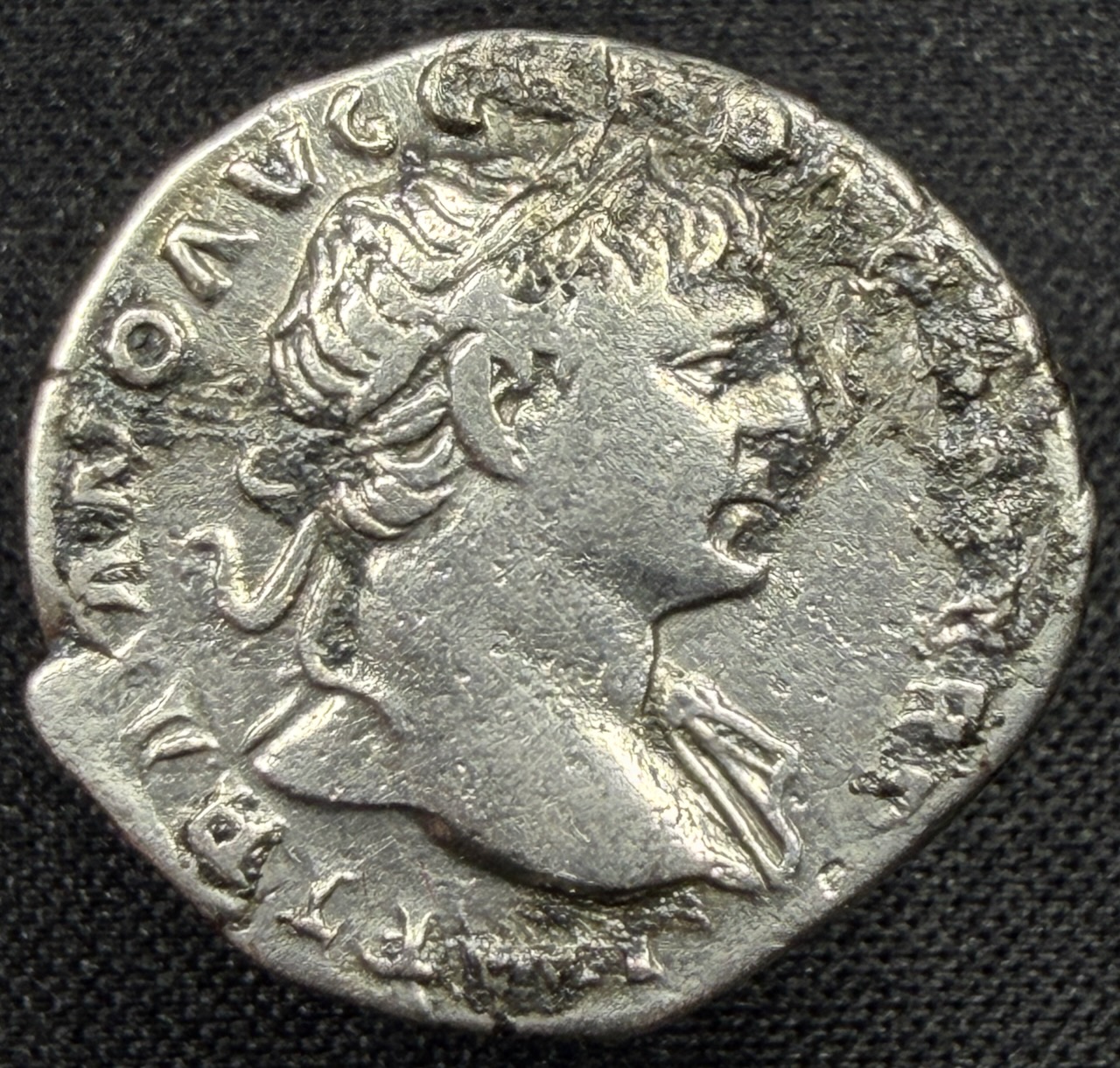
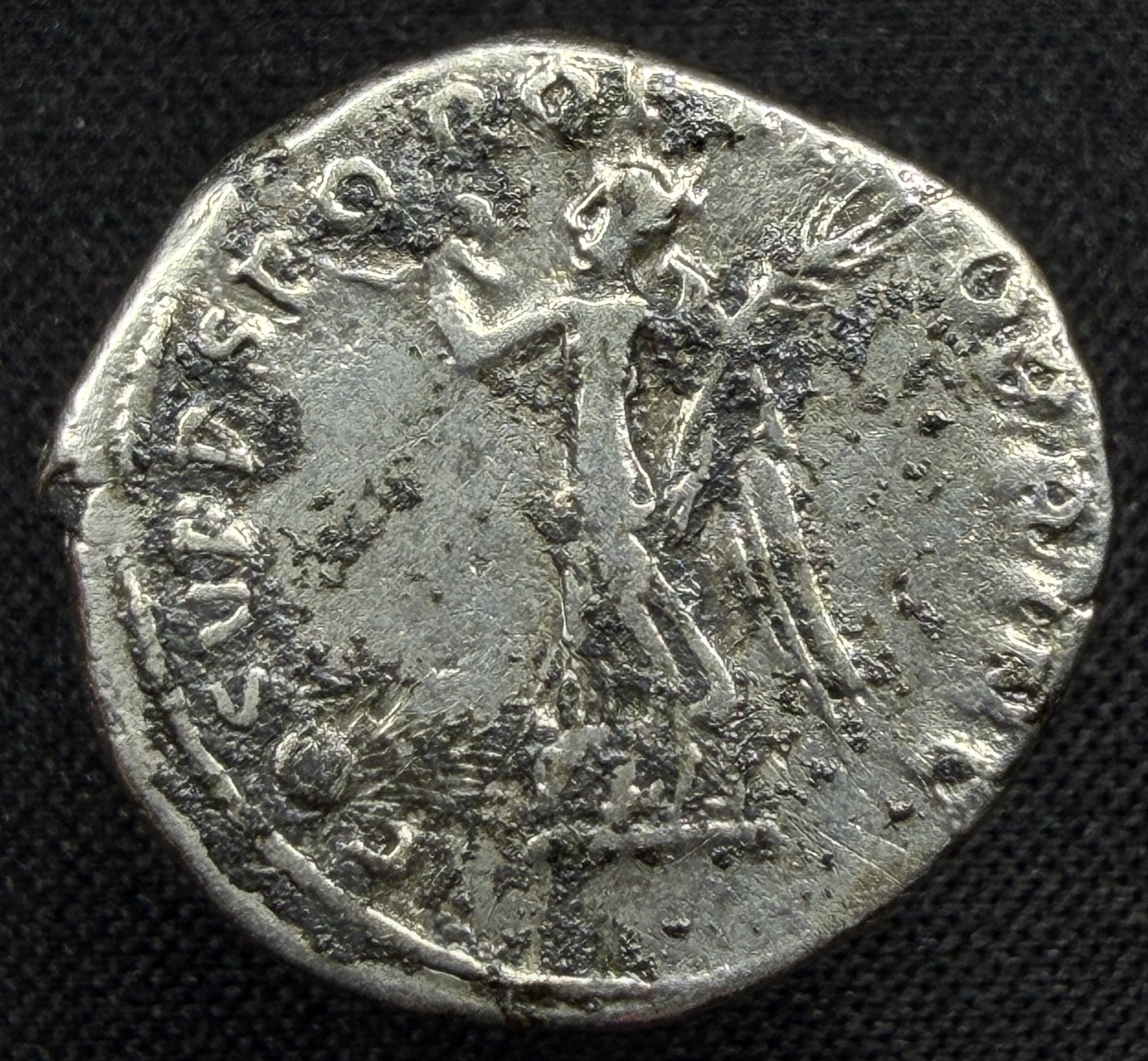
Type · trajan-victory-denarius
Current: Roman Imperial, Trajan, AR denarius, Rome, c. 103–111 AD (cf. RIC II 128; RSC 74–75)
Obverse: Laureate head of Trajan right, slight drapery on far shoulder
Reverse: Victory standing left, holding wreath in extended right hand and palm in left
Primary reference: cf. RIC II 128
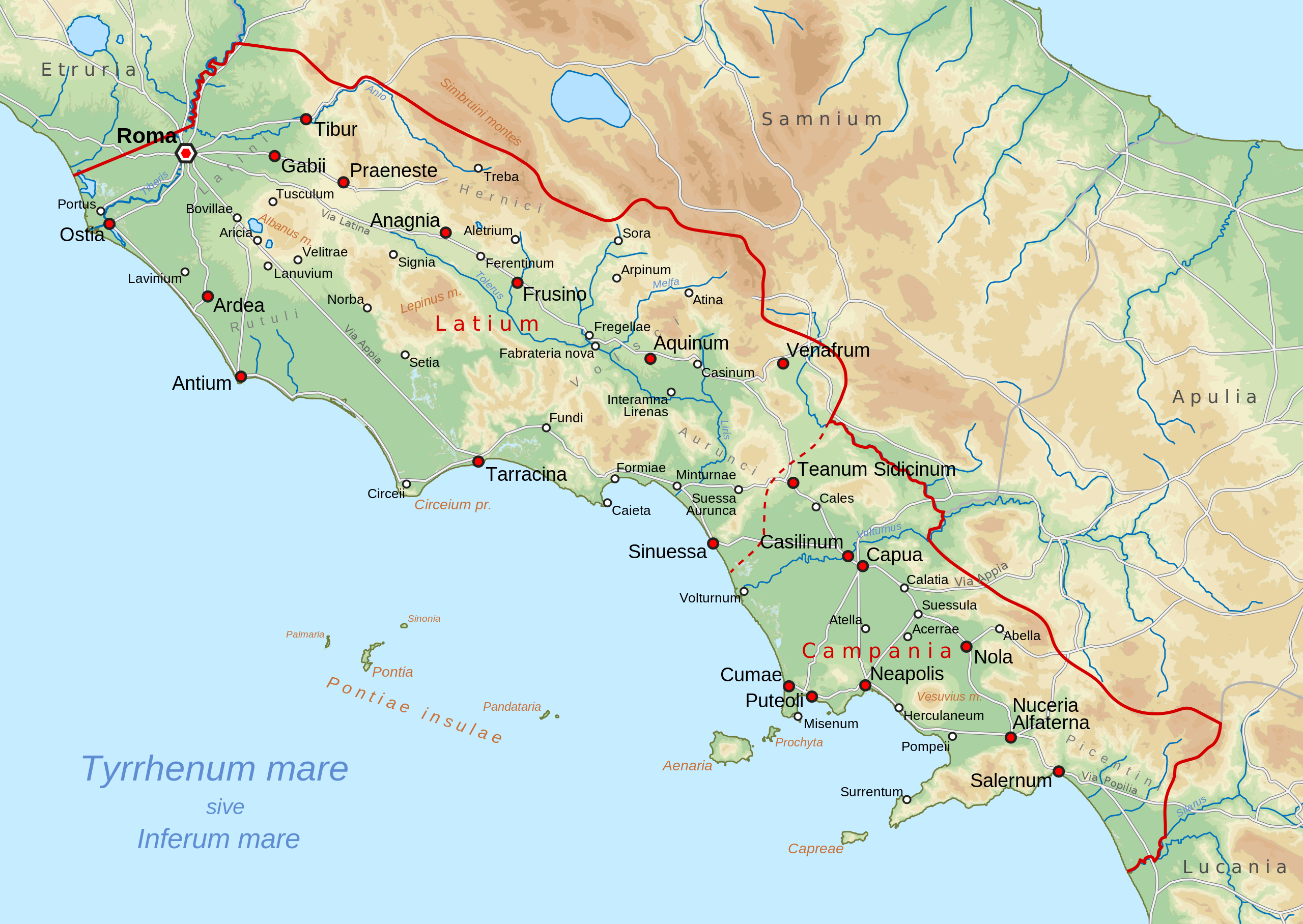
Regio I, Latium et Campania — the heartland of Roman Italy as organized under Augustus. Roma sits at the upper left, marked by the map’s hexagonal capital symbol and bold label. Trajan’s Dacian-war silver poured out of the Rome mint; the city it paid for — forum, markets, column — still bears his name at its center.
“Map of Augustan Regio I Latium et Campania” by Tomisti (Wikimedia Commons), File:Regio I Latium et Campania map.svg, licensed CC BY-SA 4.0; cities and roads based on the Digital Atlas of the Roman Empire (DARE) and Pleiades; topographic base © OpenMapTiles, © OpenStreetMap contributors. Reproduced unmodified.
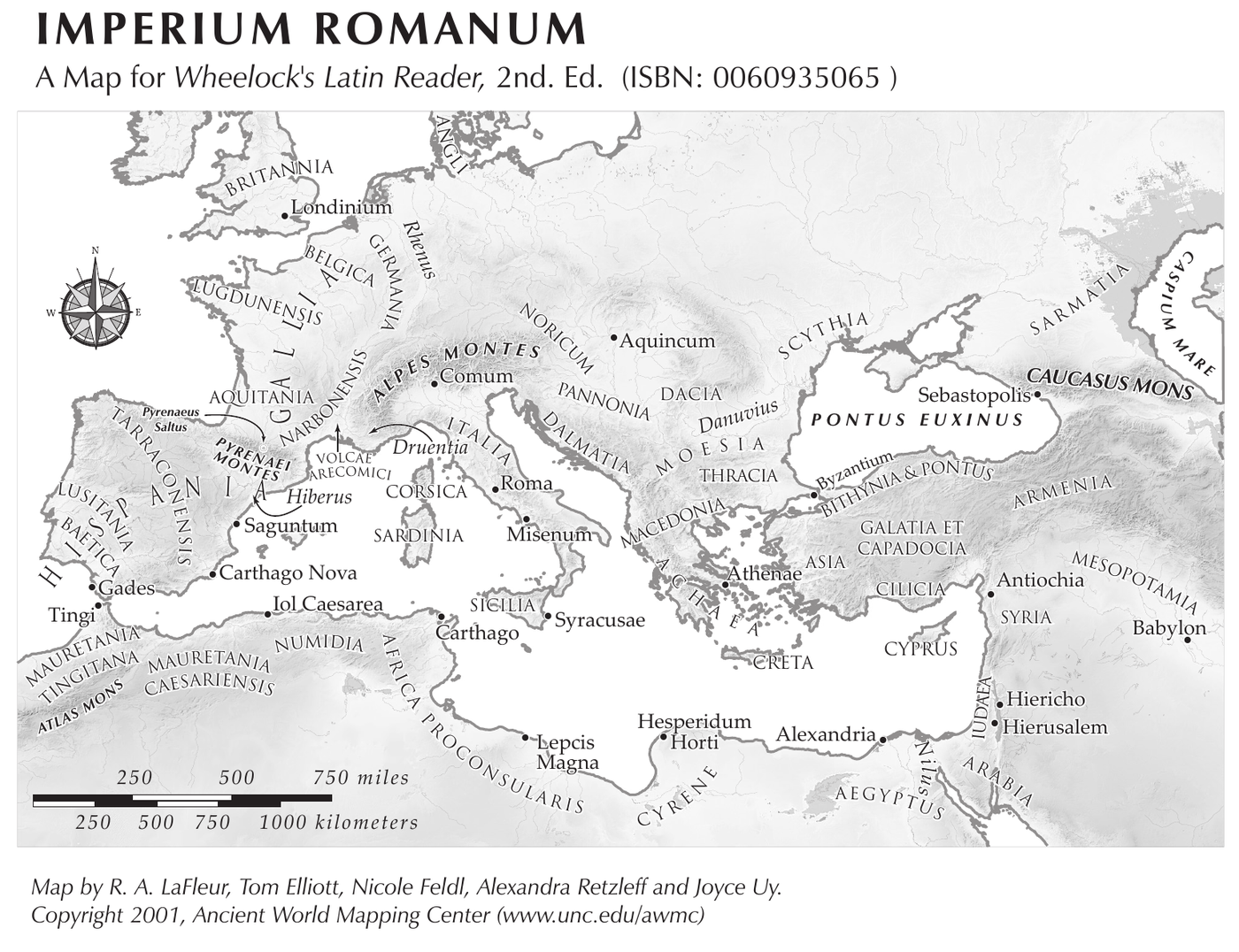
Roma sits at the center of Italia. Struck around AD 103–111, between and after the Dacian wars. Dacia, north of the Danuvius, is the province the Victory on this reverse is advertising, and the gold from it paid for Trajan’s building in Roma.
Every word on this denarius is a celebration. The obverse titles Trajan GER(manicus) and DAC(icus) — conqueror of Germans and Dacians; the reverse legend, wrapped around a Victory with wreath and palm, is a dedication: S P Q R OPTIMO PRINC(ipi), “the Senate and People of Rome, to the best of princes.” Optimus princeps was the title the Senate settled on Trajan and no other emperor — later rulers received the wish felicior Augusto, melior Traiano, “luckier than Augustus, better than Trajan” — and its appearance in the standing legend of his COS V coinage (from 103 AD) made every handful of silver a little decree of gratitude.
Graphic: JSB Coins (CC0).
The gratitude had a source: Dacia. Trajan’s two wars across the Danube (101–102 and 105–106 AD) ended with king Decebalus dead, his kingdom annexed, and his treasury — reported by the ancient tradition in fabulous figures — carried to Rome. The plunder financed 123 days of games, the great forum and market complex, the column that still shows the wars in spiral relief, and a coinage of enormous volume. Victory types like this one are its signature: the goddess with wreath and palm is the generic figure of triumph, struck year after year on the COS V silver that paid the empire’s soldiers and contractors through the boom decade of 103–111 AD.
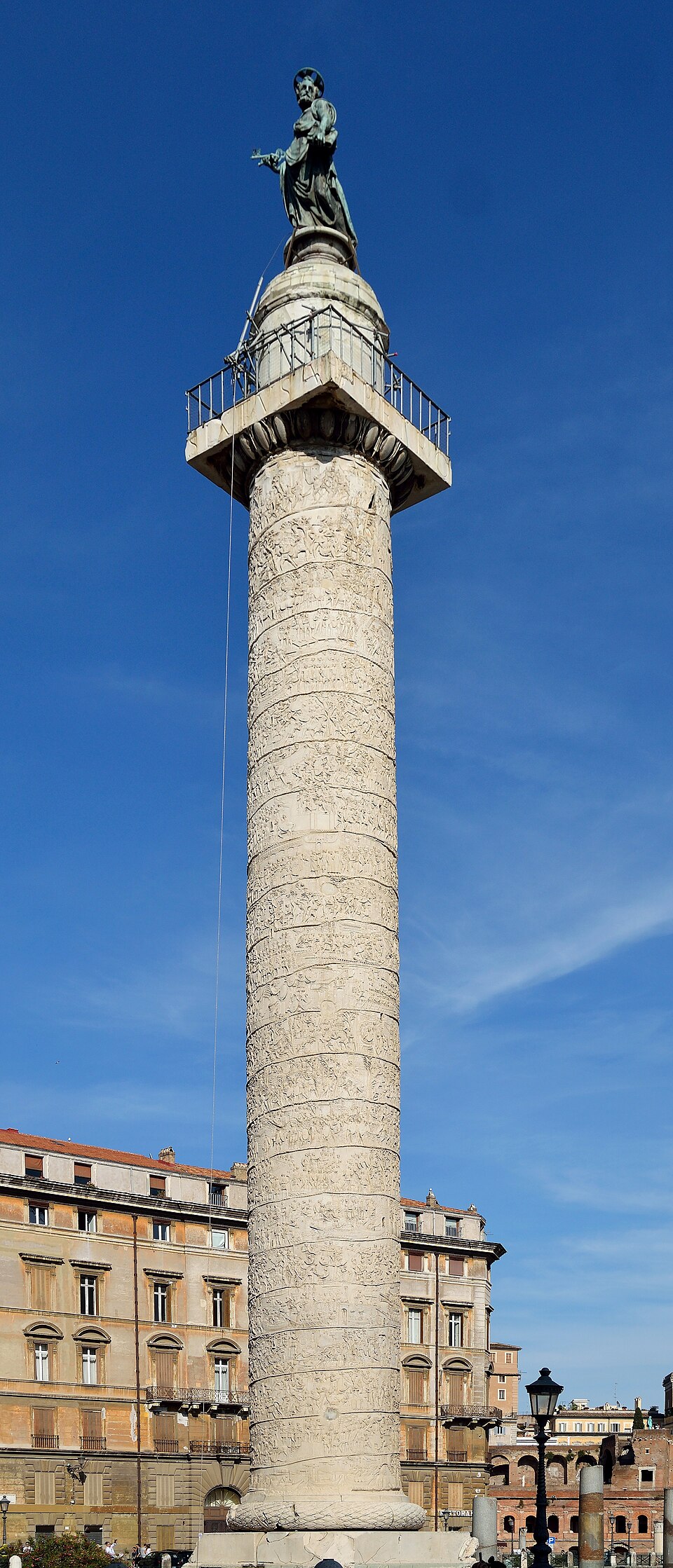
Photo: Livioandronico2013, Wikimedia Commons, licensed CC BY-SA 4.0, reproduced unmodified.
What the Dacian treasure built: Trajan’s Column, dedicated in 113 AD in the new forum the spoils paid for — a 38-meter marble scroll of the wars this coin celebrates, with some 2,500 carved figures spiraling to the top. The emperor’s ashes were placed in its base four years later. The war that funded it had its own coin-types too: compare the collection’s Mars denarius of 101–102, struck while the First Dacian War was still in the field.
Trajan pushed the empire to its territorial maximum — Dacia, Arabia, and briefly Armenia and Mesopotamia — and died in 117 AD returning from his Parthian war. His successor was his ward and kinsman Hadrian, who gave up the eastern conquests but kept the machinery of the mint running on the standard Trajan’s silver had set; this collection also holds a later Hadrianic travel-series AEGYPTOS denarius from the reign’s other end.
Attribution: the COS V Victory group, cf. RIC II 128; RSC 74–75, c. 103–111 AD — see the WildWinds Trajan index; exact-issue caveat in the type notes (the SPQR OPTIMO PRINCIPI parallel is RIC II 193; RSC 426). Zauche’s tag reference RSC 112 ‘(sim)’ preserved verbatim. Optimus princeps and the later acclamation formula: Eutropius 8.5; Pliny’s Panegyricus is the contemporary monument to the title. The Dacian wars and their spoils: Cassius Dio 68.6–14 (Book 68 now linked in the references).
ATTRIBUTION TO THE EXACT ISSUE IS PROVISIONAL: the reverse legend on the collection's specimen is partly obscured. The type is the COS V Victory with wreath and palm (RIC II 128 family, c. 103–111 AD; RSC 74 naked-to-hips / 75 draped); the alternative is the near-identical Victory of the SPQR OPTIMO PRINCIPI issue (RIC II 193; RSC 426) with the longer obverse legend ending COS V P P. Zauche's tag says 'RSC 112 (sim)' — his '(sim)' concedes the same imprecision. See the specimen's open threads.
John's Ancient Coin Collection · Type · trajan-victory-denarius
Image credits for this coin — photographs, maps and graphics used on this page