Type · hadrian-genius-cos-iii-denarius
Current: Roman Imperial, Hadrian, AR denarius, Rome, c. 124–128 AD (RIC II 173)
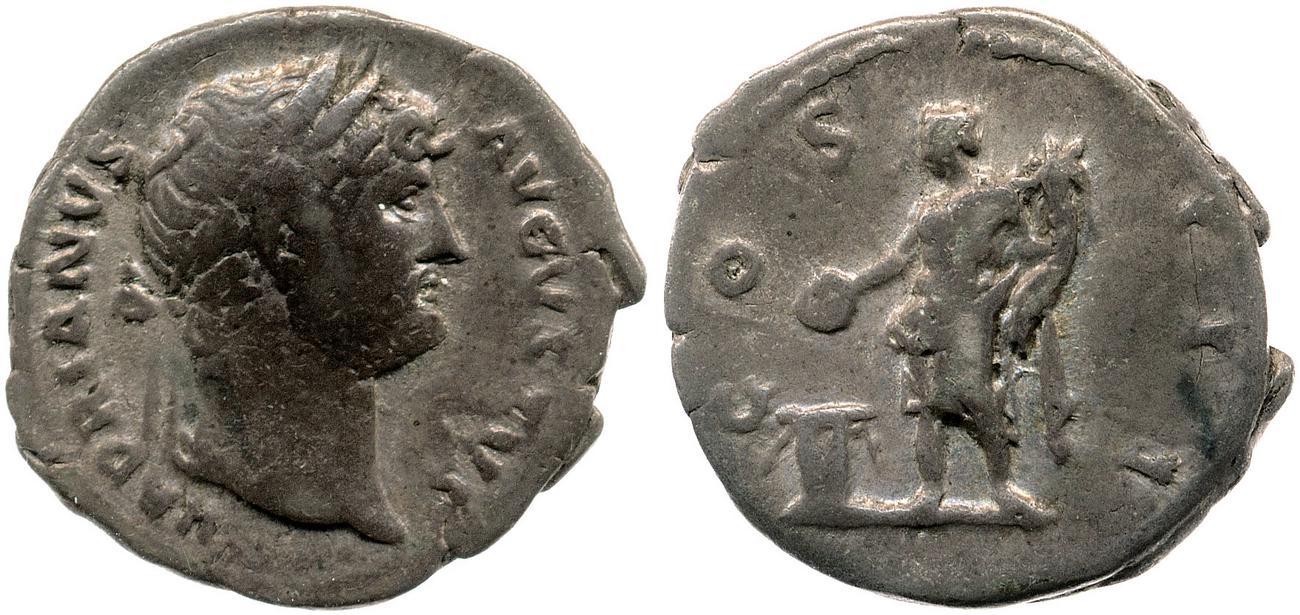
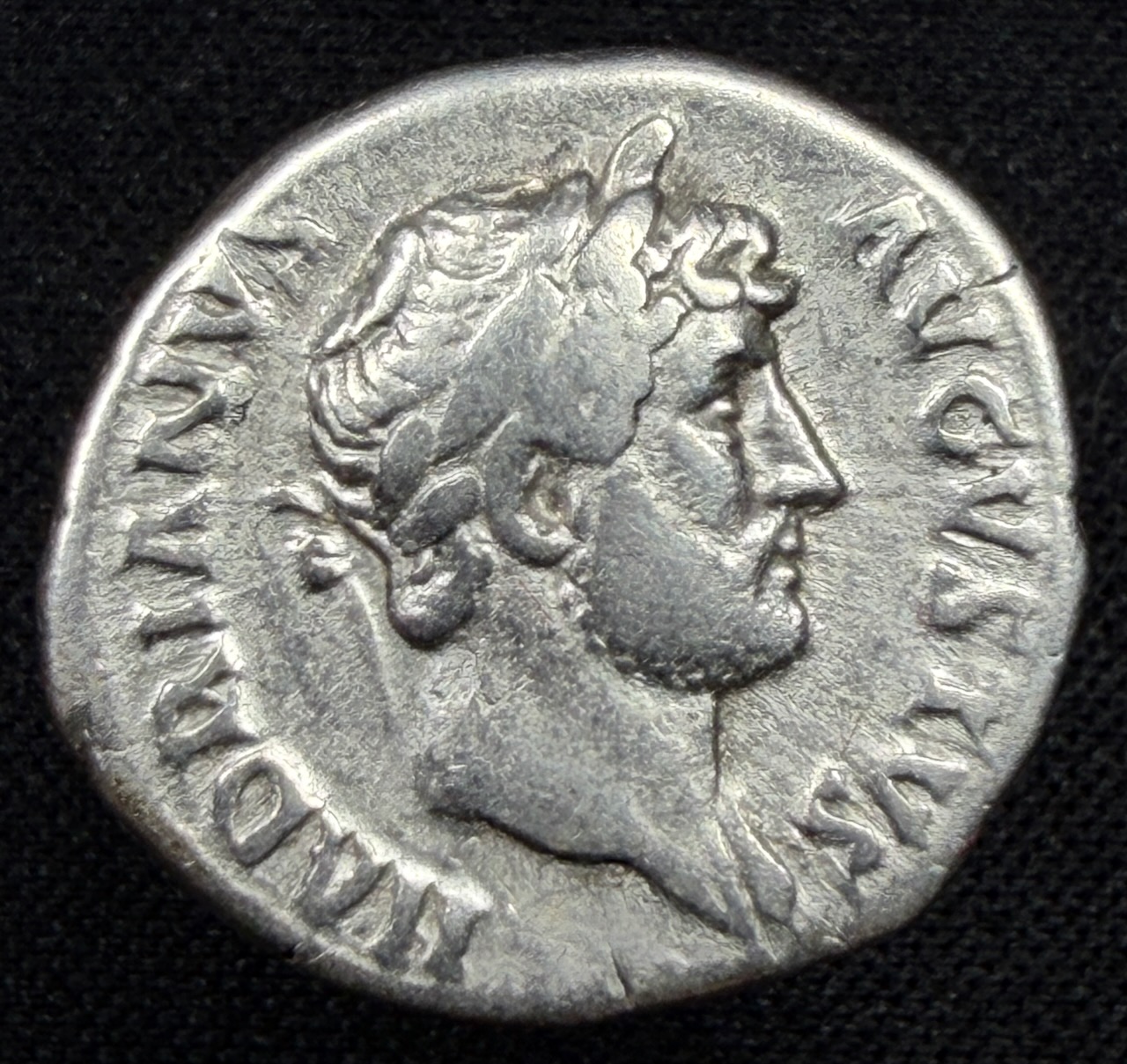
Obverse: Laureate head of Hadrian right
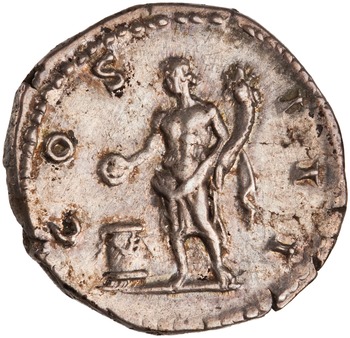
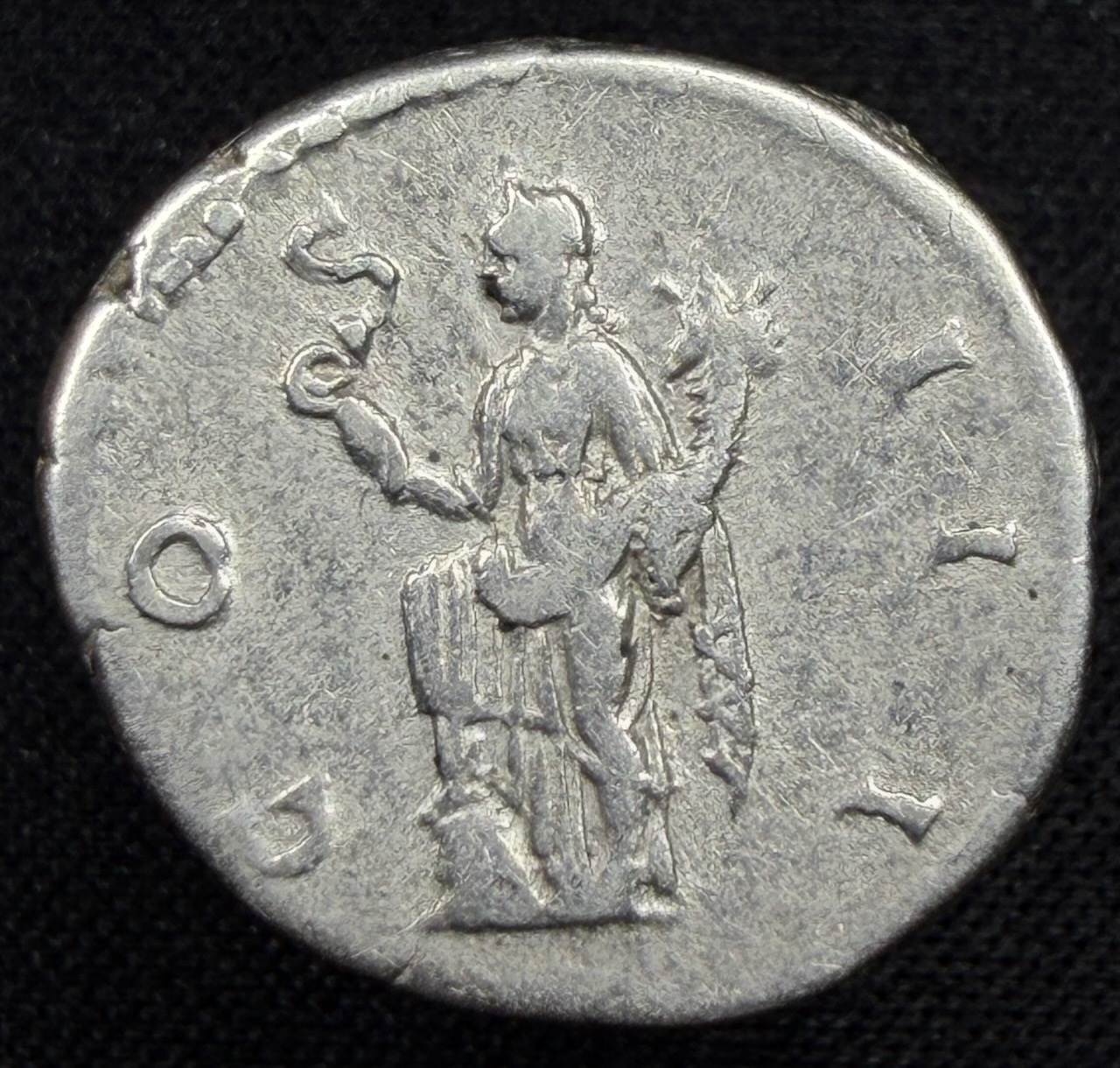
Reverse: Genius, naked to the waist, standing left, holding patera over a lighted and garlanded altar and cradling a cornucopia
Primary reference: RIC II 173
22 specimens in public collections (ANS 7, British Museum 6, Ashmolean 3, Princeton 3, Mk Mainz 1); weights 2.56–3.43 g, median 3.19 g across 22 recorded; die axis most often 6h.
This collection's specimen, at 3.31 g (my scale), is heavier than 82% of the recorded weights.
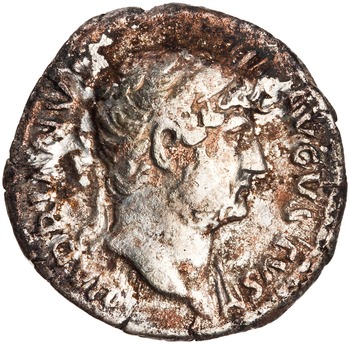
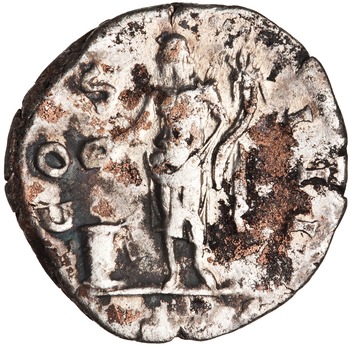
American Numismatic Society, 0000.999.18576. CC BY-NC 4.0. https://numismatics.org/collection/0000.999.18576
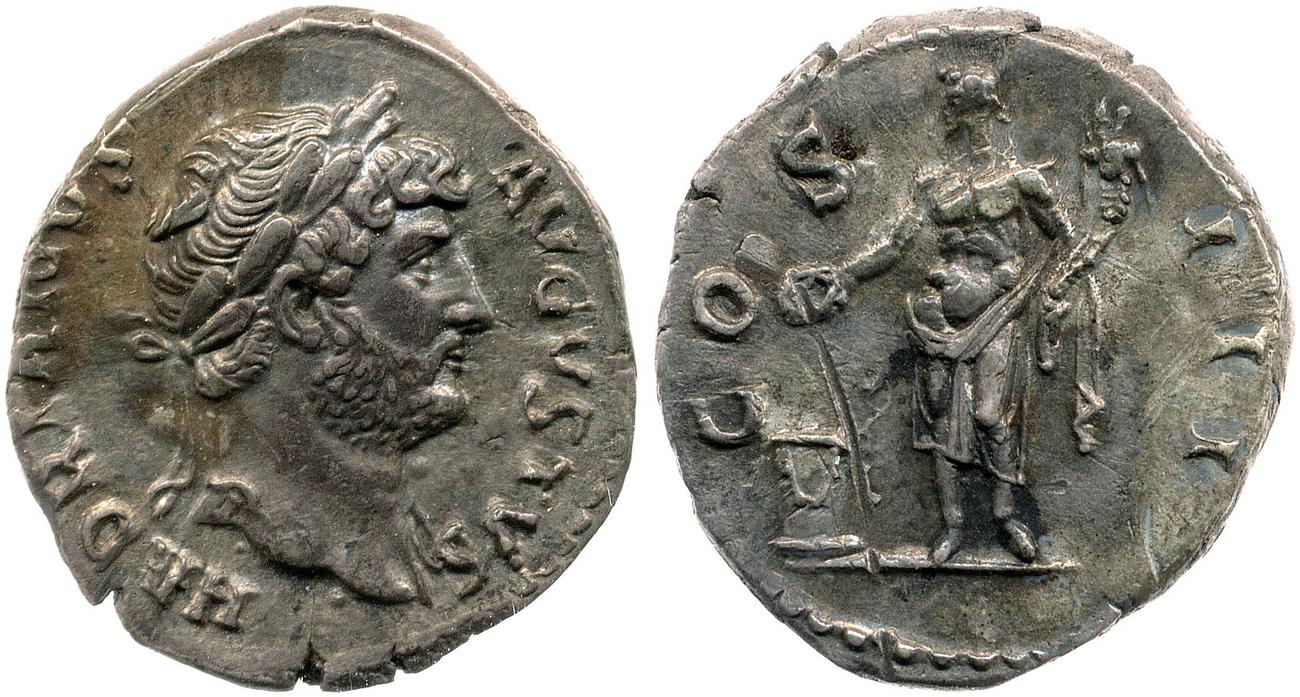
© The Trustees of the British Museum, 1912,0710.93. CC BY-NC-SA 4.0. https://www.britishmuseum.org/collection/object/C_1912-0710-93
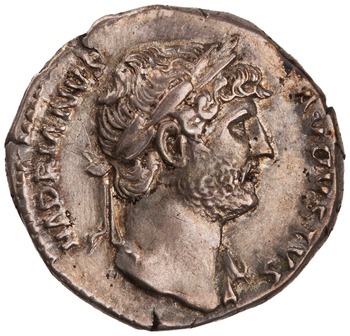
American Numismatic Society, 1948.19.1204. CC BY-NC 4.0. https://numismatics.org/collection/1948.19.1204
© The Trustees of the British Museum, 1912,0710.94. CC BY-NC-SA 4.0. https://www.britishmuseum.org/collection/object/C_1912-0710-94
American Numismatic Society, 1956.127.193. CC BY-NC 4.0. https://numismatics.org/collection/1956.127.193
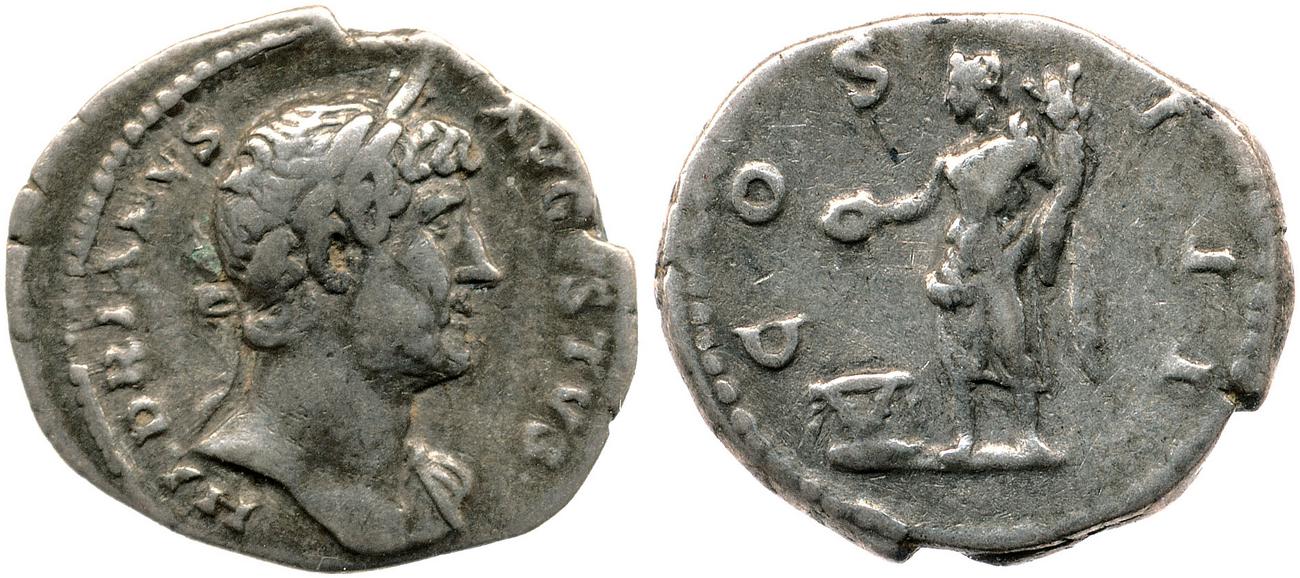
© The Trustees of the British Museum, 1938,0207.12. CC BY-NC-SA 4.0. https://www.britishmuseum.org/collection/object/C_1938-0207-12
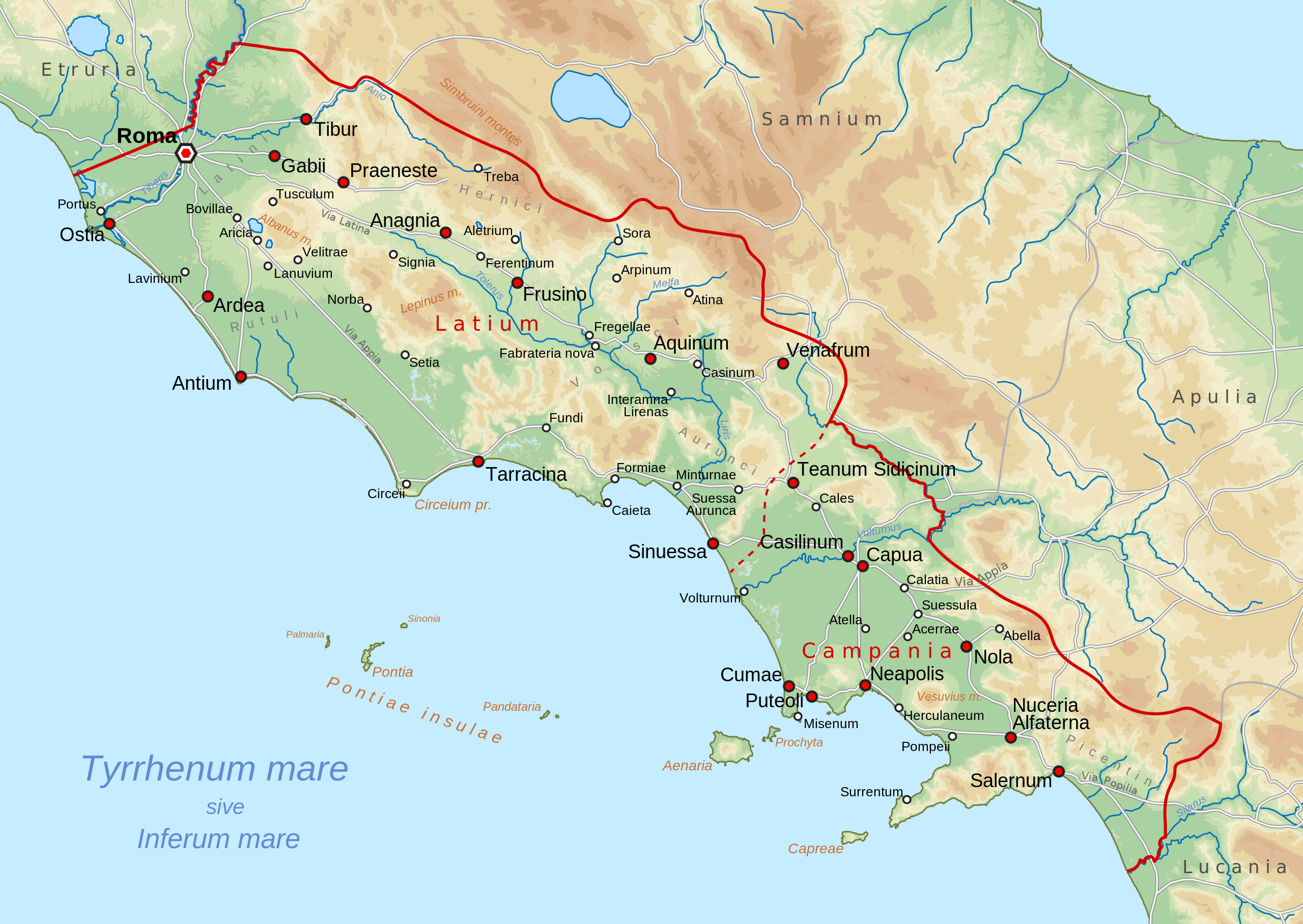
Regio I, Latium et Campania — the heartland of Roman Italy as organized under Augustus. Roma sits at the upper left, marked by the map’s hexagonal capital symbol and bold label. Hadrian’s COS III silver was struck in the city even while the emperor himself was almost anywhere else — Britain, Asia, Athens — on the journeys that defined his reign.
“Map of Augustan Regio I Latium et Campania” by Tomisti (Wikimedia Commons), File:Regio I Latium et Campania map.svg, licensed CC BY-SA 4.0; cities and roads based on the Digital Atlas of the Roman Empire (DARE) and Pleiades; topographic base © OpenMapTiles, © OpenStreetMap contributors. Reproduced unmodified.
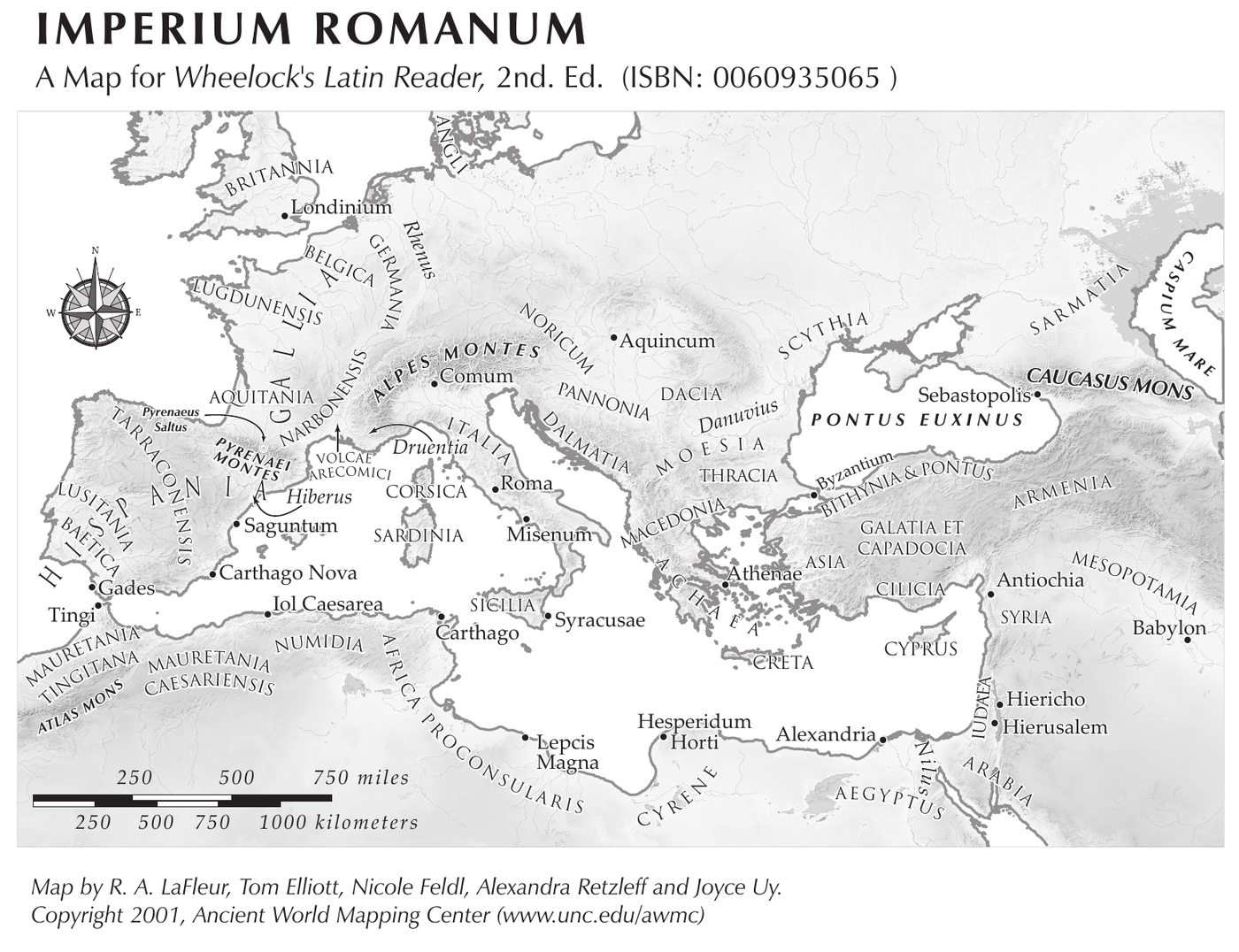
Roma sits at the center of Italia. Hadrian spent more than half his reign outside it. The provinces on this map are the itinerary: Britannia and its wall, the Rhine and Danube commands, Achaea, Asia, Aegyptus — the journeys that produced his province coinage.
Hadrian held his third and final consulship in 119 AD, the second year of his reign — and then never took another, in studied contrast to emperors who collected the office annually. His coinage made the modesty into a slogan: for nearly two decades the plain legend COS III served as the dating formula of his silver, so that a denarius of 125 and one of 132 may both say nothing more. Numismatists sort the vast COS III series by portrait style and hoard evidence; this type, with the simple HADRIANVS AVGVSTVS obverse, belongs to the middle years, c. 124–128 AD by the standard arrangement (BMC; old RIC II).
The reverse shows a Genius — the guardian spirit of a person, place, or people — half-draped, pouring a libation from a patera over a lighted, garlanded altar, cornucopia in the crook of his arm. It is the quietest kind of Roman religious image: not a god of weather or war but the personified vitality of the Roman people, well fed (the cornucopia) and at its devotions (the altar). That tone suits the middle Hadrianic years, an empire deliberately at peace — frontiers walled rather than extended, the emperor touring provinces instead of invading new ones. Where Trajan’s silver shouts victory over Dacia, Hadrian’s murmurs contentment; the two coins side by side are the empire’s change of course in miniature.
Graphic: JSB Coins (CC0).
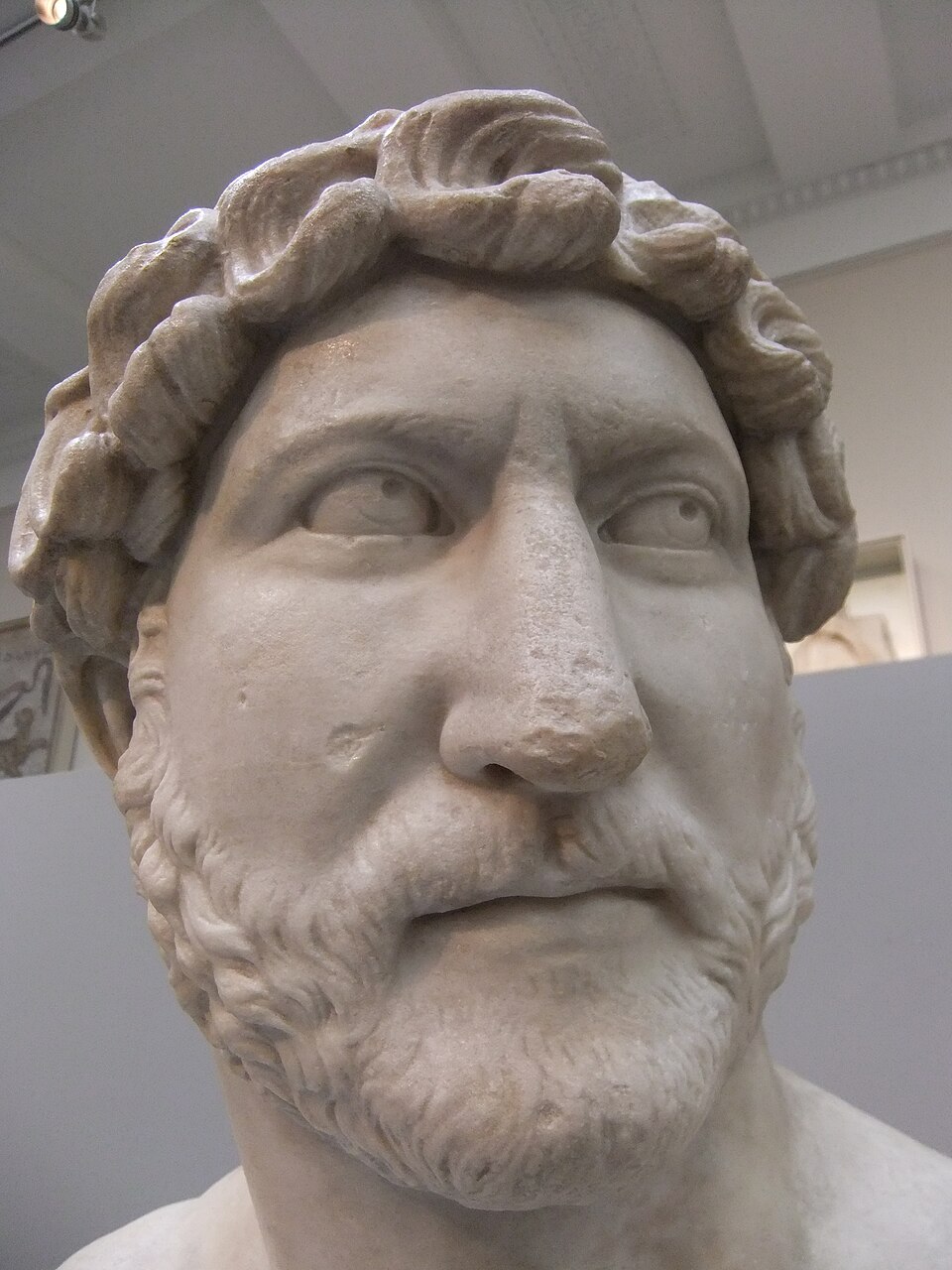
Photo: Orangeaurochs, Wikimedia Commons, licensed CC BY 2.0, reproduced unmodified.
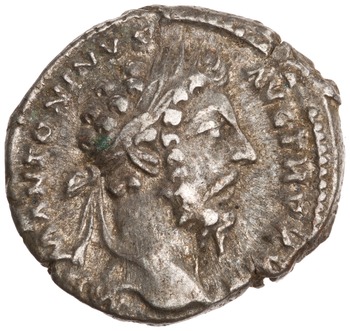
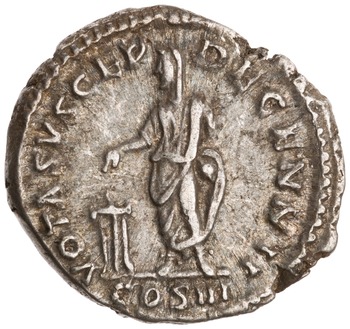
The face on the obverse: marble bust of Hadrian — the first emperor to wear a full beard on his portraits, a philhellene’s statement that reset imperial fashion for a century. British Museum, London. Later in the reign the same quiet coinage would blossom into the great travel series naming the provinces themselves — including the AEGYPTOS denarius in this collection, struck after the Egyptian journey of 130 AD. And the mood outlived the reign: the accession Minerva denarius of Antoninus Pius opens the next one in the same quiet key.
Zauche’s tag hedged the figure as “GENIUS?” — fair caution, since Hadrian’s COS III reverses carry a crowd of similar standing figures distinguishable only by their props (Salus feeds a snake, Fortuna leans on a rudder, Aequitas holds scales). The patera-over-altar plus cornucopia combination is the Genius type of RIC 173 / BMC 400, and the collection’s specimen shows both attributes clearly.
Attribution: RIC II 173; BMCRE 400, c. 124–128 AD — see the WildWinds Hadrian index for the type; the revised RIC II.3 number remains to be looked up (specimen open thread). On COS III as Hadrian’s standing formula and the arrangement of the series, the introductions to BMCRE III and RIC II.3 (Abdy/Mittag, 2019) are the standard accounts. Historical frame: Historia Augusta, Hadrian, and Cassius Dio 69 — both now linked in the references.
Old RIC II numbering (173); the revised RIC II.3 (Abdy/Mittag, 2019) renumbers Hadrian's middle coinage — the new number for this type has not yet been looked up (open thread on the specimen). Zauche's tag reads the figure as 'GENIUS?' with the question mark — RIC/BMC identify the patera-altar-cornucopia figure as Genius, and that identification is followed here; similar COS III figures (Salus, Fortuna, Aequitas) carry different attributes. Identification of Hadrian's plain-COS III reverse figures is a known nuisance of the series.
John's Ancient Coin Collection · Type · hadrian-genius-cos-iii-denarius
Image credits for this coin — photographs, maps and graphics used on this page
.jpg)