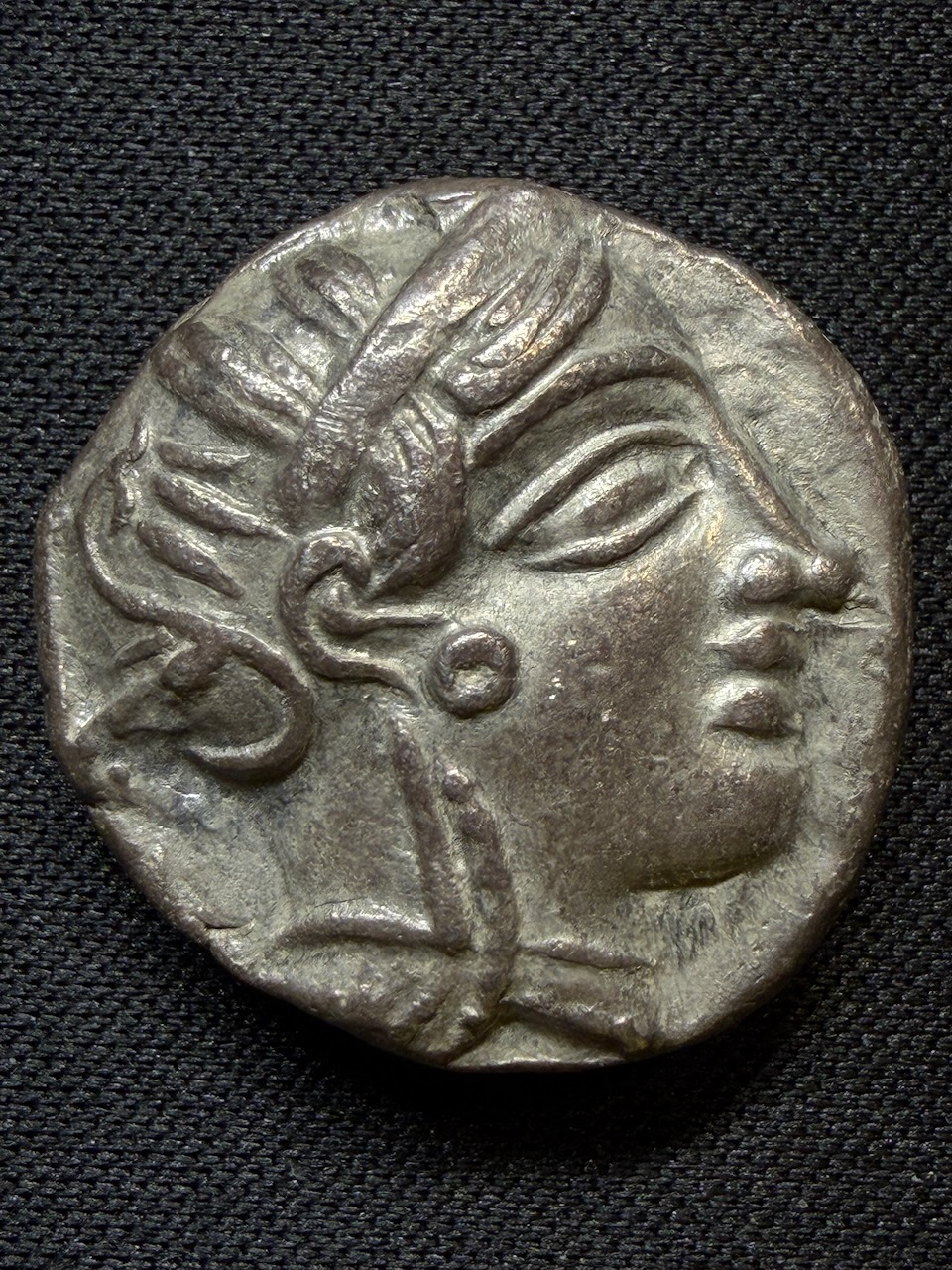
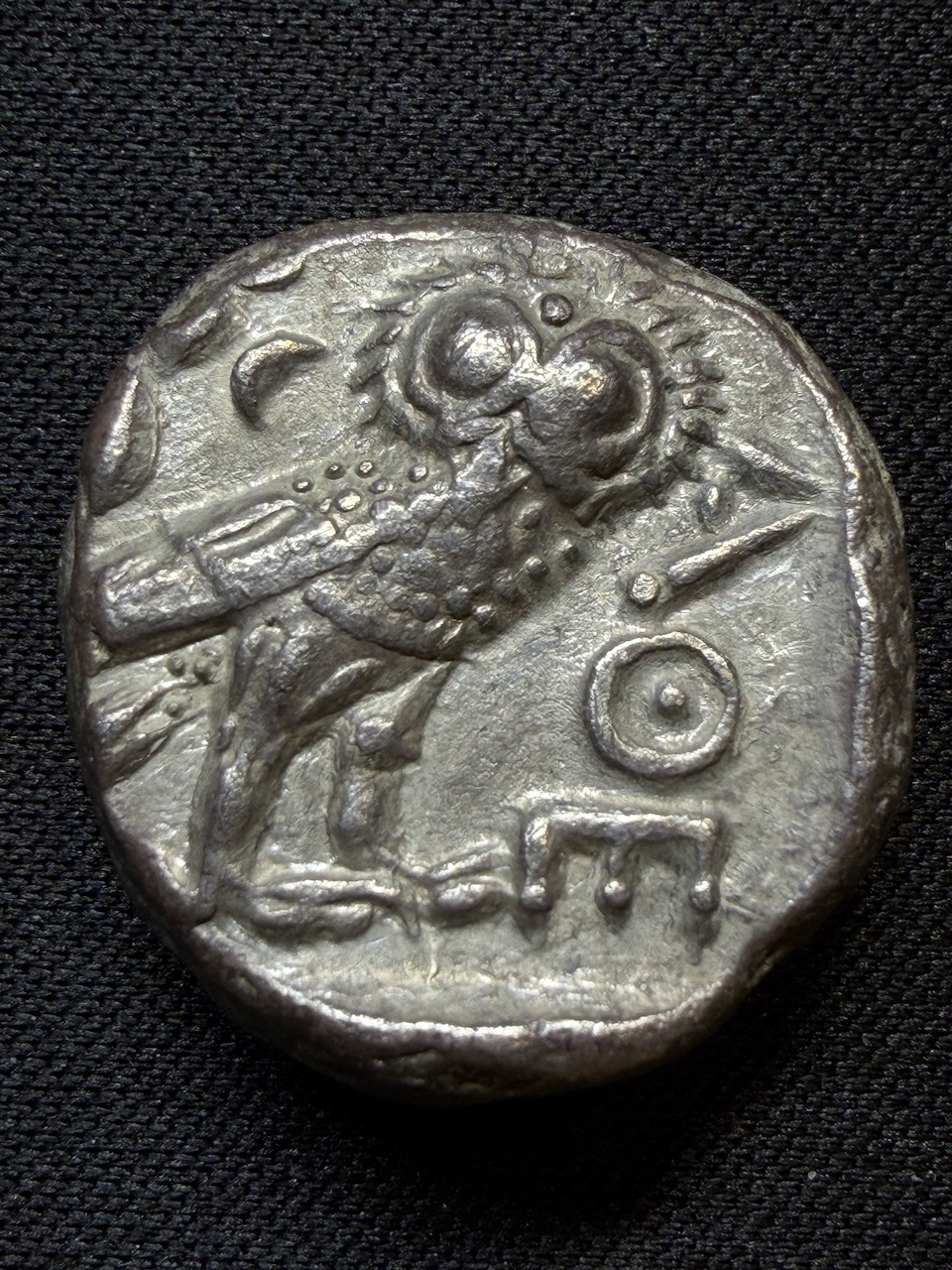
Type · egypt-pharaonic-owl-tetradrachm
Current: Egypt, Pharaonic Kingdom, AR Tetradrachm, imitating Athens, c. 450–330 BC (Van Alfen, Mechanisms Group III.A.1, Fig. 3 = Buttrey Type X)
Obverse: Head of Athena right, wearing crested Attic helmet; uraeus (Egyptian cobra) at neckline
Reverse: Owl standing right, facing; olive sprig and crescent to upper left
Primary reference: Van Alfen, Mechanisms (RBN 157, 2011), Group III.A.1, Fig. 3 = Buttrey Type X
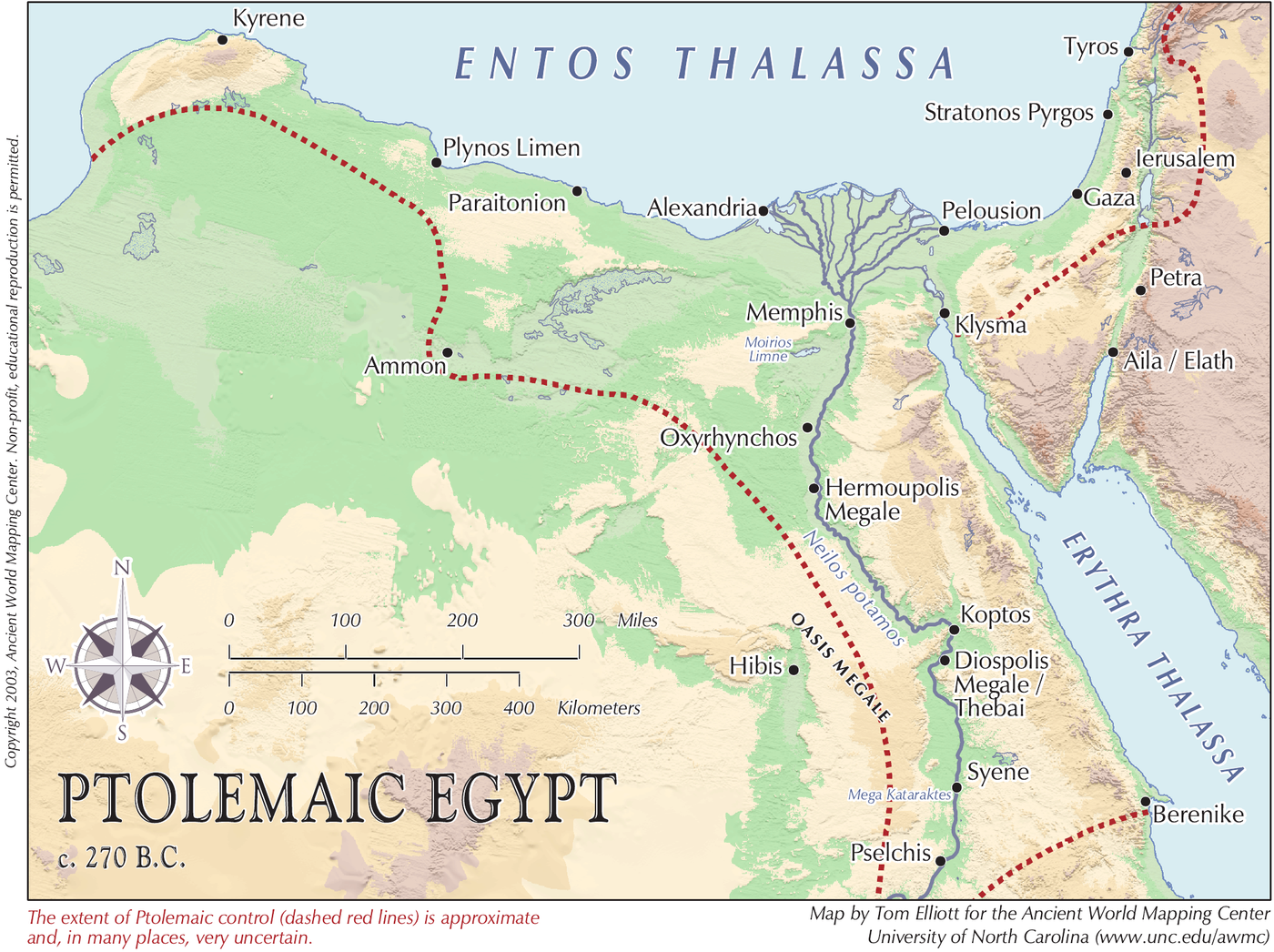
Memphis, on the Nile below the delta, is the mint usually proposed for these Egyptian owls. The plate is drawn for about 270 BC, a century or so after the imitations stopped, but the geography that made them is unchanged: a single river valley, a delta opening onto the Mediterranean, and the sea road north-east to the Levant and the Aegean along which Athenian tetradrachms arrived in such quantity that Egypt began striking its own.
Map by Tom Elliott for the Ancient World Mapping Center, University of North Carolina (2003). Trimmed to the plate; licensed CC BY-SA 4.0, via Wikimedia Commons.
This tetradrachm is an Egyptian imitation of the Athenian owl — the classical Athenian tetradrachm of this collection is the model — the dominant silver currency of the classical Mediterranean world. The coin’s defining feature — the uraeus, the rearing Egyptian cobra at Athena’s neckline — marks it as unmistakably Egyptian. This was no forgery. It was a statement of pharaonic monetary authority expressed through a universally recognized monetary form.
Graphic: JSB Coins, 2026 (CC0).
By the late fifth century BC the Athenian tetradrachm had become the closest thing the ancient world possessed to a reserve currency. Its consistent weight (~17.2 g), high silver purity, and instantly recognizable design — helmeted Athena on the obverse, owl with olive sprig on the reverse — made it acceptable from Sicily to Bactria. Merchants, mercenaries, and satraps across the eastern Mediterranean demanded payment in owls or their functional equivalents.
Egypt occupied a peculiar position in this monetary world. One of the wealthiest civilizations in antiquity, it had operated for three millennia on a system of barter and weight-metal exchange using gold, copper, and grain. Unlike Greek city-states or Levantine kingdoms, Egypt had no tradition of civic silver coinage. When it needed to participate in the silver economy of the classical Mediterranean — above all, to hire and pay the Greek mercenaries on whom its military increasingly depended — it had to produce coin that those mercenaries would accept. The solution was imitation.
The date range c. 450–330 BC spans two distinct political situations in Egypt. The earlier decades fall within the first Persian occupation (525–404 BC), when Achaemenid satraps administered the Nile Delta. Egyptian imitation of Athenian owls appears to begin in the late fifth century, possibly accelerating after Sparta’s occupation of Dekeleia (413–404 BC) disrupted Athenian silver mining at Laurion and temporarily reduced the flow of genuine owls eastward.
The bulk of production, however, is most plausibly associated with the Pharaonic Revival of 404–343 BC — the 28th, 29th, and 30th Dynasties, when native Egyptian rulers recovered independence from Persia and fought to keep it. The 30th Dynasty in particular, based at Sebennytos, employed Greek mercenaries on a massive scale. Nectanebo I (r. 380–362 BC) used Greek forces to defeat a major Persian invasion in 373 BC. Nectanebo II (r. 360–343 BC) hired no less a figure than Agesilaus of Sparta as a military commander, along with thousands of Greek soldiers. These men expected silver coin of a type they recognized. Local production of Athenian-type tetradrachms was the most efficient way to meet that demand.
The range closes with Alexander’s conquest of Egypt in 332 BC, after which Alexander’s own coinage displaced the owl series. (Athens itself was meanwhile striking its final old-type owls — the pi-style issue of c. 353–294 BC, also in this collection — which was likewise imitated in Egypt and the Near East.)
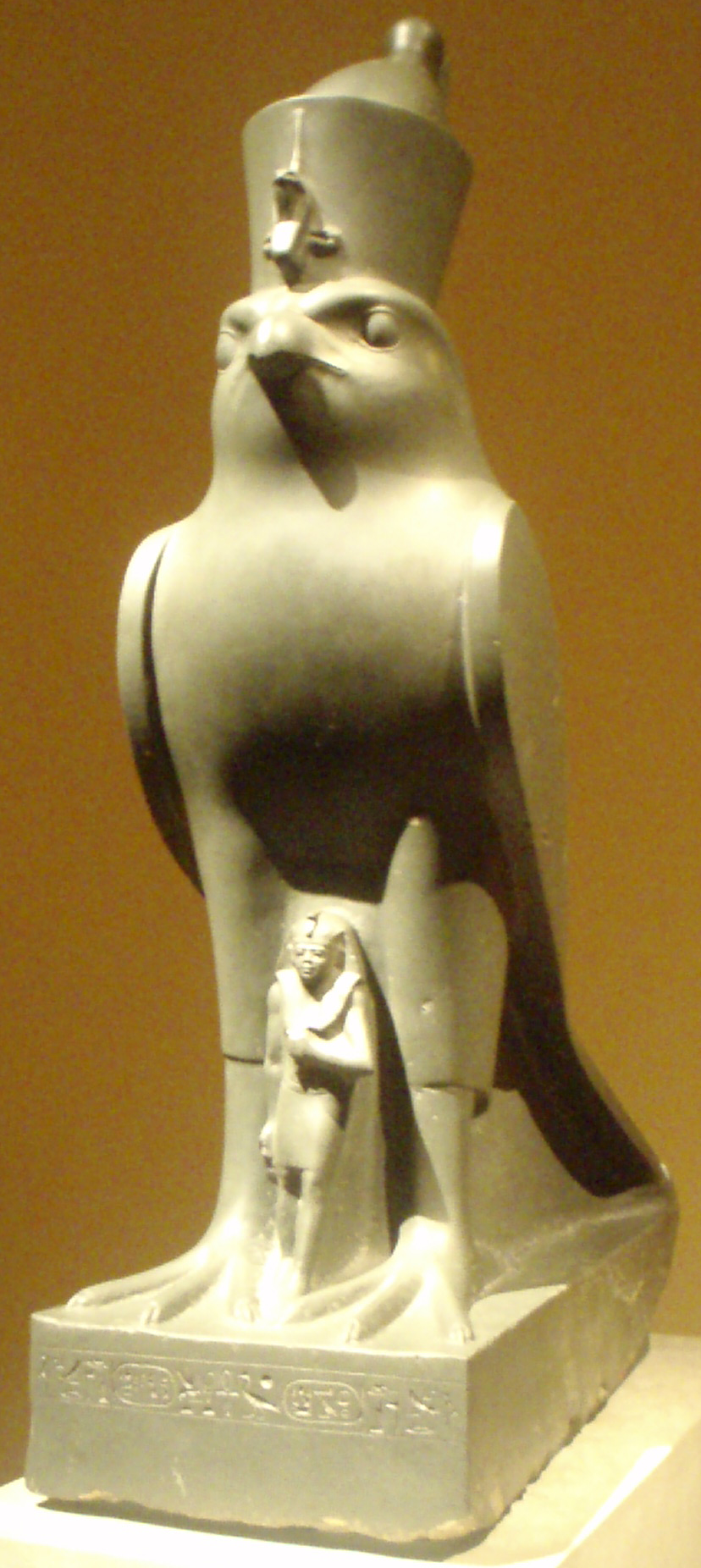
Photo: Keith Schengili-Roberts, CC BY-SA 2.5 (Wikimedia Commons); reproduced unmodified.
The uraeus — the rearing cobra of the goddess Wadjet, symbol of pharaonic sovereignty for three thousand years — appears at Athena’s neckline on this group of the Egyptian imitations (not on the Egyptian series as a whole, much of which passes as Athenian in every visible detail and is identified instead by style and hoard evidence). On genuine Athenian tetradrachms, this area is blank. The addition is deliberate and consistent within the group. It is not a die cutter’s error or an accidental feature. It marks the coin as issued under Egyptian authority, distinguishes it from genuine Athenian product, and demonstrates that these were not counterfeits intended to deceive but local instruments of state financial power.
The result is a coin that inhabits a remarkable cultural intersection: Greek monetary form, Egyptian sovereign identity, Greek mercenary function. It is one of the earliest examples of monetary branding — a local authority adopting an international currency type while inserting a marker that says this one is ours.
The modern classification framework for Egyptian owl imitations derives primarily from two studies. T.V. Buttrey’s hoard-based analysis established a typology from the major Egyptian finds, including the important Fayum hoards of 1934–35; this coin falls within his Type X. Peter van Alfen’s 2011 paper “Mechanisms for the Imitation of Athenian Coinage: Dekeleia and Mercenaries Reconsidered” (Revue belge de numismatique 157, pp. 55–93) provides the current framework, integrating die study with hoard evidence and historical context. His Group III.A.1, Fig. 3 equates to Buttrey Type X and represents one of the organized production groups — not opportunistic low-quality imitations but carefully made coins intended for sustained circulation.
Van Alfen’s title deliberately questions the two most popular explanations for Egyptian owl production: the Dekeleian War disruption and generic mercenary pay. His conclusion is nuanced — mercenaries were real customers, but Egypt’s own commercial integration into eastern Mediterranean trade networks was an equally important driver. The owls circulated not only as pay but as trade coin acceptable wherever the Athenian type was known, which was essentially everywhere that mattered. This world ended with the Ptolemies, who walled Egypt off behind a closed royal currency — the other end of that story is the collection’s great bronze of Ptolemy III. Rome’s view of the same country, three centuries further on, is the collection’s AEGYPTOS denarius of Hadrian — where Egypt has stopped being a currency zone and become the picturesque province of the Roman imagination.
Van Alfen, P.G. “Mechanisms for the Imitation of Athenian Coinage: Dekeleia and Mercenaries Reconsidered.” Revue belge de numismatique 157 (2011), pp. 55–93. — The primary modern study; establishes Group III.A.1.
Buttrey, T.V. “Pharaonic Imitations of Athenian Tetradrachms,” in Proceedings of the 9th International Congress of Numismatics, Berne 1979 (1982) — the hoard analysis (Fayum, 1934/5) that isolated types X, B, and M as Egyptian production. An accessible overview of the Athenian-vs-Egyptian question: rg.ancients.info/owls/egypt.html.
Diodorus Siculus, Books XV–XVII; Plutarch, Life of Agesilaus 36–40 (linked in the references) — ancient sources on Greek mercenaries in 30th Dynasty Egypt. The Horus-and-Nectanebo statue: Metropolitan Museum of Art, New York.
Figueira, T.J. The Power of Money: Coinage and Politics in the Athenian Empire (1998) — broader context for Athenian owl circulation and imitation.
MINT IS A BEST GUESS (Memphis): the imitations name no mint and are assigned to Egypt only by style, fabric, and hoard evidence (Buttrey's 1934/5 Fayum hoard); Memphis, the administrative capital and seat of the satrapal/royal treasury, is the usual candidate in the literature. The uraeus at Athena's neckline is the defining mark of THIS group (Van Alfen Group III.A.1 = Buttrey Type X) — not an error, but a deliberate mark of pharaonic authority. It should not be generalized: Egyptian imitations as a class are identified by style, fabric, and hoard evidence (Buttrey isolated types X, B, and M as Egyptian production from the 1934/5 Fayum hoard), and many Egyptian owls carry no uraeus. Weight 16.83 g (specimen 001) is slightly below the Athenian standard (~17.2 g) but within the normal range for Egyptian imitations.
John's Ancient Coin Collection · Type · egypt-pharaonic-owl-tetradrachm
Image credits for this coin — photographs, maps and graphics used on this page