Type · antestius-gragulus-denarius
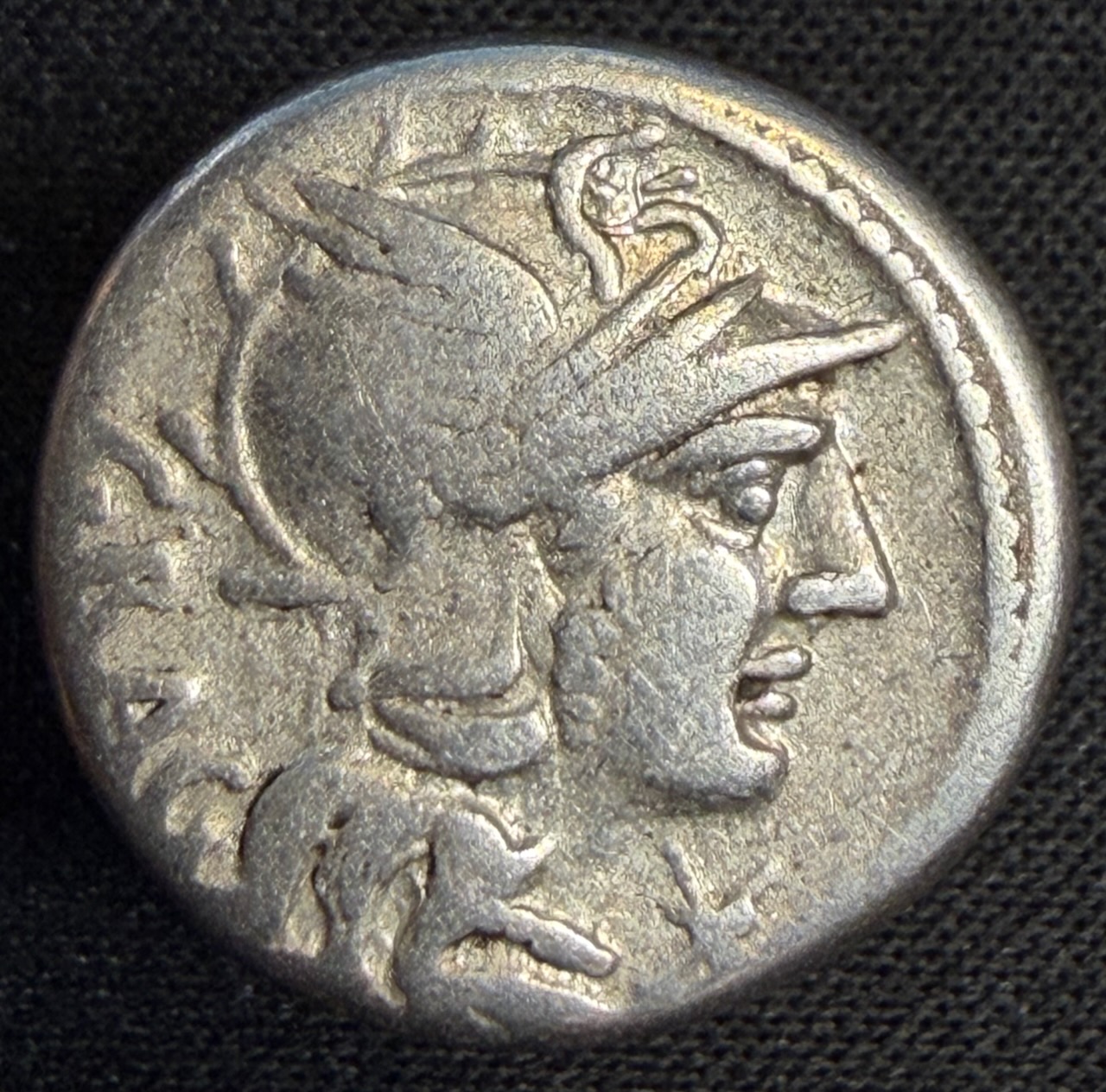
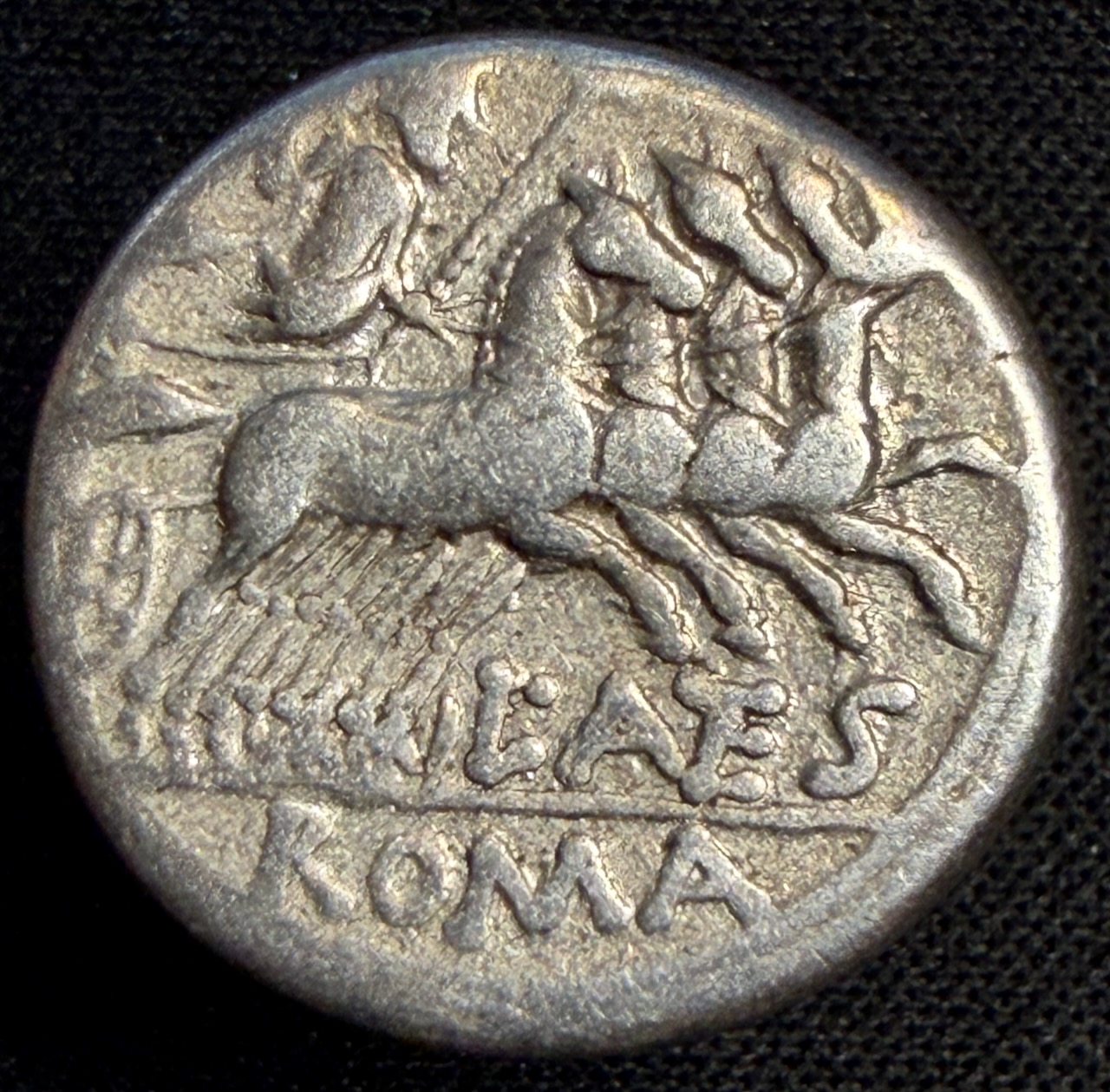
Current: Roman Republic, L. Antestius Gragulus (moneyer), AR denarius, Rome, 136 BC (Crawford 238/1)
Obverse: Helmeted head of Roma right; GRAG downward behind; ✱ (crossed X, the XVI-asses value mark) below chin
Reverse: Jupiter in quadriga galloping right, holding sceptre and reins in left hand and hurling thunderbolt with right hand; L·ANTES below horses (ANTE in ligature — reads 'L·AES' at a glance); ROMA in linear frame in exergue
Primary reference: Crawford 238/1
100 specimens in public collections (ANS 19, British Museum 18, BnF 17, Fitzwilliam 10, Uni-tuebingen 4); weights 1.88–6.83 g, median 3.81 g across 99 recorded; die axis most often 12h; recorded in hoards CHRR ADR, CHRR AGN, CHRR ALA, CHRR ALI, CHRR ALL, CHRR ALM, CHRR ALV, CHRR AMN and 196 more.
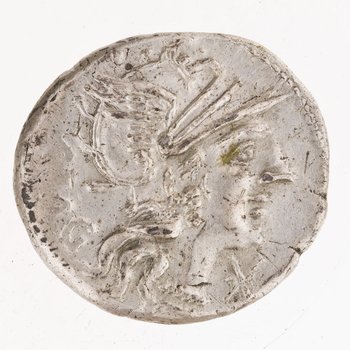
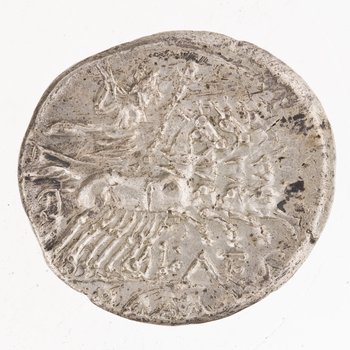
American Numismatic Society, 1896.7.18. CC BY-NC 4.0. https://numismatics.org/collection/1896.7.18
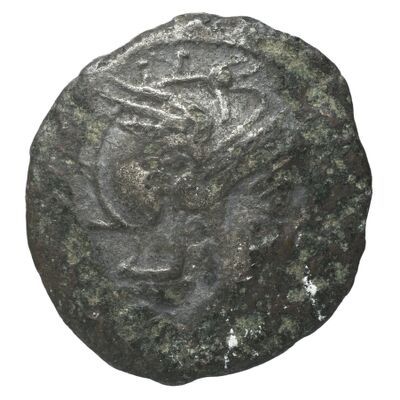
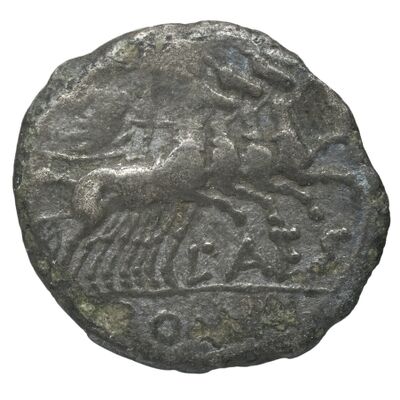
Bibliothèque nationale de France (Gallica), REP-22571. non-commercial reuse permitted. https://gallica.bnf.fr/ark:/12148/btv1b10454626g
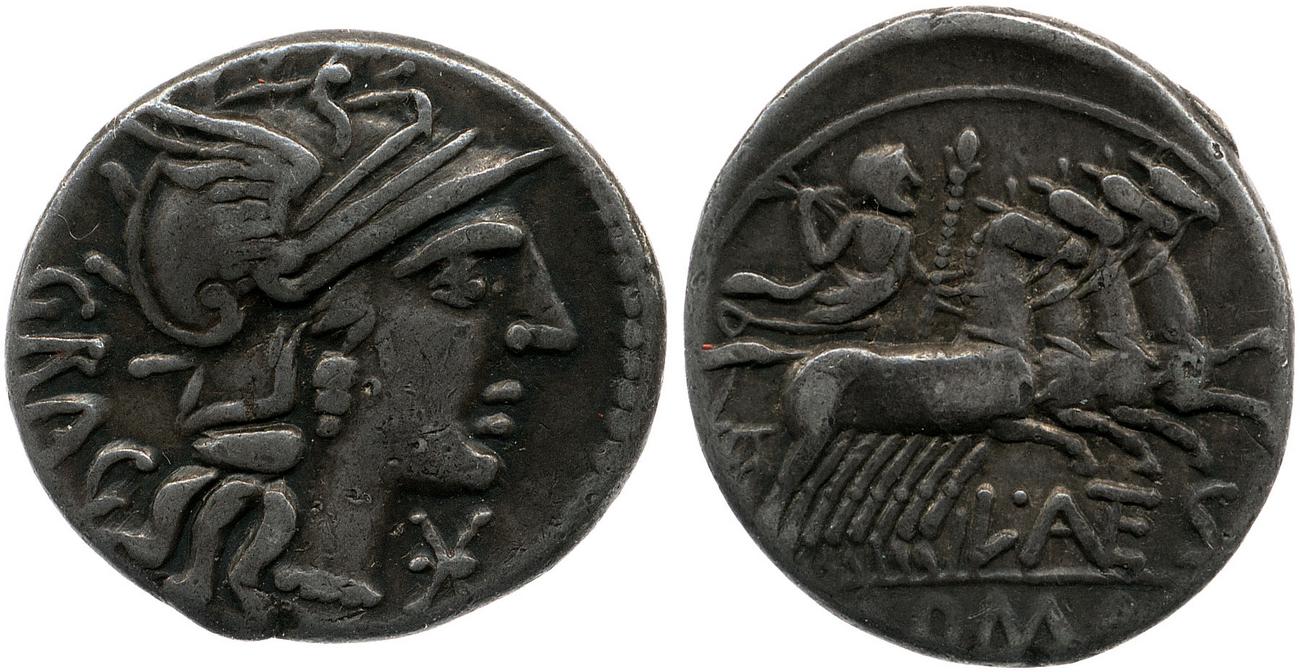
© The Trustees of the British Museum, 1843,0116.139. CC BY-NC-SA 4.0. https://www.britishmuseum.org/collection/object/C_1843-0116-139
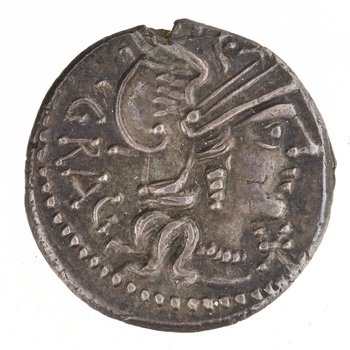
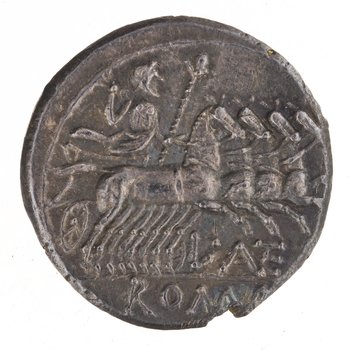
American Numismatic Society, 1937.158.598. CC BY-NC 4.0. https://numismatics.org/collection/1937.158.598
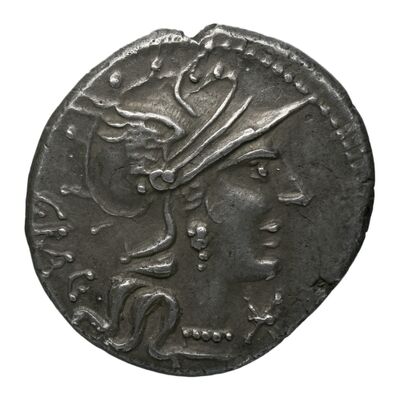
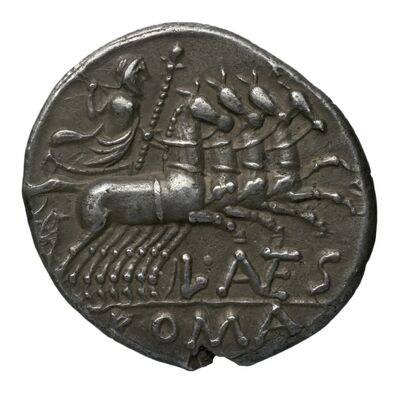
Bibliothèque nationale de France (Gallica), REP-5061. non-commercial reuse permitted. https://gallica.bnf.fr/ark:/12148/btv1b10425011z
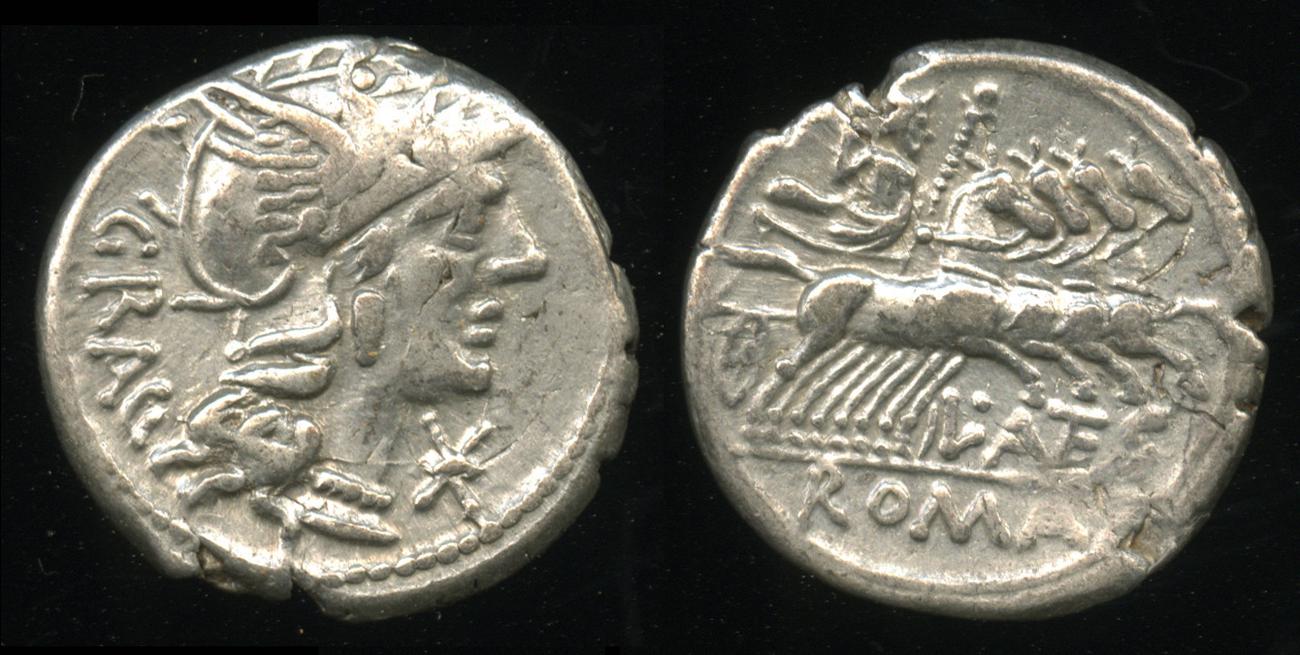
© The Trustees of the British Museum, 1932,0706.23.66. CC BY-NC-SA 4.0. https://www.britishmuseum.org/collection/object/C_1932-0706-23-66
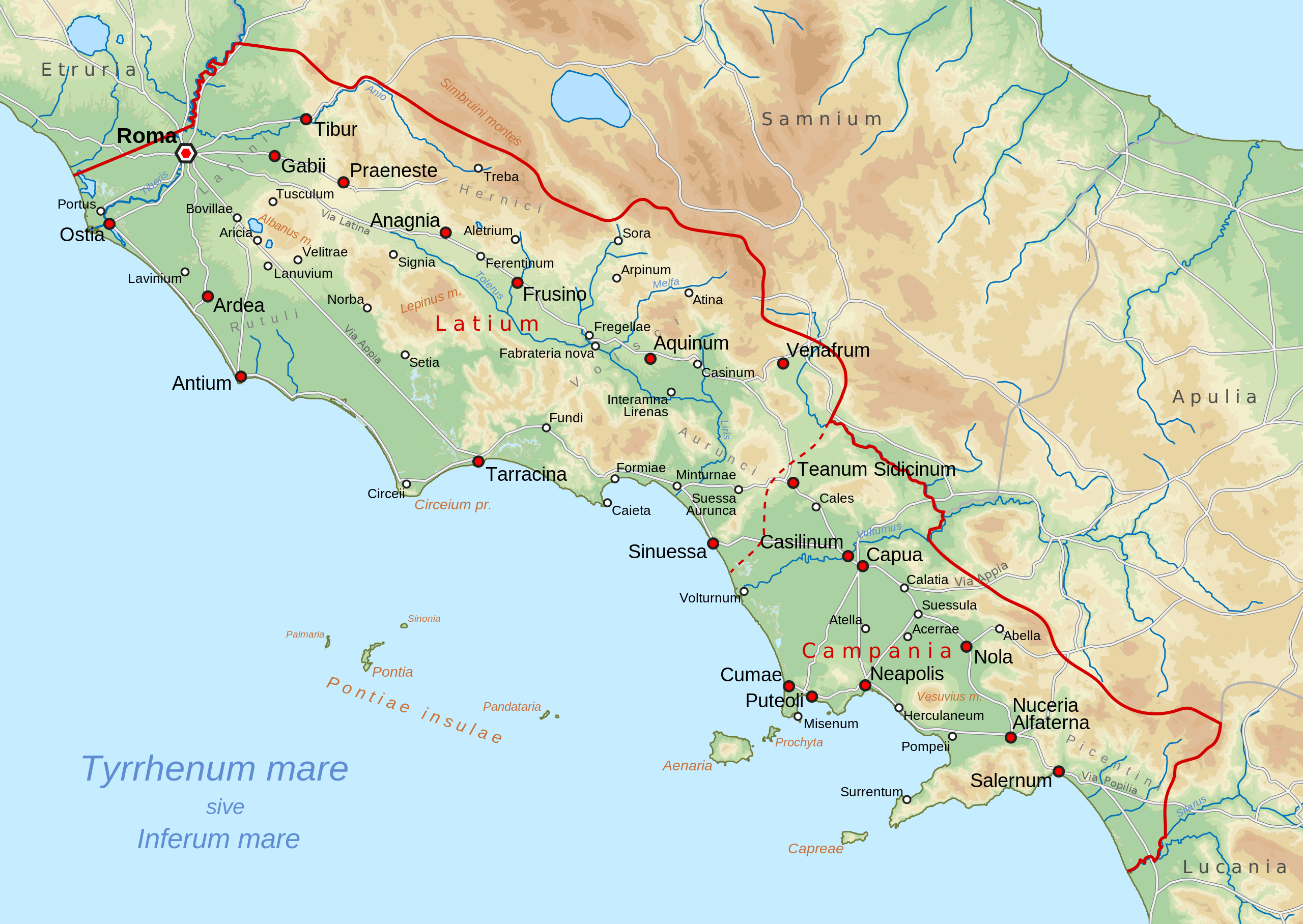
Regio I, Latium et Campania — the heartland of Roman Italy as organized under Augustus, a century after this coin. Roma sits at the upper left, marked by the map’s hexagonal capital symbol and bold label. The Republican mint stood on the Capitoline beside the temple of Juno Moneta.
“Map of Augustan Regio I Latium et Campania” by Tomisti (Wikimedia Commons), File:Regio I Latium et Campania map.svg, licensed CC BY-SA 4.0; cities and roads based on the Digital Atlas of the Roman Empire (DARE) and Pleiades; topographic base © OpenMapTiles, © OpenStreetMap contributors. Rasterized from SVG to PNG; otherwise reproduced unmodified (Roma already carries the base map’s capital marker).
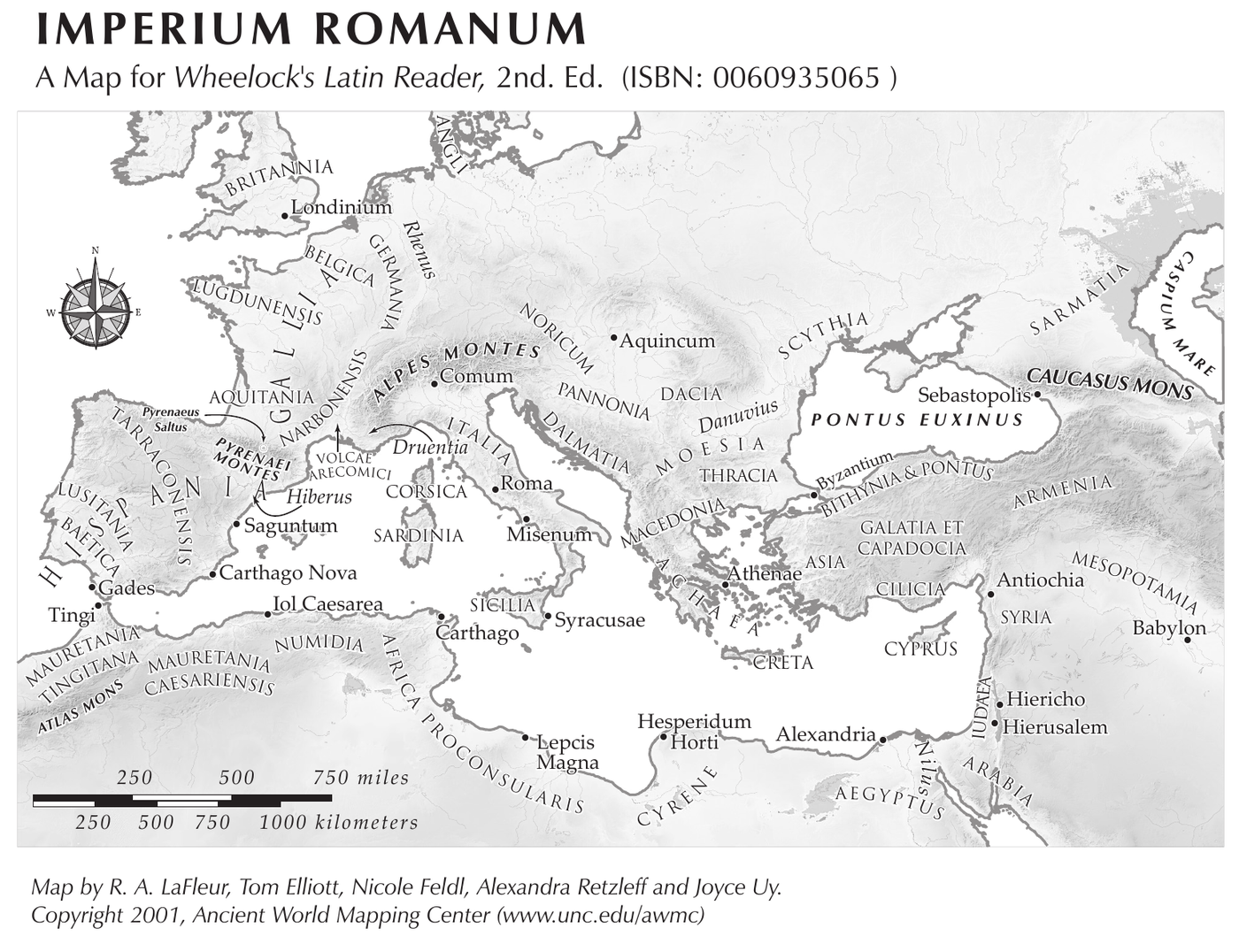
Roma sits at the center of Italia. Struck in 136 BC, while Rome was still failing to take Numantia in Tarraconensis; the Spanish wars ran for twenty years and were the Republic’s most unpopular service.
In 136 BC the denarius was already a middle-aged institution. Struck first in the crisis years of the war against Hannibal, it had settled into a fixed grammar: Roma’s helmeted head on one face, a god’s chariot on the other, the city’s name in the exergue, and — the only variable that mattered — the annual moneyer’s signature. Barely twenty years earlier even that signature was absent: compare this collection’s anonymous Victory-in-biga denarius of 157–156 BC, among the last issues to speak for the Republic with no moneyer’s name at all. This coin is a textbook sentence in that grammar, signed twice by an otherwise unrecorded young aristocrat: GRAG behind Roma’s head, L·ANTES beneath Jupiter’s horses. Lucius Antestius Gragulus — the cognomen means “jackdaw” — survives in history through his year at the mint and nothing else.
Graphic: JSB Coins, 2026 (CC0).
Roman cognomina were often unflattering nicknames worn as badges, and Gragulus (the standard spelling is graculus) is the jackdaw — the small gray-naped crow of Italian towns, proverbially talkative, sociable, and light-fingered. Republican moneyers loved a canting pun: contemporaries put a calf (vitulus) on coins of the Voconii Vituli and a flower on those of the Aquillii Flori. Gragulus, more austerely, kept his bird in letters only — GRAG — but the pun would have landed on every Roman ear. There is a fitting coda the moneyer could not have known: the jackdaw’s other Latin name, monedula, was folk-connected to moneta — the “money-bird,” from the bird’s legendary appetite for bright coins and trinkets. Two generations later Ovid told of Arne, who betrayed her island for gold and was turned into the jackdaw “which still loves gold, black-footed, cloaked in black feathers” (Metamorphoses 7.465–8), and when Linnaeus needed a species name two millennia on, he chose Corvus monedula. A money-bird’s name on money: the joke has only improved with age.
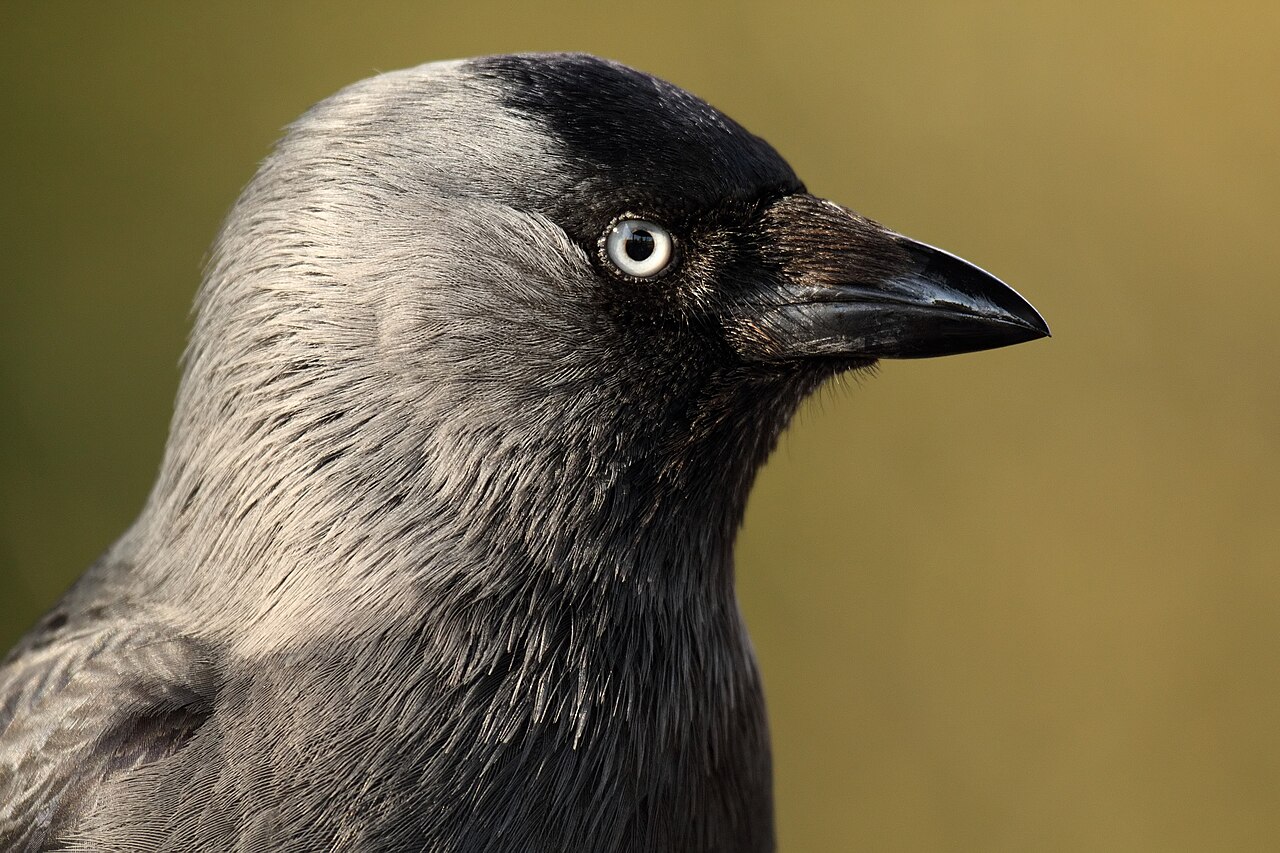
Photo: Danny Chapman, via Wikimedia Commons, licensed CC BY 2.0, reproduced unmodified.
Below Roma’s chin sits a small crossed X: the monogram of XVI, sixteen. Around 141 BC the state retariffed the denarius from its original ten bronze asses to sixteen, acknowledging the long slide in the weight of the as, and for a few years the silver openly advertised the new rate (Crawford, RRC, on the introduction of the mark). The advertisement was short-lived — within a decade most issues quietly returned to the plain X, now understood to mean sixteen — which makes the monogram a usefully tight dating marker for the coins that carry it. Gragulus’s issue, at 136 BC, falls in the heart of that window.
The equilibrium this coin projects was thinner than it looks. The year before, the consul C. Hostilius Mancinus had surrendered an entire army to the Spanish town of Numantia; in 136 BC — the very year of this issue — the Senate repudiated his treaty and had Mancinus delivered back to the Numantines naked and in chains (they refused to take him). In Sicily the First Servile War was burning through the island’s slave-worked estates. And beneath both ran the crisis the decade’s politics could not digest: the drain of free smallholders — the men who filled the legions and were losing their farms — which Tiberius Gracchus would put at the center of Roman politics as tribune in 133 BC, three years after this denarius was struck. The coin’s serene formula, Roma and Jupiter and a young noble’s initials, is the last picture of the Republic before that storm broke.
The reverse shows Jupiter himself in a quadriga at full gallop, thunderbolt drawn back to throw, sceptre and reins gathered in the other hand — the horses’ legs a flurry of parallel strokes above the ground line, the god’s name needed by nobody. The chariot of a god had been the denarius’s standard reverse since the Dioscuri of the first issues gave way to Diana, Victory, and Jupiter in bigae and quadrigae; the type gestures at the triumphal procession, in which the triumphing general rode Jupiter’s own four-horse car up to the Capitoline temple. Beneath, ROMA sits in its linear frame like an address label. Within a generation this anonymous civic formula would dissolve — moneyers of the 120s and 110s BC turned the reverse into a billboard for family history, beginning with issues like the Q. Fabius Labeo denarius of 124 BC, which slips an ancestral ship’s beak beneath this very same Jupiter quadriga — and the road from there runs through the she-wolf denarius of P. Satrienus of 77 BC, the Scaurus & Hypsaeus camel denarius of 58 BC — where the very same Jupiter-in-quadriga formula is redeployed as ancestral boast — and the Apollo and Diana denarius of P. Clodius Turrinus of 42 BC, to the outright dynastic advertisement of the Augustus and Tiberius quadriga denarius. Seen against them, Gragulus’s coin preserves the Republican ideal: the god drives, the city signs, and the man merely initials the work.
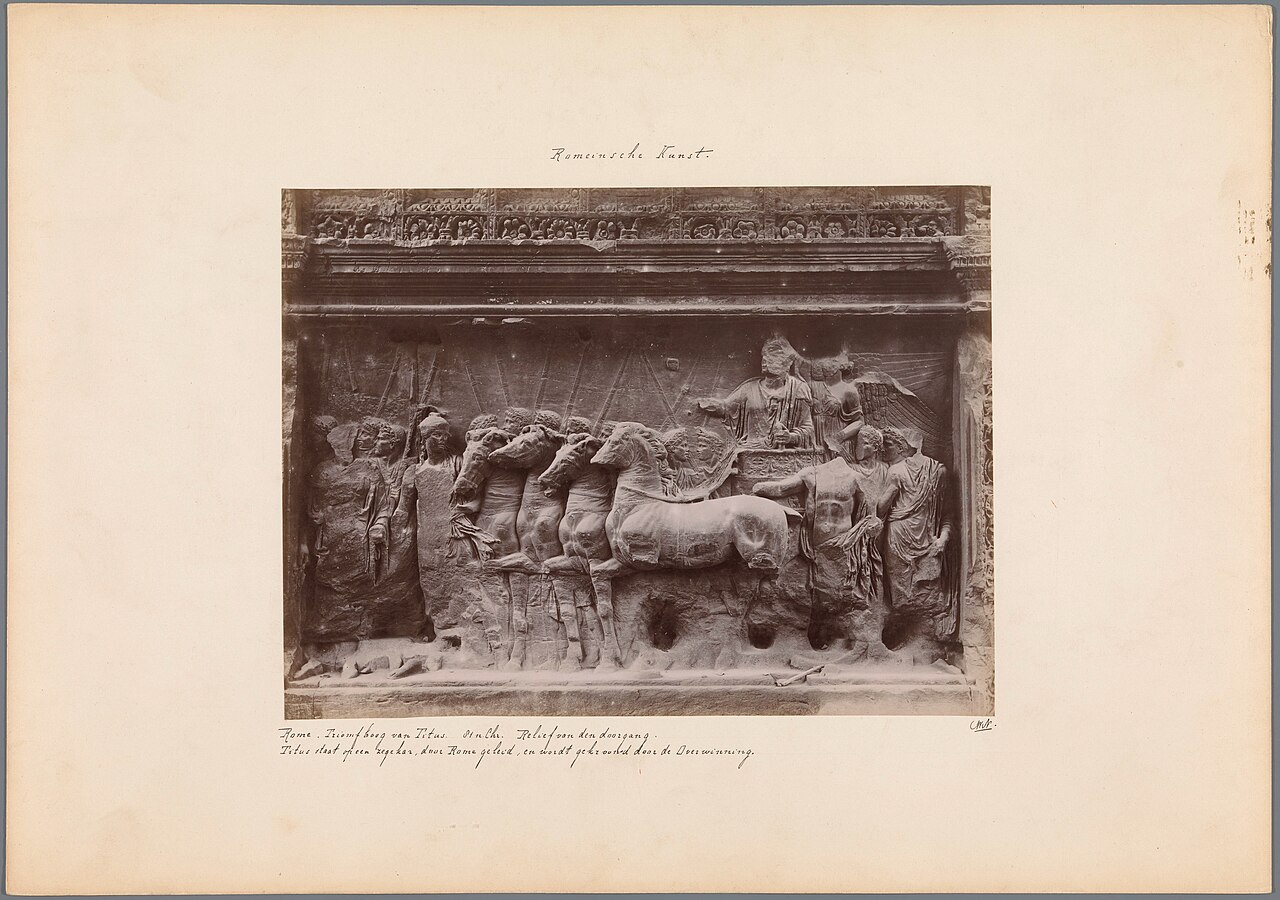
Photograph of the relief: Rijksmuseum, Amsterdam, via Wikimedia Commons, released CC0; reproduced unmodified.
The gens Antestia (also spelled Antistia) was plebeian, with a scatter of moneyers and magistrates across the second and first centuries BC. Of Lucius Antestius Gragulus nothing further is known — no later magistracy is recorded — and the NT ligature in his signature has tripped up readers of worn specimens for a long time (this collection’s example was first misread L·CAES until set beside the American Numismatic Society’s plates). Crawford places the issue in 136 BC on hoard evidence, alongside the moneyers C. Servilius and P. Aelius Paetus.
This is the classic denarius of the Republic at equilibrium — after the retariffing, before the Gracchan storm broke in 133 BC and politics began seeping into the coinage. Its very anonymity is the historical point: the money of a state that still presented itself, over the signature of an interchangeable young noble, simply as ROMA.
Attribution, date, and mint follow Michael H. Crawford, Roman Republican Coinage (Cambridge 1974), no. 238/1 (obverse GRAG with crossed-X XVI mark; reverse Jupiter in quadriga right, L·ANTES, ROMA in linear frame; dated 136 BC); also Sydenham 451 and RSC Antestia 9. The type record and comparison specimens are on Coinage of the Roman Republic Online, RRC 238/1 (numismatics.org/crro). On the XVI retariffing and its mark, see Crawford’s discussion in RRC; on the triumphal resonance of the quadriga, the standard handbooks of Republican iconography. The jackdaw: graculus in the Latin lexica; the monedula/moneta folk connection and Arne, Ovid, Metamorphoses 7.465–468; canting types among Republican moneyers, Crawford’s introductory discussion of moneyers’ badges. The events of 137–133 BC: Plutarch, Tiberius Gracchus 5–8 (Mancinus and the Numantine treaty); the standard narratives of the First Servile War (Diodorus 34/35.2).
The ✱ below Roma's chin is the crossed-X monogram for XVI (sixteen), reflecting the retariffing of the denarius from 10 to 16 asses around 141 BC (Crawford, RRC, on the mark's introduction). The moneyer's reverse signature L·ANTES is cut with ANTE in ligature (A+N and T+E sharing strokes), so the die itself reads 'L·AES' at a glance — on museum specimens as much as on this one; CRRO prints the legend with an overline marking the ligature. This specimen was initially deciphered 'L·CAES' before comparison with the ANS plates. GRAG on the obverse abbreviates the cognomen Gragulus, 'jackdaw'.
John's Ancient Coin Collection · Type · antestius-gragulus-denarius
Image credits for this coin — photographs, maps and graphics used on this page