Type · satrienus-wolf-denarius
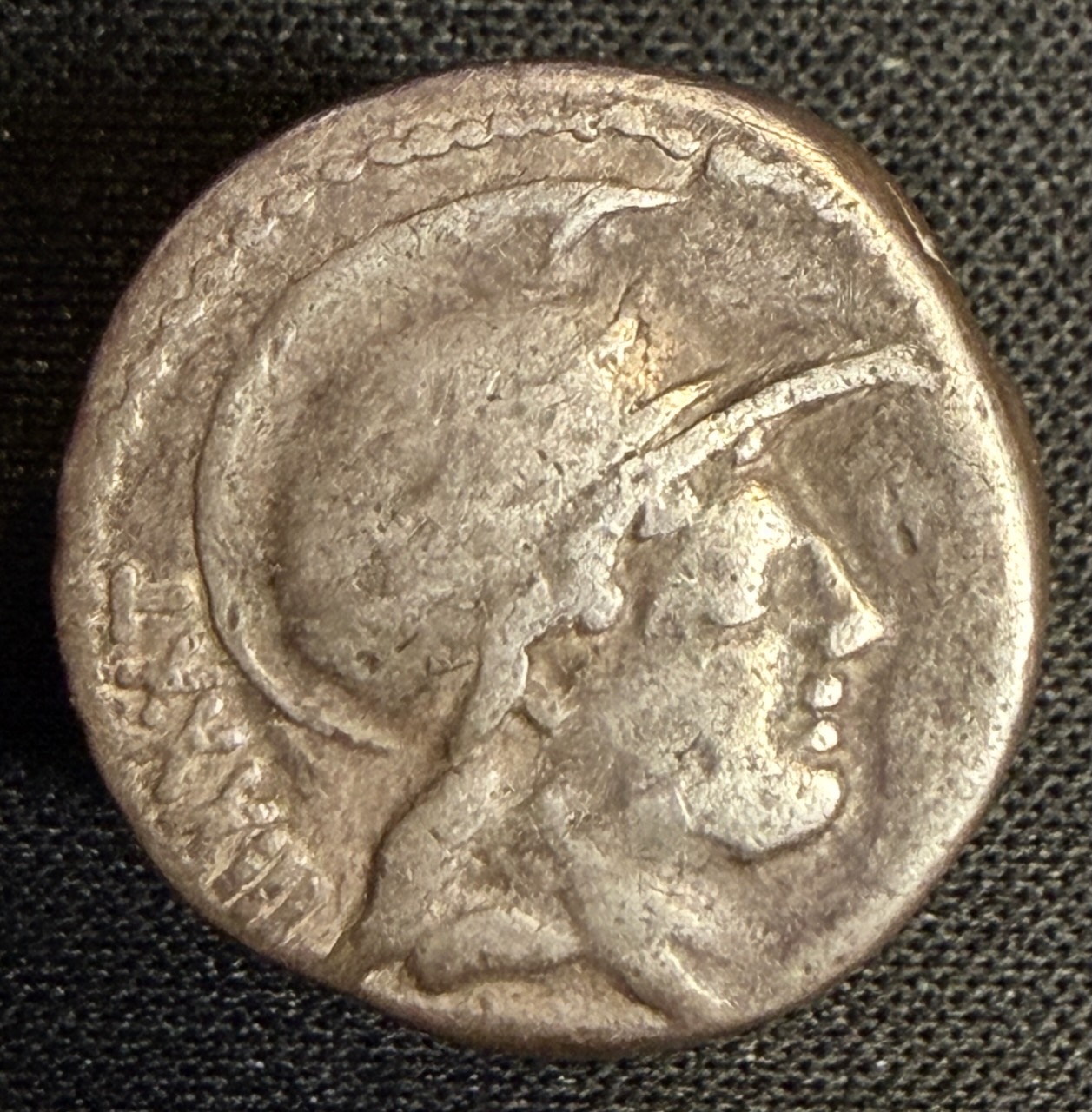
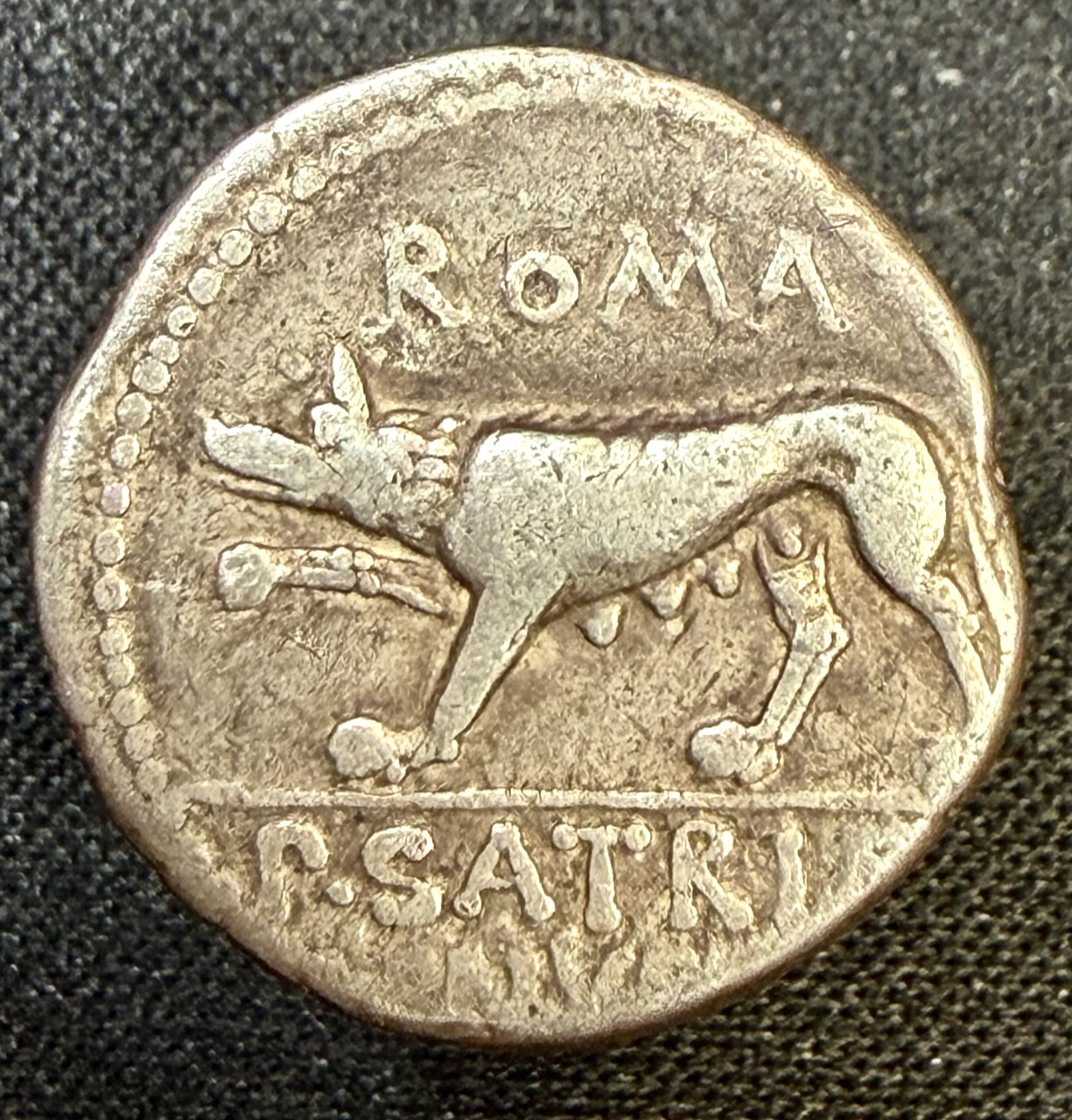
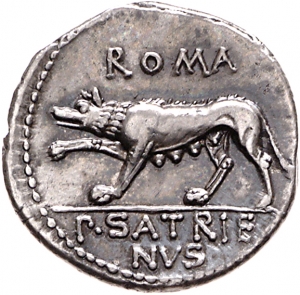
Current: Roman Republic, P. Satrienus, AR denarius, Rome, 77 BC. Helmeted head of Roma right, control numeral behind / she-wolf left, ROMA above (Crawford 388/1b)
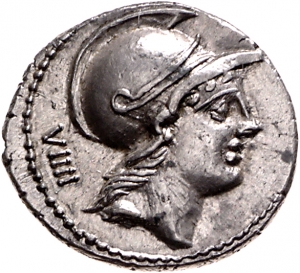
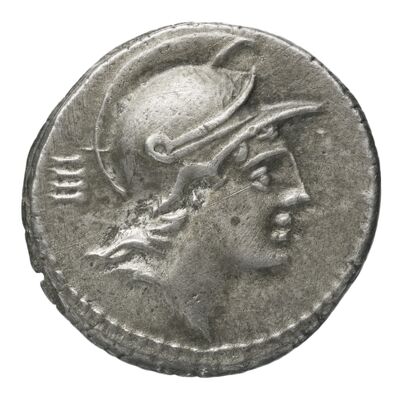
Obverse: Helmeted head of Roma right; control numeral behind (LXXXIII on this specimen's die)
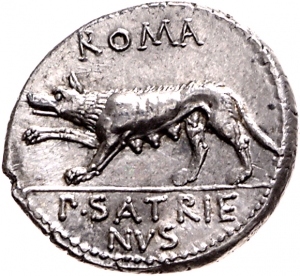
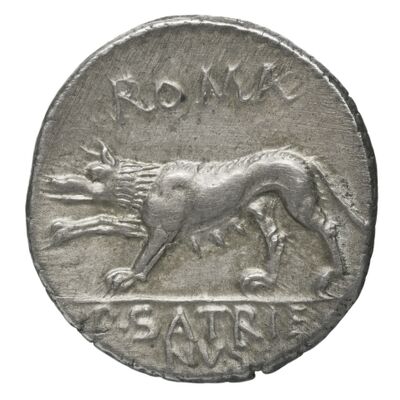
Reverse: She-wolf standing left, right forepaw raised; ROMA above, moneyer's name in exergue
Primary reference: Crawford 388/1b
279 specimens in public collections (BnF 130, British Museum 53, ANS 23, Nationalmuseet Danmark 22, Fitzwilliam 11); 883 sale records in the Schaefer RRDP archive; weights 0.65–388 g, median 3.84 g across 918 recorded; die axis most often 6h; recorded in hoards CHRR ADM, CHRR AVE, CHRR BDF, CHRR BRA, CHRR CDA, CHRR CDR, CHRR CET, CHRR COR and 38 more.
This collection's specimen, at 3.78 g (tag), is heavier than 31% of the recorded weights.
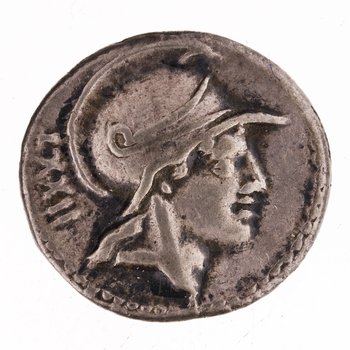
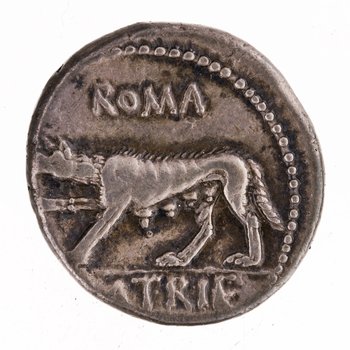
American Numismatic Society, 1908.89.24. CC BY-NC 4.0. https://numismatics.org/collection/1908.89.24
Münzkabinett, Staatliche Museen zu Berlin, 18201822. CC BY-NC-SA 4.0. https://ikmk.smb.museum/object?id=18201822
Bibliothèque nationale de France (Gallica), REP-18112. non-commercial reuse permitted. https://gallica.bnf.fr/ark:/12148/btv1b104406008
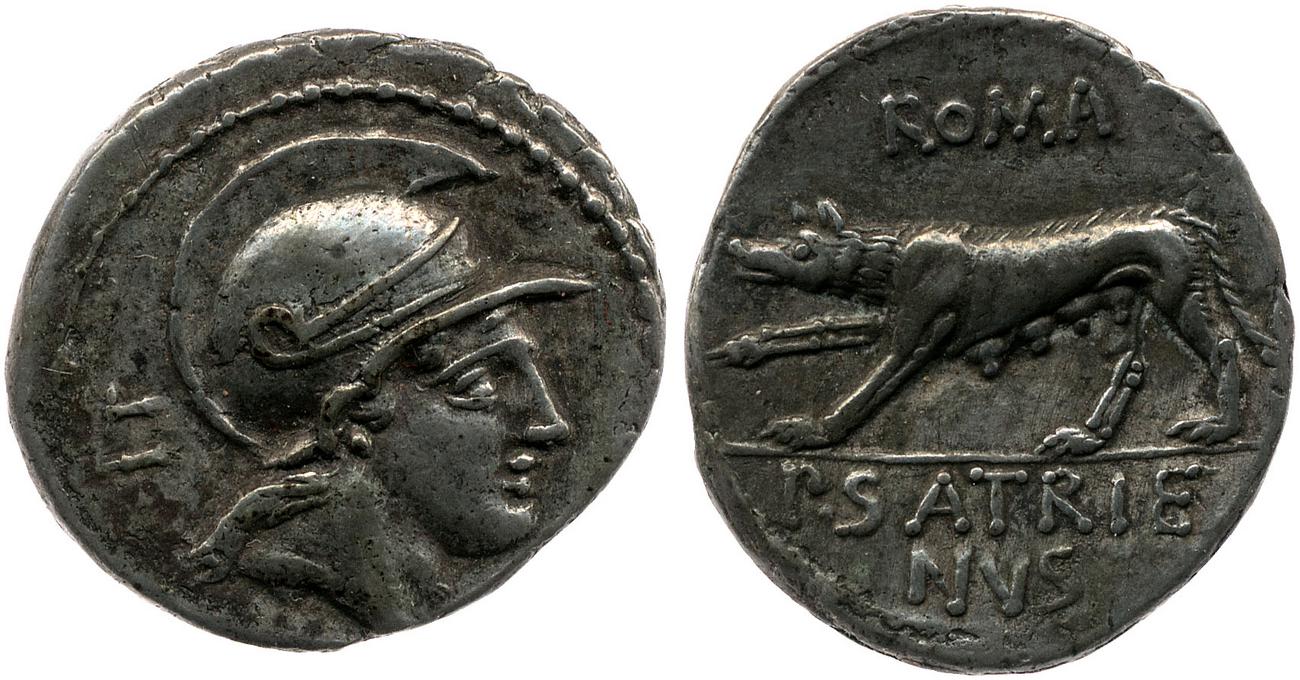
© The Trustees of the British Museum, 1841,0916.13. CC BY-NC-SA 4.0. https://www.britishmuseum.org/collection/object/C_1841-0916-13
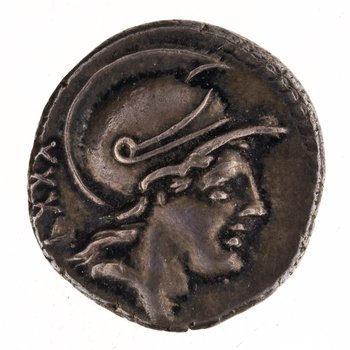
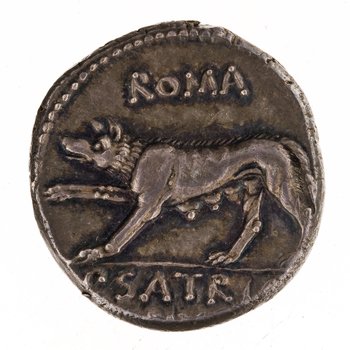
American Numismatic Society, 1937.158.132. CC BY-NC 4.0. https://numismatics.org/collection/1937.158.132
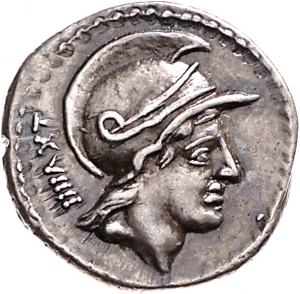
Münzkabinett, Staatliche Museen zu Berlin, 18201823. CC BY-NC-SA 4.0. https://ikmk.smb.museum/object?id=18201823
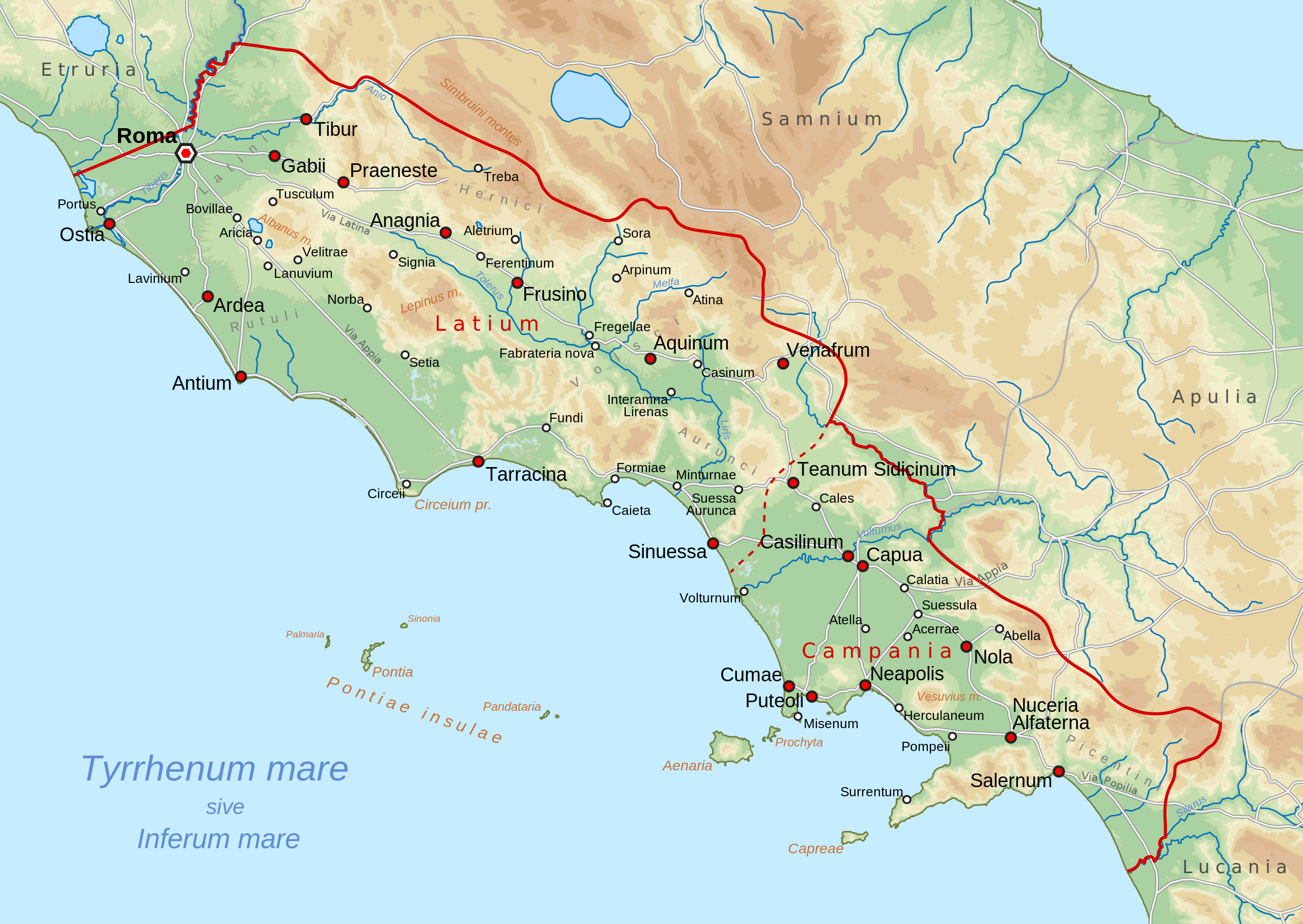
Regio I, Latium et Campania — the heartland of Roman Italy as organized under Augustus, some fifty years after this coin. Roma sits at the upper left, marked by the map’s hexagonal capital symbol and bold label. The Republican mint stood on the Capitoline beside the temple of Juno Moneta.
“Map of Augustan Regio I Latium et Campania” by Tomisti (Wikimedia Commons), File:Regio I Latium et Campania map.svg, licensed CC BY-SA 4.0; cities and roads based on the Digital Atlas of the Roman Empire (DARE) and Pleiades; topographic base © OpenMapTiles, © OpenStreetMap contributors. Rasterized from SVG to PNG; otherwise reproduced unmodified (Roma already carries the base map’s capital marker).
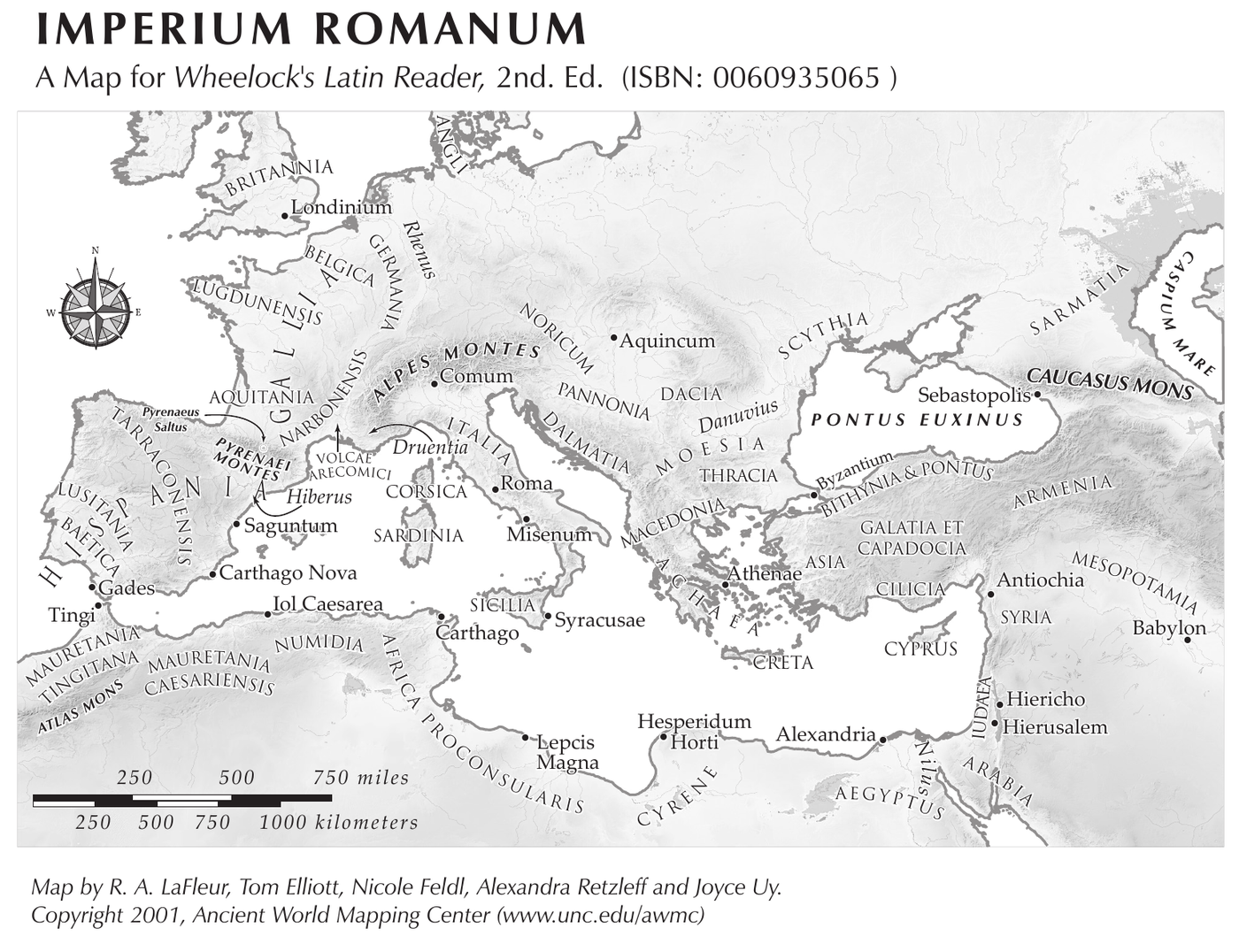
Roma sits at the center of Italia. Struck in 77 BC, while Pompey was in Tarraconensis fighting Sertorius, and Rome was paying for a civil war at the far end of the Mediterranean.
The moneyer of this denarius, Publius Satrienus, is a man history otherwise forgot: no consul, no praetor, no literary mention — only his coins survive, struck at Rome in 77 BC when he held the junior magistracy of the mint. His family, the gens Satriena, appears on no other Roman coinage. That obscurity is itself typical: the three annual mint magistrates were often young men at the start of careers that might, or might not, go anywhere, and the coinage was their one chance to say something in public.
Graphic: JSB Coins, 2026 (CC0).
What Satrienus chose to say was Rome itself, twice over. The obverse is the helmeted head of Roma — the tags and RSC read her so, though some catalogues see a young Mars, since the helmet is plainer than Roma’s usual winged type. Behind the head runs a control numeral (LXXXIII, 83, on this die); these numbers mark the individual obverse dies of the issue, a bookkeeping device of the mint in the 70s BC. The reverse gives the city’s other face: the she-wolf, prowling left with a forepaw raised, ROMA above her — but strikingly without Romulus and Remus beneath. The wolf alone, uncoupled from the nursing scene on Rome’s earliest didrachms and the Sextus Pompeius Fostlus denarius, has invited speculation (a Sullan-era statement about the city reborn? a family badge?) — none of it provable, and Crawford offers no explanation. The image stands on its own: lean, alert, and unmistakably Roman.
Every Roman who handled this denarius knew where to look for its image in the flesh — or the bronze. A she-wolf stood on the Capitoline hill itself; Cicero, speaking in 63 BC, could point to the gilded wolf of the Capitol that lightning had struck two years before as an omen the whole audience remembered. The famous bronze now in the Capitoline Museums — the Lupa Capitolina — carries that whole tradition, along with its own scholarly dispute: long taken for Etruscan work of about 500 BC, it has been argued on technical grounds (single-pour casting, radiocarbon dates from the core) to be a medieval casting, and the question remains open. What is certain is that the suckling twins beneath her are Renaissance additions of the fifteenth century. There is an odd echo in that: the most famous wolf in the world, like the wolf on Satrienus’ denarius, originally prowled alone.
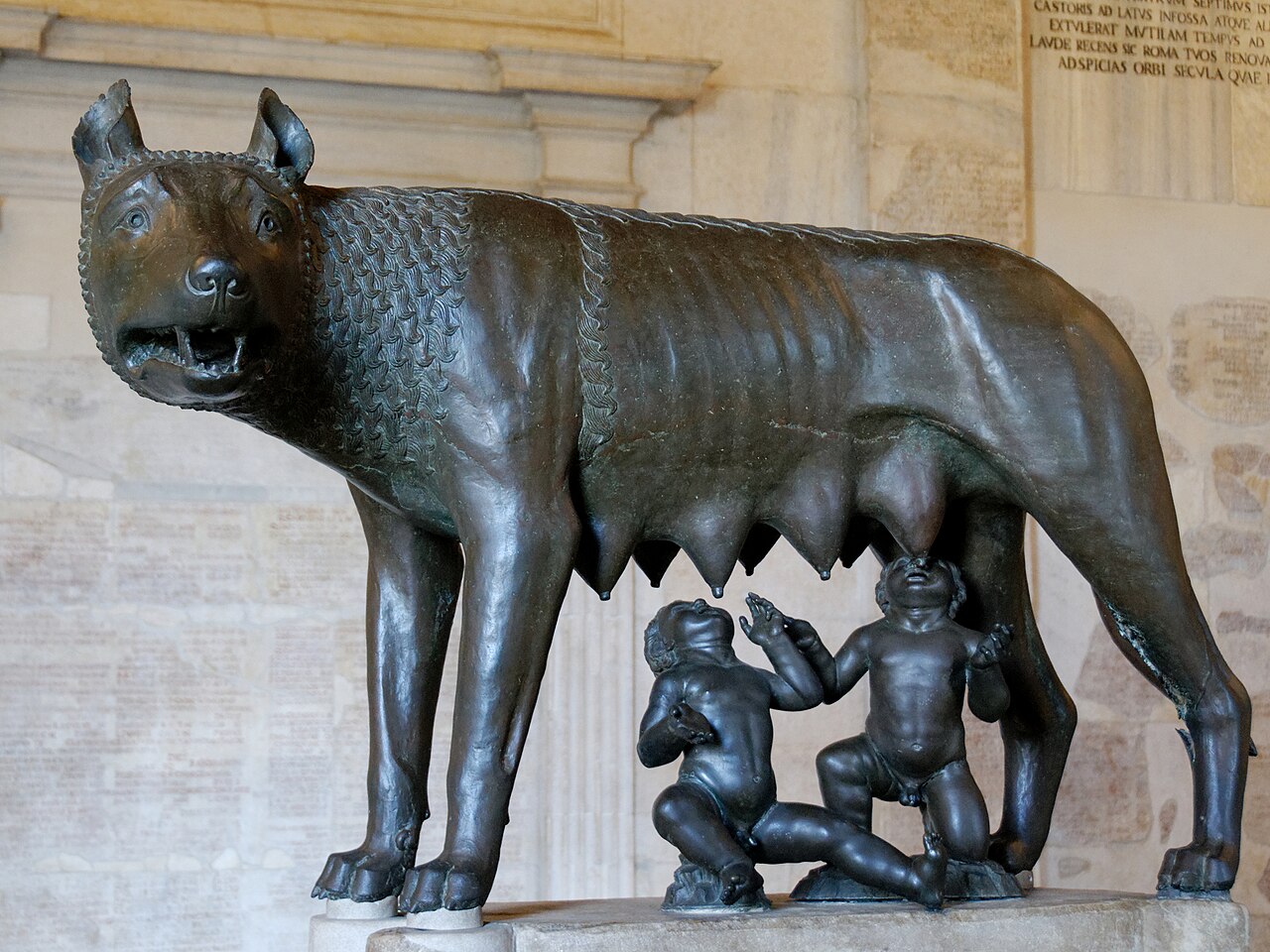
Photo: public domain (Wikimedia Commons); reproduced unmodified.
The coin belongs to the uneasy years just after Sulla. The dictator had died in 78 BC; within months the consul Lepidus raised a revolt that was crushed outside Rome in 77, and the survivors fled to join Sertorius’s rebel government in Spain, where Pompey was dispatched the same year. A denarius stamped with Roma and the wolf, struck in that season, reads naturally as an assertion of the restored Republic’s continuity — whatever the young moneyer privately meant by it. The habit of a moneyer reaching for an emblem that speaks for his family runs back through the series — see the denarius of Q. Fabius Labeo, whose rostrum alludes to an ancestor’s naval command.
Attribution: Michael H. Crawford, Roman Republican Coinage (1974), no. 388/1b, with Sydenham 781a and RSC Satriena 1 (all three cited on both dealer tags accompanying this specimen). On the control numerals and the issue’s arrangement, Crawford’s catalogue entry is the standard treatment. The Roma-or-Mars question is noted from the divergence between RSC/tag descriptions (“Roma”) and various trade catalogues (“Mars”); it remains a description, not an identification, and is presented here as open. Rome’s war with Sertorius in the year of issue: Plutarch, Sertorius (linked in the references). The lightning-struck wolf of the Capitol: Cicero, In Catilinam 3.19; the Capitoline Wolf is Musei Capitolini MC 1181, with the medieval-casting question and the Renaissance twins per the museum’s own cataloguing. This collection holds an earlier denarius with the fuller Roma-head formula, the L. Antestius Gragulus denarius of 136 BC, and a later Republican issue from the same mint, the Scaurus & Hypsaeus “camel” denarius of 58 BC.
The obverse carries control numerals that change from die to die (this specimen's die reads LXXXIII, per both dealer tags); the numerals index the obverse dies of the issue, in the manner Crawford describes for the control-marked issues of the 70s BC. The helmeted head is conventionally read as Roma (so both tags and RSC), though some trade catalogues describe it as a young Mars — the head lacks the usual winged helmet ornament, which is why the readings diverge; Crawford's text (RRC 388) is the anchor. The she-wolf, alone and without the twins, is an unusual reduction of Rome's foundation badge; explanations in the literature are conjectural and none is settled.
John's Ancient Coin Collection · Type · satrienus-wolf-denarius
Image credits for this coin — photographs, maps and graphics used on this page