Type · amisos-hera-owl-siglos
Current: Pontos, Amisos (as Peiraieos), AR siglos ('heavy siglos'), c. 435–370 BC. Head of Hera left in ornamented stephane / owl standing facing on shield, wings spread; magistrate letters in fields (SNG BM Black Sea 1053 ff.; HGC 7, 229)
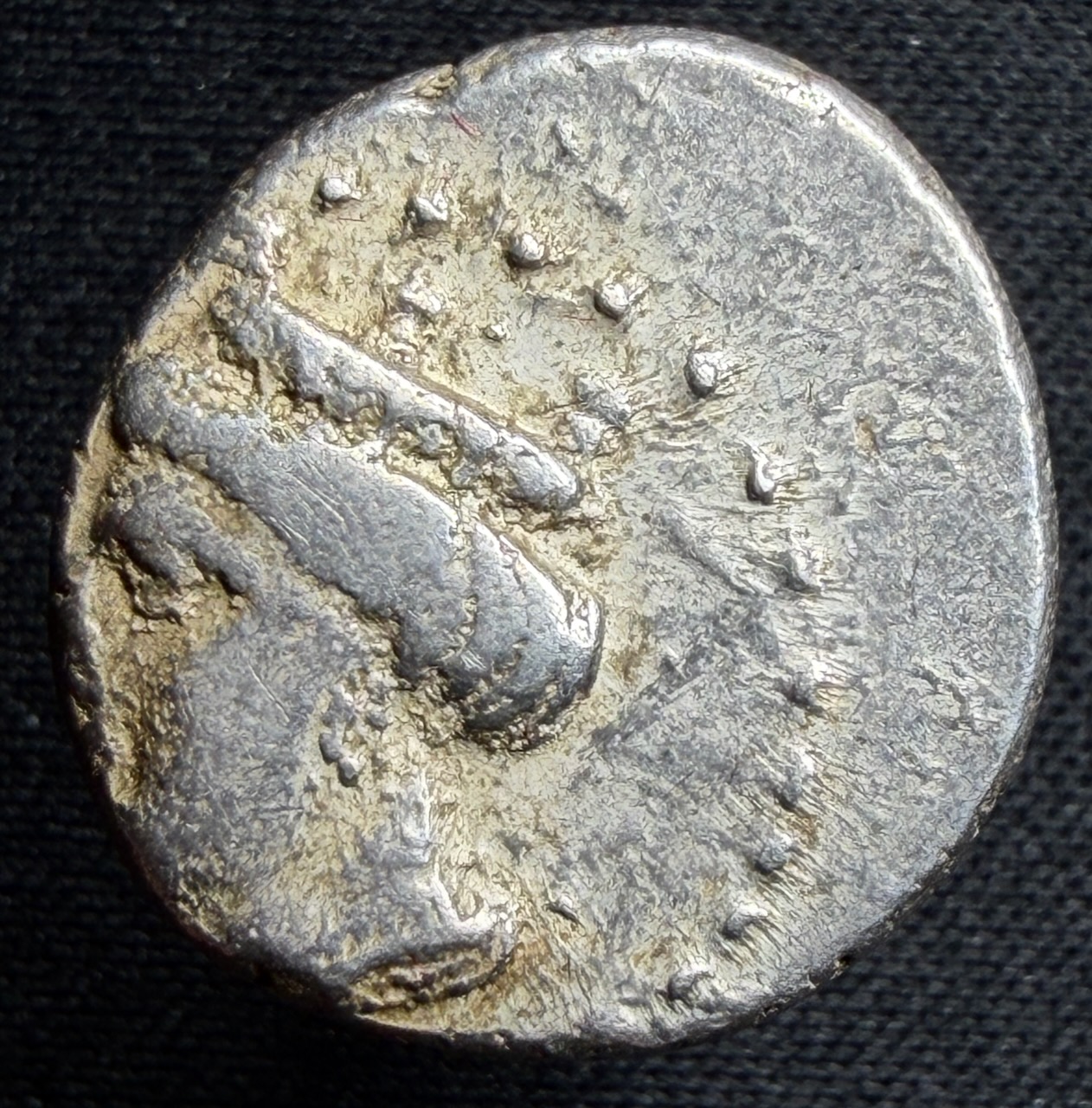
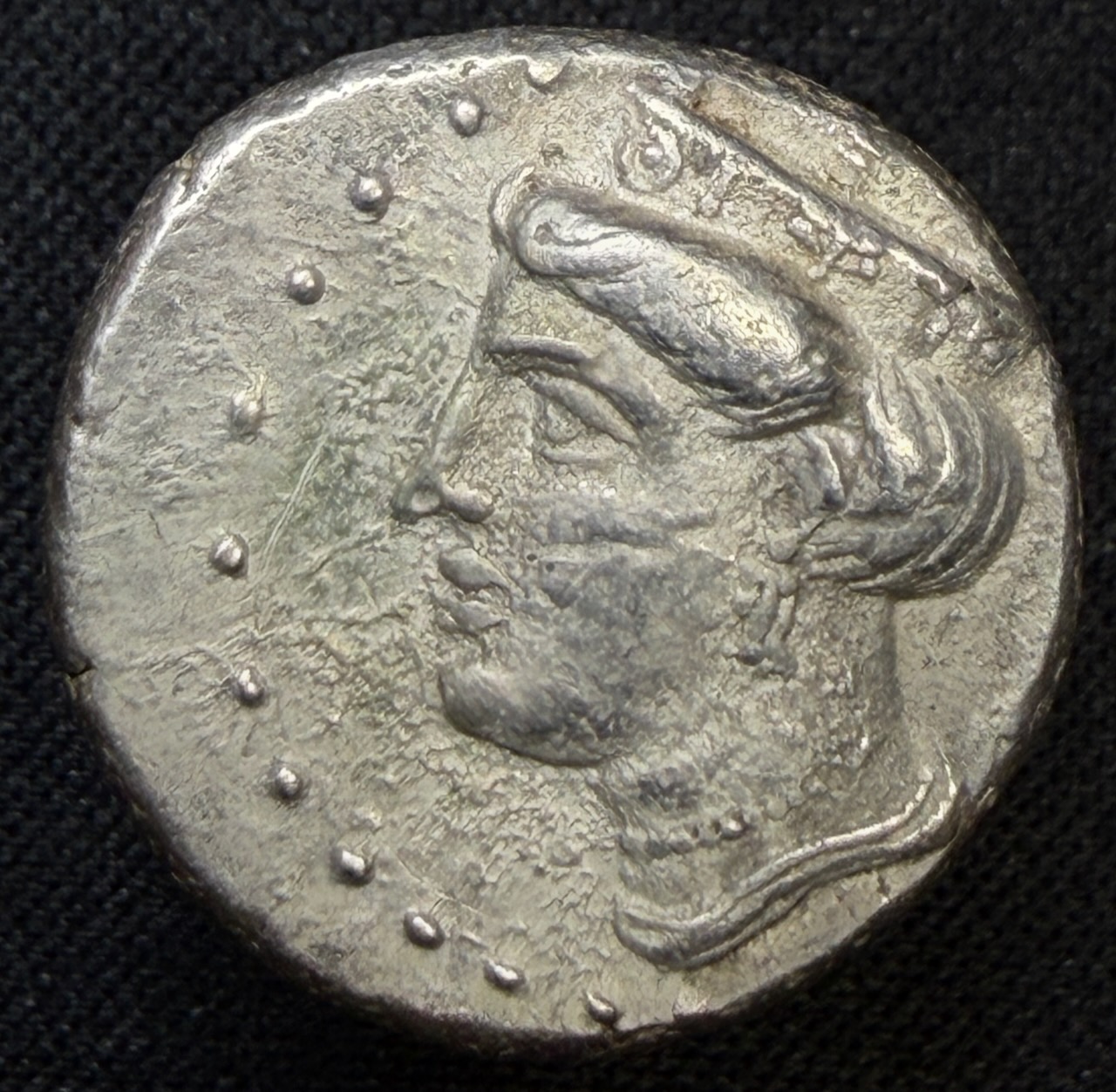
Obverse: Head of Hera left, wearing ornamented stephane; dotted border
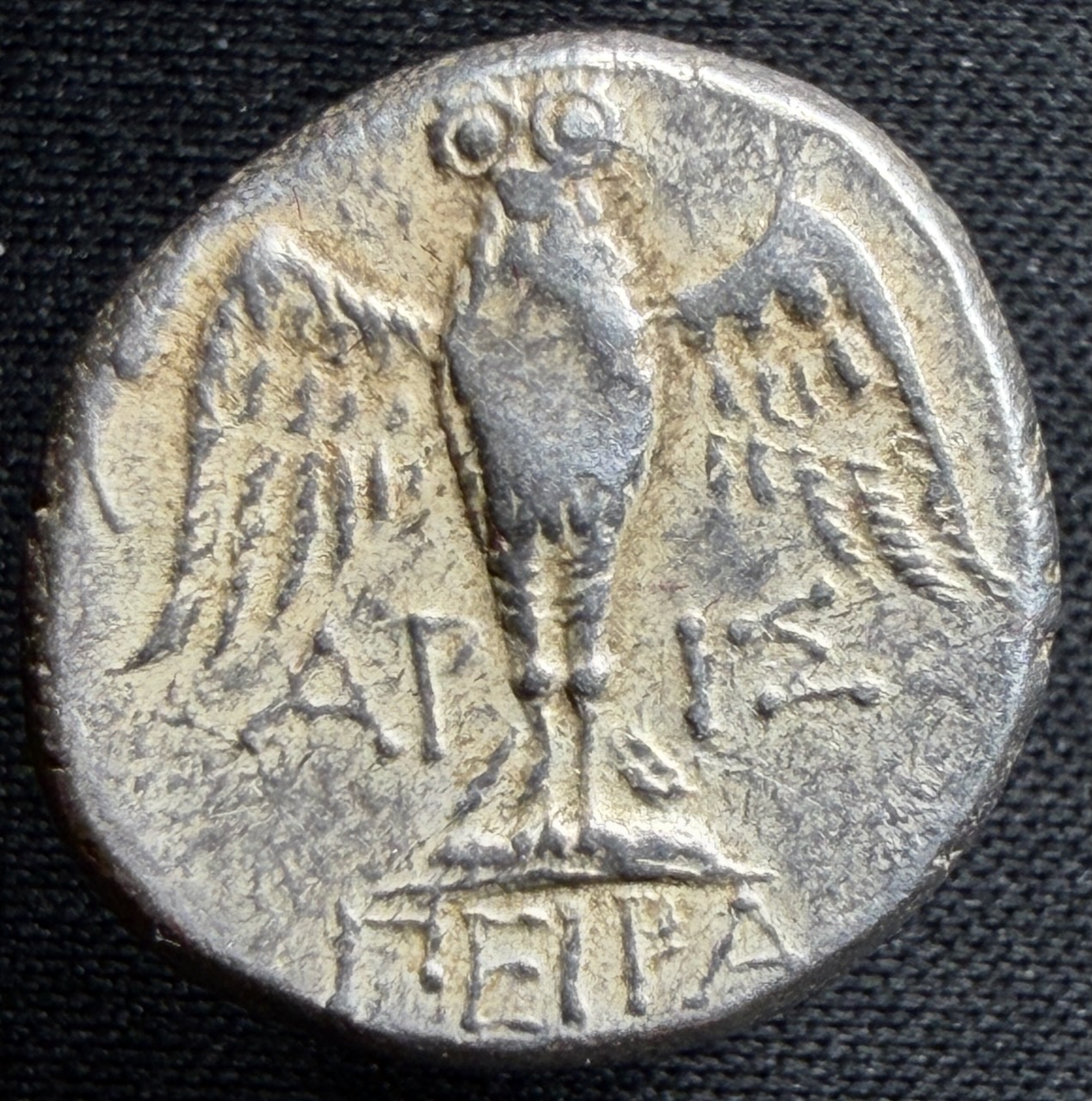
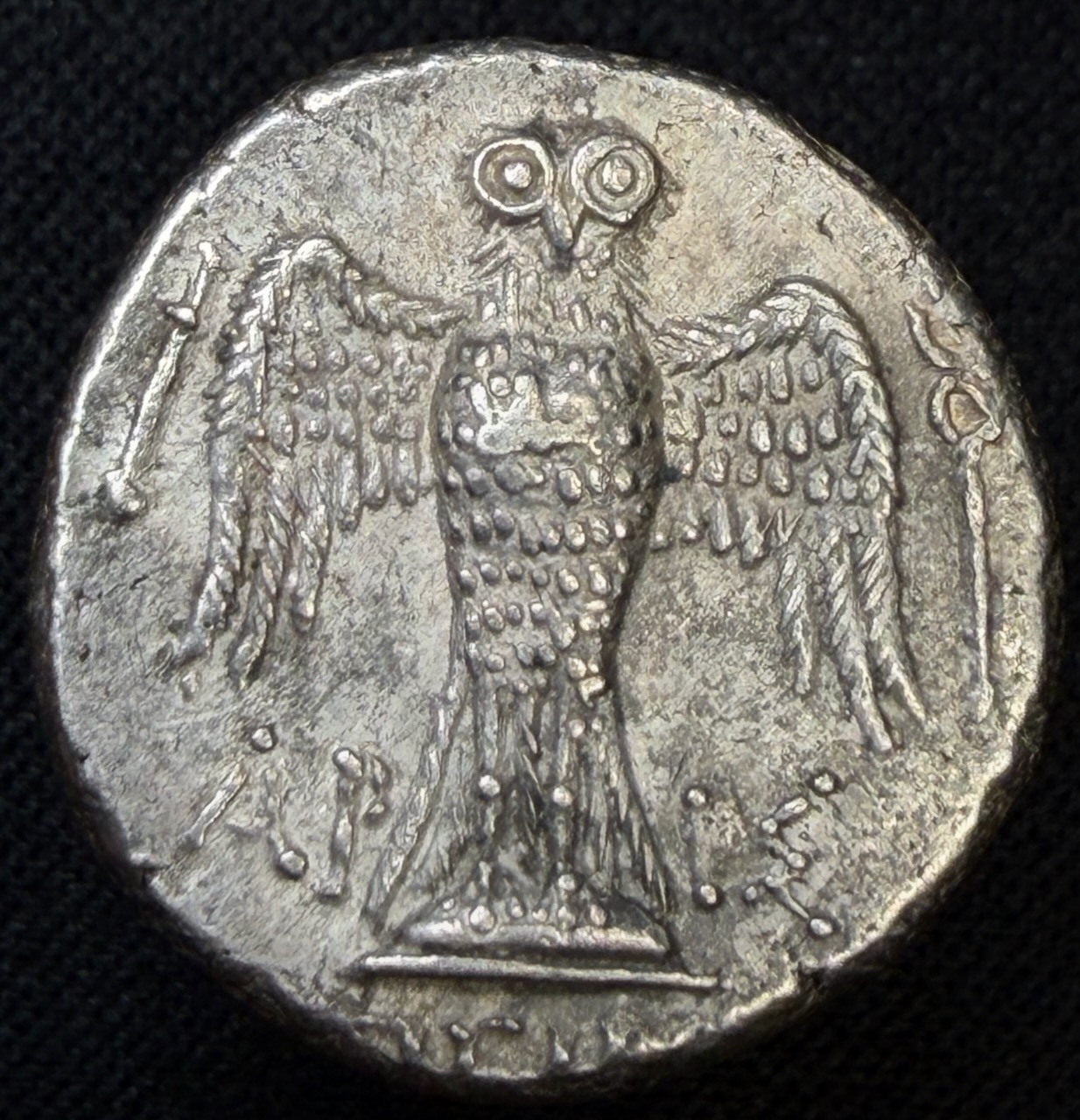
Reverse: Owl standing facing on shield, wings spread; magistrate letters in lower fields; letter traces below the base line on some dies
Primary reference: SNG BM Black Sea 1053
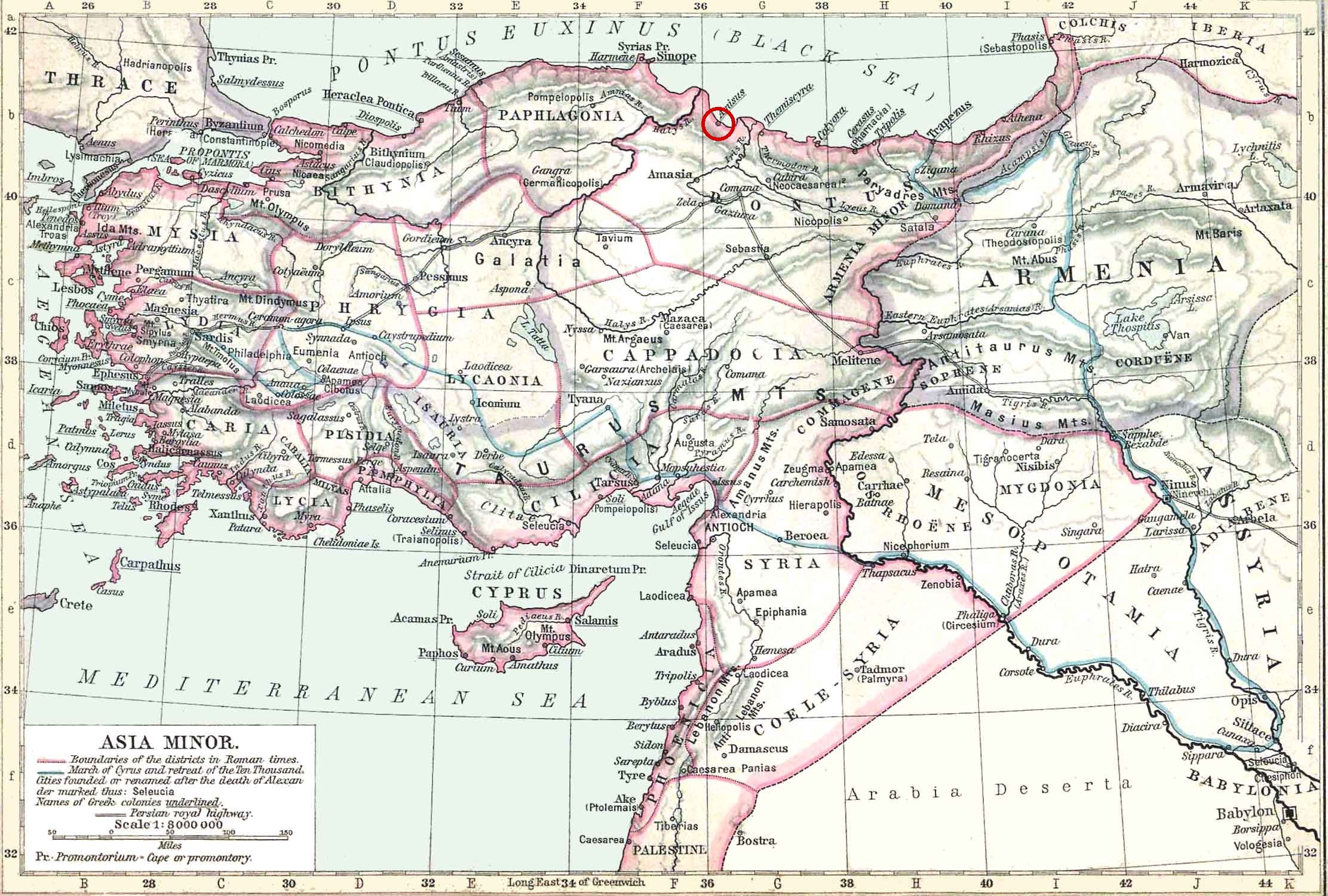
Asia Minor, with Amisos circled in red on the Black Sea coast of Pontos, east of the Halys mouth. The map (Shepherd’s plate of Asia Minor under the Greeks and Romans) shows the city’s world: a Greek harbor town on the sea road between Sinope and Trapezus, with Persian Anatolia at its back — which is why a Greek owl rides a Persian weight standard.
“Asia Minor under the Greeks and Romans” from William R. Shepherd, The Historical Atlas (1923), via Wikimedia Commons, File:Asia minor-Shepherd 1923.JPG (https://commons.wikimedia.org/wiki/File:Asia_minor-Shepherd_1923.JPG). Public domain (author died 1934); credited as a courtesy. Modified by JSB Coins: a red circle added to mark Amisos.
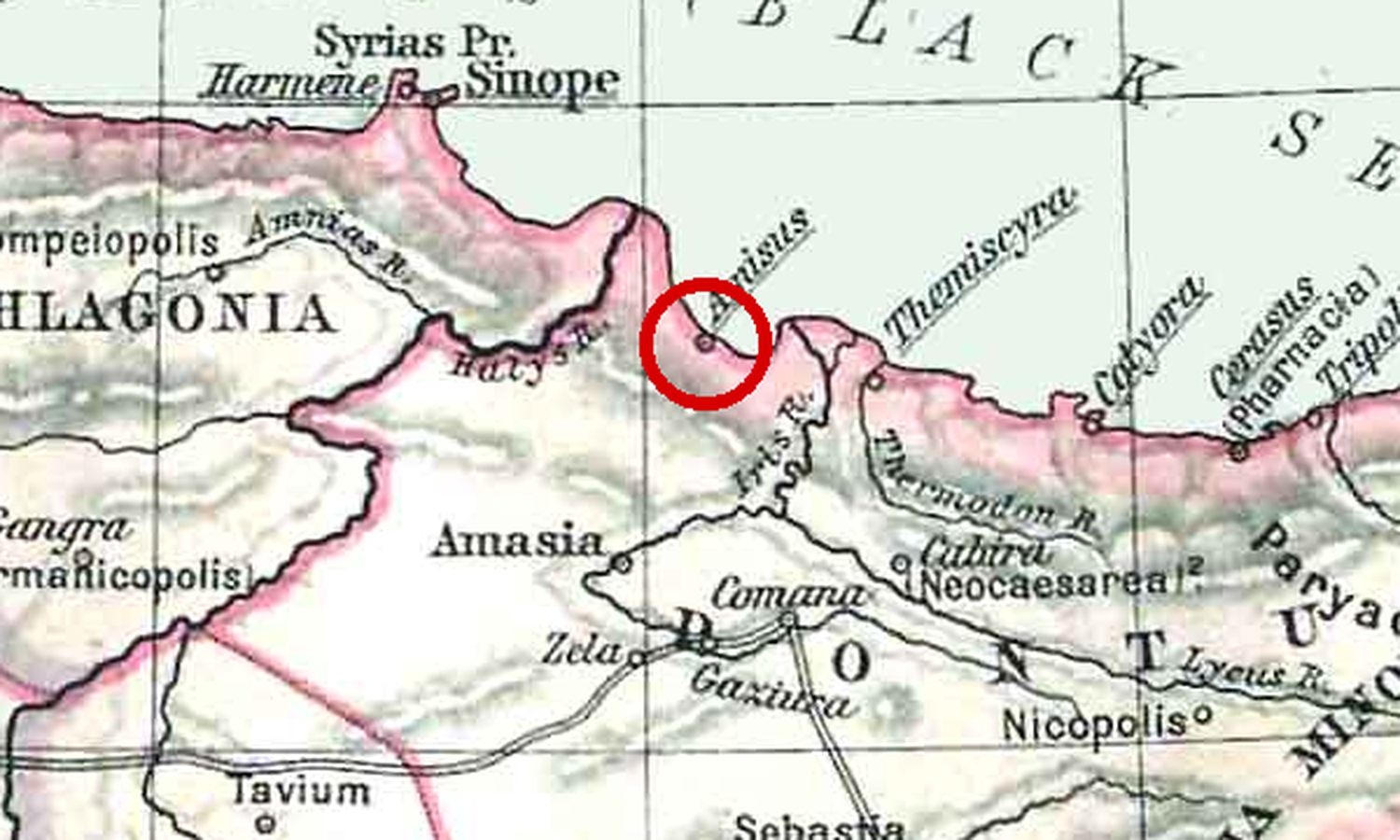
Detail: the Pontic coast, with Amisos circled between the Halys and Iris deltas — underlined on the plate as a Greek colony. Themiscyra, the legendary home of the Amazons, lies just along the shore; Amasia, later the first Pontic royal capital, sits inland up the river road.
Amisos is where two monetary worlds meet on one flan. A Milesian foundation of the sixth century BC on the south coast of the Black Sea, the city passed in the fifth century into the orbit of Athens — literary tradition (preserved in Strabo) records an Athenian refoundation that renamed the city Peiraieos, after Athens’s own port. The coinage wears that allegiance openly: an owl, wings spread wide, standing on a shield — the badge of Athena and the unmistakable trademark of the Athenian tetradrachm that dominated Aegean trade. But weigh the coin and Athens vanishes: at some 5.5–5.8 g it fits no Attic denomination. It is a siglos on the Persic standard — the weight system of the Achaemenid empire whose satrapies ringed the city’s hinterland and whose merchants set the terms of Anatolian trade. Byzantion, guarding the other end of the Black Sea run, made the same choice: Greek badge, Persian weight. A Greek city, an Athenian badge, a Persian weight: the whole geopolitics of the classical Black Sea in four grams and a half of silver.
Graphic: JSB Coins, 2026 (CC0).
Strabo, himself a Pontic Greek from Amaseia up the river road, preserves the city’s layered pedigree: founded first by Milesians — the great colonizers of the Black Sea, whose ships planted Sinope, Olbia, and dozens more — then held by a Cappadocian ruler, and “thirdly colonised by Athenocles and Athenians, and its name changed to Peiraeus” (Strabo 12.3.14). The Athenian phase belongs to the era of Pericles’ Black Sea expedition (c. 437/6 BC), when Athens showed the flag along these coasts, settled cleruchs, and drew the grain and salt-fish trade of the Pontos into its imperial economy. Amisos was the empire’s farthest northeastern outpost of any consequence — a town that could call itself “the Piraeus” with a straight face because, for a generation or two, it functioned as one: the transshipment harbor where the produce of the Anatolian interior met the Aegean shipping lanes. The owl coinage is the numismatic residue of that alignment, and it outlasted the political fact: Athens’s empire collapsed in 404 BC, but the owl-and-shield silver, with its annually changing magistrate letters, ran on well into the fourth century — brand recognition, not politics, by the end.
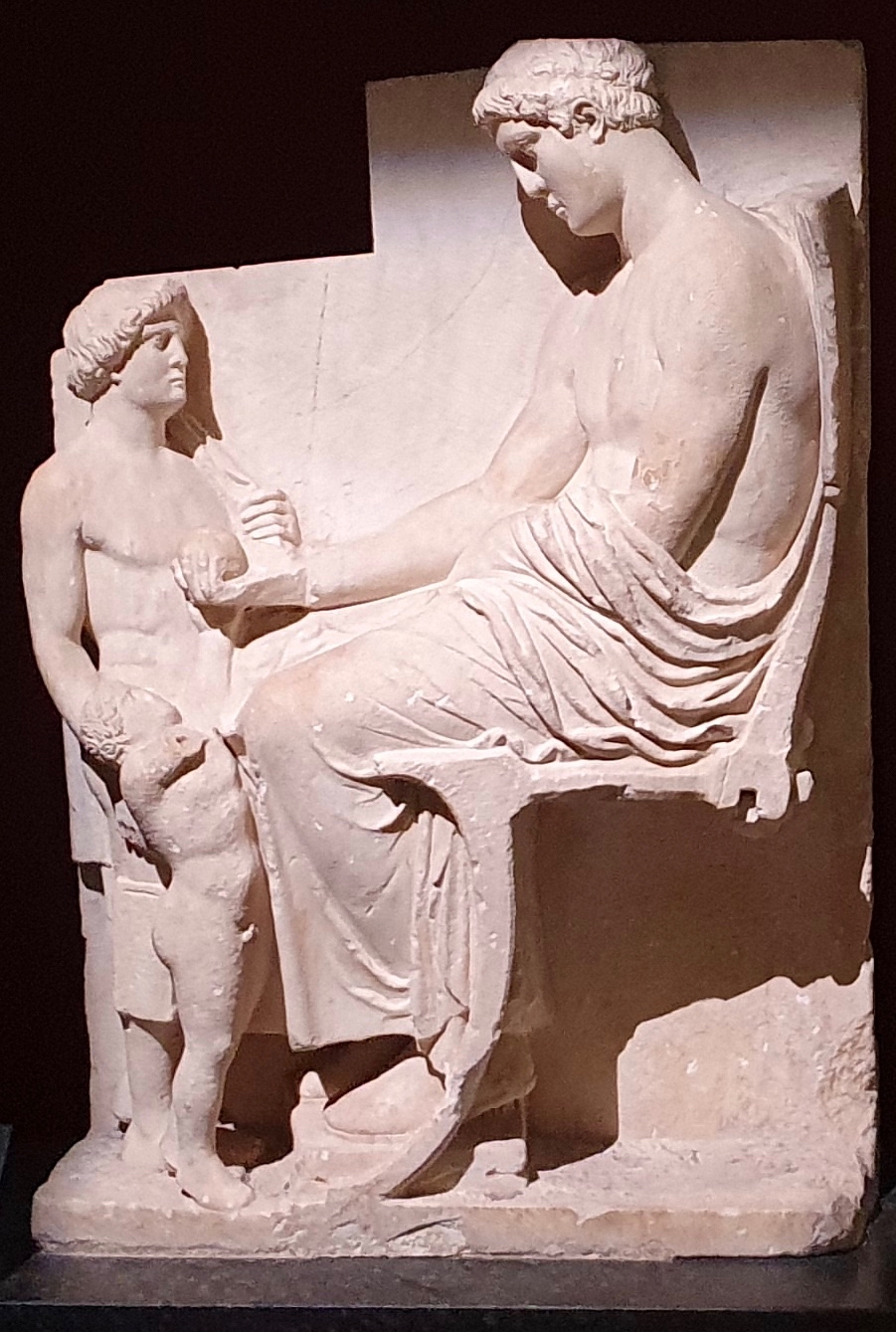
Photo: Yair Haklai, Wikimedia Commons, licensed CC BY-SA 4.0, reproduced unmodified.
The catalogues read the obverse head, with her ornamented stephane, as Hera; older dealers’ tags — including both tags on this collection’s specimen — call her Tyche, seeing a mural crown. The identification has never been fully settled in the trade, though Hera is the standard modern reading (SNG BM, HGC). The reverse owl stands on a hoplite shield, and pairs of magistrate letters flank its legs, changing continually across the long issue — the mark of an annual civic magistracy signing responsibility for the silver. Some dies add the ethnic ΠΕΙΡΑ below, the only coins Greeks ever struck under the name of “the Piraeus” outside Attica.
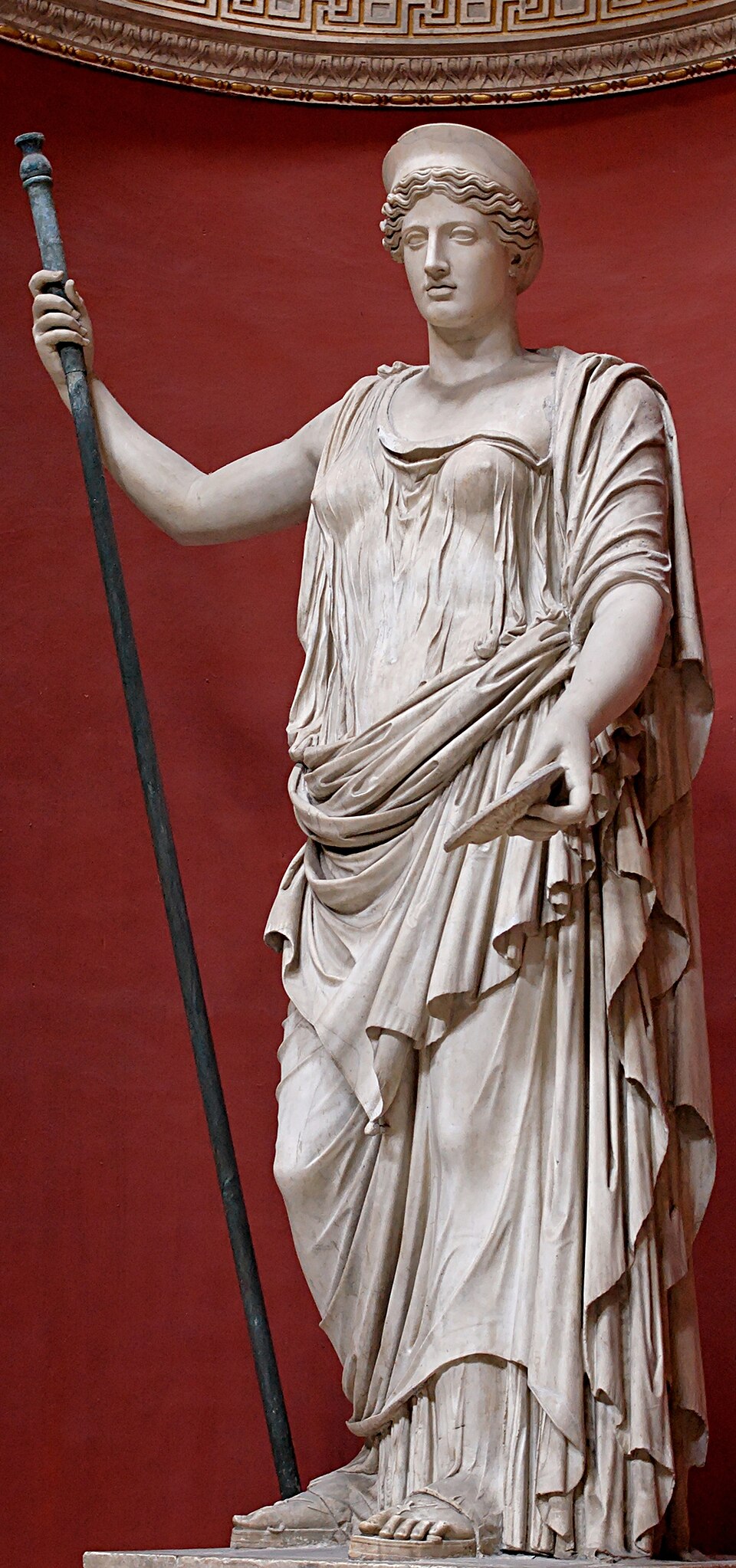
Photo: Jastrow, Wikimedia Commons, public domain; reproduced unmodified.
The Athenian connection faded with Athens’s empire; the city recovered its old name and passed through Persian and Hellenistic hands into the rising kingdom of Pontos, whose Mithradatid kings made it one of their treasured possessions — Mithradates VI Eupator kept a palace there, and during his wars with Rome the workshops of Amisos poured out royal bronze in enormous volume. That loyalty cost the city everything: Lucullus besieged it in 73–71 BC, and when the king’s commander fired the town to cover his escape, the Roman general — Plutarch says — wept that fate had made him not the city’s benefactor but its destroyer, comparing his luck unfavorably with Sulla’s rescue of Athens (Plutarch, Lucullus 19). Lucullus rebuilt what he had burned, resettled the survivors, and enlarged the territory; Rome later confirmed Amisos as a free city, and it thrived into late antiquity — modern Samsun sits on top of it still. But the owl siglos remained its classical signature: the coin of the era when a Black Sea harbor town could plausibly call itself the Piraeus of the north.
The reference sequence is SNG BM Black Sea 1053 ff. and HGC 7, 229; the magistrate-letter system across the issue has never had a full modern die study, which makes the series a genuinely open field — this specimen’s Α-Ρ / Ι-Σ-Τ(?) reading is one small data point in it. For the city: Strabo 12.3.14 (linked above) is the foundation text; Plutarch’s Lucullus (linked) carries the Roman end of the story; on the Athenian Black Sea policy behind the Peiraieos phase, Plutarch’s Pericles 20 is the standard notice. The specimen’s own tags — with their Tyche reading and the standing printed-ticket question — are discussed on the specimen page.
Attribution: SNG IX, The British Museum, Part 1: The Black Sea (1993), nos. 1053 ff. — SNG BM 1053 is the reference on both of this specimen’s tags — and Oliver D. Hoover, Handbook of Coins of Northern and Central Anatolia (HGC 7), no. 229, dating the series c. 435–370 BC. The Peiraieos refoundation: Strabo 12.3.14 (with Theopompos as his source); Pericles’ Pontic expedition: Plutarch, Pericles 20. The siege, burning, and rebuilding: Plutarch, Lucullus 19, 23; Appian, Mithridatic Wars 78, 83. The Hera vs. Tyche readings are noted from the divergence between the modern catalogues and the accompanying dealer tags.
Struck on the Persic ('heavy siglos') standard of c. 5.5–5.8 g — twice the Achaemenid siglos was never the point; the drachm-sized coin simply follows the Persian weight system that ruled Anatolian trade, while everything else about the coin is Greek. The obverse head is called Hera in the modern catalogues (SNG BM, HGC) from the ornamented stephane; older tags and lists often call her Tyche — both this specimen's tags do — and with a mural reading of the crown the identification genuinely wavers in the trade, though Hera is the standard reading. Magistrate letters change constantly across the issue (this specimen's dies read Α-Ρ / Ι-Σ-Τ(?)); the ethnic ΠΕΙΡΑ appears in the exergue on some dies, recording the city's period under the name Peiraieos.
John's Ancient Coin Collection · Type · amisos-hera-owl-siglos
Image credits for this coin — photographs, maps and graphics used on this page

.jpg)
