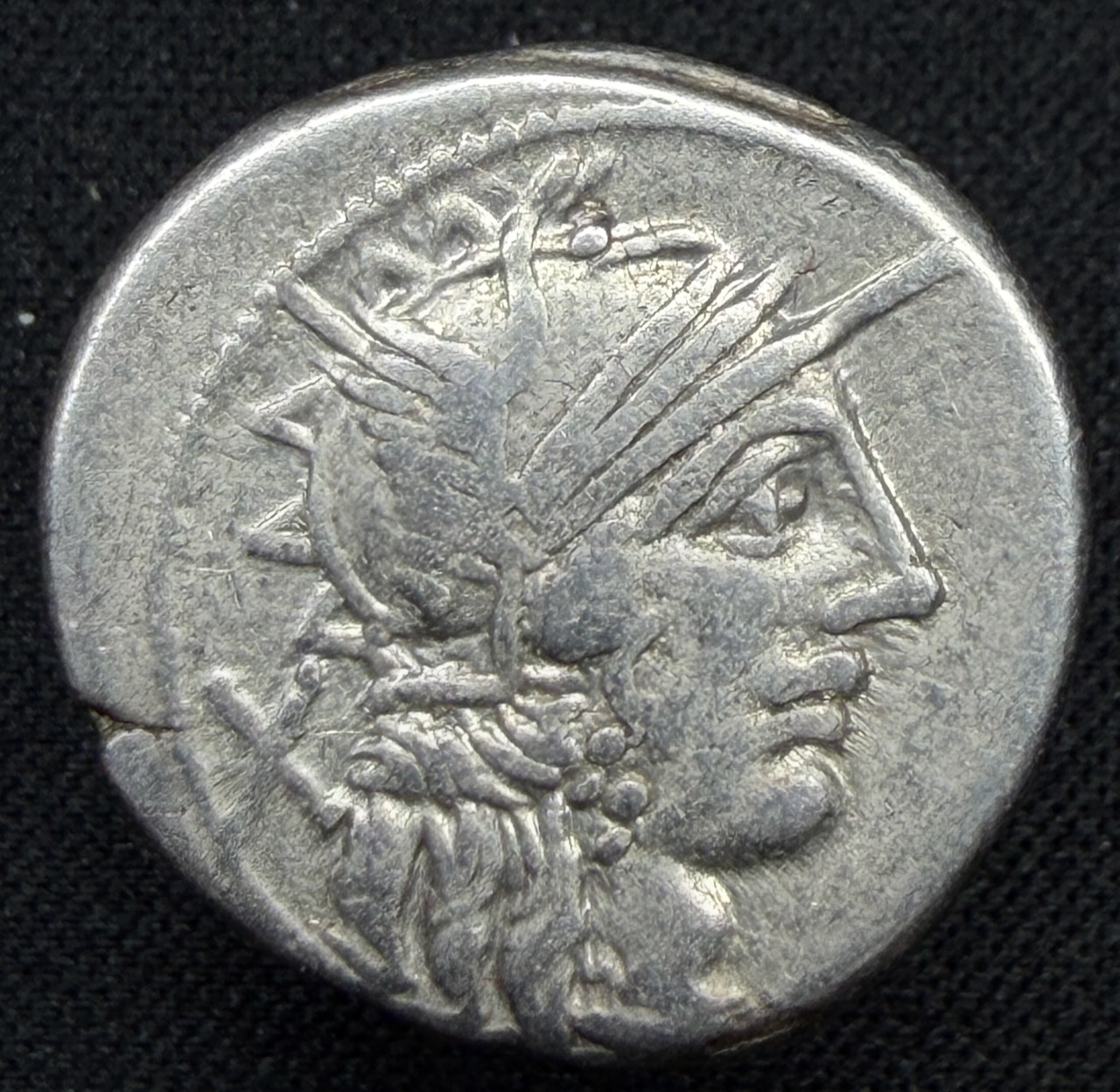
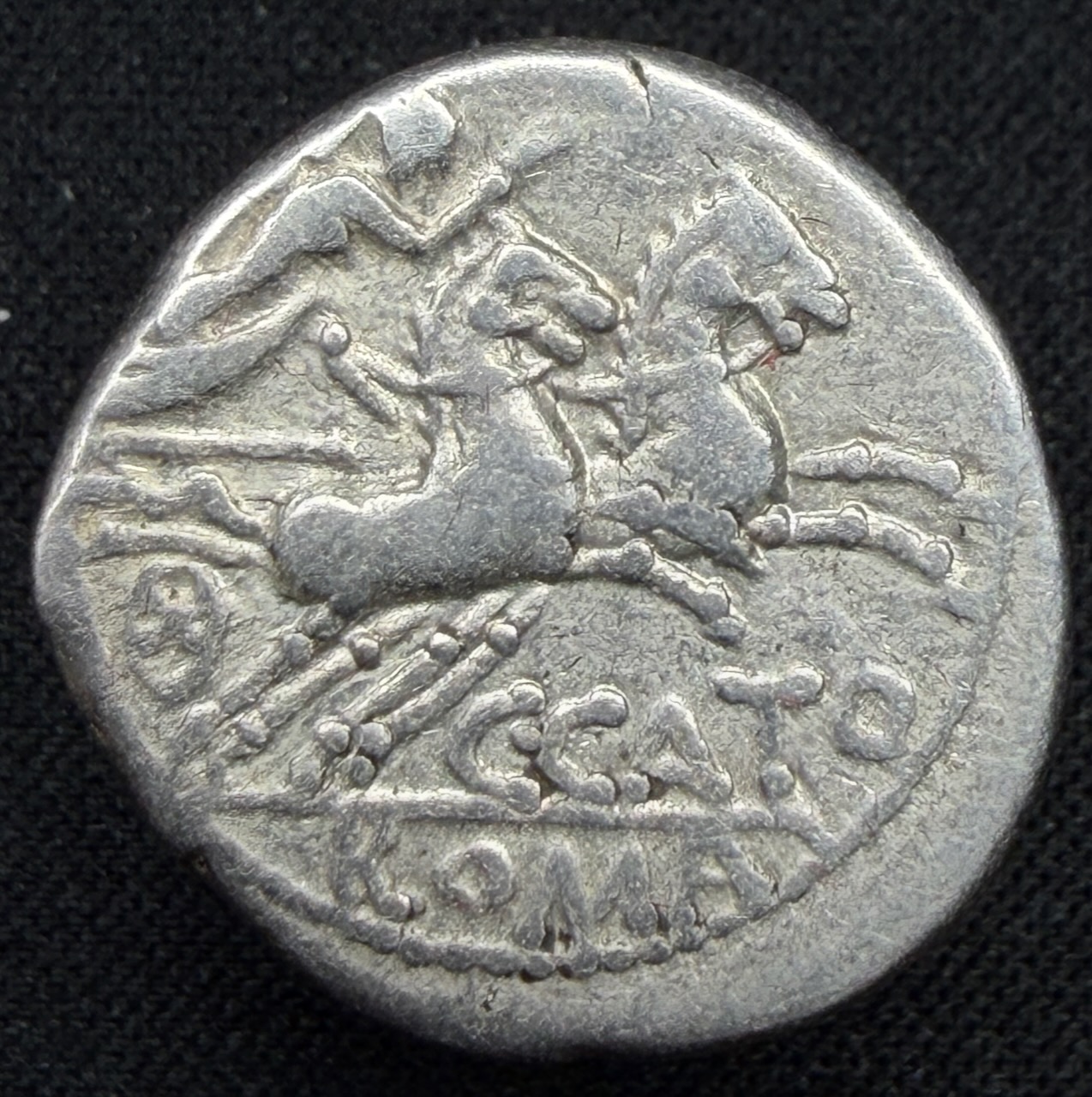
Type · porcius-cato-victory-biga-denarius
Current: Roman Republic, C. Porcius Cato (moneyer), AR denarius, Rome, 123 BC (Crawford 274/1)
Obverse: Helmeted head of Roma right; denomination mark X behind
Reverse: Victory in biga right, holding reins and goad; C·CATO below horses, ROMA in exergue
Primary reference: Crawford 274/1
74 specimens in public collections (British Museum 16, BnF 13, ANS 9, Fitzwilliam 4, Göttingen 4); weights 2.34–3.99 g, median 3.85 g across 72 recorded; die axis most often 11h; recorded in hoards CHRR ADM, CHRR ADR, CHRR AGN, CHRR ALI, CHRR ALM, CHRR ALV, CHRR AMA, CHRR AMN and 171 more.
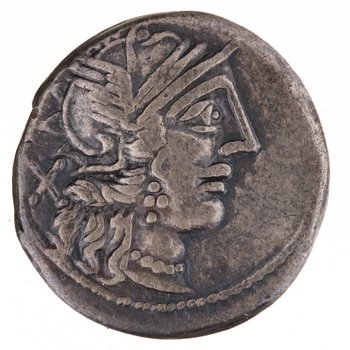
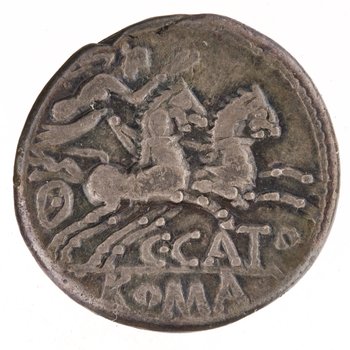
American Numismatic Society, 1906.236.672. CC BY-NC 4.0. https://numismatics.org/collection/1906.236.672
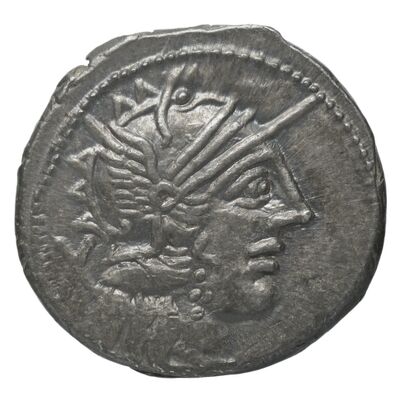
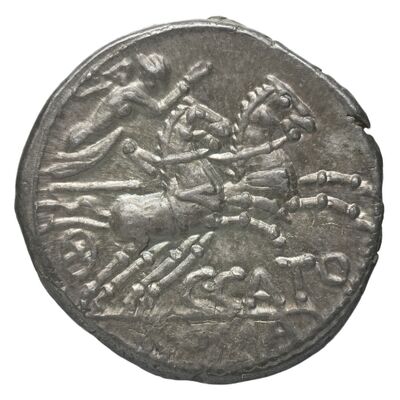
Bibliothèque nationale de France (Gallica), REP-17279. non-commercial reuse permitted. https://gallica.bnf.fr/ark:/12148/btv1b104397672
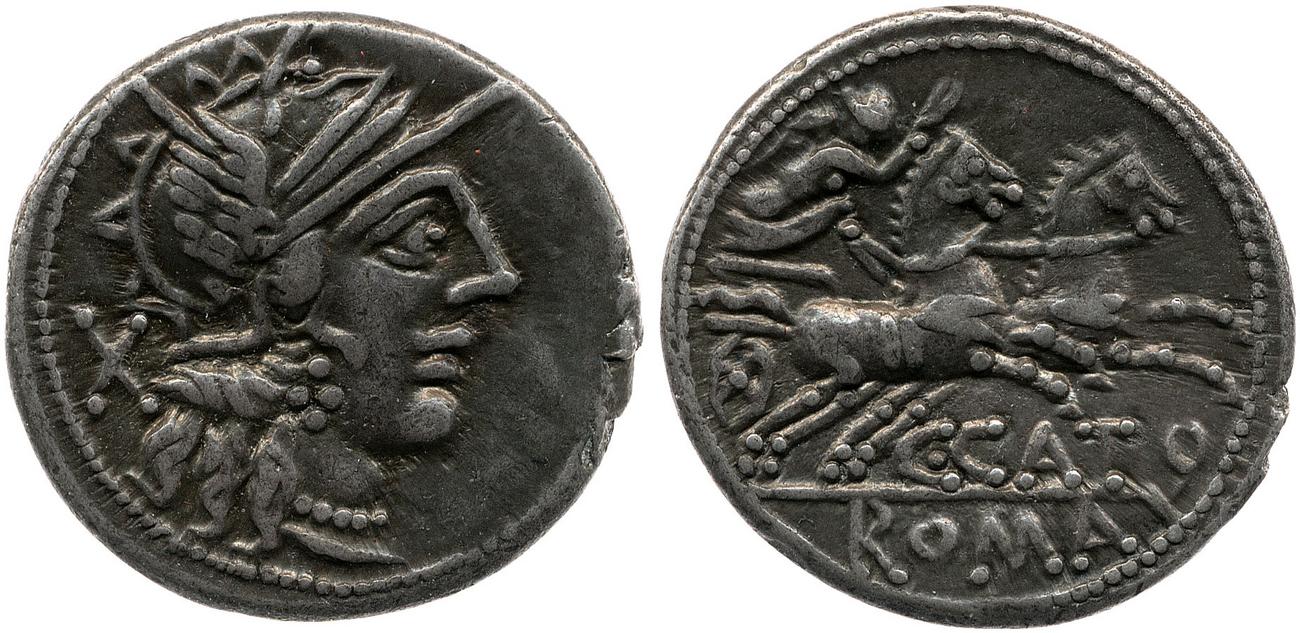
© The Trustees of the British Museum, 1902,0503.4. CC BY-NC-SA 4.0. https://www.britishmuseum.org/collection/object/C_1902-0503-4
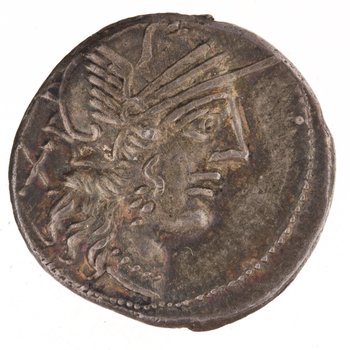
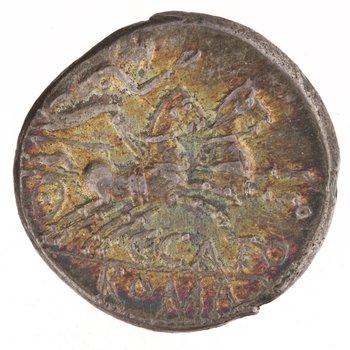
American Numismatic Society, 1937.158.619. CC BY-NC 4.0. https://numismatics.org/collection/1937.158.619
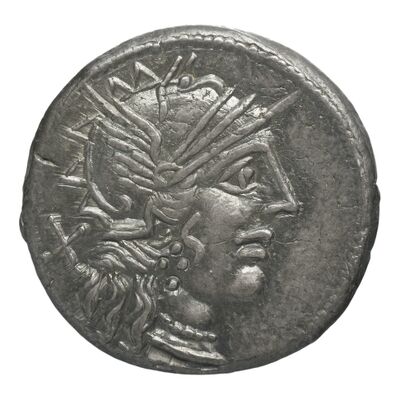
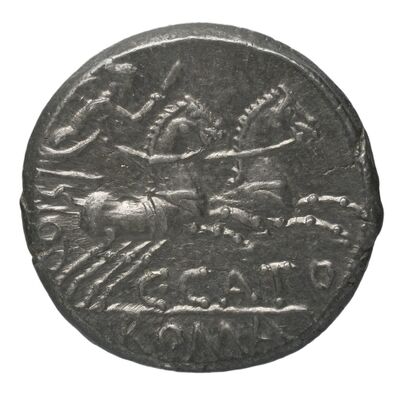
Bibliothèque nationale de France (Gallica), REP-17280. non-commercial reuse permitted. https://gallica.bnf.fr/ark:/12148/btv1b10439768h
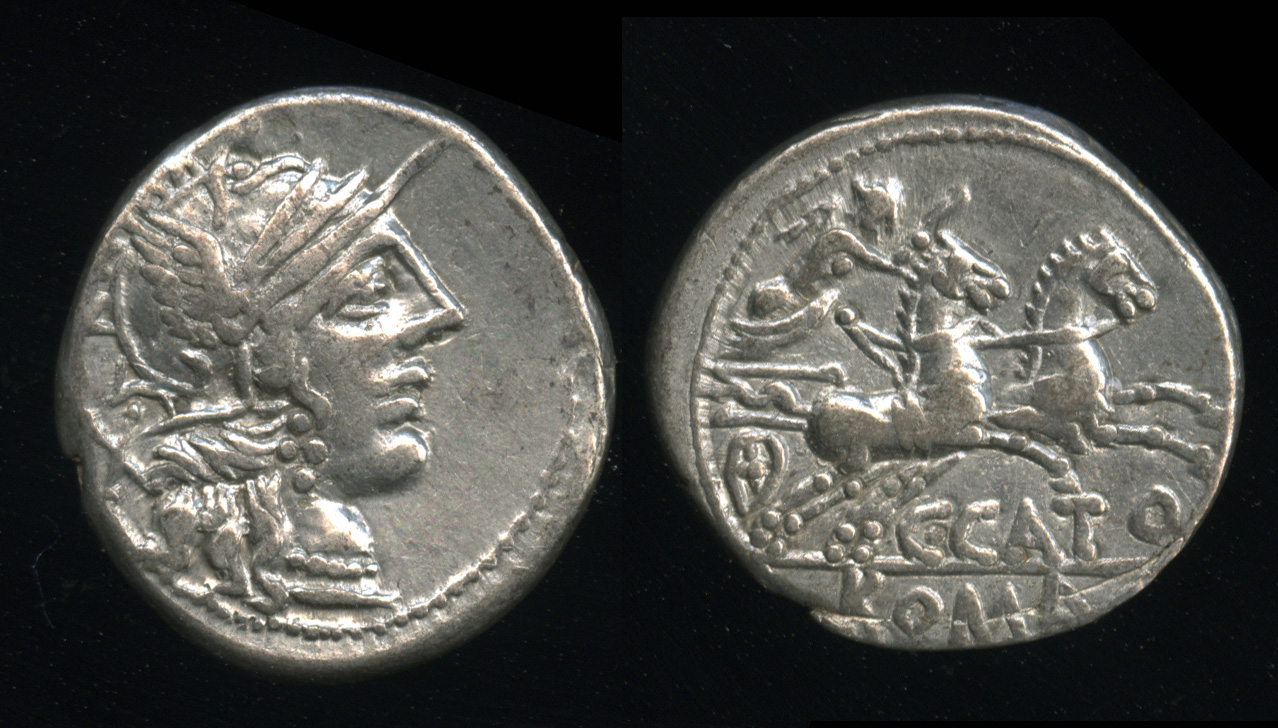
© The Trustees of the British Museum, 1932,0706.23.104. CC BY-NC-SA 4.0. https://www.britishmuseum.org/collection/object/C_1932-0706-23-104
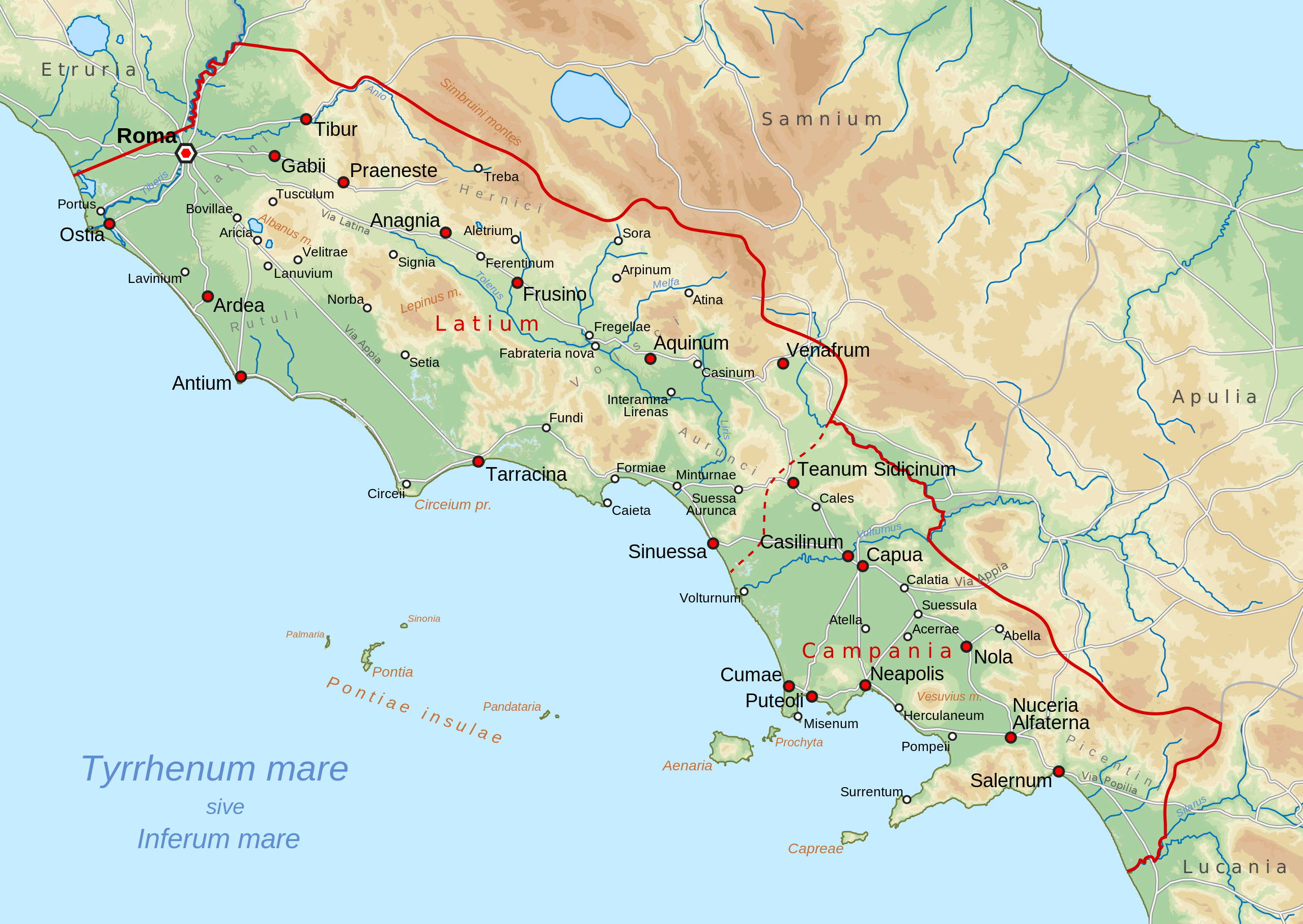
Regio I, Latium et Campania — the heartland of Roman Italy as organized under Augustus, a century after this coin. Roma sits at the upper left, marked by the map’s hexagonal capital symbol and bold label. The Republican mint stood on the Capitoline beside the temple of Juno Moneta.
“Map of Augustan Regio I Latium et Campania” by Tomisti (Wikimedia Commons), File:Regio I Latium et Campania map.svg, licensed CC BY-SA 4.0; cities and roads based on the Digital Atlas of the Roman Empire (DARE) and Pleiades; topographic base © OpenMapTiles, © OpenStreetMap contributors. Rasterized from SVG to PNG; otherwise reproduced unmodified (Roma already carries the base map’s capital marker).
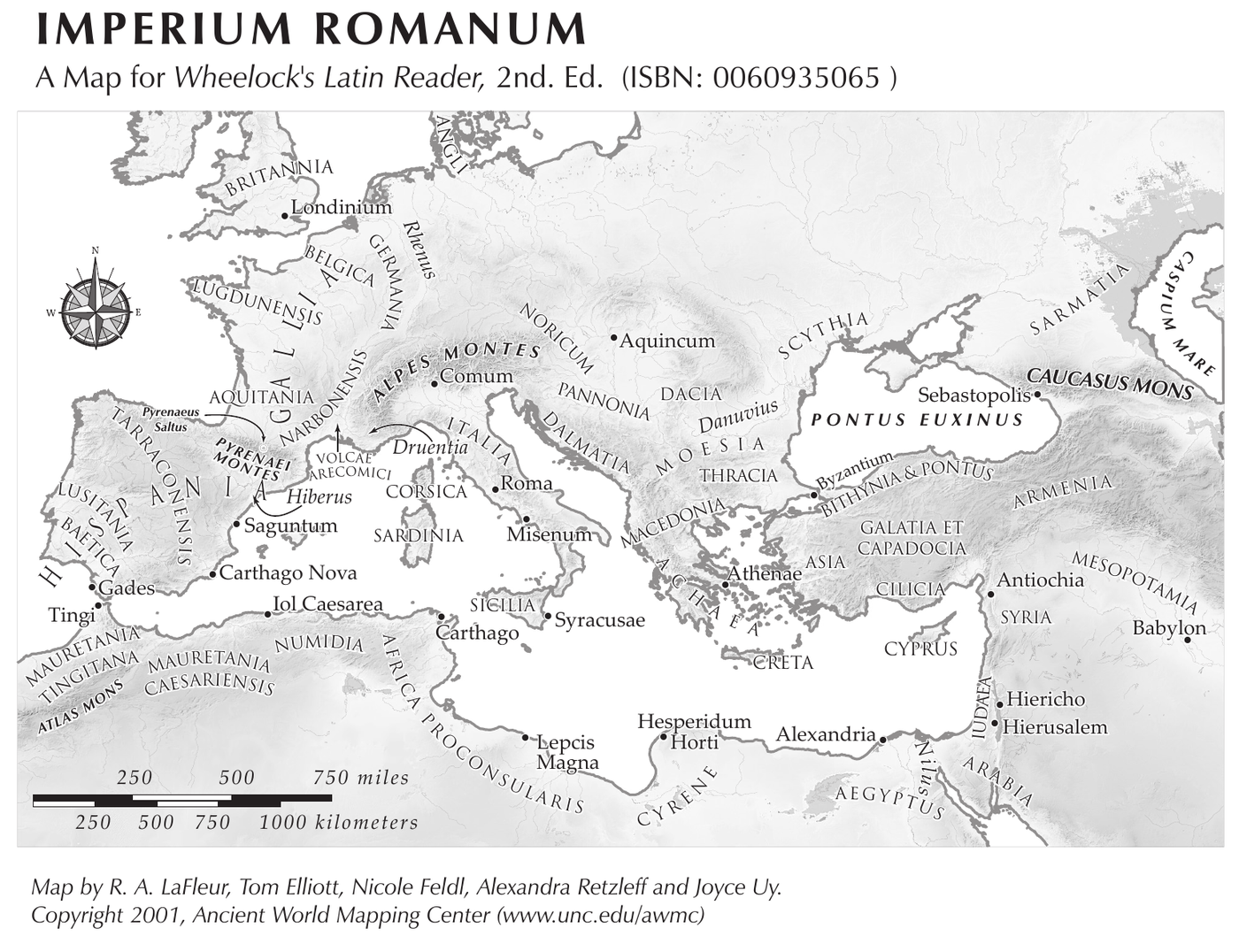
Roma sits at the center of Italia. Struck in 123 BC, the year Gaius Gracchus sent colonists to refound Carthago as Junonia, twenty-three years after Rome had razed it — the first Roman colony overseas, and the issue that helped destroy him.
This denarius of 123 BC carries the commonest and most confident design of the second-century Republic — helmeted Roma on one face, Victory whipping her two-horse chariot along the other — and, below the horses, the thing that makes it historically interesting: a name. C·CATO, Gaius Porcius Cato, one of that year’s junior mint magistrates (tresviri monetales), conventionally identified as a grandson of Cato the Censor who would reach the consulship in 114 BC and end his career convicted of extortion and exiled. The collection’s anonymous Victory-biga denarius of a generation earlier shows exactly where this coin’s design came from — and what changed: there the state’s badge ROMA was the only word on the coin; here a young aristocrat’s name rides beneath Victory’s horses. Between those two coins lies the whole second-century transformation of the coinage into a gallery of family advertisement.
Graphic: JSB Coins, 2026 (CC0).
The year 123 BC was among the most consequential in Republican history: Gaius Gracchus held his first tribunate, pushing through the grain law, the extortion-court reform that handed juries to the equestrians, and the boldest legislative program Rome had yet seen. The mint’s output in these years was heavy — the state was spending — and the moneyers of 123 kept to safe, traditional types even as the political ground shook. Roma’s head with the X value mark (ten asses, on the eve of the general shift to the XVI retariffing) and Victory’s biga said continuity while everything else said crisis. Within two years Gaius Gracchus was dead on the Aventine with three thousand of his followers — Plutarch tells the whole story (linked in the references).
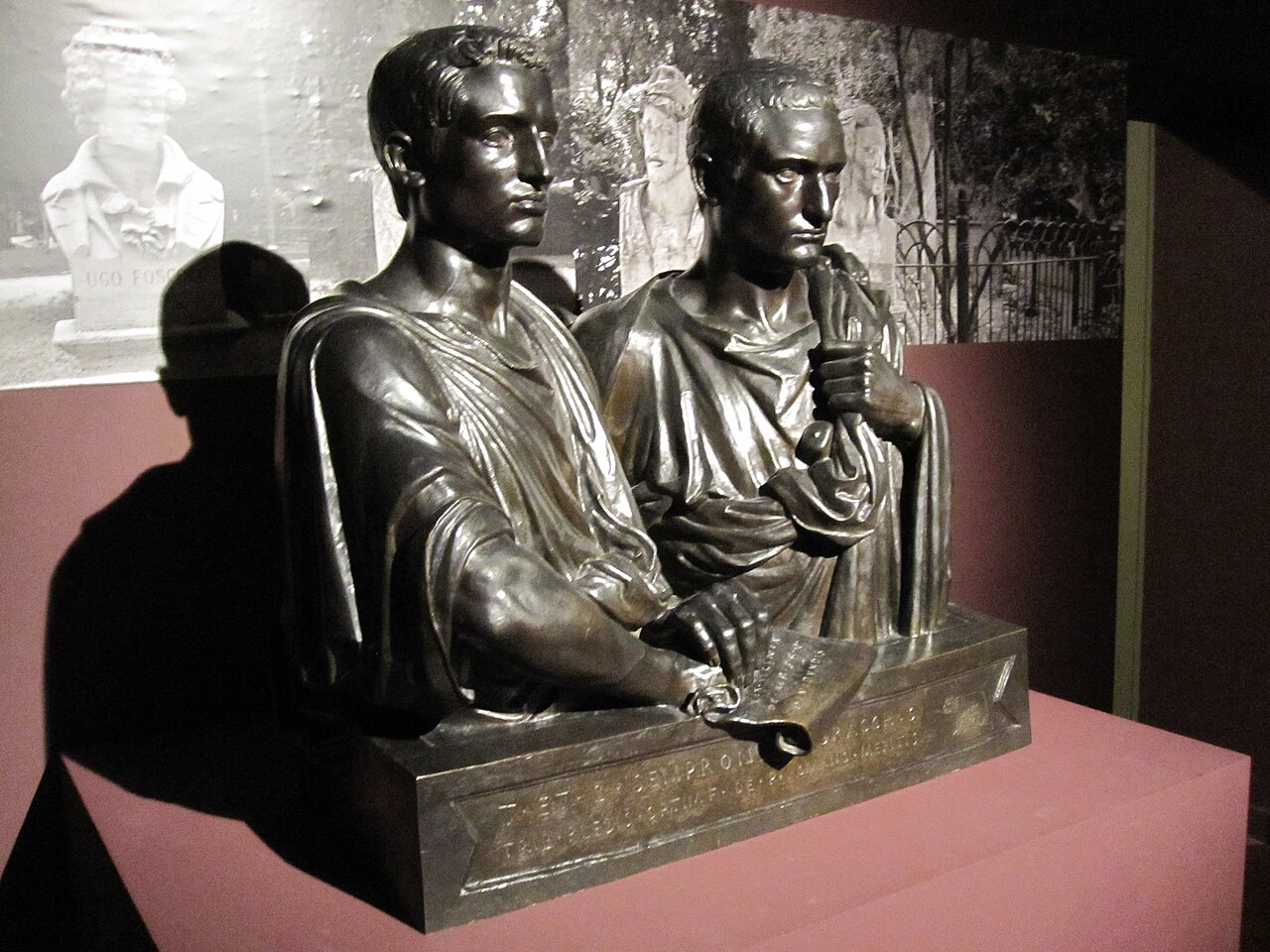
Photo: Marc Baronnet, CC BY-SA 3.0 (Wikimedia Commons); reproduced unmodified.
The Porcii Catones were novi homines made great by the Censor, whose great-grandson — the moneyer’s second cousins’ generation — would be Cato the Younger, Caesar’s implacable enemy. This C. Cato’s own career curved less nobly: consul in 114 BC, he was condemned de repetundis for his conduct in Macedonia and ultimately withdrew to Tarraco. The coin, struck at the outset of that career, is a reminder of what the moneyership was for: a first rung on the ladder, with the family name put into every purse in Italy. Where the ladder led, the collection shows — sixty years later another ambitious family’s moneyer struck the Scaurus & Hypsaeus camel denarius blazoning his own deeds, and by Caesar’s elephant the name alone had become the state.
Attribution: M. H. Crawford, Roman Republican Coinage (1975), 274/1 (123 BC, Rome), with the type record at the ANS’s Coinage of the Roman Republic Online; Sydenham 417; RSC Porcia 1. The moneyer’s identification with the consul of 114 BC follows Crawford’s prosopography ad loc. Historical frame: Plutarch, C. Gracchus (linked in the references); on the consul’s condemnation, Cicero, Verr. 2.3.184 and Velleius 2.8. The Guillaume bronze: Musée d’Orsay.
The moneyer is conventionally identified as the C. Porcius Cato who reached the consulship in 114 BC — a grandson of Cato the Censor — though, as usual with Republican moneyers, the identification rests on prosopography rather than the coin. Standard Roma/Victory-in-biga design with the moneyer's name below the horses; the X behind Roma's head is the old ten-as denomination mark, retained here just before the retariffing to XVI became general.
John's Ancient Coin Collection · Type · porcius-cato-victory-biga-denarius
Image credits for this coin — photographs, maps and graphics used on this page