Type · nero-jupiter-custos-denarius
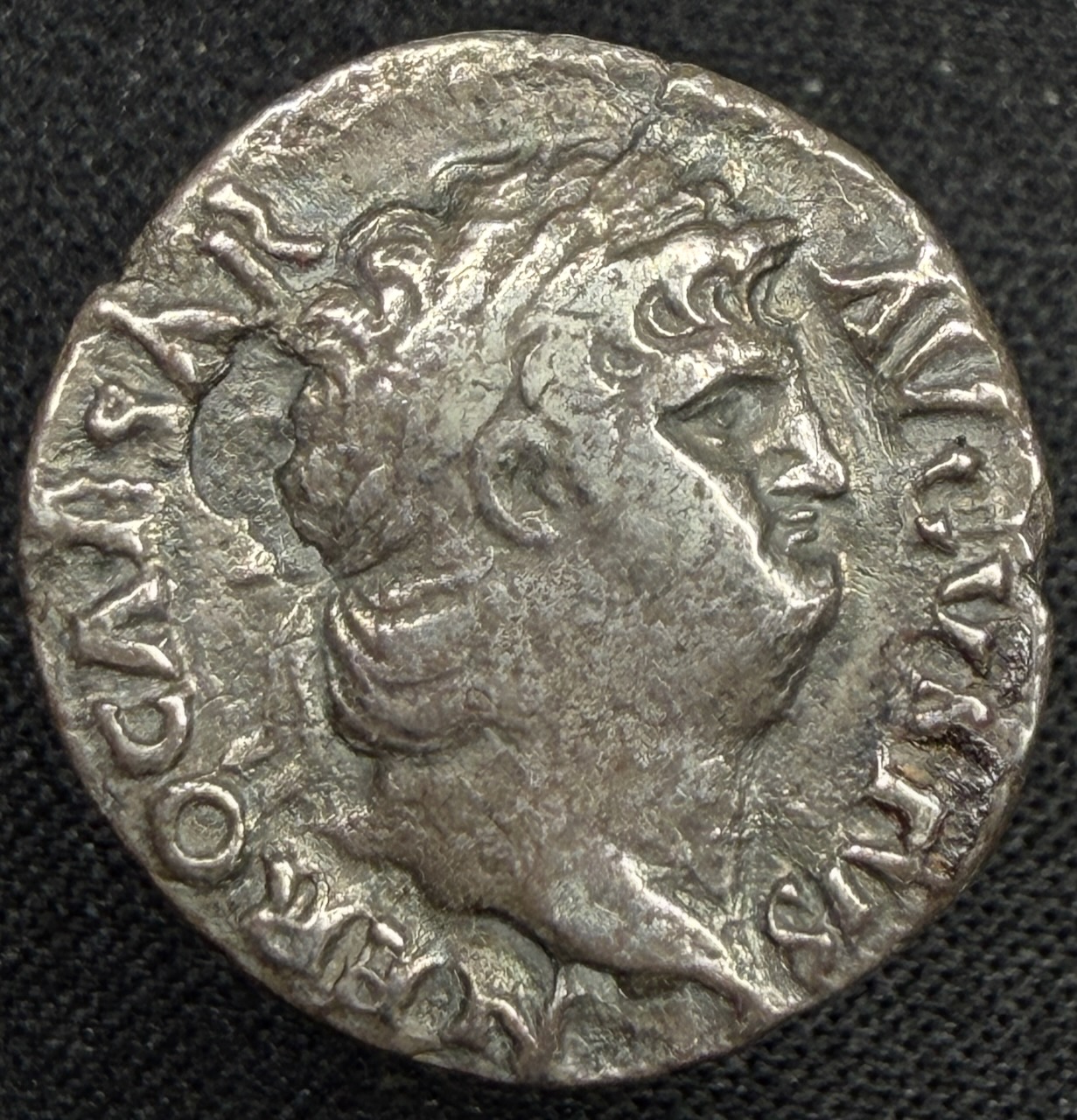
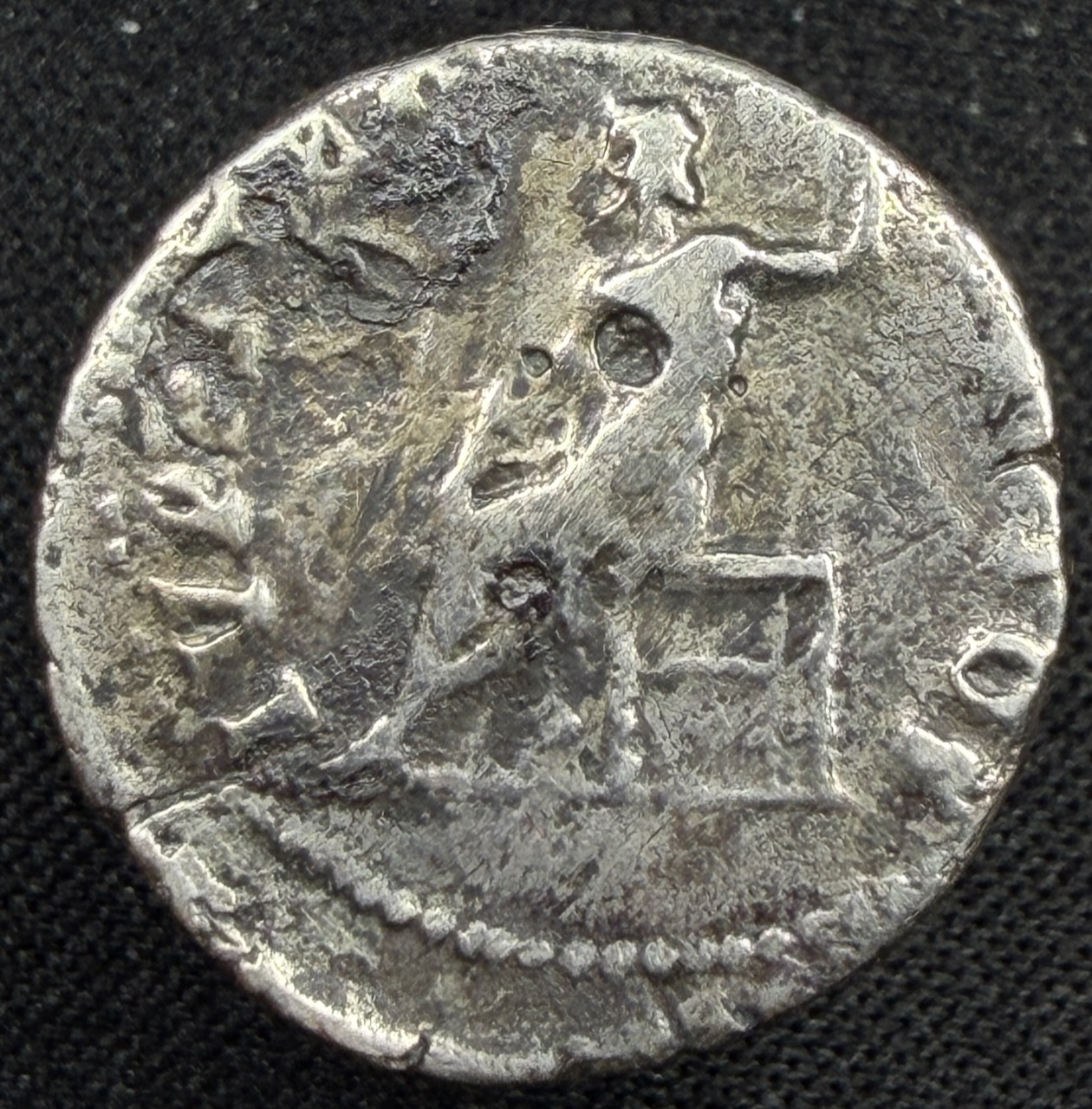
Current: Roman Imperial, Nero, AR denarius, Rome, c. 64–65 AD (RIC I 53)
Obverse: Laureate head of Nero right
Reverse: Jupiter seated left on throne, holding thunderbolt in right hand and long sceptre in left
Primary reference: RIC I 53
40 specimens in public collections (Berlin 6, ANS 5, Ashmolean 4, 3, British Museum 3); 10 British finds recorded by the Portable Antiquities Scheme; weights 2.36–3.52 g, median 3.065 g across 44 recorded; die axis most often 6h.
This collection's specimen, at 2.82 g (my scale), is heavier than 30% of the recorded weights.
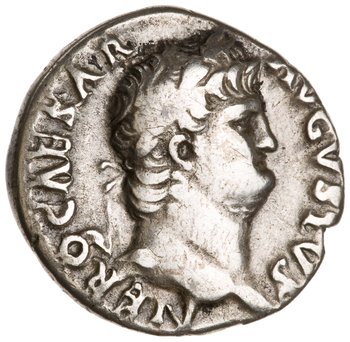
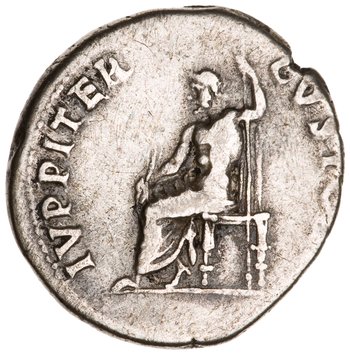
American Numismatic Society, 1944.100.39423. CC BY-NC 4.0. https://numismatics.org/collection/1944.100.39423
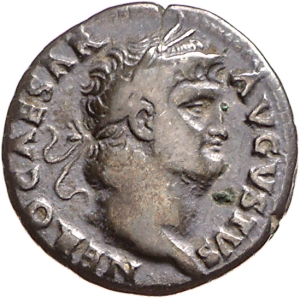
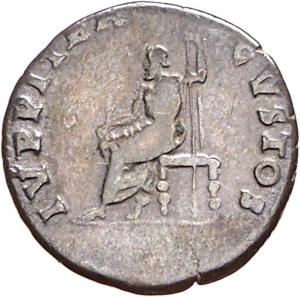
Münzkabinett, Staatliche Museen zu Berlin, 18220699. CC BY-NC-SA 4.0. https://ikmk.smb.museum/object?id=18220699
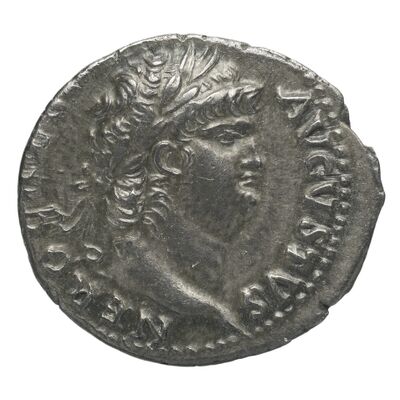
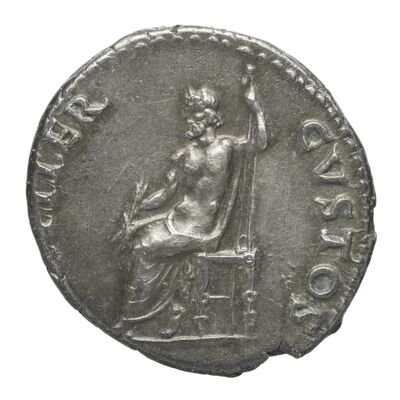
Bibliothèque nationale de France (Gallica), IMP-6600. non-commercial reuse permitted. https://gallica.bnf.fr/ark:/12148/btv1b10445483w
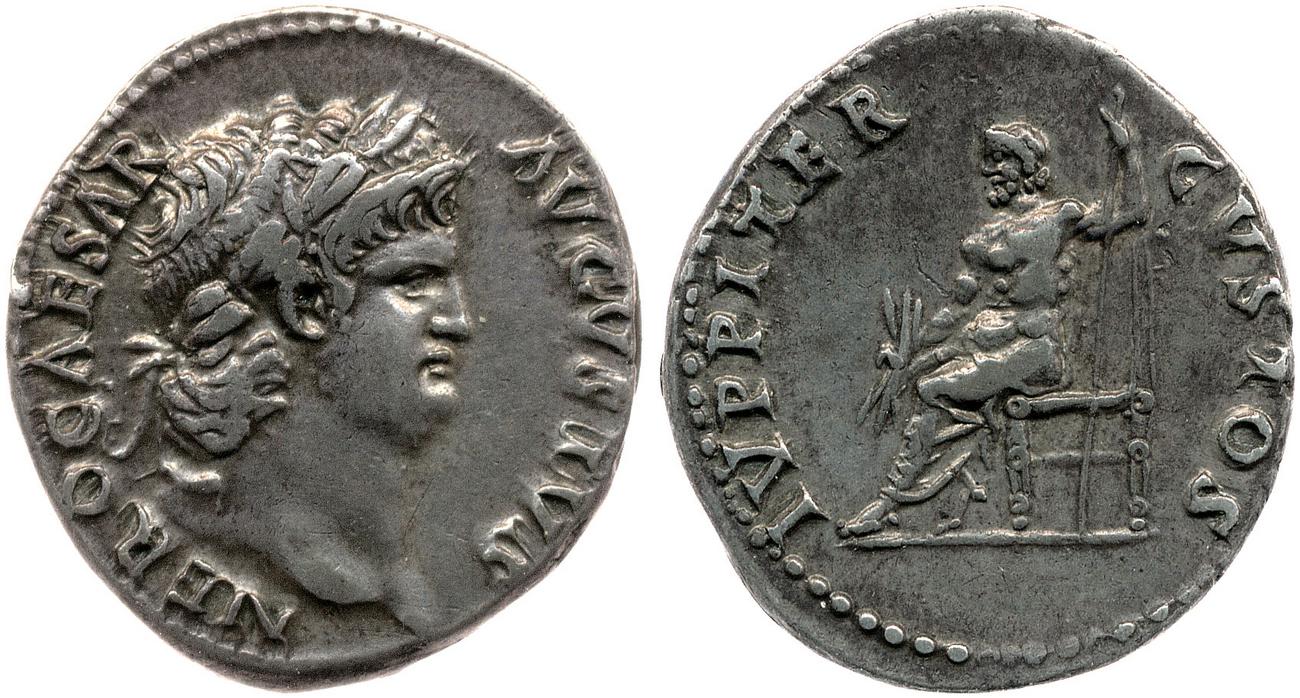
© The Trustees of the British Museum, 1843,1024.262. CC BY-NC-SA 4.0. https://www.britishmuseum.org/collection/object/C_1843-1024-262
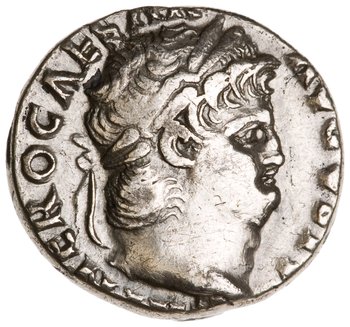
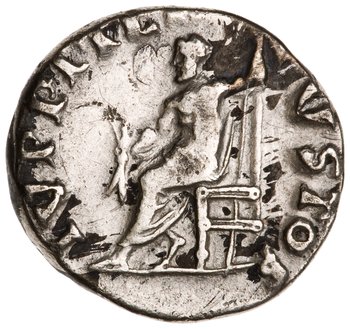
American Numismatic Society, 1944.100.39424. CC BY-NC 4.0. https://numismatics.org/collection/1944.100.39424
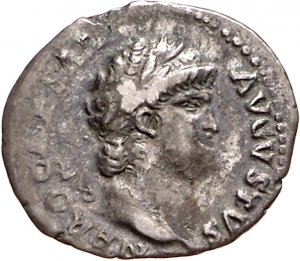
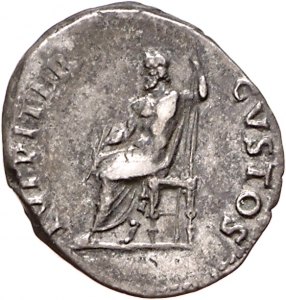
Münzkabinett, Staatliche Museen zu Berlin, 18220712. CC BY-NC-SA 4.0. https://ikmk.smb.museum/object?id=18220712
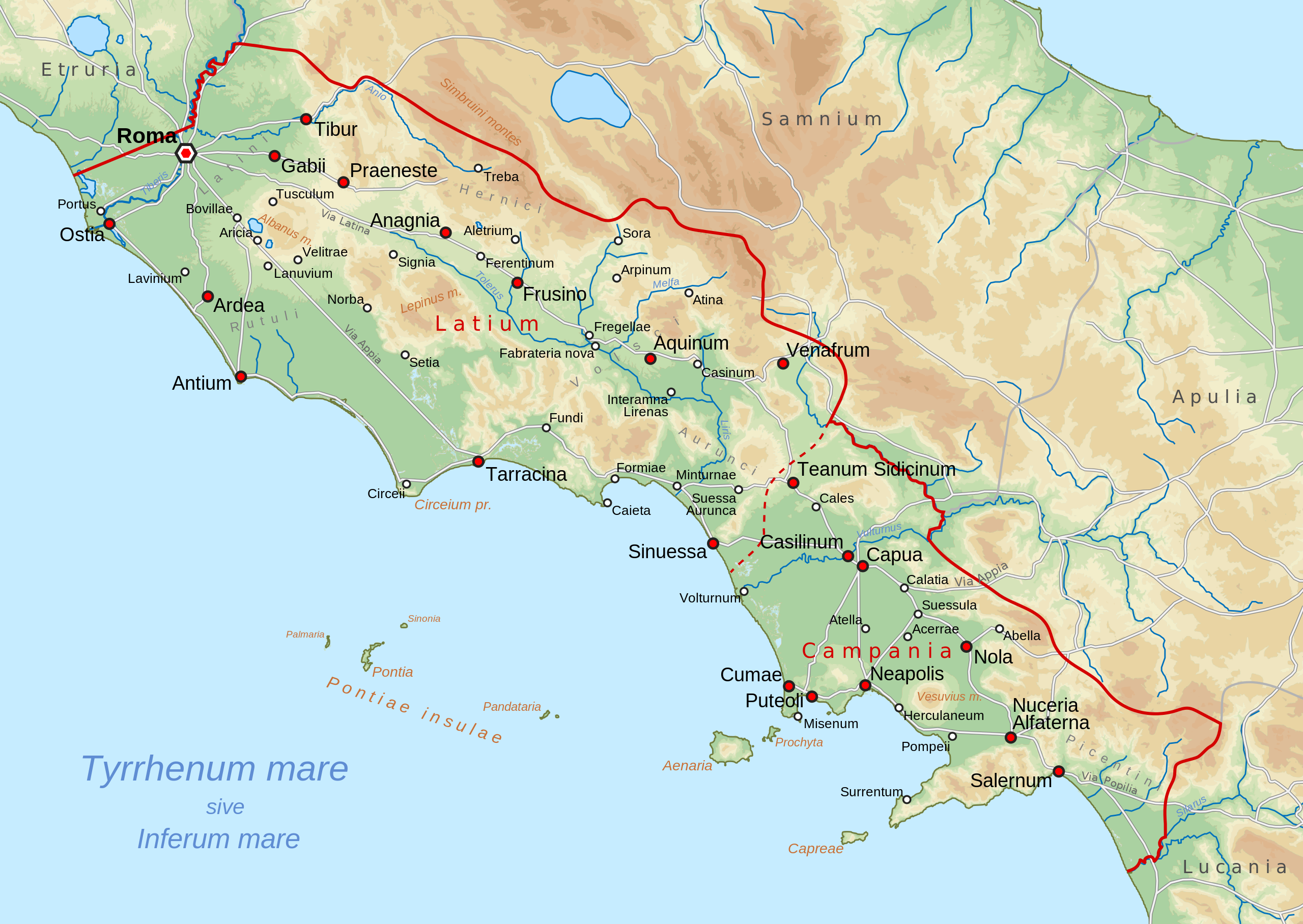
Regio I, Latium et Campania — the heartland of Roman Italy as organized under Augustus. Roma sits at the upper left, marked by the map’s hexagonal capital symbol and bold label. Nero’s reformed gold and silver of 64 AD was struck in the city itself, the mint having moved back from Lugdunum earlier in his reign.
“Map of Augustan Regio I Latium et Campania” by Tomisti (Wikimedia Commons), File:Regio I Latium et Campania map.svg, licensed CC BY-SA 4.0; cities and roads based on the Digital Atlas of the Roman Empire (DARE) and Pleiades; topographic base © OpenMapTiles, © OpenStreetMap contributors. Reproduced unmodified.
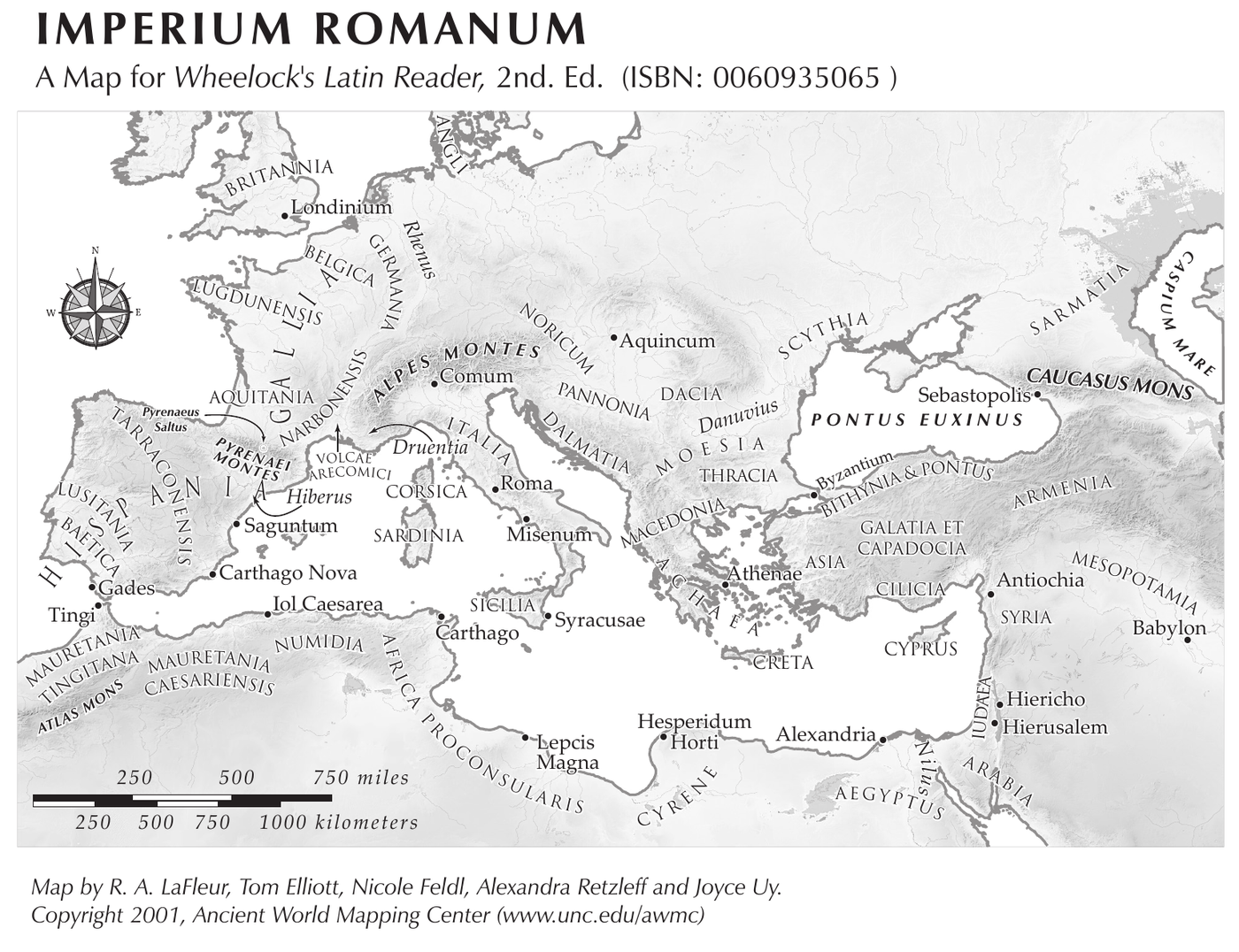
Roma sits at the center of Italia. IVPPITER CVSTOS — Jupiter the Guardian — was struck after the Pisonian conspiracy of AD 65 was uncovered. The danger this coin answers was not on any frontier drawn here; it was inside the city at the center.
This denarius belongs to the most dramatic eighteen months of Nero’s reign. In July 64 AD the great fire destroyed half of Rome; in the rebuilding that followed, Nero reformed the imperial coinage itself, lowering the weight and fineness of the denarius for the first time since Augustus — this coin, at 2.8 g instead of the old 3.8, is physically a product of that reform. In April 65 AD the Pisonian conspiracy — a plot of senators, officers, and poets around C. Calpurnius Piso — was betrayed on the eve of its execution, and the reprisals (Seneca and Lucan among the forced suicides) darkened the rest of the reign. Tacitus records that when it was over, Nero consecrated the dagger meant for his own chest in the Capitoline temple, dedicating it to Jupiter the Avenger (Annals 15.74).
The reverse of this coin — Jupiter enthroned with thunderbolt and sceptre, IVPPITER CVSTOS, “Jupiter the Guardian” — is universally read against that backdrop of divine protection, but exactly which deliverance it advertises is genuinely open. The traditional numismatic reading (running through the RSC/Seaby tradition and most dealer cataloguing) makes it a thanksgiving for Nero’s escape from the conspiracy of 65. RIC’s dating of the issue to c. 64–65, however, means the type may have begun striking before the plot was exposed, and some students of the coinage read it more broadly: Jupiter as guardian of emperor and city in the aftermath of the fire, one panel in the same reassurance program as the contemporary VESTA and SALVS types. Both readings are current; the coin itself, undated, will not decide between them. Either way the figure is Jupiter seated and at rest, the guarantor rather than the combatant; the collection’s Jupiter denarius of Septimius Severus shows the other pole of the same idea, the god on his feet with the thunderbolt drawn back.
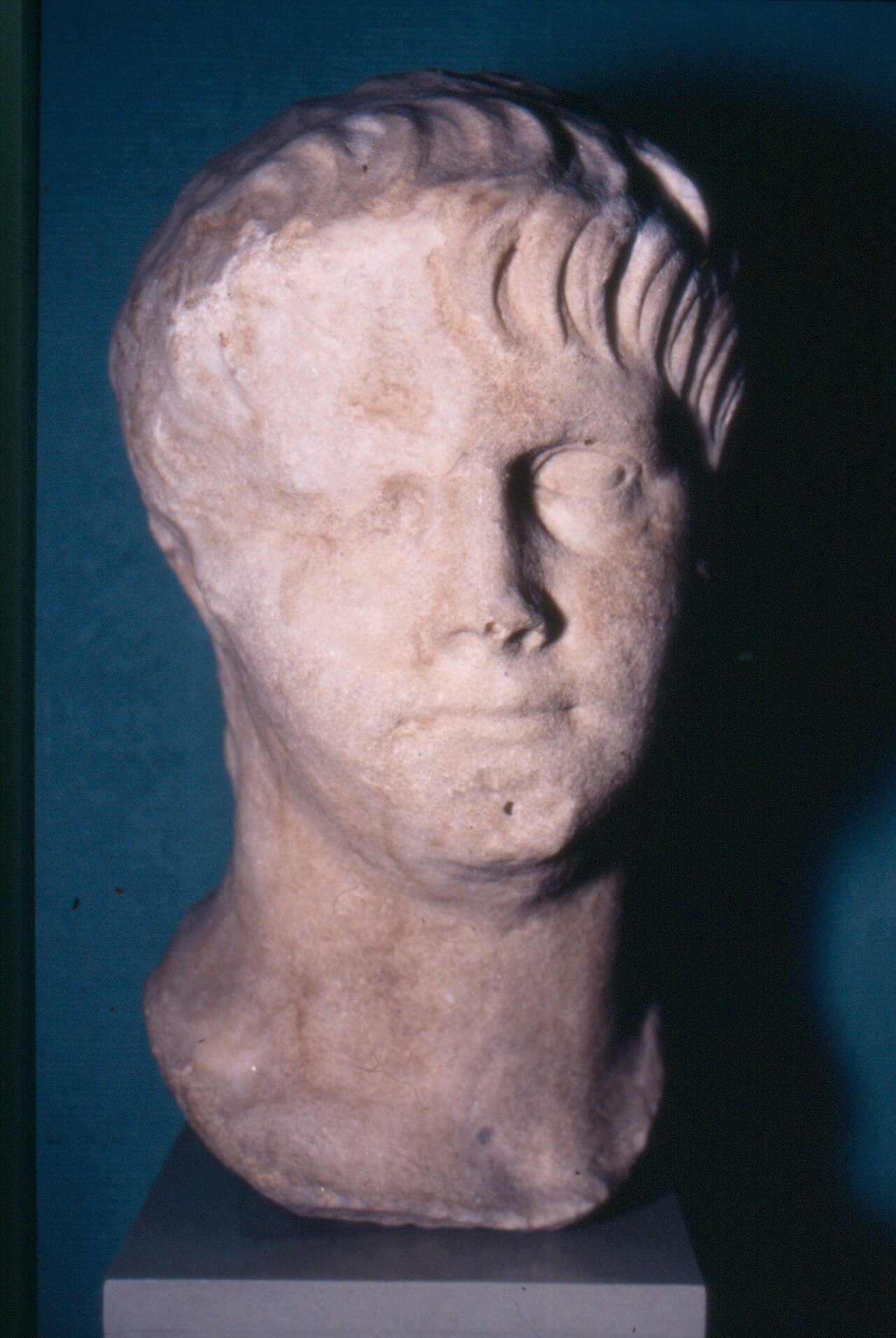
public-domain image (Wikimedia Commons); reproduced unmodified
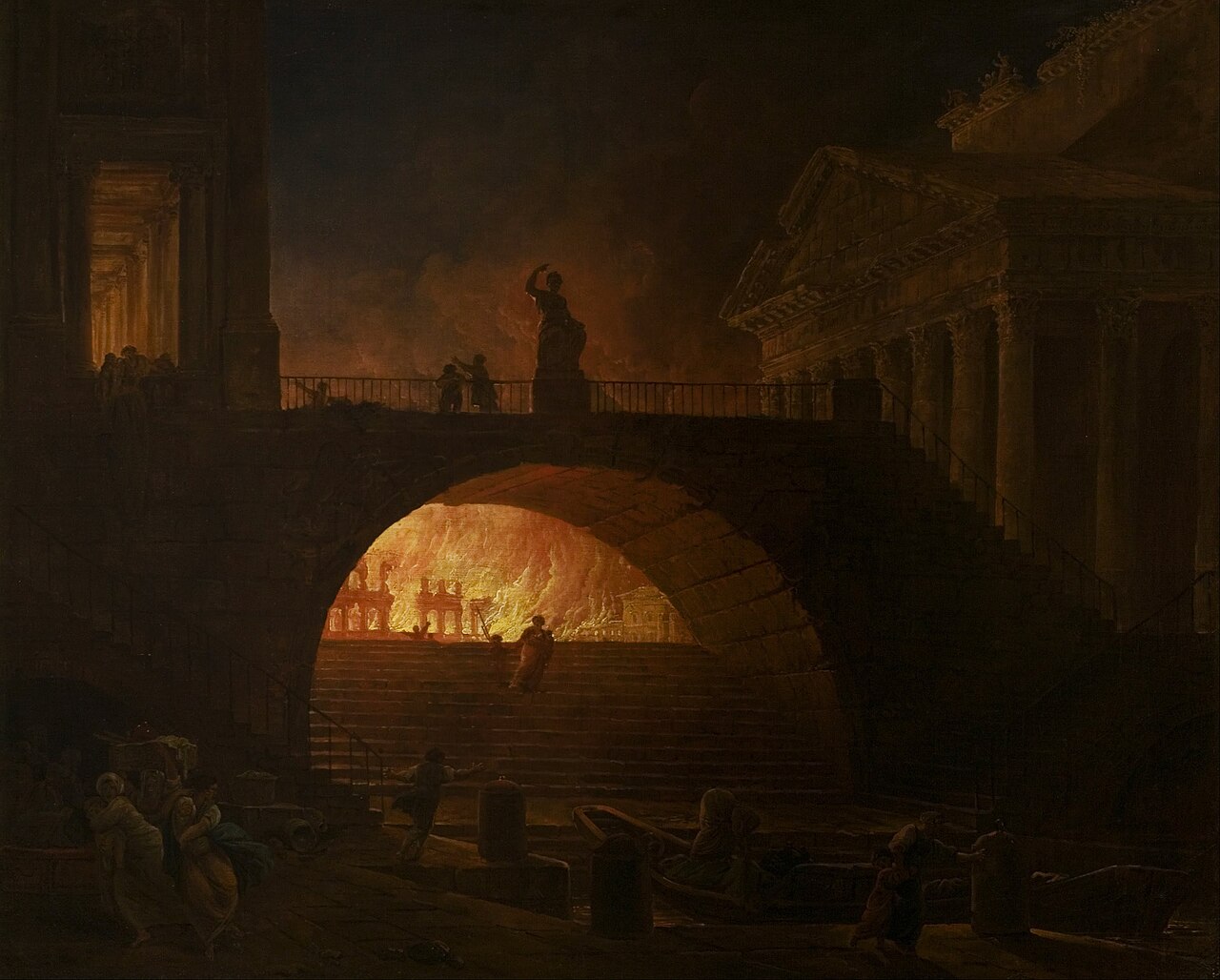
Public-domain work of art (Wikimedia Commons); reproduced unmodified.
Graphic: JSB Coins, 2026 (CC0).
The practical importance of this issue is metrological. Nero’s 64 AD reform moved gold and silver production to Rome and cut the denarius to about 1/96 of a pound at roughly 80% fine — the first debasement of the imperial silver and the template for every later one. Butcher and Ponting’s metallurgical work (The Metallurgy of Roman Silver Coinage, 2014) traced the change precisely and showed its ripples reaching even the provincial silver: the fineness of Nero’s Antioch tetradrachms — one of which is in this collection, the eagle tetradrachm of AD 62/3 — moves broadly in step with the denarius standard, empire-wide silver managed as one fiscal system. Set beside this collection’s pre-reform denarii of Augustus and Tiberius, the weight difference is visible in the hand: a full gram of empire trimmed away.
Post-reform denarii of Nero are notably scarcer than his aurei — RIC rates this issue R — a pattern usually connected to the state’s preference for coining gold at the new standard while old silver stayed in circulation. Within four years of this coin’s striking, Jupiter’s guardianship lapsed: the revolts of 68 AD ended with Nero’s suicide and the Julio-Claudian line with him.
Attribution and dating: RIC I (2nd ed.) Nero 53 (rated R); RSC 119; the OCRE record gives legends, date, and paralleled specimens. The reform of 64 AD and its metallurgy: K. Butcher and M. Ponting, The Metallurgy of Roman Silver Coinage (2014). The conspiracy and the dagger dedicated to Jupiter: Tacitus, Annals 15.48–74 (the dedication at 15.74); Suetonius, Nero 36. The competing readings of IVPPITER CVSTOS (conspiracy thanksgiving vs. broader divine-protection propaganda after the fire) are both represented in the literature and in museum treatments of the type; the issue’s date range in RIC I is the reason the question stays open.
Post-reform denarius: struck on the standard Nero introduced at Rome in 64 AD, when the denarius dropped from roughly 1/84 to 1/96 of a Roman pound with reduced fineness — hence weights in the 2.8–3.4 g range instead of the old 3.7–3.9 g. RIC rates no. 53 R (rare); the IVPPITER CVSTOS reverse recurs on the slightly later RIC 64 with the same design. Both tags on the collection's specimen flag the scarcity ('Scarce', 'Rare').
John's Ancient Coin Collection · Type · nero-jupiter-custos-denarius
Image credits for this coin — photographs, maps and graphics used on this page