Type · augustus-gaius-lucius-caesares-denarius
Current: Roman Imperial, Augustus, AR denarius, Lugdunum, 2 BC–4 AD (RIC I 207)
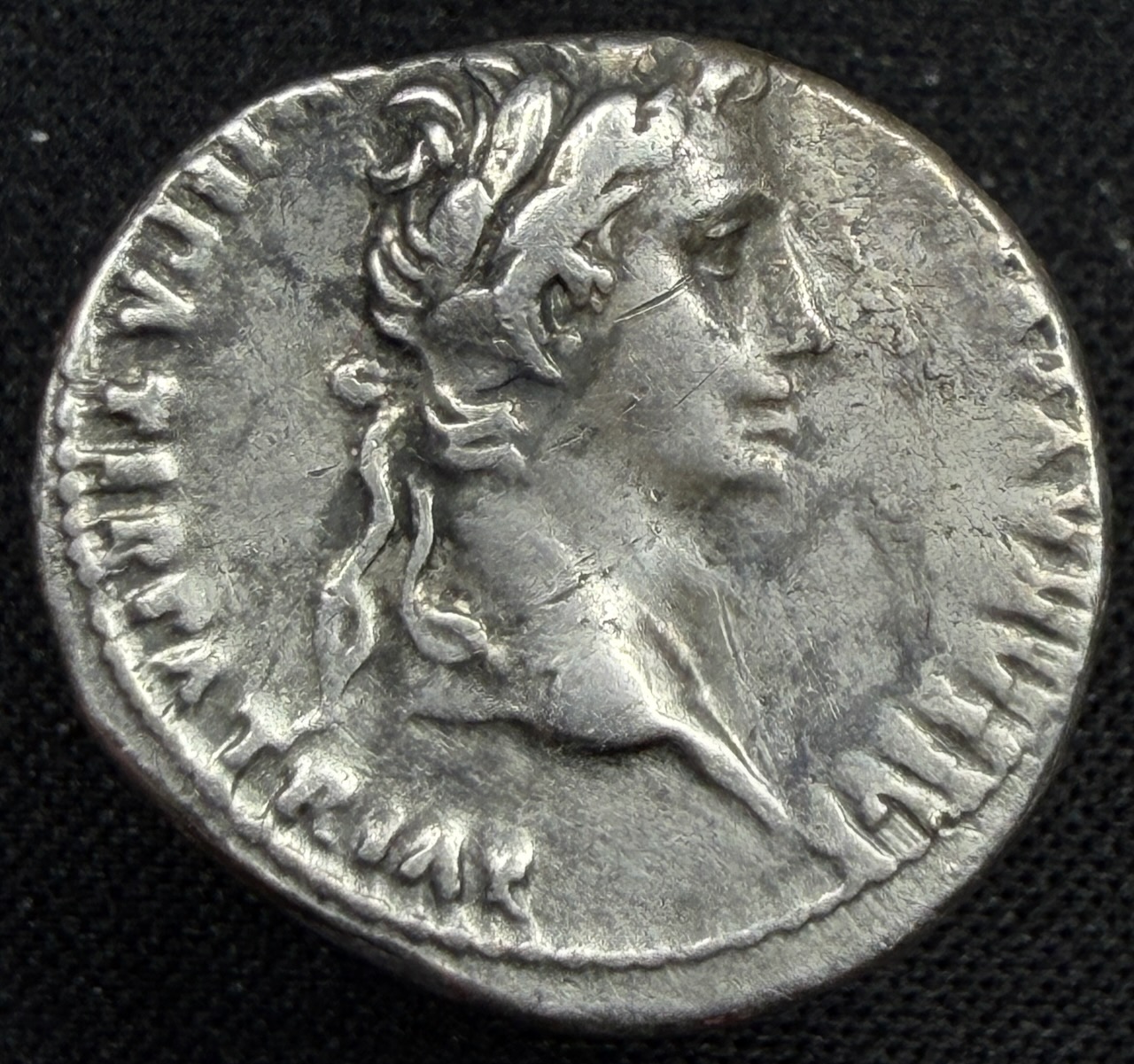
Obverse: Laureate head of Augustus right
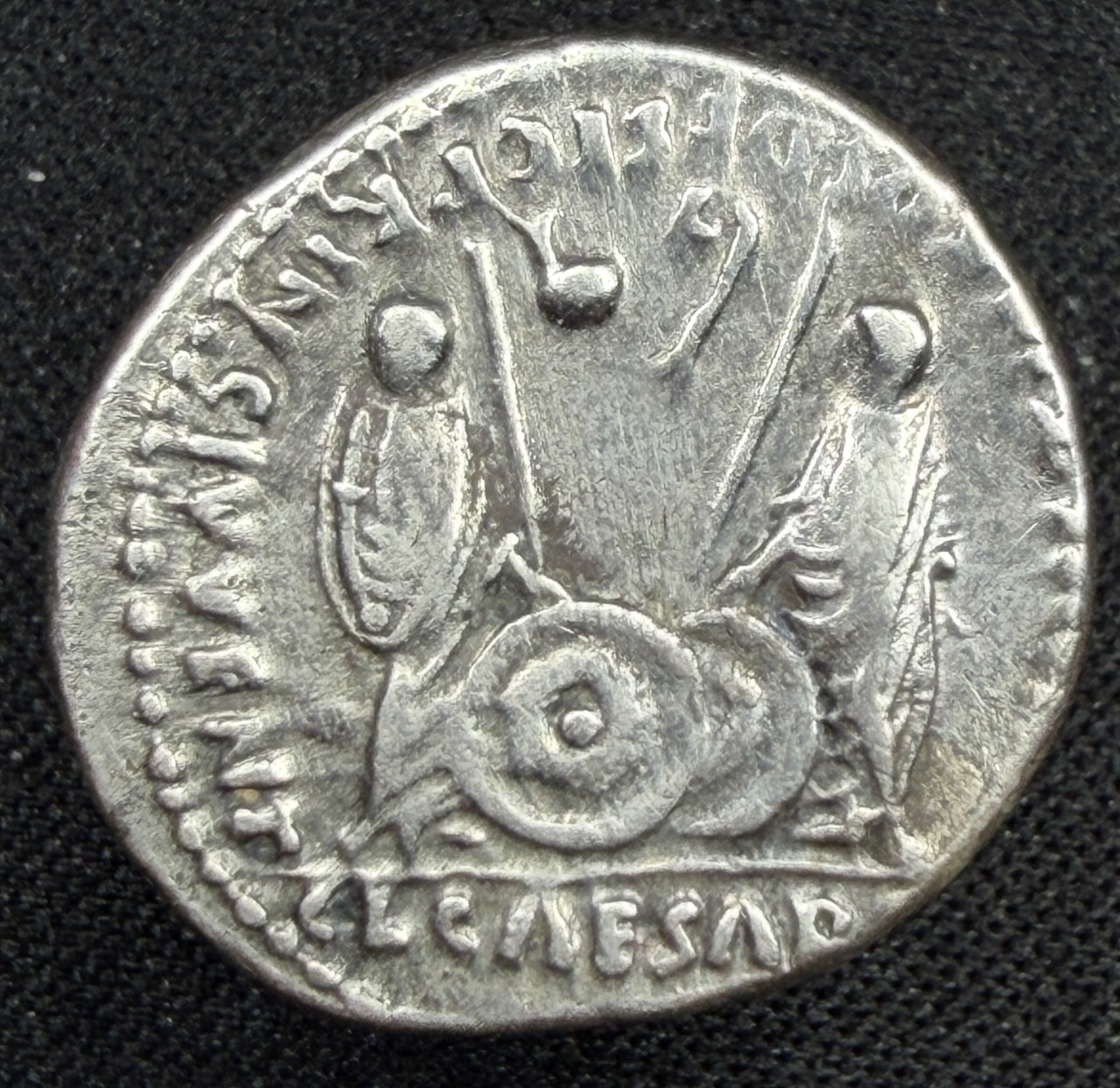
Reverse: Gaius and Lucius Caesar standing facing, togate, each resting a hand on a round shield with a spear behind; above, simpulum and lituus turned inward
Primary reference: RIC I 207
193 specimens in public collections (British Museum 60, Ashmolean 21, Berlin 21, ANS 14, Göttingen 14); 48 British finds recorded by the Portable Antiquities Scheme; weights 0.77–7.93 g, median 3.64 g across 230 recorded; die axis most often 12h; recorded in hoards CHRR AGG, CHRR AQU, CHRR BAG, CHRR BYL, CHRR KL1, CHRR LAI, CHRR LIN, CHRR MSO and 6 more.
This collection's specimen, at 3.77 g (my scale), is heavier than 79% of the recorded weights.
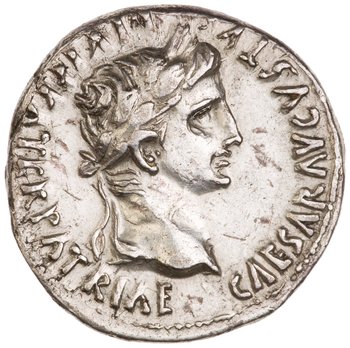
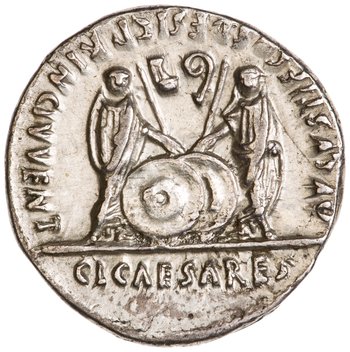
American Numismatic Society, 0000.999.16780. CC BY-NC 4.0. https://numismatics.org/collection/0000.999.16780
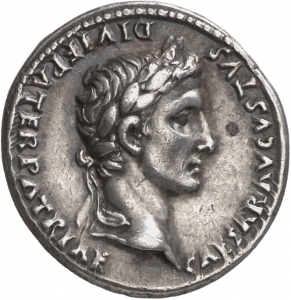
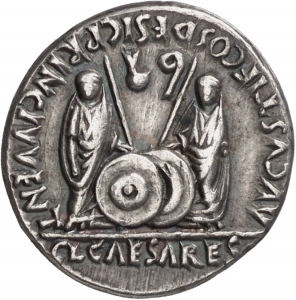
Münzkabinett, Staatliche Museen zu Berlin, 18200441. CC BY-NC-SA 4.0. https://ikmk.smb.museum/object?id=18200441
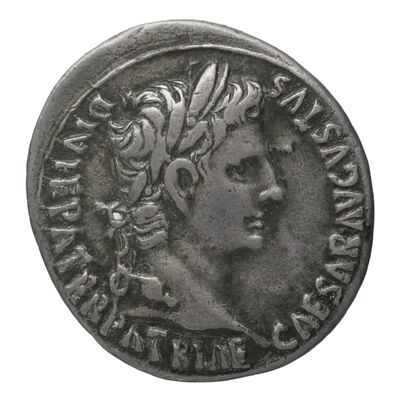
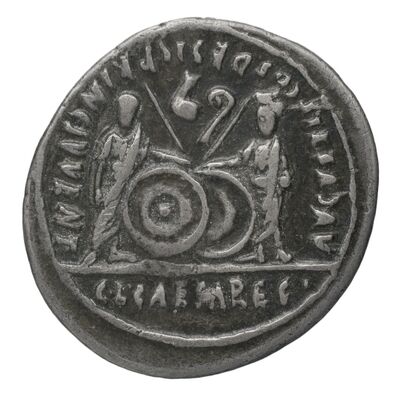
Bibliothèque nationale de France (Gallica), IMP-5357. non-commercial reuse permitted. https://gallica.bnf.fr/ark:/12148/btv1b10444244k
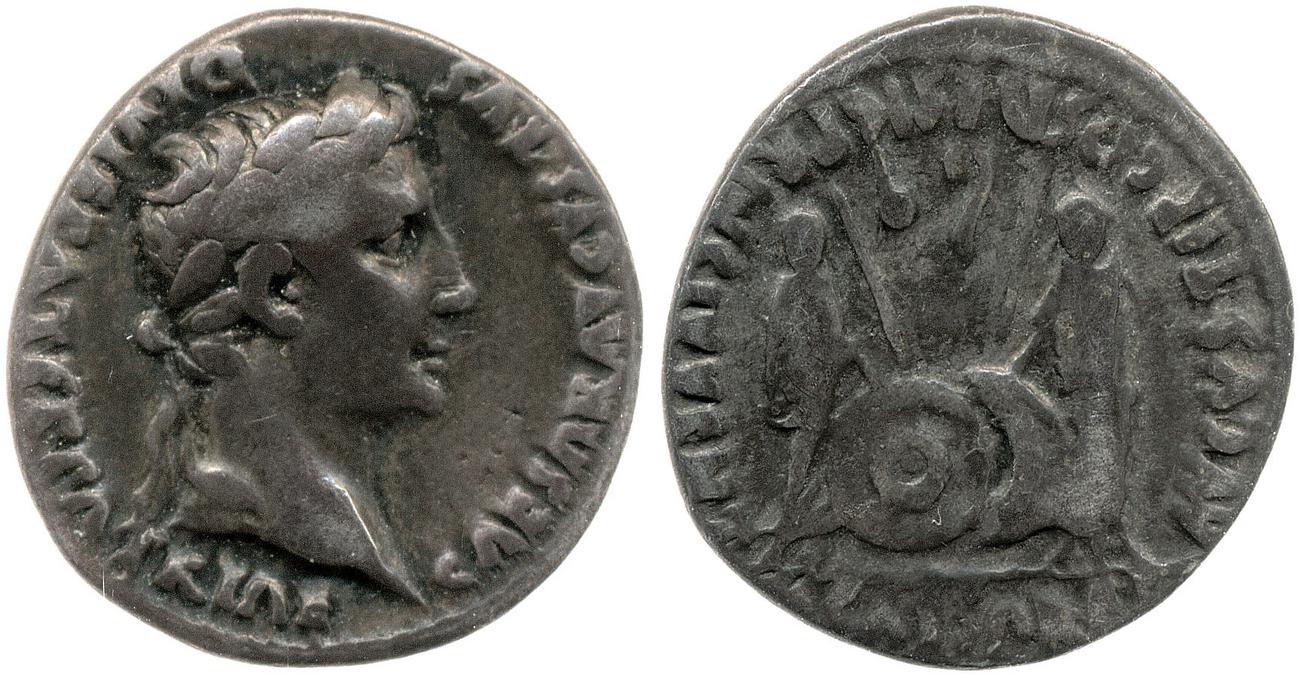
© The Trustees of the British Museum, 1838,0714.3. CC BY-NC-SA 4.0. https://www.britishmuseum.org/collection/object/C_1838-0714-3
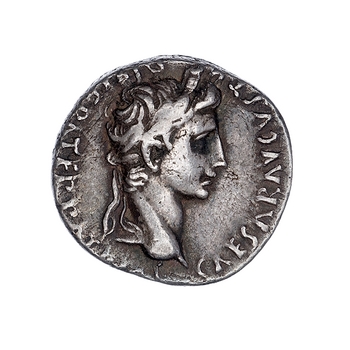
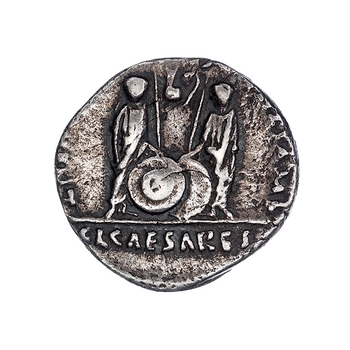
American Numismatic Society, 1916.106.20. CC BY-NC 4.0. https://numismatics.org/collection/1916.106.20
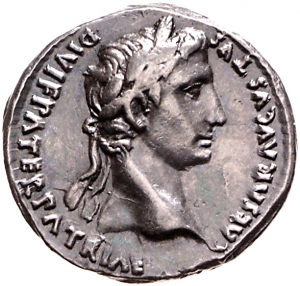
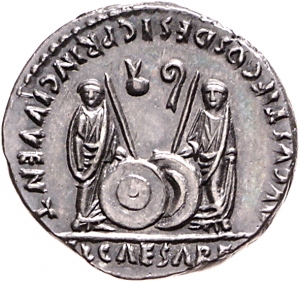
Münzkabinett, Staatliche Museen zu Berlin, 18202575. CC BY-NC-SA 4.0. https://ikmk.smb.museum/object?id=18202575
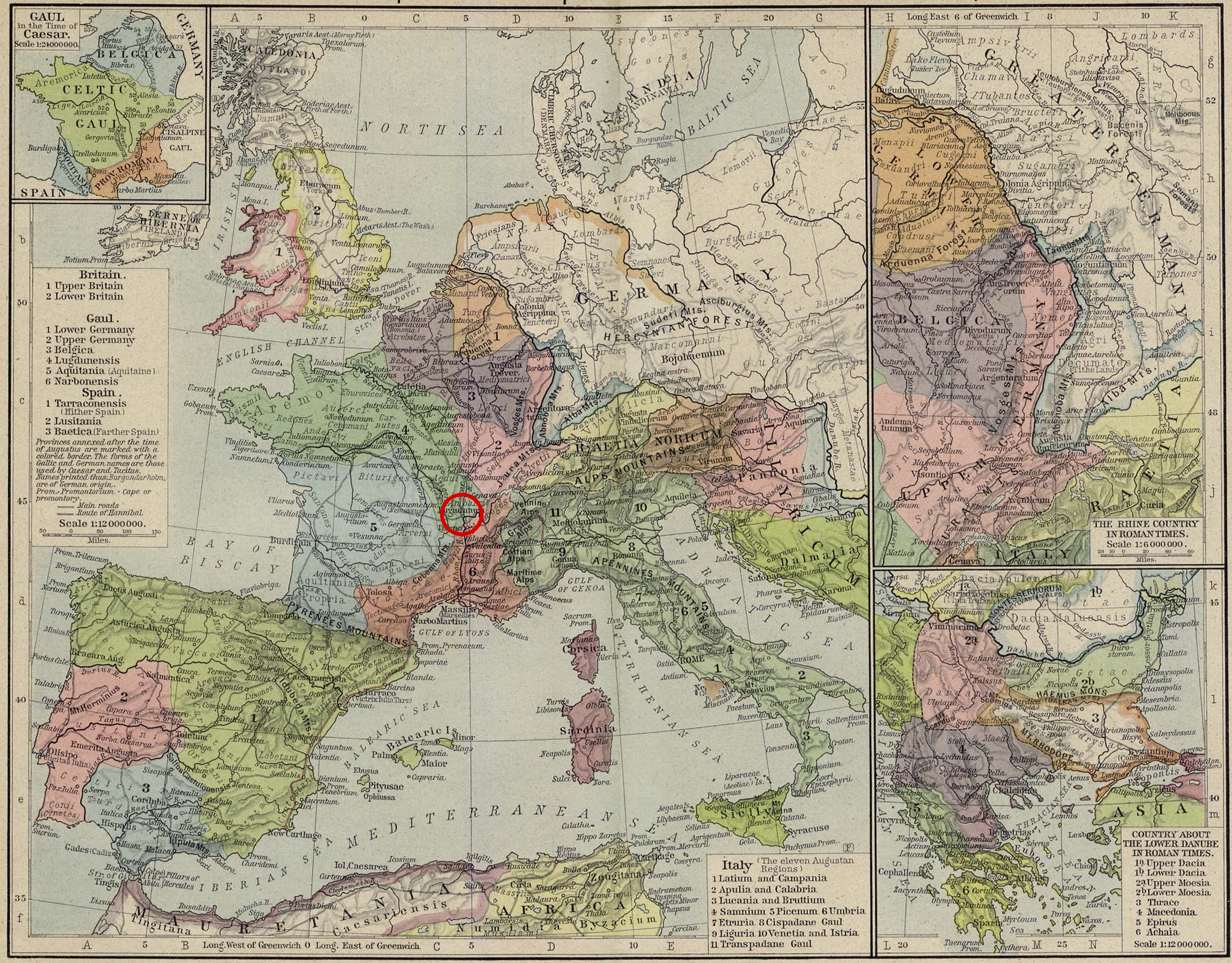
The European provinces of the Roman Empire (Shepherd’s reference map). Lugdunum — circled in red — sits at the confluence of the Rhône and Saône in Gallia Lugdunensis, the province named for it. From c. 15 BC the city housed the empire’s principal mint for gold and silver, placed behind the Rhine armies its coinage paid; this type was its flagship silver issue of Augustus’s last decade. Click through to the inset for a closer view of Gaul.
“Reference Map of the European Provinces of the Roman Empire” by William R. Shepherd, Historical Atlas (Henry Holt & Co., 1926 printing), public domain; via Wikimedia Commons, File:European Provinces of the Roman Empire.jpg (scan via the Perry-Castañeda Library, University of Texas). Red circle added to mark Lugdunum.
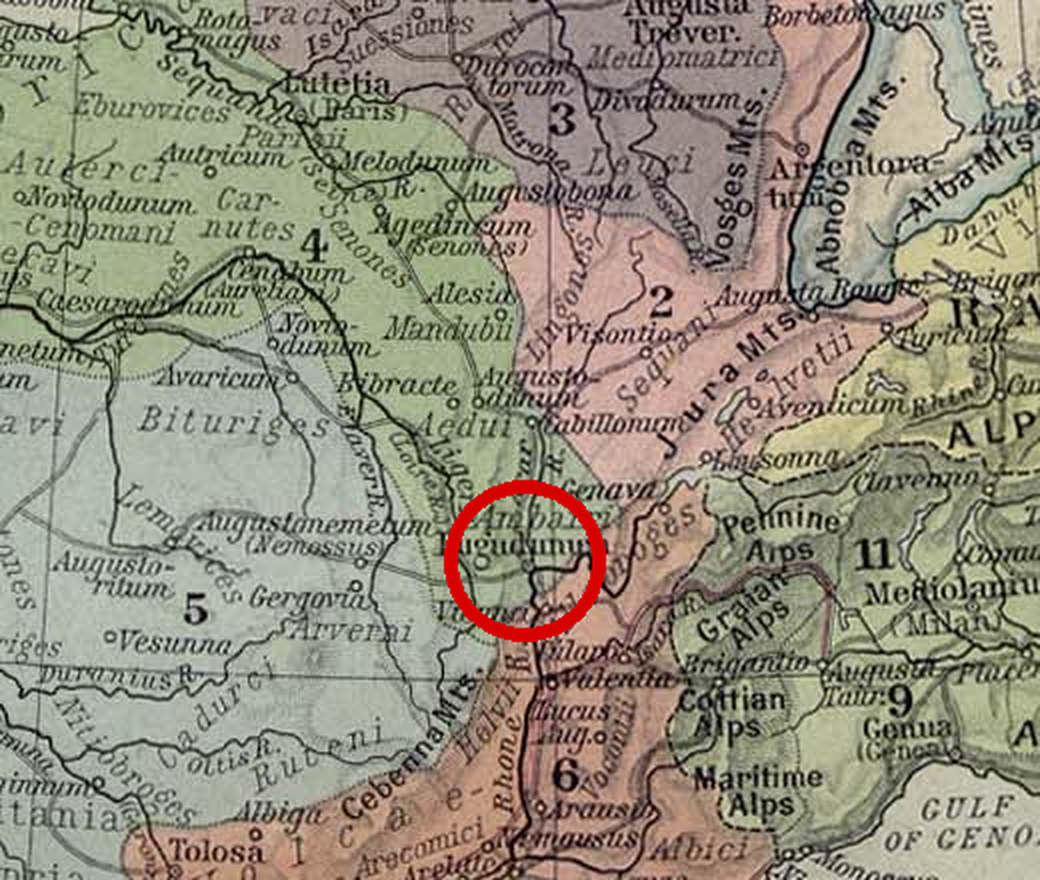
Detail: central Gaul, with Lugdunum circled in red at the Rhône–Saône confluence — Vienna of the Allobroges just downstream, Genava to the east, and the old Aeduan centers Bibracte and Augustodunum to the northwest.
In 2 BC Augustus, now in his sixties, accepted from the Senate the title he had waited a lifetime for: Pater Patriae, Father of the Fatherland. The obverse legend of this denarius announces it — CAESAR AVGVSTVS DIVI F PATER PATRIAE — and the reverse shows what the father intended to leave behind: his grandsons Gaius and Lucius Caesar, sons of Agrippa and Augustus’s daughter Julia, adopted by the emperor as his own sons in 17 BC. They stand togate, side by side, each with a hand on a silver shield, spears behind, the priestly simpulum and lituus floating between them. Every element is a documented public honor: Augustus himself records in the Res Gestae (14) that when each boy was presented to public life, the Roman equites hailed him princeps iuventutis — “leader of the youth” — and presented him with silver shields and spears, and that each was designated consul years before the legal age. The legend spells it out: AVGVSTI F COS DESIG PRINC IVVENT. The implements mark their co-optation into the great priesthoods — the simpulum (ladle) of the pontifices for Gaius, the lituus (augural wand) for Lucius.
It is dynastic advertising of the most explicit kind, struck in enormous quantity at the imperial mint of Lugdunum from 2 BC, and it saturated the Roman world; hoards from Britain to India carry it. Then the advertisement failed. Lucius died at Massalia in 2 AD, aged eighteen, en route to Spain; Gaius, wounded in Armenia, died in Lycia in 4 AD, aged twenty-three. Within six years the two futures on this coin were gone, and Augustus — “atrox fortuna,” he wrote — turned to his third choice, the stepson Tiberius, adopting him in 4 AD. The rest of the story runs through two other Lugdunum denarii in this collection: the Tiberius quadriga issue of 13–14 AD, struck when the succession had settled on Tiberius, and the “Tribute Penny” that carried the new emperor’s portrait for the next twenty-three years from the same mint.
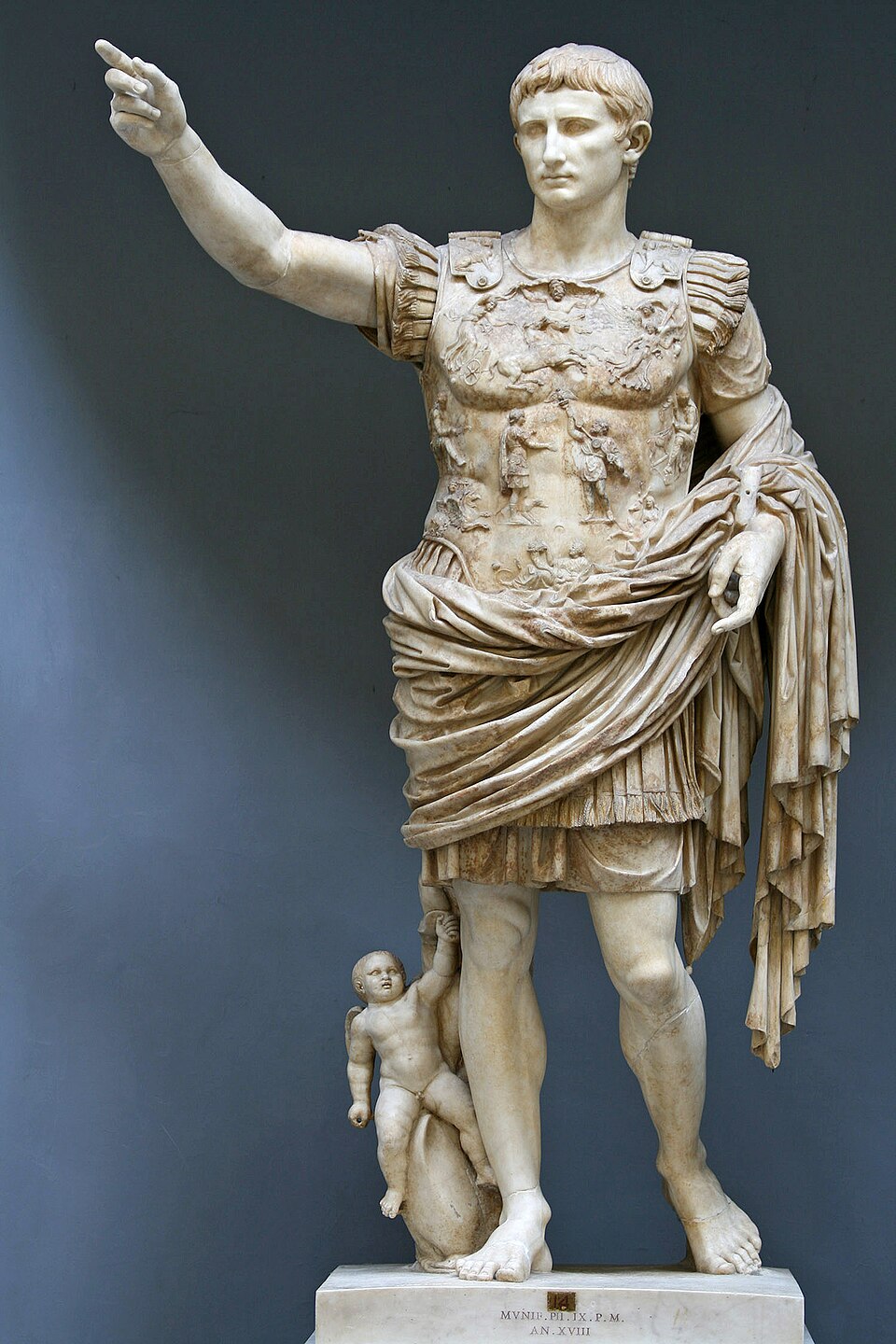
Photo: Till Niermann, Wikimedia Commons, licensed CC BY-SA 3.0, reproduced unmodified.
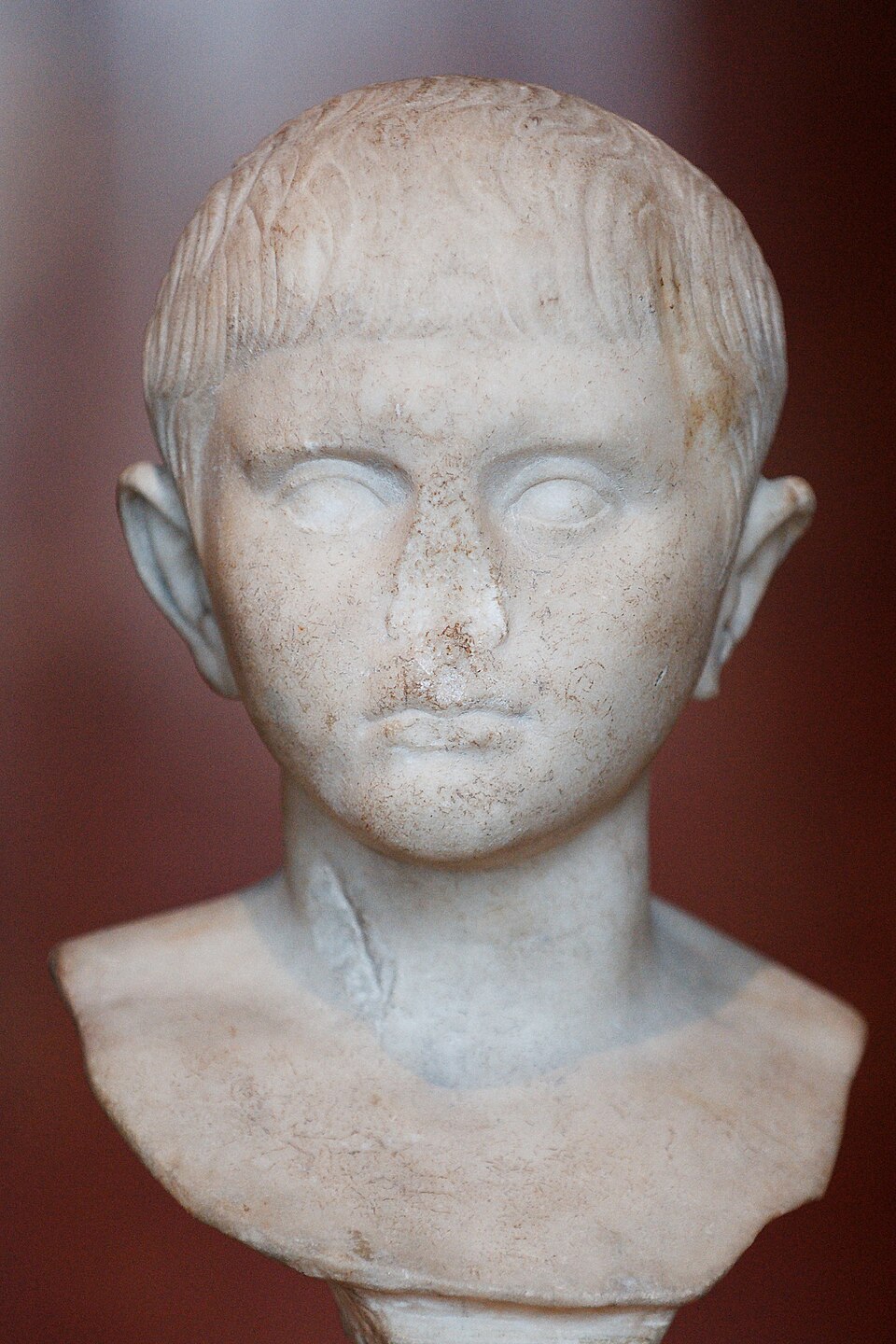
Photo: Jastrow, Wikimedia Commons, licensed CC BY 2.5, reproduced unmodified.
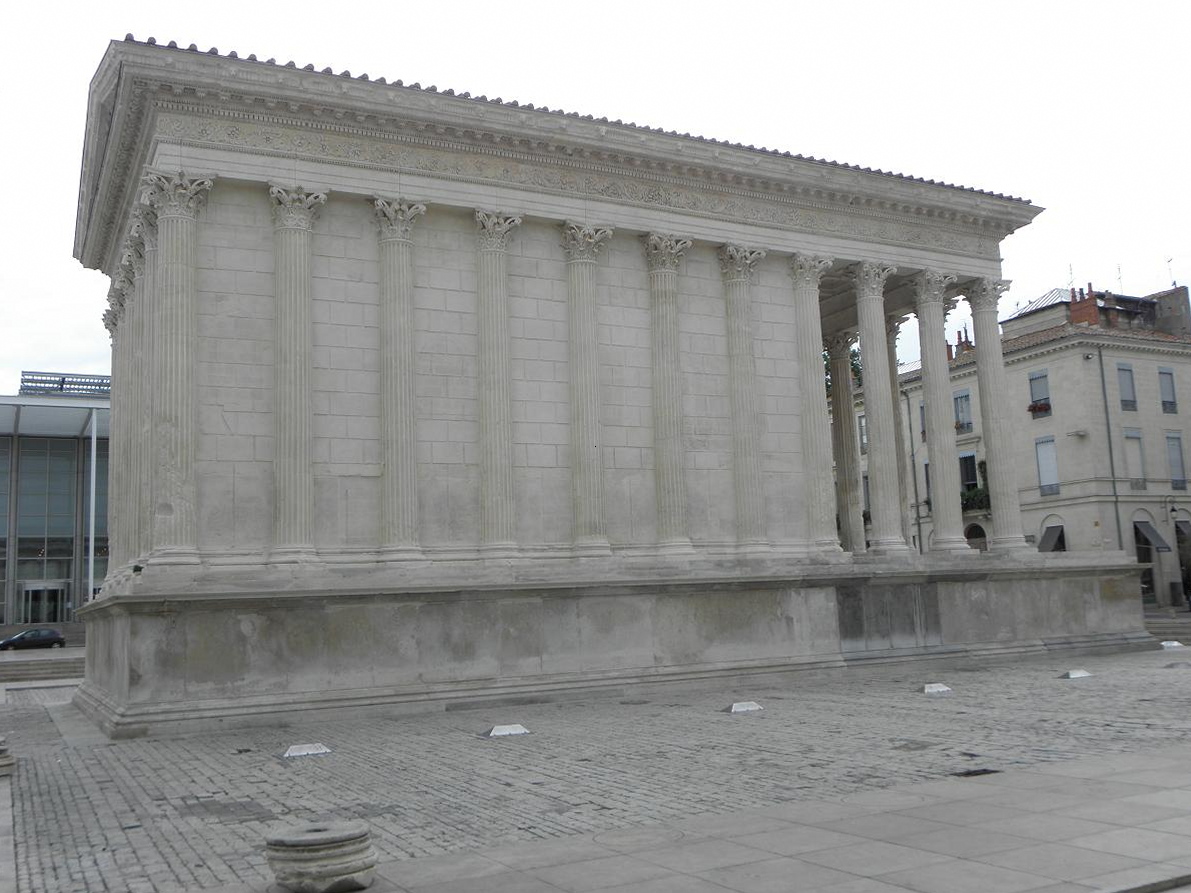
Photo: GO69, Wikimedia Commons, licensed CC BY-SA 3.0, reproduced unmodified.
Numismatically the C L CAESARES issue is the high-water mark of Lugdunum’s silver production. RIC distinguishes the varieties 205–212 by the orientation of the simpulum and lituus and by small control letters; RIC 207, with the implements turned inward and no letters, is much the commonest and is the variety here. Its abundance made it the default denarius of the early first century AD: this is a strong candidate for the kind of silver a provincial would picture when someone said “a denarius,” second only to its successor the Tribute Penny in Gospel-era associations. For all its commonness, the type is a compact lesson in how Augustus communicated: constitutional titles, religious office, military symbolism, and family portraiture compressed into a design a moneyer could strike a million times. It is also this collection’s benchmark for the old standard — the full-weight Augustan denarius that Nero’s reform of 64 AD would trim in both weight and fineness.
Attribution and dating: RIC I (2nd ed.) Augustus 207; RSC 43; the OCRE record gives the full legends, the 2 BC–4 AD date, and paralleled specimens. The honors depicted are documented in Augustus, Res Gestae Divi Augusti 14 (shields, spears, princeps iuventutis, consulates designate); the deaths of the princes: Suetonius, Augustus 65; Tacitus, Annals 1.3. On the type’s place in the Lugdunum coinage and its abundance, see the OCRE record and D. Sear’s standard handbooks (Roman Coins and Their Values I).
RIC I 207 is the commonest variety of the C L CAESARES series (RIC 205–212 differ in the arrangement of the simpulum/lituus and added letters); this coin's inward-turned implements with no control letters match 207. One of the most plentiful of all Augustan denarii — the Lugdunum mint poured the type out for roughly six years, and it remained a staple of circulating silver for decades.
John's Ancient Coin Collection · Type · augustus-gaius-lucius-caesares-denarius
Image credits for this coin — photographs, maps and graphics used on this page


_Maison_Carr%C3%A9e_01.JPG)