8.99 g (tag) · 29.6 mm · About extremely fine, almost fully silvered (the auction house's grade, MARS VLTOR Auction 27, lot 352; not a grading service's, and in hand as of 5 September 2026, not yet checked against the grade)
Type · julian-ii-bull-double-maiorina
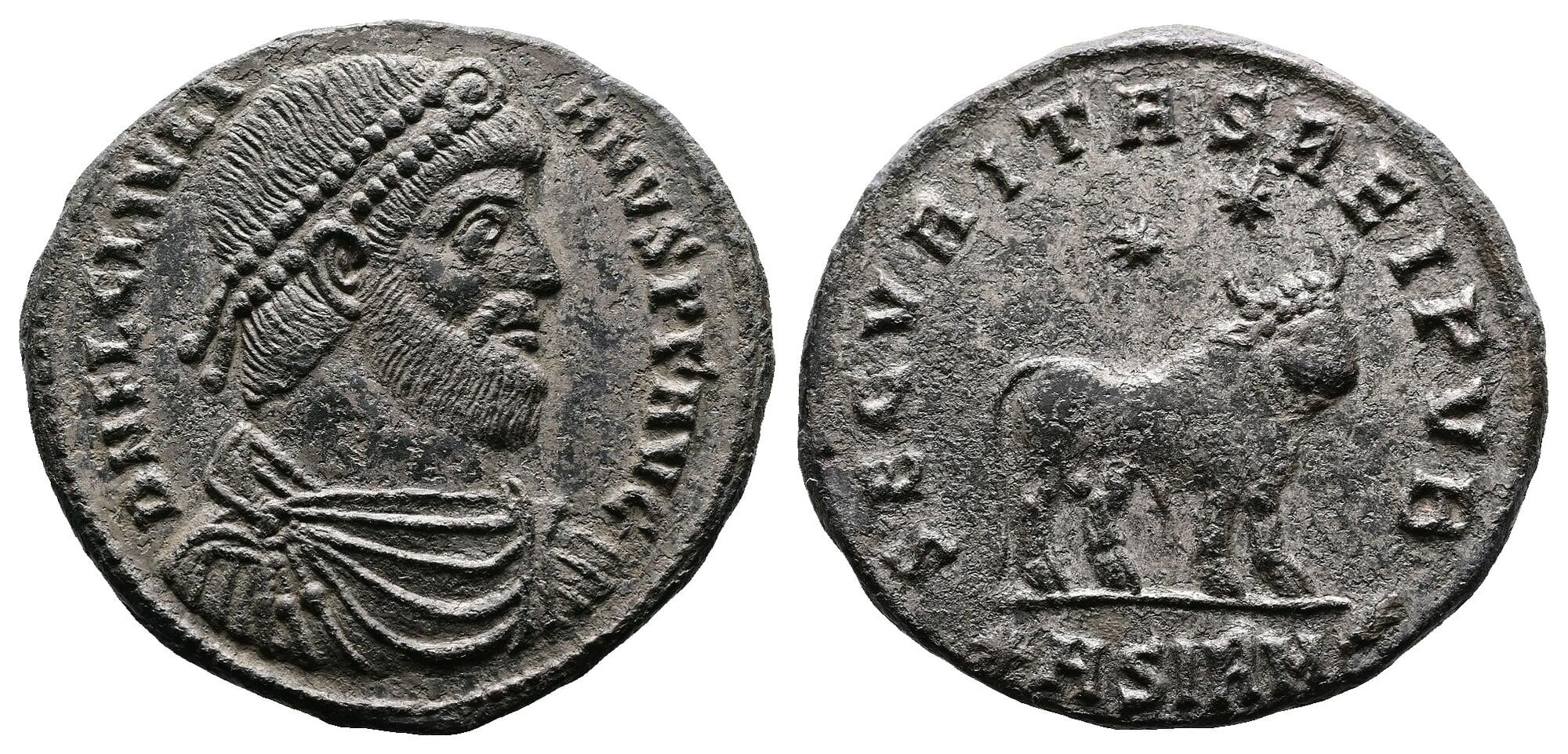
Current: Roman Imperial, Julian II (the Apostate), AE double maiorina (AE1), Sirmium, 361-363 AD (RIC VIII Sirmium 105, per the auction house; see notes on the exergual variety)
Obverse: Pearl-diademed, draped and cuirassed bust of Julian right, with the full philosopher's beard
Reverse: Bull standing right, two stars above; star, mintmark and palm branch in exergue
Primary reference: RIC VIII Sirmium 105
2 specimens in public collections (British Museum 1, Uni Graz 1).
This collection's specimen, at 8.99 g (tag), is heavier than 100% of the recorded weights.
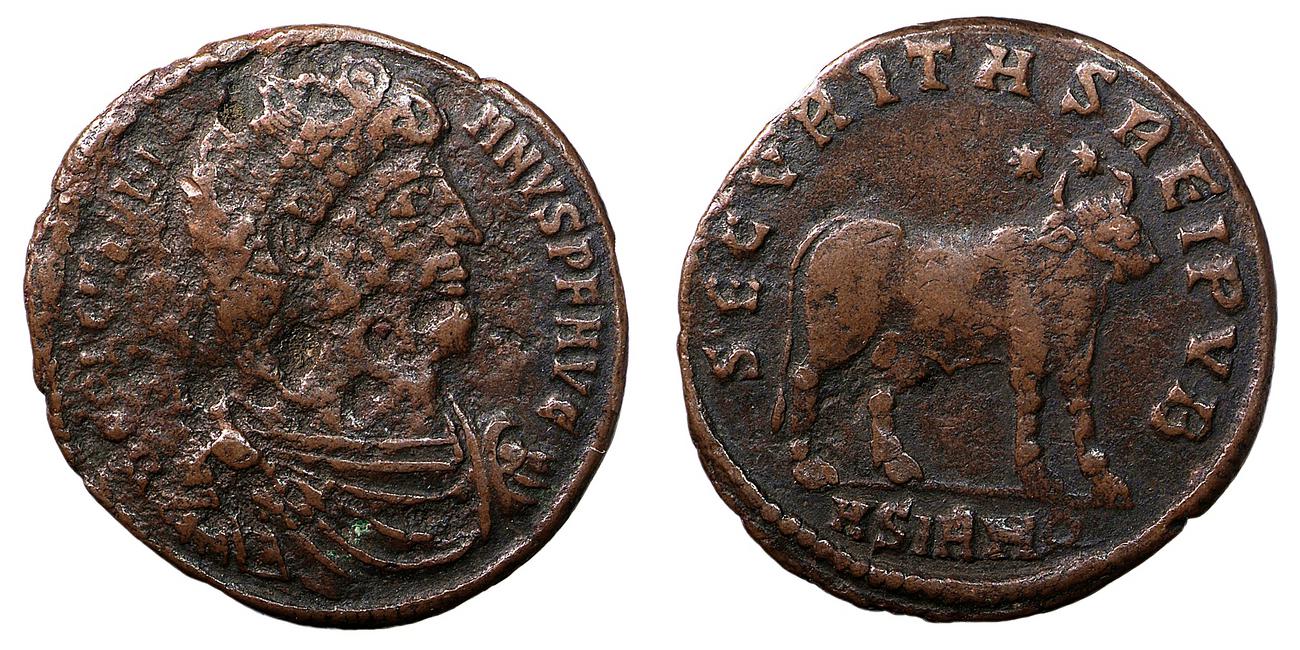
© The Trustees of the British Museum, B.3807. CC BY-NC-SA 4.0. https://www.britishmuseum.org/collection/object/C_B-3807
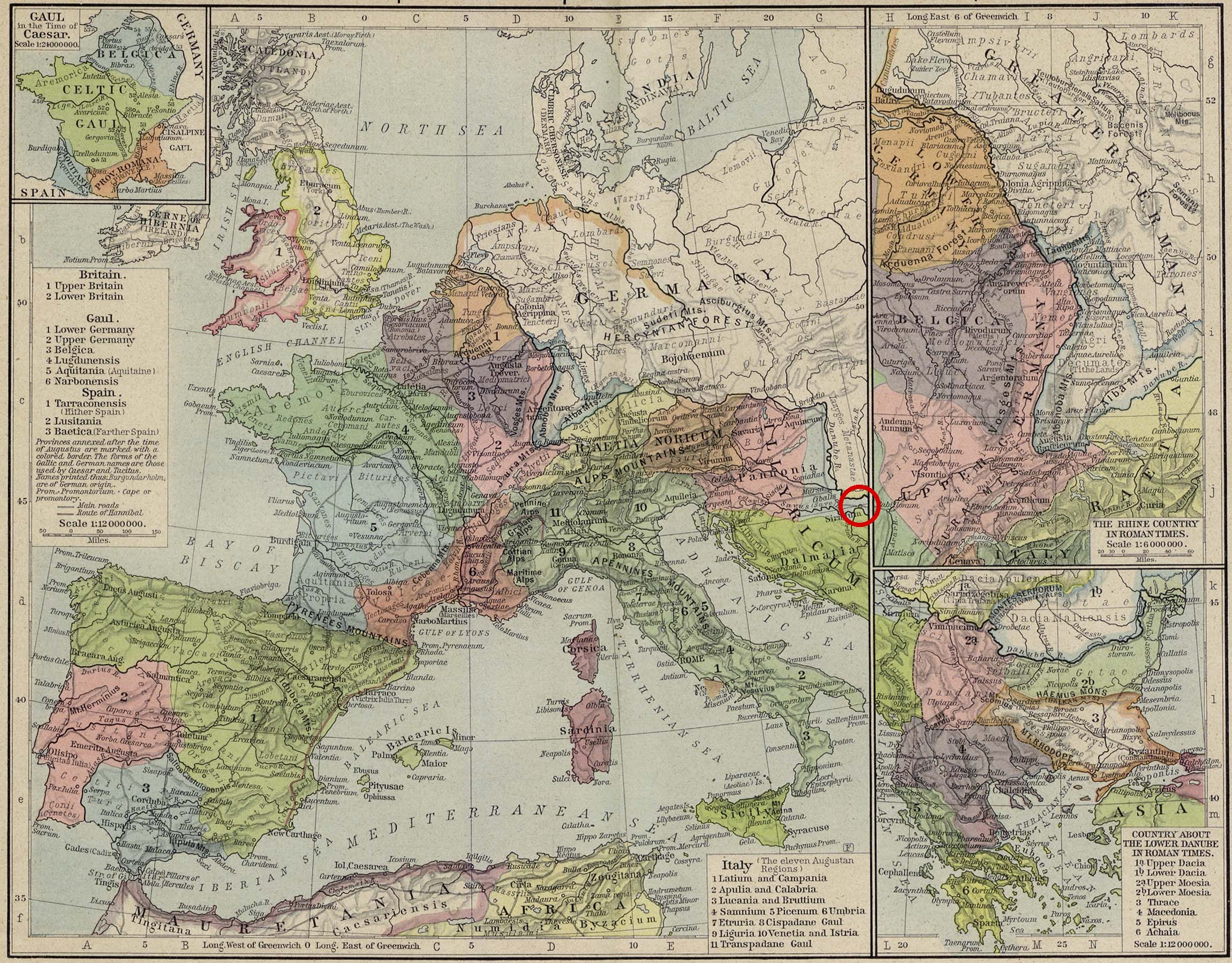
The European provinces of the Roman Empire (Shepherd’s reference map). Sirmium - circled in red - sits on the Savus (Save/Sava) in Pannonia, at the road junction between Italy, the Danube frontier and the Balkans. It was one of the great late-imperial capitals, and Julian took it in 361 on his march east against Constantius II; the mint struck this coin for him in the two years he had left.
“Reference Map of the European Provinces of the Roman Empire” by William R. Shepherd, Historical Atlas (Henry Holt & Co., 1926 printing), public domain; via Wikimedia Commons, File:European Provinces of the Roman Empire.jpg (scan via the Perry-Castaneda Library, University of Texas). Red circle added to mark Sirmium.
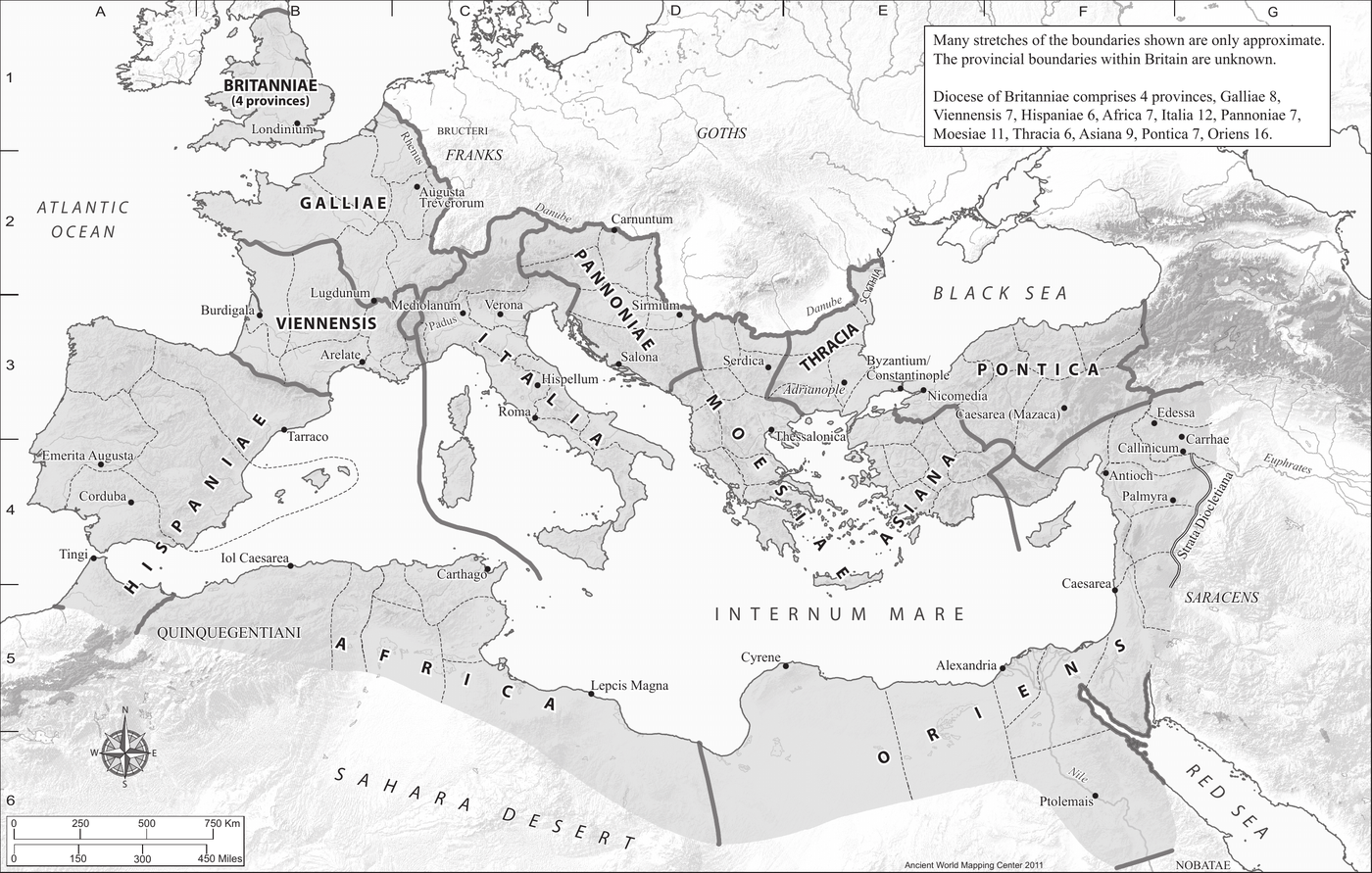
Sirmium, on the Save in Pannonia, struck this double maiorina. It was a headquarters as much as a mint — the Danube frontier command, and the city from which Julian marched east in 361 to claim the empire this map shows.
Ancient World Mapping Center, University of North Carolina at Chapel Hill (2011). Trimmed to the plate; licensed CC BY-SA 4.0, via Wikimedia Commons.
Flavius Claudius Julianus was the nephew of Constantine the Great and the last member of his house to rule. He had been raised a Christian, kept alive through the purge that killed most of his family, educated in Athens, and sent to Gaul in 355 as a figurehead Caesar whom nobody expected to survive. He turned out to be a formidable general, beat the Alamanni at Strasbourg, and in February 360 was proclaimed Augustus by his own troops at Paris against his cousin Constantius II. Civil war was averted only because Constantius died on the march in November 361. Julian then announced, publicly and in writing, that he had abandoned Christianity years earlier, and spent the twenty months remaining to him trying to restore the old gods to an empire that had stopped believing in them. He was killed by a spear in Mesopotamia on 26 June 363, aged thirty-one, and the pagan restoration died with him.
This is his coin, and it is unlike anything else in the late empire. It is enormous - about 29 mm and 9 g at a moment when the ordinary imperial bronze was a thin disc of a few grams. It shows the emperor with a full philosopher’s beard, a deliberate archaism no ruler had worn since Marcus Aurelius two centuries earlier, and one the citizens of Antioch mocked him for so relentlessly that he wrote a satire against them about it. And on the reverse it carries a bull.
Nobody knows, and the honest state of the question is that the arguments are all still live. Four readings are in circulation, none of them decisive:
The Apis bull. In 362 the governor of Egypt wrote to Julian that after a long search a new Apis bull had finally been found (Ammianus 22.14.6). The Apis was the sacred bull of Memphis, its discovery a major omen, and its reappearance after a gap fitted Julian’s programme of restoration exactly. This is the reading with a datable event behind it.
The sacrificial bull of the restored cult. Julian’s sacrifices were notorious even to sympathisers. Ammianus, who admired him, wrote that he was “superstitious rather than truly religious” and killed so many victims that cattle would have run short had he returned from Persia, quoting an old epigram about white oxen dreading a victorious emperor (25.4.17). On this reading the bull is simply what the emperor was doing: the visible, expensive, deeply unpopular restoration of blood sacrifice.
Taurus the zodiacal sign. The two stars above the bull invite an astrological reading, and Julian’s Neoplatonism was saturated in solar and celestial theology.
A bull of Serapis or of Mithras. Both cults mattered to Julian and both use bull imagery; neither produces an exact iconographic match for this design.
RIC VIII sets the alternatives out without settling them, and no ancient source explains the type. What can be said is that the coin was a statement - a huge, heavy, unmistakably pagan piece of metal issued in the emperor’s own name at the moment of maximum confrontation with the Christian establishment - and that the legend chosen to accompany it, SECVRITAS REIPVB, “the security of the state”, claims that the old gods and the empire’s safety are the same thing.
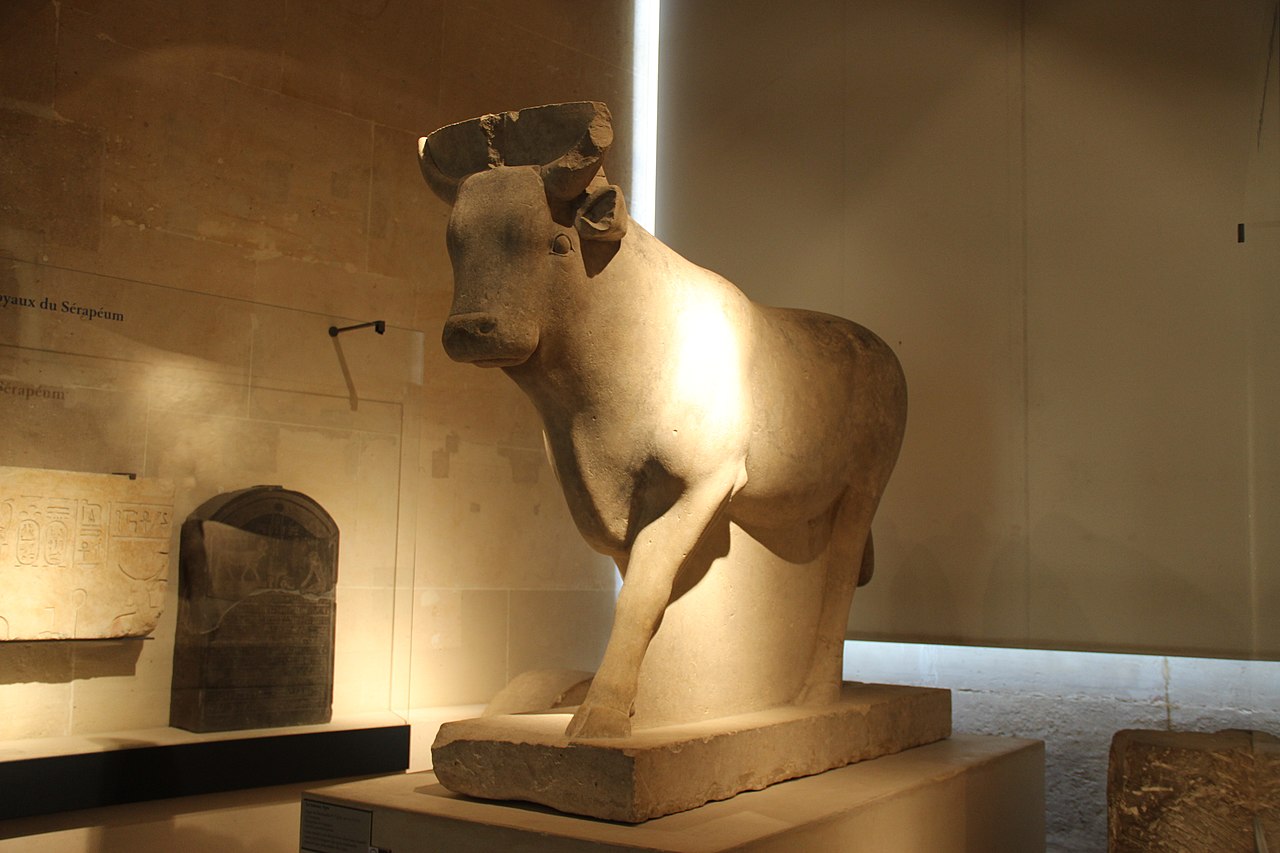
Photo: Gary Todd, Wikimedia Commons, released under CC0.
The mintmark puts this coin in Pannonia. Sirmium - modern Sremska Mitrovica in Serbia - was one of the four great late-Roman capitals, a walled city on the Sava with an imperial palace, a hippodrome and an arms factory, sitting where the roads from Italy, the Danube and the Balkans met. Julian reached it in the autumn of 361 during his march east against Constantius; the city and its troops came over to him without a fight (Ammianus 21.10), and its mint struck in his name from then until his death.
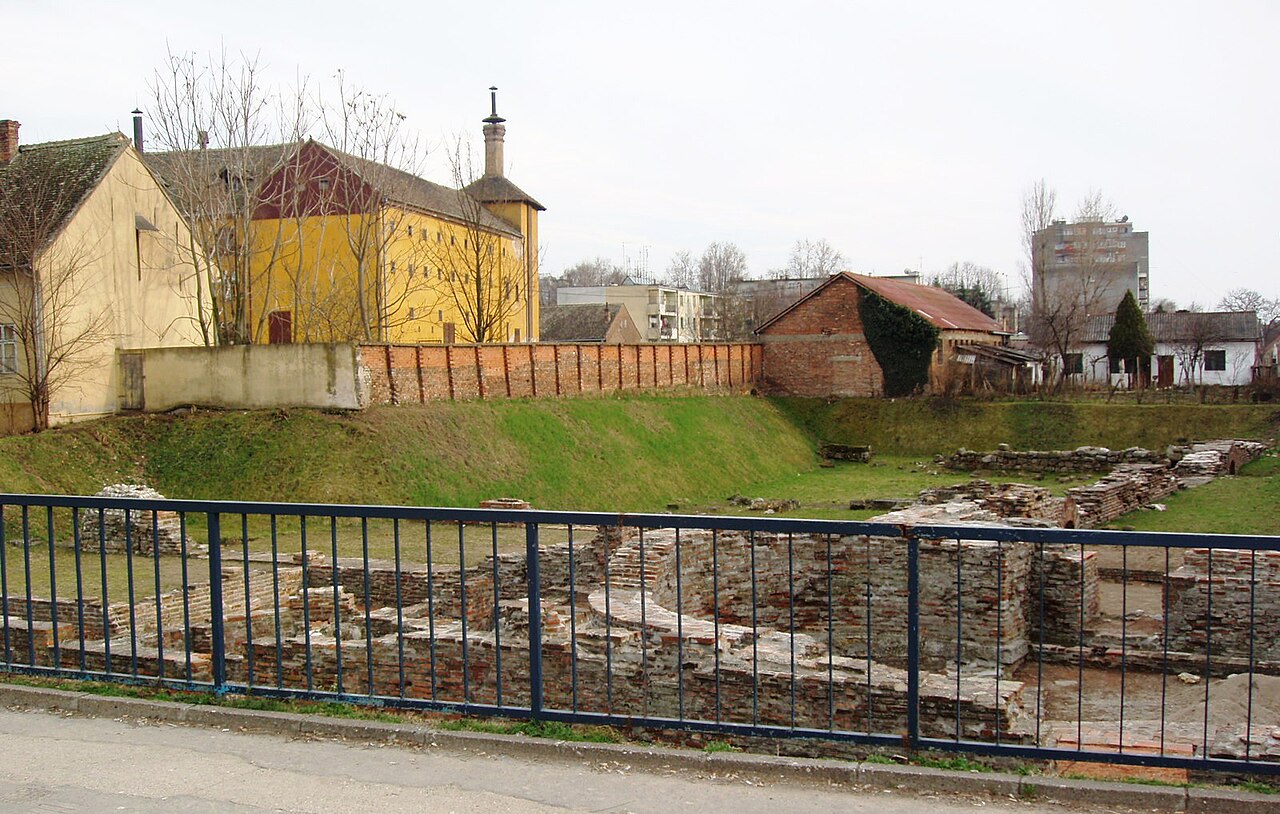
Photo: Ant83, Wikimedia Commons, released into the public domain by its author.
Julian’s big bronzes were withdrawn quickly after his death and the denomination did not survive him. The late-Roman thread in this collection runs on either side of it: the two Constantinian folles of London and Lugdunum from his uncle’s reign a generation before, and then Magnus Maximus and the Honorius maiorina from the Christian empire that closed over the top of him within a decade.
Graphic: JSB Coins, 2026 (CC0).
Attribution: RIC VIII Sirmium 105 as catalogued by MARS VLTOR (Vienna), Auction 27, lot 352; the competing exergual reading (RIC VIII Sirmium 107) and the reason the question is open are set out in the type notes and in the WildWinds Julian II index. The Apis bull found in Egypt and reported to Julian: Ammianus Marcellinus 22.14.6. Julian’s sacrifices and the white-oxen epigram: Ammianus 25.4.17. The submission of Sirmium in 361: Ammianus 21.10. Julian’s proclamation at Paris in 360 and his death in Mesopotamia on 26 June 363: Ammianus 20.4 and 25.3. The beard and the Antiochenes: Julian’s own Misopogon (“Beard-Hater”), written at Antioch in early 363. The four readings of the bull are given above as competing, not resolved; no ancient source explains the type.
The largest Roman bronze in nearly a century: c. 28-30 mm and 8-9 g, struck under Julian's coinage reform of 362-363, at a moment when the standard imperial bronze had shrunk to a button. Struck at Antioch, Constantinople, Cyzicus, Heraclea, Nicomedia, Sirmium and Thessalonica among others; mint affects interest, not price. REFERENCE UNRESOLVED. MARS VLTOR catalogued this coin as RIC 105 and read the exergue as *ASIRM with a branch. In the WildWinds RIC VIII index the star-ASIRM-palm-branch exergue is 107 (an AE1) while 105 is ASIRM/BSIRM in a wreath; but 107 there carries the shorter obverse legend FL CL IVL-ANVS P F AVG, and this coin plainly reads D N FL CL IVLIANVS P F AVG, which belongs with 105/106. The two criteria point different ways and the question cannot be settled from online indices. Recorded as the house gave it, with the alternative listed; see the specimen's open threads. Smoothing is the standard fault on the type - these big flans are usually found rough, and the trade re-works them. Prefer an honestly granular surface to a suspiciously flat one, and check that both stars above the bull are on the flan.
John's Ancient Coin Collection · Type · julian-ii-bull-double-maiorina
Image credits for this coin — photographs, maps and graphics used on this page
.jpg)
