Type · honorius-gloria-romanorum-maiorina
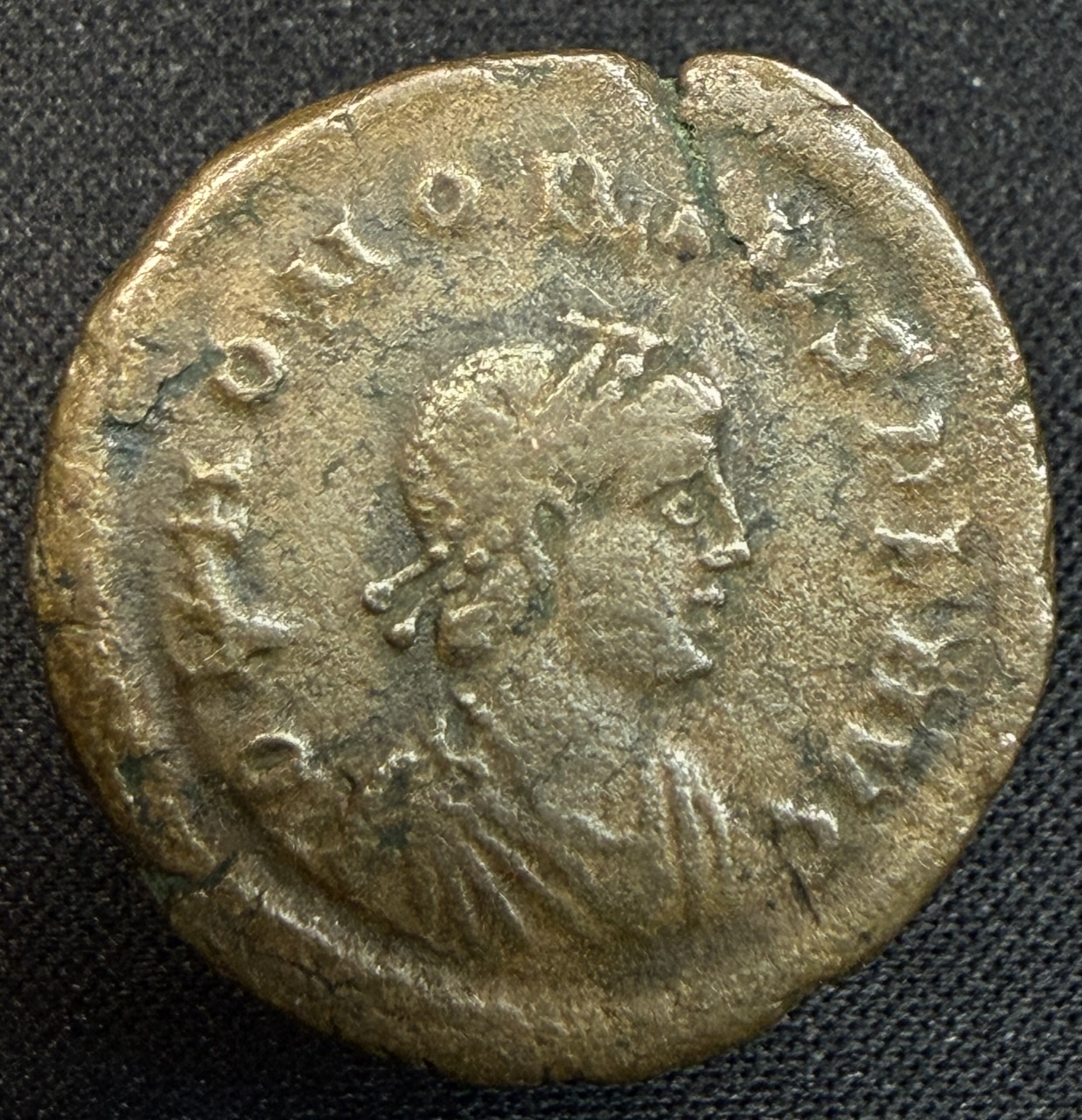
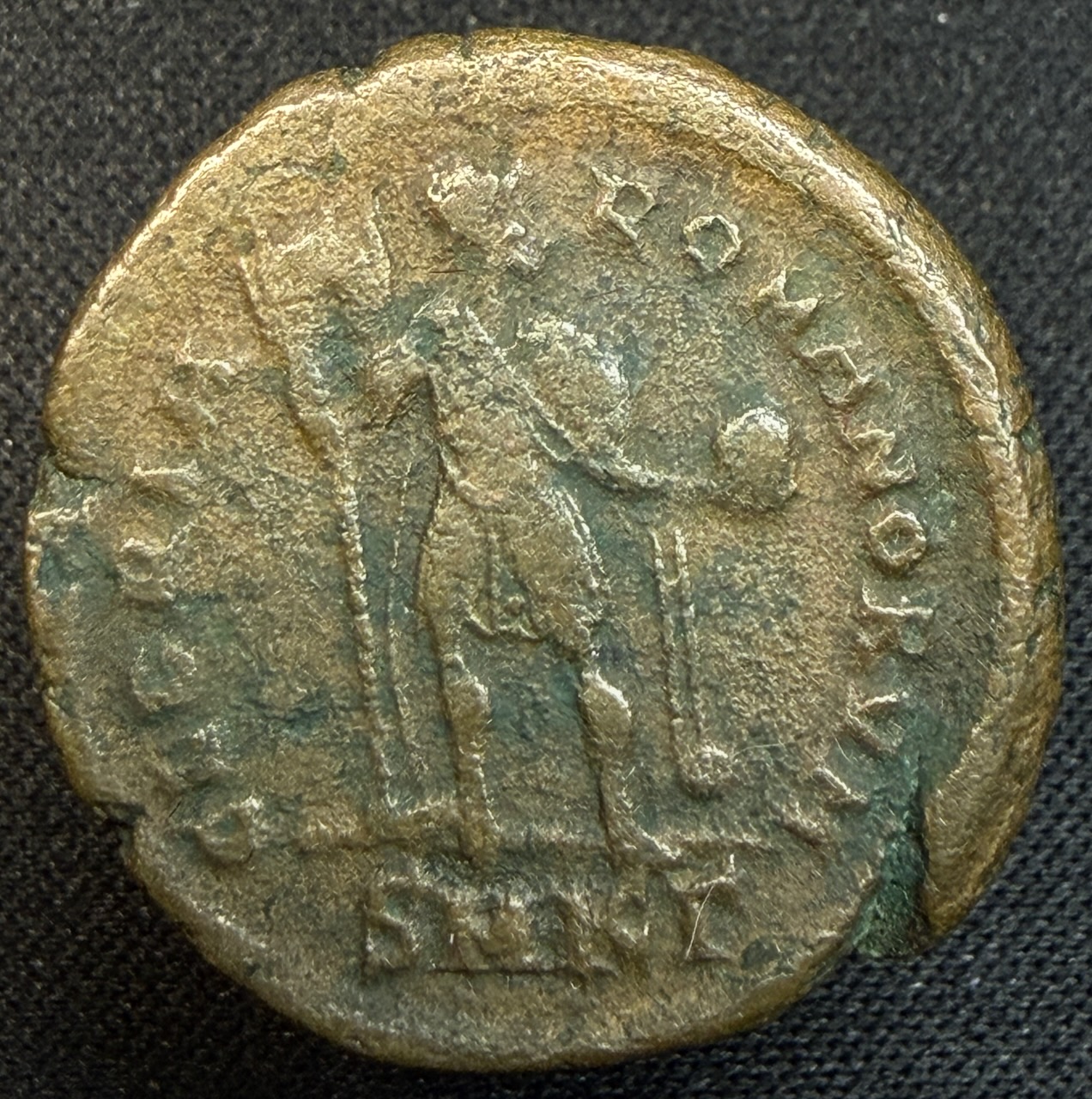
Current: Roman Imperial, Honorius, Æ maiorina (AE2), Cyzicus, 393–395 AD (RIC IX Cyzicus 28(c)3)
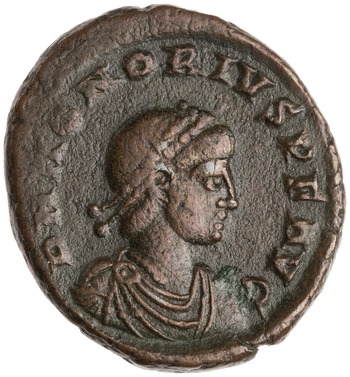
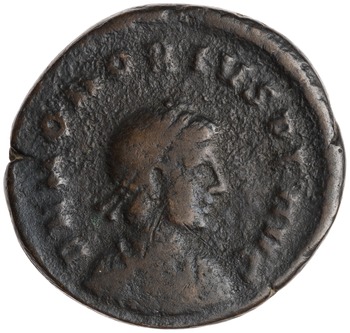
Obverse: Pearl-diademed, draped and cuirassed bust of Honorius right
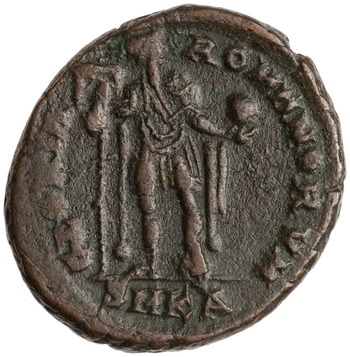
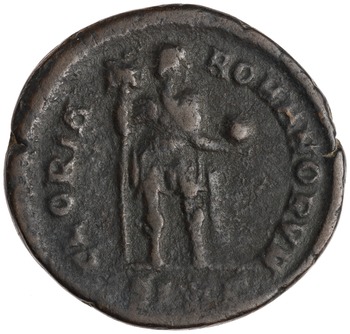
Reverse: Emperor standing facing, head right, diademed, in military dress, standard in right hand, globe in left hand; SMKΓ in exergue
Primary reference: RIC IX Cyzicus 28(c)3
for RIC IX Cyzicus 28C as a whole; 13 specimens in public collections (British Museum 5, ANS 3, Freiburg 2, Landesmuseum-vorgeschichte Halle 1, Göttingen 1); weights 3–5.39 g, median 4.67 g across 13 recorded; die axis most often 12h.
This collection's specimen, at 4.83 g (my scale), is heavier than 69% of the recorded weights.
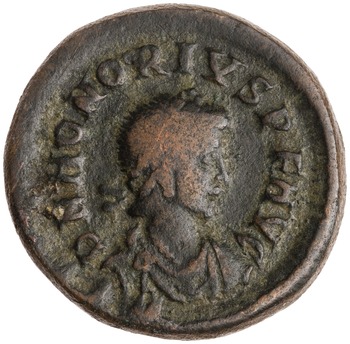
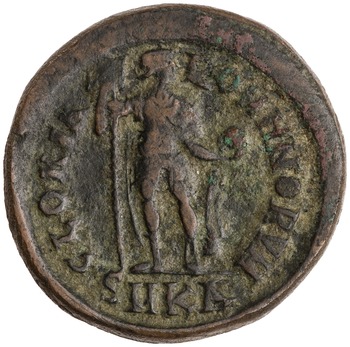
American Numismatic Society, 1944.100.25838. CC BY-NC 4.0. https://numismatics.org/collection/1944.100.25838
American Numismatic Society, 1944.100.25839. CC BY-NC 4.0. https://numismatics.org/collection/1944.100.25839
American Numismatic Society, 1944.100.25840. CC BY-NC 4.0. https://numismatics.org/collection/1944.100.25840
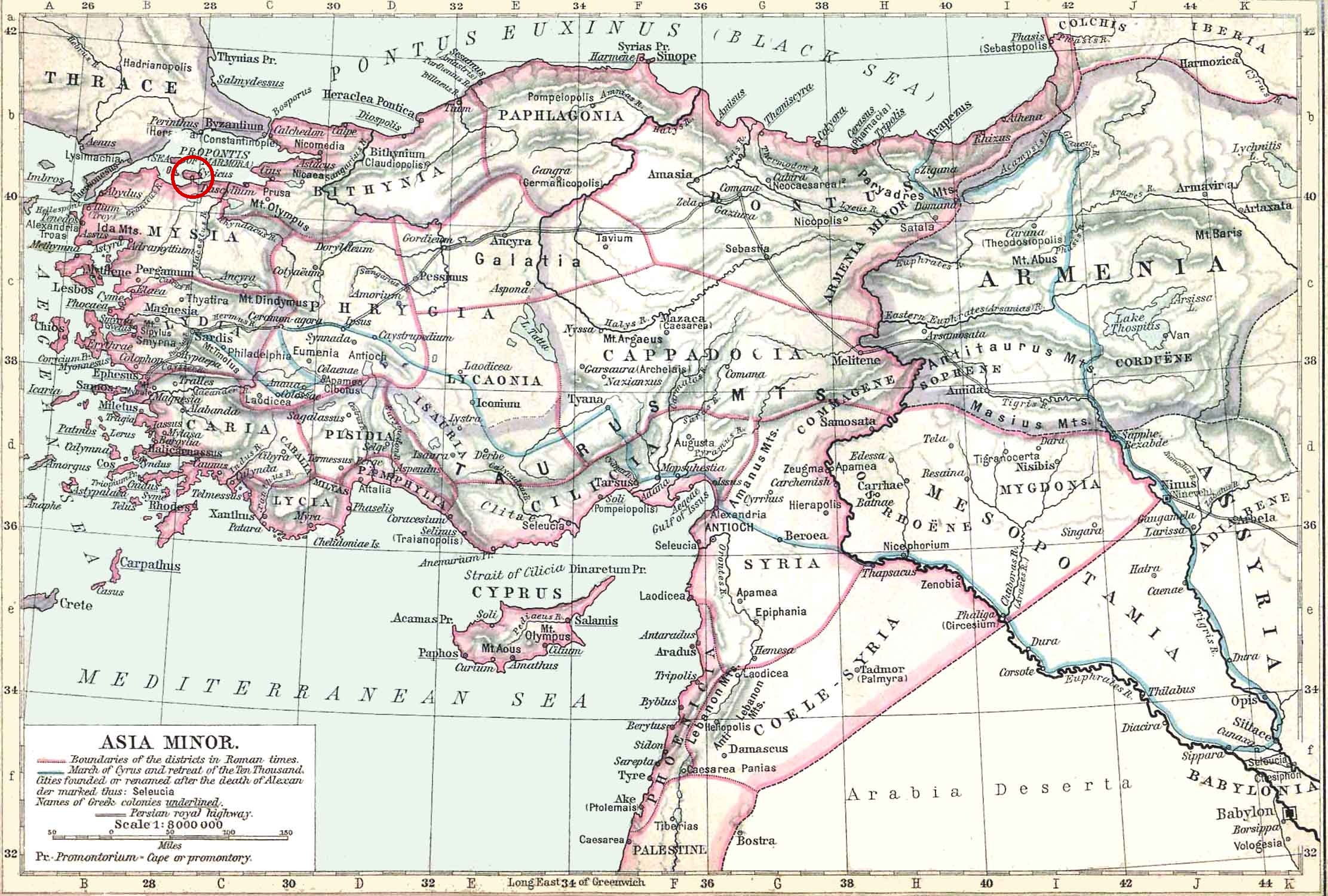
Ancient Asia Minor on Shepherd’s 1923 map. Cyzicus — circled in red — on its peninsula jutting into the Propontis (Sea of Marmara). By this coin’s day the city lay an easy sail from the new capital at Constantinople, and its mint (signing SMK) was one of the workhorses of the late Roman east. The same base map, with the same circle, serves the collection’s two Greek coins of Kyzikos.
“Asia Minor under the Greeks and Romans” from William R. Shepherd, The Historical Atlas (1923), via Wikimedia Commons, File:Asia minor-Shepherd 1923.JPG (https://commons.wikimedia.org/wiki/File:Asia_minor-Shepherd_1923.JPG). Public domain (author died 1934); credited as a courtesy. Modified by JSB Coins: a red circle added to mark Cyzicus (the same marked copy used for the collection’s Kyzikos electrum hekte and hemiobol).
This heavy bronze was struck in a two-year window that turned out to be the end of something: between January 393, when Theodosius I raised his younger son Honorius — then eight years old — to the rank of Augustus, and January 395, when Theodosius died at Milan and the Roman world was divided between his sons for good. Arcadius, the elder, took the east; Honorius took the west; and though contemporaries saw only the routine college of emperors this coin’s GLORIA ROMANORVM (“the glory of the Romans”) proclaims, the halves never again answered to one ruler. The reverse shows the boy-emperor as the ideal soldier — standing in military dress, labarum standard in one hand, the globe of world rule in the other — an image with no relation to the child in Milan, or to the man he became.
Honorius reigned twenty-eight years and is remembered as the emperor under whom Rome fell to Alaric’s Goths (410 AD) while the western court sat safe behind the marshes of Ravenna. The judgment of the sources — a weak ruler managed first by the great general Stilicho, then by lesser favorites, as the Forum tag on this specimen has it — has stuck. But when this coin was struck none of that had happened; it is the money of the empire’s last unified moment, its titulature (D N, Dominus Noster — “Our Lord”) showing how far the office had traveled from the citizen-princeps of the early coinage.
Graphic: JSB Coins (CC0).
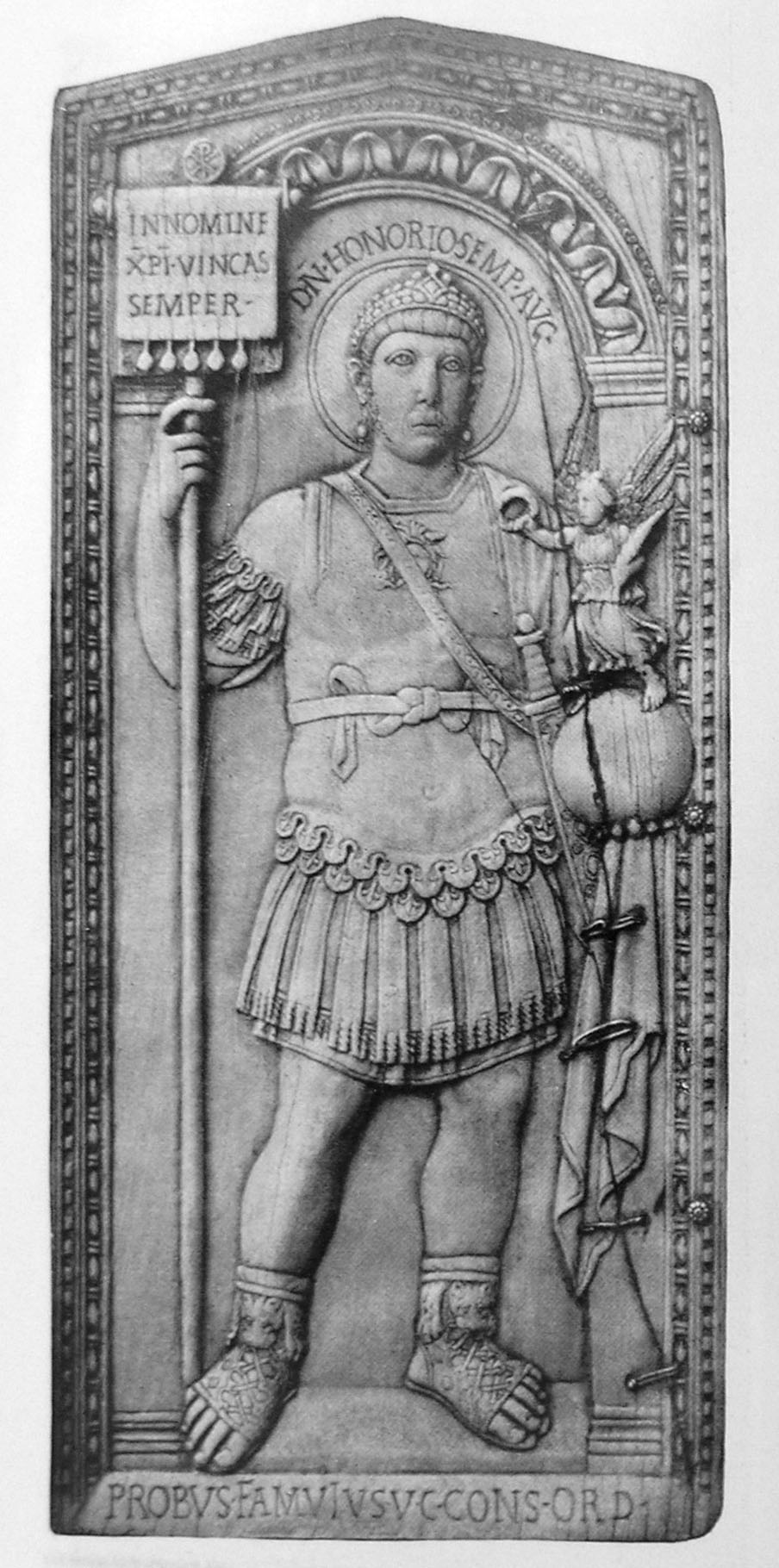
photograph of the ivory, public domain via Wikimedia Commons
The mint matters to this collection. SMK is Sacra Moneta Kyzikos with the third officina’s gamma: the same Cyzicus whose archaic electrum — the Athena hekte and the boar/lion hemiobol — opens this collection’s Greek series. Nearly a thousand years separate those coins from this one, and the city was striking money at both ends: few sites illustrate the sheer continuity of ancient minting better. The denomination — the maiorina or AE2, the largest bronze of the post-Julian system — was itself near its end: the reform of c. 395 abolished it, which brackets these GLORIA ROMANORVM issues tightly. For the same turbulent decade from the western side, compare the REPARATIO REIPVB piece of the usurper Magnus Maximus, whom Honorius’ father crushed in 388. The emperor whose name that denomination is dated against is also here: the bull double maiorina of Julian II, the outsized AE1 of 361-363 that the maiorina proper followed.
Attribution: RIC IX Cyzicus 28(c)3; LRBC II 2573; SRCV V 20988; Cohen VIII 20 (DOCLR: not listed), per Forum Ancient Coins’ tag — see the WildWinds Honorius index for the type. The division of 395 and Honorius’ reign: Zosimus 5–6 (Book 5, with Stilicho’s regency, is linked in the references); J. B. Bury, History of the Later Roman Empire, ch. 5–6. On the late bronze denominations and the c. 395 reform, the introductions to RIC IX (Pearce) and LRBC.
Struck at Cyzicus (SMK = Sacra Moneta Kyzikos; Γ = 3rd officina) in the two years between Honorius' elevation to Augustus (23 Jan 393) and the death of his father Theodosius I (17 Jan 395) — the brief window when the empire was last ruled as one. The GLORIA ROMANORVM standard-and-globe type is the big pre-reform bronze (maiorina/AE2) struck across the eastern mints for Theodosius, Arcadius and Honorius alike; the denomination was discontinued in the coinage reform of c. 395. DOCLR lists no example (per Forum's tag). The mint is entered here as Kyzikos to match the collection's Greek coins of the same city.
John's Ancient Coin Collection · Type · honorius-gloria-romanorum-maiorina
Image credits for this coin — photographs, maps and graphics used on this page