Type · constantine-i-lugdunum-sol-follis
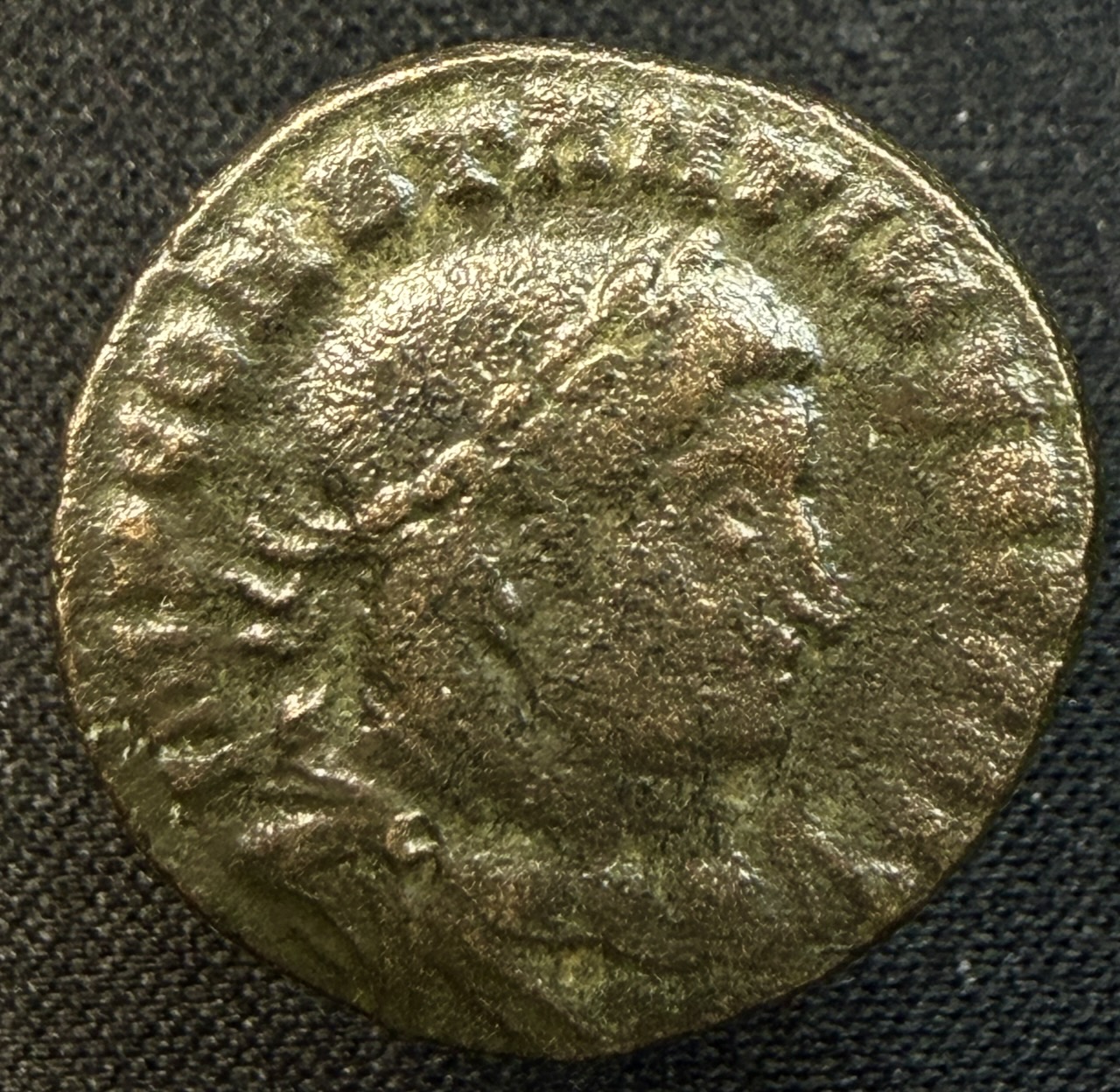
Current: Roman Imperial, Constantine I, billon follis, Lugdunum, c. 313–316 AD (Sear 3868 per tag; exact RIC VII Lugdunum issue undetermined)
Obverse: Laureate bust of Constantine I right (drapery/cuirass detail unclear from wear)
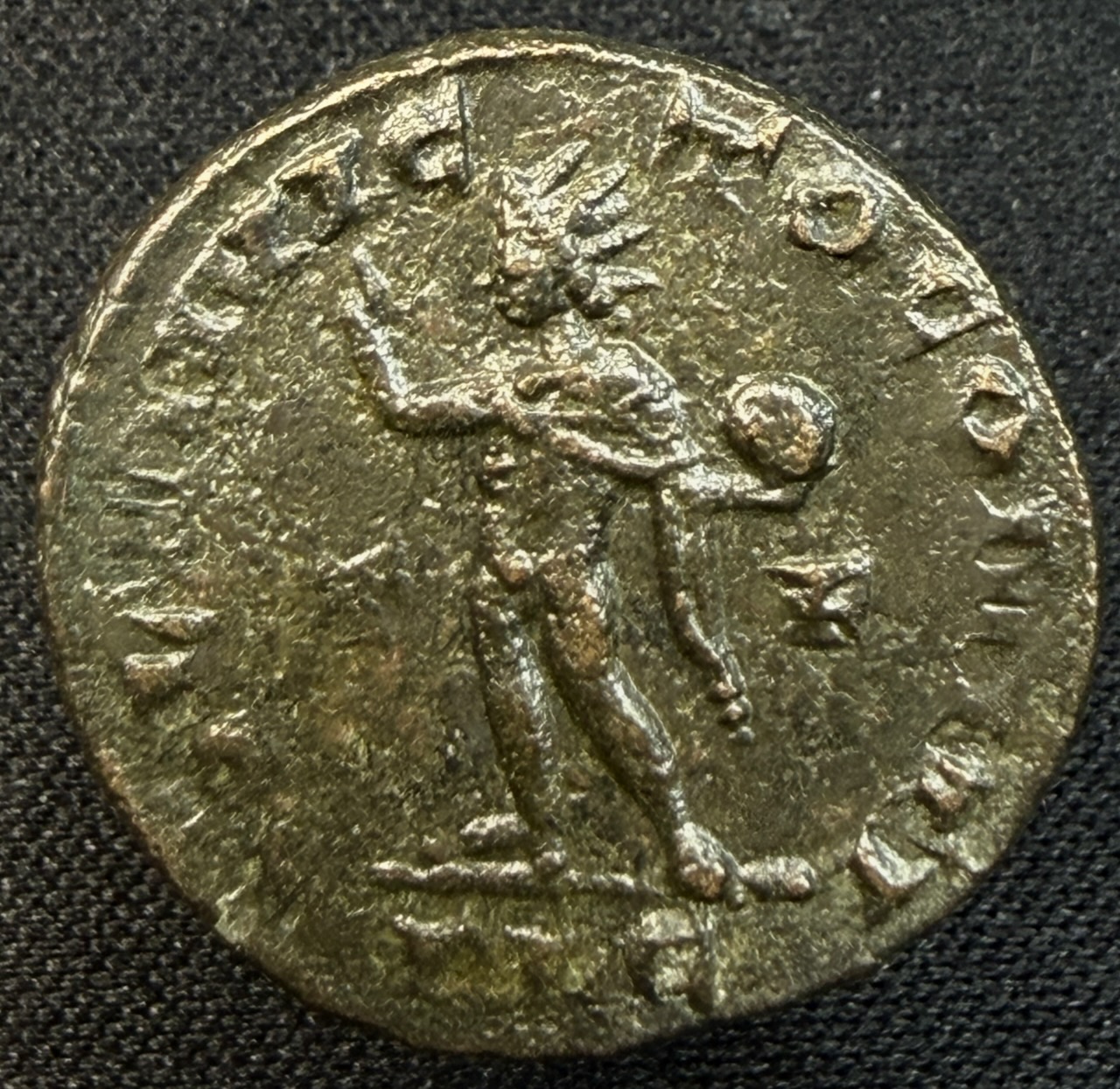
Reverse: Sol standing left, radiate, chlamys over shoulder, raising right hand, globe in left hand; field mark at right (reading uncertain); mintmark in exergue (PLG-type, partly off flan)
Primary reference: Sear 3868 (older single-volume edition, per John's tag)
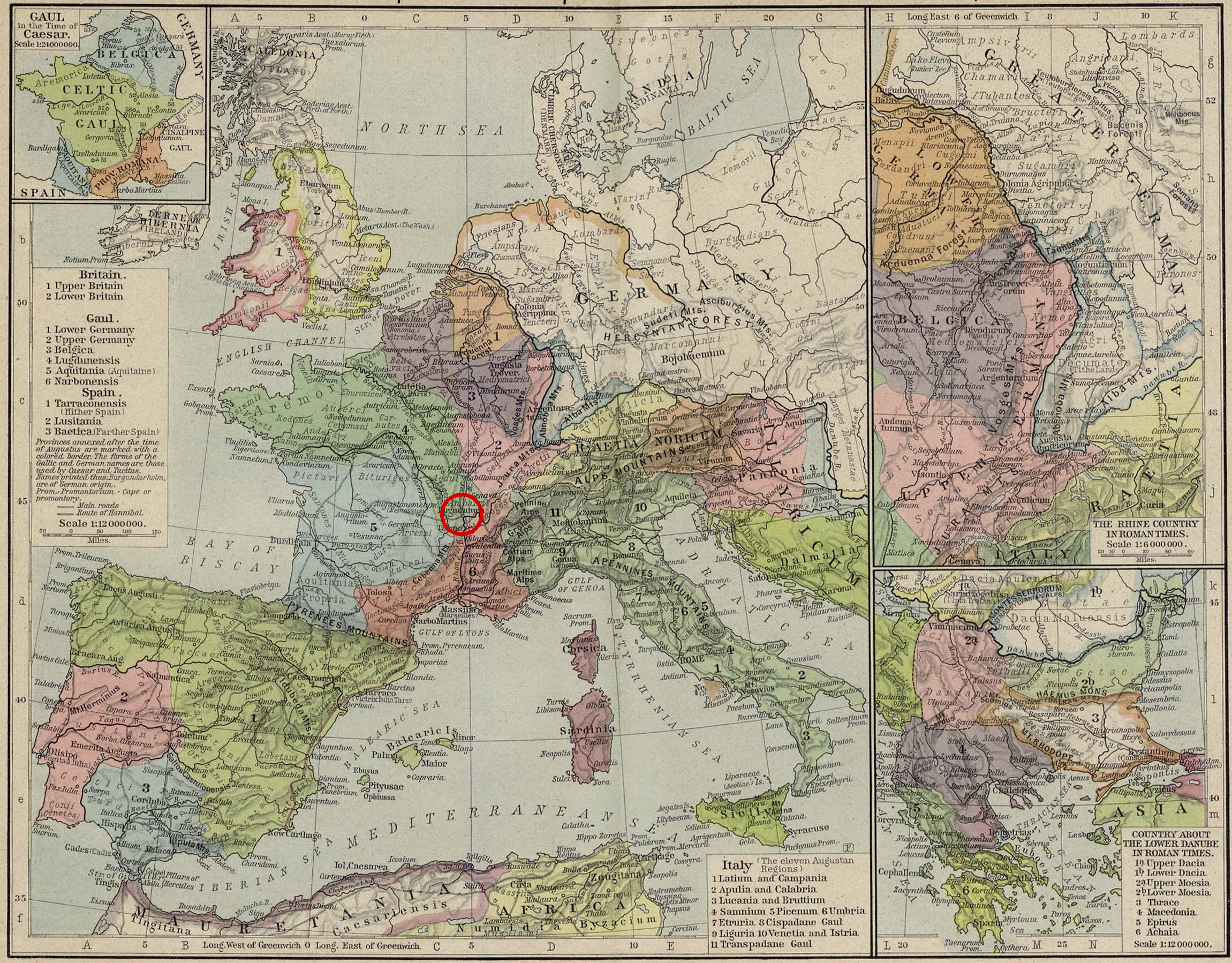
The European provinces of the Roman Empire (Shepherd’s reference map). Lugdunum — circled in red — sits at the confluence of the Rhône and Saône in Gallia Lugdunensis. Three centuries after striking the empire’s early silver, the city was a second-rank but steady mint of Constantine’s bronze. Click through to the inset for a closer view of Gaul.
“Reference Map of the European Provinces of the Roman Empire” by William R. Shepherd, Historical Atlas (Henry Holt & Co., 1926 printing), public domain; via Wikimedia Commons, File:European Provinces of the Roman Empire.jpg (scan via the Perry-Castañeda Library, University of Texas). Red circle added to mark Lugdunum (the same marked copy used for the collection’s Tiberius denarius).
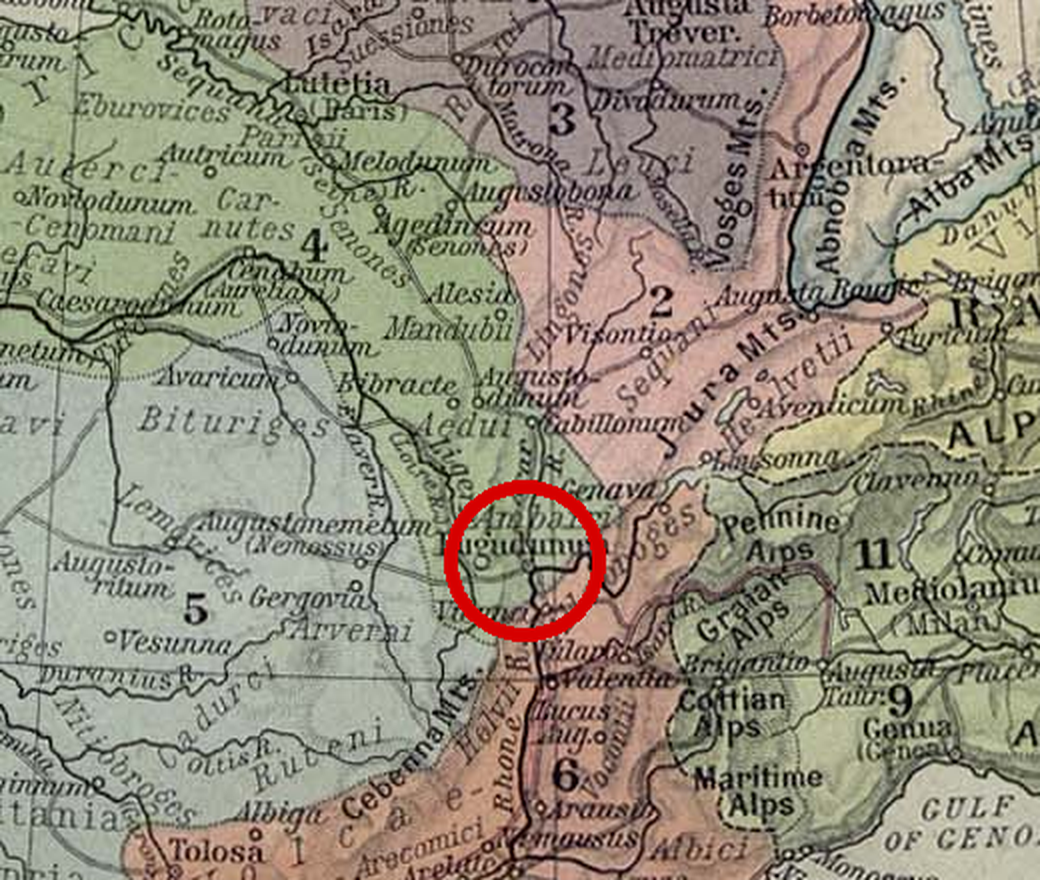
Detail: central Gaul, with Lugdunum circled in red at the Rhône–Saône confluence — Vienna of the Allobroges just downstream, Genava to the east, and the old Aeduan centers Bibracte and Augustodunum to the northwest.
This is the western twin of the collection’s London Sol follis: the same SOLI INVICTO COMITI reverse — the radiate Sun-god raising his hand, globe in palm, the emperor’s divine “companion” — struck at Lugdunum (Lyon) in the years after the Milvian Bridge. Together the pair shows how a single religious-political program was stamped across Constantine’s mints: from Britain to the Rhône, the same god, the same legend, the same gesture, distinguishable only by mintmarks and the small field letters each mint used to sequence its issues. Sol held this place on the coinage until about 318–319, when the pagan imagery quietly gave way to safer soldiers-and-standards types; the Sol folles are the last great pagan type of Roman coinage.
Graphic: JSB Coins (CC0).
Lugdunum the mint was by now three centuries old, and this collection happens to hold both ends of its story: under Tiberius it had been the empire’s principal silver mint, striking the PONTIF MAXIM “Tribute Penny” by the million; under Constantine it was a provincial bronze mint signing PLG. The same Shepherd map (same red circle) serves both type pages.
Photo: Livioandronico2013, Wikimedia Commons, licensed CC BY-SA 4.0, reproduced unmodified.
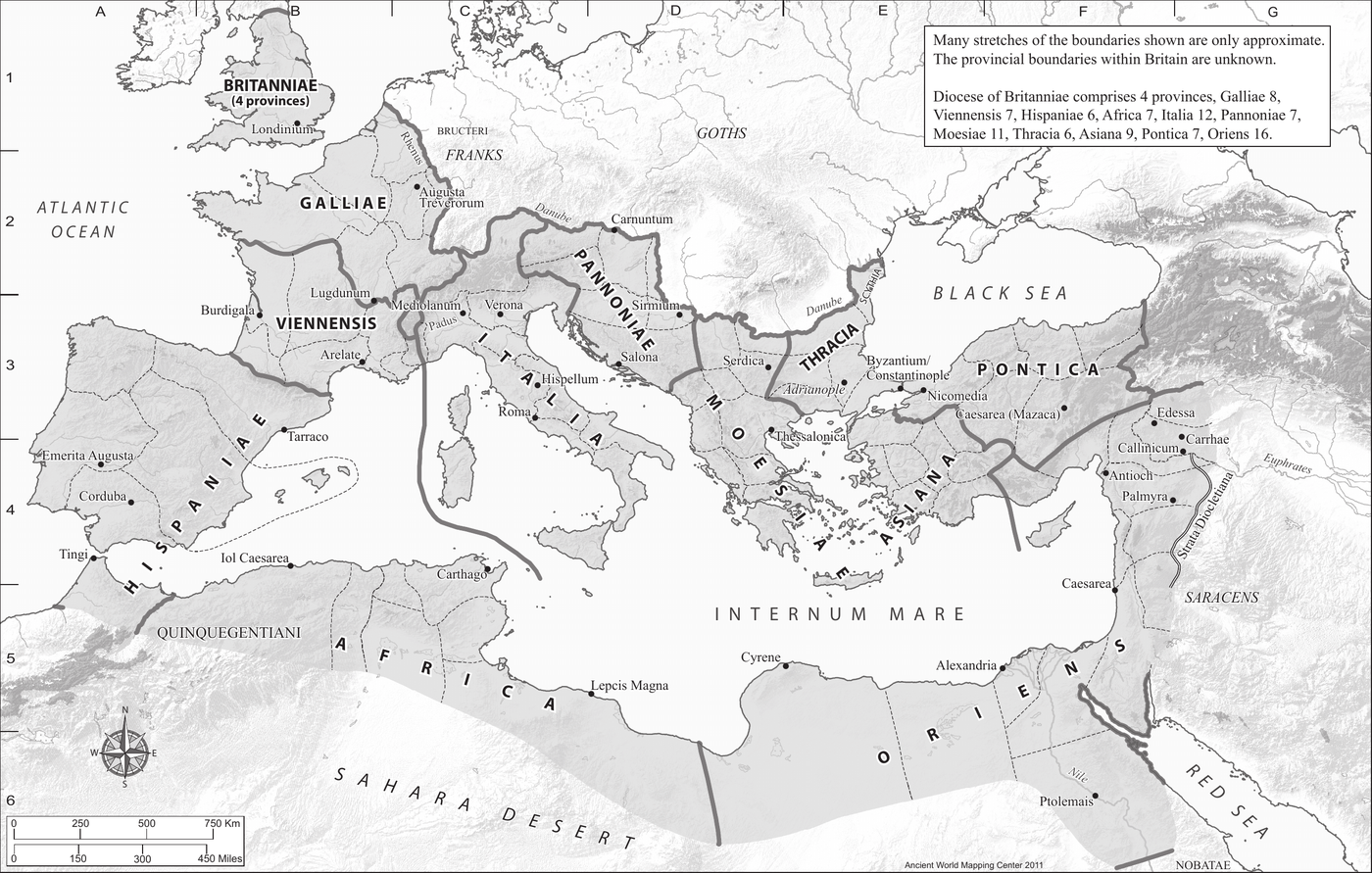
Ancient World Mapping Center, University of North Carolina at Chapel Hill (2011). Trimmed to the plate; licensed CC BY-SA 4.0, via Wikimedia Commons.
Lugdunum* sits in the Gallic dioceses, on the Rhône — this coin’s mint, and one of the ring of regional mints the Tetrarchy established so that each quarter of the empire could pay its own troops. Compare Londinium* to the north-west, which struck the other Constantinian follis in this collection.
John’s tag identifies the mint and cites Sear 3868, the old single-volume Sear number for this group; the exact RIC VII Lugdunum issue turns on a field mark and an exergue that this flan keeps mostly to itself. Rather than pick a number the coin cannot yet support, the type is filed by mint and series (c. 313–316 AD) with the candidates noted — the field-letter check in hand is on the specimen’s open threads. Constantine’s own nephew took the house in the opposite direction: see the bull double maiorina of Julian II, the last coinage of this dynasty and the only openly pagan one.
Attribution: Sear (older single-volume edition) 3868 per John’s tag; the Lugdunum Sol series and its field-letter issues are laid out in RIC VII (Bruun), Lugdunum, c. 313–316 — see the WildWinds Constantine index for paralleled examples, and P. Bastien, Le monnayage de l’atelier de Lyon for the mint’s corpus. On Sol’s place and disappearance on Constantine’s coinage: Bruun’s introduction to RIC VII.
ATTRIBUTION BEYOND THE MINT IS PROVISIONAL. John's tag gives the mint (Lugdunum) and Sear 3868 — the older single-volume Sear number for the Constantine Sol/PLG follis group. RIC VII Lugdunum's Sol issues of c. 313–316 are distinguished by field letters (S|F in 313–314; A|S and others in 315–316) and exergue form (PLG/PLC); on the collection's specimen the exergue is partly off the flan and the right-field mark is unclear (possibly a letter, possibly a symbol — it reads almost like a small altar shape), so the exact RIC number is left open. See the specimen's open threads for the in-hand checks that would settle it.
John's Ancient Coin Collection · Type · constantine-i-lugdunum-sol-follis
Image credits for this coin — photographs, maps and graphics used on this page
_,lateral_view.jpg)