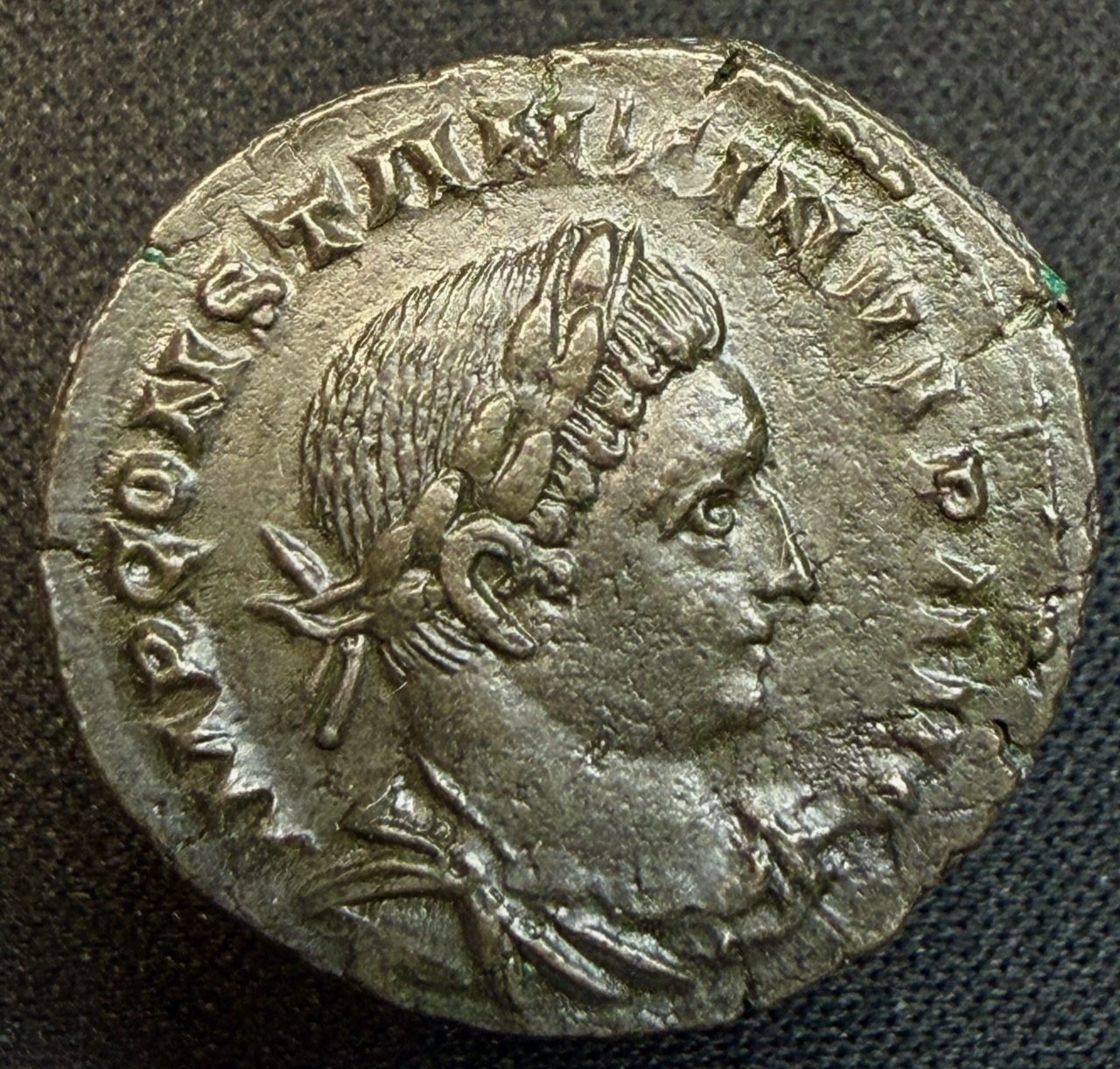
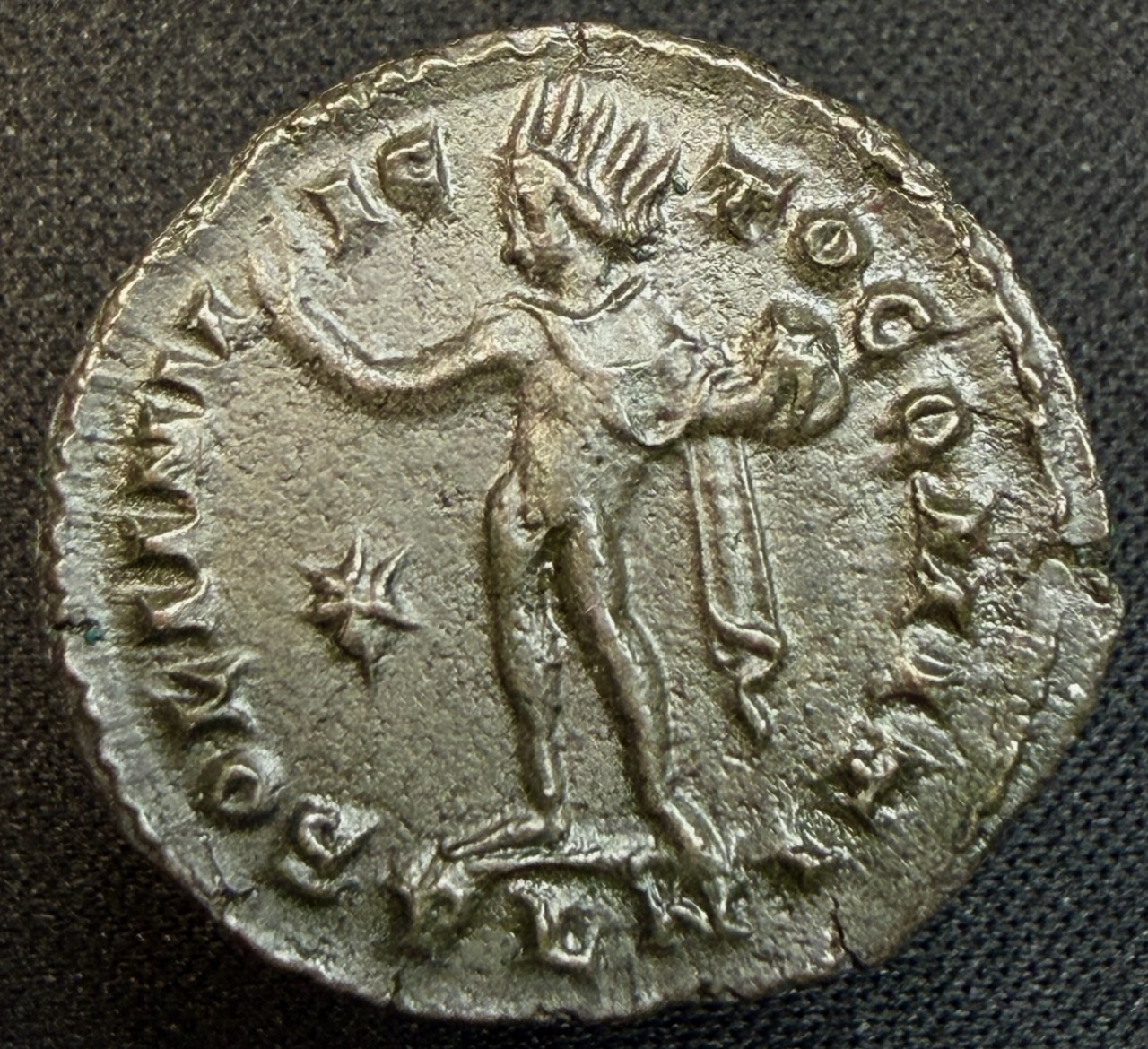
Type · constantine-i-london-sol-follis
Current: Roman Imperial, Constantine I, billon follis, Londinium, 312–313 AD (RIC VI Londinium 279)
Superseded: RIC VI 282 London (per the earlier Ancient Imports/MRB slip — see notes)
Obverse: Laureate, draped and cuirassed bust of Constantine I right
Reverse: Sol standing slightly left, radiate, nude but for chlamys over shoulders, raising right hand, globe in left hand; star in left field, PLN in exergue
Primary reference: RIC VI Londinium 279
5 specimens in public collections (ANS 2, British Museum 2, Vienna 1); 14 British finds recorded by the Portable Antiquities Scheme; weights 1.29–3.35 g, median 2.725 g across 12 recorded; die axis most often 6h.
This collection's specimen, at 3.31 g (my scale), is heavier than 83% of the recorded weights.
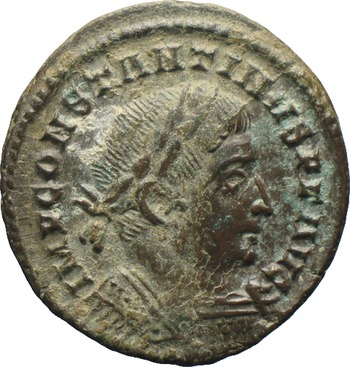
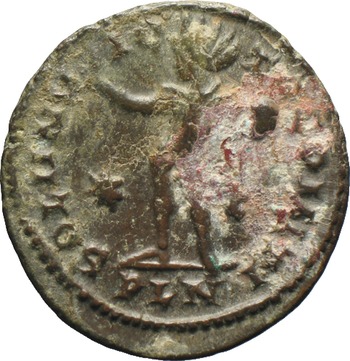
American Numismatic Society, 0000.999.673. CC BY-NC 4.0. https://numismatics.org/collection/0000.999.673
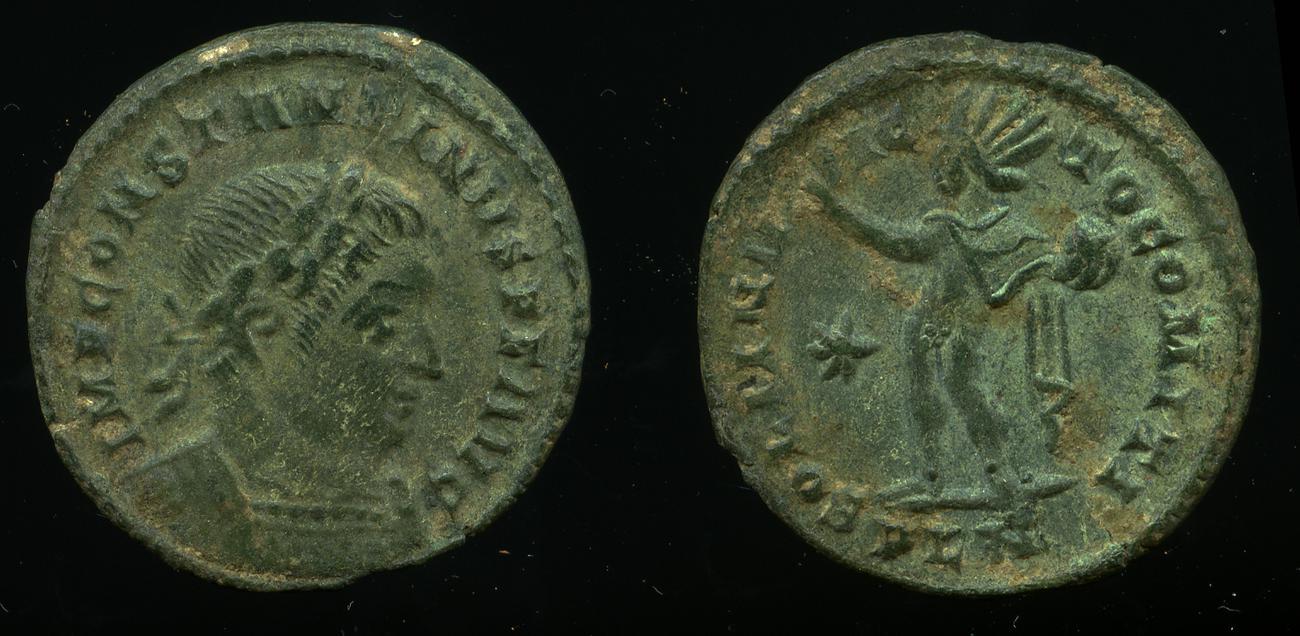
© The Trustees of the British Museum, 2012,4083.13. CC BY-NC-SA 4.0. https://www.britishmuseum.org/collection/object/C_2012-4083-13
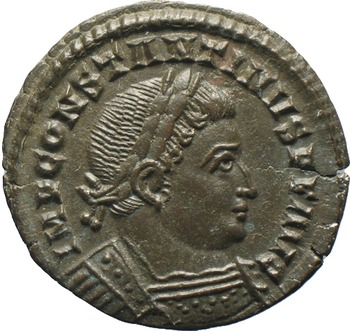
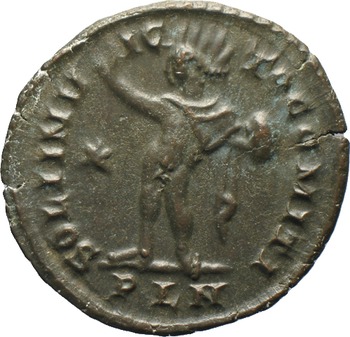
American Numismatic Society, 1984.146.1228. CC BY-NC 4.0. https://numismatics.org/collection/1984.146.1228
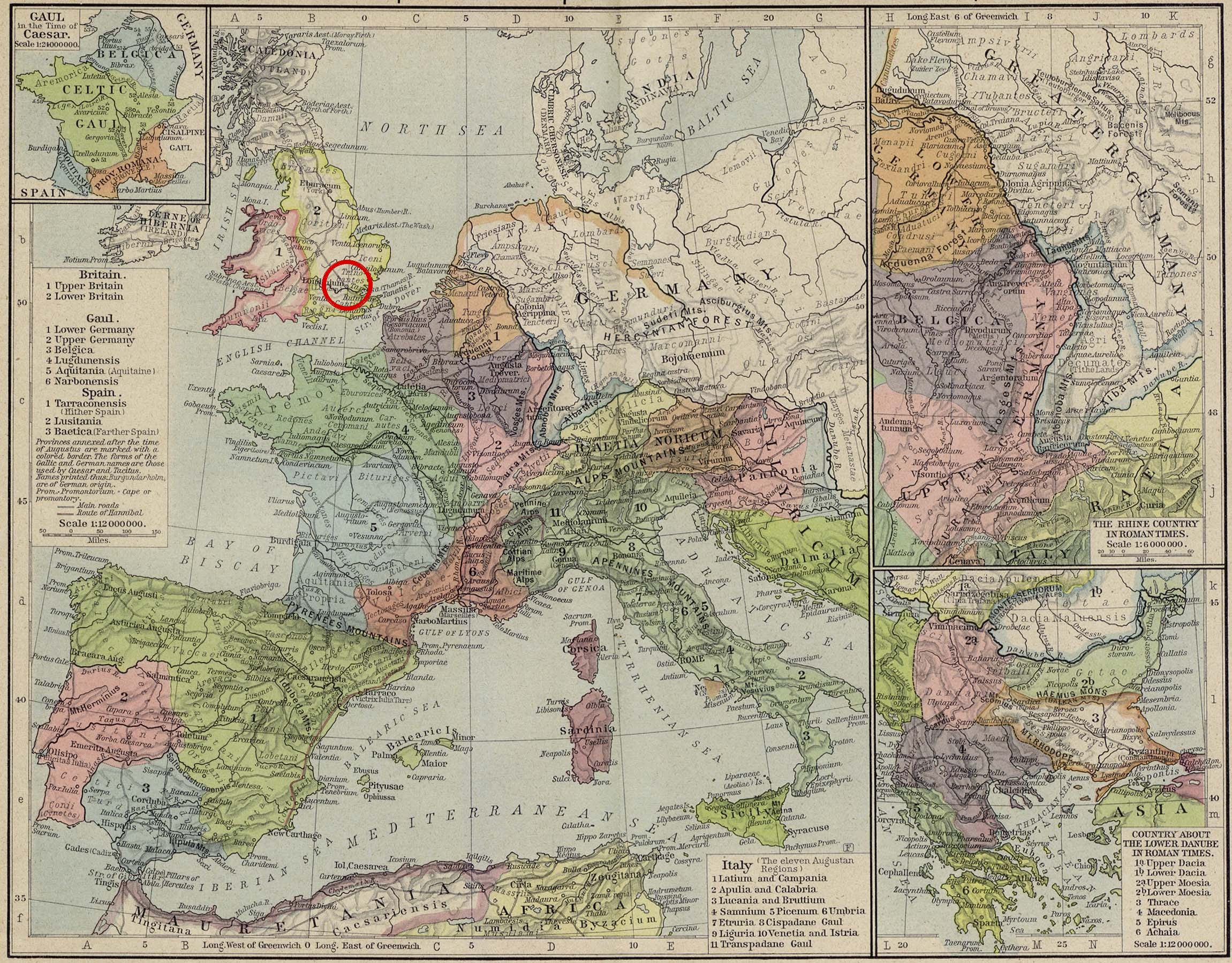
The European provinces of the Roman Empire (Shepherd’s reference map). Londinium — circled in red — sits on the Thames in Lower Britain. Constantine’s career began at the other end of this map’s world (he was acclaimed at Eboracum/York in 306); London was the westernmost mint of his growing empire when it struck this coin.
“Reference Map of the European Provinces of the Roman Empire” by William R. Shepherd, Historical Atlas (Henry Holt & Co., 1926 printing), public domain; via Wikimedia Commons, File:European Provinces of the Roman Empire.jpg (scan via the Perry-Castañeda Library, University of Texas). Red circle added to mark Londinium.
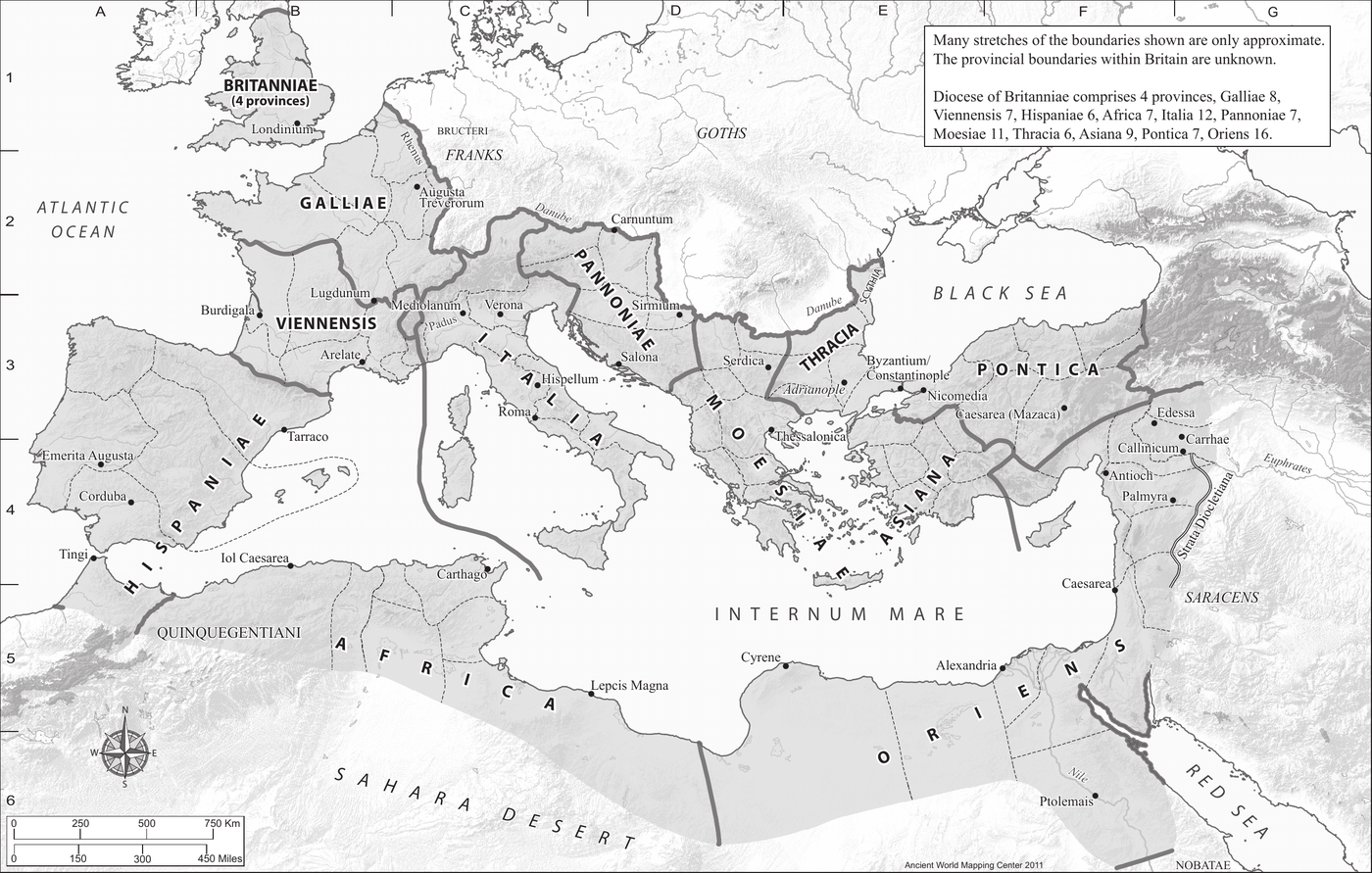
Londinium, at the top left, is where this follis was struck — the far north-western corner of the reorganised empire, in the diocese of the Britanniae. The map shows the administrative machine Diocletian built and Constantine inherited: dioceses grouping provinces, and a ring of regional mints — Londinium, Treveri, Lugdunum, Arelate, Sirmium, Serdica, Thessalonica, Nicomedia, Antioch — each supplying the soldiers and officials of its own quarter rather than shipping coin from Rome.
Ancient World Mapping Center, University of North Carolina at Chapel Hill (2011). Trimmed to the plate; licensed CC BY-SA 4.0, via Wikimedia Commons.
In 312 AD, when the London mint struck this follis, Constantine marched on Rome, defeated Maxentius at the Milvian Bridge — the battle tradition remembers for the vision of the Chi-Rho and “in this sign you shall conquer” — and became master of the whole western empire. Yet the god on his money that year, and for nearly a decade after, is not Christ but Sol Invictus, the Unconquered Sun: radiate, hand raised in blessing, globe in hand, styled the emperor’s comes or divine companion. The coin is the paradox of the Constantinian revolution in miniature — the first Christian emperor’s everyday small change carried a solar god his soldiers and subjects already knew, and the transition to unambiguously Christian coin-types took another generation.
Graphic: JSB Coins (CC0).
The mint is its own story. Londinium had struck imperial coinage only since the 290s, when the empire recovered Britain from the breakaway regime of Carausius and Allectus; it was Constantine’s from the moment his father Constantius I died at York in 306 and the army proclaimed the son on the spot. The star in the left field and the PLN exergue mark this issue of 312–313; the mint itself would close in 325, making London folles a short, well-collected series — the collection’s only Roman coin struck in Britain.
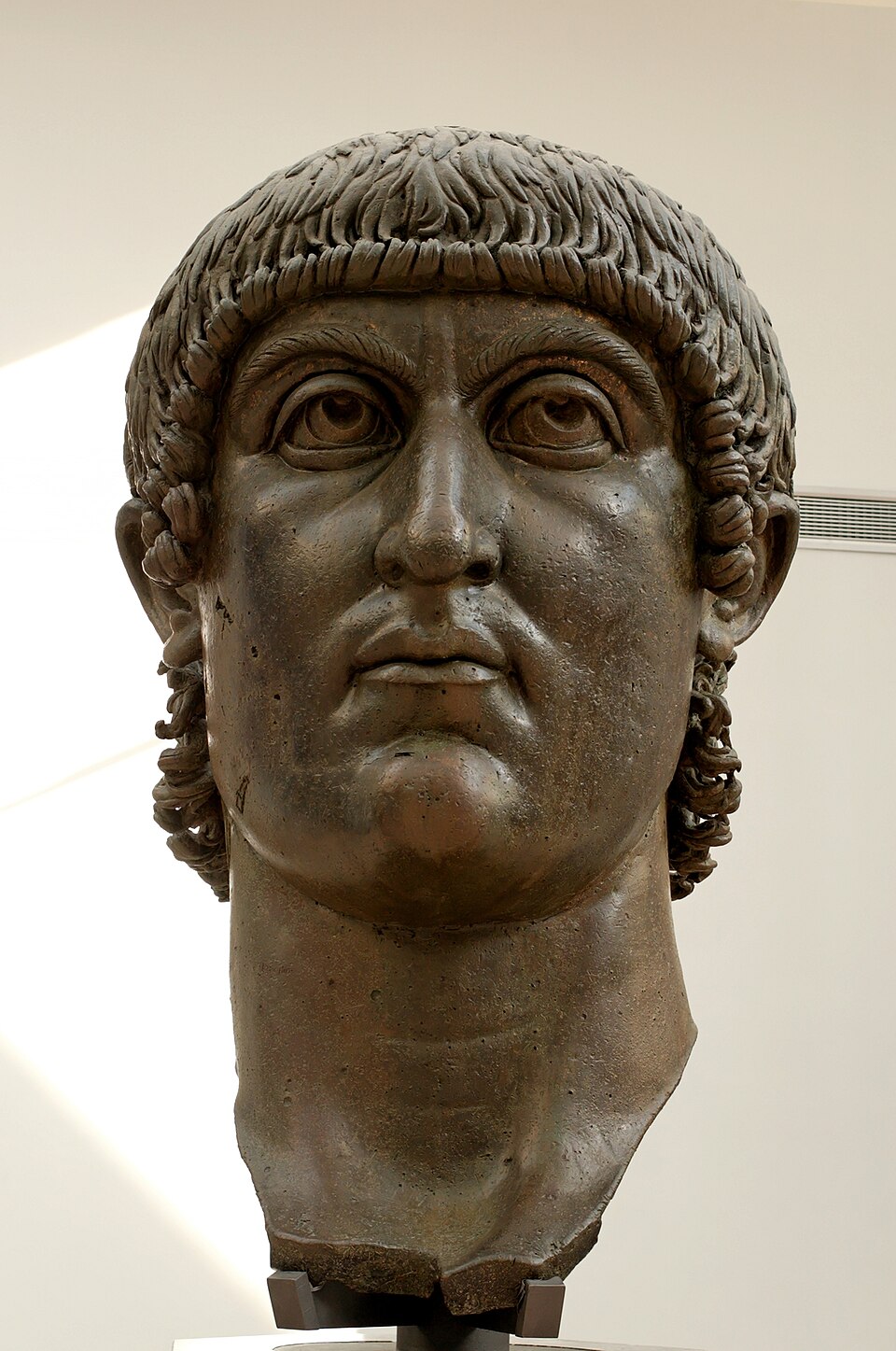
Photo by Jastrow, Wikimedia Commons, released into the public domain.
This specimen carries a rare luxury: two professional attributions. The earlier Ancient Imports (Marc Breitsprecher) slip calls it RIC VI 282; Forum Ancient Coins’ tag, RIC VI Londinium 279. The entries differ only in the obverse legend break — 279 reads IMP CONSTANTINVS P F AVG, 282 the shorter P AVG — and the flan is soft exactly where they differ; the Forum reading is followed here with the question flagged. For the same reverse type from the collection’s other Constantinian mint, compare the Lugdunum Sol follis. For the end of the same house, see the bull double maiorina of Julian II - Constantine’s nephew, and the last of the line.
Attribution: RIC VI Londinium 279 (Forum’s tag; the Ancient Imports slip’s RIC VI 282 preserved above); SRCV IV 16049; Cohen VII 536 — see the WildWinds Constantine index. The Milvian Bridge campaign and the vision: Lactantius, De mortibus persecutorum 44 (now linked in the references — the earliest version), with Eusebius, Vita Constantini 1.28–31 (the later, more elaborate one). On Sol on Constantine’s coinage and the slow Christianization of the types, P. Bruun’s introduction to RIC VII. On the London mint: the mint introduction in RIC VI (Sutherland).
The two dealer tags on the collection's specimen disagree by one RIC number: Forum's tag gives RIC VI Londinium 279 (obverse IMP CONSTANTINVS P F AVG) and is followed here; the earlier Ancient Imports (MRB) slip gives RIC VI 282, the parallel entry with the shorter IMP CONSTANTINVS P AVG legend. The legend break on the flan is soft — see the specimen's open threads. Both entries are the same type family: London's SOLI INVICTO COMITI folles with star in left field and PLN exergue, struck 312–313 AD between Constantine's departure for the Italian campaign and the aftermath of the Milan agreement.
John's Ancient Coin Collection · Type · constantine-i-london-sol-follis
Image credits for this coin — photographs, maps and graphics used on this page