Type · maximianus-concordia-radiate-fraction
Current: Roman Imperial, Maximianus Herculius, AE post-reform radiate fraction, Cyzicus, c. 295–299 AD (RIC VI Cyzicus 15b)
Obverse: Radiate, draped and cuirassed bust of Maximianus right
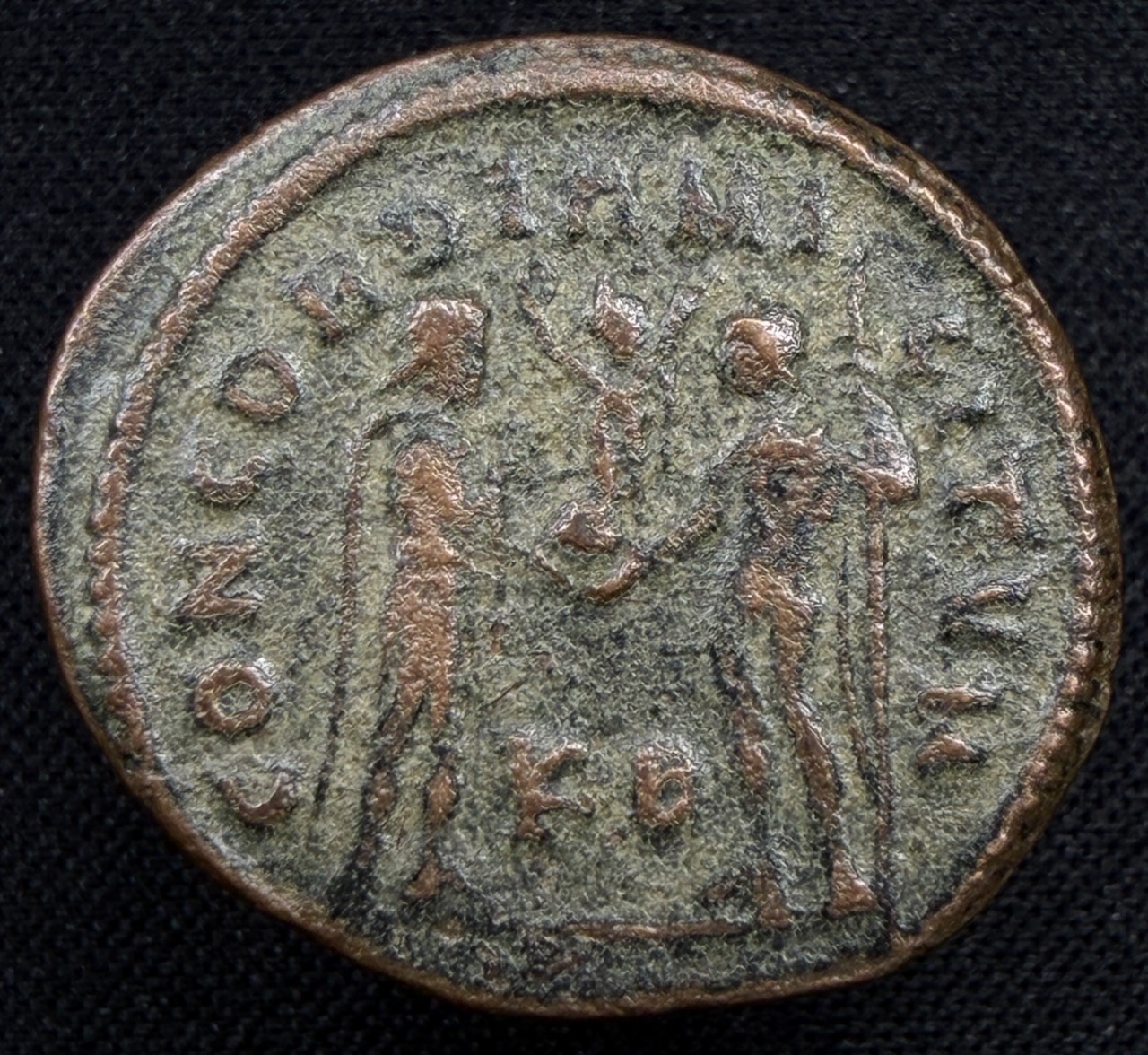
Reverse: Emperor standing right, receiving Victory on globe from Jupiter standing left, leaning on sceptre; mintmark KB between them
Primary reference: RIC VI Cyzicus 15b
32 specimens in public collections (ANS 9, British Museum 8, Göttingen 4, Freiburg 4, Ashmolean 3); weights 1.89–4.01 g, median 2.79 g across 32 recorded; die axis most often 12h.
This collection's specimen, at 2.50 g (my scale), is heavier than 19% of the recorded weights.
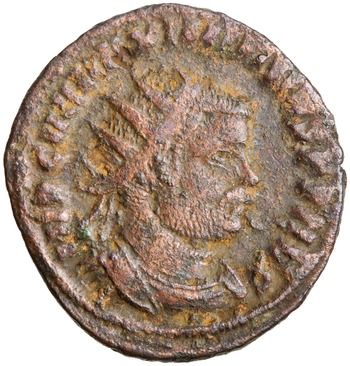
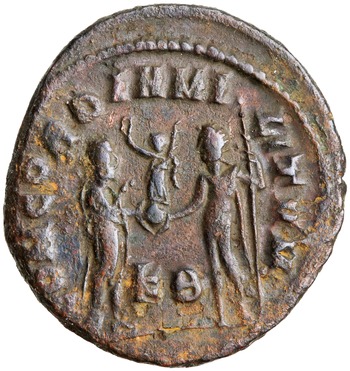
American Numismatic Society, 1944.100.5766. CC BY-NC 4.0. https://numismatics.org/collection/1944.100.5766
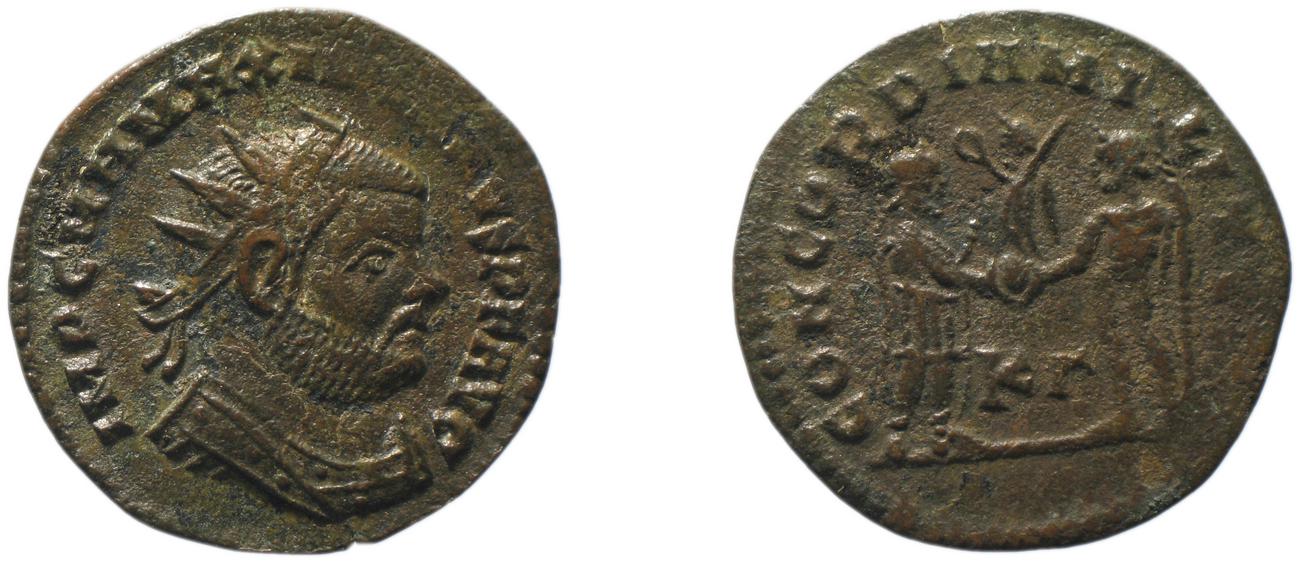
© The Trustees of the British Museum, 1843,1024.116. CC BY-NC-SA 4.0. https://www.britishmuseum.org/collection/object/C_1843-1024-116
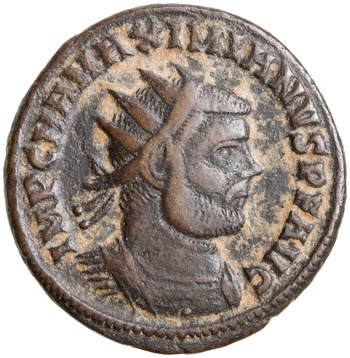
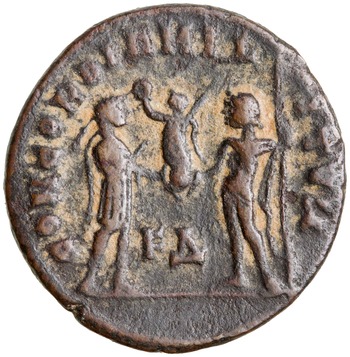
American Numismatic Society, 1944.100.5769. CC BY-NC 4.0. https://numismatics.org/collection/1944.100.5769
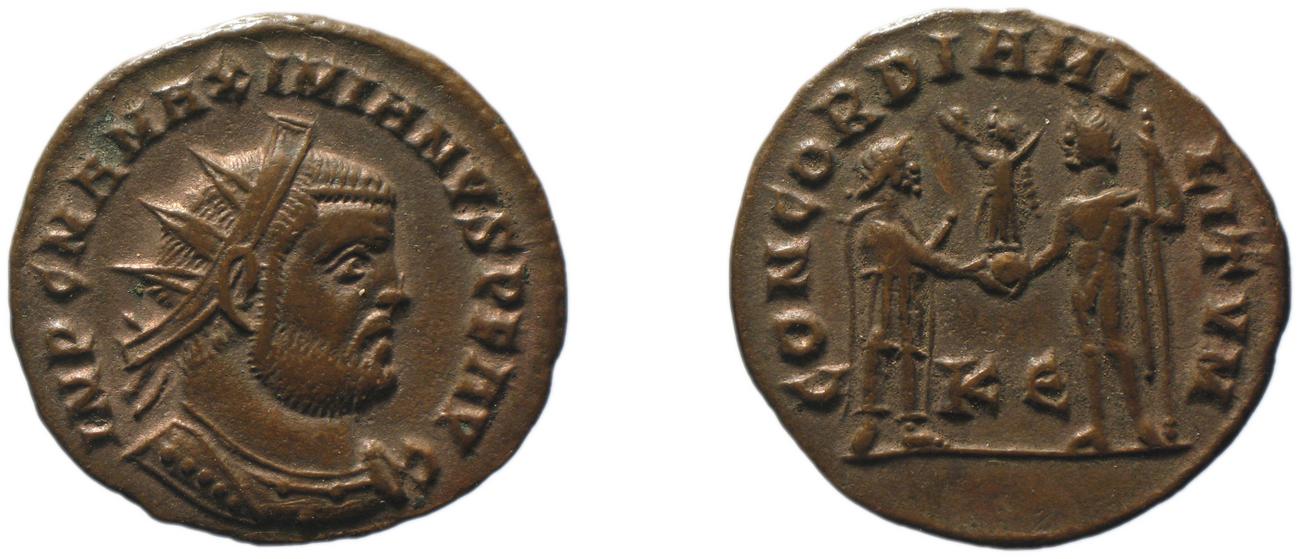
© The Trustees of the British Museum, 1850,0601.45. CC BY-NC-SA 4.0. https://www.britishmuseum.org/collection/object/C_1850-0601-45
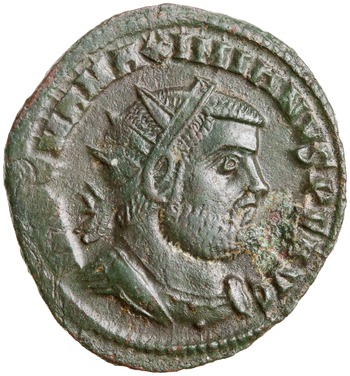
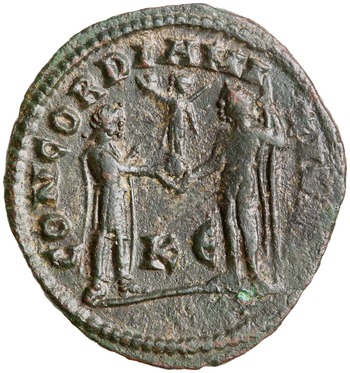
American Numismatic Society, 1944.100.5776. CC BY-NC 4.0. https://numismatics.org/collection/1944.100.5776
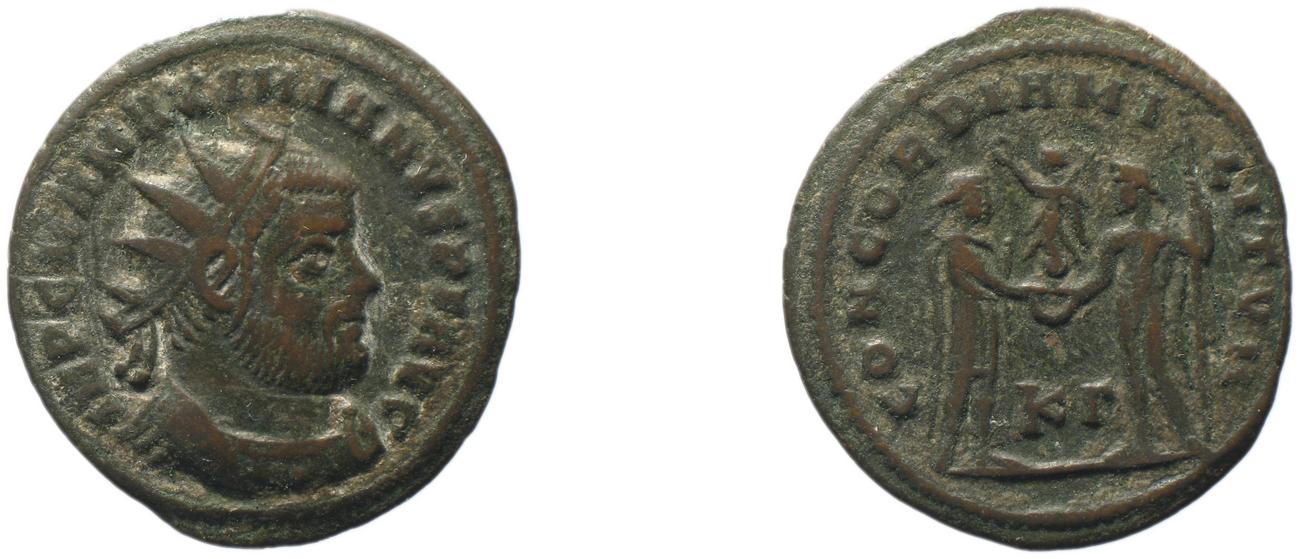
© The Trustees of the British Museum, 1950,1006.1073. CC BY-NC-SA 4.0. https://www.britishmuseum.org/collection/object/C_1950-1006-1073
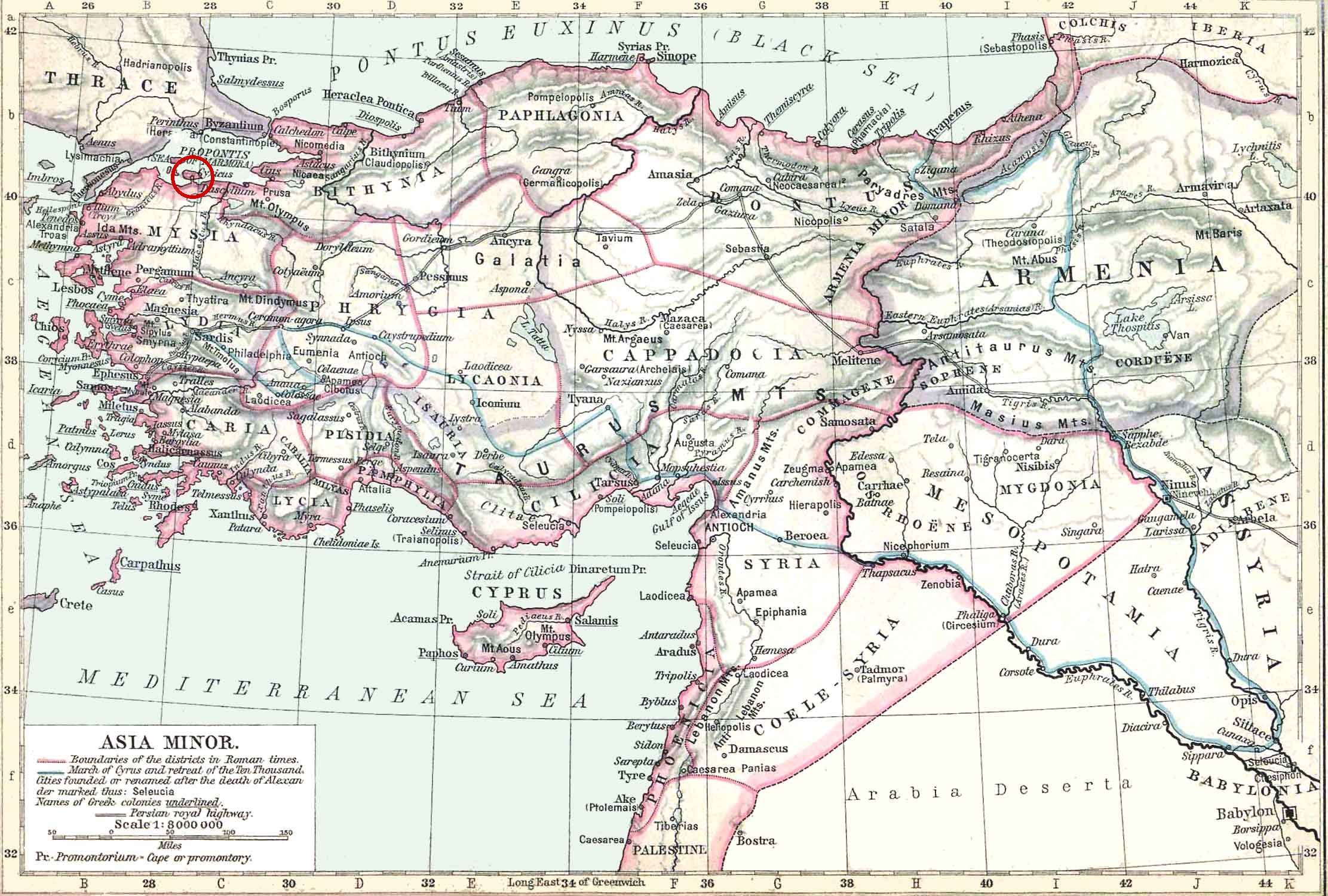
Ancient Asia Minor on Shepherd’s 1923 map. Cyzicus — circled in red — on its peninsula jutting into the Propontis (Sea of Marmara), on the coast of Mysia. By the tetrarchic period the old Greek city hosted one of the empire’s great regional mints, striking for the whole college of emperors; the same base map, with the same circle, serves this collection’s Kyzikene electrum and silver of eight centuries earlier.
“Asia Minor under the Greeks and Romans” from William R. Shepherd, The Historical Atlas (1923), via Wikimedia Commons, File:Asia minor-Shepherd 1923.JPG (https://commons.wikimedia.org/wiki/File:Asia_minor-Shepherd_1923.JPG). Public domain (author died 1934); credited as a courtesy. Red circle marking Cyzicus added (shared with the collection’s other Kyzikos types).
By the 290s AD the Roman empire was run by a committee of four soldiers: Diocletian, the architect, ruling the East with his Caesar Galerius; and Maximianus Herculius — a rough Pannonian officer elevated by Diocletian in 286 — ruling the West with his Caesar Constantius. The Tetrarchy’s coinage preached its virtues in a deliberately uniform, almost heraldic style, and no legend is more characteristic than CONCORDIA MILITVM, “the harmony of the soldiers”: the emperor stands receiving a little Victory on a globe from Jupiter himself — Diocletian’s patron, and the divine senior partner to Maximianus’ Hercules — the gods and the armies jointly underwriting the collegial regime.
Graphic: JSB Coins (CC0).
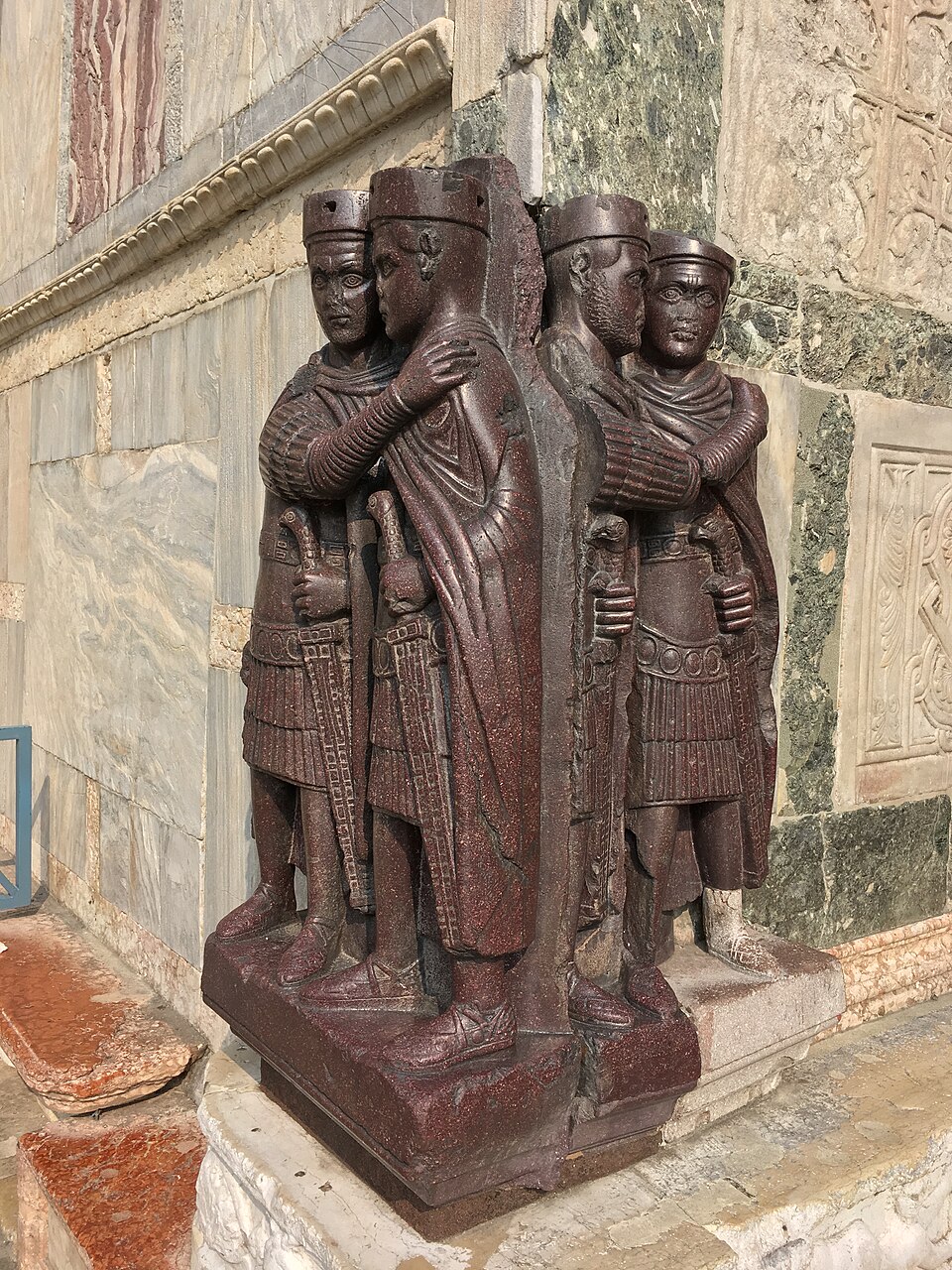
Photo: Dimitris Kamaras, Wikimedia Commons, licensed CC BY 2.0, reproduced unmodified.
This small radiate coin belongs to Diocletian’s great currency reform of c. 294 AD, which replaced the debased third-century money with a new system: gold aureus, real silver argenteus, the big silvered nummus (follis) — and this piece, the post-reform radiate fraction, a small-change denomination that deliberately kept the look of the old antoninianus (compare the radiate of Gordian III, struck half a century earlier when the crown still promised silver) but now in plain bronze, a token coin for market change. The fractions were struck at only a handful of mints; Cyzicus signed its products K plus an officina letter — here KB, the second workshop. Eight centuries earlier the same city’s electrum hektai had been the trade money of the Propontis; the tetrarchic mint is the last chapter of one of the longest minting traditions in the ancient world.
Maximianus himself abdicated with Diocletian in 305 — the empire’s only planned joint retirement — then spent his last years trying to claw back power through his son Maxentius and son-in-law Constantine, and died disgraced in 310. The tetrarchic system he embodied barely outlived the abdications; the harmony of the soldiers proved as aspirational as most coin legends.
This coin came with John’s own handwritten tag rather than a dealer’s: “Maximianus 280–305 A.D., AE Antoninianus, Sear 3611, R. Max receiving victory on globe from Jupiter, ‘Concordia militum’.” The type identification is correct — this is exactly the CONCORDIA MILITVM Jupiter-and-emperor type, and Sear’s older editions do catalogue these radiates among the antoniniani. Two refinements: Maximianus’ dates as Augustus are 286–305 AD (285/6 as Caesar; the tag’s 280 is early), and since Diocletian’s reform of c. 294 the denomination is conventionally called a post-reform radiate (or radiate fraction) rather than an antoninianus — the KB mintmark places this piece firmly in the post-reform Cyzicus issues of c. 295–299 (RIC VI 15b). The tag’s Sear 3611 has not been independently checked against an old edition and is preserved as written.
Attribution: RIC VI, Cyzicus 15b (CONCORDIA MILITVM, K + officina mintmarks, c. 295–299 AD); see the WildWinds Maximianus index and Warren Esty’s survey of the post-reform radiate for the denomination. The reform system: RIC VI introduction (Sutherland); Diocletian’s reign and abdication: Lactantius, De mortibus persecutorum (now linked in the references), with Aurelius Victor 39–40. The Venice Tetrarchs group as the visual statement of tetrarchic concordia: standard treatments of tetrarchic art.
Post-reform radiate fraction — the token radiate denomination Diocletian's currency reform (c. 294) kept alongside the new silvered nummus; it continues the antoninianus' look (radiate crown) but contains effectively no silver. Struck only at eastern and central mints; Cyzicus signs with K plus officina letter (here KB, officina 2, reading flagged for confirmation — see specimen open threads). The obverse legend start is worn on the collection's specimen; IMP C M A MAXIMIANVS P F AVG (Maximianus Herculius as Augustus) fits the visible '…MAXIMIANVS P F AVG' — the same mint struck near-identical fractions for Galerius as GAL VAL MAXIMIANVS NOB CAES, excluded here by the AVG ending but worth re-checking in hand.
John's Ancient Coin Collection · Type · maximianus-concordia-radiate-fraction
Image credits for this coin — photographs, maps and graphics used on this page
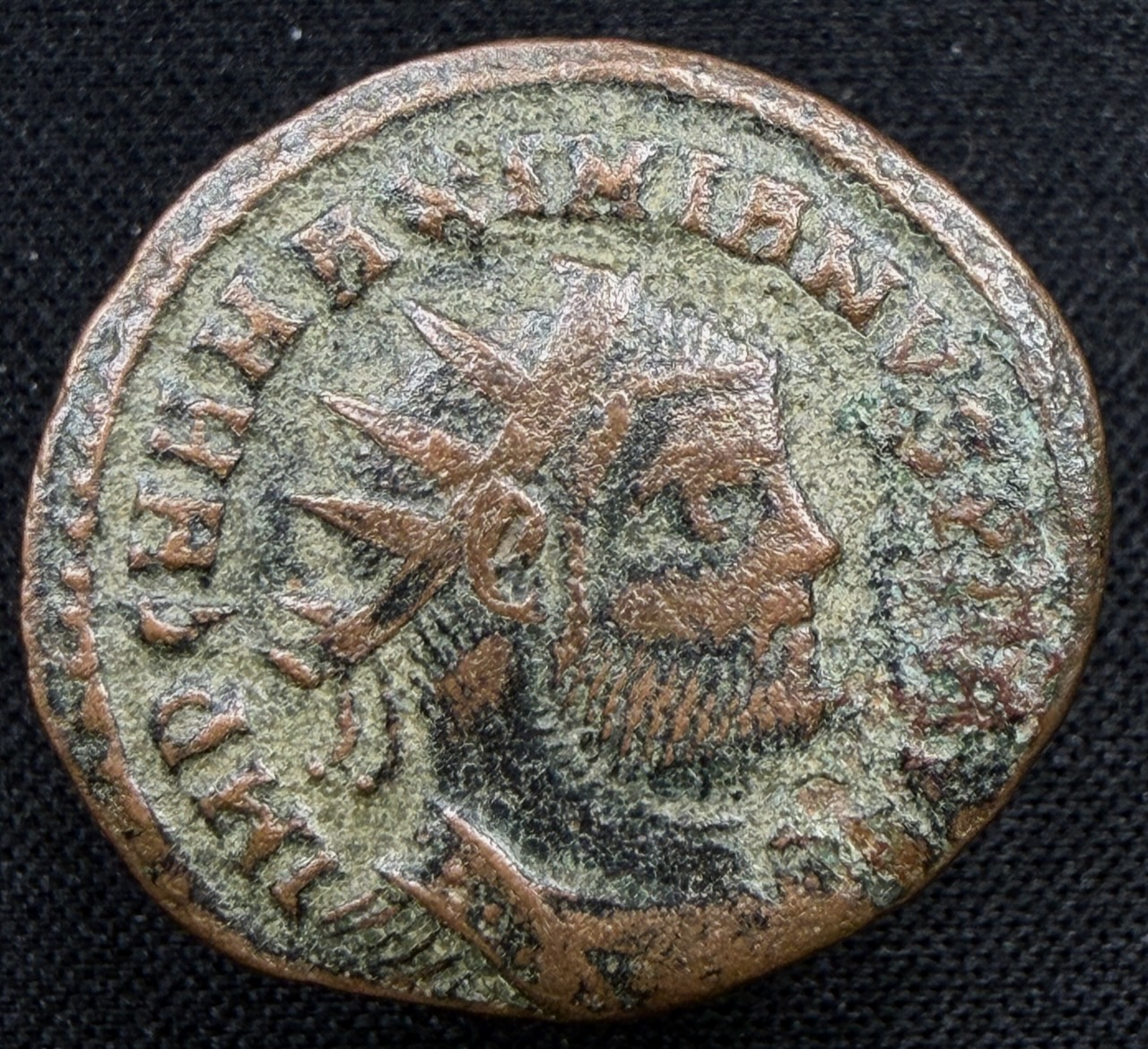

,_San_Marco,_Venice_(36992141183).jpg)