Type · carthage-tanit-horse-shekel
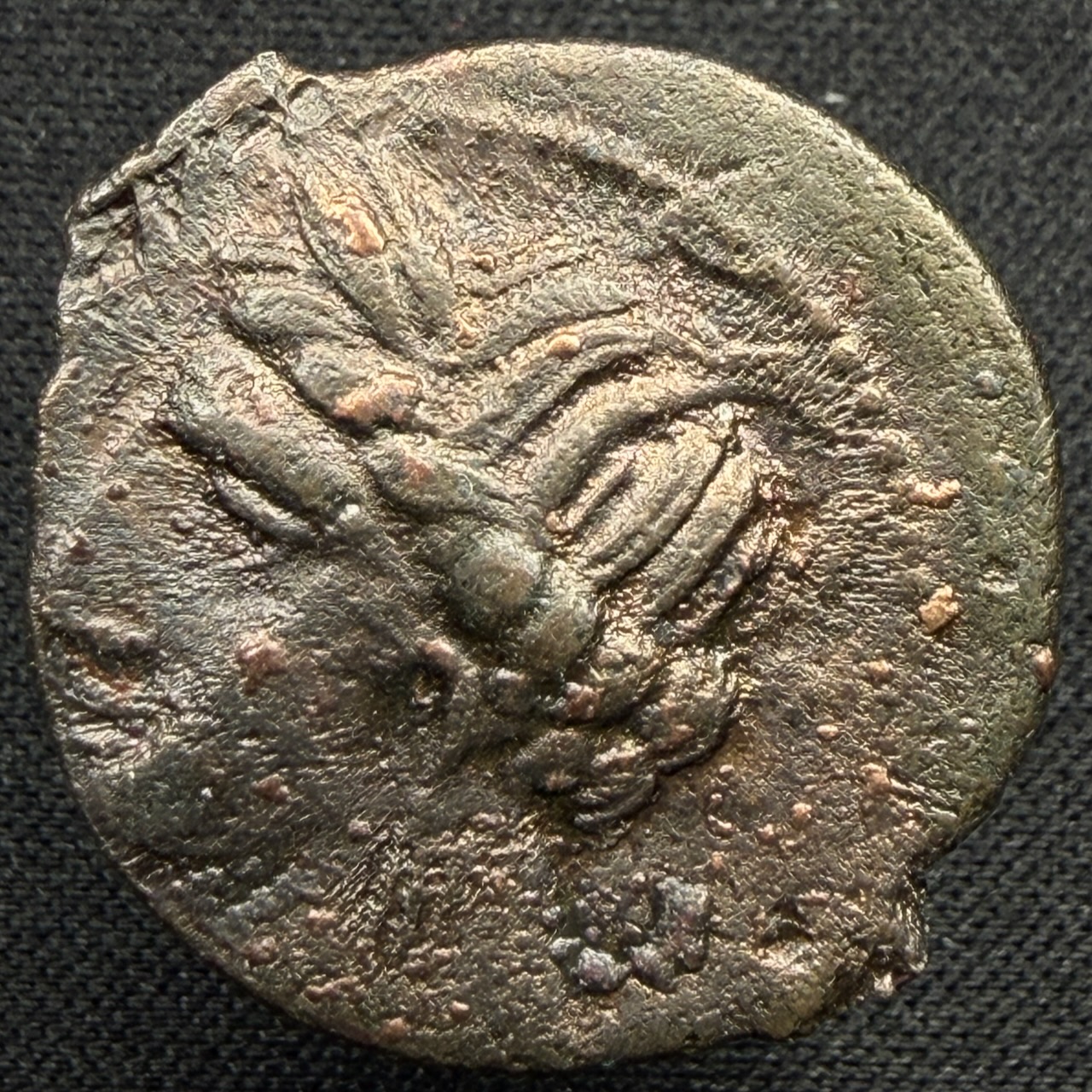
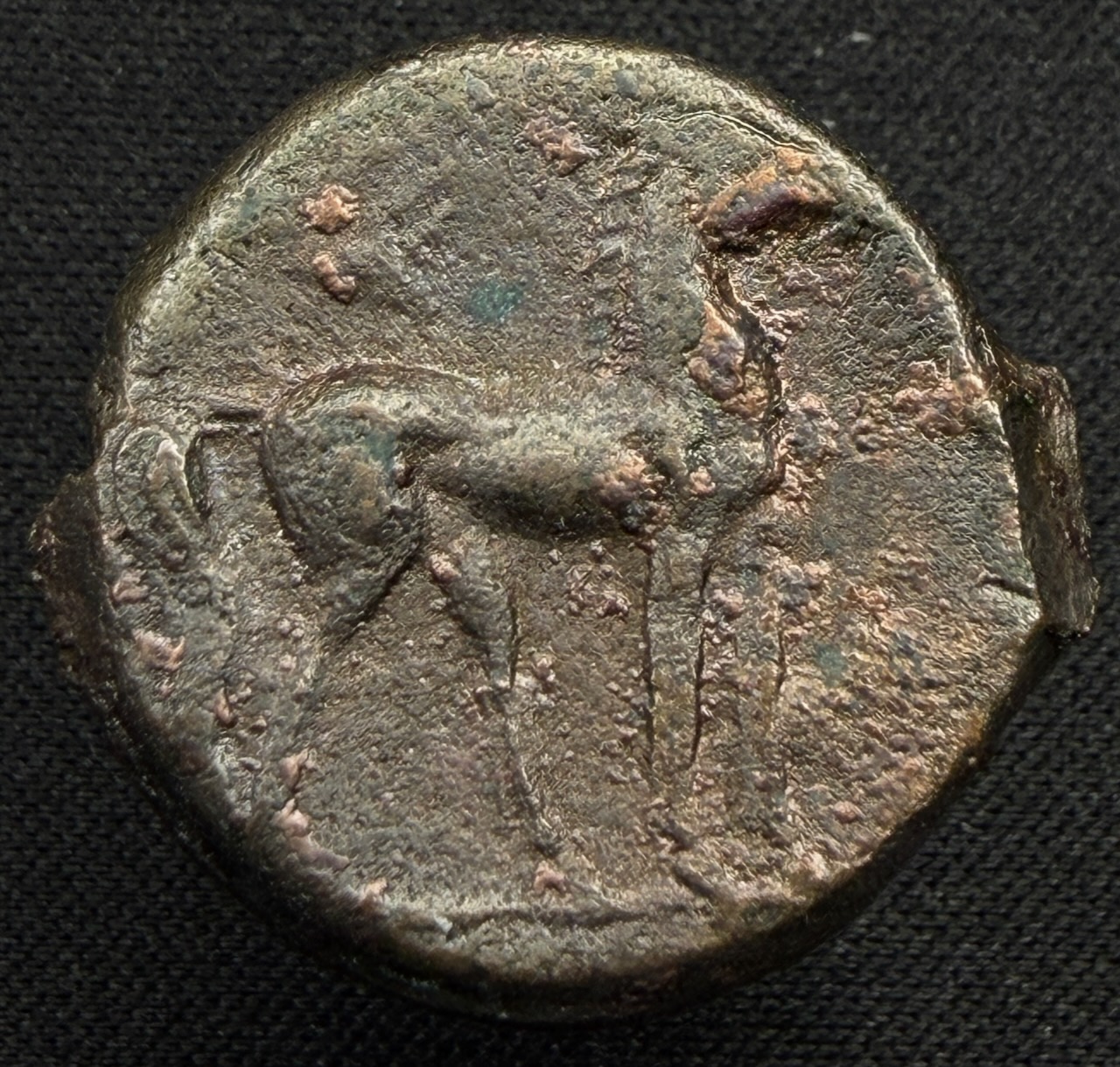
Current: Zeugitana, Carthage, Æ shekel, Second Punic War, c. 221–210 BC. Wreathed head of Tanit left / Horse standing right (SNG Copenhagen 214, per dealer attribution)
Obverse: Head of Tanit left, wreathed in grain ears, wearing earring and necklace
Reverse: Horse standing right on ground line, without palm tree
Primary reference: SNG Copenhagen 214
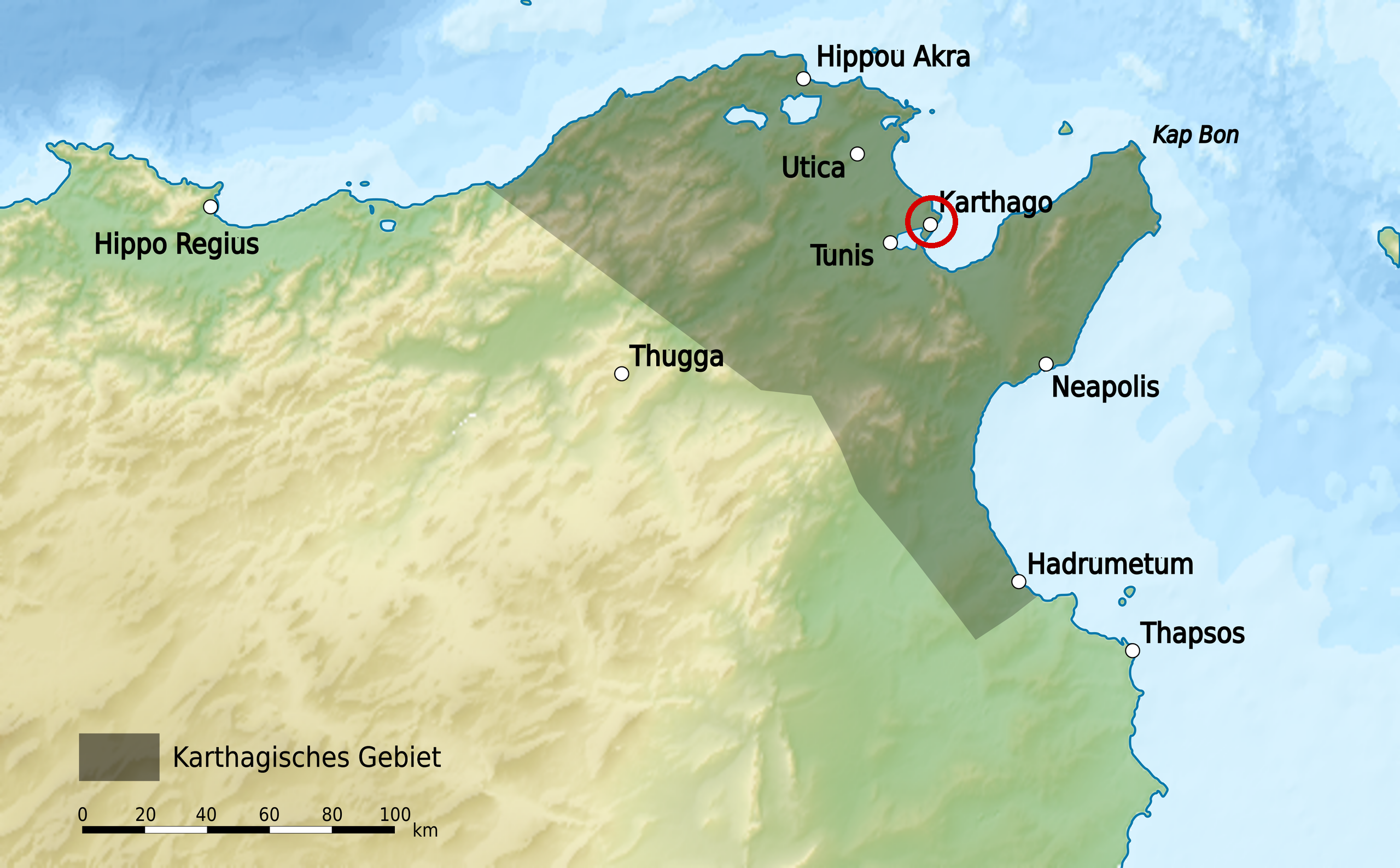
Carthage’s African home territory around 300 BC, roughly a century before this wartime shekel. Carthage (Karthago) — circled in red — sits on its peninsula in the Gulf of Tunis, ringed by the chora (“Karthagisches Gebiet,” German for Carthaginian territory) that fed and financed Hannibal’s war.
“Map of Carthage around 300 B.C.” by Uwe Dedering (Wikimedia Commons), File:Carthage 300BC map.svg, licensed CC BY-SA 3.0 (https://commons.wikimedia.org/wiki/File:Carthage_300BC_map.svg; license: https://creativecommons.org/licenses/by-sa/3.0/). Modified by JSB Coins: rendered from SVG to PNG at 2560 px, and a red circle added to mark Carthage (same derivative as used on the collection’s Æ unit page). This derivative is shared under the same CC BY-SA 3.0 license.
This bronze was struck at Carthage while the Second Punic War (218–201 BC) was being decided — the years when Hannibal was loose in Italy after Trasimene and Cannae, and the Carthaginian state was straining every source of money it had. The dealer’s attribution (SNG Copenhagen 214) places it c. 221–210 BC, opening with the war’s preliminaries in Spain and closing as the tide turned toward Scipio.
The types are the most Carthaginian of all: the goddess Tanit, the city’s great protectress, her hair bound in grain ears borrowed from Sicilian images of Persephone/Kore, and on the reverse the standing horse, the badge of Carthage itself. Foundation legend connected the horse to the city’s very site — digging the foundations, Virgil says, the settlers unearthed a horse’s head, an omen of war-power and prosperity (Aeneid 1.442–5). The collection holds the same badge pair across two earlier centuries of Punic coinage: the small 4th-century Æ unit and the heavy trishekel, both with the palm tree behind the horse. On this wartime series the palm is gone; the horse stands alone on its ground line.
Carthage entered the Second Punic War with a currency already accustomed to heavy bronze — unlike Rome, whose silver denarius system was itself born of this same war’s pressures. As the war ground on, Carthaginian silver was debased and bronze denominations grew and multiplied; surveys of the wartime coinage (e.g. Markowitz, CoinWeek 2023) trace shrinking fineness and rising output as the state paid mercenaries, fleets and Numidian cavalry. In occupied Sicily that cavalry pay took physical form as the Akragas Punic quarter-shekel in this collection — emergency silver struck at Agrigentum for Muttines’ Numidian horsemen in the war’s final Sicilian years. A bronze “shekel” like this one — silver-denomination name, base-metal fact — is the fiscal strain made tangible: Carthage was promising in bronze what it could no longer always pay in silver. Rome’s answering money is in this collection too — the earliest Roman silver here, the anonymous Victory-biga denarius, belongs to the system Rome forged in the same crucible.
Defeat at Zama in 202 BC ended the war on terms Polybius sets out in detail (15.18): an indemnity of 10,000 talents payable over fifty years — three times the price of the first war, on a schedule designed to keep Carthage a Roman debtor for two generations — the surrender of the war elephants and of every warship but ten triremes, a hundred hostages, and a ban on making war anywhere without Rome’s consent. Livy adds the theater: the surrendered fleet was towed out and burned in sight of the city (30.43). The city and its coinage nonetheless lived on, and recovered — within a decade Carthage was offering to pay the indemnity off early — until Roman fear and Cato’s insistence erased city, cult, and currency together in 146 BC. Bronzes of this series stayed in the ground of Zeugitana in quantity; worn examples surface in North African contexts for generations. They are among the last coins of Carthage as a great power.
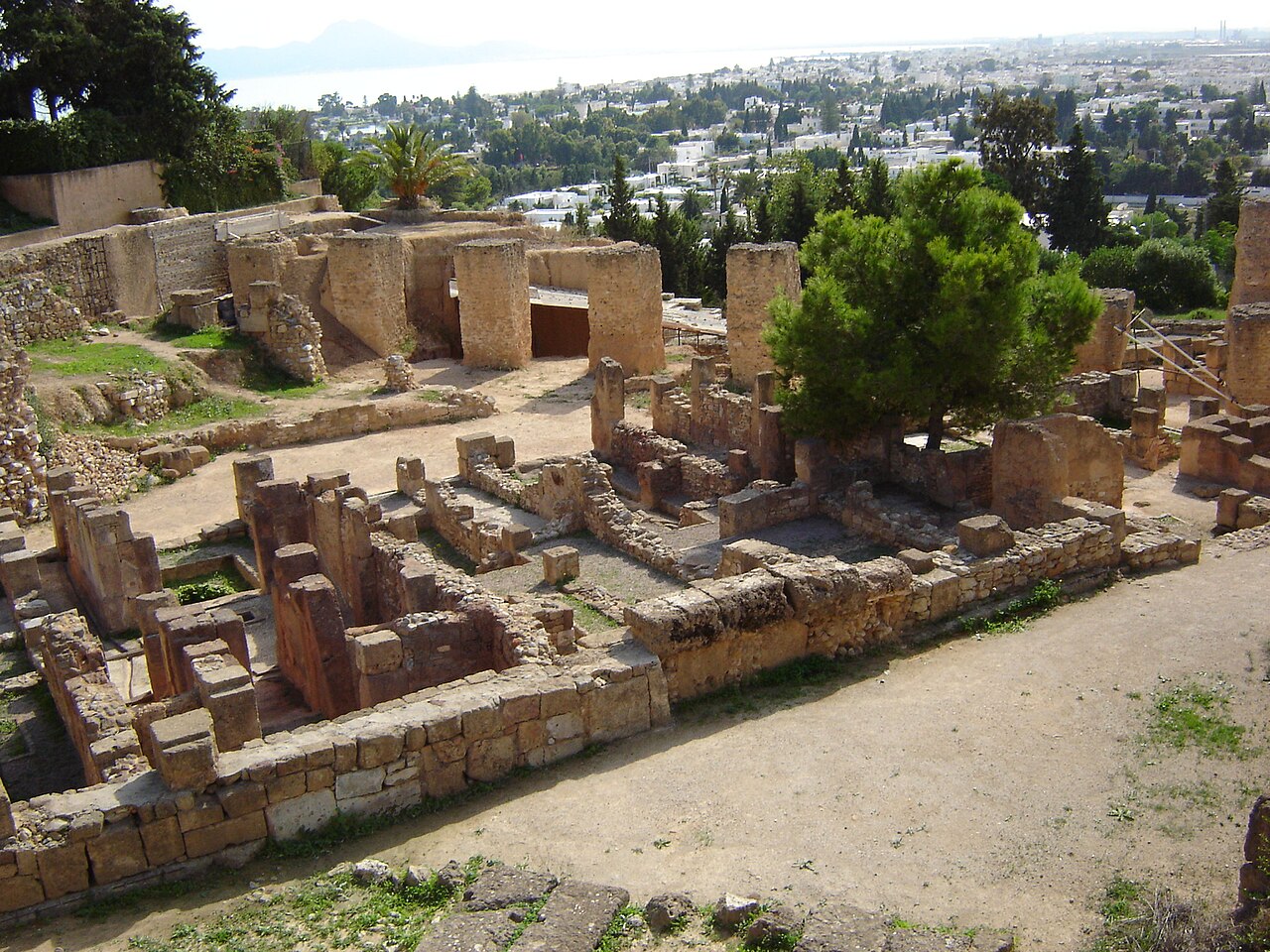
Photo by BishkekRocks (Wikimedia Commons), released into the public domain.
In depth: the story of these coins, the battle of Cannae, and the full reference coinage of both sides is told in the article Hannibal’s War Money.
Attribution: dealer’s database slip (Ancient Imports / Marc Breitsprecher, #37908), citing SNG Copenhagen 214 (Second Punic War, Carthage; the number to be verified against the printed SNG Copenhagen, North Africa fascicle — see notes). Background on Carthaginian wartime coinage: M. Markowitz, “The Coins of Carthage During Hannibal’s War With Rome,” CoinWeek (2023), whose bibliography (Robinson 1964, Visonà 2009, Viola’s Corpus Nummorum Punicorum) is the road into the specialist literature; the horse-head foundation omen is Virgil, Aeneid 1.442–445. The peace terms of 201 BC: Polybius 15.18 (linked in the references), with Livy 30.37 and 30.43 (the burning of the fleet). On the palm-and-horse badge generally, see the discussion and sources on this collection’s Carthage trishekel page.
Attribution and date follow the dealer's slip (Ancient Imports #37908: SNG Copenhagen 214, 221–210 BC); the SNG number should be verified against the printed plates, as the Second Punic War Tanit/horse bronzes are catalogued in scattered runs of SNG Copenhagen and their mint assignments (Carthage vs Sardinia) have shifted between references. This series drops the palm tree of the earlier bronzes — the horse stands alone. Specimen 001 (6.12 g, 22.9 mm) sits at the dealer's 'shekel' denomination of the wartime bronze system.
John's Ancient Coin Collection · Type · carthage-tanit-horse-shekel
Image credits for this coin — photographs, maps and graphics used on this page