Type · trajan-mars-cos-iiii-denarius
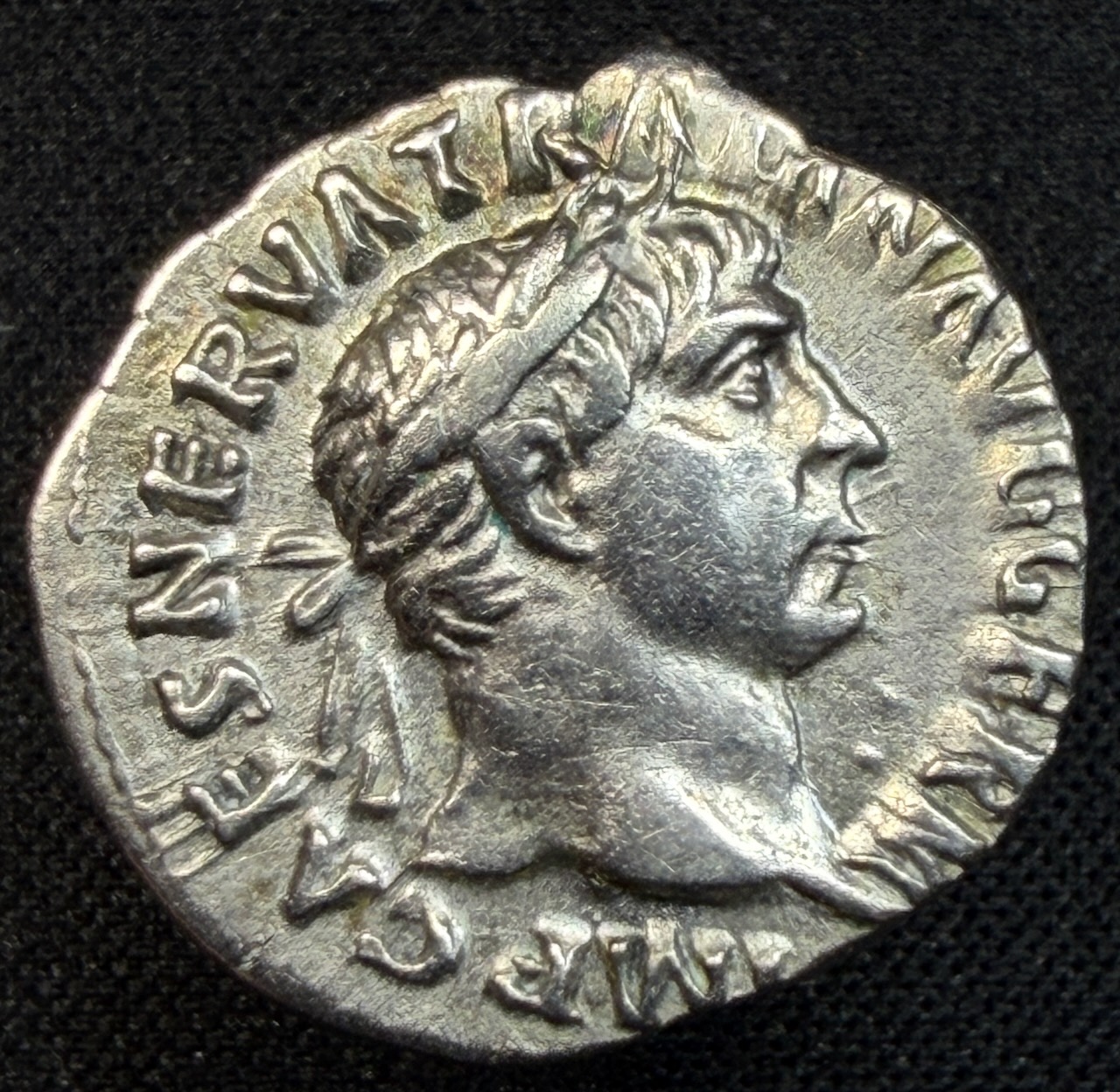
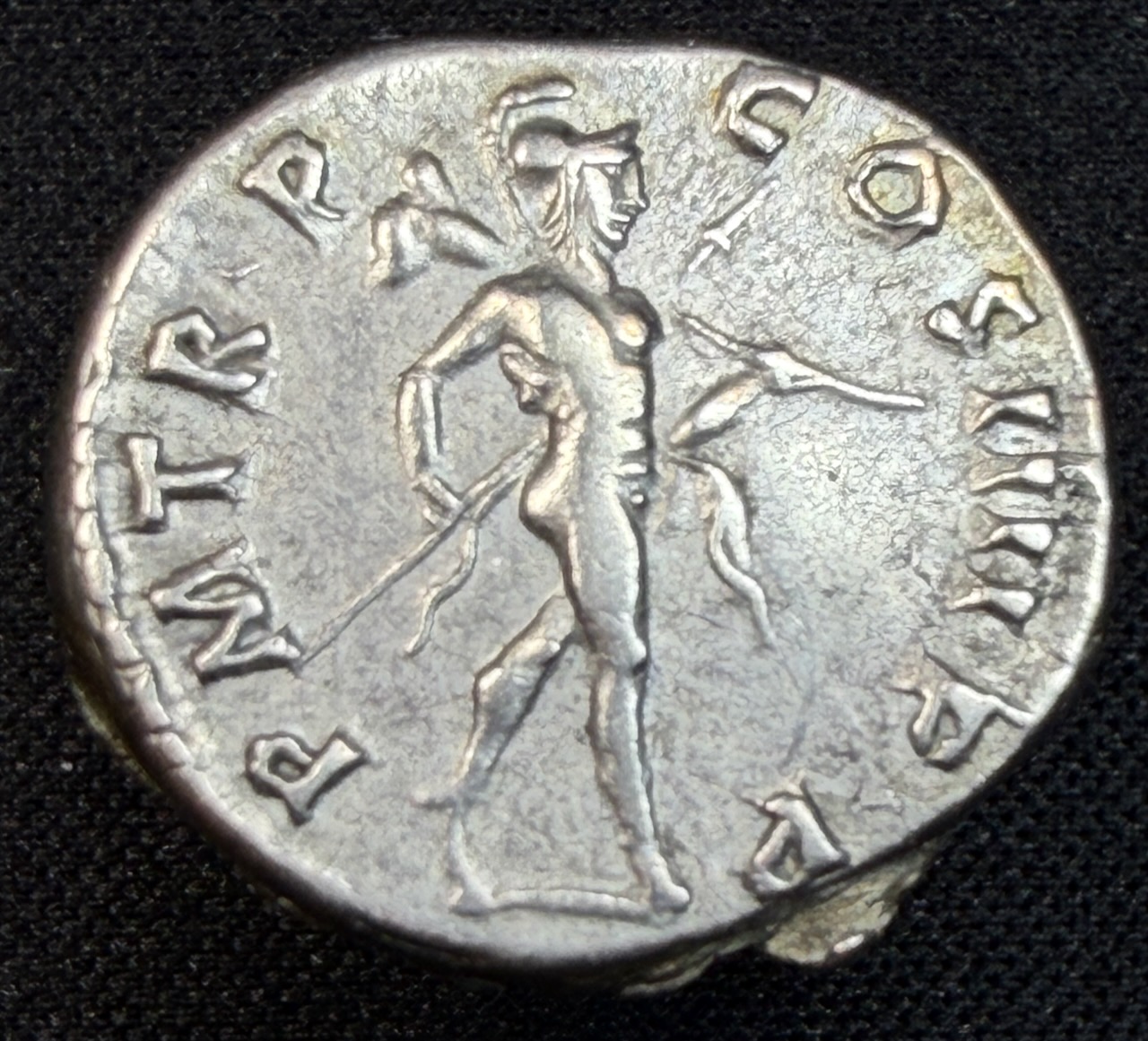
Current: Roman Imperial, Trajan, AR denarius, Rome, 101–102 AD (RIC II 52; Woytek 520v)
Obverse: Laureate head of Trajan right
Reverse: Mars advancing right, helmeted, nude but for cloak around waist, transverse spear in right hand, trophy of arms over left shoulder in left hand
Primary reference: RIC II 52
35 specimens in public collections (ANS 7, British Museum 5, Mpv 5, Göttingen 3, BnF 2); 8 British finds recorded by the Portable Antiquities Scheme; weights 2.08–3.46 g, median 3.14 g across 41 recorded; die axis most often 6h.
This collection's specimen, at 3.31 g (my scale), is heavier than 80% of the recorded weights.
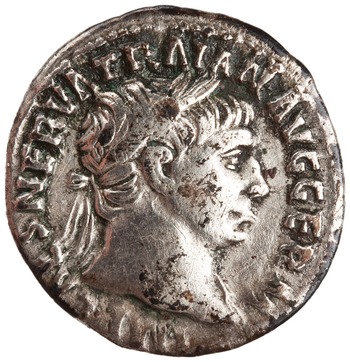
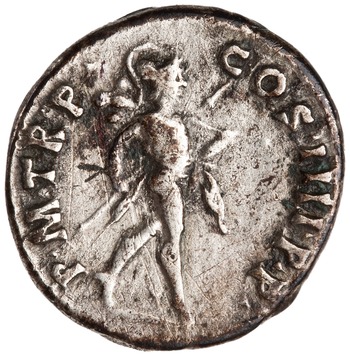
American Numismatic Society, 1911.23.18. CC BY-NC 4.0. https://numismatics.org/collection/1911.23.18
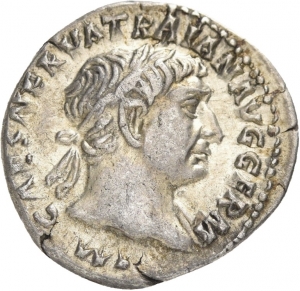
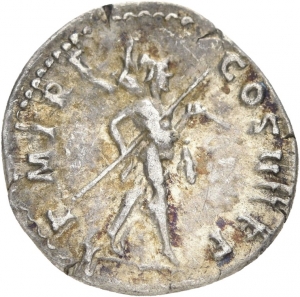
Münzkabinett, Staatliche Museen zu Berlin, 18273868. CC BY-NC-SA 4.0. https://ikmk.smb.museum/object?id=18273868
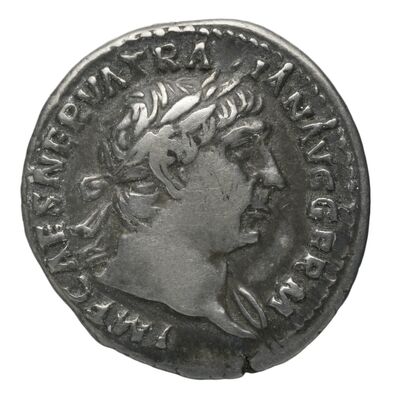
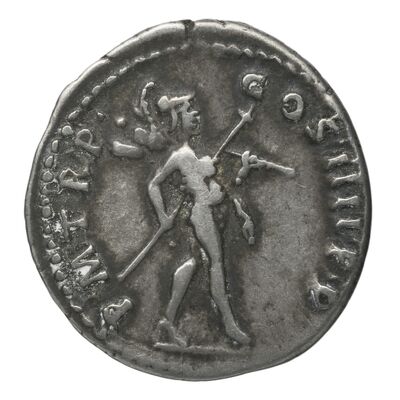
Bibliothèque nationale de France (Gallica), IMP-2676. non-commercial reuse permitted. https://gallica.bnf.fr/ark:/12148/btv1b10448538g
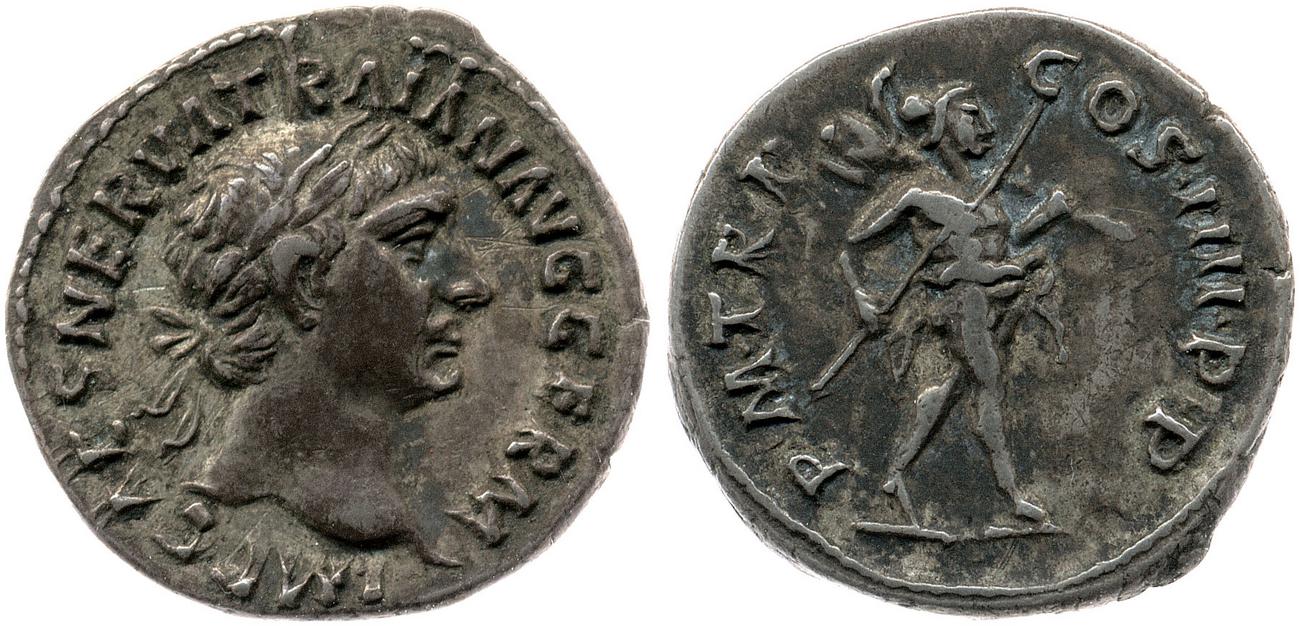
© The Trustees of the British Museum, 1844,0425.763. CC BY-NC-SA 4.0. https://www.britishmuseum.org/collection/object/C_1844-0425-763
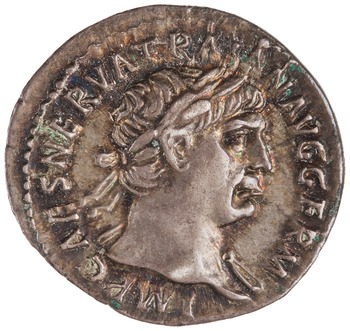
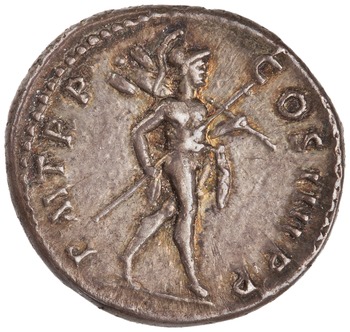
American Numismatic Society, 1948.19.1138. CC BY-NC 4.0. https://numismatics.org/collection/1948.19.1138
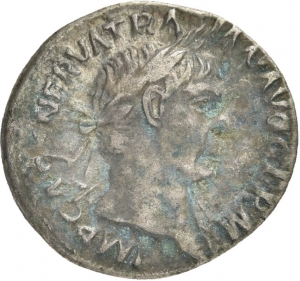
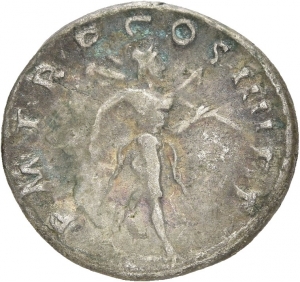
Münzkabinett, Staatliche Museen zu Berlin, 18273871. CC BY-NC-SA 4.0. https://ikmk.smb.museum/object?id=18273871
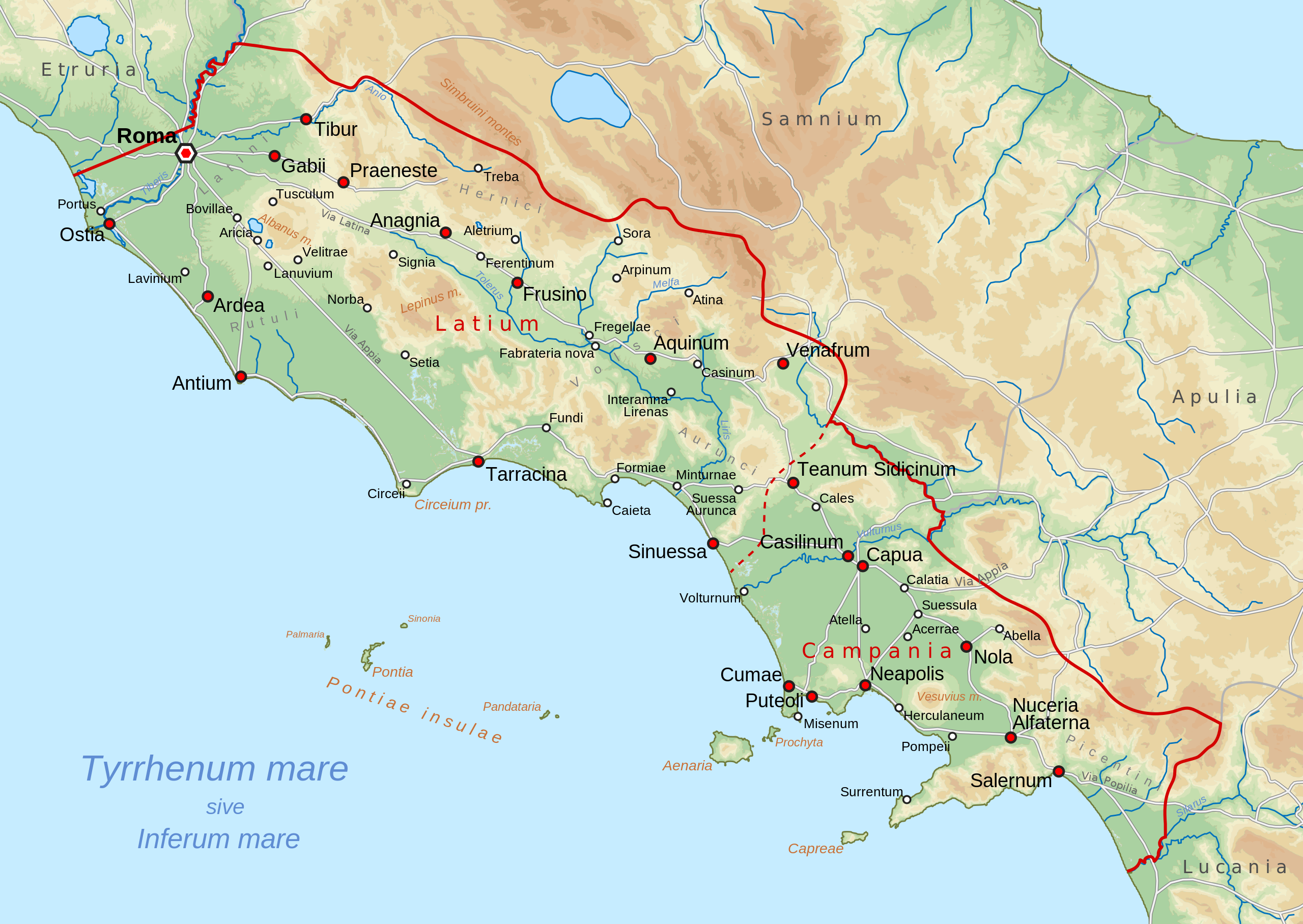
Regio I, Latium et Campania — the heartland of Roman Italy as organized under Augustus. Roma sits at the upper left, marked by the map’s hexagonal capital symbol and bold label. The mint struck this Mars type in the city while the emperor himself was across the Danube on the First Dacian War.
“Map of Augustan Regio I Latium et Campania” by Tomisti (Wikimedia Commons), File:Regio I Latium et Campania map.svg, licensed CC BY-SA 4.0; cities and roads based on the Digital Atlas of the Roman Empire (DARE) and Pleiades; topographic base © OpenMapTiles, © OpenStreetMap contributors. Reproduced unmodified.
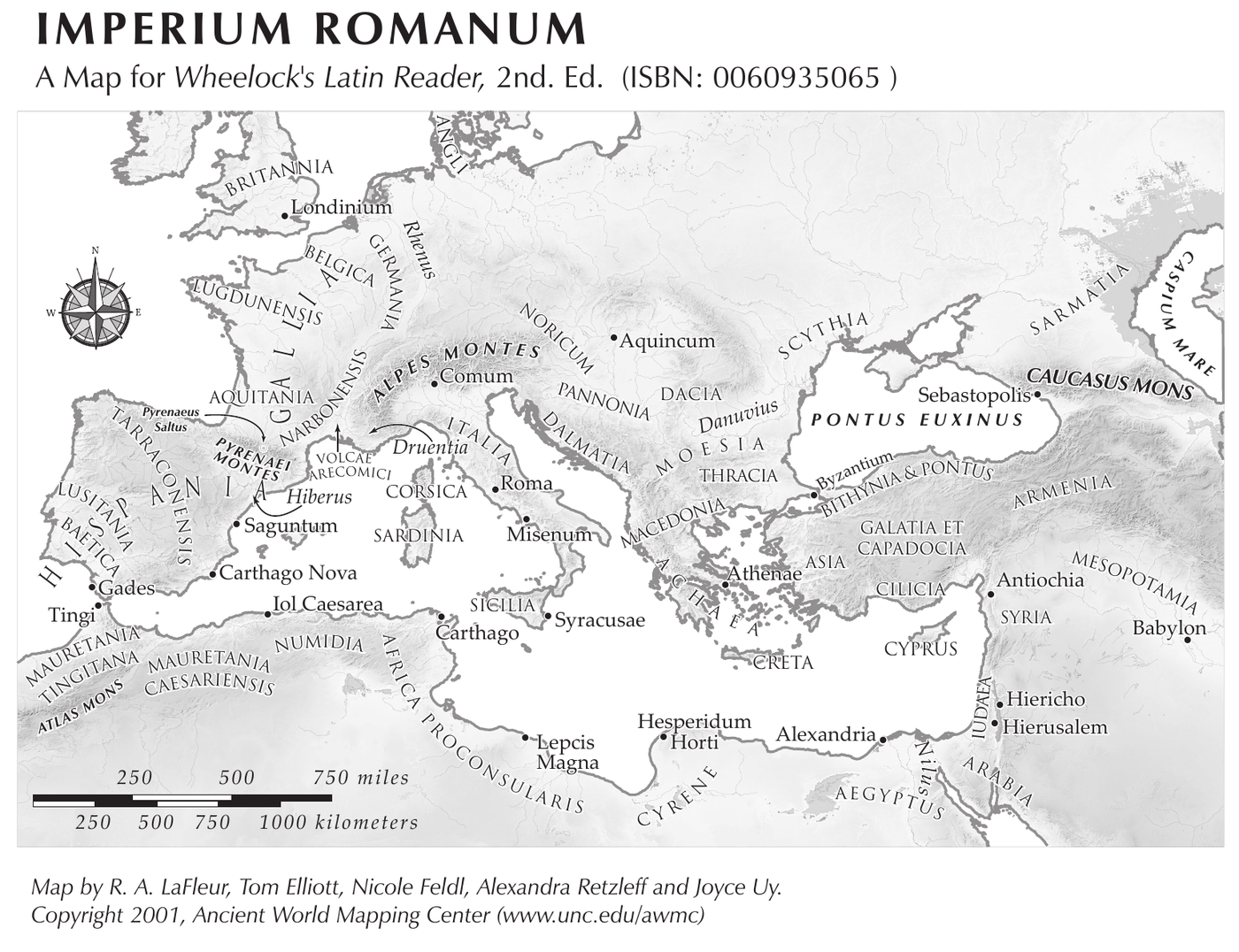
Roma sits at the center of Italia. Struck in AD 101–102, during Trajan’s first war beyond the Danuvius against Dacia — the last great territorial conquest Rome made, and the only province it ever took north of the river.
This denarius was struck while Trajan was actually at war. In March 101 AD the emperor left Rome for the Danube, crossed on a bridge of boats, and spent two campaigning seasons breaking into the mountain kingdom of Decebalus of Dacia — the First Dacian War, which ended in 102 with a negotiated submission that both sides treated as an intermission. The mint’s silver of these years says exactly where the government’s attention lay: Mars, the war god himself, strides across the reverse with his spear leveled and a trophy of captured arms shouldered, the classic image of a campaign in progress rather than a victory completed.
Graphic: JSB Coins (CC0).
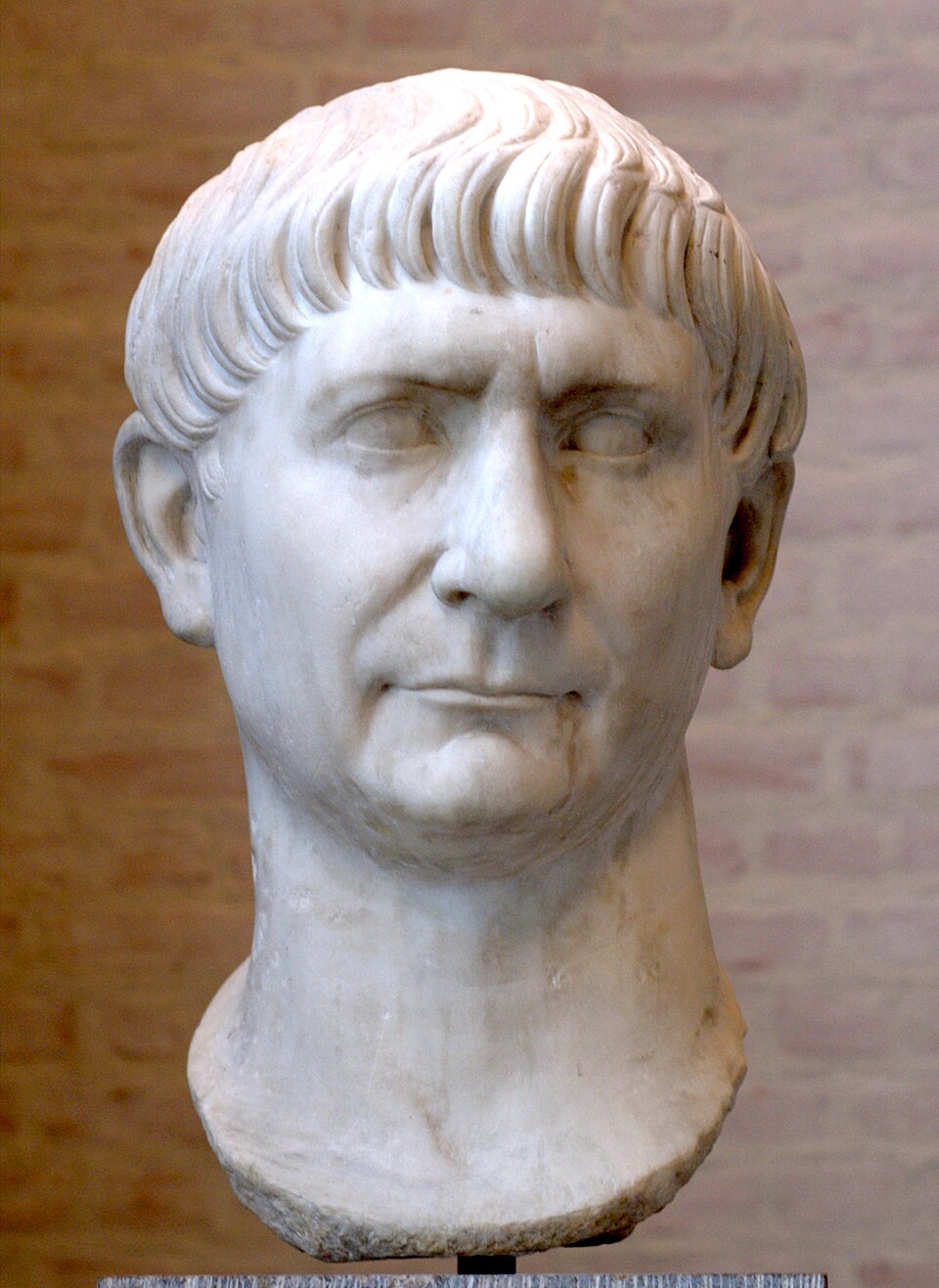
Photo by Bibi Saint-Pol, Wikimedia Commons, released into the public domain.
The titulature dates the coin precisely. Trajan is COS IIII (he opened his fourth consulship in January 101) and still simply GERM — Germanicus, the honorific from his Rhine service — because DACICVS, the title the Dacian victory would add, was only decreed at the war’s end in late 102. A year or two later the same mint’s Victory types would be striking the triumph itself; the collection’s COS V Victory denarius of c. 103–111 AD shows the sequel, the SPQR OPTIMO PRINCIPI silver of the boom years the Dacian treasure paid for.
Mars-with-trophy is one of the oldest images in Roman coinage — republican moneyers used it three centuries earlier — and Trajan’s engravers rendered it with parade-ground clarity: helmet crest, cloak at the waist, the trophy’s cross-bar and empty armor legible over the shoulder. The obverse portrait belongs to the reign’s early style, the features still close to the veristic Nerva-era manner before the familiar broad Trajanic head settled in. Woytek’s corpus of the reign’s coinage (MIR 14) places the type among the Rome mint’s main silver emissions of 101–102 AD; Forum’s tag records his 520v.
Attribution: RIC II 52; Woytek (MIR 14) 520v; RSC II 228; BMCRE III 94; BnF IV 138; Strack I 41; Hunter II 30 var. — the full string as on Forum Ancient Coins’ tag; see the WildWinds Trajan index for the type. The First Dacian War: Cassius Dio 68.6–10 (Book 68 now linked in the references); the war’s course and chronology are surveyed in the introductions to B. Woytek, Die Reichsprägung des Kaisers Traianus (MIR 14, 2010) and J. Bennett, Trajan: Optimus Princeps (1997).
COS IIII brackets the issue to 101–102 AD — the years of the First Dacian War — and the obverse still carries the short early titulature (GERM only, before DACICVS was added in late 102). The full reference string is from Forum Ancient Coins' tag: RIC II 52, Woytek (MIR 14) 520v, RSC II 228, BMCRE III 94, BnF IV 138, Strack I 41, Hunter II 30 var. (aegis), SRCV II –. Woytek's Munich corpus (MIR 14, 2010) is the modern die-level standard for Trajan; the 'v' marks a minor variant of his 520.
John's Ancient Coin Collection · Type · trajan-mars-cos-iiii-denarius
Image credits for this coin — photographs, maps and graphics used on this page