Type · thessalian-league-athena-horse-ae17
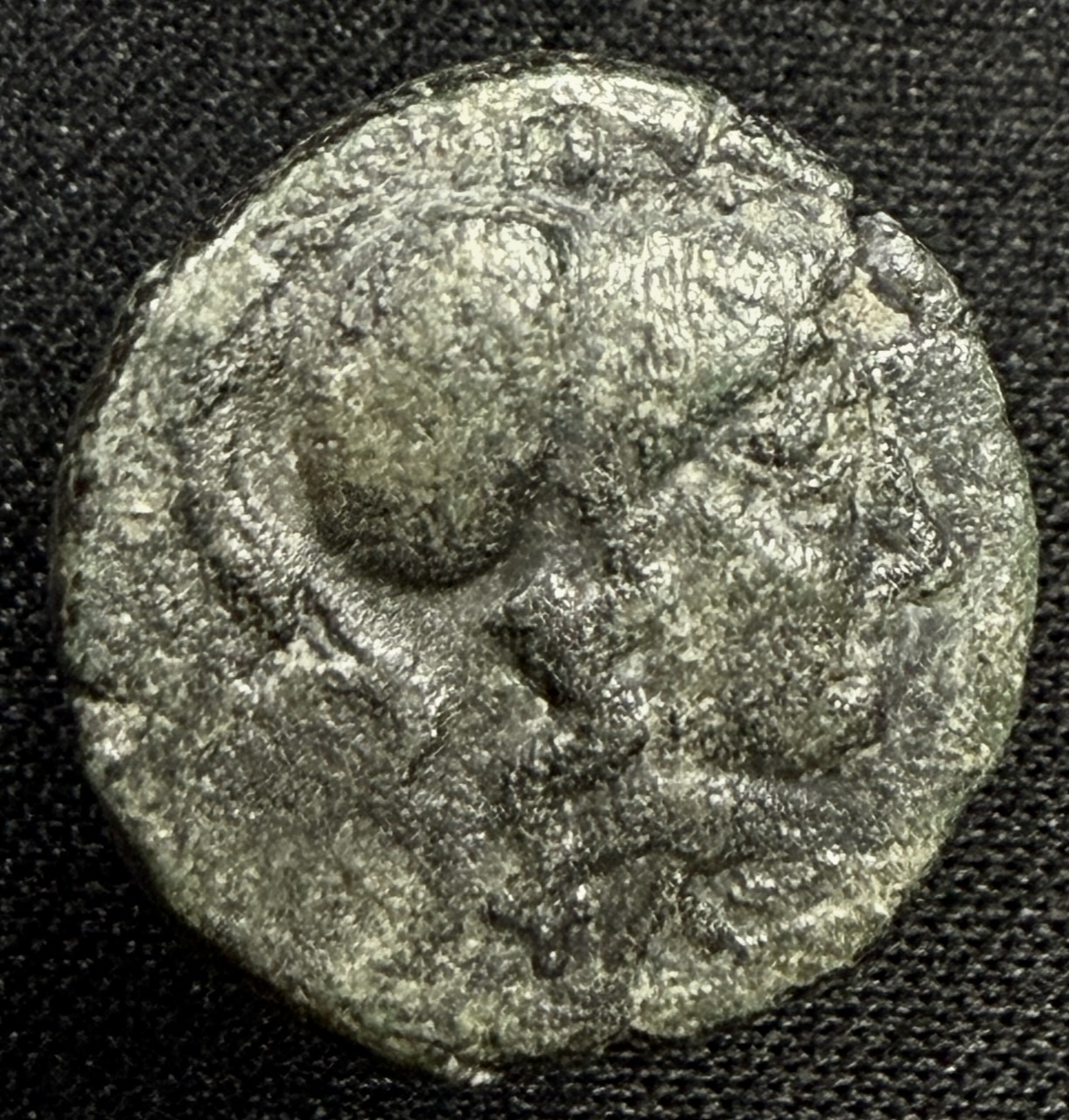
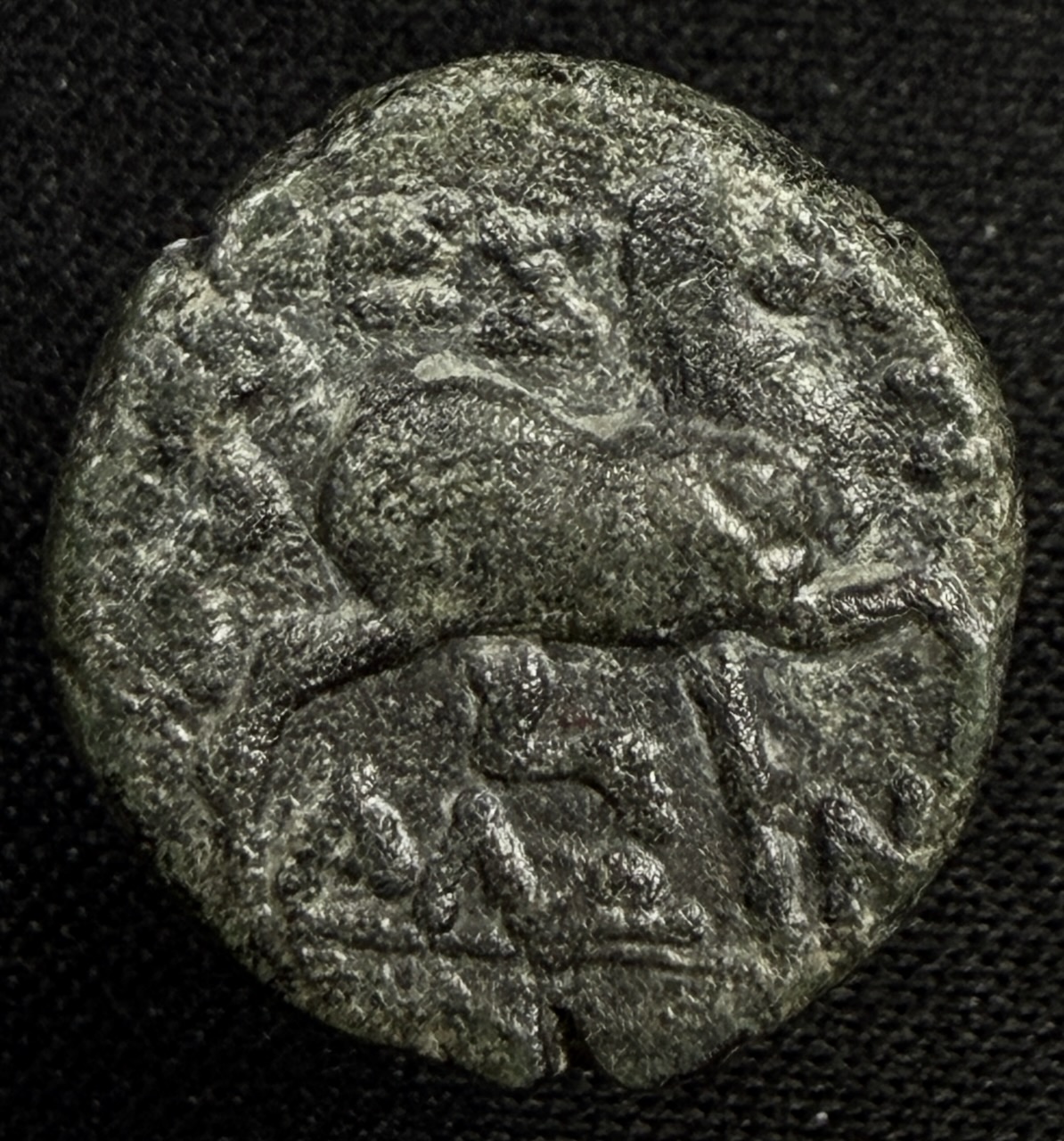
Current: Thessaly, Thessalian League, AE unit (Æ17), Larissa mint, 196–146 BC (BMC 66). Head of Pallas Athena right in crested helmet, magistrate's name above / ΘΕΣ above horse prancing right
Obverse: Head of Pallas Athena right, wearing crested helmet; magistrate's name above (not legible on this specimen)
Reverse: Horse prancing right; ΘΕΣ above
Primary reference: BMC (Thessaly) 66
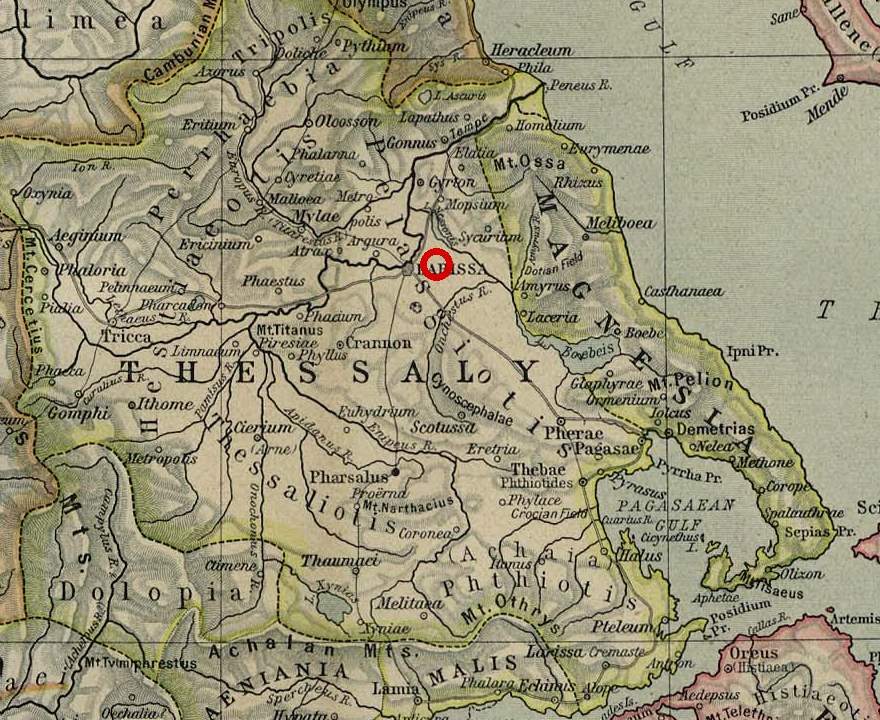
Thessaly on Shepherd’s reference map of northern ancient Greece. Larissa — circled in red — was the capital of the refounded Thessalian League and the conventional mint for its federal coinage. The League united the cities of the plain visible around it — Pherae, Krannon, Pharsalos, Trikka, Metropolis — under a federal government headquartered at Larissa.
“Reference Map of Ancient Greece, Northern Part,” from William R. Shepherd, Historical Atlas (1926 edition) — public domain; scan from the Perry-Castañeda Library Map Collection. Courtesy of the University of Texas Libraries, The University of Texas at Austin (https://maps.lib.utexas.edu/). Modified by JSB Coins: cropped to Thessaly, and a red circle added to mark Larissa.
This unassuming bronze is a coin of political rebirth. In 197 BC the Roman proconsul Titus Quinctius Flamininus broke the Macedonian phalanx of Philip V at Cynoscephalae, in the hills southeast of Pharsalos — on Thessalian soil. At the Isthmian Games of 196 BC he made his famous proclamation of the “freedom of the Greeks,” and as part of that settlement Thessaly, which had been under Macedonian control for a century and a half, was reconstituted as a self-governing federal state: the koinon of the Thessalians, with its capital at Larissa, a federal assembly, an annually elected strategos, and its own coinage. This Athena / horse bronze belongs to the first two generations of that refounded League, between the settlement of 196 BC and Rome’s final reorganization of Greece after the Achaean War of 146 BC.
Graphic: JSB Coins (CC0).
Plutarch preserves the founding scene. When the herald at the Isthmian Games proclaimed the Greeks — the Thessalians among the named peoples — free, ungarrisoned, untaxed, and under their own ancestral laws, the shout from the stadium was so great that, he says, ravens flying overhead fell into the crowd; the crush of gratitude around Flamininus nearly killed the liberator (Life of Flamininus 10). Political theater, certainly — Rome’s freedom came with Rome’s oversight — but for Thessaly it was also real: a constitution, an assembly, an elected strategos, and this coinage.
The obverse carries the head of Pallas Athena in a crested helmet. Athena was a natural federal choice: under the epithet Itonia she was the great federal goddess of the Thessalians, whose sanctuary hosted the League’s festivals, and she appears — striding into battle — on the League’s silver staters of the same era. Above the head the die names one of the League magistrates who stood surety for the issue; on this specimen, as often on these small bronzes, the name is off the flan or too worn to read, so the issue cannot be assigned to a particular year’s college.
The reverse is pure Thessaly: a horse prancing right beneath the abbreviated federal ethnic ΘΕΣ, “of the Thessalians.” The horse had been the badge of the Thessalian plain since the classical silver of its cities — the grazing and prancing horses of Larissa’s drachms and the bridled charger on the hemidrachms of Pharsalos — and the federal mint deliberately reached back to that shared civic language. A Thessalian of 180 BC handling this coin held an image his great-great-grandfathers would have recognized instantly.

Photo: Filos96, Wikimedia Commons, licensed CC BY-SA 3.0, reproduced unmodified.
The refounded League struck silver (the well-known double victoriati on the Roman standard) for larger payments, and bronzes like this one for the small change of daily life in the market towns of the plain. Federal bronze circulated alongside the lingering civic issues of the member cities and provided the League’s towns with a uniform small-denomination currency. Production of the League coinage in this form is conventionally bracketed 196–146 BC; after the sack of Corinth and the Roman reorganization of 146 BC the League survived as an institution — and struck later series into the Augustan era — but the free-federal phase this coin represents was over. The civic coinages the League succeeded are in the collection too, among them the small bronze dichalkon of Krannon, whose petasos-hatted horseman the federal issues took up again.
Attribution: BMC (Catalogue of Greek Coins in the British Museum: Thessaly to Aetolia), Thessalian League no. 66, as cited on the Ancient Imports (Marc Breitsprecher) slip, with the dealer’s dating of 196–146 BC. The standard study of the Thessalian bronze coinage is Edgar Rogers, The Copper Coinage of Thessaly (1932); a Rogers number for this issue remains to be looked up (see open threads on the specimen). Historical frame: the Flamininus settlement and the refoundation of the koinon are narrated in Livy XXXIII–XXXIV and Plutarch’s Life of Flamininus (linked in the references; the Isthmian proclamation and the falling ravens are chapter 10).
MINT IS A BEST GUESS (Larissa): federal League coinage carries no mint mark; Larissa was the League's capital and its chief mint, and the federal issues are conventionally attributed there. The magistrate's name that this type carries above Athena's head is off flan / not legible on the present specimen, so the issue cannot be pinned to a specific college of League magistrates. Dealer's attribution and dating (BMC 66, 196–146 BC) from the Ancient Imports database slip.
John's Ancient Coin Collection · Type · thessalian-league-athena-horse-ae17
Image credits for this coin — photographs, maps and graphics used on this page
_through_the_Vale_of_Tempe_with_the_cliff_profile_of_Apollon.JPG)