Type · licinius-i-iovi-conservatori-follis
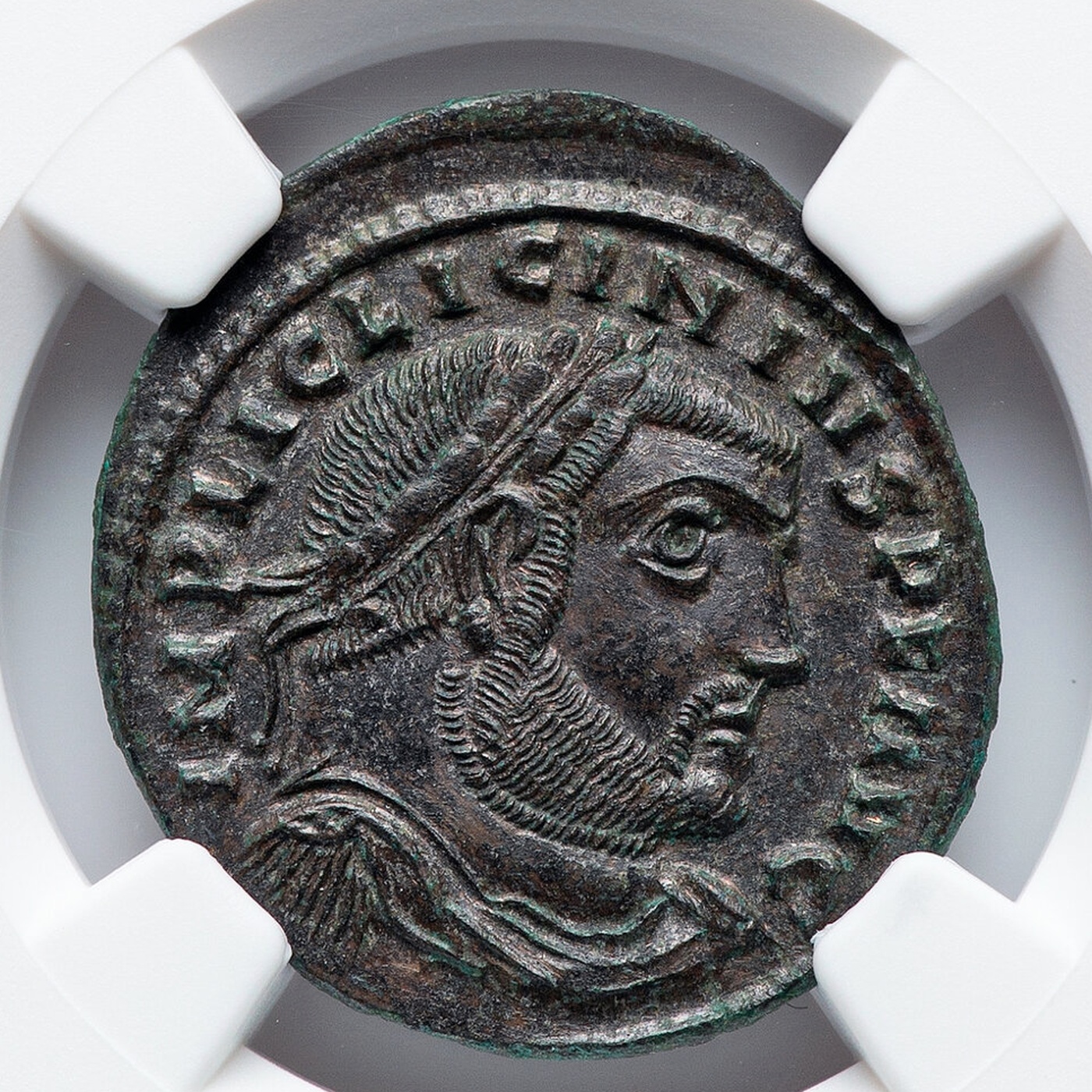
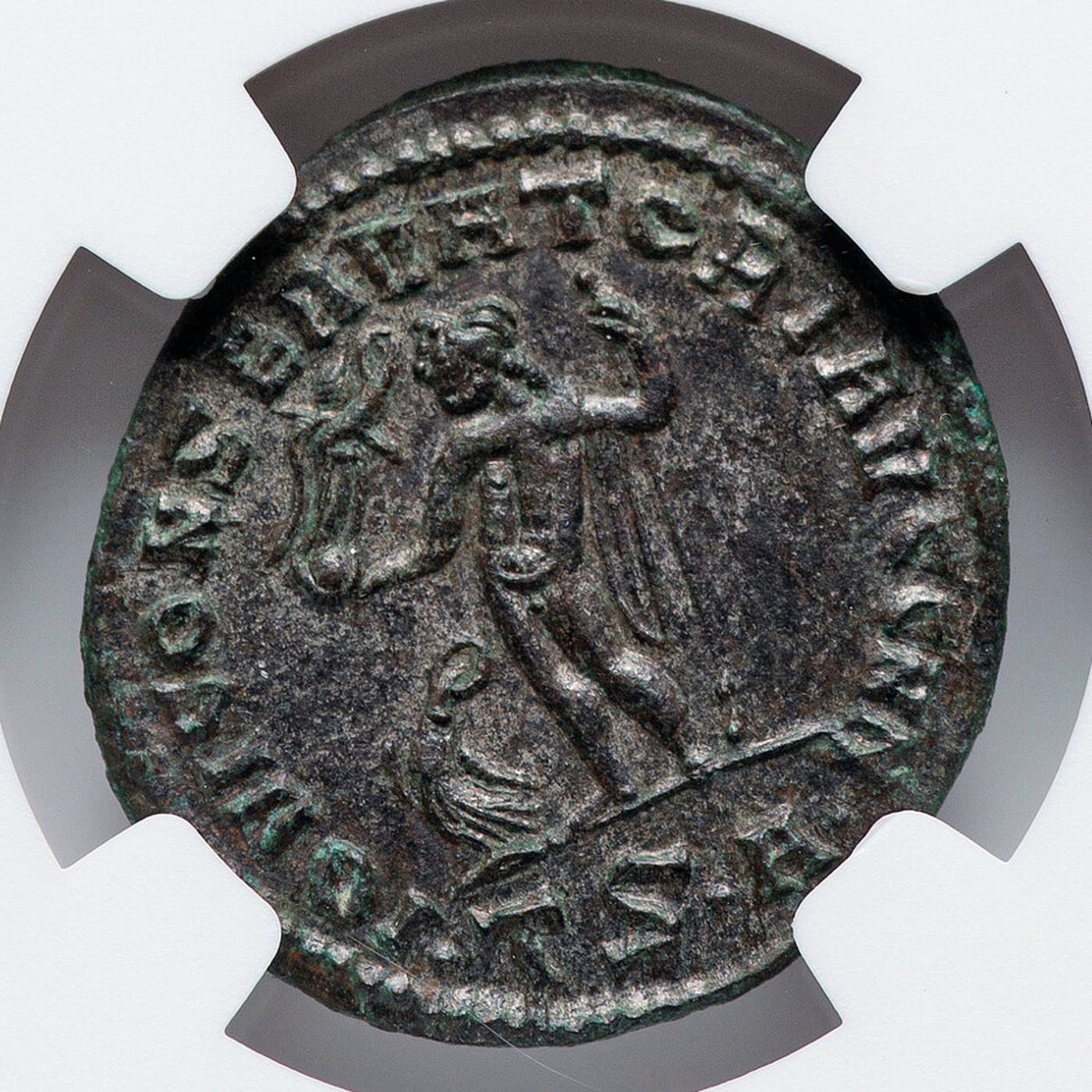
Current: Roman Imperial, Licinius I, BI follis (reduced nummus), Thessalonica, 1st officina, c. AD 312–313 (RIC VI 60)
Obverse: Laureate, draped and cuirassed bust of Licinius I right, seen from front
Reverse: Jupiter standing facing, head left, nude save for a chlamys over the left shoulder, Victory on a globe in the outstretched right hand, grounded sceptre in the left; eagle standing left with head right, wreath in its beak, in the left field. Mintmark •TS•A• in exergue
Primary reference: RIC VI 60 (Thessalonica)
81 specimens in public collections (ANS 50, Ashmolean 8, British Museum 7, Freiburg 4, Institute Numismatics Vienna 3); weights 2.36–4.5 g, median 3.42 g across 81 recorded; die axis most often 6h.
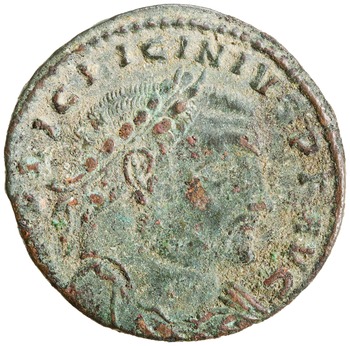
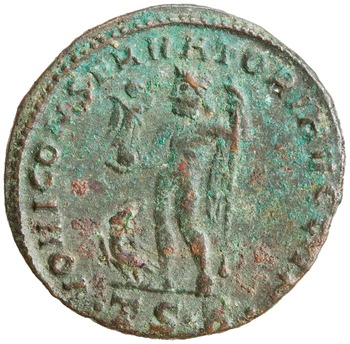
American Numismatic Society, 1933.999.114. CC BY-NC 4.0. https://numismatics.org/collection/1933.999.114
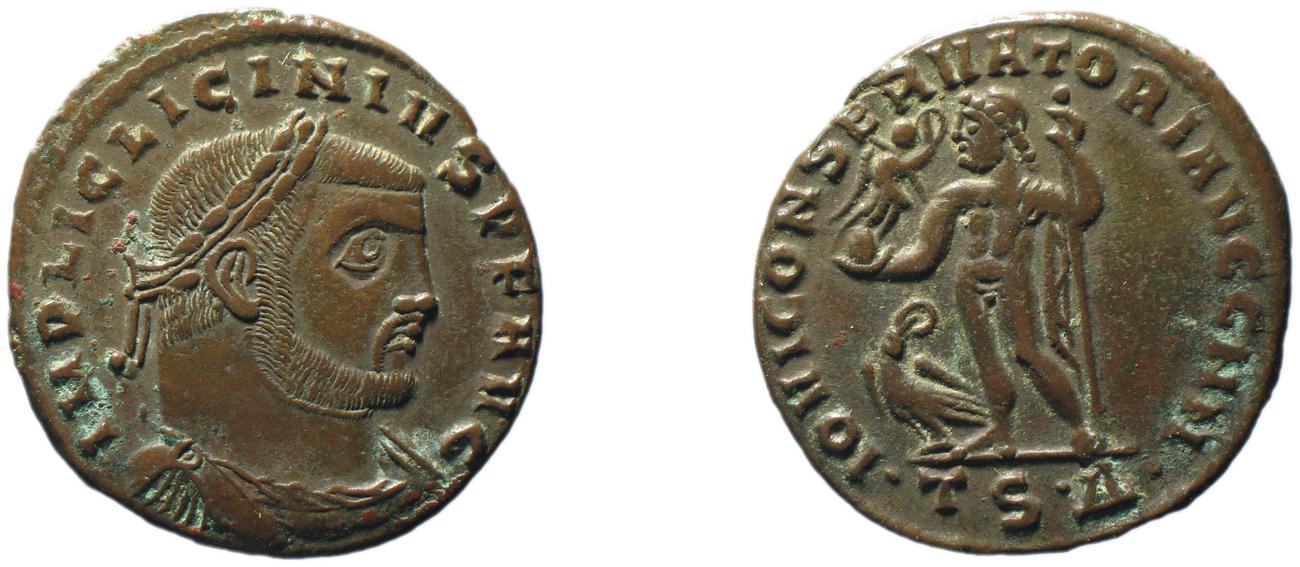
© The Trustees of the British Museum, 1914,0111.6. CC BY-NC-SA 4.0. https://www.britishmuseum.org/collection/object/C_1914-0111-6
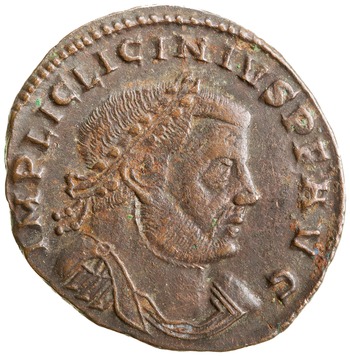
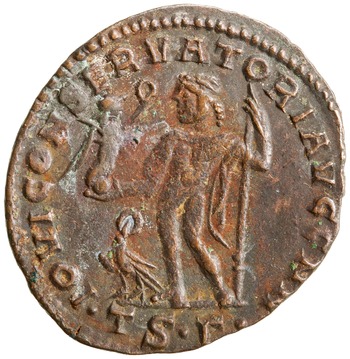
American Numismatic Society, 1933.999.115. CC BY-NC 4.0. https://numismatics.org/collection/1933.999.115
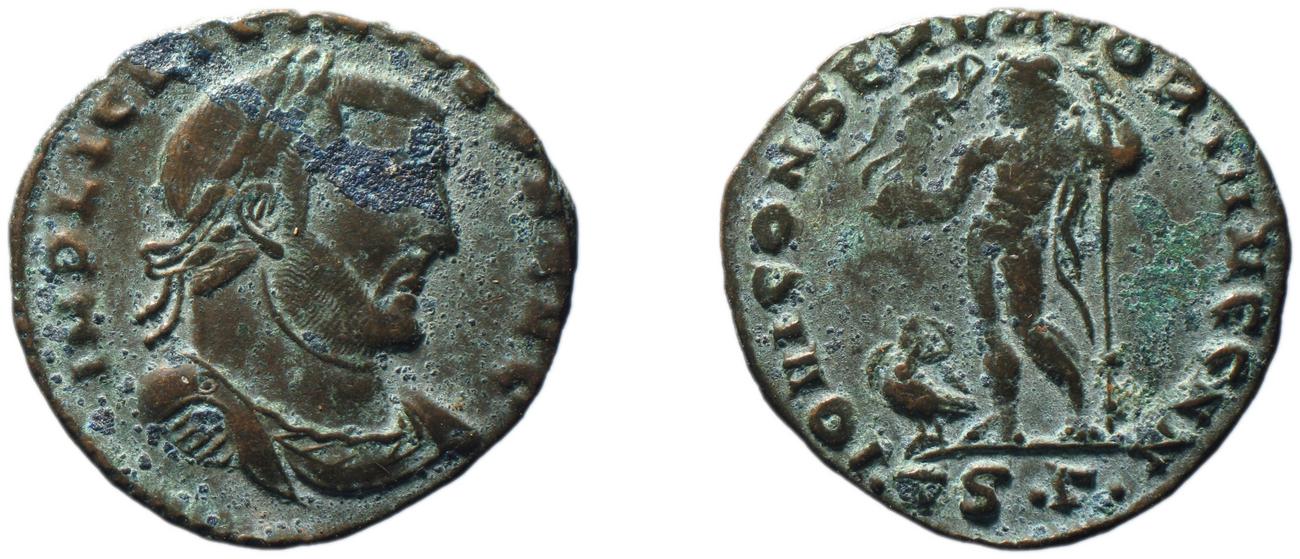
© The Trustees of the British Museum, 1956,0306.6. CC BY-NC-SA 4.0. https://www.britishmuseum.org/collection/object/C_1956-0306-6
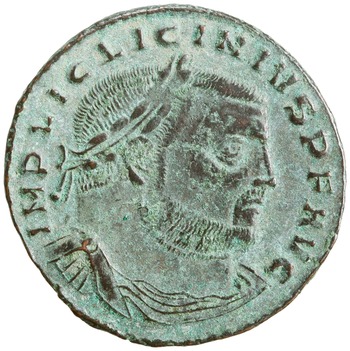
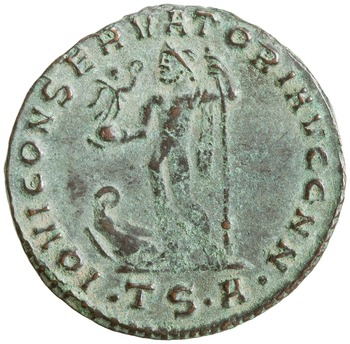
American Numismatic Society, 1933.999.116. CC BY-NC 4.0. https://numismatics.org/collection/1933.999.116
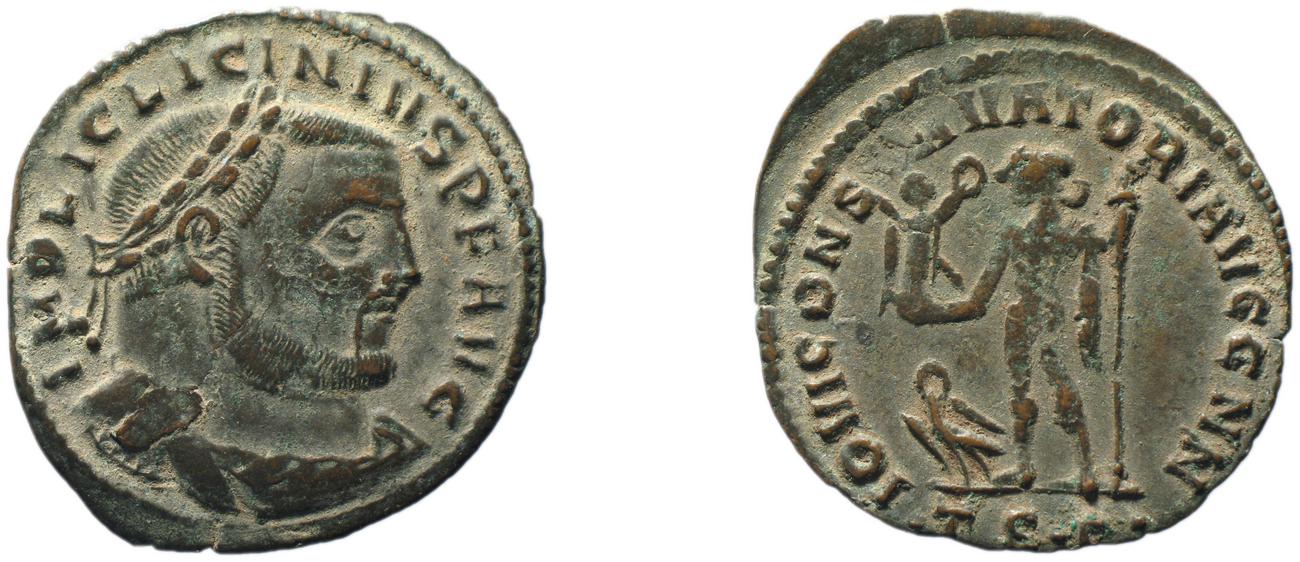
© The Trustees of the British Museum, 1956,0306.7. CC BY-NC-SA 4.0. https://www.britishmuseum.org/collection/object/C_1956-0306-7
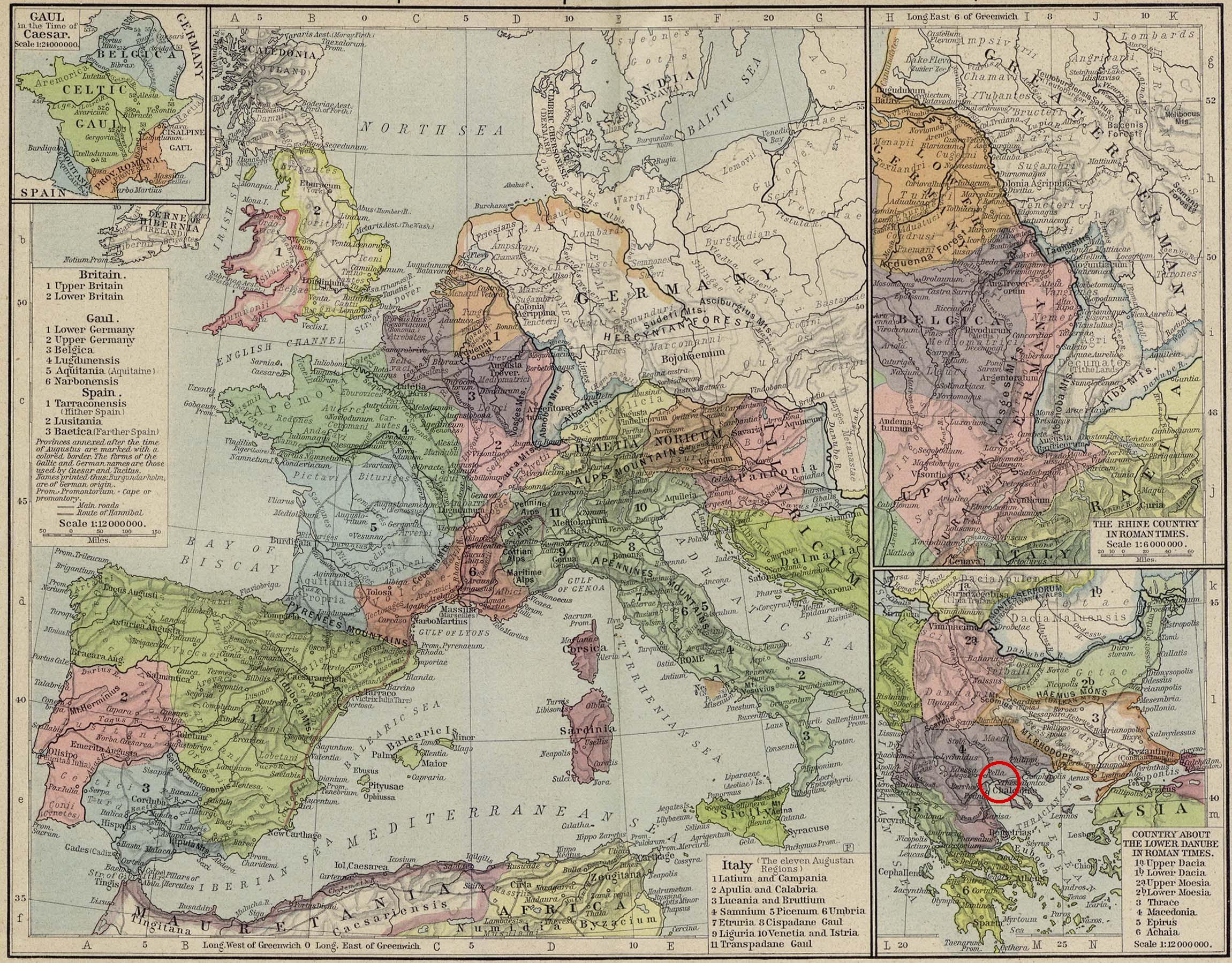
Shepherd’s reference map of the European provinces of the Roman Empire — the same base the collection uses for the Constantine London follis, ringed here on a clean copy rather than on that one. Thessalonica is circled in red, on the Thermaic Gulf in Macedonia, in the “Country about the Lower Danube” panel at the lower right of the sheet. The mint that struck this coin sat where the Via Egnatia — the trunk road from the Adriatic to Byzantium — came down to the sea, in the half of the empire Licinius held while Constantine held the other.
“Reference Map of the European Provinces of the Roman Empire” by William R. Shepherd, Historical Atlas (Henry Holt & Co., 1926 printing), public domain (author died 1934); via Wikimedia Commons, File:European Provinces of the Roman Empire.jpg (scan via the Perry-Castañeda Library, University of Texas) (https://commons.wikimedia.org/wiki/File:European_Provinces_of_the_Roman_Empire.jpg). Modified by JSB Coins: one red ring added to mark Thessalonica, drawn on a clean copy of the plate — house rule is never to add a second marker to a copy already ringed for another type, and this plate is already ringed at Londinium for the Constantine follis. The inset is a crop of the same plate, otherwise unmodified. The unmarked original is kept at maps/European_Provinces_of_the_Roman_Empire.jpg.
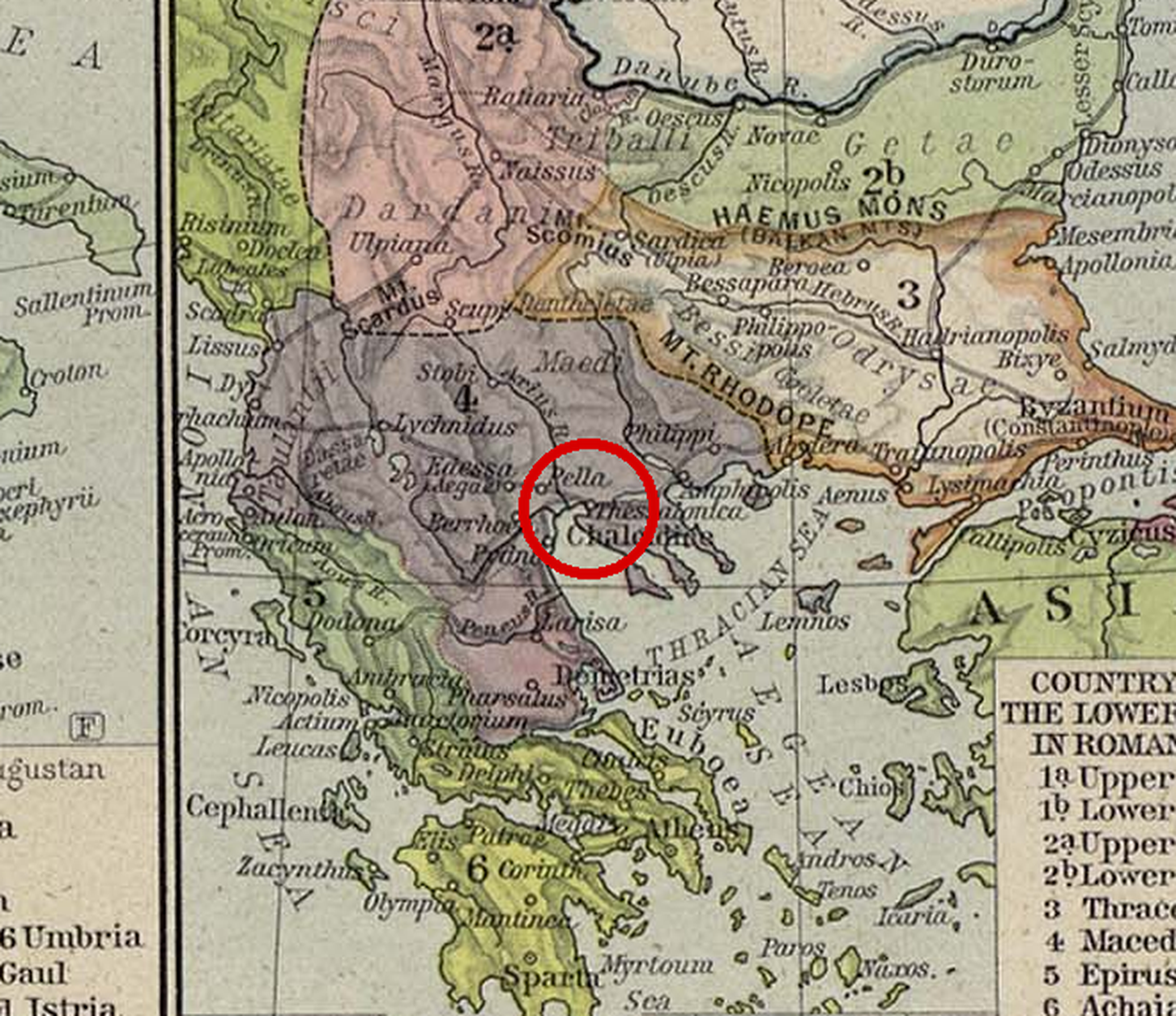
Detail: Thessalonica on the Thermaic Gulf, with Pella inland to the northwest, Philippi and Amphipolis east along the Via Egnatia, and Byzantium — soon to be Constantinople — at the far right of the road.
The collection holds two folles of Constantine the Great — one from London and one from Lugdunum, both with Sol Invictus on the reverse. It held nothing at all of the man he spent eight years fighting and finally executed. This coin closes that gap, and it does it with the right reverse: Jupiter, the god Licinius kept when Constantine had moved on.
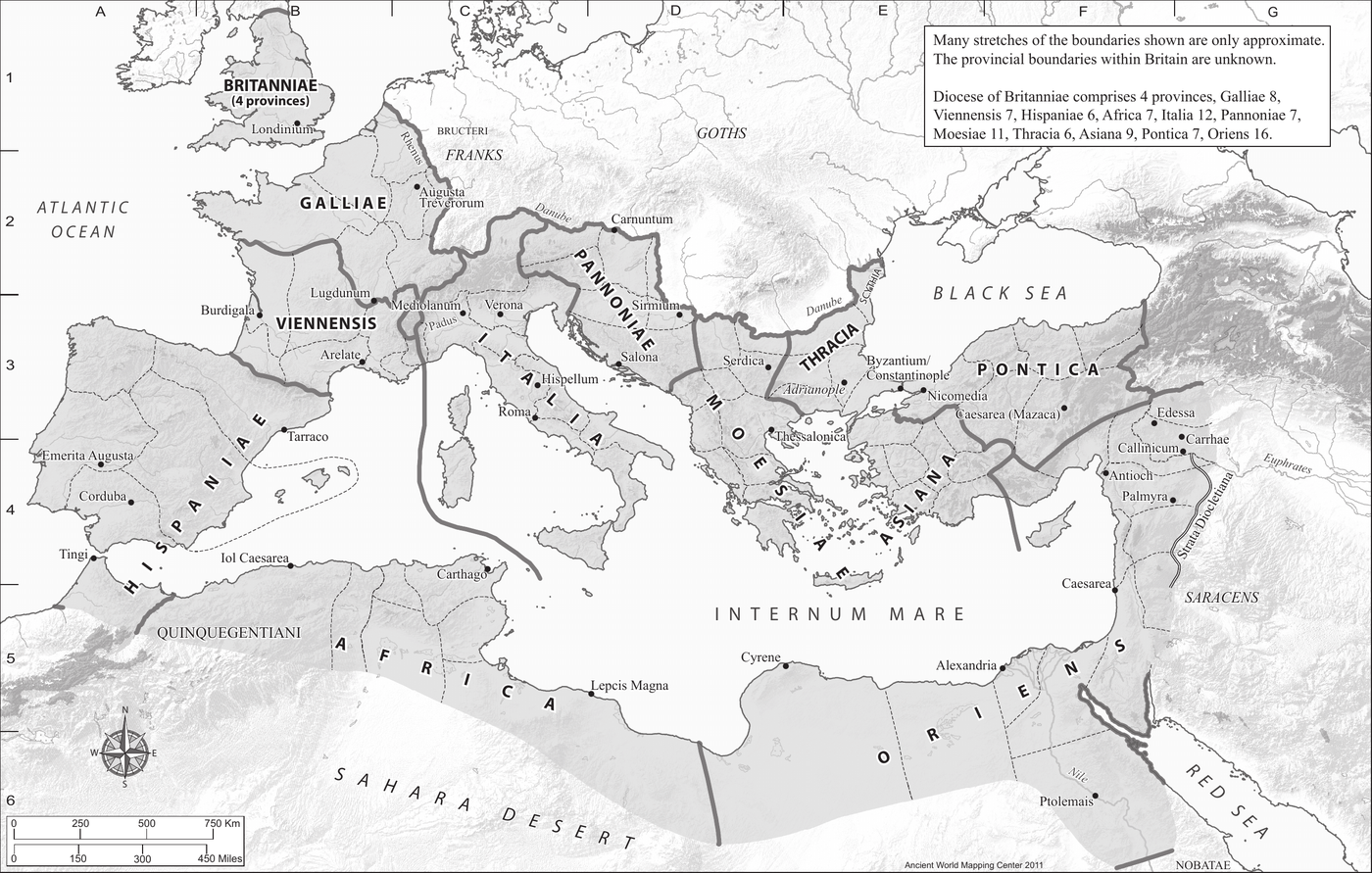
Ancient World Mapping Center, University of North Carolina at Chapel Hill (2011). Trimmed to the plate; licensed CC BY-SA 4.0, via Wikimedia Commons.
Valerius Licinianus Licinius was a soldier of peasant stock from Dacia Ripensis, an old comrade-in-arms of the emperor Galerius. In November 308, at the conference of Carnuntum, Diocletian came out of retirement to patch up a collapsing tetrarchy and Galerius had Licinius made Augustus of the West on the spot.
This was not how the system worked. The tetrarchic scheme ran Caesars up into Augusti; Licinius had never been a Caesar at all. Two men who were Caesars — Constantine and Maximinus II — had just been jumped over by an outsider, and both took it badly enough that within a year the college had four Augusti in it and the machinery Diocletian had built was finished.
In February 313 Licinius met Constantine at Milan and married his half-sister Constantia. The two agreed the policy of religious toleration that everyone now calls the Edict of Milan — which was neither an edict nor issued at Milan. What survives is a rescript to provincial governors, and it was Licinius who promulgated it in the East, at Nicomedia in June 313, over his own name. The document usually credited to Constantine alone was published in Licinius’ territory by Licinius.
Weeks later he crushed Maximinus II at Tzirallum in Thrace, ending the last persecuting regime. By the summer of 313 the empire had two rulers, related by marriage, jointly committed to leaving the Christians alone.
This coin belongs to that moment. IOVI CONSERVATORI AVGG NN — “of our two Augusti” — is a statement of partnership, struck at Thessalonica in the territory Licinius had taken over after Galerius’ death. It had about three years to run.
Graphic: JSB Coins, 2026 (CC0).
Diocletian had organized the tetrarchy around two divine houses: he took the name Iovius, Maximian Herculius, and the coinage repeated it — the collection’s Maximianus radiate fraction is from that system. Jupiter was the senior partner: the preserver, the guarantor of legitimate rule.
Licinius held on to him. Constantine did not. Constantine’s folles of these same years carry SOLI INVICTO COMITI — the Unconquered Sun as his companion — and within a decade the pagan reverses drop away from his coinage altogether. So on the money of the 310s and early 320s you can watch two emperors advertising two different heavens.
It is tempting to read that as the religious war Eusebius later said it was, and this is exactly the point where the sources have to be handled carefully. Almost everything hostile ever said about Licinius comes from Eusebius of Caesarea, writing as Constantine’s panegyrist after Licinius was dead and condemned: expulsions of Christians from the palace, bans on synods, martyrdoms in the eastern provinces. Zosimus, a pagan writing later, tells the story as a straightforward power struggle in which Constantine was the aggressor. Modern historians divide over how much of Eusebius’ account describes real policy and how much is a religious justification constructed afterwards for a war fought over an empire. The honest position is that the question is open — and that a Jupiter reverse struck in 312 or 313, at the very moment its issuer was publishing a toleration rescript in the East, is poor evidence for either side.
War came in 316, over an attempt to raise a third Augustus. Licinius lost at Cibalae, fought Constantine to a standstill at Mardia, and bought peace by surrendering all his European provinces except Thrace.
The rematch came in 324. Constantine beat him at Adrianople in July; Constantine’s son Crispus destroyed his fleet in the Hellespont; the last battle was at Chrysopolis, across the water from Byzantium, in September. Licinius surrendered at Nicomedia and was spared at his wife Constantia’s plea — her brother’s promise. He was interned at Thessalonica, the city that struck this coin, and hanged there in 325 on a charge of plotting with the Goths. His son Licinius II, Constantia’s own child, was killed the following year. The name was struck from the records.
Six years after the executions Constantine dedicated his new capital across the strait from the field at Chrysopolis. Nothing of Licinius’ was allowed to survive except his coinage, which had gone into too many purses to recall — which is why this coin exists.
The reduced nummus — conventionally called a follis — is the debased silver-washed bronze that carried the empire’s small change from Diocletian’s currency reform of 294 onward, and it shrank steadily: a nummus of 300 is a substantial 27–28 mm piece, and by the 320s it is a thin 18 mm token. At 24 mm this is from the large end of the decline.
Struck in the first officina at Thessalonica, marked •TS•A• in the exergue. Jupiter stands nude but for a chlamys, Victory on a globe in his outstretched hand, sceptre grounded, with the eagle and wreath in the field — the full apparatus of legitimate imperial power, on the coinage of a man who was about to lose it.
Lactantius, De Mortibus Persecutorum 43–48, is the contemporary account of Milan and of the war with Maximinus, by a writer close to Constantine’s court. Eusebius, Church History X.8–9, is the source of the case against Licinius and is not a disinterested one. Zosimus, New History 2.18–28, gives the pagan version of the two wars, Chrysopolis, the surrender and the executions. The type is RIC VI Thessalonica 60; OCRE was unreachable when this page was written, so the reference has not been checked against the ANS record.
IOVI CONSERVATORI AVGG NN with the eagle-and-wreath field mark, Thessalonica first officina (•TS•A• in exergue), RIC VI 60. The doubled G of AVGG is the standard plural for two Augusti; in 312-313 the natural reading is Licinius and Constantine, though the formula is conventional and should not be pressed hard as a dating tool. 'Follis' is a modern convention rather than an ancient name - the coin's own denomination is best called a reduced nummus, the debased silver-washed bronze that carried the tetrarchic and Constantinian currency. THE HOUSE RECORDED NO WEIGHT for the specimen; the lot gives only 24 mm and 11h. 24 mm is at the large end for 312-313, when the nummus was still shrinking.
John's Ancient Coin Collection · Type · licinius-i-iovi-conservatori-follis
Image credits for this coin — photographs, maps and graphics used on this page