Type · judaea-first-revolt-prutah-year-two
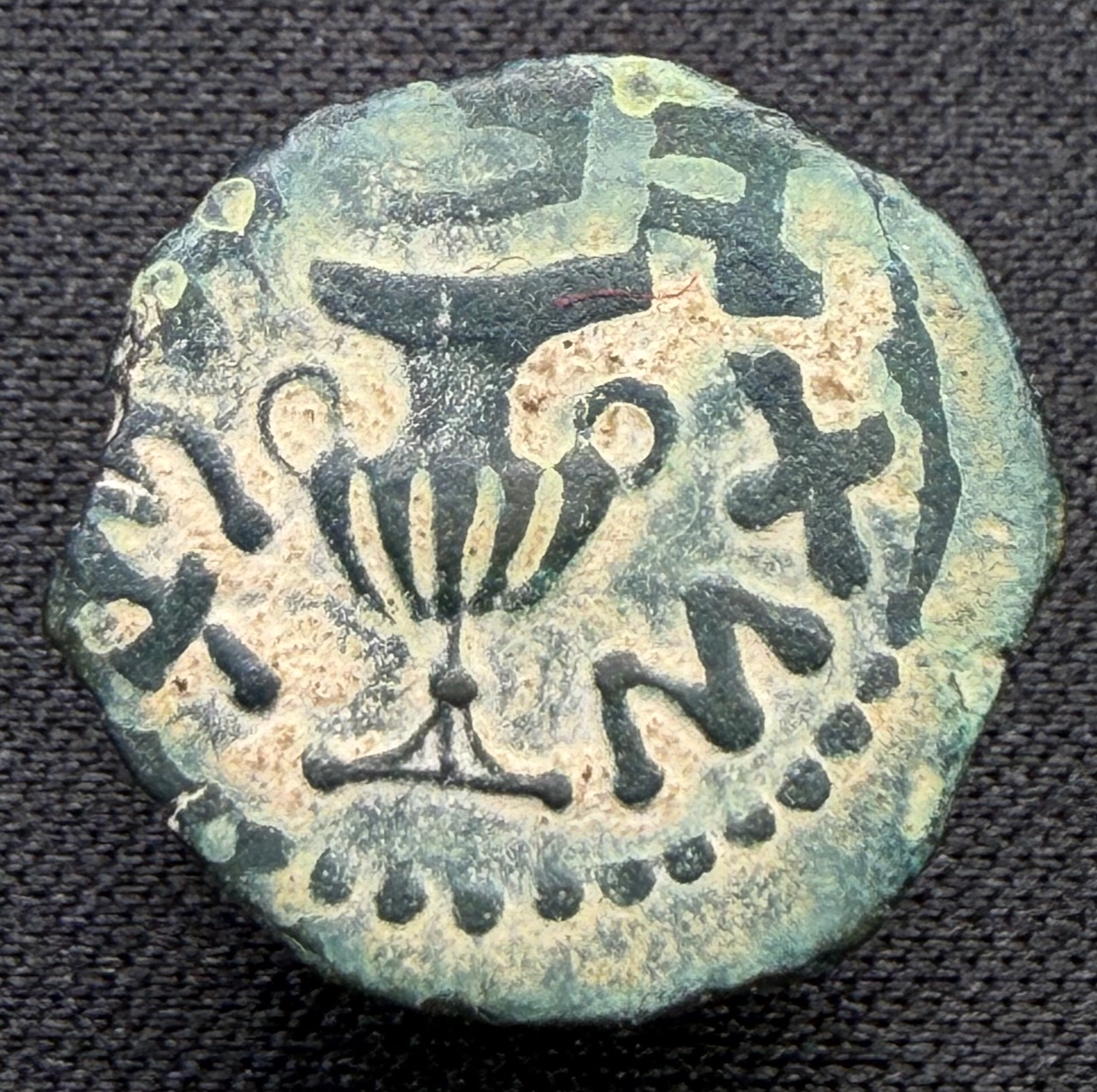
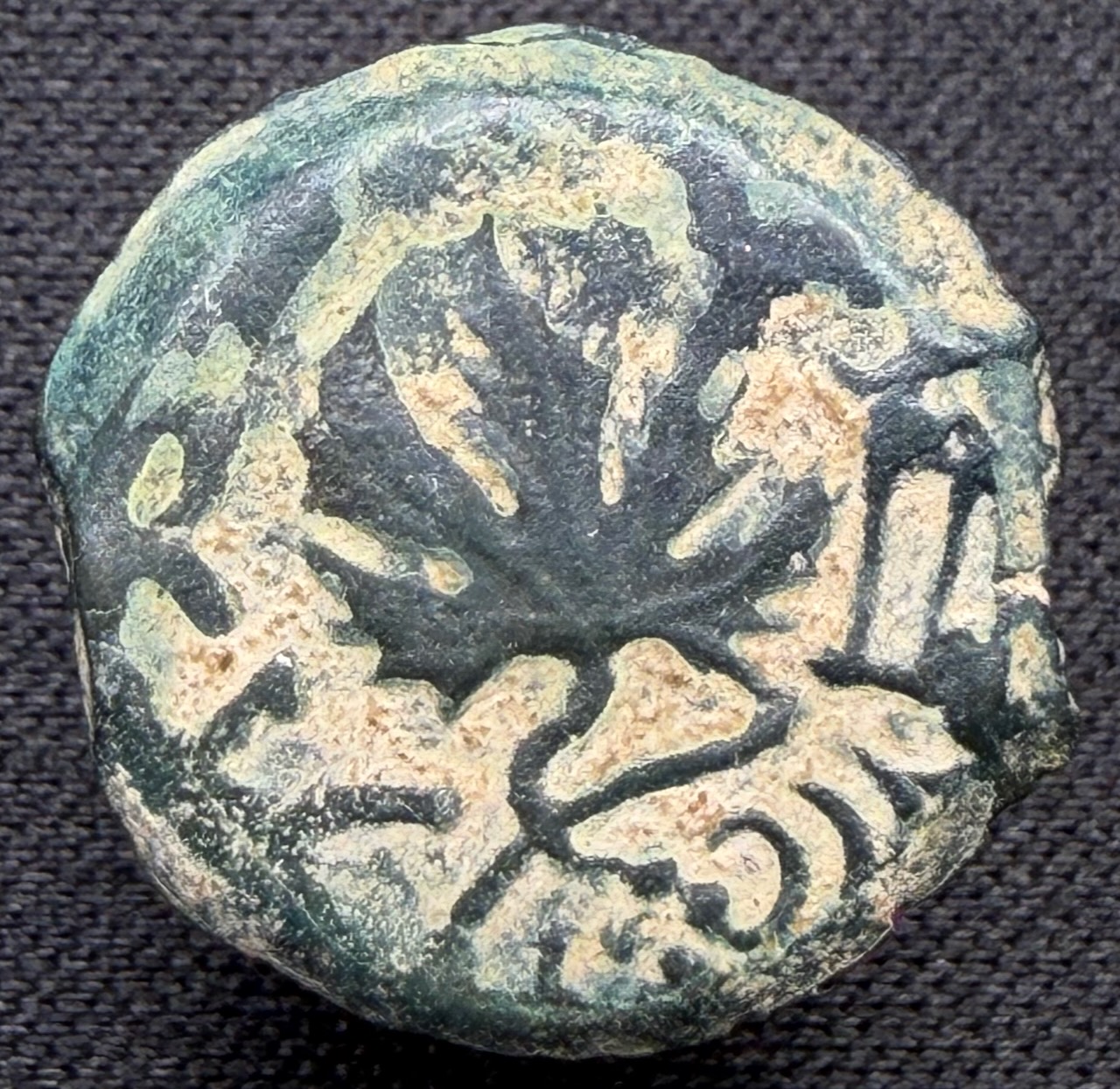
Current: Judaea, First Jewish Revolt (Jewish War against Rome), AE prutah, Jerusalem mint, Year Two = 67/68 AD. Amphora with broad rim / vine leaf on tendril. Hendin 1360 (= 661 in older editions); Meshorer TJC 196.
Obverse: Amphora with a broad rim and two curved handles.
Reverse: Vine leaf on a small branch with tendril.
Primary reference: Hendin 1360 (= 661 older ed.)
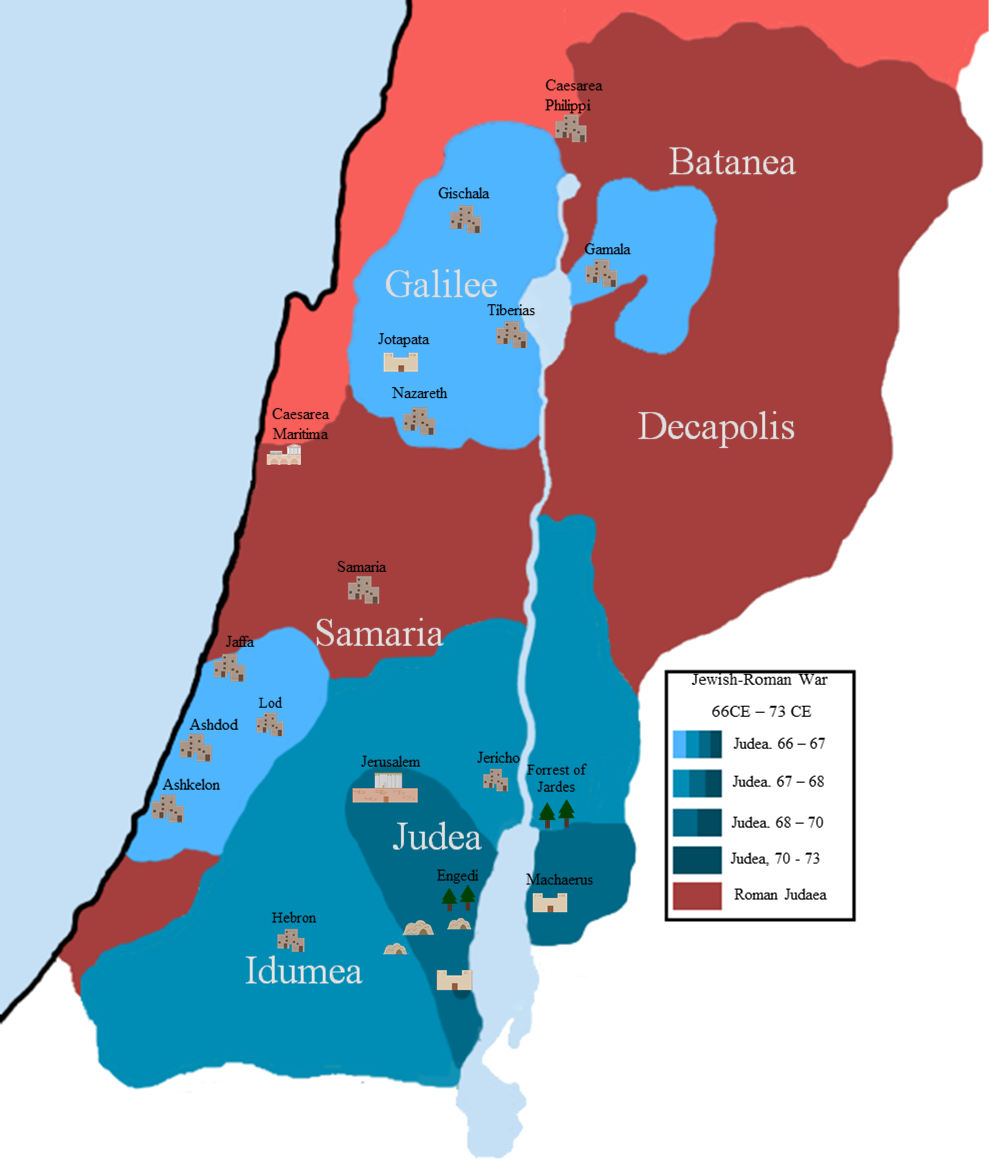
Territories held by the Jewish rebels during the First Jewish–Roman War (66–73 AD), shaded by phase across the regions of Galilee, Samaria, Judea and Idumea. Jerusalem — the rebel capital and the mint that struck this prutah — is labelled in Judea, toward the center of the map. It was here that the provisional government issued the revolt’s coinage, until the city and its Temple fell to Titus in 70 AD.
“Territories held by Jewish forces during the First Jewish-Roman War, 66–73 AD” by Rh0809 (Wikimedia Commons), File:Judean Free Government.png, licensed CC BY-SA 4.0 (https://commons.wikimedia.org/wiki/File:Judean_Free_Government.png; license: https://creativecommons.org/licenses/by-sa/4.0/). Reproduced unmodified.
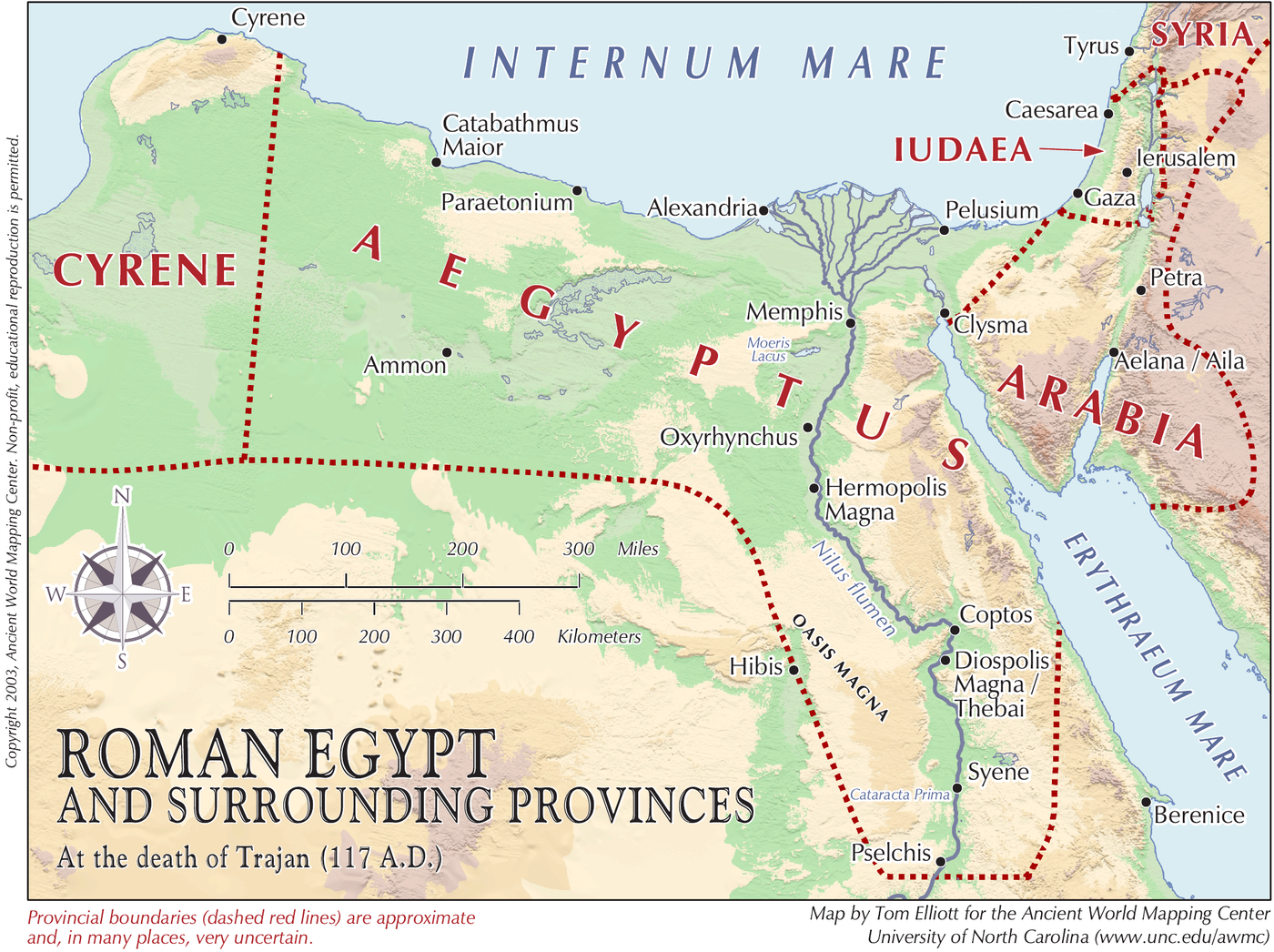
Ierusalem, where this prutah was struck in the second year of the revolt, and Caesarea on the coast, where the Roman governor sat and where the fighting began. The map is drawn for AD 117, half a century after the revolt was crushed — by which time the province shown here was the settled arrangement that the coin was minted to reject.
This small bronze prutah is a coin of the First Jewish Revolt against Rome (66–70 AD), the uprising that ended with the Roman siege of Jerusalem and the destruction of the Second Temple. Struck in the “Year Two” of the revolt (67/68 AD), it is one of the most tangible everyday survivals of that war: not a grand silver shekel but the low-value copper that changed hands in the markets of a city in revolt.
Graphic: JSB Coins, 2026 (CC0).
The revolt broke out in 66 AD amid tensions between the Judaean population and Roman administration. For a few years the rebels controlled Jerusalem and ran their own affairs, and one of the first acts of any sovereign power in antiquity was to strike coin. The rebel coinage—silver shekels and half-shekels, and these bronze prutot—served both a practical need and a political claim: by issuing its own money, dated by the “years” of the revolt and inscribed in Hebrew, the provisional Jewish government asserted an independence Rome would not tolerate. Coins dated “year two” belong to 67/68 AD, when the revolt still held Jerusalem but the Roman counter-offensive under Vespasian was already grinding through the countryside. That war made Vespasian’s fortune: victory in Judaea carried him to the throne in 69 AD and founded the Flavian dynasty, whose self-assured coinage of the next decade is represented in this collection by the Felicitas dupondius of the young Domitian.
The coin is deliberately aniconic. In keeping with the Second Commandment’s prohibition of graven images, the rebels avoided the portraits and deities that filled Greco-Roman coinage and chose instead objects and plants: an amphora (a two-handled vessel) on the obverse and a vine leaf on a branch on the reverse. The legends are written not in the everyday Aramaic square script but in the archaic paleo-Hebrew alphabet—a conscious evocation of the First Temple and Israelite past, a script of national and religious revival. The obverse reads šnat štaym (“year two”); the reverse carries the revolt’s great slogan, ḥerut Ṣiyyon, “the Freedom of Zion.”
The precise meaning of the images is not settled, and it should not be presented as if it were. The amphora and vine have been read as references to the Temple service—vessels for wine libations and the wine of the sacrificial cult—and, alternatively, as symbols of the agricultural abundance and produce of the land of Judaea; the vine in particular was a long-standing emblem of Israel. These readings are plausible and not mutually exclusive, but the sources do not let us fix a single intended symbolism, and scholars differ on the emphasis. What is secure is the coins’ aniconism and the nationalist-religious force of the paleo-Hebrew “Freedom of Zion.”
The prutah was the small change of Judaea, the coin of daily transactions — the bronze that actually filled Judaean purses in the decades when, as the Gospel scene made famous, a Roman denarius of Tiberius had to be specially produced to make a point about Caesar’s image. The same denomination from the same mint sits in this collection on the other side of the argument: the prutah of Pontius Pilate, dated to Tiberius’s year 17 and carrying a Roman augur’s staff. Thirty-six years separate the two coins — long enough for Jerusalem’s small change to go from Greek legends and Roman priestly implements to paleo-Hebrew and Freedom of Zion. As an issue of a rebel state under wartime conditions it circulated locally and briefly; it was never an international trade currency in the way of a Tyrian shekel or an Athenian tetradrachm. Its importance is documentary and ideological rather than economic: it put the revolt’s message—dated year by year, in the ancestral script—into the hands of ordinary people.
Few ancient coins are so directly tied to a datable, world-historical event. A Year Two prutah was struck in the window between the outbreak of the revolt and the catastrophe of 70 AD, when the Temple was destroyed and the rebellion crushed. It is a physical trace of a short-lived Jewish sovereignty and of the aspirations captured in two Hebrew words, “Freedom of Zion.”
The war this coin’s slogan proclaims has a monument in Rome, and it shows where the Temple’s treasures went. On the Arch of Titus, dedicated on the Via Sacra after Titus’ death in 81, a relief panel freezes the triumphal procession of AD 71: Roman soldiers, laurel-crowned, shouldering the seven-branched menorah and the showbread table of the destroyed Temple through the streets. Josephus, who watched the triumph, describes exactly these spoils passing by (War 7.148–150). A prutah stamped “Freedom of Zion” in 67/68 and the marble of 81 are the two ends of a single arc — the coin is the hope, the relief is what Rome made of it.
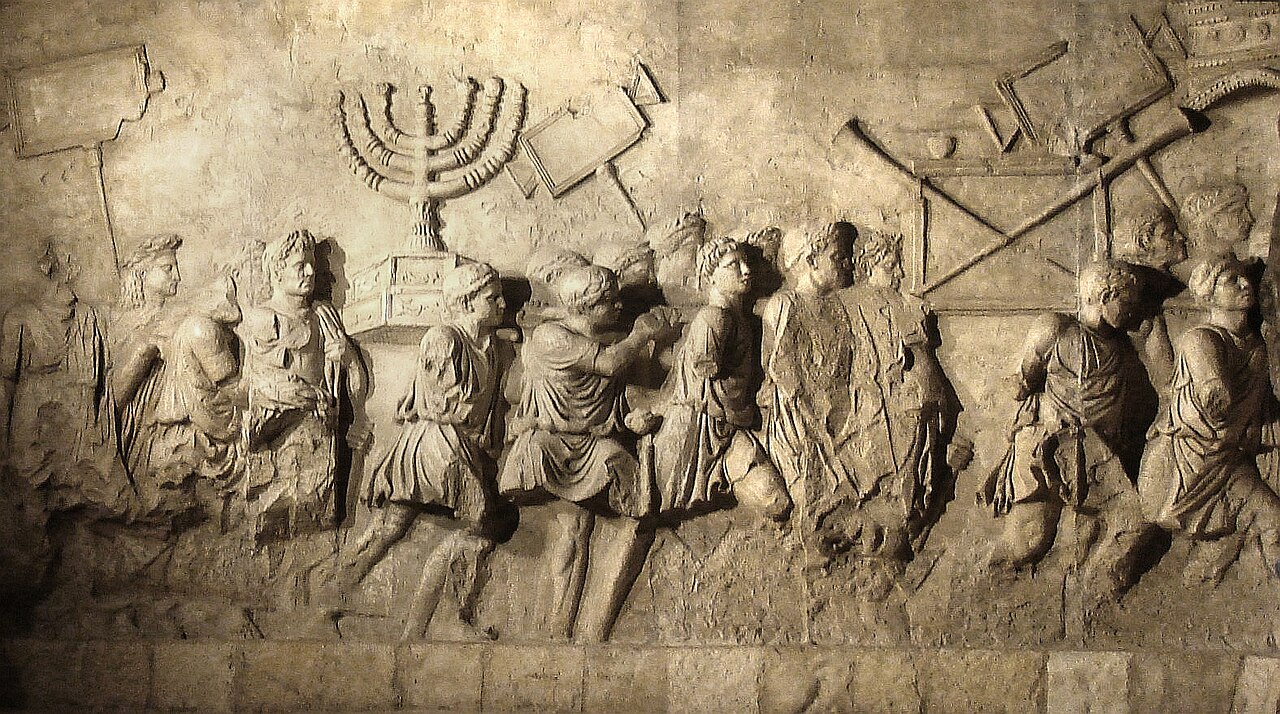
Photo: Steerpike, CC BY 3.0 (Wikimedia Commons); reproduced unmodified.
Attribution follows David Hendin, Guide to Biblical Coins (Year Two prutah = Hendin 1360, the number 661 in the earlier 4th edition cited on the dealer tag), and Ya’akov Meshorer, A Treasury of Jewish Coins (TJC 196). The distinction between the Year Two (open-rim amphora) and Year Three (lidded amphora) types follows Hendin. The reading of the paleo-Hebrew legends (šnat štaym; ḥerut Ṣiyyon) is standard; the interpretation of the amphora-and-vine imagery is discussed, without firm consensus, in Meshorer and Hendin. The war itself: Josephus, The Jewish War (linked in the references); the spoils in the triumph: War 7.148–150, with the relief on the Arch of Titus.
Everyday bronze denomination of the Great Revolt, struck by the rebel administration at Jerusalem; distinct from the revolt's silver shekels. Deliberately aniconic (no human or animal images), with archaizing paleo-Hebrew legends. The Year Two amphora has a broad, open rim; the Year Three type (Hendin 1363; = 664 in older editions; TJC 204) adds an ornate lid — the quickest way to tell the two years apart. Year Two is much the commoner of the two (dealer literature estimates Year Three at roughly one-eighth the frequency of Year Two).
John's Ancient Coin Collection · Type · judaea-first-revolt-prutah-year-two
Image credits for this coin — photographs, maps and graphics used on this page