Type · domitian-caesar-felicitas-dupondius
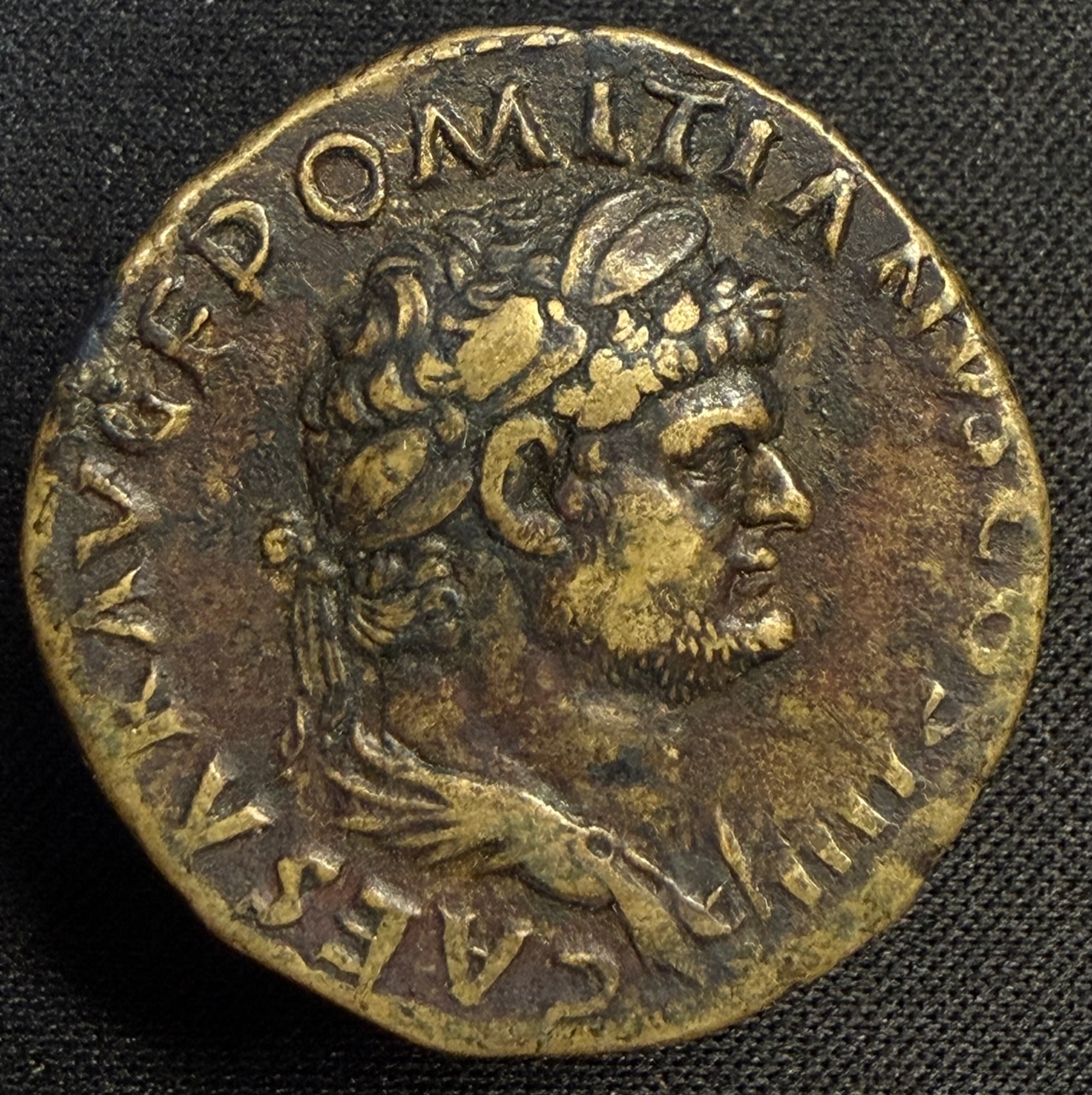
Current: Roman Imperial, Domitian as Caesar under Vespasian, Æ dupondius, Rome, 76–77 AD (RIC II.1² Vespasian 927)
Obverse: Laureate, draped bust of Domitian right
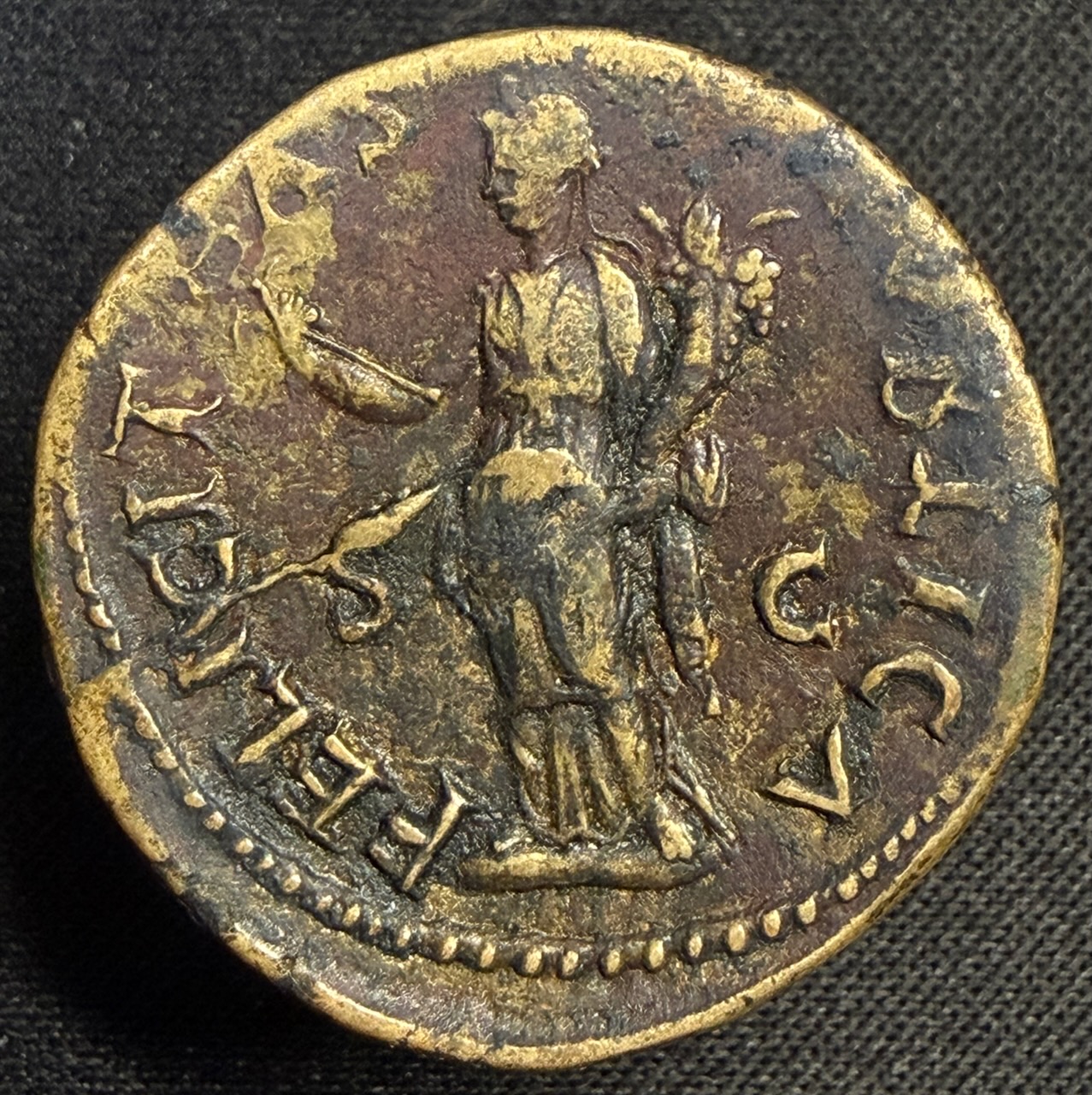
Reverse: Felicitas standing left, holding winged caduceus and cornucopia
Primary reference: RIC II.1² (Vespasian) 927
2 specimens in public collections (ANS 1, BnF 1).
This collection's specimen, at 13.63 g (tag), is heavier than 100% of the recorded weights.
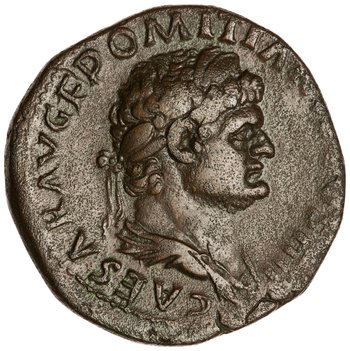
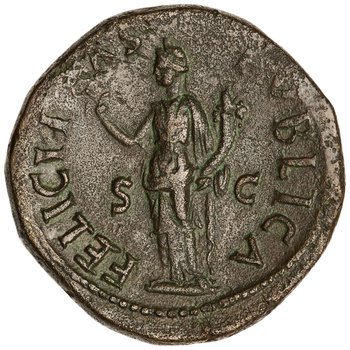
American Numismatic Society, 1944.100.42544. CC BY-NC 4.0. https://numismatics.org/collection/1944.100.42544
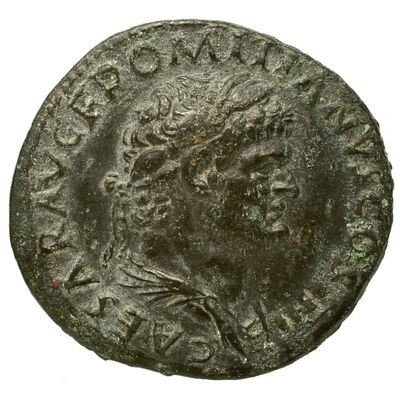
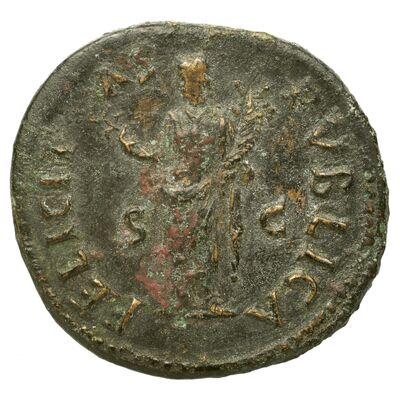
Bibliothèque nationale de France (Gallica), IMP-8209. non-commercial reuse permitted. https://gallica.bnf.fr/ark:/12148/btv1b104470921
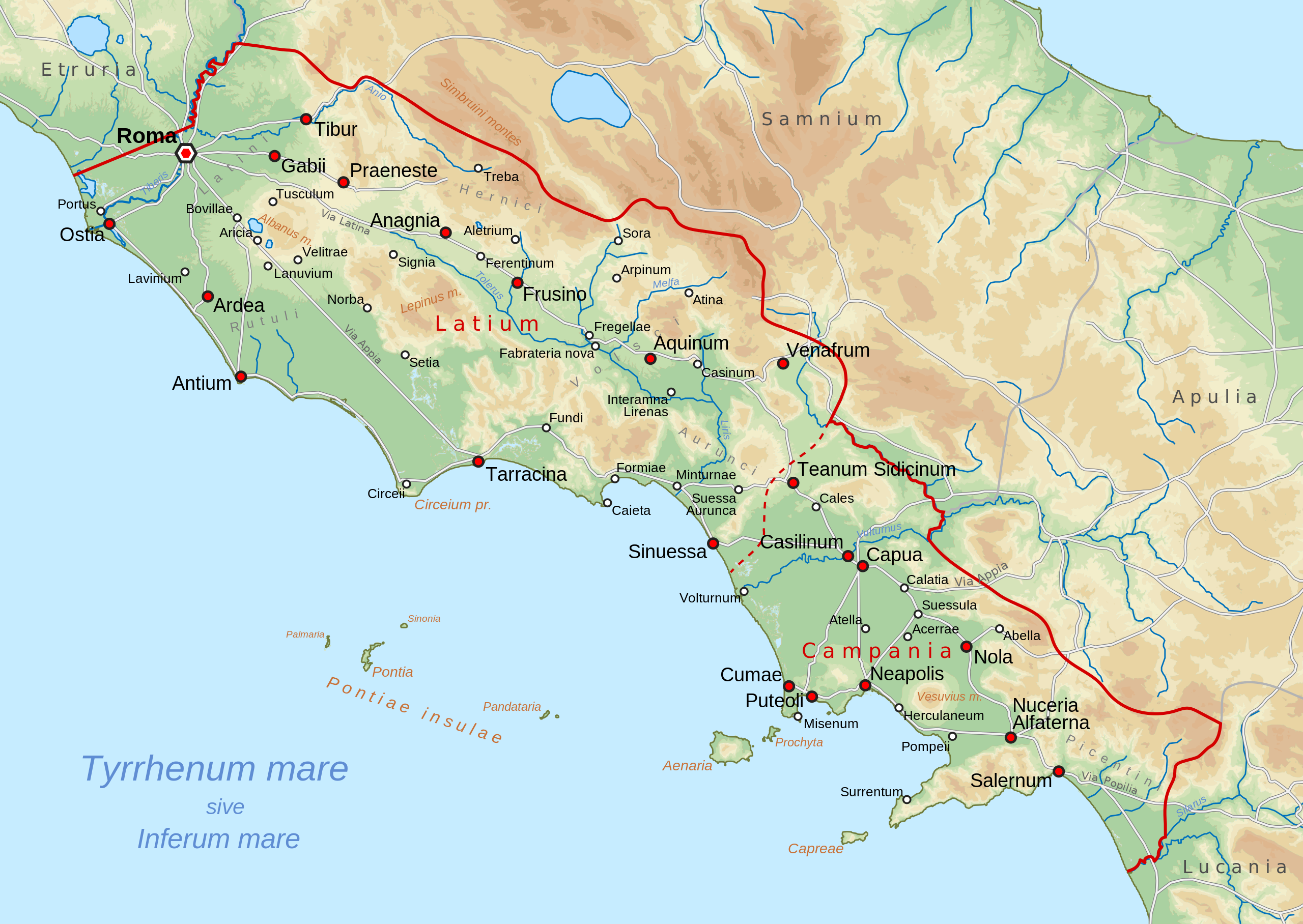
Regio I, Latium et Campania — the heartland of Roman Italy. Roma sits at the upper left, marked by the map’s hexagonal capital symbol and bold label. By the Flavian era the imperial bronze coinage was struck at Rome itself, the SC of the reverse advertising its formal senatorial authority.
“Map of Augustan Regio I Latium et Campania” by Tomisti (Wikimedia Commons), File:Regio I Latium et Campania map.svg, licensed CC BY-SA 4.0; cities and roads based on the Digital Atlas of the Roman Empire (DARE) and Pleiades; topographic base © OpenMapTiles, © OpenStreetMap contributors. Rasterized from SVG to PNG; otherwise reproduced unmodified (Roma already carries the base map’s capital marker).
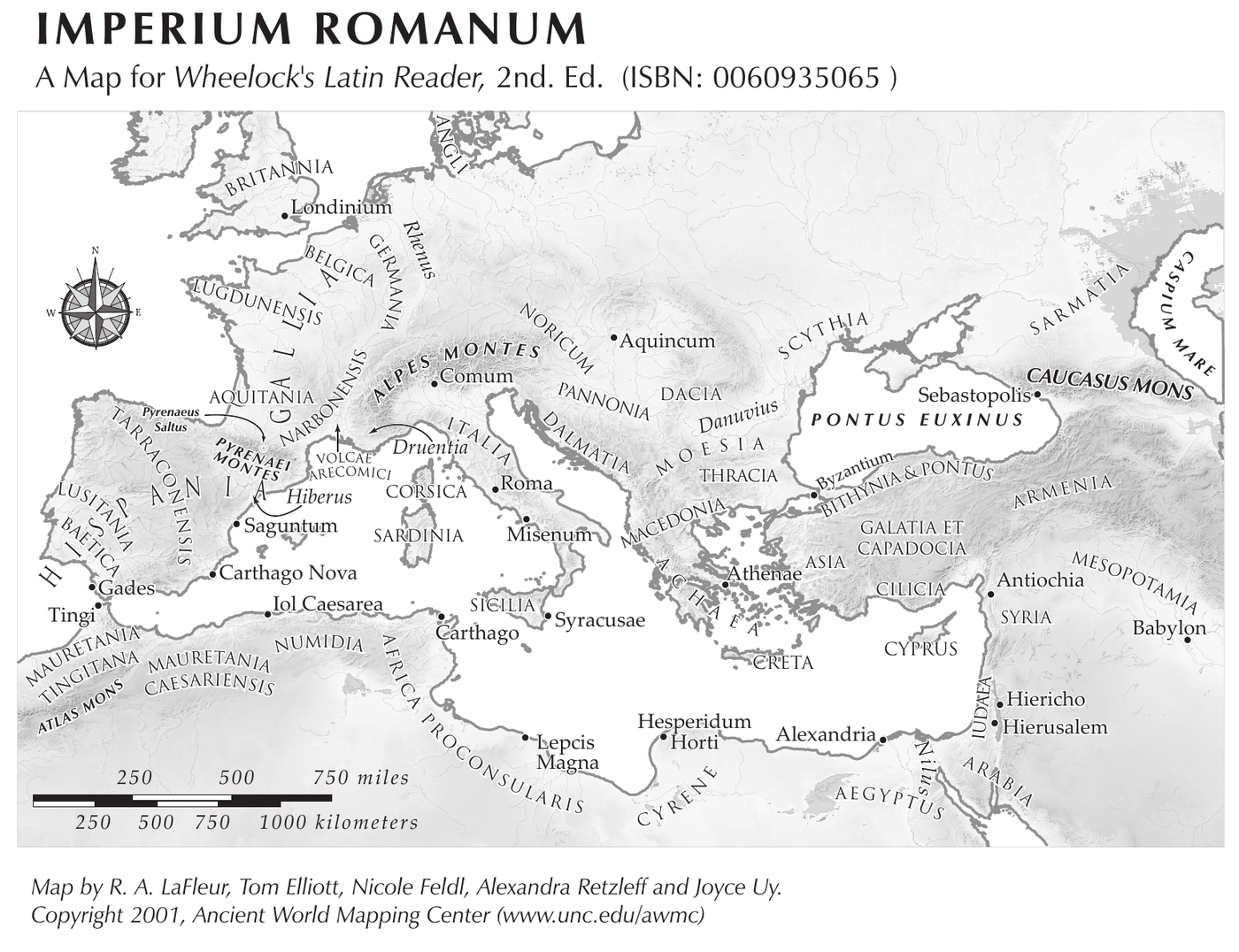
Roma sits at the center of Italia. Struck in AD 76–77, five years after the Flavians took Hierusalem — the victory that paid for the dynasty, and for the amphitheatre Domitian would finish.
In 76 AD the Flavian house had held the empire for seven years, and its coinage worked hard at looking permanent. Vespasian, the tough Sabine general who had emerged from the civil wars of 69, ruled with his elder son Titus as colleague-in-waiting; his younger son Domitian, twenty-four years old, was Caesar — heir of the second rank, decorated with consulships (this coin’s COS IIII is his fourth, held in 76) but carefully kept from real command. The brass dupondii struck in his name, like this one, were part of the dynasty’s arithmetic: three Flavian faces on the money meant a succession twice insured, the lesson everyone had drawn from the year 69, when the death of a childless emperor had put four men on the throne in twelve months.
Graphic: JSB Coins, 2026 (CC0).
The reverse offers Felicitas Publica — the “public good fortune” or blessedness of the state — standing with her winged caduceus (prosperity through concord) and cornucopia (abundance). It is the quintessential Flavian message: after civil war, burned temples, and a bankrupt treasury, the new house advertised recovery, plenty, and peace restored. The large S C flanking the figure marks the bronze as struck senatus consulto, by the Senate’s formal authority — a Republican fig leaf maintained on the base-metal coinage long after the emperors controlled every die. The same Flavian self-presentation had a darker complement: the dynasty’s founding victory was the crushing of the Jewish Revolt, commemorated on the famous IVDAEA CAPTA series — the war whose other side is represented in this collection by the First Revolt prutah of Year Two, struck by the besieged in Jerusalem eight years before this coin.
The portrait shows Domitian before absolute power: full-cheeked, laureate, with the drapery of a prince rather than the aegis of a ruler. In 81 AD, on Titus’s early death, he would become emperor himself and rule fifteen years — an able administrator remembered bitterly by the senatorial historians, murdered in 96 and subjected to damnatio memoriae, his name chiselled off monuments across the empire. The coins, too numerous to recall, escaped the erasure; a bronze like this one preserves the face the Senate tried to abolish. Set beside the collection’s Augustus & Tiberius quadriga denarius, it shows the succession-advertisement genre a lifetime on: a son’s face and titles doing on brass what Tiberius’s chariot had done on silver. A century further on again, the Jupiter sestertius of Marcus Aurelius shows the big imperial aes still carrying the state’s message, S C and all.
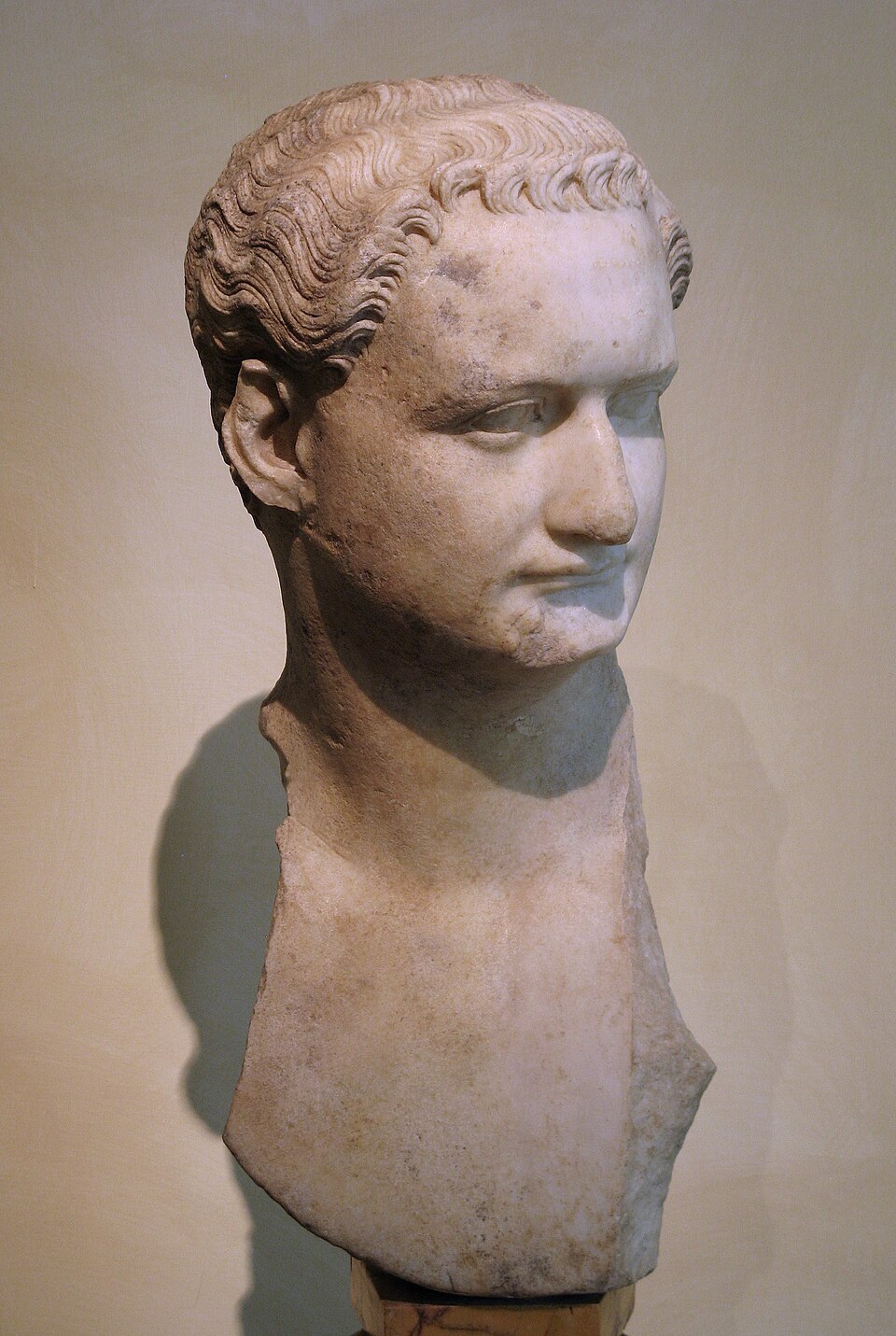
Photo: Mark Landon, CC BY 4.0 (Wikimedia Commons); reproduced unmodified.
Dupondii of Domitian as Caesar with this precise legend and date are scarce — the ANS’s OCRE database links only two specimens of RIC II.1² 927 — and the type captures the Flavian settlement at its working best: the year of the Colosseum’s rising walls, the temple of Peace, and a dynasty still intact, five years before it began to consume itself.
Attribution follows I. A. Carradice and T. V. Buttrey, The Roman Imperial Coinage II.1 (2nd ed., London 2007), Vespasian 927, confirmed against the ANS’s Online Coins of the Roman Empire record (obverse CAESAR AVG F DOMITIANVS COS IIII, draped laureate bust right; reverse FELICITAS PVBLICA S C); the dealer tag cites the old edition’s RIC II 927. Domitian’s consulships and career: Suetonius, Domitian 1–2 (linked in the references); Cassius Dio 65–66. The Capitoline bust: Musei Capitolini MC 1156. The scarcity observation is OCRE’s linked-specimen count as of 2026.
COS IIII dates the issue precisely: Domitian's fourth consulship ran from January 76, superseded by his fifth in January 77. The full legend DOMITIANVS with draped bust distinguishes RIC II.1² 927 from 928 (abbreviated DOMITIAN, COS IV). The dealer tag's 'RIC II 927 Vesp.' cites the old (1926) edition; by coincidence the 2007 second edition assigns the same number 927 to this variety. OCRE links only two specimens of 927, against dozens for the commoner Domitian-Caesar Felicitas issues of other years.
John's Ancient Coin Collection · Type · domitian-caesar-felicitas-dupondius
Image credits for this coin — photographs, maps and graphics used on this page
_02.jpg)