Type · corinth-pegasos-athena-stater
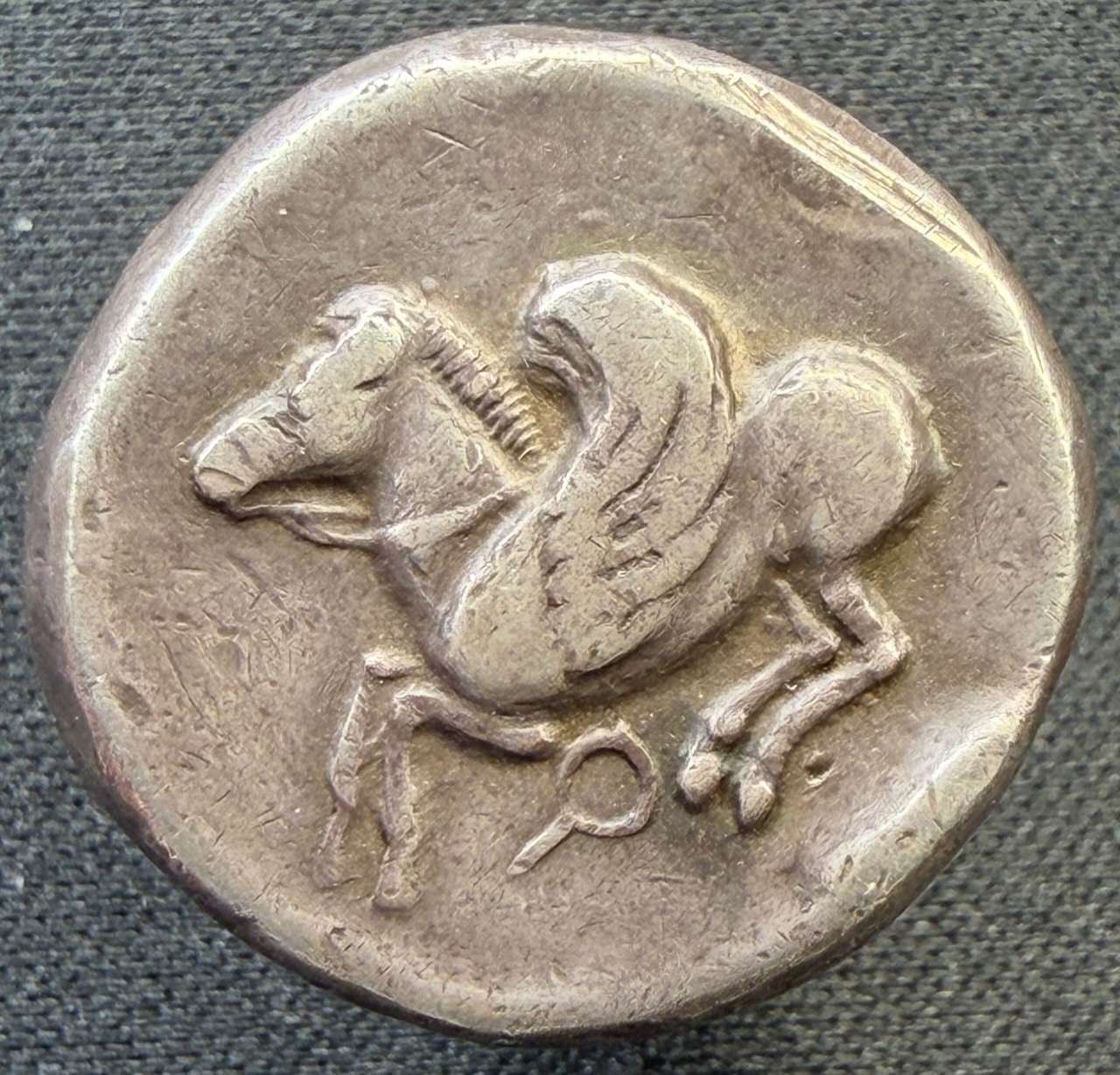
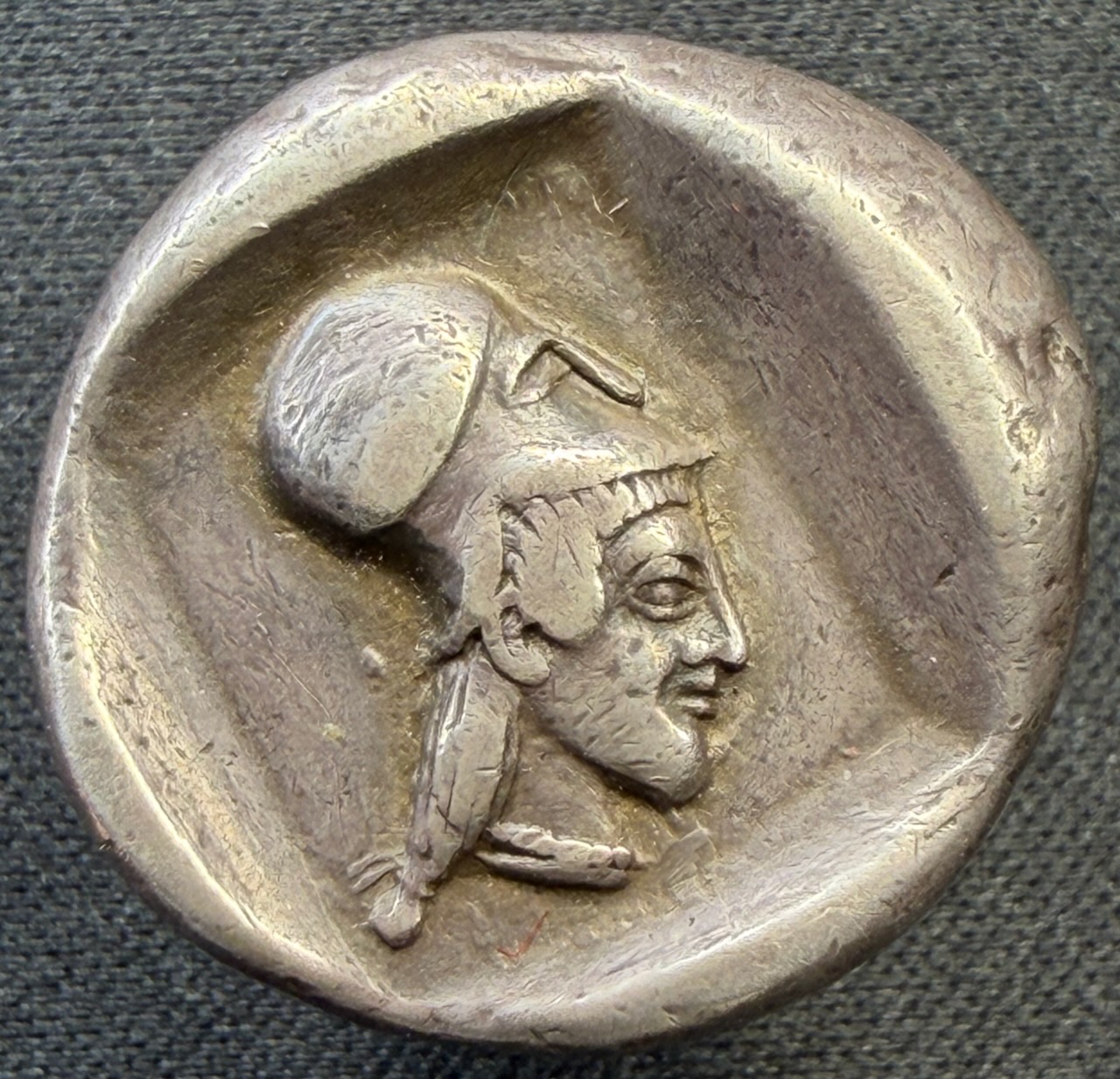
Current: Corinthia, Corinth, AR stater, c. 490–450 BC. Pegasos flying left, koppa below / helmeted head of Athena right within incuse square. Ravel Period II, 136 var.; Pegasi 68; HGC 4, 1821 (per dealer tag).
Obverse: Pegasos with curled (archaic) wing flying left; below, koppa (Ϙ) — the archaic initial of Ϙόρινθος (Corinth)
Reverse: Head of Athena right, wearing Corinthian helmet, hair falling in a queue behind; all within a shallow incuse square
Primary reference: Ravel Period II, 136 var. / Pegasi 68
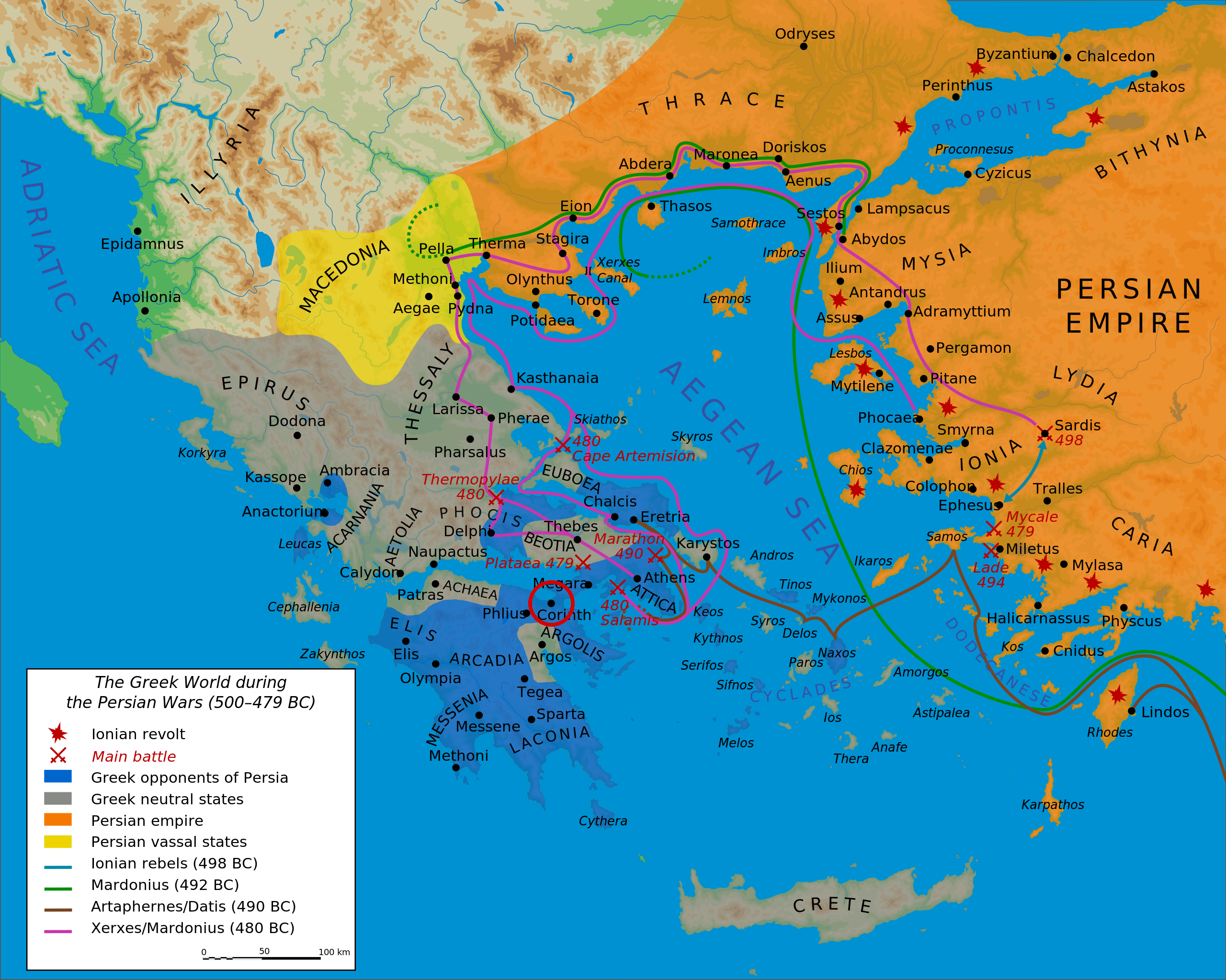
The Greek world during the Greco-Persian Wars (c. 500–479 BC) — the very era in which this stater’s group began. Corinth — circled in red — sits at the Isthmus, the neck of land joining the Peloponnese to mainland Greece, commanding the land route between them and the seas on either side. The map shows the Greek alliance that fought Xerxes, in which Corinth was a leading naval power second only to Athens.
“Map showing the Greek world during the Greco-Persian Wars (ca. 500–479 BC)” by Bibi Saint-Pol (Wikimedia Commons), File:Map Greco-Persian Wars-en.svg, licensed CC BY-SA 3.0 (https://commons.wikimedia.org/wiki/File:Map_Greco-Persian_Wars-en.svg; license: https://creativecommons.org/licenses/by-sa/3.0/). Modified by JSB Coins: rasterized from SVG to PNG, and a red circle added to mark Corinth. This derivative is shared under the same CC BY-SA 3.0 license.
The silver staters of Corinth — nicknamed “colts” (pōloi) after the flying horse that fills their obverse, the name Ravel took for his great corpus — are among the earliest and most recognizable of all Greek coinages. This example belongs to the early classical phase, struck in the decades of the Persian Wars and their aftermath, when Athena’s head on the reverse still sits within the sunken square of the archaic technique.
Corinth owed everything to geography. The city controlled the Isthmus — the land bridge between the Peloponnese and central Greece — with a harbor on each sea: Lechaion on the Corinthian Gulf facing west, Kenchreai on the Saronic Gulf facing east, linked by the diolkos, the paved slipway across which ships and cargoes were hauled. Homer already calls the city “wealthy Corinth,” and Thucydides (1.13) makes it an early naval and commercial power that grew rich on the traffic of two seas. That wealth made Corinth one of the first Greek states to strike coined silver, beginning in the second half of the sixth century BC, and its staters flowed above all westward — to the Corinthian colonial world of northwest Greece, and on to Italy and Sicily.
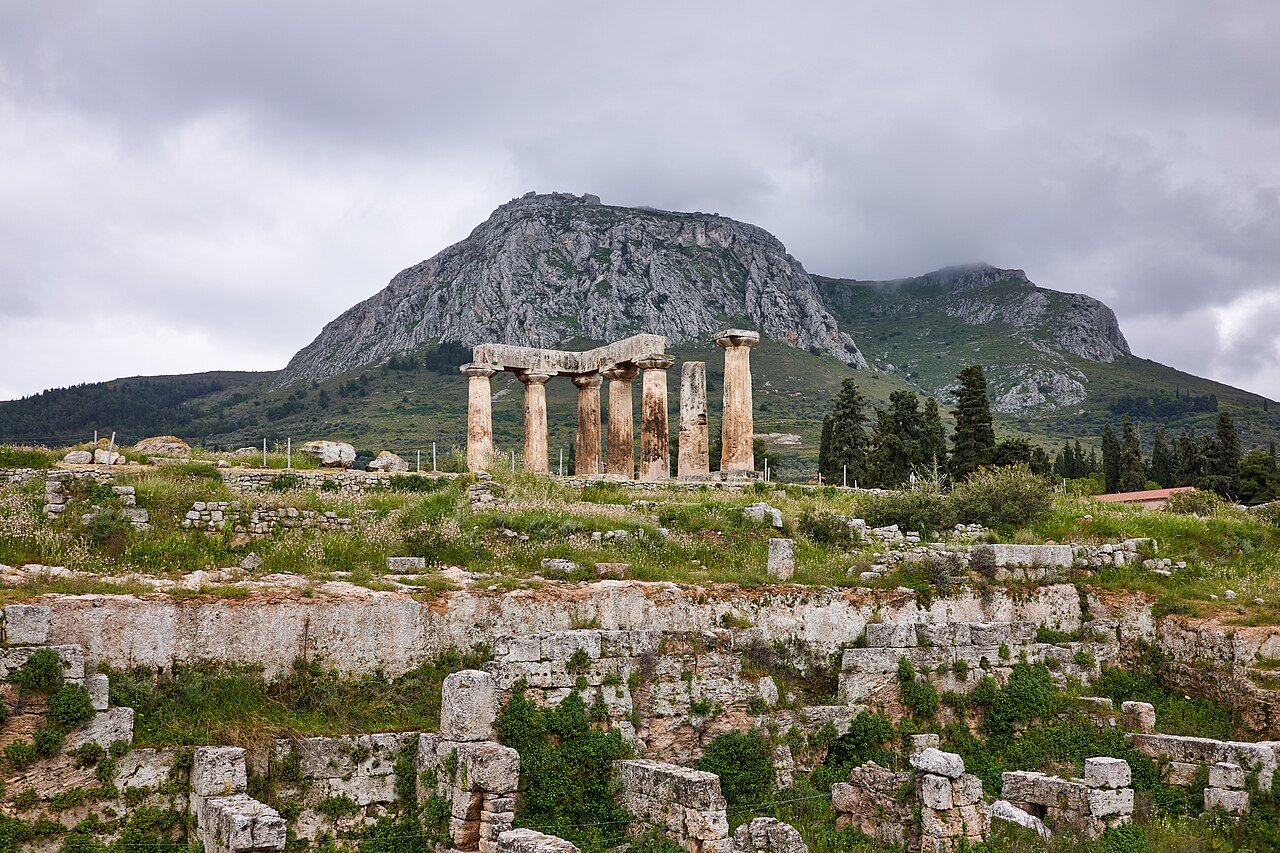
Photo: George E. Koronaios, Wikimedia Commons, licensed CC BY-SA 4.0, reproduced unmodified.
The dealer’s bracket for this group, c. 490–450 BC, spans the great crisis and triumph of the Persian Wars and the prosperous half-century that followed. Corinth stood in the front rank of the Hellenic alliance against Xerxes: Herodotus records forty Corinthian ships at Salamis (8.43) and a strong Corinthian contingent at Plataea. In the decades after the victory Corinth remained the chief commercial power of the Peloponnese, increasingly wary of the growth of Athenian sea-power — a rivalry that would eventually help ignite the Peloponnesian War. The staters of this period are the money of that wealthy, confident, pre-war Corinth.
The obverse is the city’s badge: Pegasos, the winged horse, with the archaic curled wing, flying left; beneath him the letter koppa (Ϙ), the initial of the city’s name in its old spelling, Ϙόρινθος — a badge the mint kept for centuries, down to the city’s Hellenistic small bronze in this collection. The choice is a local myth made money. Pegasos sprang from the blood of Medusa, and it was at Corinth — at the spring of Peirene on Acrocorinth — that the hero Bellerophon bridled him. Pindar’s thirteenth Olympian ode, written in 464 BC for a Corinthian victor and thus almost exactly contemporary with this coin, tells how Athena gave Bellerophon the golden bridle that tamed the horse. The city honored her for it as Athena Chalinitis, “Athena the Bridler,” whose sanctuary Pausanias saw at Corinth (2.4.1). She is the natural reading of the helmeted head on the reverse, wearing the Corinthian helmet the city’s armorers made famous; an older suggestion that the head might be the armed Aphrodite worshipped on Acrocorinth has not been generally followed, and the conventional identification as Athena is retained here. The incuse square framing her is a survival of the archaic minting technique, where the reverse die was a simple sunken punch; within a generation or two of this coin it would disappear in favor of full spread-flan reverses. One modern test of that trade cuts the other way: lead-isotope analysis of fifth-century Corinthian silver finds a noticeable component of Laurion metal in it — the mines of Attica that were about to pay for the Athenian owl, sold on to a city that would spend the next generation trying to check Athenian power.
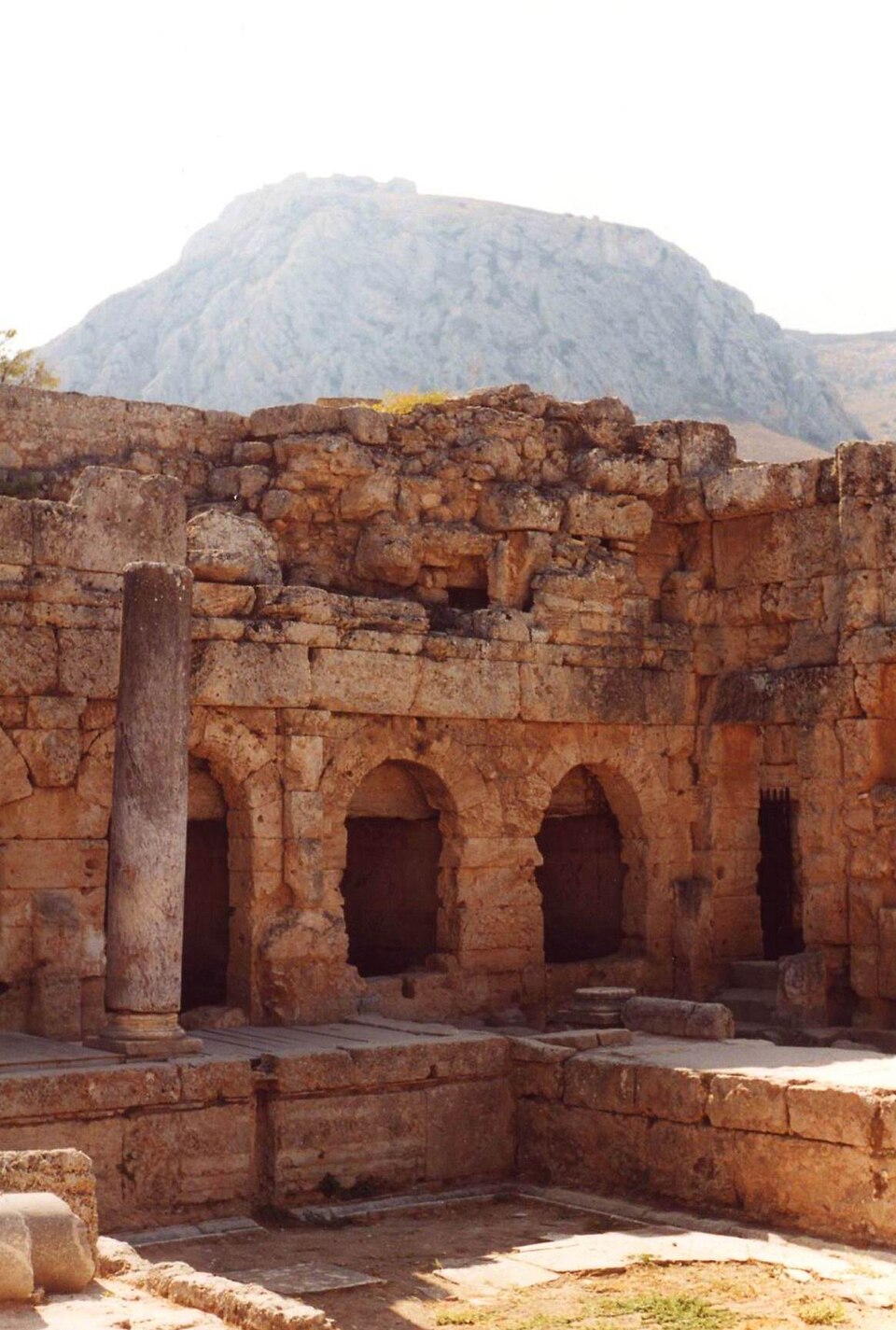
Photo: Stefan Volk, Wikimedia Commons, licensed CC BY-SA 3.0, reproduced unmodified.
The Corinthian standard was distinctive: a stater of about 8.6 g divided into three drachms of about 2.9 g, where the Attic system divided its money into two. The arithmetic was commercially shrewd — the Corinthian stater weighed the same as an Attic didrachm, so the two currencies interlocked, while the light drachm suited the retail trade of the west. As Corinth’s colonies — Ambracia, Anaktorion, Leukas, and the rest — began striking their own pegasi with their own initial letters in place of the koppa, the “colts” became a genuinely international currency of the Corinthian Gulf and the western Greek world, a role they held into the fourth century, when pegasi in enormous quantity financed Timoleon’s revival of Greek Sicily. One of those daughter mints is in this collection: the stater of Argos Amphilochikon at the head of the Ambracian Gulf — the same types on the same standard, with an A beneath the horse in place of Corinth’s koppa.
An early classical Corinth stater joins the small group of truly canonical Greek coin types — with the Athenian owl and a handful of others — that fused a city’s identity into a single image and held it for centuries. This example, with the archaic incuse square still framing Athena and the koppa of old Corinth under the flying horse, catches the coinage in its formative moment, when the city that helped defeat Persia was the great merchant power of the Greek mainland.
The attribution and references are the dealer’s: Ravel Period II, no. 136 var., Pegasi 68, HGC 4, 1821 (this last recorded as given on the tag; the printed references should be checked — see the specimen’s open threads). The foundational corpus is O. E. Ravel, Les “Poulains” de Corinthe I (1936), arranged with R. Calciati, Pegasi (1990) and O. D. Hoover’s HGC 4; later scholarship regards Ravel’s relative arrangement as sound but his absolute chronology as needing revision. The Corinthian weight standard and the westward circulation of the pegasi are standard accounts found in these works. Ancient sources: Pindar, Olympian 13 with the Bellerophon story; Pausanias 2.4.1 for Athena Chalinitis; Herodotus 8.43 for Corinth at Salamis; Thucydides 1.13 for Corinth’s early commercial power.
Struck on the Corinthian standard: a stater of c. 8.6 g divided into three drachms of c. 2.9 g (not two, as on the Attic standard) — a structure that eased exchange both with Attic-weight money (the stater matching the Attic didrachm) and with the western markets the pegasi served. This specimen's tag weight of 7.58 g is well below the full standard; see the specimen's open threads. The helmeted head within an incuse square marks the earlier phase of the coinage, before the full spread-flan reverses of the later fifth and fourth centuries. Ravel's period framework remains the standard arrangement of the early staters, though his absolute dates are acknowledged in later scholarship to need revision; the tag's c. 490–450 BC bracket is conventional for this group.
John's Ancient Coin Collection · Type · corinth-pegasos-athena-stater
Image credits for this coin — photographs, maps and graphics used on this page