Type · corinth-pegasos-trident-ae12
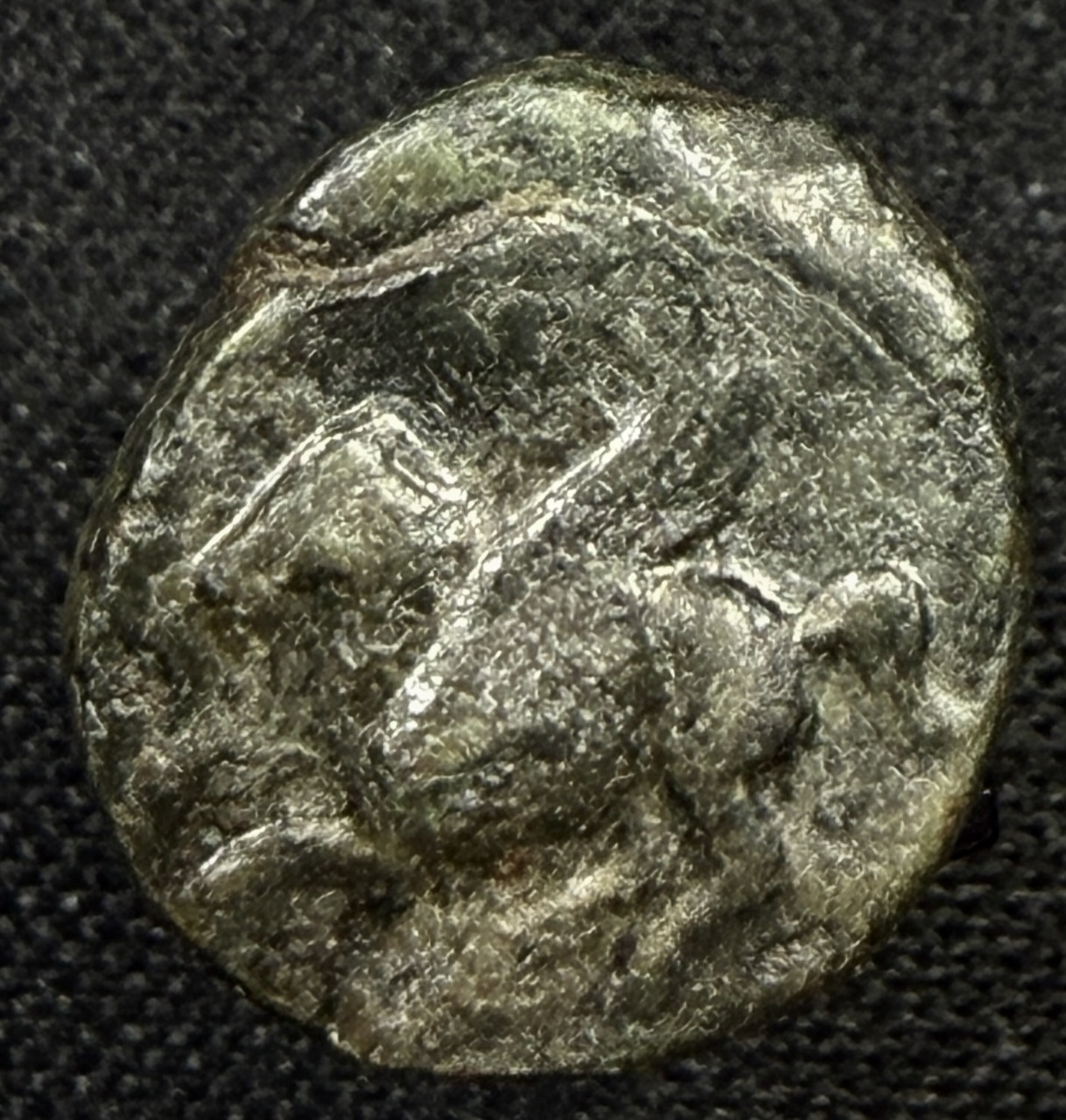
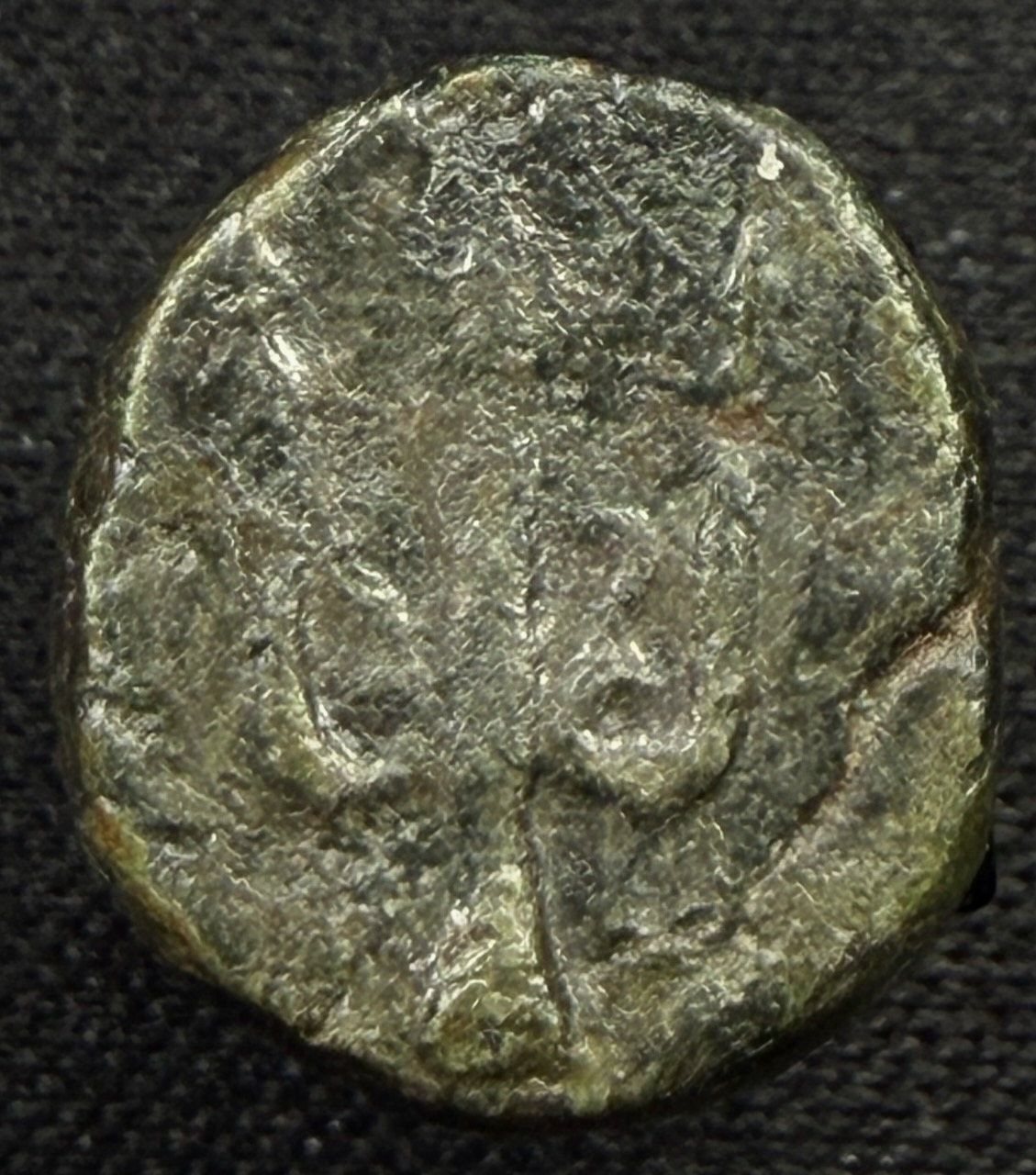
Current: Corinthia, Corinth, AE 12, c. 303–287 BC (SGCV I 2647; cf. BMC Corinth p. 53, 423 ff.). Pegasos flying left, koppa below / ornate trident head
Obverse: Pegasos flying left; koppa (Ϙ) below
Reverse: Ornate trident head
Primary reference: SGCV I 2647
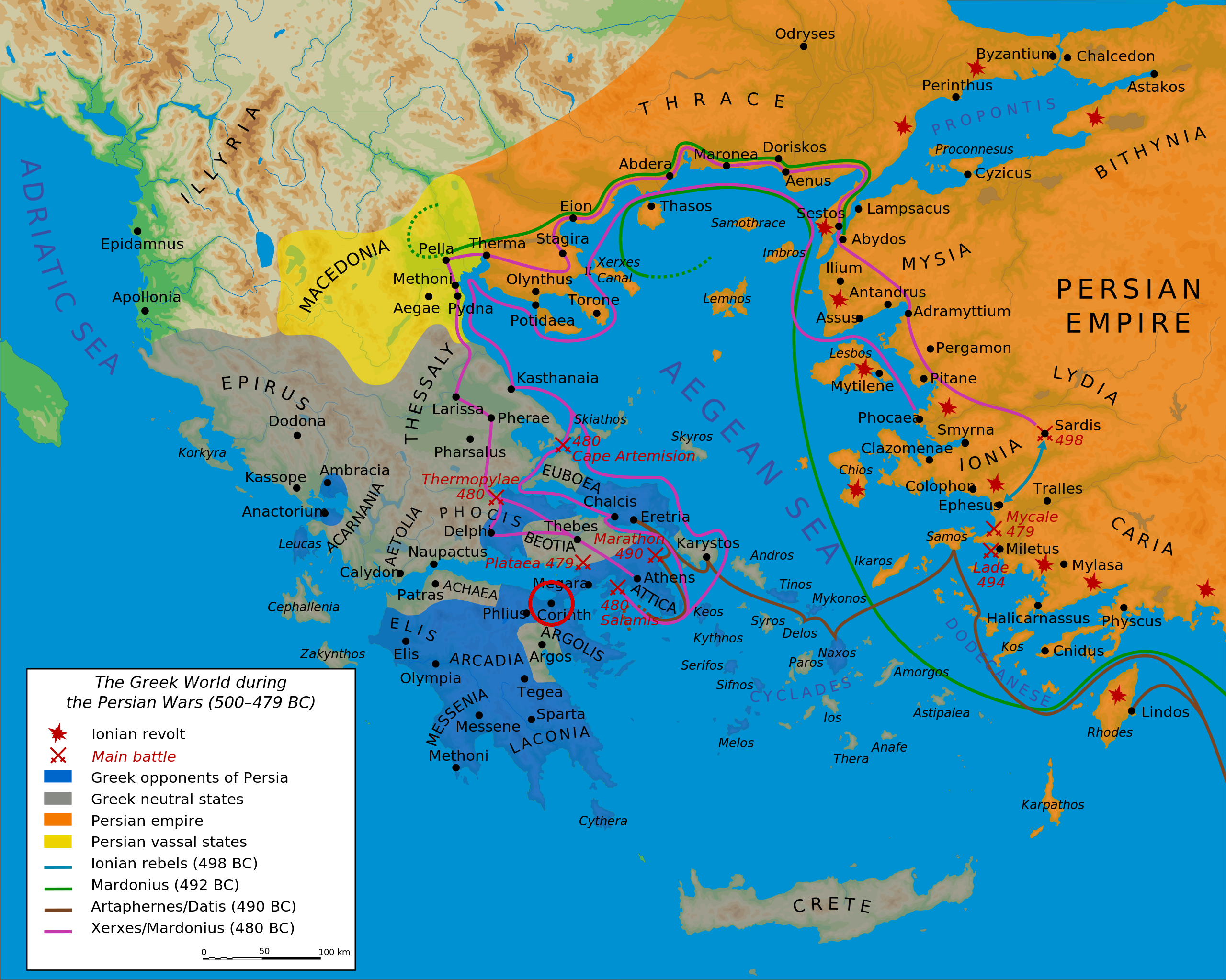
The Greek world on the Greco-Persian Wars map (c. 500–479 BC), nearly two centuries before this bronze — reused here for its clear rendering of Corinth’s commanding position. Corinth — circled in red — sits at the Isthmus, the land bridge joining the Peloponnese to mainland Greece; the sanctuary of Poseidon at Isthmia, whose trident fills this coin’s reverse, stood beside the crossing. By this coin’s era the citadel above the city (Acrocorinth) held a Macedonian garrison — one of the “Fetters of Greece.”
“Map showing the Greek world during the Greco-Persian Wars (ca. 500–479 BC)” by Bibi Saint-Pol (Wikimedia Commons), File:Map Greco-Persian Wars-en.svg, licensed CC BY-SA 3.0 (https://commons.wikimedia.org/wiki/File:Map_Greco-Persian_Wars-en.svg; license: https://creativecommons.org/licenses/by-sa/3.0/). Modified by JSB Coins: rasterized from SVG to PNG, and a red circle added to mark Corinth. This derivative is shared under the same CC BY-SA 3.0 license.
Every Greek city with a mint had a monetary signature; Corinth’s was among the oldest and best known in the Mediterranean. Pegasos, the winged horse tamed by the local hero Bellerophon with Athena’s help, had flown on Corinthian silver since the sixth century BC, always with the archaic letter koppa — the initial of Ϙόρινθος in its old spelling — beneath. On the great silver staters that badge circulated from Sicily to the Levant (see the collection’s Pegasos / Athena stater of the fifth century). This little bronze puts the same signature on the small change of the city’s markets, and pairs it with the trident of Poseidon, whose sanctuary at Isthmia beside the city hosted the Isthmian Games and whose cult defined Corinth’s identity as mistress of the two seas her isthmus joined.
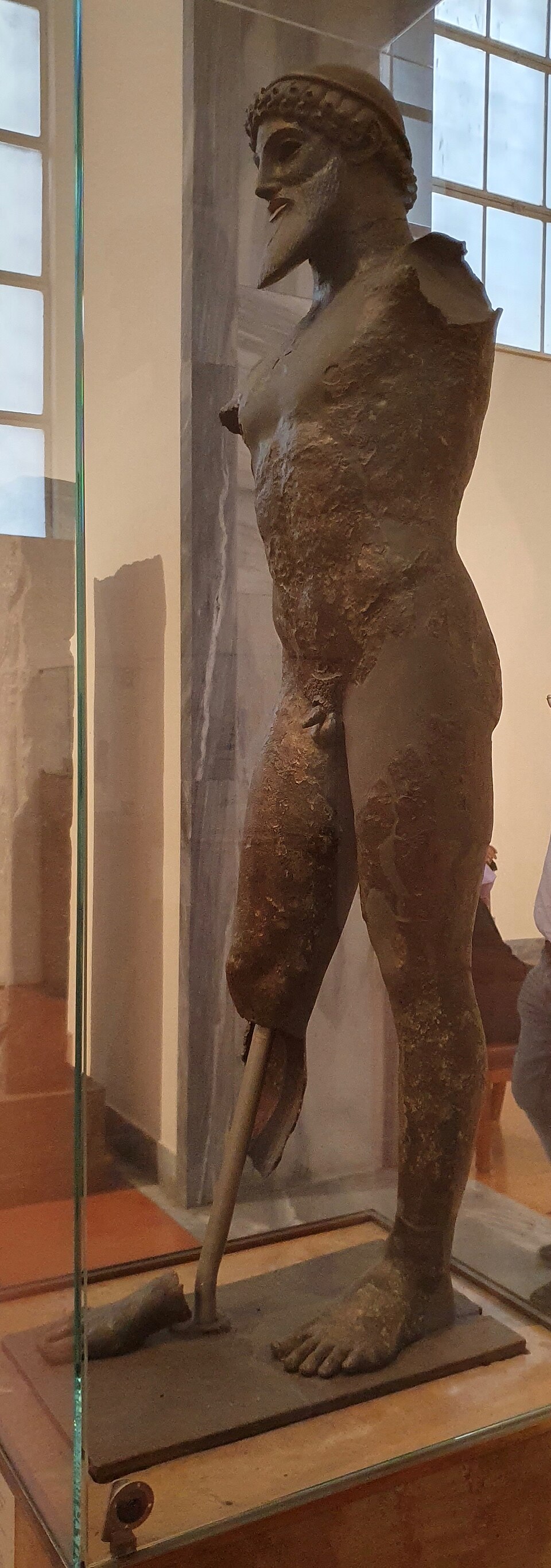
Photo: Yair Haklai, Wikimedia Commons, licensed CC BY-SA 4.0, reproduced unmodified.
The dealer’s dating, c. 303–287 BC, places the issue in the generation after Alexander, when Corinth was a prize in the wars of his successors. Demetrios Poliorketes — “the Besieger,” the most theatrical of the successors, serial conqueror and loser of kingdoms (Plutarch’s Life of Demetrius is the ancient world’s best study in brilliance without steadiness) — took the city in 303 BC and made it a linchpin of Antigonid power; the Macedonian garrison on Acrocorinth, together with those at Demetrias and Chalcis, became notorious as the “Fetters of Greece,” the strongpoints by which Macedon held the Greek world in check (the phrase is reported by Polybius 18.11, from the debates of a later generation still living with those garrisons). Civic life and civic coinage nonetheless went on beneath the citadel: bronzes like this one made change in the potteries, the harbors of Lechaion and Kenchreai, and the shops along the Lechaion road, while the city’s silver tradition wound down. A bronze of this module was literally everyday money — the price of a handful of figs.
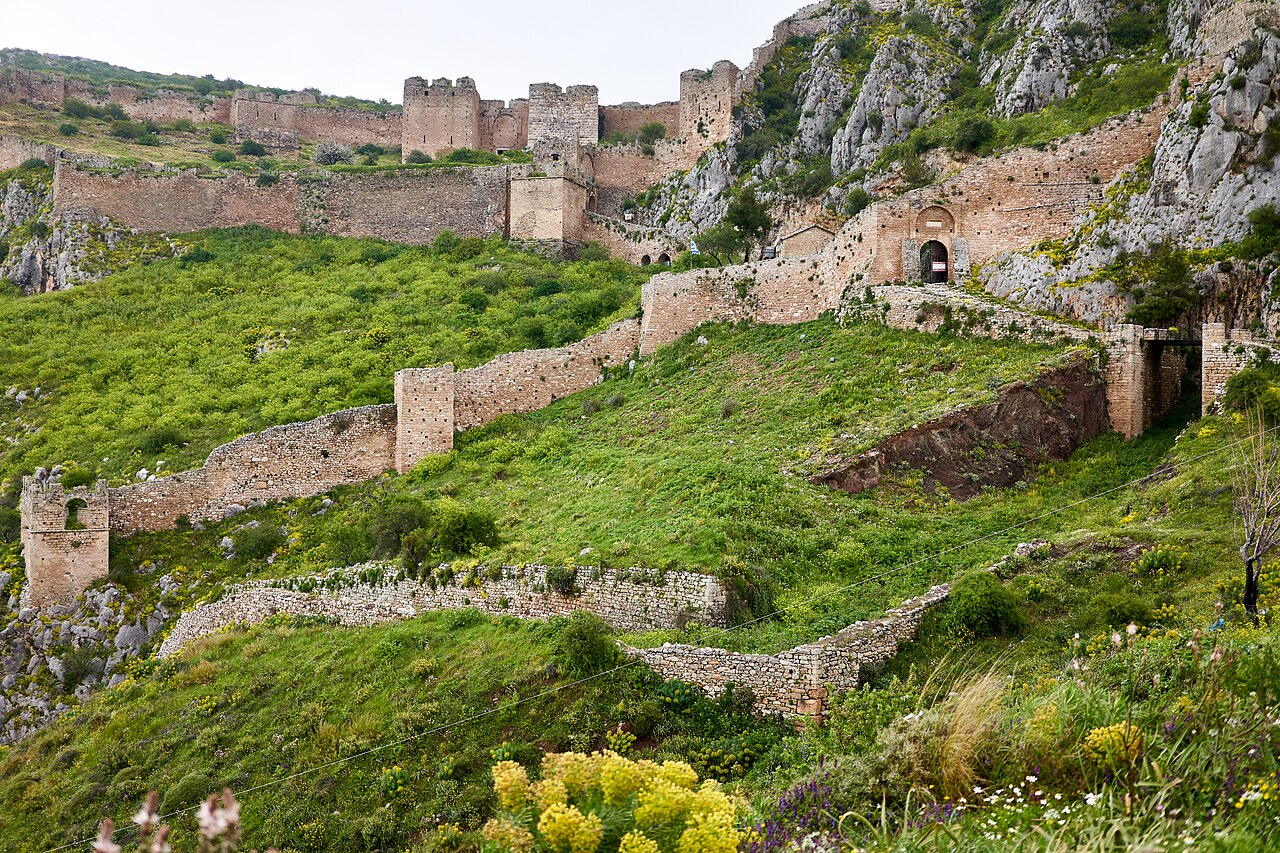
Photo: George E. Koronaios, Wikimedia Commons, licensed CC BY-SA 4.0, reproduced unmodified.
What lifts this specimen above its modest grade is its paper trail: it comes from the BCD Collection — the greatest private collection of the coinages of central and southern Greece ever formed — and the Forum tag records BCD’s hand-written round tag noting “Found at Halus, Dec 94.” Halos in Achaia Phthiotis (southern Thessaly) lies 250 km north of Corinth; a Corinthian market bronze turning up there is a small, concrete witness to how far even token coinage traveled along the Greek mainland’s roads and sea lanes. Documented findspots are vanishingly rare for coins in trade, and BCD’s field notes are exactly why his tags are prized. (The round tag itself did not accompany the coin; its text survives via the Forum tag — see the specimen page.)
Attribution: Sear, Greek Coins and Their Values I (SGCV I), no. 2647; cf. BMC (Catalogue of Greek Coins in the British Museum) Corinth, p. 53, nos. 423 ff., both as cited on the Forum Ancient Coins tag, with the dealer’s dating c. 303–287 BC. Provenance: ex BCD Collection with findspot note per the Forum tag (BB49419). On Corinth’s earlier coinage and badges, see the collection’s Pegasos/Athena stater page and the references there. The age of the Fetters: Plutarch, Demetrius 25, 43 (linked above); Polybius 18.11 (the “fetters” phrase).
Corinth's civic small bronze of the early Hellenistic decades: the city's two badges compressed onto a 12 mm flan — Pegasos with the archaic koppa beneath, and the trident of Poseidon, lord of the Isthmus. Dealer's dating c. 303–287 BC (the period of Demetrios Poliorketes' control of Corinth), per the Forum tag following Sear.
John's Ancient Coin Collection · Type · corinth-pegasos-trident-ae12
Image credits for this coin — photographs, maps and graphics used on this page