Type · athens-classical-owl-drachm
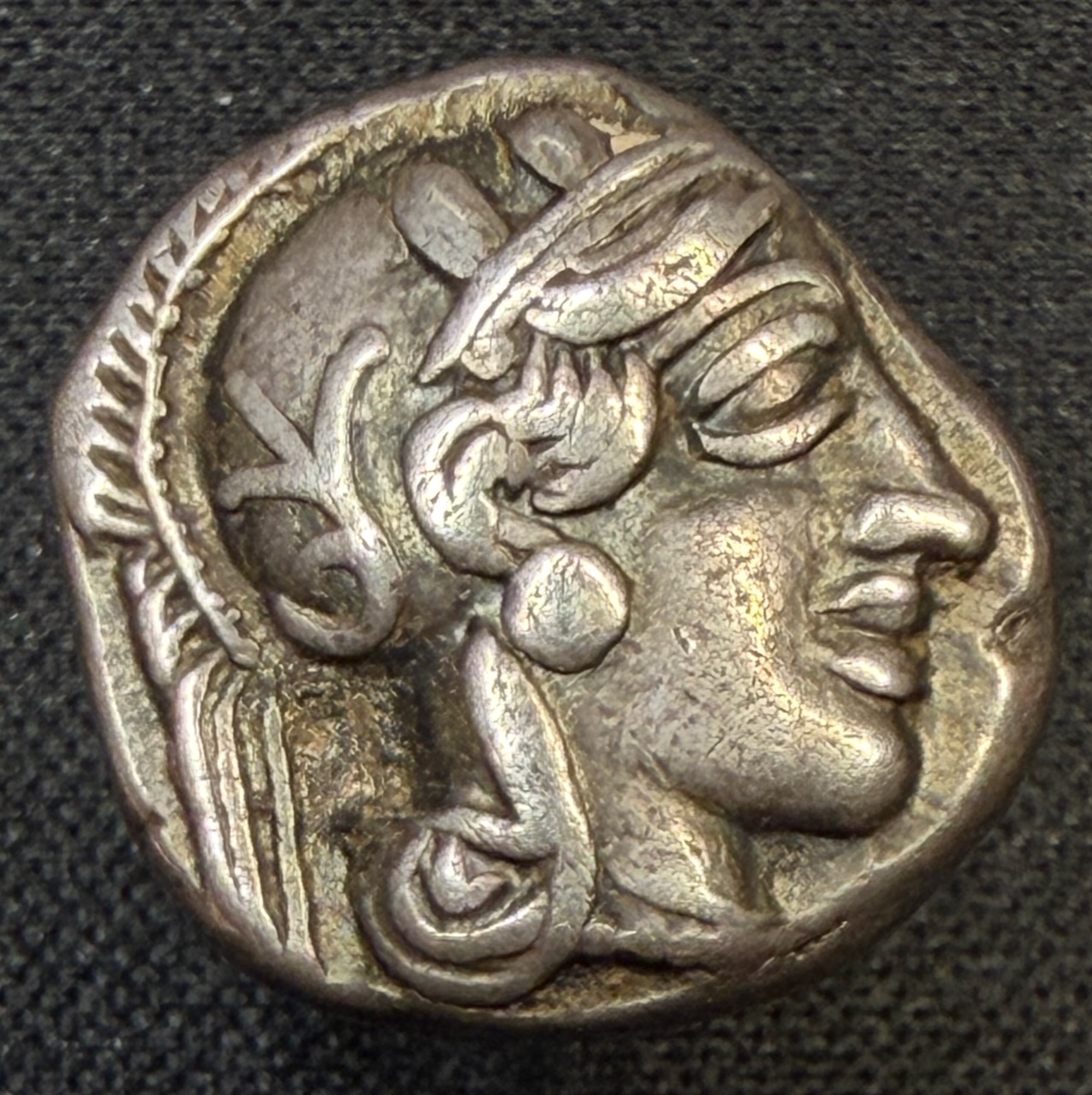
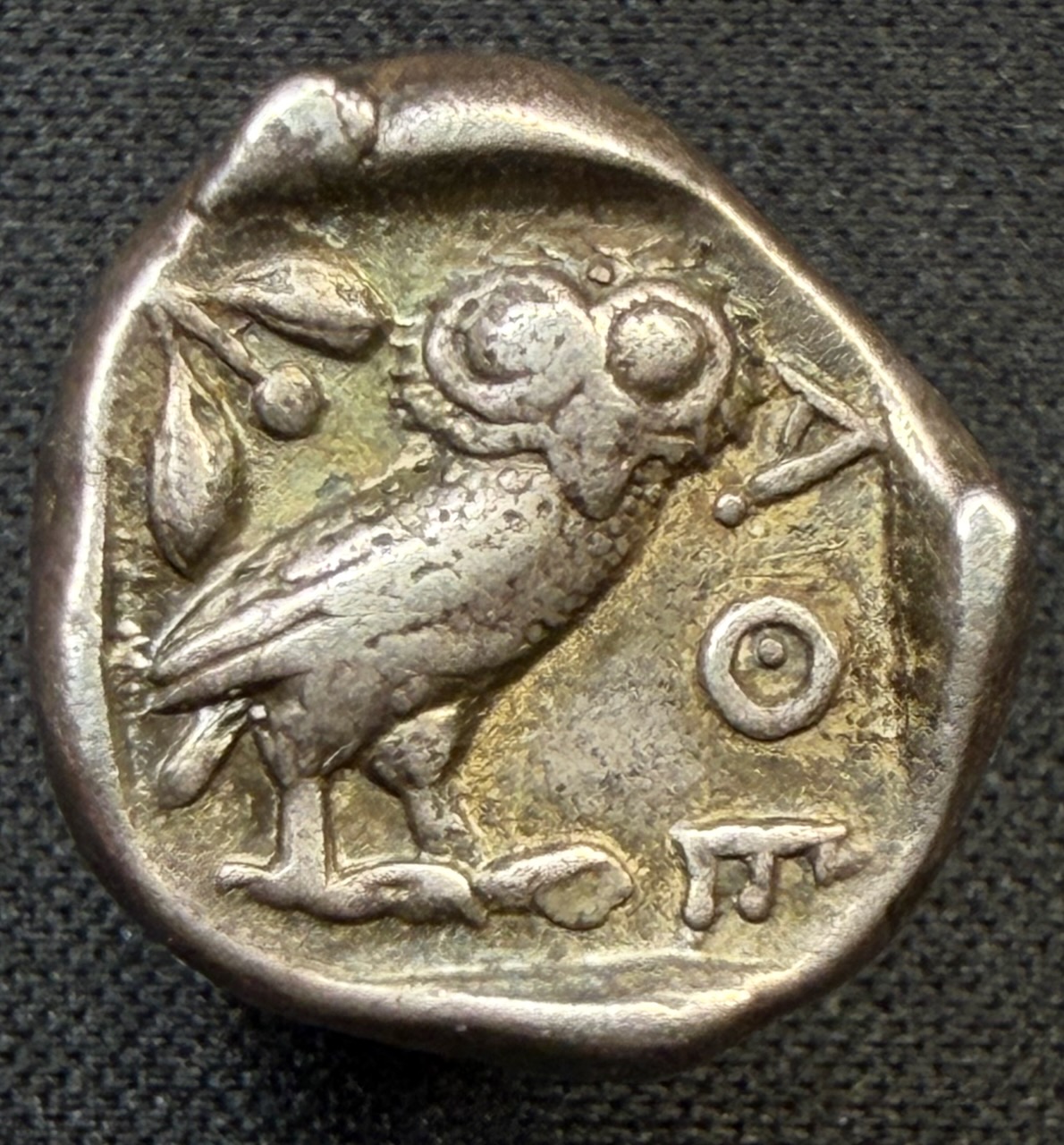
Current: Attica, Athens, AR drachm, c. 454–404 BC. Helmeted head of Athena right / owl standing right, head facing, olive sprig, ΑΘΕ (HGC 4, 1631)
Obverse: Head of Athena right, wearing crested Attic helmet ornamented with three olive leaves and spiral palmette, and disc earring
Reverse: Owl standing right, head facing; olive sprig with berry in upper left field (no crescent on the drachm, unlike the tetradrachm); all within incuse square
Primary reference: HGC 4, 1631
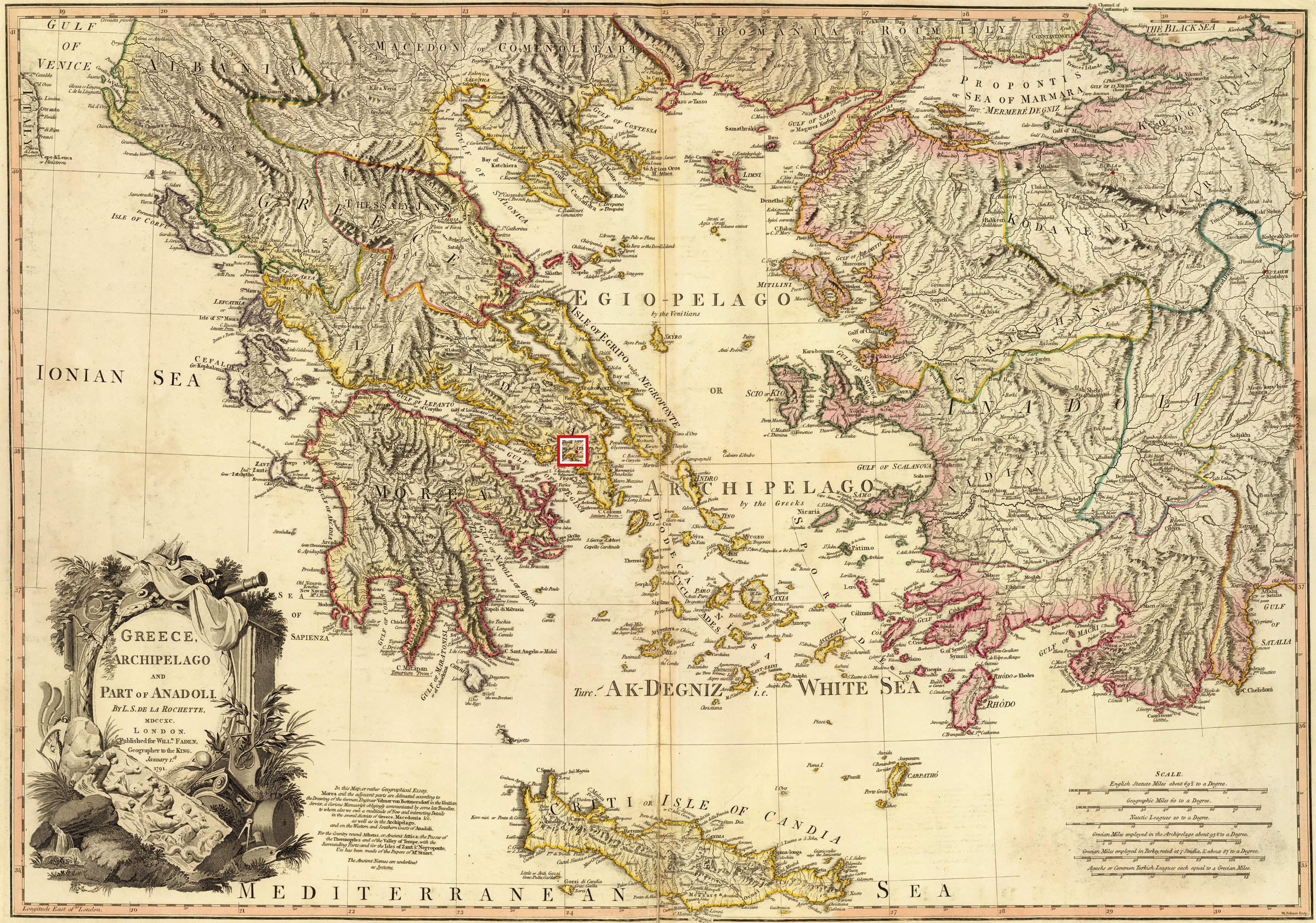
A 1791 map of Greece, the Archipelago (the Aegean), and part of Anadoli (the Anatolian coast); Athens is indicated by the red square. The drachm was the stay-at-home sibling of this trade world’s great silver — where the tetradrachm sailed with the grain fleets, the drachm changed hands in the markets and law-courts of Attica itself.
Main map (1791): “Greece, Archipelago and part of Anadoli” by Louis Stanislas d’Arcy Delarochette (engraved by W. Palmer; published for William Faden, Geographer to the King, London, 1791), in the public domain (PD-old-100; published before 1931). File:Map of Greece, Archipelago and part of Anadoli; Louis Stanislas d’Arcy Delarochette 1791.jpg (https://commons.wikimedia.org/wiki/File:Map_of_Greece,_Archipelago_and_part_of_Anadoli;_Louis_Stanislas_d%27Arcy_Delarochette_1791.jpg). Modified by JSB Coins: a red square marks the position of Athens. No attribution is legally required for a public-domain work; the source is credited here as a courtesy.
Second map (431 BC political): “Map of the Peloponnesian War, 431 BC” by Marsyas, English version by Aeonx (Wikimedia Commons), File:Map Peloponnesian War 431 BC-en.svg, licensed CC BY-SA 3.0 (https://commons.wikimedia.org/wiki/File:Map_Peloponnesian_War_431_BC-en.svg; license: https://creativecommons.org/licenses/by-sa/3.0/). Rasterized from SVG to PNG by JSB Coins; no other changes. This derivative is shared under the same CC BY-SA 3.0 license.
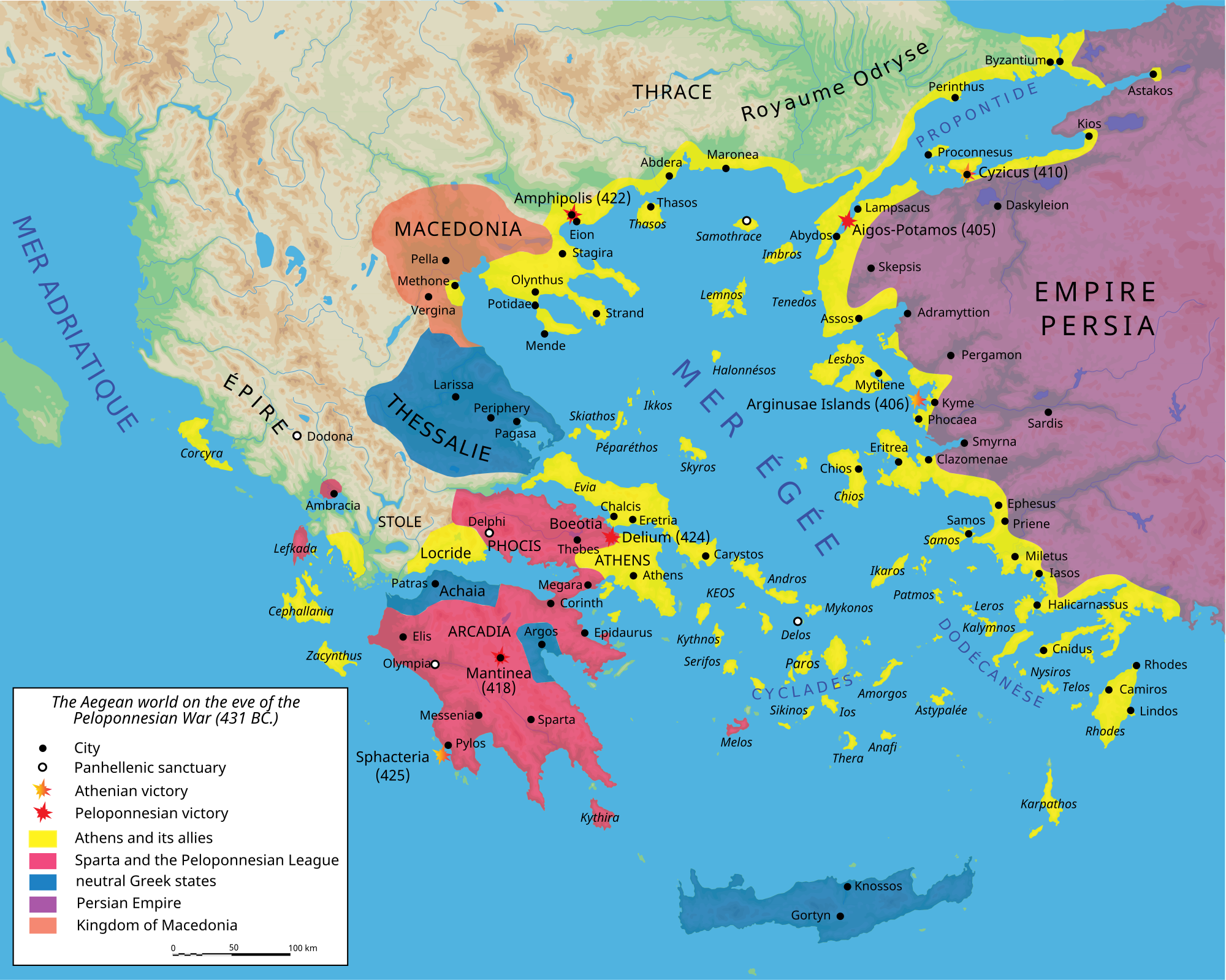
And the same world drawn as a political map — the Aegean on the eve of the Peloponnesian War, 431 BC. Athens and its allies (the Delian League) are shaded yellow, Sparta and the Peloponnesian League pink, neutral Greek states blue, the Persian Empire purple, and Macedonia orange. The war years (431–404 BC) fall almost exactly across the span of this coinage. (A few labels on the source map — the seas, Épire, Thessalie — remain in French.)
Everyone knows the Athenian owl as the great tetradrachm — the thick, four-drachma slab of Laurion silver that paid fleets and flooded the markets of the eastern Mediterranean. This coin is its small sibling: the drachm, one quarter the weight, same goddess, same owl, same three letters of the city’s name. The tetradrachm in this collection is the export product; the drachm is the coin Athenians actually lived on.
Graphic: JSB Coins, 2026 (CC0).
The drachm was classical Athens’s unit of account and the yardstick of ordinary life. A skilled workman on the Erechtheion accounts of the late fifth century earned a drachm a day — the inscribed building accounts survive, and pay citizen, metic, and slave craftsmen at the same daily rate; a juror in the people’s courts drew his three obols — half a drachm — for a day’s sitting; the six-obol drachm bought a family’s food for days. When the comic poets price a fish or a jar of wine, they price it in drachms and obols. A coin like this one is that arithmetic made physical, and its wear is the wear of use, not hoarding.
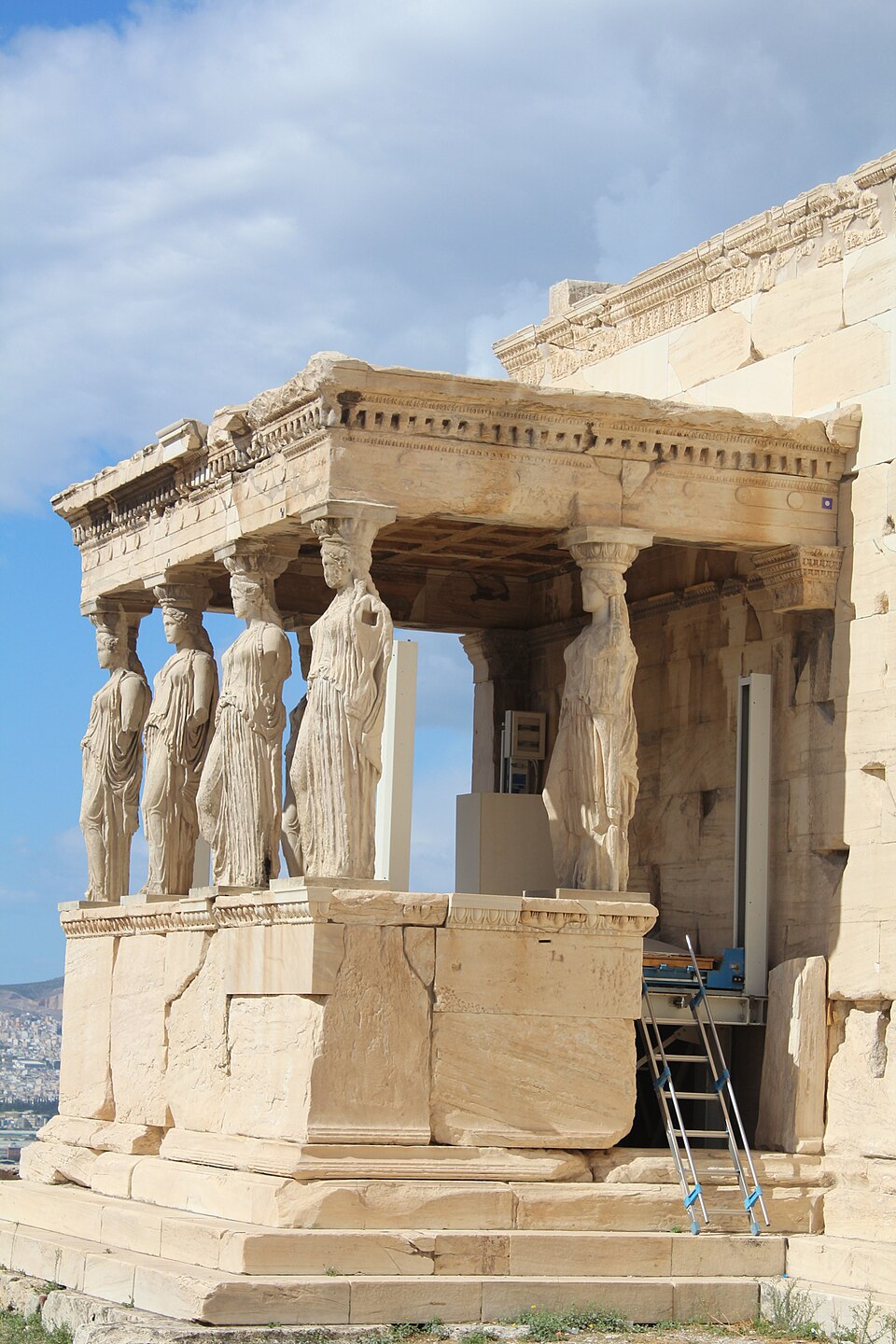
Photo: Arparcon001, Wikimedia Commons, licensed CC BY-SA 4.0, reproduced unmodified.
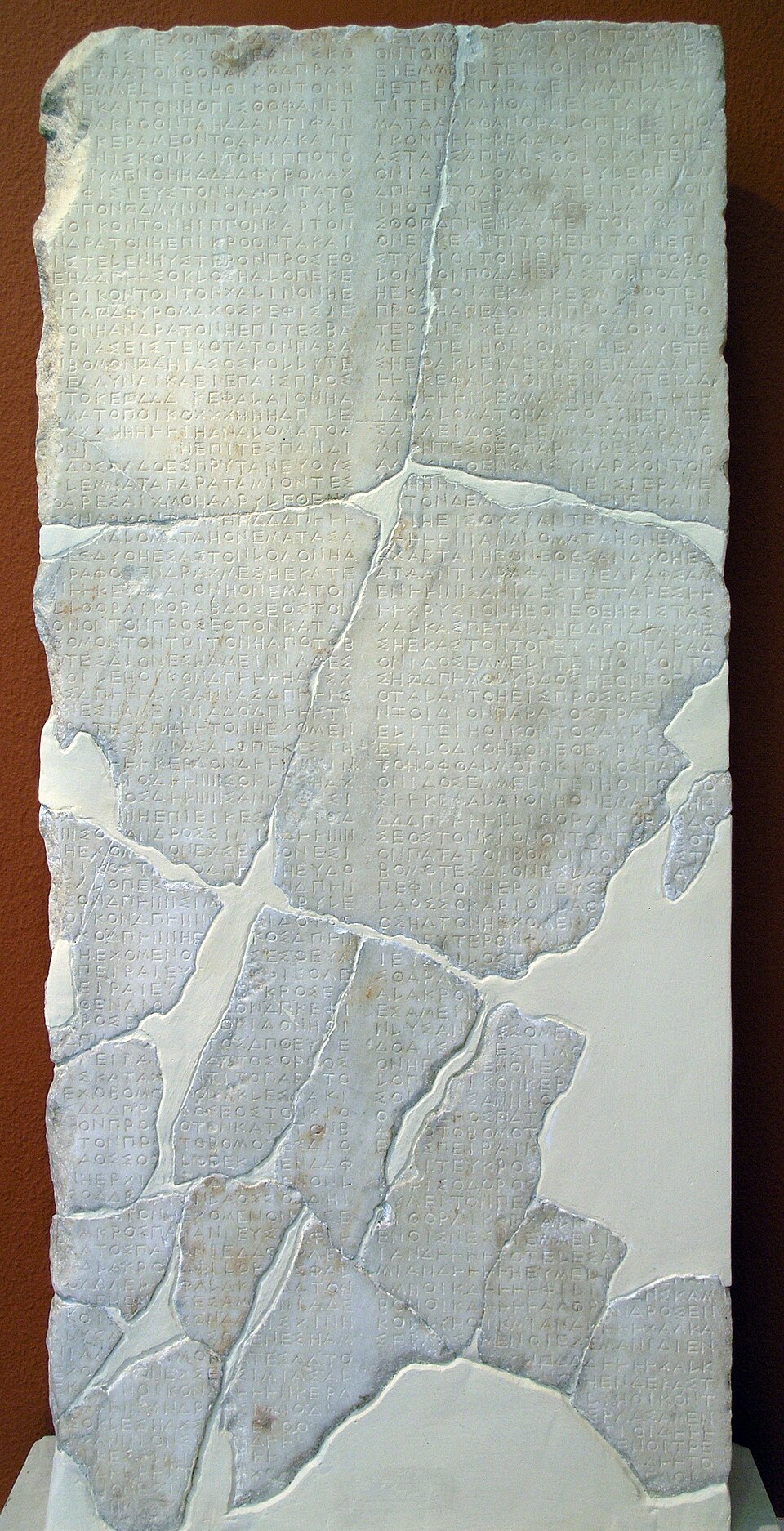
Photo: Wikimedia Commons user Marsyas, licensed CC BY 2.5, reproduced unmodified.
The designs repeat the tetradrachm’s — Athena in her olive-leaved Attic helmet, the little owl with the sprig of her sacred olive — but the die-cutters worked them onto a flan barely sixteen millimeters across, and dropped one element: the drachm’s owl has no crescent moon behind it, the quickest way to tell a worn drachm from a clipped tetradrachm fragment. The letters ΑΘΕ, “of the Athenians,” complete the formula. Athens froze this design for generations on all denominations, archaic eye and all, because the type itself was the guarantee: the world trusted owls, so owls did not change.
Paradoxically, the everyday coin is the rare one today. The tetradrachms were struck in astronomical numbers for export and buried in hoards from Egypt to Afghanistan; the drachms stayed home, circulated hard, and returned to the melting pot. Hoover’s handbook (HGC 4) lists the classical drachm (1631) as a markedly scarcer coin than the tetradrachm (1597), and the market bears that out. For a collection, the pair together — trade silver and pocket silver — shows the owl coinage as a system rather than a single famous coin. The system has a long tail: the pi-style tetradrachm carries the old design down to c. 294 BC, and the New Style tetradrachm revives it in the second century in a form that abandons the archaic pretence entirely.
Attribution follows Oliver D. Hoover, Handbook of Coins of Northern and Central Greece (HGC 4), no. 1631, per the dealer tag; the classical series and its denominational structure are treated in John H. Kroll, The Athenian Agora XXVI: The Greek Coins (Princeton 1993). Erechtheion wage rates and juror pay: IG I³ 475–476 and Aristophanes (Wasps), summarized in the standard economic histories of classical Athens.
The drachm of the classical owl series (Attic standard, c. 4.3 g; this coin 4.26 g per the dealer tag). Same designs as the mass-struck tetradrachm with one diagnostic difference: the drachm's reverse lacks the crescent moon behind the owl. Drachms were struck in far smaller quantity than the export-oriented tetradrachms and are considerably scarcer today; they served local, everyday exchange in Attica rather than international trade.
John's Ancient Coin Collection · Type · athens-classical-owl-drachm
Image credits for this coin — photographs, maps and graphics used on this page